THE FRIENDLY, FRATERNAL CITY OF BRATISLAVA
author: Ana Boneva

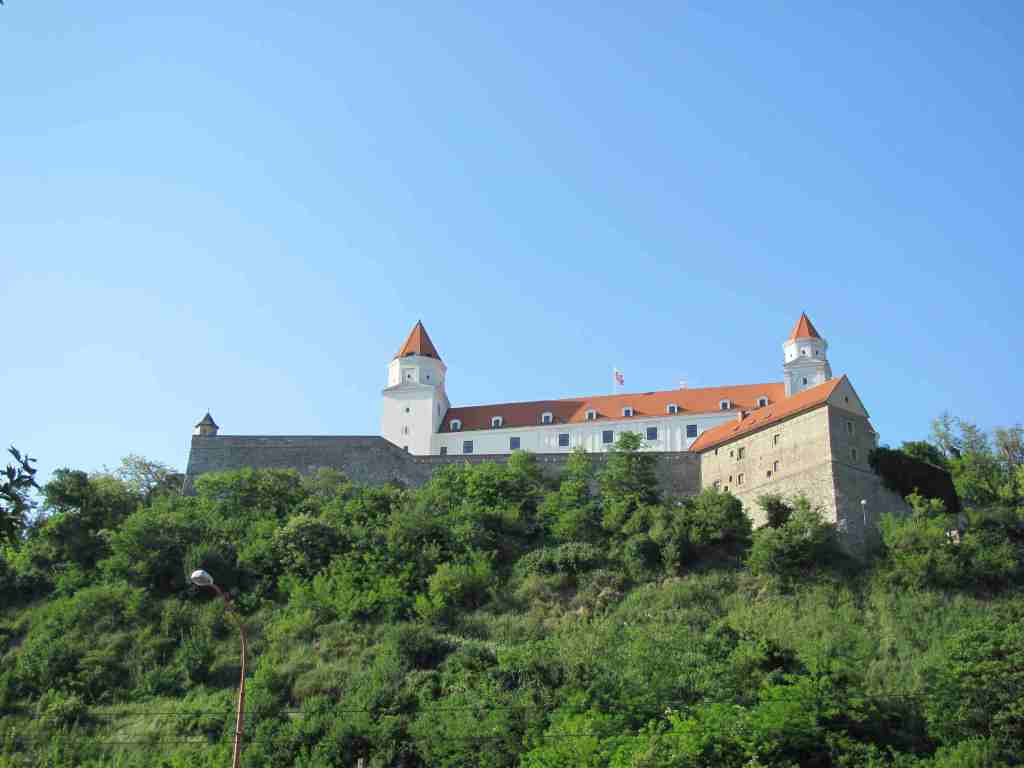

Slovakia – a small country with giant legends. As soon as we entered the capital city of Bratislava, a wonderful castle appeared in front of us on a hill, enchanted by legends. According to them, shortly after the castle was built, the people in it began to wake up every morning and see that everything was upside down. They wondered what was causing this, until a magician with a crystal ball told them that a giant caused this. He lived in the western mountains, but worked in the eastern ones, and every morning when he passed by the castle, he turned it upside down, turning it into a table. The four towers in each corner make the statement very likely and the castle really looks like an upside-down table with its feet up. To save themselves from the giant, the magician advised them to draw him a map with a shorter path so that the giant would not pass by the castle. The first map they drew was too small and the giant did not noticed it. For this reason, the next map was drawn on the entire courtyard, and since then the giant has not passed through there, and no one has turned the castle again. Today there is no map in the courtyard of the castle, but the legend has remained and beautifies the castle, from which a giant view is really revealed and on a clear day you can see 3 countries – Austria, Hungary and Slovakia.

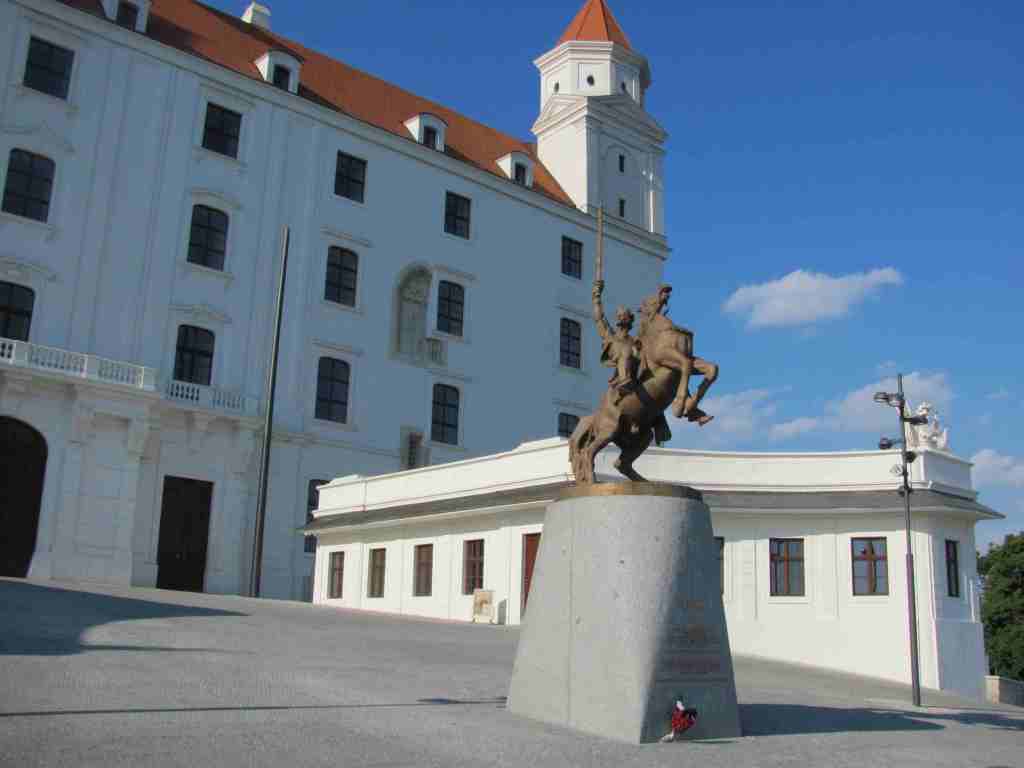
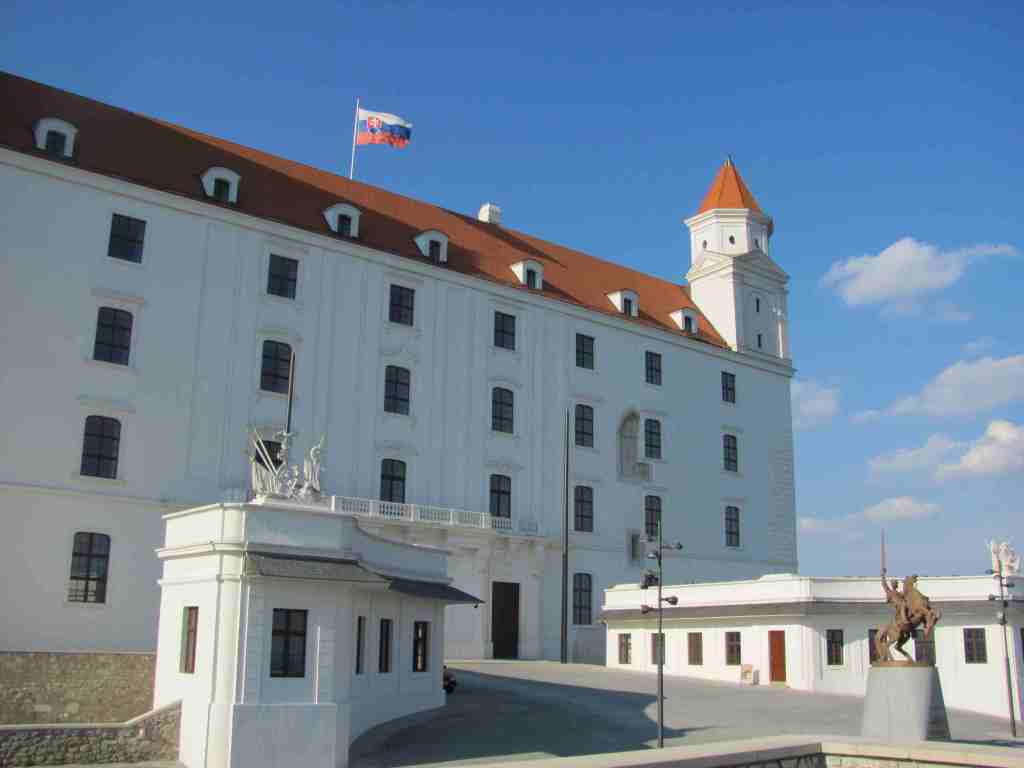
Bratislava is located on the very border between Slovakia, Austria and Hungary, making the city the only capital that borders two separate countries. It was as if the city of Bratislava really twinned the neighboring countries. However, the name of this fraternal city (in Slavonic language Brat means brother) of Bratislava came from the Bohemian king Bretislav I, having previously borne the German name Pressburg and the Greek name Istropolis (City on the Danube).
Already in the 12th century, the city was strongly fortified and acquired strategic importance, being the capital of Hungary for more than 2 centuries. Today, from the glorious past, the old town with the beautiful town hall (from the 15th century) was preserved, as well as the Cathedral of St. Martin (erected between the 14th-15th centuries), the Baroque summer palace of the Hungarian kings (dating from 1761-5) and the neo-Renaissance beautiful building of the National Theater (erected in 1885-8) and of course the castle from which our tour began.
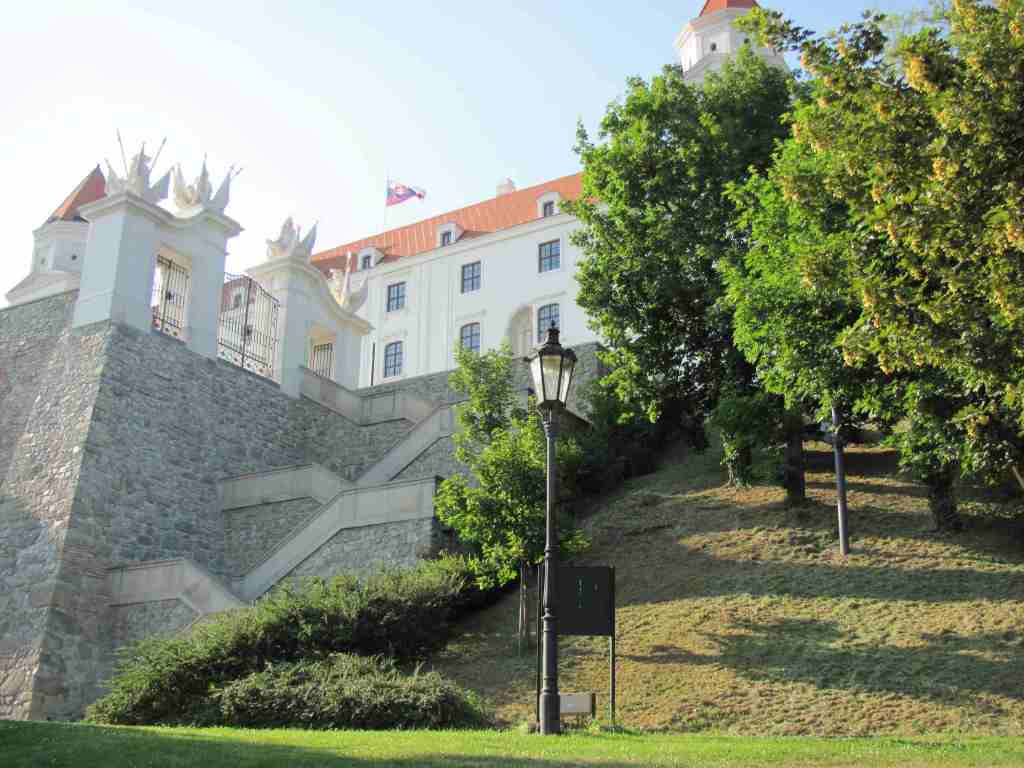
You don’t have to be a giant to get to the high castle, there are many nicely defined alleys and stairs. As early as 907. there was a stone castle here, mentioned in one of the battles between the Bavarians and the Magyars. In 1423. the stone castle was reconstructed in the Gothic style, and later acquired Renaissance notes. Maria Theresa, the Archduchess of Austria, Queen of Hungary and Bohemia, also contributed to the completion of the castle, adding real luxury to it. Today, the castle has been turned into a museum where you can see interesting exhibits from the history of Slovakia – antique furniture, clocks and weapons, as well as pieces dating back centuries of famous European personalities.

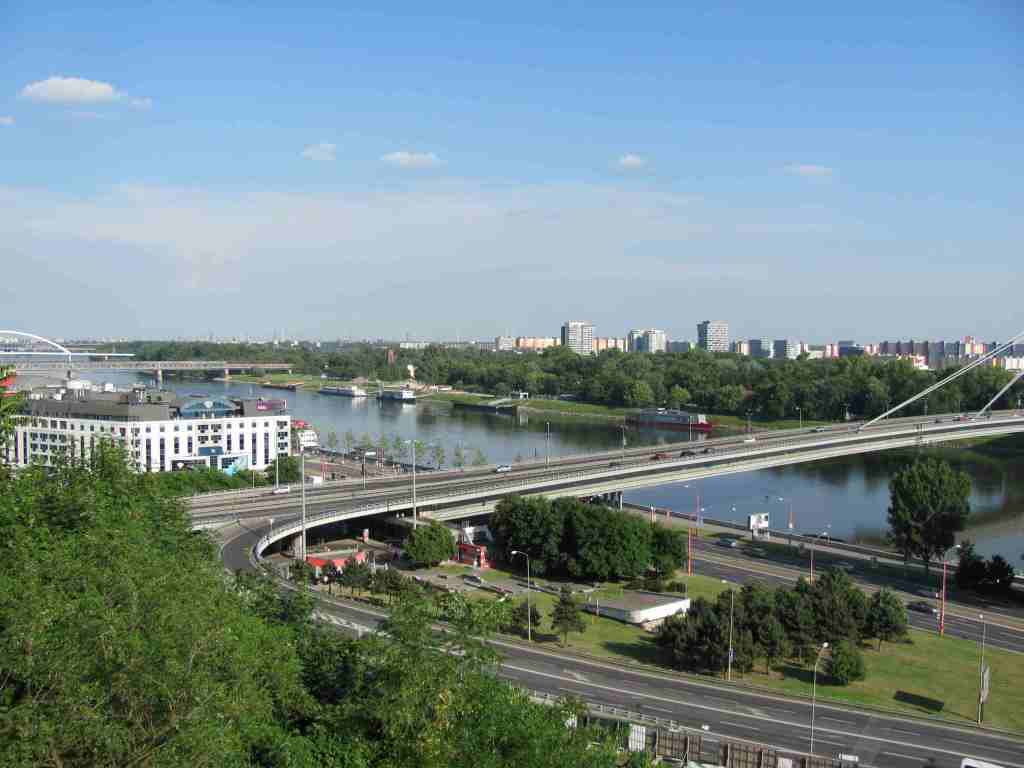




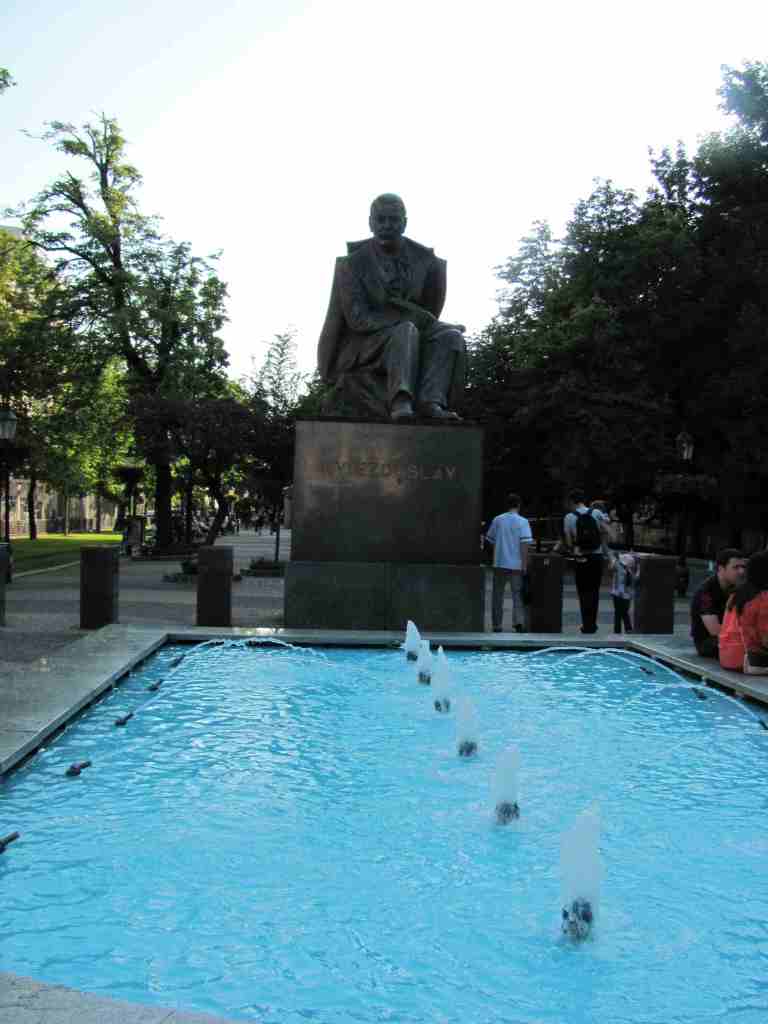
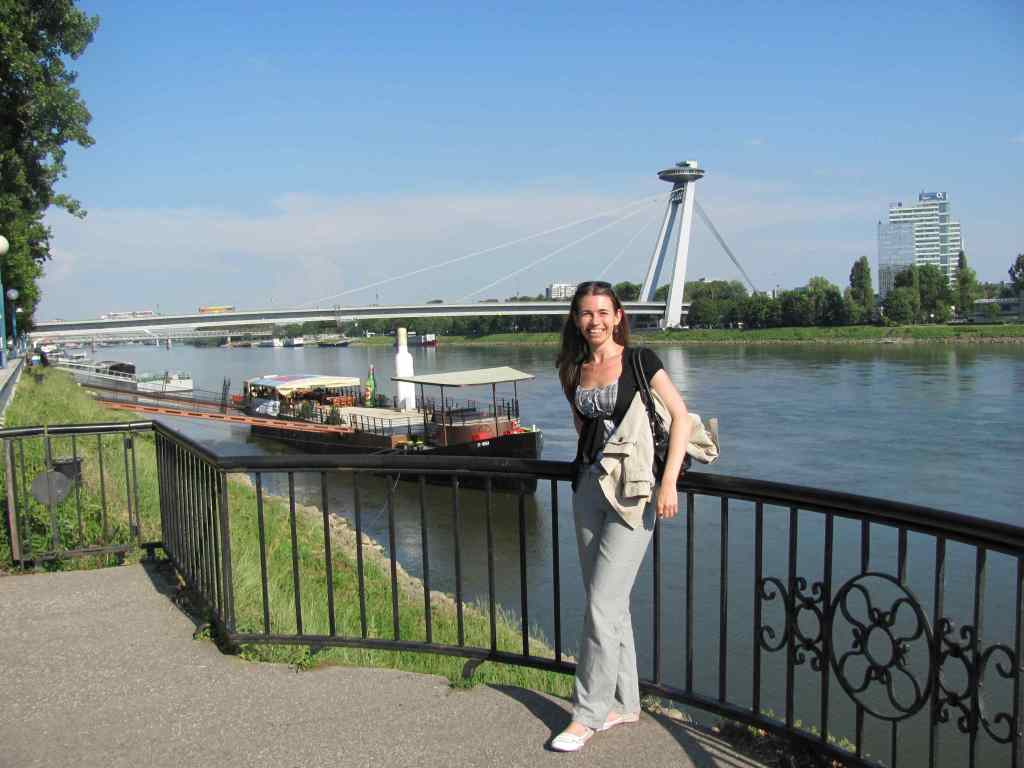
After visiting the castle, we descending to the beautiful Danube promenade, learning more legends for this majestic river this time. Danube passes through 10 European countries, and even its name came from the Roman river goddess Danubius. Below the castle we were impressed by the bridges and especially the bridge under the castle, on which there was a separate revolving restaurant in a tower, bearing the alien name UFO. Probably the panorama from there is very beautiful, but we were satisfied with only photos from the riverside alley.
Imperceptibly, we headed to the city center, passing through picturesque medieval streets. Bratislava was like a fairy tale that quickly fascinated us.
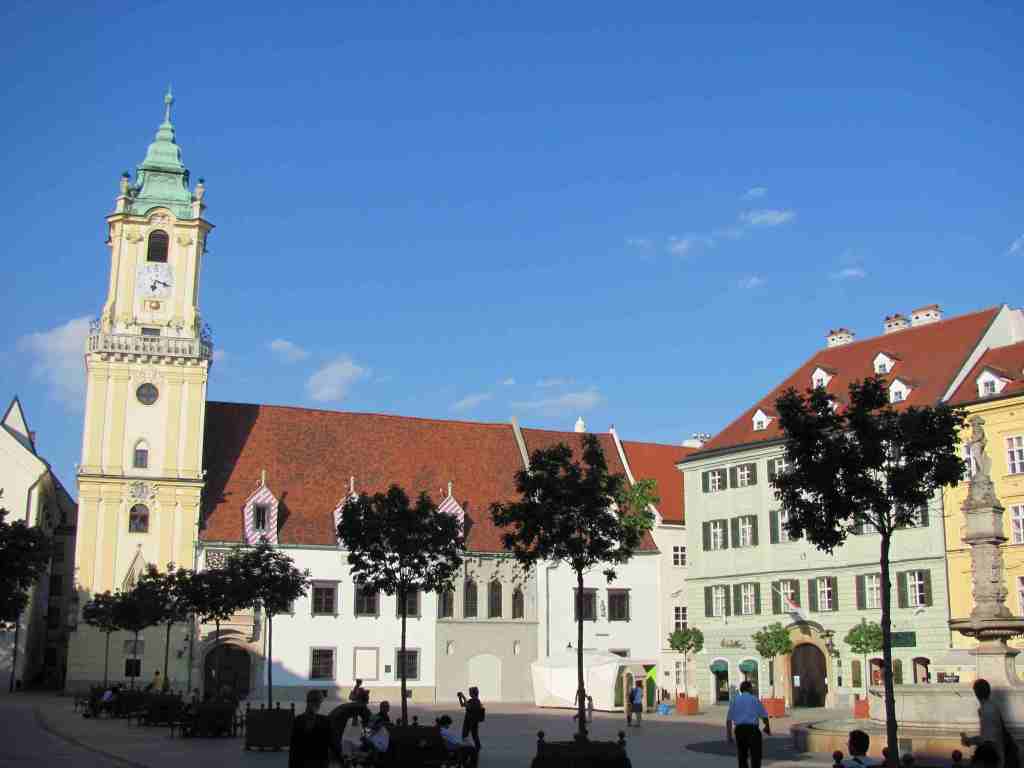
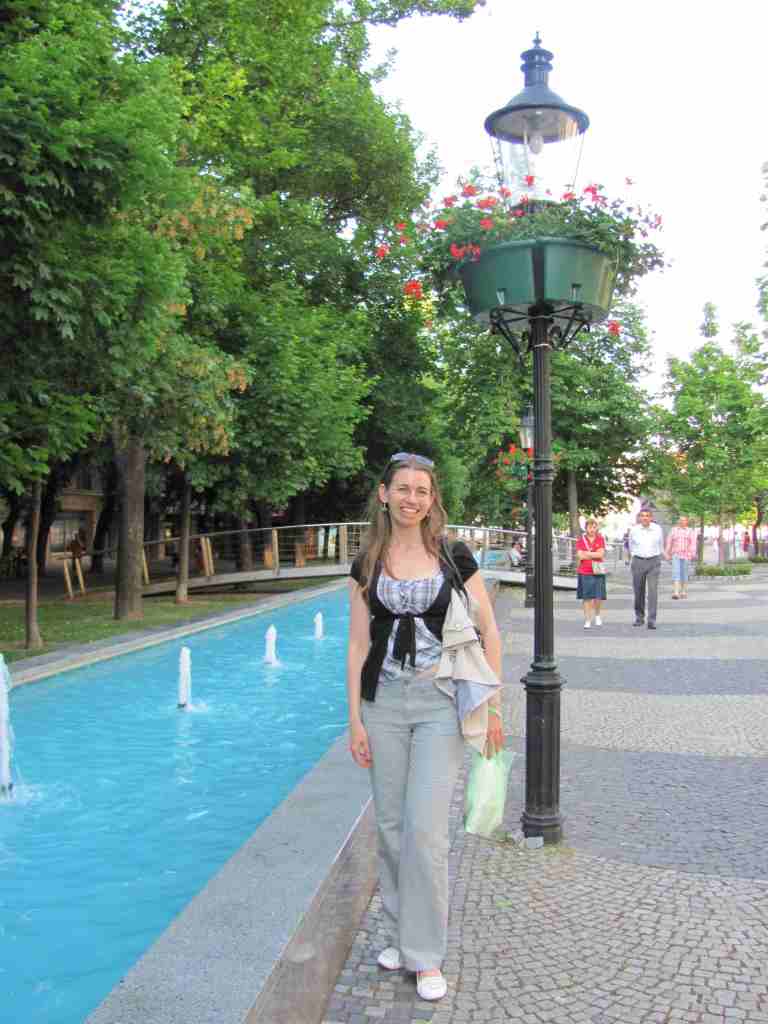
The historic city center Staré mesto consists of two interconnected squares: Hlavné námestie and Františkánské námestie. On the first floor is the old town hall, and the road of the coronation of the Hungarian kings passed from here, which is now marked with golden crowns on the paving stones. Especially beautiful is the town hall with the bell tower and the fountain in the middle of the square, on which there is a figure of the knight Roland, who defended the rights of the local people. The other square is famous for its beautiful trees and the Marian Column, erected in 1657.
The entire old town is pedestrian and easy to walk, and part of its cobbled streets led us to the gate of Archangel Michael. Erected in the 14th century, it is the only surviving original gate from the medieval city. Its tower rises 51 m and a statue of Archangel Michael is placed on top of it. Today, the tower houses a museum of weapons, and also offers access to its terrace, from which an incredible panorama is revealed. Right next to the tower is the oldest pharmacy in Bratislava – the Red Crab.


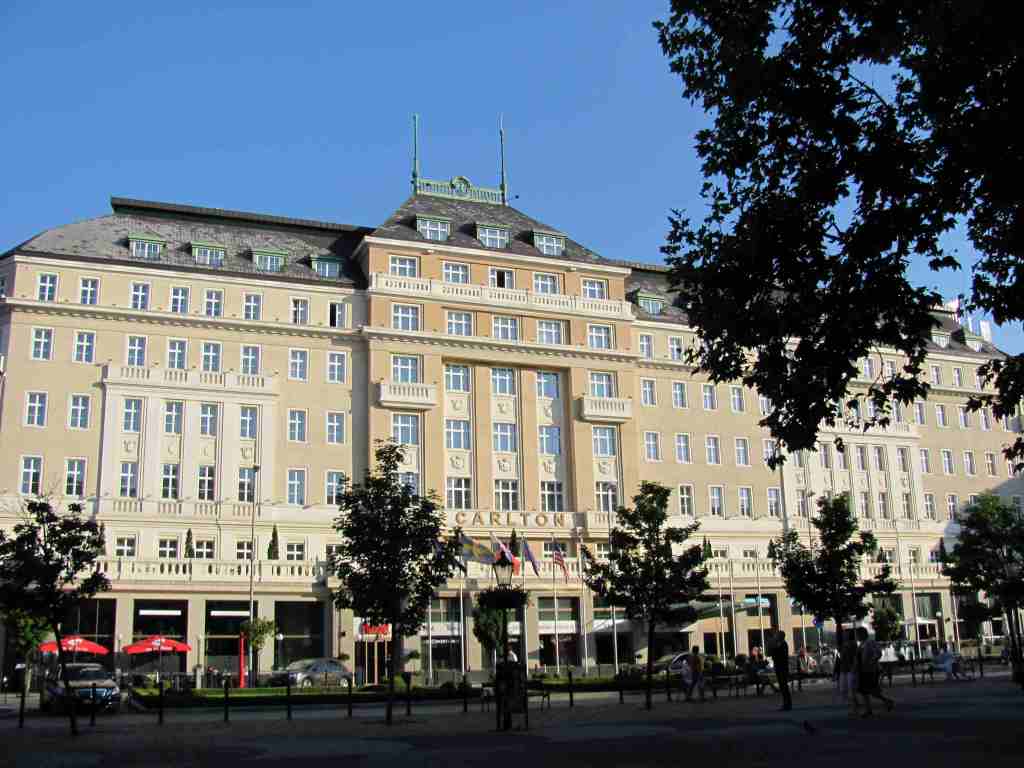
We passed by many more old and renovated buildings, beautifully maintained gardens and fountains until we reached the National Theater, erected by Venetian architects. Its façade is decorated with busts of Goethe, Liszt and Shakespeare. In the middle is placed the muse of comedy, Thalia. In front of the theater there is a beautiful fountain dating back to 1880. depicting the handsome young man Ganymede, son of the Trojan king Tros, flying on the back of Zeus. It was here in the fairytale land of Slovakia that I learned about the legend of Ganymede, who was so beautiful that he was kidnapped by Zeus, who presented himself as an eagle and took him to Olympus. Here Ganymede assumed the duties of cupbearer of the gods, and was also placed in heaven in the form of the constellation Aquarius.
Slovakia has an area of only 48,845 sq. km, but the legends in it are huge and echo far away. For 9 centuries the country was part of the Kingdom of Hungary, later in the 20th century, for 70 years it was part of Czechoslovakia. Only in 1993. Slovakia declares its independence, becoming one of the youngest European countries. However, its young age does not correspond to its great natural resources and cultural heritage. Slovakia seems to have it all, and this can best be seen in its capital city of Bratislava, which with its charm easily twins locals and tourists.



GENERAL INFORMATION ABOUT BRATISLAVA:
Location: Bratislava is the only national capital bordering two independent countries – Austria and Hungary. It is located in the southwestern part of Slovakia, on both banks of the Danube River and on the left bank of the Morava.
Area: 367 sq. m.km
Population: 462,603 people
Official language: Slovak
Altitude: 134 m
Climate: temperate continental climate
Time zone: UTC+1
Currency: Euro (EUR)
Additional Information: www.visitbratislava.com
TRIP TIPS FOR BRATISLAVA:
Best time to visit: all year round
Typical food and drink: Bratislava is on the border of Slovakia with Austria and Hungary, and neighboring countries strongly influence its culinary traditions. Here are some things worth trying: Bryndzové halušky (potato dumplings with cheese), Lokše (potato pancakes baked on the stove) or Zemiakové placky (fried potato pancakes), Hungarian goulash served with dumplings.
Places to visit: Bratislava Castle (erected on the hill Malki Karpaty), Michael’s Gate, Old Town Hall housing the Bratislava City Museum, St. Nicholas Cathedral Martin, the church of St. Trinity and others.The capital city of Toledo.
 TripTips