BELGRADE – THE WHITE CITY
with a short stay in NISH
author: Ana Boneva


The “White City” Belgrade rises at the confluence of the Sava and Danube rivers, and it turned out to be surprisingly beautiful. We had passed transit through it many times, but once we stopped we realized what a mistake we had made. The city has preserved its ancient history, which is visible in the medieval fortress walls, beautiful parks and rising among them modern buildings.
The journey from Sofia to Belgrade is about 5 hours, as long as you don’t wait at the Kalotina boarding point, which on the opposite Serbian side is called Gradina.
The first Serbian town we passed through was Dimitrovgrad (known in Bulgaria as Tsaribrod). It used to be a part of Bulgaria, but in 1920, according to the Neue Treaty, it passed into the then Kingdom of Yugoslavia. Next was Pirot, located on the Nishava River, which is famous for its carpets production. It was also part of Bulgaria, but in 1878, with the Treaty of Berlin, Pirot was handed over to Serbia. The landscapes, houses and fields up to here were no different from Bulgarian ones.
Then there was an exit for the town of Bela Palanca (a name similar to Julio Iglesias’ song – Paloma Blanca). It was also part of Bulgaria, but after the Treaty of Berlin it was handed over to Serbia. Without stopping, we continued forward towards the capital city, passing through the 13 tunnels, each with a different length, which I had heard were built by Hitler’s army.
In Serbia, like Bulgaria, there are brown road signs indicating cultural monuments. So e.g. we passed a sign that read Saint Peter’s Monastery in Cyrillic. Written as if inviting Bulgarians to visit it, although most of them pass through the country only in transit without learning about the cultural riches and traditions this country also posses.
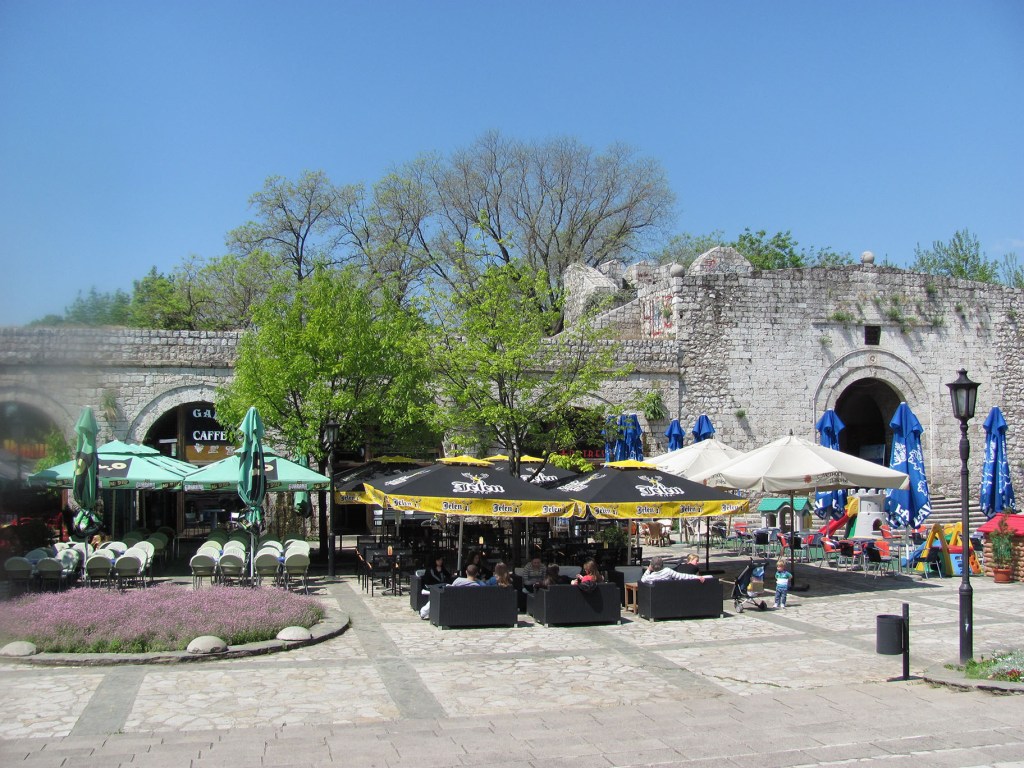
After less than 3 hours, we also passed through the beautiful Serbian city of Nish (located 160 km from Sofia), located on the Nishava River, which for long periods during the Middle Ages was within the borders of the Bulgarian state. Here we took our first break, seeing the sights from different centuries. Particularly impressive is the preserved fortress from the 18th century, which is nestled in a beautiful park with cute cafes and restaurants offering the famous Serbian grill. On the sides of the fortress there is a large parking lot where you can leave the car, a short distance from the main entrance of the fortress begins the pedestrian street of the city with many shops.



From Niš to Belgrade we still had 240 km left, which passed imperceptibly on the nice Serbian roads. By the time we reached the Serbian capital, we learned that the city had 15 names. Founded by the Celts, its first name was Singidun, then the name was changed to Alba Graeca, Alba Bulgarica, Fehervar, Nandoralba, Nandorfehervar, Landorfehervar, Weißenburg, Griechisch-Weißenburg, Castelbianco, Veligradion, Dar Al Jihad (House of War), Belgrat, Prinz Eugen Stadt. However, the city remains today, with its name given by the Bulgarian king Boris I and mentioned in a letter by Pope John VIII in a letter to Boris I dated April 878, where “beo” means “white” and grad means “city”. According to some, the name of the city comes from the white rocks in the vicinity. Another version is based on the fact that in the Middle Ages the directions of the world were indicated by colors. The color of the West is white, and since it was the westernmost point of Bulgaria, it was called Belgrade. After centuries of Bulgarian, Hungarian and Byzantine rule, the city first entered Serbia in the 13th century.
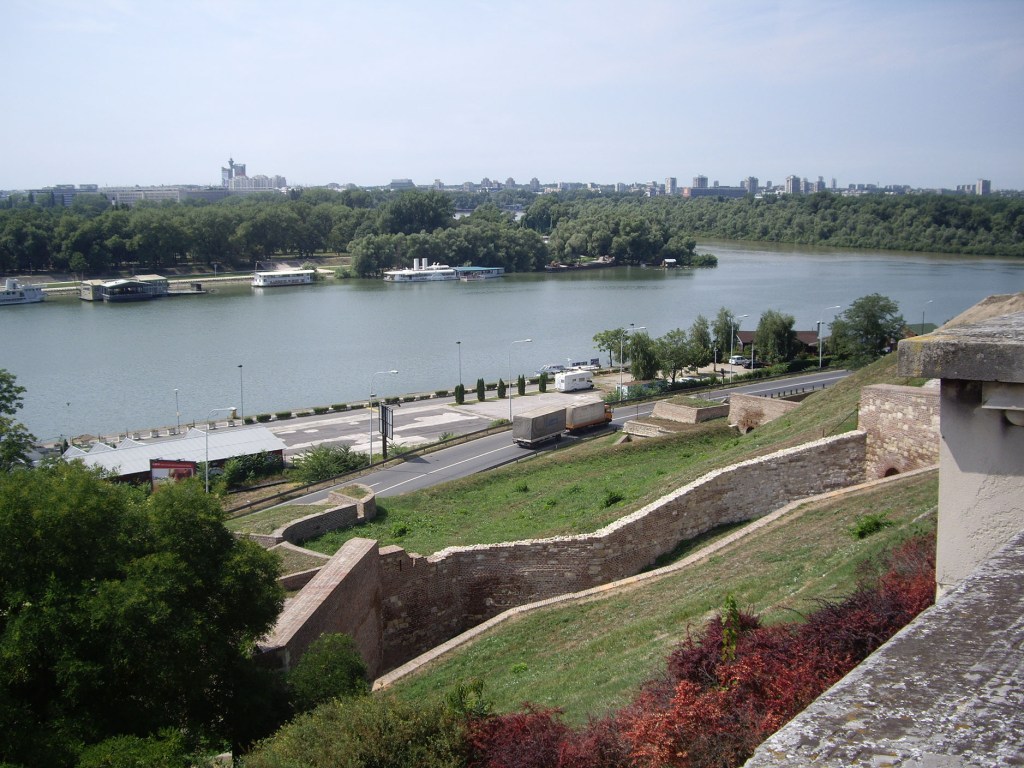
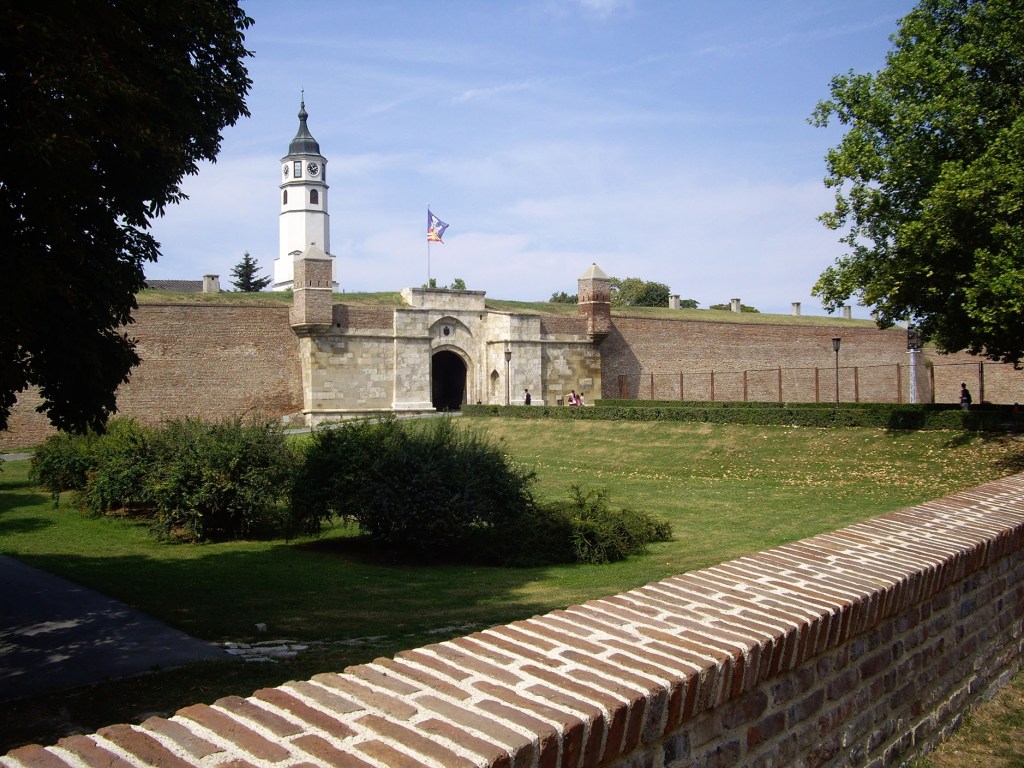
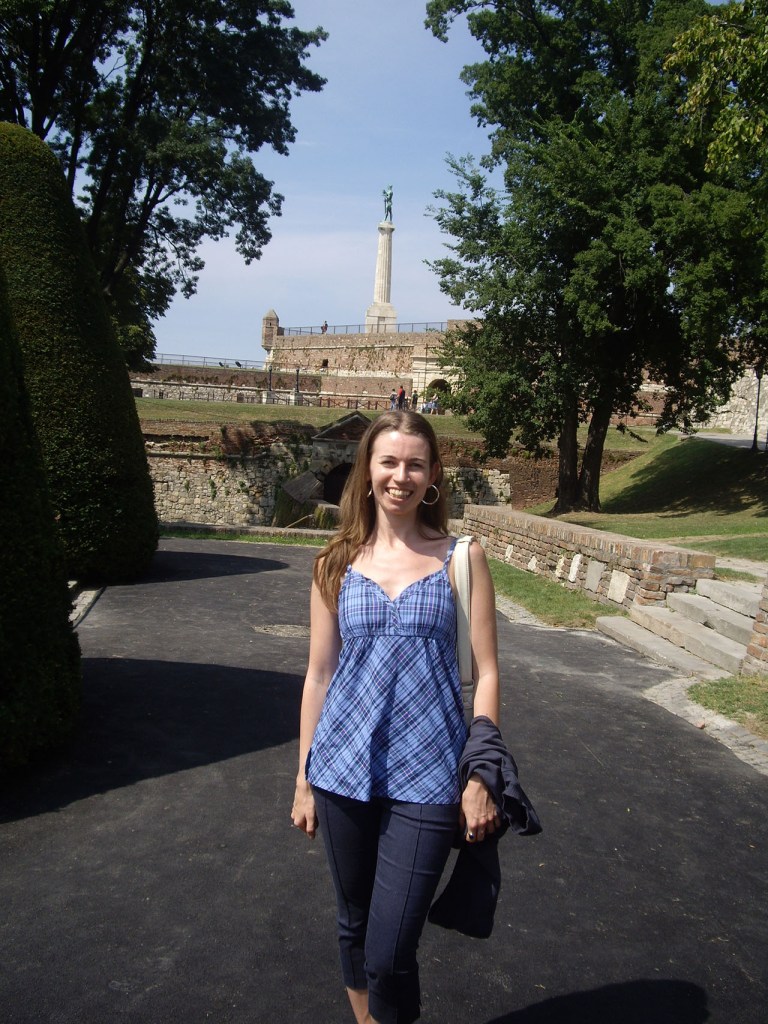
We started our walking tour from Republic Square. The pedestrian street Knyaz Mihailo took us to the “Kalemegdan” fortress, from where a wonderful landscape opens up towards the city at the foot and especially at the place where the two deep rivers Sava and Danube meet. Around the fortress there is a beautiful park and various cafes and museums. It could be compared to Bulgarian fortress Tsarevets in Veliko Tarnovo, but here it was much larger in size. According to some legends, in the 5th century this fortress was destroyed by the Huns and Attila’s grave was here, at the confluence of the Danube and Sava. Today, the fortress has a 14-meter tall statue called Pobednik (the winner), which represents a naked man holding a sword and a dove of peace, looking towards the confluence of the Sava River with the Danube.
In the evening we had a nice walk along the pedestrian Skadarlija street, which is full of restaurants and cafes, some of which play live music. Skadarlija Street is called “Belgrade’s Montmartre” and artists and writers gather here in the summer.
Another emblematic street here is “Kralja Milana”, which houses the Old Palace, erected in 1881, as well as the New Palace, built at the beginning of the 20th century, which today serves as the seat of the President. Opposite the Old Palace is the building of the Serbian Parliament.
The next day, we also succeed to visit the impressive Saint Sava Cathedral, which is the largest Serbian Orthodox church.
Belgrade is a real Balkan jewel. It is often called a crane because it has been completely destroyed over 40 times and then resurrected again. Today, it merges not only the Sava and Danube rivers, but also past and present, giving the Serbian capital a unique charm and friendliness to tourists.




GENERAL INFORMATION ABOUT BELGRADE:
Location: Belgrade is the capital and largest city in Serbia, located in the northern part of the country, at the confluence of the Sava River with the Danube.
Area: 359.96 sq.km
Population: 1,166,763 people
Official language: Serbian
Altitude: 117 m
Climate: humid subtropical climate and distinct four seasons.
Time zone: UTC+1
Currency: Serbian dinar (SRB)
Additional information: www.beograd.rs
TRIP TIPS FOR BELGRADE:
Best time to visit: All year round.
Typical food and drinks: Serbian cuisine is a mix between European and Balkan cuisine. Be sure to try the Serbian grilled meat and the local burek for breakfast.
Places to visit: The Belgrade Fortress, the Saint Sava Orthodox Church, the old palace and the summer residence Beli Dvor, etc.
 TripTips