5 DAYS IN MAJESTICALLY BEAUTIFUL ST. PETERSBURG
author: Ana Boneva
On a Sunday, June 9, 1672. the third son of Tsar Alexei Romanov was born in Moscow. His mother, Natalia Naryshkina, was the second wife of the tsar, and when her son was only 10 years old, she managed to establish him as heir to the throne. However, the child was more interested in ships and adventures, spending all his time in the suburbs of Moscow, at Lake Pleshcheevo and in the Foreign Village, where he was introduced to Western military science by European soldiers and adventurers. His mother tried to push him to a more settled life, as in 1689. arranged him a marriage with Evdokia Lopukhina, but this marriage failed, and after a few years he sent his wife to a monastery.
This boy’s passion remained ships, he understood that in order to strengthen Russia’s position, a stable outlet to the sea must be established. He laid siege to the Turkish fortress of Azov, with access to the Sea of Azov, in 1695, but the lack of a fleet and the inability of the Russian army to conduct operations away from supply bases led to failure. The construction of a flotilla began and in May 1696 the 40,000-strong Russian army, with the help of the Russian flotilla, besieged Azov and conquered it. Russia achieved access to the southern seas.
The young king realized that he would have to hire foreign specialists to build the fleet and reorganize the army, and together with a group of friends, he went incognito through Swedish Livonia to Western Europe. The 25-year-old king traveled around France, the Netherlands, the Holy Roman Empire and England, getting acquainted with Western culture and technology. He visited Venice and the Pope, while studying shipbuilding, military affairs and other sciences. After 15 months abroad, the tsar brought new customs and habits to Russia, among which was the order that all his employees shave their beards, otherwise they would have to pay an annual tax.
At the same time, Russia turned its attention to the Baltic coast and declared war on Sweden in 1700, and in 1703 conquered the fortress of Nyenschanz at the mouth of the Neva river. It was here that the king decided to build his own city on the seashore and on May 27, 1703. the foundations of the first building in the city were laid – the Peter and Paul Fortress, erected on the Rabbit Island. The city became the capital and received the name St. Petersburg, in honor of the saint, and not of the tsar, whose name was Peter the Great.


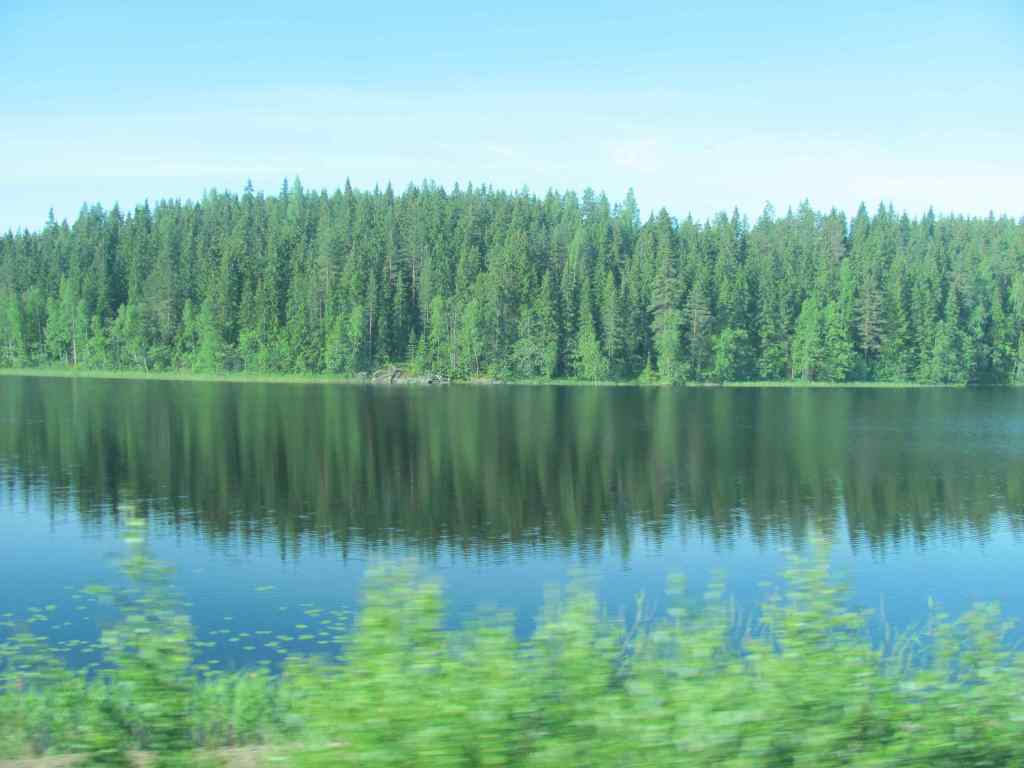
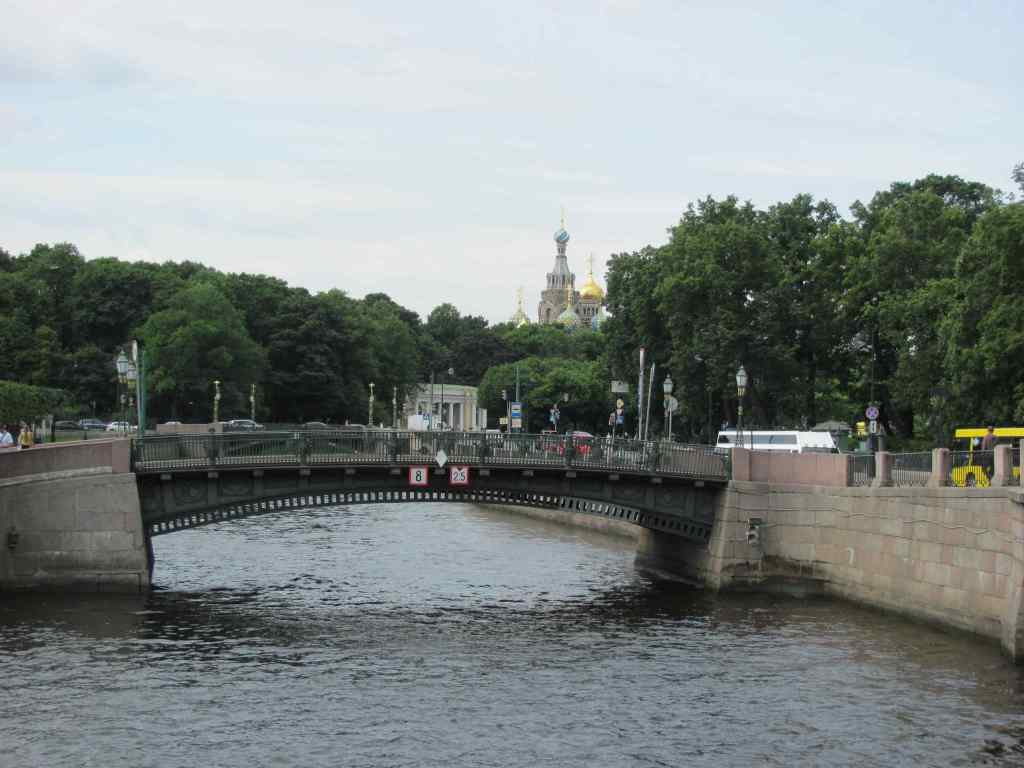

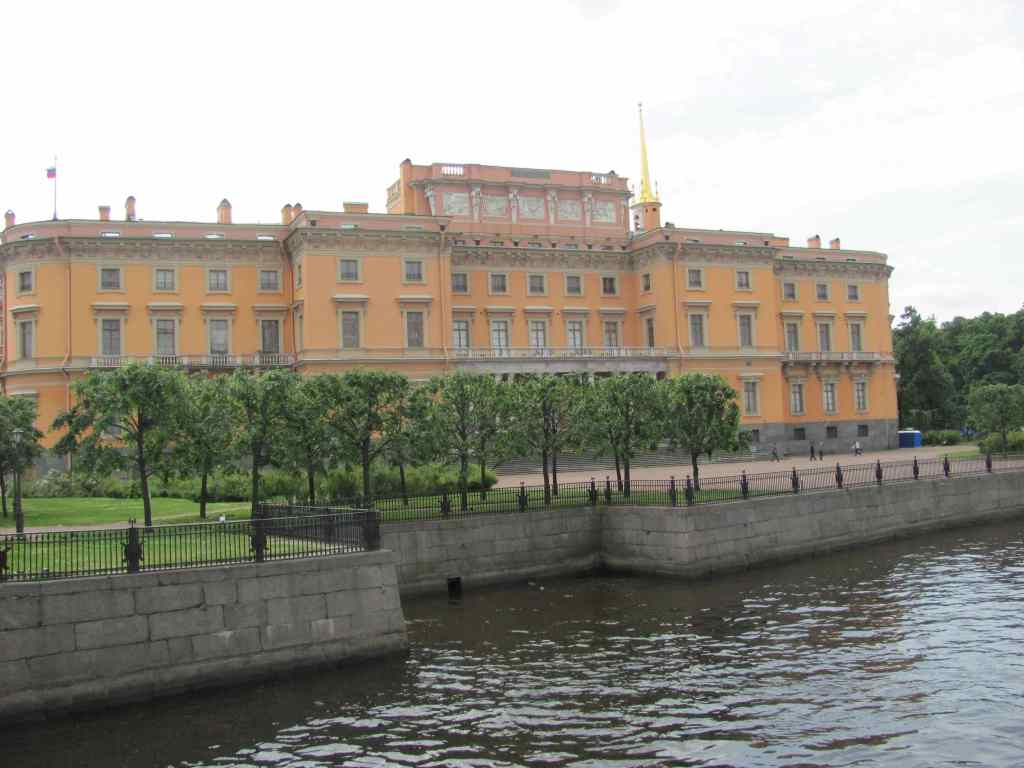
Getting off at Finland station in St. Petersburg from the Allegro 33 train coming from Helsinki, we took our first steps in Russia – the largest country by area in the world. A young man with a sign Versa (the name of the Russian travel agency) was waiting for us on the platform, and drove us to the Rus Hotel. The hotel was not luxurious, but its location was excellent. We were near the Letny Sad (Summer Garden), which is one of the most beautiful parks I have ever visited.
Our walk in the city began along the canals of the Neva River, heading to the famous Church of the Resurrection of Christ or also called the Church of the Savior on Spilled Blood. On the way, we took pictures with the beautiful statue of Pushkin, erected in front of the Russian Ethnographic Museum in 1957 on the occasion of the 250th anniversary of the founding of St. Petersburg. Only few cities in the world know the exact date of their foundation, and St. Petersburg was among them.


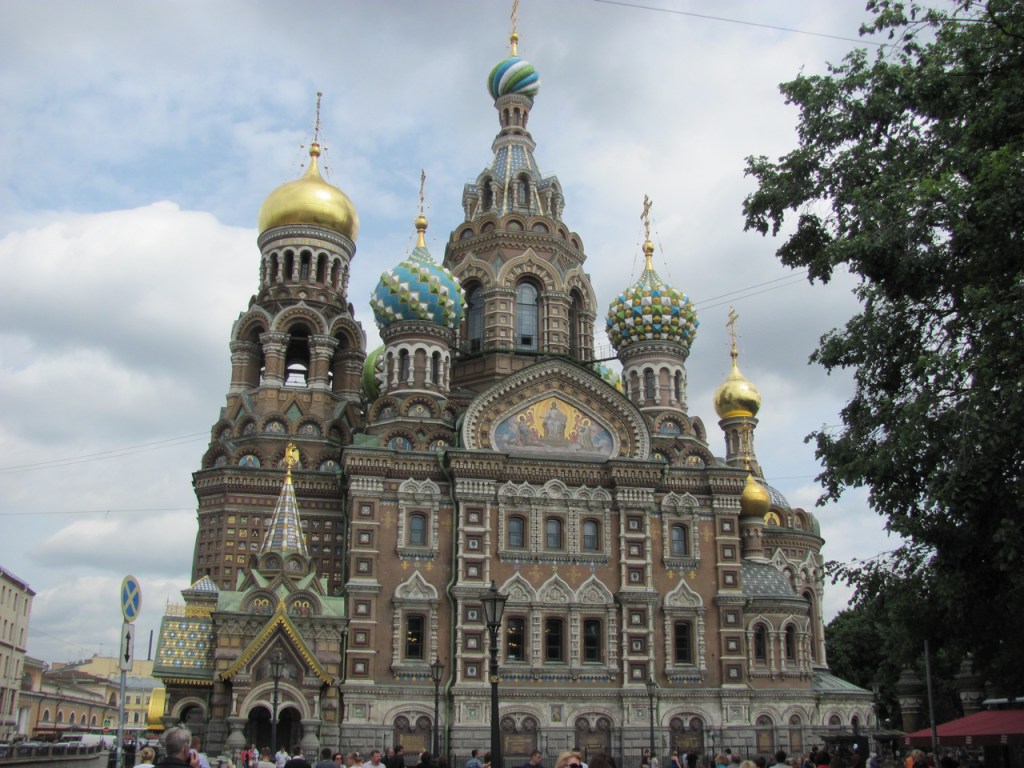
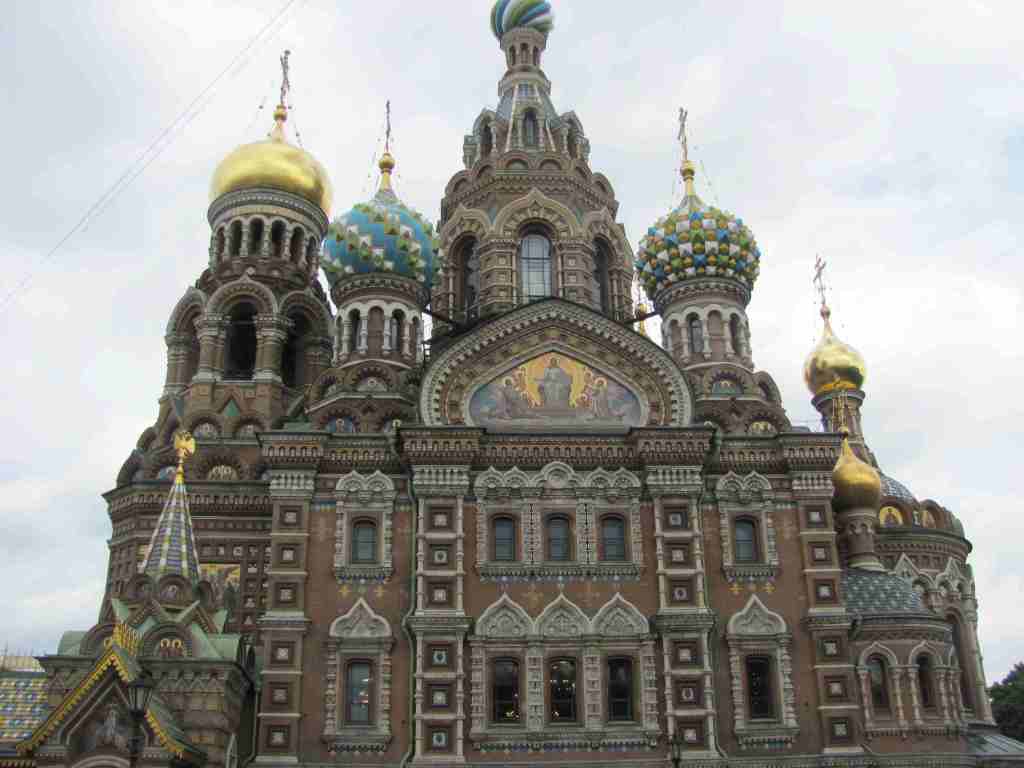
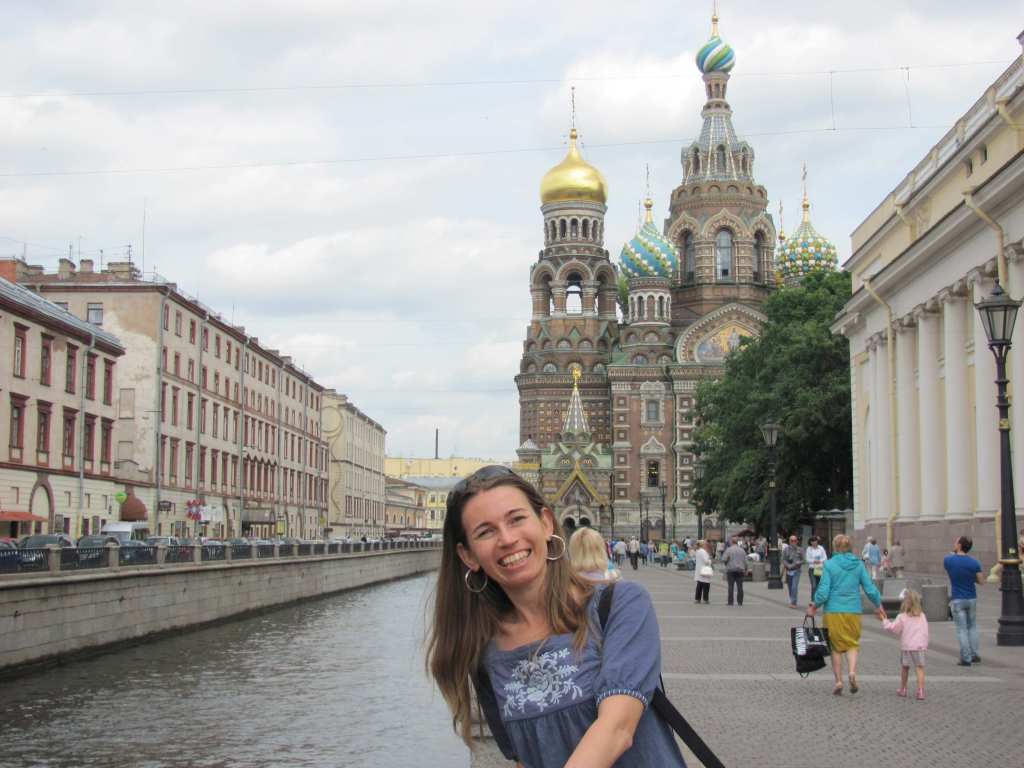
Undoubtedly, the city ranks among the cities with the most beautiful architecture I have ever seen, and the thousands of photos taken here seem not enough to recreate the splendor of this city. Splendor and fairy tale – these words also apply to the beautiful Church of the Savior on Spilled Blood, erected on the site where Emperor Alexander II was mortally wounded in 1881. This is where the name of the church comes from – “The Church of Our Savior on His Shed Blood”.
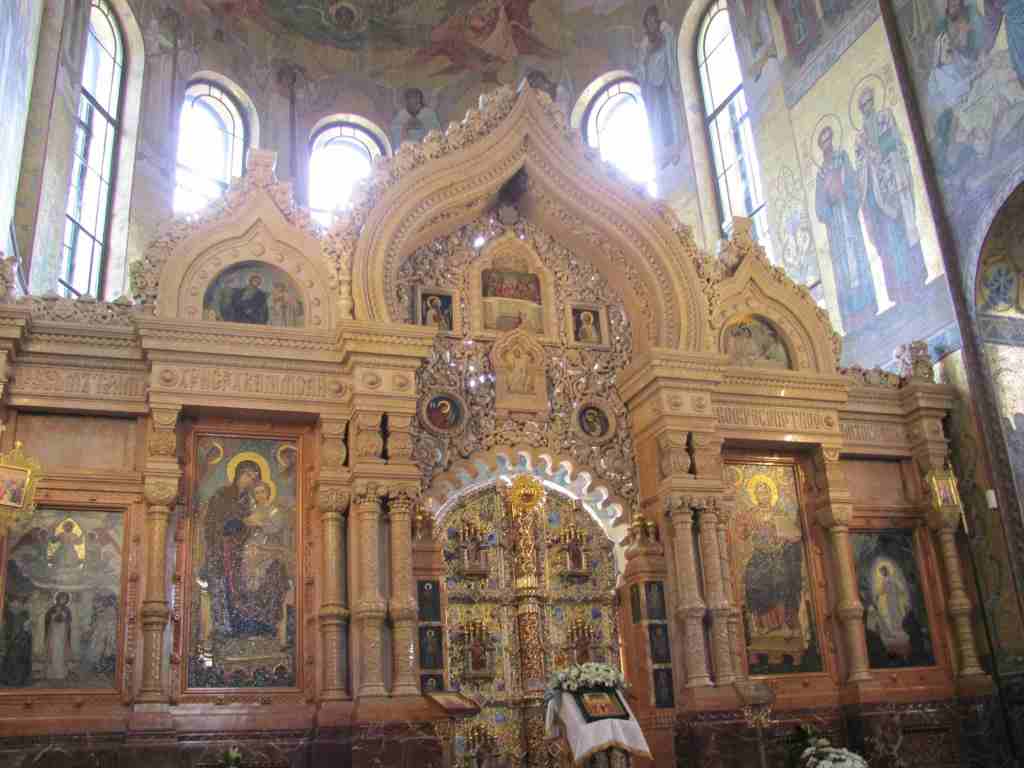
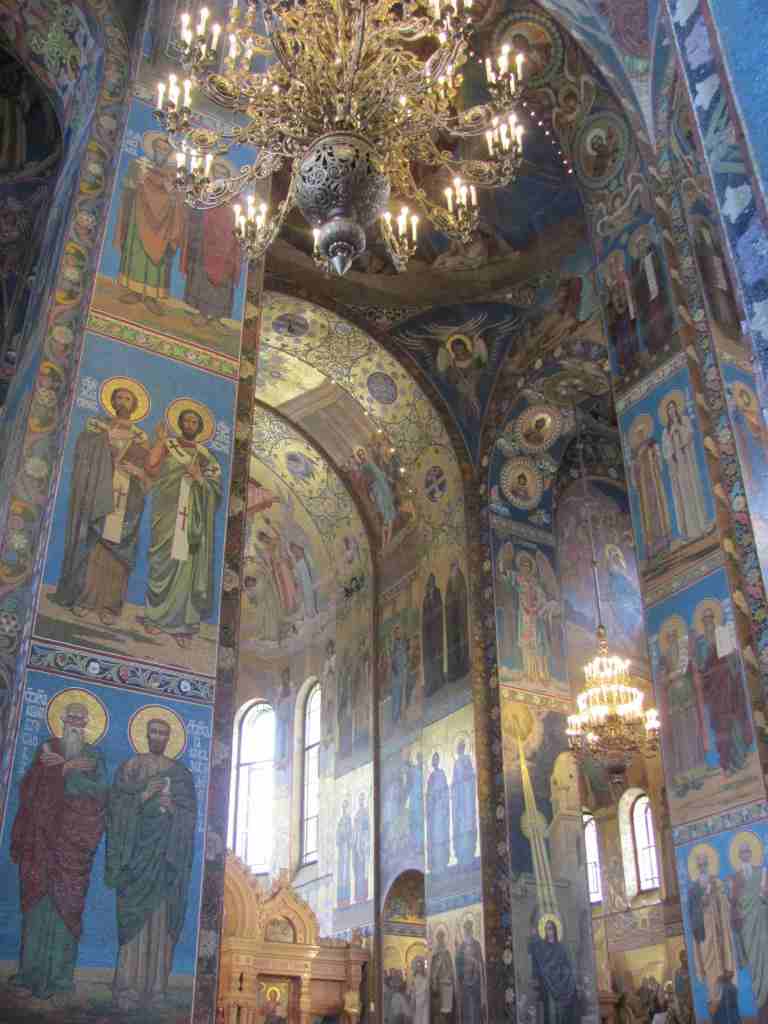
The colorful domes of the church make it uniquely beautiful, as it is from the outside, as it is from the inside. The walls are entirely painted with beautiful biblical images, icons and mosaics. In fact, according to the restorers, the church contains 7500 sq. m. mosaics, which are more than in any other church in the world.
It is difficult to imagine that all this beauty was greatly neglected and damaged after the Russian Revolution. Later, the Russian government closed the church completely in 1930, but opened it during World War II, serving as a morgue. After the war, this wonderful building was turned into a vegetable warehouse, bearing the ridiculous name of the Potato Savior. In 1970 it was closed again, this time for restoration, which ended 27 years later. The church, or rather the mosaic museum, reopened its doors in August 1997 and to this day it is one of the main attractions of the city and a symbol of St. Petersburg.


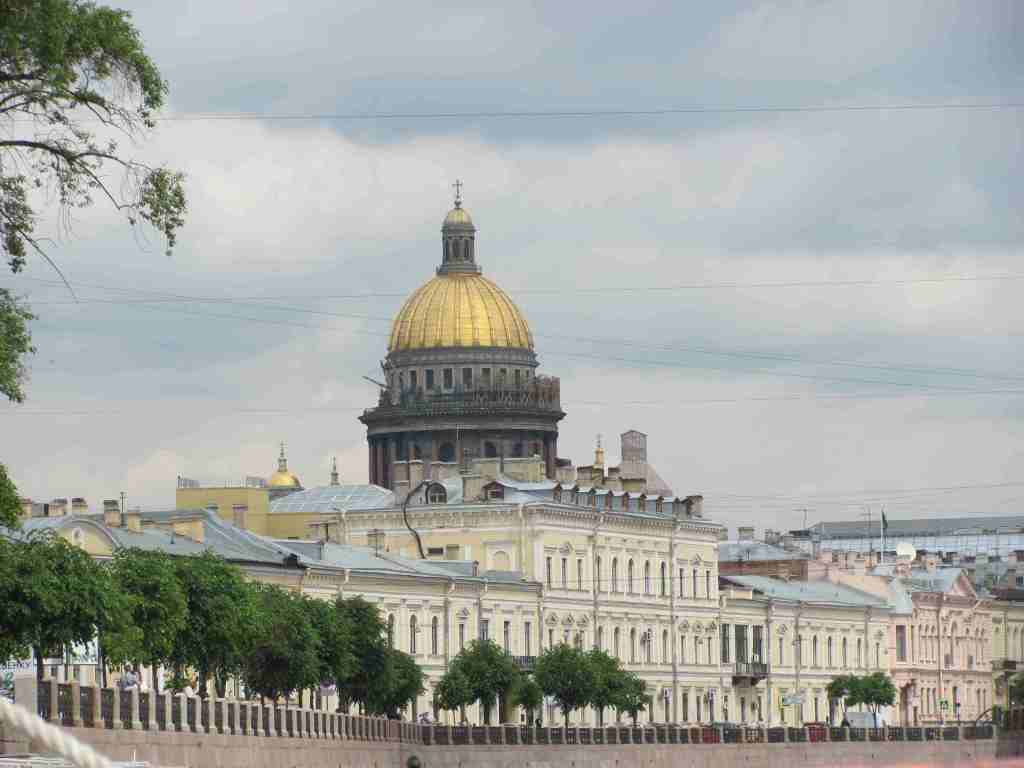
Near the church, tourist boats depart on the Neva river and we boarded one of them, looking at the city from the water side. It is no coincidence that St. Petersburg is known as the Venice of the North. In Venice, however, the canals are quite narrow – those of the Russian Neva River are like boulevards. The buildings are beautiful, massive, colorful and restored to the smallest detail – with large statues-columns, relief figures and proud coats of arms.
The boat tour lasted 1 hour, passing by the building of the circus, the church of St.St. Simeon and Anna (which, by the way, is one of the oldest churches in the city and an excellent example of early Baroque architecture), the bridge with horses named Anichkov (which is the first bridge over the river and one of the most famous in the city), the University of Road Communications, the Baroque church of St. Nicholas and many other buildings – jewels of Russian classical architecture.
After the boat tour, we headed to the huge Field of Mars park, occupying an area of 9 hectares and dedicated to the Roman god of war Mars. Initially, it was called Tsarska Livada and served as a walk outside the palace. Later, however, military parades and trainings began to be held there, and there were monuments to the Russian army.

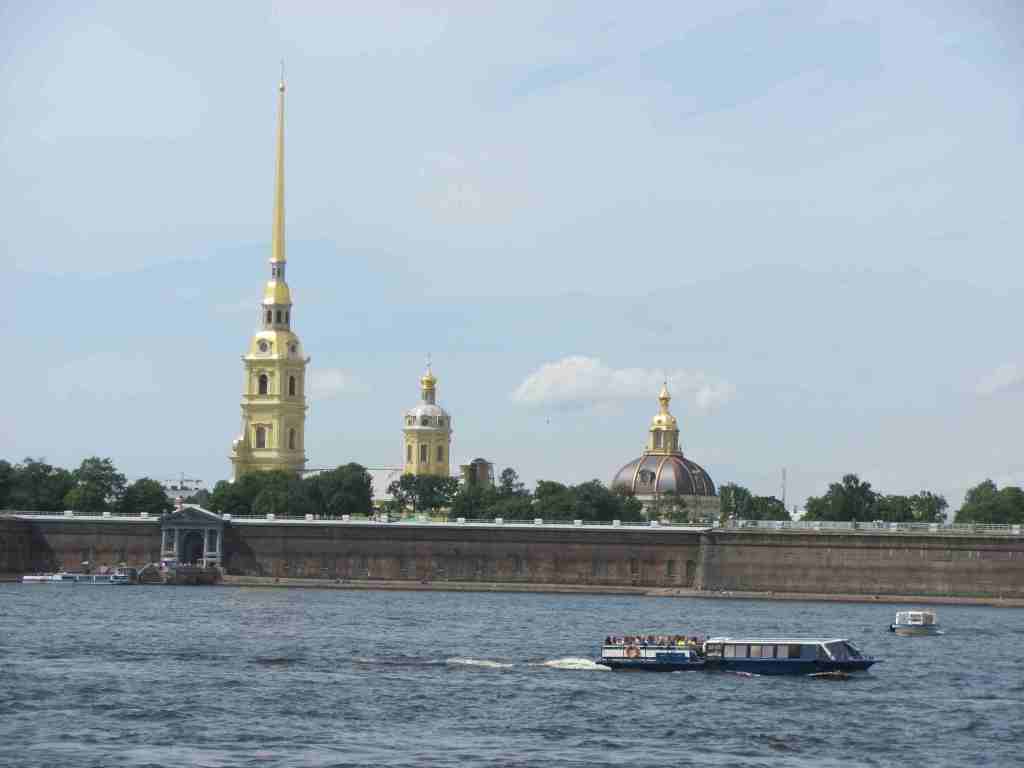

At the end of the park there was a large street and a bridge that led to the Peter and Paul Fortress. We headed to the fortress, which, in addition to being the first building in the city, was built in just one year as a defensive facility during the wars with Sweden. The fortress walls had an interesting angular shape, and the entrance to the fortress was free. We only paid for the entrance to the cathedral in it, where almost all the Romanovs, including Peter the Great, were buried. The cathedral was very beautiful, both inside and out. Inside there was a golden iconostasis, and on the outside of the golden dome had erected a golden angel at a height of 123.2 meters, and the tower was known as the Needle.
Right opposite the cathedral was the mint building, we took pictures with the beautiful chairs, like thrones placed in the park, as well as with the statue of Peter the Great. For a long time, the fortress was used as a prison, and now an underground tour and an even more picturesque tour along the top of the fortress walls were offered.


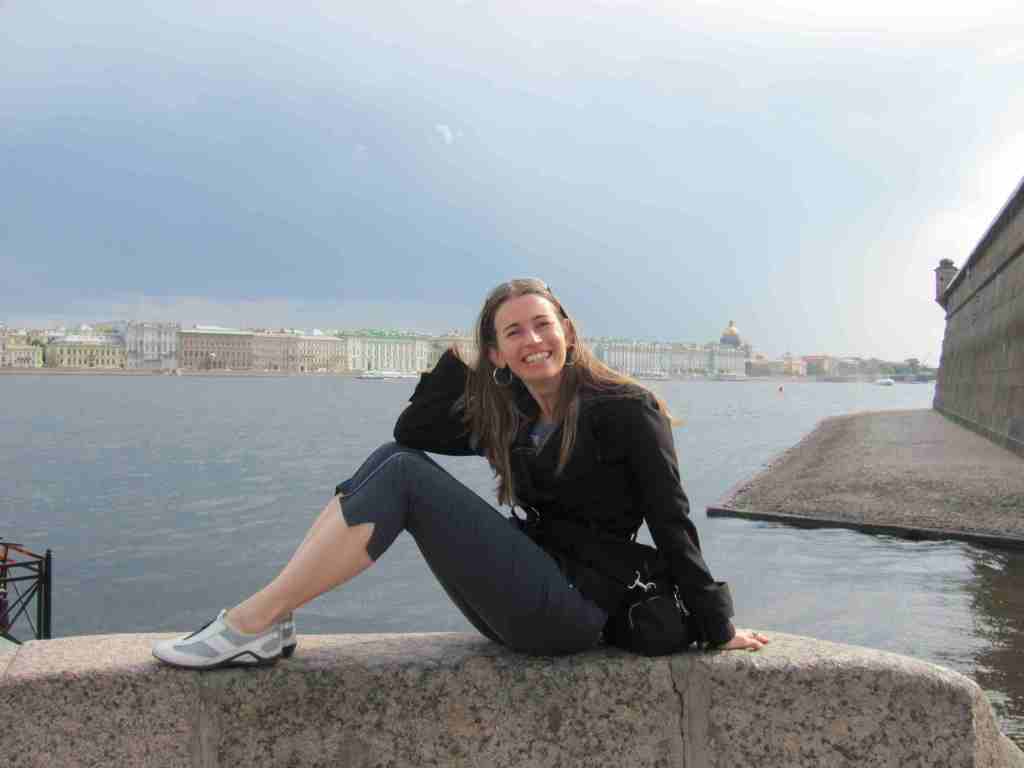
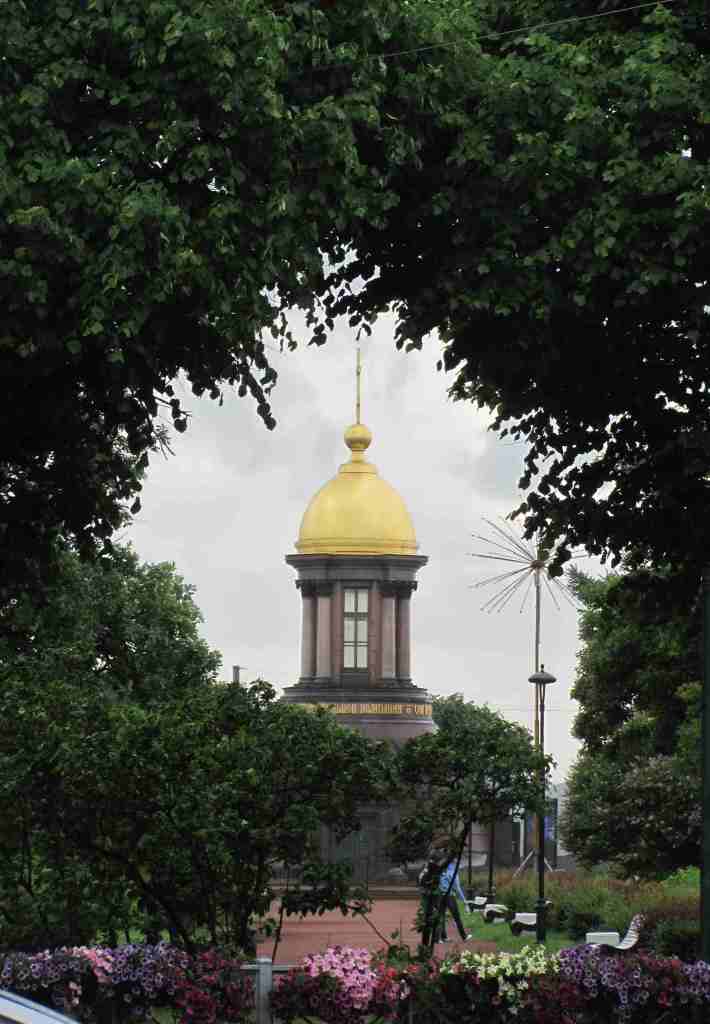
Our walk continued through a beautiful park, where we ate incredibly delicious pancakes (blinachki), after which we headed to the Summer Garden. Of the 5 days in St. Petersburg, in 3 of them we passed through this Summer Garden, not only because it was close to our hotel, but also because it fascinated me with its greenery, with the beautiful marble articles of Greek or Roman deities and the many wonderful fountains that gave complete harmony to the park. I thought of the 3 main elements in the Chinese park – plants, stone and water. Here the three were in complete harmony.
No wonder the park is so beautiful, after all, it was personally arranged by Peter the Great in 1704 with the help of Dutch gardener and physicist Nicolaas Bidloo. The park is located in front of the summer palace, and later in 1716 French architect Jean-Baptiste Le Blond added the Garden a la français style. Hundreds of marble sculptures were placed along the alleys. At the end of the 20th century, the 90 surviving sculptures were placed indoors and replaced with copies of them.
The walk in the Summer Garden was an excellent end to the day. St. Petersburg won my heart from the first day. The next day we met our tour guide and our Russian group, and we easily got used to the soft and melodious Russian language.


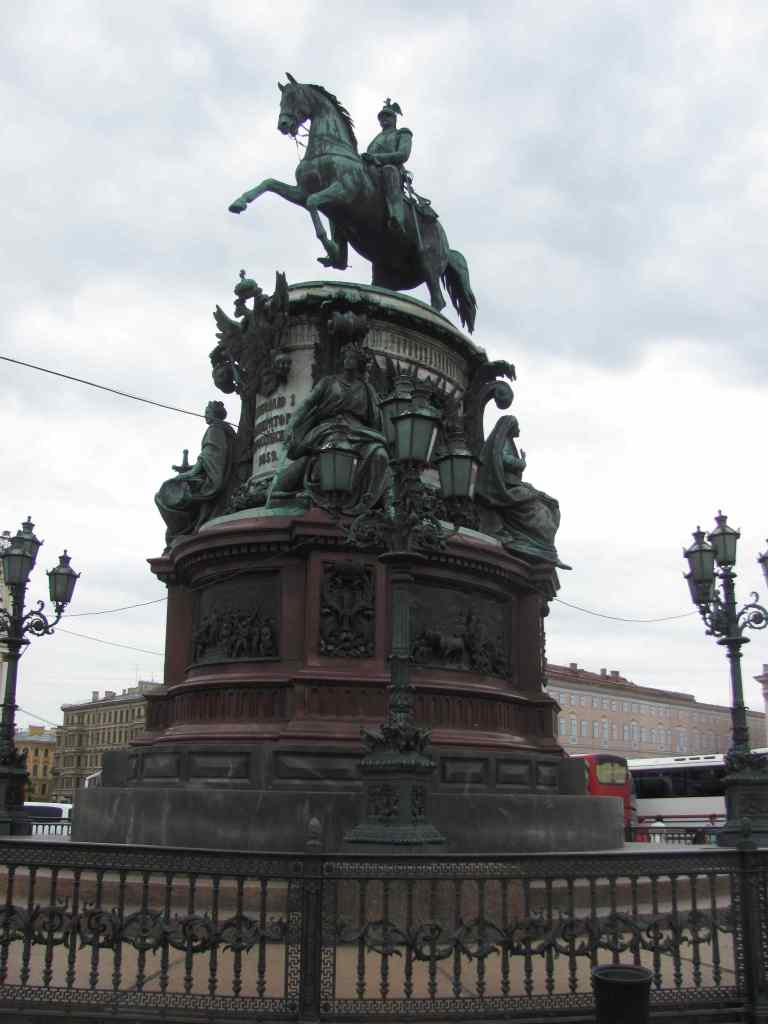
The next day in the morning, together with our guide Tatiana, we headed to the famous Hermitage Museum. On the way, we made a short photo break in front of St. Isaac’s Cathedral, which we were going to see from the inside in two days. And now we just posed for the beautiful architecture, as well as for the impressive monument of Tsar Nicholas I, riding his horse. Our next stop was the Hermitage.
What is the largest museum in the world? According to WikiAnswers, this is the Hermitage in St. Petersburg, taking into account the ratio of area and exhibits in a single building. Otherwise, there are other museums in larger buildings, but in terms of the number of exhibits they are much behind. The Smithsonian Museum in Washington, USA, is considered the largest museum complex in the world, consists of 19 museums and has the largest number of exhibits. The most visited museum in the world with over 9 million visitors a year turned out to be the Louvre in Paris.
I have already had the pleasure of seeing and was delighted with the rich collections of the Louvre, the British Museum in London, the Prado Museum in Madrid, as well as the Pergamon Museum in Berlin. Now, however, I was about to enter one of the oldest museums (opened in 1764) by Catherine the Great) and owning today over 3 million exhibits, including, in addition to original paintings by Rembrandt, Da Vinci, Michelangelo, Rubens, etc., as well as numerous statues, sarcophagi and of course the wonderful imperial belongings, and proudly photographed myself with the red throne with the golden coats of arms of Russia. It is difficult to judge which was more beautiful the exhibits or the walls of the building, which had preserved their past greatness with wonderful golden reliefs, painted ceilings, from which huge chandeliers descended, which were again of course gilded


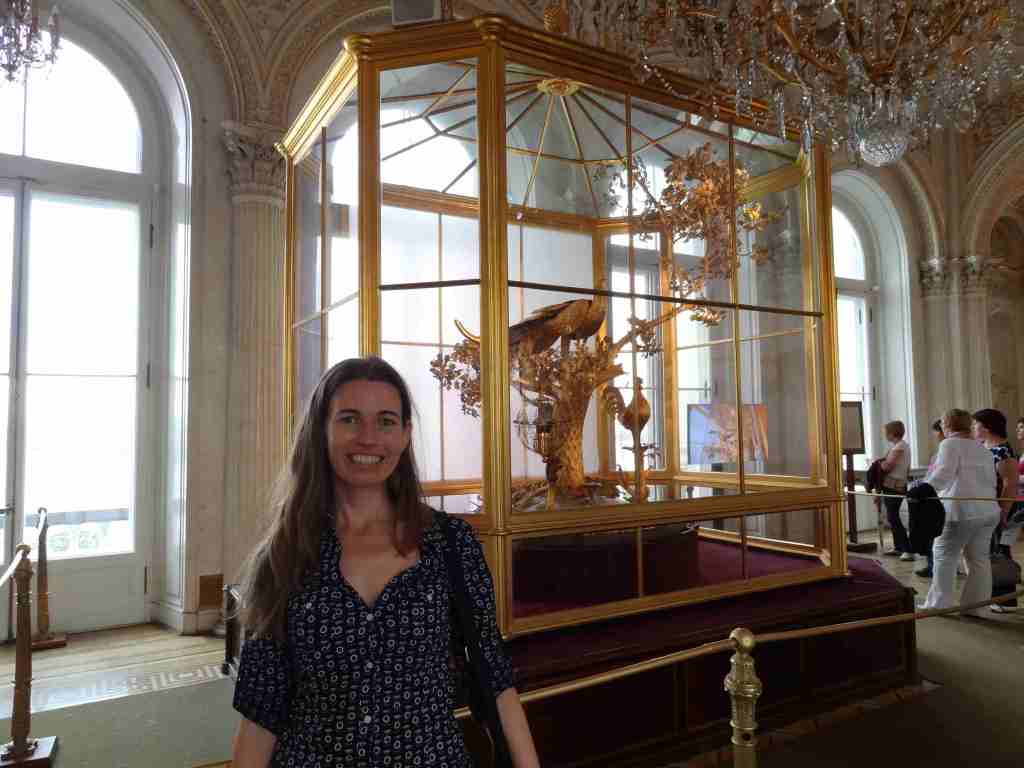


From the outside, the Hermitage building was no less beautiful, with a slight blue-green hue, with white columns, golden decorations and beautiful statues erected on its roof. In fact, the Hermitage was conceived as a place of privacy (this is exactly what the French word “Hermitage” means), but in 1764 in its halls were exhibited 225 canvases by Western European artists, with which the Berlin merchant Gotzky paid off his debts to Catherine II. By the end of the 18th century, the best artistic values in Europe were already collected there. However, they were available only to high dignitaries, diplomats and associates of the royal family. At the beginning of the 20th century, the museum already had 600,000 works of art and ancient cultural monuments. Today it is the largest museum in Russia and houses over 3 million works of art from different eras, countries and peoples, representing world culture from several millennia to the present day.
According to interesting statistics, the total length of the nearly 400 halls is 22 km. If a visitor spends 1 minute on each exhibit, it will take him 11 years to see everything – provided he spends 8 hours a day in the museum. Our walk lasted only 2 and a half hours, of which the first hour with a guide, after which we had free time to look at the collections that interest us.



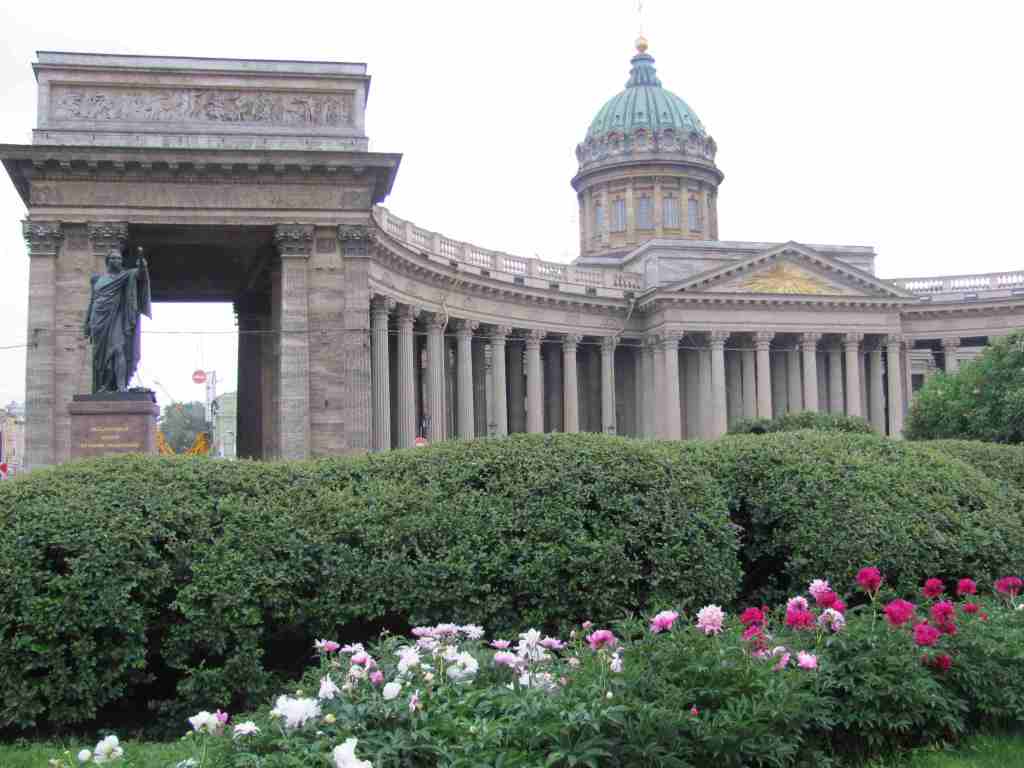
After the museum, we decided to walk back to the hotel, passing along the largest shopping street Nevsky Prospekt. We took pictures in front of the beautiful building of the Kazan Cathedral or as it sounds in Казанский Кафедральный собор. This cathedral is one of the largest in the city, erected in the period 1801-1811. and is particularly beautiful with its numerous arches and fountain in front. On the way, we had a treat in a pastry shop that bears the sweet name Shokoladnitsa. Then we passed through the Bolshoy Gostiny Dvor indoor market, which is actually a multitude of luxury and branded shops gathered in a wonderful historical building of the 18th century. I especially liked the long terrace on the second floor, along which we went through the entire store, taking beautiful photos from the outside and from the inside.
We also took photos with the monument to Catherine the Great, erected in 1873, and under the empress there were relief figures of prominent politicians and artists of her time. From there we again passed through the Summer Garden Park, which again welcomed us with light rain, and we renamed it Rainy Garden. The rain seemed to make it greener, the rustle of the fountains did not sound the splashing, and the tall trees made us a canopy. It is difficult to break away from the beautiful alleys, but at 22:00 the park closed its doors and we were invited to leave.



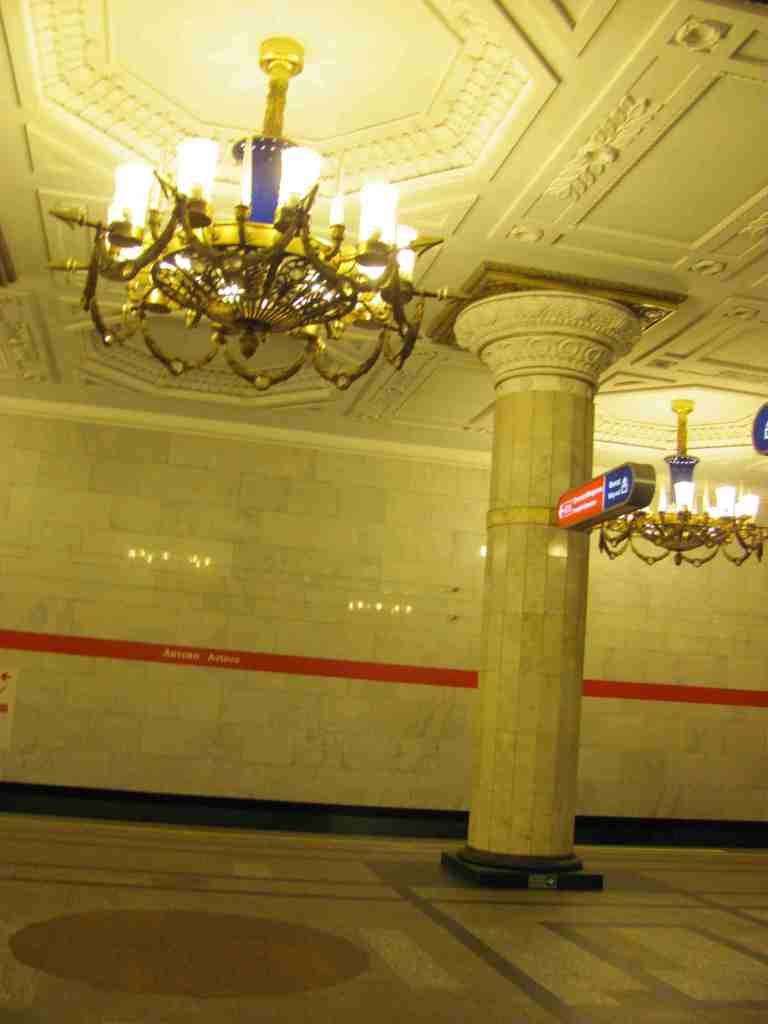
The next day, we tried the St. Petersburg underground for the first time and were fascinated by the beautiful metro stations. At the Avtovo stop, e.g. Heavy chandeliers hung from the ceilings, and the ceilings were beautifully embossed, from which marble columns descended to the floor. The next stop turned out to be even more beautiful – Kirov Plant – with rich ornaments and columns like arches. I got off at every stop, taking a quick picture and then got back on the train. The passengers looked at me in great surprise, and I personally was is great surprised at the beautiful stops that looked like museums.
The St. Petersburg metro was put into operation on November 15, 1955, although its construction was talked about as early as 1901. The interesting thing about the metro is that it is dug in at a great depth so that it passes under the river and going down and up with the escalators took a considerable amount of time.


We got off at the Technological Institute stop and headed to the famous Aurora ship. The legendary cruiser Aurora took an active part in the October Revolution of 1917. It was launched on May 11, 1900 on the personal command of Emperor Nicholas II. After that, the ship took part in the First World War, and at the end of 1916 entered the port of St. Petersburg for major repairs. On October 25, 1917 the ship’s crew refused to go to sea and its cannons gave the signal for the storming of the Winter Palace in St. Petersburg, which ignited the beginning of the October Revolution. In 1948 it was declared a monument to the revolution and turned into a museum, which is still active today.
We continued on foot through the beautiful Summer Garden Park, reaching the circus building. We bought tickets for the unique show Circus on Water, choosing seats in the first row of the balcony, with excellent visibility. The stage was a pool in which acrobats dived and then jumped. The clowns were especially funny, and I really laughed heartily during the whole performance. Especially interesting were the tricks of several trained poodles, which moved along the covered part of the stage, tossing, jumping and making the audience applaud them. After them there were new acrobatic tricks, as some of the gymnasts made complex figures in the water, of course there was a man who walked on a rope, as well as another who supposedly cut him with knives. After the first hour, there was a short intermission of 20 minutes, during which we visited the circus museum.
The National Circus in St. Petersburg, which in Russian sounds Большой Государственный цирк Санкт-Петербургский, is located in a beautiful marble building and has been performing since December 26, 1877. This is definitely one of the most beautiful circuses in Europe. After the intermission, the show continued this time with a beautiful dance of fountains, reminiscent of the one I had seen in Dubai – the water was illuminated with different colors and moved rhythmically to the sounds of the music. Then beautiful acrobats joined the music, twisting their heads and legs above the water, and in the center of the podium, one of them began to spin dozens of hoops at the same time. Very beautiful was the performance of the pigeon trainer, who emerged from a huge water lily, having a snake tamer and a crocodile. Definitely, however, the culmination was the two seals, who were perfectly trained and could spin balls with their noses, as well as hoops, and like dolphins jumped into the water at great heights. They also had a sense of humor, constantly wetting their trainer with their tail or flippers, then turning their backs on him as if they weren’t them. The whole show lasted more than 2 and a half hours.


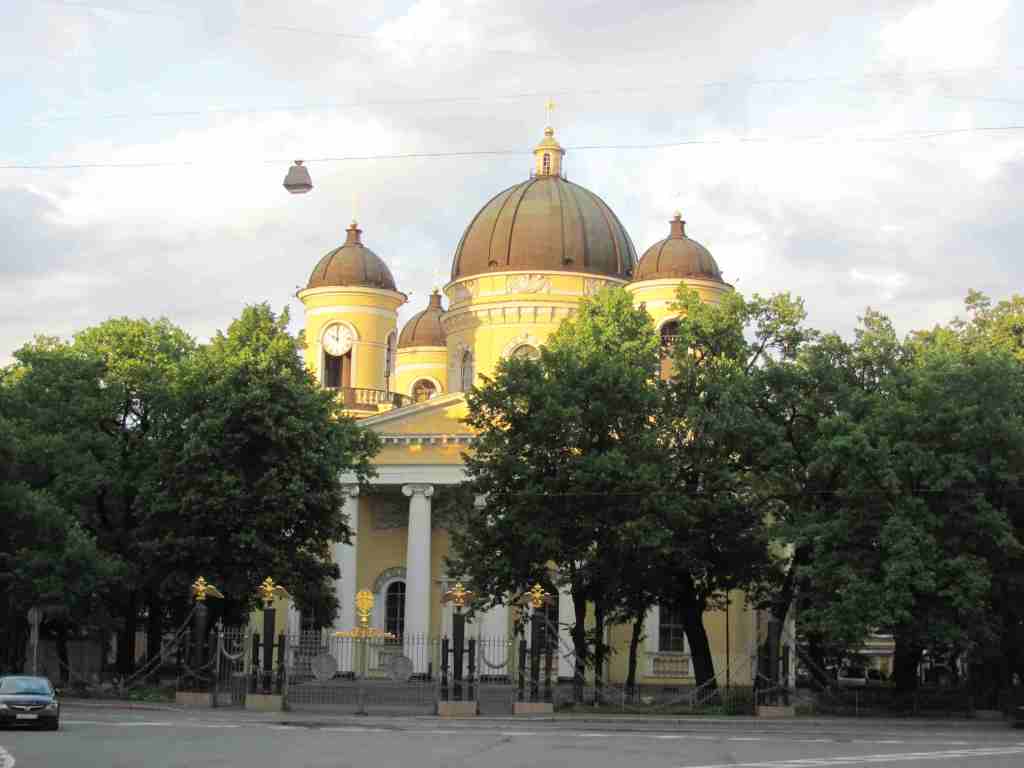
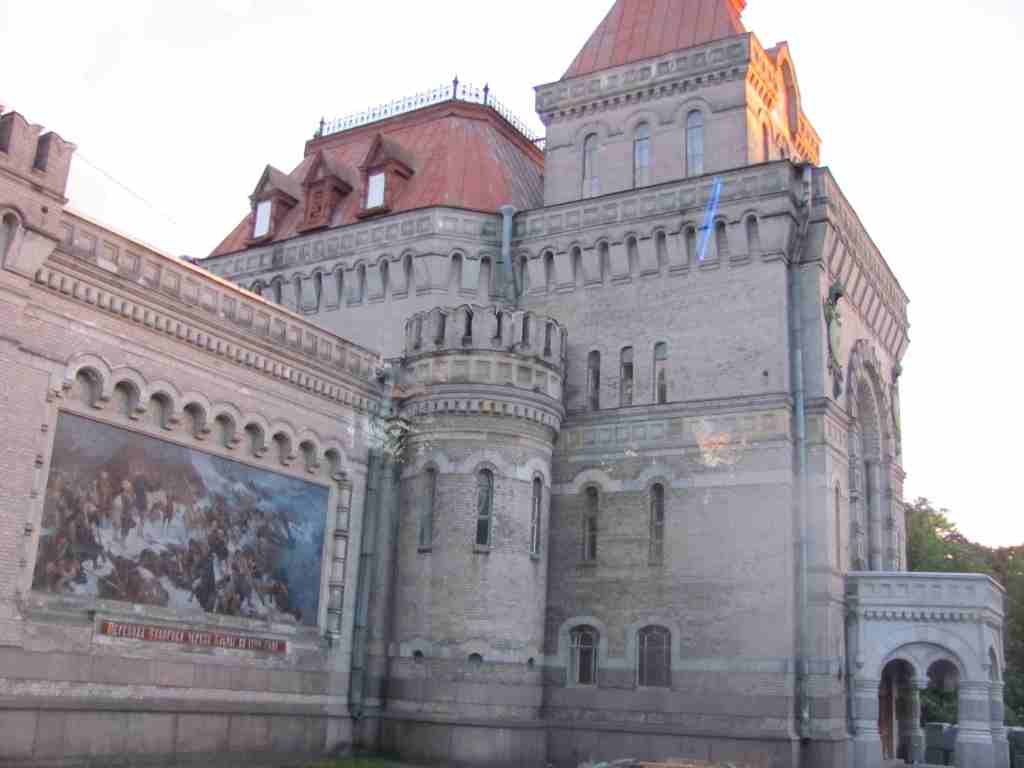


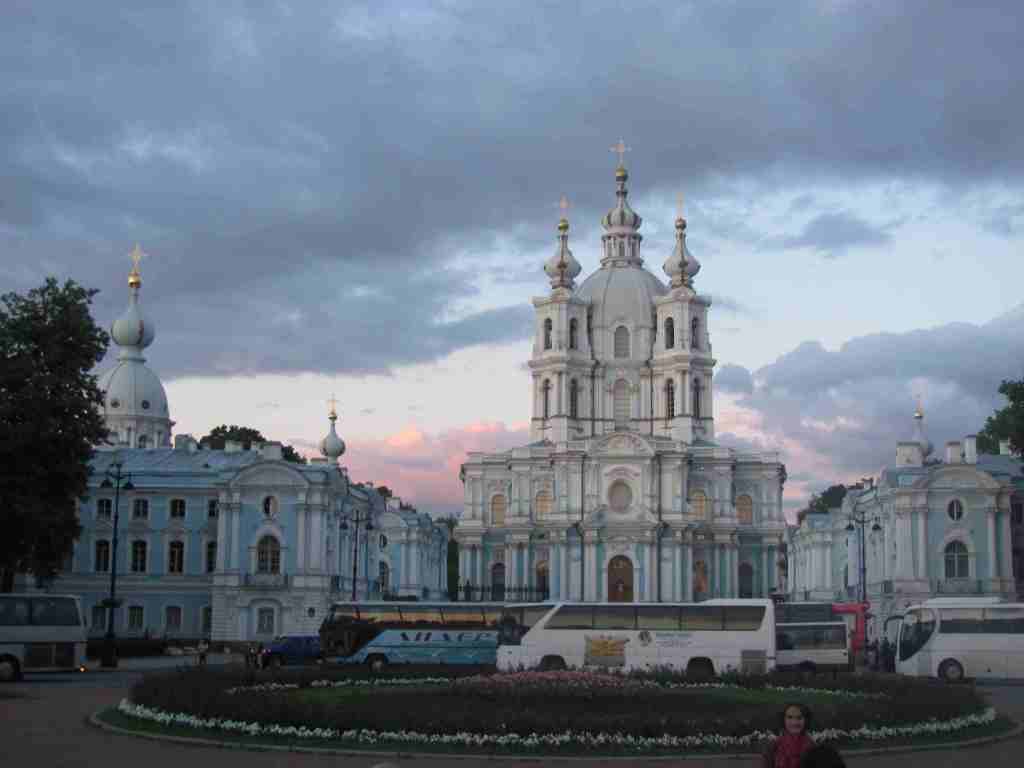

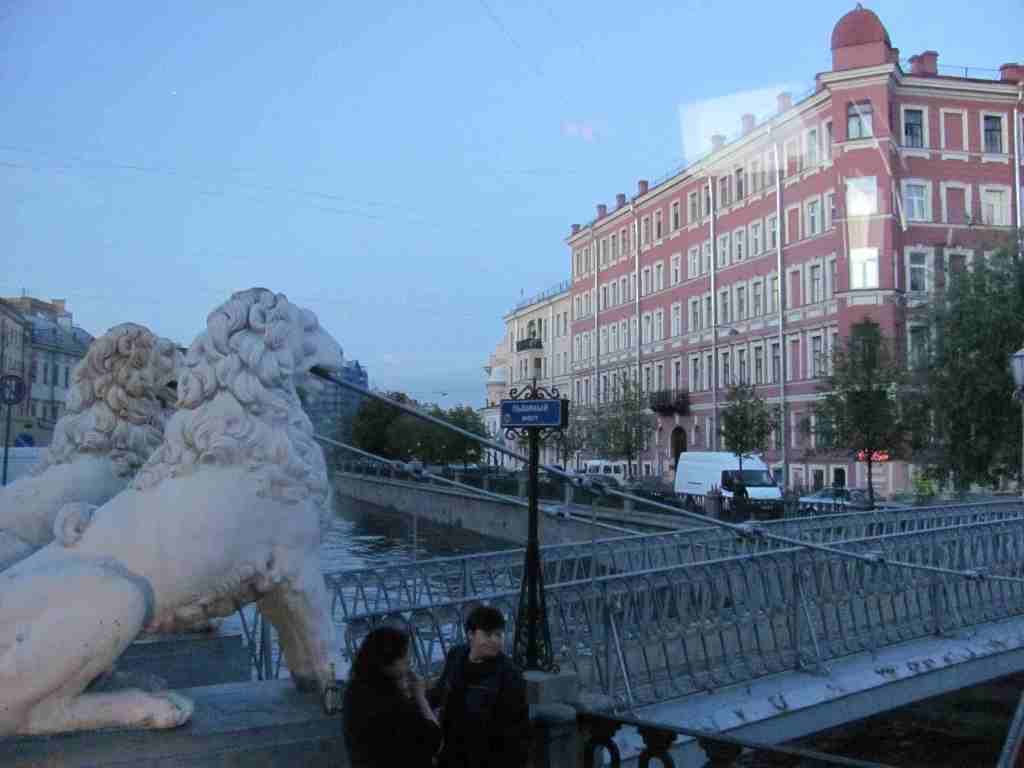
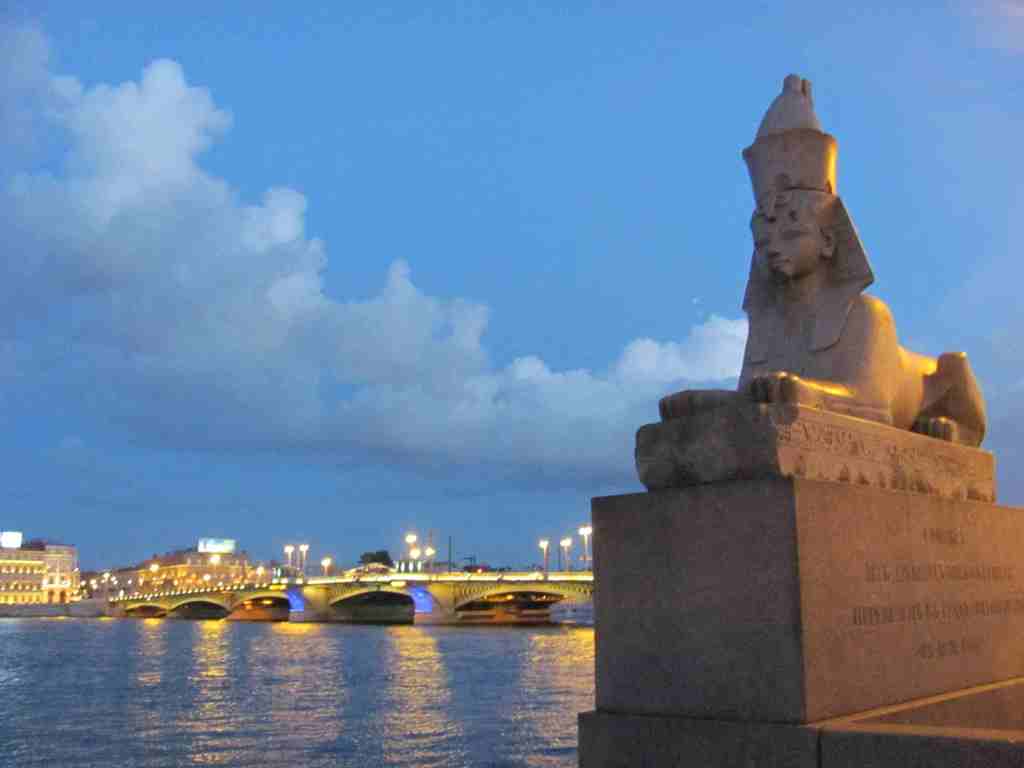
The circus ended after 22:00, but the wonderful emotions did not end with him. We had another attraction of the day ahead of us – the White Nights bus excursion. In fact, the concept of White Night is observed only in the polar regions of the Earth, when the sun does not set, but only touches the horizon at midnight. In St. Petersburg, the white nights begin on May 25-26 and end on July 16-17, with the most impactful being from June 10 to 22, when the day is the longest (18 hours and 35 minutes). Today was June 15, the sun had risen at 04:35 (at least that’s what it was written on the Internet) and was expected to set at 23:23. So our tour with the bus at 23:00 started brighter, pale pink clouds only slightly colored the sky.
This time our excursion was with another tour guide – Ekaterina Burdina, and I can definitely say that this was the most interesting, fun and professional guide I have ever traveled with. All the time she was telling us interesting and funny things, we didn’t get enough sleep at all, on the contrary, time flew by too quickly. First we passed and stopped for a photo break through a narrow street decorated with various lanterns and a monument to a street worker. Then we continued and stopped in front of a magnificent palace complex, having learned that the first girls’ institute was here, which arose back in 1764. Catherine the Great (1729-1796) had sent various persons to Europe to investigate what kind of education was given to girls there, but it turned out that only in France there was a small school for noble ladies, in Russia they opened an institute for girls, in which girls were prepared to be good mothers, wives and housewives. They even had a subject How to find a husband, it’s a pity that this theme is no longer studied.
With the bus we continued to some more modern glass buildings, next to which beautiful buildings of old factories had been preserved. Domes of churches protruded from everywhere, and our next stop was the Lion’s Bridge. On this not so large pedestrian bridge there were four lions, from whose mouths descended the ropes that held the bridge. There was a legend that you had to leave a penny on the left leg of the lion and your wish would come true. Surely the wishes of the Russians who passed by and collected the pennies would have come true.


The other place where tourists are forced to throw their money is a small statue located on the surface of the water under a bridge, and each tourist had to make a wish and then throw the coin at the small figure if it hits its head – his wish will come true, if not, a diver in the Neva will get rich.
Our journey continued along the fenced off beautiful Summer Garden, about which we learned that in the past people walked here to look for brides and husbands, and drunk people were not allowed. Now at least I understand why this place attracted me so much and in the hope that the tradition has been preserved, almost every day we passed through the beautiful Summer Garden.
In the bus, we moved along the different canals, hurrying around the main designated places before they began to raise the bridges – the main attraction of the excursion. We stopped in front of the Egyptian bridge, on which there were various sphinxes and Egyptian cats.
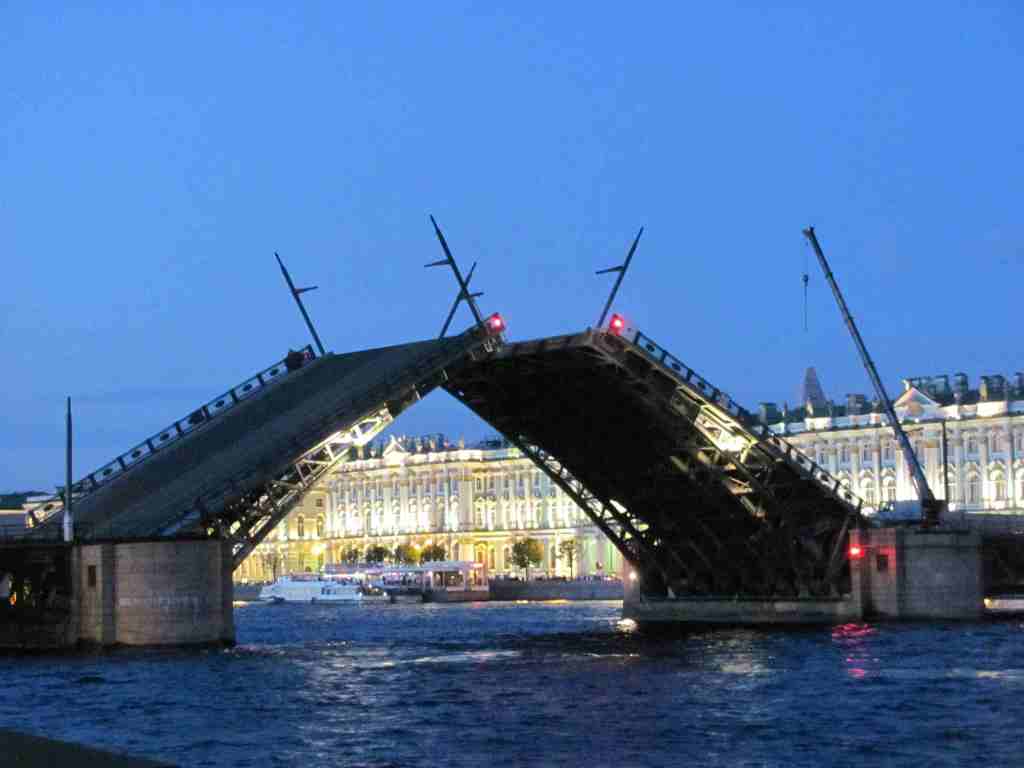
The sun had set, but the daylight had not yet parted with the day. At 01:00 it was a light twilight and the moon was trying to shine brighter in the pale bright sky. We had stopped at the beautiful red columns located in the eastern part of Vasilev Island, erected as early as 1733, and in the evening they were shining and guiding the mooring ships. At 01:40 the first bridge began to rise, to which we stopped and watched it with curiosity.
Then the bus took us to two other bridges and each one, narrow or wide, split in two and raised its halves 90 degrees. Then large and small boats, both cargo and tourist, passed below, and we all took pictures with pleasure of this daily event for the locals and unique for us.
Two hours had passed when the bus left us close to the hotel, the light twilight had begun to unfold and in less than an hour we were waiting for the sunrise. However, we met him in our dream, which we needed for the next day, when the tour of the majestically beautiful St. Petersburg would continue.



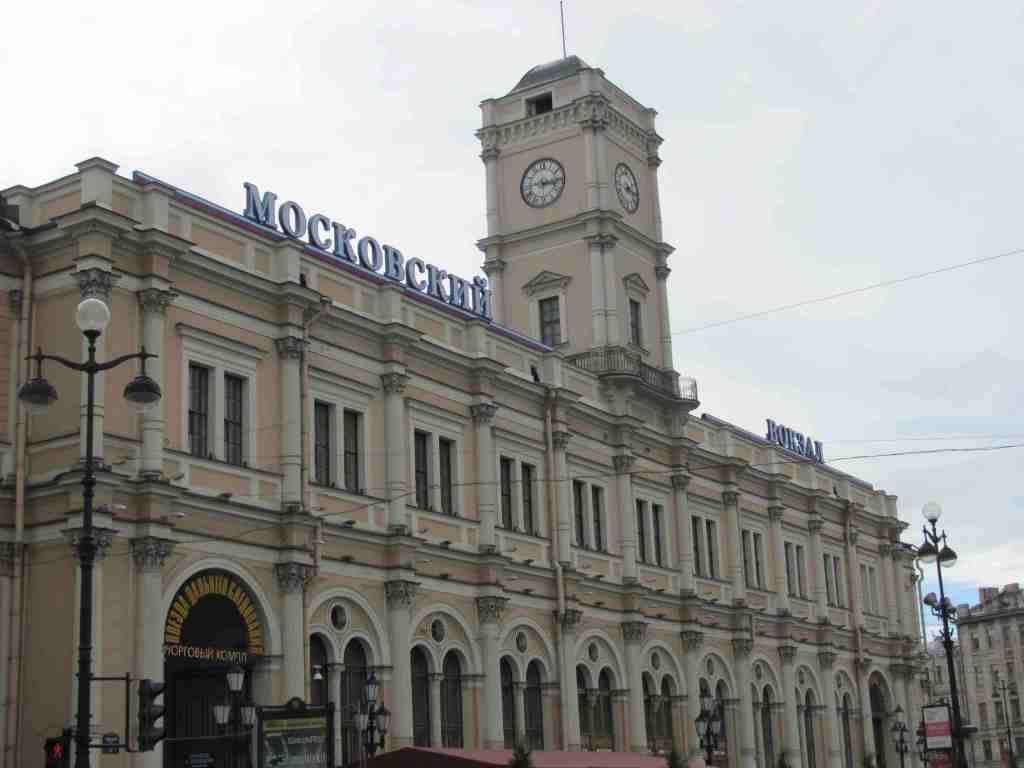
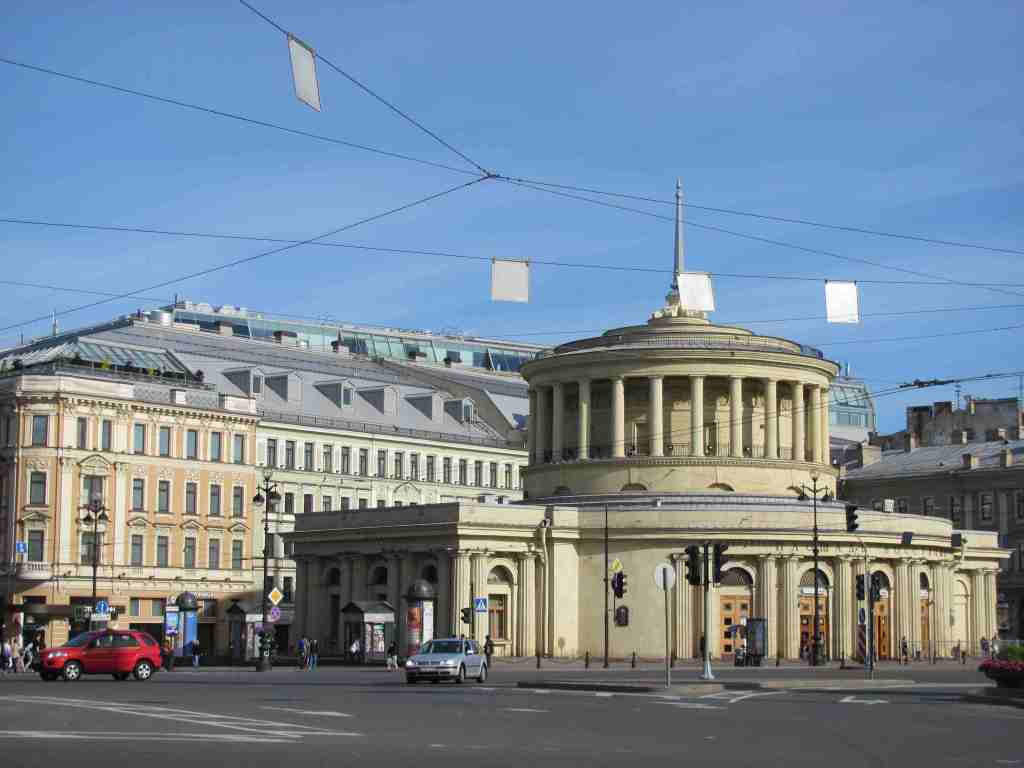
Sunday began with the traditional Continental Breakfast, which in the Russian version was porridge and sour cottage cheese, but the subsequent walk compensated for the bad food. By bus we headed to the Moscow railway station, Moskovsky Railway Station, which was erected in the period 1847-1851. and is a twin of the Leningradskovo station in Moscow. A tall clock tower rises above the main entrance.
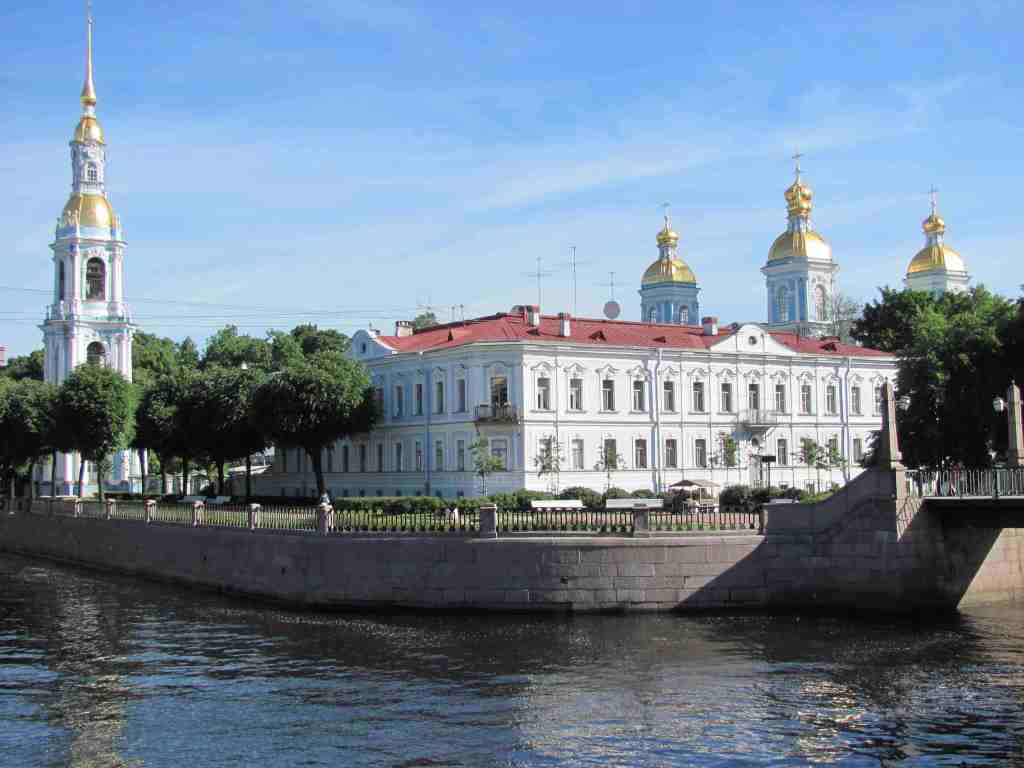
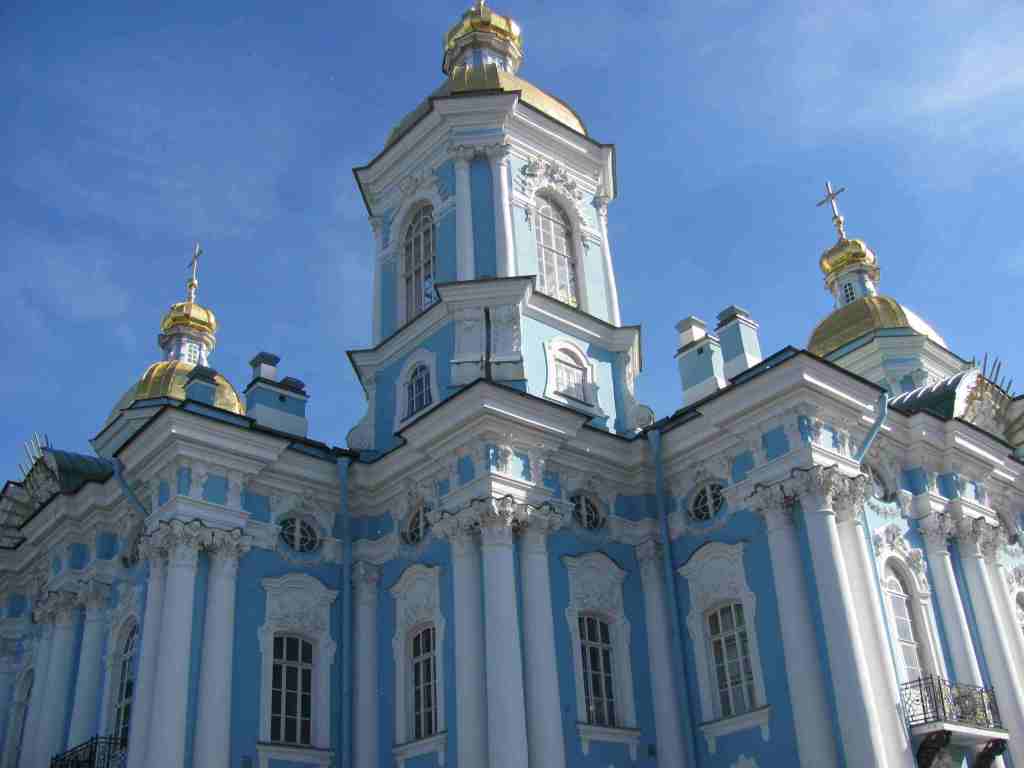
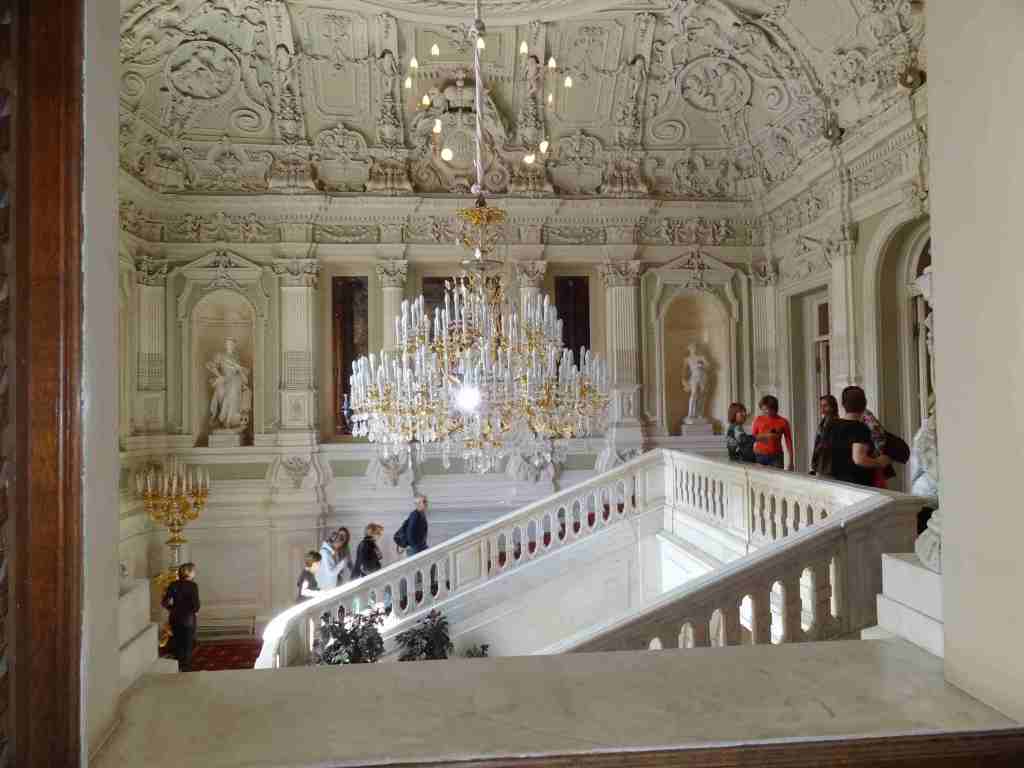
Our next stop was the Cathedral of St. St. Nicholas or as it sounds in Russian Nikolsky Morskoy Cathedral, which is a very beautiful baroque building with a sky-blue hue, inside there are beautiful icons from the 18th century and a beautifully carved wooden iconostasis. We lit a candle and continued to the next cathedral St. Isaac’s Cathedral. Before that, however, we stopped to look at the Yusupov Palace, which bears its fame as an “encyclopedia” of St. Petersburg aristocratic interiors.

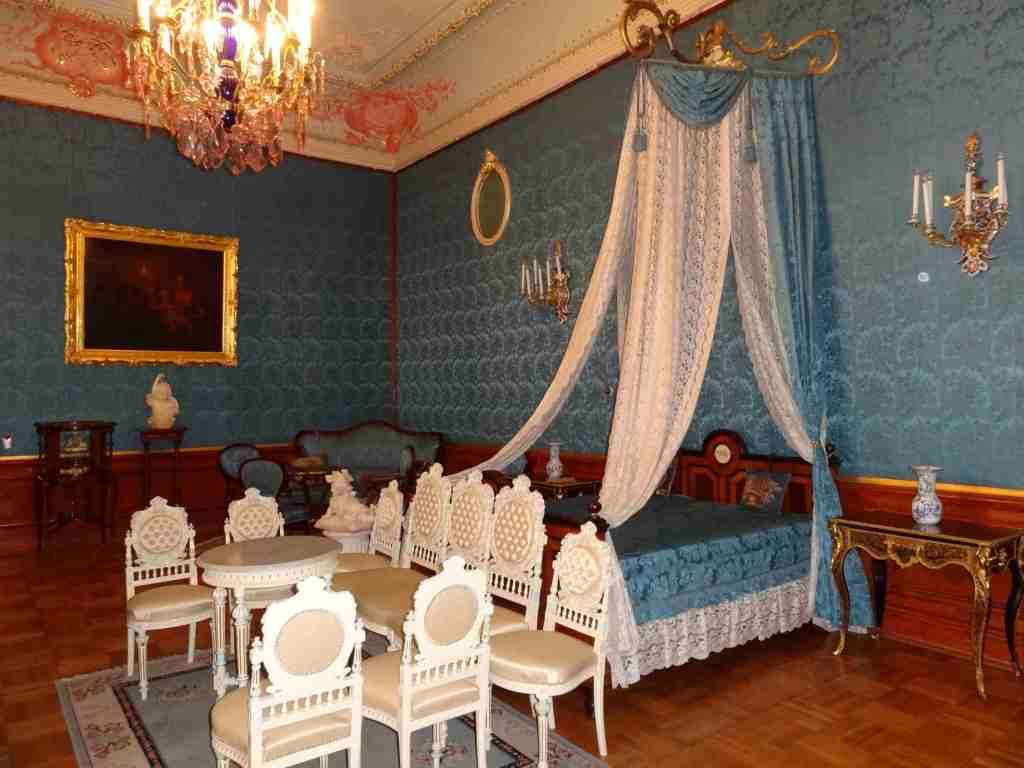
The construction of the palace began in 1770, and many prominent architects then continued work on it. The furniture was exquisite, as were the walls and painted ceilings. Luxury emanated from every little detail. We walked through the imperial quarters, among the beautiful ballrooms and shiny bedrooms. Especially beautiful was the internal theater, which can be reached by stairs on the ground floor. It had a beautiful stage, an audience hall and a balcony with a particularly beautiful box. I was personally impressed by the library, which was from floor to ceiling and had a movable ladder, without which it was impossible to reach all the books. There was even a billiard room on the ground floor, which, of course, was installed much later.
The palace, as glamorous as it was, had its dark secrecy. On the night between December 16-17, 1916. Grigory Rasputin was killed here, and his death is even more mysterious than his life.




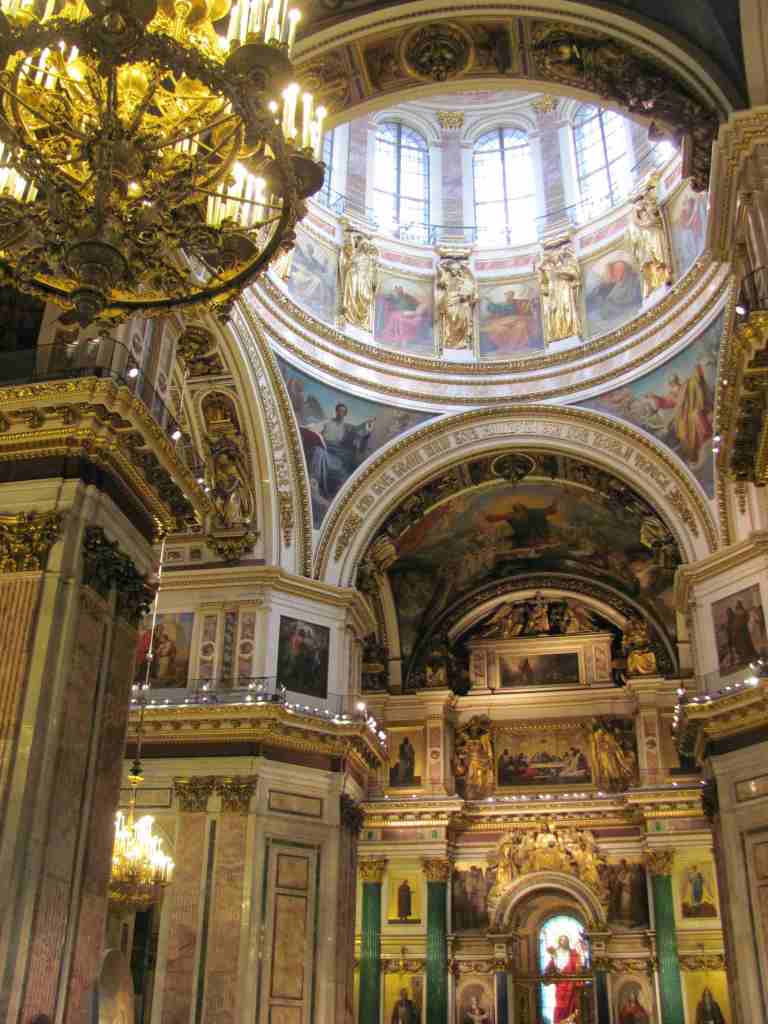
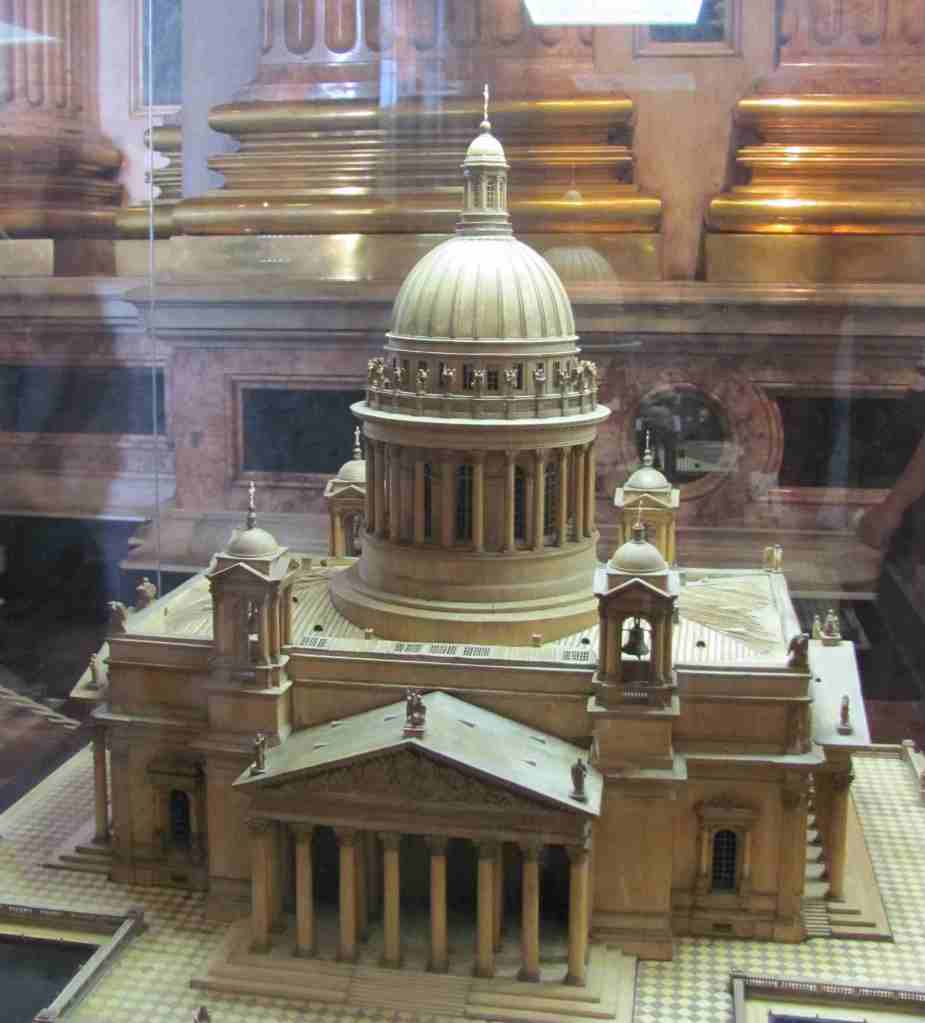
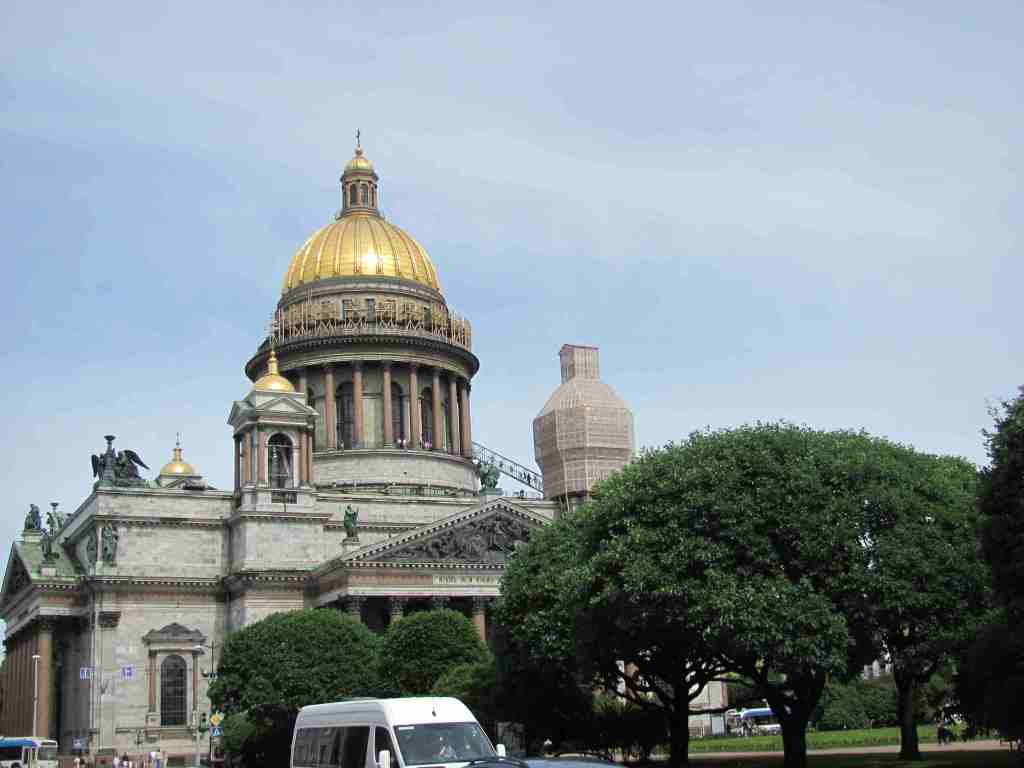
After the palace, together with the guide, we headed on foot to the Cathedral of St. Isaac’s Cathedral. The Cathedral of St. St. Isaac’s Cathedral is the largest Russian Orthodox church in the city, dedicated to St. Isaac. Isaac of Dalmatia, the patron saint of Peter the Great, who was born on the feast day of this saint. In its current form, the church was erected between 1818 and 1858. Especially impressive is the dome, which rises to 101.5 meters and is covered with pure gold. The dome is decorated with 12 statues of angels. The interior is no less impressive, and first I was struck by the brightly colored walls and gilded columns and arches. Especially gorgeous was the front door, which was made of bronze with wonderful relief figures, later we learned that it was similar to the doors of the Florentine baptistery of San Giovanni. The guide in the cathedral proudly told us that all the marble and granite from which the columns, floor, statues and the entire church are made is from Russia. There were also interesting mosaics here, which actually aimed to replace painted icons, whose colors are more susceptible to weather and cold metrological conditions.

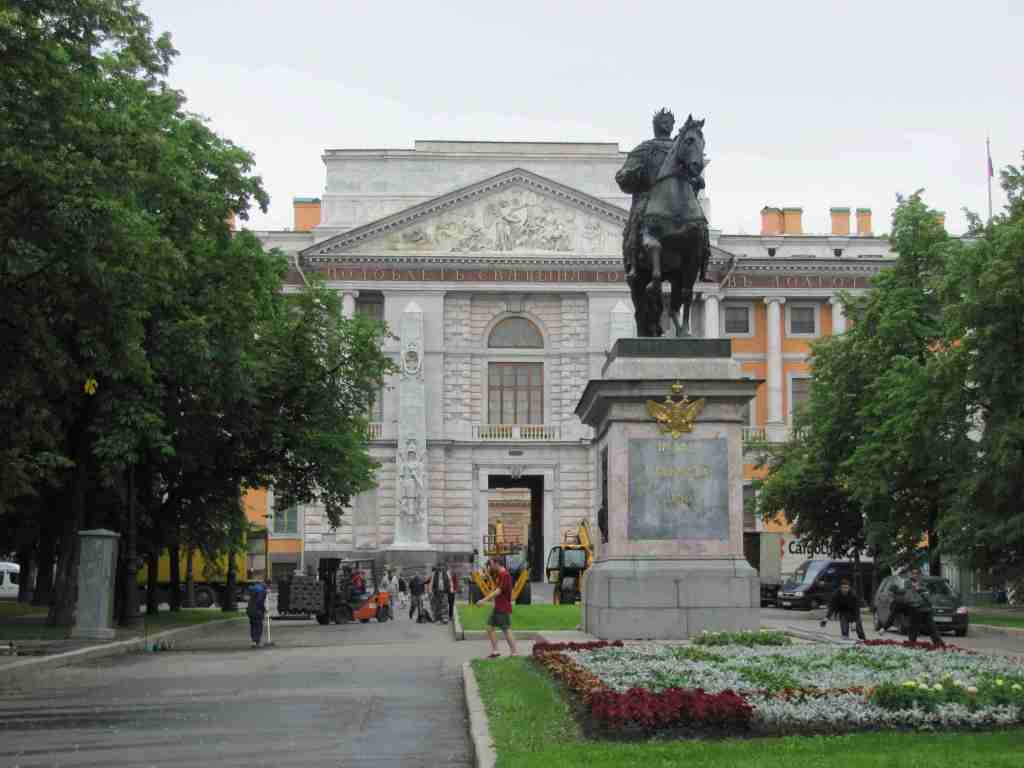
After the cathedral, our organized excursion ended and we decided to take a walk and go back to the hotel on our own. We were amazed by the beautiful buildings of the Presidential Library Imeni En, as well as Emtsin and the Constitutional Court of the Russian Federation and stopped in front of the famous statue of Peter the Great riding his horse, trampling a snake that personified Sweden and its victory over them. The monument was erected at the request of Catherine the Great, and later sung by Pushkin.


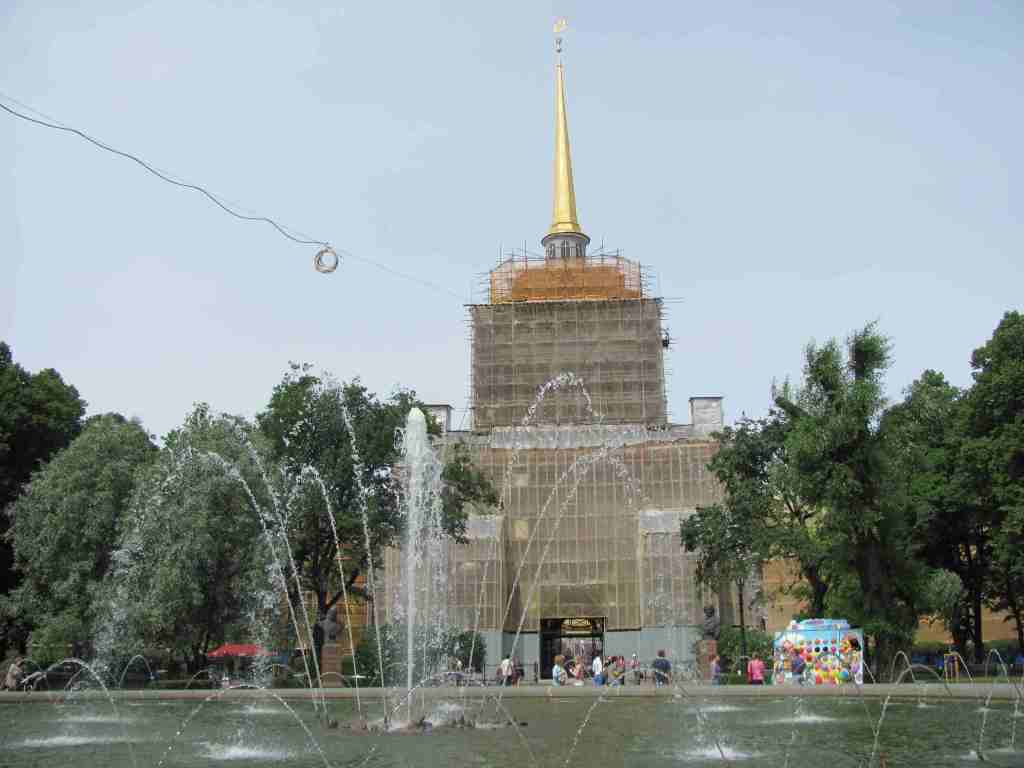

After the obligatory photo break with the monument, today one of the symbols of the city, we headed to the beautiful building of the Admiralty, which, however, was currently under restoration and was all covered. We were only able to photograph its peak, on which there was a golden crown and above it a golden ship. In fact, most of the buildings in St. Petersburg were undergoing restoration, which was expected to be completed before the 22nd Winter Olympic Games, which were to be held in February 2014 in the city of Sochi, Russia. In the center of St. Petersburg, we noticed a calendar that counted down the days until the approaching Olympics.
Our walk continued along the successive canals and wonderful buildings. We photographed a monument to a huge stone book, as well as a plaque of a house showing how far the water had risen on September 23, 1924. “Almost the entire first floor was under water. We passed and looked at another beautiful Orthodox church, then sat down for lunch.
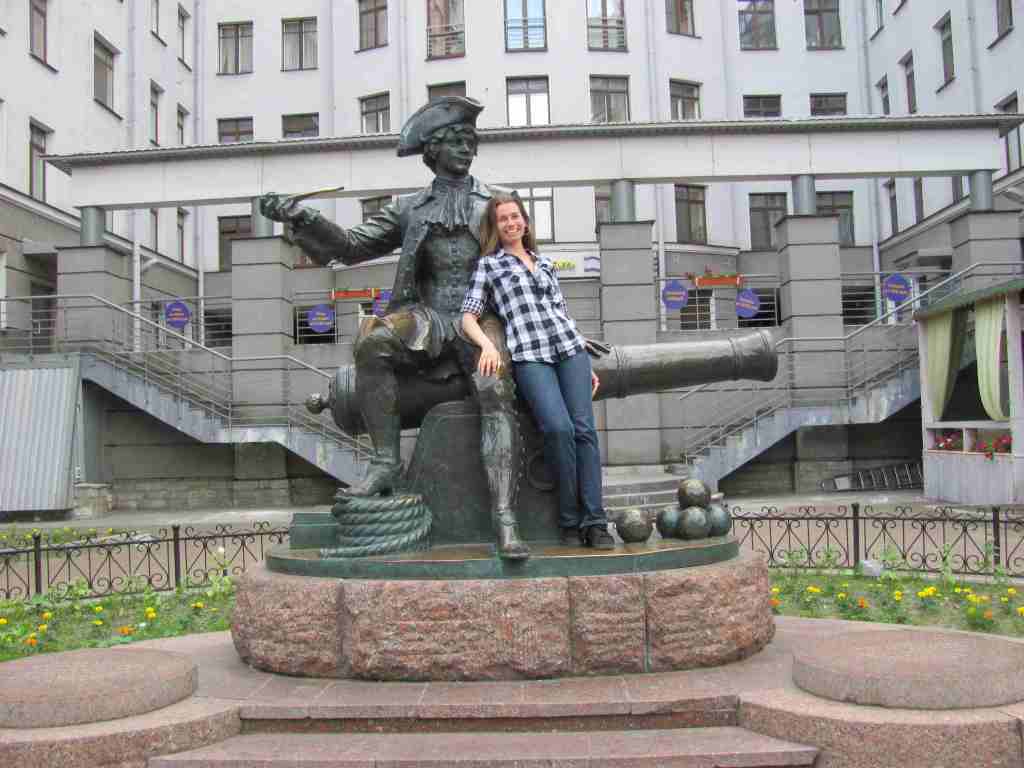
We continued our walk along a very pleasant quiet shopping street, where we took pictures with the bronze monument of Vasily Korchmin. According to legend, Vasilyev’s Island, on which Peter the Great built the new city, was named after him, and this Korchmin was the commander and guarded the island at the mouth of the Neva River, while the Petropalovska fortress was being built. He was undoubtedly one of the most trusted people of the tsar, who, according to legend, constantly ordered: “Take this to Vasil on the island”, and in the end only Vasilev’s island remained. On the monument erected in 2003. He is in sailor clothes, sitting on a top with cannons at his feet and a pipe in his hand.
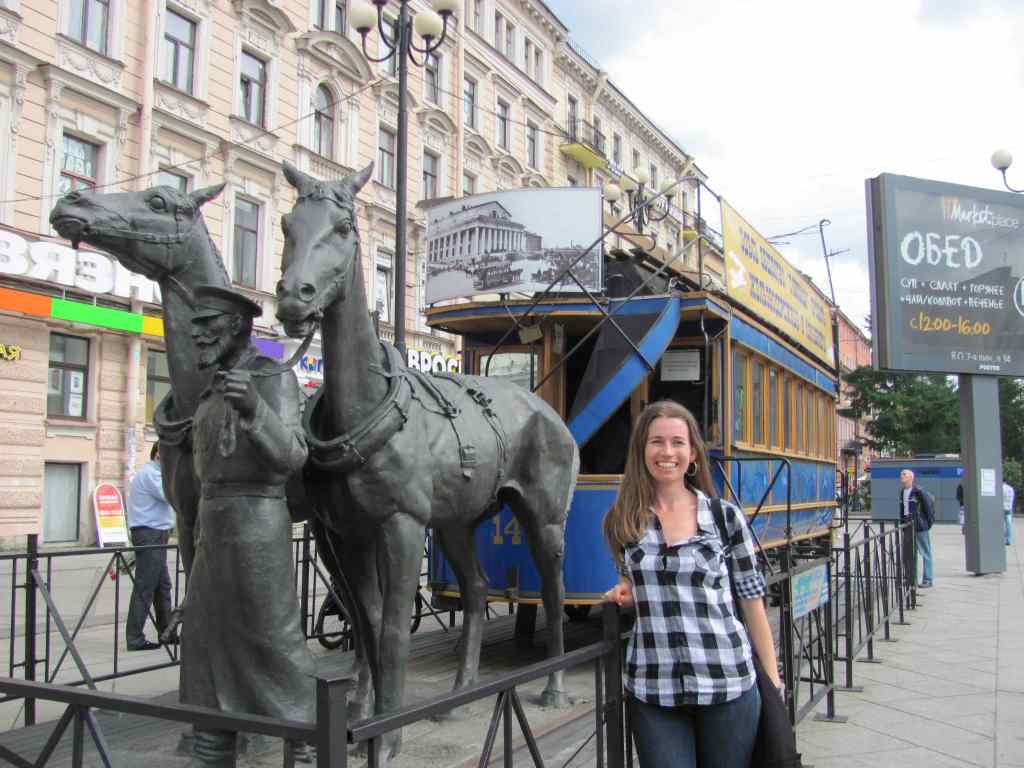
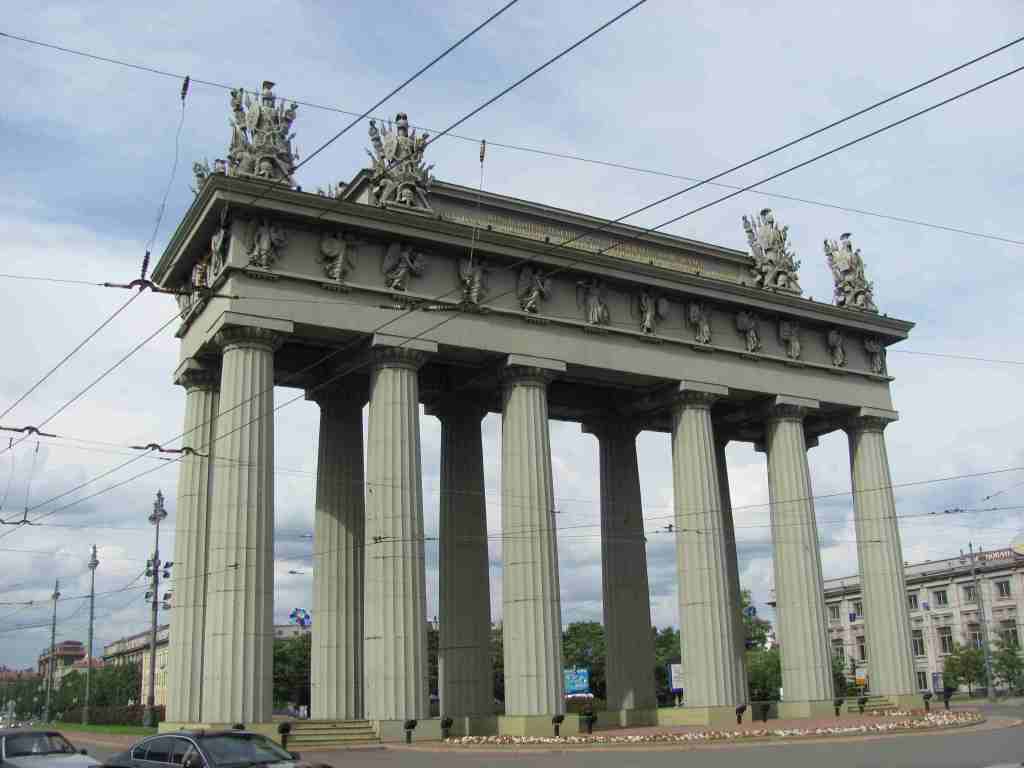
Further down the street, we also took pictures with the monument of an old-fashioned tram, which was pulled by horses led by a man. Instead of taking a tram, we got on the metro and headed to the Moskovskiye Vorota stop, above which a beautiful triumphal arch rose. It was erected in 1834-1838 on the occasion of the victory in the Russo-Turkish War of 1828-1829.


From there we continued along the street Tsvetochnaya to the Grand Model Russia Museum, which we found more difficult than expected, and the entrance fee exceeded our expectations, but we still entered this unique museum, representing the whole of Russia in miniature. The impressive thing here is that the model is not static, but “alive” in constant motion, cars and trains passed among the model buildings, water gushed out of the fountains, even a real fire was recreated, which a small fire brigade came and extinguished. There were also little people who seemed to be absorbed in their work or leisure. We, like giants, walked through the models and got to know the greatness of the largest country in the world – Russia. We took pictures with mountain villages, airports and even with a model of the Peter and Paul Fortress. I also took a photo with a model of the Kremlin, and in just a day I was going to take a picture with the original. We looked at Siberia, Lake Baikal, and from time to time the lights in the hall went out, as if it was evening and all the houses and buildings turned on lights, then gradually, as the daylight came back. It was a really interesting and wonderful place to visit.
After the museum, back by metro we went back to the hotel, where we slept for the last time in fabulous St. Petersburg.


GENERAL INFORMATION ABOUT ST. PETERSBURG:
Location: St. Petersburg is located in the northwest of Russia, at the confluence of the Neva River with the Gulf of Finland on the Baltic Sea.
Area: 1439 sq. m.km. (the second largest city in the country after Moscow)
Population: 5,131,942 people (2014 data)
Official language: Russian
Altitude: 3 m
Climate: humid continental climate with cool summers and long cold winters.
Time zone: UTC+3
Currency: rubles (RUB)
Additional information: http://www.visit-petersburg.ru/en/

TRIP TIPS: ABOUT ST. PETERSBURG:
Best time to Visit: Probably the best time to visit St. Petersburg is during the White Nights, which are from late May to mid-June. In winter, however, the city is no less beautiful, when most of the rivers and canals are frozen, and the roofs are covered with snow and ice.
How to get here: 20 km from the city is the large Pulkovo International Airport, with several buses connecting the airport with the city. There are also several large railway stations in St. Petersburg and getting there by train is very convenient. Another way to get to the city is by boat, as there are large ships from Helsinki, Tallinn and Stockholm, as well as river ones operating on the Volga-Baltic route and connecting the city with Moscow.
Typical foods and drinks: Russian cuisine is famous for its porridge, but while you are in St. Petersburg, we recommend you try the local pancakes called blini, which are served sweet or savory to your taste. Also try the local pirozhki, pelmeni and of course Pavlova cake with crispy kisses.
Places to visit: There are numerous places that are worth visiting here, such as the huge Hermitage Museum, the Petropalovsk Fortress, the Admiralty, the 800 bridges over the Neva River, each of which has its own name, and at night the largest of them open between 1 and 5 hours so that river vessels can pass; the temple-museum of the Savior on Spilled Blood, the St. Isaac’s Cathedral; the cruiser Aurora; Yusupov Palace and many others. In close proximity to the city is the delightful Peterhof Palace and the city of Pushkin, also known as Tsarskoye Selo with the impressive Catherine Palace.
 TripTips