PETERHOF – THE RUSSIAN VERSAILLES
author: Ana Boneva
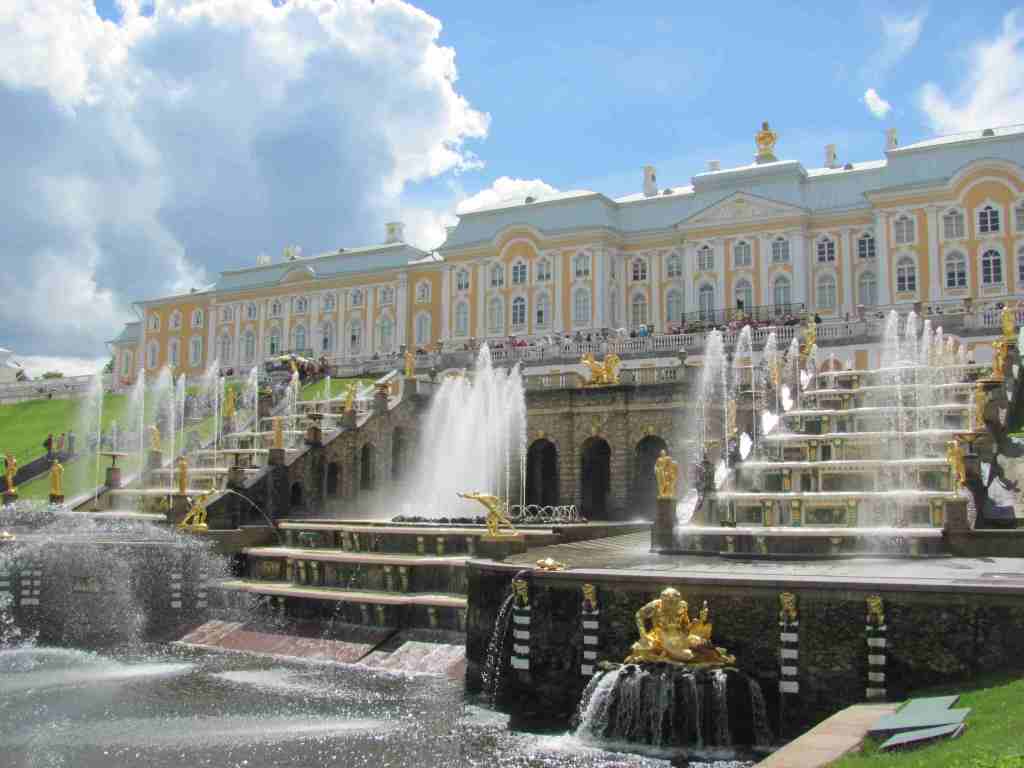


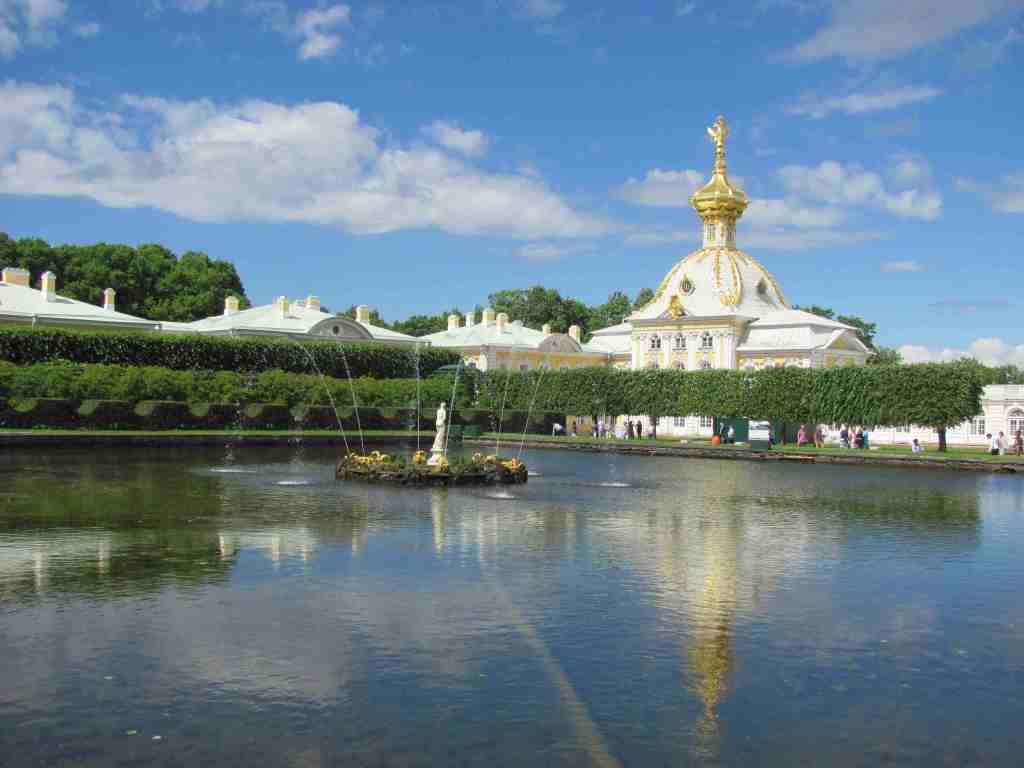
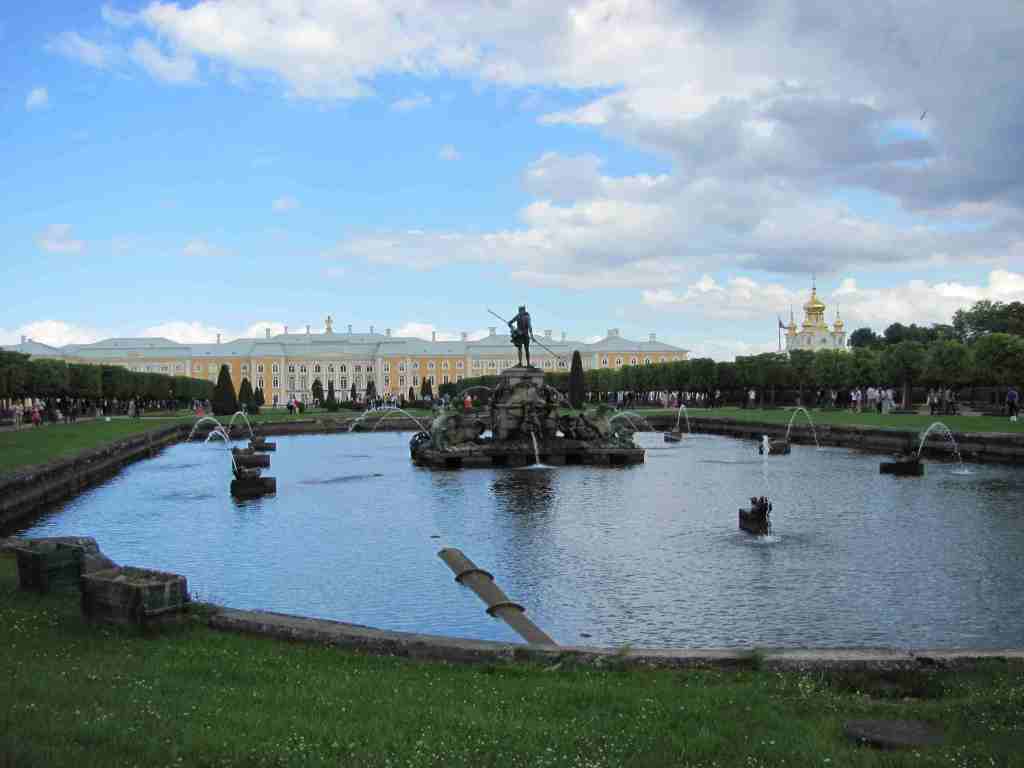
On sunny June 14, we visited the beautiful Peterhof Palace, located 30 km south of St. Petersburg, on the southern shore of the Gulf of Finland. The palace was uniquely beautiful with huge gardens and fountains. It is no coincidence that it is compared to Versailles, although the Russians proudly note that their palace is much more exquisite and that there is something that Versailles does not have – access to the sea. To be honest, although I am a francophone at heart, I liked Peterhof more than Versailles, and the reason for this is undoubtedly the many fountains with beautiful gilded statues. The facades of all buildings here were lavish and richly decorated. The palace itself was built in the Baroque style between 1710 – 1755. by order of Peter the Great and the same served as an out-of-town residence of the king. A lot of sketches and documents have been preserved, which show that the general concept of the palace complex, as well as a large part of the detailed developments in architecture and waterway facilities, belong to the king. The very name of the complex is of Dutch origin Peterhof, which means “Peter’s yard”.
Today, the entire palace and park ensemble is included in the UNESCO World Heritage List. It is difficult to describe all the fountains, gazebos and palaces here – I will only say that of the whole excursion to Russia, this was the most beautiful and amazing place.
For more than 4 hours we walked around the beautiful parks and again the time seemed insufficient to take pictures and enjoy the beauty. At first we walked with a tour guide who gave us a general idea of the park and what can be seen in it, then we were left at the Dragon Fountain and we continued to enjoy the tour ourselves.
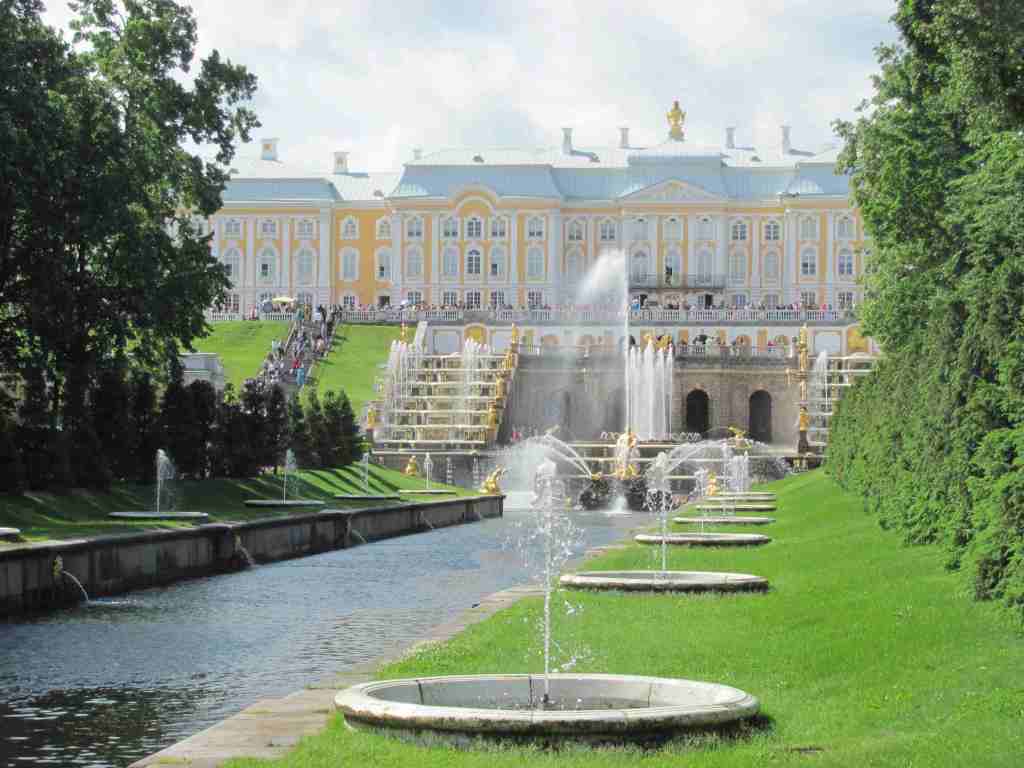
The largest fountain, located right in front of the Grand Palace and descending all the way to the seashore is the Grand Cascade, which includes over 200 bronze statues, gilded reliefs and other decorations. In the middle of the fountain there was a glamorous figure of an ancient Greek deity who had opened the mouth of a fish, from which a strong stream of water gushed out. Behind this fountain there is a cave that was previously used for small celebrations, and in which you can see part of the pipes that support the fountain. The entrance to the cave was paid separately, so we were content with only the wonderful façade of the fountain, in front of which we posed and took dozens of photos. I really wanted to fit all the beauty of this place into my camera, but it seemed impossible. I couldn’t wait for 3D camera to be invented or even 4D, so that when I show others my photos, they can feel the light drops blown away by the wind and the wonderful environment from all angles. On the current photos, I had to add long verbal descriptions.
Delighted by the Grand Cascade, we descended to the lower park, with the guide showing us a small fountain with moving figures of wild ducks and a hunting dog, each of which spat water as it moved and the slight noises of croaking and barking are actually created by the pipes and water, and not by some additional sound system.
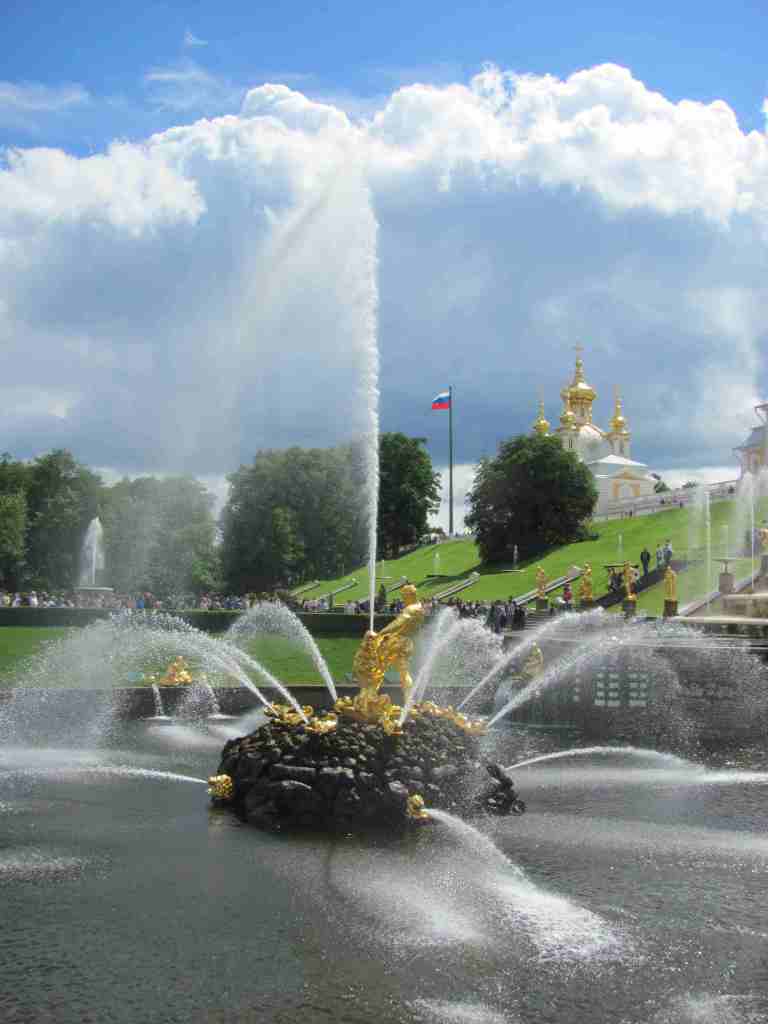
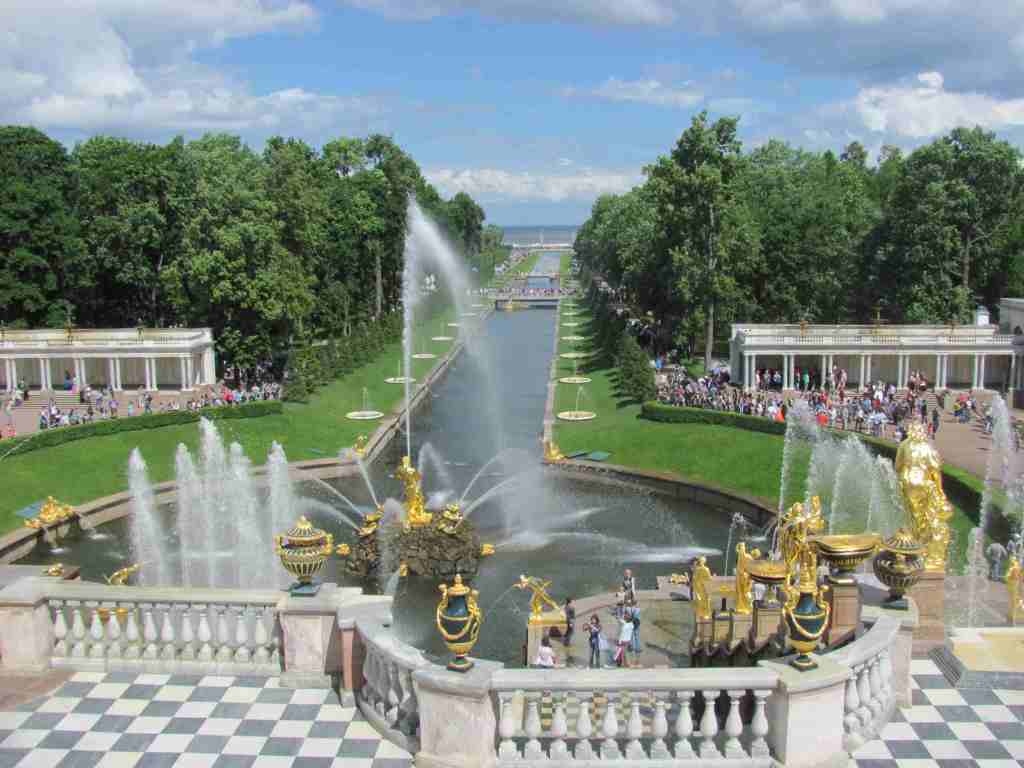


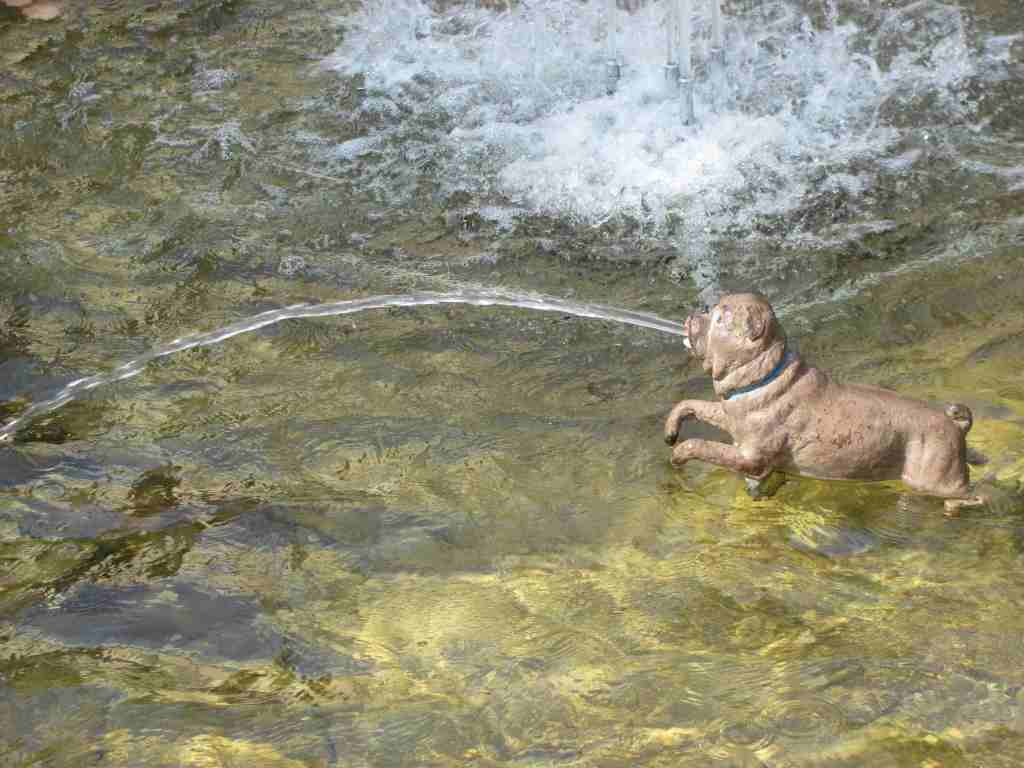

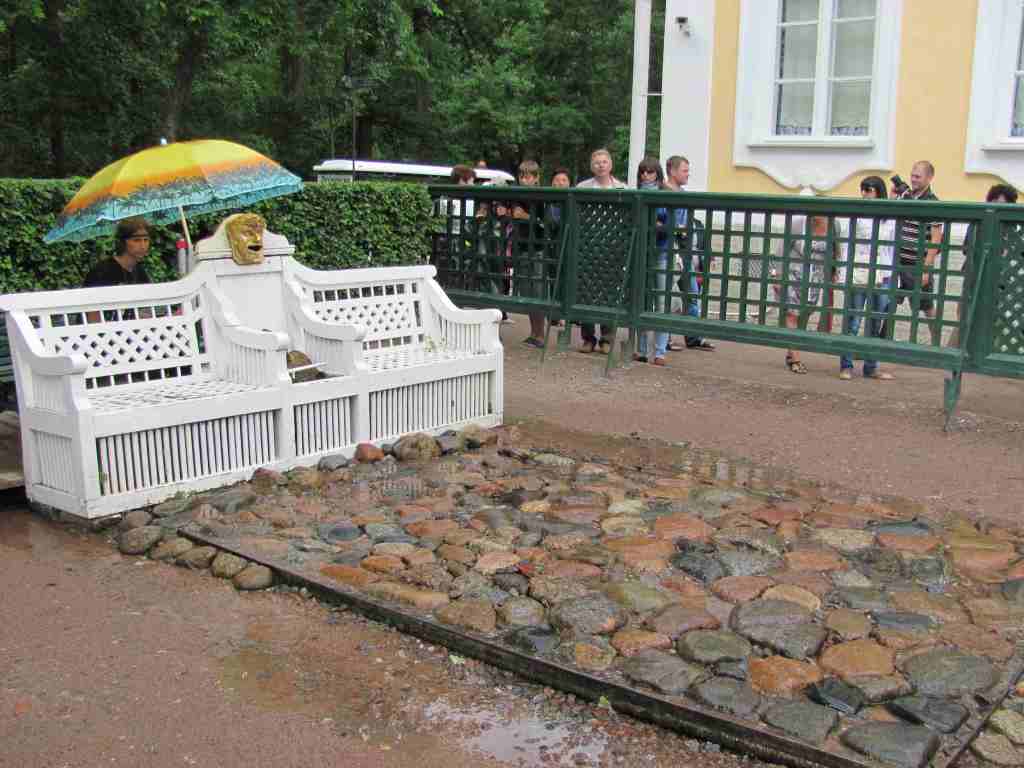


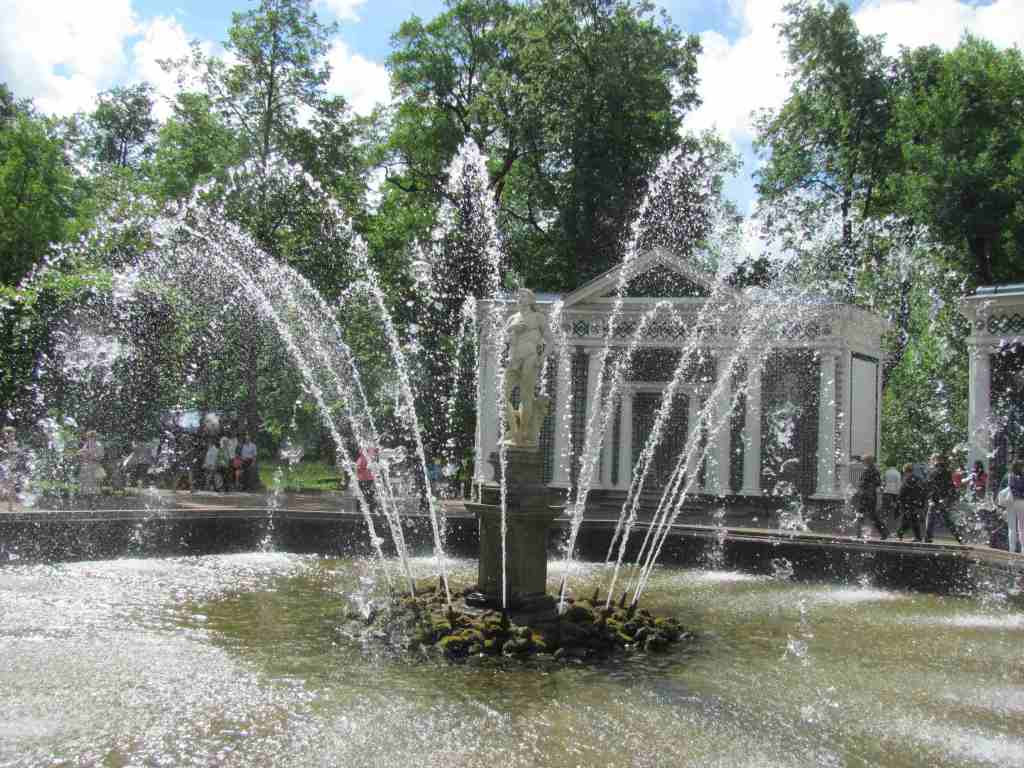
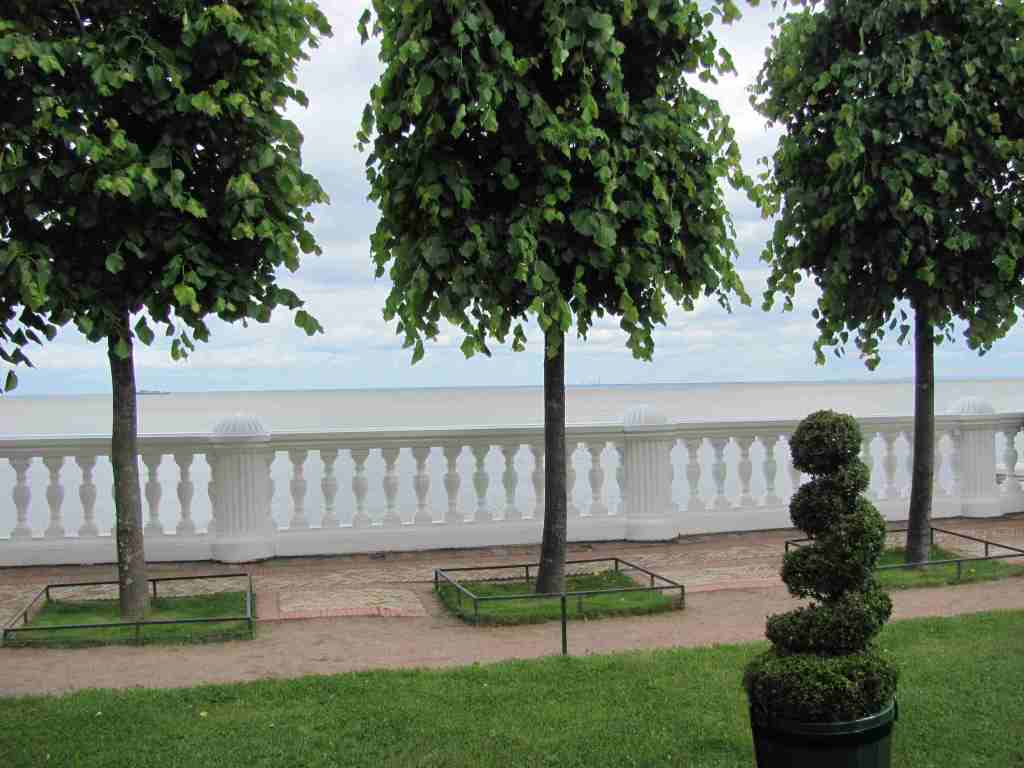
A little further down, there were alleys leading in opposite directions – on one side of the park was the fountain of Adam, and on the other side the fountain of Eve. First, we headed to the Adam’s Fountain, located in the eastern part of the park. The figures of Adam and Eve are copies of the statues in the Doge’s palace in Venice and were placed in the park as early as 1717, and they were doused by 16 jets of water. After Adam’s Fountain, we headed down to the promenade, contemplating the beautiful Gulf of Finland.
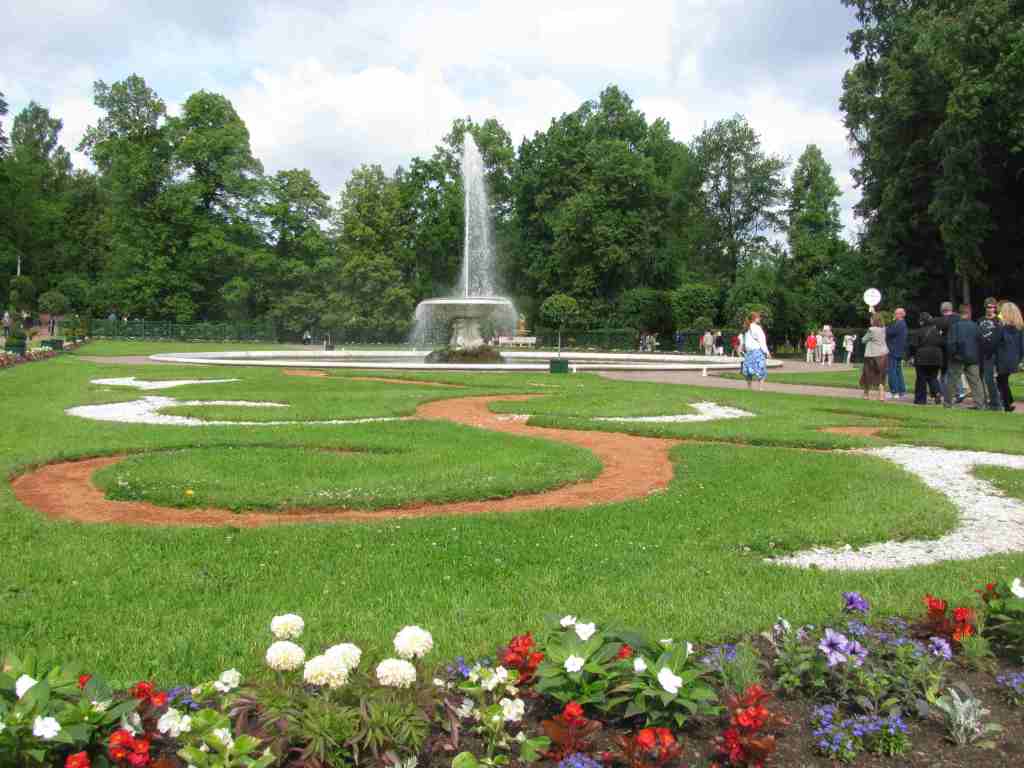
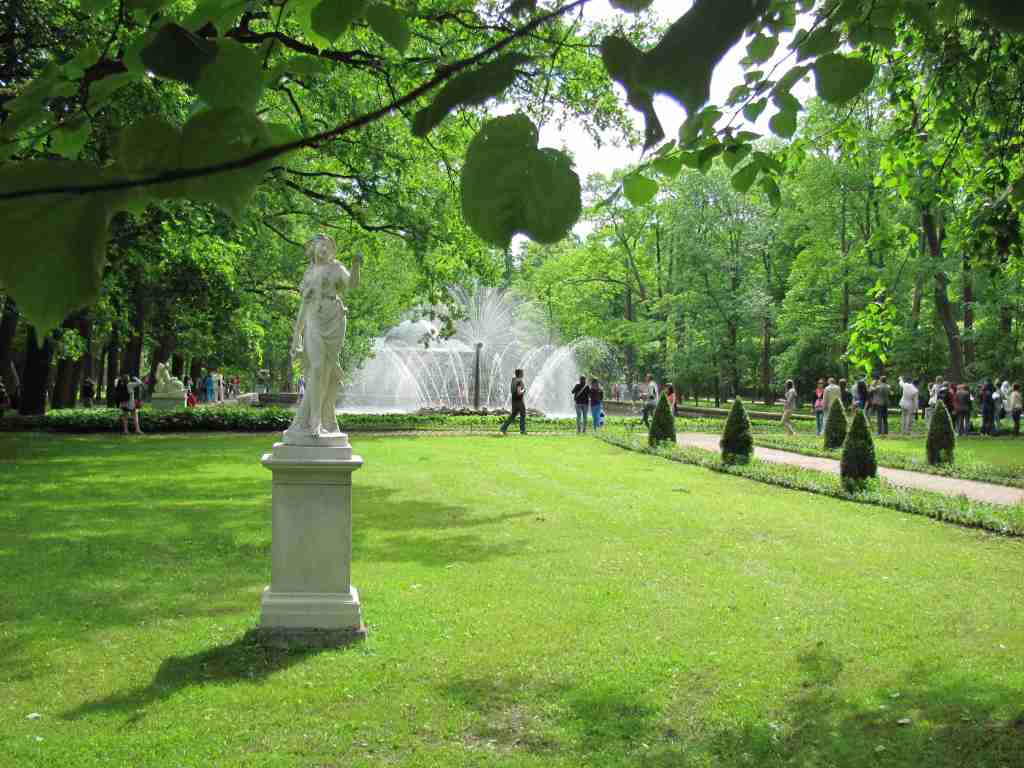
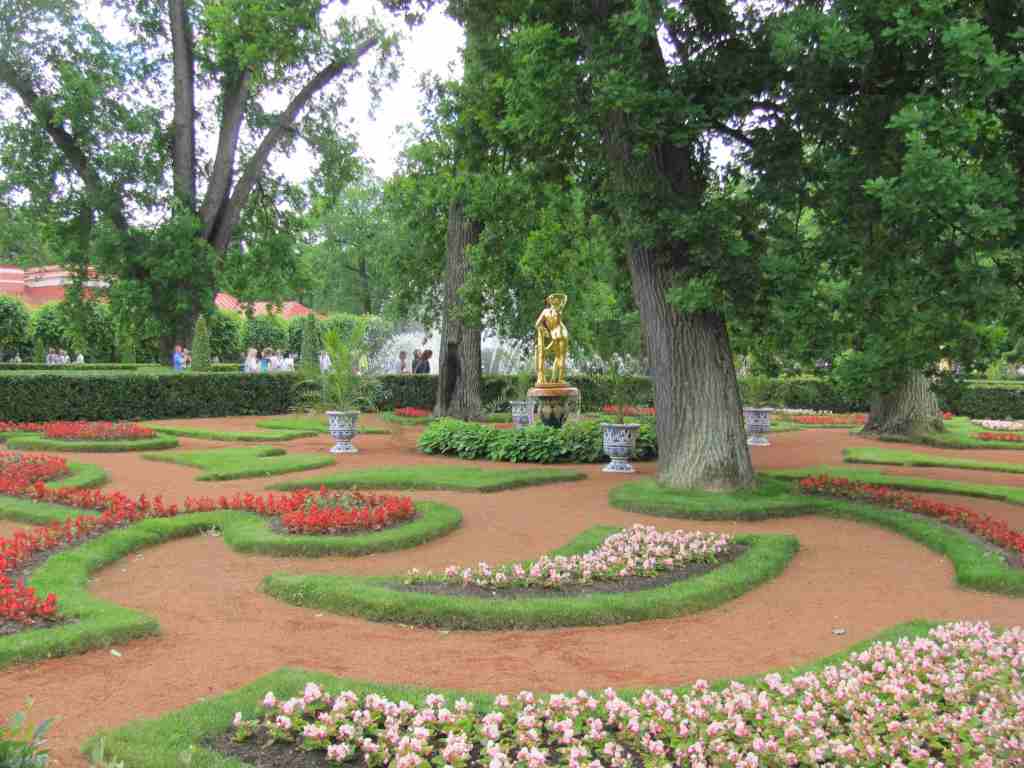
From there we continued our walk through the huge and beautiful parks, landscaped in different styles and it was hard to believe that so many colorful and different flowers can grow in such a northern latitude. Each of the emperors after Peter the Great supplemented and expanded the palaces and parks here, so today they spread over a large area, which was difficult for us to see in 4 hours.
There were also fun fountains, such as the bare stones, on which, if a person steps on, water from the ground immediately begins to spray him. There were children in our group who immediately took advantage and were bathed by the stones. Another fountain was in the form of a mushroom through which water was lowered, but inside the mushroom there was a bench and dry place. The idea was for a person to walk past the drops and sit on the bench without getting wet, which, however, was impossible and all those who tried came out wet from there.

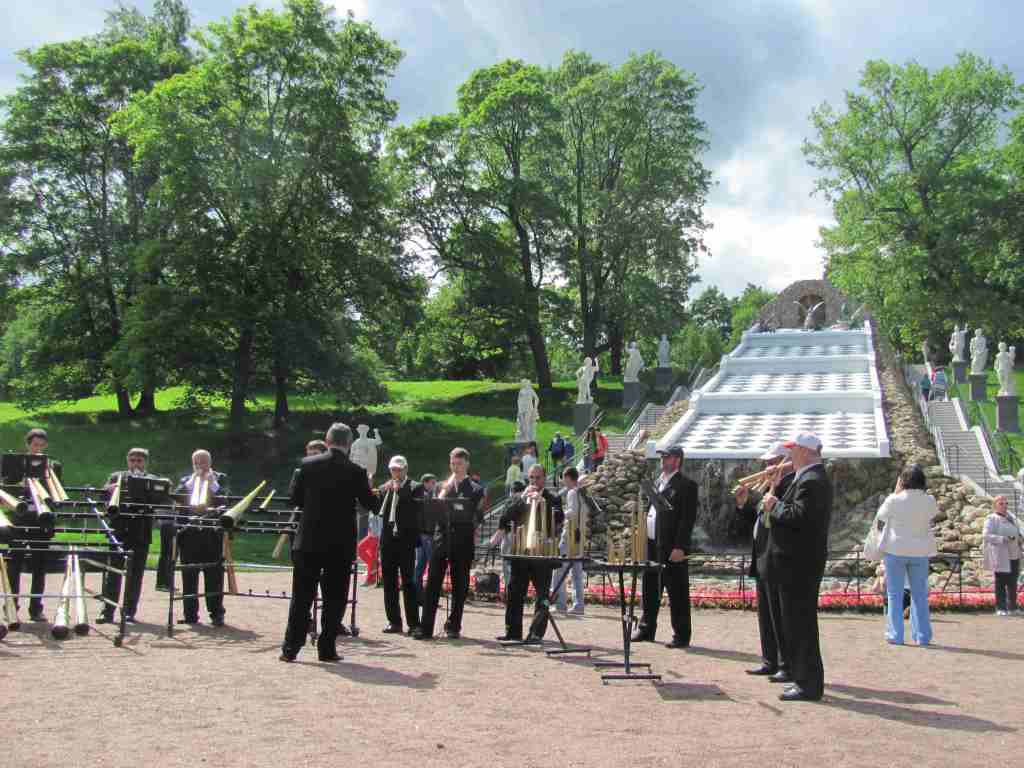
We passed by various gazebos and fountains until we reached the next impressive cascade, this time the so called chess fountain or the dragon fountain, behind which there was also a cave and we watched with curiosity as the water descended in front of its entrance. Various marble figures were arranged around the fountain, and at the top in 1739. three bright dragon figures were placed.
We headed to a beautiful palace building, which currently housed a restaurant. There were other similar buildings in the park, but since we were already moving without a guide, it was difficult to decide their current purpose. On the promenade we recognized the Mont Plaisir Palace, which with its red façade is visible into the sea and aimed to welcome the guests of the castle. In fact, the entire palace complex began with the construction of Mont Plasir.


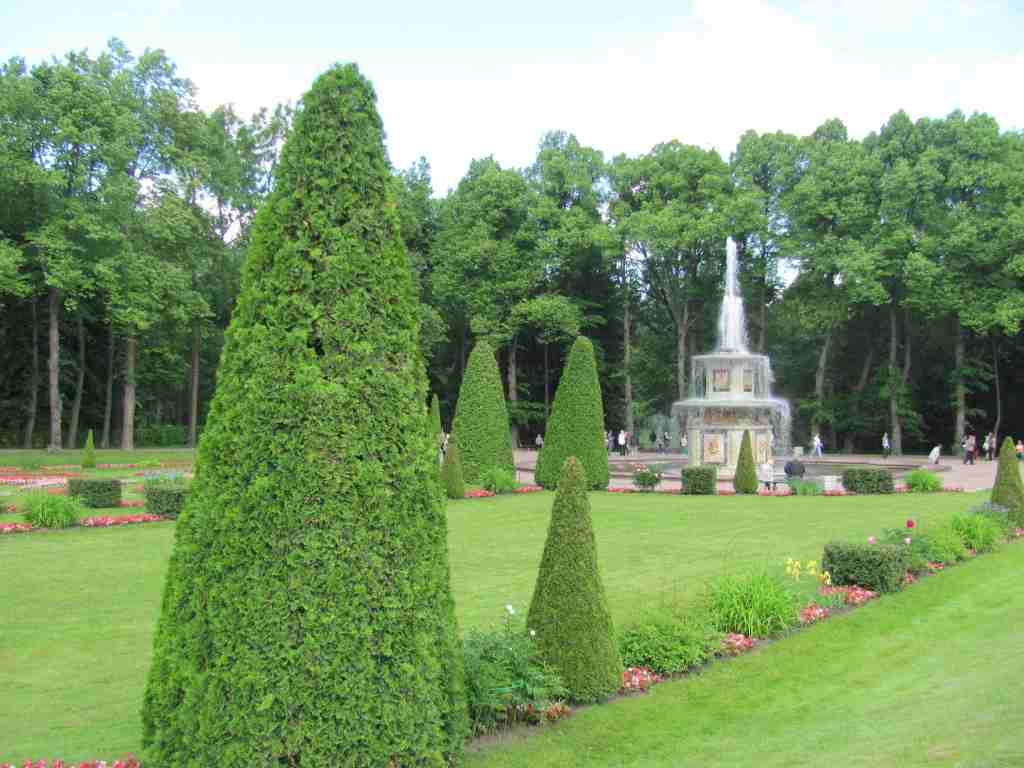

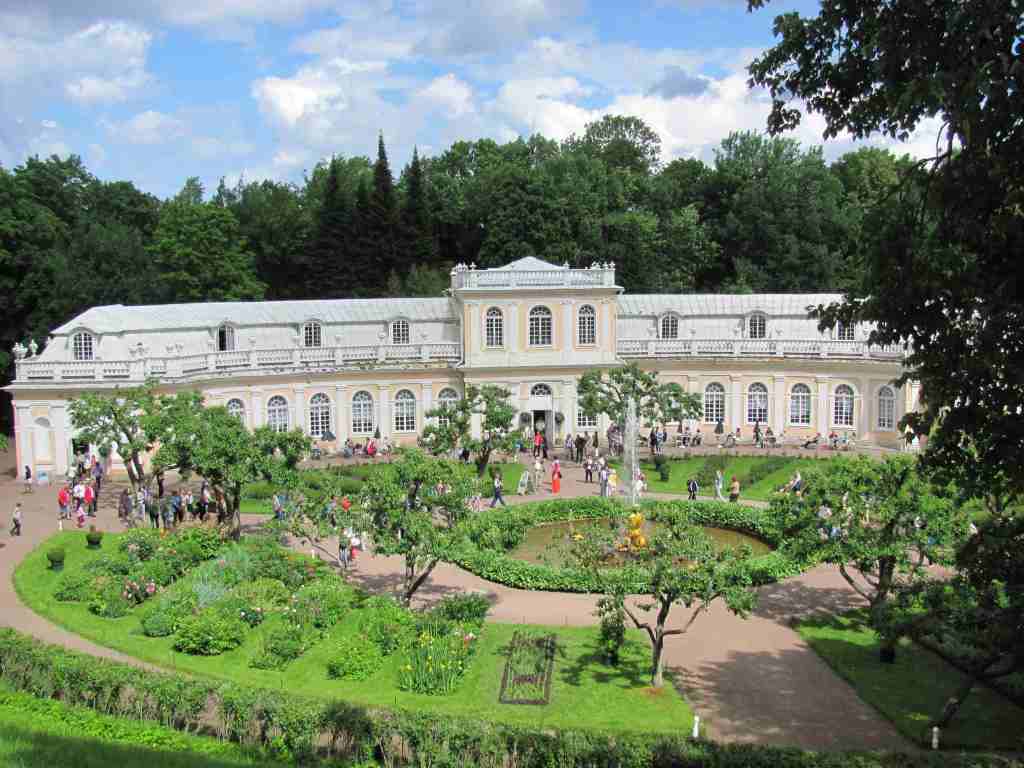
In the park, in several places, we saw newlyweds posing with their wedding outfits on the beautiful landscape, but it was not easy to take pictures alone among so many tourists. There were relatively fewer tourists in the so-called Venus Park, where the Golden Hill cascade rose was especially beautiful, on the top of which Neptune solemnly stood. In the immediate vicinity between two canals rose the next smaller Marley Castle, next to which there were photographs of the castle before and after the war. During World War II, it was completely in ruins, and today it seems to shine again in all its splendor.

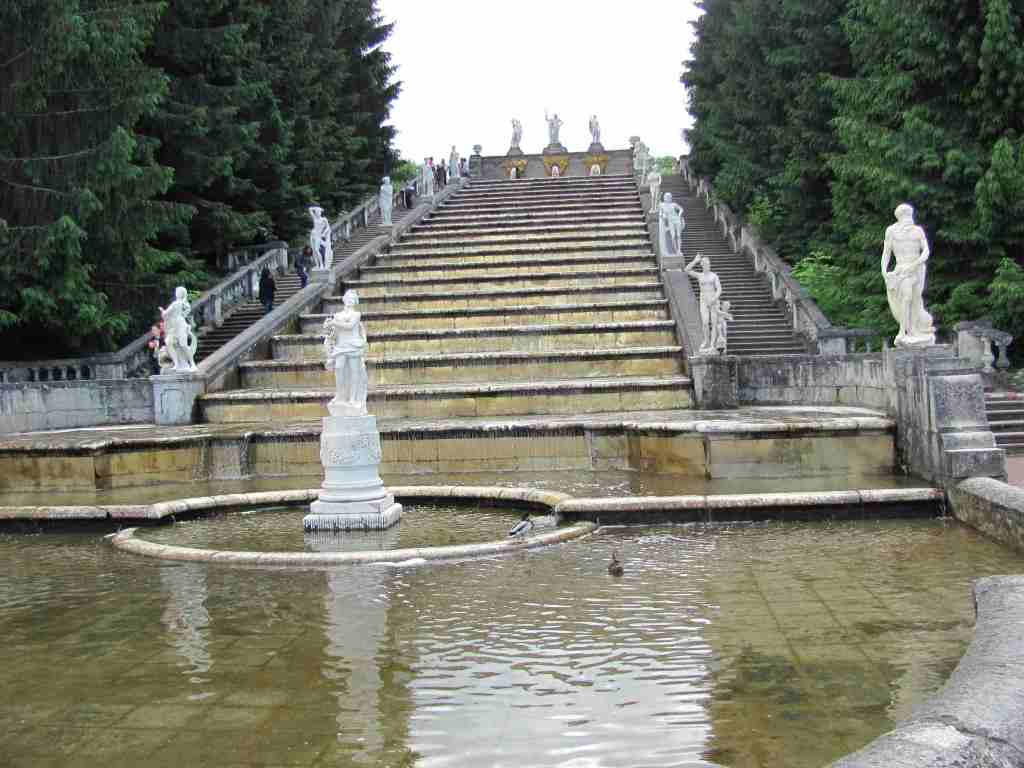
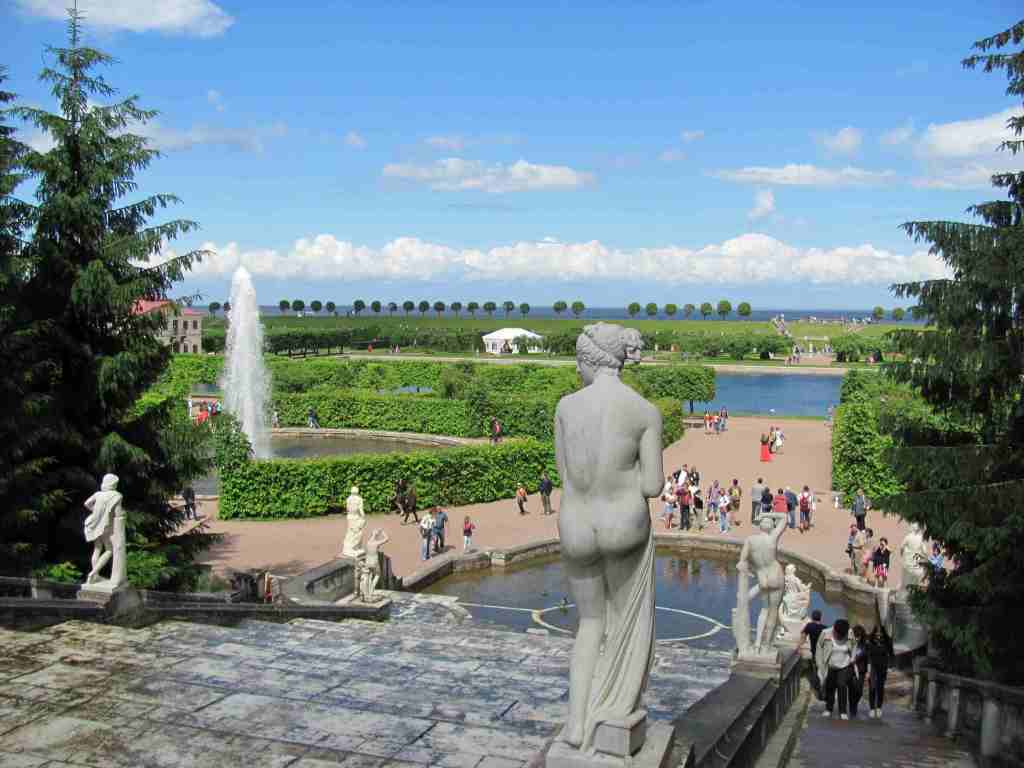
Outside the palace complex, there were also parks and fountains, for which there was no entrance and which we saw very quickly, because we had to get on the bus back to St. Petersburg.

 TripTips