A DAY IN MOSCOW
author: Ana Boneva


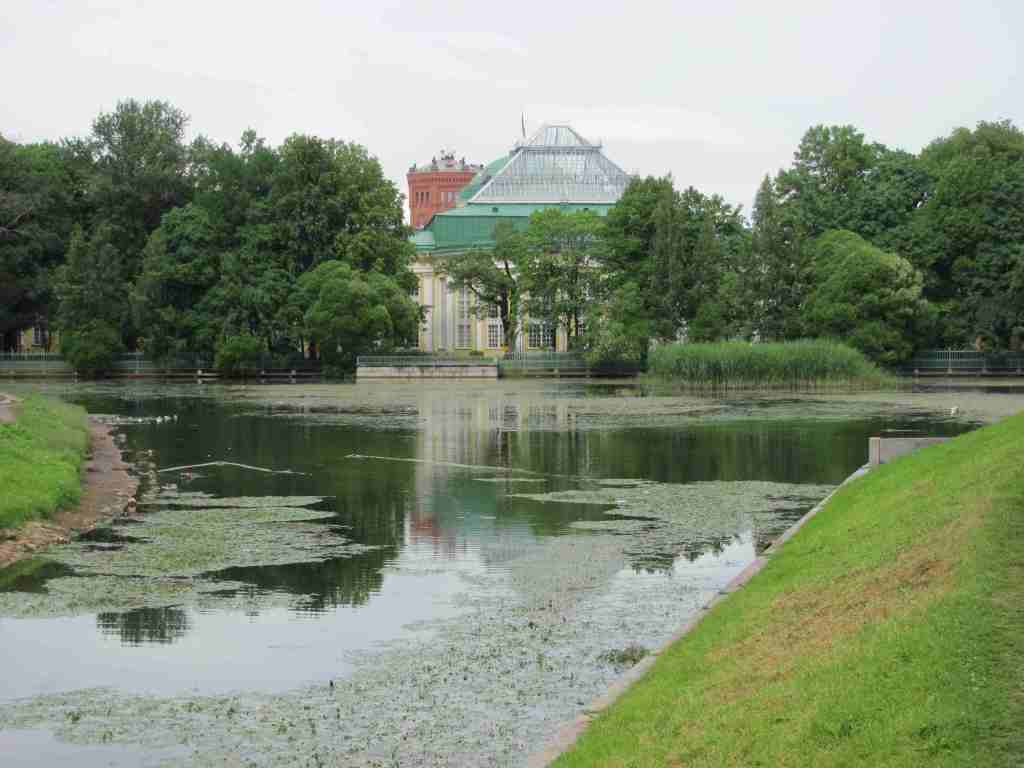
After 5 wonderful days in St. Petersburg, we found ourselves at the Moskovsky railway station. We had 2 hours to the train to Moscow and so we left our luggage in the Baggage storage and walked through the nearby Nekrasovsky Garden Park with a wonderful lake in which tall trees were looked at, a small fountain rustled to the sides and beautiful gazebos protruded into the distance.
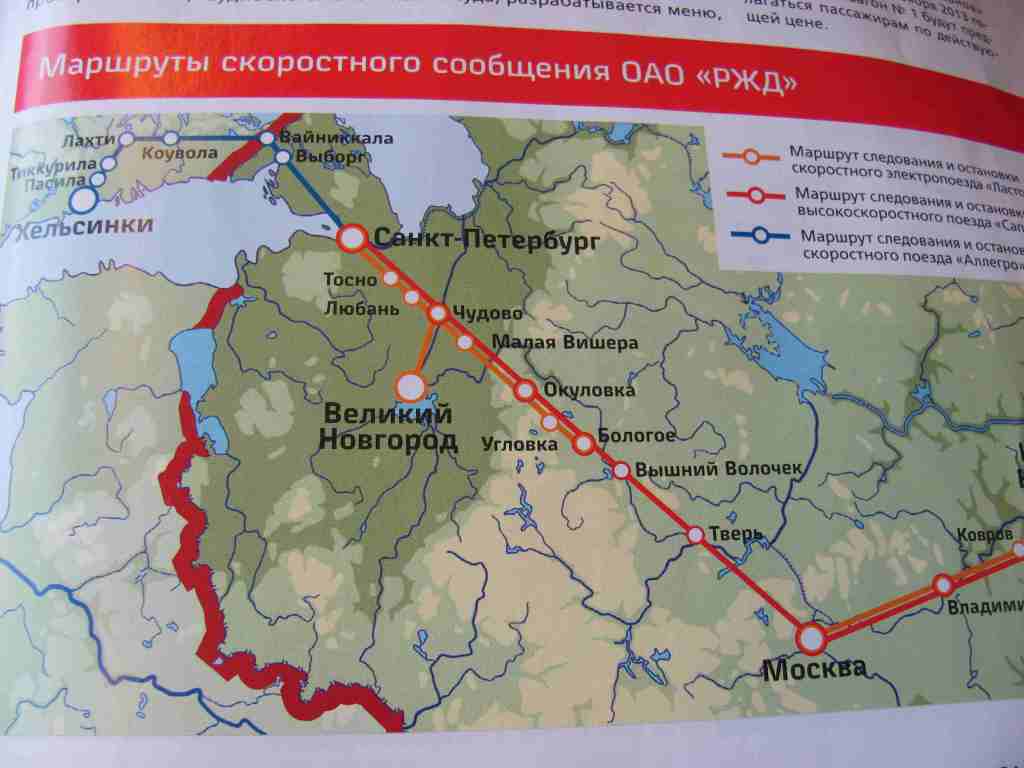
We returned to the station, where the Sampson train was already waiting for us, picked it up at 19:25 and in less than 4 hours we reached Moscow. This high-speed train had huge windows and comfortable seats. The journey was a real pleasure, absorbing with my eyes all the green places we passed. We were sitting in 7 carriages, seats 45-46.
The train arrived on time at 23:24 minutes at the Moscow station Konsomolskaya, from where we took the red line of the metro No. 1 to Chistye Prudy and from there the orange line No. 6 for another stop to Kitaysky Gorod, above which our hotel was located. The Moscow metro works from 05:30 to 01:00, and we managed to quickly get to it and accordingly remain fascinated by the city with the most beautiful metro stations. We thought about it, if the metro stations are so shiny and look like museums, what kind of city is on top. The next day we was going to find out because it was dark already – we hadn’t seen a dark night for more than a week (enjoying the white nights in St. Petersburg) and now our eyes were having a hard time coping with the darkness.


Moscow is the capital and largest city of Russia with a population of over 11 million people. It is also the largest city in Europe and the fifth one in the world. We could feel its size immediately, seeing the huge 7-lane boulevards, the crossing of which took time and required maximum speed. Our walk started at 07:00 in the morning, and we got up early in order to have maximum time to explore this really as huge as beautiful city.
Our luggage was left in the hotel and only our cameras weighed in our hands, loaded with more photos. First, we headed to the Balshoi Theater, which was supposed to be 10 minutes away, but due to the constant stops and photographing the wonderful buildings, the journey took us significantly longer. The buildings were really beautiful, some of which were painted, others had relief figures, and sculptures.



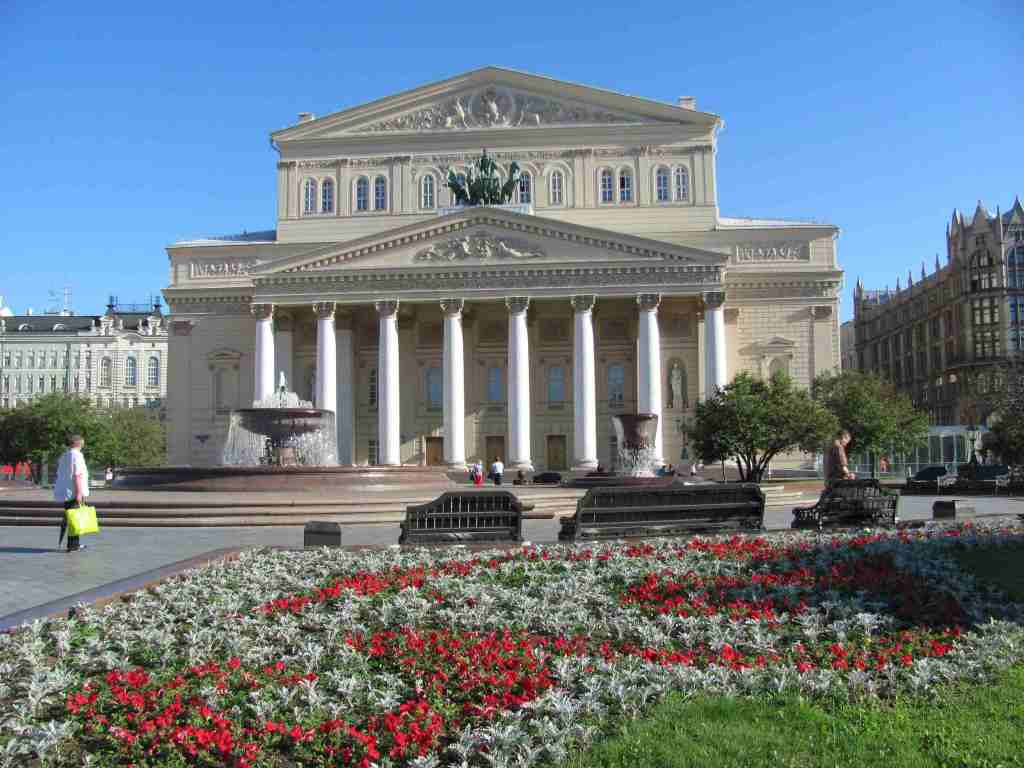


There was no way to pass by the building of the Bolshoi Theater, which was quite similar to our Bulgarian National Theater Ivan Vazov. It is Russia’s largest and one of the world’s most significant opera and ballet theaters. This theater dates back since March 1776, when the governor of Moscow, Prince P.C.Urusov received permission from Empress Catherine II for theatrical performances. The prince began construction of the theater, called Petrovsky after its address on Petrovka Street. However, the building burned down even before the opening of the theater and the prince assigned the construction to the English entrepreneur Michael Maddox, who built Bolshoi Petrovsky Theater.
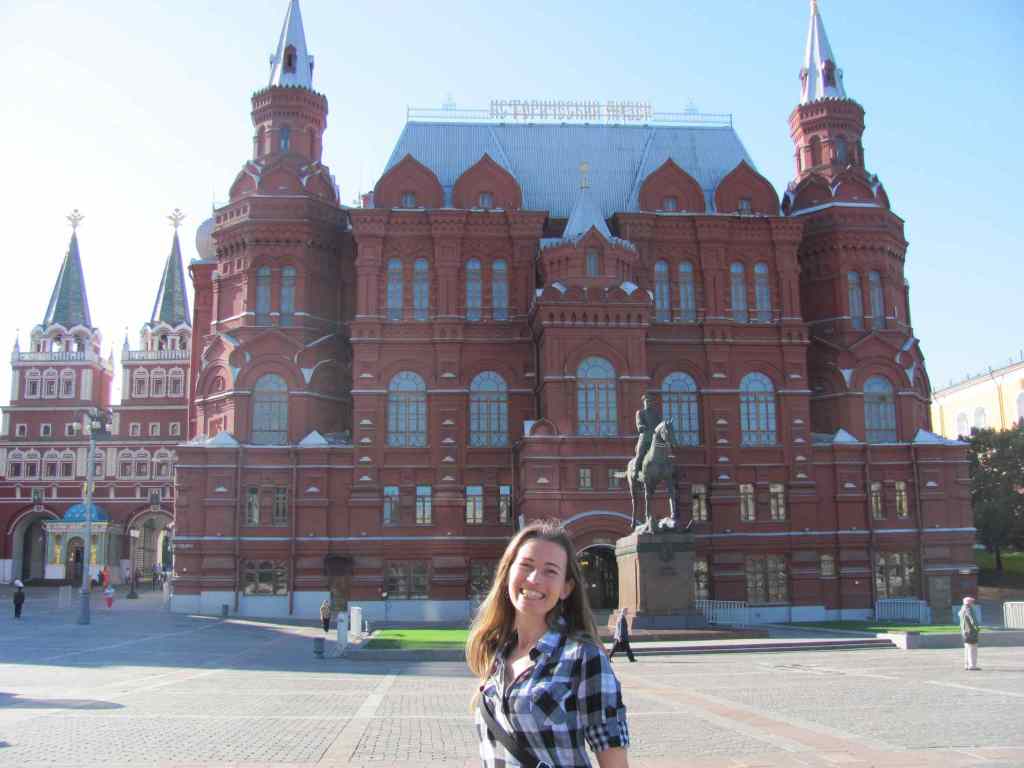
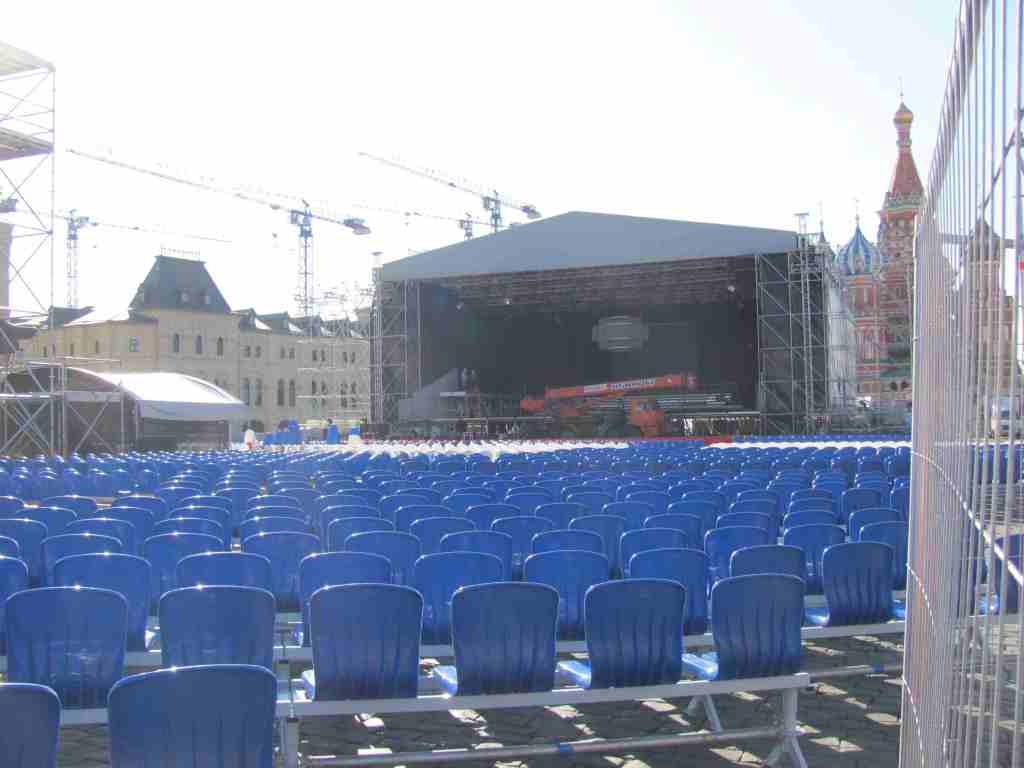
Unfortunately, we did not have time for performances, and continued to the next main attraction the famous Red Square, which is the oldest square in the city and where St. Basil’s Cathedral, the Kremlin, Lenin’s Mausoleum and other landmarks of Moscow are located. In just a few minutes we were there, gasping at the beauty of the buildings. The time was a little before 08:30 and there were still not many tourists, we could take pictures of the huge square, part of which, however, was fenced off due to an upcoming concert.
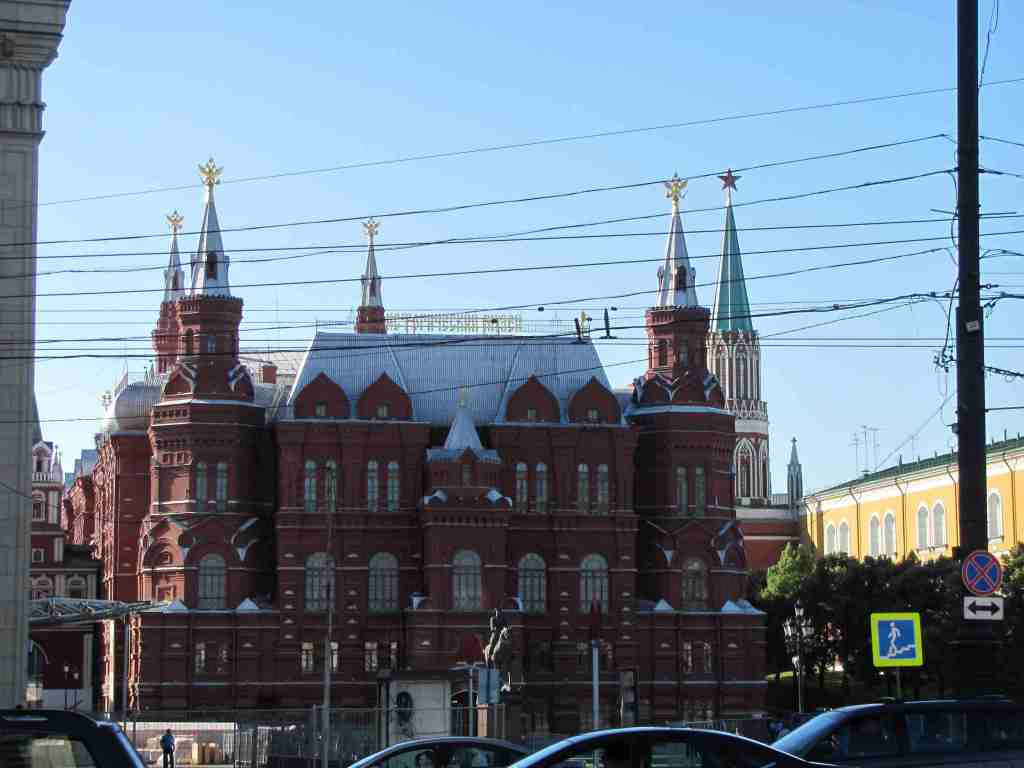
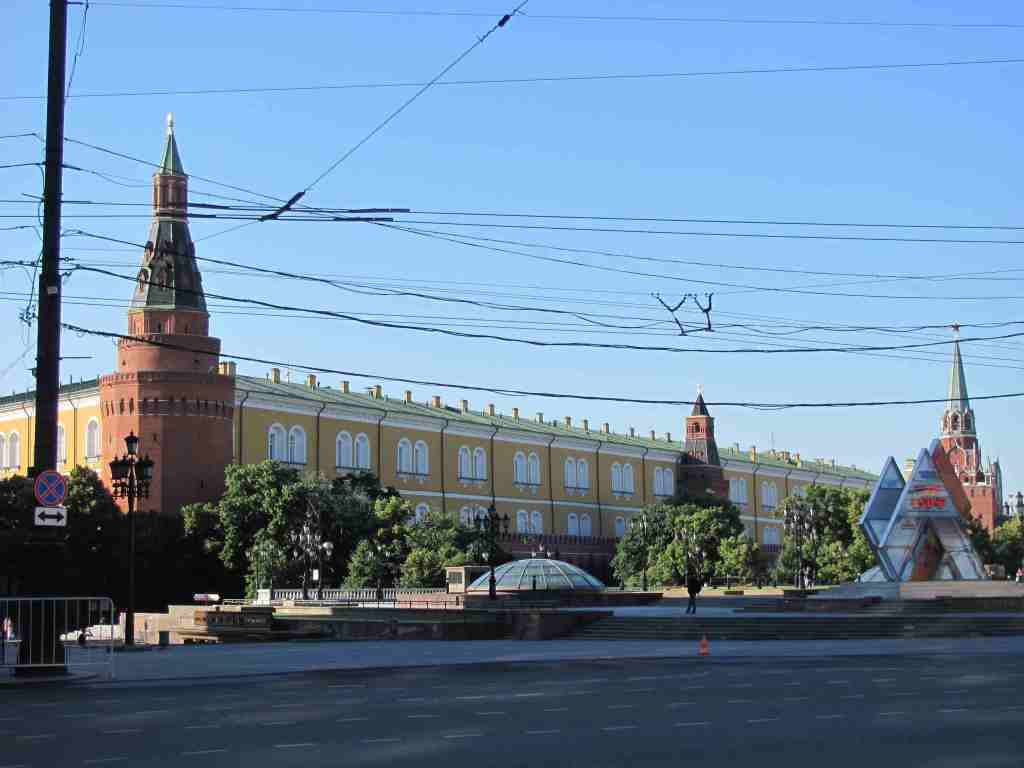
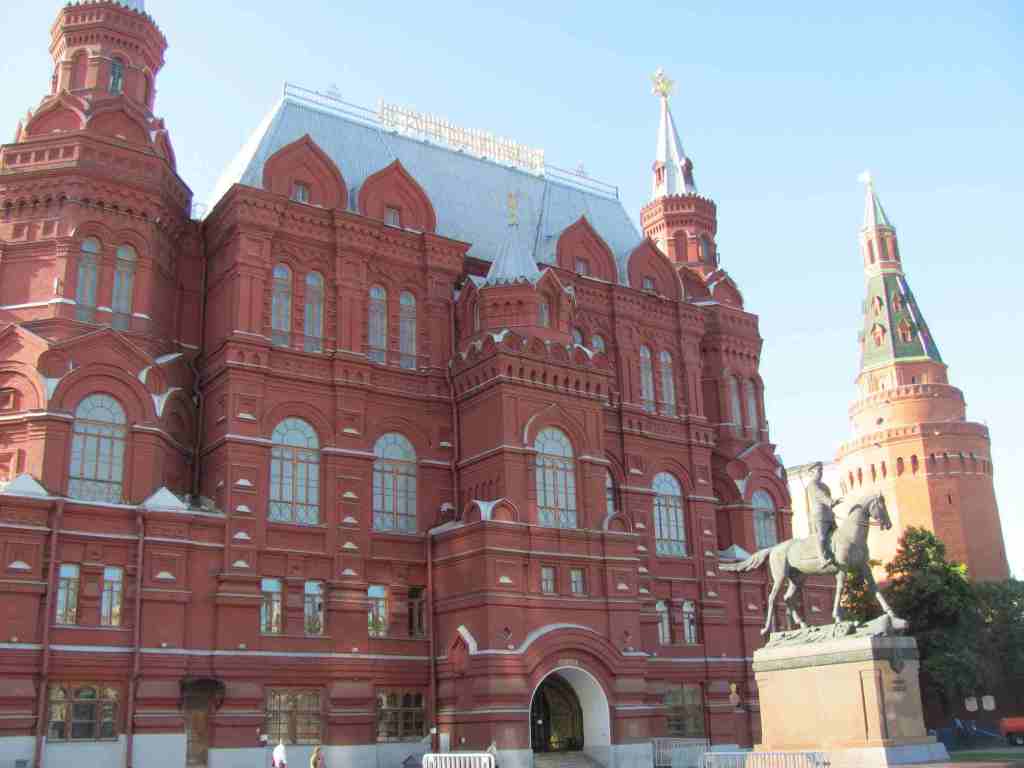
Red Square originated as early as the 15th century, bearing in mind that in 1147. is considered to be the year of the founding of Moscow. Red Square was indeed red – the fortress walls, the Kremlin, everything was dark scarlet, and at the end of the square was the exquisite Church of St. Basil the Blessed. Stepping on Red Square, it was as if we had stepped into a fairytale land and were waiting for Vasilisa the Beautiful or Baba Yaga to come out from some corner. However, it was still early in the morning and apart from us and Ivanushka the Fool there were no others on this square…
At exactly 08:30 the clock of the Kremlin began to ring, the bells rang loudly and we stood under it, listening to the song. The sky was clear blue, the sun was shining in full force, and yet it was difficult for us to capture the saturated colors, especially of the Church of St. Basil the Blessed, which stood on the sunny side, as well as the GUM department store, which also impressed us with its architecture. The abbreviation GUM actually comes from the Main Department Store and this is the oldest shopping center in the city.



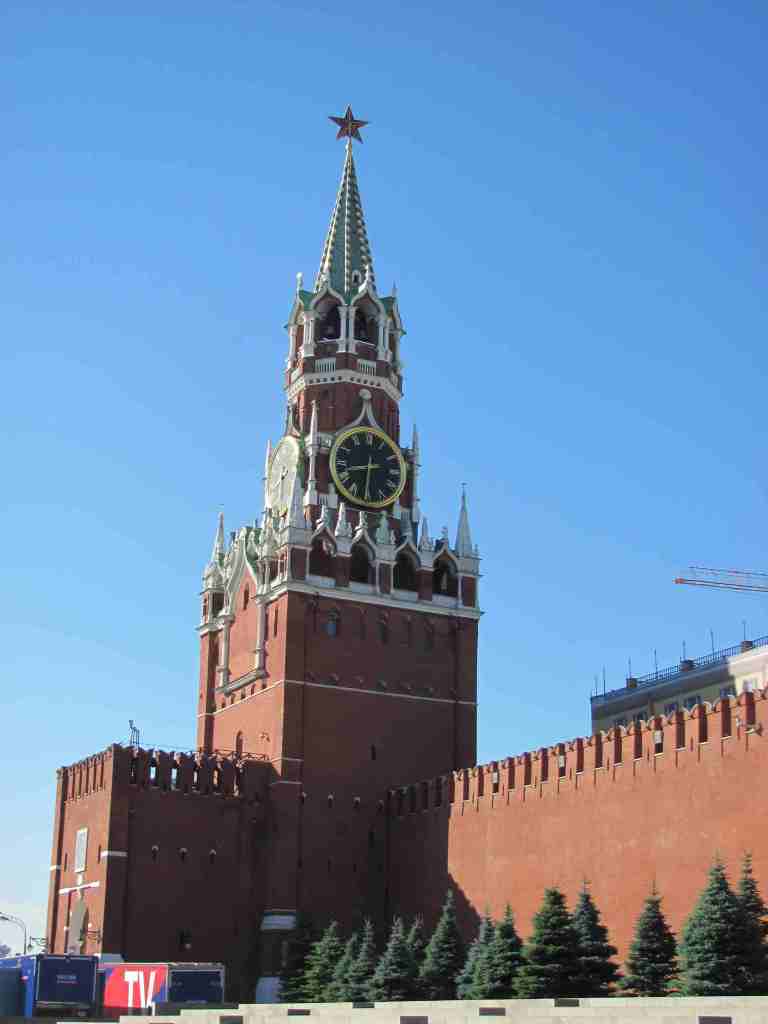

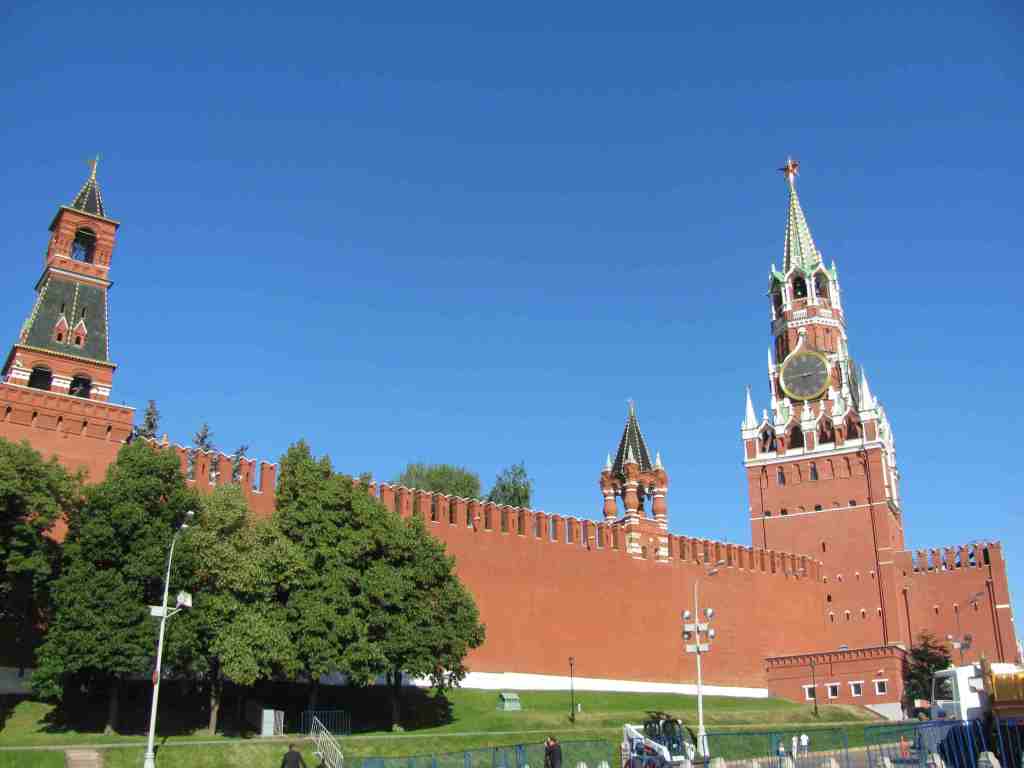
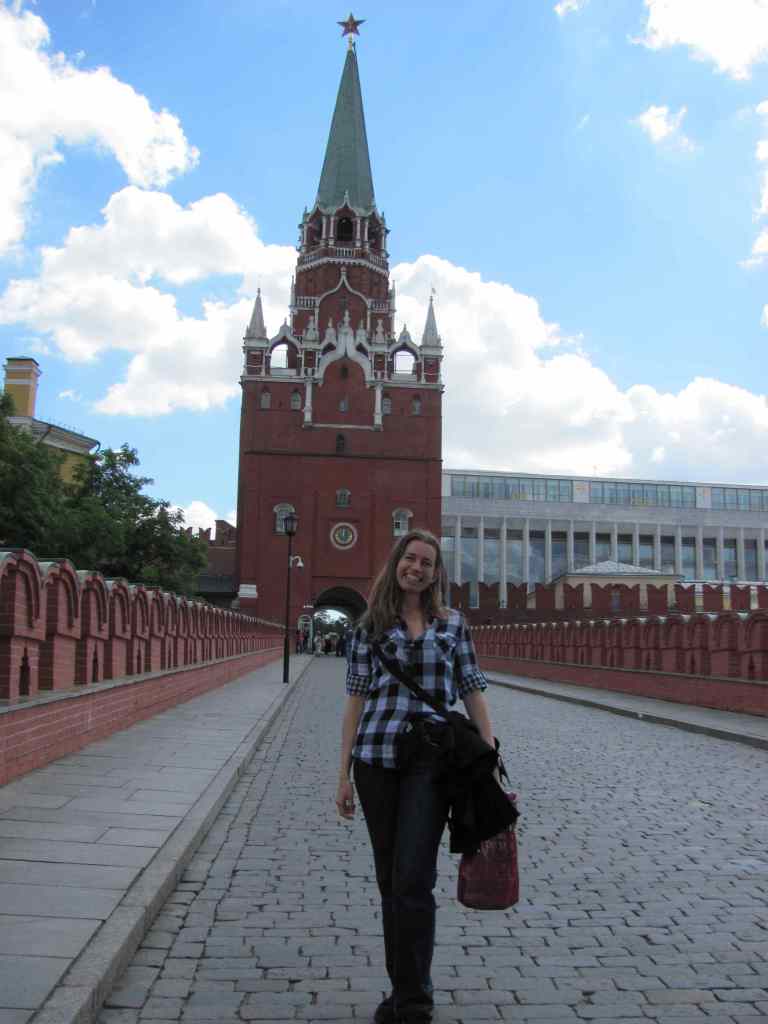
The clock tower or The Spasskaya Tower is probably the most photographed of all 20 towers here, and it is often used as a symbol of the Moscow Kremlin. In fact, the Kremlin means a kind of Russian urban fortified area with a ruler’s castle. The Moscow Kremlin is a fortress in the shape of an irregular triangle, built together with its towers in 1485-1495, with a total length of walls of 2235 m, their height from 5 to 19 meters, and a thickness of 3.5 to 6.5 m. 20 towers, of which 3 towers standing in the corners of the triangle have a circular cross-section, and the rest have a square section. The highest is the Trinity Tower with a height of 80 m, and the most photographed is the Spasskaya Tower, in front of which we stood in the morning and photographed the famous clock, placed somewhere between 1491-1585 and showing the official Moscow time since then. As for the name Spasska, the same comes from the icon of St. Spas placed above the entrance.
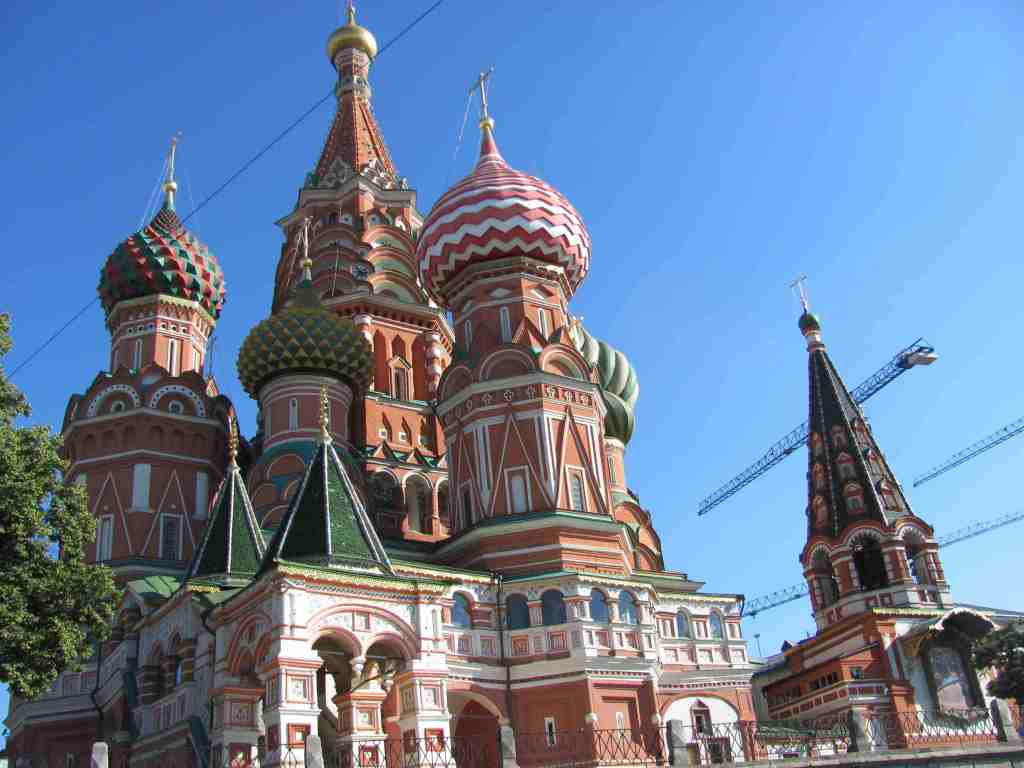
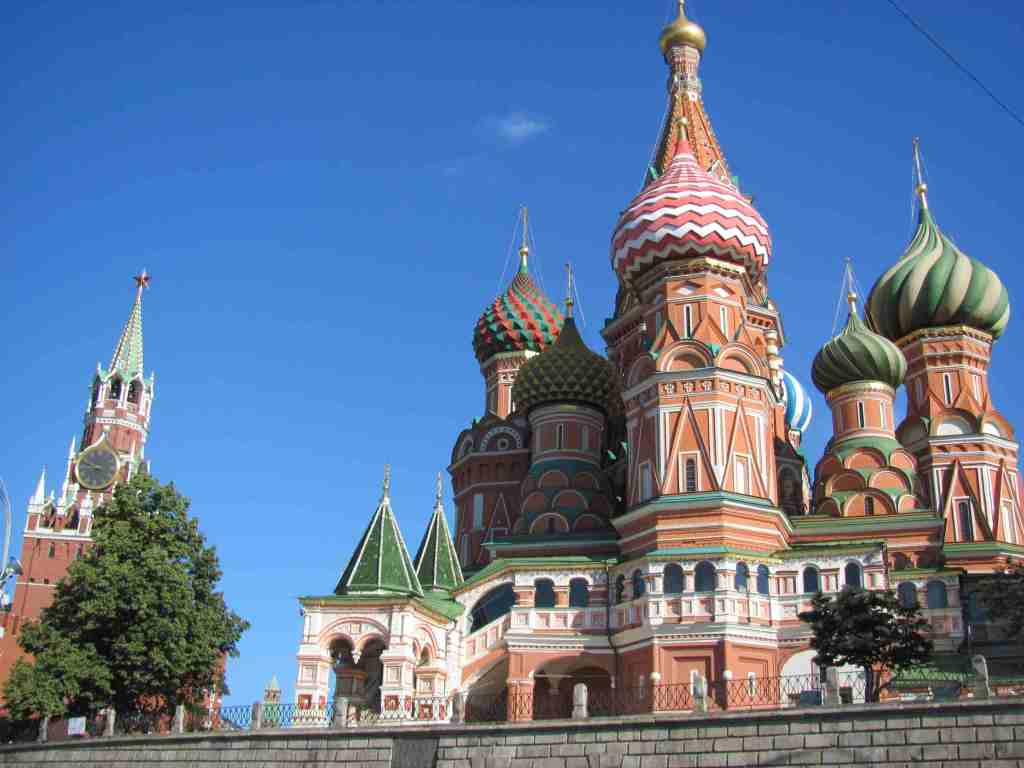
We also took pictures in front of Lenin’s mausoleum, which was closed early in the morning, as well as in front of the beautiful Church of St. Basil the Blessed, whose colorful domes attracted the eyes and aroused admiration. The fairytale church was erected in 1555-1561. by order of Ivan the Terrible, and according to legend, the architect of the temple was blinded by the king so that he could not build another similar church. The temple itself consists of 8 chapels located around the 9th church rising above them. Above each chapel there is a dome with different patterns. In 1588. from the northeast to the temple was added a building consecrated in honor of St. Basil the Blessed, and his relics were laid in it. A century later, the 65-meter bell tower was built. Another interesting fact is that during the reign of Ivan IV, the temple was also used as a storage place for the royal treasury. We walked around the colorful cathedral and photographed it from all sides, which was not easy considering that there was a parking lot on one side and fences for the concert on the other. In front of the main entrance there was a monument to Minin and Pozharsky, whom I later learned that they helped liberate Moscow from Polish occupation in 1612.


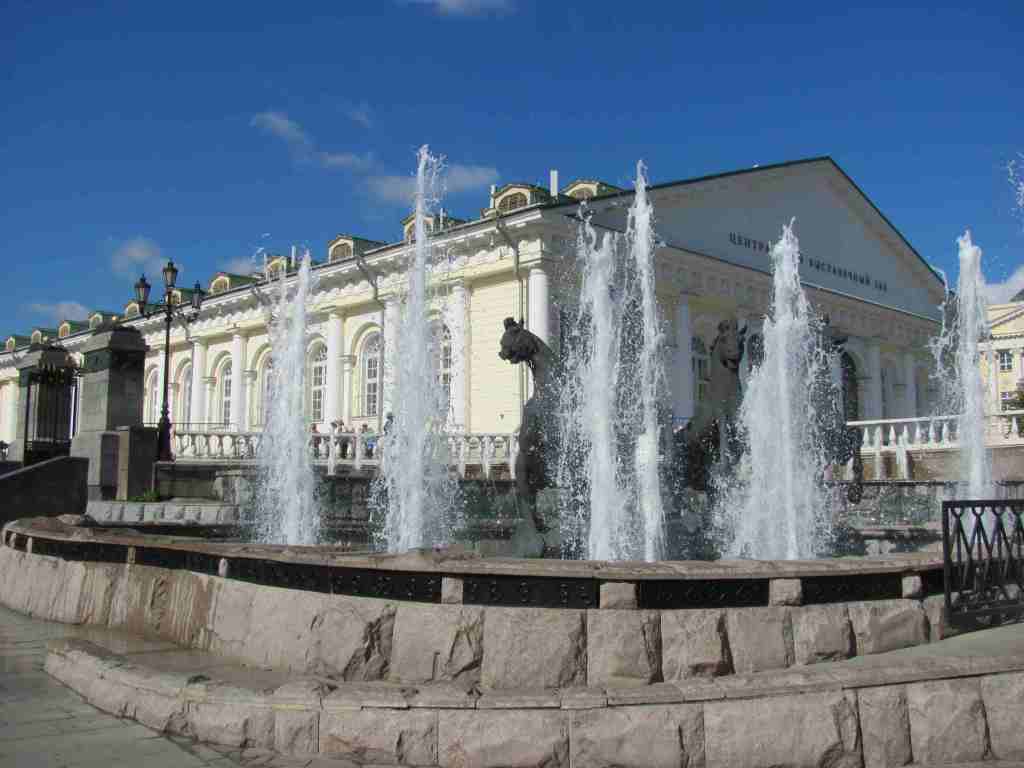


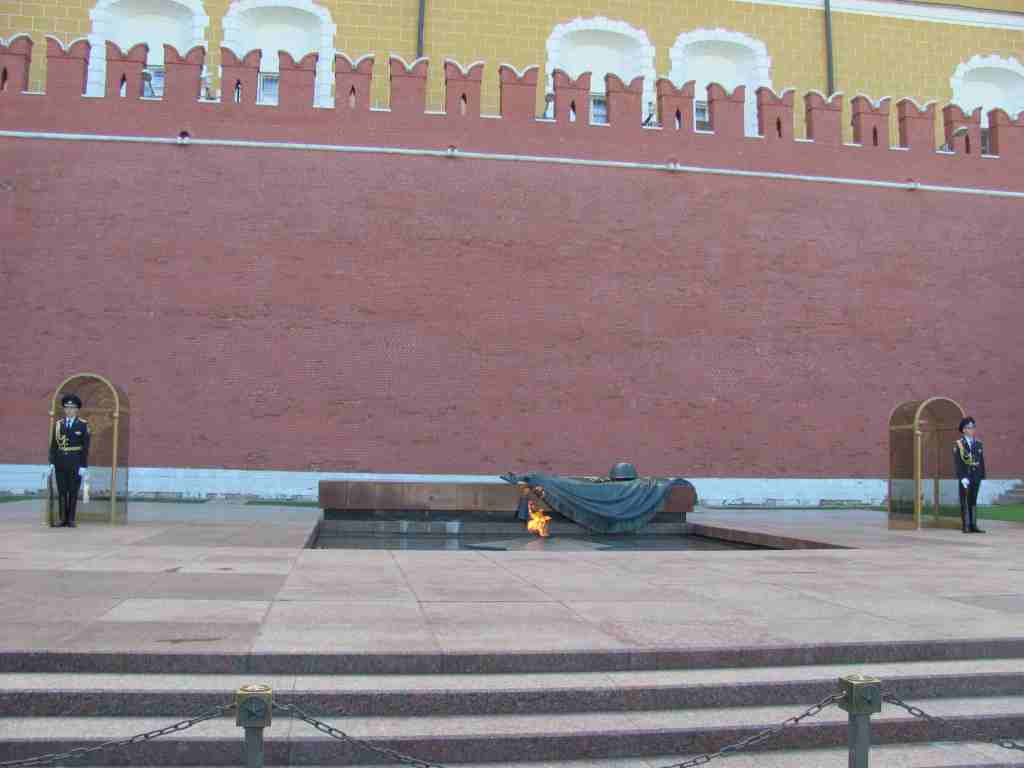

On Red Square we could walk freely, there was no entrance fee, but in order to pass to the other side of the fortress walls we needed a ticket and compliance with the working hours, which started at 10:00. We descended from Red Square along the fortress walls and found ourselves in front of the lit eternal flame, which was guarded by two guardsmen. Next to the fire there were large plaques with the names of dozens of cities such as Leningrad, Kiev, Minsk, etc., called hero cities after World War II.
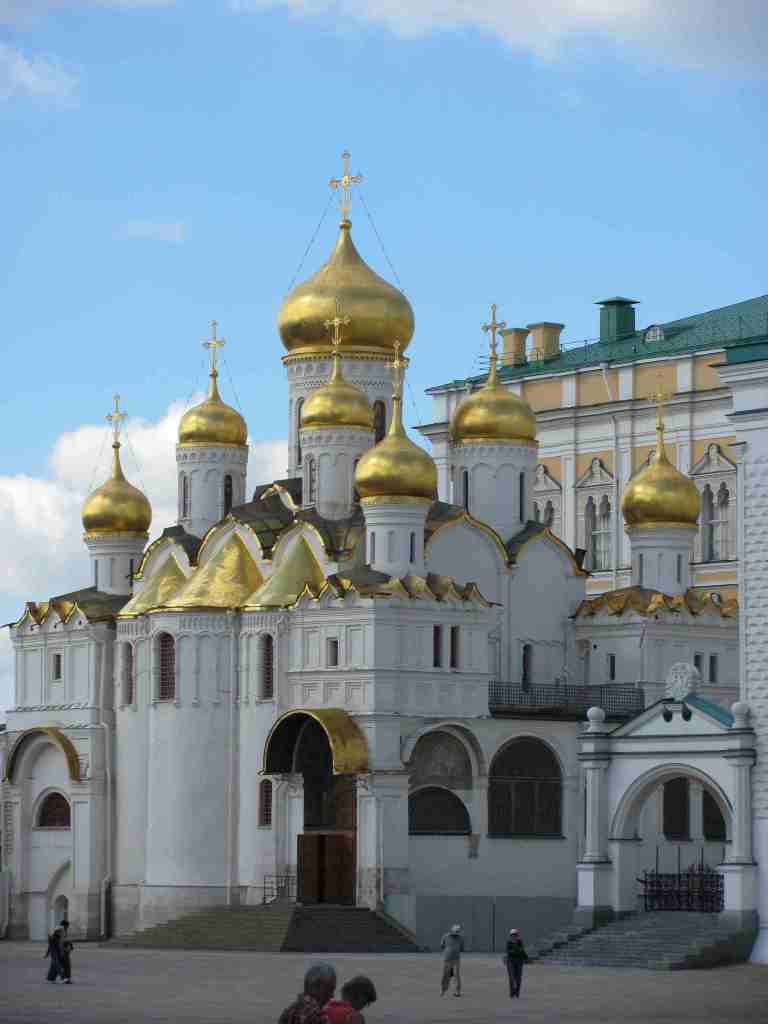
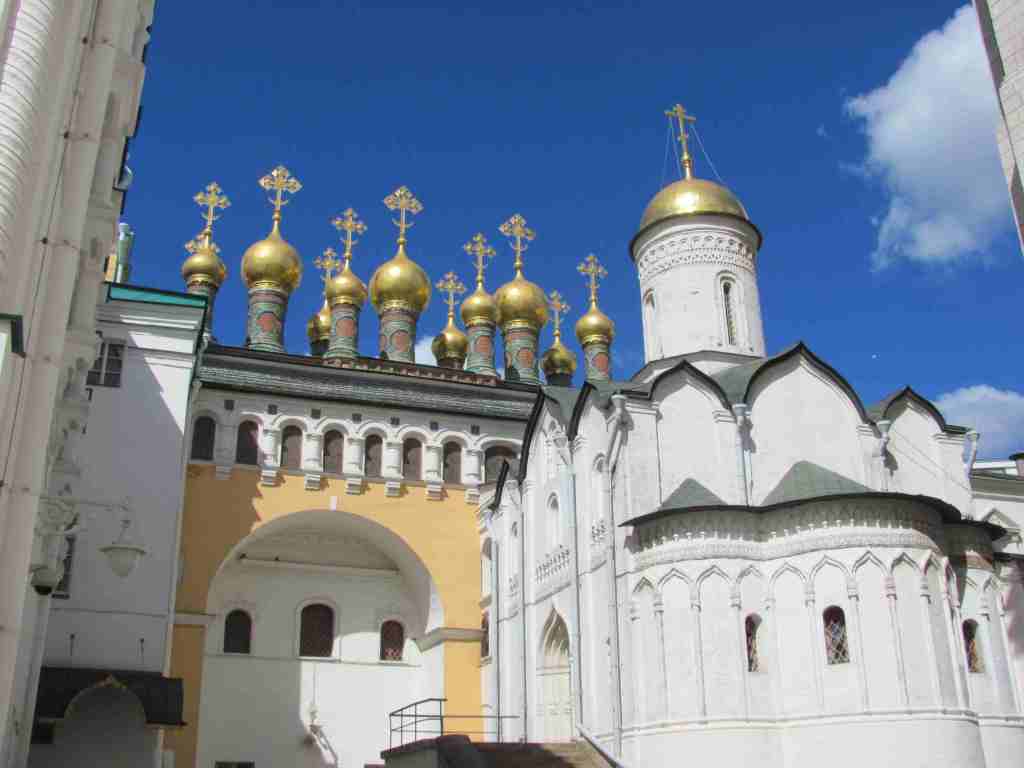
On the other side of the park there was a beautiful fountain with figures of running horses, which we also photographed from near and far. I noticed that everywhere was very clean and well-maintained. There were many flowers arranged in beautiful gardens. At 09:30 we already bought a ticket with the right to visit several churches inside the Kremlin, and at 09:45 the first tourists, among whom were us, began to enter. Our bags went through a scanner for checking, after which we were allowed to pass along the bridge leading inside behind the fortress walls. And there were many more beautiful churches – all with golden domes, some more magnificent and beautiful. From the inside, they were even more beautiful, painted with bright, as if living colors. Photographing the interior was forbidden, so everywhere there were free brochures with a map of the temple and photos of the more significant icons.


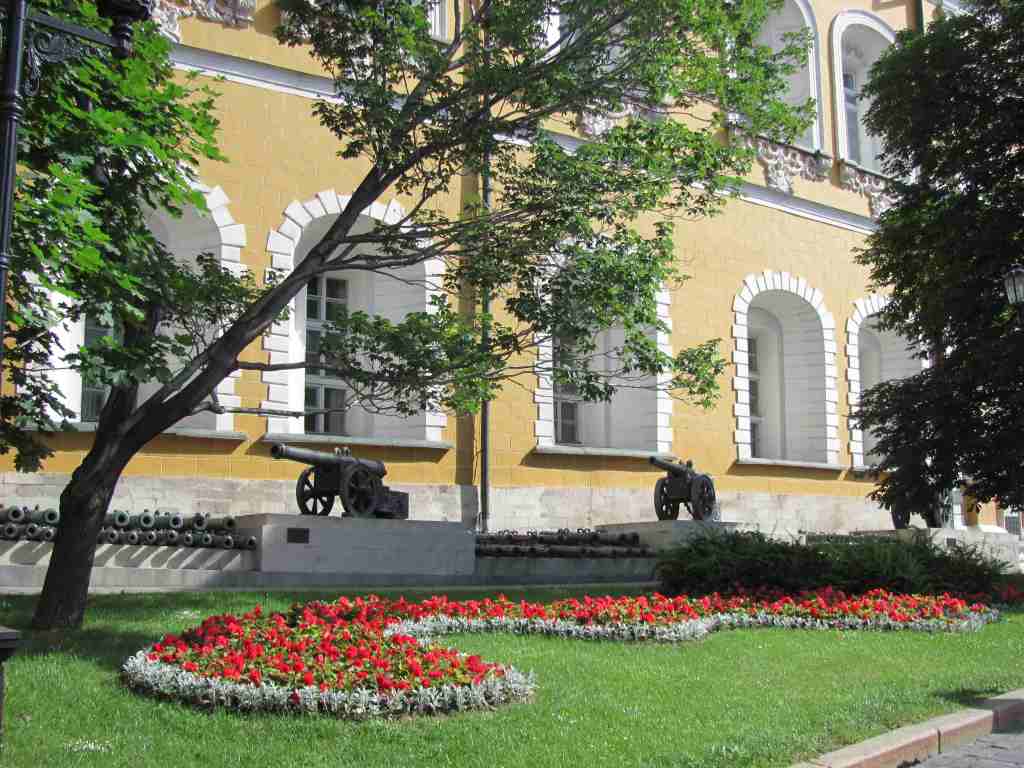
In addition to the churches, we did not miss the opportunity to take pictures with the Tsar cannon, which is the largest cannon, which, however, has never fired. The huge and weighing 40-ton cannon with a length of 5.34 m and a diameter of 1200 mm at the bottom of the barrel was erected in the 16th century in front of the Spassky Gates, and was supposed to protect the Kremlin from the direction of the Moskovskaya River. Today, the same is recorded in the Guinness Book of Records, continuing to point in the direction of the river, which can be seen in the lowland of the fortress. In fact, it is this river that gives the name of the city – Moscow.
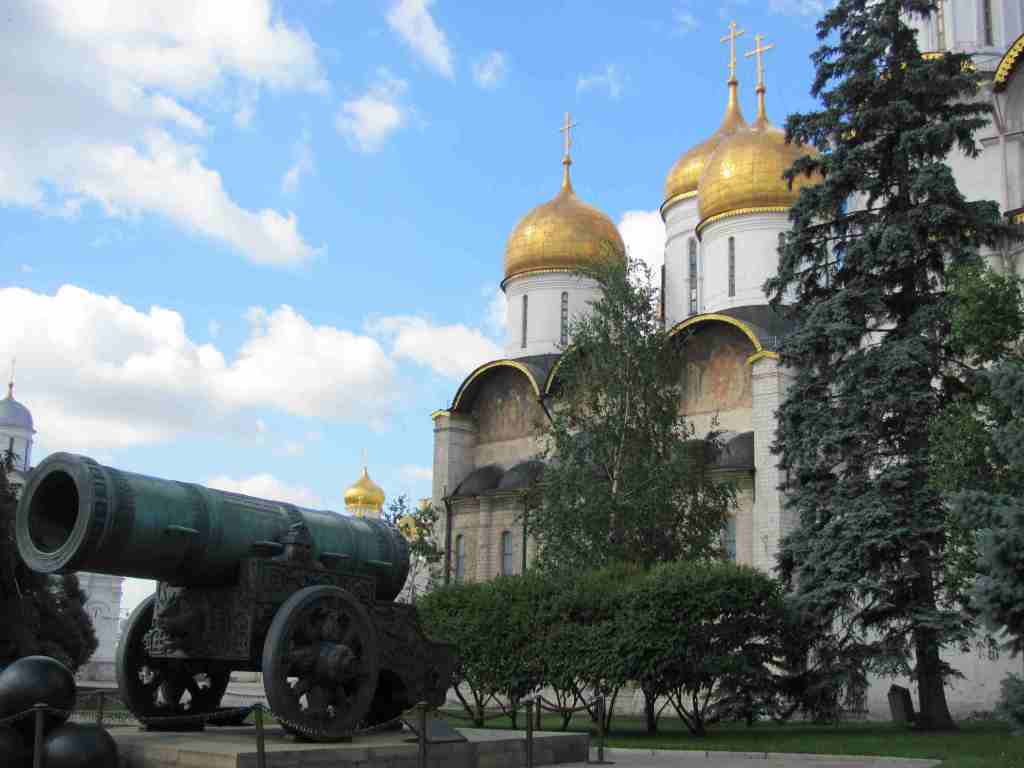


In the immediate vicinity of Tsar Top is the Tsar Bell, which is the largest bell in the world, cast for the Assumption Cathedral in the Kremlin by decree of Empress Anna in 1730. The total weight of the bell is 200 tons with a height of 6 m. It is beautifully painted with images of Tsar Alexei Mikhailovich and Tsarina Anna Ivanovna, but a few years after casting, during a fire due to the danger of melting, the bell was doused with water, which led to the breaking off of a fragment weighing 11.5 tons. In this form, it became unusable and remained in the pit, from where 100 years later it was pulled out and exposed in the Kremlin.
Gradually, the Kremlin was filled with groups of tourists and we were glad that we were able to see before them the wonderful churches erected in the 15th century. Unfortunately, we didn’t have time and didn’t pay an entrance fee to see the Armory, which the brochures presented as the oldest and richest palace museum. It was founded in 1806. as an imperial palace museum, and initially three imperial treasuries were included in its composition: the palace treasury, where the imperial gifts were kept; The stable treasury, in which the ceremonial ornaments for horses and carriages used by the Russian tsars in solemn ceremonies were exhibited, and the armory collection – a collection of weapons and other valuable exhibits. Today, the collection consists of nearly 4,000 exhibits dating back to the period between the 12th century and 1917, and there is also a unique collection of diamonds, jewelry and precious stones.
The little we saw filled our eyes and realized how big and rich the Russian country is. We were left with very good impressions from our entire tour in St. Petersburg and Moscow. We came back with 4112 photos, and subsequently I managed to select the best 1380 of them! However, I will not reduce my good reviews. Like the white nights that don’t darken, I expected the good memories of this country to remain clear in my mind.


GENERAL INFORMATION ABOUT MOSCOW:
Location: Moscow is the capital of Russia and is located in the central part of European Russia, on both banks of the Moskva River.
Area: 2562 sq. m.km. (it is the largest city in Russia)
Population: 12,506,468 people (2014 data)
Official language: Russian
Altitude: 150-253 m
Climate: Temperate continental with hot and humid summers, and long cold winters.
Time zone: UTC+3
Currency: rubles (RUB)
Additional information: https://www.mos.ru/
TRIP TIPS FOR MOSCOW:
Best time to visit: Moscow is beautiful all year round, but probably the best time to visit is in late spring and early June, when the weather is most pleasant and has the longest hours for walking and sightseeing.
Typical foods and drinks: Russian cuisine is famous for its porridge, but while you are in Moscow, we recommend you try the local pancakes called blini, which are served sweet or savory to your taste. Also try the local pirozhki, pelmeni and of course Pavlova cake with crispy kisses.
Places to visit: There are numerous sights of Moscow, among them the medieval fortress in the city center of the Kremlin, Red Square, the Church of St. Peter.St. Basil the Blessed, the Spasskaya Tower, the Bolshoi Theater, the State Historical Museum, the Tretyakov Gallery, the Moscow Metro, the Memorial Museum of Cosmonautics, the Moscow Zoo, the Gorky Amusement Park, the Alexander Garden and many others.
 TripTips