ROMANIAN DOBRUDJA
author: Ana Boneva


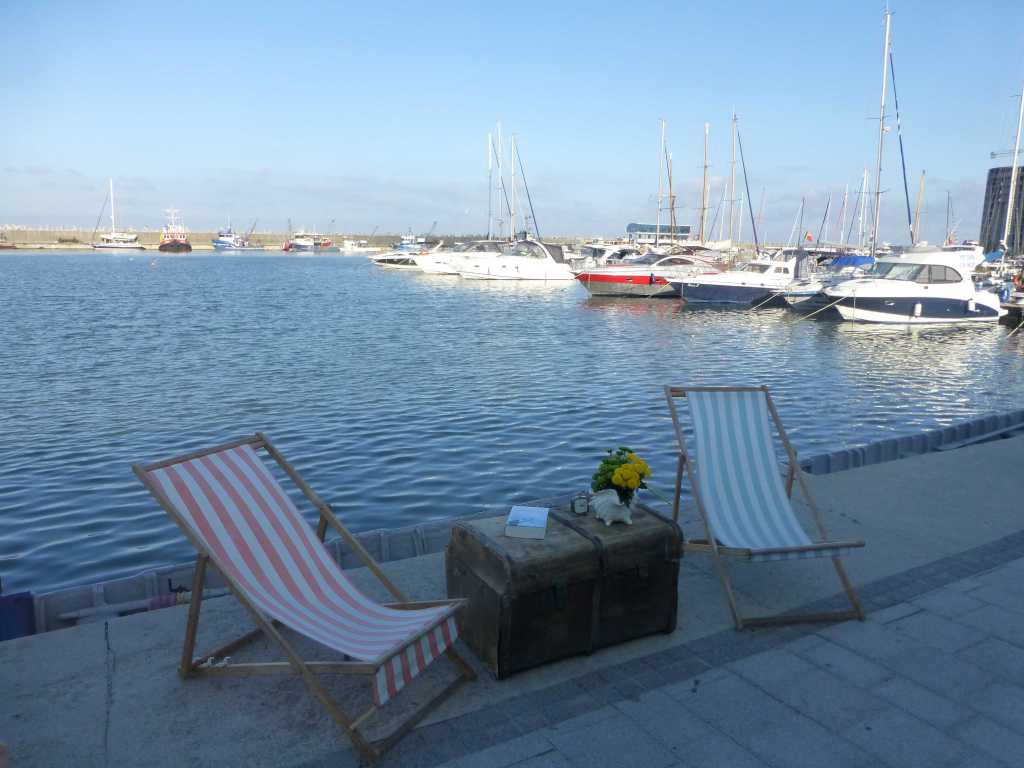
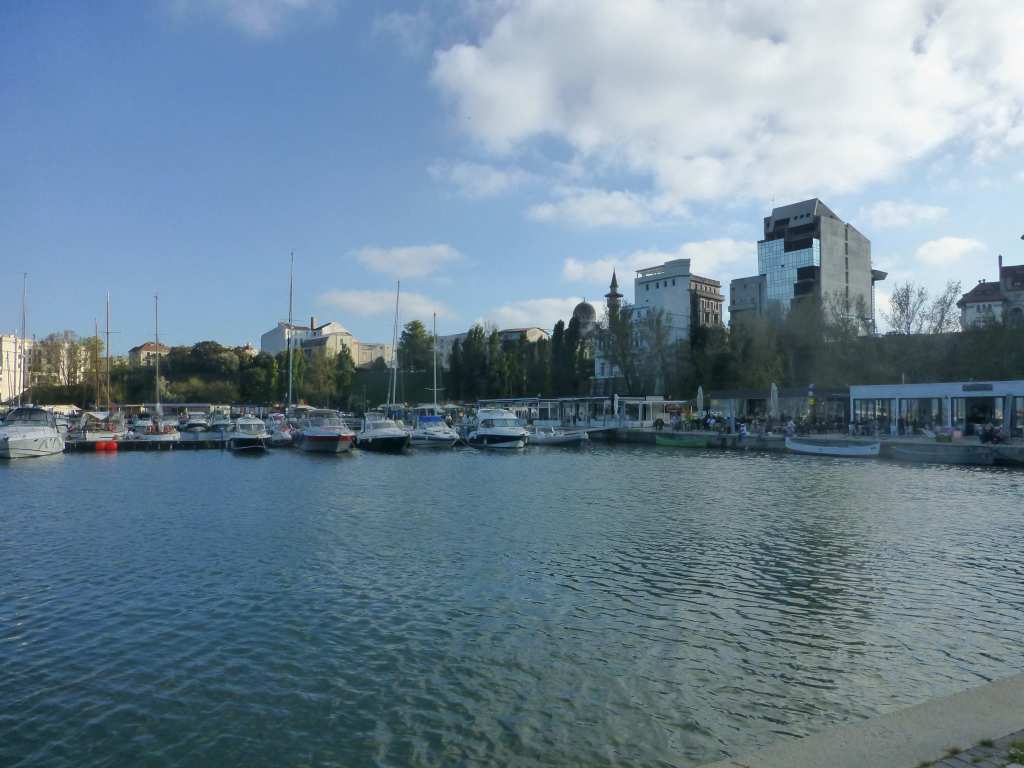
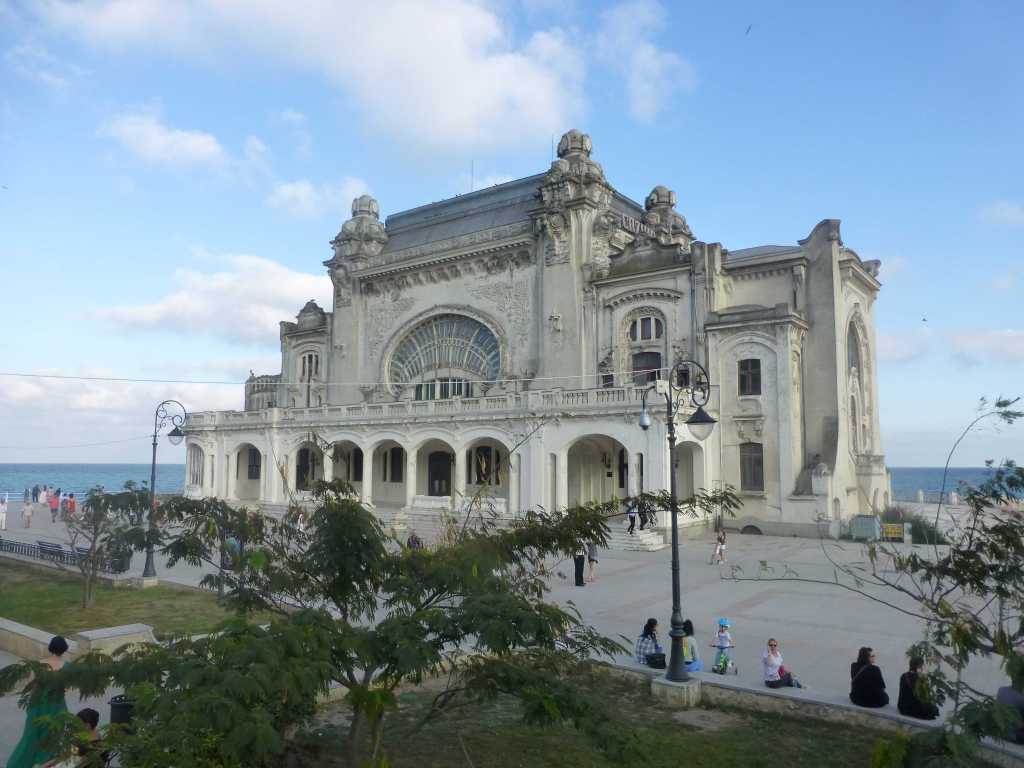

Romania may not sound like an exotic country, but its name has a glorious past. Even in the Middle Ages, it was mistakenly called the Roman Empire – Romania (Romanland). Romanians appropriated this name in 1859, when Wallachia and Moldova were united. Centuries ago, the country was known as Wallachia, with the locals speaking a language close to Latin. In the 19th century, scientists wondered how Latin-speaking people ended up north of the Danube River. And they came to the conclusion that the Romans came and settled these places in the 2nd-3rd century AD. This theory is embedded in the national consciousness of the people, and the Romanians are perceived as heirs of the Roman Empire, which actually came to these lands and destroyed the local Thracians named Dacians. The history of Romania and Bulgaria has been intertwined over the years, with the freshest memories on the territory of Dobrudja, which was divided into two by the Treaty of San Stefano and the northern part was ceded to Romania, although it was inhabited exclusively by Bulgarians. It was these territories lost for Bulgaria that we decided to tour, departing from Dobrich on a September Saturday morning.
The distance between Dobrich and Constanta is 100 km, which we covered in less than an hour and a half, crossing the border at the Kardam checkpoint. Our first impression of Constanta was how big this coastal city was, crossing it by car in search of the hotel. Constanta is the 5th largest city in Romania and the 4th largest port in Europe after Rotterdam, Antwerp and Marseille. It is also one of the oldest cities in the country, mentioned as early as the 5th century BC as a Greek colony. In 20 BC it became part of the Roman Empire, and then it received its name Constanta, in honor of the Roman Emperor Constantine the Great. From that time remained Roman walls, columns and statues in the archaeological park at Republici Blvd.


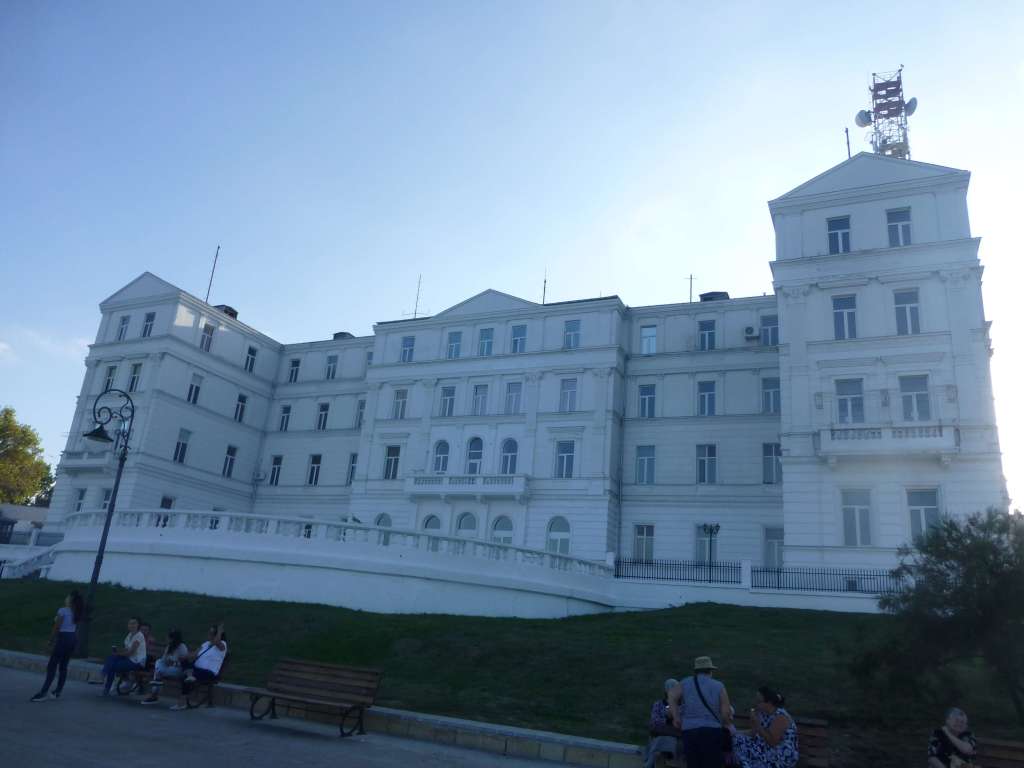
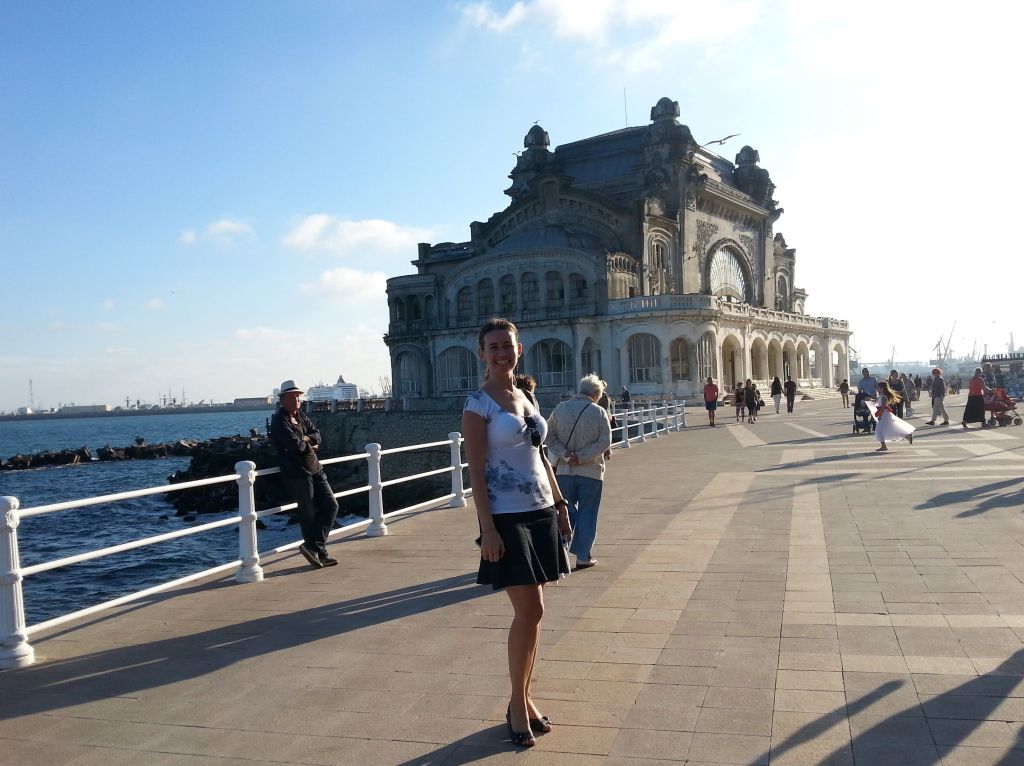
After leaving our luggage and car at the hotel, we headed on foot to the Casino in Constanta, located on the very coast. The walk along the promenade was very pleasant, passing many picturesque restaurants. The Casino itself also impressed us, although it was closed and apparently non-functional. Built between 1904 and 1910, the building was beautifully decorated with many lavish details and ornaments, and at the time the European elite came here, calling the casino the Romanian Monte Carlo. Today, the building has been neglected from the inside and since 1990 it has been closed to visitors. Hopefully they will find the means to restore it, because the building is really charming, overhanging the cliffs of the Black Sea – this is a casino where you can literally have a floating luck.
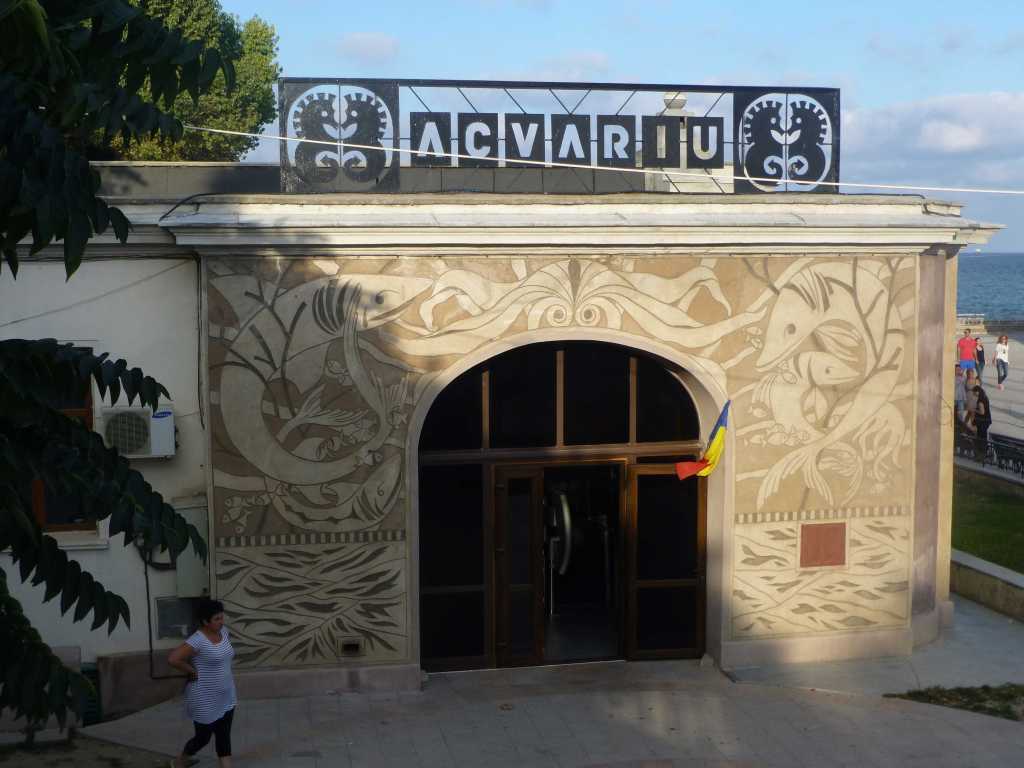
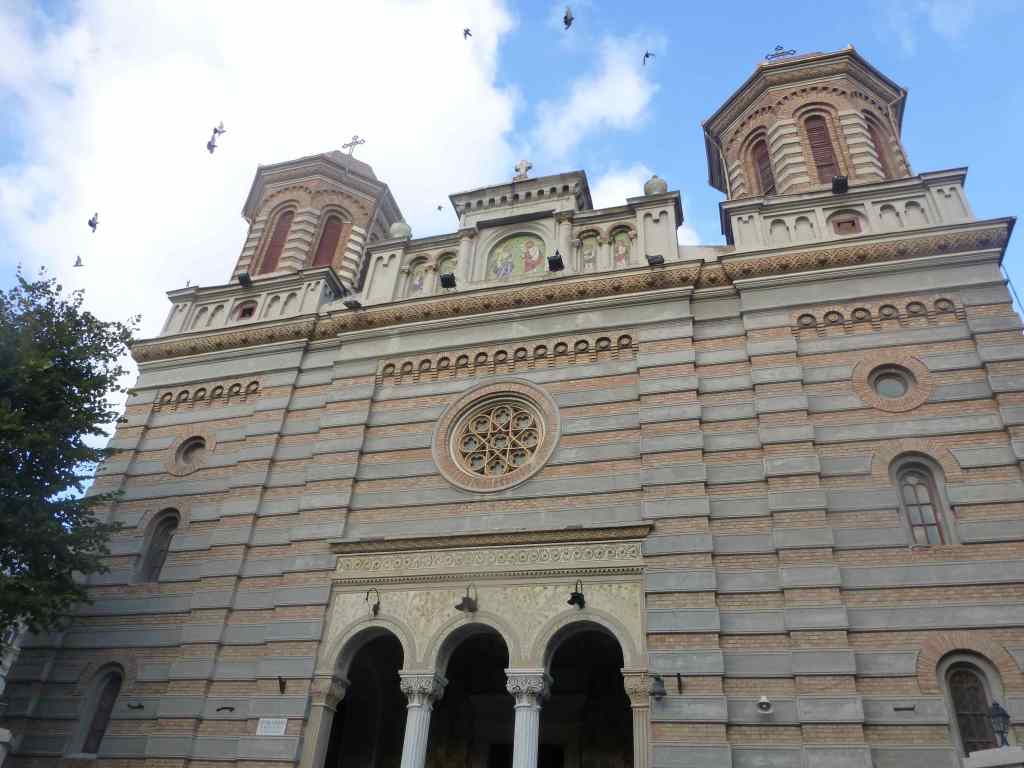
We passed by the aquarium of Constanta and came out in front of the building of an old church, in the yard of which there were many columns and ruins of an ancient Greek settlement. It turned out that the Greek city of Tomis was one of the largest trade centers on the Black Sea. The ruins spoke faintly of this glorious past, but there were large signs in Romanian and English, who told about the legends, and in August these legends came to life, as in Constanta and the neighboring city of Mamaia, a festival of ancient Tomis was held.
On the way to the archaeological museum, we passed several churches, each of which had a wedding. We counted at least 10 brides along the way, and I had never seen so many weddings in one place. Apparently, September was a popular month for weddings not only in Bulgaria, probably people here were superstitious and believed that a wedding in September brings a quiet and peaceful family life. However, according to statistics, June was the most ideal month for marriage. As the honeymoon for married people in June lasted a lifetime.
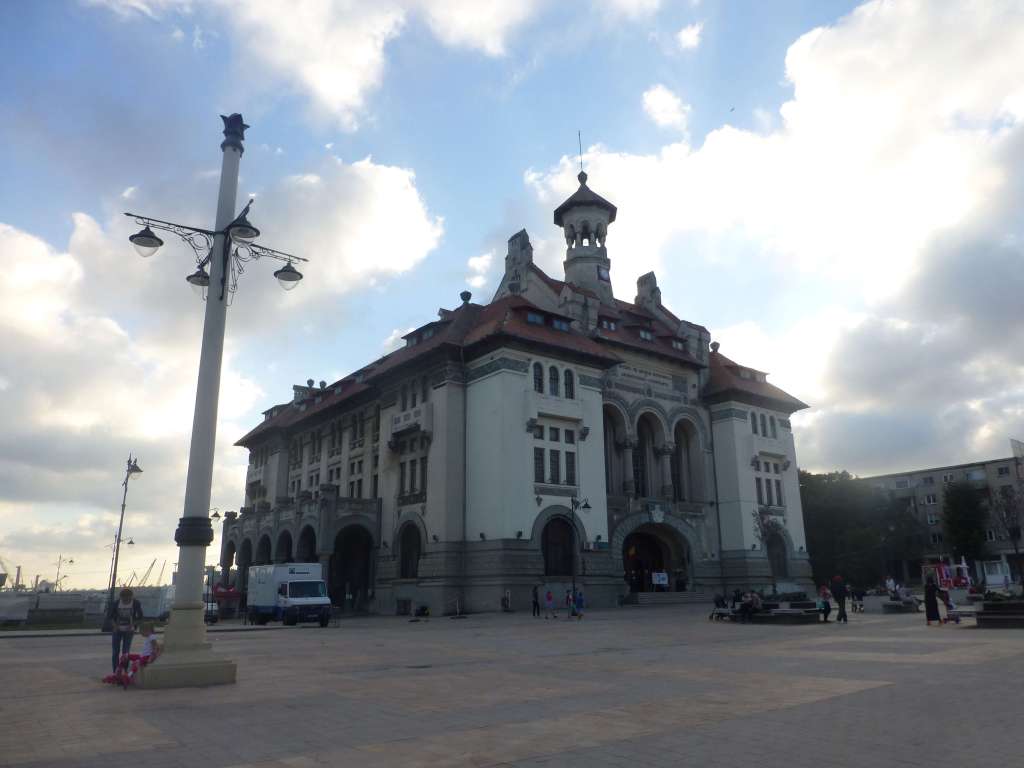
From superstition we went to history passing by the Archaeological Museum in Constanta, which was famous for its many exhibits from Greek times (when the city was called Tomis) and the Roman period (when it received the name Constanta), including beautiful mosaics and sculptures.




Our cultural program was interrupted by a culinary one, as we sat in a small restaurant with traditional Romanian dishes. We tried the Romanian cabbage rolls served with a side dish Mamaliga, as well as the “Bulgarian salad” consisting of tomatoes, cucumbers, roasted peppers, onions, ham and cheese, and resembled the Bulgarian Shopska salad, but with ham.
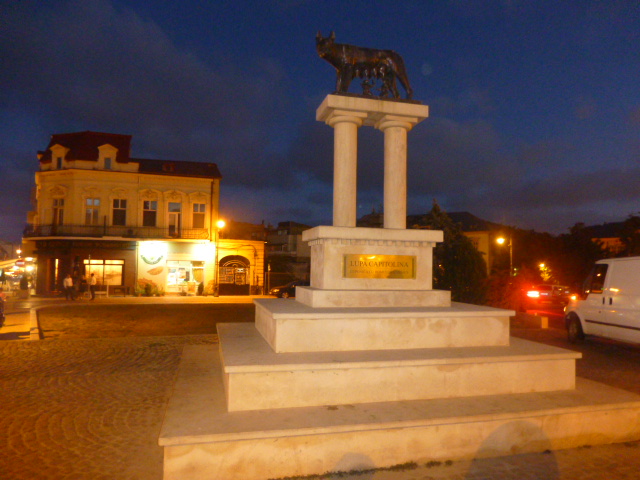
Constanța had a lot of beautiful baroque buildings, but also a lot of rubbish on the streets. It was the dirtiest city I’d ever walked in, which was a pity with all these sights. At least our walk ended well, passing by the monument of Romulus and Remus, which was in Rome, and now we saw it in Constanța, apparently the Romanians really emphasized their ancestors the Romans.


The next day, early in the morning, we headed to the town of Tulcea, which is located 130 km north of Constanta. We passed many lakes and rivers that formed fogs, but nevertheless, driving on this brand new asphalt was a real pleasure.
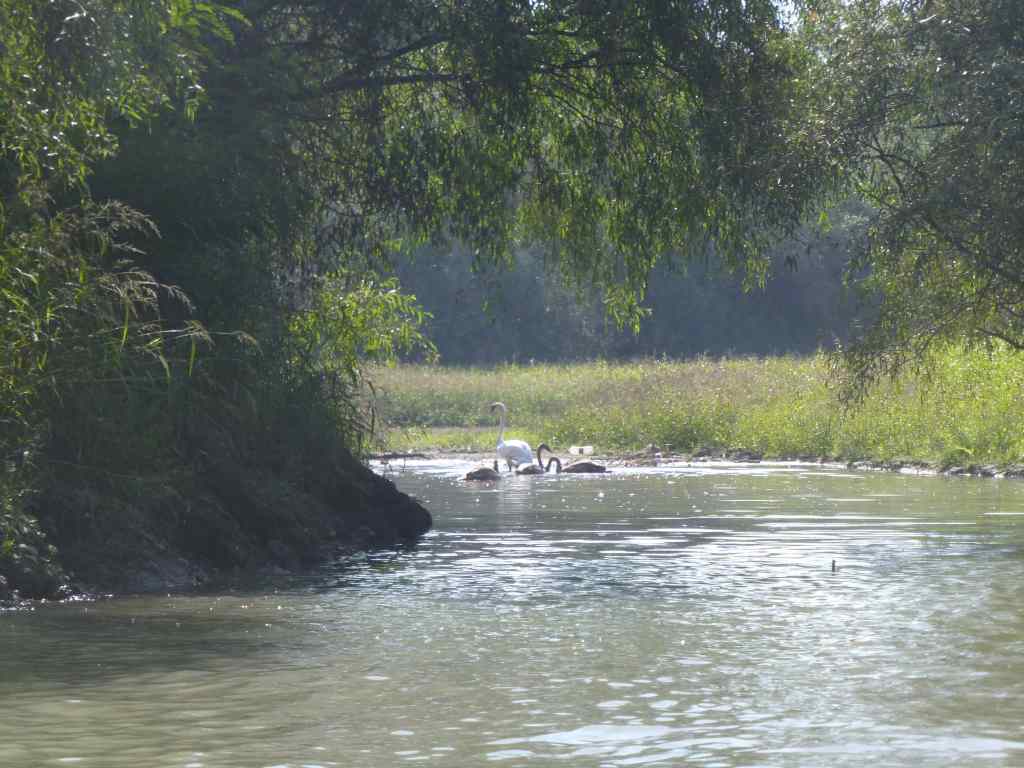
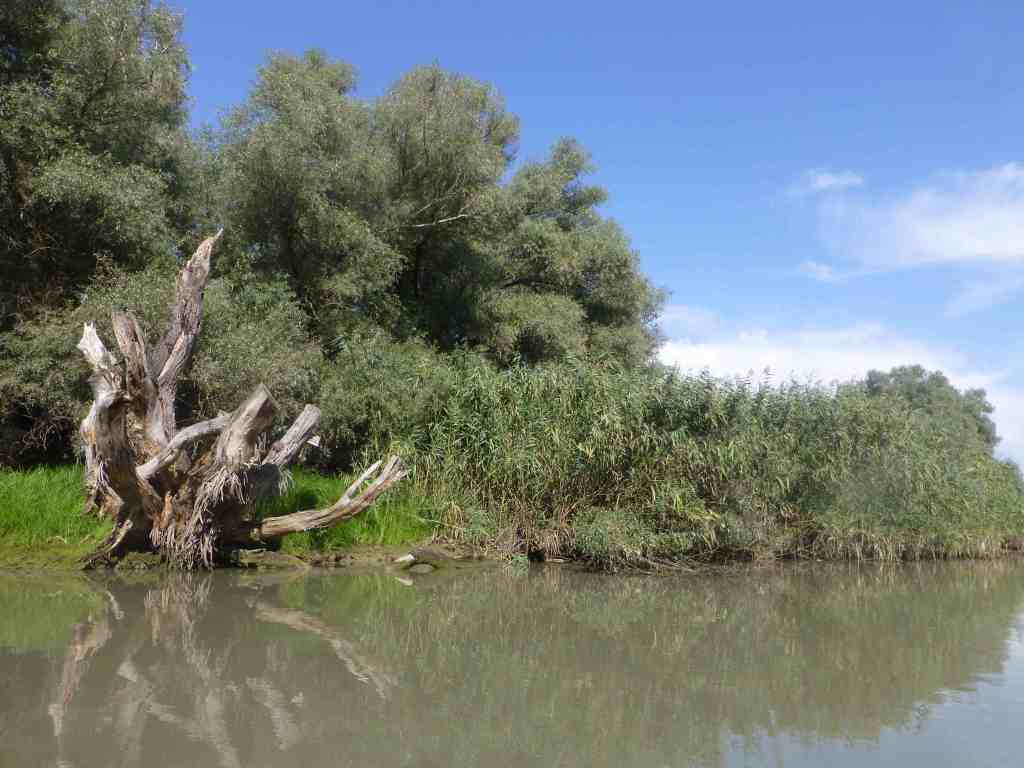
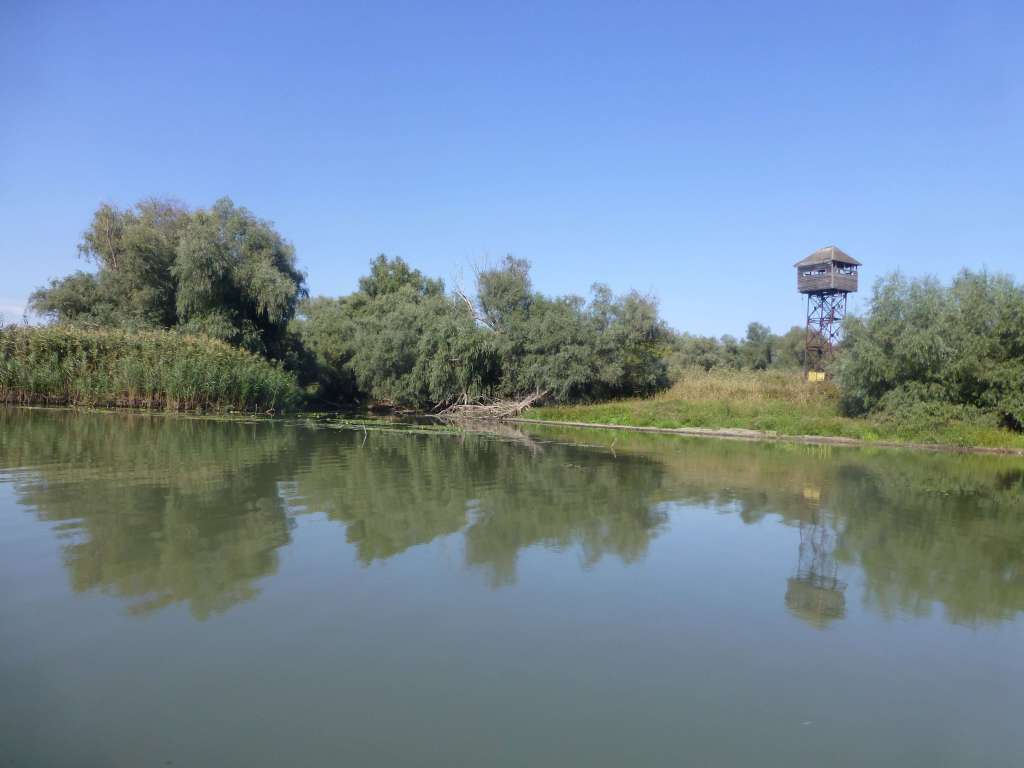
Shortly before 10:00 a.m. we reached the port of Port Aval-Tulcea, where our guide Lorenzo came soon and put us on a speedboat. The small size of the boat allowed us to explore the more secluded and bird-rich places in the bioreserve that was formed by the Danube Delta. I had seen the Danube in many European cities and it always impressed me – after all, it is also part of Bulgaria. The Danube is the second longest river in Europe (after the Volga) and is the only major river in Europe that flows from west to east. It originates in the Black Forest Mountains in Germany and passes through 10 countries: Germany, Austria, Slovakia, Hungary, Croatia, Serbia, Bulgaria, Romania, Moldova and Ukraine. In each country the river is different, and here in Tulcea it seemed huge and very muddy. While we were touring with the boat, I was expecting to see a crocodile in the swamps, but there were none – only many birds, even at the end of September, as they seemed to be in no hurry to leave the beautiful area. The Danube Delta is a bioreserve that covers 4142 square kilometers, and this is the largest and well-preserved delta in Europe. Many animals live here, including over 300 species of birds and 150 species of fish.
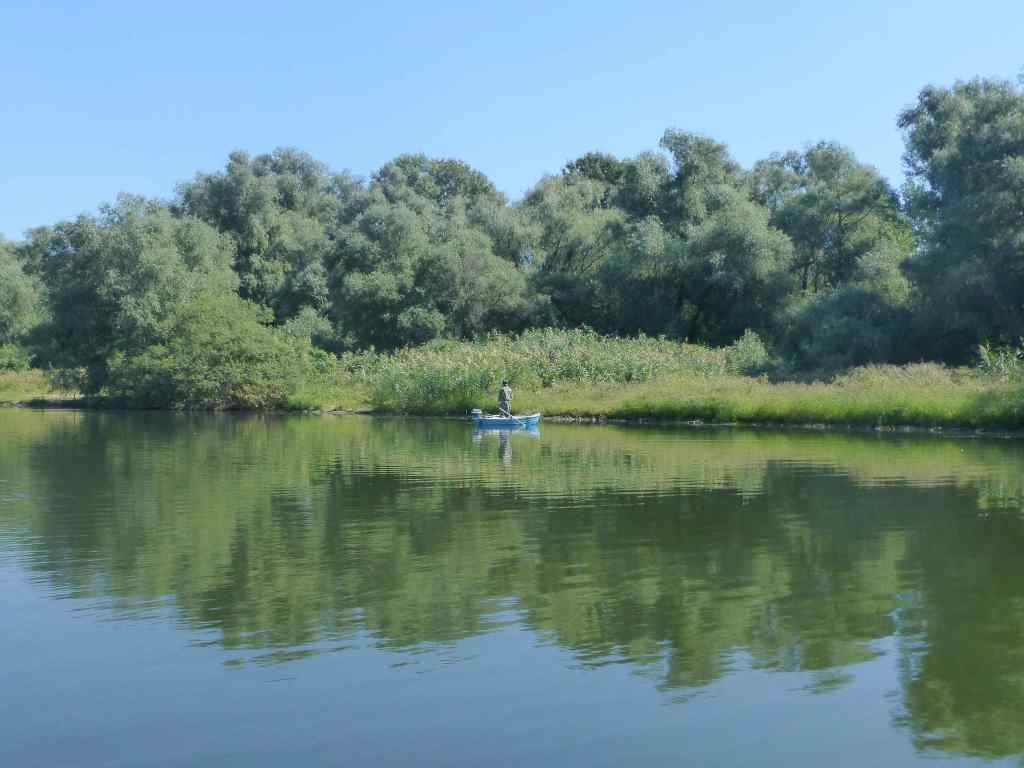
The route that Lorenzo chose for us was very beautiful, including many natural streams and artificial canals, we could not distinguish the difference between them, but our guide was kind enough to show us their numbers and signs. At the beginning we moved along the main canal, along which all ferries to the city of Saulina and the Black Sea operated, then we turned left on channel 36 which has a depth of 35 meters. On either side there were dense trees, a bright sun shone above them, whose warm rays were muffled by the cold wind that was formed by the rapid movement of the boat. The life jackets did not warm us much, but shooting in all directions pleasantly distracted us from the cool weather.
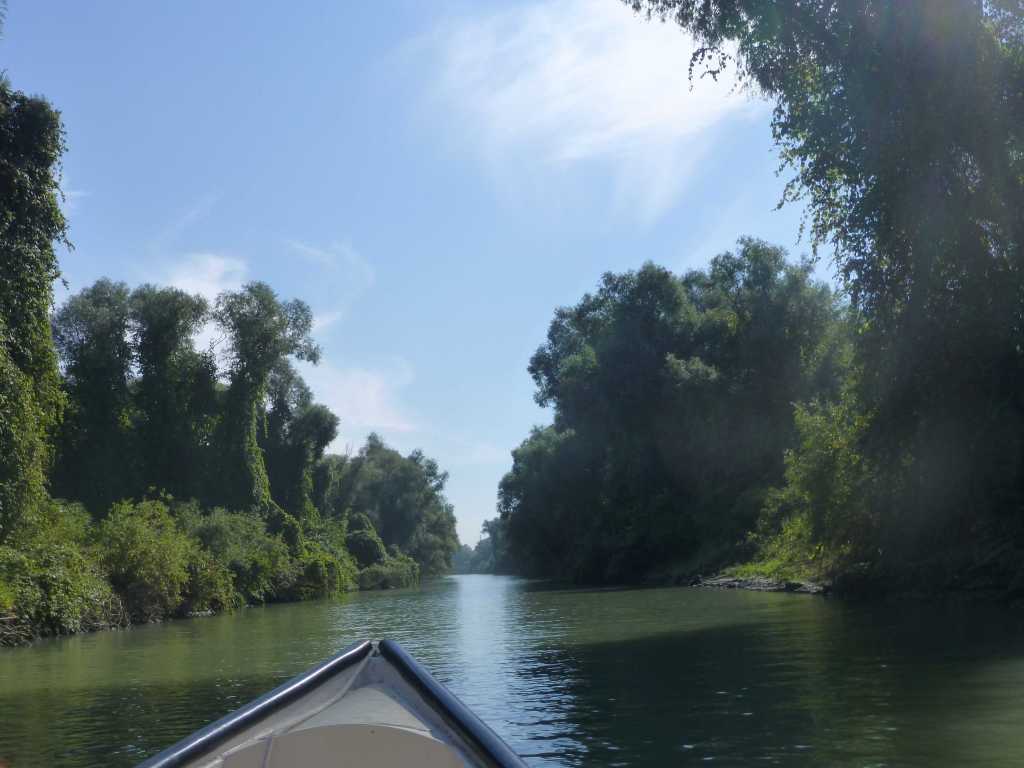

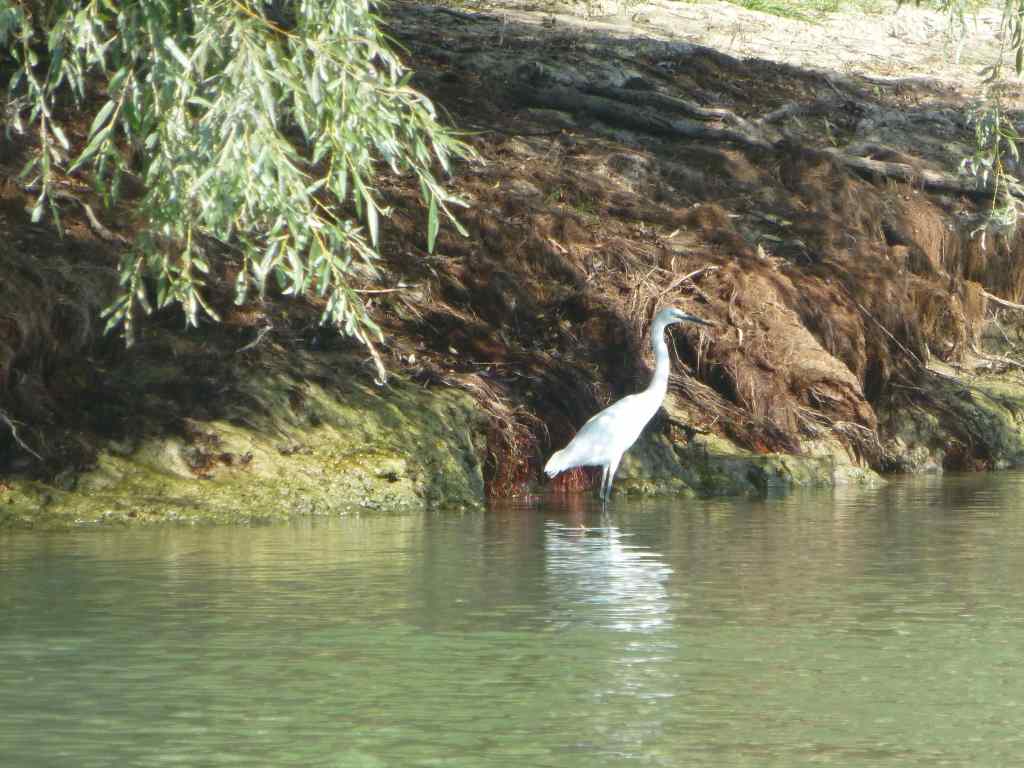
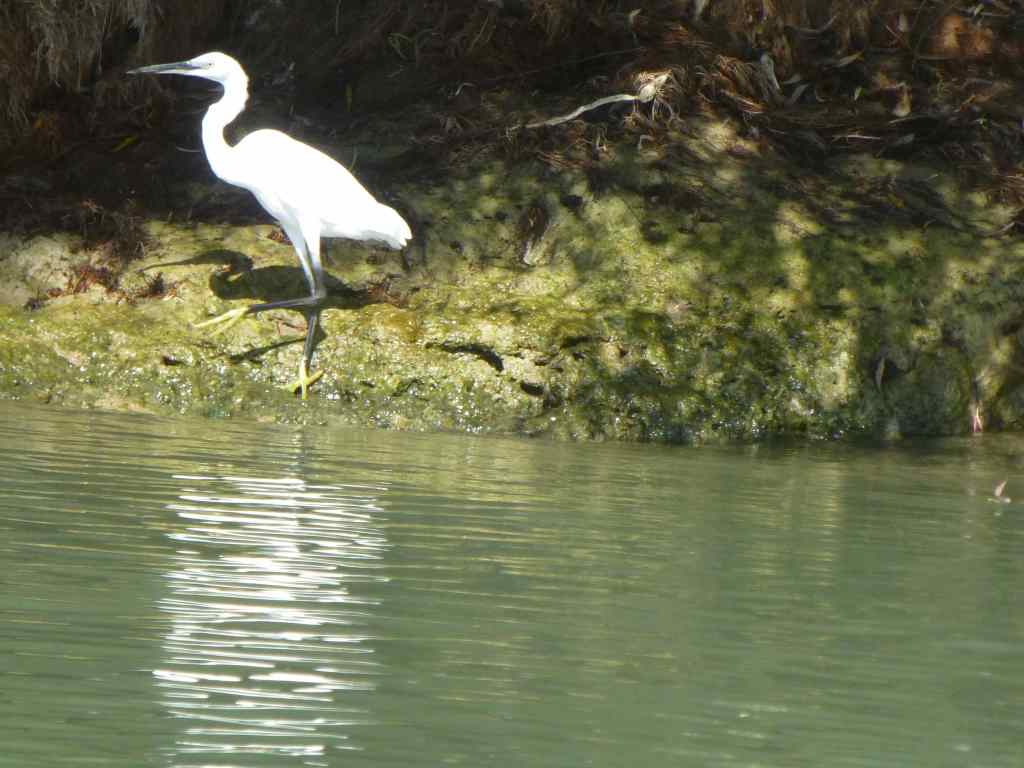

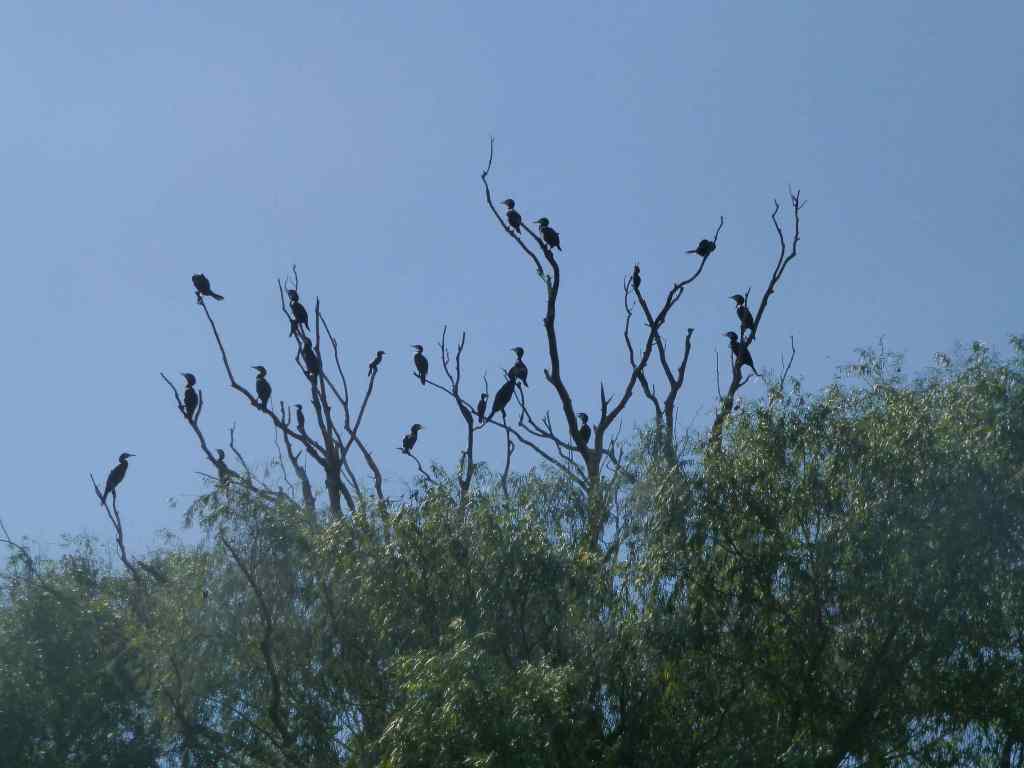
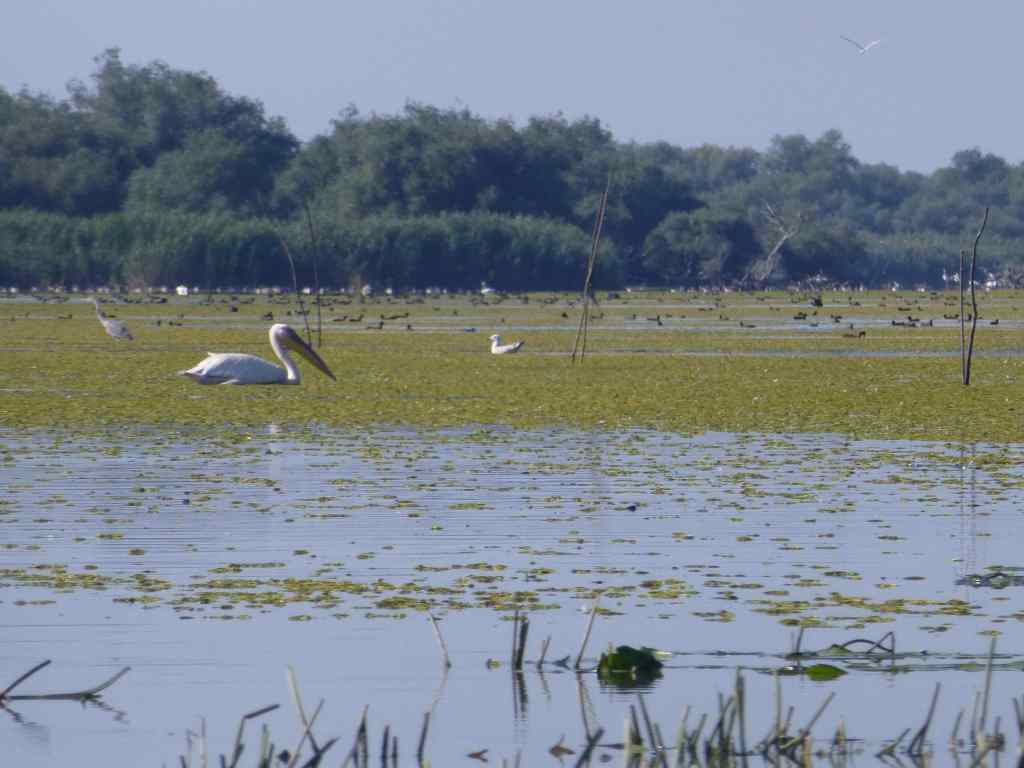

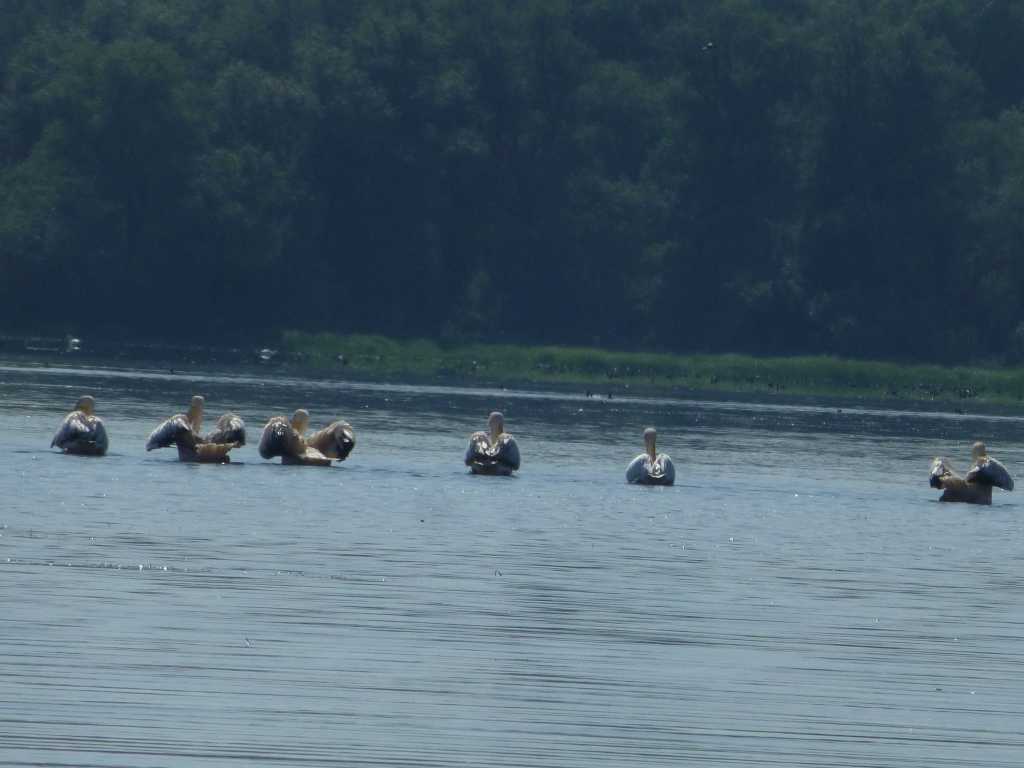

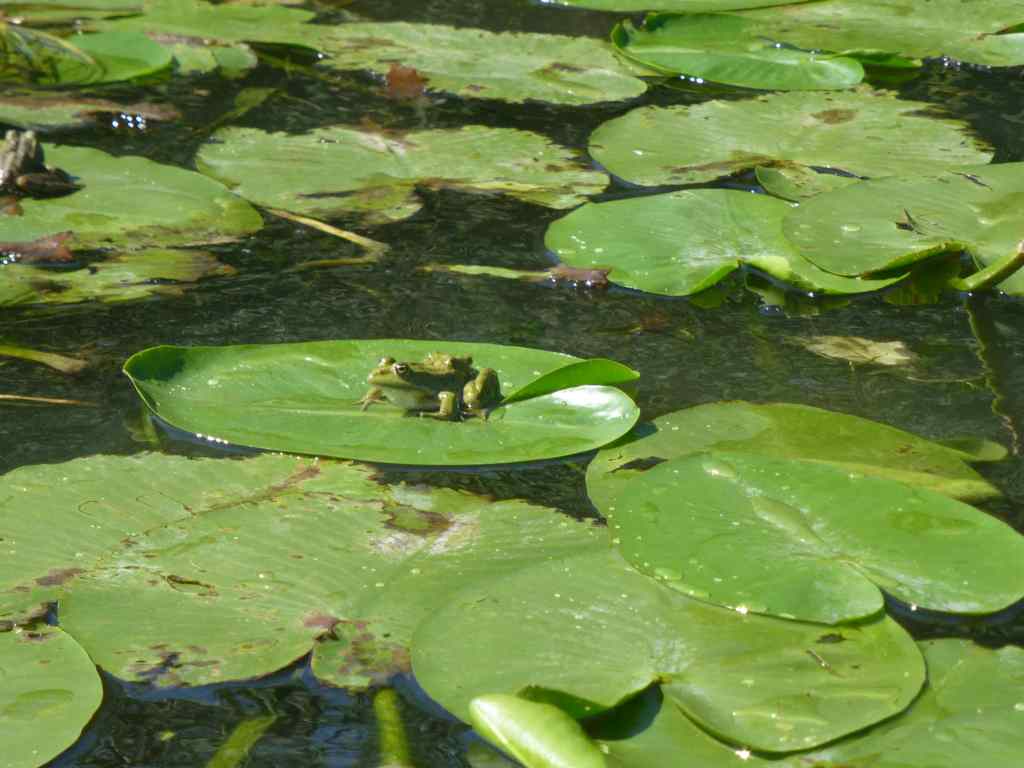

Immersed in the scent of the Danube, we were impressed by the many pelicans that had perched on the trees and banks. We passed through one of the largest lakes in the Danube delta, which is called Fortuna (in Romanian storm), and the name comes from the stormy waves that are often form here, the size of which exceeds 1 meter. Then we stopped near some yellow water lilies, and Lorenzo explained to us that yellow and white water lines meet on the Danube Delta. The difference between them is that yellow ones are dangerous, if a person smells them, then there will be a headache. White lilies, on the other hand, are protected by law and some medicines are made from them. Another difference between white and yellow lilies is that white ones bloom only once a year, while yellow ones bloom several times. Among so many beautiful lilies, I was most happy with one frog that jumped on them and apparently did not have a headache from their yellow color.
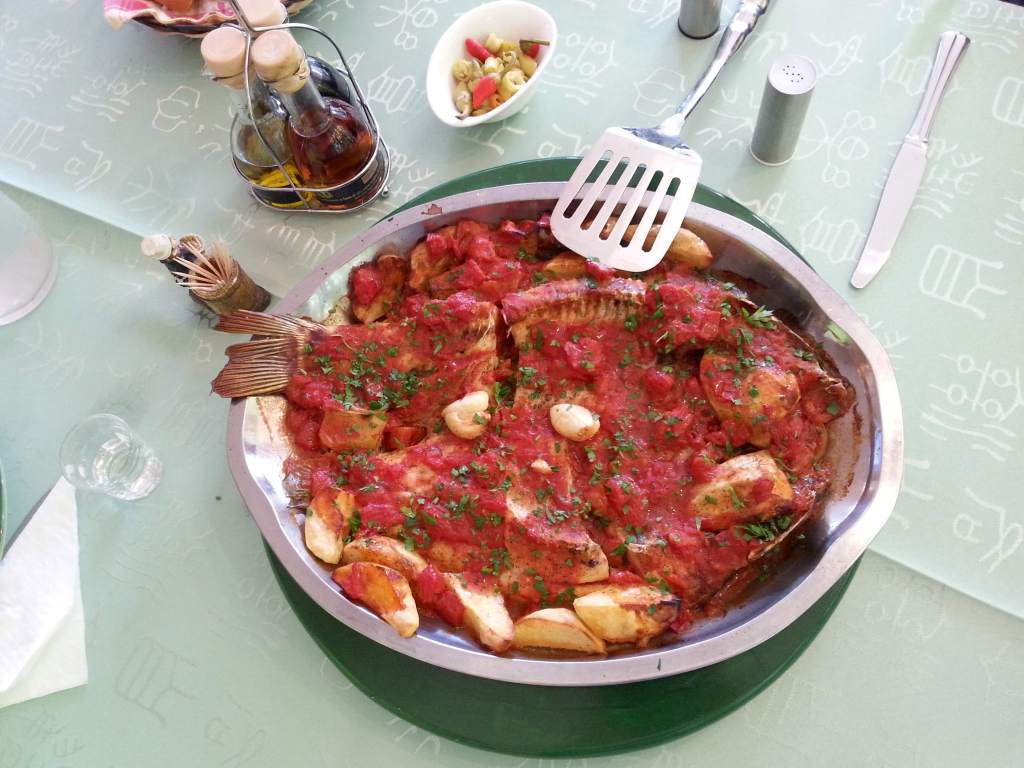
At noon we reached the island of Mila 23, where we had lunch in a very nice restaurant. The price of our lunch was included in the day trip and surprisingly we were very satisfied with the food. We were served fish soup, which was very clear and tasty, and after that we were served even bigger fish served on baked potatoes and topped with tomato sauce. Romanian cuisine finally impressed me and we happily spent another 30 minutes on the island walking around while Lorenzo was showing us around and explaining the local way of life. We walked along unpaved sandy streets without names (which probably makes it difficult for local couriers), but everyone knew each other. We passed by a church that we learned celebrates twice a year Christmas and Easter, as they are celebrated in both the old and new styles. The locals are mostly engaged in fishing, but also in tourism in the summer, growing gardens and having animals. They hunt wild geese, not pelicans. People speak a local dialect that is very similar to Russian, since we were close to the Ukrainian border.
In winter, everything on the island froze, even the lakes. No one can get to the island by car, but there were still a few cars and a tractor on it. We left the island, and picked up a boy who was at school tomorrow, but there was no transport to get to Tulcea, and he was glad that we took him on the boat. Or maybe we had a better meal and weighed more in the boat, which did not move so fast and accordingly the wind seemed weaker, the sun stronger and our mood better.
We really liked the all-day boat trip – the birds were very friendly and posed for us (after all, at the end of the season they were already used to tourists), and the young and charming Lorenzo told us interesting things about the delta and showed us different birds. I had found this travel agency on the Internet, their page www.descoperadeltadunarii.ro was only in Romanian, but very clear to use and I would definitely recommend them for canal tours. On the way back, we passed much larger and more comfortable boats, but they were too big and probably could not “sneak” like us through the canals, stalking and photographing the different birds.
On the banks of the Danube there were many people who were camping on Sunday, some with a tent, some just on a picnic, and the fishermen were numerous, almost as many as the birds. After we returned back to Tulcea, we headed to the hotel, where they had already prepared our room. A new tour followed, this time of the city of Tulcea, which was erected on seven hills like Rome and Plovdiv.
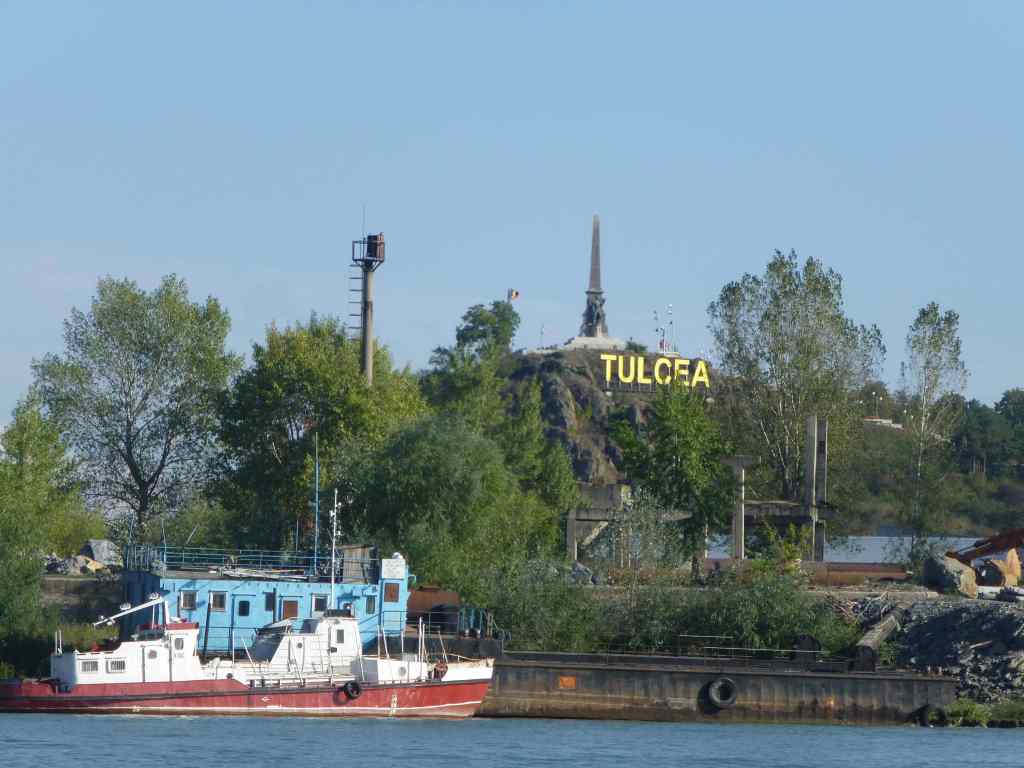
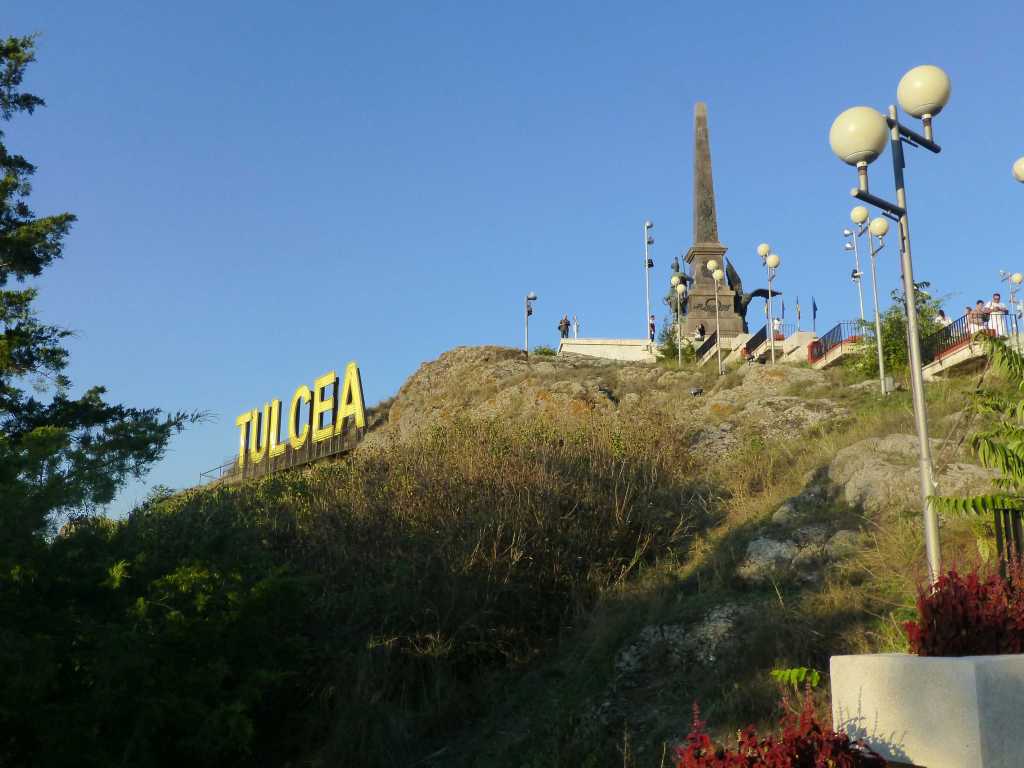
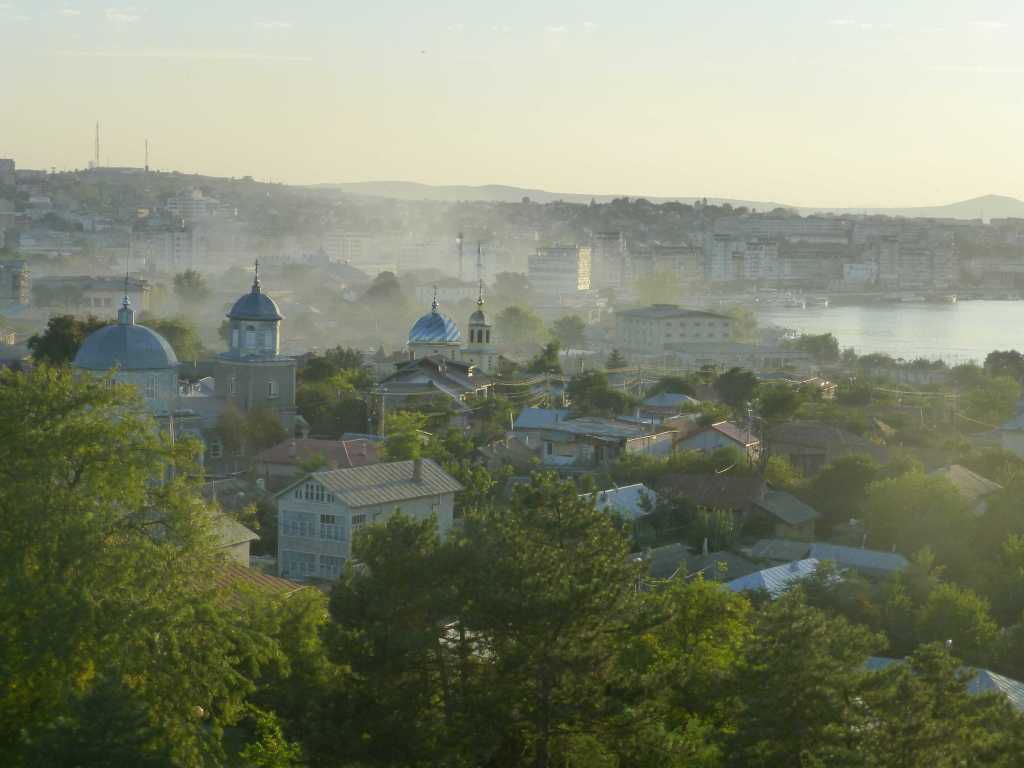
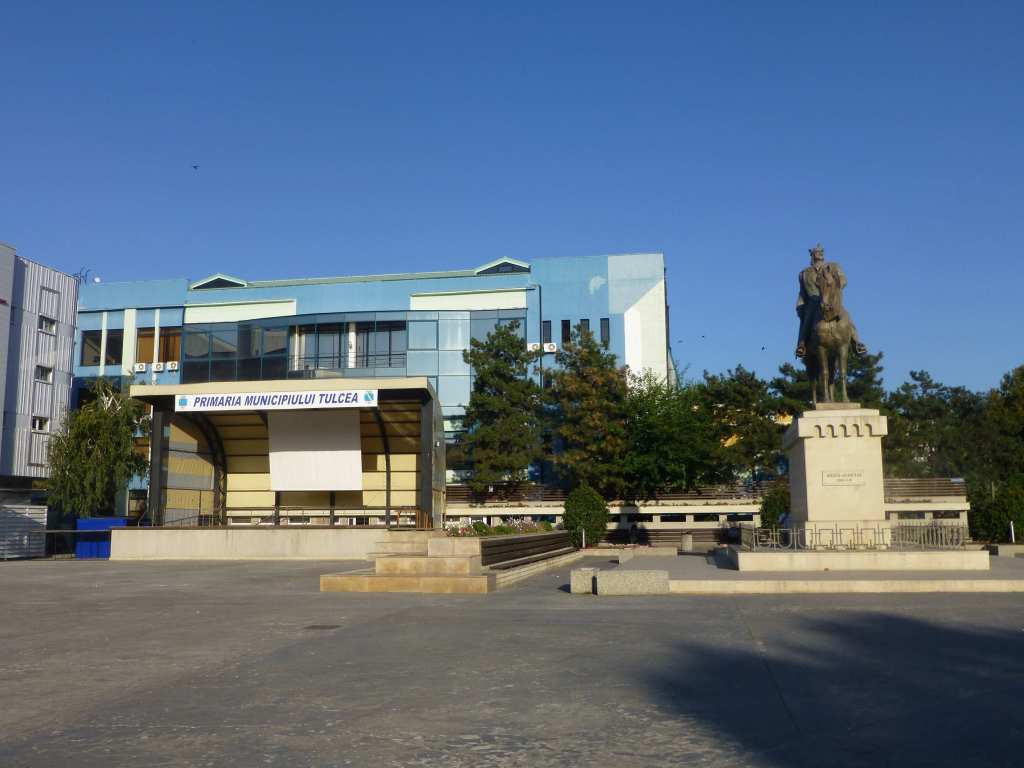
On Sunday evening, there were still open shops in Tulcea, which diverted us from the cultural program, but then we managed to explore the center with the town hall and a statue of a horseman in the square, after which we climbed one of the seven hills, on which there was another monument and huge letters TULCEA. From here a wonderful panorama of the city and the Danube port was revealed.
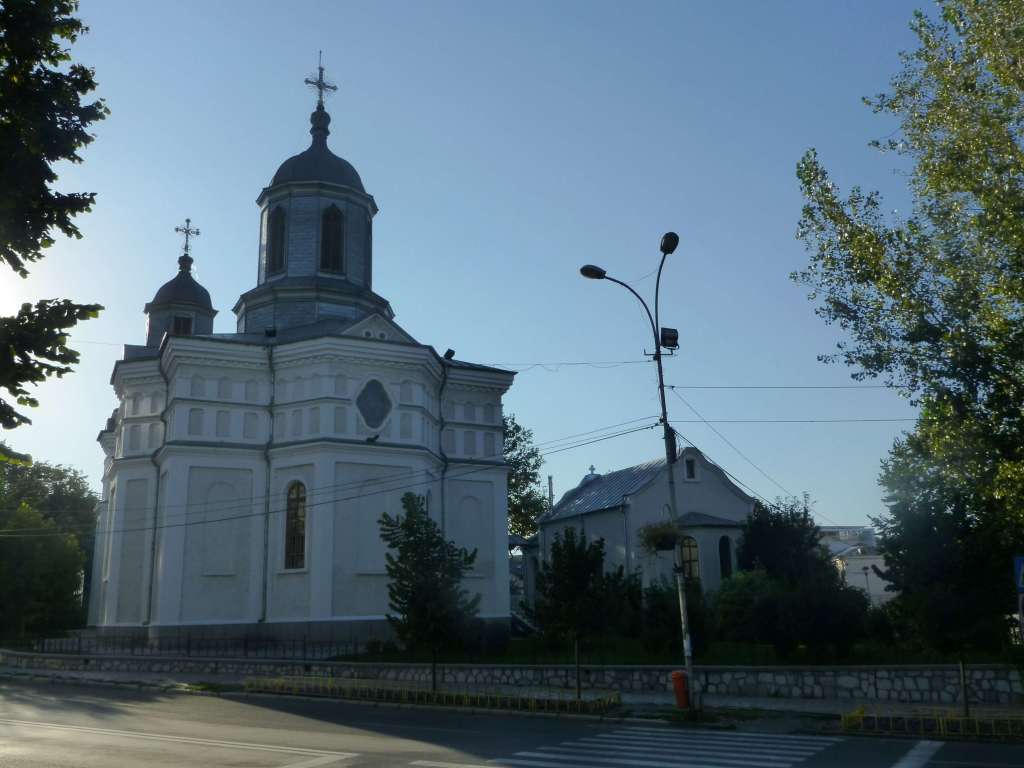
Tulcea was very beautiful from here, and maybe it seemed to us so, knowing that this region was the birthplace of the Bulgarian state, separated south of the Danube by Khan Asparuh. Later, it was here that the Tulitsa fortress was built as an outpost of Malak Preslav, which gave the name to the current town. In 1807, the Bulgarians in Tulcea opened the first private hospital on the Balkans, and it was here in the Bulgarian school Sava Dobroplodni taught many prominent Bulgarian Revivalists. In 1866, Vasil Levski and Stefan Karadzha resided in the town. There are several Bulgarian churches in Tulcea, such as St. George and St. Nicolas. No wonder the city is so beautiful – after all, it was Bulgarian. The Bulgarians, however, have already been evicted and apart from the books here we did not find out anything about its glorious Bulgarian past.

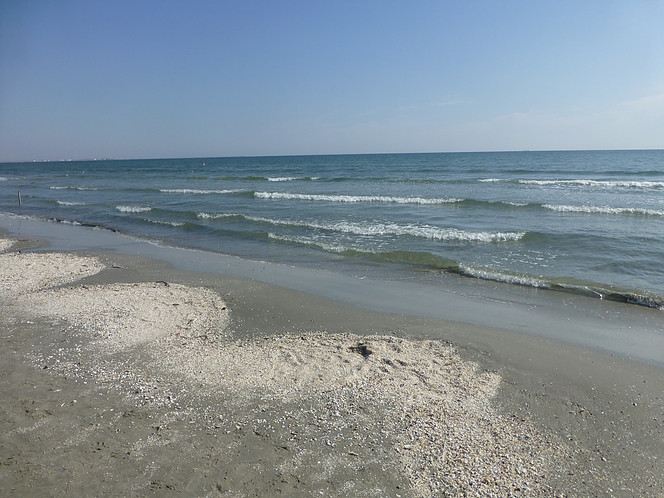

The next day, the town became part of our past, leaving it and heading south to Mamaia – the largest resort on the Romanian Black Sea coast, known as the only fine white sands in Europe, as such were found only in tropical places. At this time of the year, however, the resort seemed deserted. Except for a few fishermen, we didn’t see any other people, although it was very sunny, warm and pleasant. There was a panoramic lift Telegondola in the resort, which runs at a height of 20 meters above the hotels, but at the end of September it was not working.
We headed to the Orthodox church of St. Mina, which was located in a park in Constanta on its border with Mamaia. It is a wooden church built on the shore of the lake in a beautiful park and near the dolphinarium. According to the guidebooks, it was worth climbing all the steps, with an amazing view from above. Before the church, however, we turned to the Mall of Constanta and replaced cultural tourism with shopping. The mall impressed us with its sunny terrace on the top floor, which overlooked the temple of St. Mina. After many photos, we decided to replace the climbing of the wooden steps with escalators and new purchases from the mall.
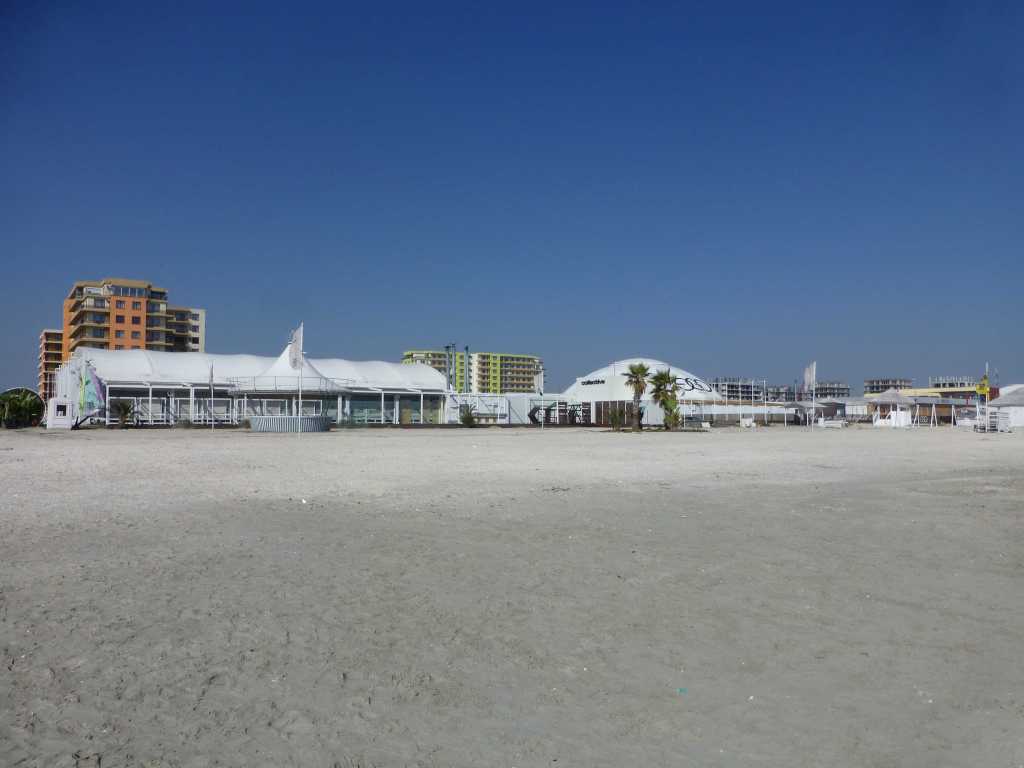
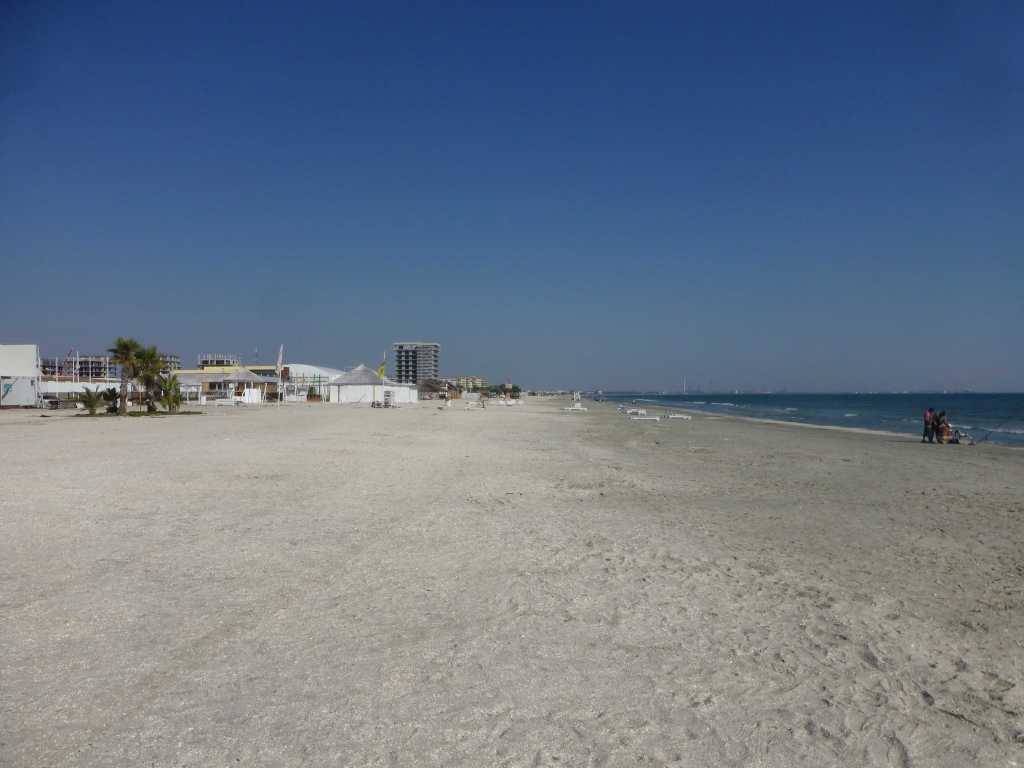
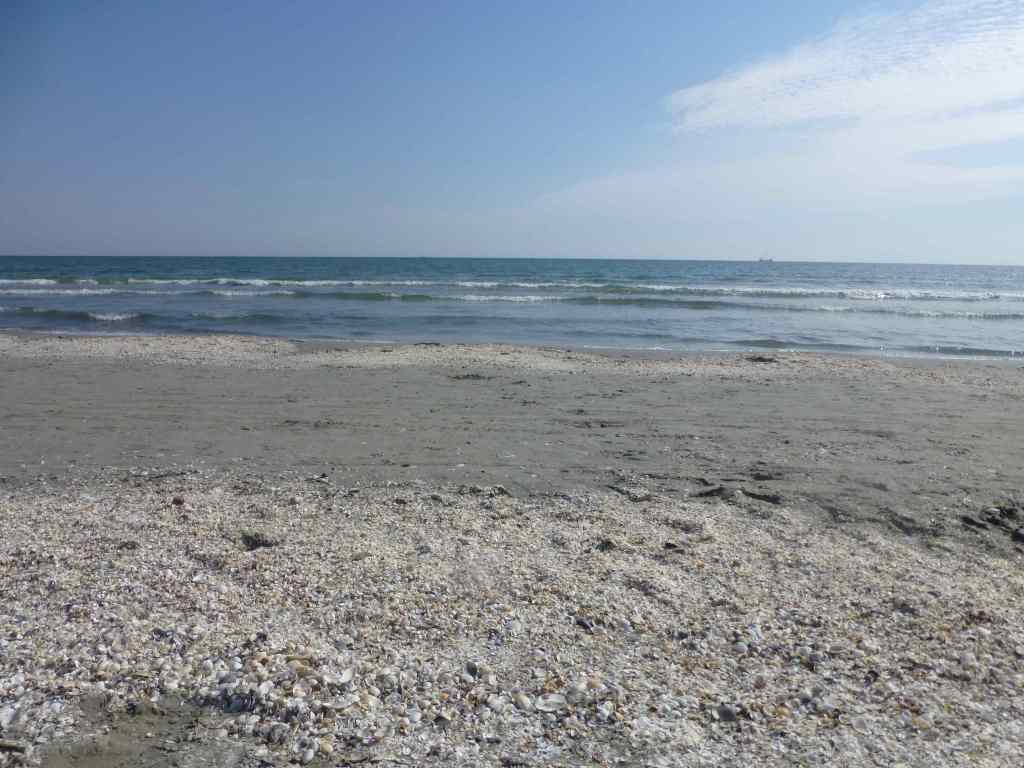
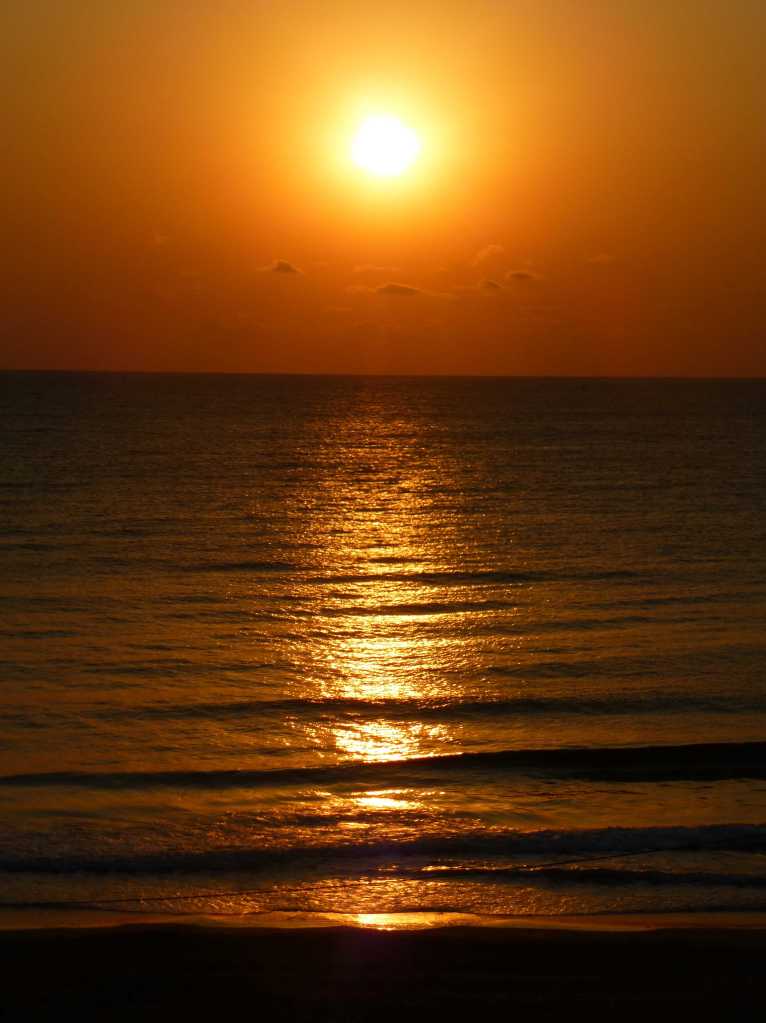
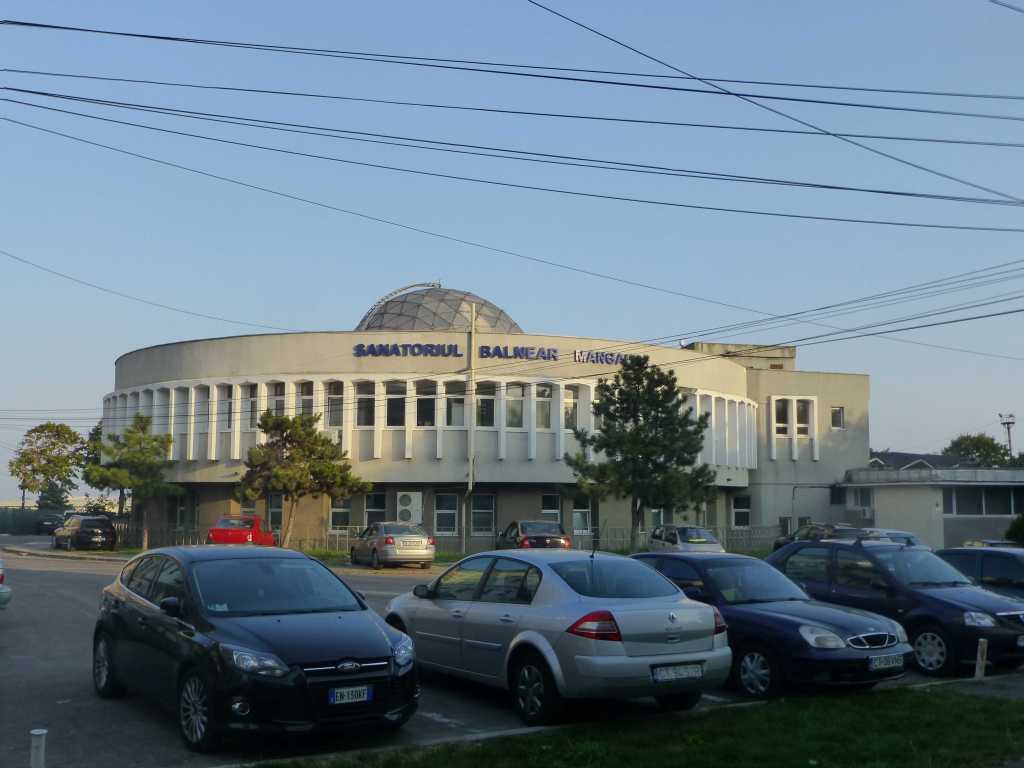
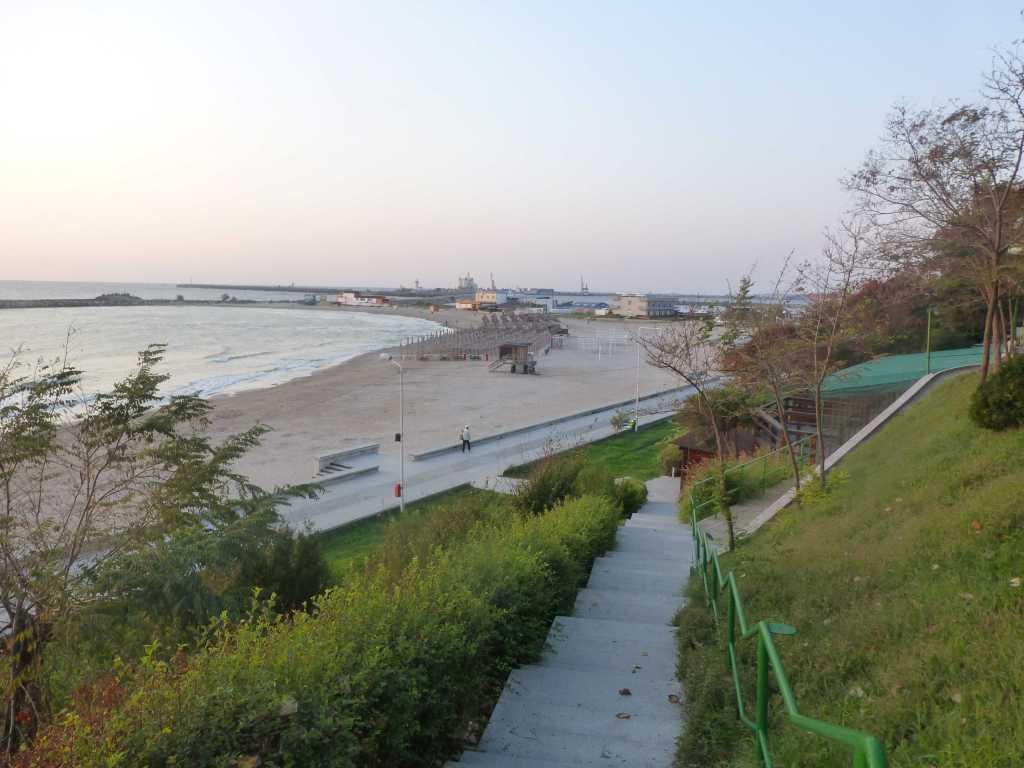
We headed south from Constanta, still along the coastal road. The Romanians had indeed inherited something from the Romans, namely – excellently built and maintained roads – something that was still a problem in Bulgaria. We passed the turnoff to the resort of Vama Veche, which I knew from my Romanian language textbooks, as a Bohemian resort. We had booked a room in the resort of Mangalia in a hotel on the very beach. The good weather and fine sand took us to the beach, which at least was not deserted here. There were about 10 people bathing in the sun and others swimming in the sea. We decided to join them and do the last bath of the season. While we were lounging on the beach, several people passed by and plucked the rest of the beach umbrellas from the sand, thus closing the summer season, which we did not want to part with, and at the end of September we bathed in the Black Sea, which surprisingly was not so cold. I had read about Mamaia that despite the nice fine white sands, the resort has one minus, namely that the sea water was always cold, even in July and August it did not exceed 18 degrees. Fortunately, this was not the case in Mangalia, I would give at least 22 degrees to the water at the end of September.
Unlike Mamaia, which was a Black Sea resort, inhabited only in the summer, Mangalia was a port city with 40,000 inhabitants, which doubled in the summer with visitors and tourists. Although in the ancient world Mangalia was an important Greek colony, which minted its own coins in 350 BC, today very little remains of this glorious past. After the beach, we enjoyed a very pleasant coastal walk. Unlike Mamaia, where we collected crabs and mussels from the shore, in Mangalia we never found whole mussels, they were all crushed and turned into sand. On the other hand, there were open shops and restaurants that offered a variety of dinners.
We liked Northern Dobrudja. Our Bulgarian Dobrudja was full of wheat, and the Romanian Dobrudja was full of lakes. Bringing these two regions together, a fertile region appeared, a real earthly paradise, which, however, politics had split and divided. It is interesting how nature knows how to gather and people – to divide. And yet, although divided between different countries, like the Alps mountains, the Dobrudja region remained very beautiful and deserved to be toured from everywhere. Greek did this many centuries ago, as well as the Romans after that. They all loved this fertile region and had built beautiful cities, which we toured centuries later with the same passion and admiration.


GENERAL INFORMATION ABOUT NORTHERN DOBRUDJA:
Location: Northern Dobrudja is a region in southeastern Romania, covering the territories of Tulcea and Constanta (Constanța) counties.
Origin of the name: There are different theories about the origin of the name Dobrudja, most likely coming from the name “Land of the Bulzhani” (as the Proto-Bulgarians called Asparuh’s when they settled these places. Another version is that it originated from the Bulgarian feudal ruler from the XIV century Dobrotitsa.
Area: 15,500 sq.km
Population: 971,643 people
Official language: Romanian
Altitude: average altitude approx. 230 m
Climate: temperate continental climate
Time zone: UTC+2
Currency: Romanian leu (RON)
Additional information: http://romaniatourism.com/dobrogea.html
TRIP TIPS FOR NORTHERN DOBRUDJA:
Best time to visit: in the summer, when the Black Sea resorts are suitable for sunbathing.
Typical food and drinks: In addition to the traditional Mamaliga (it resembles the Bulgarian kachamak and is served as a side dish for almost everything, even tinsel), the coast offers many fish specialties. On the Danube Delta they make excellent fish soup.
Places to visit: The largest cities in the region are Constanta, Tulcea, Medgidia and Mangalia, and undoubtedly the biggest attraction remains the Danube Delta, which in the spring is filled with birds that fly away from here in October.
 TripTips