EASTER IN POLAND
KRAKOW (PART 1)
author: Ana Boneva


Easter is one of the biggest and brightest Christian holidays, and nowhere have I seen bigger celebrations and following traditions than those in Poland. The festive mood was everywhere and the enjoyment was felt in the air. Moreover, going to Poland I had the chance to celebrate Easter twice – first the Catholic one in Poland and then the Orthodox one in Bulgaria, which this year fell on different dates.
From Sofia to Poland we travelled with Polish airlines, who impressed us with their good service. The distance from Sofia to Warsaw is 1074 km, which we took in less than 2 hours, passing over Romania, Hungary and Slovakia. We travelled on a relatively small Embraer 190/200 aircraft, in which the seats were in two rows with two seats each. From the inflight magazine I learnt that the plane was 38.65 m long and 28.72 m wide, the flight speed was 793 km/h, with a capacity of 112 passengers.
From Warsaw we boarded a smaller plane in the direction of Krakow. I had never boarded such a small plane, model ATR42 with rotating fins, as the combat aircraft of the Second World War. A total of 12 rows of 2 seats, and the technical characteristics were: length of 26.67 m, wing width 24.57 m, capacity of 46 people and speed of 532 km/h. We boarded the plane 1 hour late due to a technical problem, which shortened our time to explore Krakow, but we also found more time in Warsaw airport, which was full of shops.

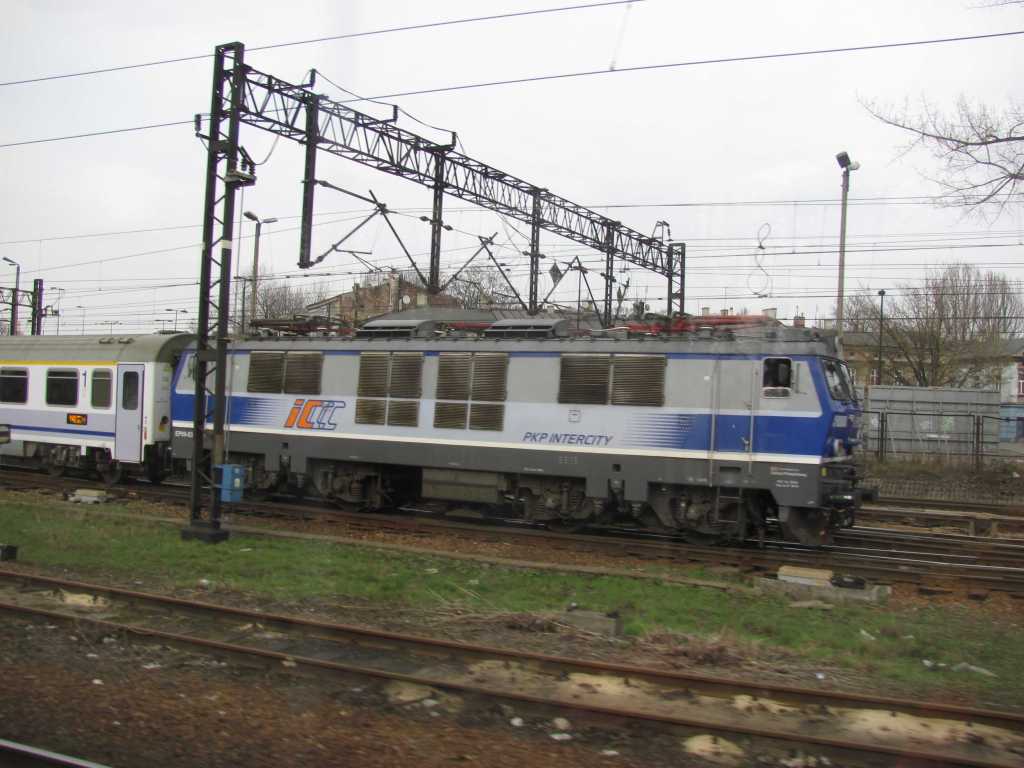
Poland was large – three times bigger in area compared to Bulgaria. It borders seven countries – Germany to the west, the Czech Republic and Slovakia to the south, Ukraine and Belarus to the east, and Lithuania, Russia and of course the Baltic Sea to the north. We had decided to tour three of its most beautiful cities, located at the three ends of the country – Warsaw, Krakow and Gdansk. We could travel between them by train (the distance between Krakow and Gdansk is 10 hours, i.e. one night travel) or by plane, and the price of the sleeping compartment and the plane ticket were the same price. Accordingly, we preferred the plane trips and we enjoyed several flights of the Polish airlines LOT.
We arrived in Krakow in the evening, and the city greeted us with grey sky and frowning. The sun was supposed to set at 7:18 p.m., but apparently hidden in the clouds it had done it much earlier. Krakow Airport is located 15 km from the city center and is the second busiest airport in Poland. It was hard for us to believe this, as getting off at Terminal 2 (designed for domestic flights) from the hall we entered we found ourselves straight outside. It’s the smallest airport I’ve ever seen. In a small lobby, the size of a hotel room, there were 3 doors – for departures, landings and the exit, the Airport, however, also consists of Terminal 1, which is for international flights, and a separate cargo terminal with 755 sq.m of storage, which we walked around, as the free bus that connects the two terminals and the train station turned out to be not so regular and the information desk recommended us to go on foot – the journey was only 5 minutes. It took us 20 minutes, and not a single bus really passed us on the way. There were no trains either. According to the schedule, the last train passed at 18:30 and the next one was not until 20:00. Due to the delay in the flight, we did not have convenient transport links to get to the city center. We had to return to the airport and wait for a bus, but the driver refused to pick us up because we did not have tickets – such can only be purchased from the machine at the bus stop. The machine itself worked only with coins, and we had exchanged only banknotes. We had to go back to Terminal 1, ask a Change desk to split 10 zlotys in coins and go back to the bus stop, where we bought 2 tickets and waited for the next bus 208, which passes every 40 minutes…
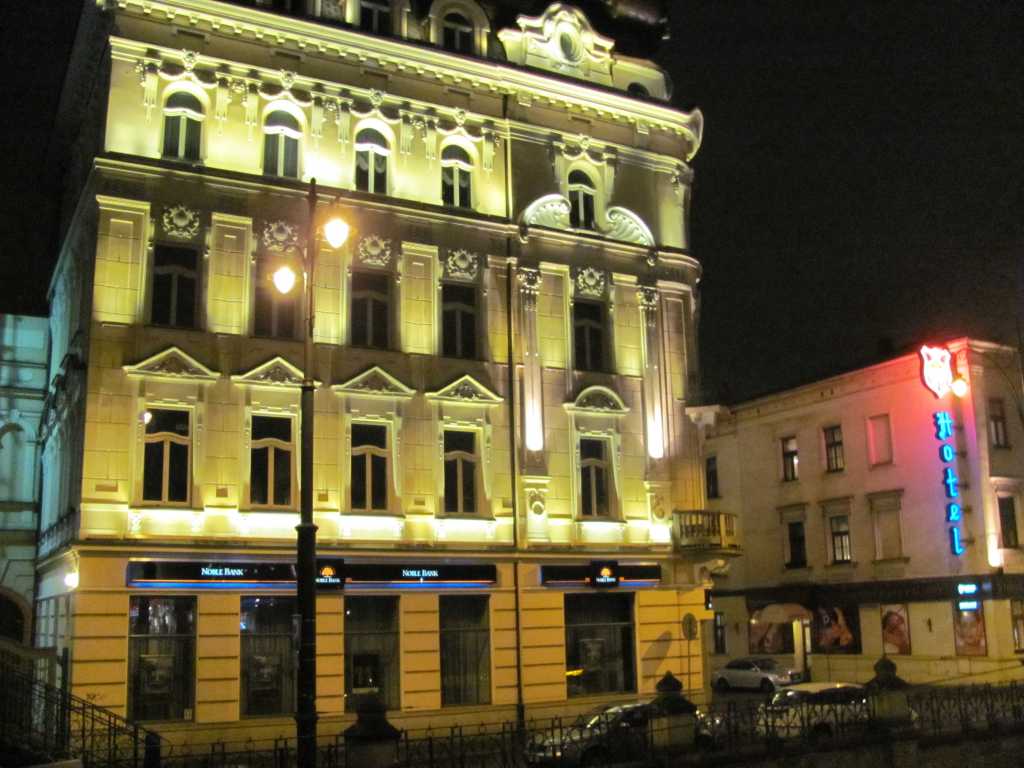
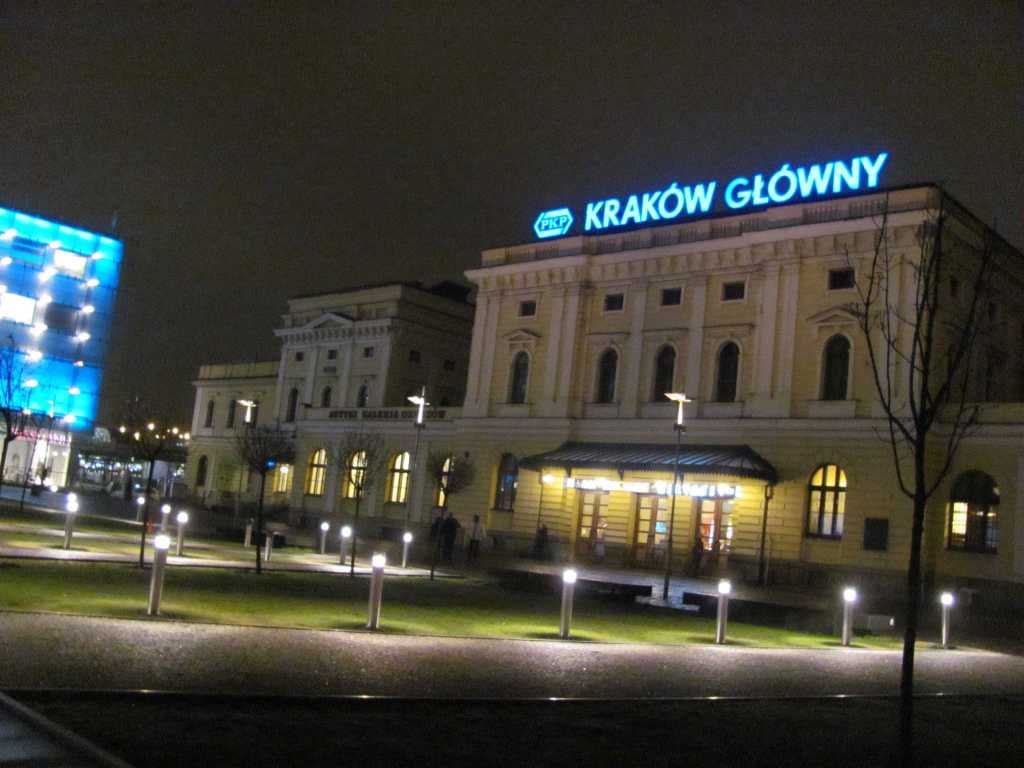
All the delay in getting to Krakow Glowny (central station) only made us value more our time in this wonderful city. In the darkness, we easily recognized our well-lit hotel European, located on the main street Lubicz. The room was very warm and cozy, and we had free water and tea and coffee facilities. Right opposite the hotel there was a large mall Galeria Krakowska, which at 21:00 was still open and we managed to have dinner there.



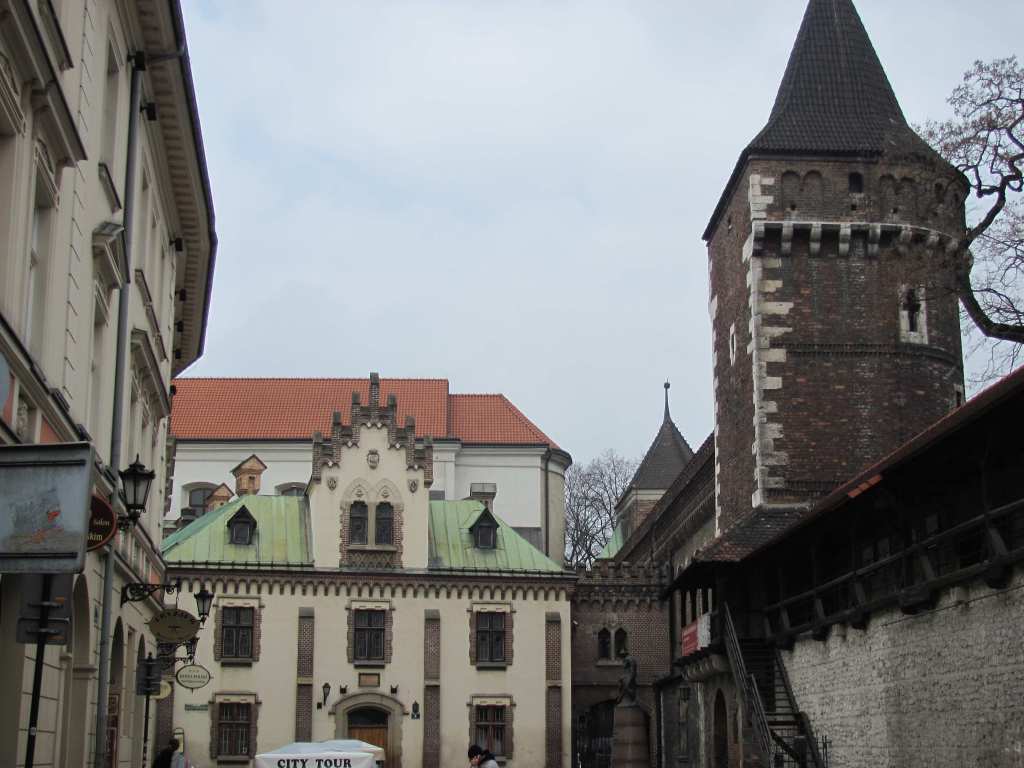
In the morning we got up at 07:30 so we could have breakfast at 08:00 and explore the medieval capital of Poland. In the hotel we had a rich buffet breakfast, where I tried many delicious patties with chocolate, croissants, various salami and baked sausages, boiled eggs decorated with mayonnaise, etc. The hotel impressed us and I would definitely recommend it to everyone, who visit this ancient city, dating back to 20,000 BC. According to legends, the city arose near the dragon cave, whose dragon king Krak defeated. The first official document in which the city was mentioned was from 966 by a Jewish merchant from Spain, who described the city as an important trading center of Slavic Europe. It was trade that turned this small settlement into a large and wealthy city in 1000, and in 1038 Prince Kazmir turned it into the capital of Poland.
In 1241, almost the entire city was destroyed by the Tatars, after which it was rebuilt and its current appearance has preserved exactly this architecture. High stone walls were erected, which protected against the subsequent Mongol invasions. The 16th century was the golden age of Krakow, during the Polish-Lithuanian dynasty, the city became the center of sciences and arts. However, it was because of the Polish-Lithuanian alliance that the capital shifted closer to Lithuania, and in 1609 the new capital became Warsaw.
However, the glamorous appearance of the city has been preserved, with UNESCO designating the city as a World Heritage Site in 1978. The same year, the Archbishop of Krakow, Karol Wjojtyla, became Pope John Paul II.
Krakow is one of the most popular tourist destinations in Poland. Numerous universities have also been built in the city, and companies in the field of services, industry, banks and Internet companies (e.g. Google) have their headquarters here. It is the second largest city in the country with a population of 756,000 (or 1.4 million with nearby settlements included).


The medieval Polish capital is located on both banks of the Vistula River, at the foot of the Carpathian Mountains, and the climate in the city is clearly divided into the four main seasons – summers are hot and humid (about 30-35 degrees), winters are cold and snowy (-5-20 degrees). We had cloudy weather, enjoying the lack of rain.
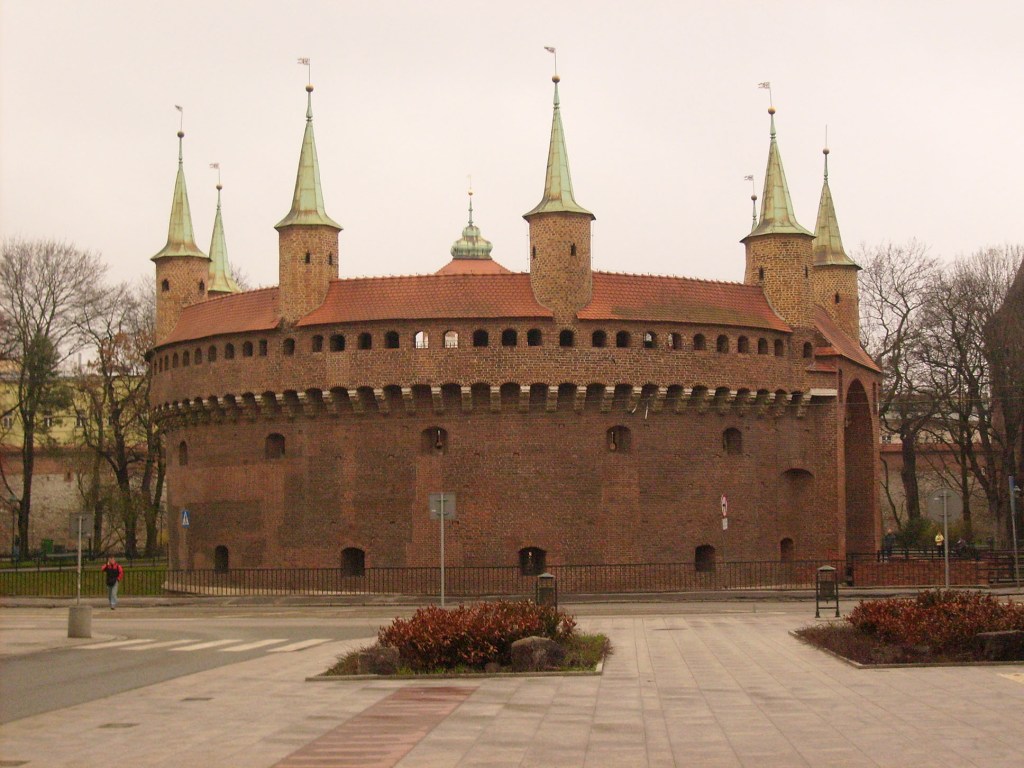
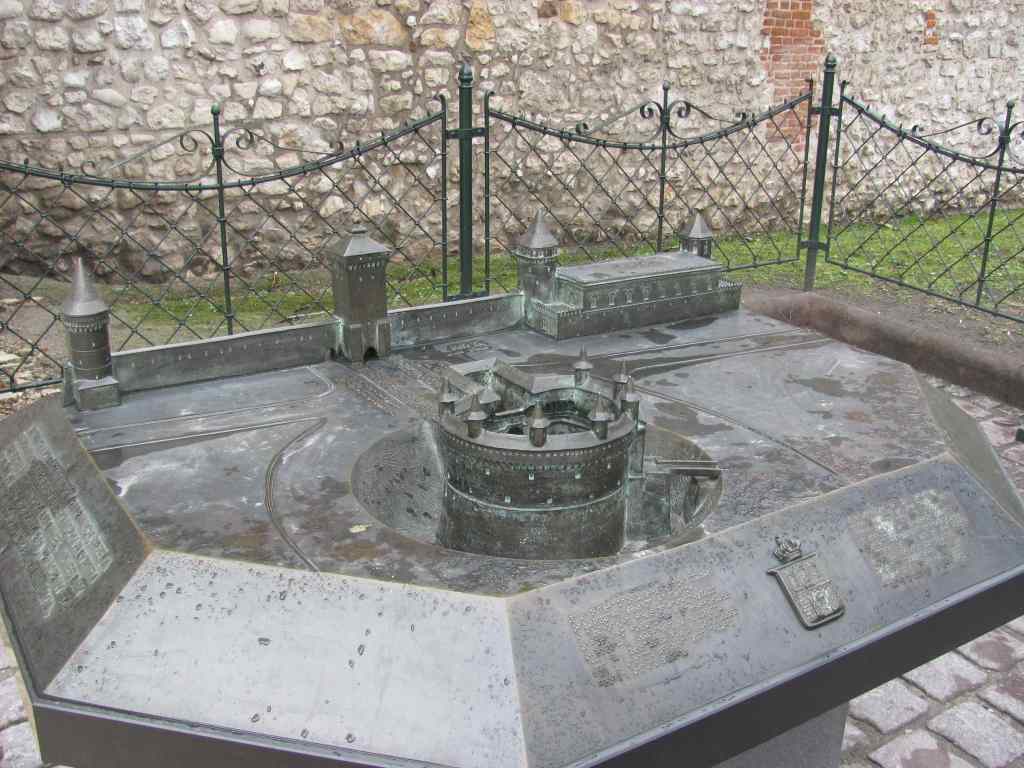
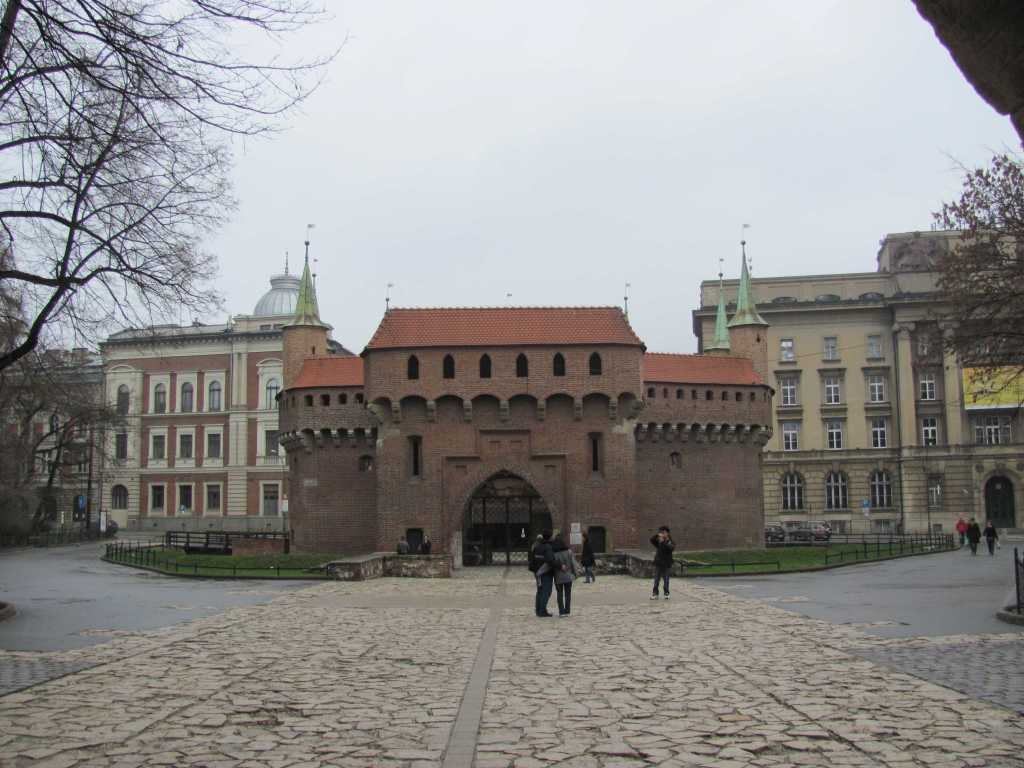
Our walking tour started from Kraków barbican (barbican – means outer fortification of a castle), this is the historical entrance leading to the old town of Krakow. This complex of fortification walls has toured the entire palace city of Krakow. It is currently a tourist attraction where many exhibitions are held (it is open to the public from 10:20 to 18:00 with an entrance fee of 18.00 PLN), but on a festive Saturday it was closed. The building itself resembles Arab rather than European architecture and, with its round façade, was a true masterpiece of military engineering at the time. It dates back to 1498 and is one of the few preserved in Europe, probably saved by the 3-meter-thick walls. In the past, it was directly connected to the fortress walls and served as an entrance door where those entering the city were checked.


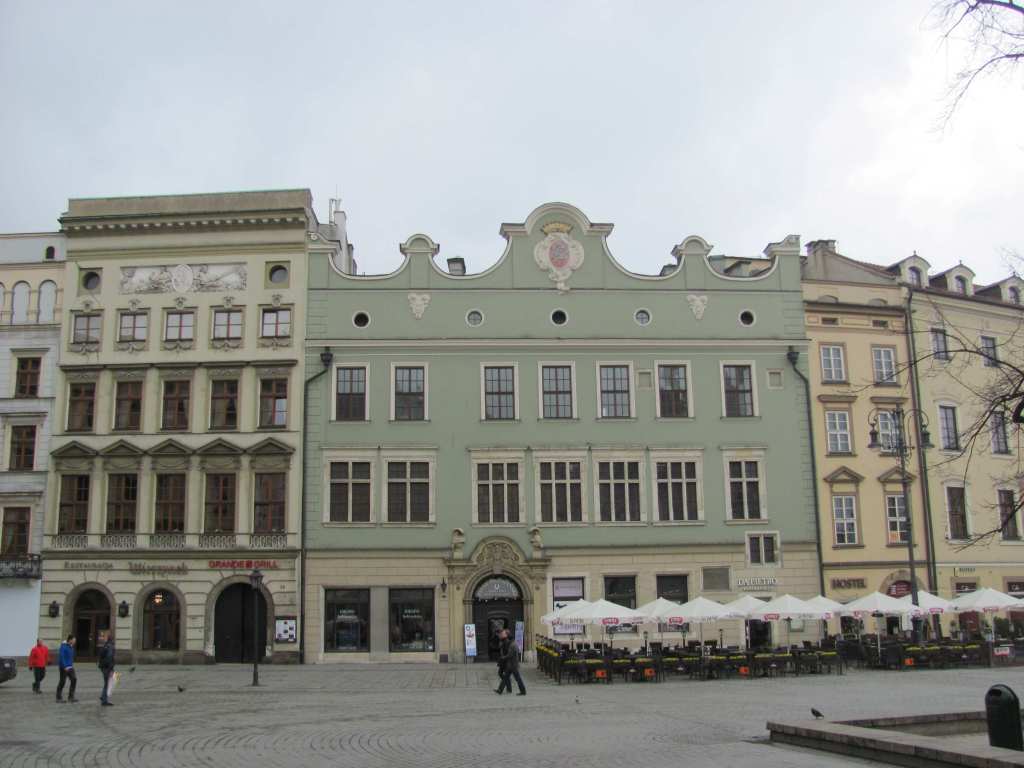
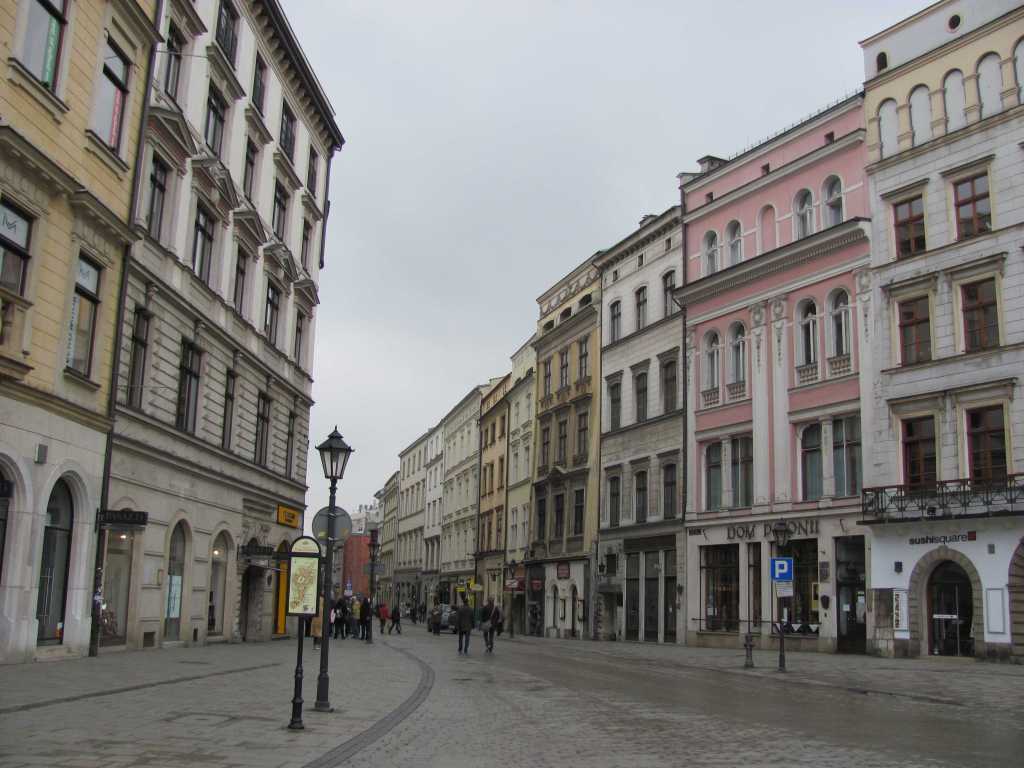
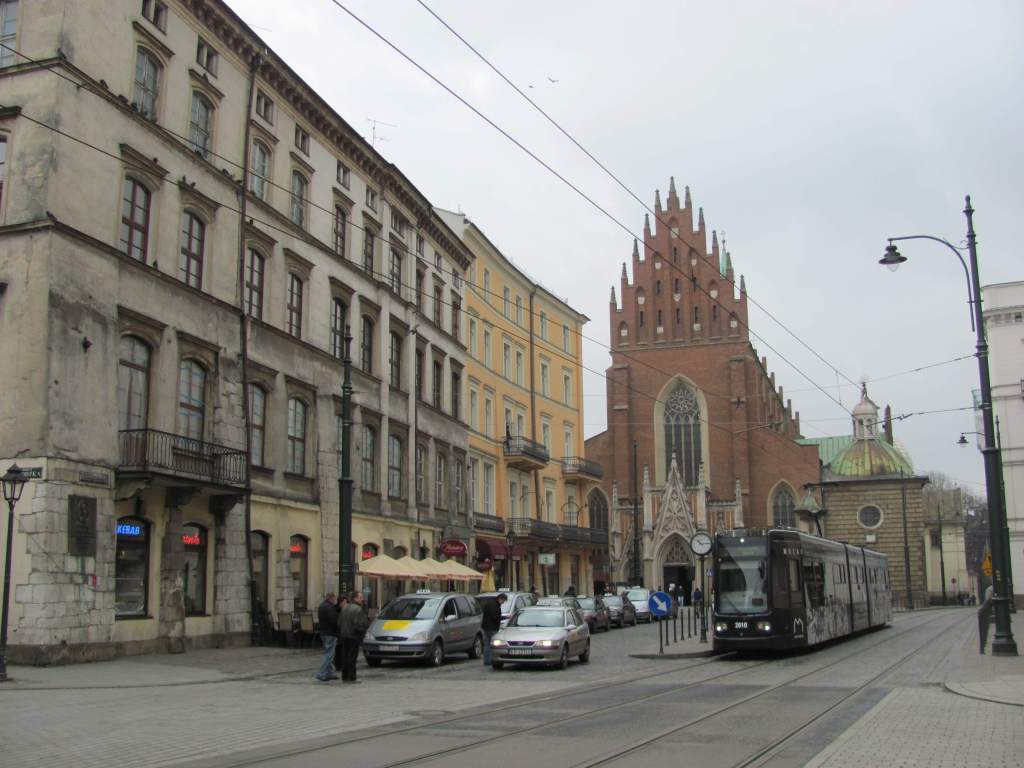
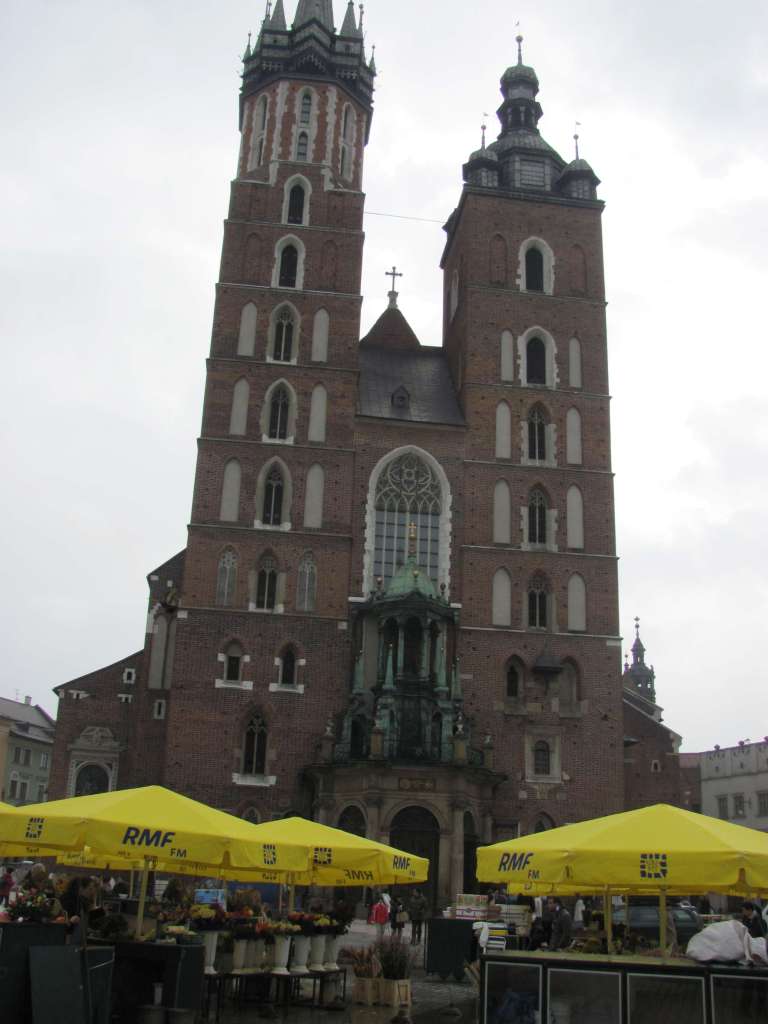
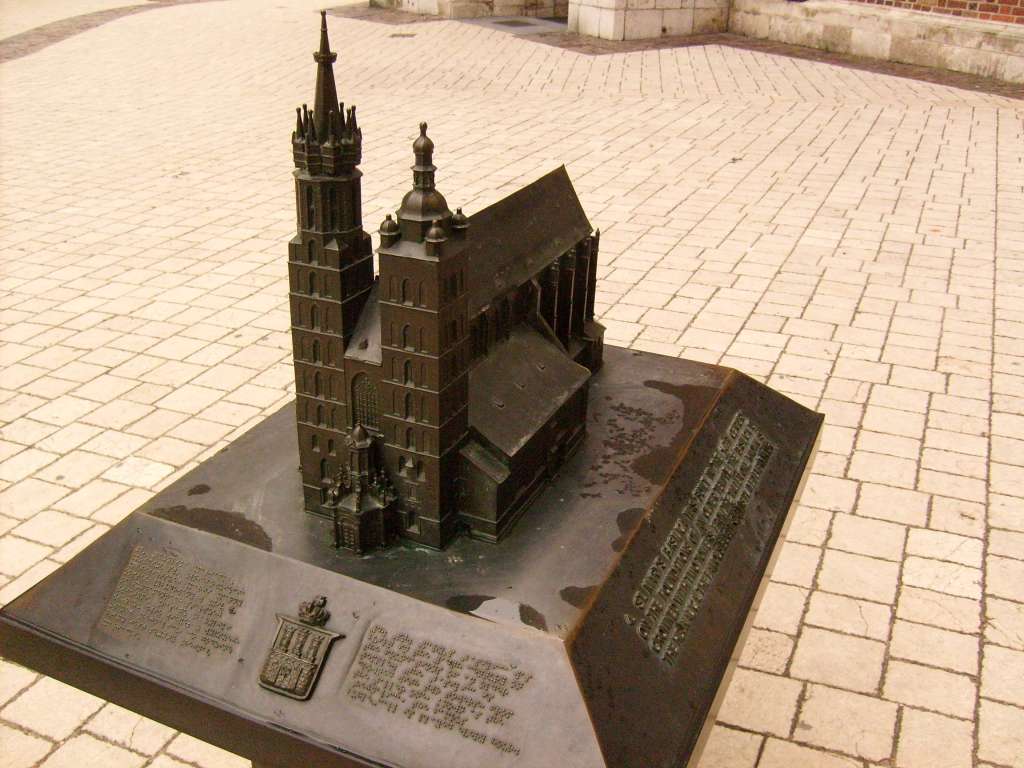
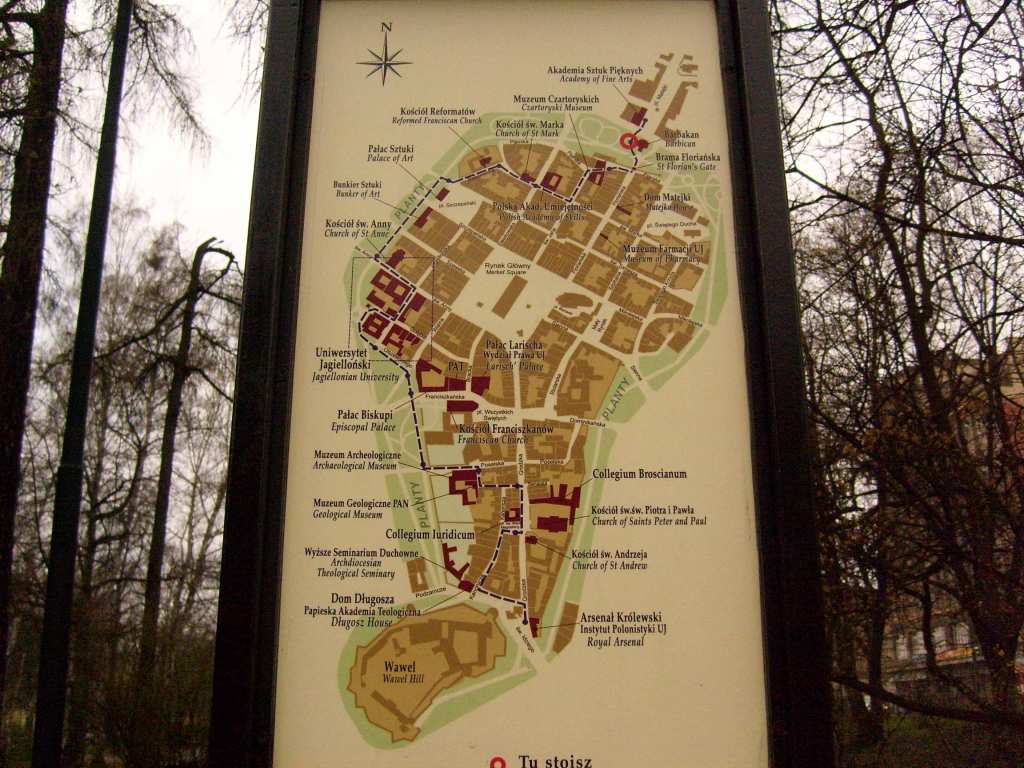
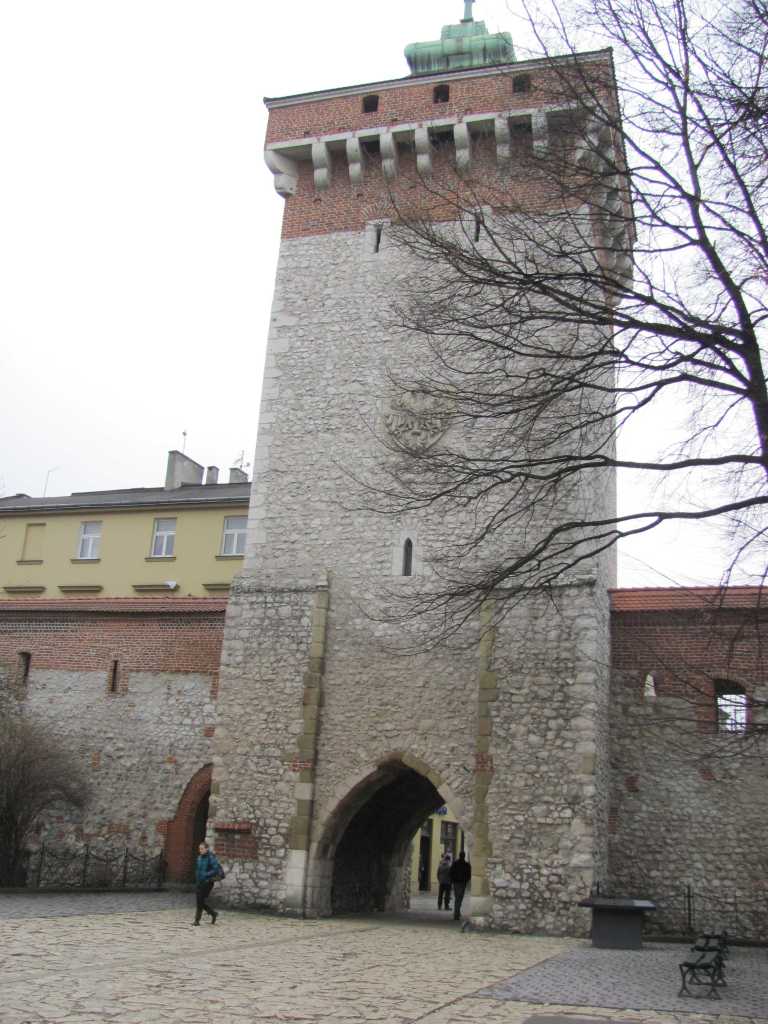
From here we passed through the medieval city walls and entered the old town of Krakow that was surrounded by more than 3 km long fortress walls, with 39 towers and 8 doors. Their construction began at the end of the 13th century. The city walls were over 10 meters high and 3 meters thick, and were protected by a 22-meter-wide and 8-meter-deep moat. The main door was the Brama Florianska erected in 1300. with a rectangular Gothic stone tower, 33.5 m high. It was from here that kings and princes entered, coronations and parades were performed. From here we set off in the direction of the Central Square (Rynek Glowny), from where we continued to Grodzka Street to reach the Wawel Royal Castle.
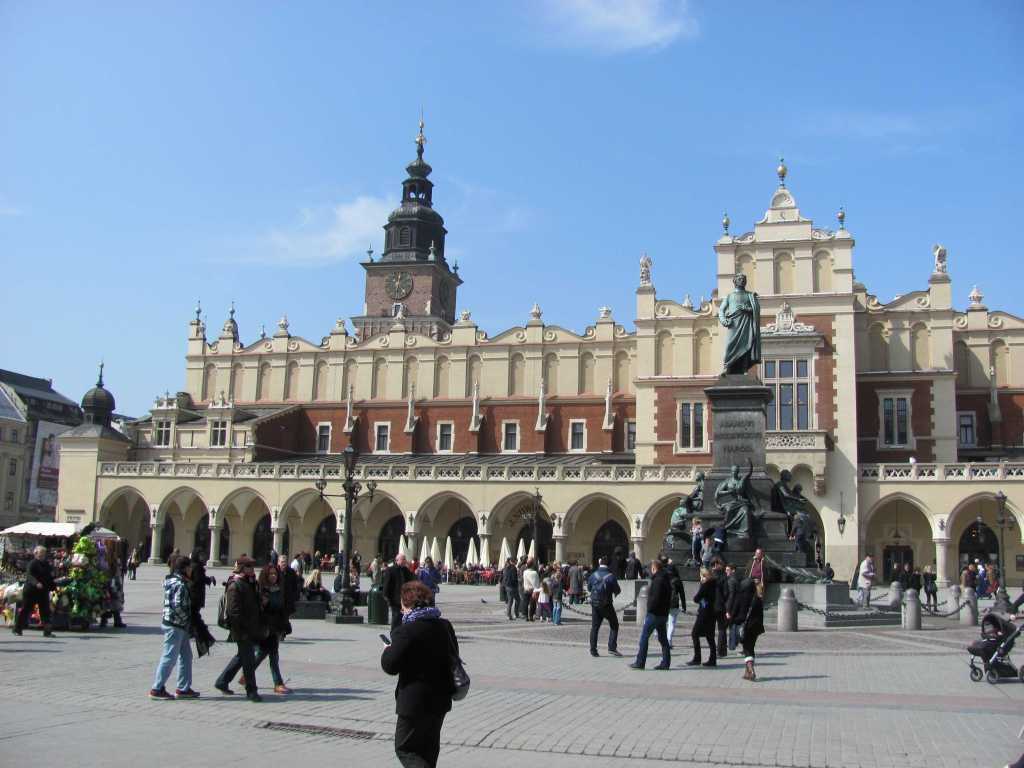
The central square was full of flowers stands and there were several open souvenir booths, which we duly appreciated. Despite the sullen weather, the Rynek Glowny square itself was very beautiful. According to brochures about Krakow, it is the largest medieval square in Europe, full of sights. Here is the 13th-century Gothic church of the Basilica of the Virgin Mary, which houses some of the most magnificent Gothic sculptures. From the tower of the church of St. Mary on every hour the music Hejnal Mariacki (trumpet signal) is played. This signal is music that spreads throughout the market square and stops abruptly in honor of the deceased trumpeter killed by the Tatars in 1241.


The Cloth Hall is also situated on the main square. It is the oldest shopping center in the world, which opened its doors more than 700 years ago. The current Renaissance building dates back to 1555, and there is also the Town Hall tower – erected in the 13th century, on which tourists can climb the 100 curved steps and enjoy the wonderful view, but on Saturday morning it was locked.
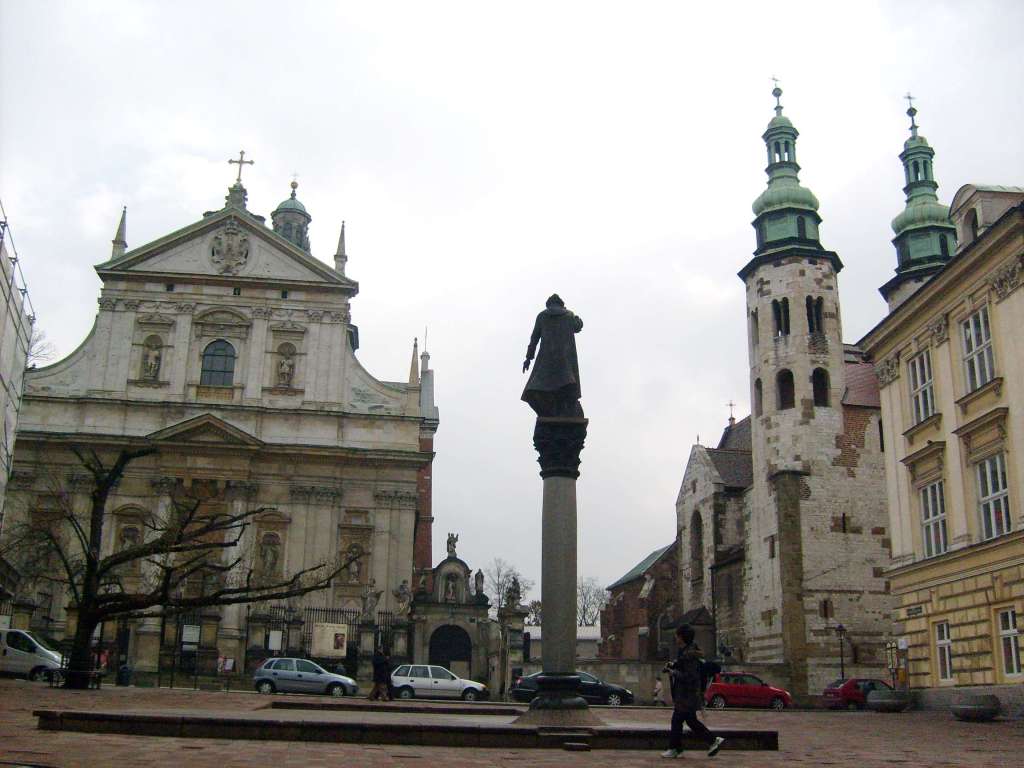
By the time we reached the Wawel castle, we passed through many streets with beautiful buildings and nestled churches. We have 172 photos from Krakow, but they still seem insufficient to describe all the beauty we saw. The sun also began to peek behind the clouds and began to scatter them, so that it could enjoy the beauty of this city from above. What I liked the most while we were walking was that the people we passed were carrying baskets. Each basket was full of some food, the children carried baskets of chocolates, while adults had baskets full of other foods that are brought to the church on the Saturday, before Easter, to be blessed. These baskets would be opened the next day, Easter, and the year would be blessed. I really liked this tradition. On the way back, when we passed through their central square again, it was very lively, and right in front of the church, people had lined up in a circle and the TV was taking pictures of what each of them had put in their basket.
Instead of baskets, we carried cameras in hand, adding new and new photos, hoping that they would be blessed and our year would also be full of many wonderful moments.

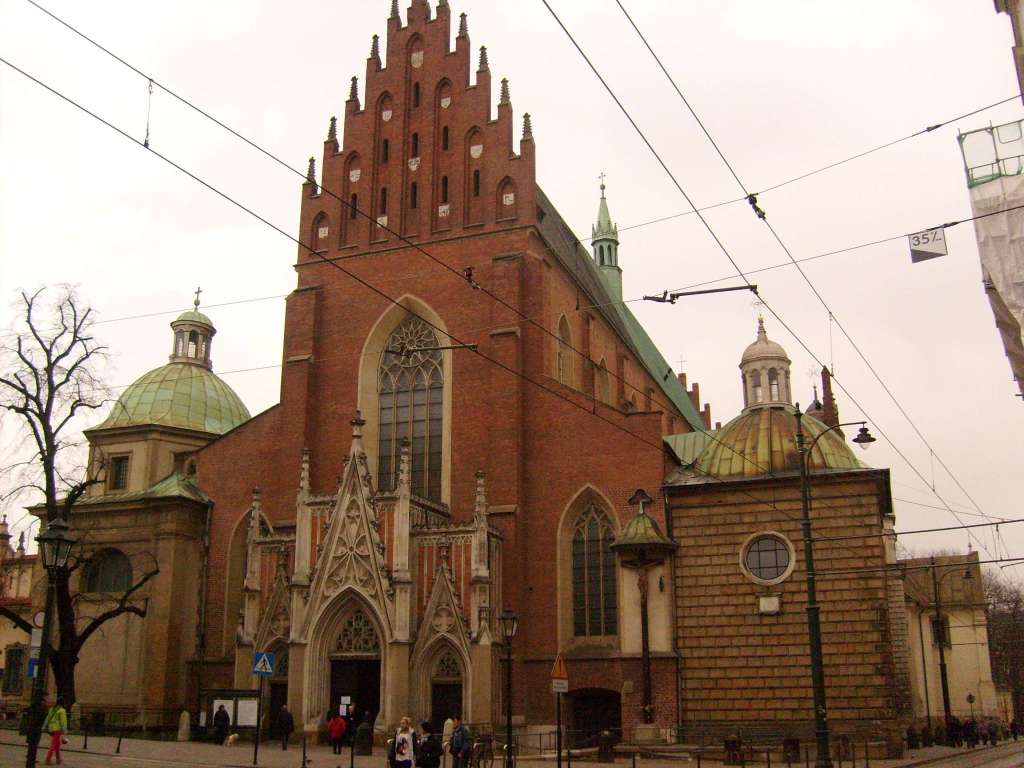



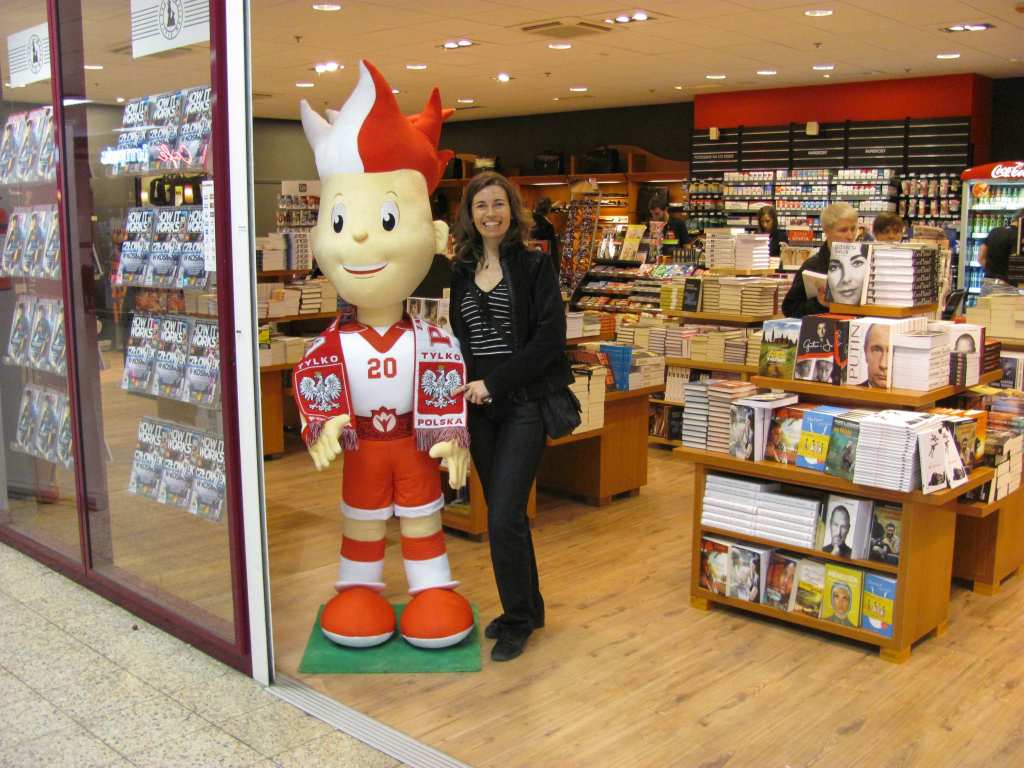
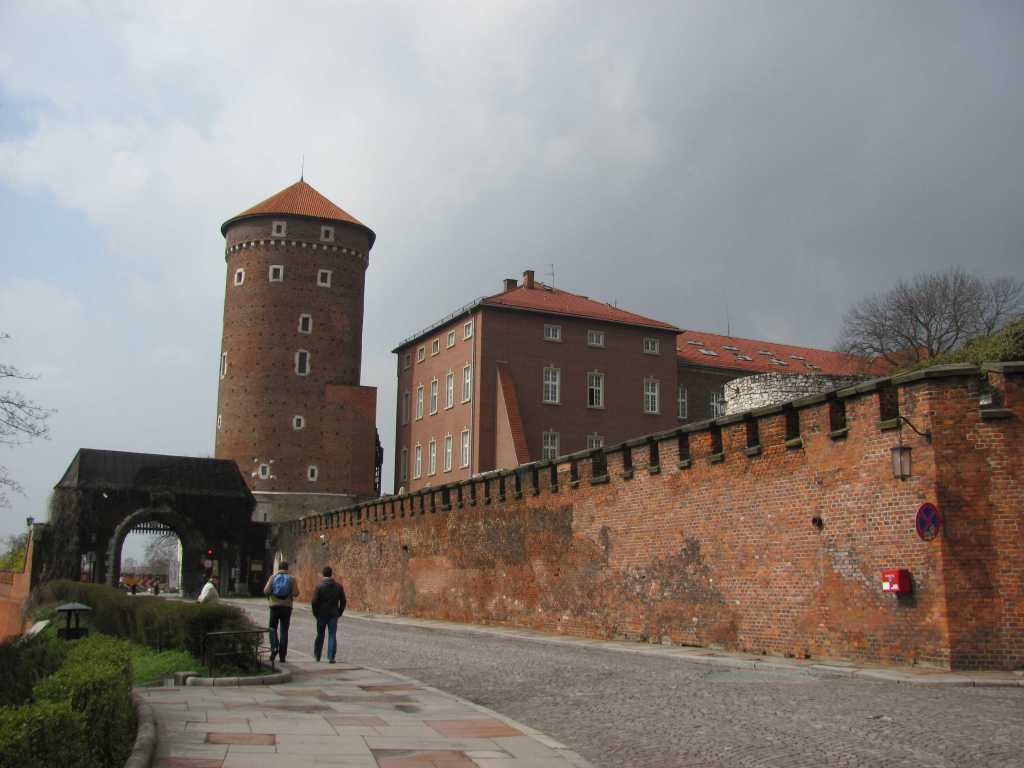
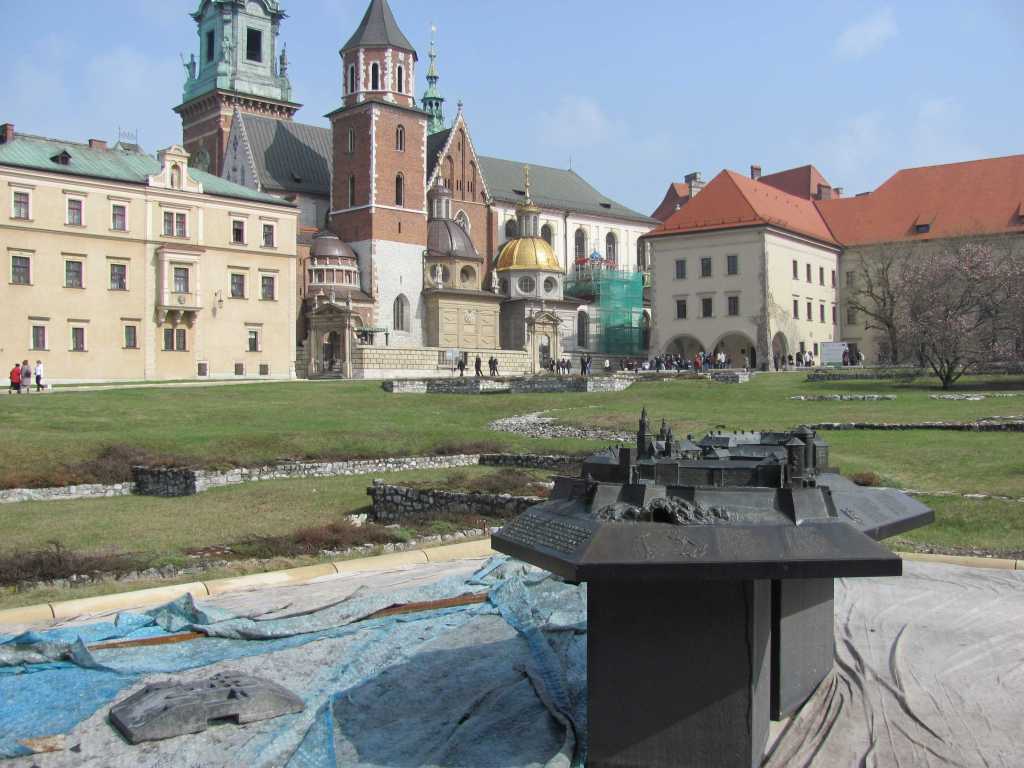
Wawel Castle was not so far away, and we quickly reached its magnificent hill. This castle was home to three dynasties of Polish monarchs, and according to the brochures, the halls are filled with priceless art, exquisite antique furniture, and old ancient objects. Of course, it was closed, but we walked through its inner park and past its beautiful cathedral. Renovation work was apparently underway in and out of the castle, as well as throughout Poland. The current summer, Poland, together with Ukraine, was going to host the European Football Championship and in addition to the many posters for this event, there were also many work activities, all along the beautiful tourist places.


THE DRAGON OF KRAKOW
Once upon a time, many centuries ago,
in a distant kingdom, everyone had a life of glow.
People loved their king and queen,
as well as their little daughter blessed with beauty.
Every day was a holiday in this kingdom of gold and silver,
located in the north, by the Vistula River.
However, their lives completely changed
when one day a terrible dragon came.
He spewed fire and made wind,
and like an arrow flying away with its wings.
He began to come every day and steal
people’s sheep and cows in order to eat.
The king sent all his army to battle the beast
to kill the dragon, or drive him away at least
but his soldiers were powerless,
the beast chased them like flies instead.
With his fiery breath and teeth like swards,
the dragon fended all attacks off.
.Then the King invited brave knights from near and far,
to defeat the dragon, and send him afar
Those who manage to succeed
Was going to marry his daughter as a gift.
Heroes came from all sides,
but no one managed to defeat the scary dragon.
Until one day a poor young man, named Krak
came to the king’s palace.
He carried neither shield nor sword,
only glue, needles and a cord.
People wondered how he can succeed
and chase away the terrible beast.
He decided not by force, but by cunning
to deceive and kill the dragon that was coming.
He took a white sheepskin
and filled it with poison within
then skilfully stitched it up
that it looked like sheep alive.
He left it at the dragon cave
where the dragon slept,
and as soon as he noticed it,
he immediately ate it.
The poison worked well from the first bite
the dragon became thirsty from the sulphur inside
He drank half of the Vistula River,
his belly burst and he drowned in the river.
Throughout the kingdom celebrations began,
and a large, royal wedding was organized.
People fell in love and thanked Krak
by naming their capital city after this brave guy.
The city of Krakow still exists today –
with a preserved glamorous royal palace.
The dragon cave is also preserved
and a stone dragon guards the entrance
and spews fire every 2 minutes.
The Vistula River also continues to flow
and brings coolness and happiness to everyone.


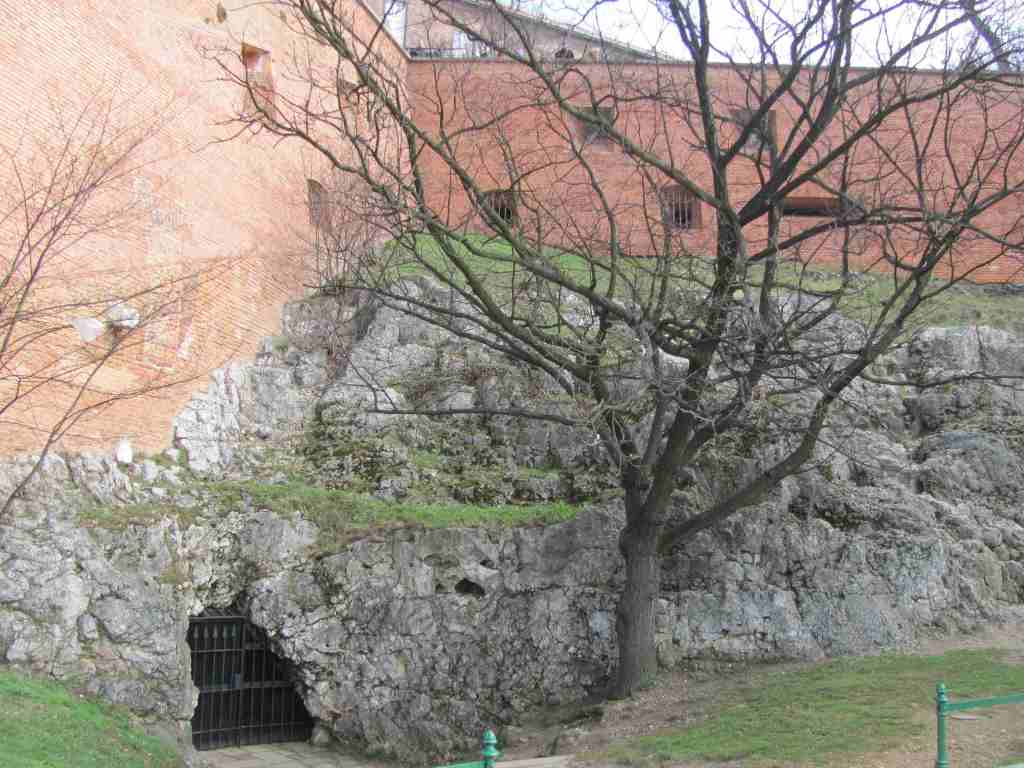


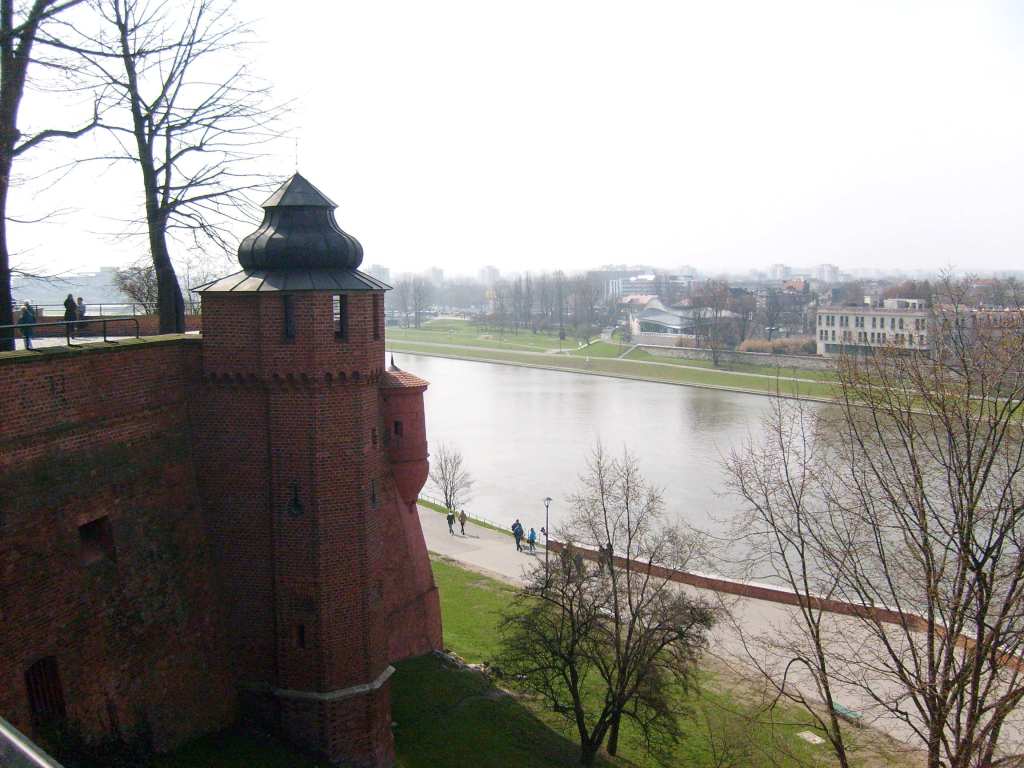

We walked right along the Vistula River, and its water was fabulously calm with many beautiful swans perched.
On the way back to the hotel, we decided to go through the famous city park Planty Park, which I had read is the largest park in Krakow, which goes around the Old Town (Stare Miasto), on the site of the medieval fortress walls. The park itself covers 21,000 square meters and is 4 km long, consisting of thirty smaller gardens arranged in different styles, with numerous monuments and fountains, and here are the oldest trees in Krakow.
The park was erected in 1822-1830 and aims to preserve the concept of a “green city”. With the expansion of the city in the 19th century, the medieval defensive walls became unnecessary and unmaintained, as a result of which the Austro-Hungarian Emperor Franz I ordered them to be demolished. In 1817, Professor Felix Radwanski managed to convince him to keep some of them as a landmark. The park was still not in its green spring outlook, and the only greenery came from the green grass. We saw only one fountain, but it didn’t work either, as did most tourist attractions.


But at noon, their central square was so lively and sunny that we weren’t sure if we had passed by the same place in the morning. There was a beautiful indoor market, as well as many stalls selling various foods.
I had read that the Polish cuisine in Krakow is specific to the region, influenced by the different cultures in Central Europe and especially by the Austro-Hungarian Empire.
After lunch, we passed by the hotel to pick up our luggage and from there we took the train to the airport, where our plane took off at 17:05. We arrived in Warsaw at 18:00 and at 19:40 we took another plane to Gdansk, where we arrived 10 minutes earlier than the scheduled landing time at 20:30.



GENERAL INFORMATION ABOUT KRAKOW:
Location: Krakow is located in the south of Poland, located on the Vistula River at the foot of the Wawel Hill.
Area: 328.85 sq.km
Population: 758 992 people
Official language: Polish
Altitude: 219 m
Climate: temperate transition (from mild oceanic to colder continental)
Time zone: UTC+1
Currency: Polish zloty (PLN)
Additional information: http://www.krakow.pl/english/
TRIP TIPS FOR KRAKOW:
Best time to visit: all year round
Typical foods and drinks: 1) Zurek – a soup made from fermented rye – with whipped cream, slices of salami and a hard-boiled egg; 2) Barszcz – beetroot soup – very salty; 3) Chlodnik – is also a beetroot soup that is served cold and is a very fresh dish in the summer; 4) Pierogi – fried pierogi most often stuffed with ruskie (cottage cheese and potatoes), meat, cabbage, mushrooms, blueberries, apples and strawberries. Fruit cakes are usually served with cream and sugar. Typical local drinks are: 1) Tatanka – a Polish drink made from apple juice and a special type of vodka (called zubrowka, which is seasoned with buffalo grass); 2) Wodka miodowa – honey vodka, usually served in small cups and drunk on ex; 3) Sliwowica – plum brandy; 4) Grzaniec – warmed wine with cloves and other spices. Especially popular at Christmas, when sold in the open market.
Places to visit: Wawel Castle, Central Shopping Square, Town Hall Tower, St. Albert’s Church (one of the oldest churches in the city, dating back to the 10th century), St. Mary’s Church (with its curved twin towers) and many others.
 TripTips