CHARMING LITHUANIA


The small church of St. Anna, the medieval Trakai castle, the gate of dawn in Vilnius, the cathedral… All these things like bees buzzed in my mind while preparing for my trip to Vilnius. I had also butterflies in my stomach, feeling so excited about my first visit of Lithuania. I looked again at the main things in my luggage: passport, money, camera and warm clothes. I needed nothing more for my 3 days trip in charming Lithuania.
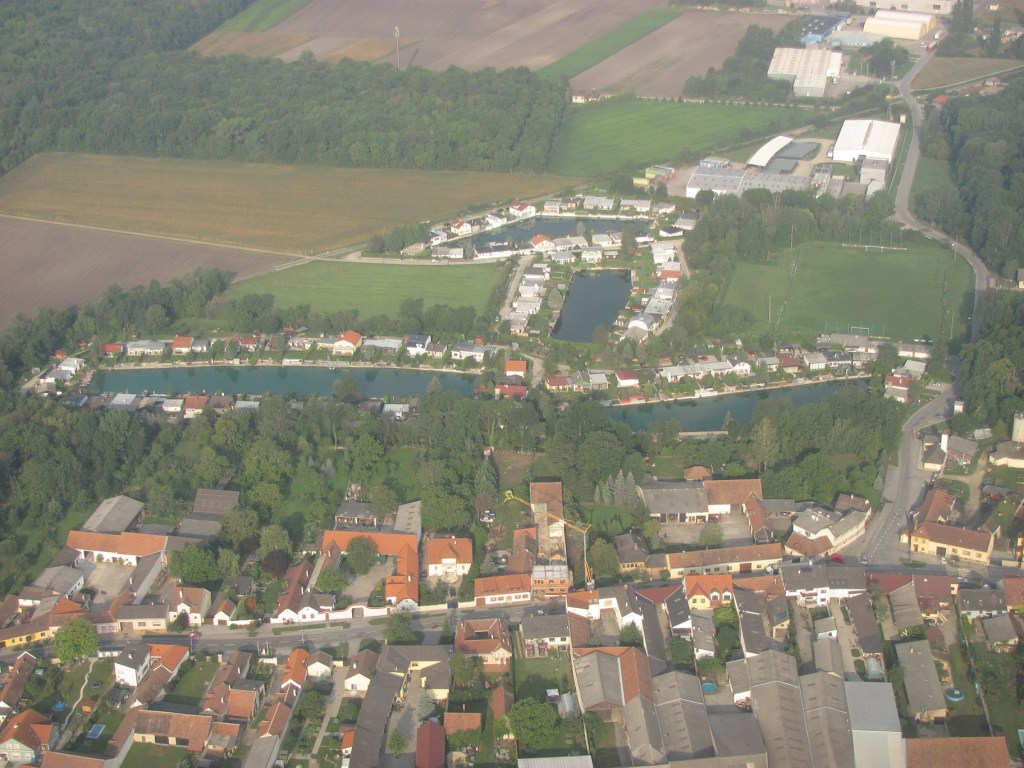
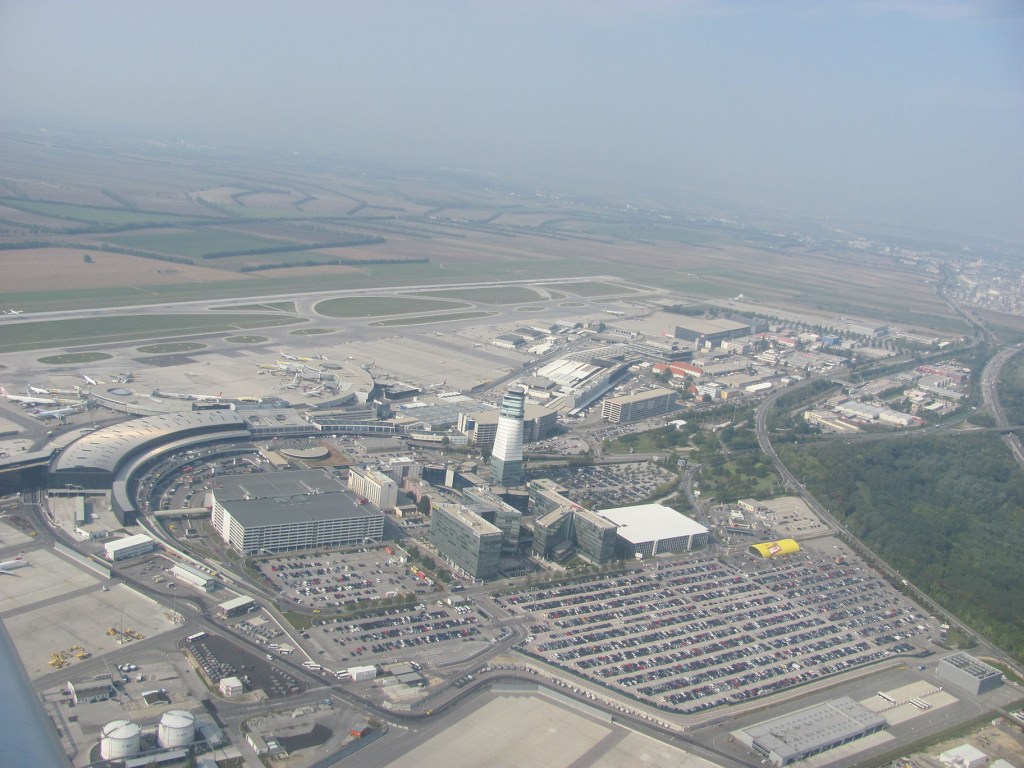
At 07:49 I was already in place 10A on the plane, sitting beside the sunny window, wondering how to take these sunny rays to my northern trip, but I had to rely mostly on my sunny smile, as according to forecasts, the next three days were going to be rainy in Lithuania. My flight was with a stopover in Vienna, as Sofia-Vienna we took for 1 hour and 20 minutes, and Vienna-Vilnius lasted 1 hour and 30 minutes.
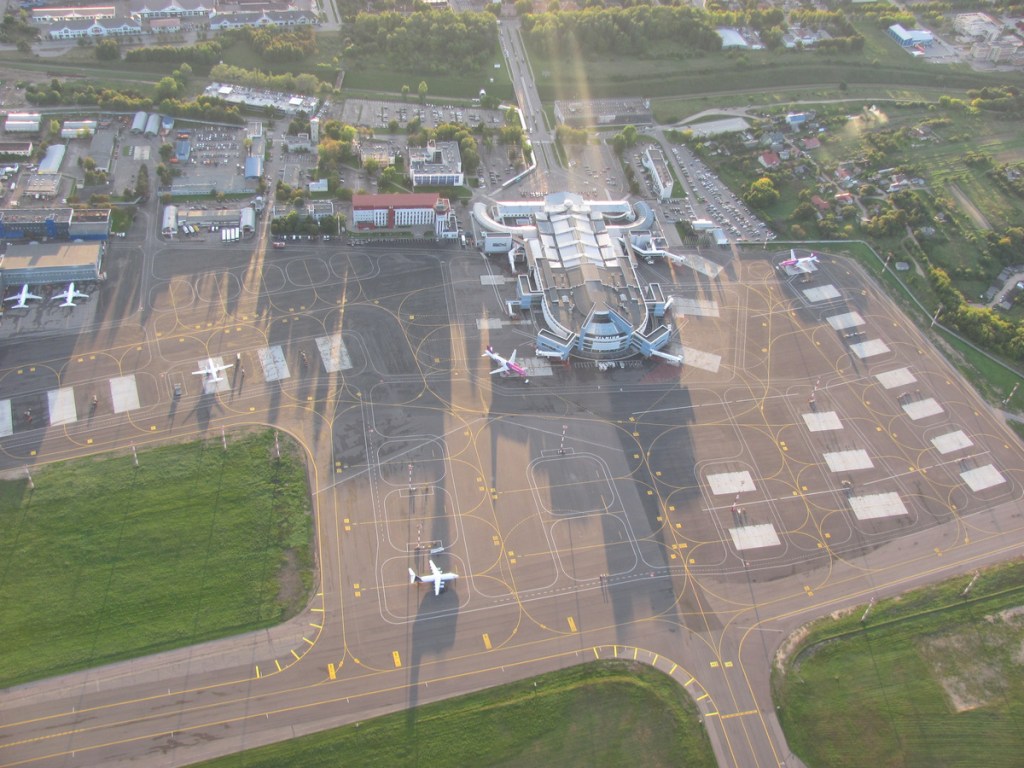
Vilnius airport welcomed us well – it looked spacious, probably because there were no planes on it. At the terminal where we stopped, there was only one Wizz Air plane. However, there was a large building that said VILNIUS and got a great initial photo. Otherwise, the airport was relatively small, although it was built as early as 1932. At the time it served only the regular lines between Warsaw-Vilnius-Riga-Tallinn. Today, many large international companies land here. But apparently the manuals for Lithuania were right – this was one of the underestimated tourist destinations.


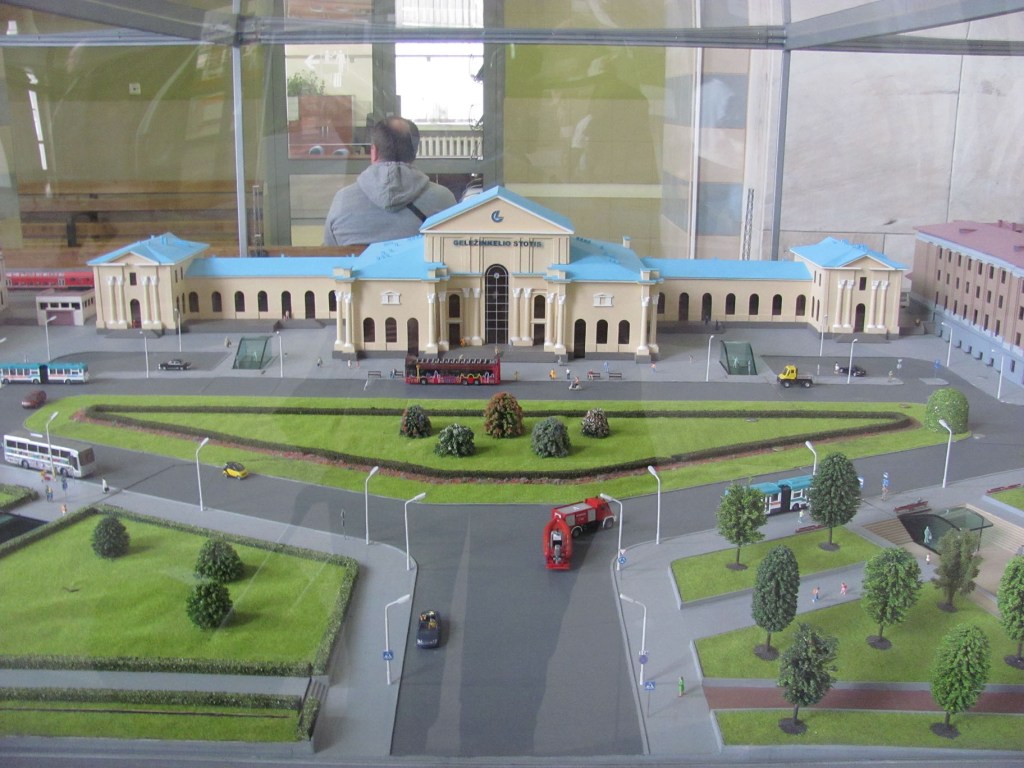
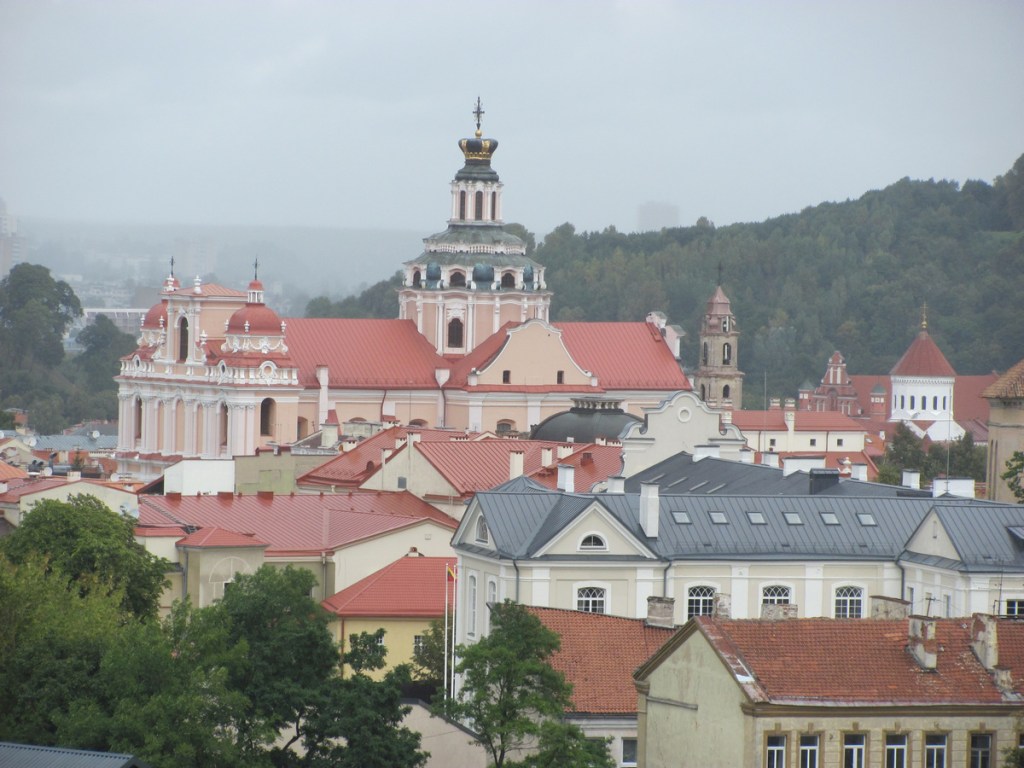
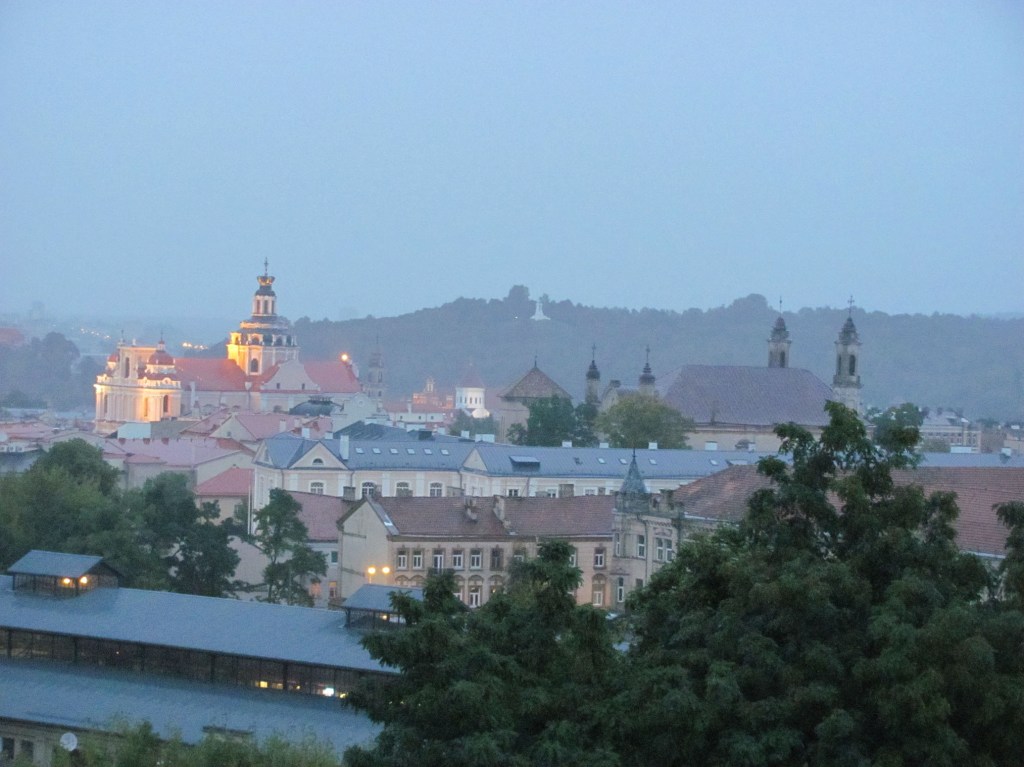
My first impressions of Vilnius were good. Conveniently, right in front of the airport, there was a bus stop where bus No1 stops, which connects the airport with the central station. As the airport is only 4 km from the city, the journey to the central station took less than 15 minutes. From there, everyone can easily get to the city center, or take the train or bus to Trakai, which is only 30 minutes away, or like me stay in the beautiful Panorama Hotel, located directly opposite the station, which I heartily recommend, and which deservedly bears its name. From the huge windows of room 503 (on the 5th top floor) the whole of Vilnius (or at least its old part) was revealed, with the cathedral and the many churches clearly visible.
As it started to rain outside, I got my umbrella, but after I made a few steps, the sun started to show its gorgeous smile. All day long, rain and sun raced to show me around the city. The weather was quite changeable and unpredictable.
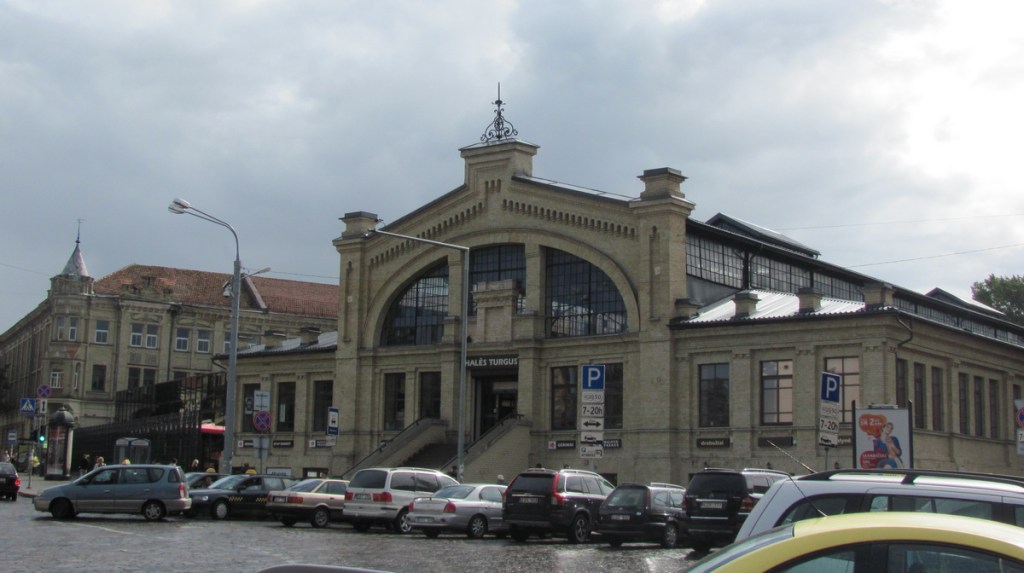
The city, on the contrary, was calm and arranged. While there weren’t many signs of where the main attractions were located, the few I found did a great job. It is difficult to get lost in this relatively small, but very hospitable and cozy European capital. All the sights were very close to each other and the city quickly won my heart. I really liked the cobbled streets with wonderful buildings that reminded me of Poland. From the hotel I headed to the Vilnius market called Hale Market, resembling the Sofia market halls.


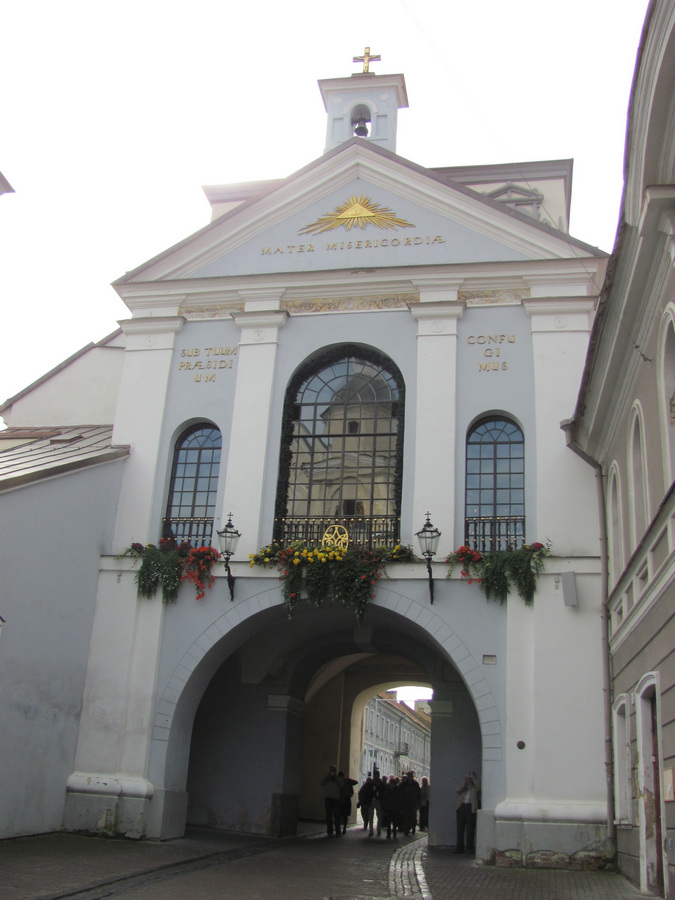
Continuing along the same street, I passed the Dawn Gate. In the pictures on the Internet it looked very different, so I initially passed it. Then I asked a passerby and he confirmed that it was the Dawn Gate, but I showed him the picture from the Internet and told him that it looked different, and he told me that I should see it on the other side –and he was right. Passing under the gate, on the other side I gasped at its beauty.
The Gate of Dawn was built between 1503 and 1522 as part of the defensive fortress system of Vilnius, the capital of the Grand Dukes of Lithuania. The other name of the door is Medininkai, as it leads to the village of Medininkai south of Vilnius, but I liked the name Gate of Dawn better and imagined the first rays of the sun getting in.
The Dawn Gate is the only one from the nine city gates, that remains today, the rest were destroyed by the government at the end of the 18th century. Passing through the gate, I found myself in the old part of the city, with the cobbled streets and lavish buildings. Especially beautiful was the building of the Lithuanian National Philharmonic Orchestra, from which young people came out with musical instruments. On the street I noticed other students, all in uniforms, apparently the school year had started earlier here. The streets were mostly empty – it was still a working day. For the whole day I med only two tourist groups – Americans and Scandinavians.
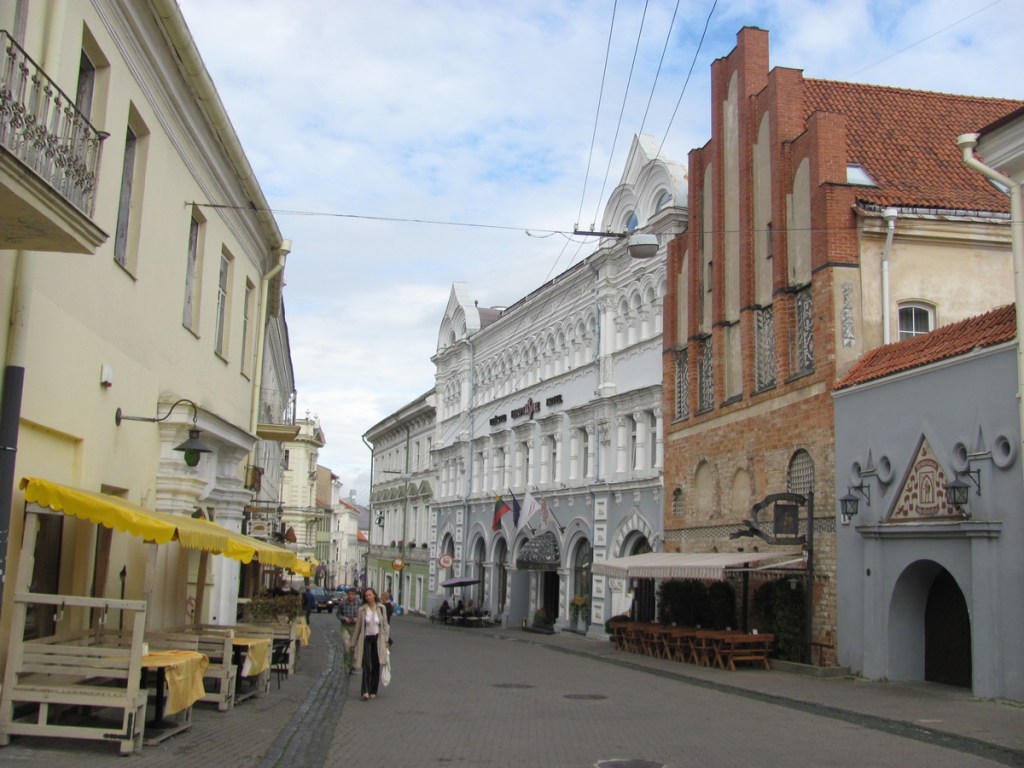
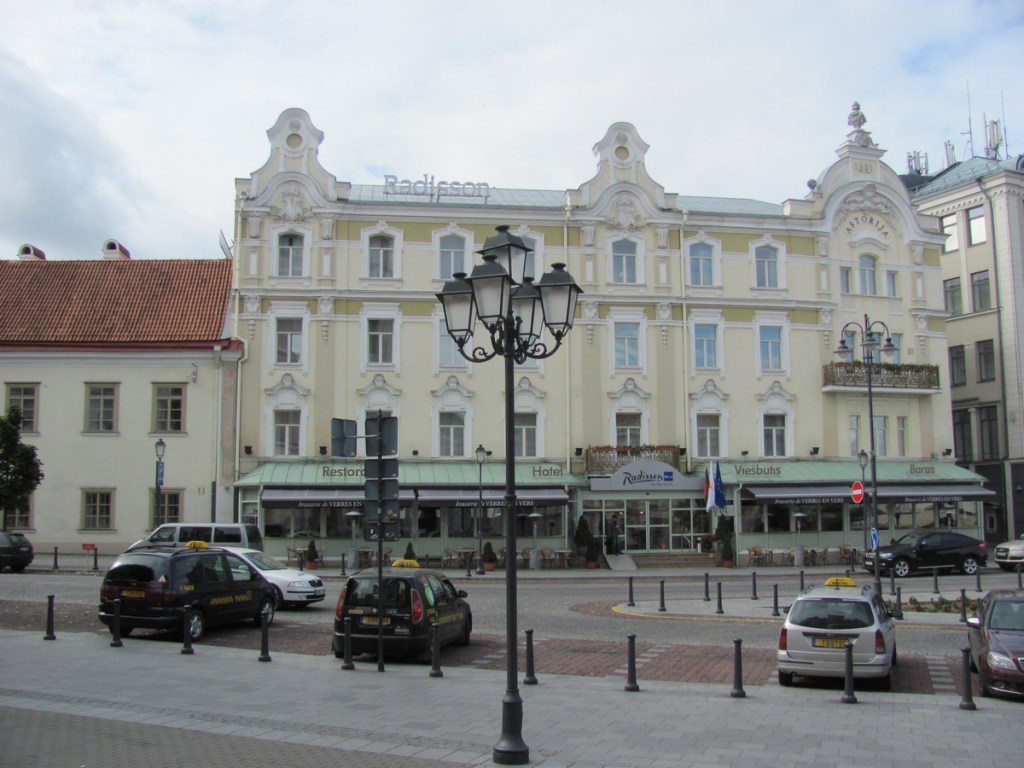




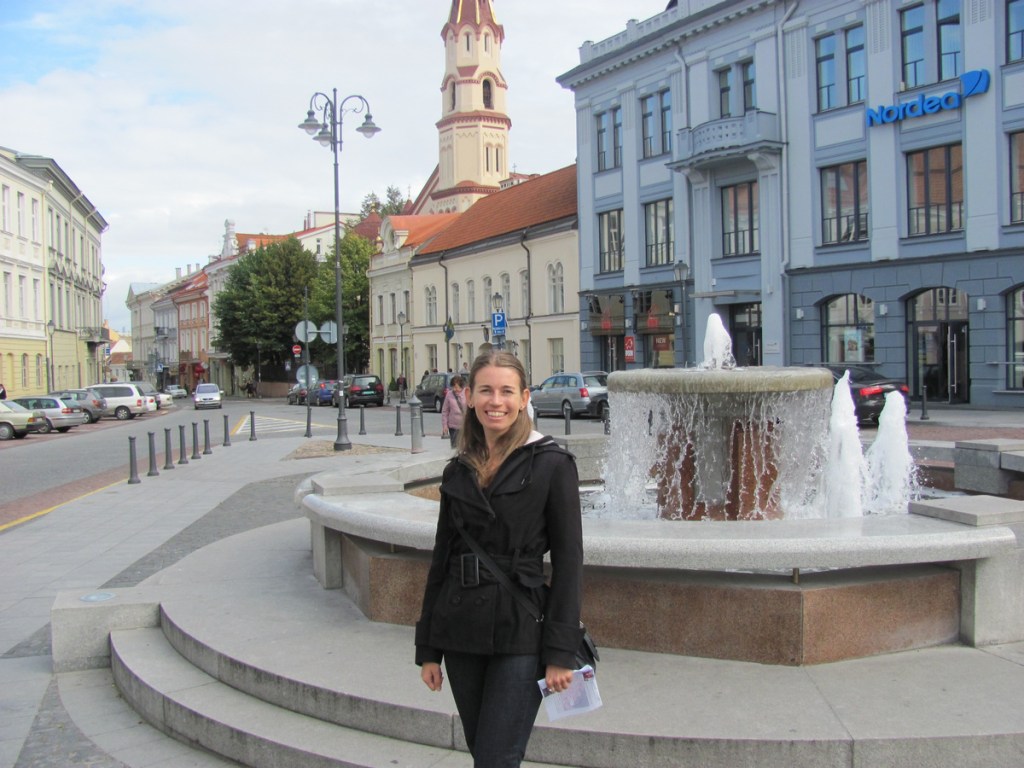
The city was really underestimated by tourists, and I personally liked it very much – everything was compact, within walking distance, and the buildings provoked to be photographed – all of them glamorous, maintained to the smallest detail.
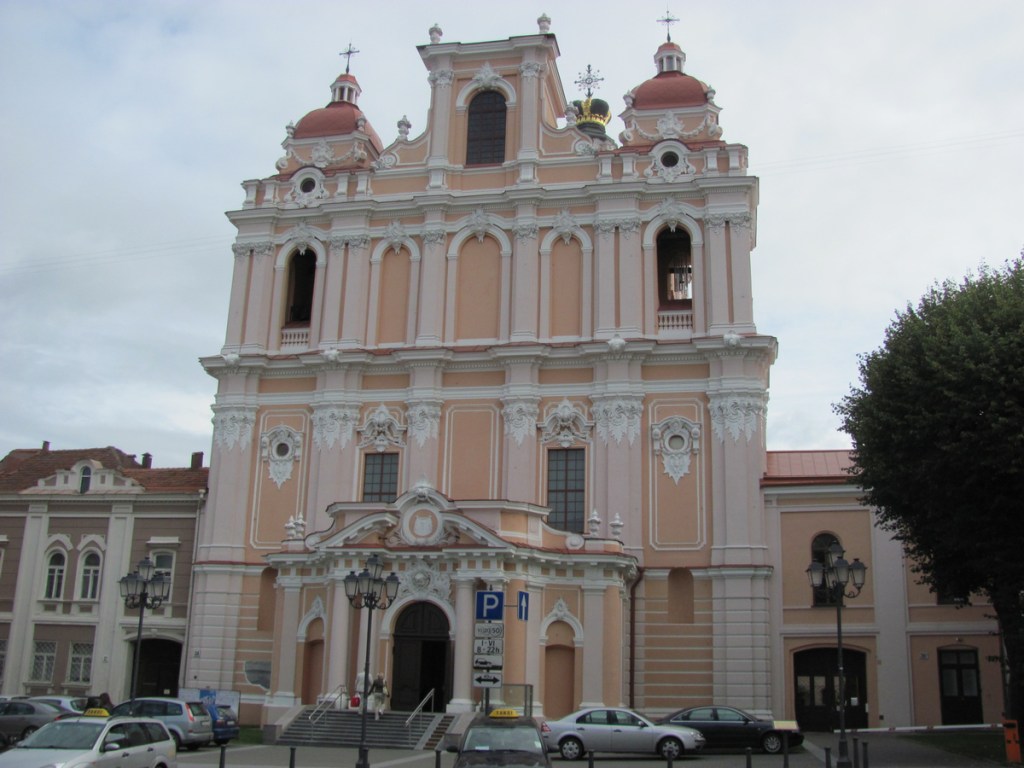
The church of St. Casimir was much more beautiful than it looked on the Internet. It is actually the oldest Baroque-style church in Vilnius. It was built between 1604 and 1635 and did not become a Catholic church until 1988. Inside it was just as beautiful and highly lit, something I don’t know why it’s not so common in other churches. Even our Orthodox churches are drowning in darkness, and the sun’s rays give such a beautiful heavenly glow.
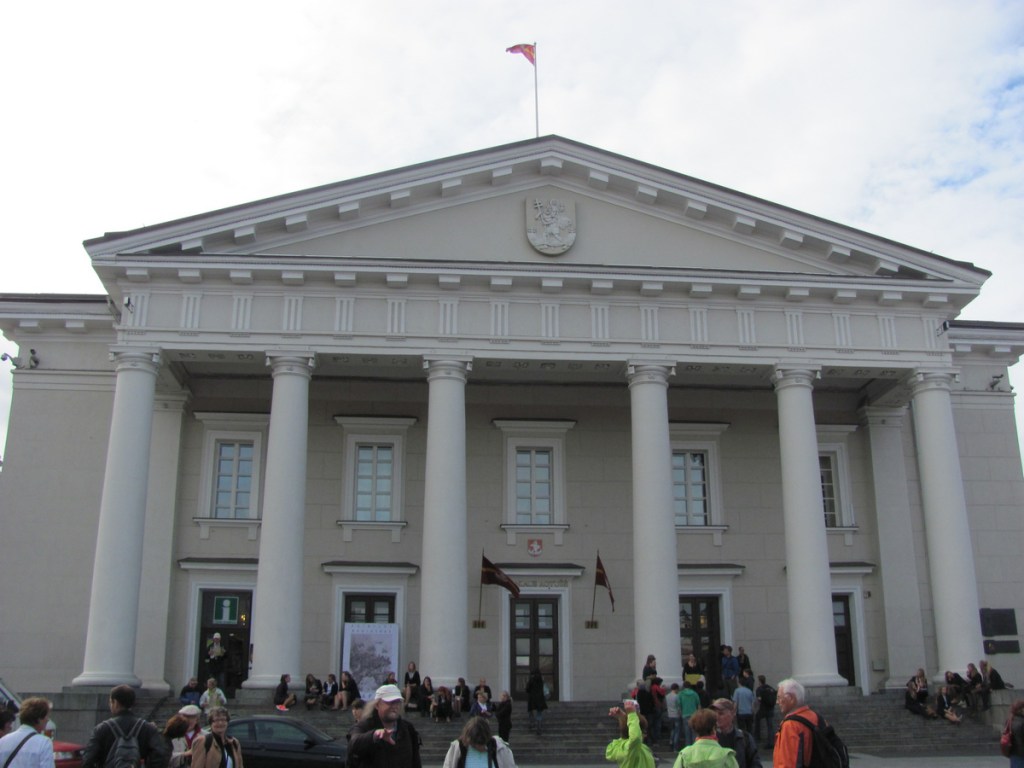
Leaving the church after a few steps I found myself in front of the town hall, which looked like a Greek acropolis. I didn’t have administrative work there, so I didn’t get in, but I took some pictures of the nice façade, the large square in front of it, and the fountain at the end of the square.
From here began an alley full of souvenir shops, which imperceptibly took me to the cathedral square, I felt it only when my bag “weighed” with magnets and other small souvenirs. The white cathedral with the clock tower in front of it was very beautiful, but while I choose from which corner to take a picture of it, it started to rain intensively. It was time to see the cathedral from the inside. It was here that I met the second group of tourists, whose guide accommodated them in a lavish chapel and began to speak to them in a Scandinavian language incomprehensible to me.
In some places in the cathedral there was a transparent floor, from where ancient ruins could be seen. The first cathedral was built here in 1251. In 1387 the cathedral acquired a Gothic style, and its present appearance is due to Laurynas Gucevicius. Undoubtedly one of the most beautiful halls was the one full of tourists – the Baroque chapel of St. Casimir, built in 1623-1636.
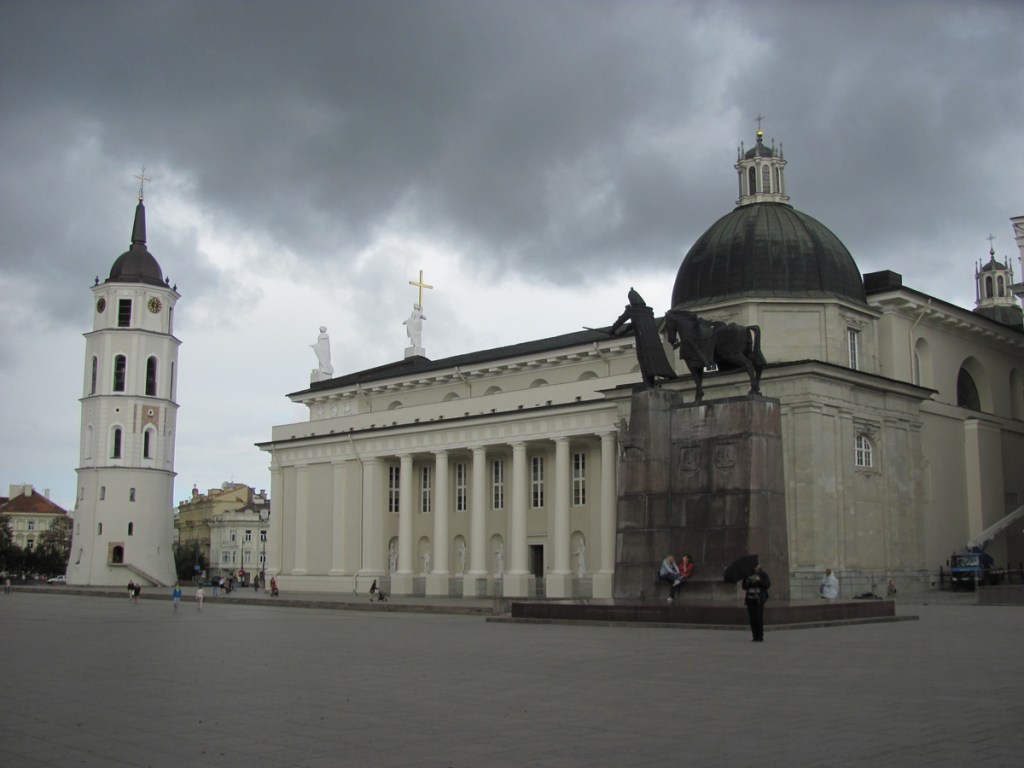
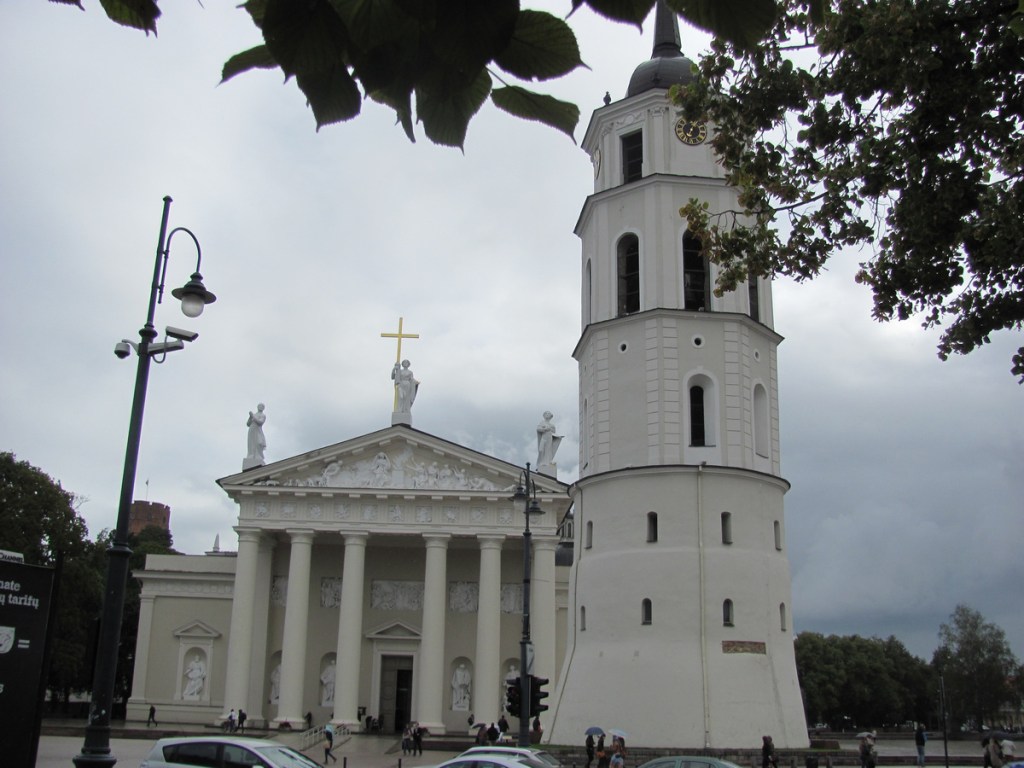

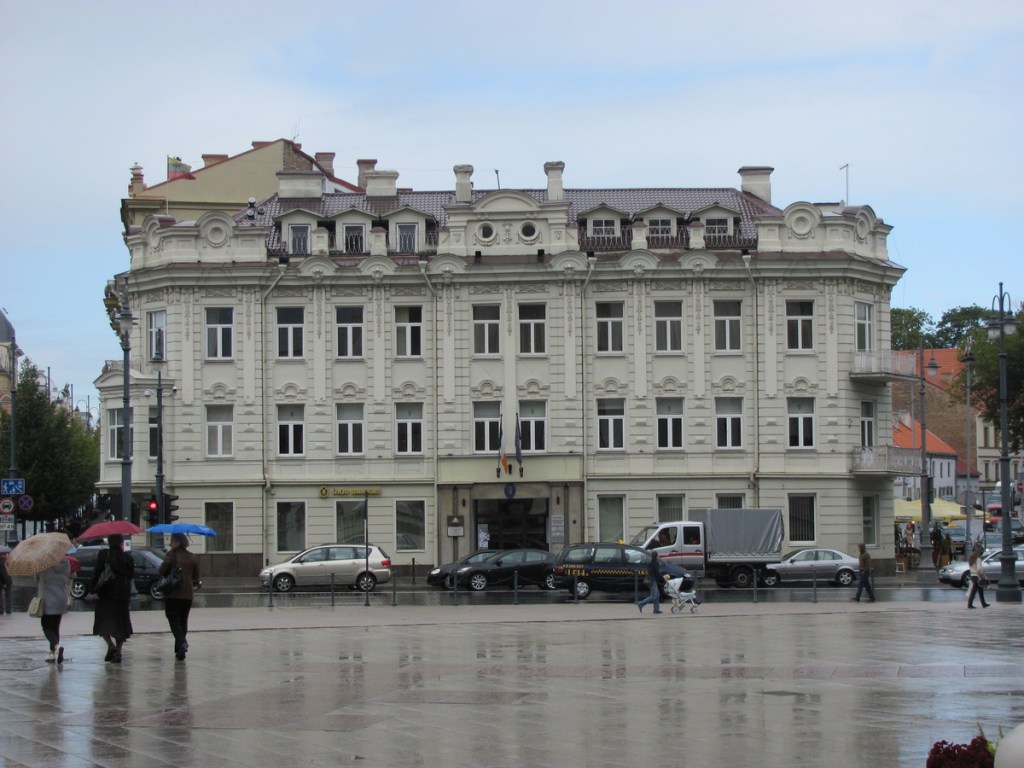

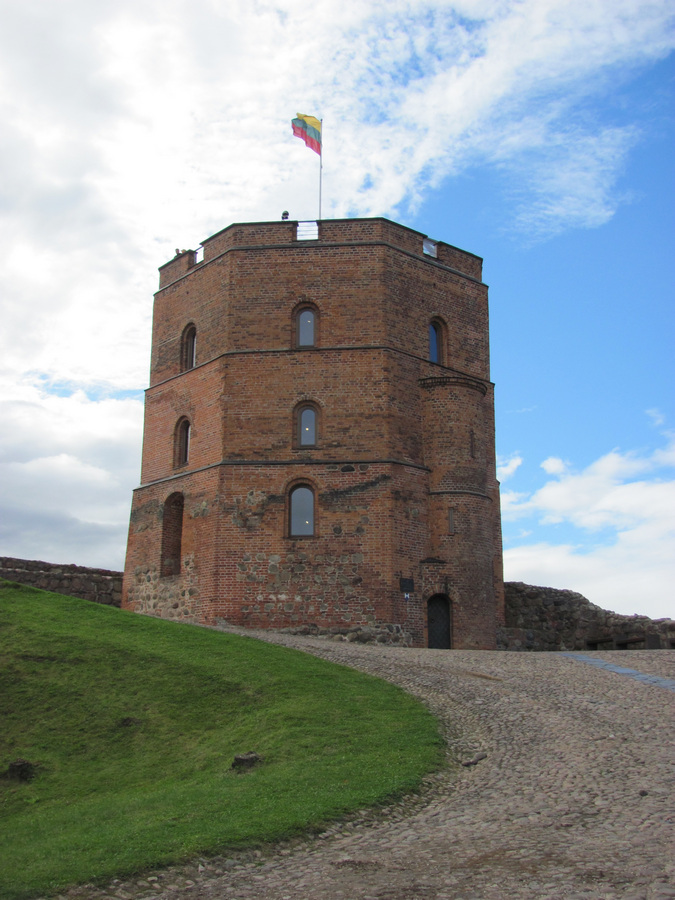
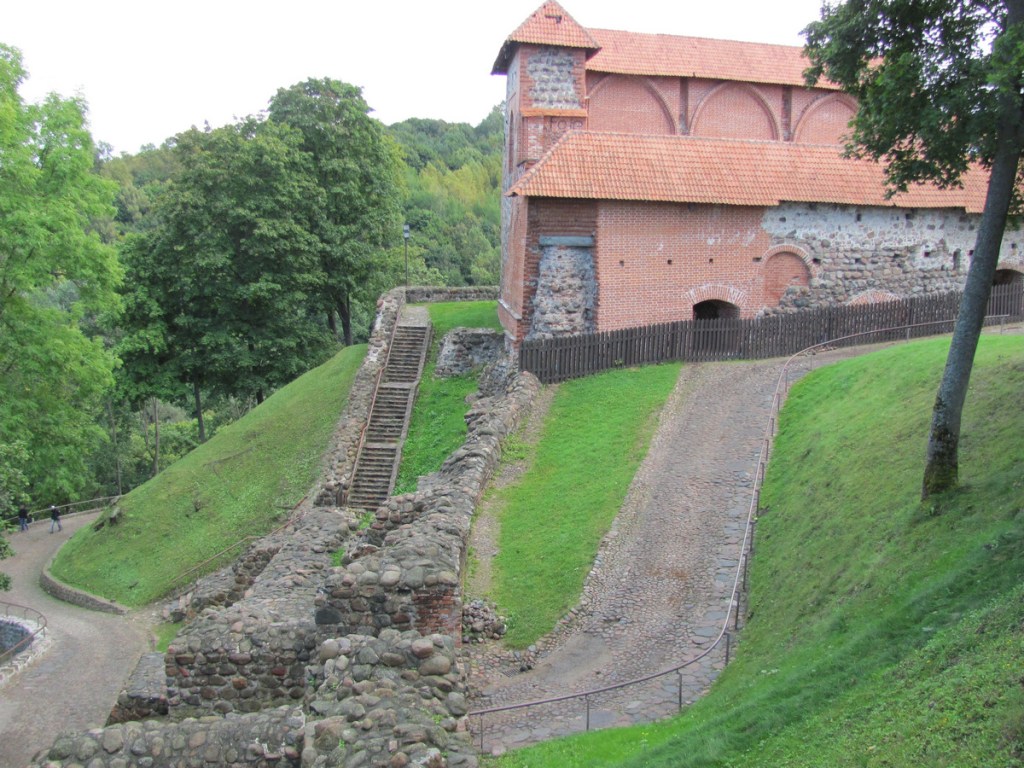
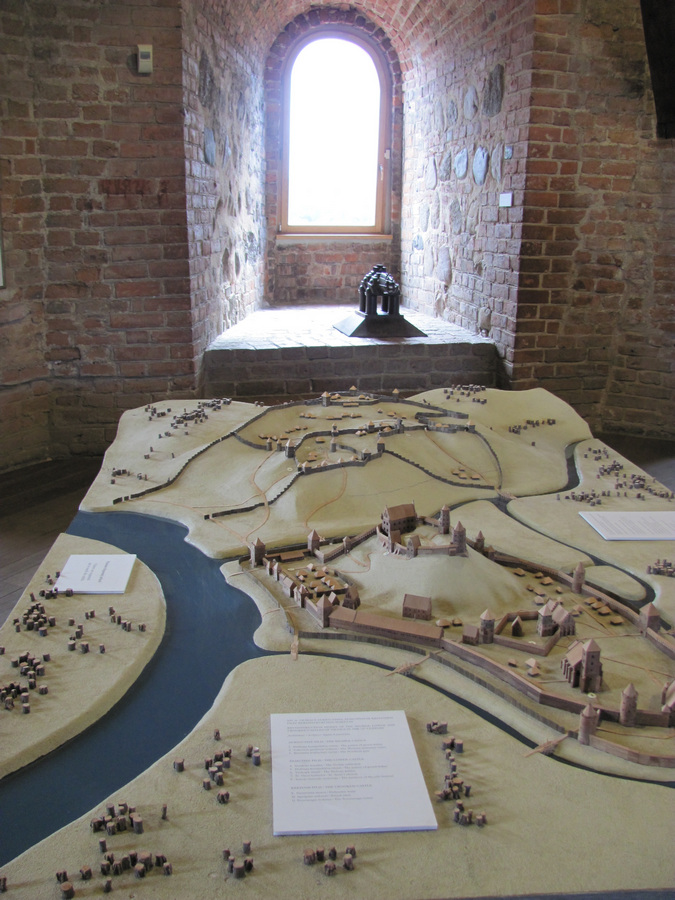
It was still raining when I went outside, but the little splash couldn’t stop me from taking the pictures of this holy place. I headed to their National Museum when the sky suddenly cleared and the sun shone. Instead of entering the museum, I decided to climb the hill located just above it, where the “castle” Gediminas was located. The castle has quotation marks, because today it was only one tower, which has become one of the main symbols of Vilnius. The castle was built in the 14th century, replacing the previous wooden castle. The same defended the attacks of the Crusaders, as in the 15th century it was strengthened and together with the lower castle formed a strong defensive complex. Over time, however, it lost its importance and experienced great destruction in the war with Moscow in 1655, after which it was not restored. After World War II, the best-preserved tower was restored and today houses a museum and a beautiful panoramic terrace. In the immediate vicinity of the eastern side are preserved the ruins of the ducal palace.
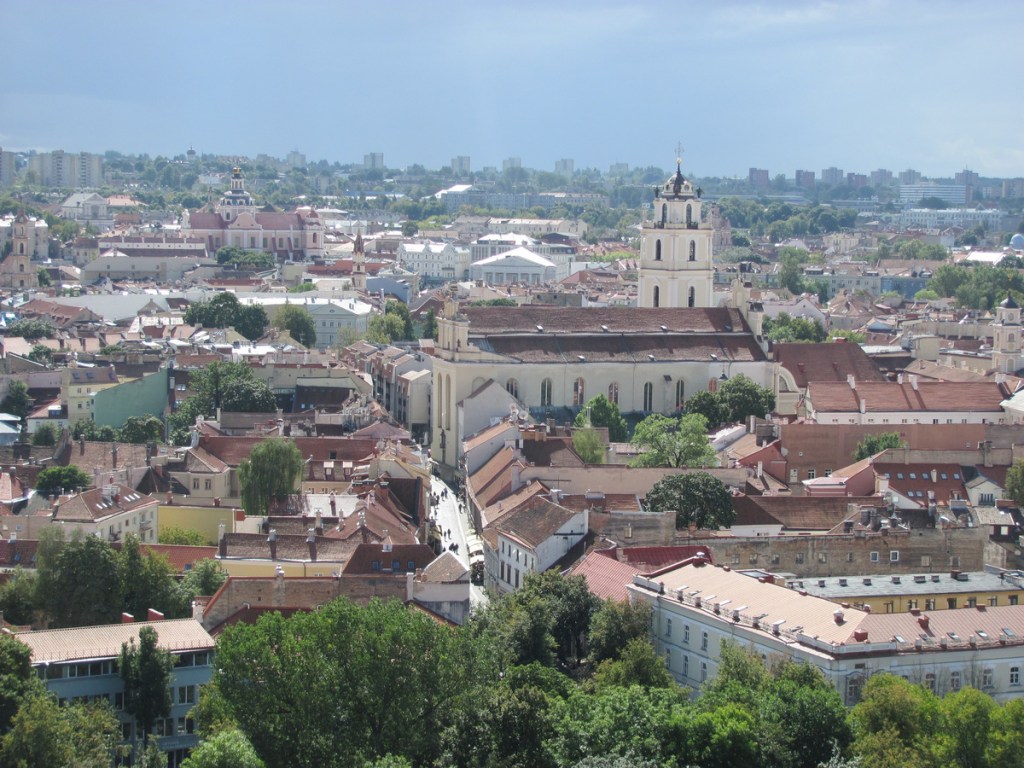
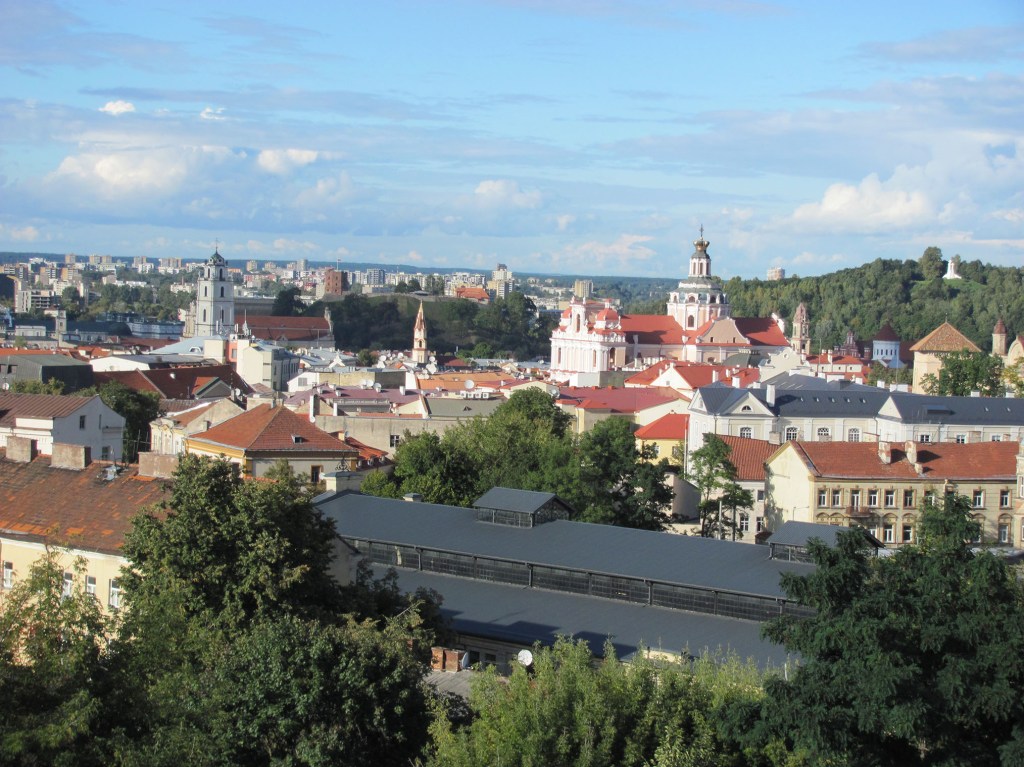
The castle could be reached on foot or, as I did, by taking the train or the so-called funicular. On getting down, I recommend on foot, but going up I saved some time and energy by getting on the funicular. So fresh I quickly climbed the curved stairs to get to the cherished panoramic platform. Probably this is the most beautiful place in all of Vilnius, with a magic panorama of the beautiful cathedral towers that stood underneath.
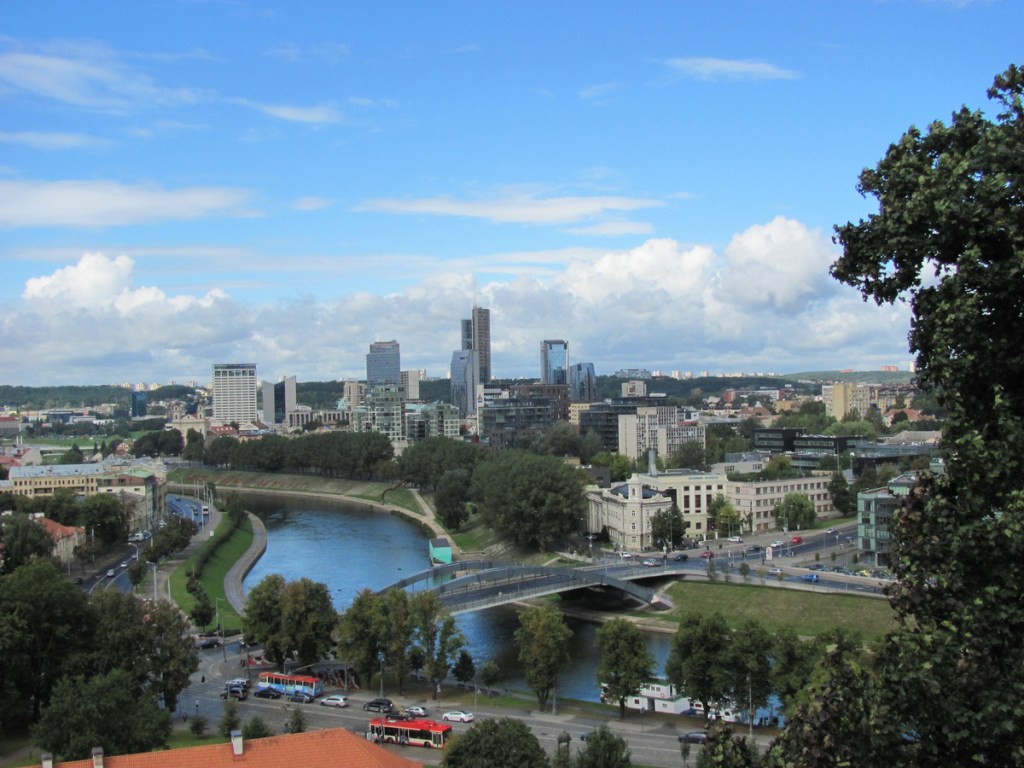
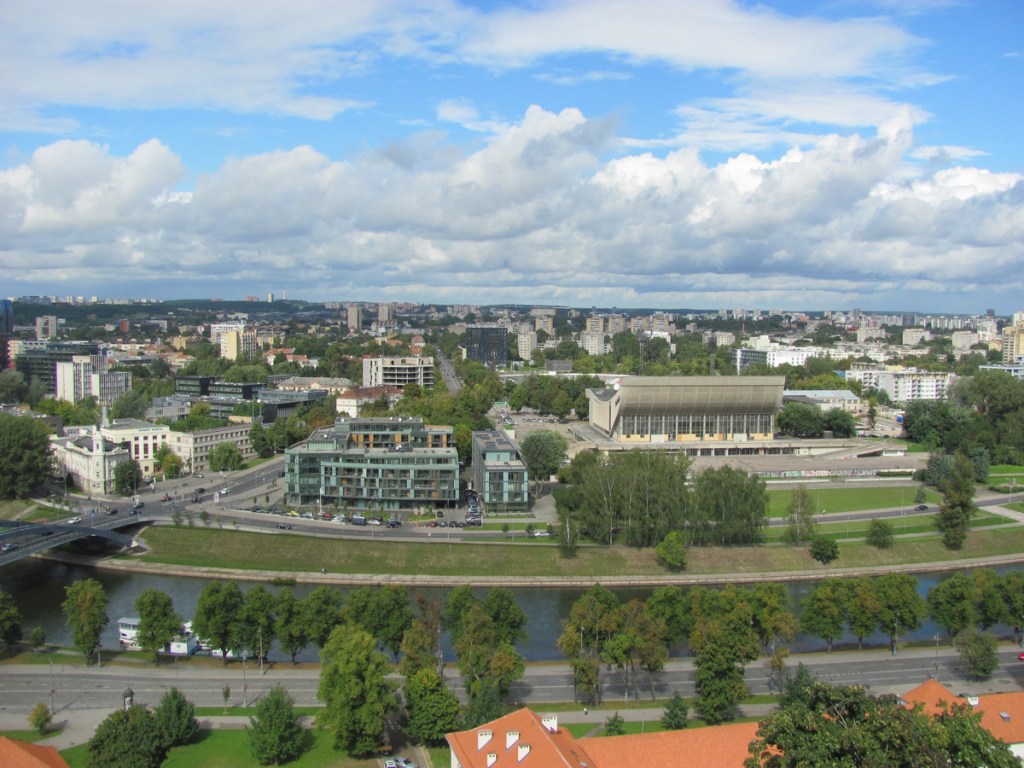
From there I saw the church of St. Anna, plotting my way to get to it. Right in its opposite direction of the city was the business district of Vilnius, whose tall buildings had risen above the river. The view was beautiful and I captured it with the camera to the last detail.
Especially beautiful was the Neris River, which flows into the Vilnya River here in Vilnius, and it is the second river that brought the name to the city.
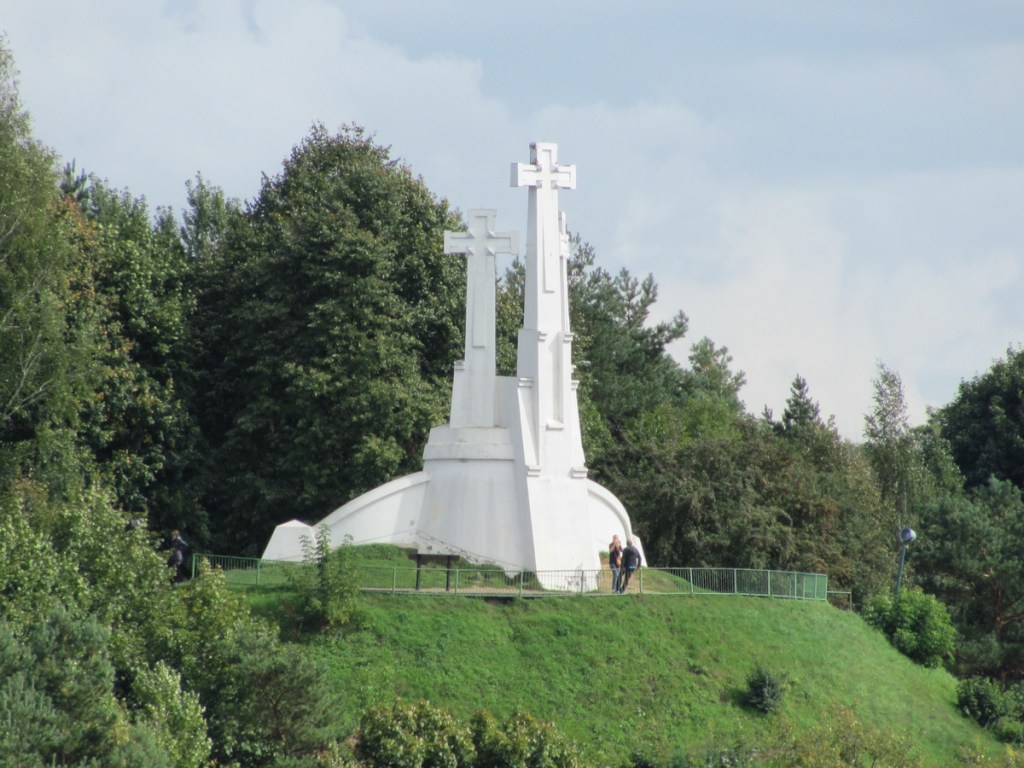
From the tower there was a beautiful view of the nearby hill with the three white crosses on the top. This monument was erected in honor of the 7 Franciscan monks who were tortured here by peasants before Lithuania converted to Christianity. The monument also symbolizes the importance of Christianity in Lithuania. However, it was erected on another hill to which there was no funicular, so I preferred to zoom and admire it with the camera instead of climbing there. Later I saw that this hill was also well visible from my hotel room.

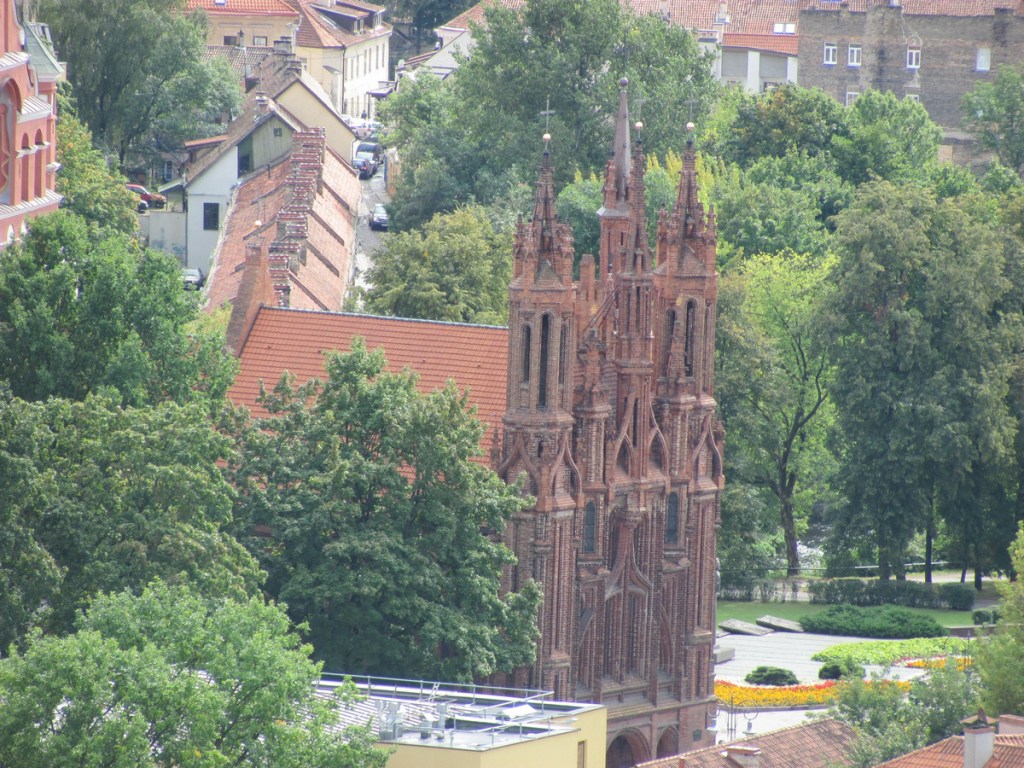
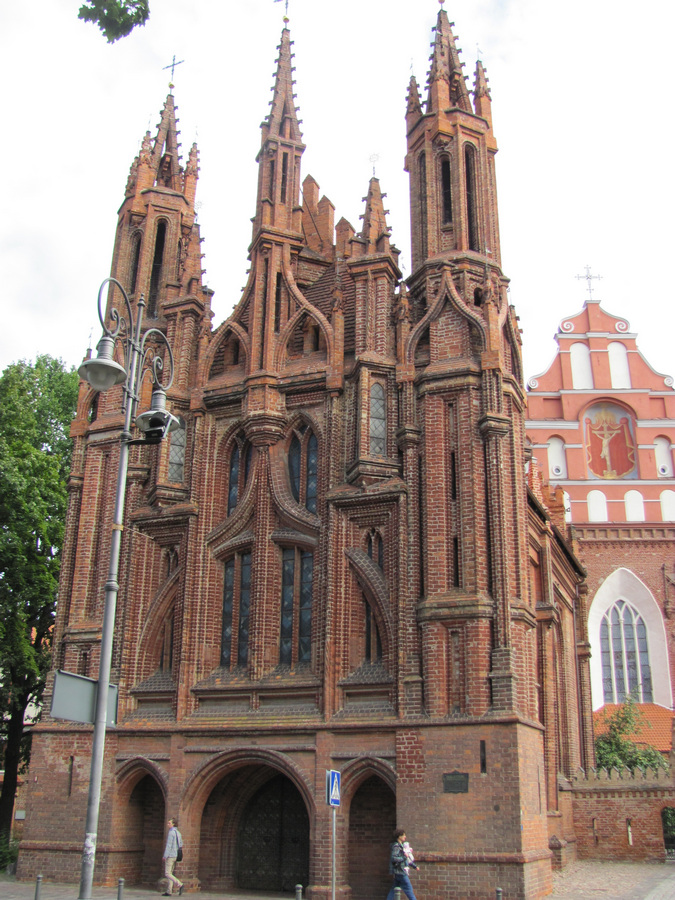
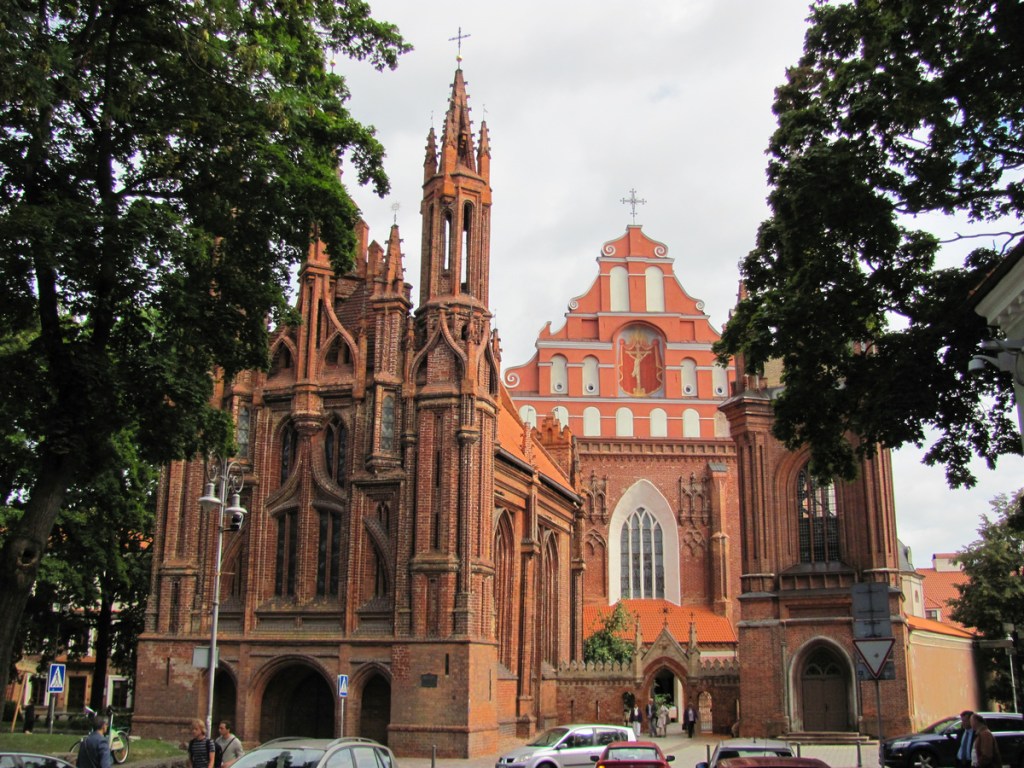
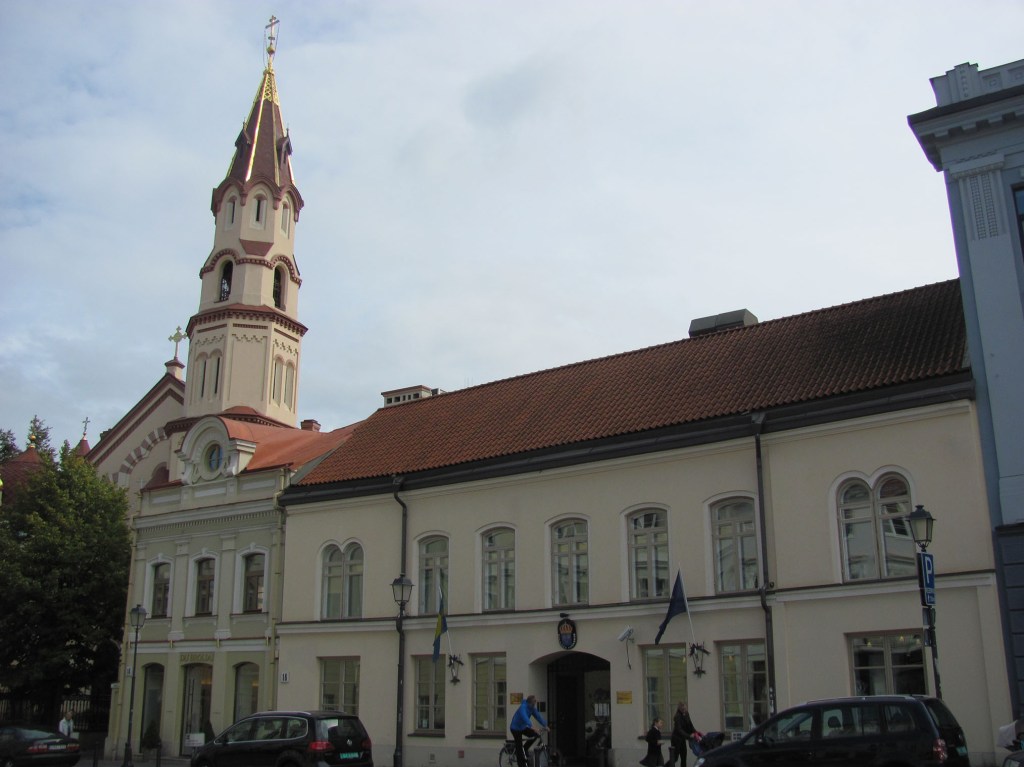
After coming down from the hill, I headed directly to the church of St. Anna, which is one of the most beautiful churches in Vilnius and in all of Lithuania. Too small in size it was a fine example of Gothic architecture. According to legend, when Napoleon conquered these lands, he said that he wanted to take this church in his palm and take it to France. Outside the church seemed bigger than it was described. I had to walk a lot of steps to the side to find a place where my camera could cover it all.
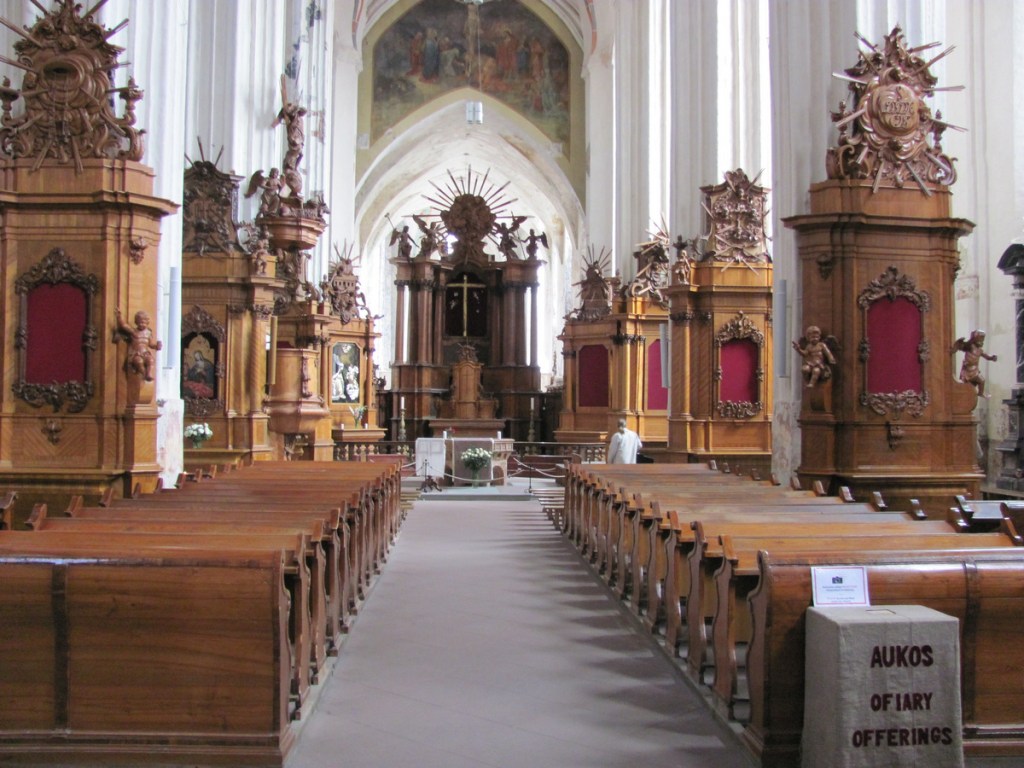
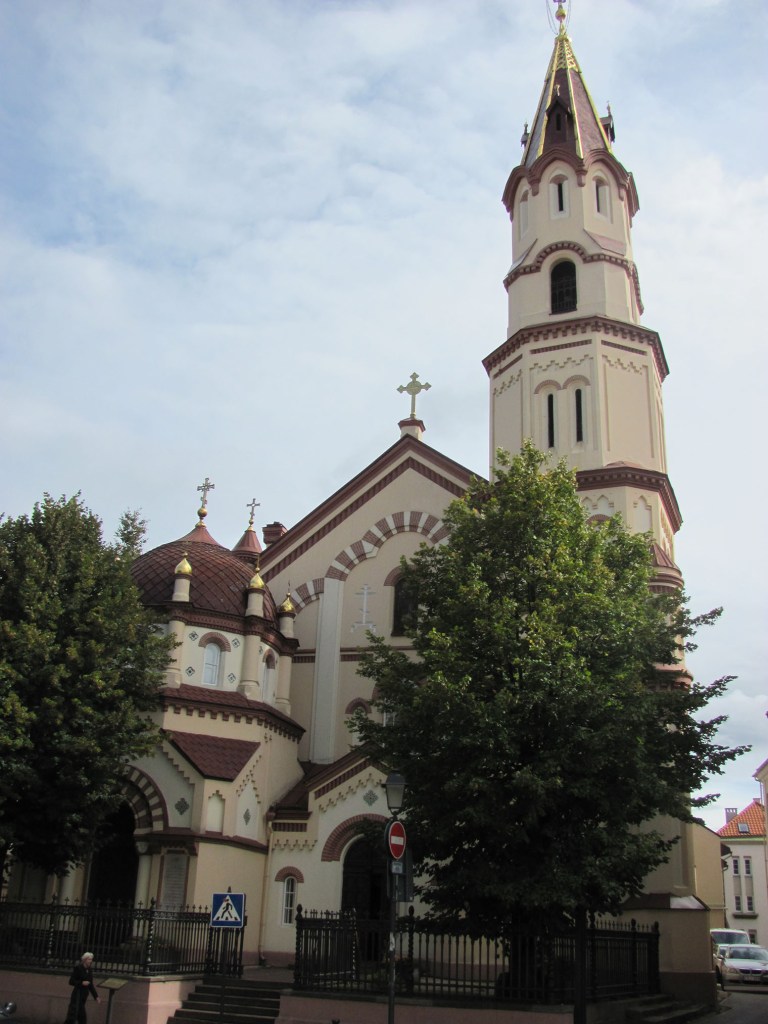
I wanted to see it inside, but it turned out to be closed and until enough money was raised for reconstruction, it would remain that way. Right behind it, there was another open church where I hoped to find an icon of St. Anna, but there was none, so I lit a candle in front of the icon of St. Anna’s daughter – Virgin Mary.


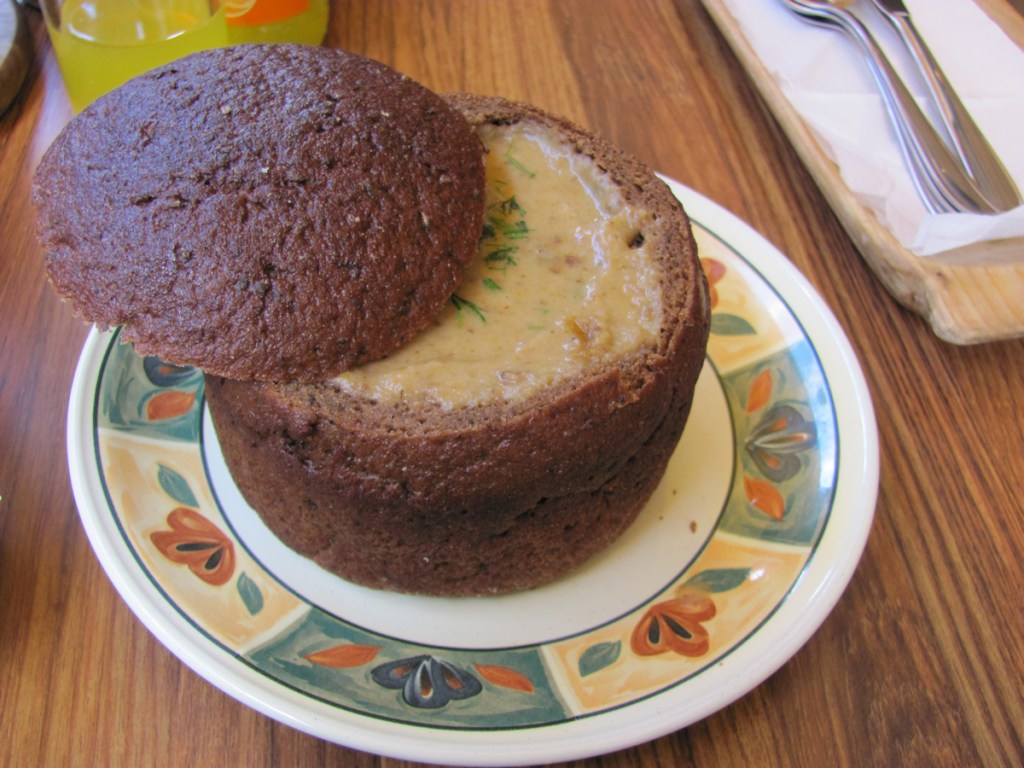
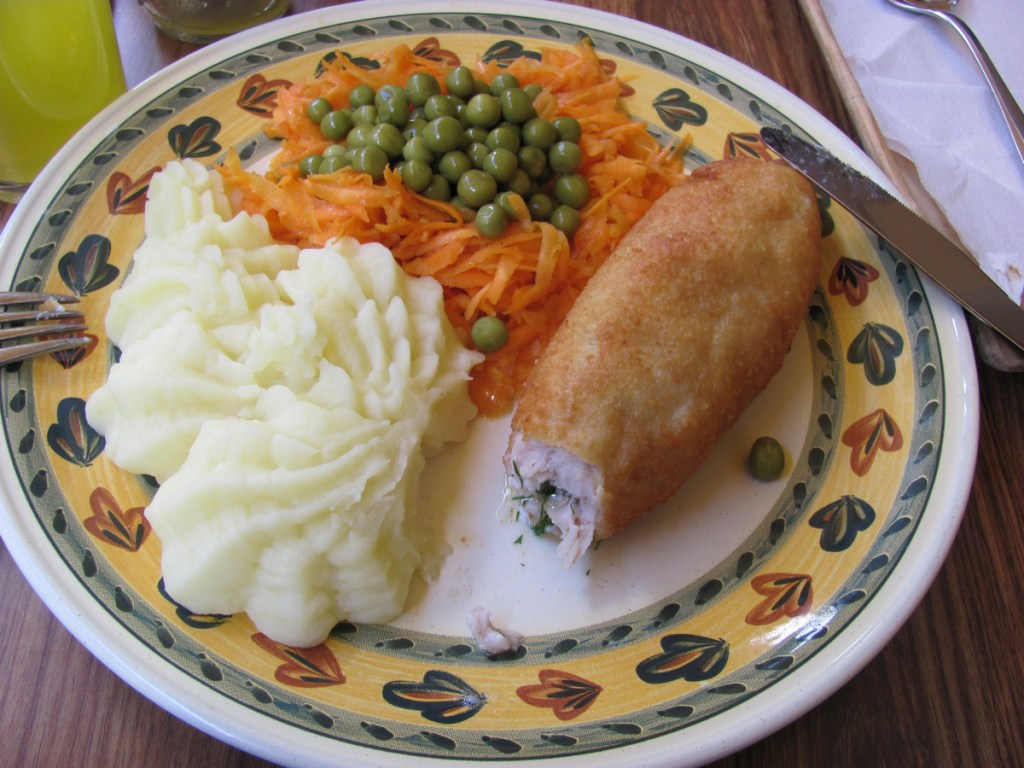

I was already hungry enough, and there were so many cozy restaurants along the way, with terraces laden with flowers, that I had to stop and try their delicious food. And it’s worth it! In addition to sitting at the last free table in one of the best street restaurants, I happened to try excellent Lithuanian cuisine and picture menu. I ordered things I hadn’t eaten before. First I ordered Tyrsiubé duonos kubilelyje su grybais, which was a thick cream soup with mushrooms served in bread. The bread itself was obviously special, it had a hard crust, it was as deep as a little jar, and its upper end was cut off and then put back as a lid. The soup was very tasty, and with it I ate the lid of the bread. I left the rest of the bread, although the inside had absorbed the soup and it was also very tasty. As a second, I got a Kiev Chicken, which was chicken roll stuffed with herb butter served with mashed potatoes, carrot salad and peas. All this with a small bottle of Fanta cost me 24 LTL (13.59 BGN). It was very tasty and totally worth it.
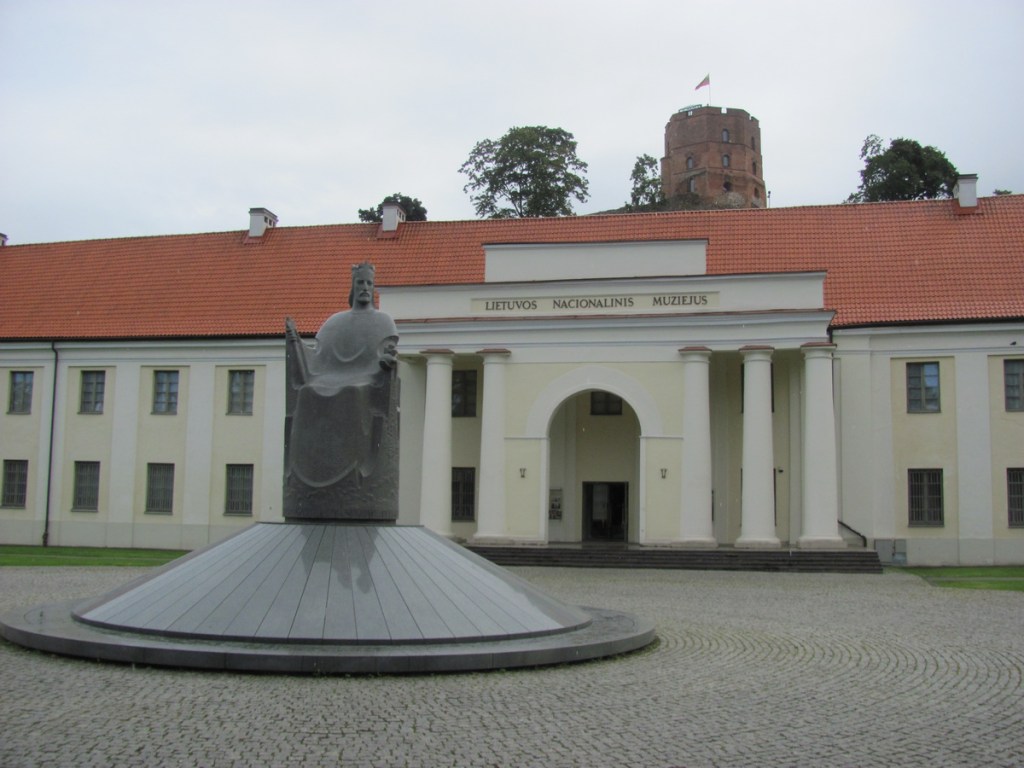
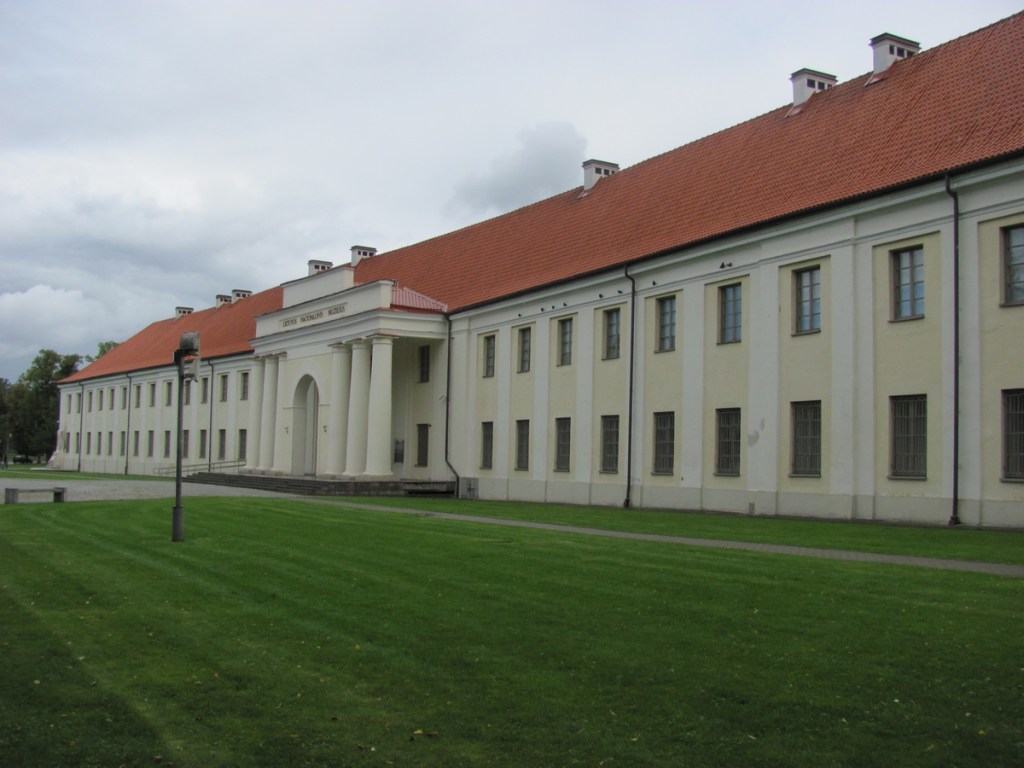
After the good meal, I continued my walk, visiting the National Museum. The entrance was 5 LTL (2.83 leva), and I was most impressed by the second floor, where there was an ethnographic collection of the different parts of the typical rural Lithuanian house. Something like our Bulgarian farmhouse, but each room presented in a separate small hall, laden with objects, with an indication of which one is used for what. The Lithuanian costumes were also very beautiful made of wool.
As for the first floor there were objects from different eras, including an Egyptian sarcophagus, a gift to Lithuania from Egypt. There were more cannons, paintings, but unfortunately it could not be photographed, so the collection will hardly be remembered, but I will remember that in each hall there was an employee of the museum, who politely guided the visitors where to go.

I had prepared to speak more English in Lithuania, as I had read that they did not particularly like Russians, but in fact everyone and everywhere spoke Russian, and less people understood me in English. I also spoke in Russian on the phone when I was called in the afternoon by Ballooning Lithuania (www.ballooning.lt). Already in Bulgaria I had signed up for an hour-long balloon trip, which they had to confirm to me 24 hours before the flight depending on the weather. I had signed up for a morning balloon flight in Trakai on September 6, but the previous day on the Internet they had confirmed to me that there would only be flights in the evening, and again I could choose over Trakai or over Vilnius I wanted to fly. Although I really wanted to see the brick castle from above, the trip in the evening back to Vilnius, where I had booked a hotel, would have made it difficult for me. That’s why I confirmed a flight over the capital city for 6 September in the evening. The probability of having a flight was 50/50. All day the weather was getting better, then it was spoiling and raining. Until the last moment, however, I hoped and crossed my fingers that the flight would be confirmed and the flight would take place, and my dream came true.
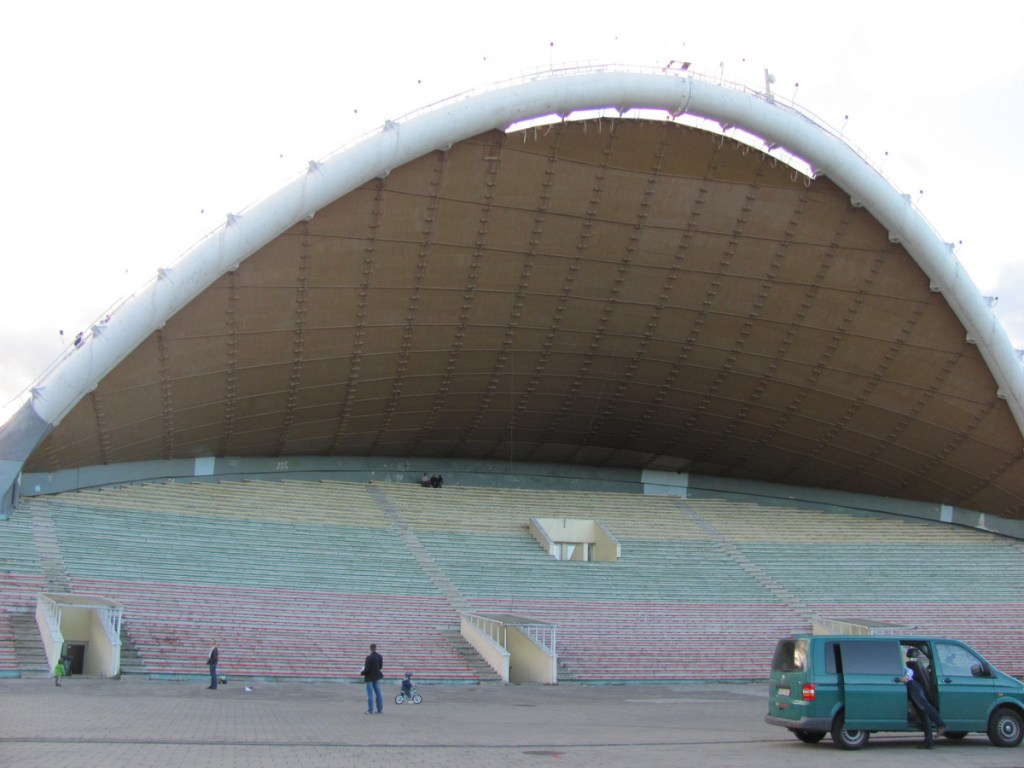
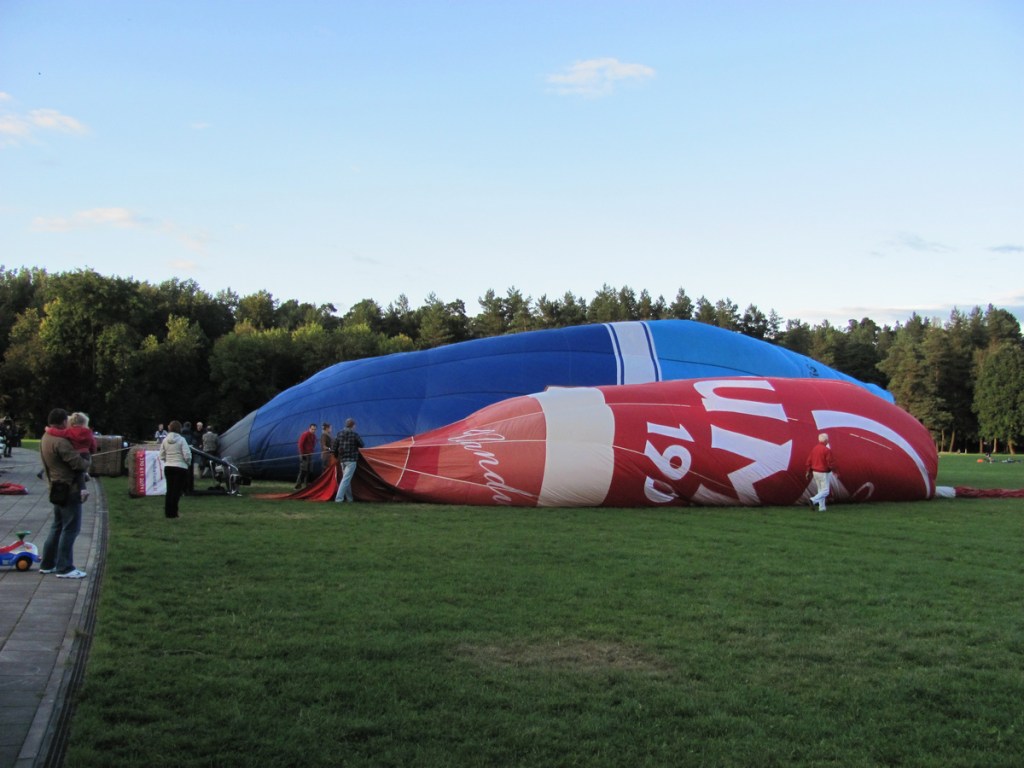
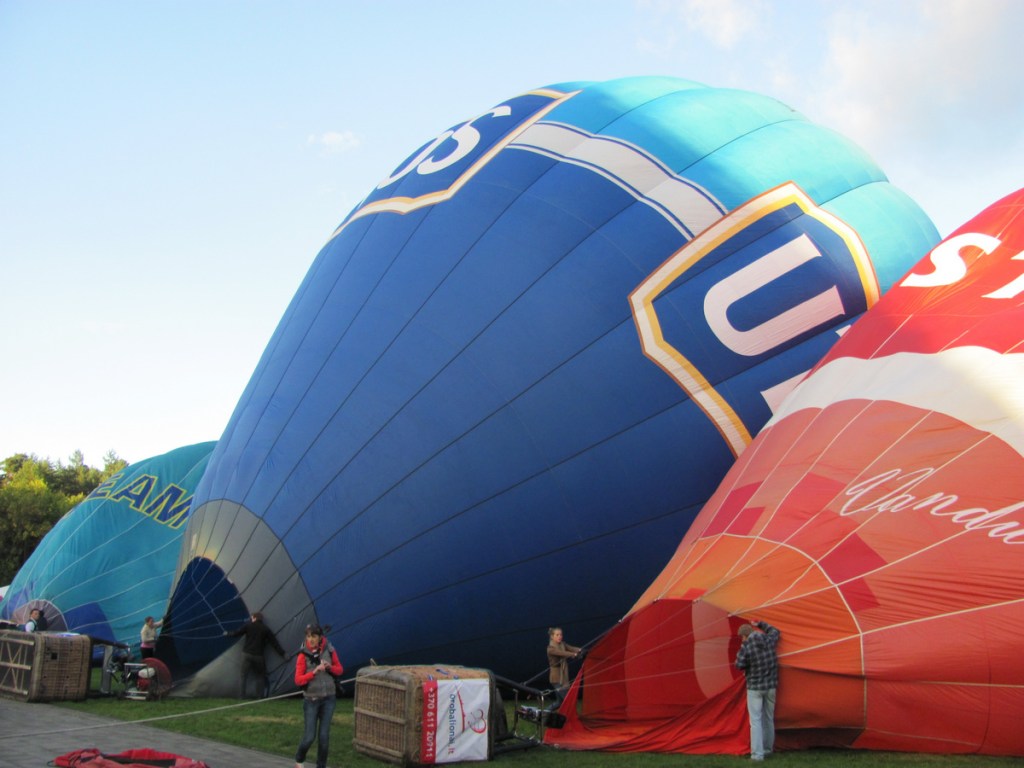

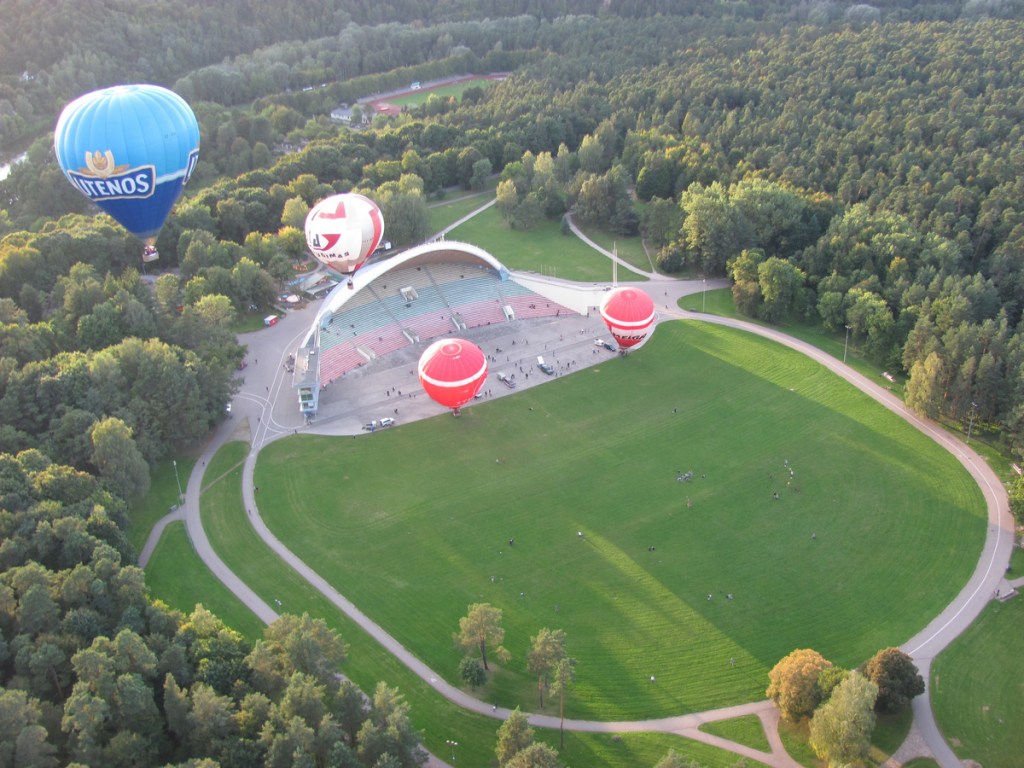
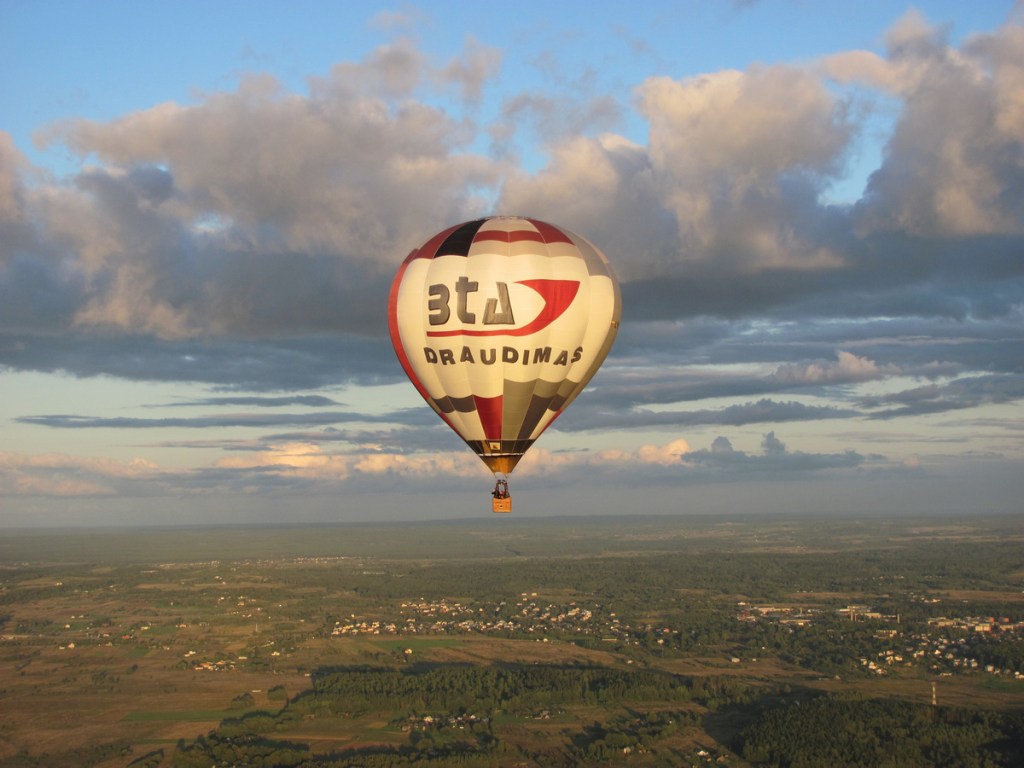
At 17:45 a bus picked me up from the hotel and took me to something like a stadium or at least there was a shed with many seats overlooking a large field. When we arrived, we were told that we had to wait at least another 30 minutes so that the black clouds that had occupied part of the sky could pass. The other part, however, was wonderfully blue and the pilots explained to us, that we were going to fly in that part. Suddenly, a feverish preparation of the balloons began. Various baskets were removed from the trailers, the balloons themselves folded into large sacks, began to stretch to the ground, and then fill with air. Initially, I saw only 5 balloons, but there may have been more. I revolved around “my” yellow balloon, amazed at how big it became.
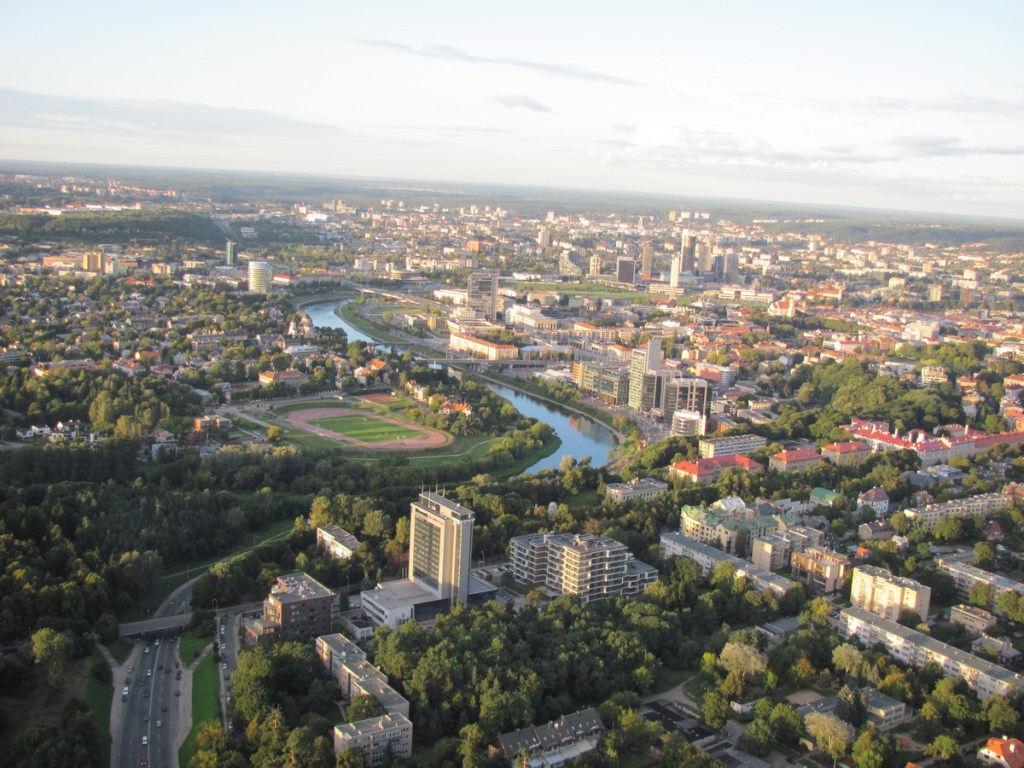
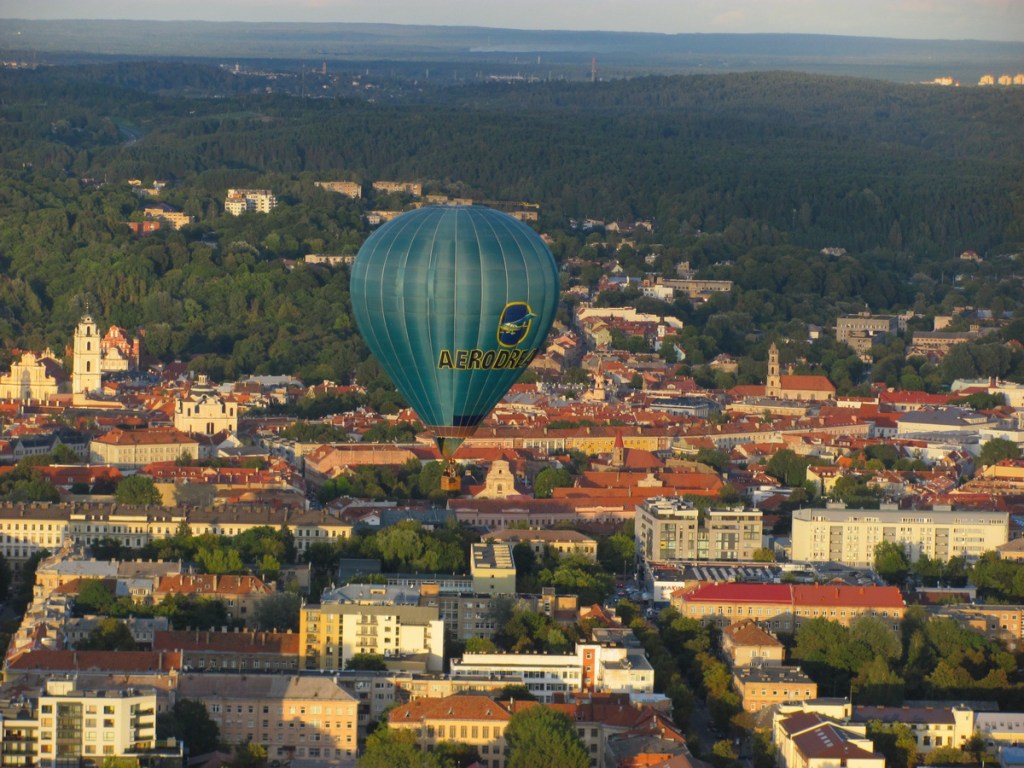
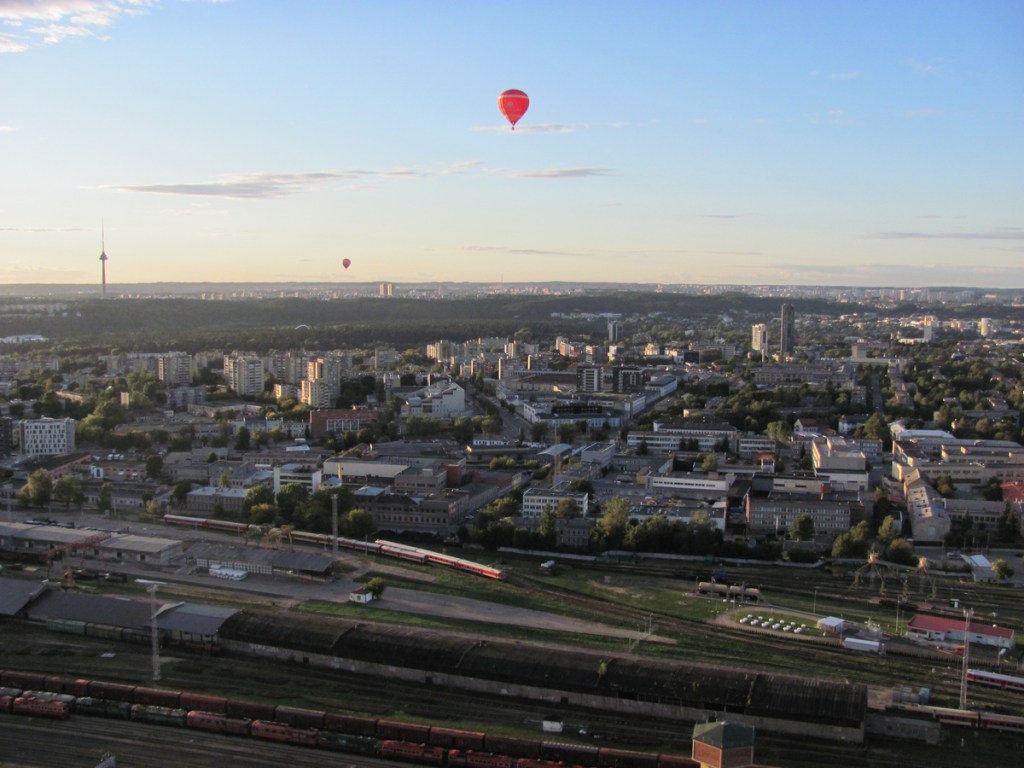
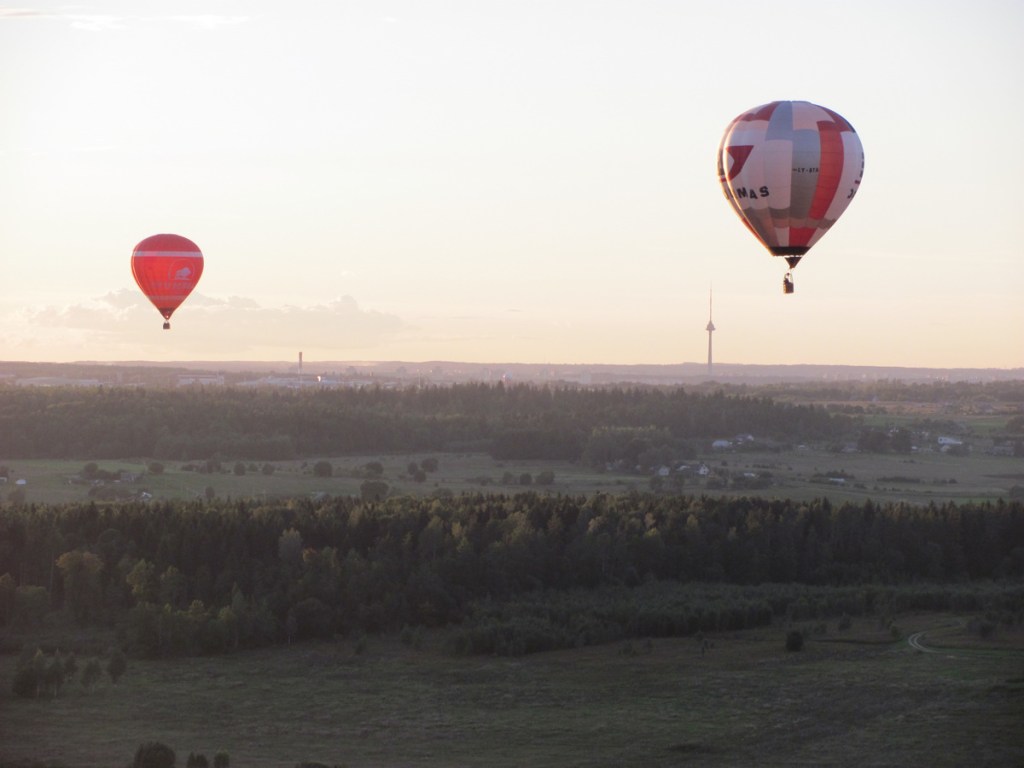
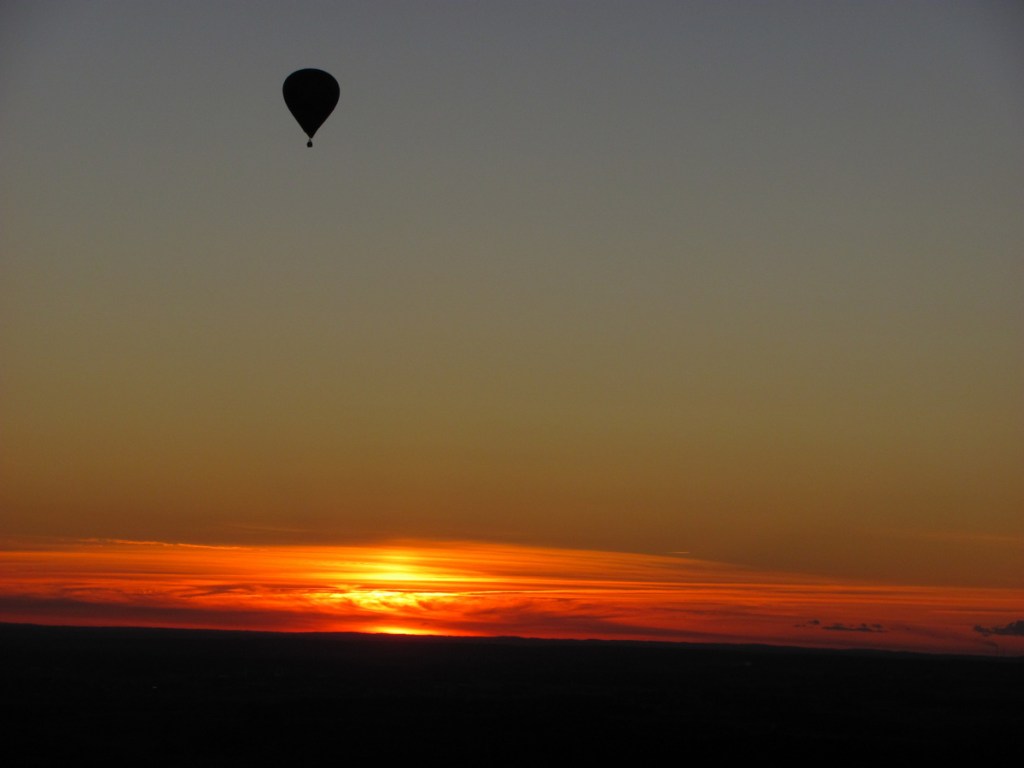
The baskets didn’t have doors just a few slots so I stepped on and went inside. They gave us some hats with visors because a fire was constantly burning and they didn’t want anyone to get burned. The pilot was giving us more and more fire and the balloon smoothly began to separate from the ground, while at the same time his colleague was untying the ropes and we headed over the capital city. We were the second balloon that took off, then the others followed us soon after. My group consisted only of Litvians, but the pilot then explained in Russian especially for me. Throughout the flight, we had to hold on to some basket handles, but my right hand just didn’t stop photographing all the beauty that came from a bird’s eye view. In addition to the landscapes, the other balloons also complemented the photos in a unique way. On our right was the TV tower, and the wind carried us all in the opposite direction to the old town. First they were beautiful houses on the outskirts, then a big freight station, and then we flew over the airport itself in Vilnius, which again seemed small and empty, but this is good especially now, when obviously there were no flights and we could fly over this part. Then our flight continued over more forests and Lithuania seemed to me one of the greenest countries I have ever seen.
From above, everything seemed smaller, but not the forests, which really covered a huge part of the country’s territory. We also flew over different houses, and although we were at great heights, the cows and foals ran away from us, and the dogs did not stop barking at us. The colors of all the balloons were bright, cheerful and colorful, but the animals were obviously not yet accustomed to them and from above we watched how they reacted.
The other interesting thing was that during my flight it was hot. This fire, which was constantly burning over our heads, also warmed us and I got cool all the way when we landed on the ground.
The flight lasted quite a long time, we covered many kilometers and I even wondered if we were still in Lithuania. The pilot told us about his trip in the winter, when they traveled by balloon from Innsbruck to Venice in 5 hours. So I wondered where our one-hour flight would take us, which even lasted a little longer. The pilot himself shared with us, that the wind has helped us and that this year it was the first time he had come so far from Vilnius. However, the sun was beginning to set, and we had to land before that – in the dark it is too dangerous to land and no one did so. The rest of the balloons began to descend and our pilot liked a meadow on which small trees were planted in the countries probably last year. Before landing, the pilot again instructed us to stop all the pictures and hold fast with both hands on two different handles and squeeze, as when landing, always shake. He was right, at the first jolt I closed my eyes and concentrated the force in my hands, it lasted only a few minutes, shaken as if in a strong earthquake, and our basket ended up on the ground, tangling one of its ropes on one of the branches of the young planted tree. Subsequently, we easily disconnected and did not even break a branch, and the balloon once lost the fire giving it air descended on the ground and the pilot began to take it together with his colleague who had brought the jeep and was waiting for us to land.
We all got in the car together, and just before entering Vilnius, the driver pulled over to a meadow and we all were asked to get off. There they opened a bottle of champagne, and since the first people flew in a balloon, landed in the French region of Champagne, now everyone who flies in a balloon for the first time has to drink a glass of champagne. Then, and they started from me, I had to kneel, took a lock of my hair, lightly lit it and immediately flooded it with water. The ceremony was called baptissane, after which I was given a certificate that on 06.09.2012 I flew in a balloon with a pilot Romanas Mikelevicius, I also received the title Duchess of Vilnius. Everyone from the group then alternately knelt and received certificates. Satisfied we all greeted each other, after which the jeep showed us to the appropriate addresses in Vilnius, and I left me in front of the hotel.
I had landed on the ground a long time ago, but happiness seemed to give me wings, and smiling I sent some massages to my beloved ones. . From the window of the hotel room, the view of the city continued to fill my eyes, with the buildings shining beautifully, and the moon was perched over a church and with its half-month smile invited me to photograph it.
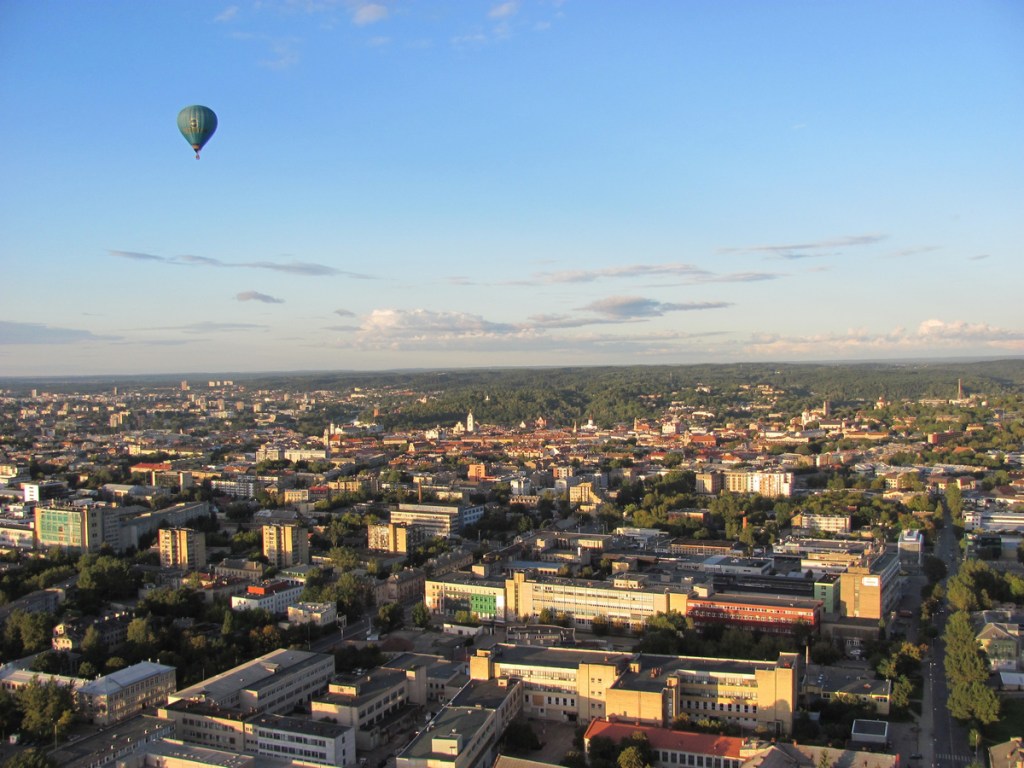






Vilnius is wonderful – from below, from above, from all sides, at any time of the day. Maybe the charm was that it wasn’t that big. After all, only 500,000 people lived in this European capital.
The history of the city was also not so long, compared to some European capitals, including Sofia. The city was first mentioned in 1323, in the letters of Grand Duke of Lithuania Gediminas to German cities, with which he invited Germans and Jews to settle in his capital. Vilnius reached the peak of its development under Grand Duke Sigismund II Augustus, who moved his palace here in 1544. In 1579, Vilnius University was opened, which quickly turned the city into one of the most important cultural centers in the Polish-Lithuanian Commonwealth.
During the Russo-Polish War of 1654-1667, the city was occupied and burned, and the population was killed. The growth of Vilnius was interrupted for a while, but at the end of the 19th century, its population reached 20,000 people, making it one of the largest cities in Northern Europe.
Today, the city is one of the financial centers of the Baltic States, with the Baltic Sea itself standing 321 km to the north. Some call Vilnius the North Jerusalem, as its beautiful churches shone, and at that late hour, from which I barely took my eyes off, which, tired and full of experiences, quickly closed and I slept soundly until about 5 o’clock, when I had to return by plane to Bulgaria.
Lithuania is charming and inspiring, a country with fabulous castles, a lot of greenery and a picturesque capital that won my heart and inspired me to write children’s fairy tales again. You can see one of them on https://triptips.blog/destinations/europe/lithuania/trakai/(opens in a new tab) or just visit this country and immerse yourself in the original of the fairy tale.

GENERAL INFORMATION ABOUT LITHUANIA:
Location: The Republic of Lithuania is located in Northeastern Europe. It is the largest of the three Baltic states (Lithuania, Latvia and Estonia). It is bordered by Latvia to the north, Belarus to the southeast, Poland to the south, the Baltic Sea to the northwest and Russia to the southwest.
Area: 66 300 sq.km
Population: 2 888 558 people (data from 2016)
Official language: Lithuanian.
Climate: temperate continental and marine. Along the coast the average temperatures in January are -2.5 C, and in Vilnius -6. The average temperatures in July along the coast are 16 C, and in Vilnius 17 C.
Time zone: UTC+2
Currency: euro (EUR)
Further information: http://www.lithuania.travel/en-gb/
TRIP TIPS FOR LITHUANIA:
Best time to visit: in spring and summer, when the weather is nice and you can walk around the main attractions
Typical food and drinks: Lithuanian cuisine is mostly associated with products that grow in the north, such as potatoes, beets, vegetables, mushrooms, etc. Be sure to try Tyrsiubé duonos kubilelyje su grybais, which is a thick cream soup with mushrooms served in bread.
Places to visit: Besides the beautiful capital Vilnius, and the charming Trakai Castle located a few kilometers away, other places worth visiting are the second largest city Kaunas with its old town. The third largest city is Klaipeda, which is also the largest port in the country, from here you can easily reach Palanga, which is the best Lithuanian seaside resort.
 TripTips