RIGA – UNEXPECTEDLY BEAUTIFUL

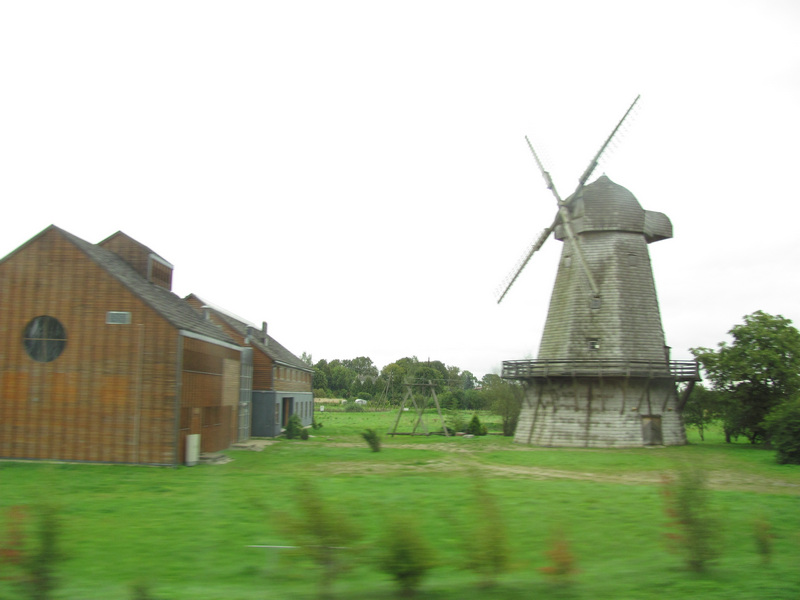
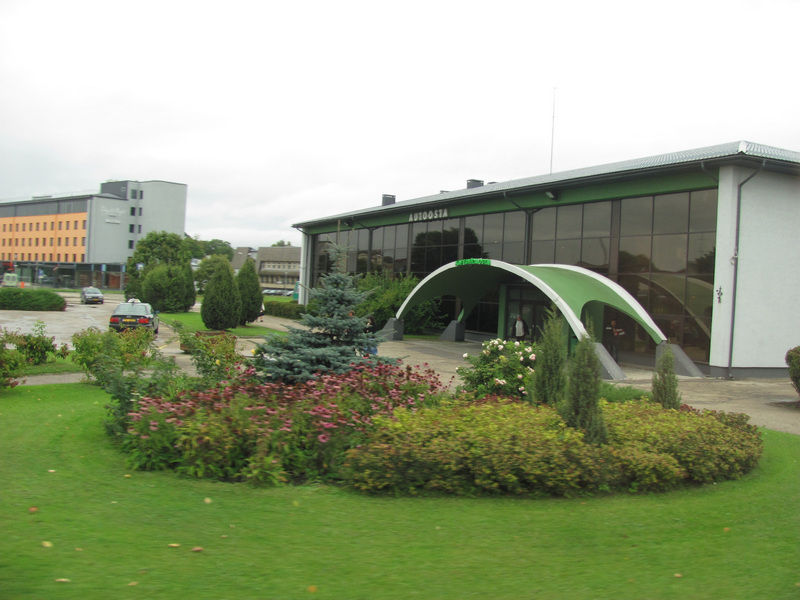
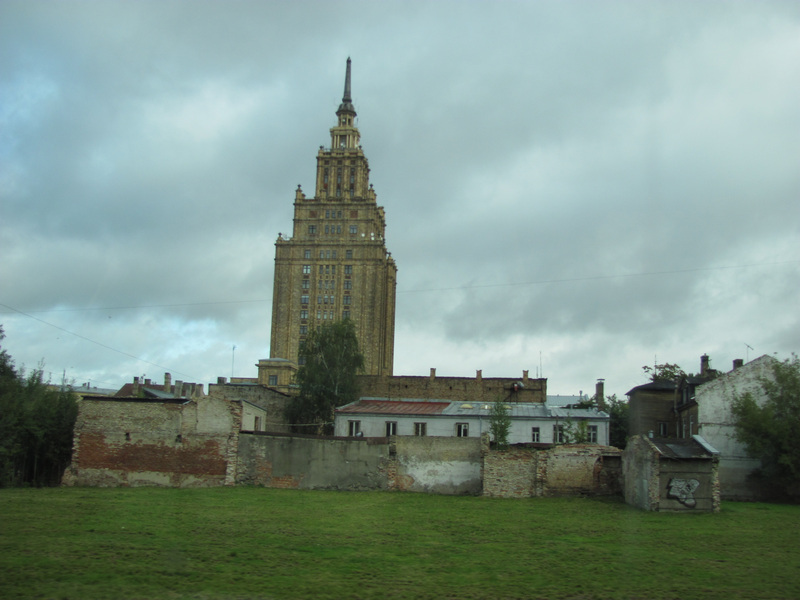


It drizzled outside, and it was difficult to take pictures during my trip by bus from Vilnius, Lithuania to Riga, Latvia. The roads in both countries were very nice, firmly asphalted with clear white stripes, as if I were in Western Europe. Lithuania was actually in the heart of Europe. Just 25 km north of Vilnius was Purnuskes, which was named the Centre of Europe by the National Geographic Institute in France in 1989.
We were approaching Latvia, which differes from its southern Baltic neighbour with its increased German and Swedish influence, while in Lithuania there is strong Polish influence. While the main religion in Lithuania is Roman Catholic, like Poland, in Latvia and Estonia the main religion is Lutheranism. Latvia is bordered by Estonia to the north, Lithuania to the south, with the Baltic Sea in the west, with Russia in the east and Belarus in the southeast.
The history of Latvia begins with the Baltic tribes, which, unlike the Lithuanians, did not unite, but were conquered in the 13th century by the German Knights (Swords Brothers), who had the mission to conquer the Baltic region and spread the Christian religion. German became the official language of the country, and the Germans continued their influence until 1562, when the Poles conquered these territories. Later in 1629, the government was taken from Sweden and they held it until 1721, when the territory became part of Russia. In 1991, Latvia declared its independence from Russia, and in 2004 it became part of the European Union.
At 10:10 we passed a sign with the European flag, on which Latvia was written in large letters.
Gradually, the rain stopped, the sun smiling timidly at the greenery fields, and the grass and trees enthusiastically waved at the sun, aided by the wind, which seemed to get stronger by getting closer to the Baltic sea.
My first impressions of Latvia were that it was also a very green country and seemed to have more farmed land than forests, unlike Lithuania. As we traveled, I realized that in the last 3 days I had not heard a single horn on the streets – whether someone was going slower at the traffic lights or overtaking incorrectly, the other drivers simply considerate of other, and not as it is in Bulgaria, where there is horn-orchestra on the road and by overtaking the oncoming lane someone can hit you from behind. In both Lithuania and Latvia, all cars drove on headlights, which I think was due to the rainy weather rather than a legal regulation. The cars that were driving were new, clean, and in general the roads and drives were of Western standard. The greenery on the road reminded me of the Scandinavian countries.
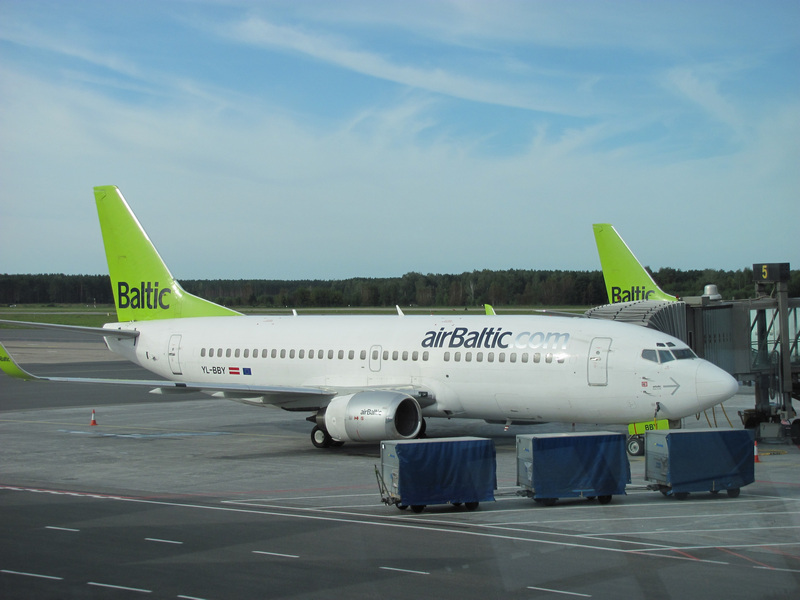
Almost on schedule, our bus arrived at 11:30 am in Riga, its first stop was at the airport (which, by the way, is the largest one in the Baltic countries) and where some of the passengers got off. Then we continued to the main train station, where I got off, and quickly headed to the hotel Monte Cristo, which was very nearby.
It was almost 12:00, but my room was not ready yet and I had to wait until 14:00. Instead of wasting my time waiting, I left my luggage in the luggage compartment of the hotel and went for a walk in the largest city in the Baltic countries – Riga. Here lives 1/3 of the population in the country or over 700,000 people. The city was really bigger and livelier than Vilnius.
The weather, however, was the same – sometimes drizzling, sometimes sunny. It is a pity that neither here nor in Vilnius I saw a rainbow, but why would I stare at the sky, when there were so many beautiful things on earth, especially in this city.
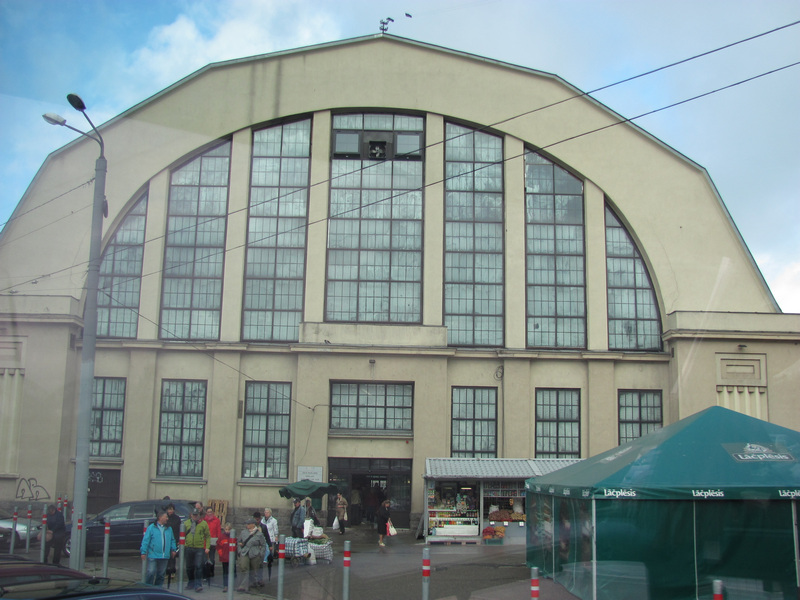


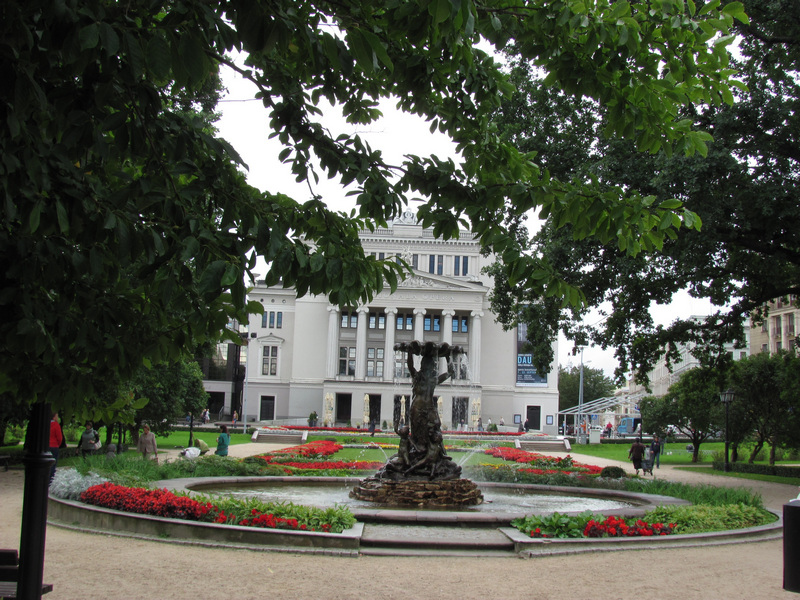

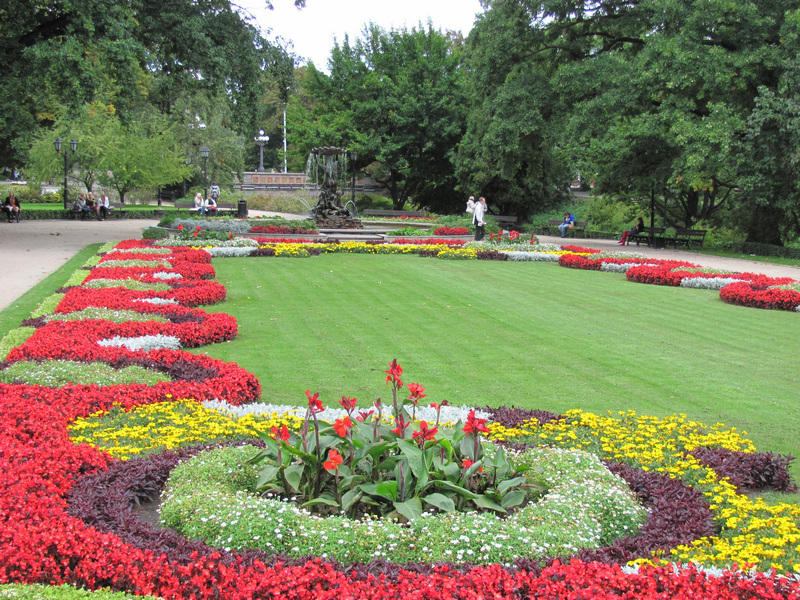


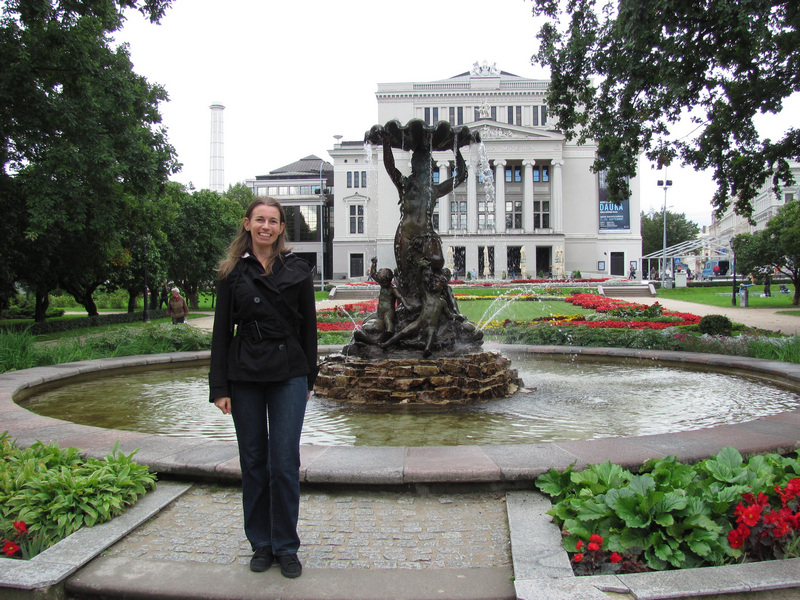
I started the walk from a nearby park located right in front of the opera house. The gardens of the park were dotted with flowers, and further down there was a wonderful fountain where a bride and groom were currently being photographed.
Riga is a port city and is located at the confluence of the Daugava River into the Baltic Sea. The river itself divides the city into two parts – the Old Medieval part (on the eastern side of the river) and the western part. It is this key location that has helped the city thrive over the centuries. Since ancient times, the Viking trade route that connected it with Byzantium has passed through here. Later, the city was a major commercial port of the Russian Empire.
Since its inception, the city has fortified fortresses walls that were preserved and strengthened until 1856, when the government decided to remove them. The large ridges around the walls were turned into canals for boating. Of the 10 km fortress walls, only a small part is preserved, including the last created gate from 1668 and a fortress tower. Today it houses the National Museum.
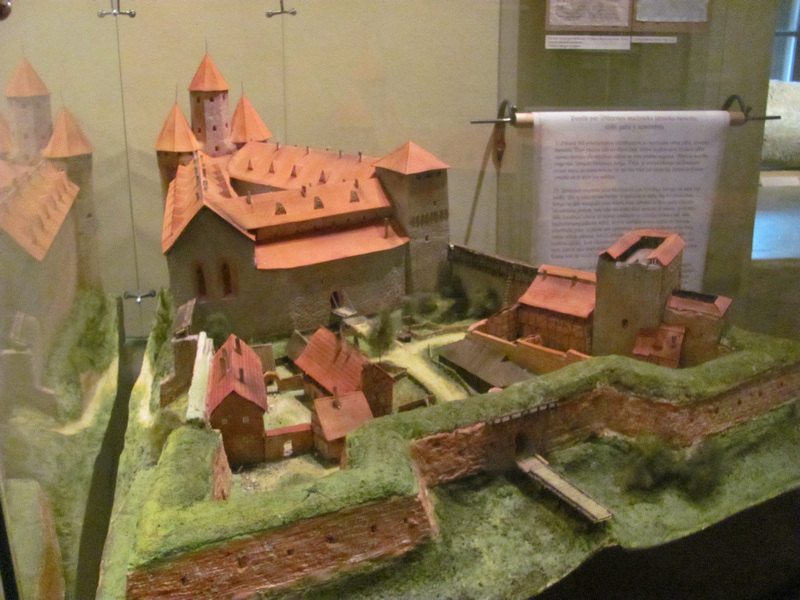
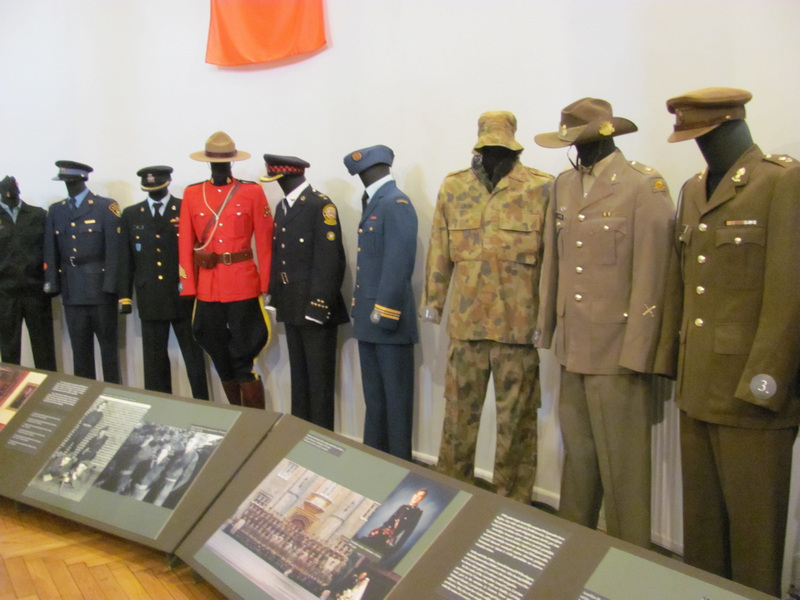
It was this tower that attracted my attention during the walk through the pedestrian cobbled streets of Riga and instead of following my original map, I veered off the route and headed to the ancient tower, today half surrounded by green lianas. I really wanted to climb it and see the city from above. I entered, to ask about the price and it turned out that the entrance was free. The entire tower was turned into a military museum with a rich collection. In addition to being free, you could take pictures inside, which was great. I liked the different uniforms, as well as the large models of military field units (some of the soldiers’ models turned their heads as a visitor passed). Upon entering one of the halls, railway lines were placed on the ground, and visitors stepped on them there was a loud sound of an approaching train, which instinctively made us look around. The only disappointment was that there was no panoramic terrace or window through which to see the city from above. In all the halls the curtains had been lowered, and in the corridors the windows looked directly at the roof of the nearby building, and no panorama is visible.
On the top floor at least there were funny signs and slogans, most of them in Russian. One of them, for example, was: “Строитель! Ты здесь хозяин, а не гость – береги каждби гвоздь!” – “Builder! You are the master here, not a guest – take care of every nail!”
I came out of the brick tower and took pictures of the few sections of the fortress wall, it was beautiful and it is terrible that it was demolished, not in combat, but by decision of the government, which decided to give a different look to the city.
Descending through relatively narrow and curved cobbled streets, I found myself on the Cathedral Square. However, the cathedral itself was all covered in the skeleton and was under construction and renovation. Even so the building was impressive and dates back to 1211, and today it is considered the largest medieval church in the Baltic countries.
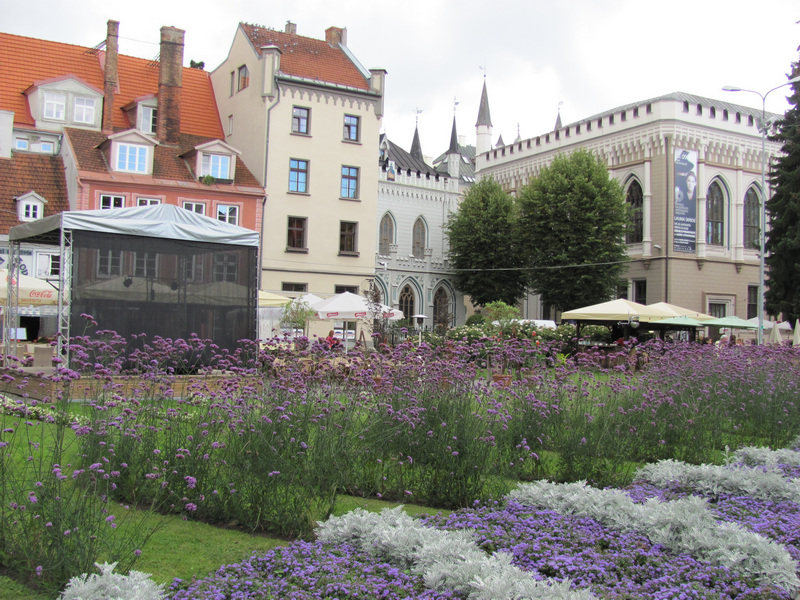
Because of the reconstructions that concealed much of the façade, I focused my photos on the cathedral square, which had many beautiful buildings that, like most in Riga, dated back to the 19th-20th centuries.

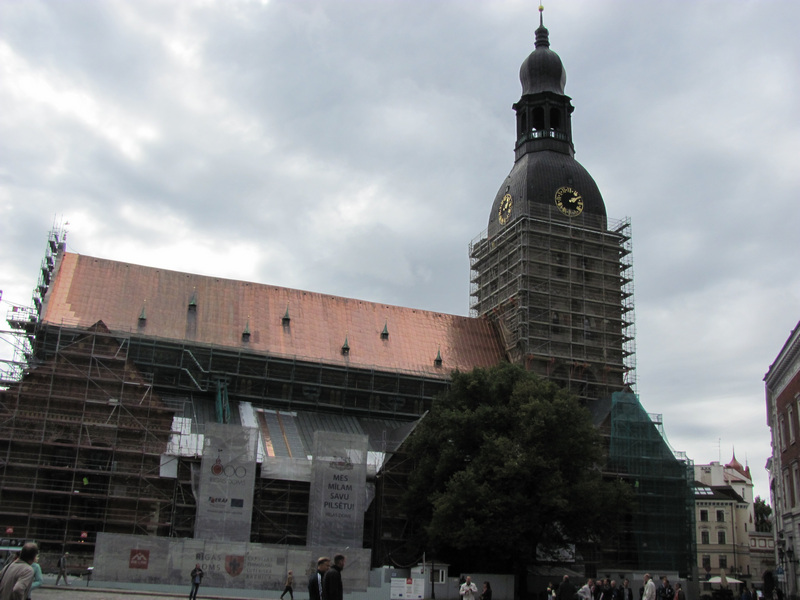
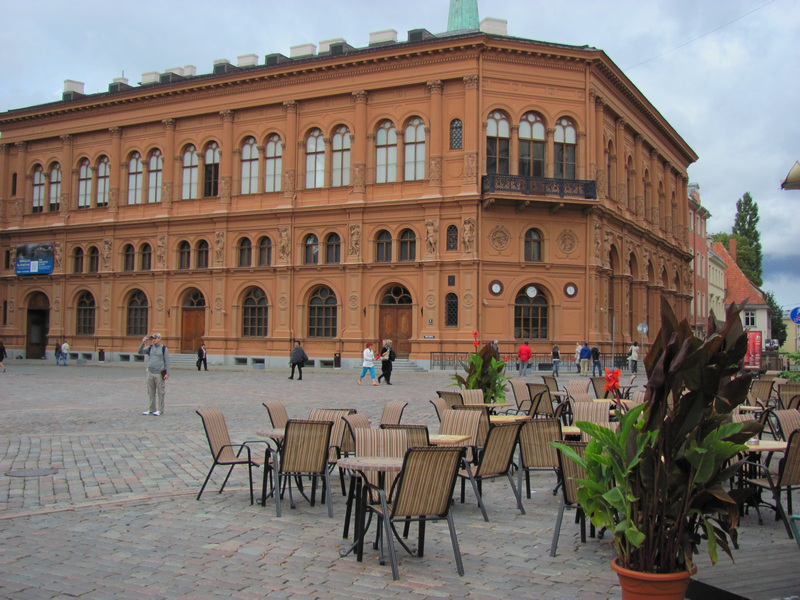
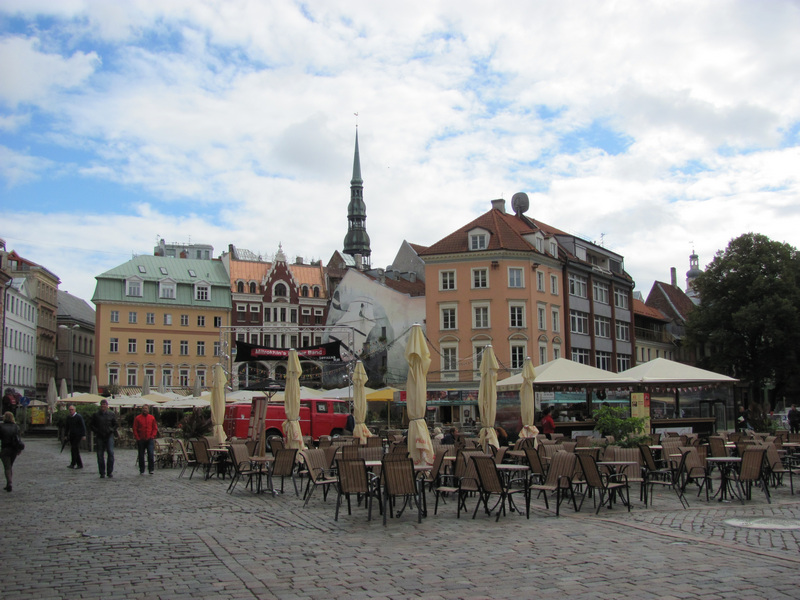
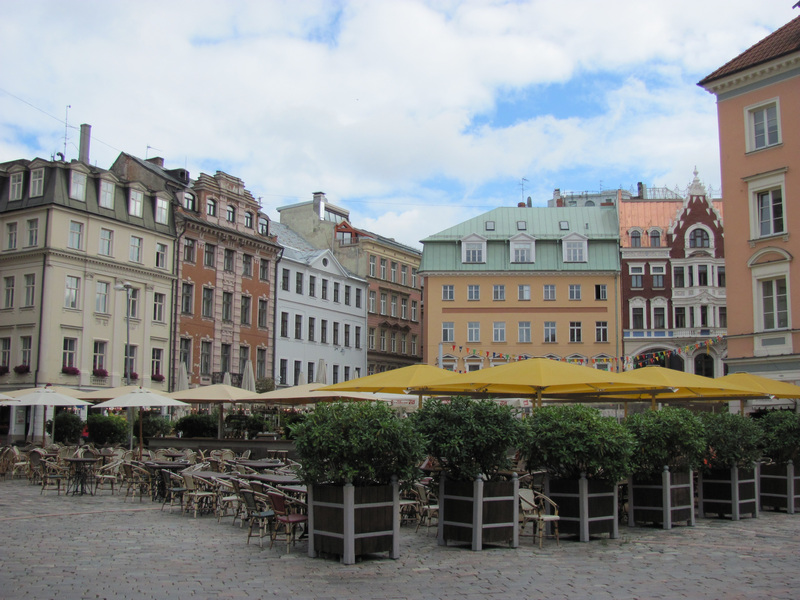


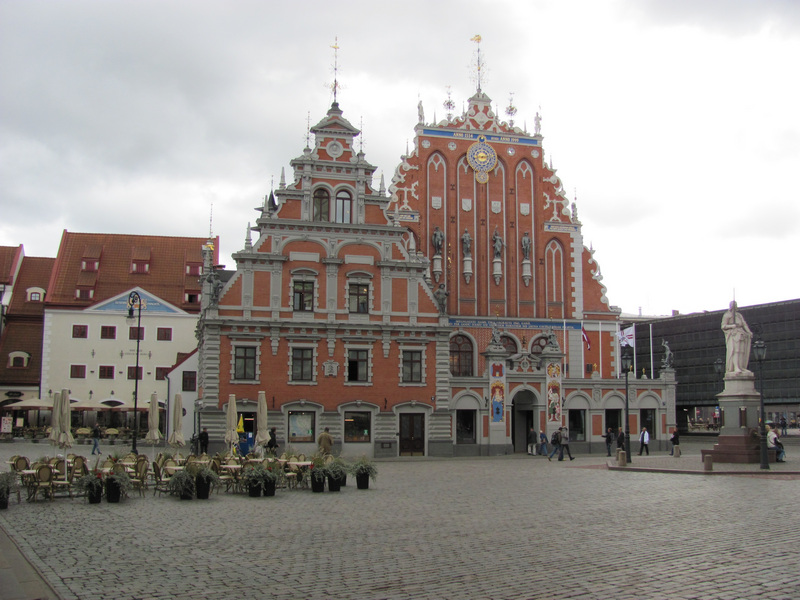
I continued my walk again, and besides the many buildings, I photographed the countless cafes and restaurants that nestled among the beautiful buildings were decorated with flowers and invited passers-by to sit in them.
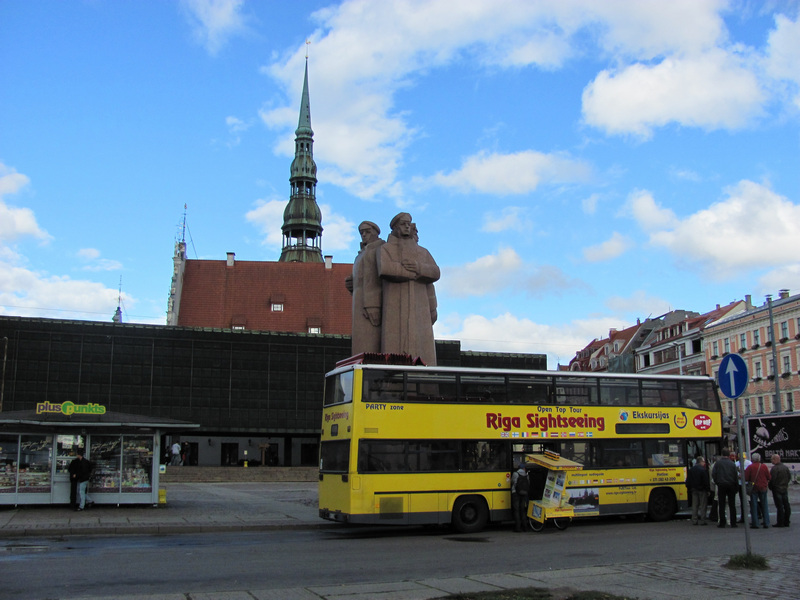
I found the city too interesting to stay in one place. The walk was worth it as I found myself in one of the most beautiful squares I’ve ever seen. The square in front of the town hall was a large market square and until the 19th century – the administrative and economic center of Riga. Especially beautiful were the two houses of the “blackheads” or this was a guild of rich merchants who erected these buildings of jewelry as early as 1334. The buildings were completely destroyed during World War II, but restored to their present glamorous look in 1999.
I can’t imagine how many executions were carried out in this beautiful square, but in their memory as early as 1896 a statue of Roland was erected in the square, who was considered a defender of justice. His statue faces the town hall whose three-story building has a beautiful bell tower at the top. It is in this square that every year a large Christmas tree rises, which I could see now only on the souvenirs.
I passed the beautiful Lutheran church of St. John, then again went to the National Opera House and its beautiful gardens. I already had pictures from here, but I couldn’t help but make new ones. Everything was very pretty and beautiful. The building itself can be compared to the Bulgarian National Theater, but it is white in color with nice columns in front. It was erected in 1863 by the Russian architect Ludwig Bohnstedt. Initially, the building was intended as a city theater of German speakers. Today it houses the Latvian National Ballet, the National Choir and Orchestra.
At the end of the beautiful buildings is an even more beautiful fountain of a woman watering little angels under it. On the right side I passed through a large bridge over a canal through which small boats passed and I found myself in front of the high monument of freedom. It was erected in 1935 and is a 42-meter column, at the top of which there is a 9-meter statue of a woman with raised hands holding 3 stars, symbolizing the three historical regions of Latvia – Latgale, Vidzeme and Curonia with Zemgale, and their unity.
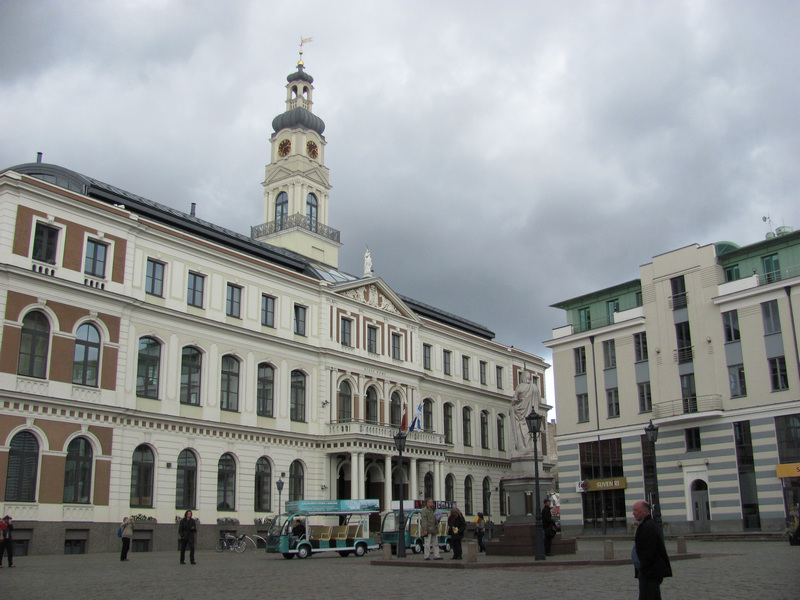

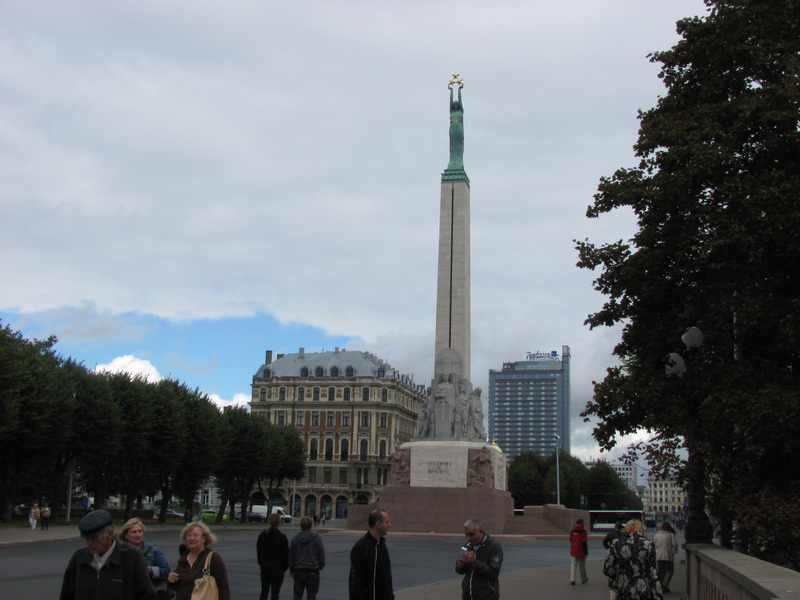


I also headed to the castle of Riga, passing along the way through beautiful rich and lush houses, and even small palaces, again erected by rich trading guilds.
The castle itself was not so impressive. It is located on the banks of the river Davuga and although it was erected as early as 1330 it was completed between 1497 and 1515. After the Swedes conquered it, they made some amendments in 1641, and between the 17th and 19th centuries the fortress wall was completely reconstructed. Today it is the official seat of the President of Latvia, as well as home to several museums.
However, the sun has finally shined and I preferred to walk along the promenade of the Davouga River rather than enter a new museum.
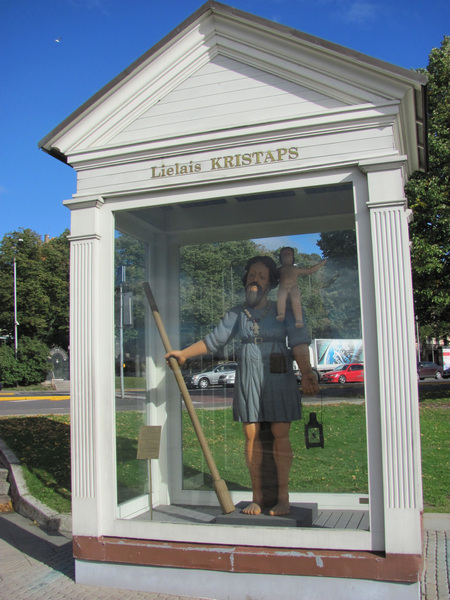
Here I saw and photographed the famous statue of the Great Christopher or as it is called here Lielais Kristaps. It is a small glass house in Greek style, in which stands a statue of a man with a little boy on his shoulders and a staff in his right hand. According to legend, the Great Christopher founded the city of Riga. He helped Jesus cross the river Daugava, then he found a pile of gold coins and used them to erect the city. The original statue is kept in a museum, but the copy was very successful and I made some nice photos.
It was already late afternoon and I was considering a boat trip, which was the perfect end of my three-day excursion tour of Lithuania and Latvia.

GENERAL INFORMATION ABOUT LATVIA:
Location: The Latvian Republic is located in northeastern Europe, bordered by the Baltic Sea and Estonia to the north, to the south by Lithuania, to the east by Russia and Belarus.
Area: 65 791 sq.km
Population: 1 968 957 people (data from 2016)
Official language: Latvian.
Climate: humid-continental and marine, with four distinct seasons.
Time zone: UTC+2
Currency: euro (EUR)
Further information: http://www.latvia.travel/en
TRIP TIPS ABOUT LATVIA:
Best time to visit: in spring and summer, when the weather is nice and you can stroll through the main attractions
Typical food and drink: Latvian cuisine is mostly associated with vegetables and meat, and fish is very popular due to the country’s location on the eastern shore of the Baltic Sea. While you are here, be sure to try the local ships, as well as their vegetable tarts (Sklandrausi).
Places to visit: Besides the beautiful capital Riga, you can also visit Jūrmala, which is the largest seaside resort city in Latvia. For nature lovers, we recommend the Gauja National Park, where among beautiful hills and wooded paths you will be able to reach the ruins of medieval castles. Another medieval and very romantic place is the town of Kuldiga, which is located in western Latvia, in the historical region of Kurzeme. One of the most beautiful castles is the one in Cessis, a city in northern Latvia located in the historical region of Vidzeme.
 TripTips