TOP PLACES TO SEE IN SICILY
author: Ana Boneva


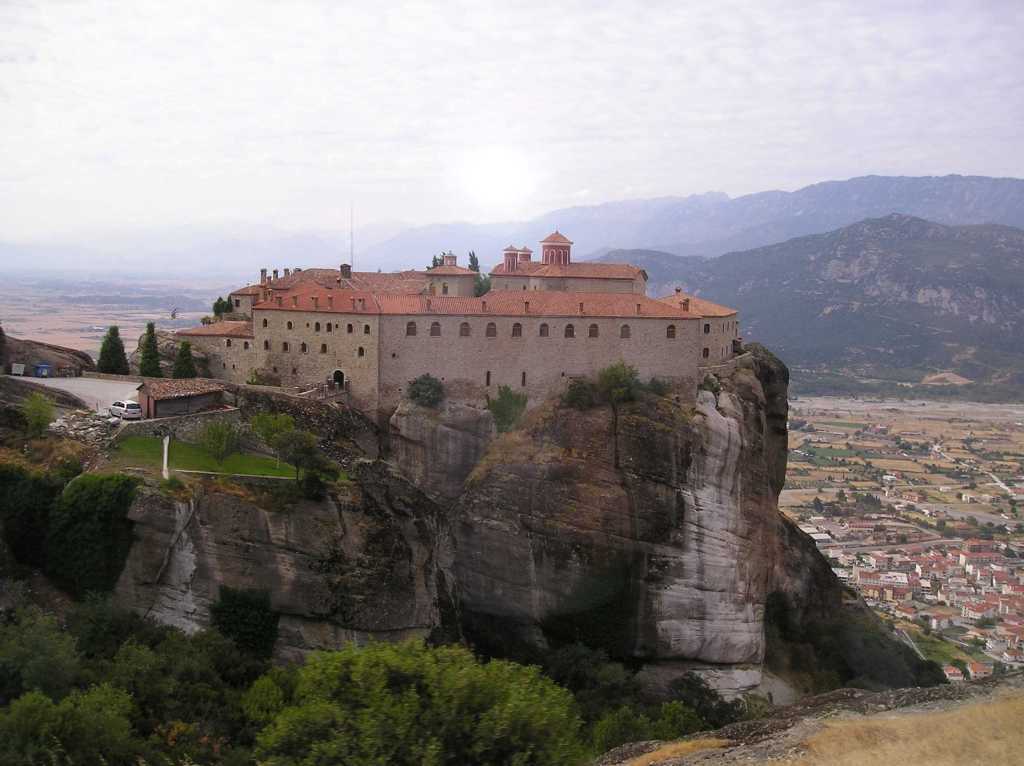
There is a quote, that “many people travel not to get to anywhere but to escape from somewhere”. I decided to try it during my trip to Sicily, trying to escape the loneliness, that I felt at the end of a heartbreaking relationship. In fact, it was loneliness that gave me more time to write poems and children books, but letting it in my life brought me tears and sadness. So I tried to hide from it going to the largest Mediterranean island with my best friend from school, and spending 7 days under the Sicilian sun and Mediterranean waves
With full luggage, where there was no room for loneliness, on 8 September we took a bus to Sicily, as there were not low-cost flights during this time. Gray clouds accompanied us on the way to Greece, but the further south we went, the more the sun’s rays intensified. Towards 10:00 In the morning we crossed the Bulgarian-Greek border, moving along the Struma River (in Greek – Strimon), which was on our left side, and in Bulgaria it was moving from the right of the road.
We stopped and had a walk in Thessaloniki, then we continued towards Mount Olympus, and in the evening we settled in Kalambaka, where the next day we visited the famous Meteora monasteries. The next evening we took the ferry to Sicily and settled in a cabin 722. To be honest, it didn’t look very clean, but at least we managed to get some sleep, in the comfortable bunk beds with private bathroom and toilet. During the trip, the swaying was not felt, but only a slight shaking of the bed, as if they had a water mattress. At 2 a.m. the ferry made a stop on the Greek island of Corfu, but until we get dress and wash our eyes, the ferry had passed the island. Outside, we greeted a few stars and returned back to the cabin for some more sleep.


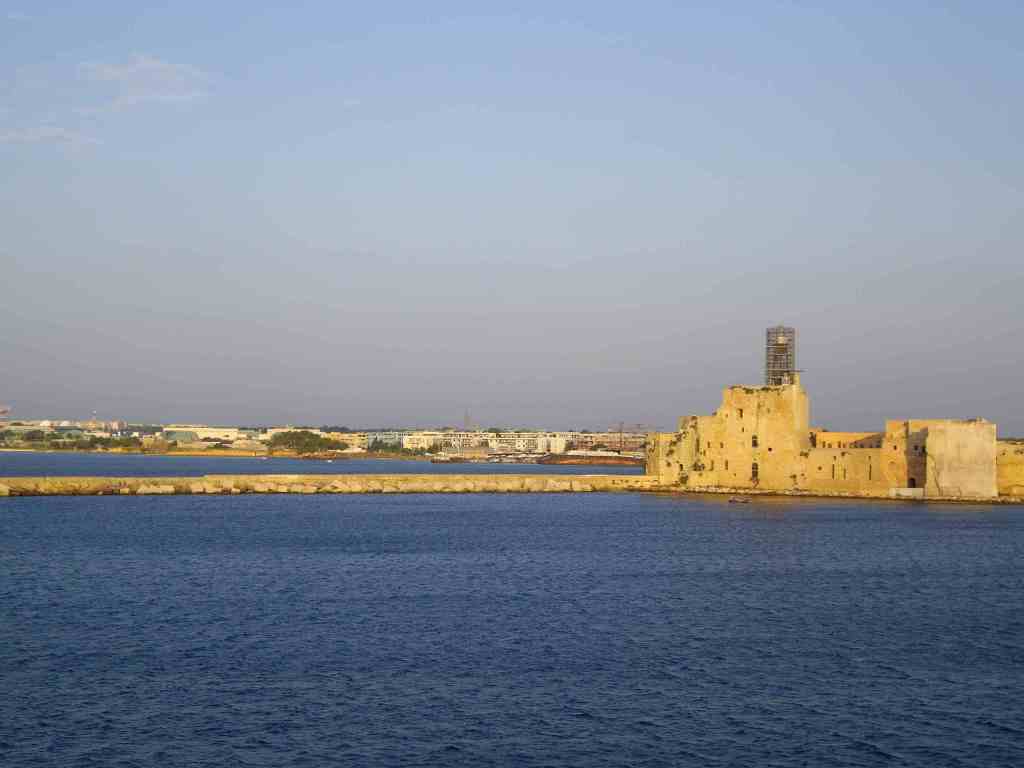
Early in the morning we reached the coast of southern Italy. Our ferry docks in Brindisi, a small town with a long history and a large port in the Adriatic Sea. The guide told us that it was here that the slaves led by Spartacus were preparing to sail, but the Romans stopped them and killed them.
It took us 7 hours to get by bus from the other side of Italy, where we would again reach Sicily by ferry. The long road did not bore us, on the contrary, the landscape of Bela Italia impressed us. We learned that Italy is surrounded by 4 seas – to the east it is caressed by the warm Adriatic Sea, to the south of it are the Ionian and Mediterranean Seas, and to the west is the Tyrrhenian Sea, of which only the sunny sky is bluer. 80% of the territory of this country is mountainous made up of the Alps and the Apennines. In the Alps, for example, there are 70 caves that are open to visitors. One of the most beautiful caves is located on the island of Capri. The longest river in Italy is the Po, followed by the Tiber and Arno.
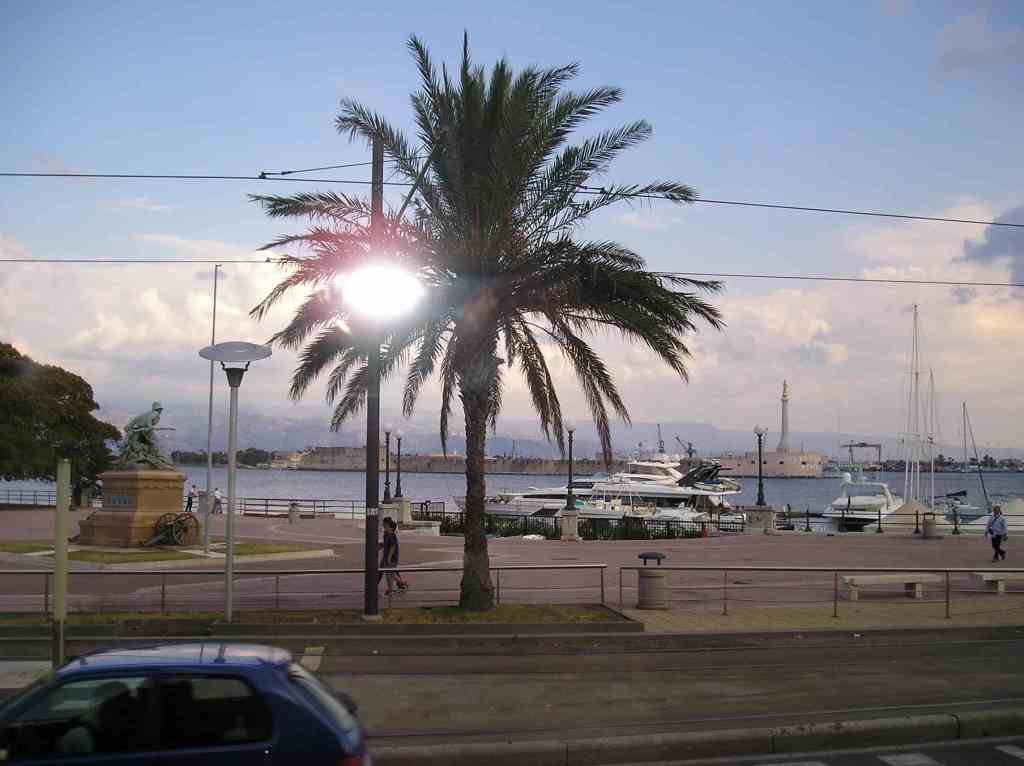
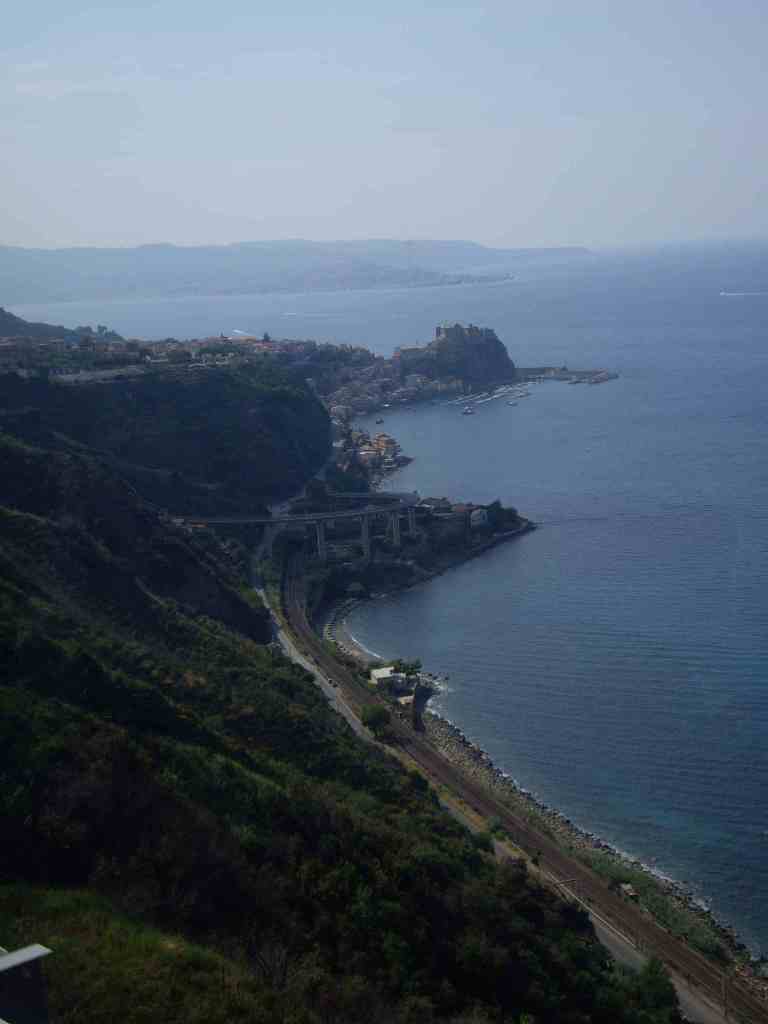
At 10:10 a.m., we saw the sea again, which remained on our left side, and we were moving along the coastal highway. Then the sea appeared on our right side, and it turned out to be the Tyrrhenian Sea, and the previous one was the Ionian Sea. The water looked equally blue. From a small Italian town we took the ferry for 15 minutes and passed through the Strait of Messina. We went down to Messina – the green gate of Sicily. Although Shakespeare was never here, he used the city as a décor for his famous comedy Much Ado About Nothing. And around this city there is something to make noise, along with the large port and crowds of people, greenery and palm trees are revealed.
We only saw Messina from the bus and although the beautiful cathedral impressed us, our bus was in a hurry to the south, where our hotel was located. At least we were able to learn that Messina most often suffered from earthquakes, and was most severely damaged by the bombing of World War II. However, the cathedral was restored along with the 30-meter bell tower, which also had an astronomical clock – the pride of the inhabitants of Messina. For a long time, Messina was the capital of the island and rivaled Palermo, which we were going to visit in a few days.


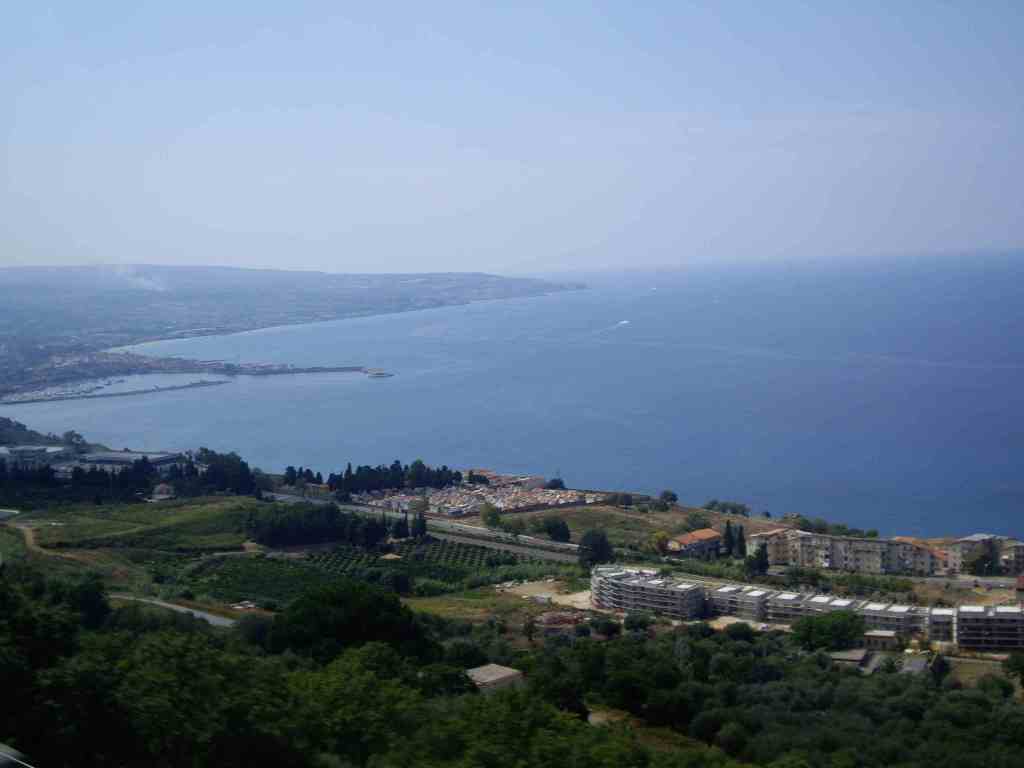


Sicily looked like a triangle and therefore its symbol represents a woman with three legs. Various myths and legends are associated with this island, and according to one of them, three beautiful nymphs who traveled the world and took all the beautiful things they saw, got together, and began to show who had collected the most precious things. Gathering all the beautiful items, an island appeared in the middle of the sea with rich land and all kinds of wonders of the world, united by the three nymphs in one place. This is how beautiful Sicily was born, the island with three corners. The mafia on this island is also legendary, and according to our guide, 80% of the turnover goes as a fee to the mafia,
Sicily is the largest island in the Mediterranean, but it also washes its shores with the Ionian and Teren Seas. It has a population of 5 million inhabitants, but unfortunately illiteracy is quite high. Since the 8th century BC, various people have lived here – Phoenicians, Greeks, Carthaginians, Romans, Byzantines, Vandals, Ostogoths, Muslims and anyone else, who has made claims to this fertile land, called the granary of the Roman Empire.
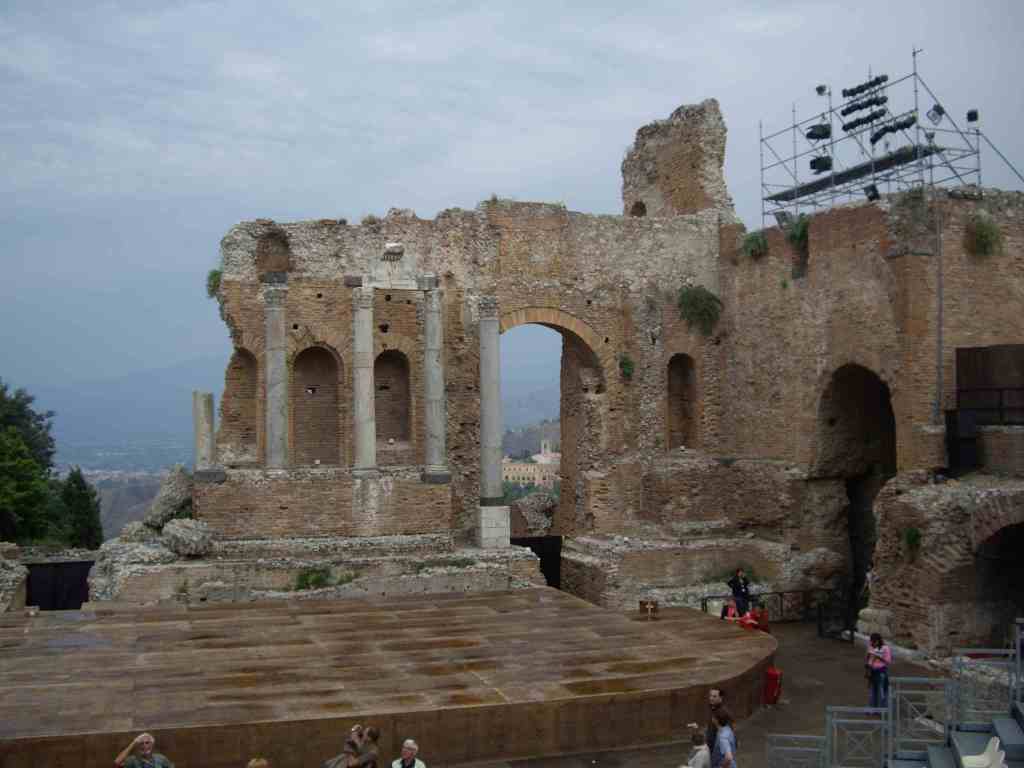
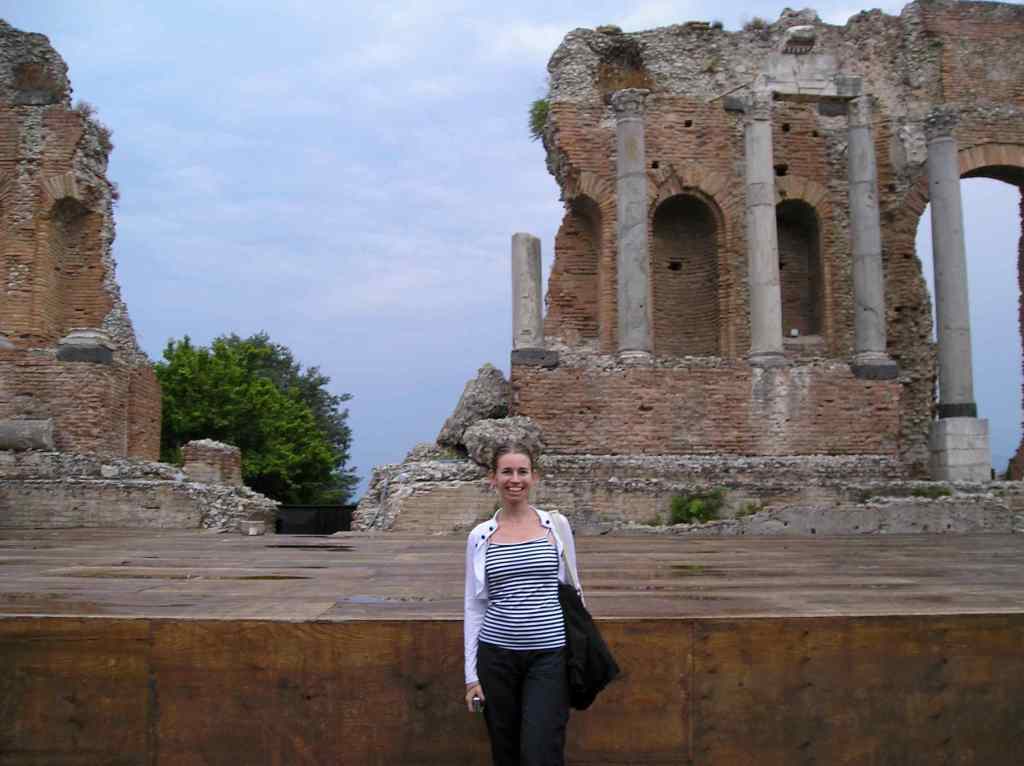
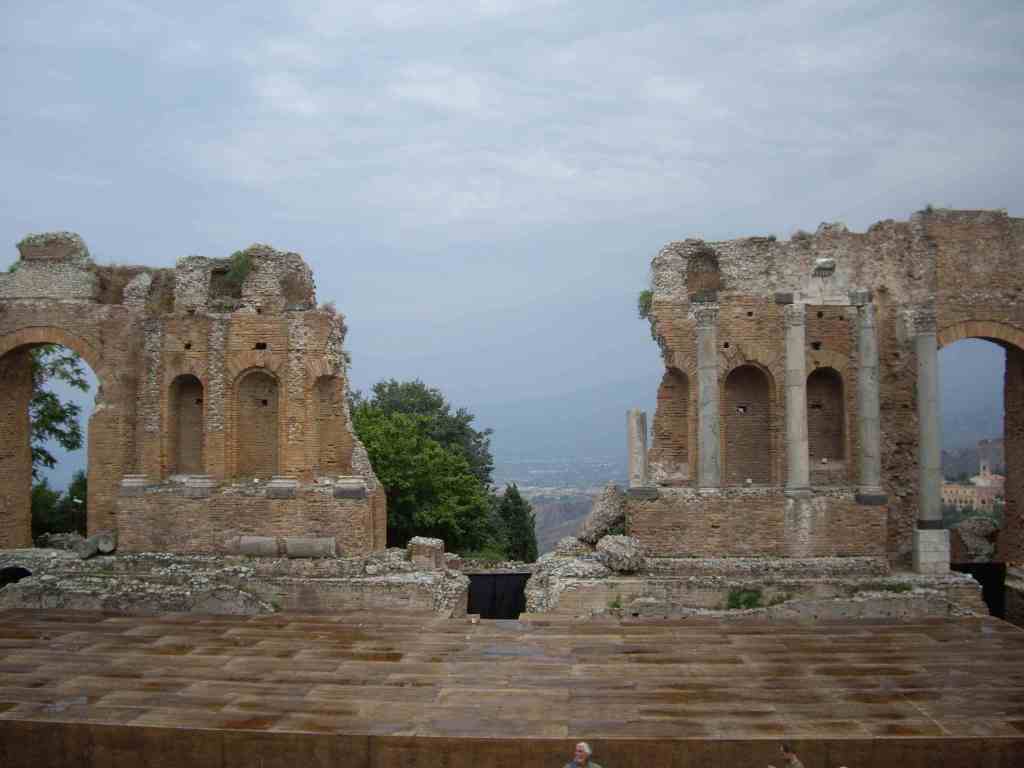
“It’s impossible to have any idea of Italy without seeing Sicily. The key to everything is in Sicily.” Goethe said this in 1787. After him many more famous authors were fascinated by the island (including Oscar Wilde, Maupassant and Alexandre Dumas). Especially from Taormina – the pearl of the Yonnine Sea, which has been a popular tourist destination since the 19th century. We were also impressed by this city, especially the Greek Theater there, which is the second largest on the island and uses the sea on one side and the volcano Etna on the other.
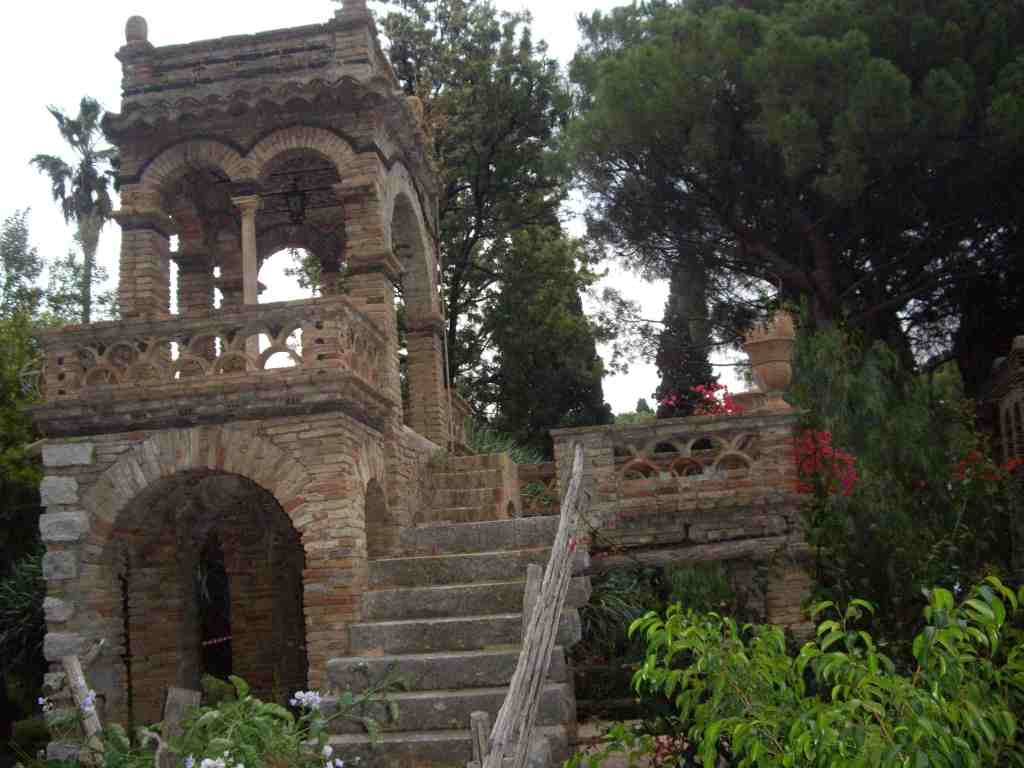
With the local guide, we visited the Messina Gate, the Cathedral and the Botanical Garden in Taormina. I got impressed but then disappointed as it started to rain, and this spoiled our tour around the city. Rain is very rare in Sicily, so we felt privileged. Wet from the rain, at 20:45 we boarded the bus again and late in the evening we checked into the Atlantis Palace Hotel ***.

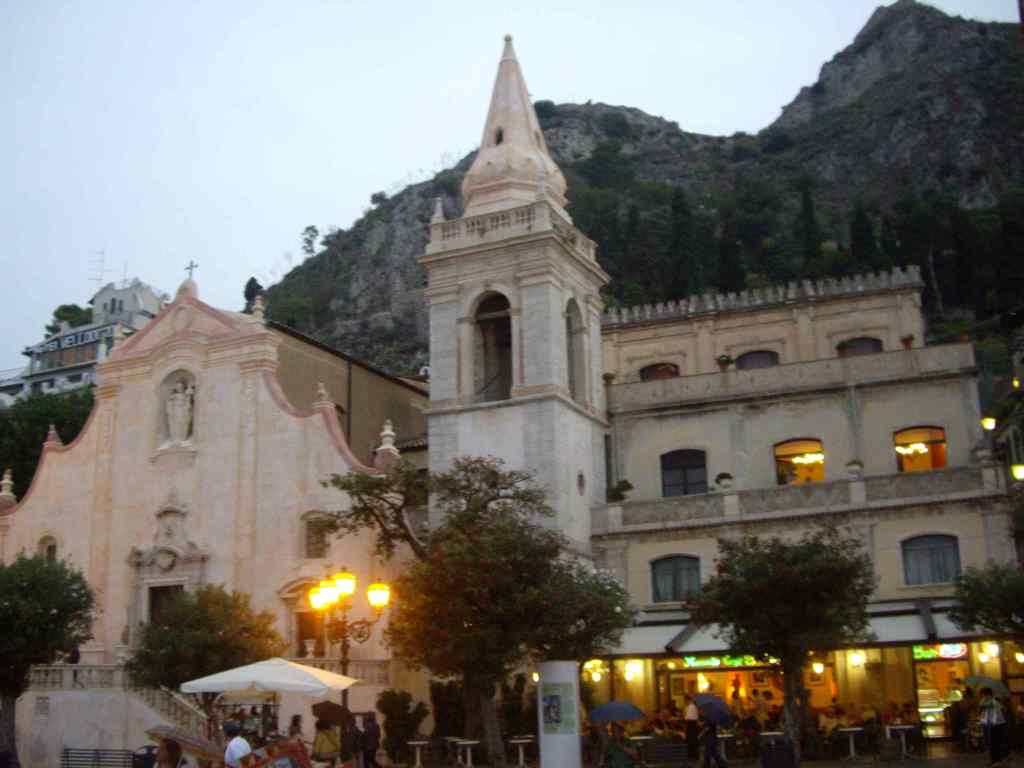
The next day after a hearty breakfast at the hotel, we headed to Syracuse, with the forecast predicting 28 degrees with light clouds for decoration. We moved along the sea and enjoyed the sun. It had sun rays among the sea waves, as if they wanted to wash before all the tourists had arrived, and enjoy their warmth.
We passed small towns, with less well-maintained houses and buildings, where time seemed to have stopped. Not long after, we arrived at the legendary Syracuse, which Cicero described at the time as “the greatest Greek city and the most beautiful of all.” Our guide Anna-Maria again told us in Russian about many legends and stories that happened here.
It is believed that it was in Syracuse that the genius mathematician and inventor Archimedes was born. He left a great legacy in mathematics, physics and technology. He found, for example, the number “pi”, which is equal to 3.14 and also gave a proof of the infinity of natural numbers. In physics, Archimedes’ law states that “every body immersed in a liquid lightens as much as the weight of the fluid pushed out of it. According to legend, Archimedes discovered this law while lying in a warm bath, suddenly rejoiced and ran naked through the streets of Syracuse. Another famous statement of Archimedes says: “Give me a fulcrum and a lever long enough and I will lift the earth!” There are many more things that can be said about Archimedes, but our guide spared them, and told us more about the Greek theatre in Syracuse, which can accommodate up to 15000 spectators. It is interesting that the audience of the time was as absorbed as today’s audience at football matches.

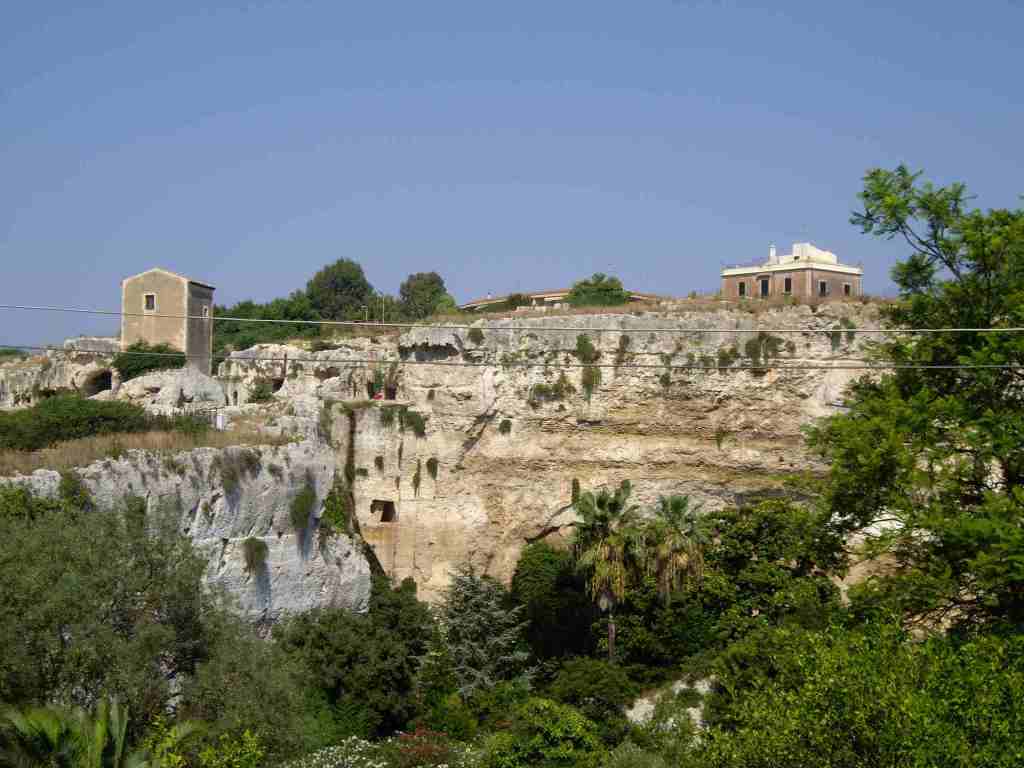
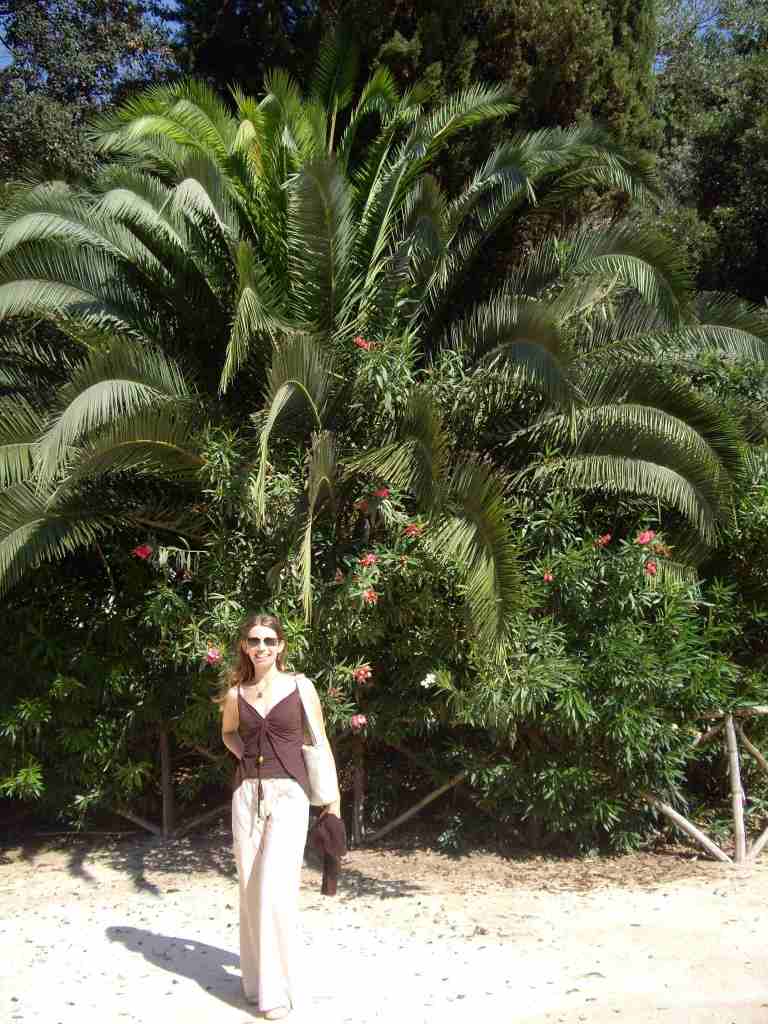
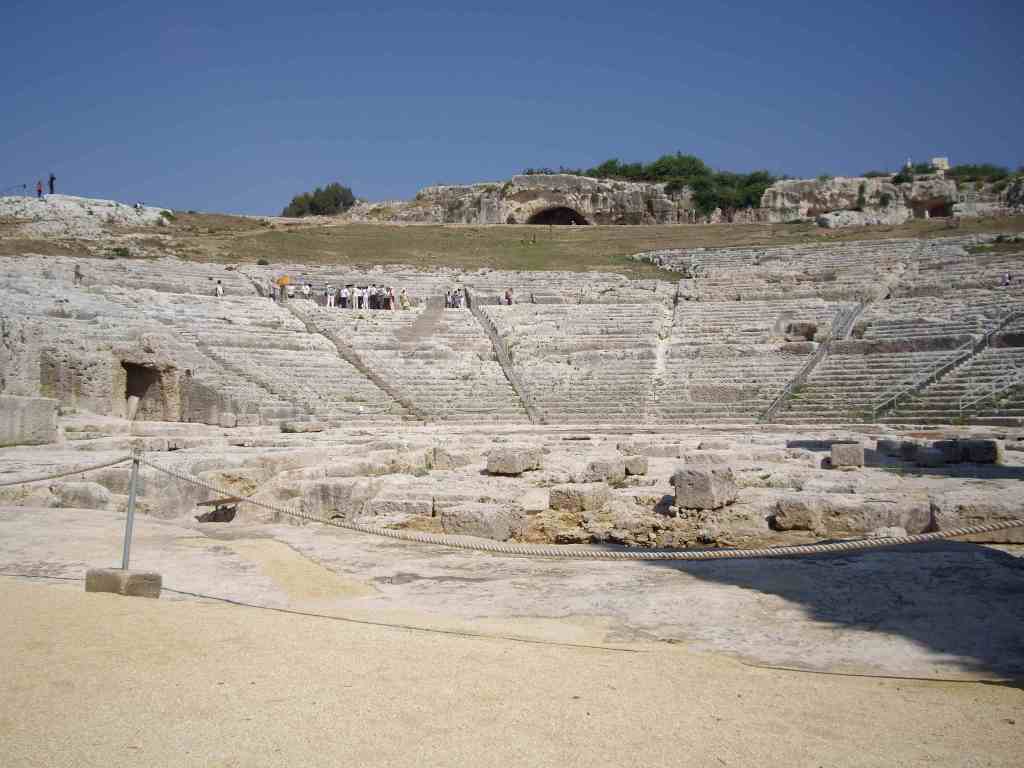


Outside the amphitheater there were many palm trees and flowers, just like a botanical garden, which led us to a large and high cave. It was known as the Ear of Dionysius, this cave has excellent acoustics. It is called the ear because it resembles a human ear, and the tyrant Dionysius, who ruled Syracuse years ago, imprisoned prisoners here. However, the acoustics were so good that he could hear every their conversation. Outside there are also ruins of a Roman amphitheater, which was actually covered. This ended our walk in the Archaeological Park, after which our bus took us to the city center.
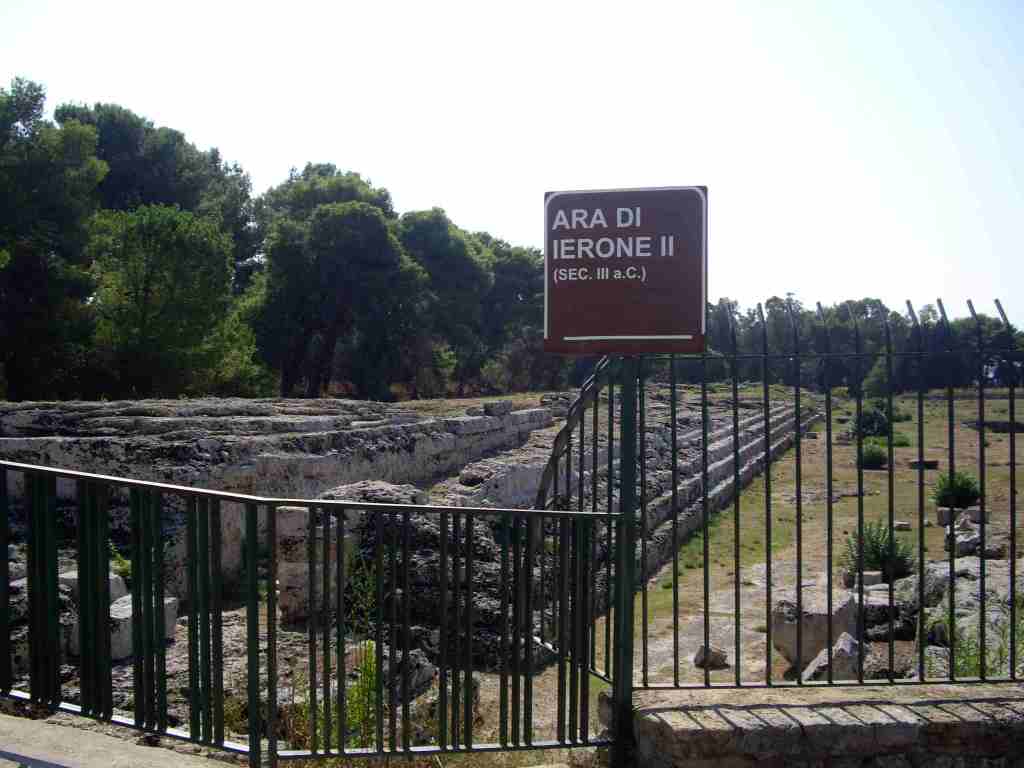


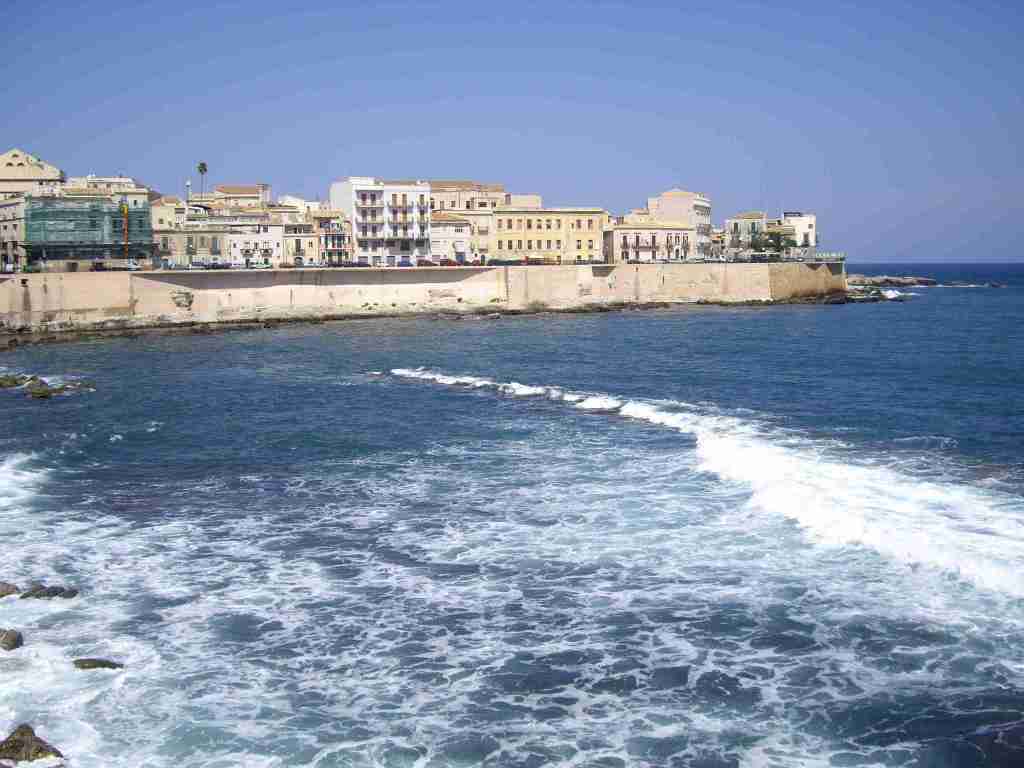
We walked to the famous Cathedral of St. Lucia and from there to the shore where the fountain is located. It turned out that this was not the sea, but a freshwater lake, surrounded by a wonderful legend. According to it, at the time a nymph and a young man fell in love. She was a nymph and he was a man, so they asked Zeus for permission to marry. However, he said a firm NO, which did not dissuade the lovers. The nymph asked Artemis to turn her into a lake, and the young man gave gifts to Poseidon to turn him into a river that flowed into the lake and so the two souls in love were united forever.
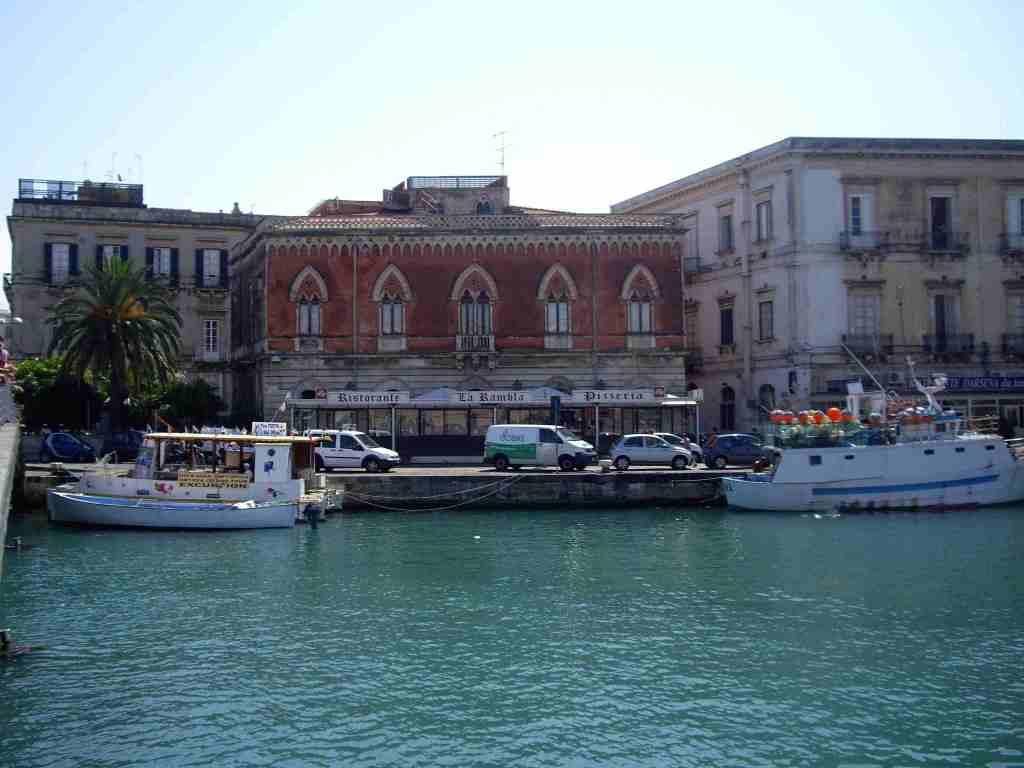
A beautiful fortress wall encircled the shore, but since from 13:00 to 16:00 there is a mandatory siesta, we were not able to see it from the inside, but only took pictures of the closed doors. Syracuse really impressed me with its history and cultural monuments. I will not forget the sweet ice cream, whose balls were bigger than the cone and it is pure luck to eat it without getting dripping. We also enjoyed the Aricino, which we ate on the promenade and is a fried rice ball stuffed with minced meat and Sicilian cheese.




At 14:30 we again took the bus to Catania. Sicily impressed and inspired me greatly. I continued to write in the bus some poems.
How to fight my heart
as it gives me life,
how to erase you out,
without cutting the veins of my love.
How can I stop the thoughts
born of warm feelings,
as if I can hold my breath
and continue living.

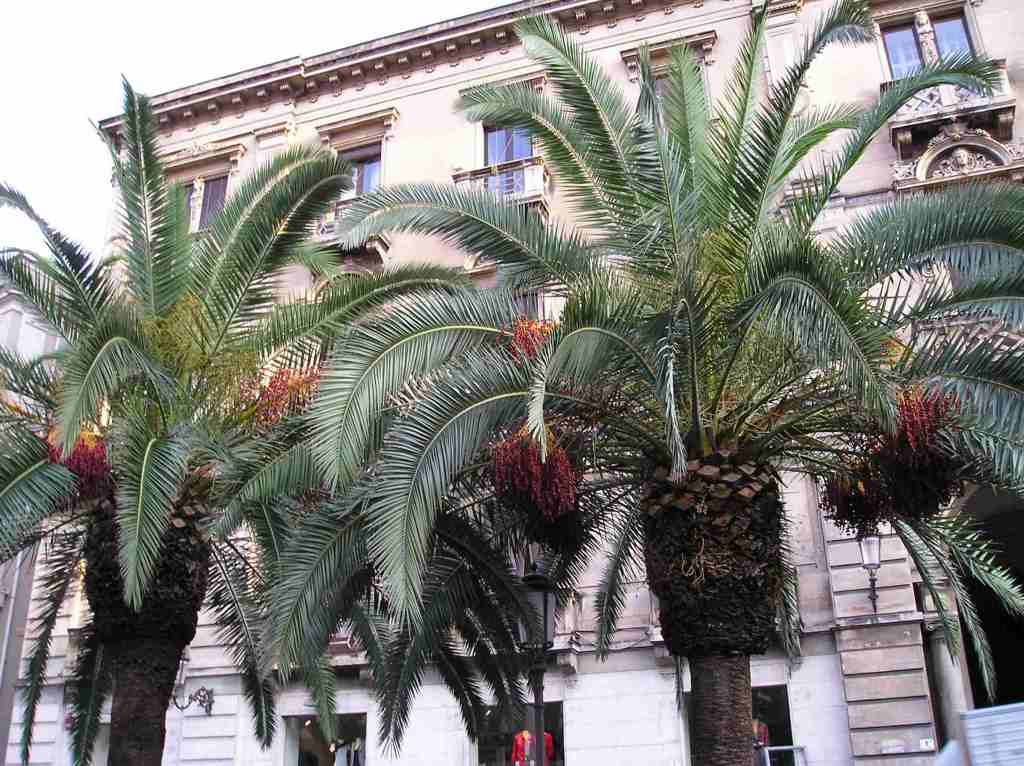
Catania is the student town known for its elephant fountain. According to legends, there were many wild animals in Sicily at one time, and only when an elephant appeared, the inhabitants managed to get rid of the beasts. Out of gratitude, they erected a monument to the elephant in the time of the Romans. The elephant was made of volcanic stone, which is used to make local souvenirs. We took pictures in front of the fountain and the beautiful cathedral, and learnt more legends from our new local guide Natasha.
The cathedral is dedicated to the Saint of the city – Santa Agata, who was a Roman citizen and a very beautiful girl. At the age of 15, she decided to become a nun, but the local ruler did not allow it, as he wanted to marry her. She refused his offer and he threw her in prison, where she was tortured and then sent to the stake. She was dressed in white with a red cloth thrown over, which the fire never approached, and the ruler freed her, but Santa Agata died of her wounds in the next morning. It is a ritual nowadays for people to veil themselves with red scarves and pray to the saint for help. It is believed that the saint also protects them from the volcano, which has not reached Catania for many years.
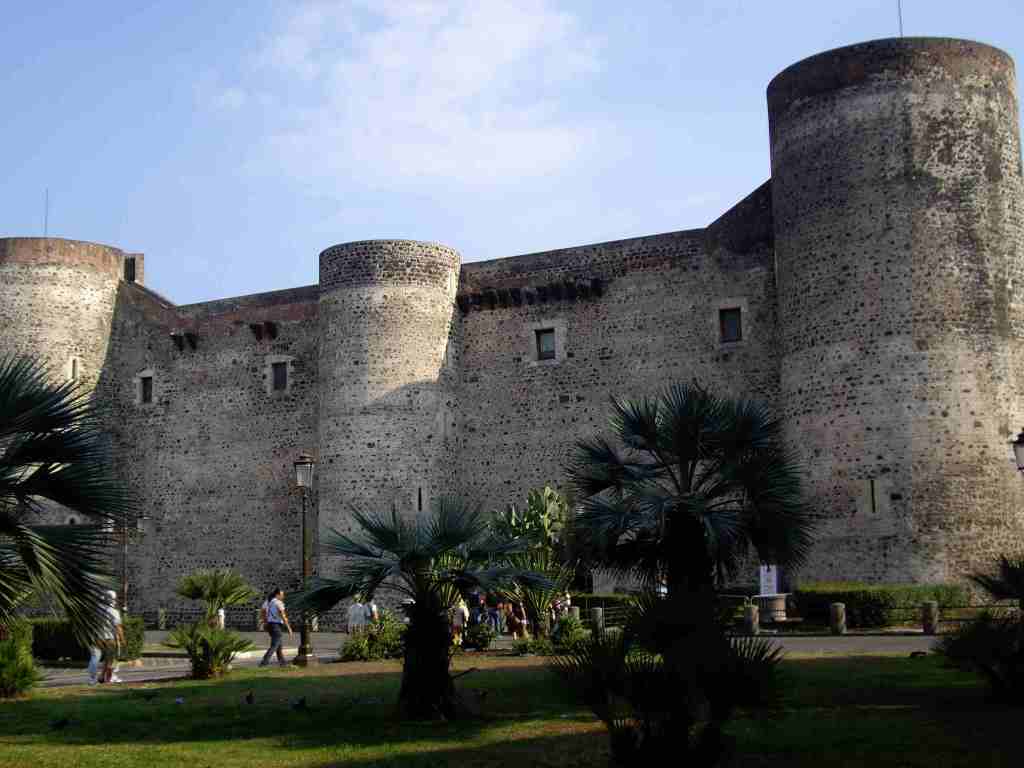
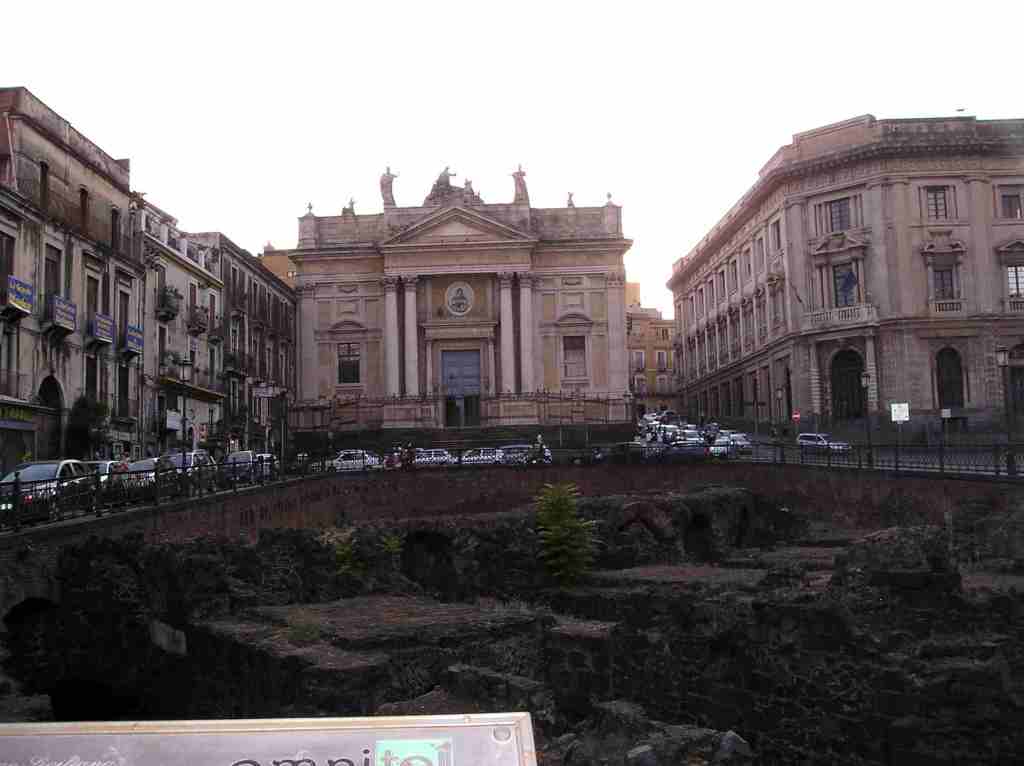
After the cathedral we visited the Castle: Castilo Urso and the old Roman amphitheater, with Bellini’s house closed for restoration. We also had free time for treats and purchases, and at 20:00 in the evening we got on the bus again and returned to the hotel.
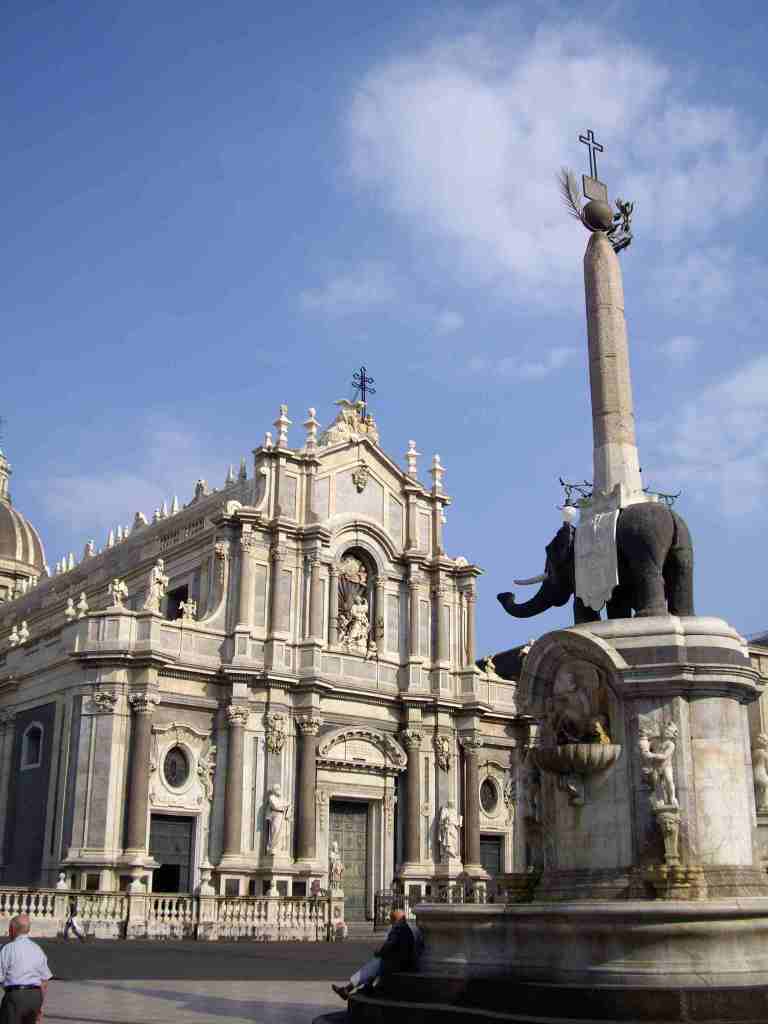
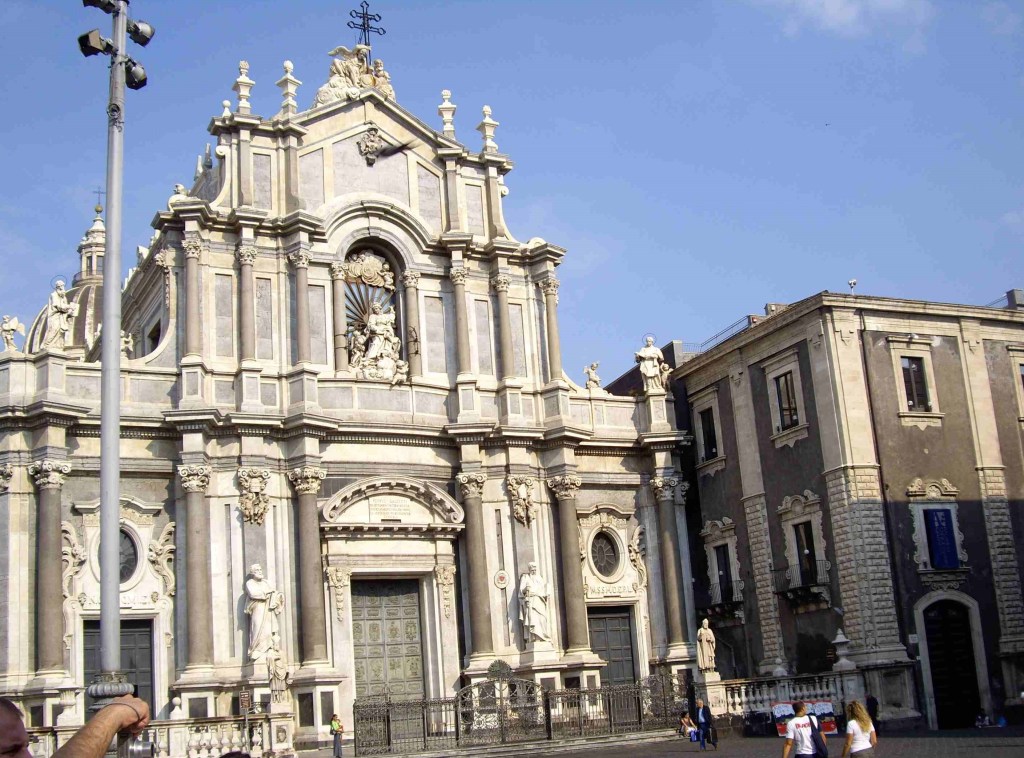

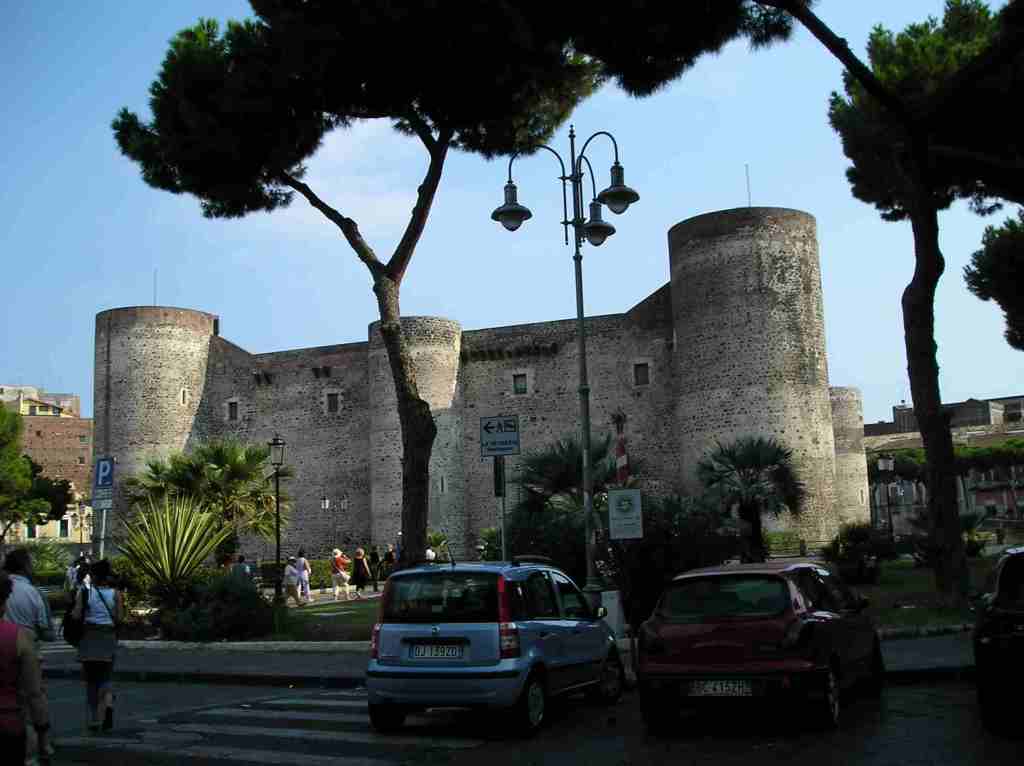


In the morning we got up early and got some time for a sun bath and a morning beach. The waters of the Ionian Sea turned out to be warm enough for bathing. Sicily is a wonderful place for a beach holiday, and you can bathe in a different sea every day.
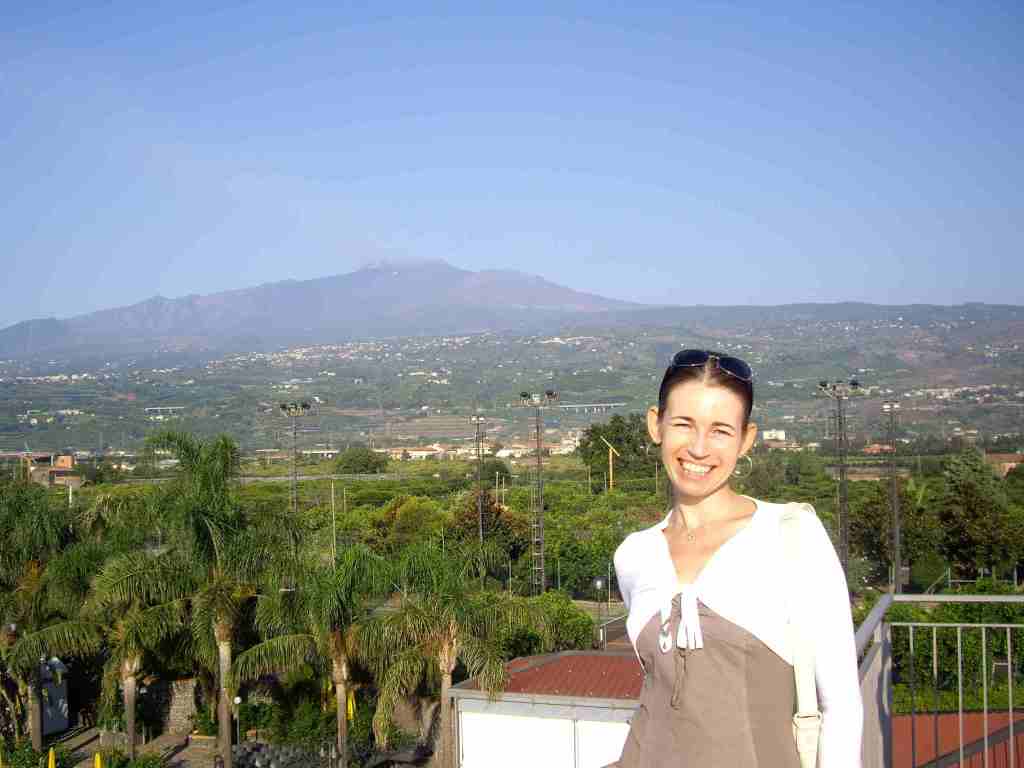
From the beach we also took nice photos against the background of the volcano, and subsequently learned more interesting things about Etna. Mount Etna or the eternally smoking mountain is located in the northeast of Sicily. It is the highest volcano in Europe with a height of 3323 meters. The last eruption of the volcano was in October 2002, when lava carried away kilometers of power lines. It is believed that Etna is the forge of the god Hephaestus, and according to some legends, the god Hades lived here – the ruler of the kingdom of shadows, the brother of Zeus, who fell in love with the beautiful Persephone and therefore opened the earth and swallowed the beautiful girl. Her mother, the goddess Demeter, however, objected and asked Zeus, who finally agreed that two-thirds of the year Persephone should stay on earth and one-third in the dungeon with her husband Hades. When Persephone is on earth, everything blooms and the sun shines, and when she is gone, winter comes and nature sleeps, waiting for Persephone to appear again.
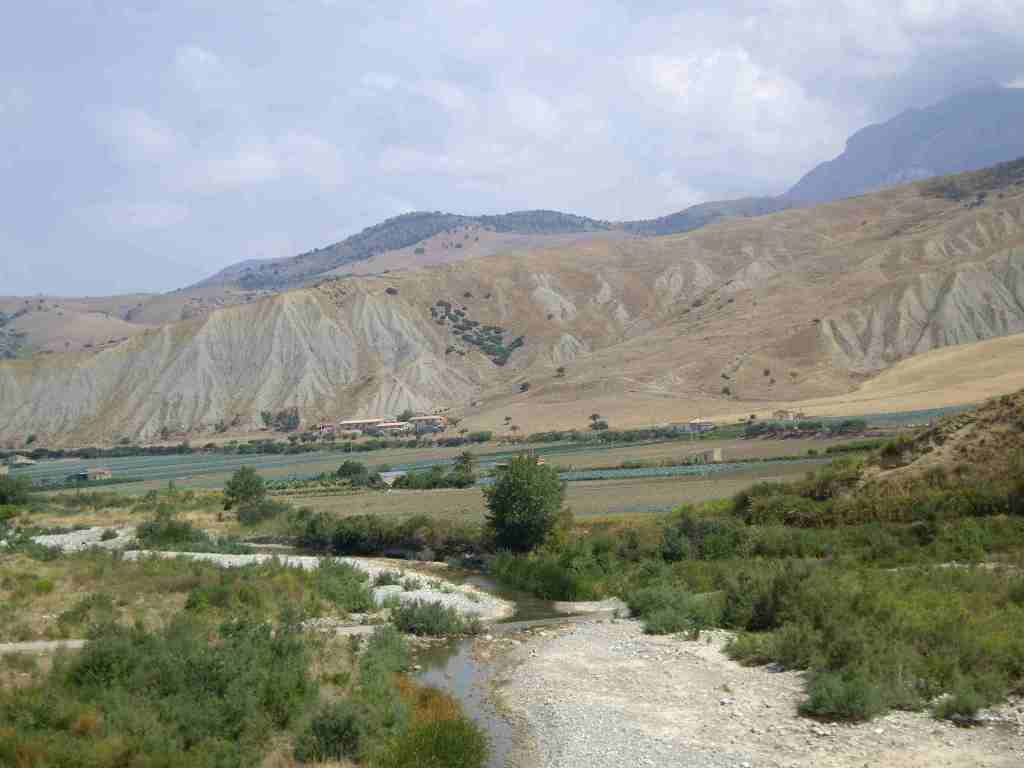
This time we traveled to the inner part of the island, where instead of palm trees and flowers, there were many cacti along the highway. Several dried up rivers also caught our eye. We passed through the Monte Rey Mountains, through many tunnels, for lunch we stopped at one of the roadside Autogrill restaurants. The interior of the island turned out to be more deserted, and yet it was interesting for me to watch the passage over the many bridges, in front of which there were signs indicating their length, some of which were several kilometers long.


Finally, we reached Palermo, which welcomed us with the scent of the sea, and a new tour guide Pietro, with whom we headed to Monreale. The town is only a few kilometers from Palermo, on top of a mountain, from where you can see the capital of the island, and the so called Golden Valley.
Monreale developed around a Benedictine monastery as early as 1174, when it was richly rewarded by its founder, King William II of Sicily. The cathedral itself (1174-89) is one of the richest and most beautiful churches in Italy, combining Norman, Byzantine, Italian and Saracen styles. Especially noteworthy is the interior mosaic, which is one of the largest preserved to this day. It was created in less than 10 years by a group of craftsmen trained in Byzantium. The themes of the mosaics include paintings from the Old Testament, the Miracles of Christ, and the lives of Saints Peter and Paul.
In addition to the Benedictine abbey and cathedral, Monreale is famous for its oranges, olive and almond trees. However, I was most impressed with its terrace overlooking Palemo.
After touring the cathedral and the courtyard of the abbey, we headed to the resort of Villa Grazia di Carini, on the outskirts of the Sicilian capital, where we checked into the three-star hotel Azzolini.
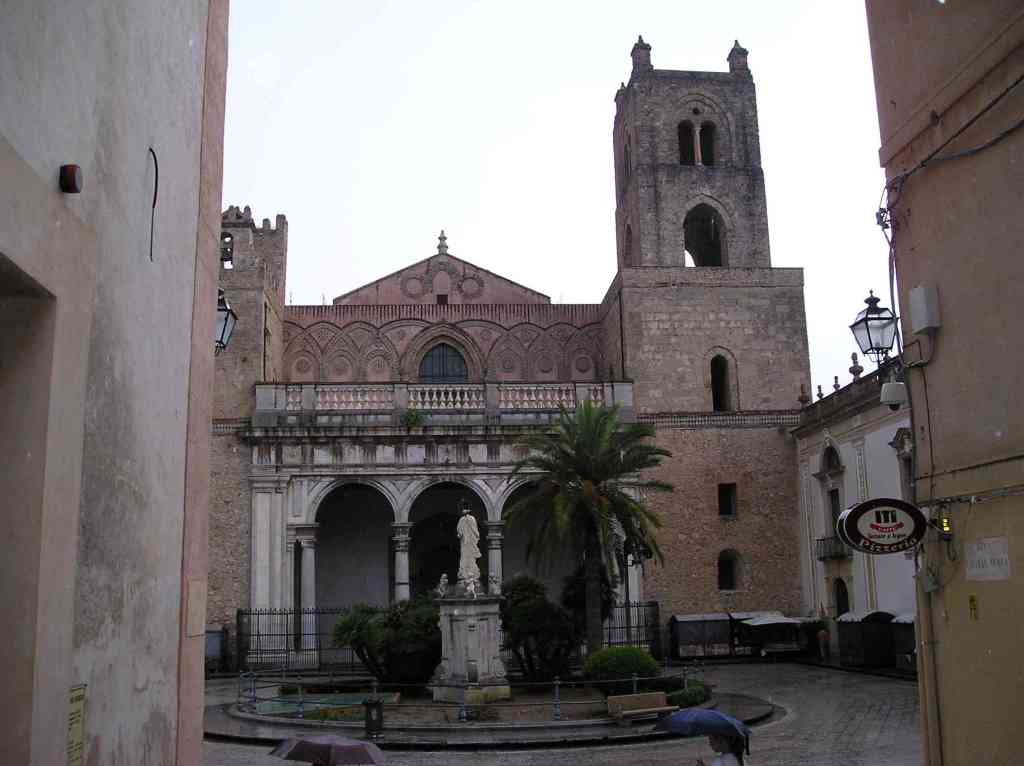

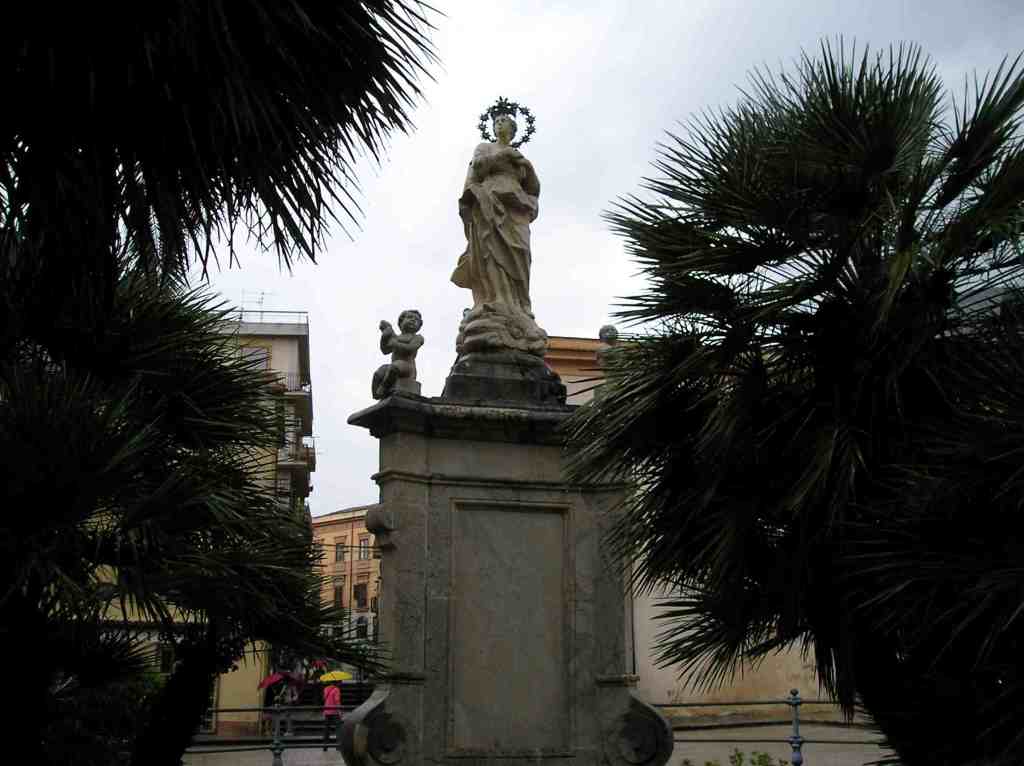

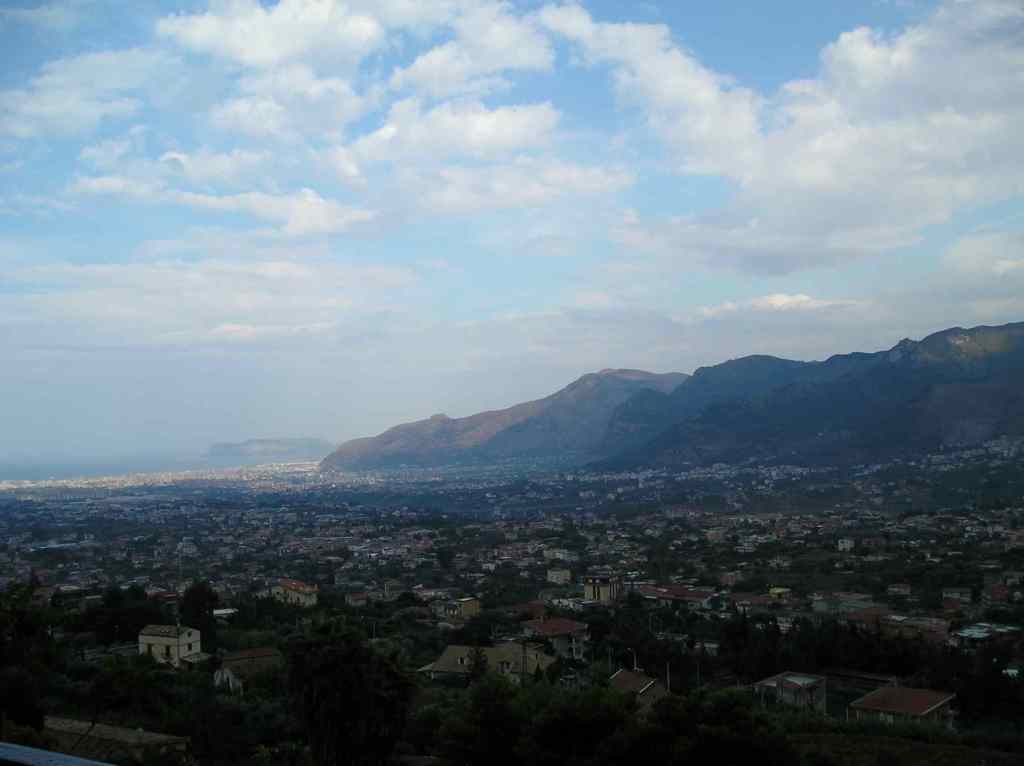
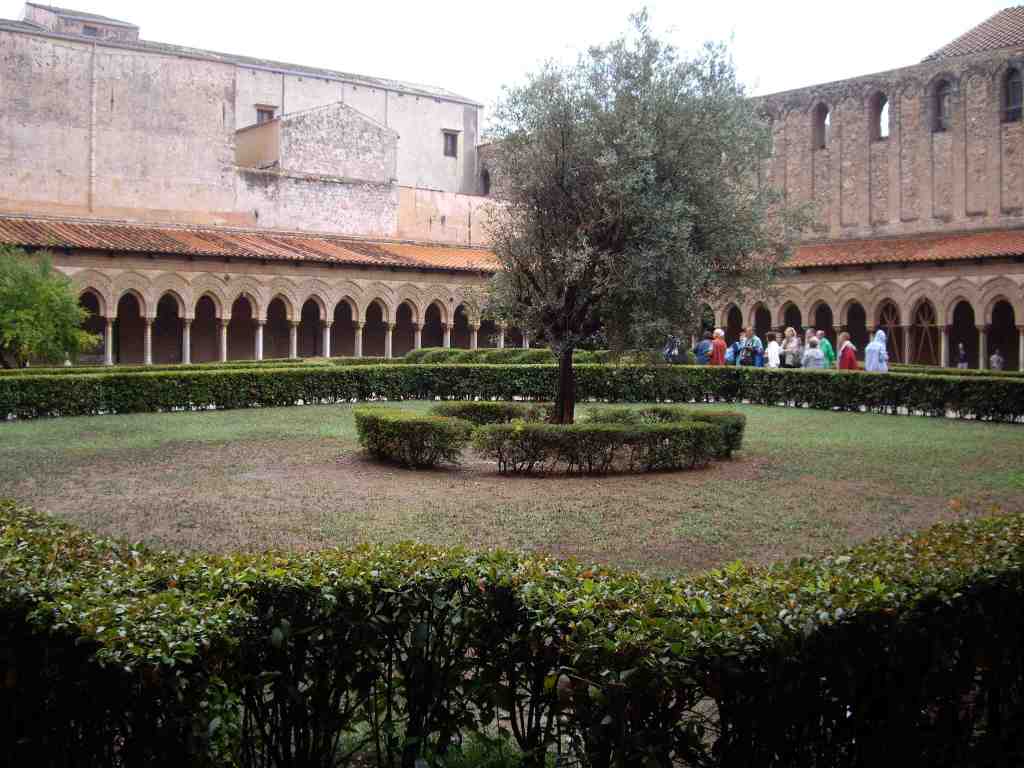
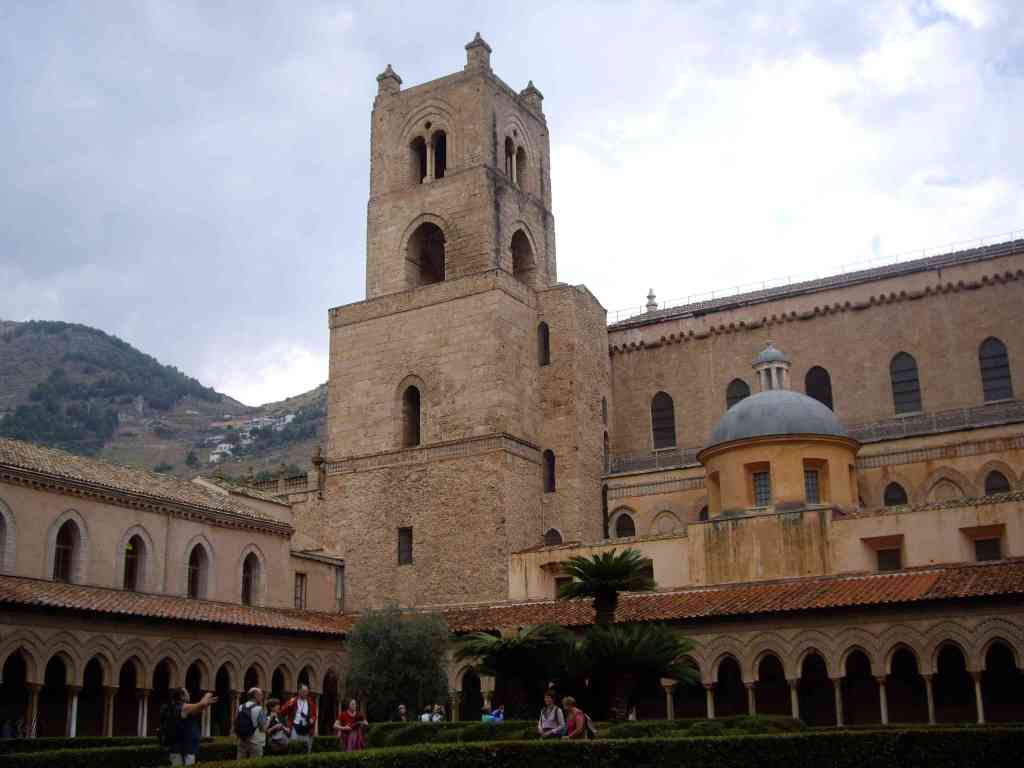


On September 13th, we got up early in the morning again and after breakfast we headed to Palermo. The Tyrrhenian Sea attracted our eyes on the left side of the road, and it also seemed to attract the mountains that had lowered their cliffs into it.
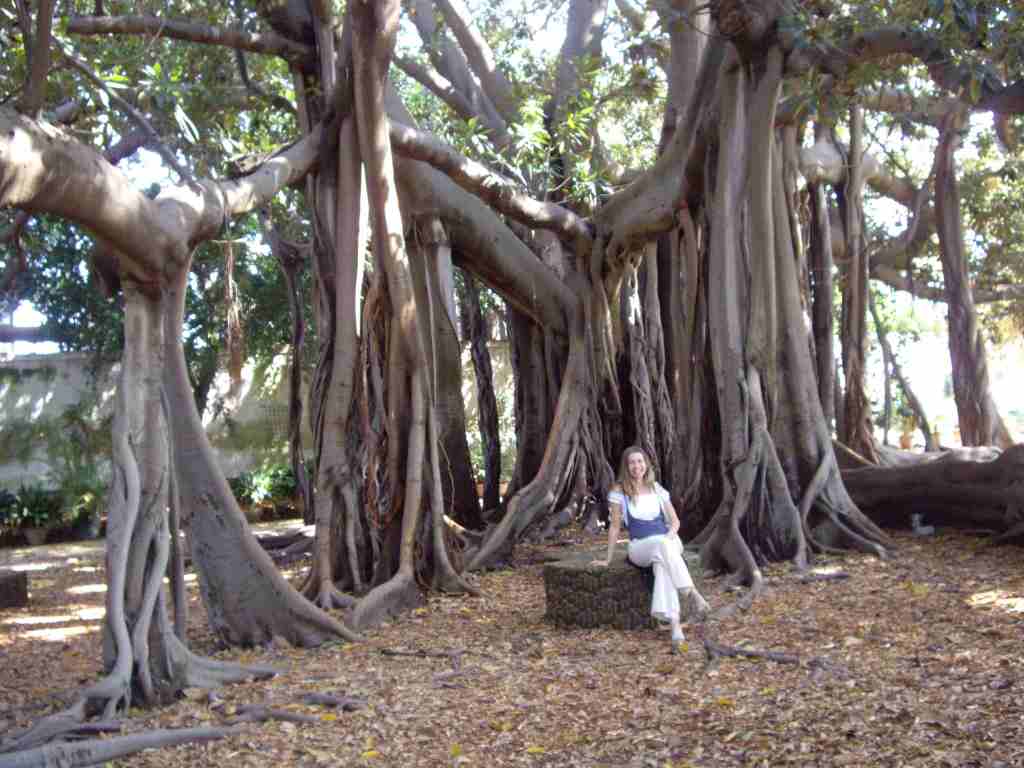
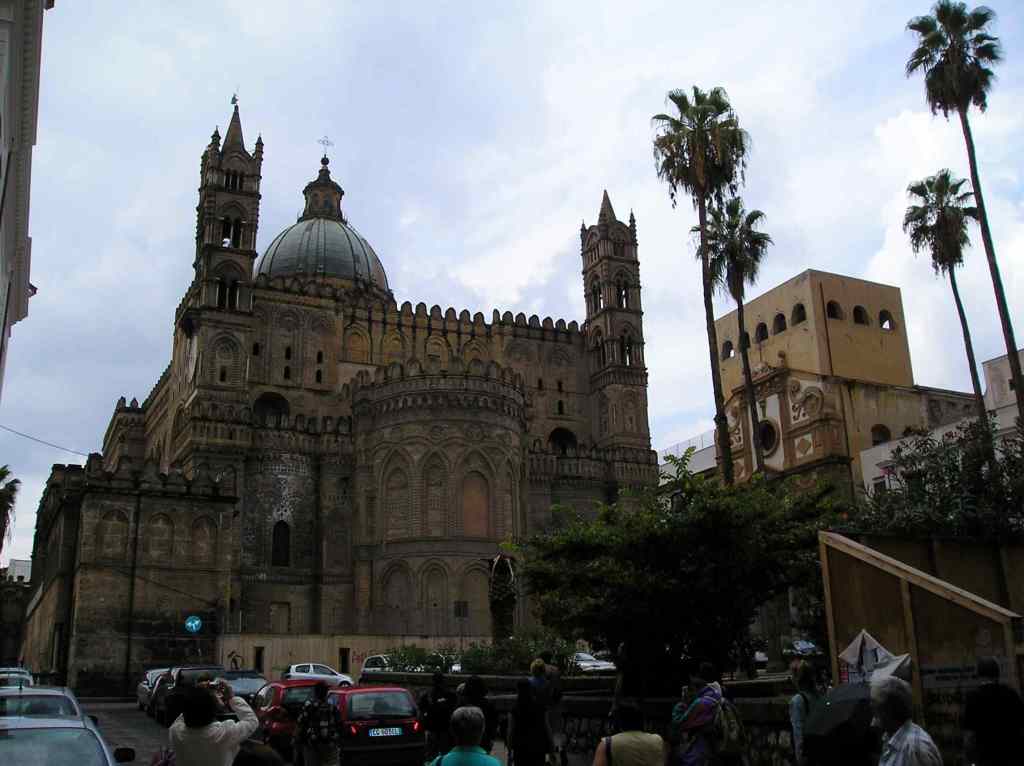
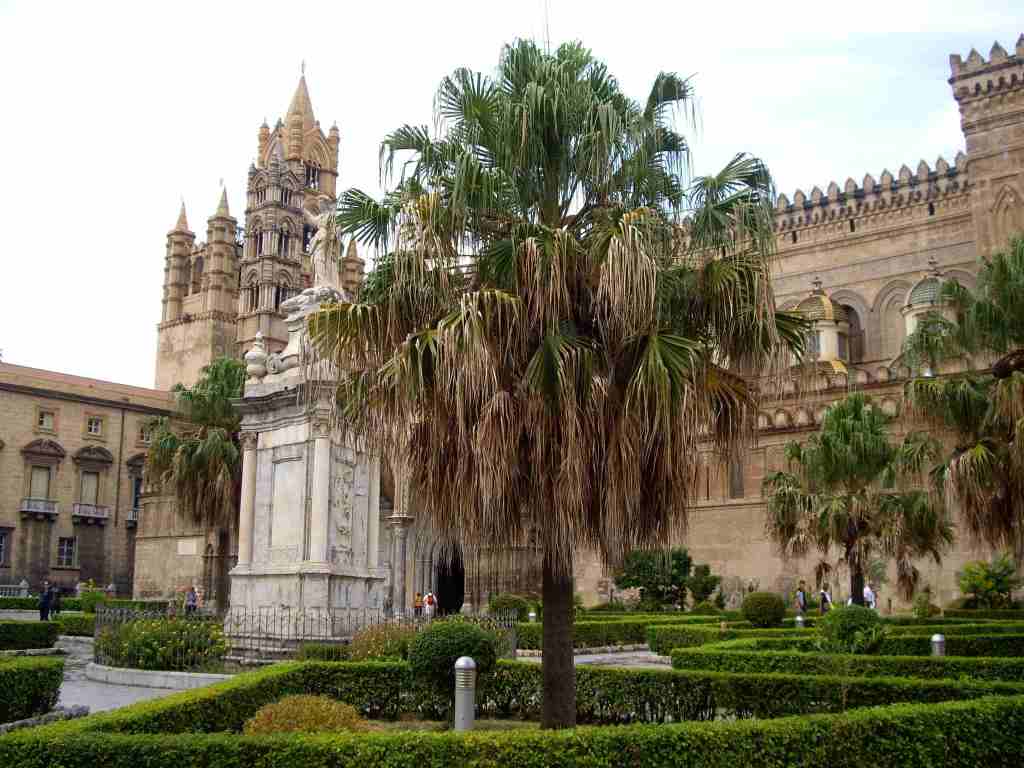
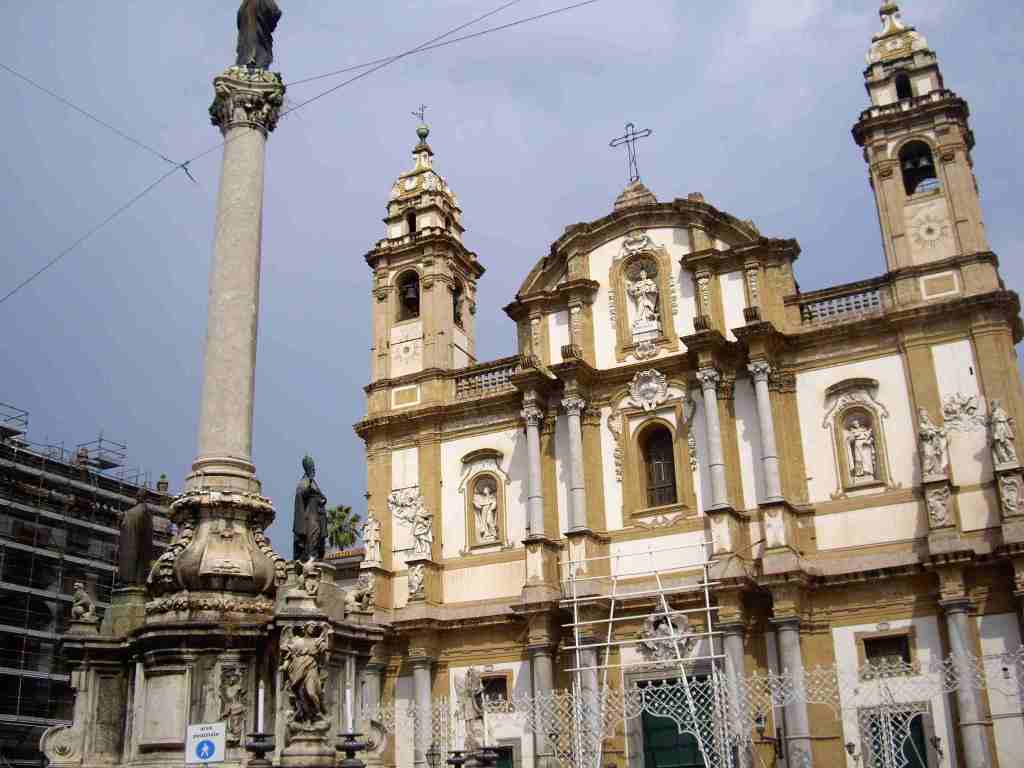
We explored the beautiful Palermo first from the bus and then on foot. We learned that the city was founded in the 8th century BC by the Phoenicians, and remains to this day one of the most important ports of Sicily. After a 30-minute panoramic walk around the city, we got off the bus and went to Pretoria Square, where the magnificent Stida Fountain and the Church of St. Joseph are located. We also visited the beautiful cathedral, learning that the patron saint of this city is St. Rosalia. In our free time, we visited the wonderful botanical garden, which had a bamboo forest, and felt like ants in grass. We saw papyri, a variety of palm trees, cacti, citrus fruits, and even saw cotton grow. The fabulous beauty was complemented by the ruins of an old church, a pond with water lilies, in which water turtles clicked and the screams of many parrots.


In the evening we made a night beach saying goodbye to the beautiful island, but it turned out that the Tyrrhenian Sea was much colder than the Ionian Sea, and the farewell was quite short.
In the morning we headed again to Messina and from there back by ferry and bus to Sofia.
Sicily abounds of ancient monuments and centuries-old treasures, spreads its beaches over 3 seas and is still called “poor Sicily”. There are over 320 sunny days a year, and although we hadn’t hit them, we were enchanted by the pulse of Etna, the scent of citrus fruits and the many palm trees everywhere. No wonder that in this sunny country, people are looking for shade, even in the shadow economy of the mafia. Here it seems that time does not pass by, and like a ferry surrounds it, leaving peace and relaxation for all tourists and locals. It is good that Sicily is considered a poor country in order to keep its rich history and treasures still as a secret.



GENERAL INFORMATION ABOUT SICILY:
Location: Sicily is the largest island in the Mediterranean, located south of the Apennine Peninsula, from which it is separated by the Strait of Messina. Its shores are washed by three seas: the Tyrrhenian Sea to the north, the Ionian Sea to the east and the Mediterranean Sea to the south.
Area: 25 708 sq. m.km
Population: 5 042 992 people (2009 data)
Official language: Italian
Climate: subtropical Mediterranean
Time zone: UTC+2
Currency: Euro (EUR)
Additional information: www.visitsicily.co
TRIP TIPS FOR SICILY:
Best time to visit: if you want to sightsee, it is better to visit the island between April and June or September and October, and if you want a beach and warm sea, then the active tourist season is between June and September.
How to get there? Sicily has two main airports in Palermo and Catania, the latter being larger and busier, and domestic and low-cost flights usually land in Palermo.
Another unique way to get to Sicily is via ferry, with trains from Rome, Naples and Milan crossing the Strait of Messina by ferry and continuing to Palermo and Catania. This is one of the few places in the world where you can see the train boarding a ferry.
The other not so unique way to get to the island is by ferry, with Palermo having direct connections to Civitavecchia (to Rome), Naples, Genoa, Livorno and Sardinia. There are also catamarans and ferries to/from Malta.
Typical food and drinks: Italian cuisine is famous all over the world, and Sicily is no exception, and here you can taste uniquely delicious pizzas, pasta and ice creams. While on the island, be sure to try Arancini – fried balls with rice and cheese.
Places to visit: inaddition to the towns described above, Teormina, Syracuse, Catania and Monreale, and Palermo as well as Erice, which is the highest city in Sicily and is famous for its ancient stone walls. It is also worth seeing the Salt Pans in Trapani (Saline di Trapani), where you will see how salt is made in the traditional way, after high tide and grinding in ancient windmills. The Valley of the Temples / Valle dei Templi is an important archaeological center, where the ruins of Akragas and the impressive remains of Doric temples dedicated to the Hellenic gods are located. Especially impressive is the medieval castle of Sciacca, erected in 1382
 TripTips