POMPEII AND VESUVIUS – A FAIRY TALE WITHOUT END
author: Ana Boneva

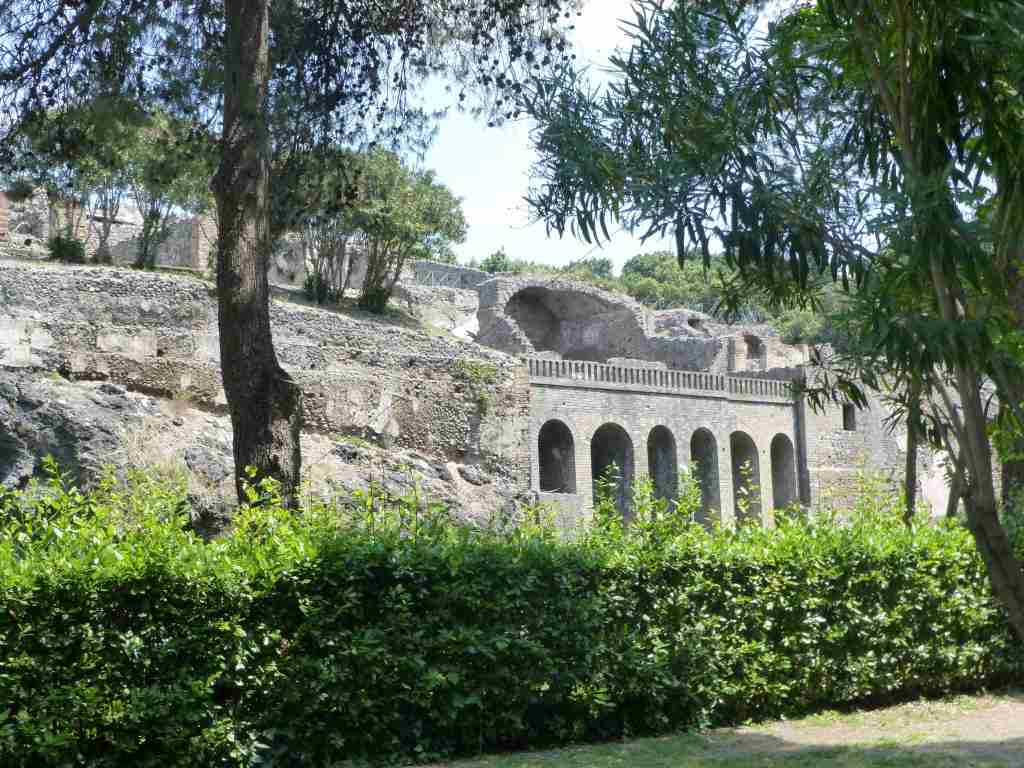
At the foot of the mountain, on the shore of the azure sea, a city as a fairy tale was erected, competing in beauty with Rome itself. No wonder the Roman aristocracy built villas here, escaping from the intrigues and bustle of the capital. However, the splendor of the city disappeared literally in one day when, in 79 AD it was submerged by the lava of the erupted volcano. Burned to the ground and in people’s memories, the city was rediscovered in 1748, when, from under a thick layer of dust from dried lava, the Roman city shone again, as if it were hidden and untouched by time. This is Pompeii, the reborn Roman city, revealing the history and daily life of people thousands of years ago.

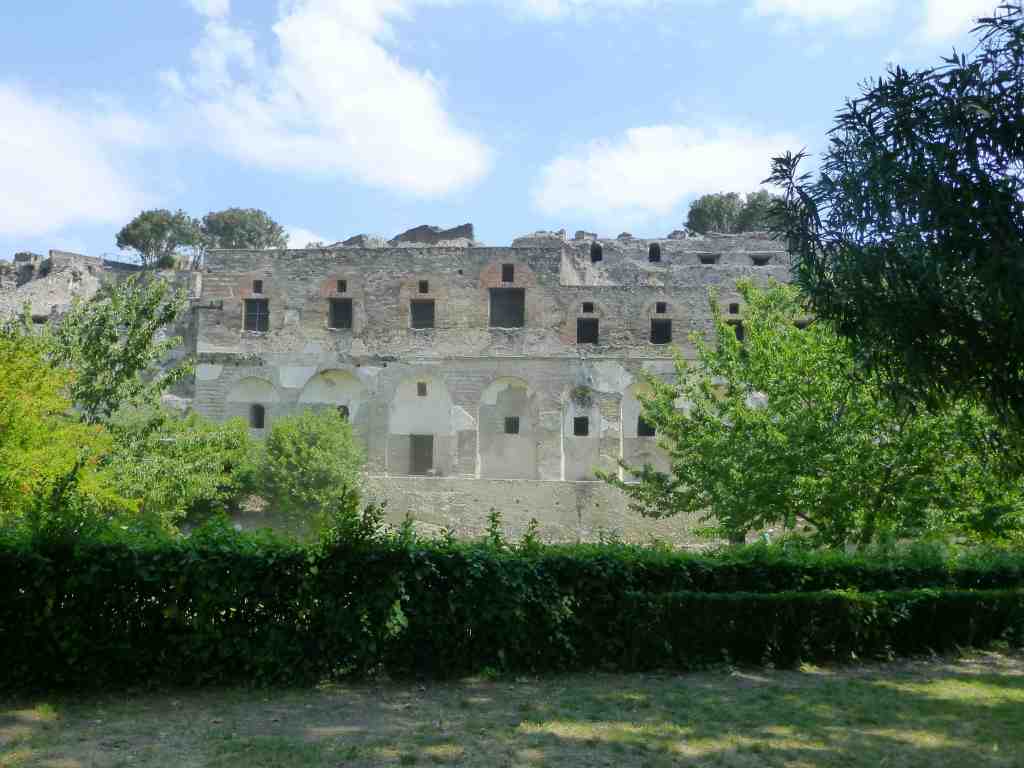

In order to be able to travel back in time as much as possible, we decided to visit Pompeii and Vesuvius on a day trip organized by Viator.com. Today Pompeii is connected to Naples by a major highway, and the journey took us no more than 20 minutes. On the right side we saw the Gulf of Naples and in the distance Sorrento and the island of Capri. Back in time the island of Capri was connected to the mainland, but after the eruption of the volcano it was separated as an island only 5 km from the coast.
At 11:11 a.m. the bus left us in the parking lot in front of the walls of Pompeii, where a new guide was waiting for us – Susie. She knew the ancient city perfectly and we spent 2 hours together in it. We received headphones in order to hear better her explanations about the visited sites.
Pompeii that was known as early as the 8th century BC. with its trade between the Greeks, Phoenicians and Etruscans, and in the 6th century BC. with its many temples, including the shining temple of Apollo and that of Heracles. Later, the city was fortified with strong walls and was an important Roman colony. In 62 AD, a strong earthquake shook Pompeii and destroyed some of the buildings, but it was nothing compared to the eruption of the volcano in 79, when the entire city was swallowed by lava.
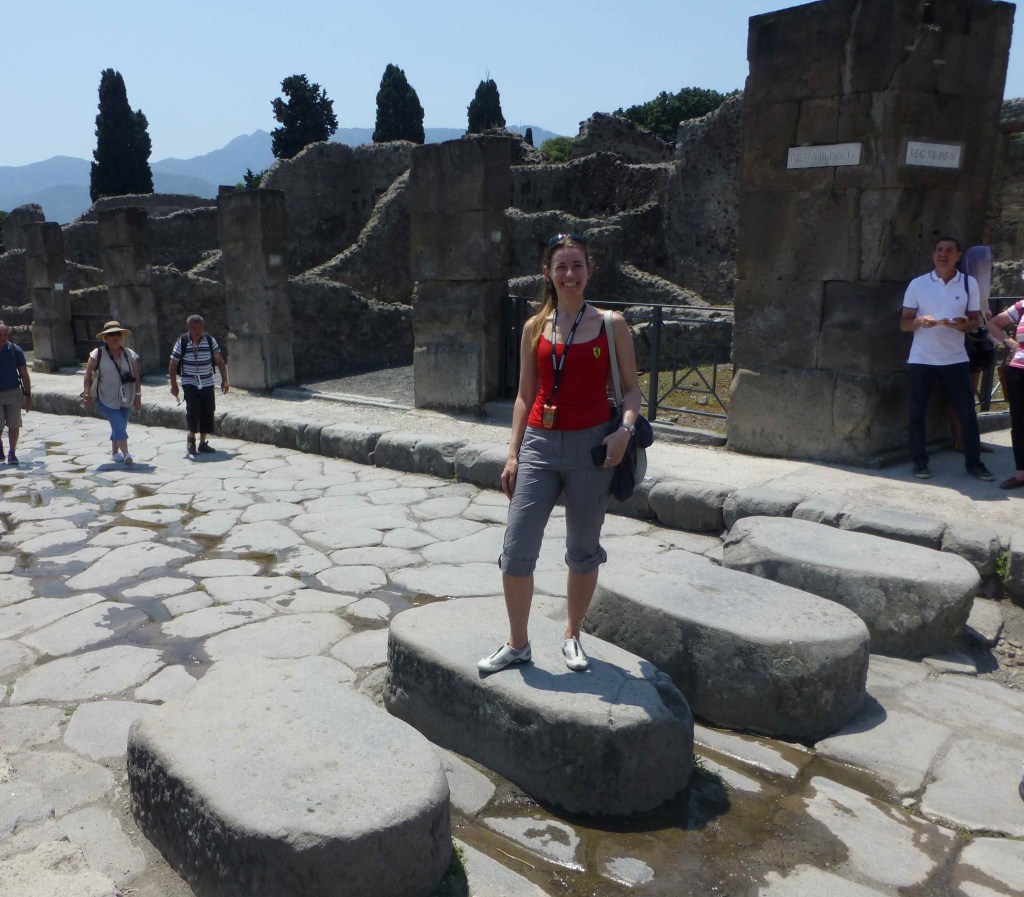
Today, Pompeii was regaining its fame with its many legends and well-preserved Roman city architecture. The city had become a veritable open-air museum, attracting millions of tourists all year round. What was unique about the city was the feeling of being back in the time and having the opportunity to walk along the same streets that the Romans walked thousands of years ago. The streets were located parallel and perpendicular to each other, pointing direct north to south, and east to west. They could be used as a compass. I was especially impressed by the pedestrian paths, which were large round stones placed perpendicular to the street. Reaching them, the carriages and other means of transport had to slow down and carefully pass by the stones. Pedestrians, in turn, could safely step on the stones and cross the street without getting wet in case the street was polluted. It was the oldest pedestrian crossing I had seen and definitely impressed me very much.
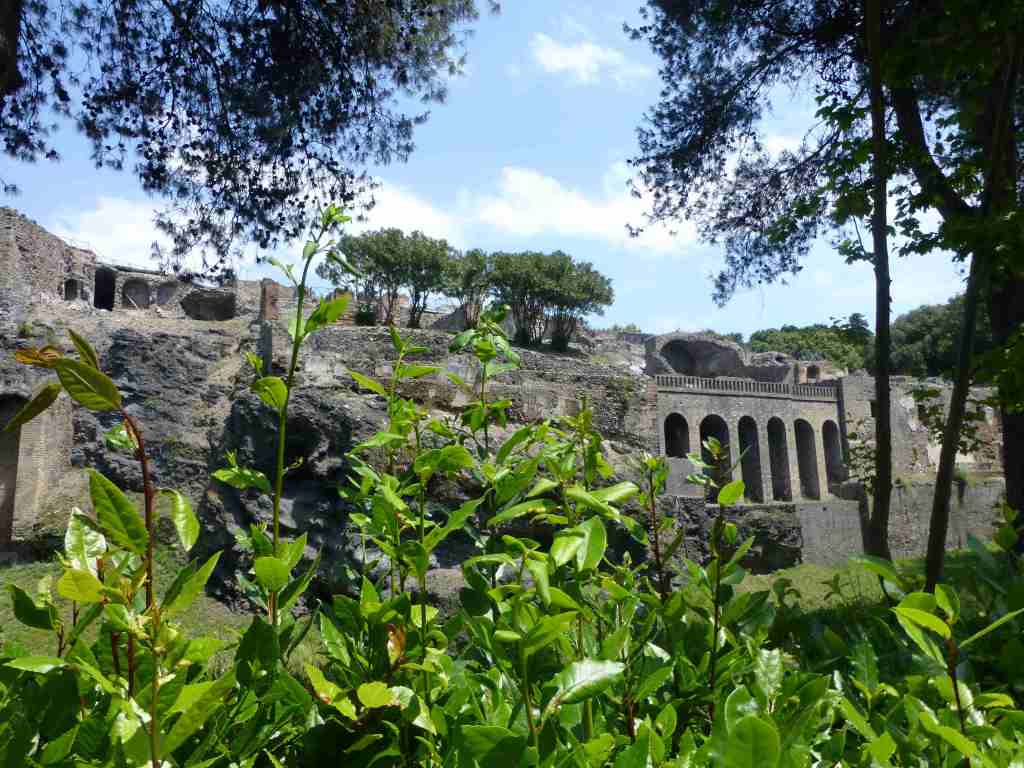



As we entered through one of the main entrances of the city, our guide Susie told us that the name Pompeii came from the local language “pompe” and meant “five” – these were the areas that made up the city. At the end of the walk, we would exit the Puerta Marina or Sea Gate, which indicated that it was a port city at the time. There was also a river passing through the city which, however, had become underground over time.
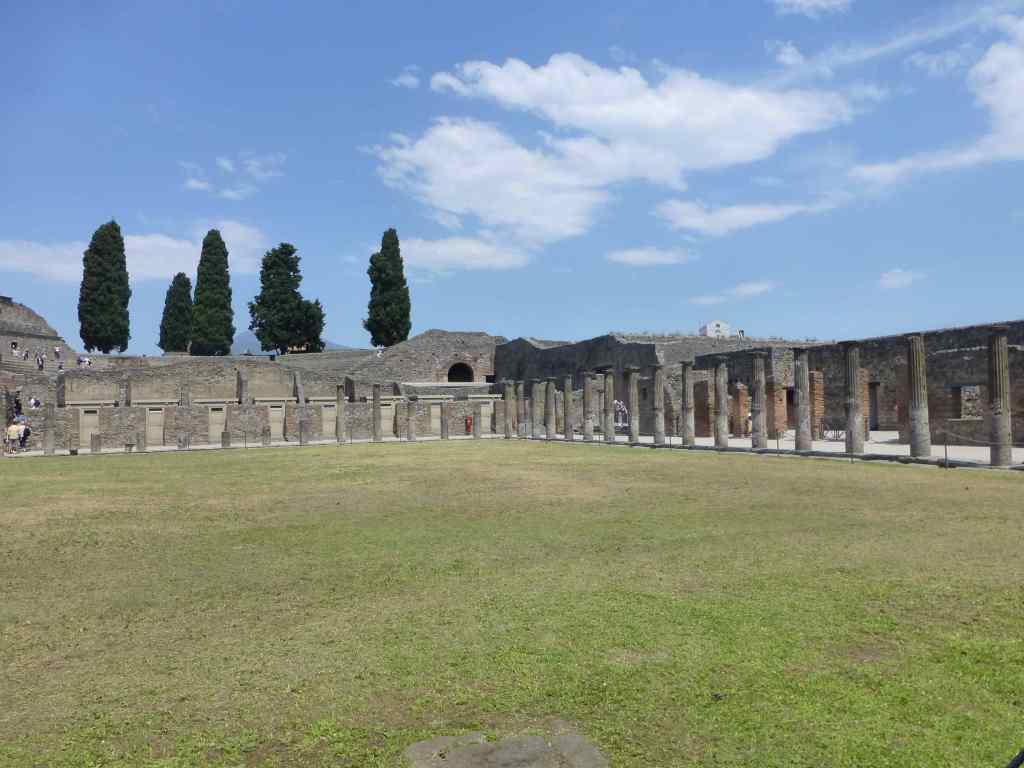
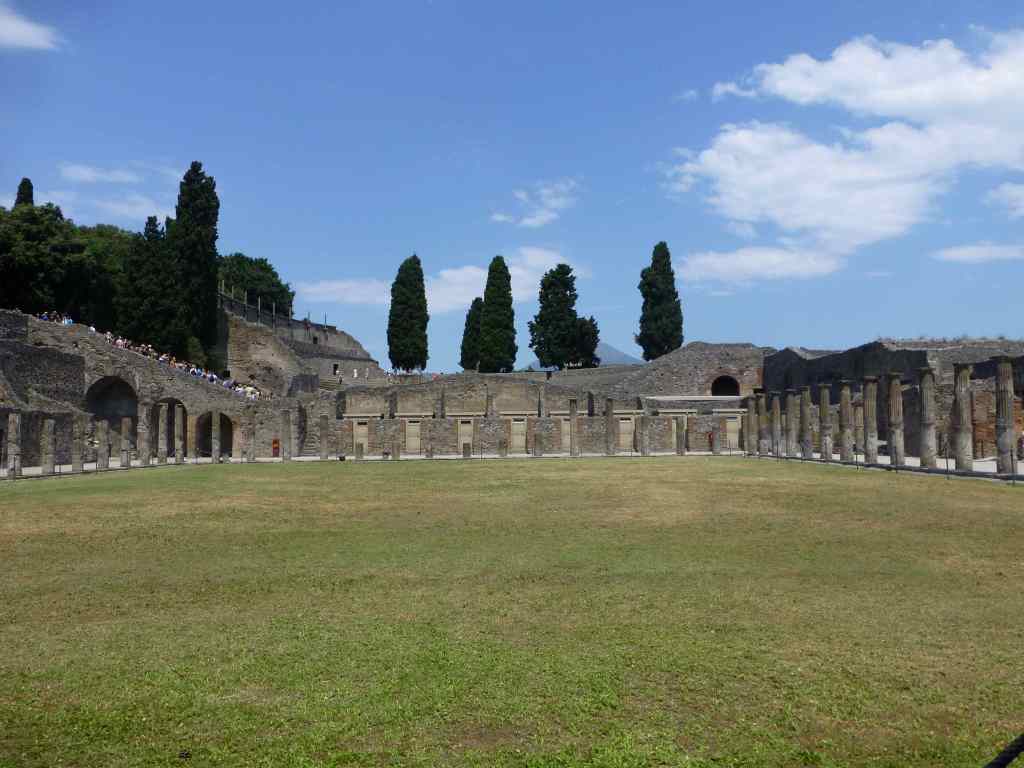
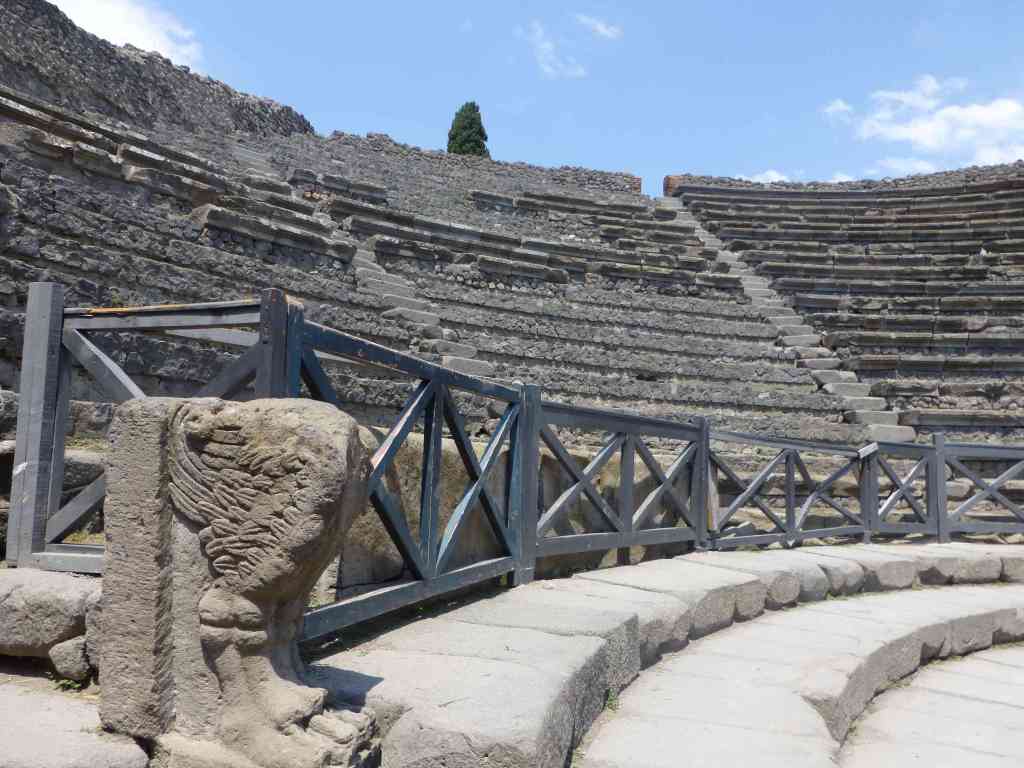
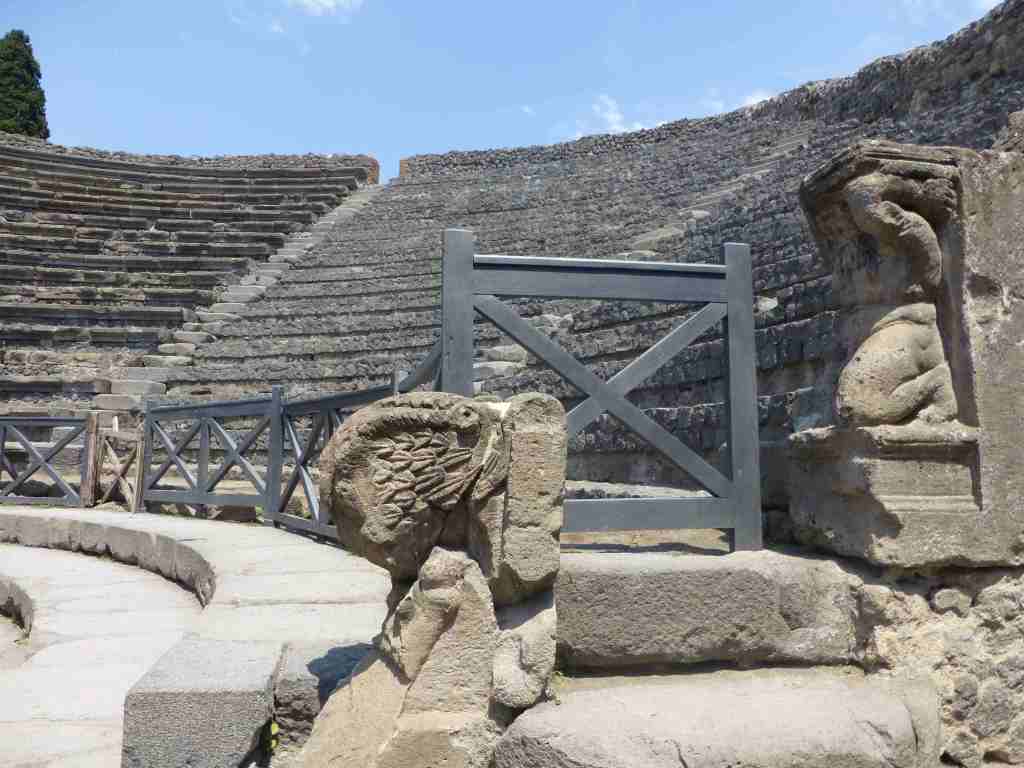
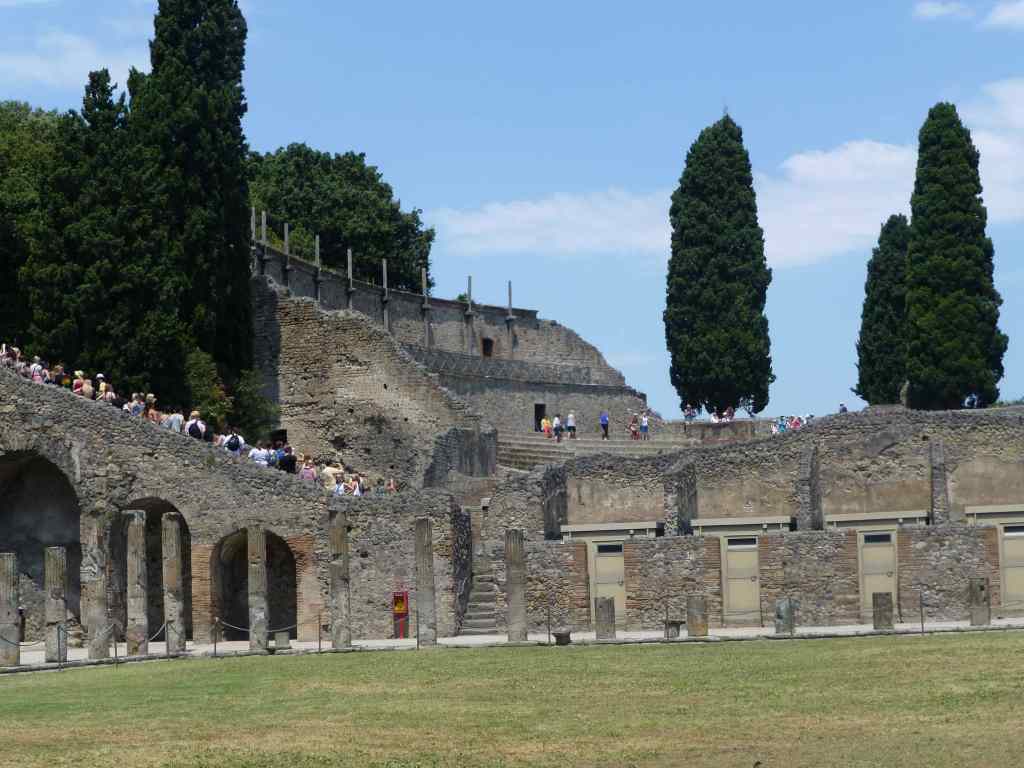
One of our first stops during our walking tour of the ancient city was the large theater used to present dramas and comedies. There was also a smaller theater in the immediate vicinity, perhaps for private gatherings or for musical performances, as the acoustics there were excellent. Until we reached the small theater we passed through the Roman “fitness center” or the place where the gladiators trained. At the time, gladiators were like movie stars and had many fans and supporters.
As our eyes swept the park in search of sturdy, muscular gladiators, Susie showed us in the distance a white house perched on a hill. It turned out that this was the height to which the lava had reached, and what we saw today had been carefully excavated as early as the 18th century.
Susie clapped her hands and the echo rang out in the distance. The acoustics in the small theater were really excellent and the sound could be heard loud and clear without the need for a microphone. The guide explained that the seats of the audience were divided into 3 parts – the lower part, where the senators and rulers sat, the middle part – for the most influential families in the city and the upper part for women, slaves and poor people who did not have the right to vote. We also learned that only men participated in theatrical performances, putting on masks and costumes. Women could only perform facial expressions and pantomimes – roles without text and without clothes. Women performed their facial expressions naked, and this could be considered the first forms of striptease.
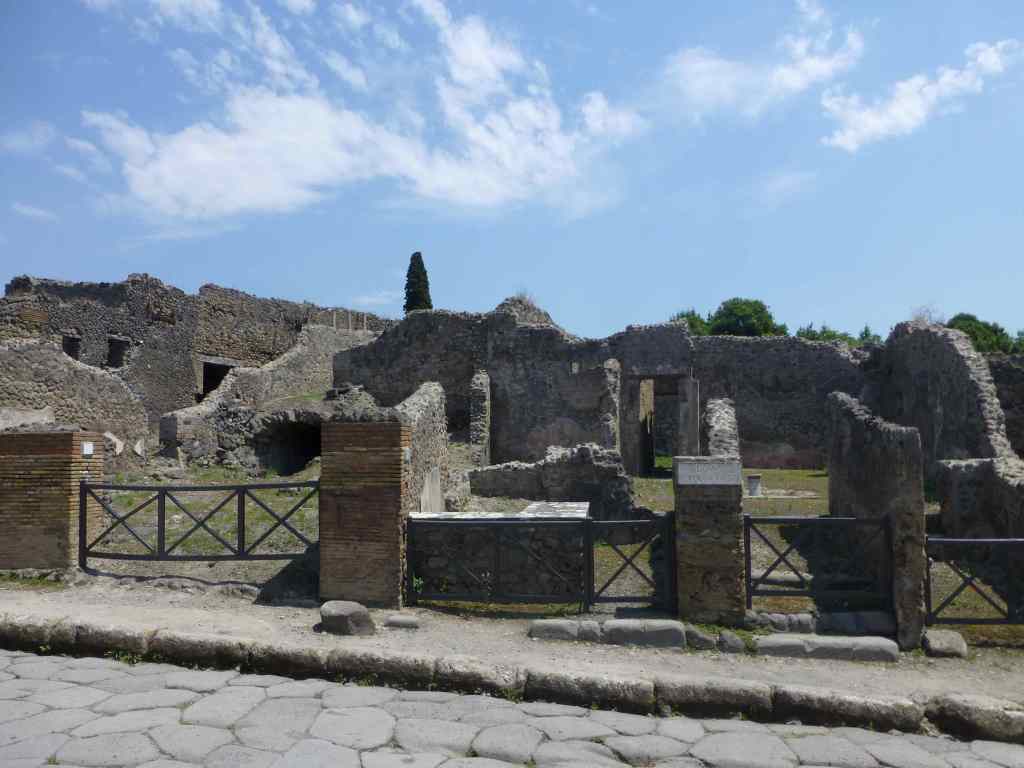
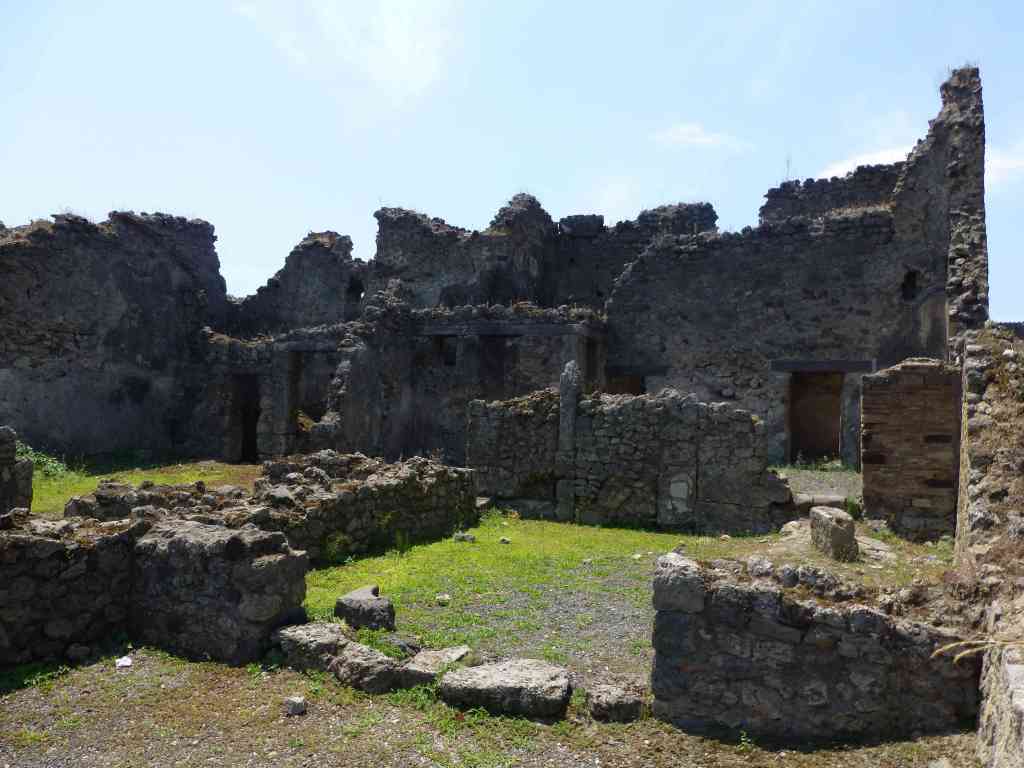
Leaving the small theater, we found ourselves on the ancient Roman roads, which used to be heavily trafficked by chariots, today by tourists. Before the eruption of Vesuvius in 79 AD, 20,000 people lived in Pompeii. The traces of the wheels were still visible on the stone streets. On the opposite side of the theater there were remains of buildings that turned out to be a shop and a restaurant. Usually the first floor was used for a shop, and the owner lived on the second floor. The restaurant was even more interesting – with a terracotta table with openings in which hot food was stored. Susie named it “The Roman McDonald’s”, and only poor people ate here, since the rich had their own kitchen, cooks and servants in their houses. There was also a place for drinks, when we learned that at the time the wine was very strong and therefore it was mandatory to dilute it – in winter with warm water, and in summer – with cold water, and in both cases they put honey for a sweeter and drinkable taste. The restaurant we were looking at was opposite the theater, on a corner and apparently its business was flourishing thanks to the good location. Next to it there was also a “Roman parking lot” consisting of artificial holes in the stones on the sidewalk, into which the reins of the horses were pierced and they stood in one place.
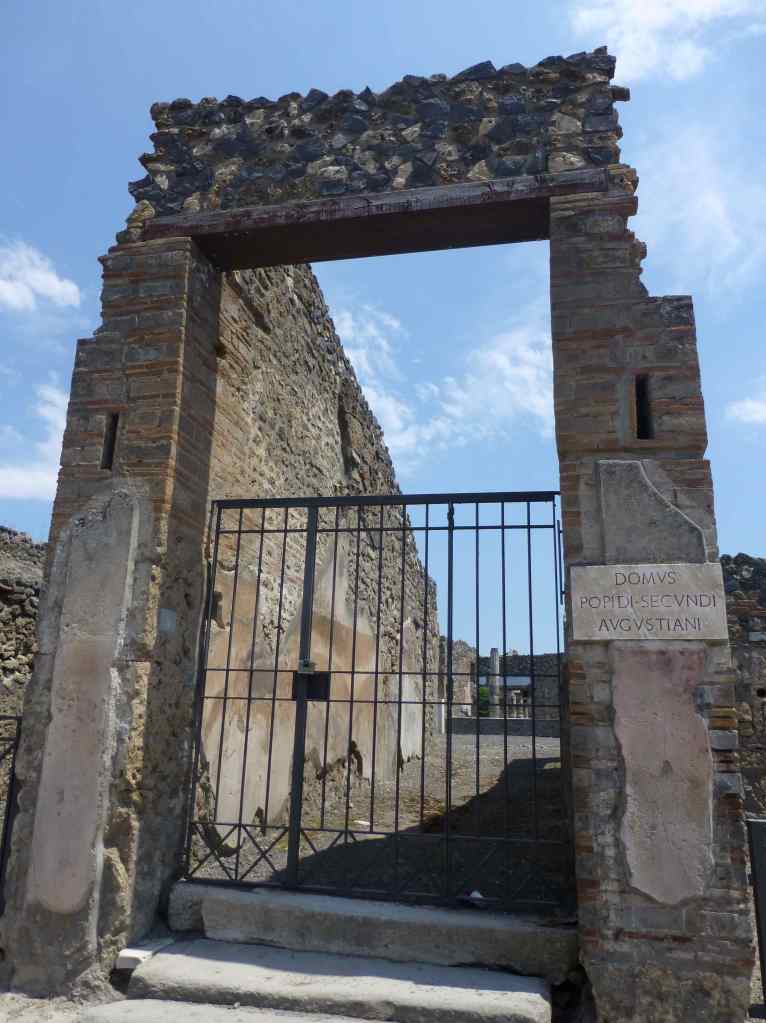


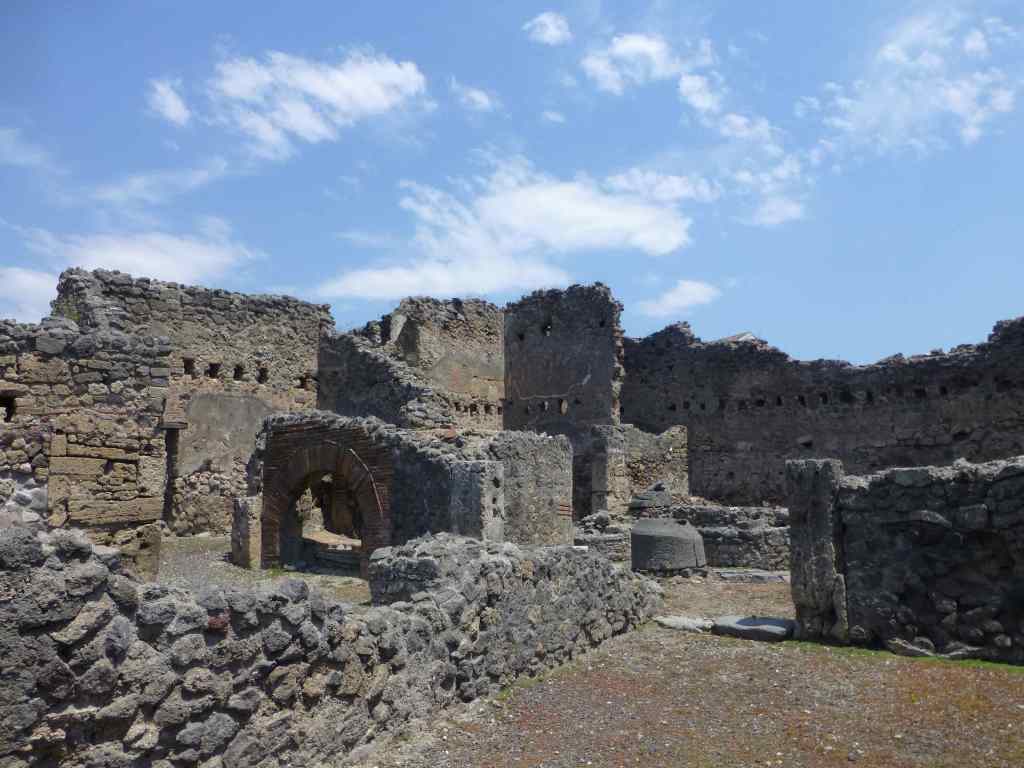

We continued our walk along the ancient street, and Susie showed us many more ruins of buildings that were shops. Shops were distinguished from apartment buildings by sliding doors, of which traces remained.
On the sides of the streets, right next to the curbs, there was a sewage system designed to collect and drain rainwater, thus protecting roadside buildings. Otherwise, there was also underground sewage. In several places we saw the ancient lead pipes, which were much thinner than ours, but also stronger – they had survived for thousands of years. According to our guide, it was the lead in the water that was one of the causes of early death among the Romans. They lived on average about 40 years, and women about 25-30 years, most often dying at birth.
We also passed by an ancient bakery where a large oven was found. In total, there were 44 bakeries in Pompeii that sold fluffy hot bread centuries before Christ. They used donkeys to drive the mills and grind the flour. According to Susi, who was Italian and Neapolitan, it was here that the first pizzas were made (although without tomato sauce).
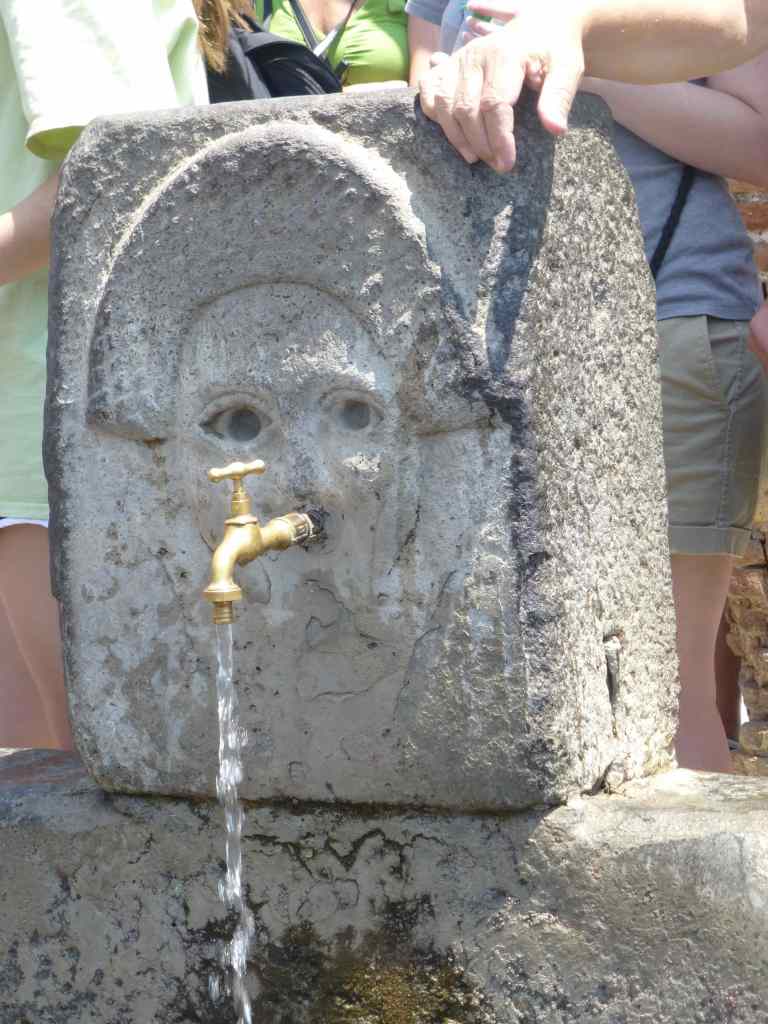
It turned out that at the time in Pompeii they had everything, as in the modern city today – shops, restaurants, laundries, etc. We stopped in front of a street fountain, which was very well preserved. At the time, it was used mainly by poor people who did not have running water in their homes. The streets were regularly washed with this water.


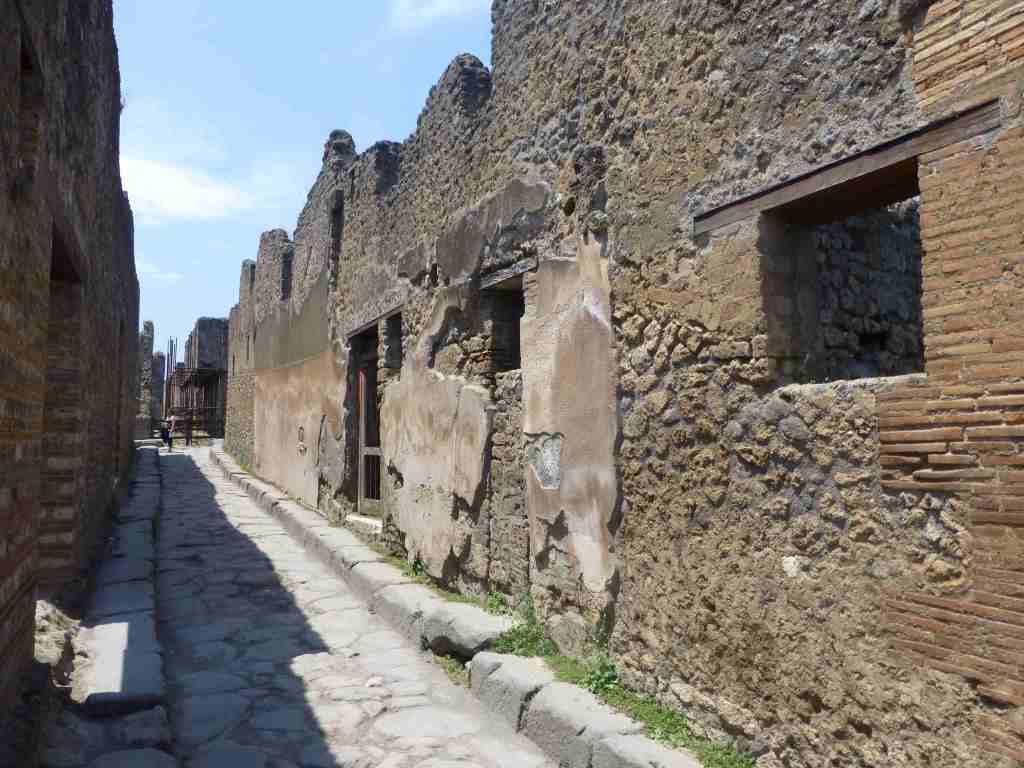
Most of the buildings we passed were numbered, but it turned out that these numbers were placed in the 18th century by archaeologists so that they could draw up a detailed map of the city. The many phalluses engraved on the front walls of houses and shops were also impressive. At the time, this symbol was considered to bring prosperity and well-being. People also placed it to protect themselves from bad luck. Women even wore earrings in the shape of phalluses. However, archaeologists did not initially know this, and because of the many reliefs of phalluses throughout the city, they called Pompeii “City of Love”.
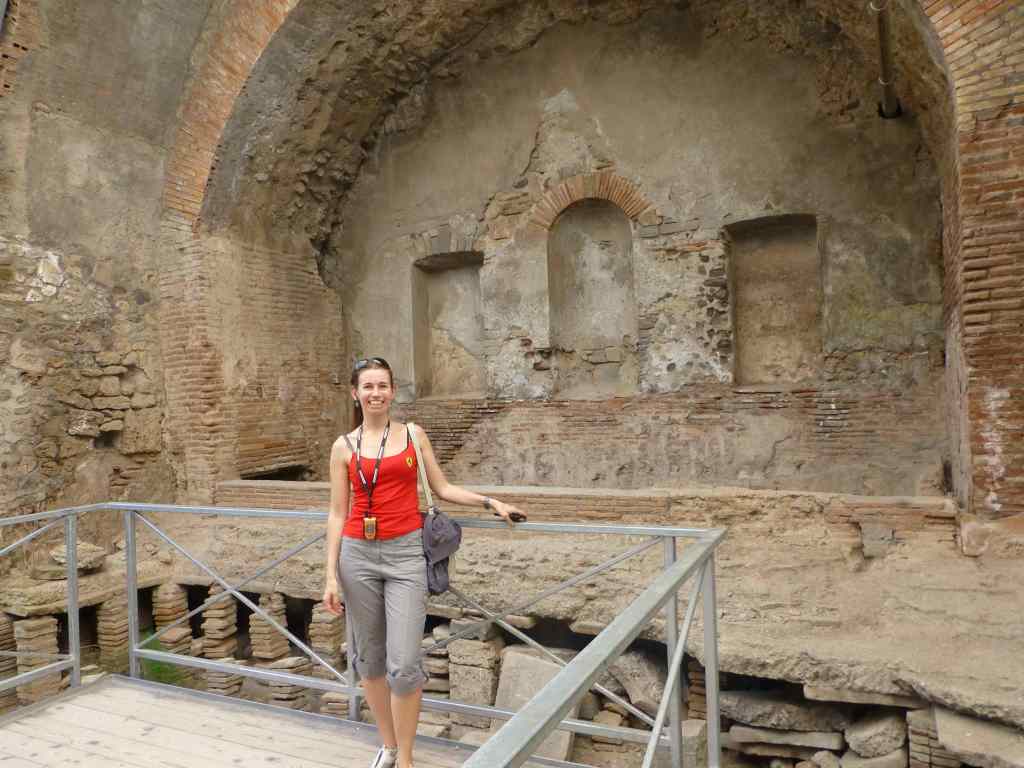
The walk through Ancient Pompeii amazed us at every step. Although thousands of years had passed since the Romans had lived here, I had the feeling that we were not much different from them. Especially after we reached one of the four spa complexes in Pompeii. This time Susie gathered us under a shady canopy and told us that the spa center was built in the 2nd century BC. The main entrance was only for men, and on the other side there was an entrance for women. At the entrance there was a gym for men, and the Romans liked to work out first and then relax. The dressing rooms were at the entrance.
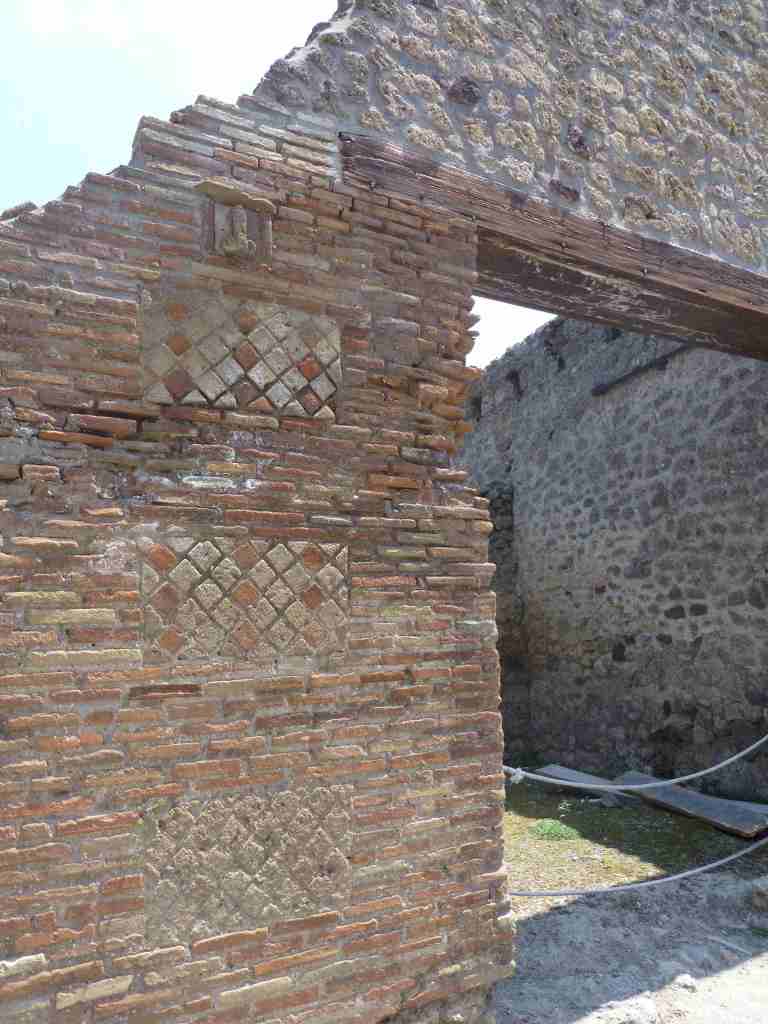
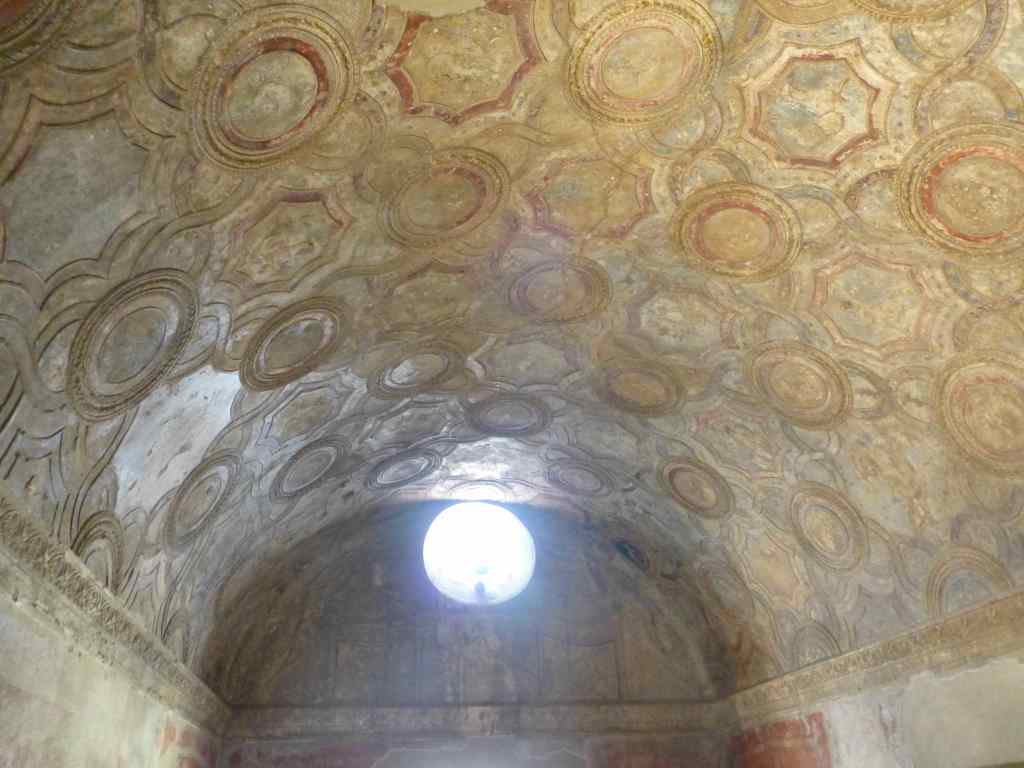


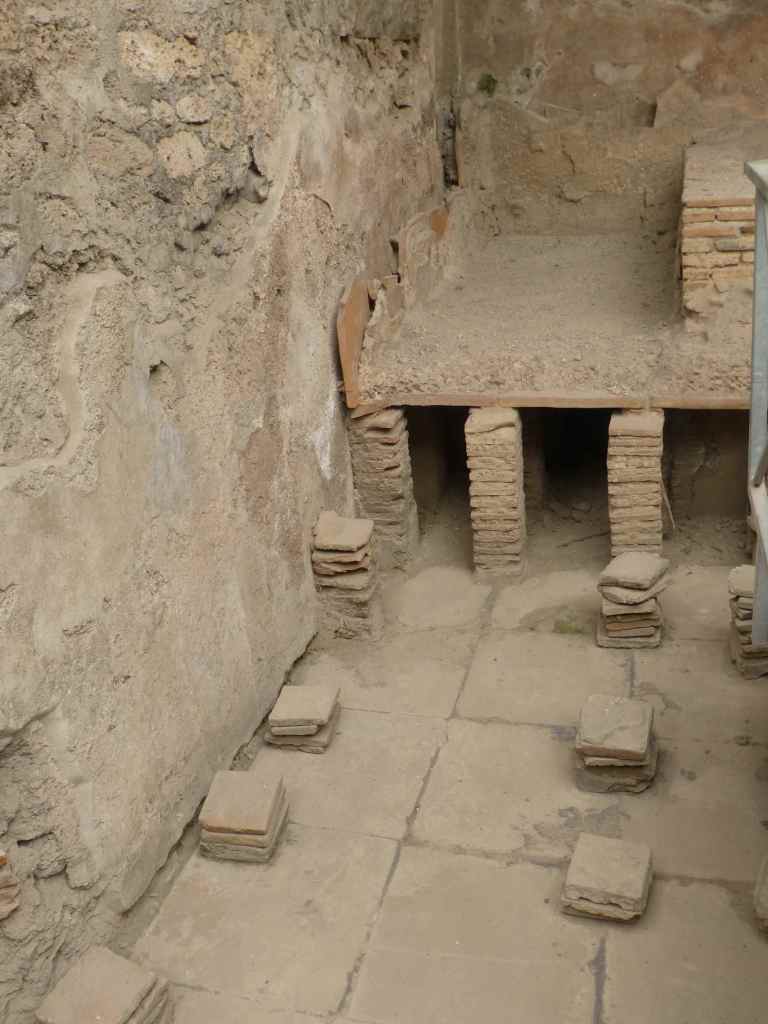
After the fitness program, the Romans entered first the hot and then the cold pool. But since many of them died with this sharp difference, they preferred to use a cold fountain instead of the cold pool, with which to gradually change the temperature of the body. There was a cold bath and shower only in the men’s ward. It was believed that women were in more delicate health. The spa complex was really large and seemed to have everything that modern spa centers offer today. The difference was that today the use of a spa service was quite expensive, and at the time the entrance was free – at least for young men, soldiers, children and rulers. Only women had to pay a small fee. In both the women’s and men’s wards there were separate rooms for massages, as well as places for hair removal. Removing hair from the body in Roman times was important for both women and men.
We passed by the outer cold pool, which at the time had a blue color and was likened to sea water. The inner rooms were also speckled, with some stars on the ceilings that recreated the night sky. The most interesting thing here, however, were the two glass sarcophagi with people petrified by lava. One of them was a slave, and the same could be recognized by the belt he carried. In the other two separate rooms, we also saw hot tubs, and Susie explained in detail how the Romans heated the water and maintained its temperature with differently arranged bricks and stones. There were two large hot pools – one for men, the other for women, and between them there was a stove that heated both pools. The double flooring and double-insulated walls helped to retain heat. The walls in this hall were richly painted with various decorations. The ceiling was no less interesting, as its relief was made in such a way that the evaporating water, which became in drops, was “permeated” and it did not drip or fall on the heads of the people resting in the pool.


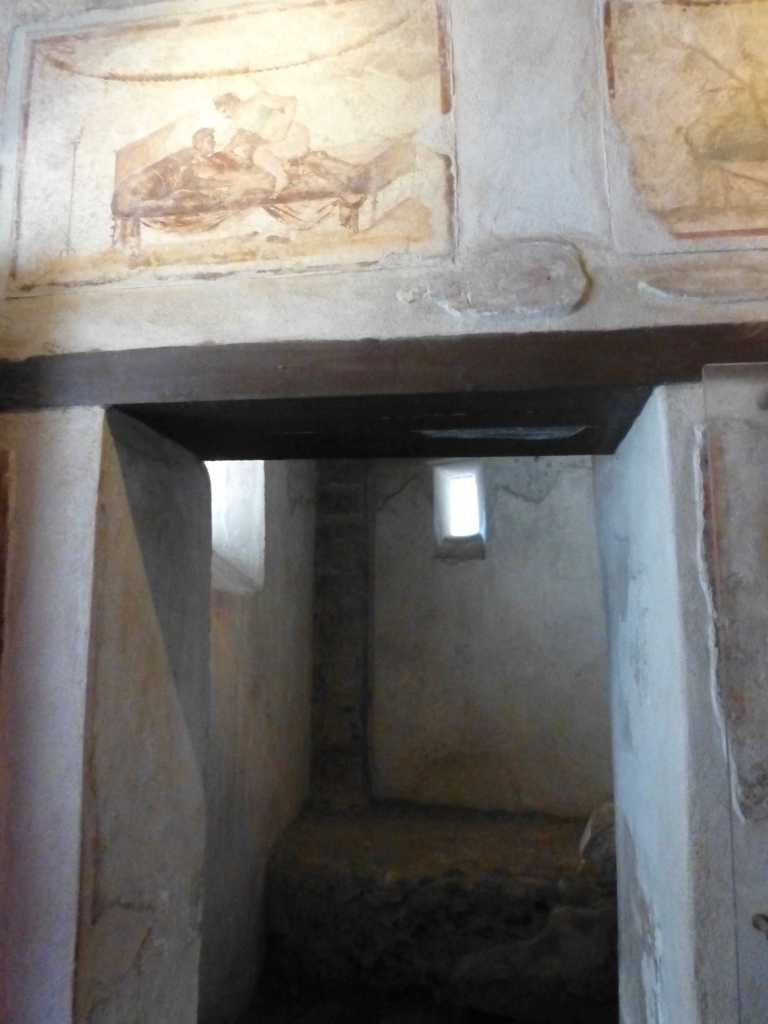
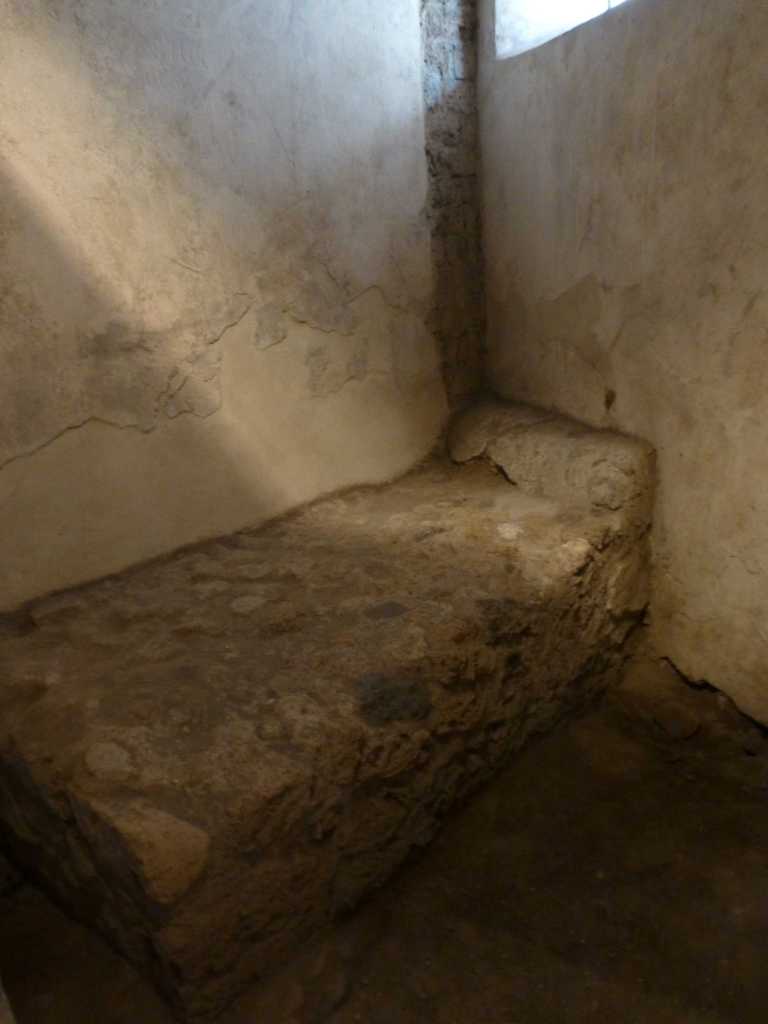
After the spa center, we headed to the other entertainment complex – the brothel. In Pompeii, 25 boudoirs were discovered, prostitution was legal and taxes were paid. We visited one of the largest brothels, as the house was on two floors, but today only the first floor could be seen. Although, according to Susie, the upper floor had larger rooms and beds, and offered more privacy. Especially interesting were the colorful erotic images on the walls with different sexual positions. It turned out that at the time most prostitutes were slaves from different parts of the world, and since they did not speak the local language, the men simply showed the image of the desired position. Some of the mosaics of these poses were kept in the Archaeological Museum of Naples, which we had visited the day before, but here on the walls above the stone beds they had a stronger impact. We learned that prostitutes of the time dressed in sheep’s clothing, which made men literally howl like wolves. When a prostitute was with a client, she lit the lamp on her window and from there came the name Lantern District.


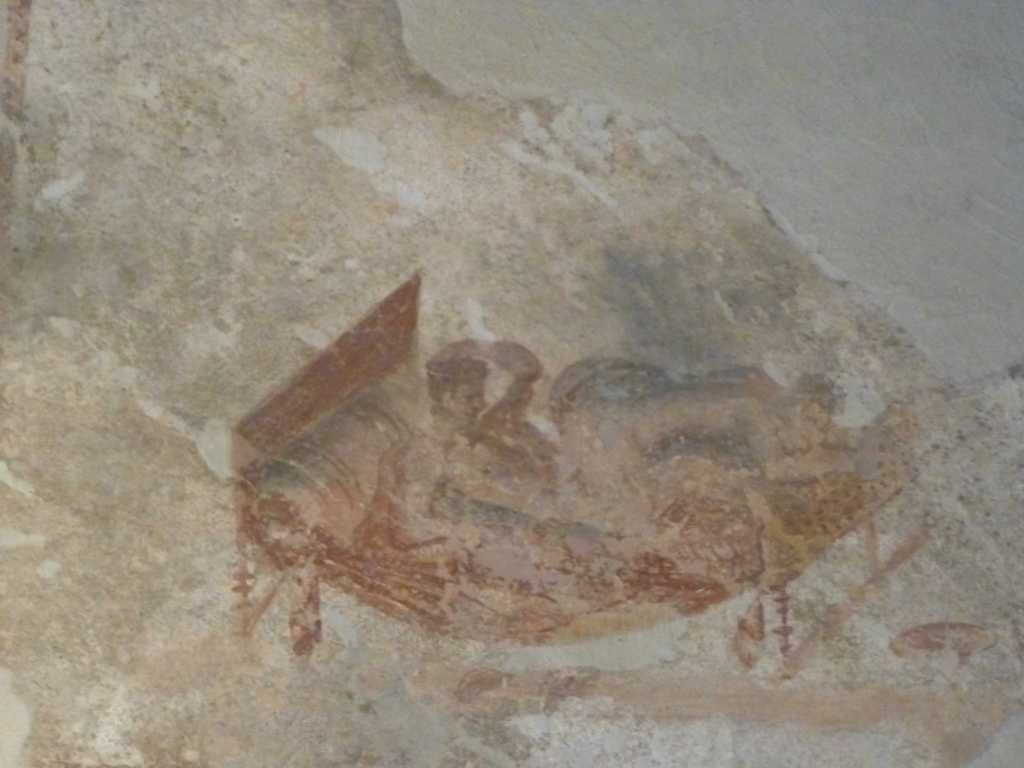
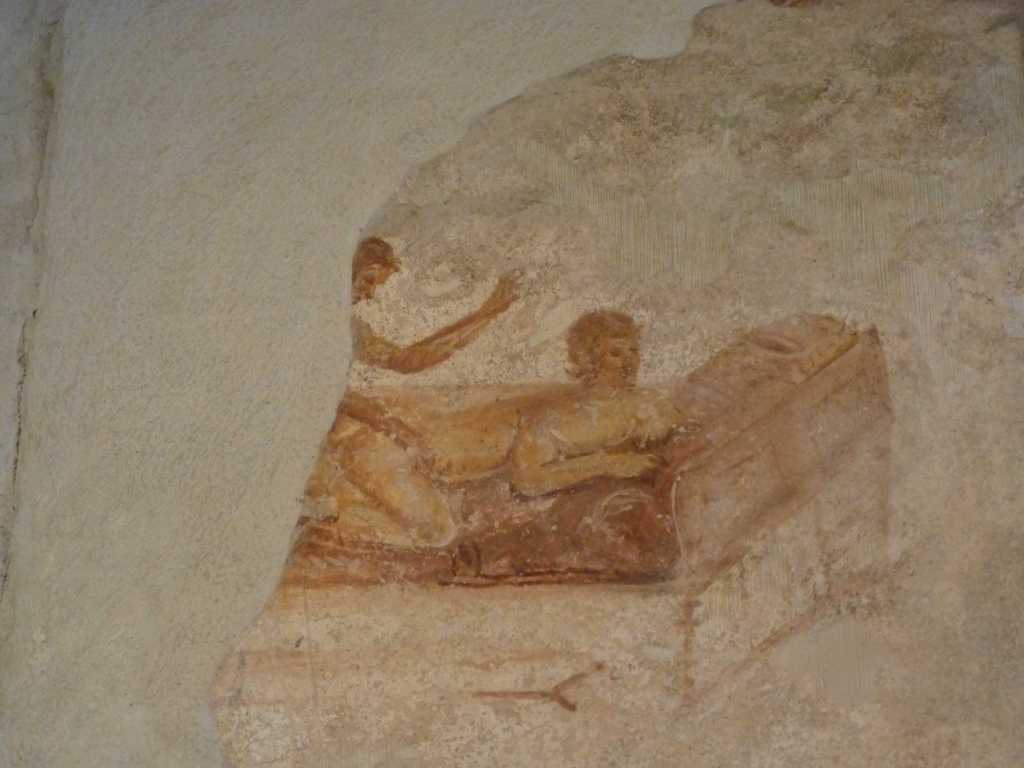

To show the way to the Lantern District, the Romans used the universal language of illustrations, carving large phalluses on the central streets of the earth pointing in the direction of the Lantern District. Susie recommended that we take a picture with one of these signs for good luck. These images were also on the souvenirs that were sold in Pompeii.
Imperceptibly we reached the Ancient Port of Pompeii, from where visitors entered and was considered the beginning of the city. From here started a wide central street, paved with pieces of marble – called cat’s eyes, because they shone in the moonlight. In this way, they shone in the dark and oriented people in the direction of the city. There were also remains of torches placed on the city walls, which also illuminated the main road, unlike today, where we still had unlit streets.


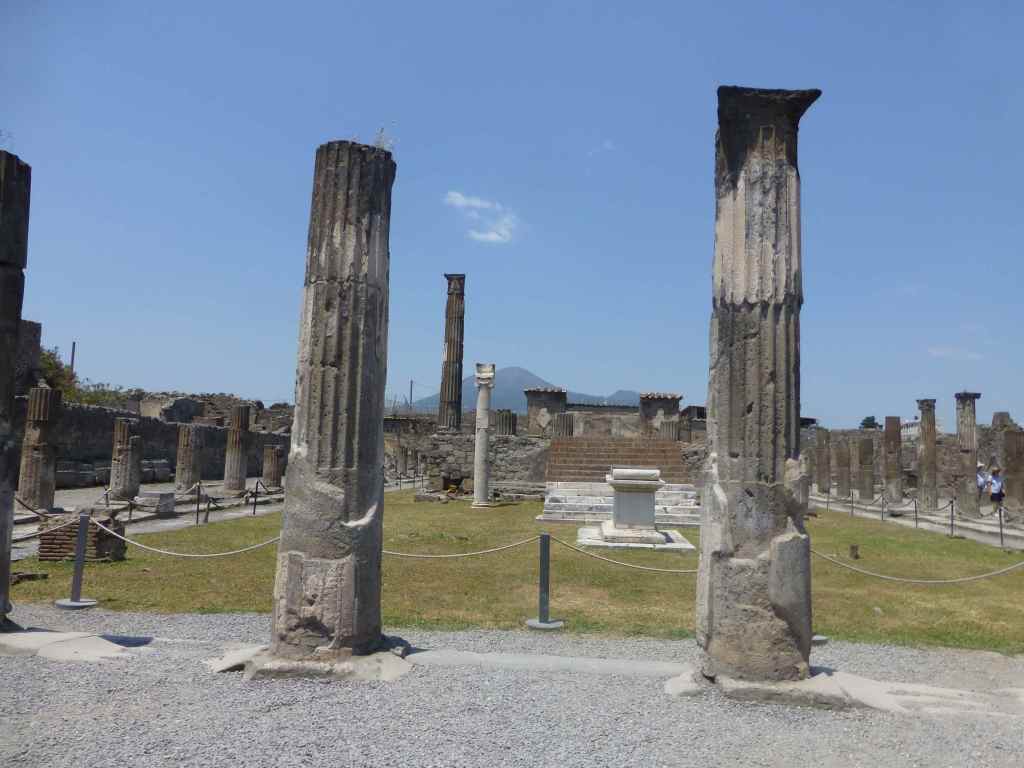
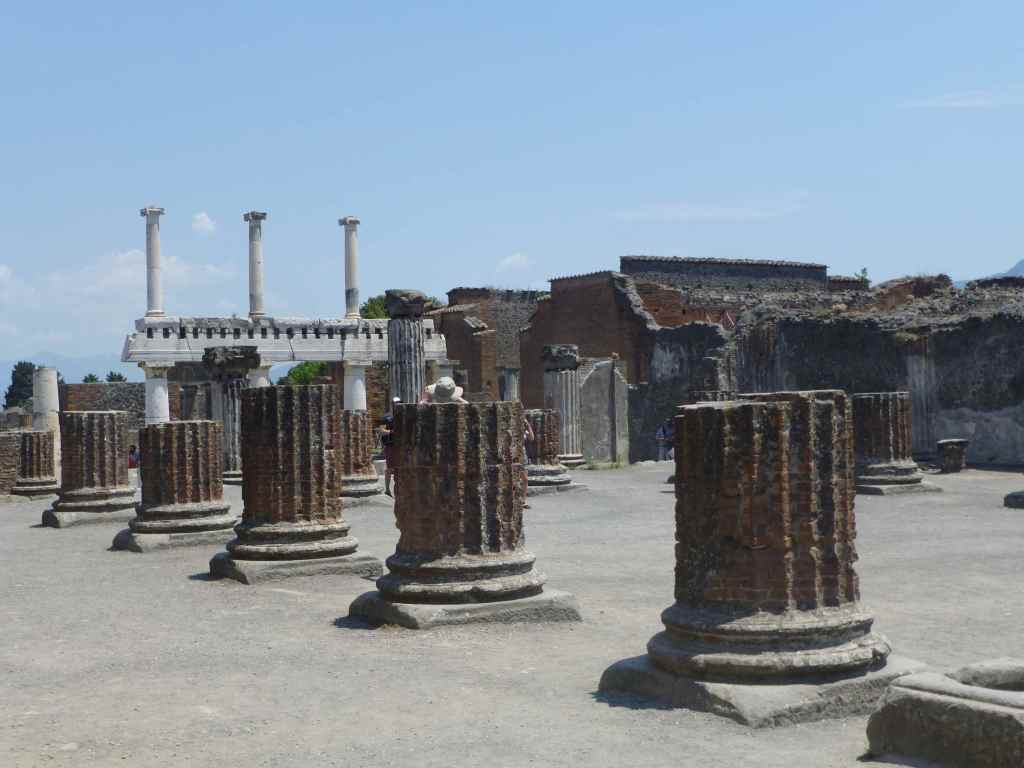
We stopped at the forum – the large central square, against the background of which Vesuvius was visible. In the past, this was probably the busiest place – the heart of the city. The most important administrative buildings, temples and monuments were located here. The main place, in the center of the square, was occupied by the temple of Jupiter, of which only a few columns remain today. It turned out that the huge head of the god Jupiter, which we saw the day before in the museum, was taken from here. On the former port shore there were also columns of the majestic temple of Venus, which was built of white marble and guided ships to the city like a lighthouse. However, it is not known exactly what this temple looked like, as it was destroyed during the earthquake. What was left testified that in Roman times the whole square was built of marble, and the whiteness was visible far out into the sea. Now the sea was visible far away – more than 3 km. This had happened after the eruption of the volcano.
Vesuvius had left deep traces in the city and I wondered what impressions it would leave on us after we were about to climb to the very top. Before that, however, Susie, together with our first tour guide Maria, took us to a pizzeria (Pizzeria ristorante Lucullus), where we got a Margherita pizza or cannelloni with spinach and cheese, and soft drinks, as well as the opportunity to refresh ourselves after the hot sunny walk. We enjoyed the pizza very much, especially after we ate it in the cool air-conditioned restaurant.




After eating, we got back on the bus, and the trip to Vesuvius took us about 30 minutes, passing through a town with the sonorous name of Greco Del Torre, famous for cultivating flowers. It turned out that where the lava had once passed, it had left very rich soil, and now it was the second most fertile area of flowers in Italy, after the one in San Remo. Very sweet cherry tomatoes, excellent olives for olive oil and grapes for fine wines were also grown here.
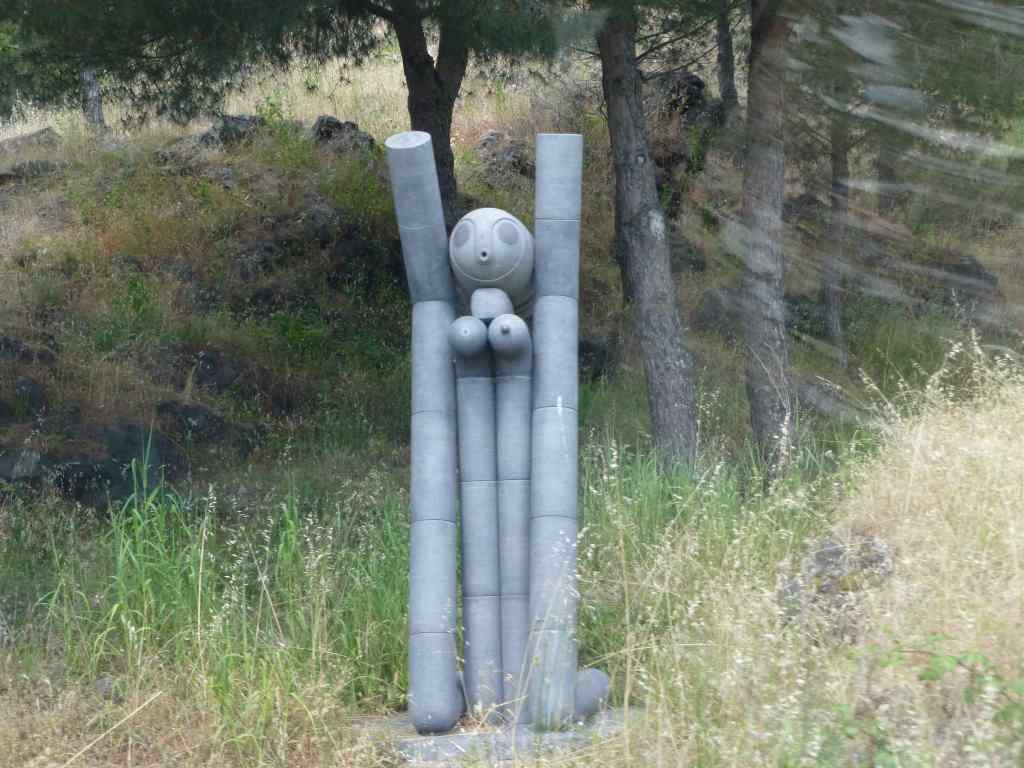
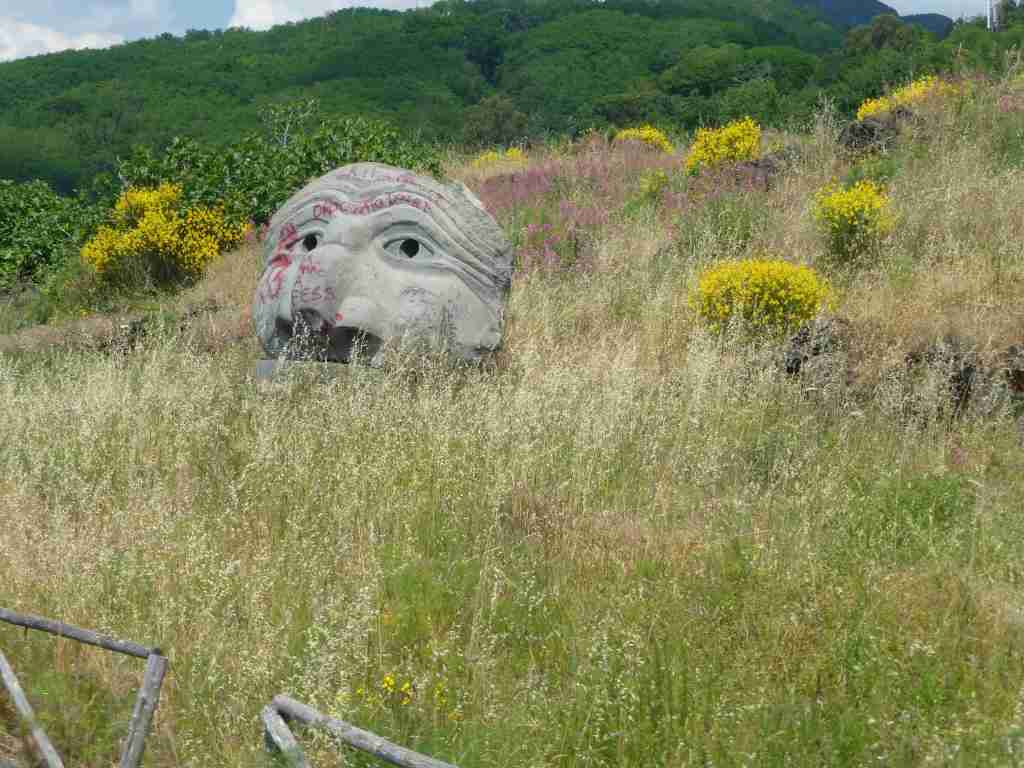
We continued with the bus through the Vesuvius National Park, which was declared as such in 1995 in order to preserve the natural beauty of the volcano. In addition to the wild flowers, there were also cultivated flowers in the picturesque roadside houses, whose windows and yards were dotted with flowers. Along the way, there were also various statues made of volcanic stones. This idea came to a group of artists, who in 2003 decided to beautify the road to Vesuvius, turning it into an open-air museum. All the statues were too modernistic for my taste, but I liked the idea that only natural materials were used to create them. One of the statues was called “The Eye of the Volcano” and it was staring at us, as if it was watching who was climbing the mountain.
And Vesuvius really bore the simple name “Mountain” in antiquity. This mountain was covered with vegetation and vineyards. The eruption in 79 AD was surprising and the lava engulfed two cities – Herculaneum and Pompeii.
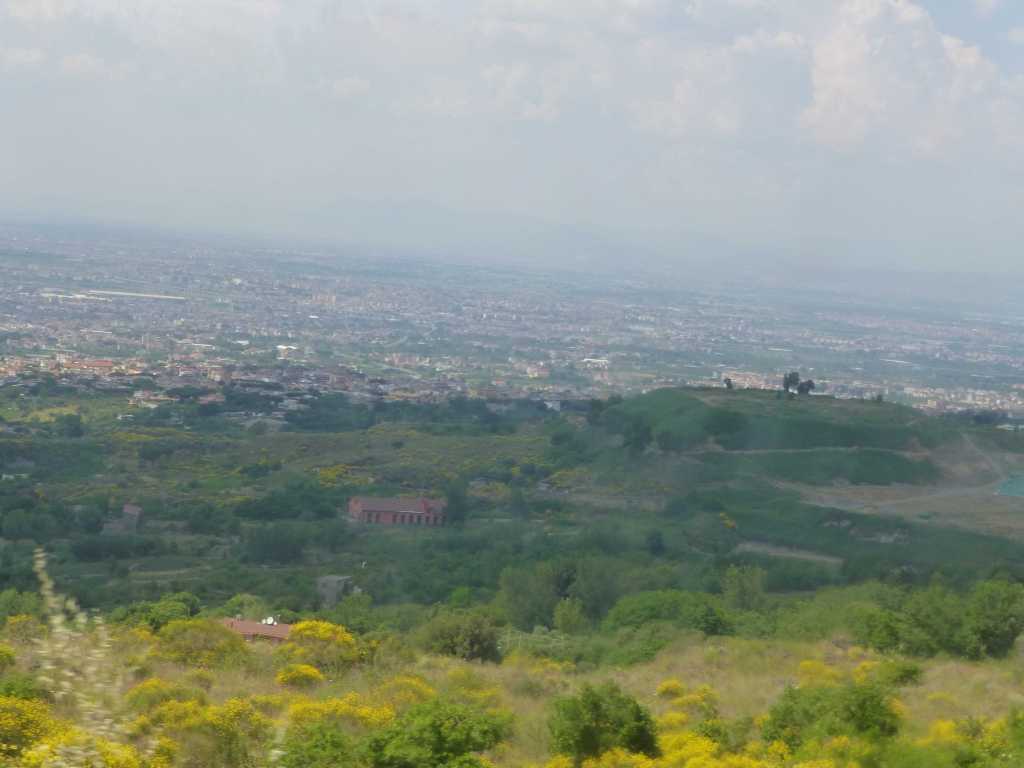
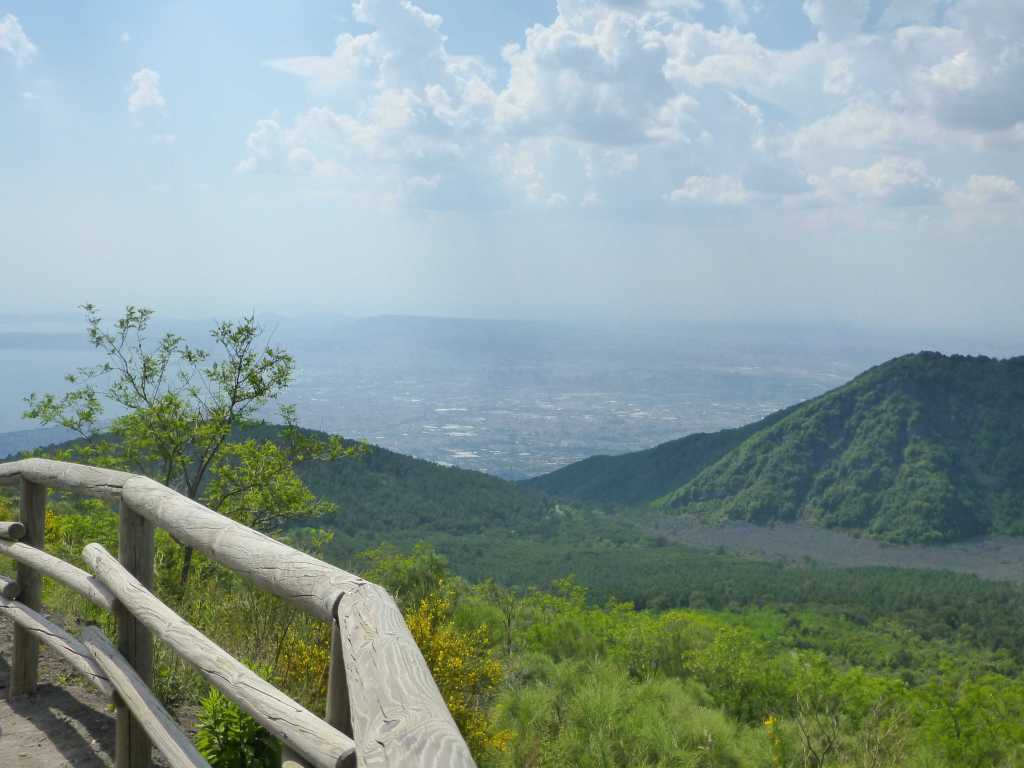
Not long after, we reached the parking lot, which was 1000 meters above sea level. The rest of the way we had to walk, climbing to a height of 1281 meters. We had an hour and a half of free time or 45 minutes to climb and the same amount to descend. However, the ascent was slow and not because it was steep, on the contrary, the alleys were well shaped, the reason for the delay was the wonderful panorama that opened up to the Bay of Naples.
It was a very sunny and warm day, and for our convenience there was an occasional cloud that cast a shadow on the otherwise bare rocky road. At one time in 1880, there was a cable car or funicular that took visitors to the crater itself, but during the last eruption of the volcano in 1944, during World War II, the funicular was destroyed and then not restored. However, the memory of it was carried in the famous Italian song “Funicular, funicular”. The guide had explained to us during the trip that the name Funicular was actually the name of the master who created this lift.
While climbing, we stopped at a panoramic platform, from which we took pictures of the river, formed by lava and now consisting of small pebbles and flowers. It had formed during the last eruption in 1944. To the side of us remained the smaller crater next to Vesuvius, called Monte Suma. Before it erupted in 79 AD, Vesuvius was a very high mountain with over 3000 meters of height crater. Today, the volcano was still active and considered one of the most dangerous volcanoes in Italy. We visited it while it was sleeping, but no one knew when it would wake up again, so an entire observatory was set up to monitor its activity around the clock. According to Maria, the next eruption would be as large-scale as the one in 79.

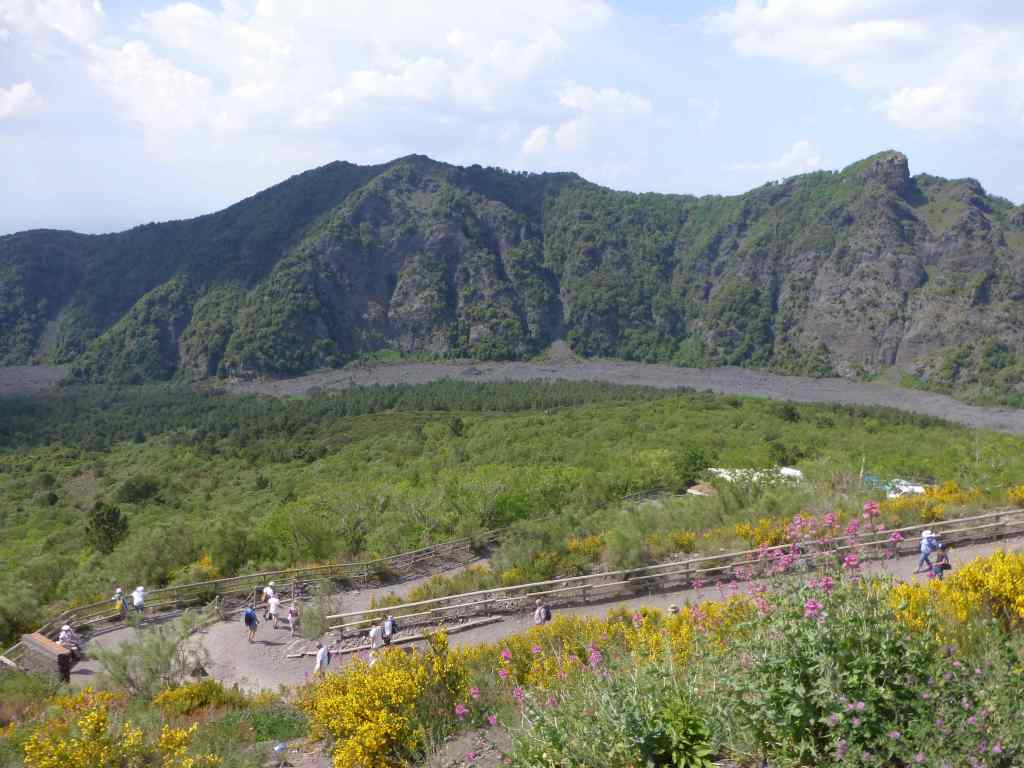

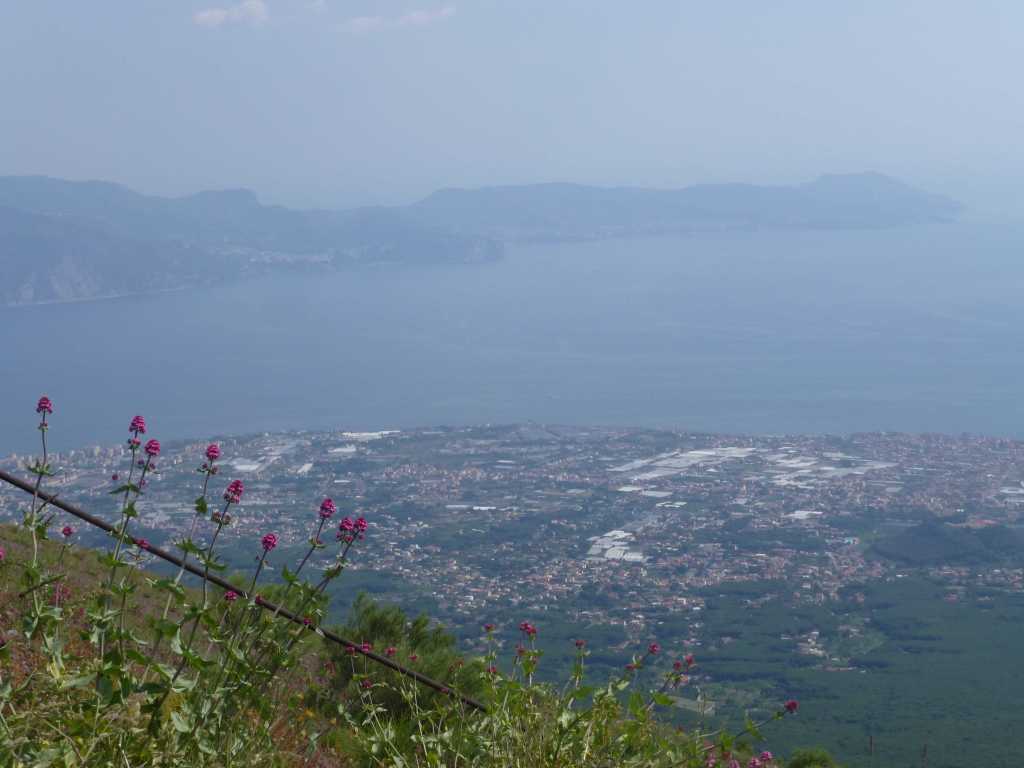
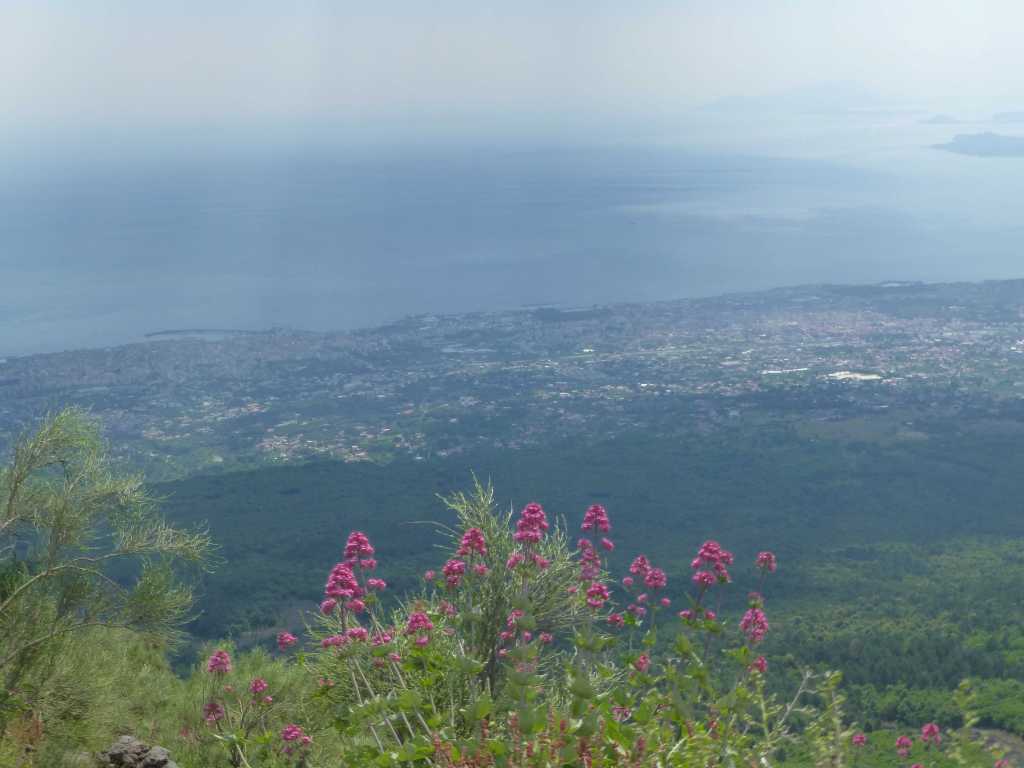


However, we decided not to look so pessimistic, but to enjoy the wonderful landscape that was revealed from the second panoramic platform overlooking the Gulf of Naples and the island of Ischia, which was the largest island here. The alley we were walking on was very sandy, which made it more difficult to move along it. Along the way, there were also yellow flowers that had become the symbol, or rather the wreath of the volcano. Slightly tired, but also inspired, we reached the huge crater, in which there was no bubbling lava, but only stones of different sizes. The diameter of the volcano was 500 m, the depth was 250 m. We took photos and just in time we returned back to the bus, which on the way back played loudly with the horn, at every narrow turn. I hoped this sound wouldn’t wake up the sleeping volcano.
Pompeii and Vesuvius impressed me – the hidden city and the dormant volcano are a wonderful fairy tale, and I hope they will continue the peace between them with the words “lived happily together”.

GENERAL INFORMATION ABOUT POMPEII:
Location: Pompeii is an ancient Roman city located in the Italian region of Campania, at the foot of the volcano Vesuvius, at the mouth of the Sarno River in the Gulf of Naples.
Area: 170 acres (688 sq.m)
Official language: Italian
Altitude: 11 m
Climate: subtropical climate
Time zone: UTC+1
Currency: Euro (EUR)
Additional Information: http://www.pompeiisites.org/
TRIP TIPS FOR POMPEII:
Best time to visit: all year round, with extended opening hours from April to October, and free admission on the first Sunday of each month
 TripTips