THE DAZZLING CITY OF NAPLES
автор: Ана Бонева
Vedi Napoli e poi Muori (See Naples and Die)
It is believed that this phrase dates back to the time of the Bourbon rule in Naples, when it was the golden age of the city. It was later popularized by Goethe, who resided in Italy in 1786-88 and wrote his travelogue Italienische Reise.
According to another interpretation, the phrase was Videre Neapolim et Mori, with Mori being a small settlement near Naples. However, such a settlement did not exist until 850, and there was no reason for the phrase to be in Latin. That’s why I liked the first interpretation of the Vedi Napoli e poi muori better, which meant that there is nothing more beautiful and dazzling than Naples, and once you see it, you can calmly die, because you will not find anything better.


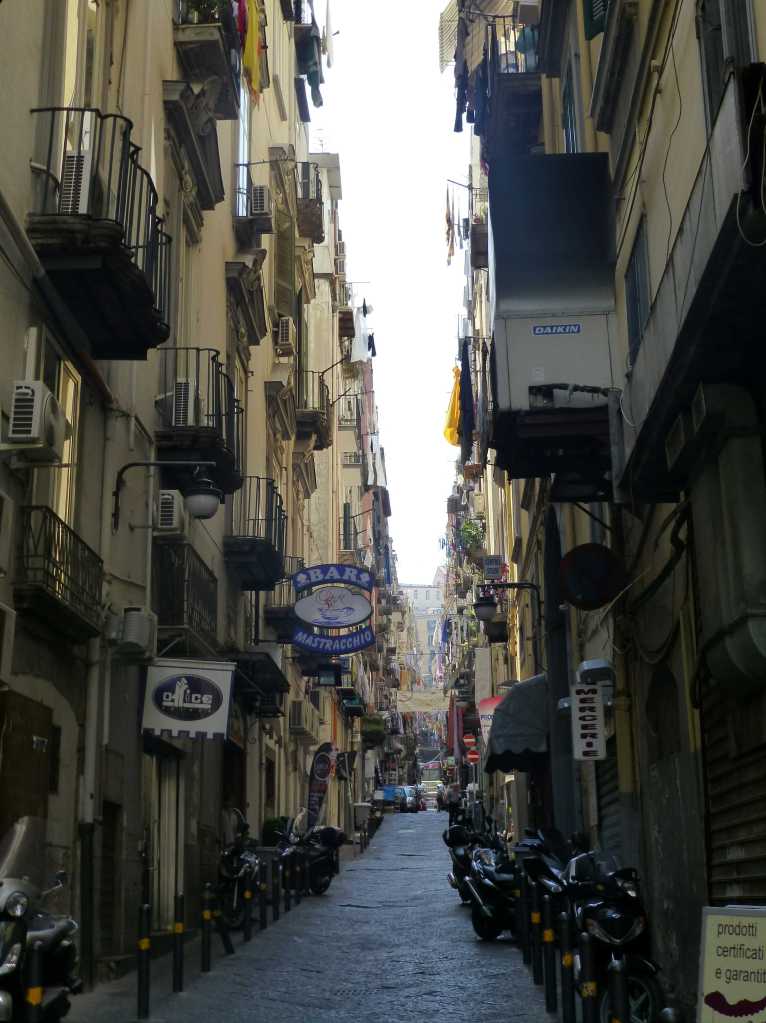
My first impressions of Naples were the densely located buildings and the barely winding streets between them, where many scooters were parked and laundry hung from the windows. It was a sunny port city that over the centuries had attracted various civilizations that had left their marks here. Today, the city continued to attract diverse peoples and millions of tourists, who, however, left only their garbage. It was one of the most polluted cities I had visited, and it was dirtier even than Bulgaria, which was currently leading in my rankings. But apart from that, the city was filled with so many beautiful buildings and landmarks that attracted the eye and cameras that pollution on the ground remained in the background.


We arrived in Naples with a Bulgarian air flight to Rome and from there with the direct high-speed train. From the station in Naples we took the metro to the hotel, getting off at the Toledo stop. This is undoubtedly one of the best metro stations in Europe. Officially opened in September 2012, Toledo Station was built at a depth of 50 meters and was one of the deepest metro stations on Line 1. But it wasn’t as impressive as its modernist design, a mixture of water and light. A huge cone-shaped light blue hole protruded from the ceiling, which at the very end reached the sunlight. Other ornaments resembled waves and were also decorated with numerous lights and lamps. We left this stop only after many photos and found ourselves on the pedestrian shopping street Via Toledo, where our hotel was located.

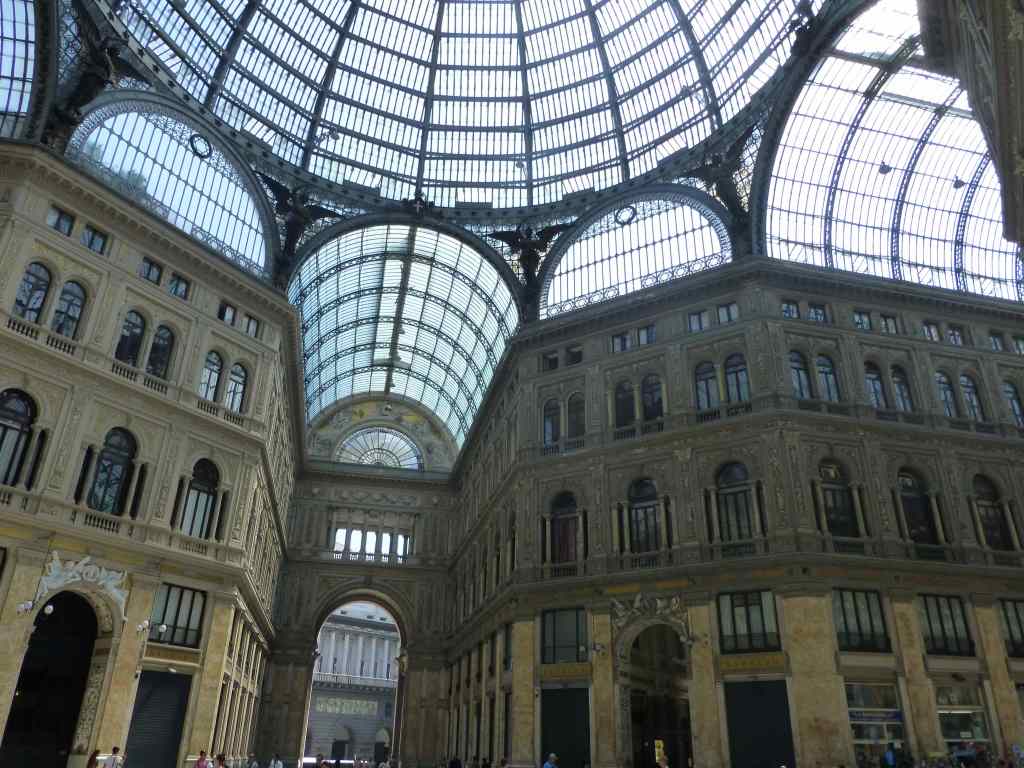
We quickly refreshed ourselves and went outside, eager to explore this city, so praised over the centuries. On our way to the Nuevo Castel, all the buildings impressed us, especially the Galleria Umberto I. It was very similar to Victoria Emanuele’s gallery in Milan. Erected between 1887-1891, the gallery was designed to bring together businesses, shops, cafes and social life in general, with apartments on the third floor. We were impressed by the many windows and rich decorations on the walls. On the floor in the center of the gallery there were painted all the zodiac signs. After taking many photos, we headed to the huge medieval castle Castel nuovo or the New Castle.
It was called New, but how new could it been – erected in 1279. Right in front of it, however, there were cranes that gave the feeling that it was currently under construction (although they had a completely different purpose). Reaching the closed construction site, we decided not to move forward, but to photograph the castle only from the outside. Castel nuovo or also called Maschito Angioino today housed the city’s museum with a rich exhibition, as well as the most important art gallery focused on Italian art of the 19th century. Its façade was also like a sculpted painting and we captured it in many photos.


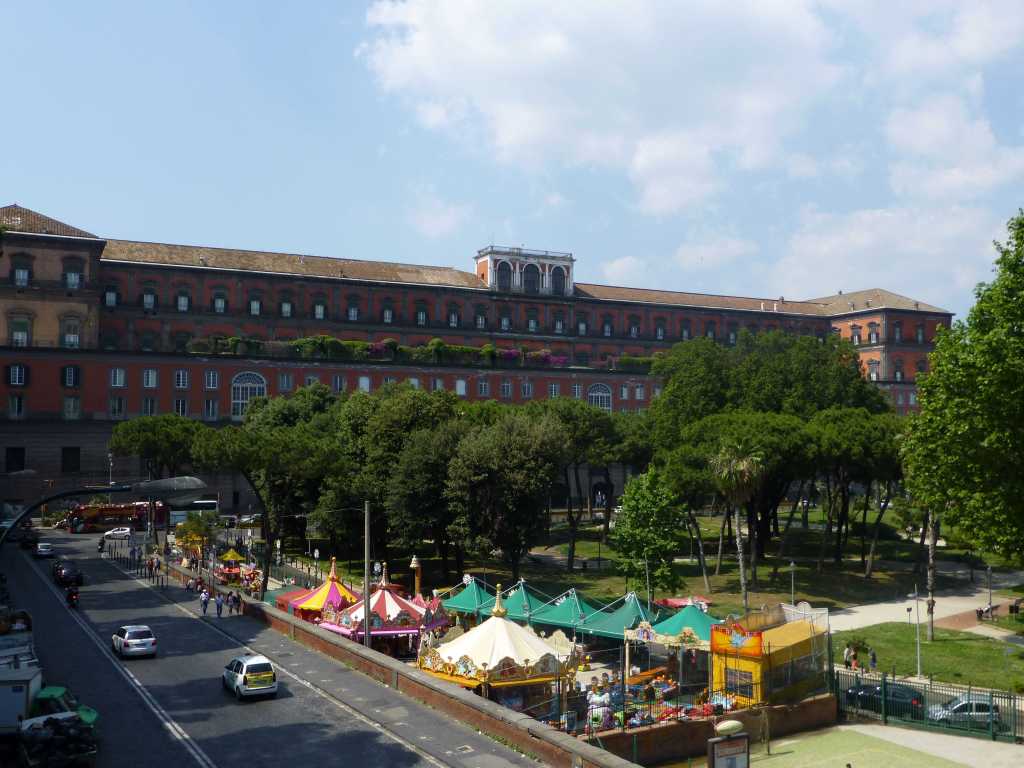
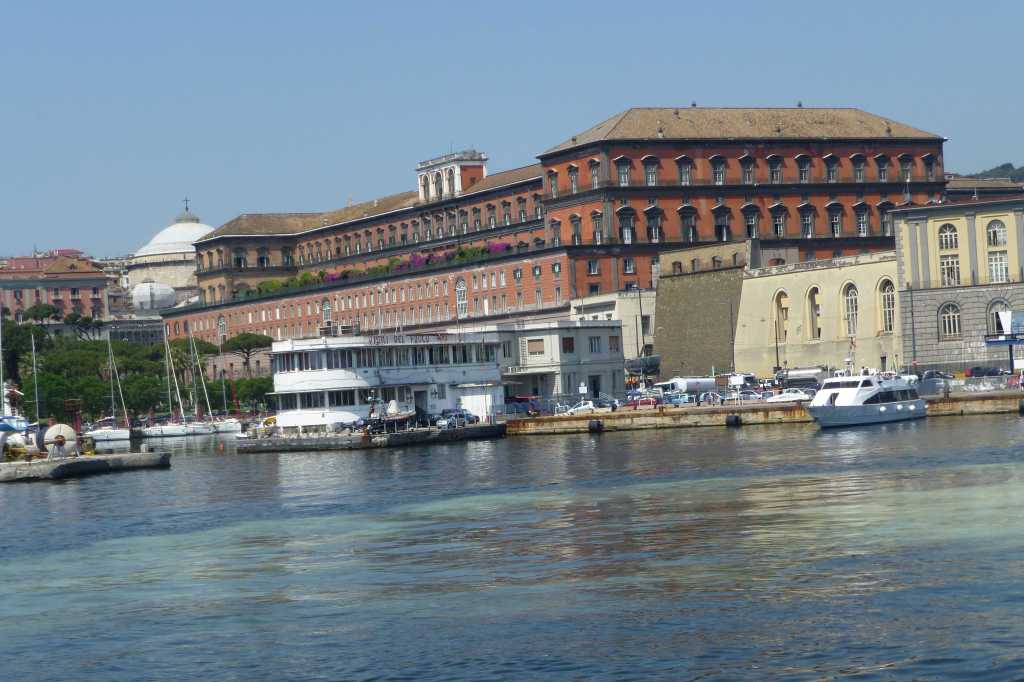
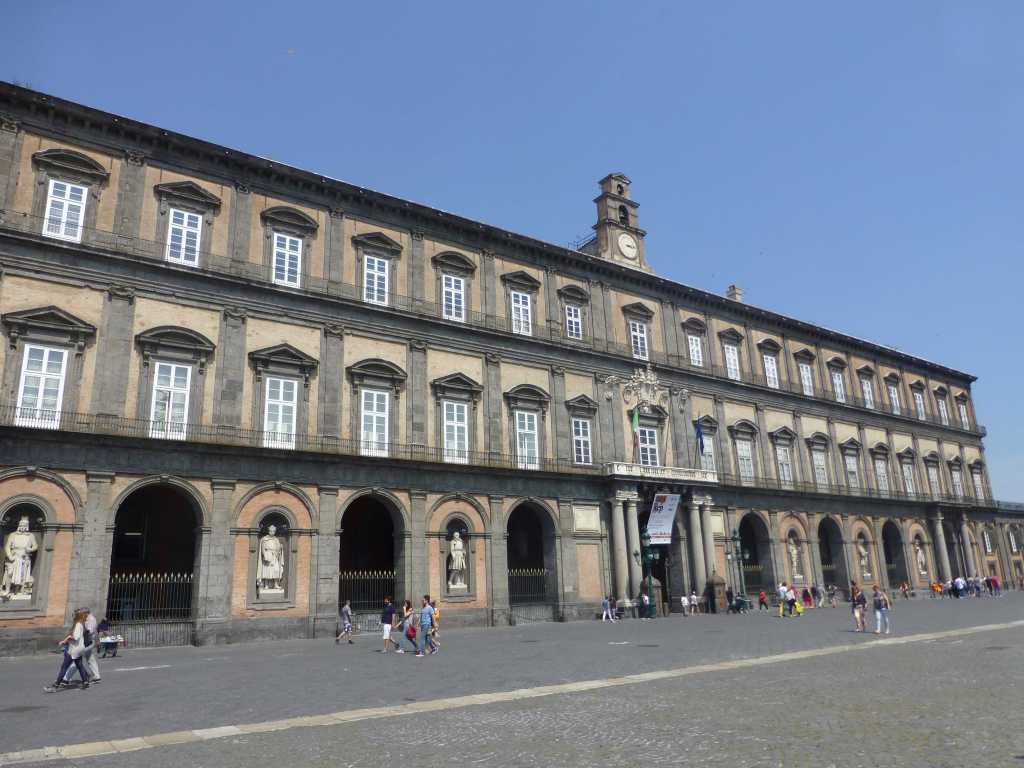
After this castle, we headed to the next one, called Palazzo Reale. This royal palace was one of the four seats of the Bourbon kings who ruled the Kingdom of the Two Sicilies (or the united kingdoms of Sicily and Naples in the period 1730-1860). Their other headquarters were the palace of Caserta (which we were going to visit the next day), the castle of Capodimonte, which towered on a peak above Naples, which we piled up with photos from the foot, and the third place was called Portici and was located on the slopes of Vesuvius. Thus, in just a few days, we were about to tour all their residences, exploring some of the most beautiful places chosen over the centuries by the kings themselves.


On the way to the Palazzo Reale, we passed by the San Carlo Theater, which turned out to be one of the oldest theaters in the world. Opened on November 4, 1737 – 40 years before La Scala in Milan – it quickly gained fame throughout Europe for its beautiful architecture and excellent staging. For many years, participation in a performance here was considered a peak in an artistic career. A strong fire in 1816 damaged the interior, but it was immediately renewed and modernized. In 1812, the San Carlo Ballet School opened its doors, which to this day fights for the title together with Milan’s La Scala for the oldest ballet school in Italy.
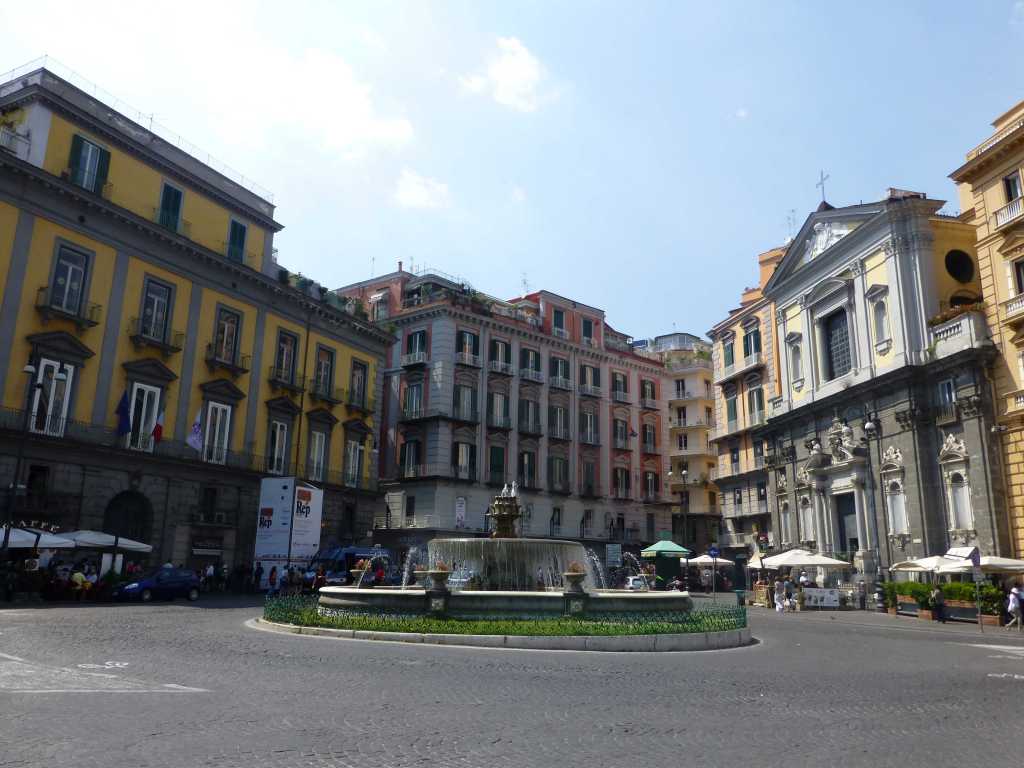
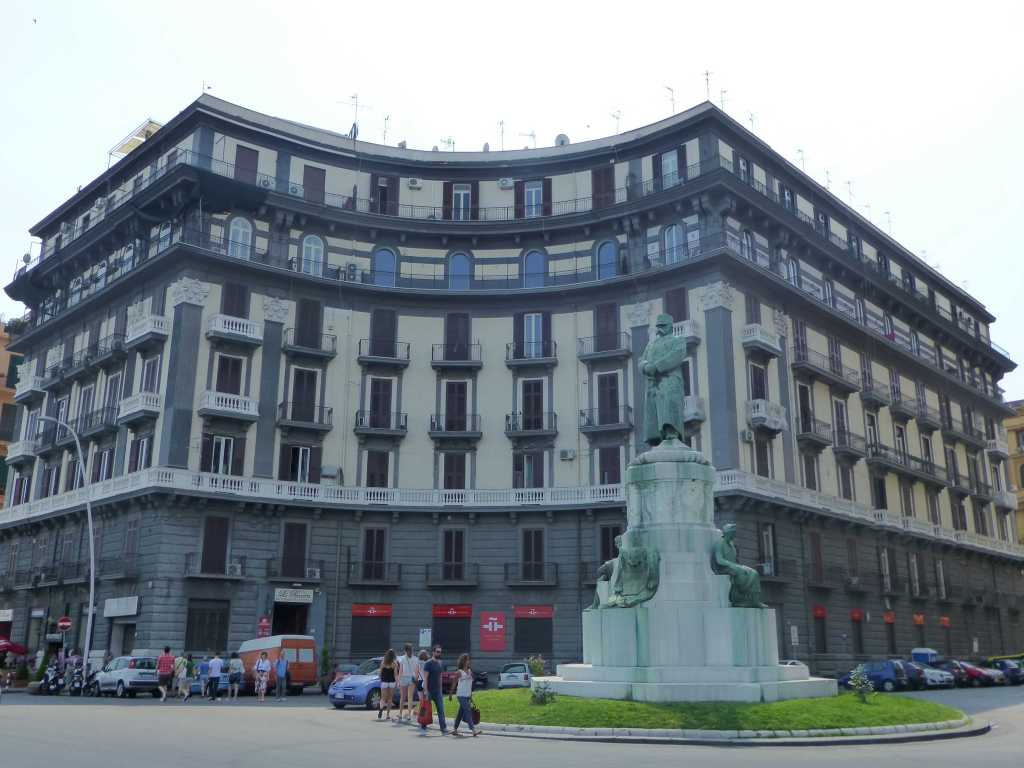
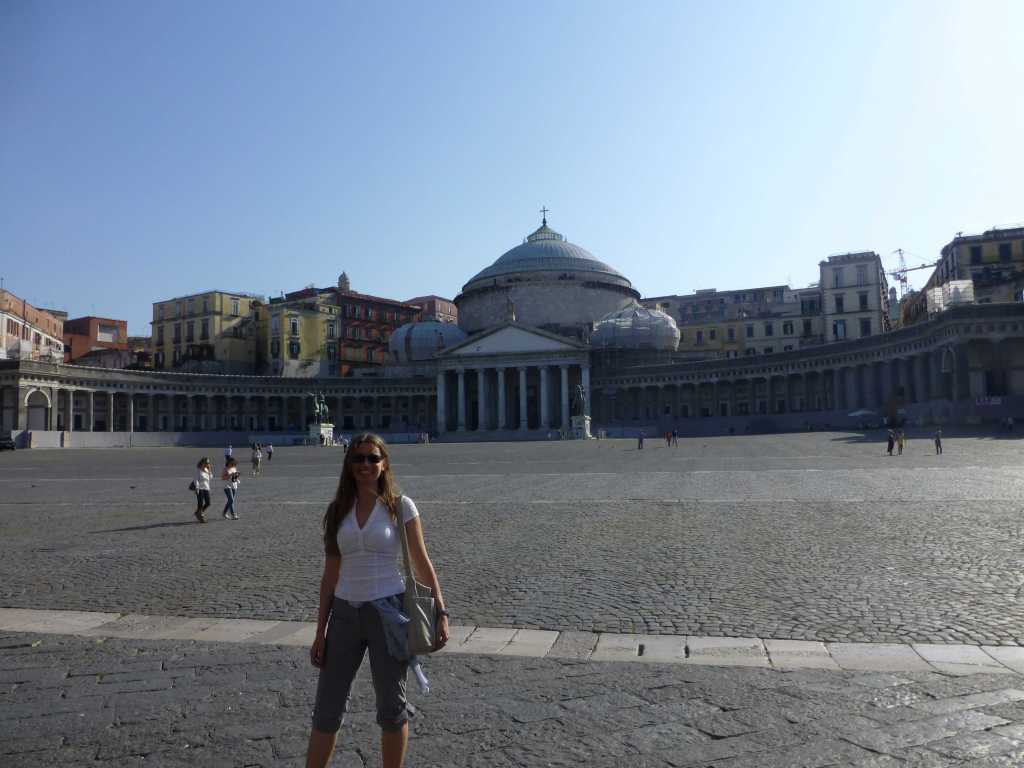
However, we were more impressed by the immediate roundabout with a beautiful fountain in the middle, surrounded on all sides by even nicer buildings. Apparently some kind of wedding was taking place nearby, because in this square, a huge white limousine and an even more interesting huge white vintage car were parked. After a while, we also saw the newlyweds taking pictures in the neighboring Piazza del Plebiscito.
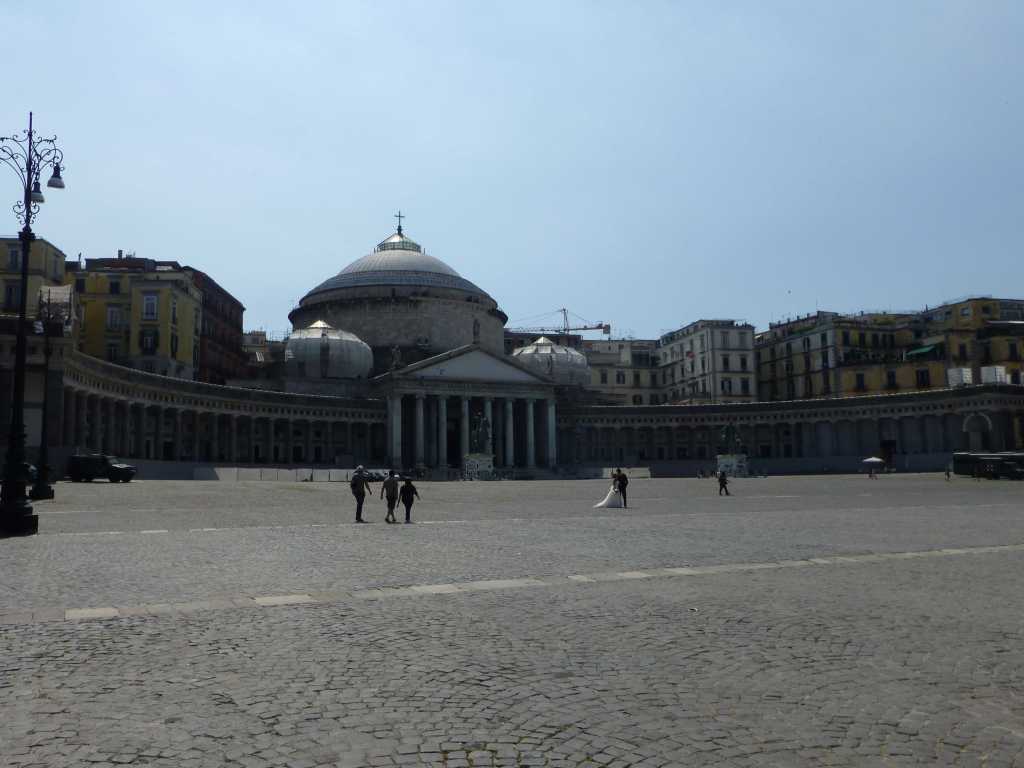



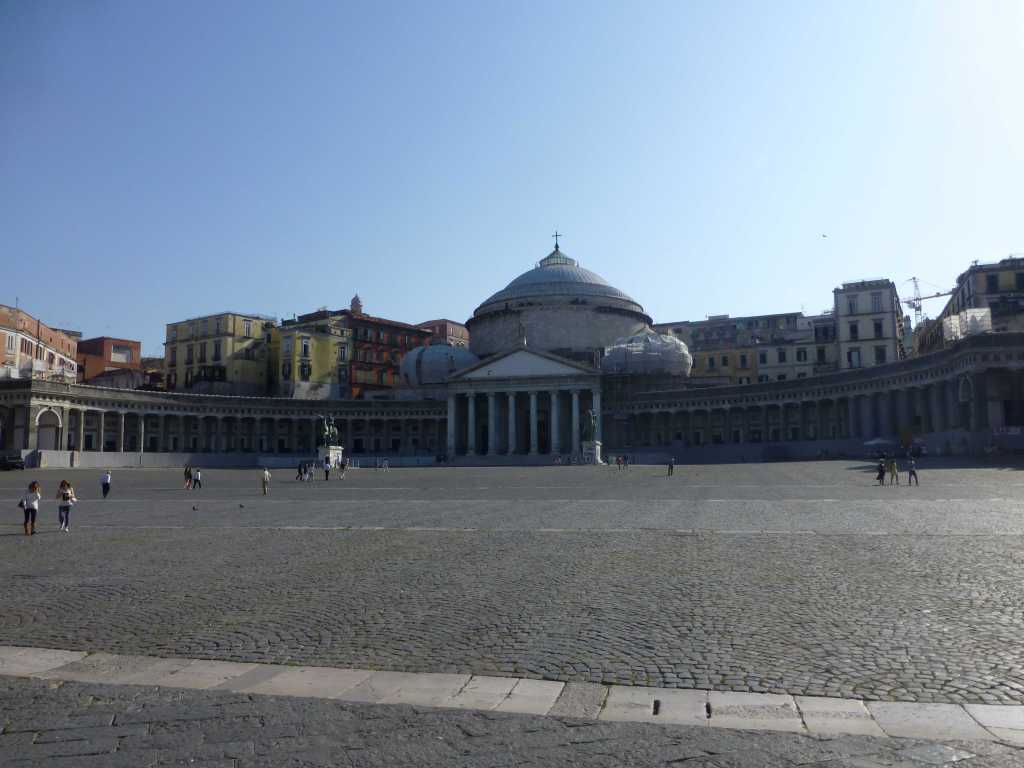
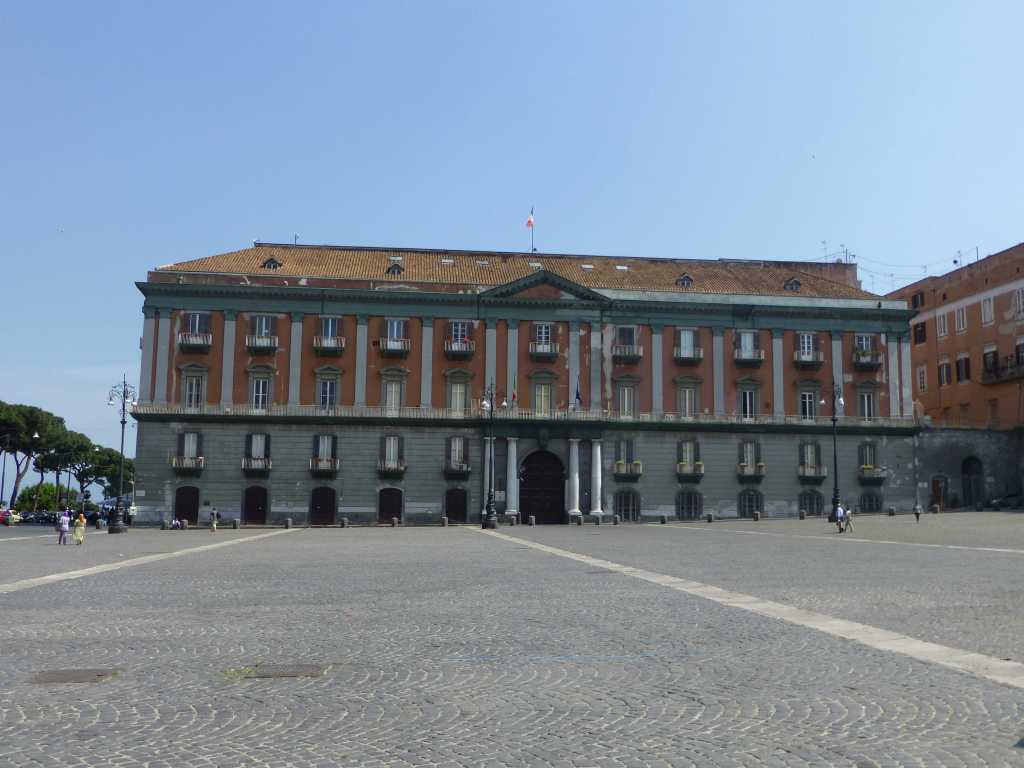
The name Plebiscito (referendum) was given to the square on October 2, 1863, when Naples became part of the Kingdom of Italy. This huge square was created back in the 19th century to serve as a tribune for the emperor, but after the fall of Napoleon and his exile on the island of St. Helena, the Bourbons regained their power over Naples and erected on the square the 53-meter church dedicated to St. Francis, like the Pantheon in Rome. Thus, the huge square stretched between the Palazzo Reale and the church of San Francesco di Paola.
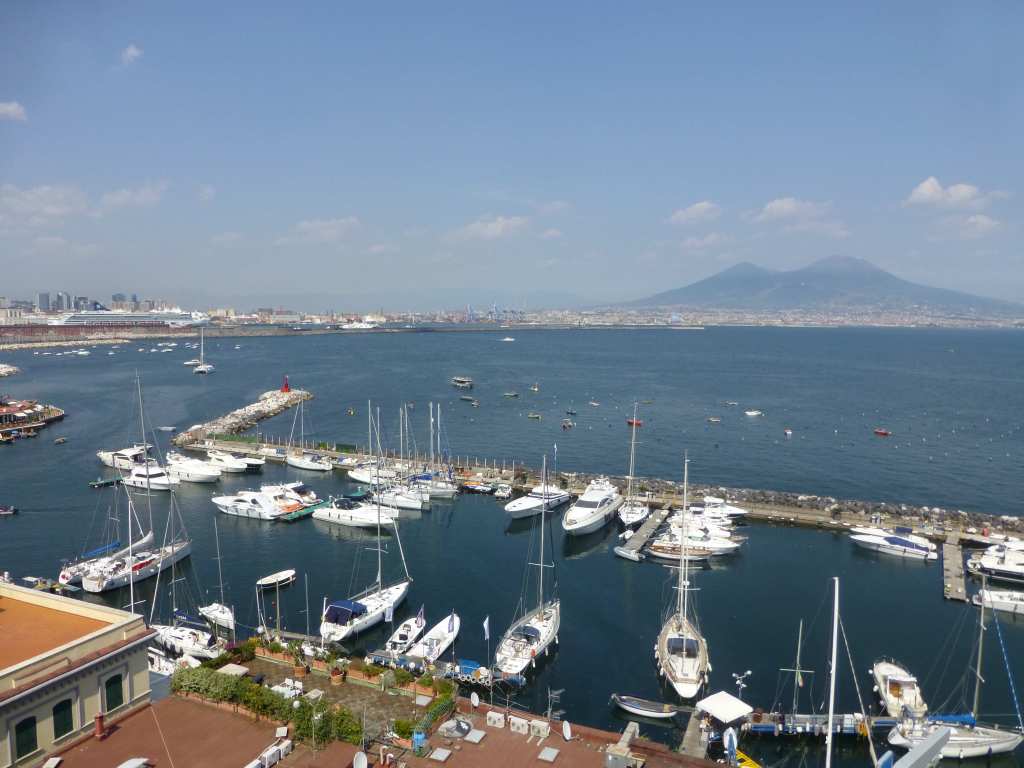
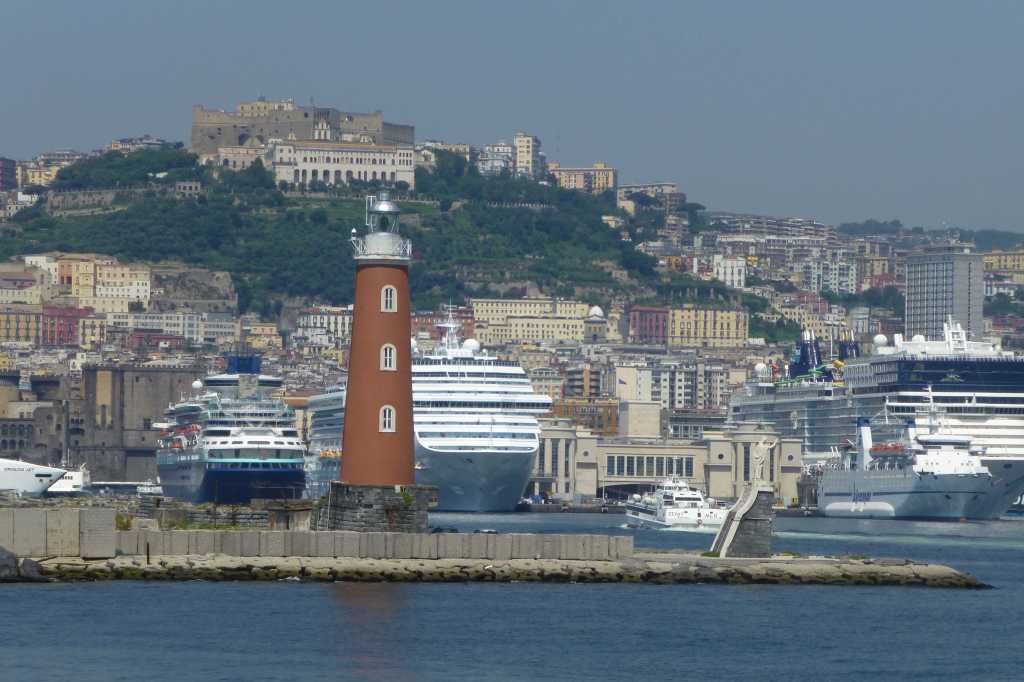
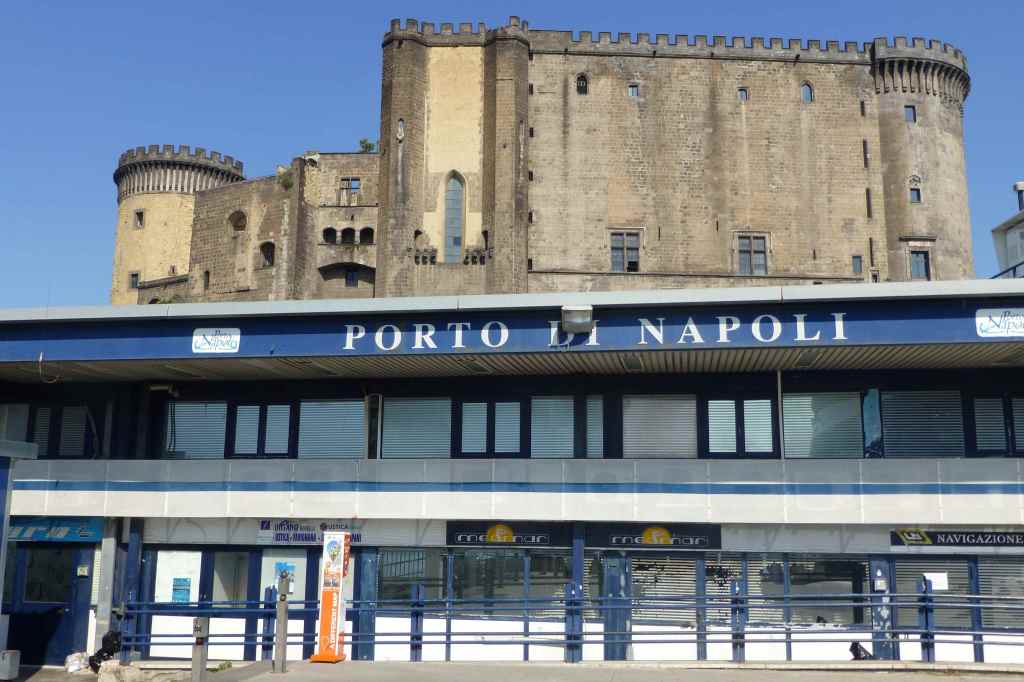
In just a few minutes we found ourselves at the port of Naples, which impressed us not so much with its beautiful yachts as with the volcano Vesuvius, which protruded from the opposite shore. To our reassurance, the volcano had acquired the calm blue color of the water in the distance, and it was not red as I imagined volcanoes. The port of Naples was one of the largest ports in the Mediterranean, however we preferred to walk along the promenade in the opposite direction to the port and leading to the next castle called the Egg.
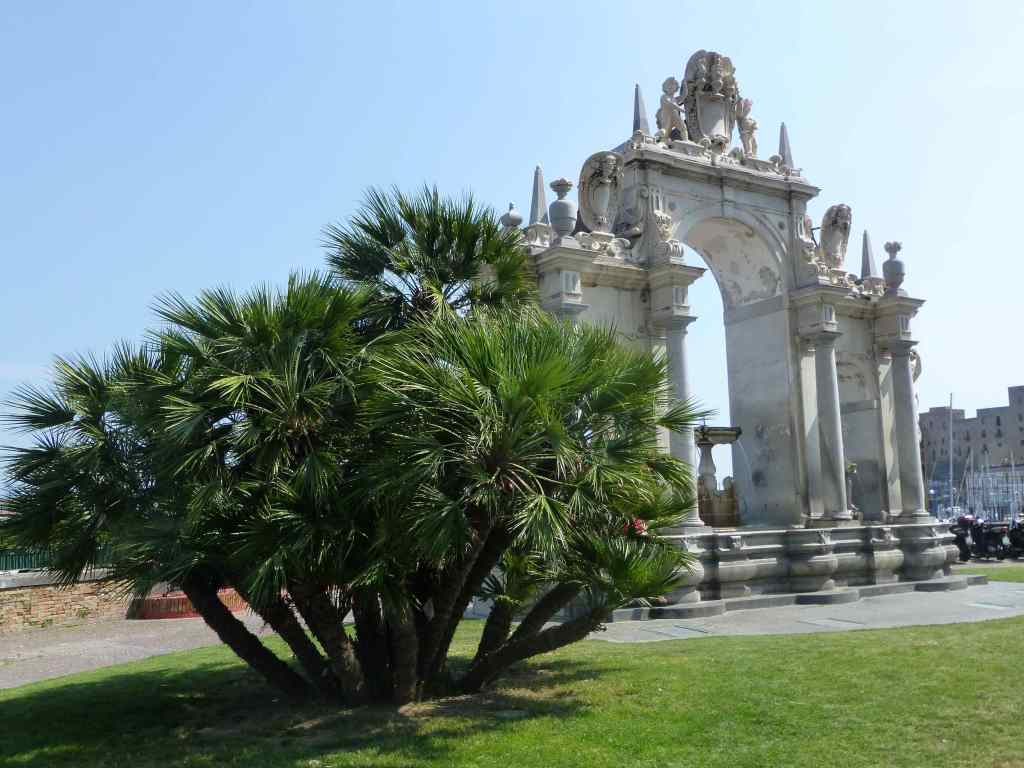

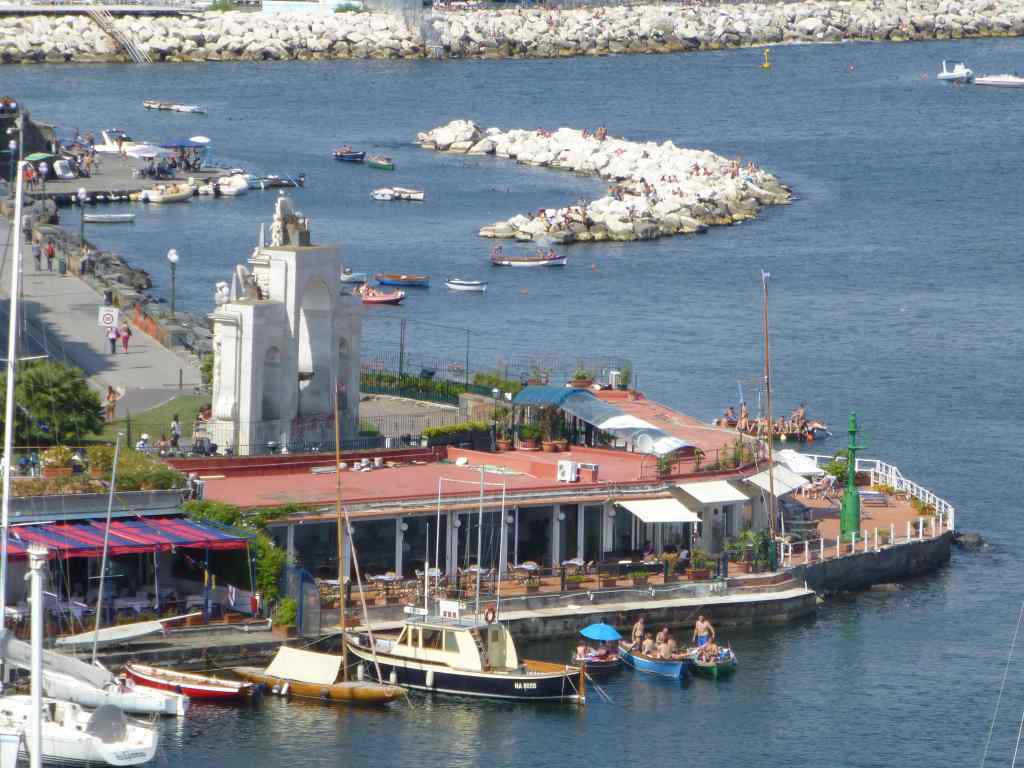
It was a sunny and hot day. While most people were looking for shade, we eagerly absorbed the warm sunny rays on our first day in Naples. There were street artists and vendors along the promenade with some really interesting paintings and souvenirs. However, we did not pay attention to them, attracted and impressed by one fountain named Fontana dell’Immacolatella (o del Gigante), which was located shortly before the Egg-Castle. According to reference books, it is especially beautiful at sunrise, a statement that we were unable to verify, but decided to trust. Even during the day, amazing photos were obtained here – against the background of the fountain stood the Bay of Naples and Vesuvius.
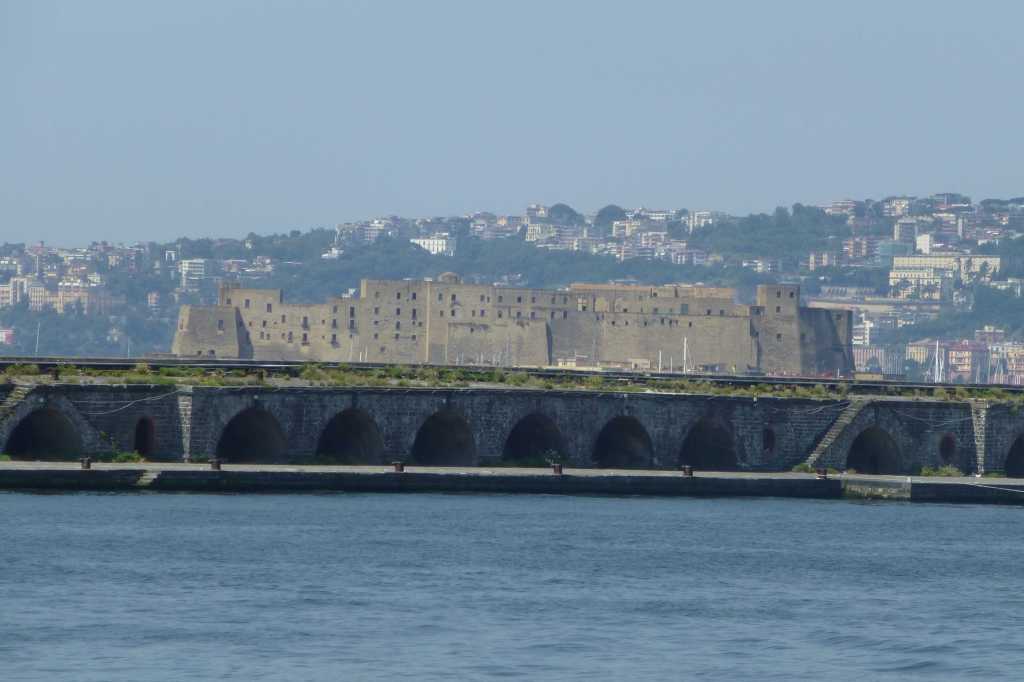
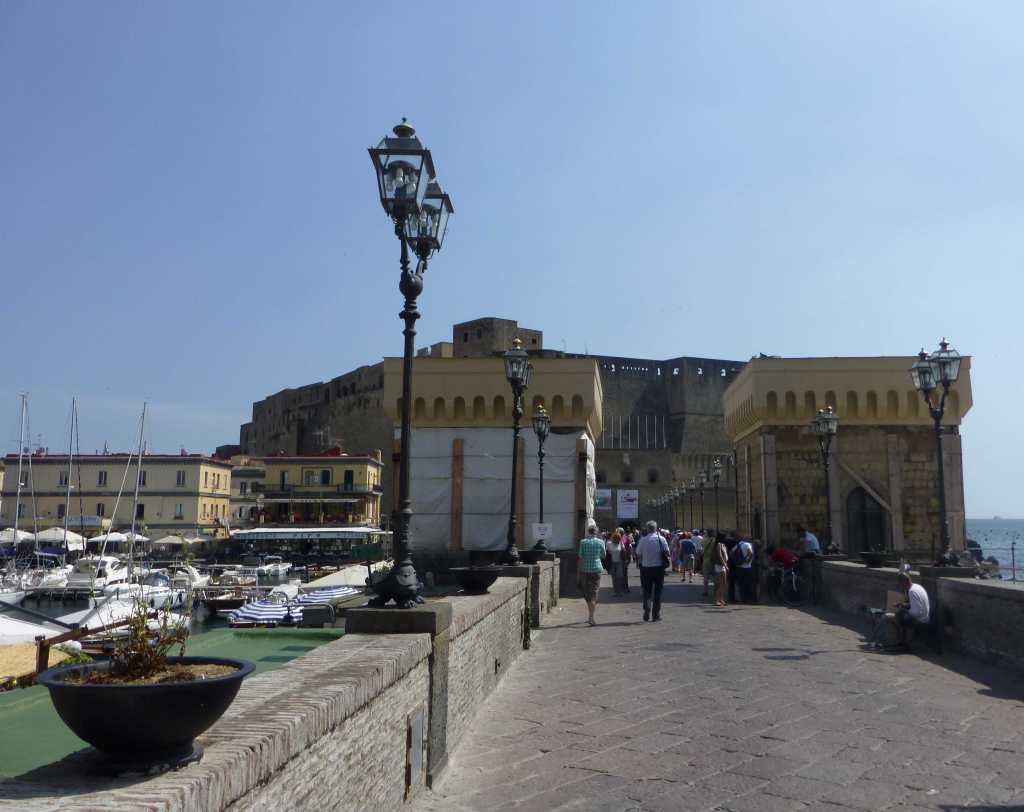
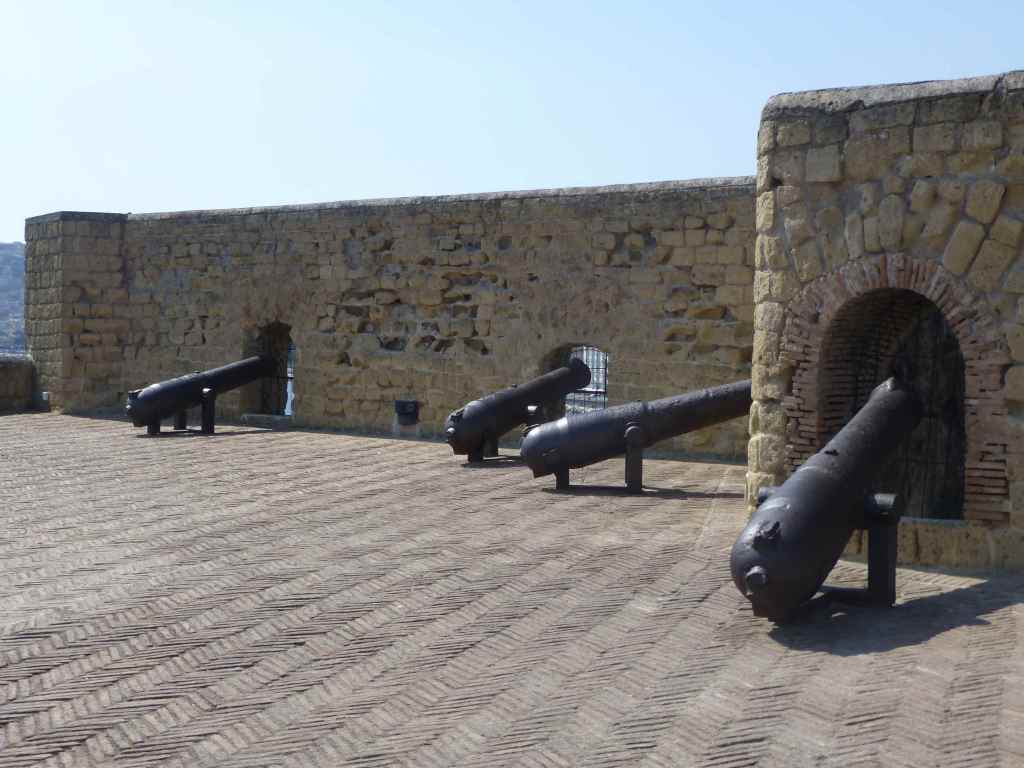
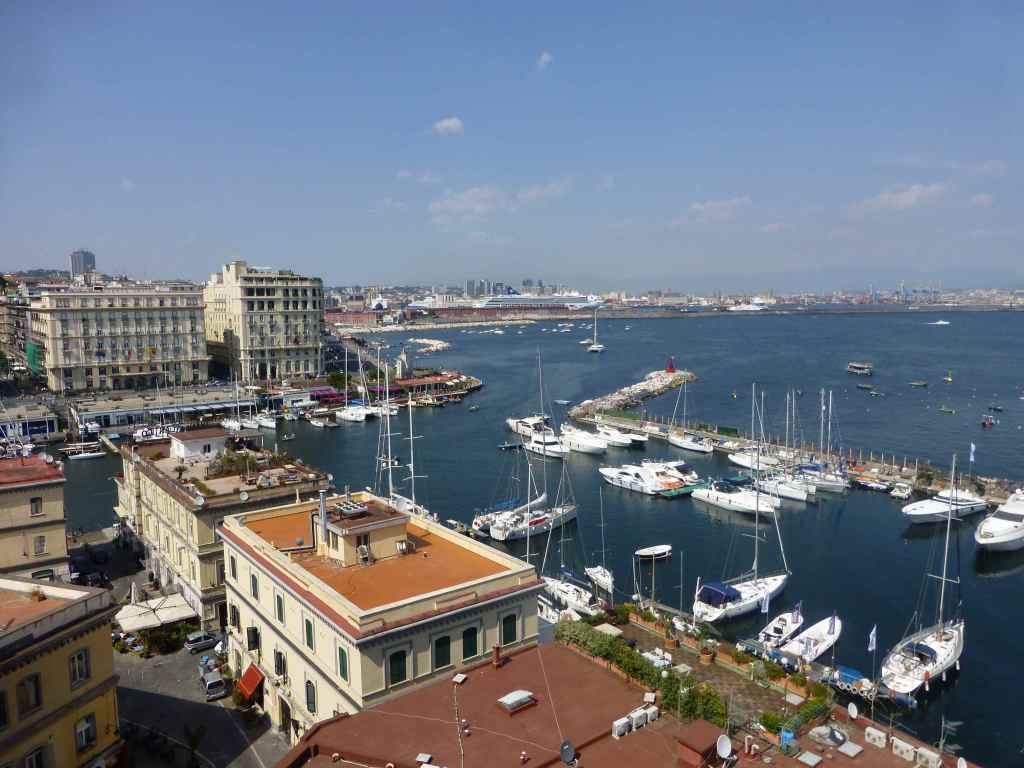
In the immediate vicinity, the Castel dell’Ovo (translated as the castle egg) was located on the former island of Megaride, which today has become a peninsula. The name of the island came from a legend about the Roman poet Virgil, who in the Middle Ages had a reputation as a great magician. According to legend, Virgil put a magic egg in the foundations of the castle. If the egg broke, the castle would fall and a great misfortune would befall Naples. To this day, the egg has not been found and the castle, although with some cracks and broken walls, was in excellent condition, considering that it was also the oldest castle in Naples. It was on this island that the Greeks first settled in the 6th century BC. What attracted people so much here, we realized as soon as we got on the elevator and looked at the panorama of the Bay of Naples from the top of the castle. Among the small white waves there were large white yachts, and in the distance, on the opposite shore, Vesuvius looked at us. On the top floor of the castle there were large cannons pointing towards the sea, as if they too were enjoying the beautiful view. Nowadays, the castle was used for various exhibitions and conferences. While we were looking for the top platform, we entered several seminar-arranged, but empty rooms.

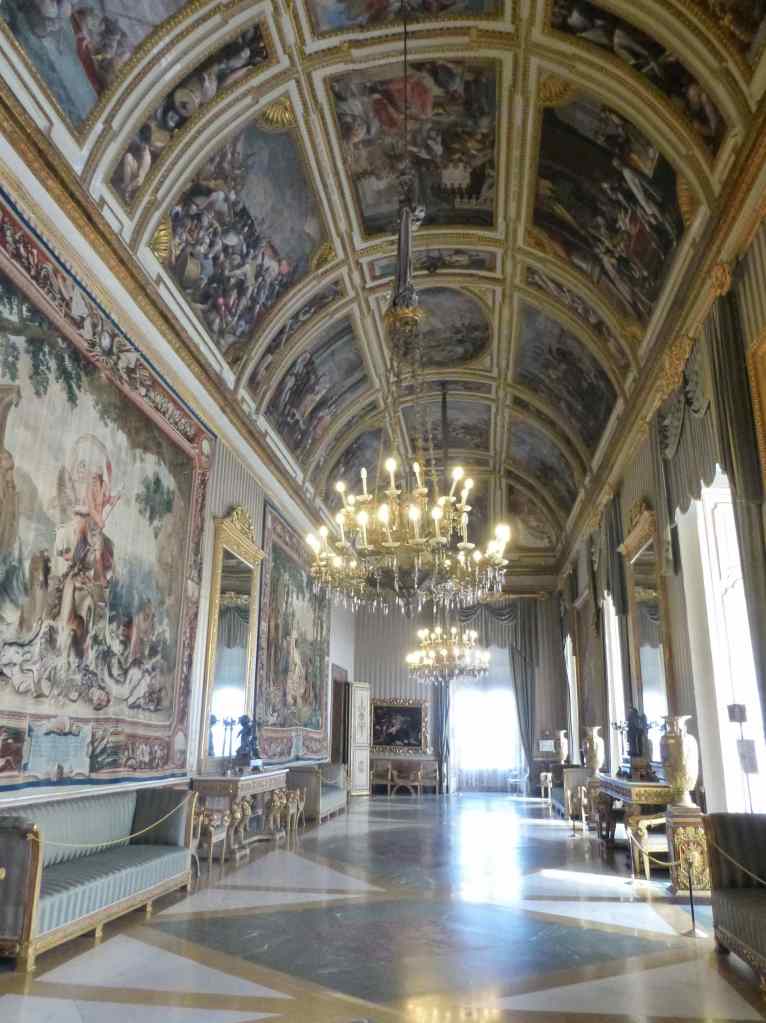
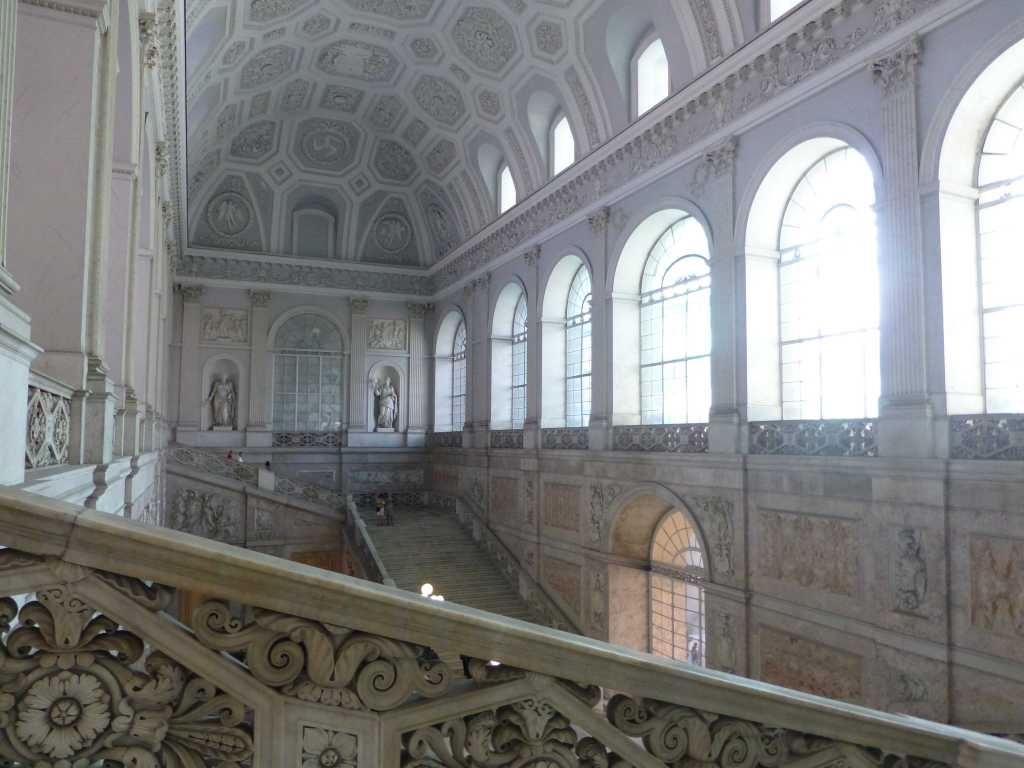
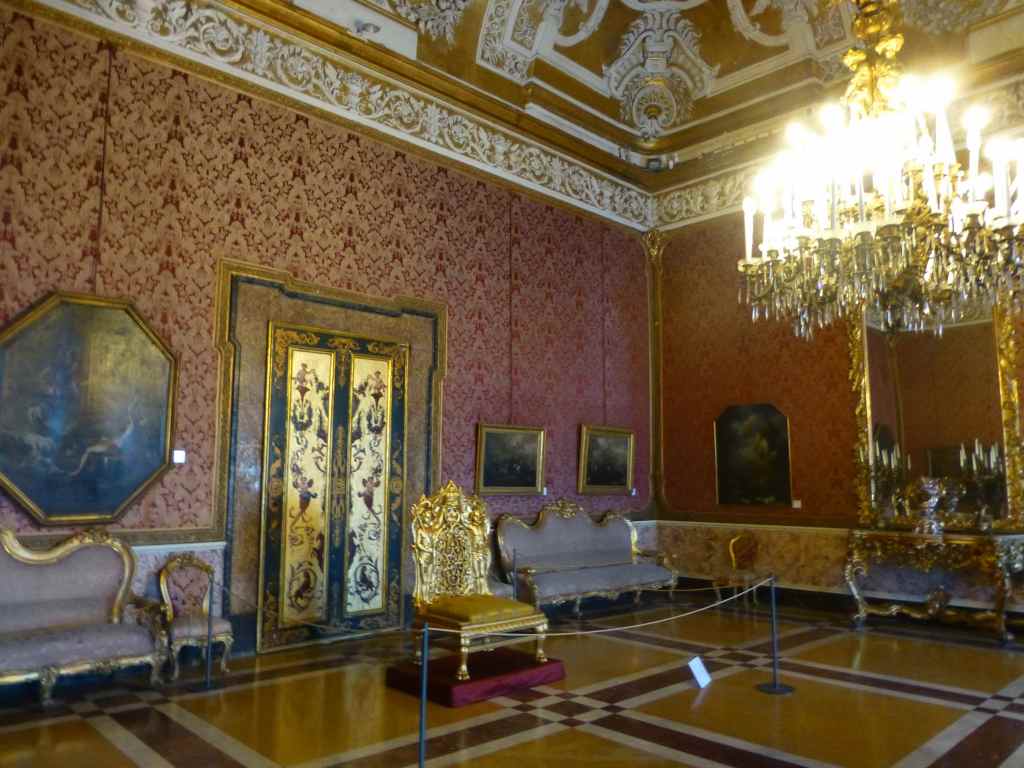
Immersed in the magic of the castle, we decided to take a look inside another castle – this time the well-preserved Palacio Reale. The interior of this castle was really impressive. The Palazzo Reale Napoli was impressive from the outside, with the front façade strewn with statues of Neapolitan kings. Crossing the main entrance we found ourselves in a beautiful lobby with marble stairs, on which there were also beautiful statues. The royal apartments were very well decorated – lavish, but by no means pretentious. I especially liked the painted ceilings and walls, as well as the descending huge chandeliers. The palace had beautiful terraces overlooking the bay of Naples, as well as gardens with exotic plants.
Subsequently, we learned that the construction of the Palazzo Reale began in 1600 by order of the Viceroy Fernández Ruiz de Castro, and continued through the centuries, acquiring a finished appearance only in 1843. One of the wings of Ala della Feste, which was used for entertainment in the 19th century, now housed the National Library named after King Vittorio Emanuele III, who had actually donated this wing.

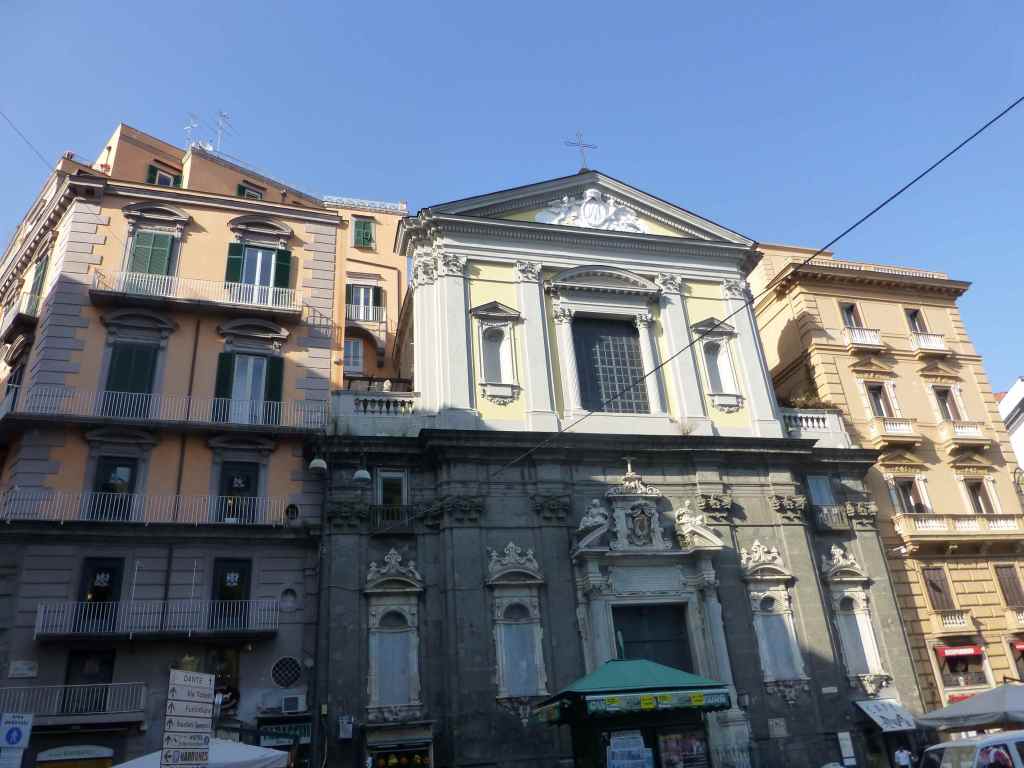
We continued our walk along the busy boulevard Via Toledo, passing our hotel and many small narrow streets and churches nestled between the buildings. It was time for dinner and we stopped at a street restaurant with its tables on the square, where we were served huge Margherita pizzas. It was believed that the world’s first Margherita pizza was created by the Neapolitan pizza master Raffele Esposito. On June 11, 1889, he created pizza in honor of Queen Margherita of Savoy, consisting of tomatoes, mozzarella and basil, ingredients that personified the Italian flag (green, white and red). In fact, the official flag of Italy was adopted on January 1, 1948, with green representing the Italian green fields, white representing the Alpine peaks, and red representing the blood given during the War of Independence. Nevertheless, the Neapolitans claimed to have created pizza (or at least the one with the name Margherita) and today all pizzas here have the same name – Margherita pizza with cheese, Margherita pizza with ham, etc.



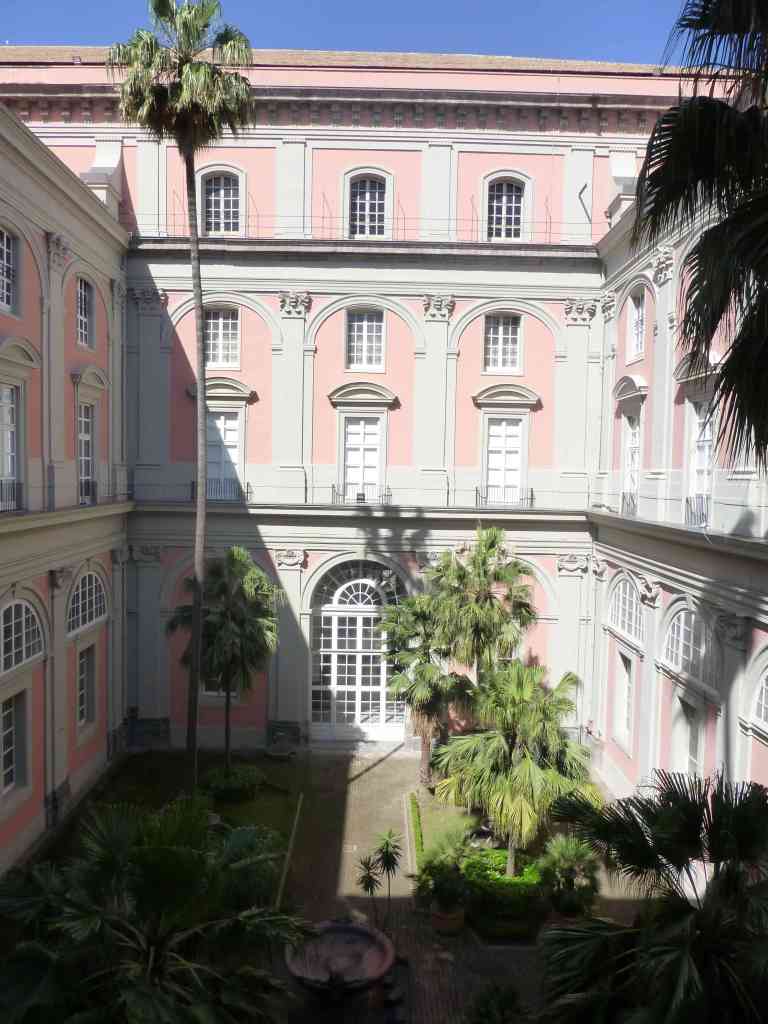
The pizzas we were served here, were huge and although we couldn’t fully eat them, we enjoyed the Italian atmosphere and excellent taste. After a short walk, we went back to the hotel, closing our eyes after the first and very good impressions of Naples.
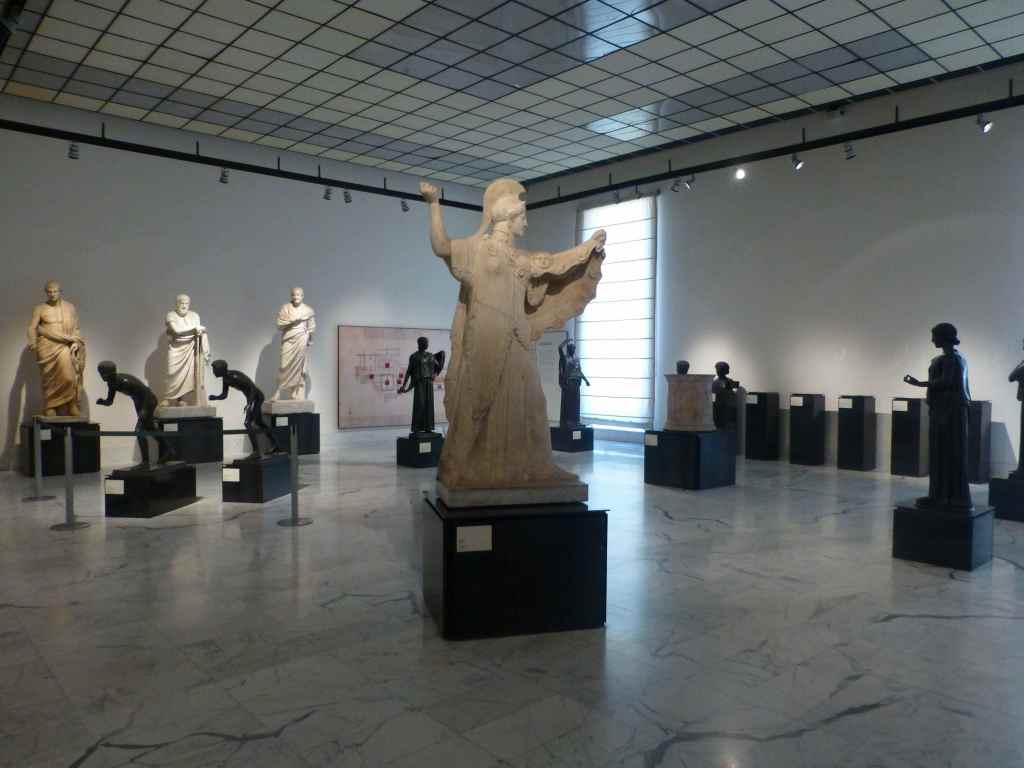
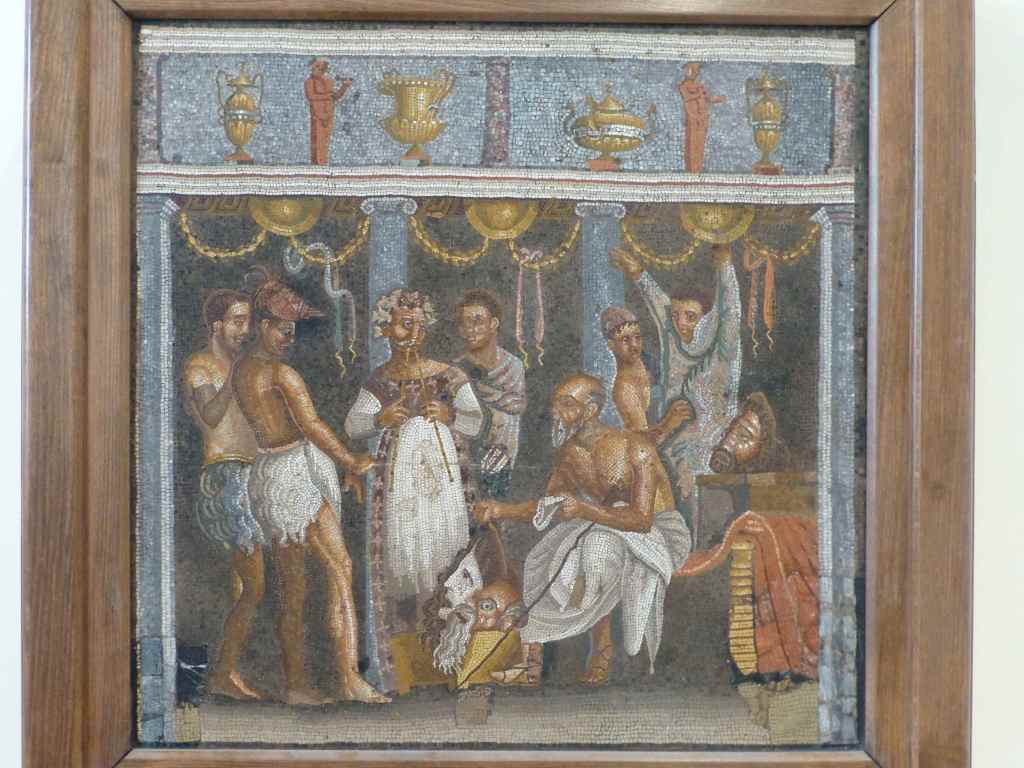
The next day we continued our walk around Naples, starting from the archaeological museum. All the treasures found in Pompeii and the surrounding area, as well as from all over Italy, were kept there, and this museum also kept most of the exhibits from Roman times. Visiting the museum early in the morning saved us from the many people and crowds that otherwise formed queues to enter this museum. The museum was really very well arranged and we really liked the beautiful statues in it. Some of the statues were huge over 3 meters. On the second floor there were the remains of vessels and mosaics from Pompeii. Especially impressive were the mosaics and figures in the so-called erotic salon. However, I liked the huge mosaics in the corridors the most, which reminded me of the first forms of the puzzle game that I liked so much.

The museum was large, but we managed to walk around it in a little more than an hour and a half, after which on the opposite side of the street we passed through the beautiful Principe di Napoli Gallery. And here the ceiling was entirely made of glass, which made the large rooms with shops well lit, and the beautifully painted details on the walls seemed to shine. It turned out that this was one of the oldest malls in Naples, which, however, today seems to have been abandoned and all shops were closed, and perhaps the reason for this was Sunday.

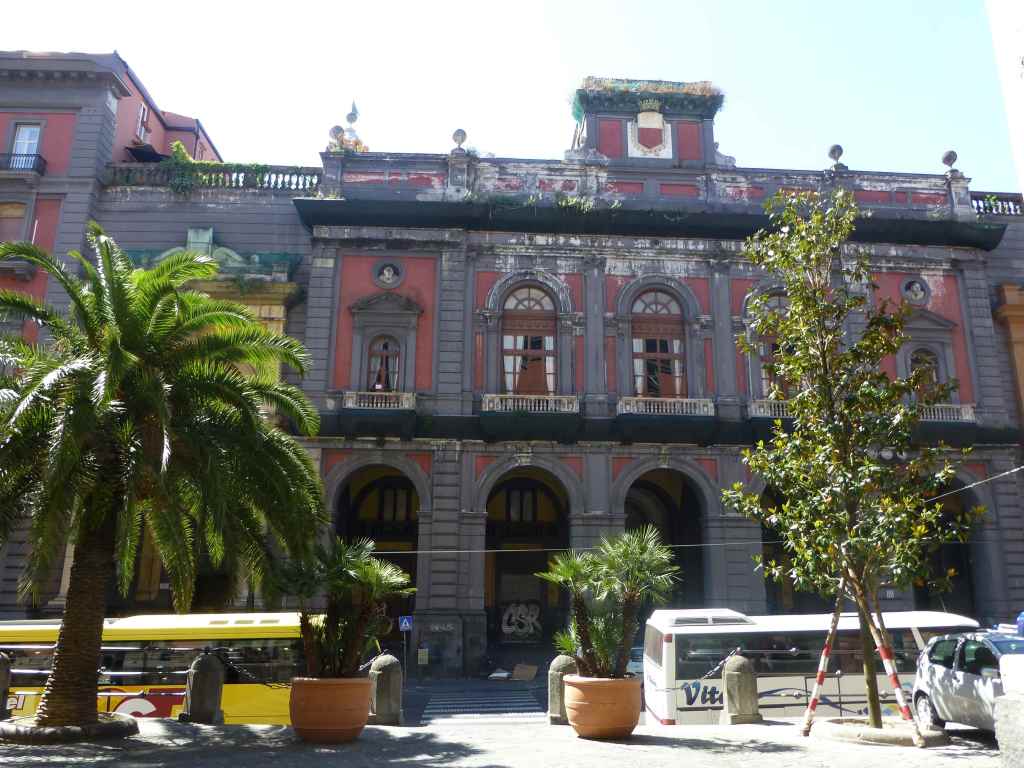


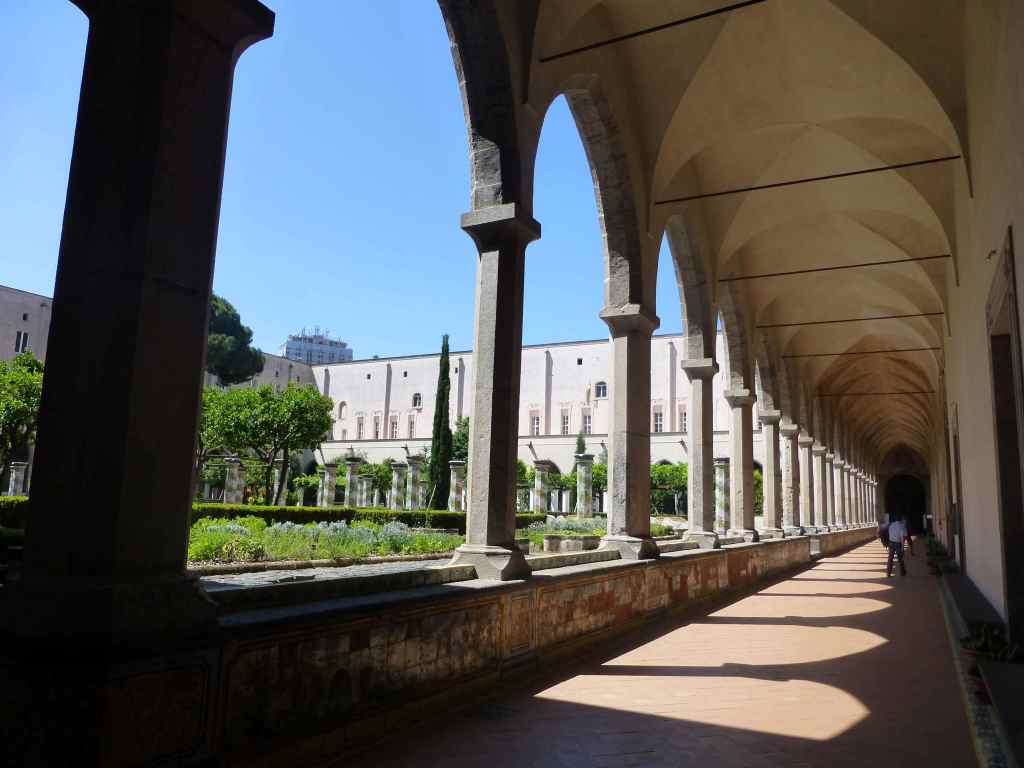
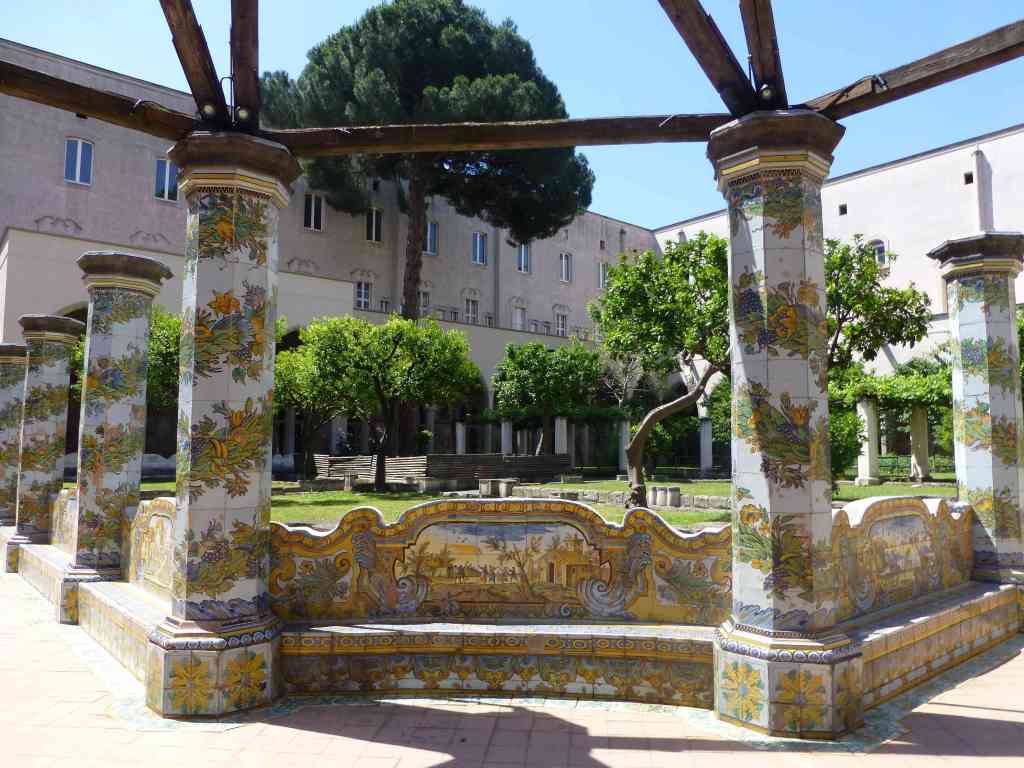
From here we went down one of their streets, which led us to the church of Santa Chiara. Santa Chiara included a church, a monastery, a cemetery and an archaeological museum. We had to pay an entrance fee, which, however, was completely worth it. The courtyard with its terracotta columns and exotic flowers fascinates us. The place was very similar to the temples I had visited in Sicily. The interior inside and outside was impressive, which was evident from the many photos taken here.

Then we returned on foot to the hotel, where we left the purchases and souvenirs, and headed to the Central Station, from where we took the train to Caserta.
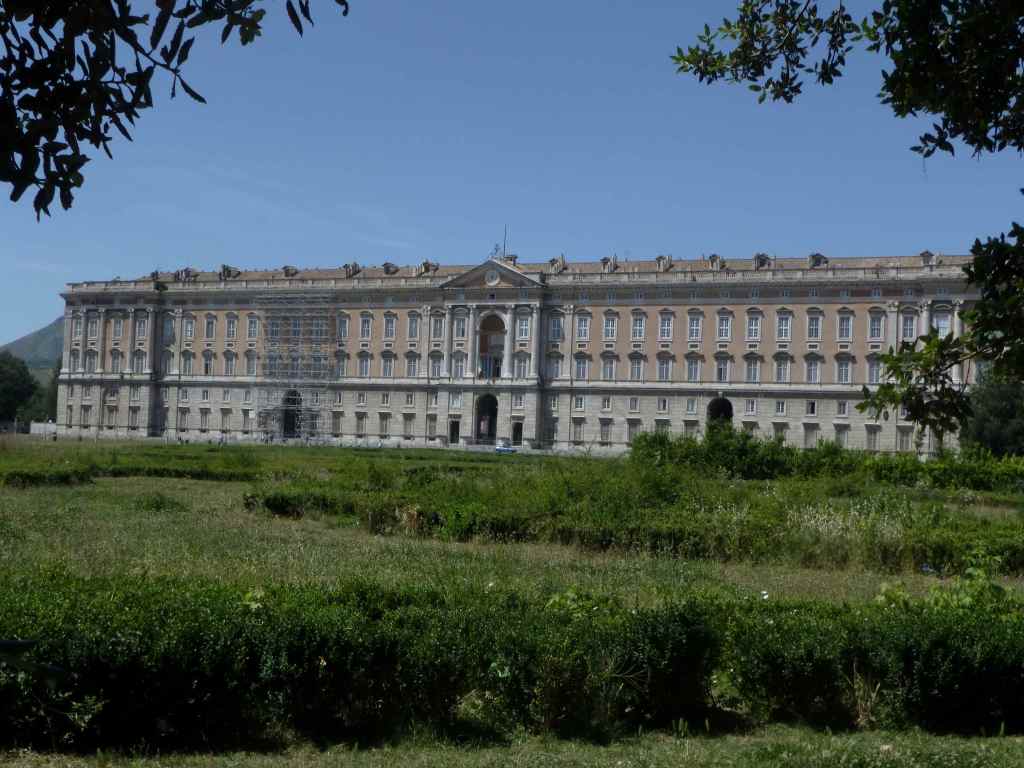
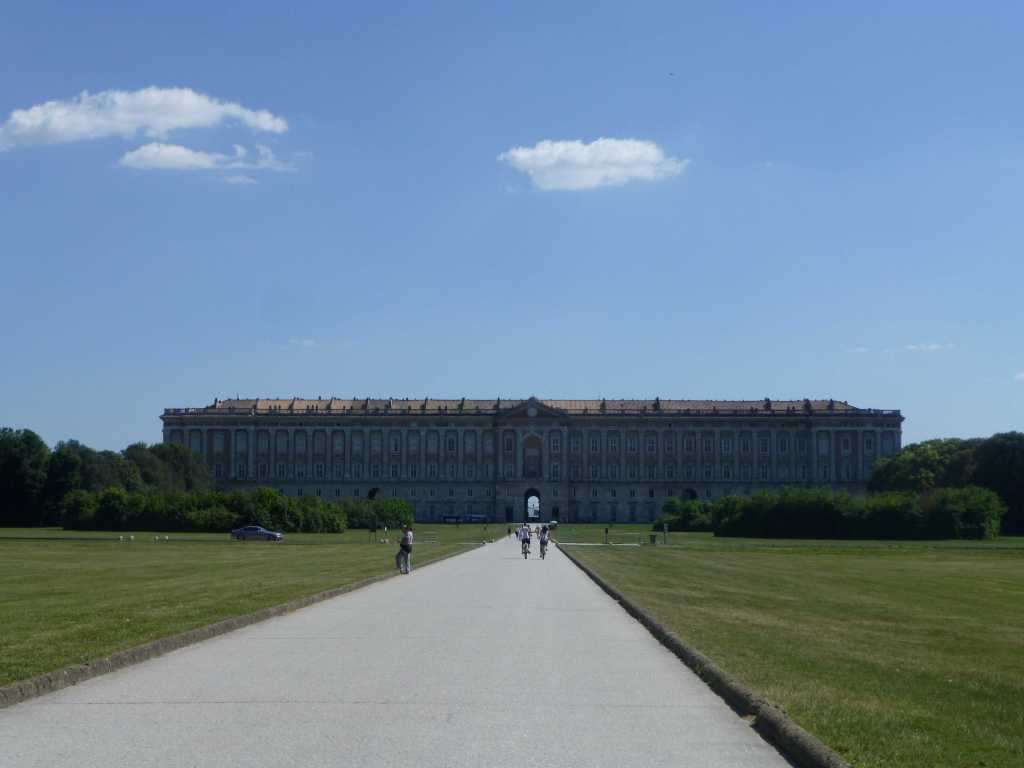
The royal palace in Caserta was located right next to the train station – we only had to cross a street and pass by the tall trees that surrounded the castle. However, the first impressions were disappointing. On the outside of the palace, the gardens were not maintained. We were greeted by a jungle of wild grass and we moved only along the designated alleys, imagining what it would be like if there were flowers and a landscaped garden. Our imagination quickly transferred to reality. It turned out that on the other side of the palace there were the beautifully manicured gardens, with fountains and statues. The park was so huge that we had to rent a rickshaw to explore at least half of it.
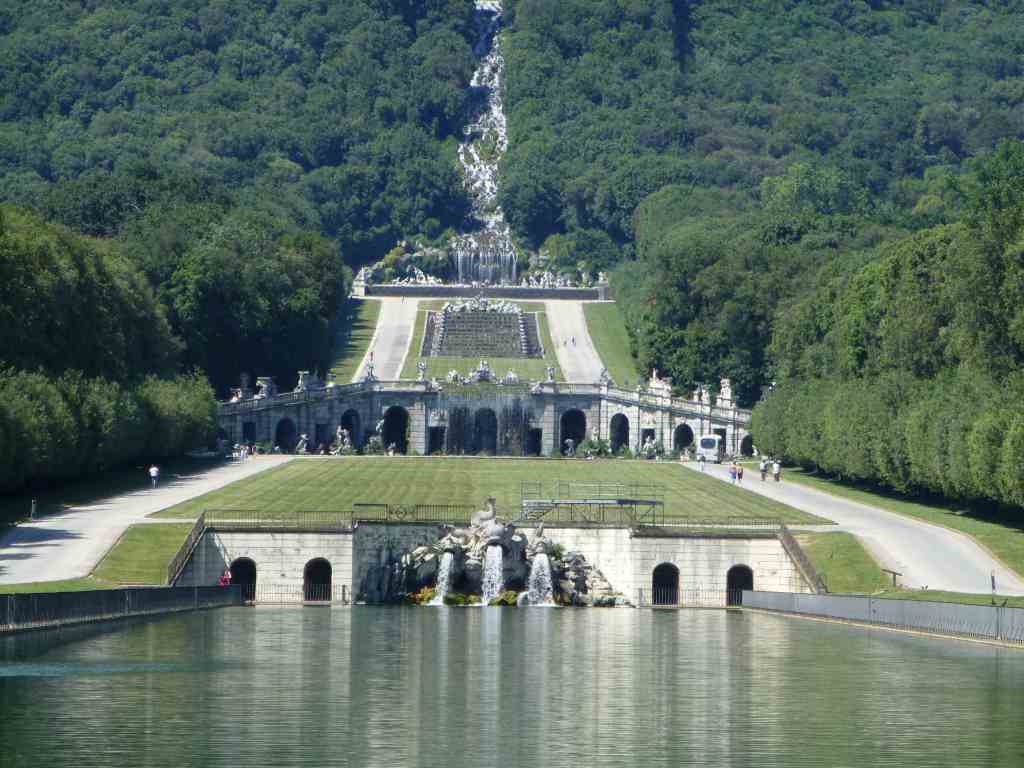

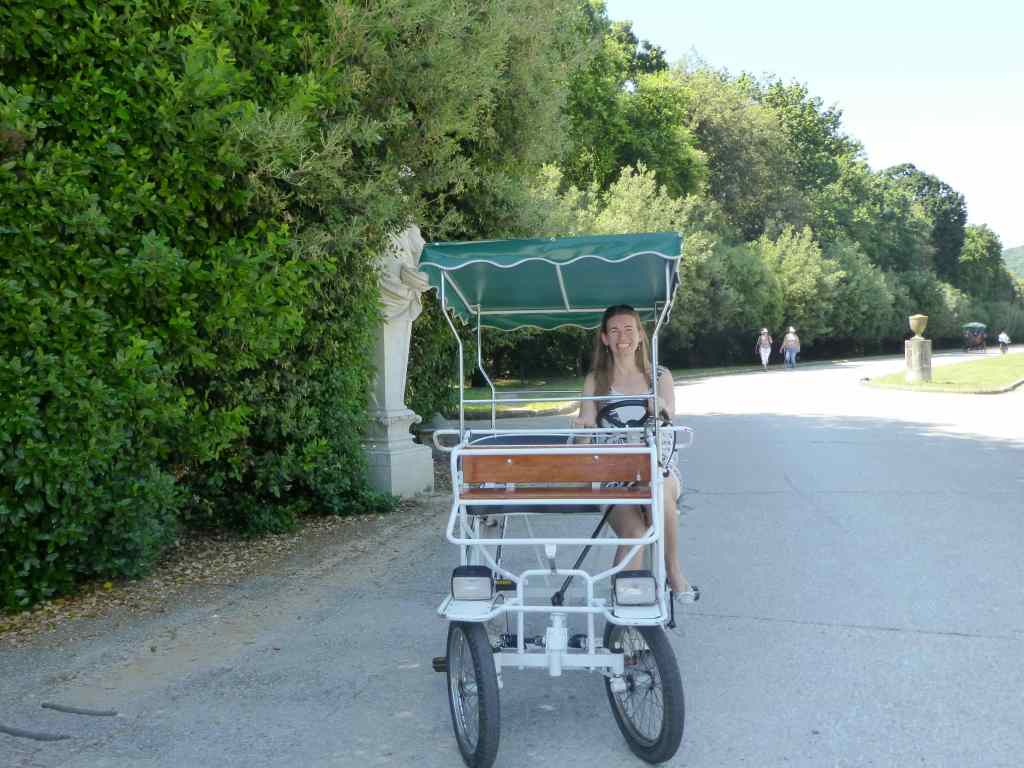

It was a hot summer day. The sun seemed to have turned its warm smile entirely towards us and generously lowered its rays, from which we could barely protect ourselves under the umbrella of the rickshaw. It was quiet, there were not many visitors. Only the wheels of the rickshaw could be heard. We barely managed to climb it on a hill, from which a beautiful panorama of the lake with the fish and the artificially made 80-meter waterfall descending into it was revealed. This waterfall was named the Fountain of Artemis (Diana) and Actaeon. It presented the legend of Artemis and Actaeon – with many marble statues of dogs surrounding a statue of something between a man and a deer. It was only later that I learned the tragic legend of Actaeon and wondered why it was the inspiration for this beautiful waterfall, but maybe the creators wanted to do something better than everything before, even if they had to pay with their lives, as Actaeon did.
Actaeon, according to Greek mythology, was the son of Aristaeus and Autonia, and was brought up by the centaur Chiron. One day he went hunting for deer with his dogs, but he got tired of the strong sun and went to look for deep shade in the nearby forest. There, in a river, the naked Artemis bathed. Instead of stepping away from this unintended scene, Actaeon stayed to admire the beauty of the goddess. Enraged, Artemis sprayed him with water and turned him into a deer, which tried to escape, but was caught up and torn apart by his own dogs.
We did not stay long to admire the fountains and beautiful Greek statues located along the alley. The park, as beautiful as it was, could not truly compare with the French Versailles, nor with the fabulous fountains in Peterhof, St. Petersburg. It was relatively far from the castle and I could not imagine how at the time the royalty, and now tourists, explored this park on foot. Probably the fame and praise came from the fact that these were the first English gardens in Italy.


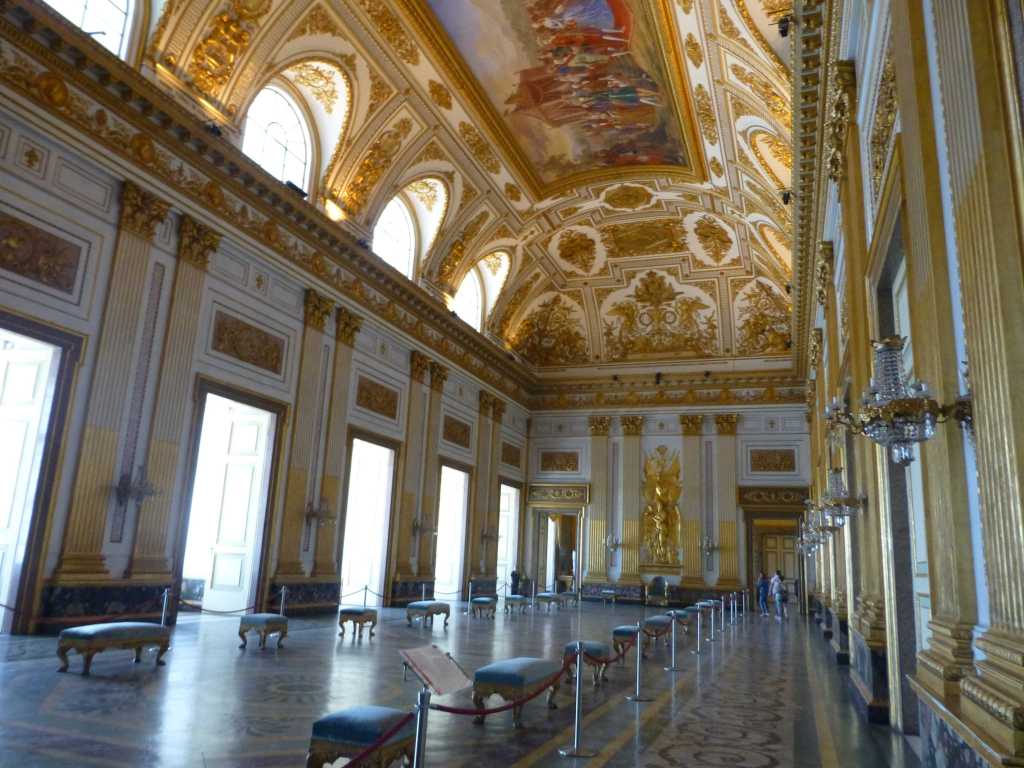
Charles de Borbón, whose painting was the beginning of the museum exhibition, knew exactly what he wanted when he erected his palace in Caserta. His castle was supposed to emulate, and even surpass, the French Versailles and the royal palace in Madrid with the Buen Retiro park. If I wasn’t so sure about the park that it had succeeded, then the rooms in the palace were completely equal and even eclipsing the beautiful royal apartments that we had visited the day before.
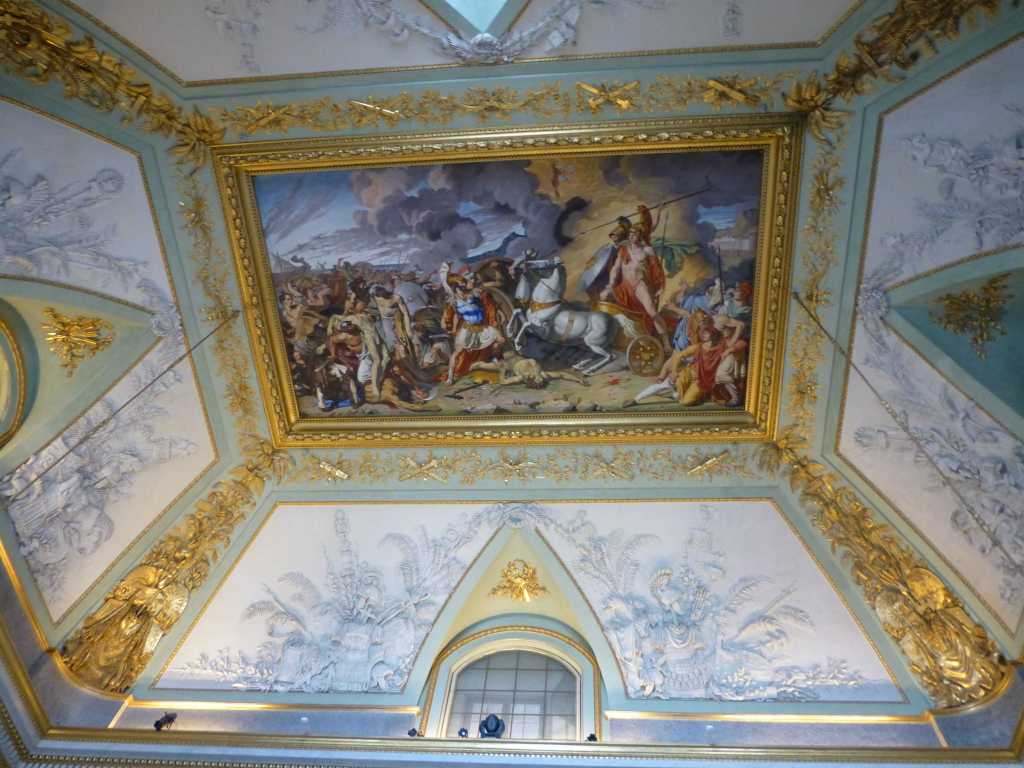
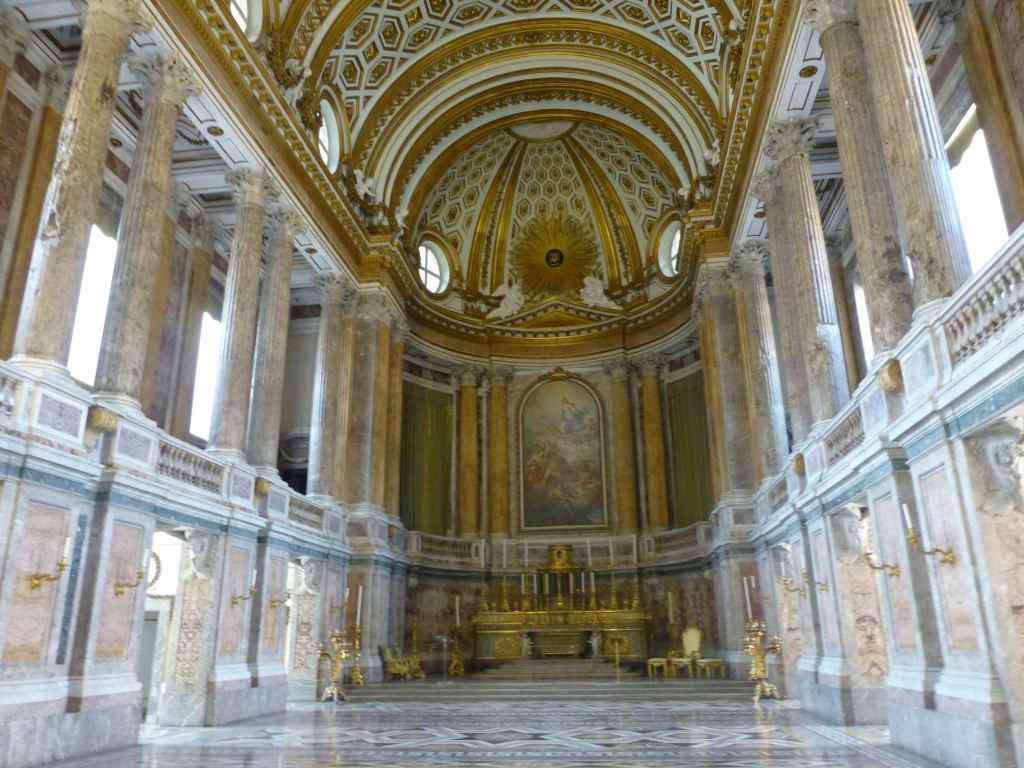
After the gardens, we started a tour of the interior of the palace, which impressed us with its huge windows and beautifully painted ceilings. It turned out that there were 143 windows on the front façade alone. Erected between 1780-1845, the palace had 5 floors and a total of 1200 rooms, some of them of enormous size and decorated with elegant French furniture. The largest room was the throne room, where lavish receptions were held at the time.
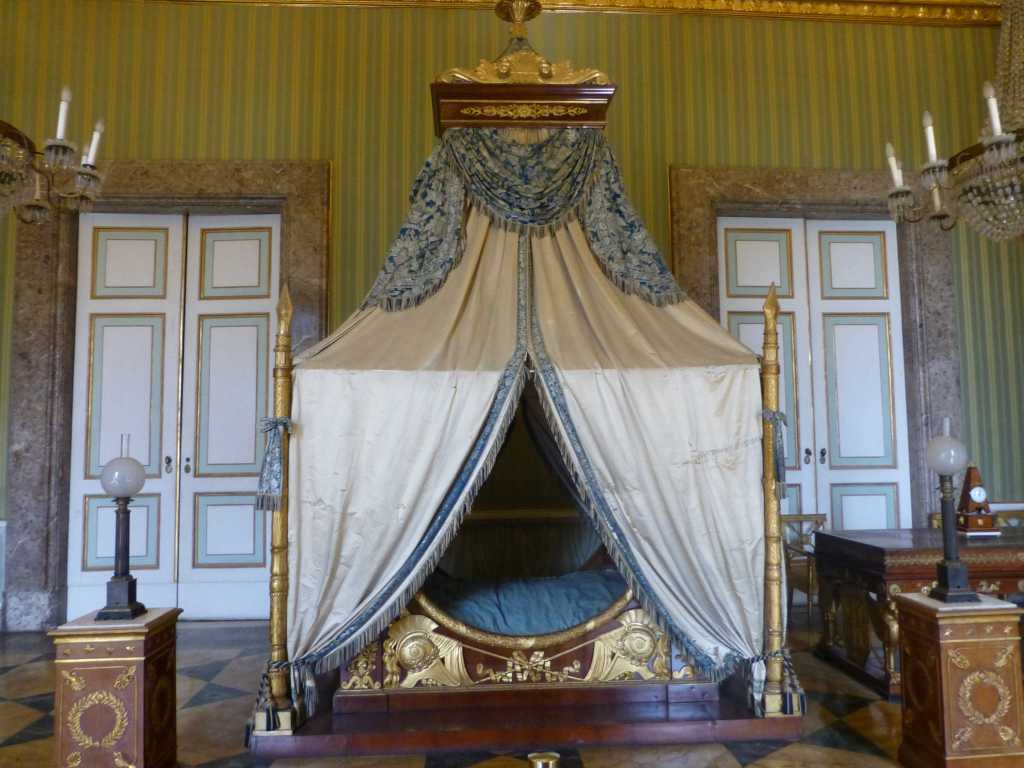
Greek mythology was revered here, and its motifs could be seen on painted walls and ceilings, beautiful statues and even in furniture. I especially liked the royal bedroom, the curtains of which were tied on top with a crown. Near the bedroom there was a bathroom with a bathtub. It turned out that several films were filmed in this palace, including the famous Star Wars Episode I: The Phantom Menace (1999), Star Wars Episode II: The Clones Attack, and this is Queen Jamila’s castle. In Mission: Impossible III, there was a cascade where a Lamborghini explodes inside the castle. We also captured the palace in many photos, after which we headed for a short walk to the town of Caserta and the beautiful Piazza Dante, where, despite the Sunday afternoon, there were still working shops that we explored.
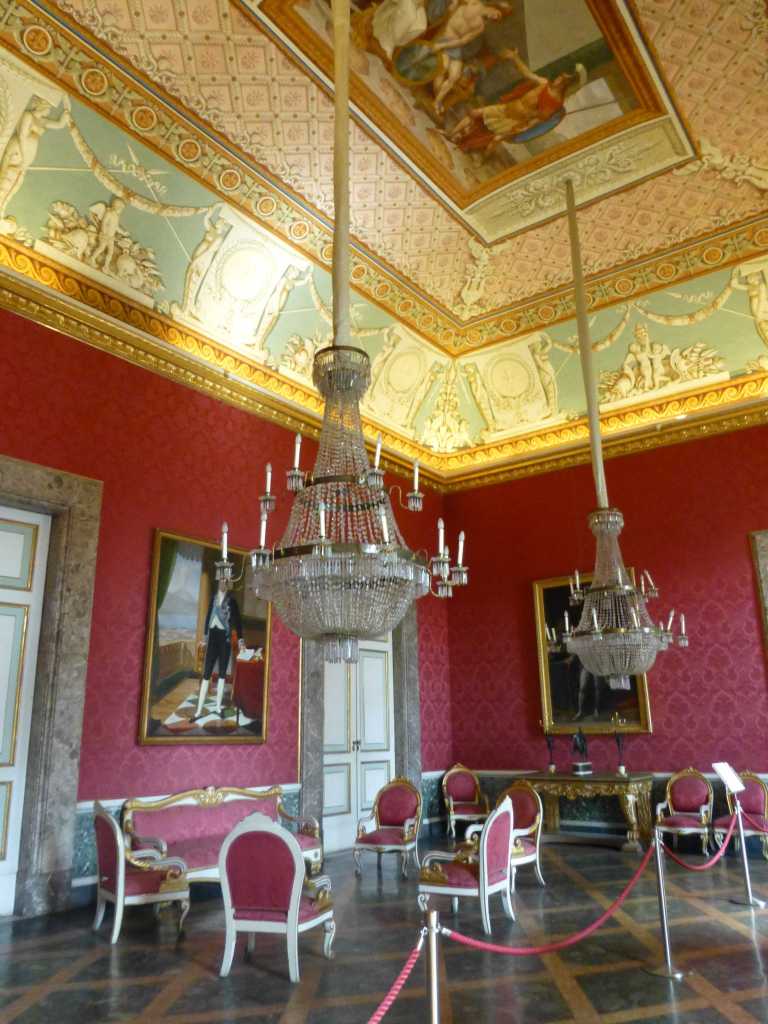

We went back to Naples, which really fascinated us. For the next day we had planned a tourist program to Pompeii and Vesuvius, but the evening was dedicated to beautiful Naples. We went to bed in the hotel, but behind our eyelids there was the image of the royal chambers in Caserta, which evokes royal dreams.
Naples was a favorite place for many kings, and today for tourists. The city has retained its dazzling charm and tranquility, against the backdrop of the sleeping Vesuvius.

GENERAL INFORMATION ABOUT NAPLES:
Location: Naples is the third largest city in Italy, after Rome and Milan. It is located on the shores of the Gulf of Naples in the province of Naples.
Area: 117.27 sq.km
Population: 975,260 people
Official language: Italian
Altitude: 17 m
Climate: subtropical climate
Time zone: UTC+1
Currency: Euro (EUR)
Further information: http://www.inaples.it/eng/home.asp http://www.vivere.napoli.it/
TRIP TIPS FOR NAPLES:
Best time to visit: all year round
Typical foods and drinks: It is believed that the first pizza originated in Naples and the tradition here has reached perfection. Be sure to try Pizza Margherita while you are here. Also, spaghetti and pasta are very tasty, especially those with seafood taken from the Gulf of Naples. Italy is also famous for its ice cream, and Naples is no exception.
Places to visit: The Palace of Naples, the Church of Santa Chiara, the National Archaeological Museum, the Egg Castle, the beautiful promenade with the Fountain dell’Immacolatella and many more.
 TripTips