THE CAPRICIOUS ISLAND OF CAPRI
author: Ana Boneva


Where the Mediterranean Sea meets the southern Italian coast, a deep valley has formed, once part of the connection between Europe and Africa. There are still mountains and active volcanoes at the seabed. This is the warm Tyrrhenian Sea nestled between the islands of Corsica, Sardinia, Liguria and Sicily. The Romans called it Mare inferum – the Low Sea, in contrast to Mare superum – the high Adriatic Sea. An undisputed pearl in its waters is the beautiful island of Capri. It was once connected with land, but after the eruption of the volcano Vesuvius, it managed to separate and escape from the bad fate that befell Pompeii and Heracles, moving 5 km away from the coast.
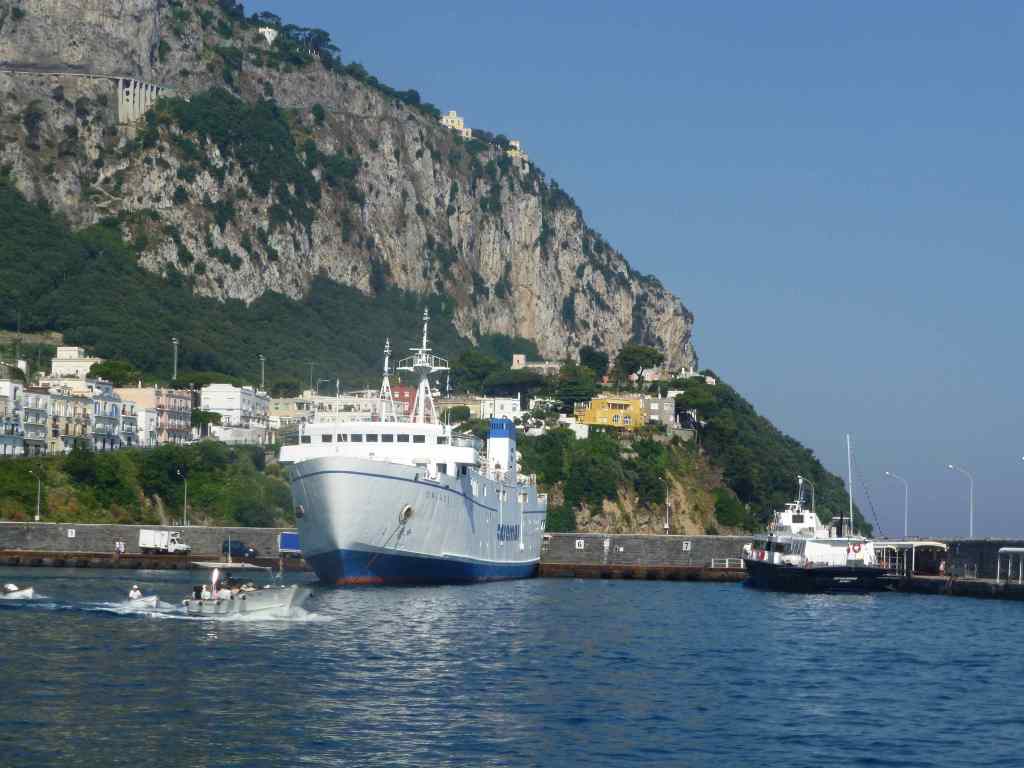
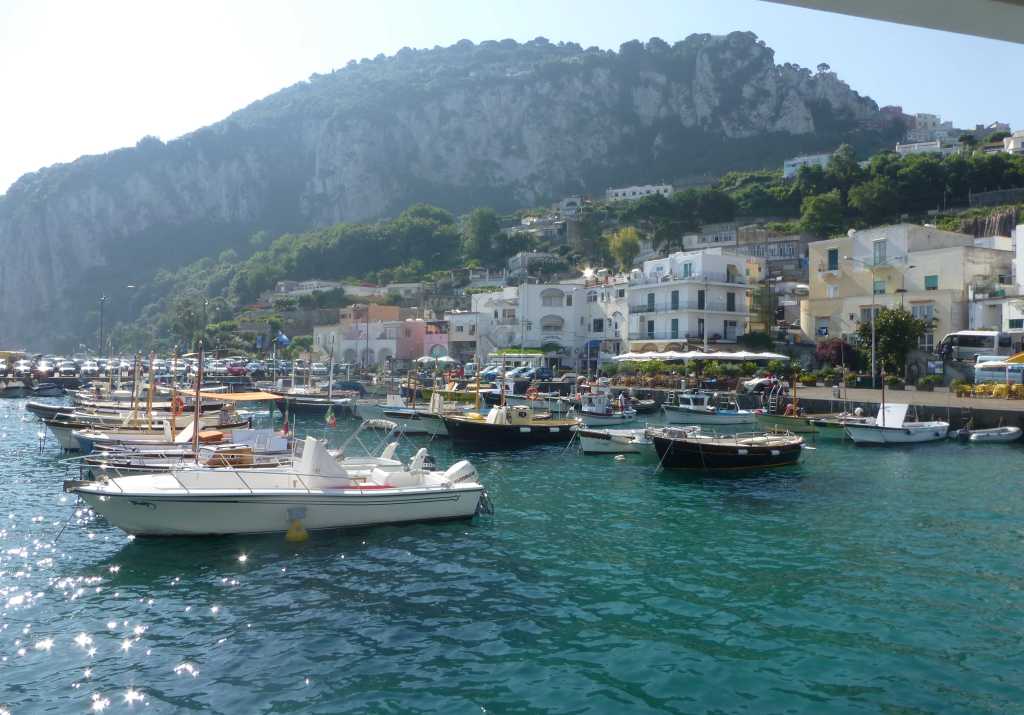
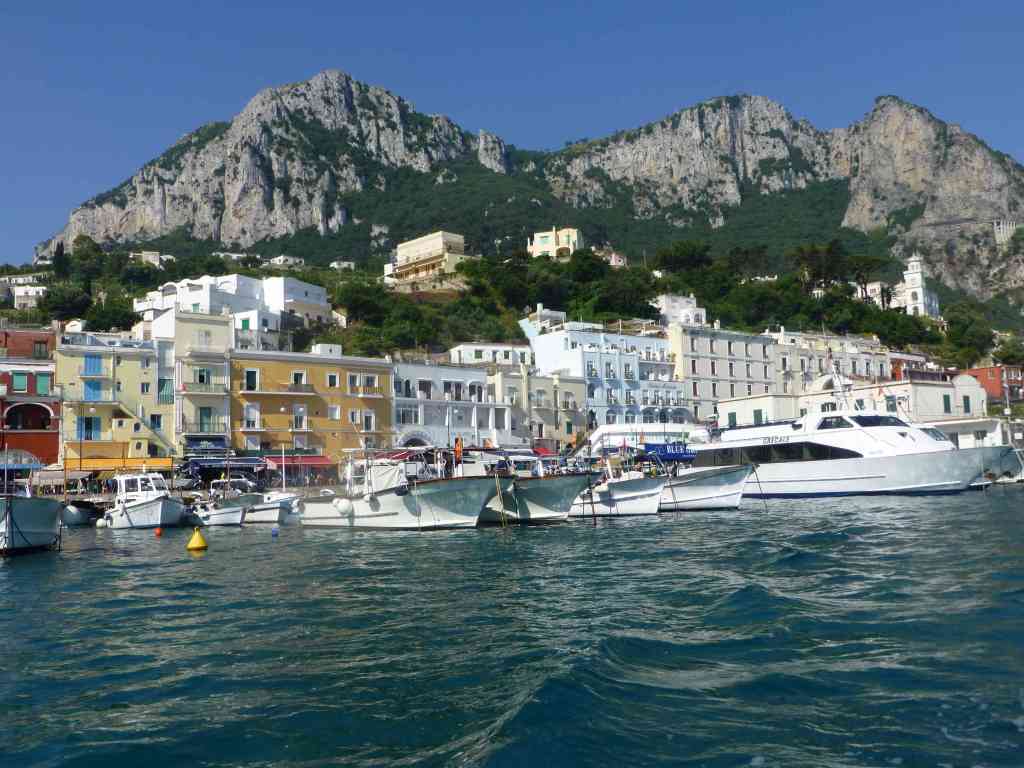
Just as the island once escaped from the mainland, rich aristocrats and famous people began to flee and rest on it. The fame of the island of Capri dates back to antiquity, when the Roman emperors Octavian Augustus and Tiberius had residences here. Tiberius even ruled Rome from his residence in Capri, the ruins of its home have been preserved to this day. However, it turned out that despite this aristocratic history, the island was not visited much until the 19th century, when a poet named August Köpisch discovered the Blue Cave and included it as a tourist destination. Thus, tourism, along with the thousands of flowers, flourished on the island, attracting many prominent personalities such as Alexandre Dumas, Osker Wilde and many others, and on June 11 it attracted us, and our tour started from the Blue Cave, no matter how charming and at the same time disappointing it was.

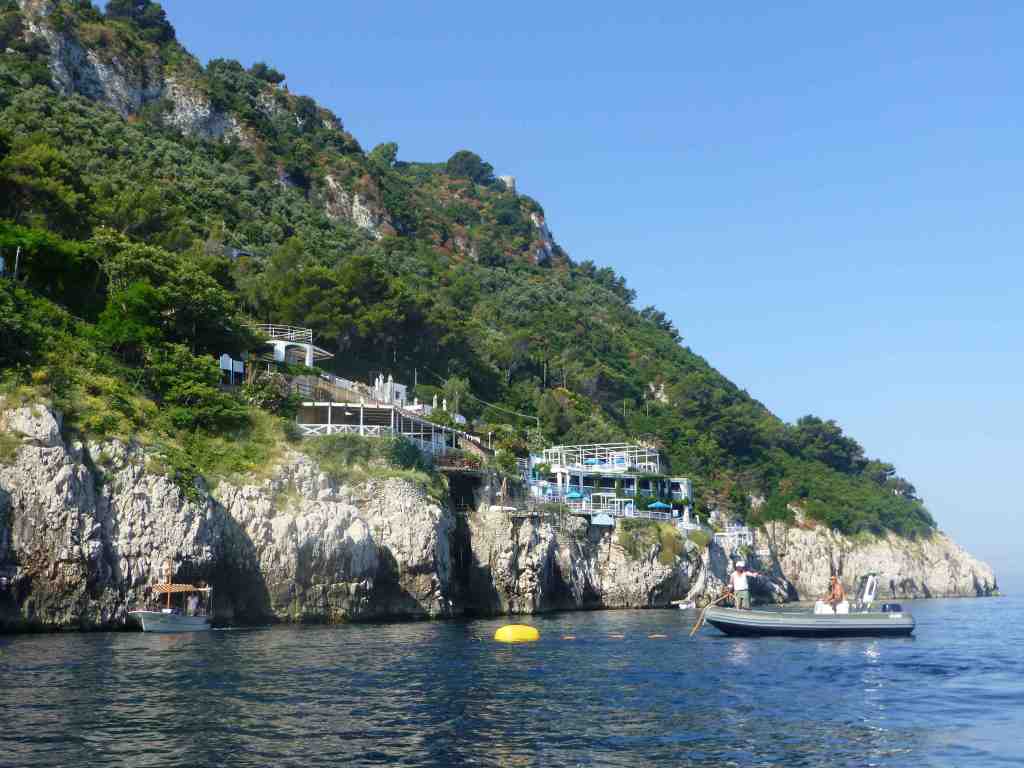
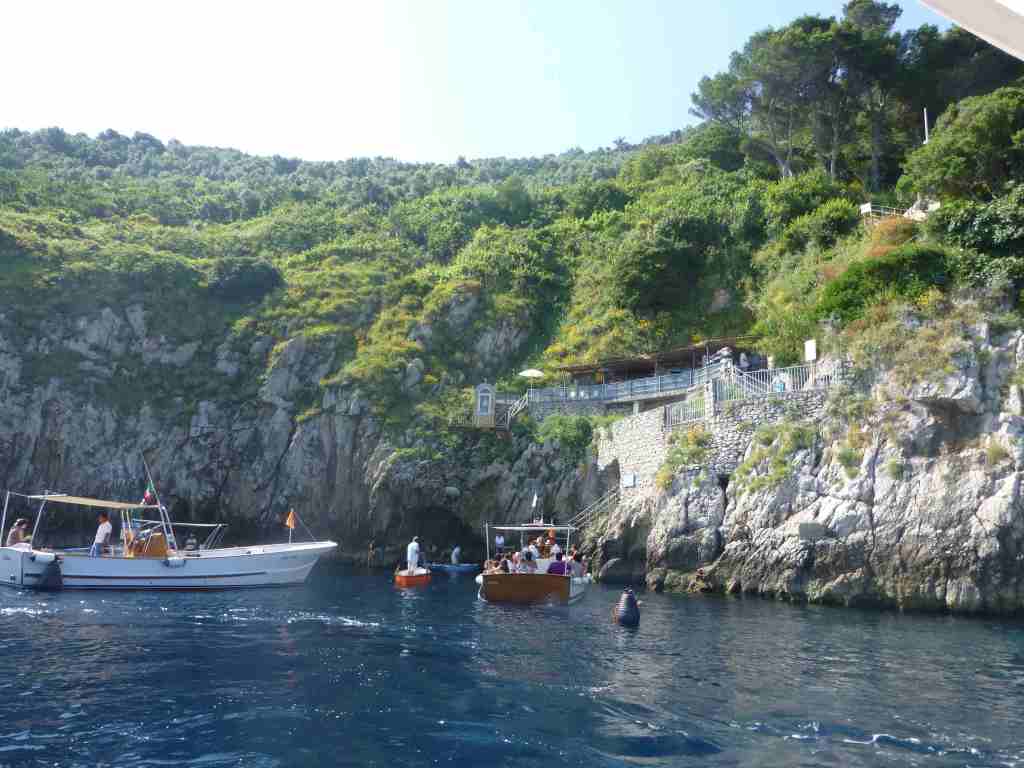


As soon as we arrived on the island of Capri, we boarded another boat at the port, which took us to the entrance of the cave. There we had to wait an hour to get on a smaller boat and make our way into the small crevice of the cave. Probably the long wait in the boat, the high price (17 euros per person to get to the cave and another 13 euros to enter it), as well as the too short stay inside spoiled the pleasure of visiting this attraction. The cave looked small, but it was actually 60 meters long and 25 meters wide, but our boat just came in, moved 2 meters in, and immediately took us back outside. Otherwise, entering the cave was really interesting. They made us almost lie on the floor of the small boats and thus squeeze through the narrow passage, which sometimes the waves completely hid from our view. Inside the cave it was dark and only the sunlight entering through two openings (one from which was the entrance) was reflected in the water and gave this deep blue color that gave the name of the Blue Cave or Grotta Azzurra. It turned out that several Roman statues were found in this cave, and it was assumed that Emperor Tiberius himself bathed here.
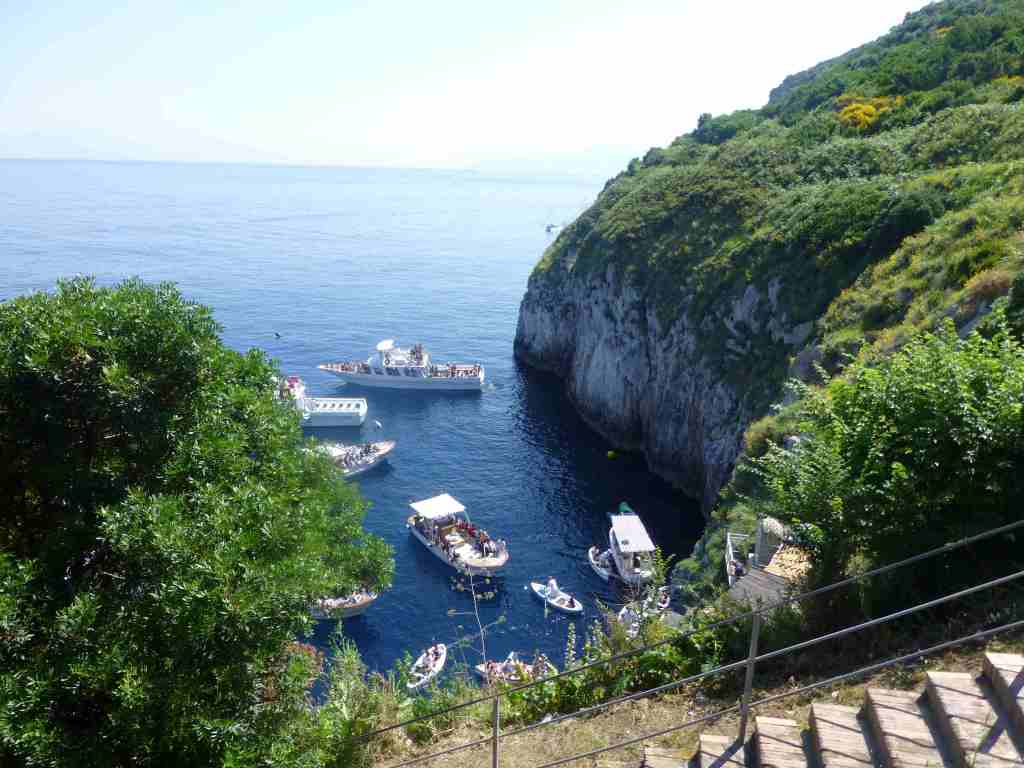

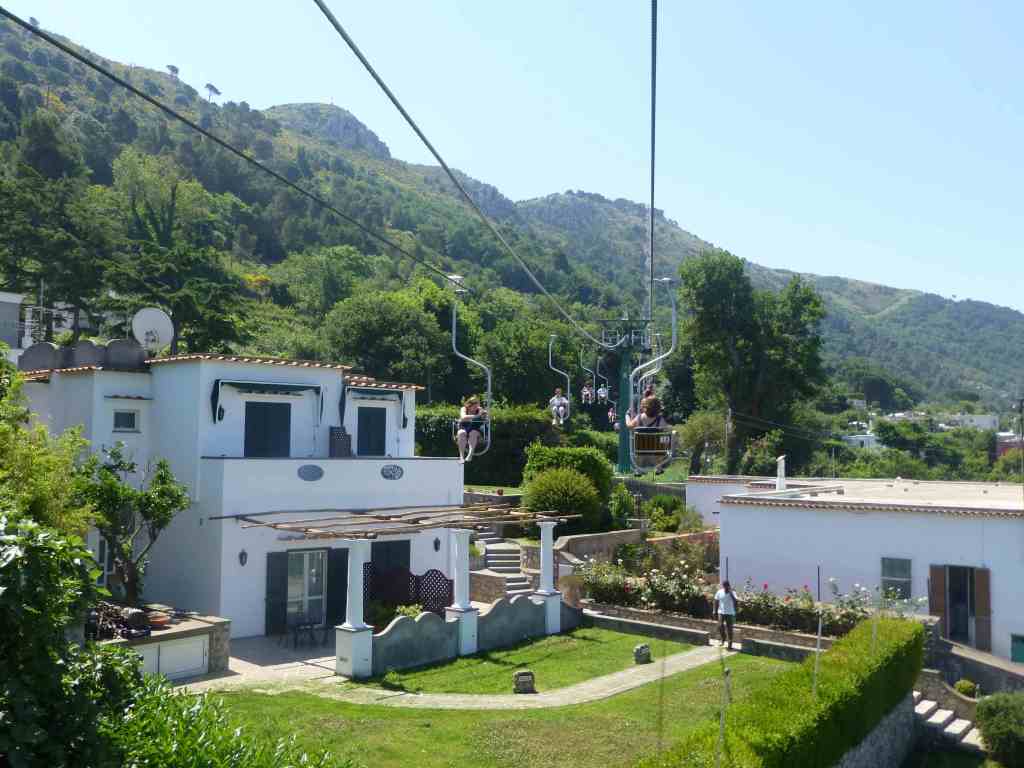
Above the blue cave there was a small chapel, and on the sides of it stairs leading to a bus stop, from where we took the city bus to the town of Anacapri. Anacapri was actually one of the two “big” cities on the island – the other, of course, was called Capri. Anacapri was located at the foot of the Monte Solaro mountain, which we decided to climb taking advantage of the lift, for which there was a queue. The ticket price was 10 euros, and the lift took us to a height of 589 meters. However, the view from there was really worth it and the lift ride fascinated me.
As I sat in the single seat, I thought, what did Emperor Tiberius like so much about this island? Whether it was bird songs or the wind whispering with the scent of flowers, which I also felt. I still did not understand where the boasting of this island came from.


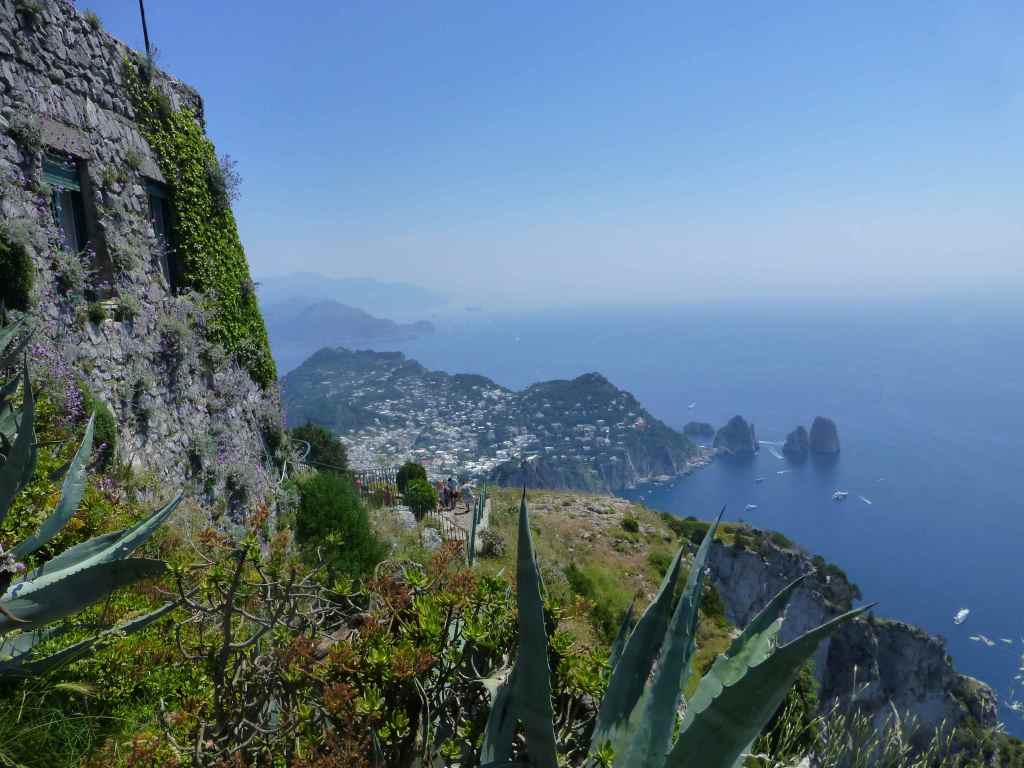

However, when I reached the top of the mountain, my reservation about the island evaporated in an instant. The view from there was really impressive and very beautiful. On one side in the distance we could see Anacapri and one part of the island, and on the other side many beautiful rocks, small yachts and the other part of the island. The ground was covered with colorful flowers, and there were Roman statues that made the photos and landscapes even more beautiful. This beauty was worthy of emperors. It is probably here that the many legends and myths related to the island were written, or at least inspired. According to some of them, it was among these rocks that the sea nymphs enchanted and sang to the sailors, after which they killed them. When Odysseus’ ship passed by the island, he made the sailors cover their ears with wax and tie him to the mast so as not to succumb to the songs of the beautiful creatures. However, we had already succumbed to the charm of this island. On the way back with the lift, we listened to the wonderful bird songs, and in the distance among the rocks we even saw wild goats.
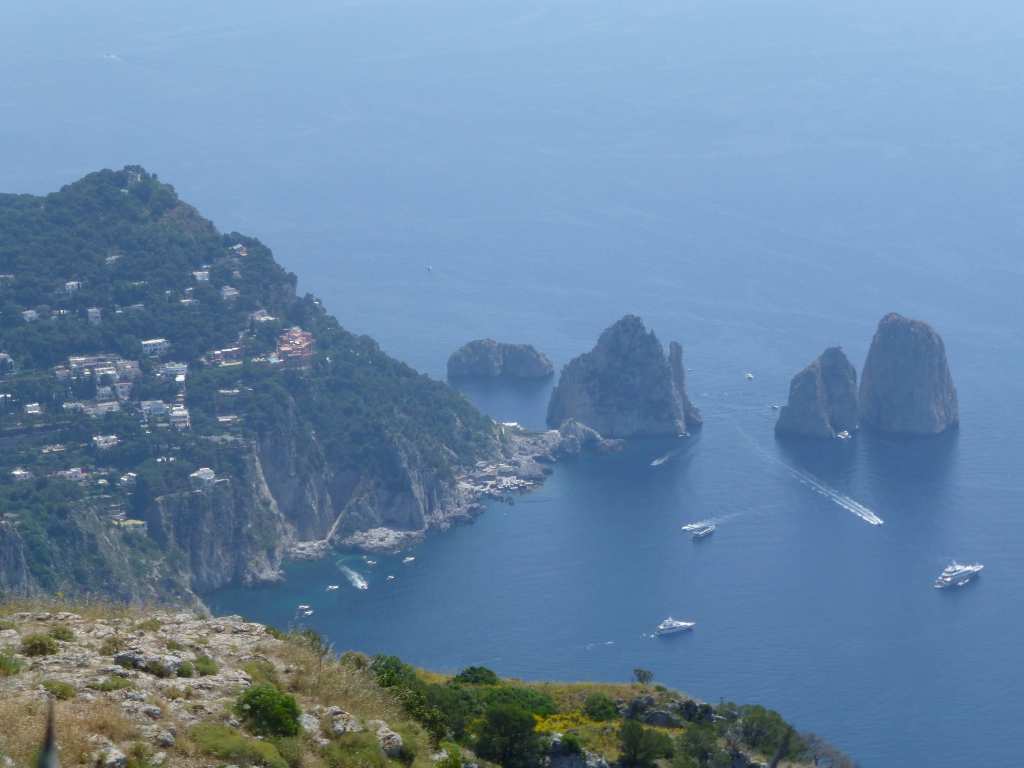


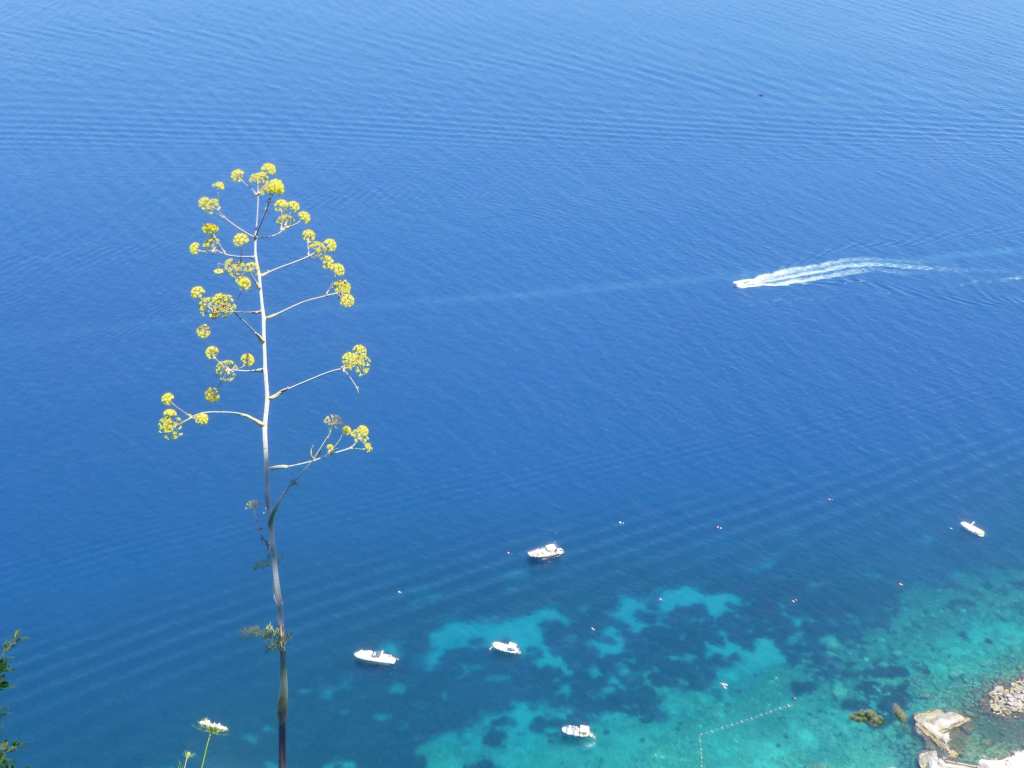
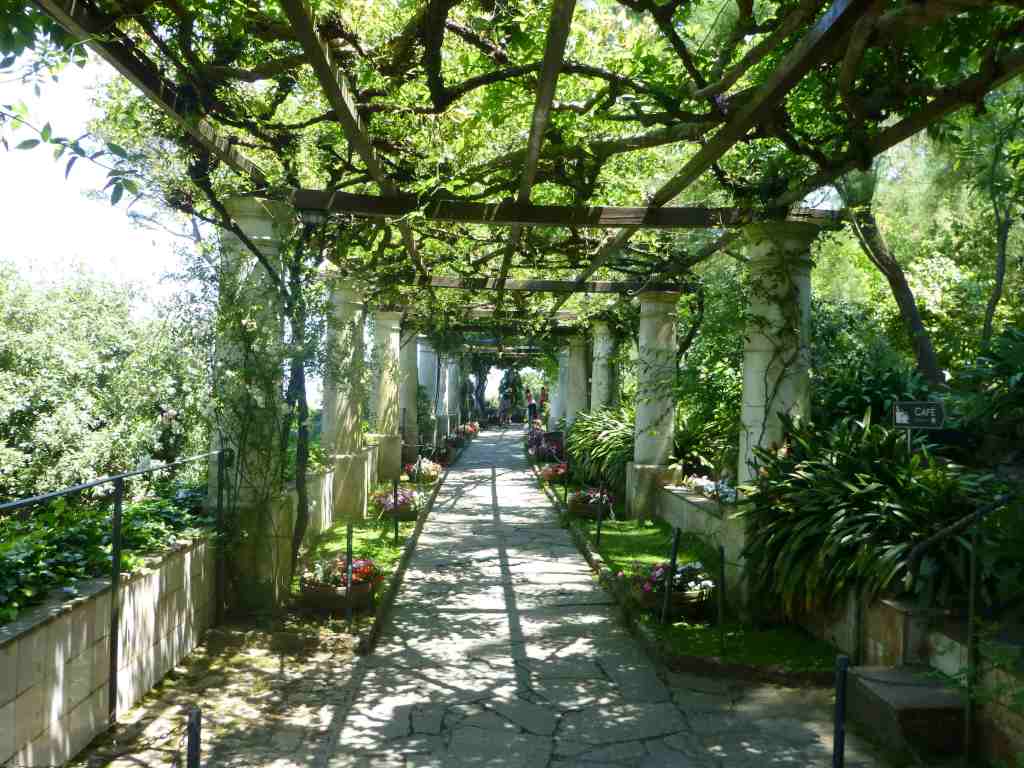
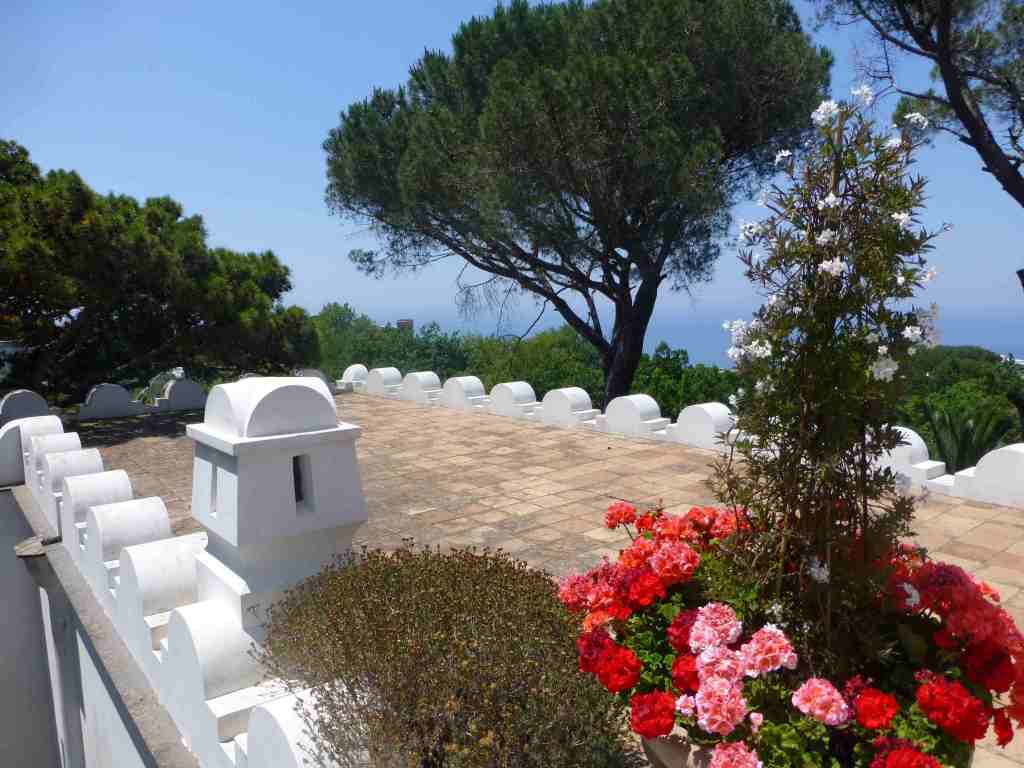
At 12:15 we got off the lift back to Anacapri and headed to the famous Villa San Michele, where the Swedish physicist Axel Munthe lived. The house museum was very interesting, and again the most impressive was the view from the beautiful terrace. According to the reference books, this was a truly magnetic place and an example of Feng Shui perfectionism. For us, this was the place where Capri’s nickname had come from – “The Island of Carefree”.
When he was building Villa San Michele, Axel Munthe wrote, “My home should be open to the sun, the wind and the voices of the sea, like a Greek temple – with light, light, light everywhere!” We liked it so much here, that we decided to have lunch in the restaurant inside. However, there was not a large assortment and so we were content with a fresh juice, absorbing the light, wind and the voice of the sea.



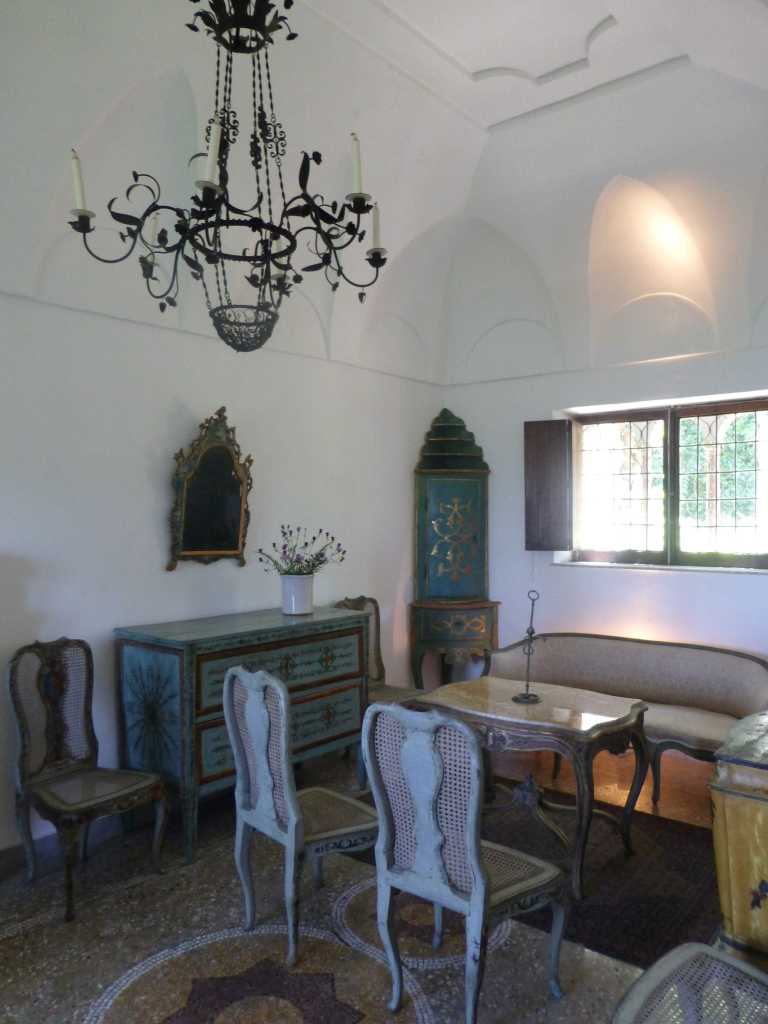

We took many photos inside and outside the house. In the dining room, for example, there were beautiful Renaissance furniture from Bologna and Swedish tableware from the 18th century. On the floor just in front of the stairs there was a mosaic-copy of Pompeii’s one with a skeleton carrying in his hands a wine vessel and a glass of water, which personified that one should enjoy life while he could, with death always lurking in the corner.
From the large information boards in the house, we learned that since he first visited Capri in 1876, Axel Munthe longed to have his own house on the island. In 1895, he bought the house of a carpenter, along with the ruins of the small church of Sant’Michele, after which he named the entire villa. Gradually, he acquired the land above the house where Barbarossa’s military fortification was erected. During the construction, numerous statues and artifacts were discovered, which he carefully preserved and incorporated into the décor of his house and garden, and today everyone can enjoy their beauty and uniqueness. It turned out that the villa was located on the place where one of the twelve villas of Emperor Tiberius, who ruled the Roman Empire from here in 26 AD, used to rise.


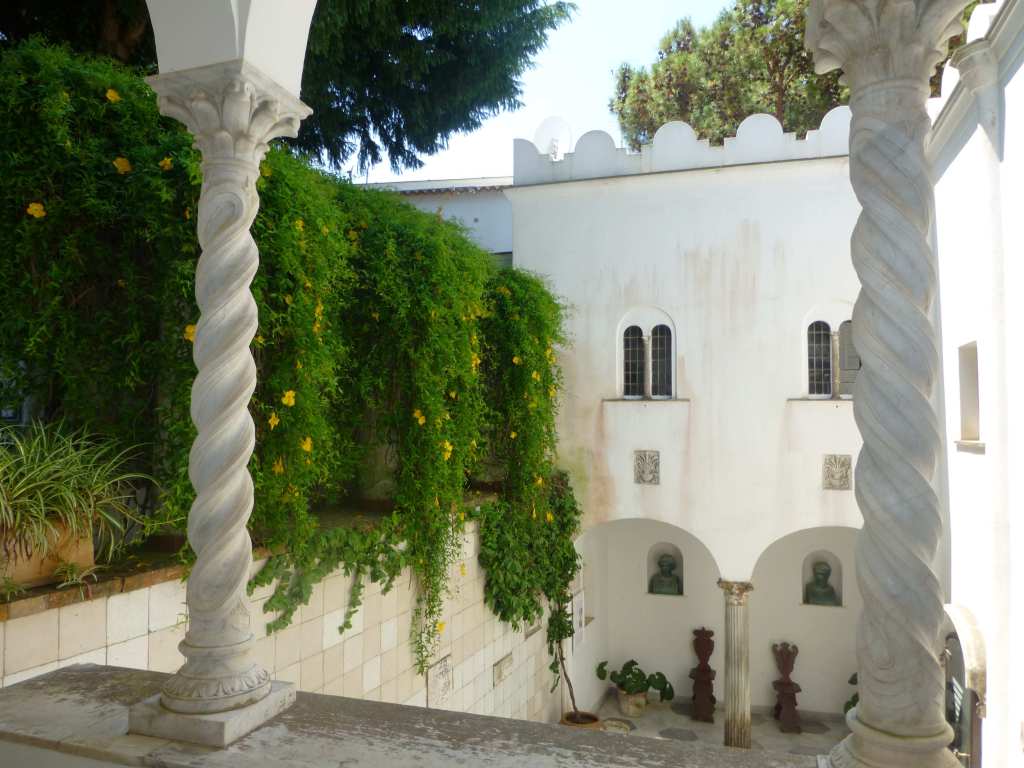
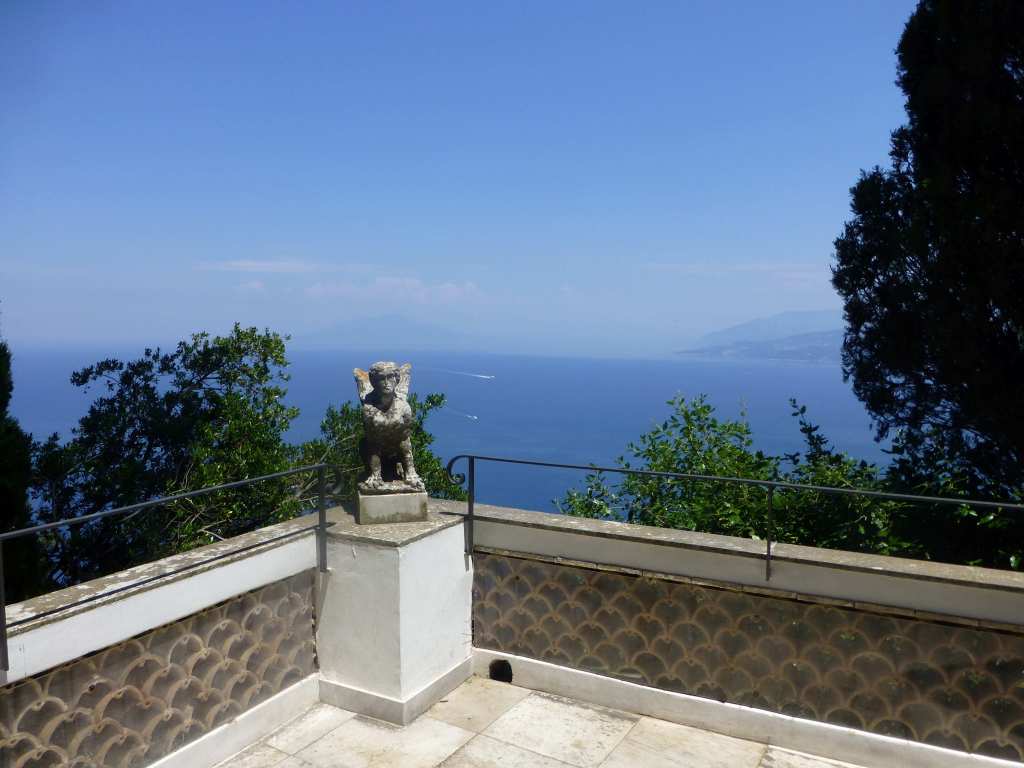
One of the most photographed and shrouded in legends was the statue of a sphinx, which dates back to 1200 BC, from the time of Ramses II, placed on the sun terrace overlooking the port of Capri. This statue was reportedly discovered in mainland Italy, and it is not clear how Munthe obtained it, but it was included in his popular bestseller: The Story of San Michele.
In fact, the chapel was dedicated to the Archangel Michael, and later Munthe used it as a library, and for special guests, as a concert hall. There was also a separate gazebo in the garden for bird watching, as Munthe loved nature very much and was a great environmentalist. Especially many birds, during the migration period, liked to stop and nest at the fortification of Barbarossa. This military fortress, rising 412 meters above the port of Capri, dates back to Byzantine times, but was better known by its 16th-century name to the Moorish corsair Kei-ed-din, known as Barbarossa. It was here in 1956 that the Capri Bird Tracking Observatory was created, by followers of Munthe.
In addition to birds, this villa was also visited by many prominent people, including Oscar Wilde, Count Zeppelin and others. After his death, Axel Munthe left his house as a donation to Sweden, and in 1930 it was turned into a museum attracting thousands of tourists from all over the world.



Returning back to Anacapri, we managed to get on the city bus right away, which took us to the city of Capri, passing through terribly narrow and steep streets with 180-degree turns.
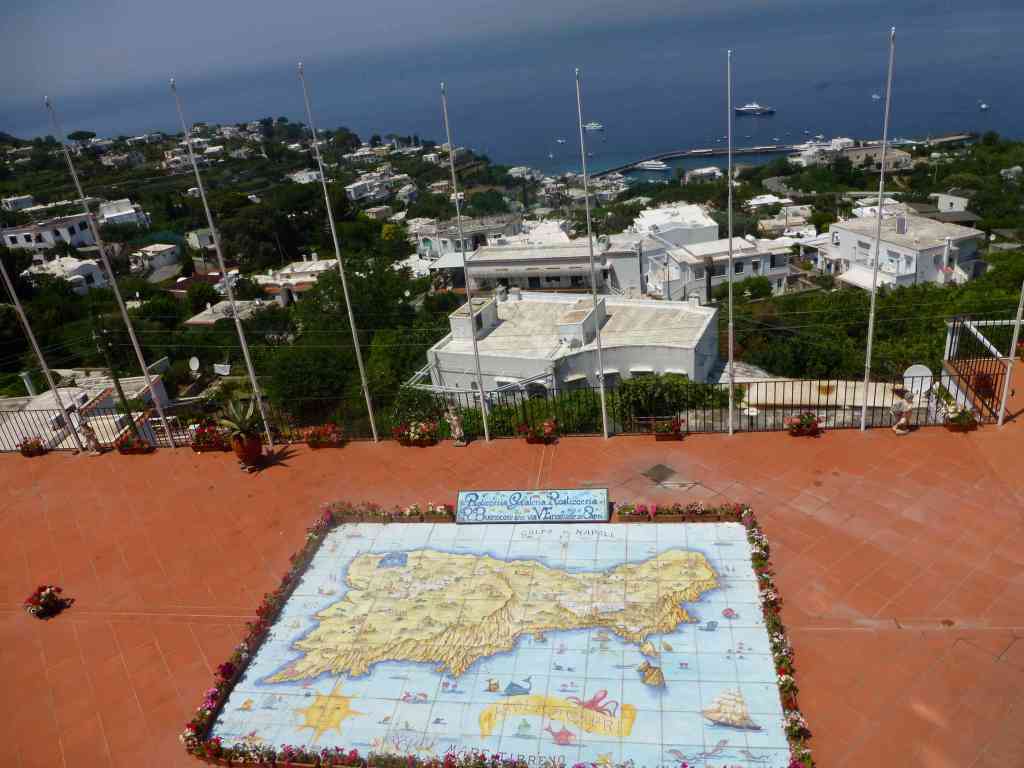
At the bus stop in Capri there was a beautiful terracotta mosaic of the island of Capri placed on a terrace overlooking the sea. My disappointment with the island had passed long ago and I was already dreaming of such tiles and landscapes in my bathroom.
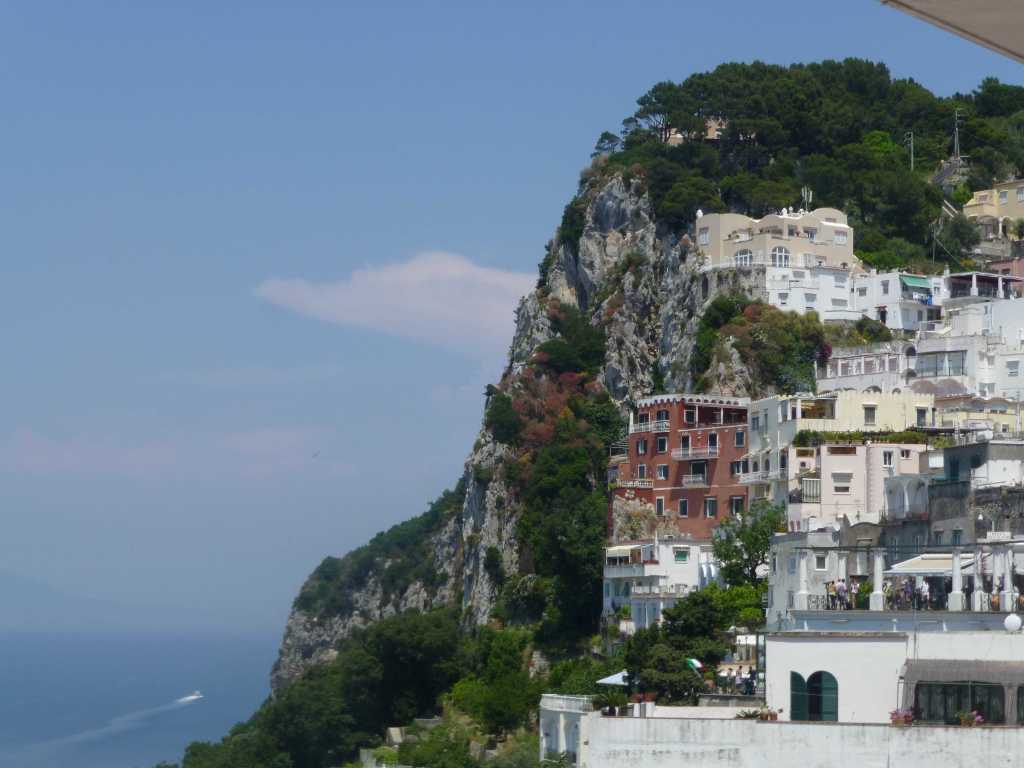
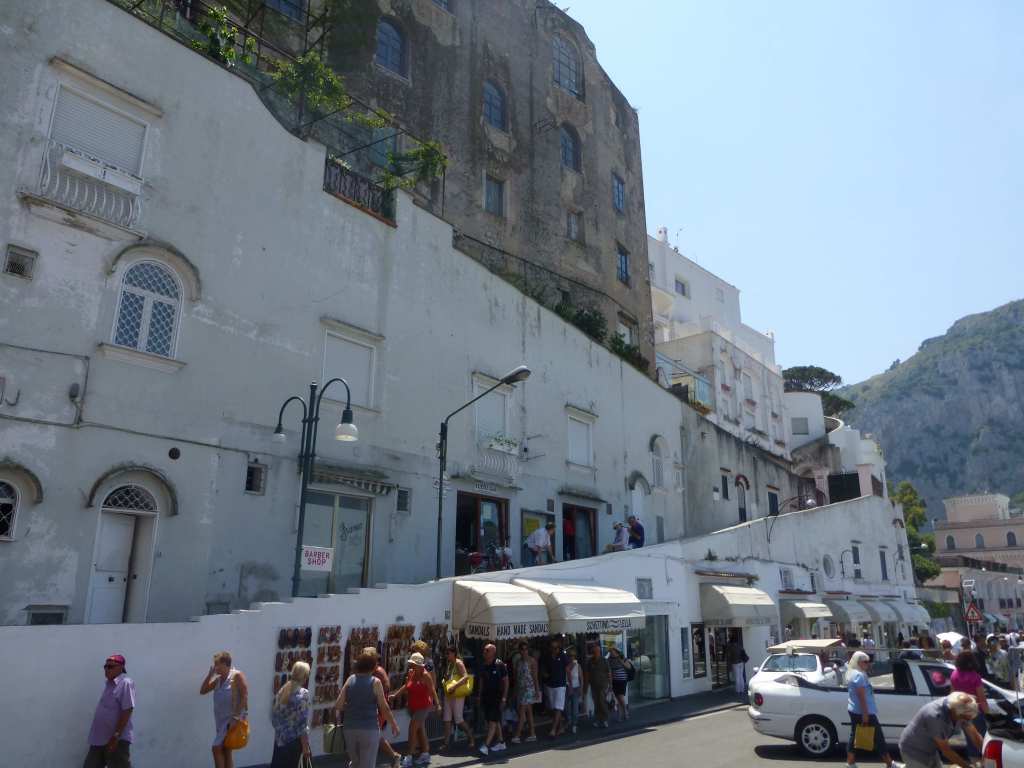
We had a walk through Capri, on whose streets there were only designer outlets such as Gucci, Armani, Louis Vuitton, etc. The central square bore the affectionate name Piazzetta and was crowded with people, cafes and noise. There was also a beautiful clock tower.
At 16:00 we took the funicular (which is a small electric train) from the central square of Capri and went down to the port, where we walked and even took a dip in the warm Tyrrhenian Sea before boarding the ferry back to Sorrento.
The capricious island of Capri loves to be admired by itts fragrant flowers and breathtaking views. Although it is too commercialized, immersed in luxury, expensive boutiques and luxury yachts, the sophisticated island of Capri manages to satisfy even the biggest whims.


GENERAL INFORMATION ABOUT CAPRI:
Location: Capri is an Italian island located in the Tyrrhenian Sea, south of the Gulf of Naples in the Campania region.
Origin of the name: The origin of the name Capri is unclear, most likely coming from the Greek word καπρος meaning boar, but it may also be of Latin origin “capreae” meaning geese.
Area: 10.4 sq.km
Population: 12,200 people (as of 2002)
Official language: Italian
Altitude: 589 m is the highest point on the island
Climate: hot subtropical-Mediterranean climate
Time zone: UTC+1
Currency: Euro (EUR)
Further information: http://www.capri.net/
TRIP TIPS FOR CAPRI:
Best time to visit: The peak season of the island, when the most tourists come here, is from June to August. If you want
to escape the crowds, it is probably best to visit Capri in May, September and even October. In winter, it is quite deserted, cold and most hotels and restaurants are closed.
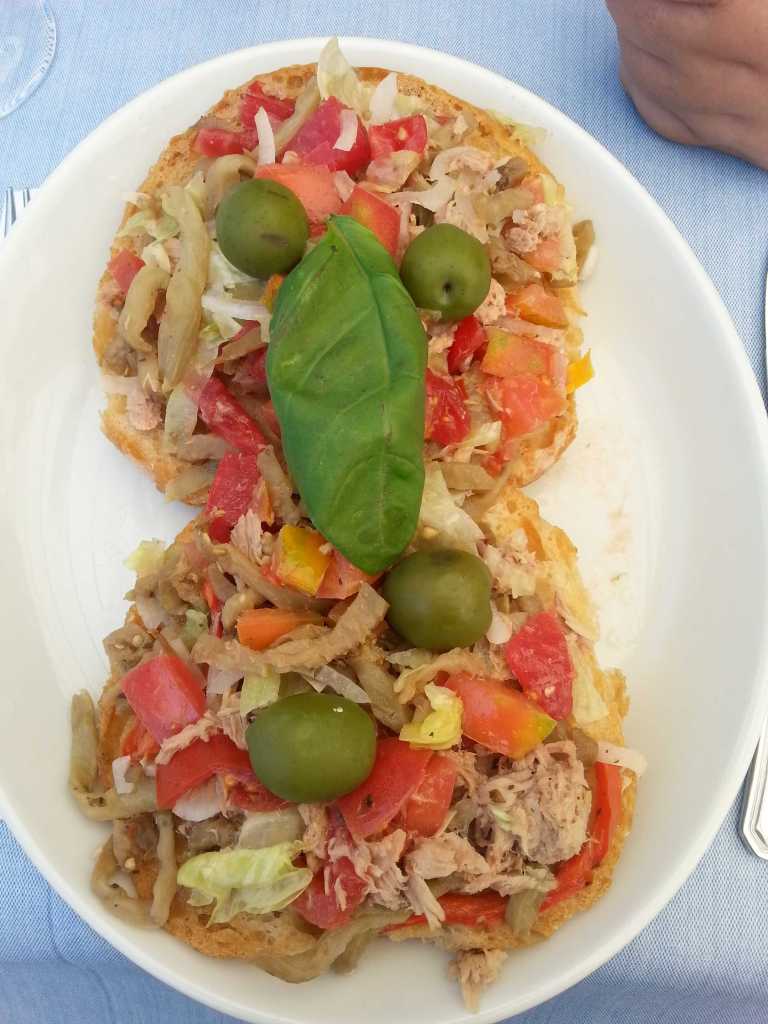
Typical foods and drinks: Italian cuisine is world-famous and Capri is no exception. As on every island, seafood is especially popular here. They prepare toast very tasty, on which they put slices of roasted eggplant, tomatoes, tuna and fresh red onion (photo on the left) – it is very delicious.
Places to visit: Marina Piccola (the small port), the town of Capri with the picturesque Piazzetta Square, the city of Anacapri with the lift to Monte Solaro, the exquisite villa with a wonderful panorama Villa San Michele, the Grotta Azzurra (the blue cave), etc.
 TripTips