AMALFI – UNREALISTICALLY BEAUTIFUL
author: Ana Boneva

The beautiful nymph Amalfi
Enchanted Hercules with her singing
And without any moment to waste
He felt in love with the lovely mermaid.
Suddenly, however, the waves became so big
That they destroyed the beautiful nymph,
Shocked by pain with the last force
Hercules buried his beloved.
He took her to the most beautiful place on earth,
Where the sea, the sky and the mountain merge,
Her name is still sung by the waves of the sea,
This is the beautiful coast of Amalfi.


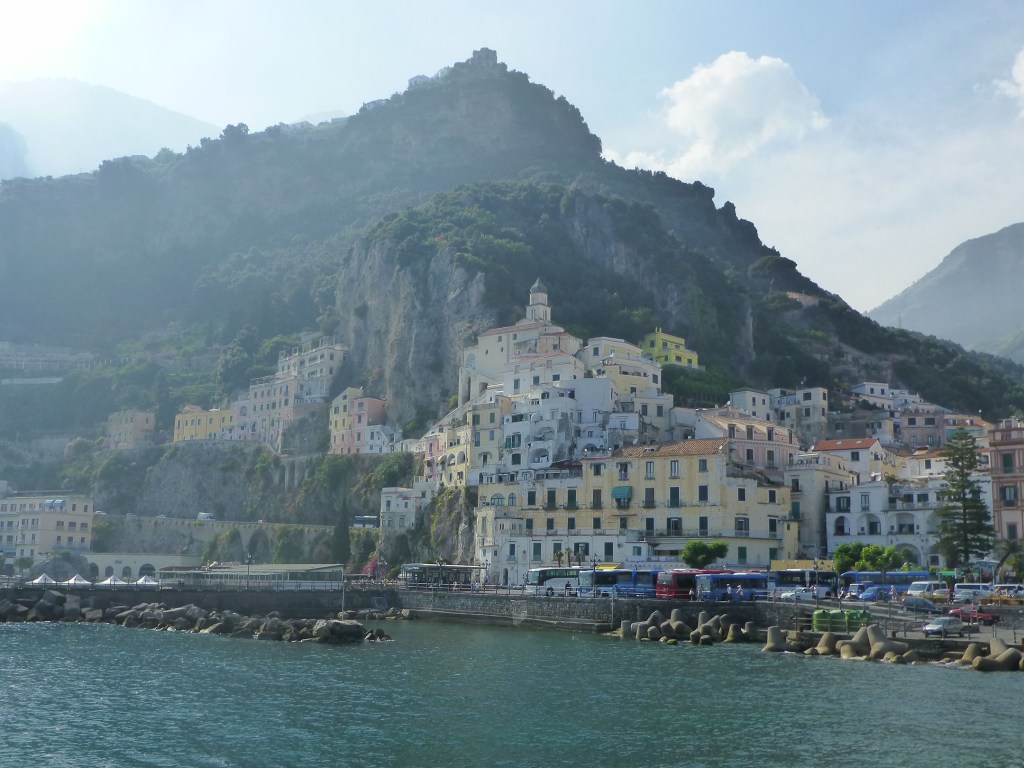
Amalfi is an unrealistically beautiful seaside town, which, like a real sea nymph, manages to attract and enchant millions of tourists. Whether by land or water, the road to this Italian pearl is so picturesque that one is speechless for kilometers before getting here.
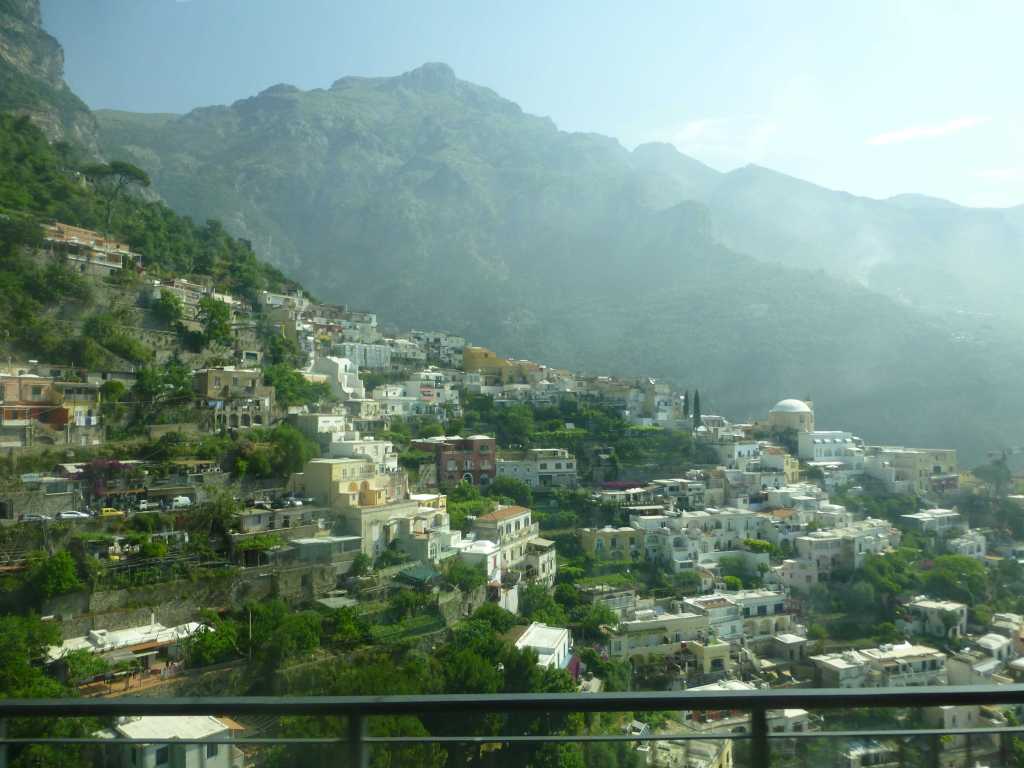
We took the bus from Sorrento to Amalfi, sitting on the right side, as I have read in several guidebooks, according to which “this is the most beautiful bus ride in the world, which will leave you with gaping mouths and open cameras.” Nevertheless, I was impressed by the landscape and the trip, which lasted 2 hours (and not the planned hour and a half) drained almost all batteries of my camera.
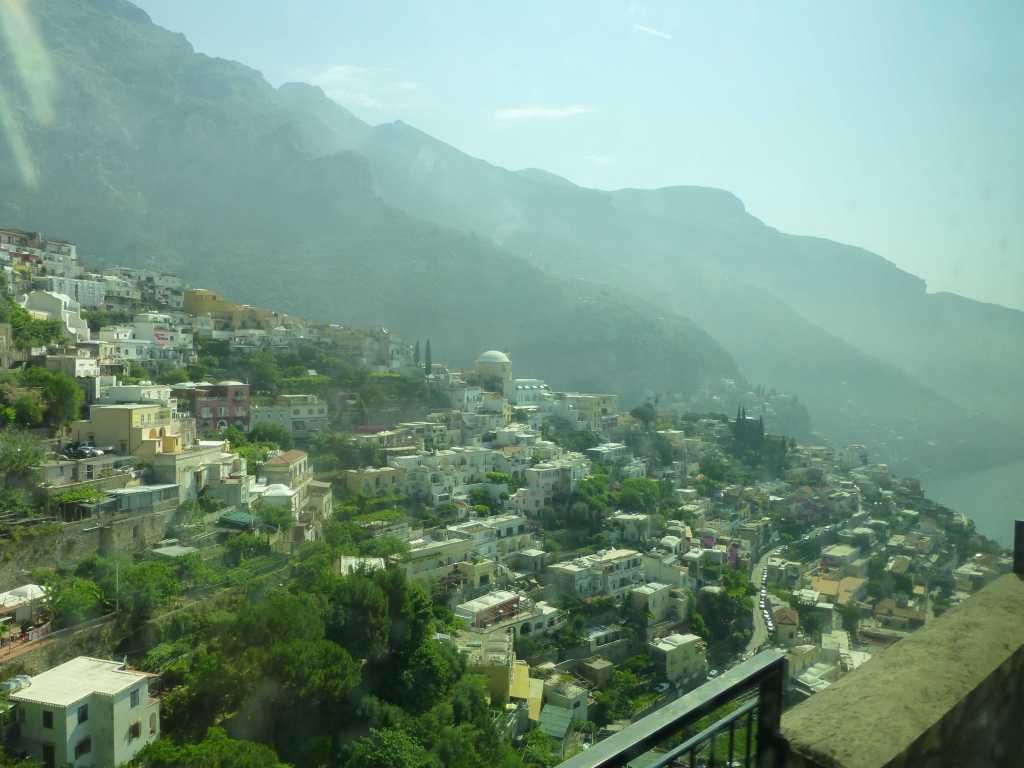
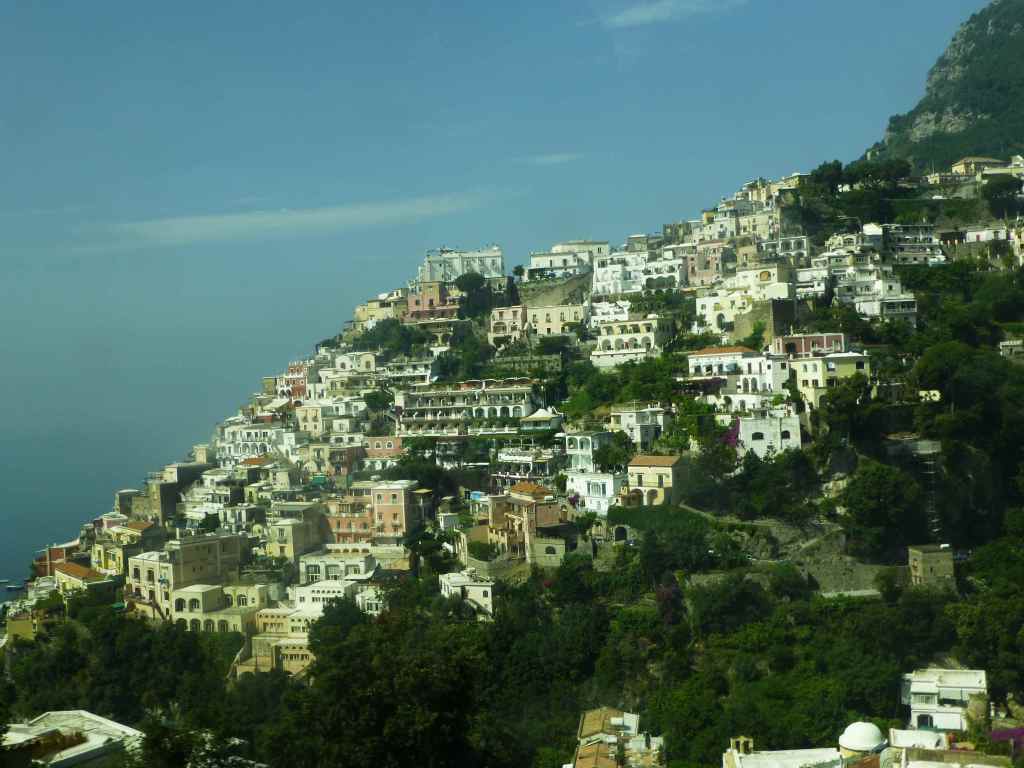
By bus we passed through the famous picturesque town of Positano, about which the American writer John Steinbeck wrote in 1953 that Positano is “a dream place that does not look real when you are in it and becomes tangibly real after you leave it”. Its pastel-coloured houses were perched on the steep bank, and they were as densely arranged as we were in the tourist bus. However, this did not make it less charming and was probably a pleasant place in the off-tourist season. However, the steep descent and climb up and down were not part of my idea of an ideal sea holiday.
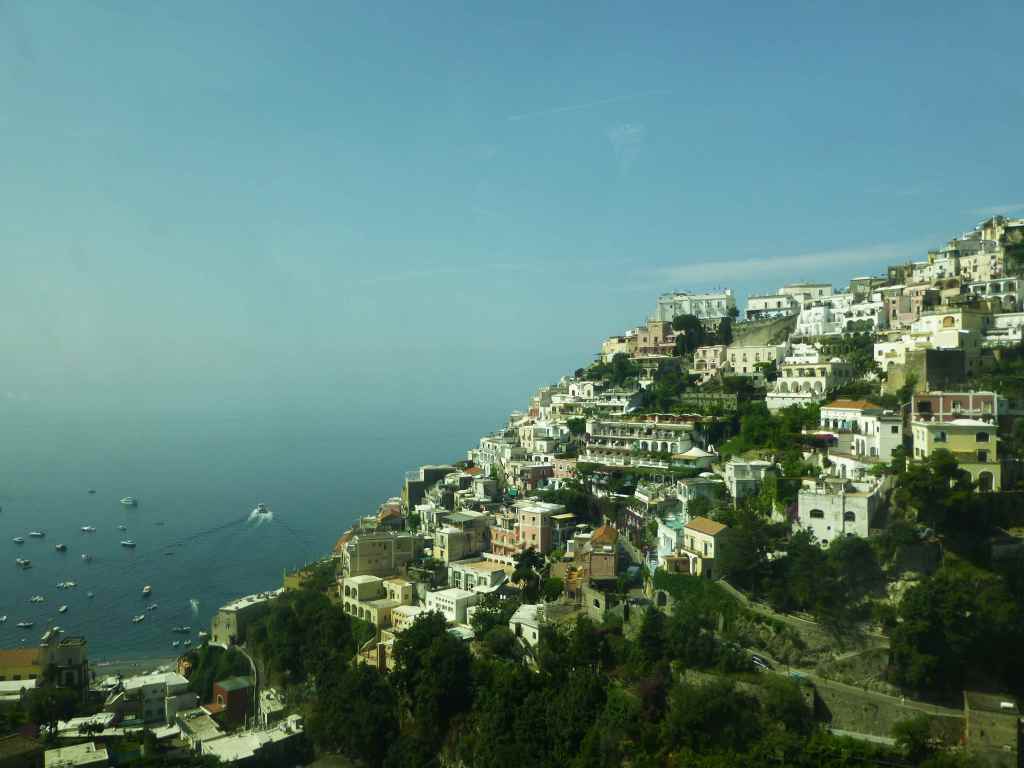
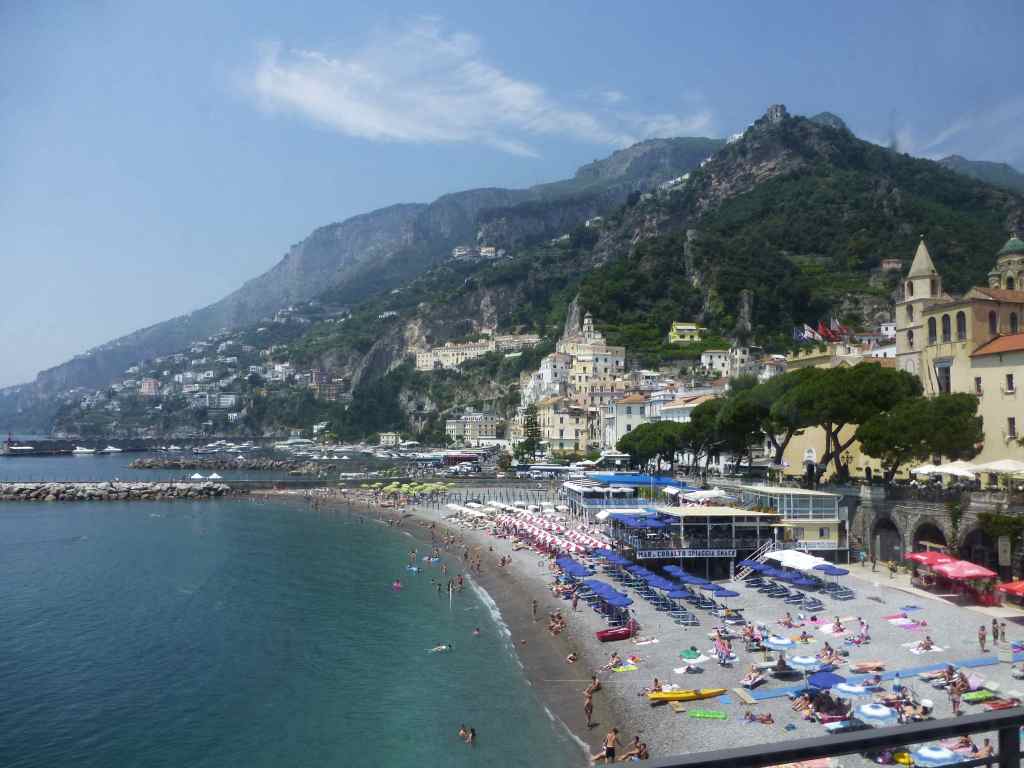
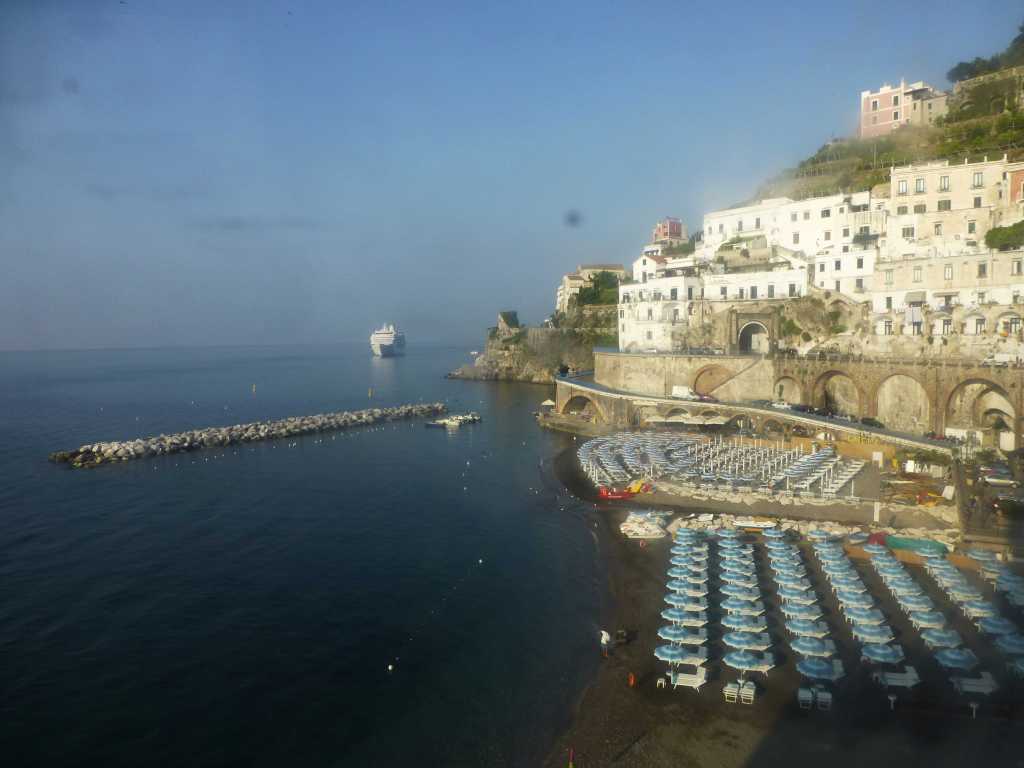
Much flatter and hospitable was the town of Amalfi, where we had 2 nights in the wonderful hotel Lidomaré. Our room 31 had a picturesque balcony with a wonderful view of the sea and the port of Amalfi. The hotel itself was housed in a historic building dated 1300, combining antiquity and modern comfort. At the same time, we had a wonderful view of the sea, and when we left the hotel we found ourselves directly at the central square Piazza Duomno opposite the beautiful cathedral that Amalfi was so proud of.
Erected in the 9th century, the Duomo di Sant’Andrea was reconstructed several times, and received its current appearance in the 1800s, but the engraved bronze doors were brought from Constantinople as early as 1000. There were numerous exhibits and Roman statues. Especially beautiful was the courtyard with greenery, palm trees and columns, and in the arches overlooking the courtyard there were parts of drawings of icons painted on the walls like our Orthodox churches. The most impressive part remained the crypt, where the ceilings and arches were painted in a unique and very impactful way.


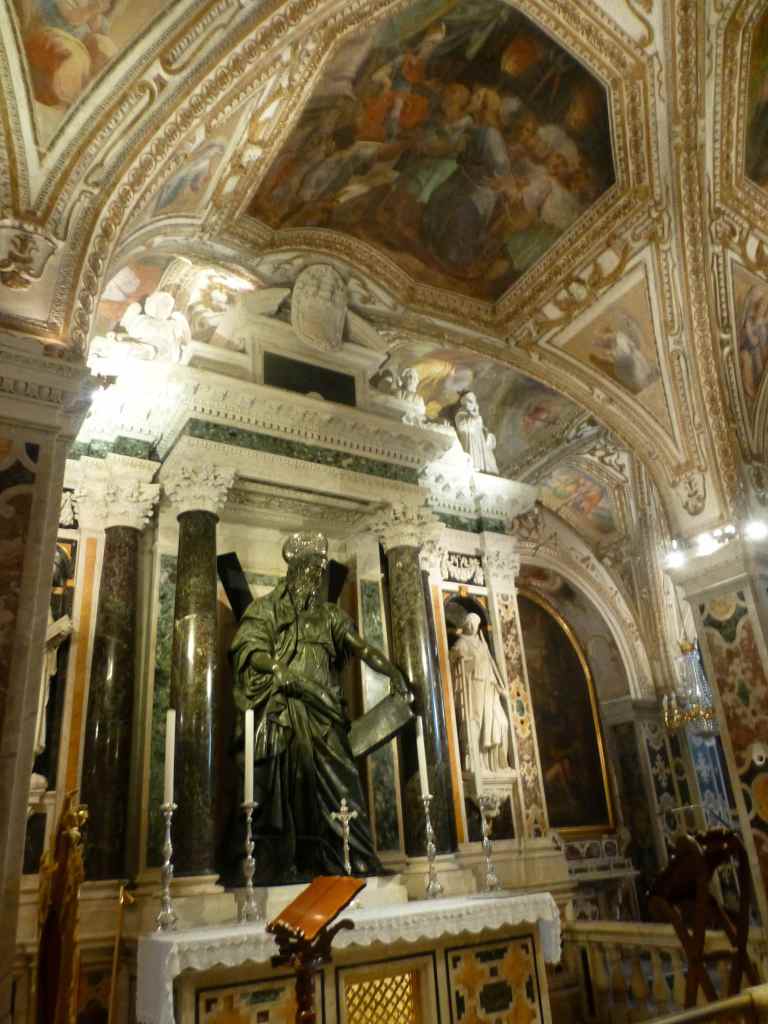
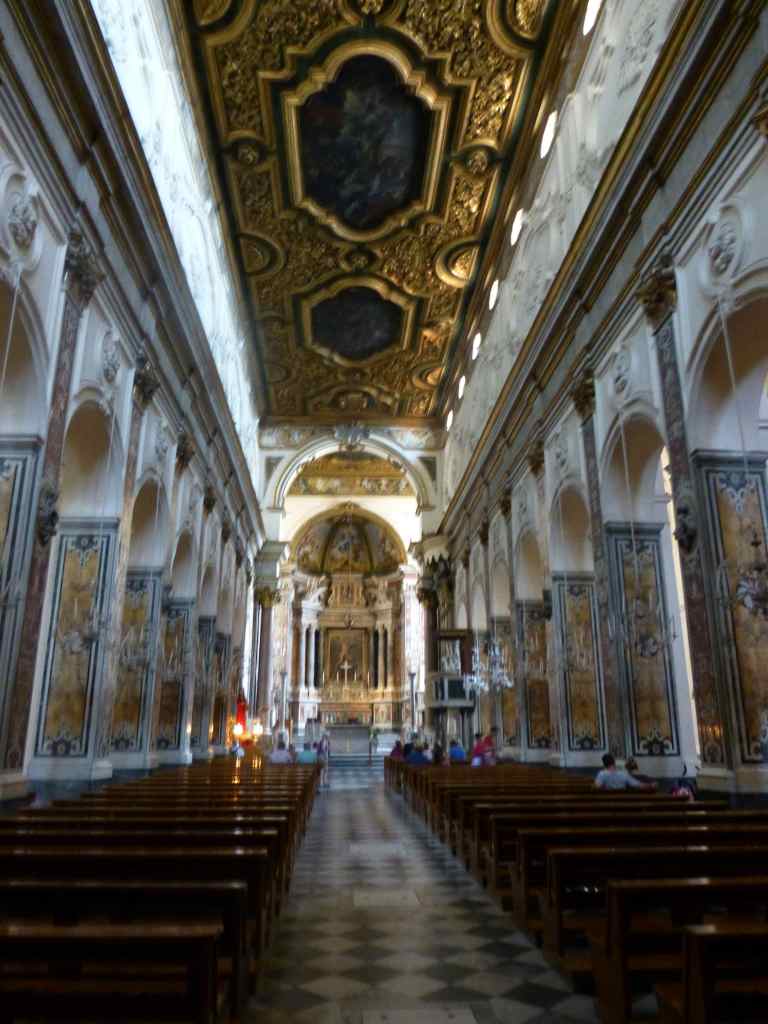
The marble altar and the painted columns at the top of the cathedral also gave harmony and tranquility. There were many beautiful paintings on the ceiling, engraved with gilded frames. All this splendor testified to the former riches of the city of Amalfi. Tucked between the mountains and the sea, the town was proud of its glorious history. The city was first mentioned in the 6th century, and in the 11th century it was already a strong maritime republic that rivaled Venice and Genoa. Trade was very well developed here and the tradition has been preserved to this day, as the central square and side streets were strewn with tempting shops and picturesque restaurants.
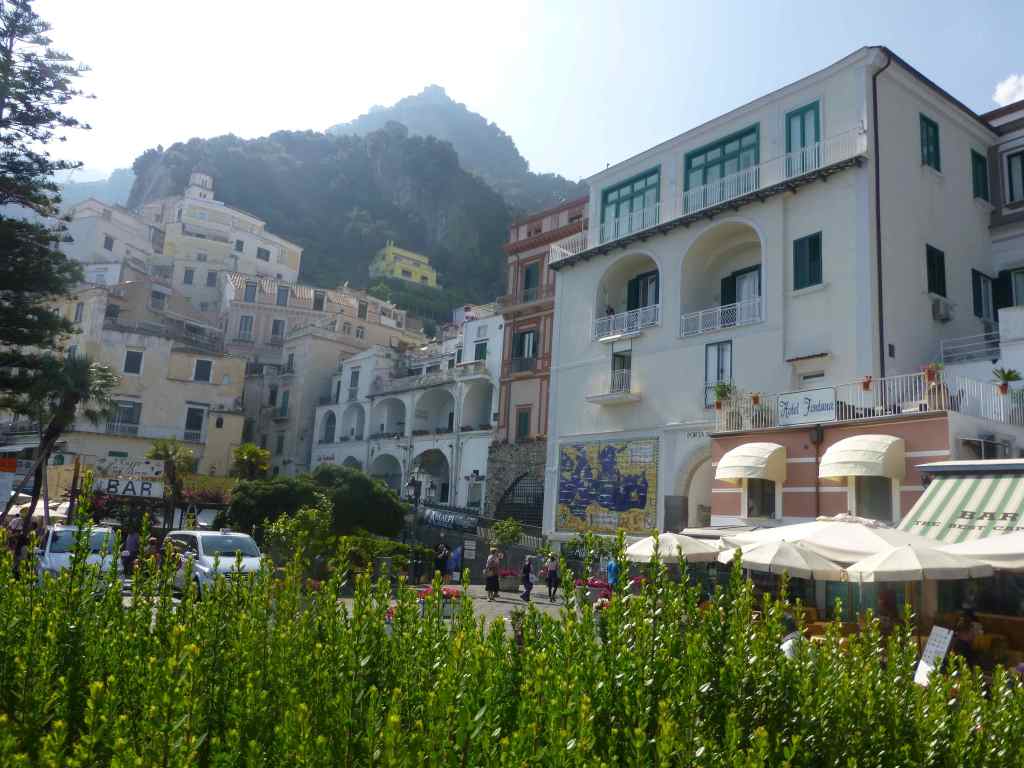


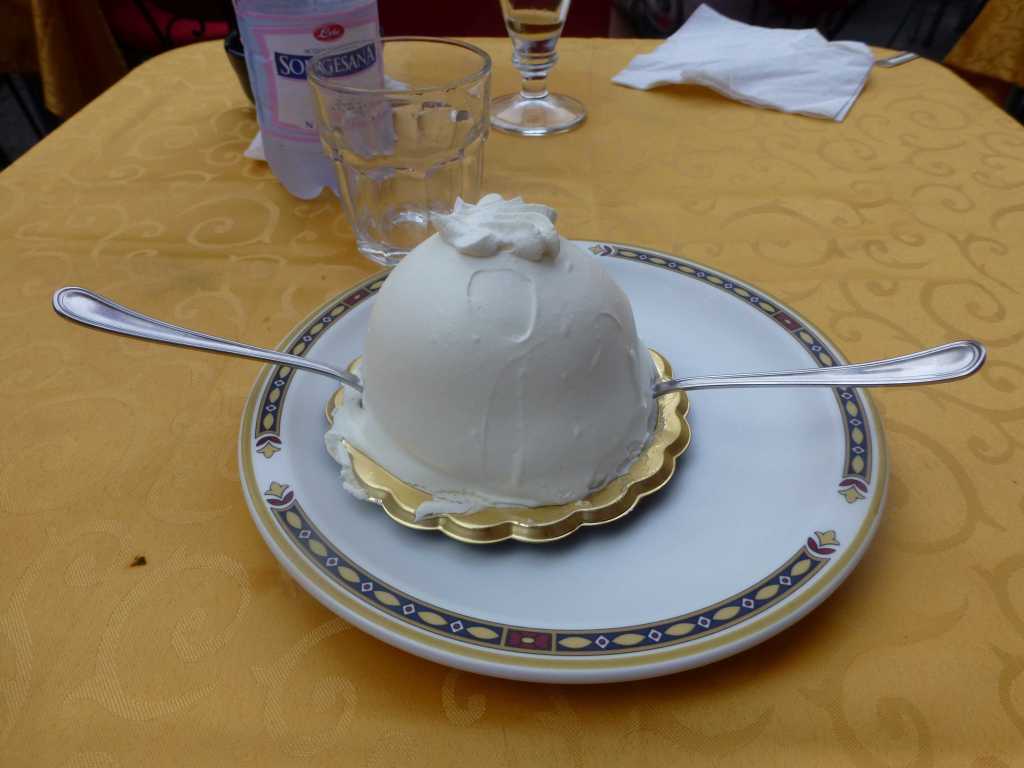
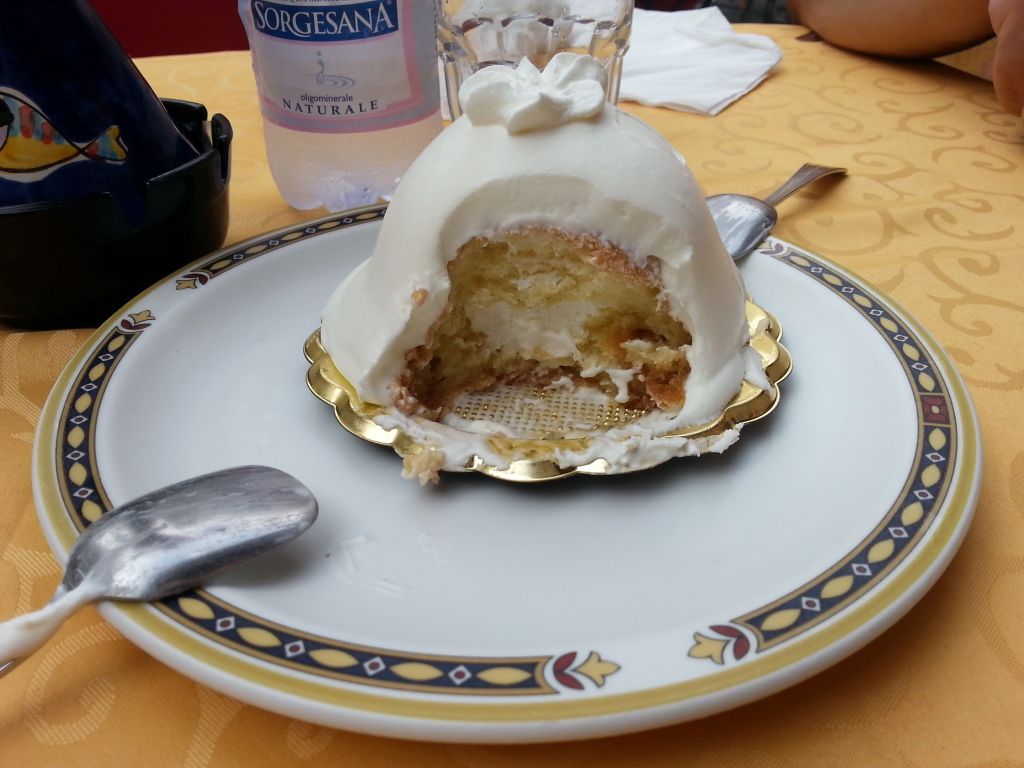
It was time for lunch and we sat on the sunny terrace of a restaurant right in front of the cathedral that impressed us so much. We ordered spaghetti with seafood and tartellini, and for dessert the traditional Amalfi pastry, which is a roar with lemon cream and doused with cream. It was very tasty.
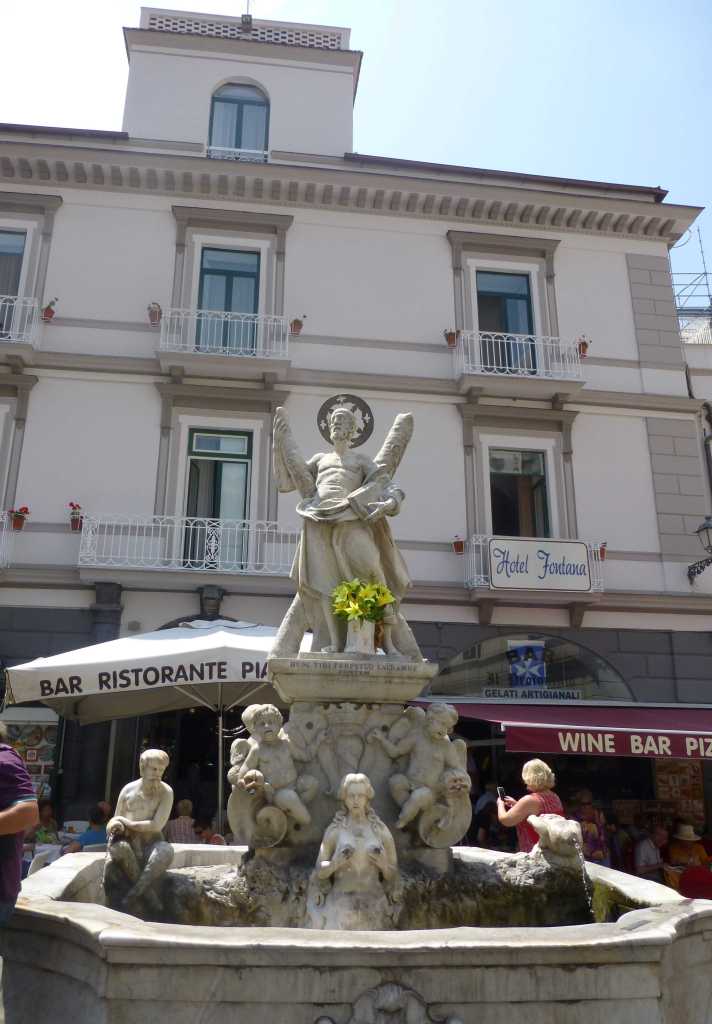
We walked along the central shopping street of Amalfi, where, in addition to shops, there were also several beautiful fountains. The first of them was the Fountain of St. Andrew overlooking the beautiful cathedral, erected in 1760 in the Baroque style. There was also an older fountain on the site, which was carried away and destroyed in a sea storm. The present one depicted the saint, at whose feet stood angels pouring water, and below them women, from whose breast also flowed water.
The other, even more interesting fountain was made of many small figurines, as if it came out of a fairy tale. The fountain was located in Piazza dello Spirito Santo. Subsequently, I learned that every Christmas the figures are changed and tell a different story, and they were placed above and below the water.
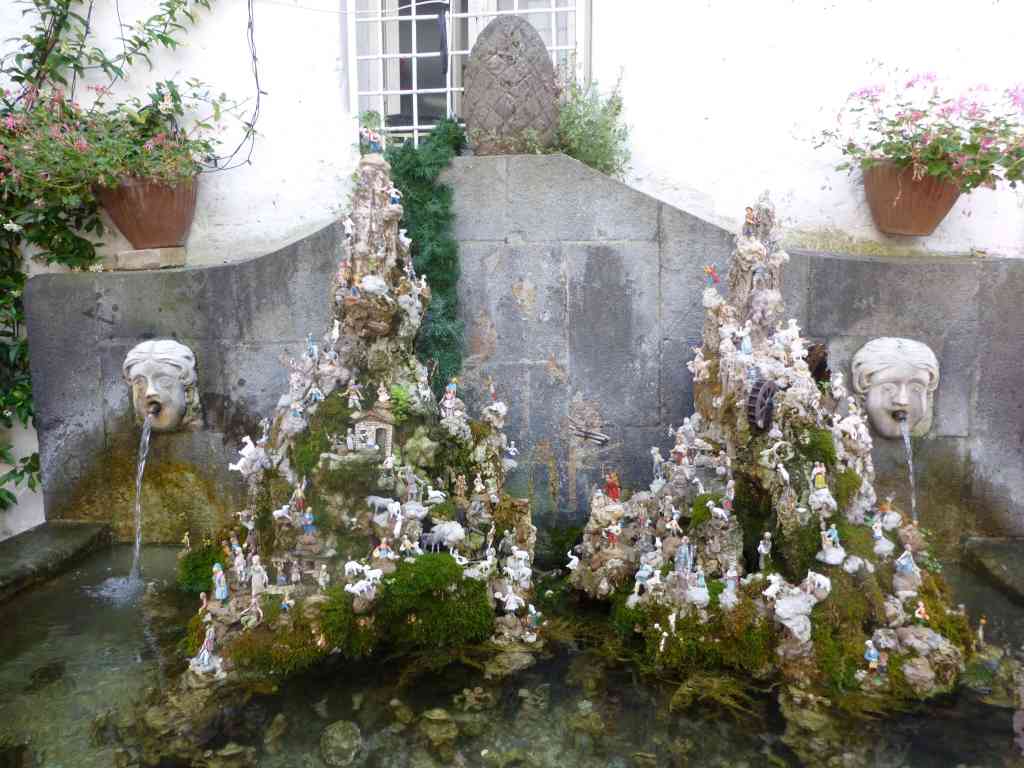


Further down the street, in a courtyard, we saw a number of small houses erected in the street, as if they belonged to the figurines from the fountain. Amalfi was really fabulous and it was very pleasant to immerse ourselves in this sunny fairy tale.
And speaking of immerse, the next day we did just that – enjoying the gentle waves and a carefree relaxation on Amalfi Beach.


In the afternoon we headed to Ravello – another beautiful town, located deeper and higher on land, but with an even better panoramic view of the Amalfi Coast. The trip again included a crowded bus, narrow roads and 180-degree turns, but when we got to the city, we realized that the experience was worth it. Ravello was really a wonderful and unique place, especially Villa Cimbrone, which we were able to explore.
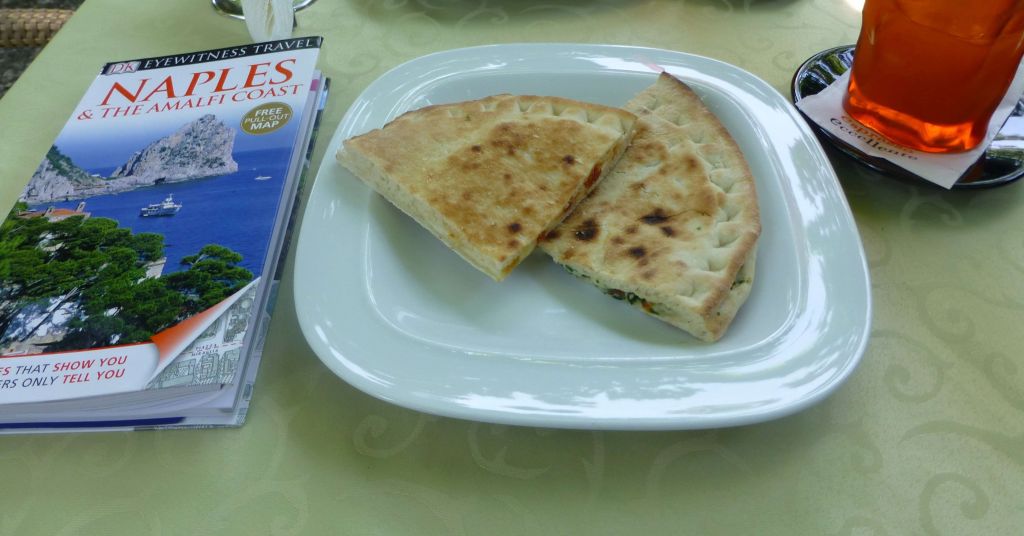
On our way, we stopped at a family restaurant, where we tried a very tasty local specialty resembling a thin loaf of bread stuffed with ham and yellow cheese or spinach and cheese, and we enjoyed both types very much. With renewed strength and a brisk step, we reached Villa Cimbrone, which is located a 20-minute walk from the city. Along the way, magnificent views of the terraced mountain and the Amalfi Coast were revealed.


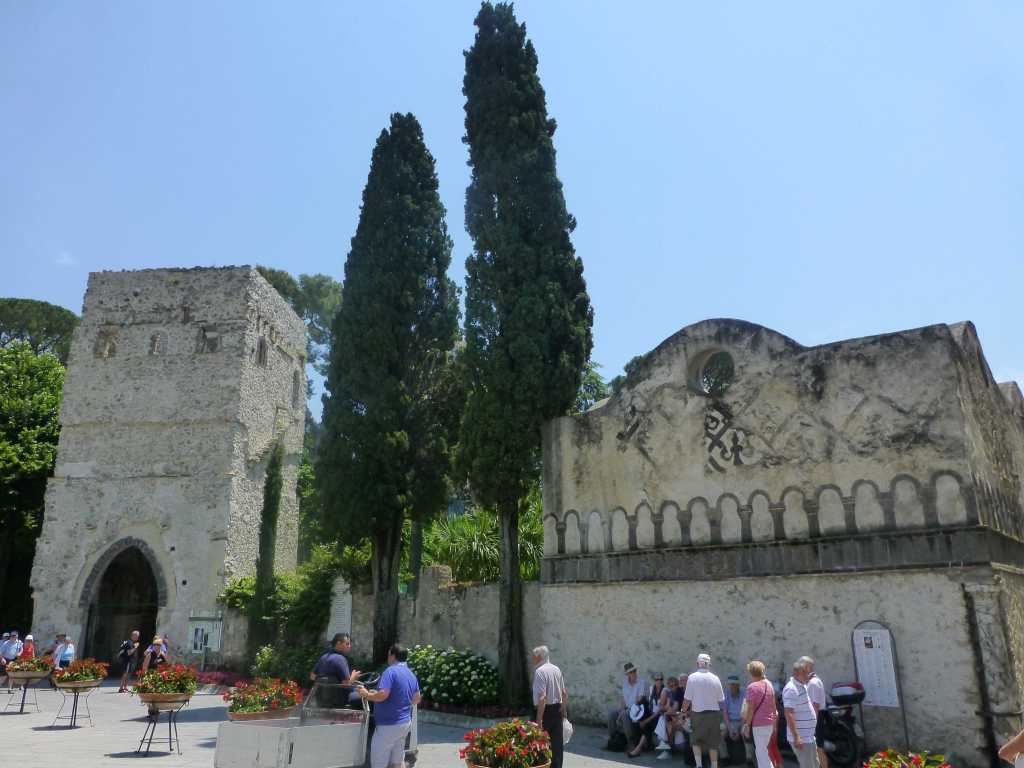
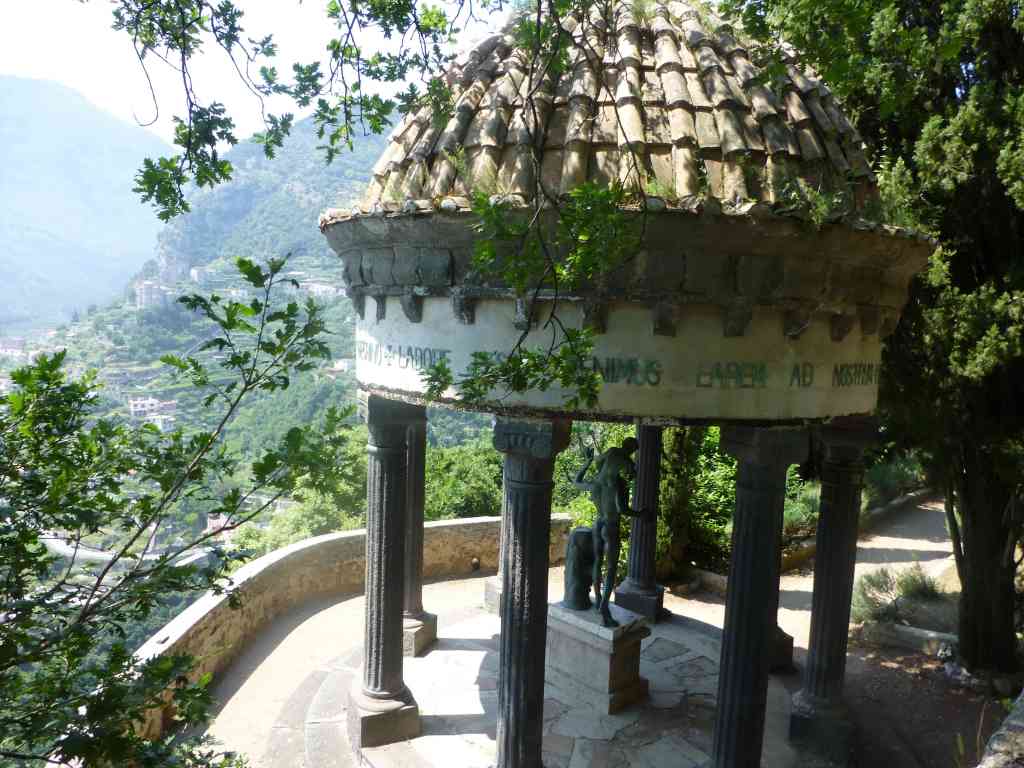
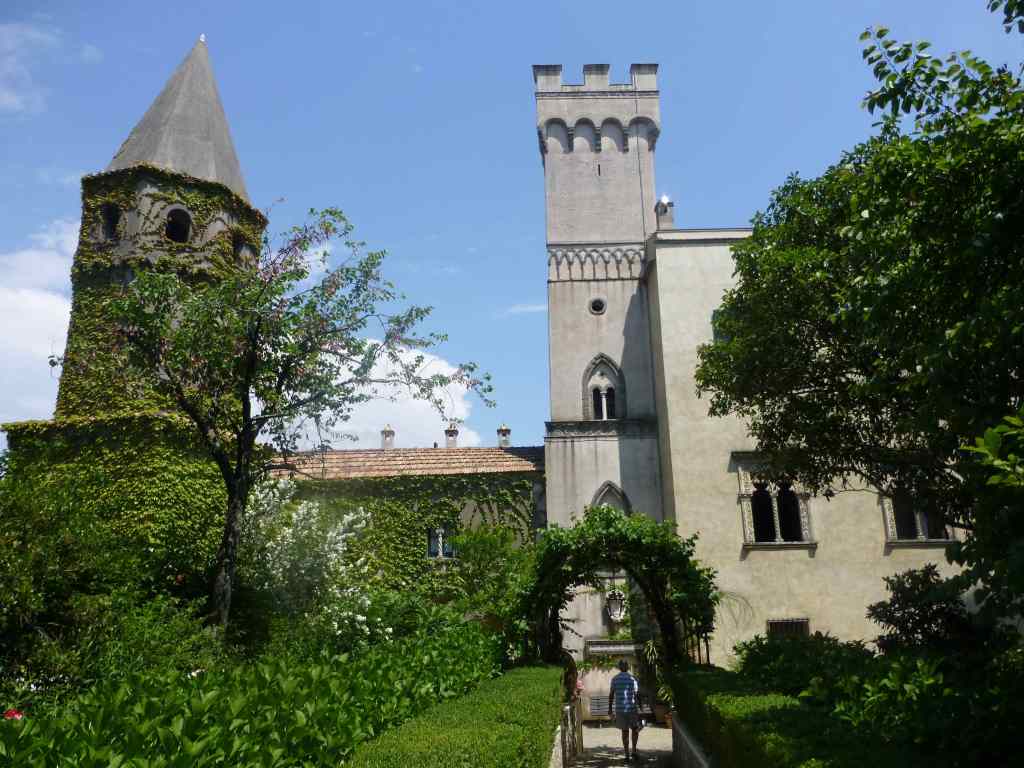
The villa itself had an equally stunning panorama, revealing itself mostly from the Terrace of Eternity. Marble statues were erected on it, as if the Roman gods themselves had decided to settle and stay here. Villa Cimbrone was built in the 11th century by a noble family, becoming part of a monastery in the 17th century, after which it was neglected until 1904, when it was purchased by the English Lord Ernest William Beckelt, who completely renovated it, preserving the original plans and complementing the villa with 6-hectare gardens. In addition to the views and beautiful flowers, there were separate corners such as the one with the monument of the thoughtful god Mercury, the merry god Dionysus, the cave of Venus, etc.
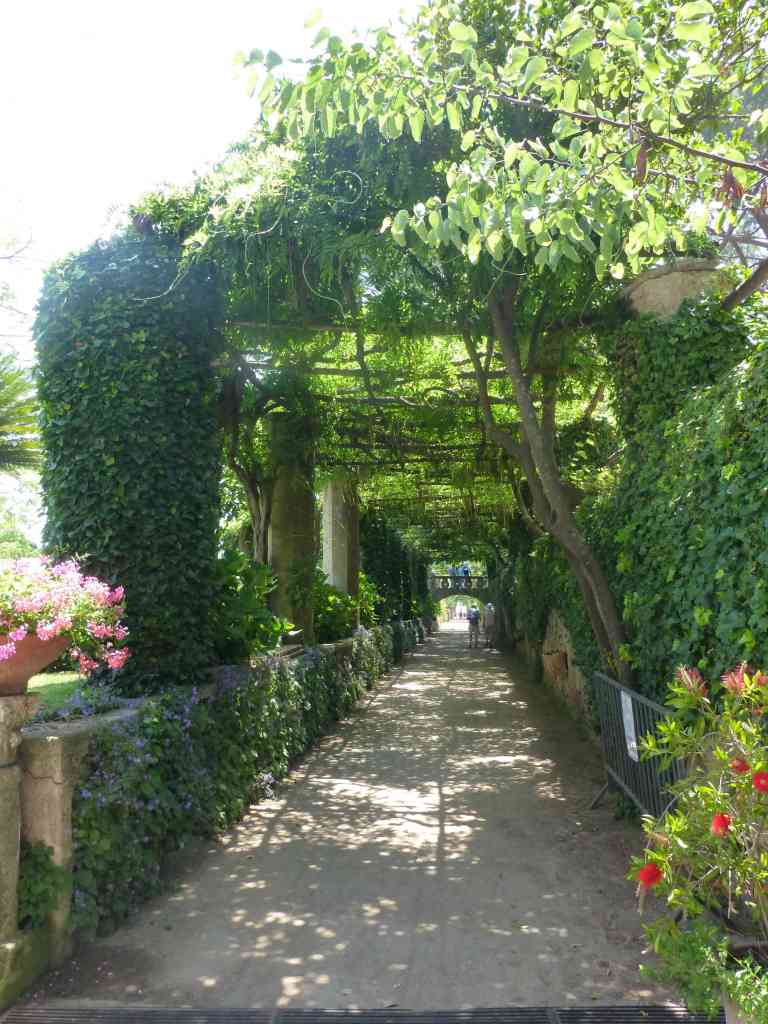
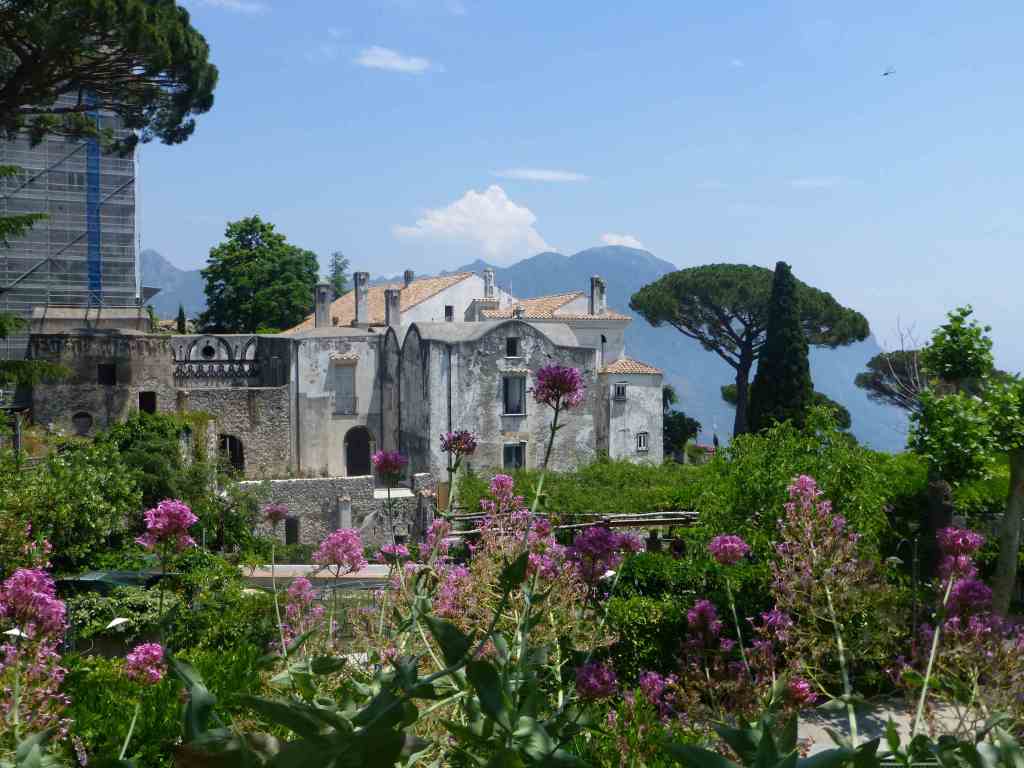
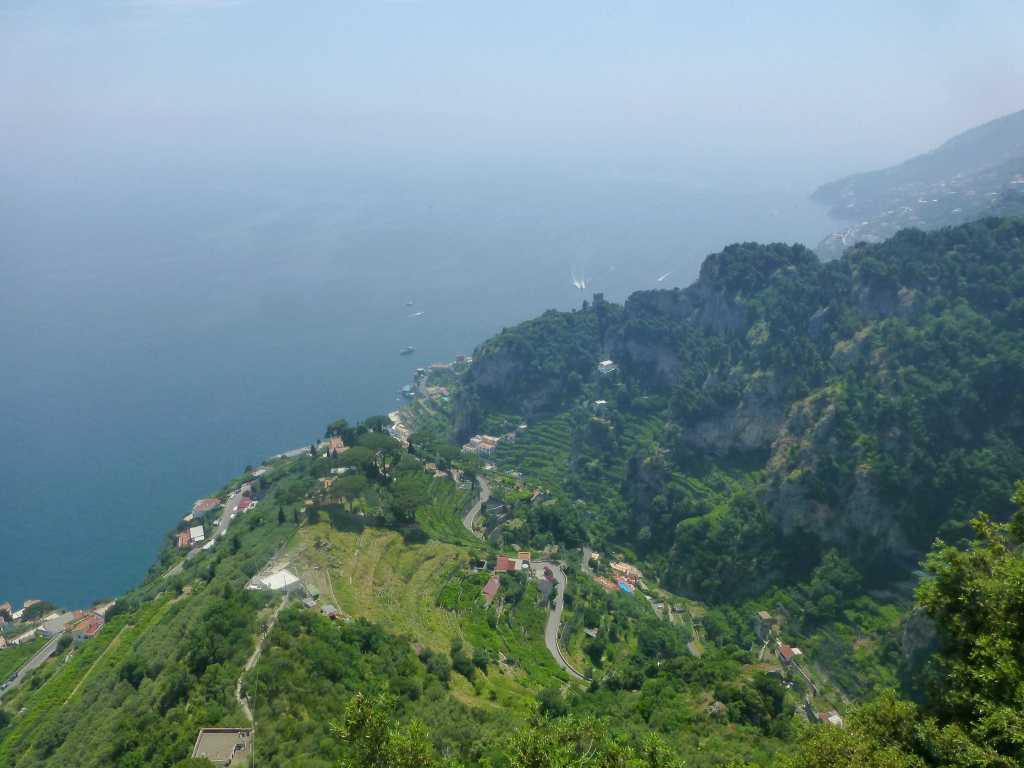


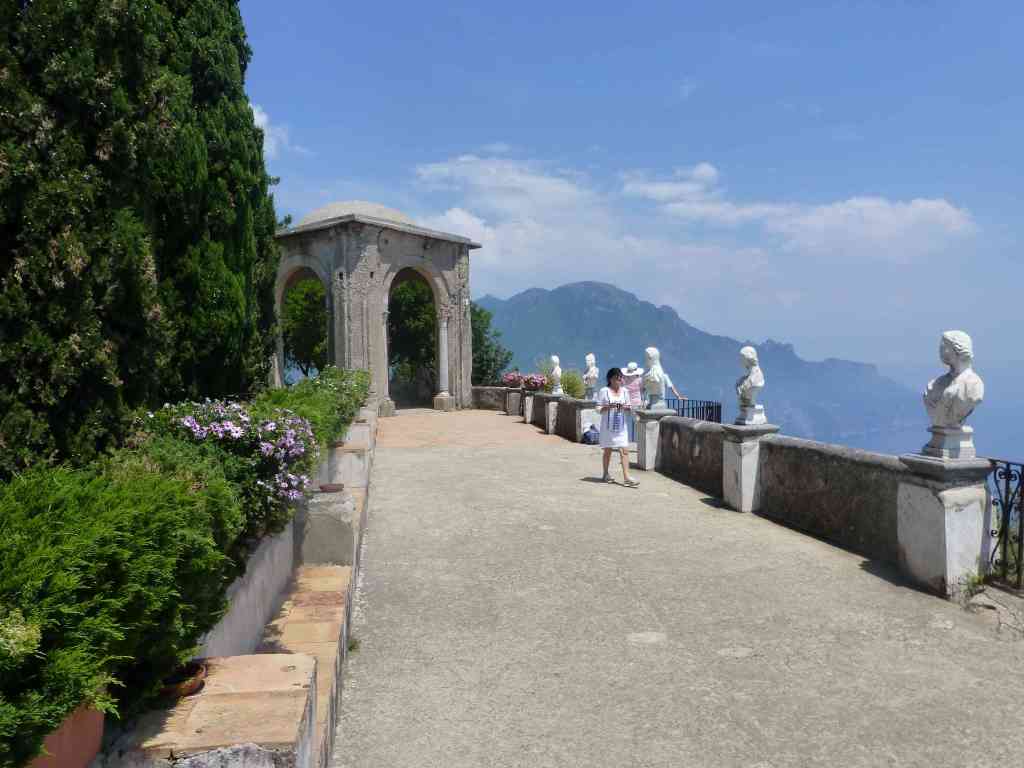
The gardens were very well laid out and maintained. There were many roses, and in some places fountains and even a sundial. Today the villa was a luxury hotel, but it was hardly among the quietest, after the numerous tourists who came here. However, the atmosphere was somehow fabulous and I really liked the stone tower wrapped in vegetation as if it was the real home of Rapunzel, and from the panoramic platform I expected to see a mermaid in the water.
Ravello had many other interesting villas and sights, but our eyes and cameras were already full enough and we headed back to Amalfi, where it turned out that the holiday had begun.





We had just returned to the hotel room and loud music was heard outside. Our balcony instantly turned into a central VIP lodge, from where we watched a unique procession. In the bay in front of us, lots of boats began to arrive, thundering solemnly with cannons. On one of the boats there was a statue of St. Anton. There were crowds of greeters on the shore. Several men dressed as cardinals in red robes got off the boats, carrying the statue of St. Anton and they sang. In front of them, priests in white robes carried candles and made their way through the huge crowd, passing just below our balcony and heading to the cathedral. At the end of the procession, there were also musicians playing. It was from the songs that we found out that it was about St. Anton Day (13 June).
At 22:00, fireworks display began, which lasted about 15 minutes. It was a full moon. The moon was red, later slightly brightened and took on an orange color. A lunar path had formed in the sea. The music continued until late and was the perfect end to a perfect vacation.



The next morning we took the bus to the sunny-sounding city of Salerno, which was much larger than Amalfi and Positano combined. There was a large port, a railway station, and the airport was only 10 km away. Salerno had an ancient history, being an important Etruscan trading city with the name of Irna, which the Romans later renamed Salernum, probably in honor of the brilliant sun that often stayed on this coast. We also hoped to stay again in the southern Italy, saying goodbye to its glamorous pearl – the unrealistically beautiful Amalfi Coast.




GENERAL INFORMATION ABOUT AMALFI:
Location: The picturesque seaside town of Amalfi is located in the Italian region of Campania, located on the northern coast of the Gulf of Salerno.
Area: 6.11 sq.km
Population: 5,353 (as of 2009)
Official language: Italian
Altitude: 6 m
Climate: hot subtropical-Mediterranean climate
Time zone: UTC+1
Currency: Euro (EUR)
Further information: http://www.amalfitouristoffice.it/home.asp
TRIP TIPS FOR AMALFI:
Best time to visit: probably the best time to visit the Amalfi Coast is in the spring from April to June, when all the flowers are blooming and the warm Mediterranean air invites pleasant walks. During the peak season of July and August, there are crowds of tourists, which make getting around and sunbathing more difficult. And the weather is excellent. In winter, the cold wind and waves intensify and somehow manage to hide the charm of the beautiful coast.
Typical food and drinks: Italian cuisine is world-famous and Amalfi is no exception. As on any coast, seafood is especially popular here, as is the excellent Italian ice cream. Lemons are sunny in color and are especially revered here in any form.
Places to visit: The Cathedral of St. Andrew (Duomno) located in Piazza Duomo is considered the heart of the city, from here begins a pedestrian shopping street. Next to the cathedral is the Paradise Monastery with old mosaics and paintings (Chiostro del Paradiso), not far away is the Museum of Handmade Paper (Museo della Carta). However, it is probably better to take boats to Positano or the Esmerald Grotto cave instead of museums. but you can also diversify it with the town of Atrani, which is 1 km east of Amalfi.
 TripTips