SYMI ISLAND
author: Ana Boneva


“One look from you, one smile
are really enough
like waves to overwhelm me
in the sea of love.”
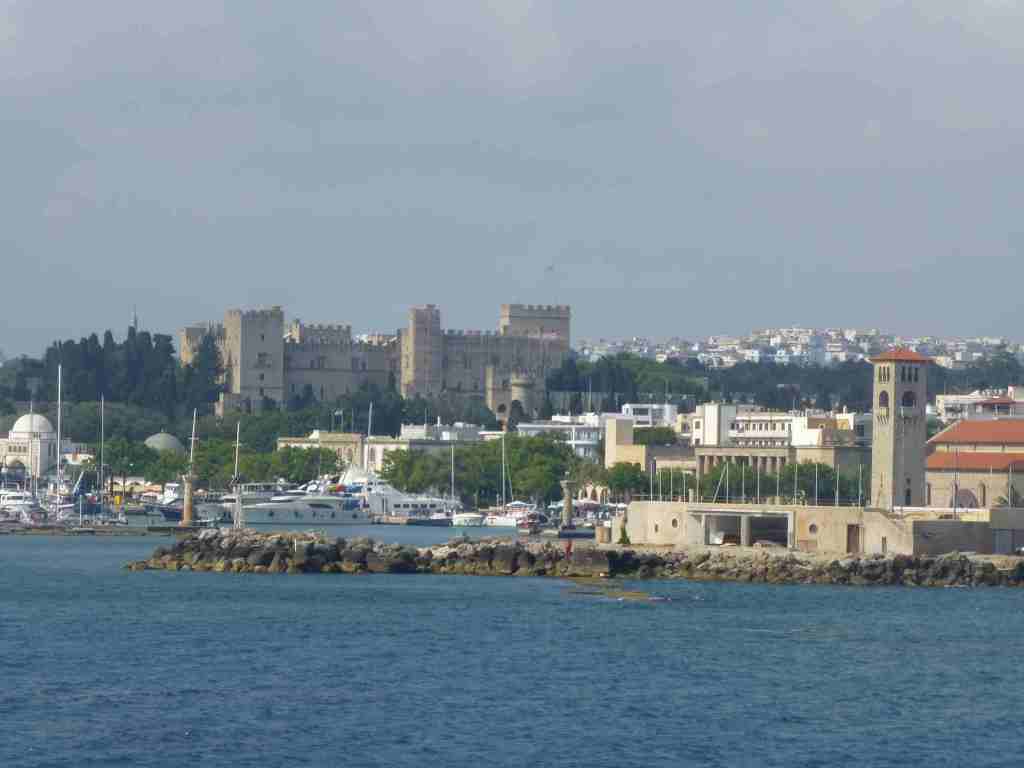
Our day was filled with a lot of sea, splashing and wind. We made a day trip to the island of Symi. A bus picked us up from the hotel on the island of Rhodes and took us to the port of Rhodes Town, which looked small against the background of the big cruise ships.
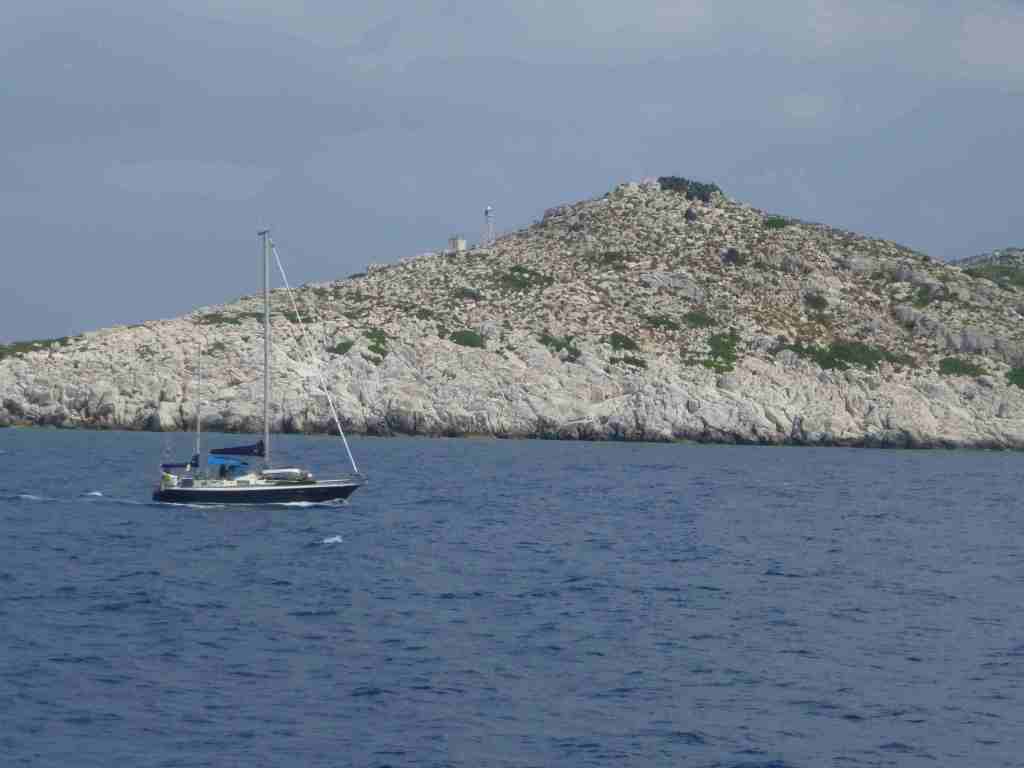
The trip on the huge ship SYMI-Sea Dreams lasted about two hours. At first we liked seats on the upper deck, but the wind blew away our desire for this, and we found far sunnier and more comfortable seats on the lower deck. There I could safely take pictures from both sides of the ship, and there were lots of beautiful panorama to photograph. I tried to capture every island and rock, as if I was going to use the photos to find my way back to Rhodes. There were also dolphins along the way, but they were too fast for photos.


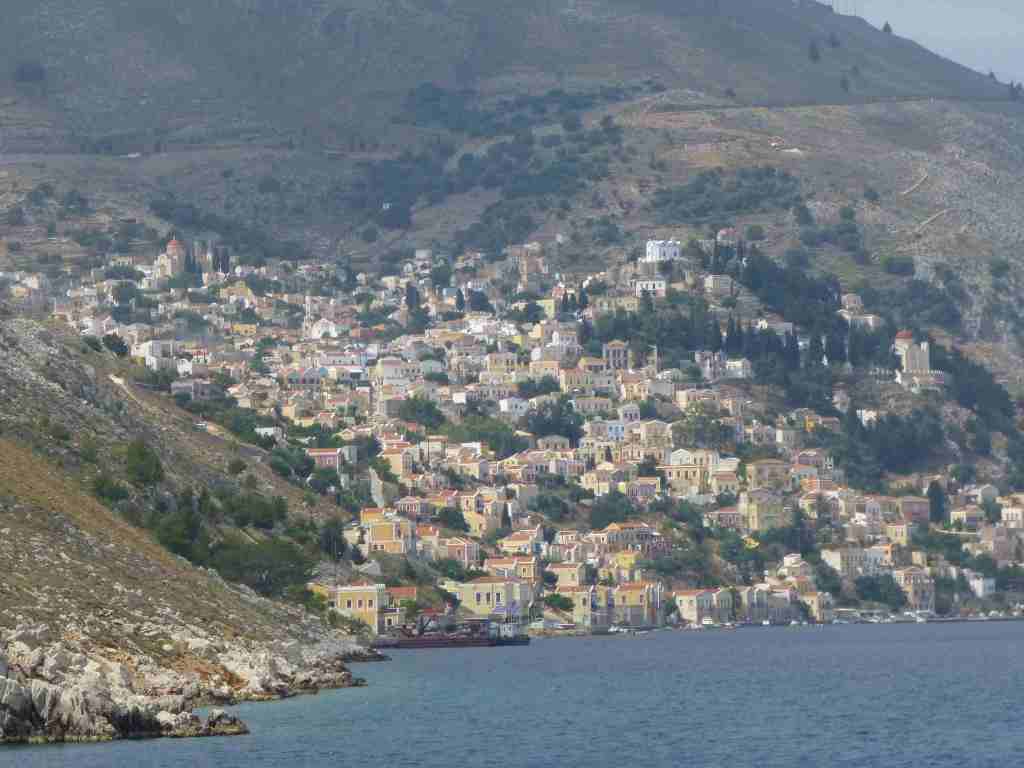
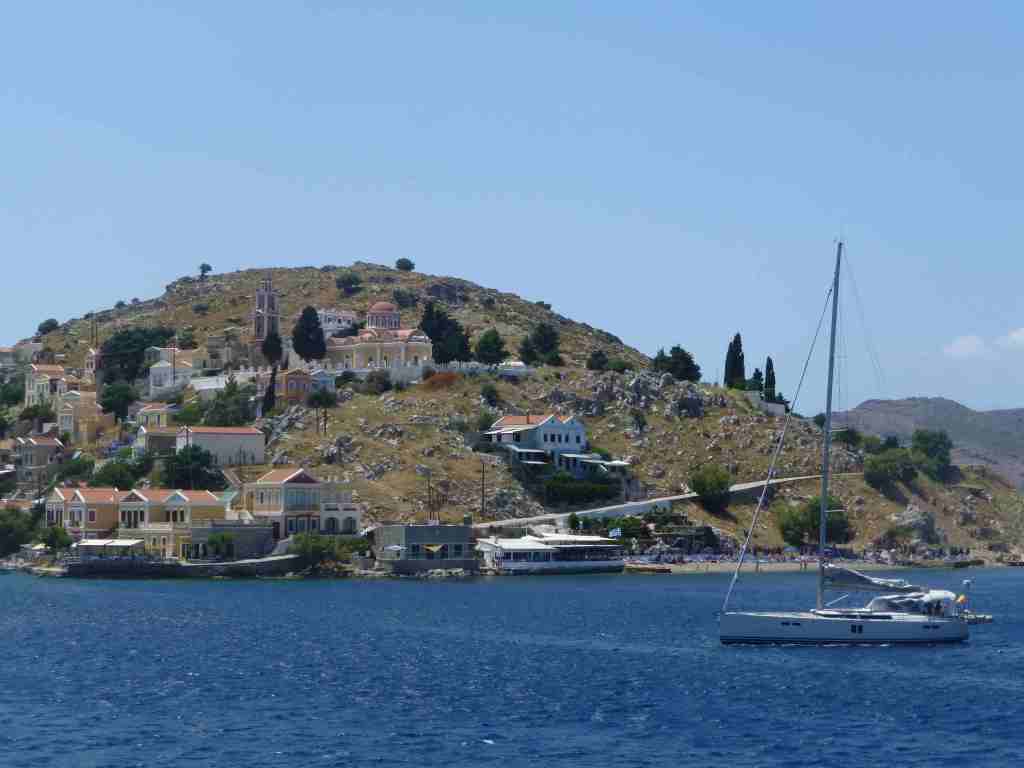
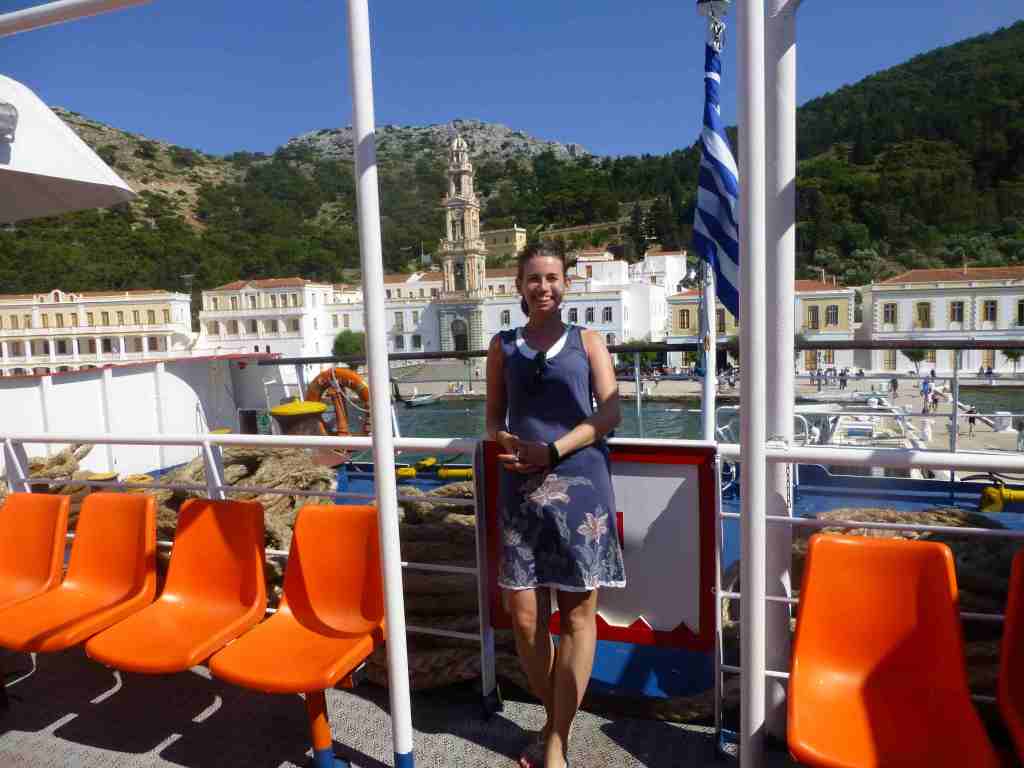
Two hours after we left, at about 11:00 a.m., we were at the port of Symi Island and as a child I ran from deck to deck to photograph it from all sides. Colorful picturesque houses were perched on the hilly shore, giving the town of Symi a real charm. I was delighted and pleased that the wind brought us to this beautiful place.
The island of Symi, together with Rhodes, belong to a group of islands known as the Dodecanese Islands (translated as the 12 islands), also called the Southern Sporades. In fact, there are more than 12 islands, but the 12 larger ones are: Astypalaia, Kalymnos, Karpathos, Kasos, Kos, Leros, Nisyros, Patmos, Rhodes, Symi, Tilos and Kastellorizo. Symi was 23 nautical miles north of Rhodes and covered an area of 67 square kilometers (much smaller than Rhodes, which had an area of 1398 sq. km). The island was quite hilly, which was visible long before we reached the port, but its rich soil allowed the cultivation of pears, olives and vineyards, and there were entire forests of pines and cypresses.
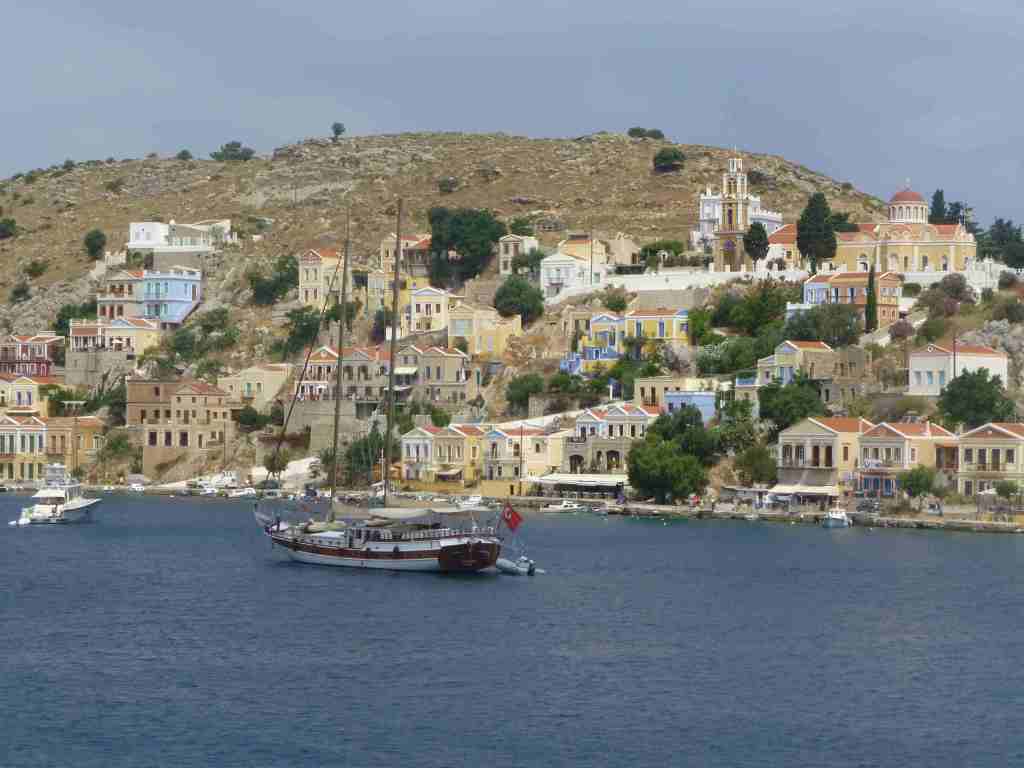
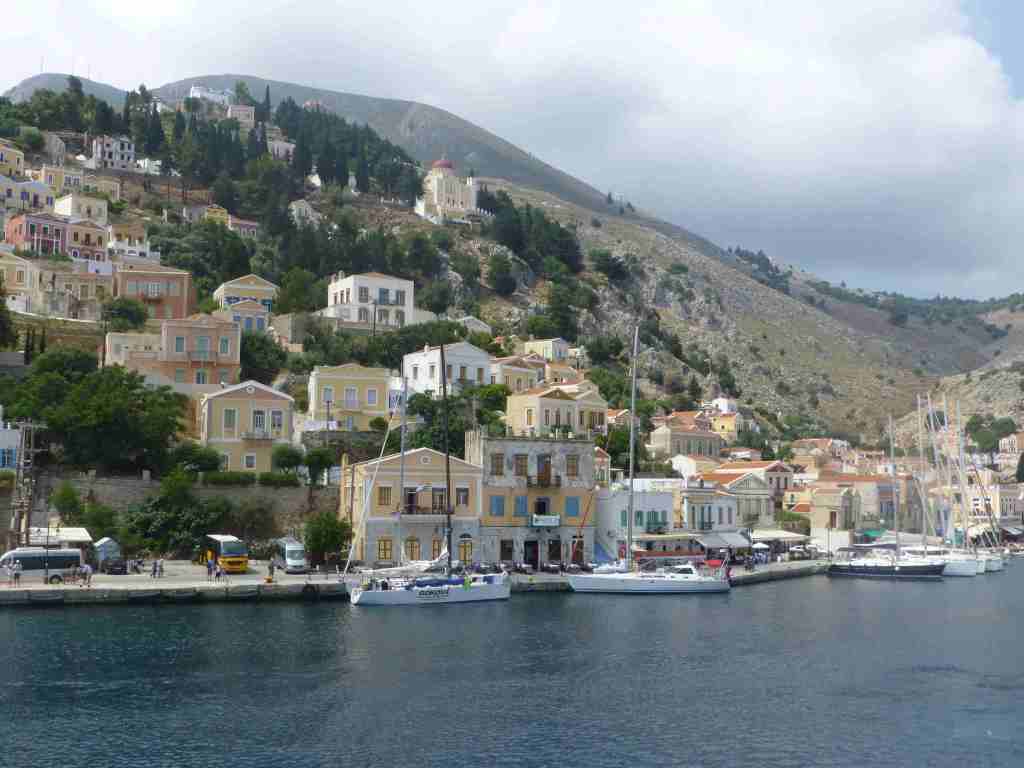
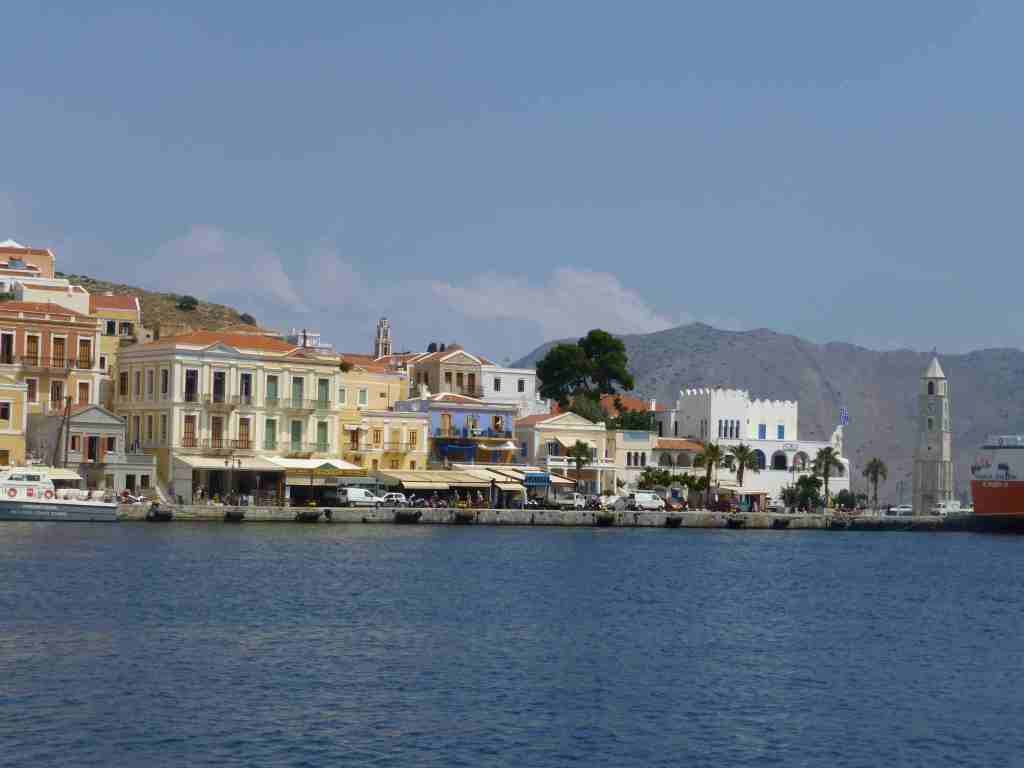
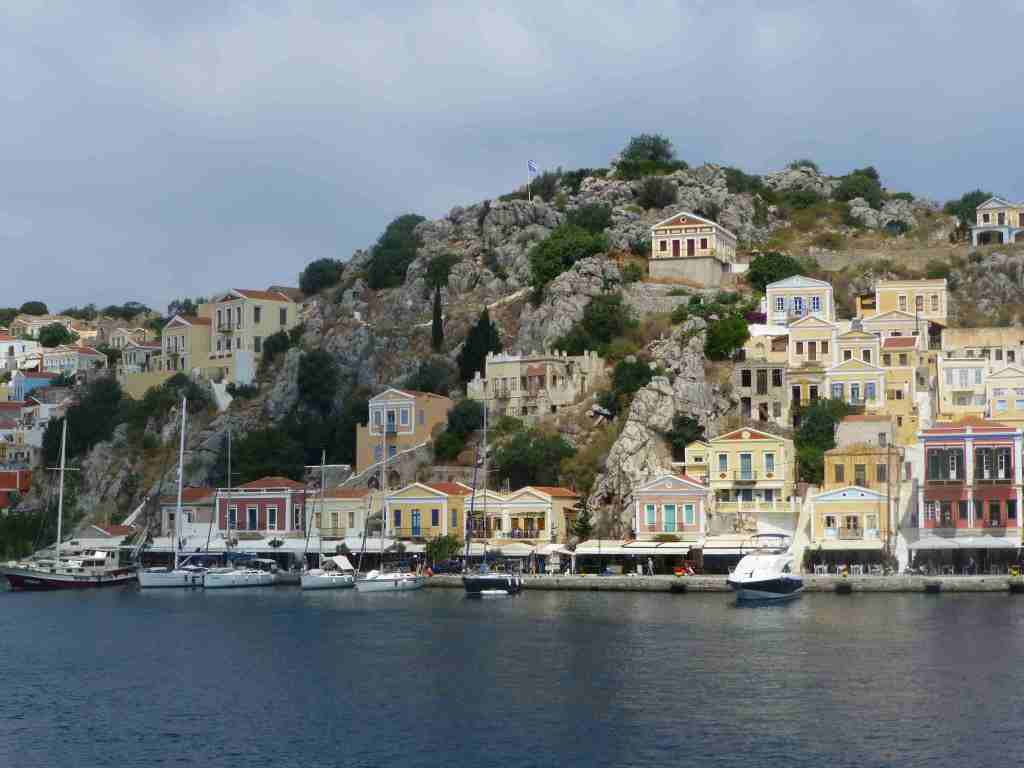
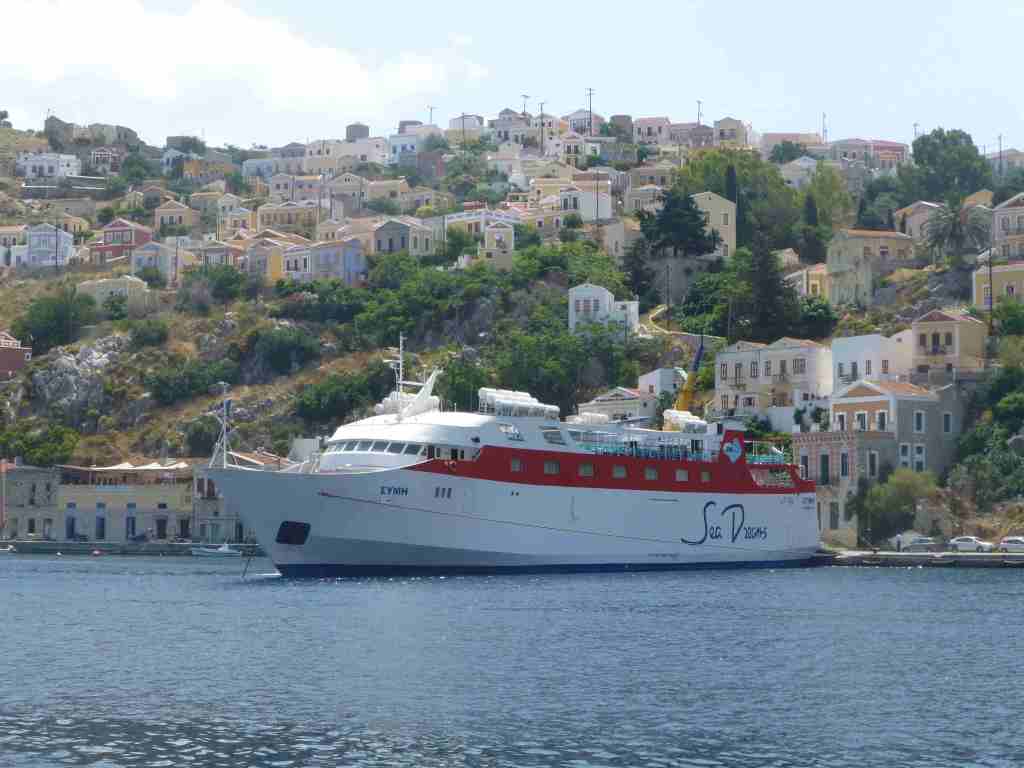
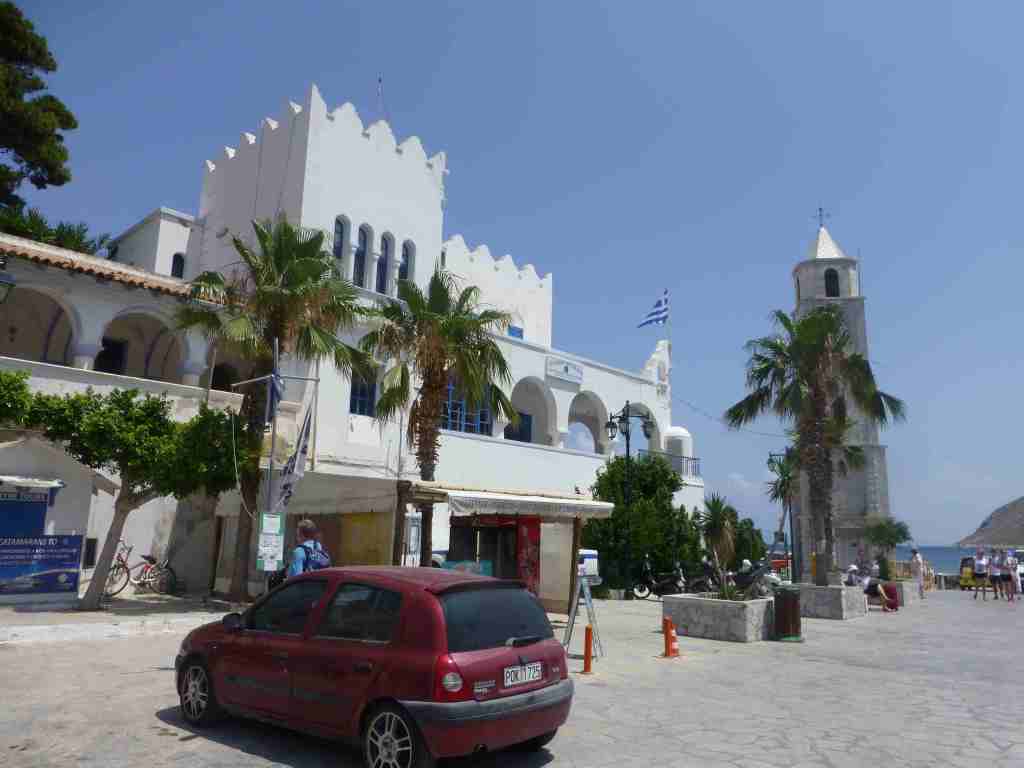

Our excursion to the island included a guided tour and free time in the main city of Symi, but we decided to tour the city ourselves and the decision turned out to be successful. It was not at all difficult to orient oneself along the straight coastal streets, crowded with fish restaurants. Then we turned along the inner streets, reaching a beautiful church, and then a panoramic platform. The island really fascinated us, and the atmosphere in it was noticeably charming, or at least my pleasant company made it so.
From the French-speaking tour guide on the ship, we learned that the history of the island of Symi was shrouded in myths and legends, and it was believed that the first settler was Pontios, who came here by mistake. The oracle in Delhi told him, “Pantes oikisusi si, mi,” which meant “Anyone can inhabit this island except you.” However, Politos heard only the first part of the prediction that anyone could settle on the island and headed there. Three days after he arrived, Politos died from a strong earthquake that shook the island. This story was not the most pleasant one you hear when you first set foot here, but then in a tourist guide that I bought, we read more interesting and hospitable stories. According to legends, the name of the island comes from the nymph Symi, whose son Kintonios became the first leader of the local population who came from Thessaly. According to another myth, Prometheus himself came to the island and taught the locals how to live longer. Here he managed to create a man out of mud, which angered Zeus and turned him into a monkey of the genus Simea, and from there the name of the island remained.
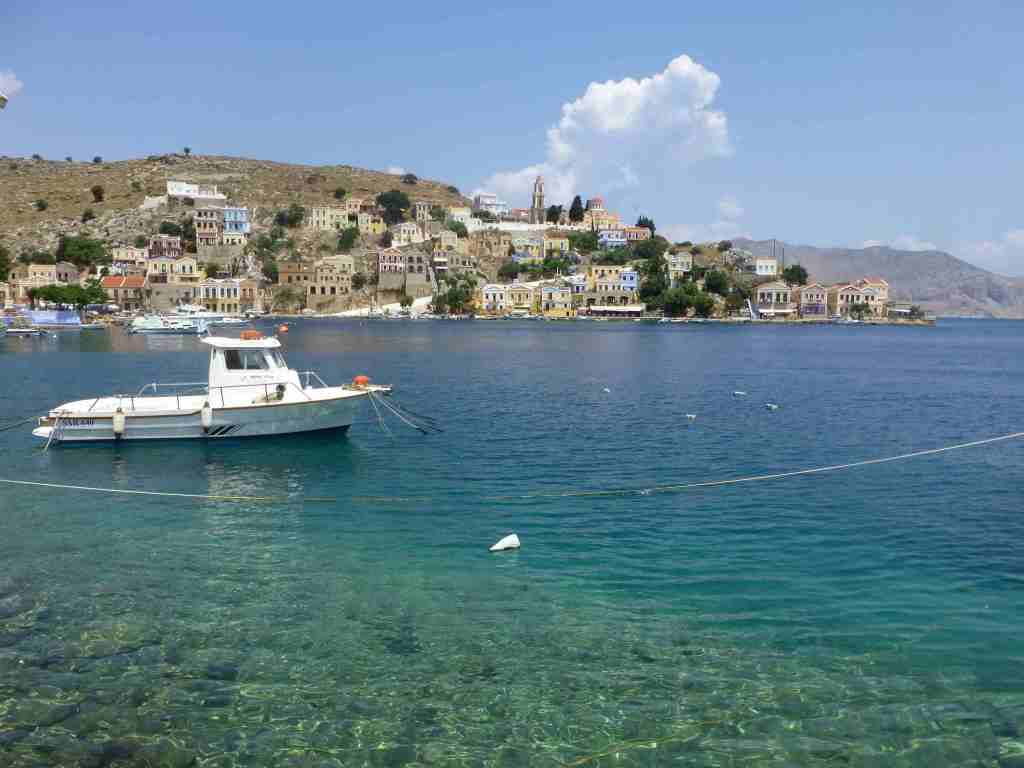

The island was also mentioned in Homer’s Iliad as the property of King Nireus. Herodotus mentions it as part of the united religious and political islands along with Cnidos, Rhodes and Kos. During the Peloponnesian Wars, the island was used as a naval base by the Athenians. During the Hellenistic period, the island was in its heyday, after which it shared its fate with the rest of the nearby islands and was conquered by the Romans and later by the Byzantines. During the Venetian rule, the island of Symi retained its freedom by paying an annual fee. This period marked the beginning of shipbuilding and trade, which led to a new flourishing of the island, as well as to the felling of much of its vegetation. In 1309. the island became the property of the Knights of Rhodes, retaining its autonomy, paying 500 silver coins to the Grand Master of the Hospitallers of Rhodes. In 1522. was seized by the Ottoman Empire, but again managed to obtain many privileges, as well as autonomy, in exchange for which they built ships for the Ottoman fleet.
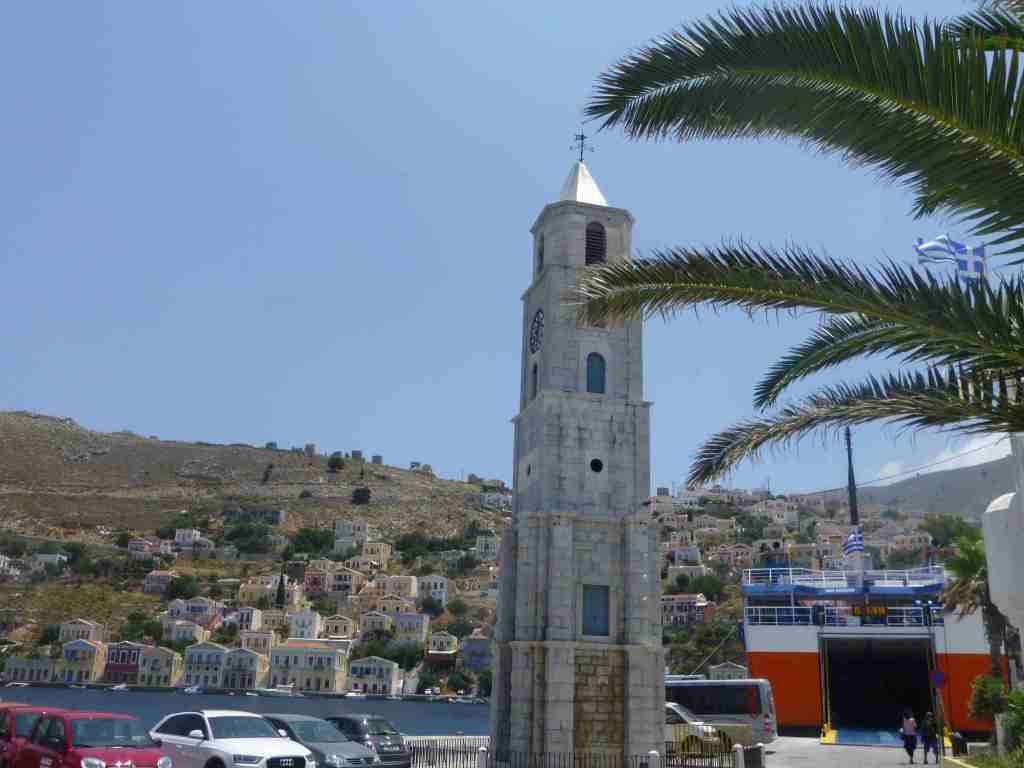
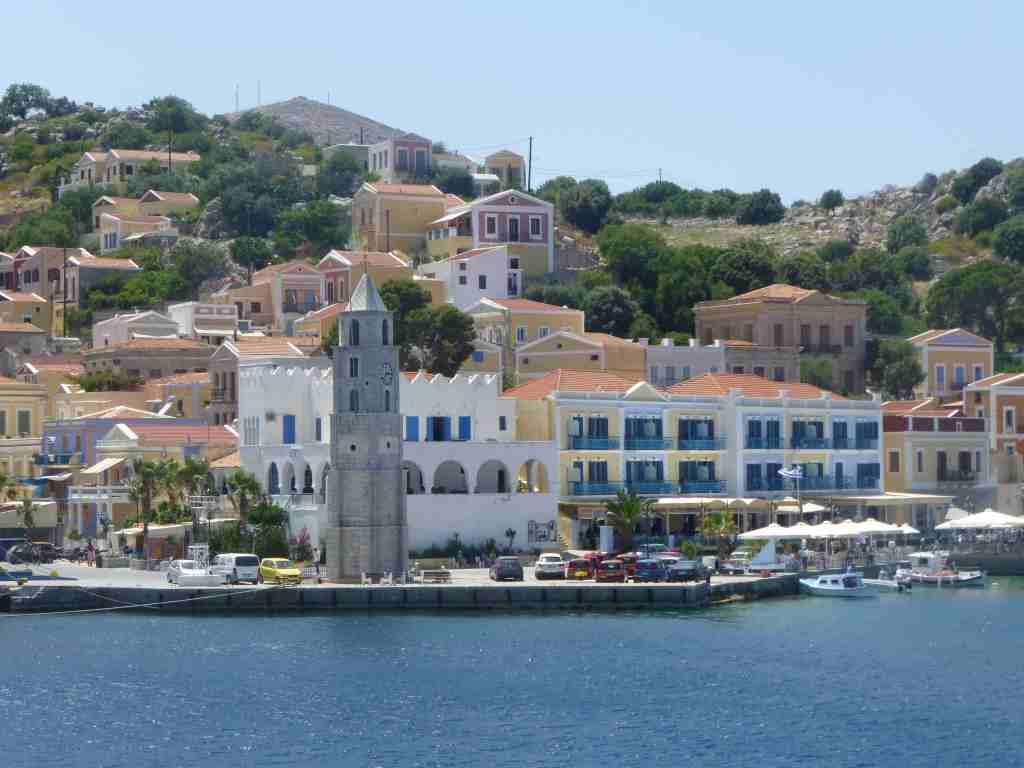
All these stories showed the importance of the island and its ability to preserve its riches. Today, the rest of the ancient Greek temples have been converted into Orthodox churches. For example, the temple of Aphrodite in Ioannis, which became the church of St. Joanna; The temple of Apollo in the upper part of Symi became the church of the Prophet Elijah. However, we preferred coastal tourism to church tourism and headed to the clock tower erected on the other side of the port, just opposite the police station.
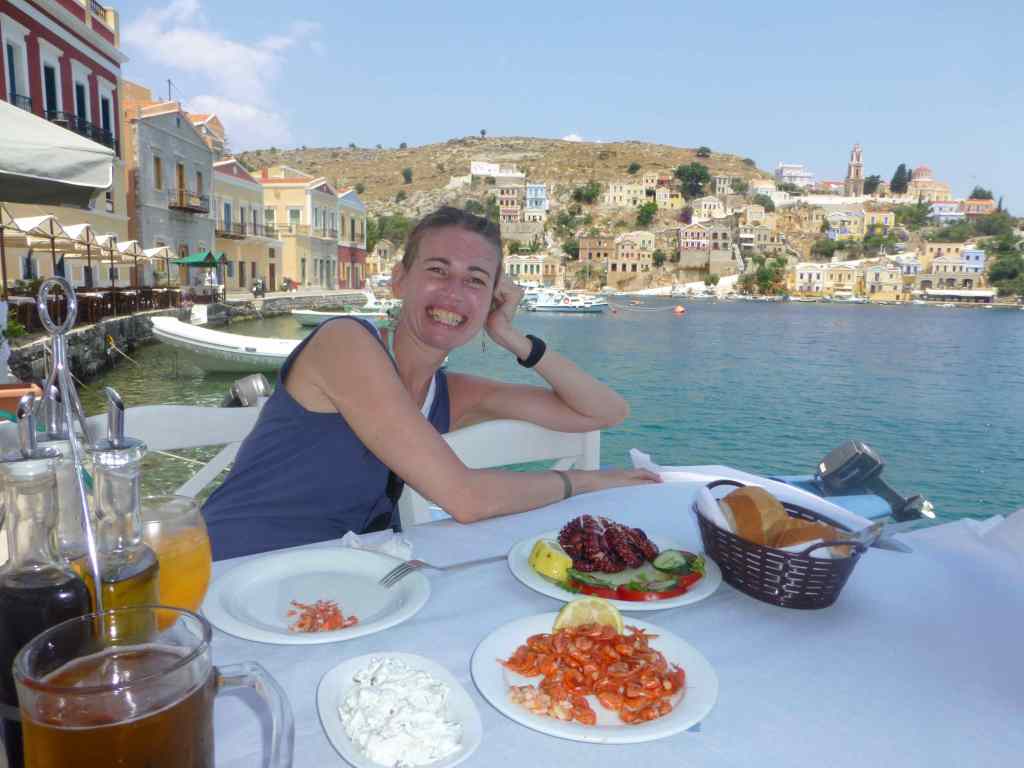
In the immediate vicinity, we liked a restaurant “Kabos”, where we ordered roasted octopus, spicy shrimp and tzi-tziki salad. It was uniquely delicious. Our table was located on the very edge of the shore, from where we could enjoy not only the beautiful panorama of Simi, but also the countless fish that came and fought in the water for a piece of bread tossed. The manager of the restaurant came several times to feed the fish, and they were really an attraction and delighted not only us, but also the rest of the visitors. There were so many fish that it seemed to me that all I had to do was reach out and catch them. However, our lunch was already caught, cooked deliciously and we gave it our full attention, robbing the plates to the end, as the fish robbed the last crumbs.


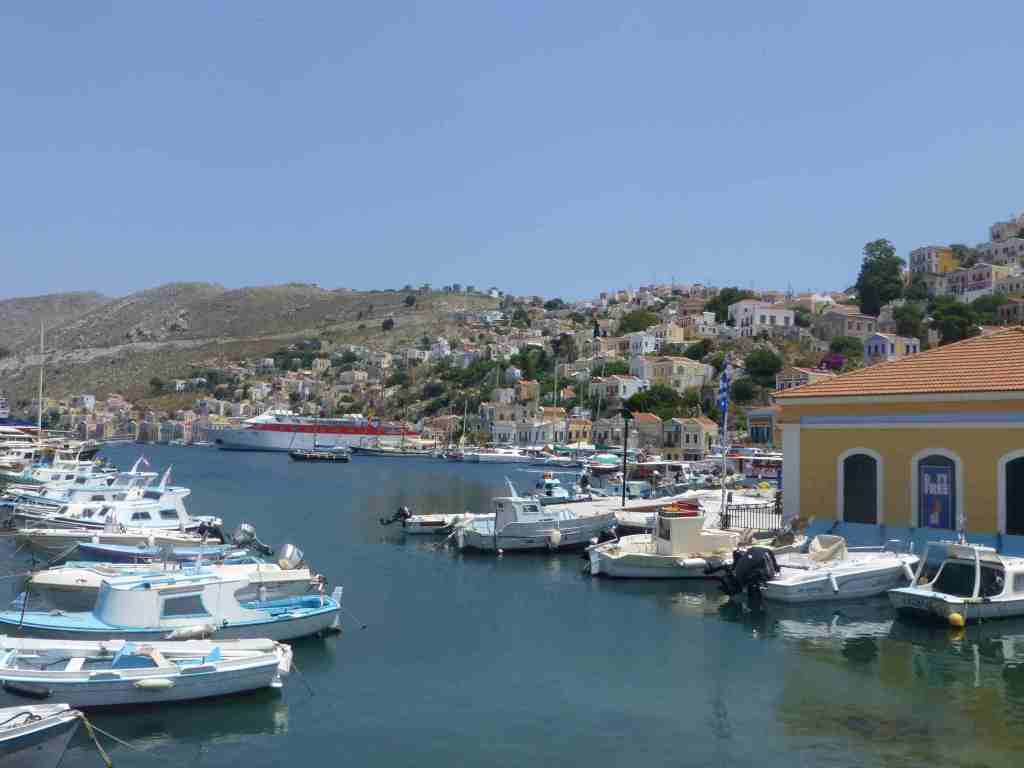
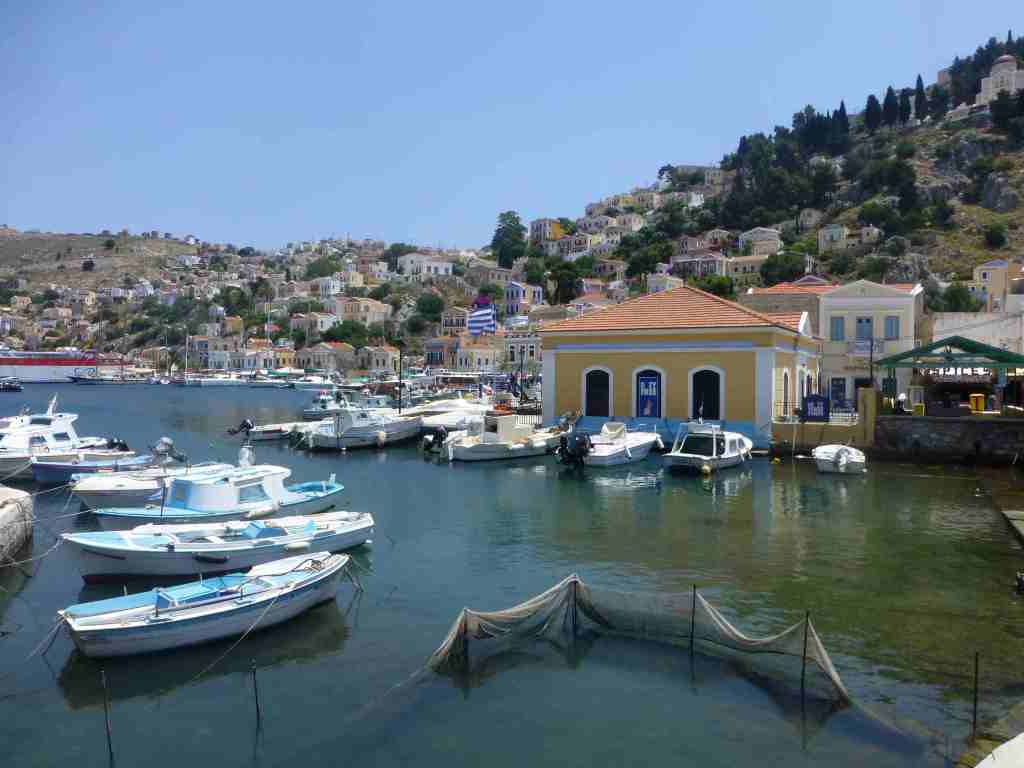


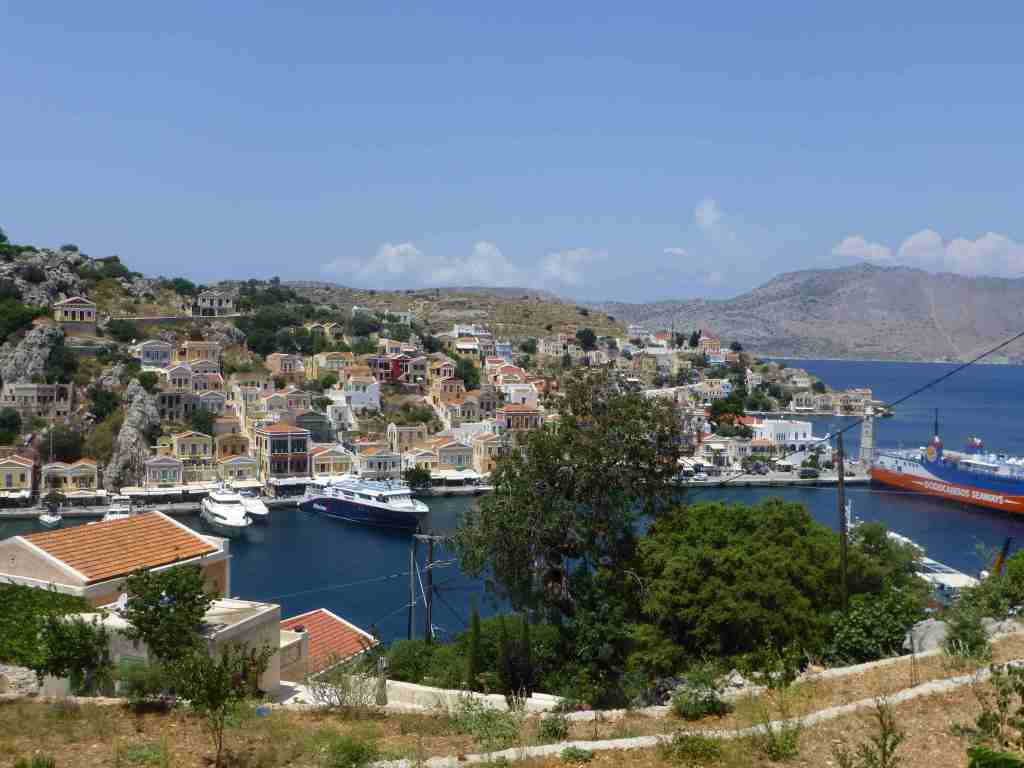
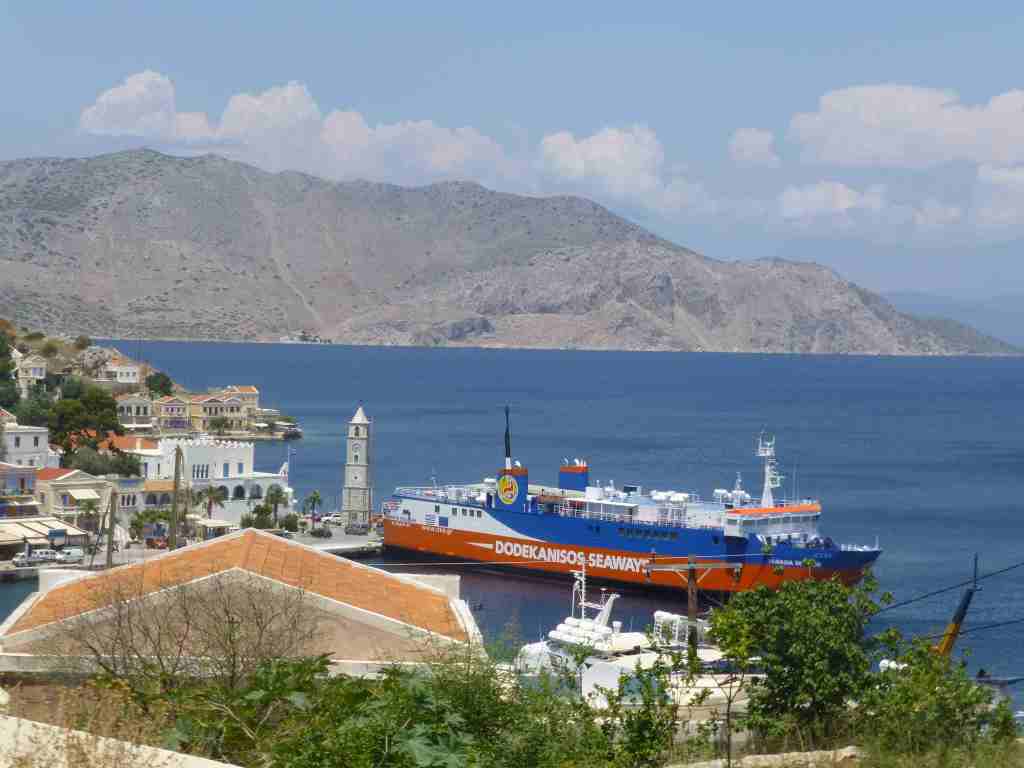
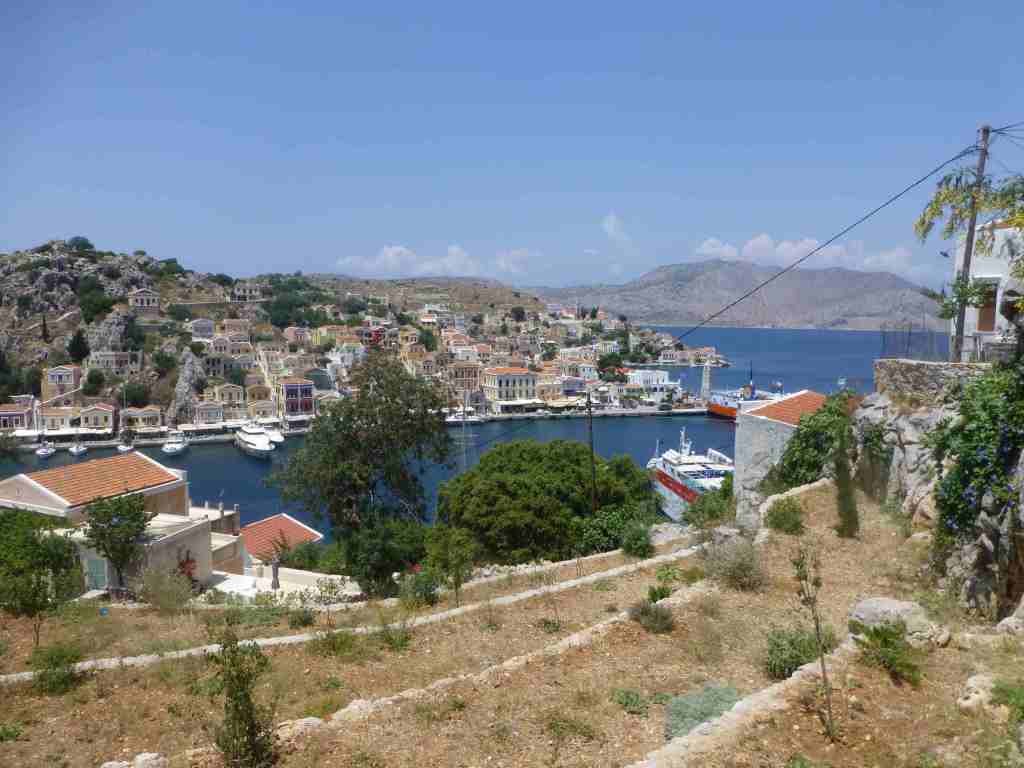
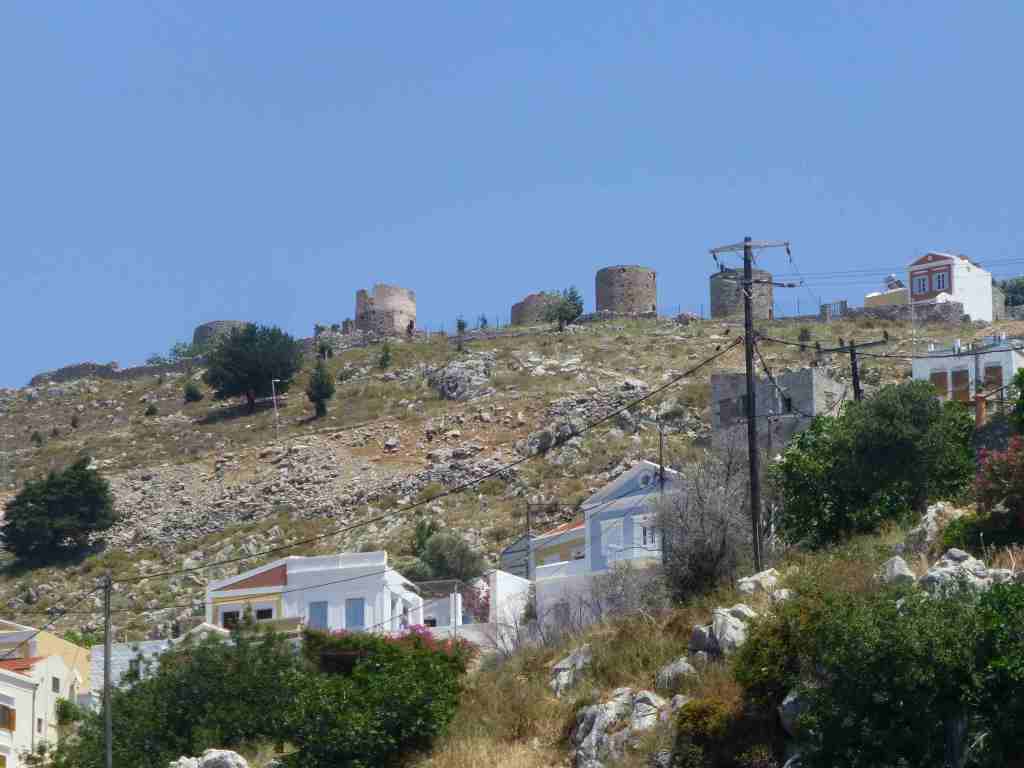
After the wonderful lunch, it was time for something equally wonderful called ice cream. Greece was famous for its ice cream and I did not miss to try it every day, confirming its excellent taste. This time I chose two scoops of chocolate and biscuit ice cream, which I ate all the way as we climbed the wide stone 500-steps, revealing beautiful panoramic views of the city and the port. It was not fatigue that prevented us from reaching the top, but the little time we had left before our ferry set sail. At 14:15 our ship headed in the direction of Panormitis, which was located just on the other side of the island, and the tour lasted about an hour, filled with new sea and windy photos.

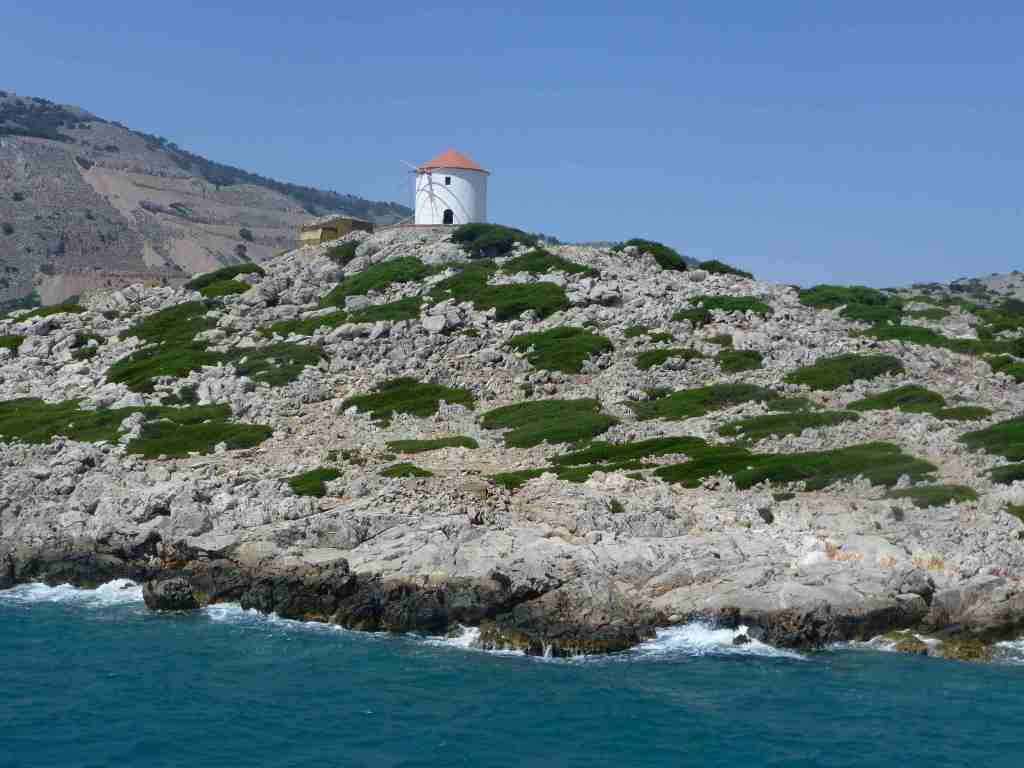
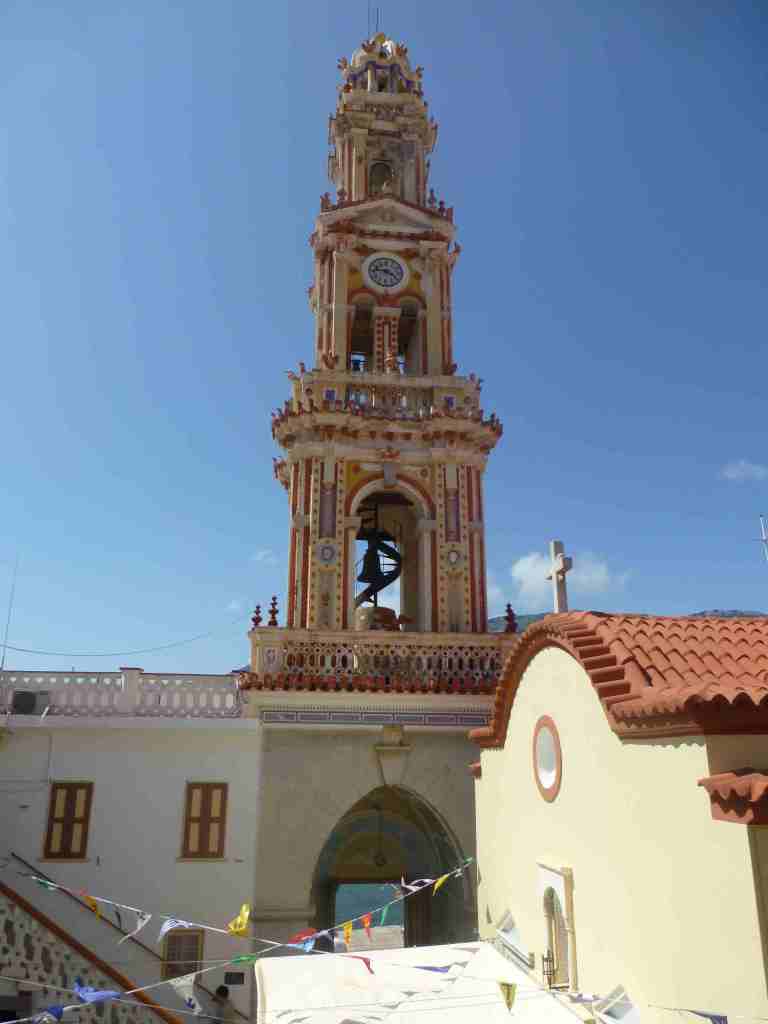
Before our ship docked in the bay with the monastery, we passed by a hill with a raised mill – typical for the Greek islands. It didn’t work and seemed to prove that time had stopped here. We also stopped for an hour-long walk. The Panormitis Monastery was located on the very shore, with its bell tower towering high and resembling a lighthouse. The whole monastery was whitewashed with white paint, which contrasted strongly with the green trees that protruded from the front and back. The monastery did not know its years, because as we noted on arrival – time had stopped here. The only year that was sealed was 1783, when the church was completely renovated, but what it looked like before and when it was erected, no one knew.
The monastery was dedicated to Archangel Michael Panormitis, celebrating its feast day on November 8. Local people believed that Archangel Michael made 9 dedications and therefore there were a total of 9 chapels in his honor on the island. Crossing the main entrance, we found ourselves in a well-maintained courtyard, entering the church and lighting candles. Along with the candles, they gave us myrrh in a small bottle, which we took as a souvenir. Another souvenir that I chose from the white angelic monastery was a seashell with Archangel Michael painted in it. I had never seen anything like this and it impressed me very much.
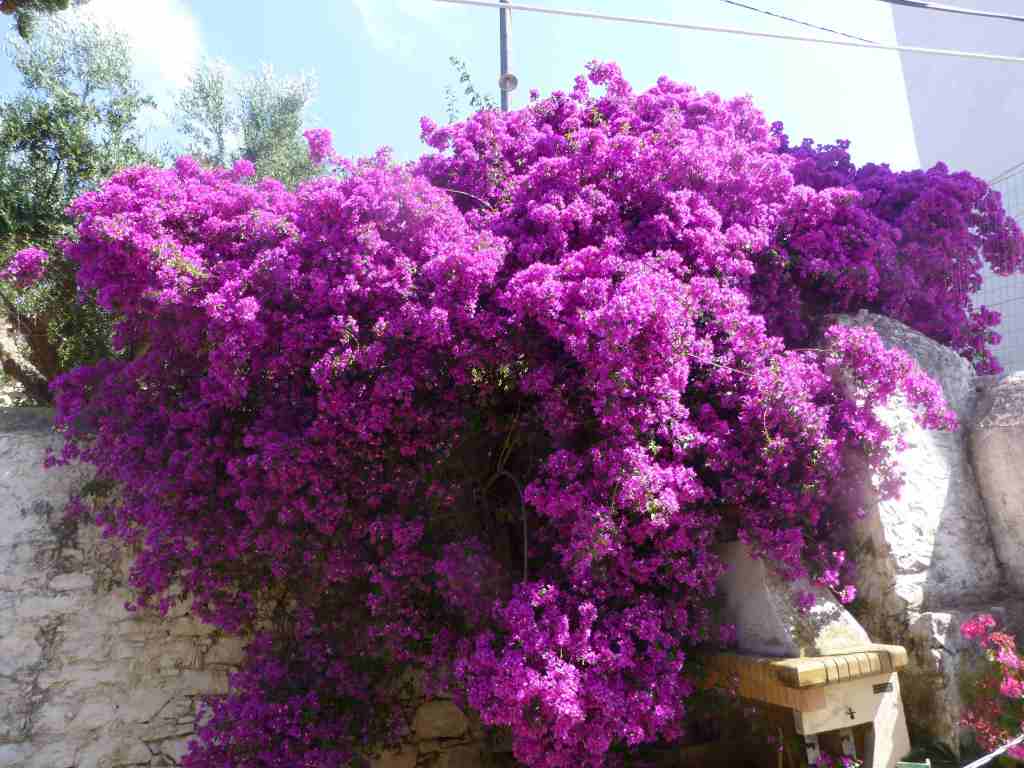
There were two museums in the monastery: a folklore museum and a church museum, and among the exhibits there were remains of ships and beautiful icons. We walked on the terrace on the second floor taking pictures of the many decorated flags in the yard, as well as the clock tower, and then went out through the back entrance, where there were many bushes with flowers and especially attractive huge cacti.





One hour of free time quickly flew by and we boarded the ship again, heading back to Rhodes. The wind was blowing, but our ship had no sails to help it move faster. The evenly running engines again took us to Rhodes for two hours. There were many buses waiting for us at the port, and one of them took us to our hotel D’Andrea Mare.
The day was filled with lots of sun, sea and wind, and more than the wind were only my photos from the island of Symi – a small pearl in the Aegean Sea, shining like a star next to the sunny island of Rhodes.
GENERAL INFORMATION ABOUT THE ISLAND OF SYMI:
Location: The Greek island of Symi is part of the Dodecanese Islands, located in the Aegean Sea, 41 km northwest of the island of Rhodes and 425 km east of the port of Athens.
Area: 65.754 sq. m.km
Population: 2 590 people
Official language: Greek
Highest point: 617 m
Climate: warm Mediterranean climate
Time zone: UTC+02:00
Currency: Euro (EUR)
Additional information: http://www.symivisitor.com/
TRIP TIPS FOR THE ISLAND OF SYMI:
Best time to visit: April to October
Typical foods and drinks: seafood is uniquely delicious here, and for dessert, don’t miss the sweet Greek ice cream.
Places to visit: The picturesque port of Symi, the Prphen Elias Ano Simi Church perched on the hill; the Archaeological and Folklore Museum in Symi; the clock tower, the Panormitis Monastery, etc.
 TripTips