RHODES CITY – THE CAPITAL OF THE SUNNY ISLAND


"Once upon a time nobody knows when,


Zeus gathered all the gods.


And to each he gave a piece of land.


Only the god Helios did not receive anything


As he was during this time in the sky shaning.


Zeus didn't want to embarrass him.


And that's why from under the waves of the sea


He built an island gorgeous and green,


which to the god Helios was given.


This island received Rhodes as a name


and since then


It's the sunlight’s homeland"
This legend sounds so true due to the fact that in Rhodes there is almost no day without sun. The locals know how to keep it. In the past, a majestic statue of the god Helios, 31 meters high, was erected in honor of the sun. It stood at the entrance to the harbor and was declared as one of the Seven Wonders of the Ancient World. It was the famous Colossus of Rhodes, which, however, existed only 65 years, as in 227 BC it was destroyed by a strong earthquake. Only the legs of the statue remained, which for 800 AD reminded of this miracle of the Ancient World, but with time they were completely destroyed. Only legends remain, which together with sunlight annually attract millions of tourists.




Over 90% of all visitors come to the island by plane. The rest take advantage of ferry and cruise services arriving at the beautiful Rhodes port. Here were erected two pylons with statues of deer and doe, which were supposed to show the place where the Colossus of Rhodes stood. However, it is hard to imagine how a 31-meter-tall statue could have such a large leg (unless it was a yoga pose) and most likely the statue was erected in front of the temple of Apollo itself, near the palace of the Grand Master. According to tradition, however, the colossus was erected at the port, as evidenced by an illustration of a Belgian artist who came and painted the colossus 200 years after it was destroyed.
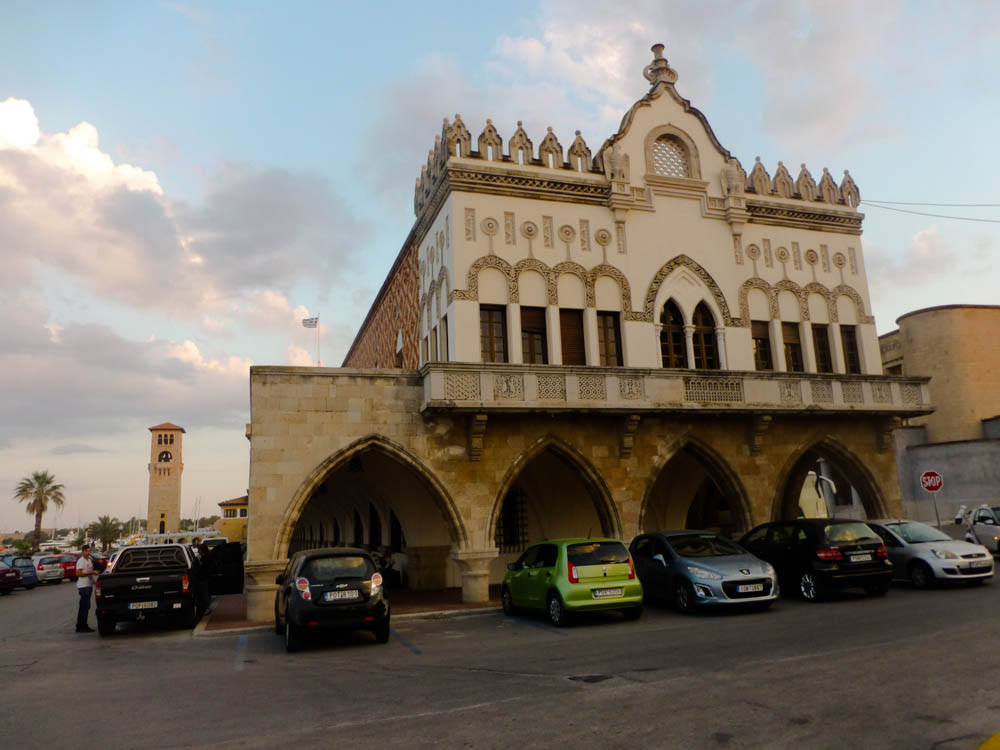
On the very shore of the port, near the columns, rises the Cathedral of the Annunciation of the Virgin Mary. It is unique and the only one in Greece, that has Catholic architecture and Orthodox interior. There is a stone bell tower next to it with a clock, under which there is a relief of a lion with a closed book. There are many lion reliefs in Venice, but the ones there are with lions with an open book. The book here was closed, because the Italians believed that when they came to the island in 1912, they would stay forever and the island would have no other story and closed the book. After loosing World War II, however, they had to leave the island, only their beautiful relief on the wall remained. Behind the cathedral was the Italian governors’ building, which resembled the Doge’s palace in Venice.
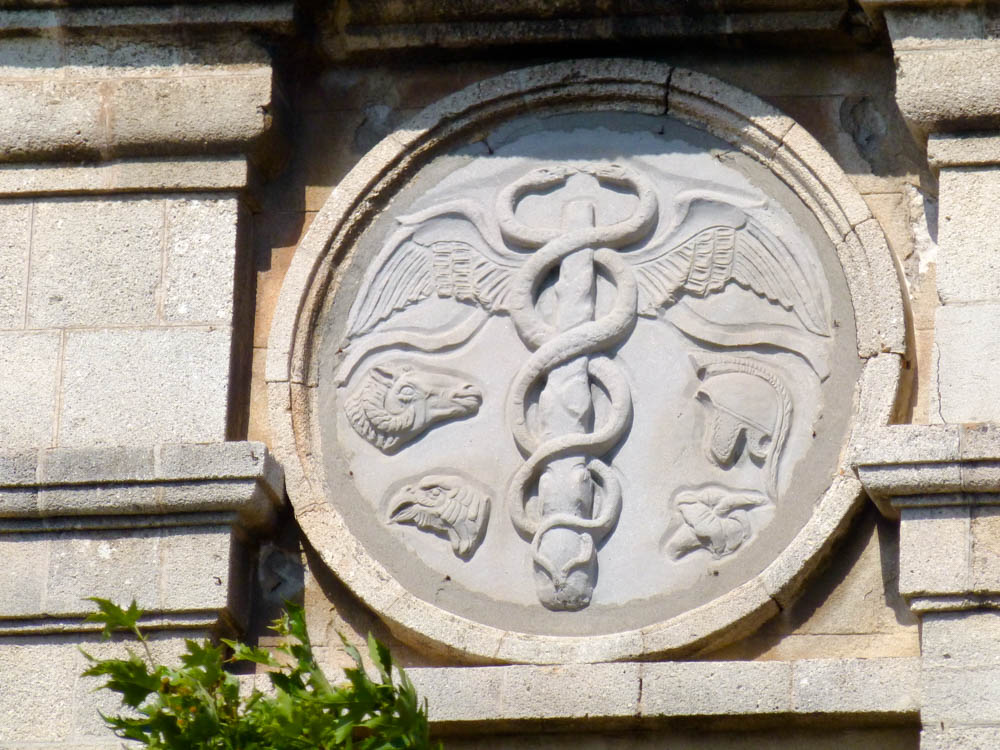
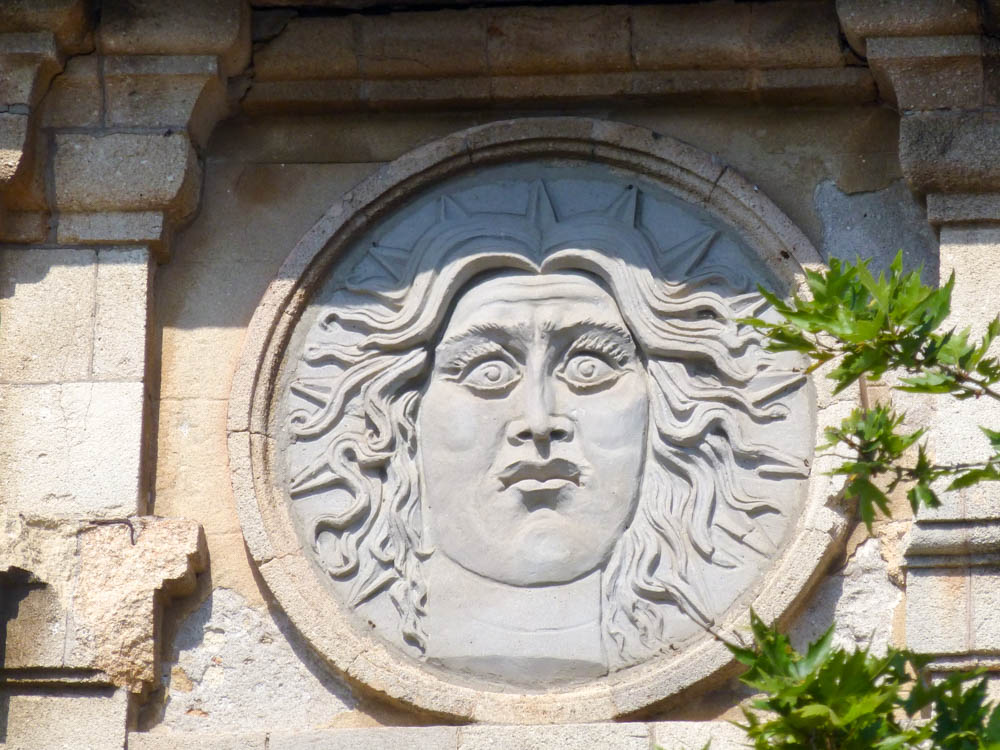
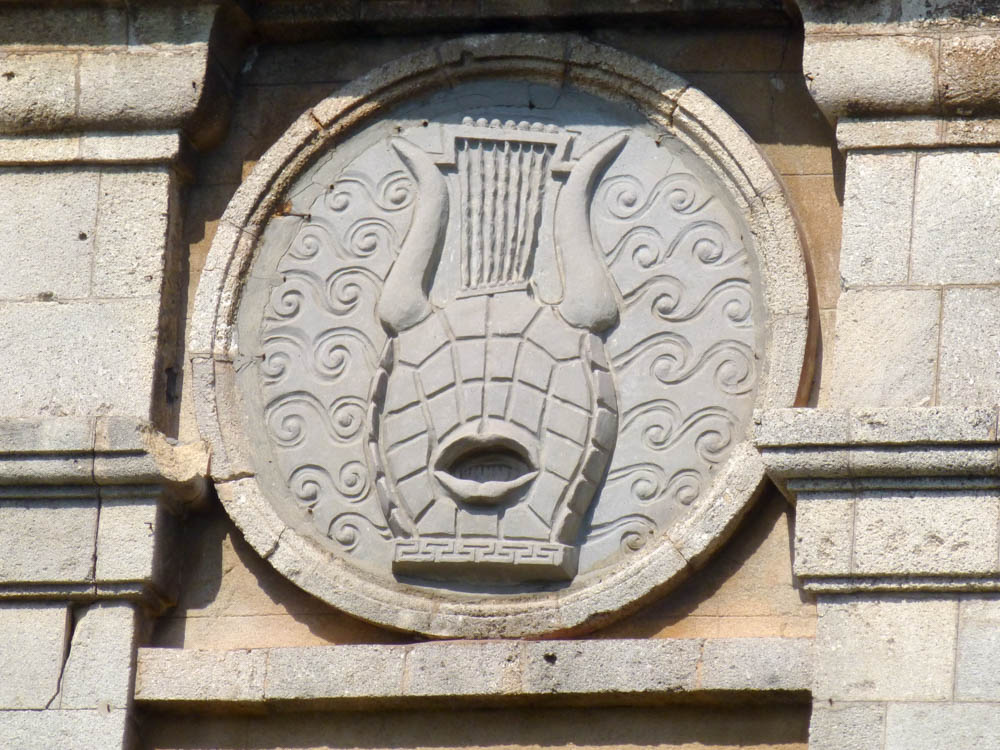
All buildings opposite the port were built by the Italians in the period 1912-1943, in the typical “fascist” design of Mussolini. Particularly interesting is the court building, above which the Greek flag waves, and below it there are seven round reliefs all of them the symbols of Rhodes.
The first one was a relief of a deer, similar to the one that stood on the pylons of the port and bore the name “platoni deer”. It turned out that these deer are an emblem of the island and are often found in the local forests. According to legend, deer appeared on the island along with the Crusaders. Before their appearance, the island was known as “ophius”, which meant “a place with many snakes”. The crusaders brought these deer, which, although they did not directly kill snakes, it was believed that their secretions had a smell that chased reptiles. The results confirmed this and instead of snakes, the island became famous for these beautiful animals.
The second painted relief of the court building was the sign of medicine, because here was born to the father of medicine Hippocrates. The third symbol was a naked child sitting on a boat and rowing among the big waves, which most likely symbolizes the naval power of Rhodes. The neighboring town of Lindos was recognized as the beginning of the “naval laws” that were first inscribed here. And even modern rules were based on them.
There followed a relief with the head of the god Apollo, who helped the sun rise, and next to him on the next relief was a harp, which is also part of the concept of the god Apollo, who patronized music, dance, poetry, medicine, and prophecy.
On the sixth relief there was an anchor with two predatory fish next to it, which are an ancient symbol of war, again symbolizing naval power. Last but not least, there was a rose relief. According to some, the name of the island did not come from the name of the sea nymph Roda, wife of Helios, who bore him 7 sons, but came from the Greek word ροδον /rhodon/. which means rose. So this beautiful flower had earned a place among the symbols of Rhodes. All 7 reliefs imprinted on stone and surrounded by legends presented us quickly the sunny island.





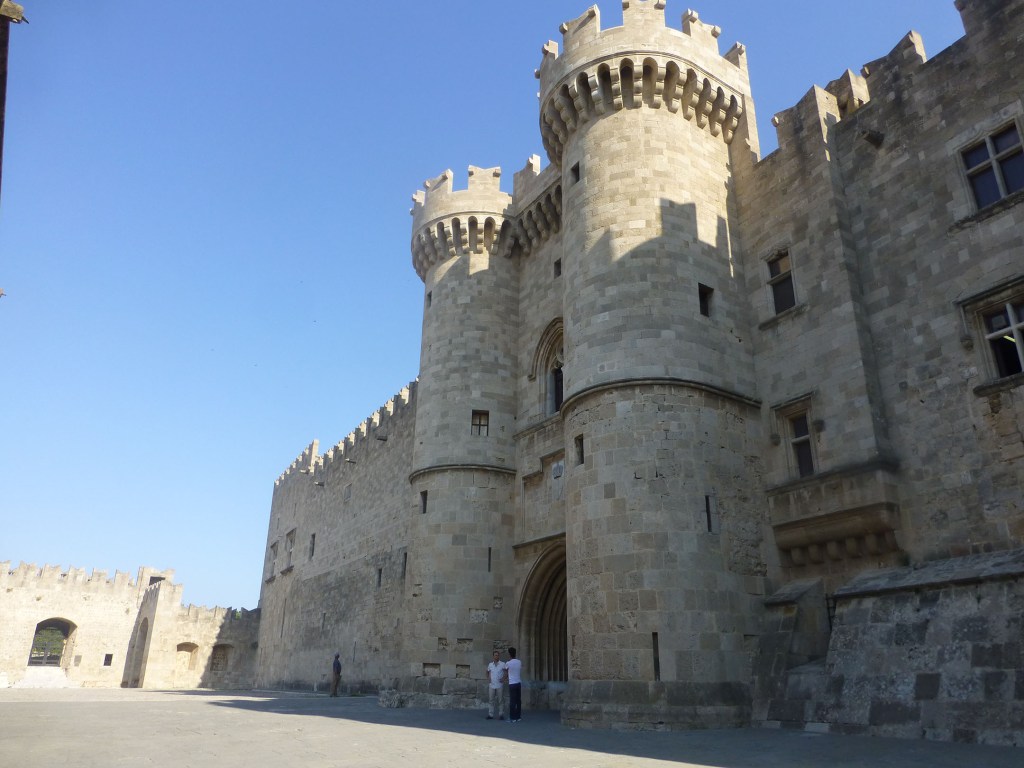

Medieval stone wall surrounds the port and separates the old town from the new town, although the new town was not so new and had many beautiful Venetian buildings. The fortress walls were massive, with three gaps between them, so in the past the enemy had to overcome first one stone wall, then a huge moat, a second wall, then a new moat, a third wall, then a new moat and finally a stone castle. Protection was definitely good and this protection managed to preserve many cultural monuments. Among the stone walls there are different gates, for the different communities that lived in the city, so that each of them had its own entrance – there were French Gates, English Gates, Italian Gates, etc.
Whichever gate you pass through, you will sure find yourself on a cobblestone narrow street snuggled on all sides with medieval buildings. Particularly beautiful was the architecture of the Archaeological Museum, where visitors could trace the whole history of the island – from the Phoenicians who came before 3000 BC, to the Greeks, the Romans and the Knights of St. John, who returned from Jerusalem stopped on the island, they liked it very much and bought it from the Byzantine Empire. It was from that time that all the palaces of the island were built. They were followed by the Ottoman Empire, temporary Italian rule, and it was not until 1948 that Rhodes was liberated and returned to Greece. Exhibits from all these periods could be seen in the Archaeological Museum, which was housed in the Knights’ Hospital erected in 1440.
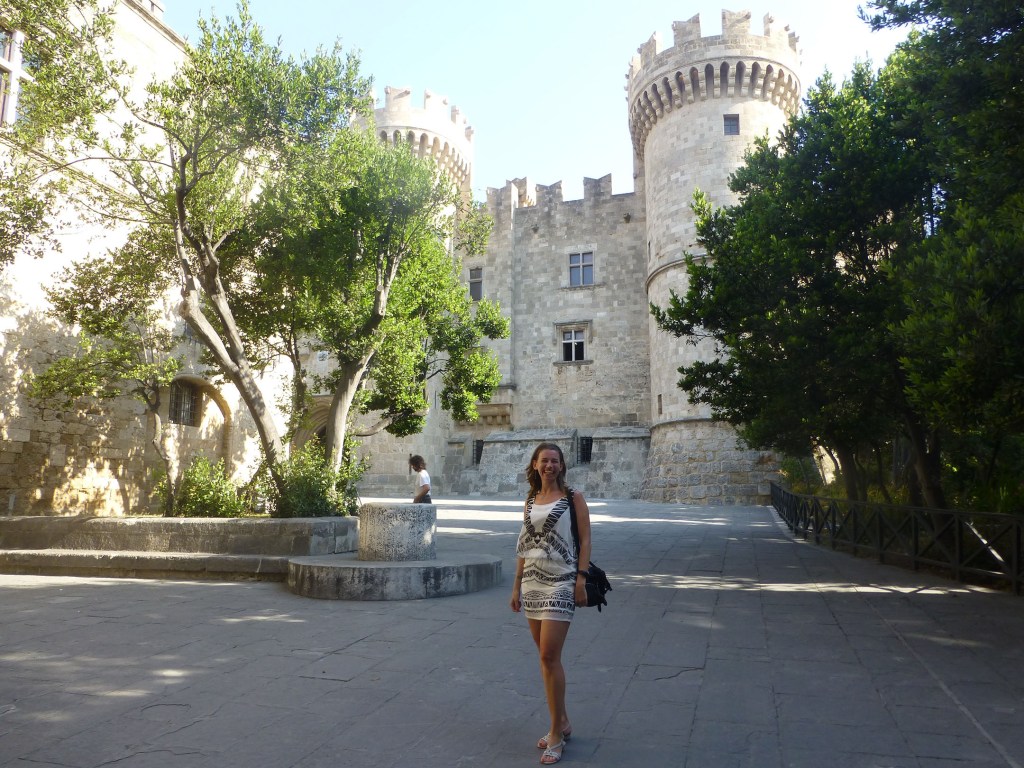
In front of the building passed the relatively wide street of the Knights, which connected the hospital with the palace of the Grand Master. This magnificent castle is worth a visit, believing that the same was erected on the site of the ancient temple of the god Apollo. Even if you do not have time to go inside, the photos outside of the many towers will impress you.
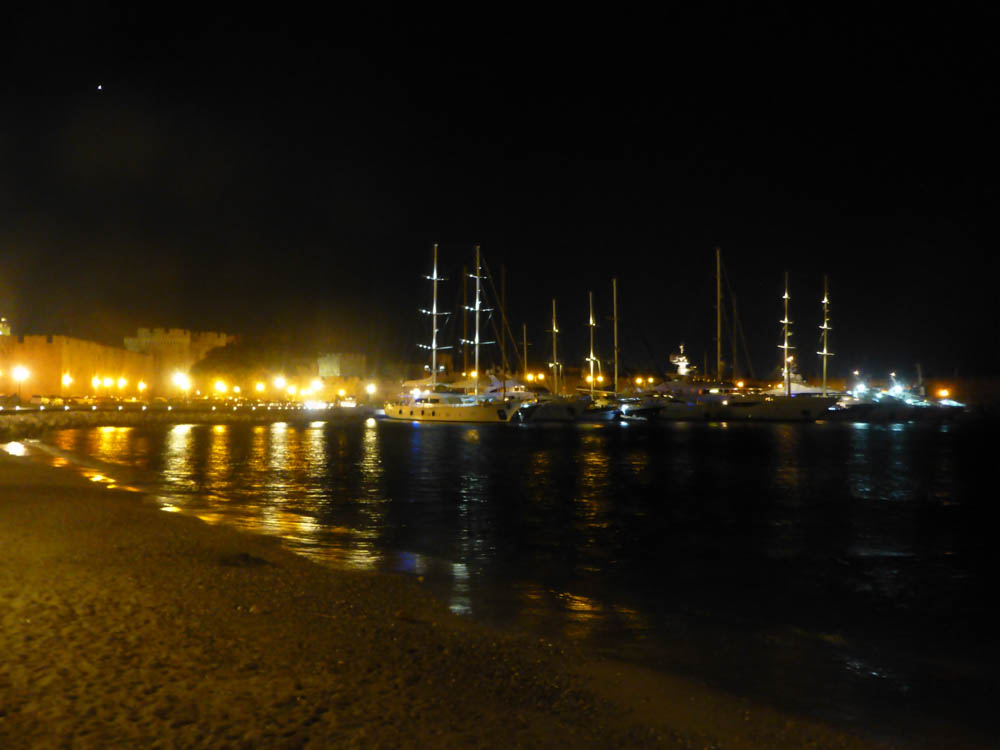
Especially pleasant are the walks around the old town at dusk, when the city comes alive – all shops work late, playful music is brought from restaurants and the cheerful mood covers the whole city. The celebrations continue in the new town, where the only casino in Rhodes is located. Not far from it is the Aquarium of Rhodes, which was located at the northernmost point of the island – on a beautiful sandy strip separating the Mediterranean from the Aegean Sea. On the other side of the sea you could see Turkey.


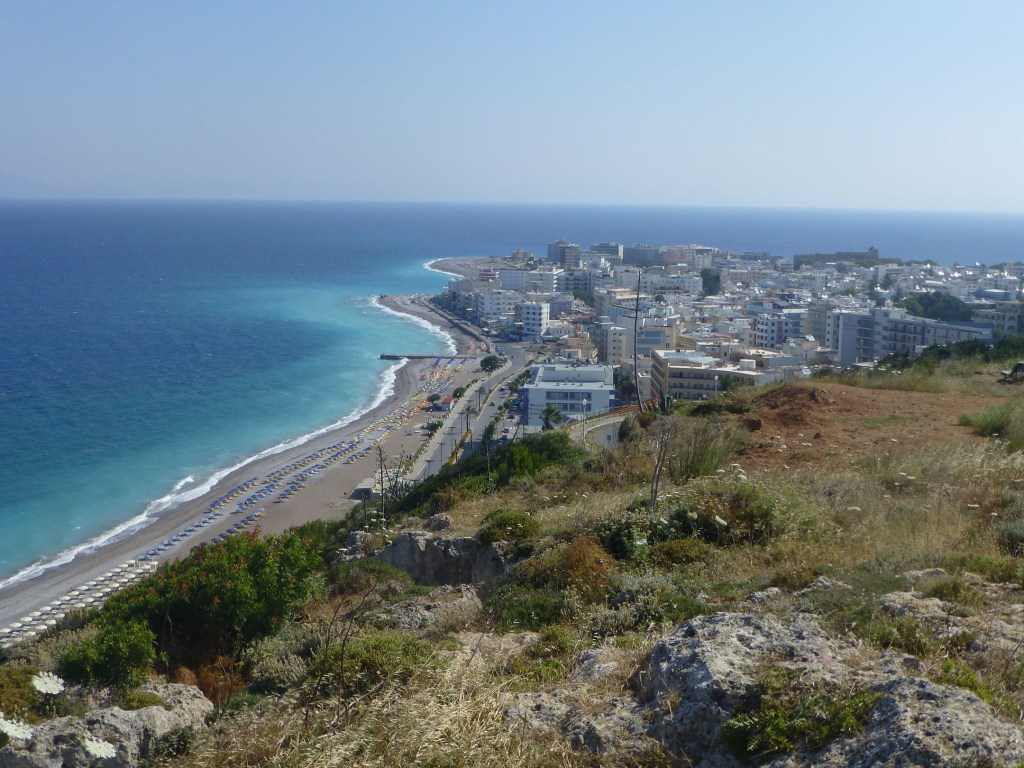



Above the city stood the Aktropole of Rhodes, which was the highest settlement on the island, hence the name (acro – high and polis – city). There is a wonderful panoramic view from where you can take pictures from above the whole town of Rhodes, surrounded by the still beautiful blue sea.
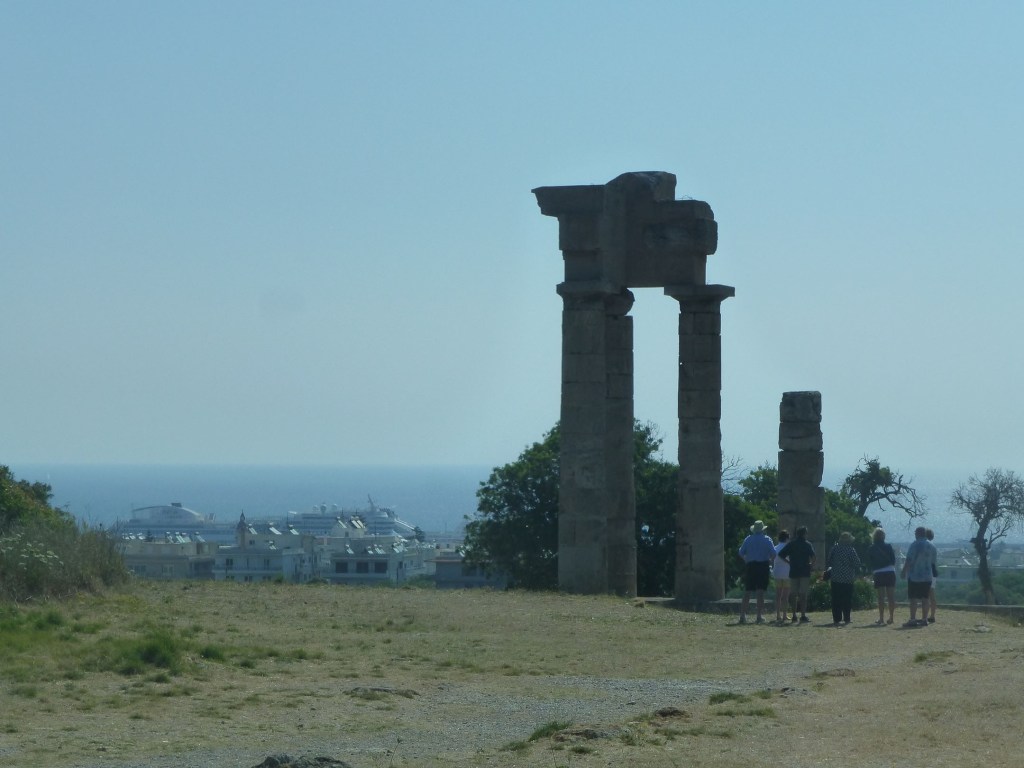
It is best to get to the acropolis by car – after all, it is one of the highest inhabited parts of the island. At the very top there is an ancient stadium that was 1 km long, but only a quarter (210 m) was preserved from it. On its left northwest side was an ancient amphitheater, with approximately 800 seats, and it was believed that it was used mainly for musical performances. Above them stood proudly several columns part of the majestic temple of Apollo.
Here it was easy to transfer to antiquity and mythology and believe that the island arose from sea foam and it was here that the sun god Helios fell in love with the sea nymph Rodi – daughter of Aphrodite and Poseidon, who bore him 7 sons. He blessed the island, giving it the best light that has ever been visible to this day.
The strategic location of the island attracted not only the Greek gods, but also the ancient conquerors and modern tourists. However, the latter come only in summer, with the official tourist season beginning in April. Charter flights start on May 1, and the most active season is around July 10. After September 10, the low season begins, and winter is quite desolate and quiet. Not depending on the season, however, Rhodes remains a sunny island, full of sights and beautiful landscapes not only in its main city…
GENERAL INFORMATION ABOUT RHODES CITY:
Location: Main town of the Greek island of Rhodes, located in the northernmost part of the island
Area: 19.480 sq.km
Population: 52 000 people
Official language: Greek
Altitude: 25 m
Climate: warm Mediterranean climate
Time zone: UTC+02:00
Currency: euro (EUR)
Additional information:www.rhodes.gr
TRIP TIPS FOR CITY OF RHODES:
Best time to visit: April to October
Typical food and drinks: Meliasi (foil-baked feta cheese with honey and sesame), any uniquely delicious seafood
Places to visit: Grand Master’s Palace, Knights Street, Acropolis of Rhodes, Mosque of Suleiman the Great, Port of Rhodes.
 TripTips