RHODES ISLAND



There, where the Aegean and Mediterranean sea meet, the sunny island Rhodes stands, blessed by the Greek gods. According to legends, here the god of sun Helios met the sea nymph Rhoda, the daughter of Poseidon and Aphrodite, they fell in love and had seven sons, who later became the first settlers on the island. After that the island was conquered several times by different nations – Phoenicians, Greeks, Romans, Byzantines, Knights, Ottomans, Italians…, each one of them left its traces and monuments on the splendid island.
Rhodes is two and a half times smaller than Crete island, but it is twice as big than the famous islands of Mykonos and Santorini, the later one can be seen for an hour by the tourists, while the Rhodos had the perfect size of 1398 sq.km, with lots of sightseeing. It is hard however to see everything for a day, and the reason for this is not that the island is so big, or the roads are in bad condition, but because there are so many attractions worth to be seen – they germinate like mushroom after rain, covering the whole island. Actually, the road network of the island is excellent and it is recommended to rent a car and explore the island in details.
After the compulsory tour of the main city of Rhodes, famous with its admirable fortress and harbor, we recommend you to visit no less enchanting city of Lindos, which name in Spanish means beautiful, and the town truly deservers it. It takes about 40 minutes to get there, passing near numerous olive groves, some of which were “babies” – only 20-30 years old. It takes about 5-10 years from the planted olive tree before it gives its first fruits, then it bears fruit every year without stopping, and it lives around 100-150 years. When the olives are ready to be pick up, a net is put beneath, and with a stick or a machine the tree is shook and the fruits drop on the ground. This usually occurs from October till November.
Besides olives, Rhodes is famous with its wines, having 5 main wineries which export “the drink of gods”. The most famous among them are C.A.I.R. (a winery near Rhodes town), Emery and Embola.
There are also lots of fruits and vegetables in Rhodes, such as watermelons, oranges, peaches, apricots, figs, tomatoes, potatoes and pomegranate. Pomegranate is also presented as one of the symbols of the island.
The island is notably hilly, and while driving to Lindos we saw on the right side the highest point of the island, which is 1216 m. Beneath the mountain one of the best grapes grew, from which Embola wine is made. It is believed that the quality wine needs grapes that are grown in dry and stony land. When the grapes are cultivated with plenty of water – they give rich yield, but poor quality, while the grapes here were not so much, but with excellent quality.
The further south we go, the warmest it becomes. The landscape has also changed. The west coast from which we were coming was green, and the east coast, where we were now was rocky, dry and barren. There were empty riverbeds that were filled only by the rain in winter. The rainy period in Rhodes is from November to March, and rarely in April.


We passed near the seaside resort village Faliraki that is famous amidst young visitors, as it is full with clubs and night parties. It is something like the Greek version of Ibiza. In Crete there is also such resort, called Malia.
After that we passed the small bay Anthony Quinn, which was named after the famous artist, who in early 60s shoot here the movie “The Guns of Navarone”. Anthony Quinn liked the island a lot and bought a piece of land, promising to build Film Academy in Rhodes. This sounded great, but never happened. He has not done anything for the Greek, but yet they still kept his name on this bay, which was a wonderful place for swimming. An interesting fact is that although Anthony Quinn plays the role of Zorba the Greek (film shot in Crete), he had not any Greek roots, but had Mexican origin.


We passed also a golf course, which has olive groves inside, and it was situated right on the coast – so visitors can play golf, eat grapes and swim in the sea, at the same time. Besides olive trees, on our way we saw eucalyptus trees, which Italian imported from Australia.
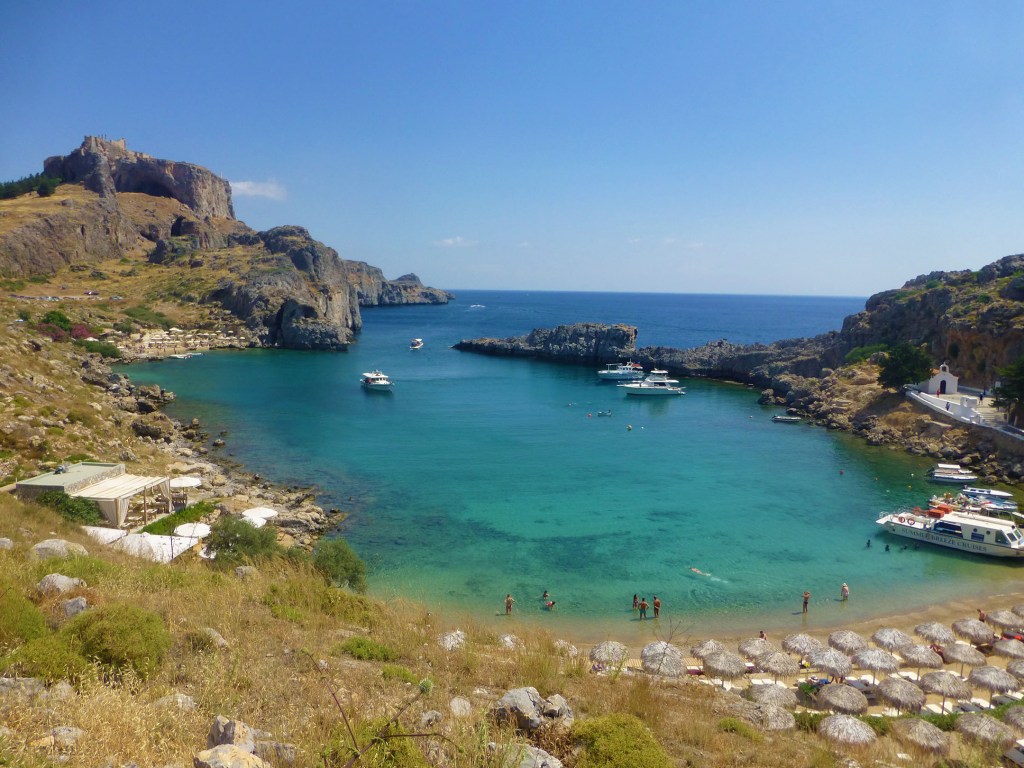
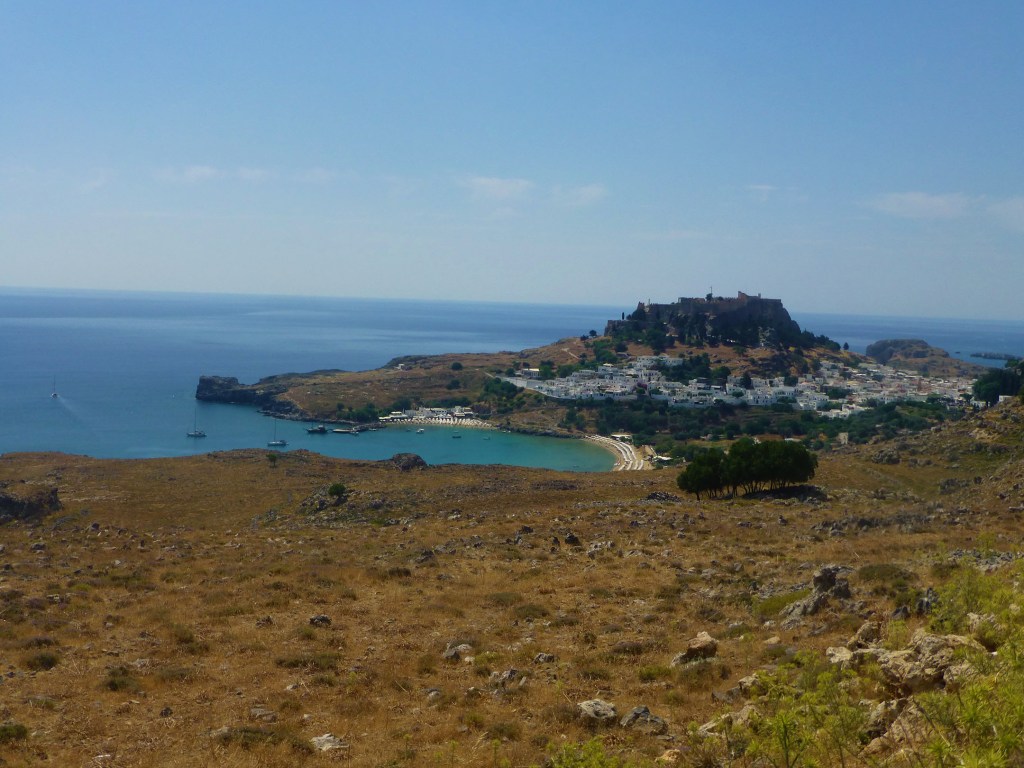
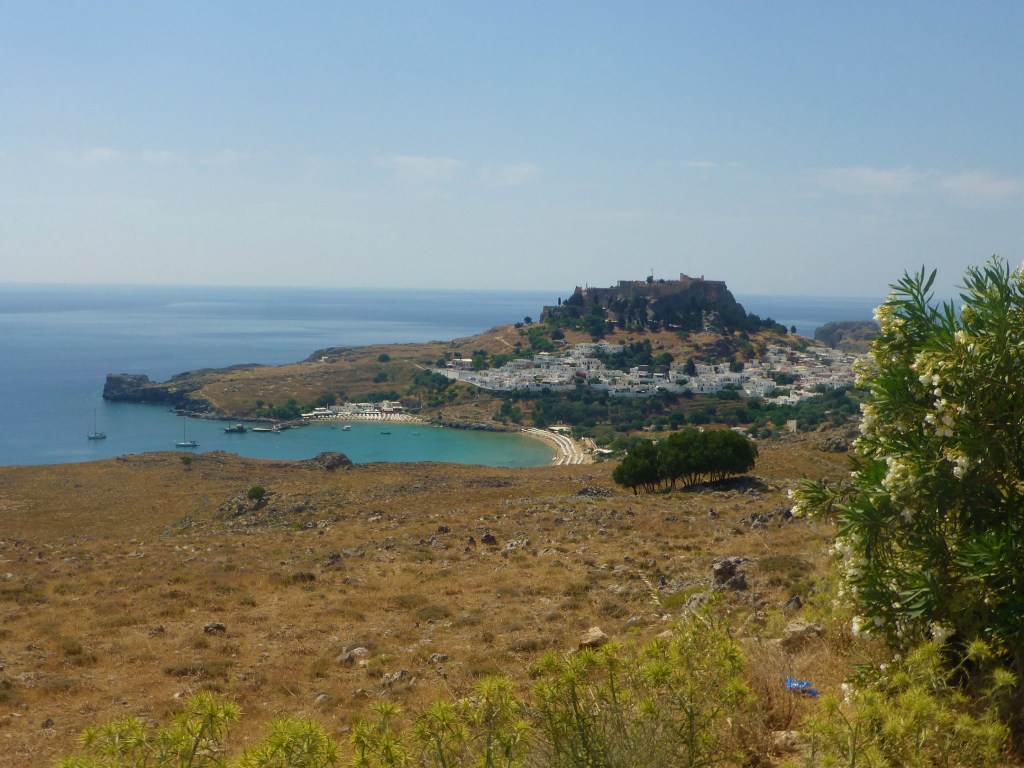
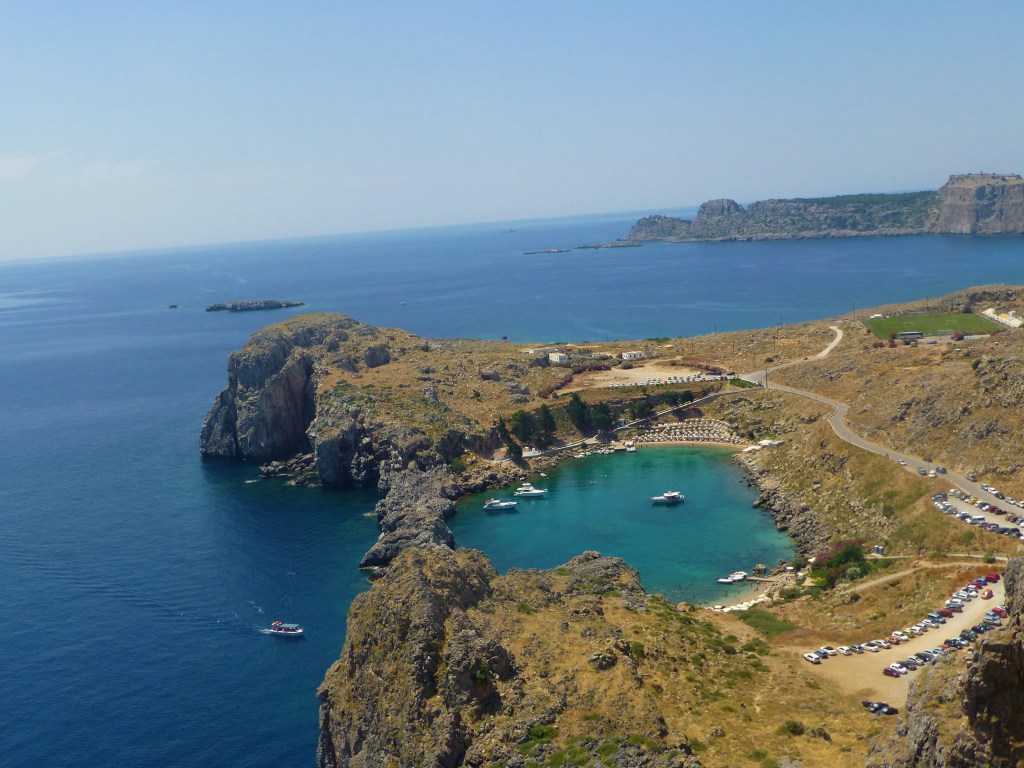
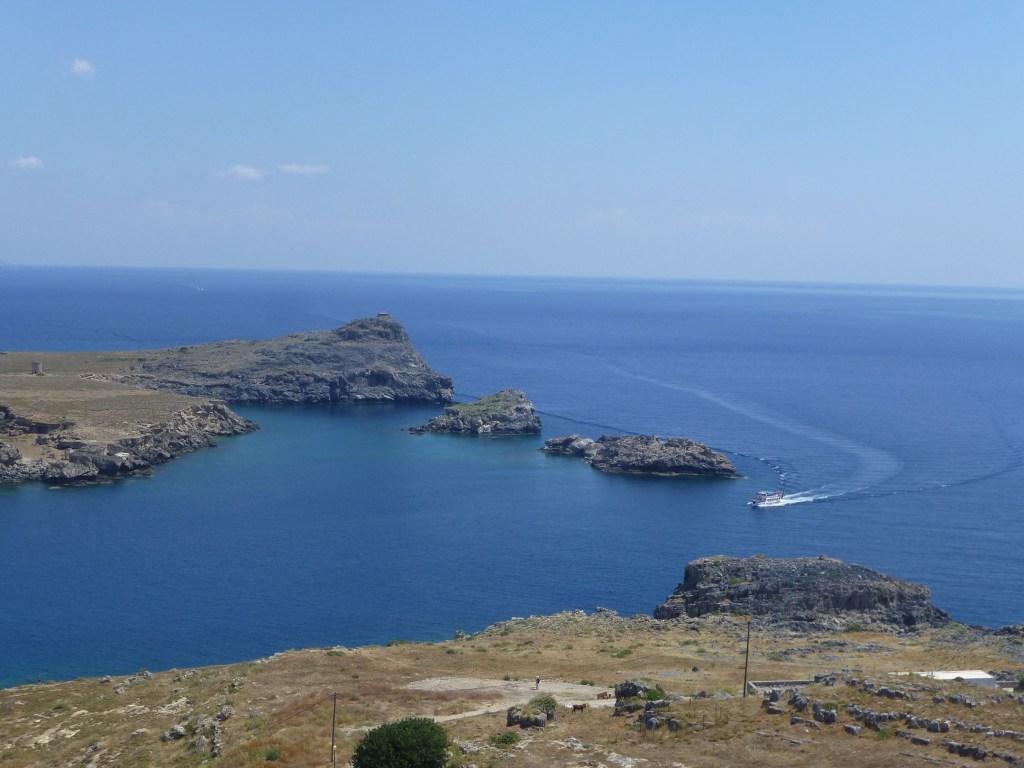
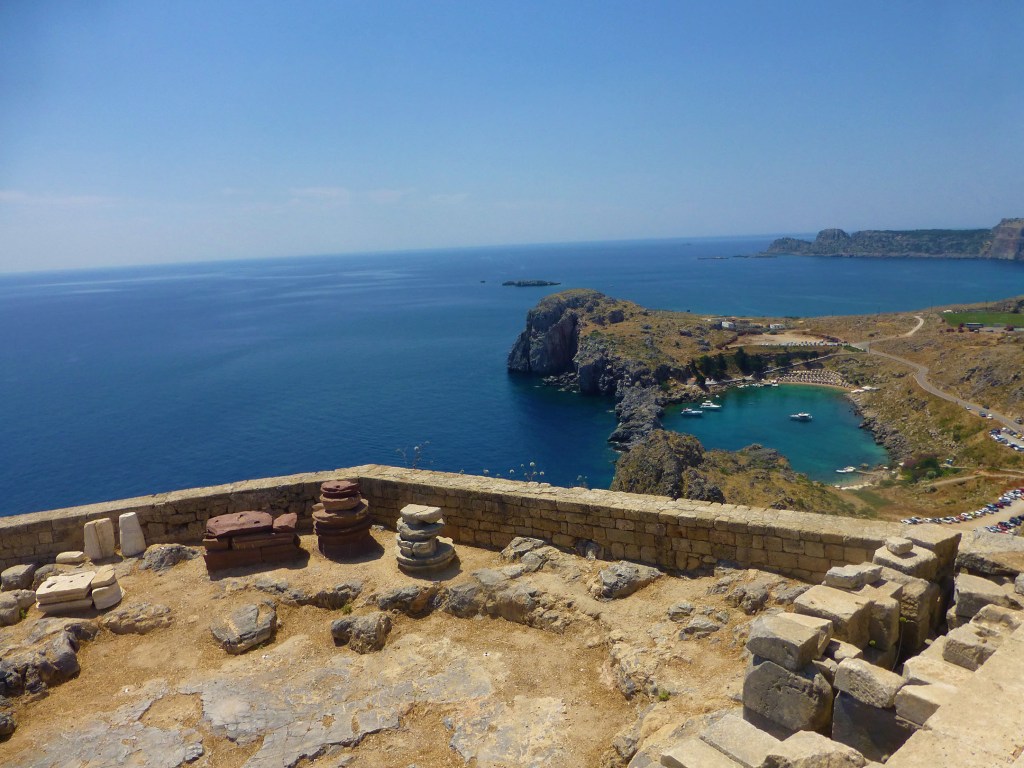
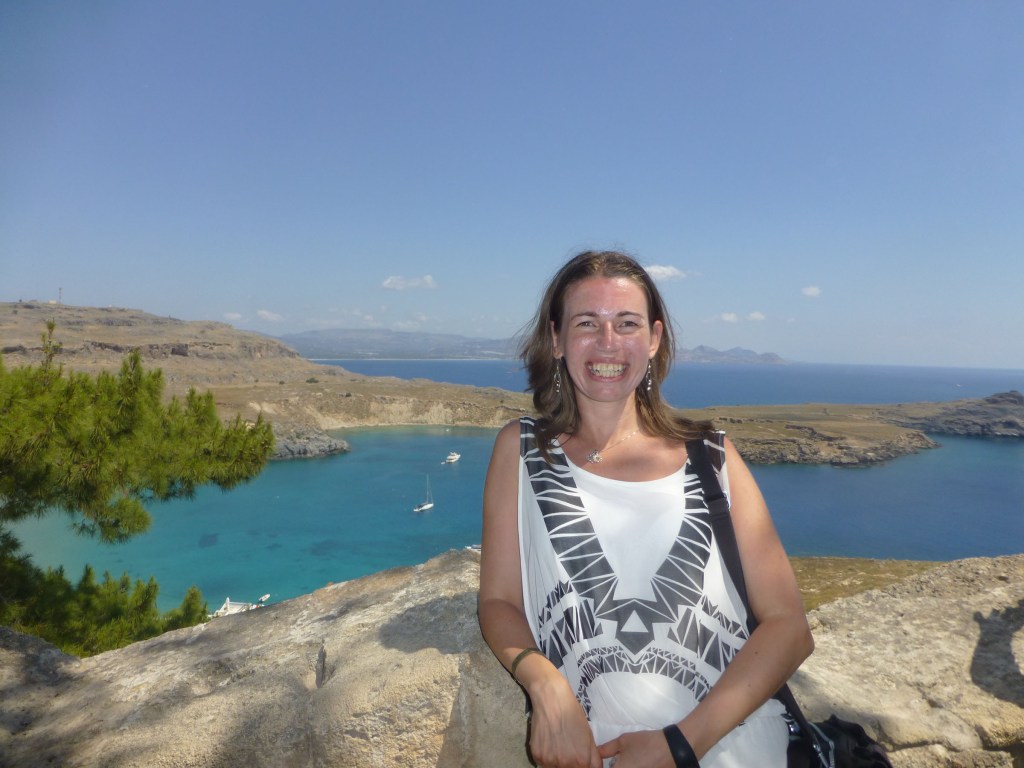
Our first stop before Lindos was the gorgeous St. Paul bay, from where beautiful photos of Lindos and its castle can be taken. It was interesting that from the castle, the bay looked like a lake and the open sea side was not visible. Here there is a lovely chapel of St. Paul, who came on the island on his way back from Jerusalem and settled for a while on the island to preach Christianity. Today the chapel is often used for weddings, the magnificent landscapes and sea atmosphere makes the place magical.
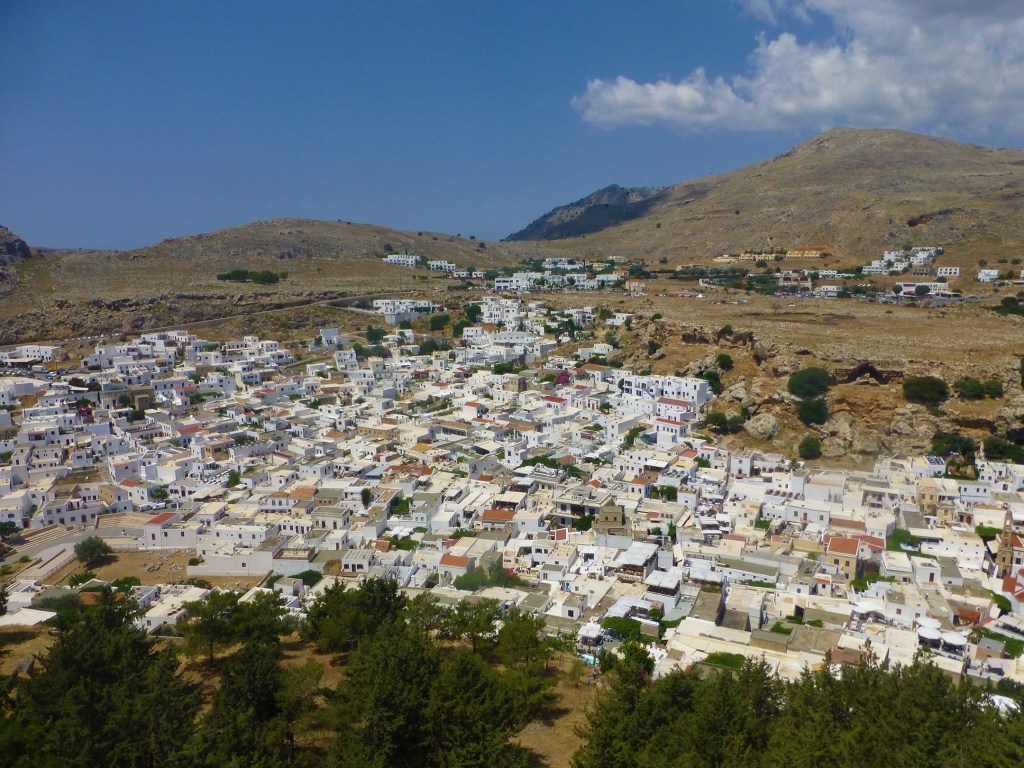
The first thing we saw from Lindos, was of course the splendid castle built proudly on a hill, surrounded on three sides by the sea. At its foot there were numerous traditional white houses with brown roofs that resemble to the white houses in Santorini and Mykonos, which were with blue roofs.


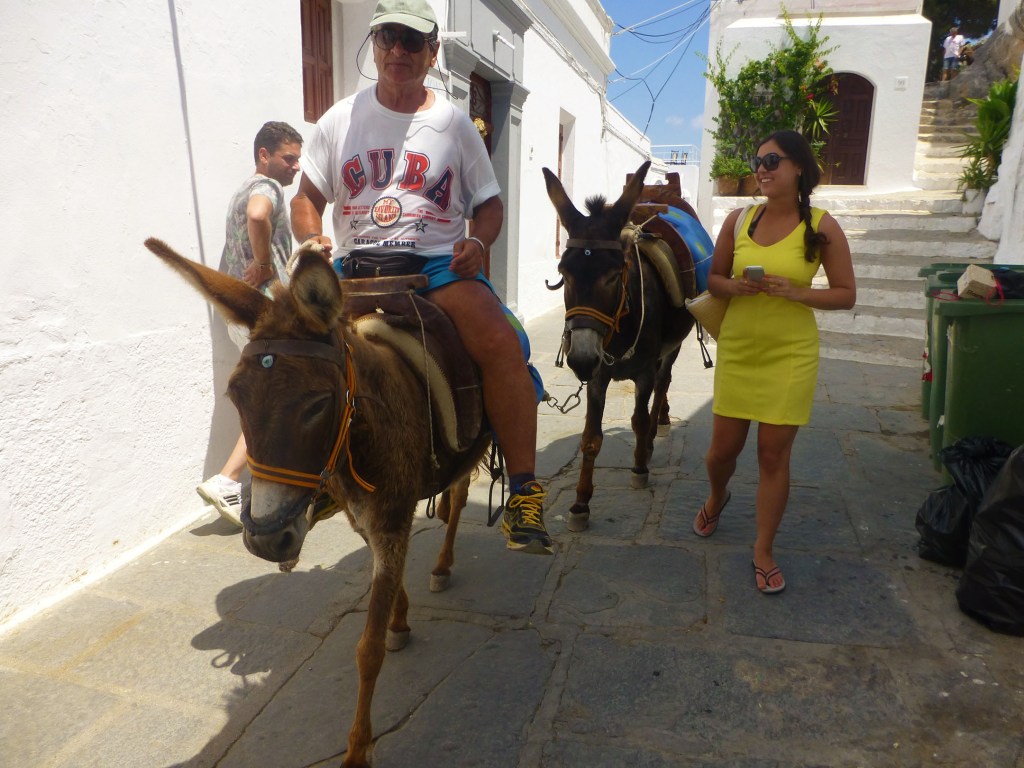
We headed straight to the castle by climbing narrow cobbled steep streets, which took us no more than 15 minutes. There is also another alternative to get to the castle instead of walking – by so called “Lindos’s taxi”, which is actually donkey ride. We preferred climbing on foot so we can stop and make panoramic photos whenever we wanted.
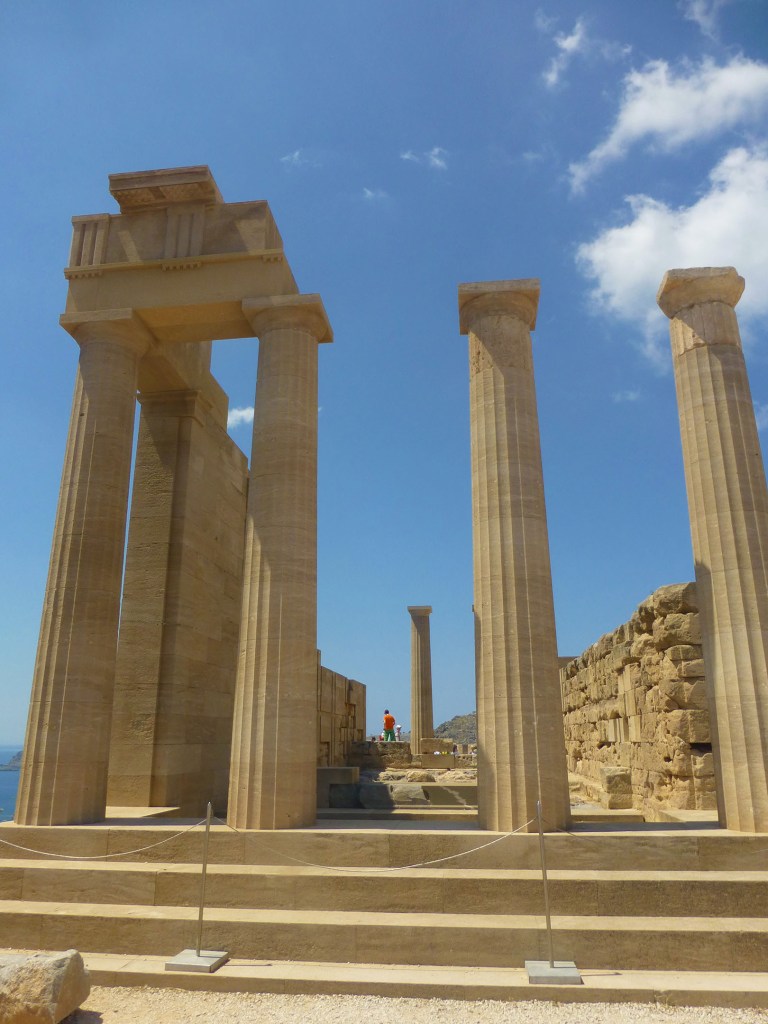
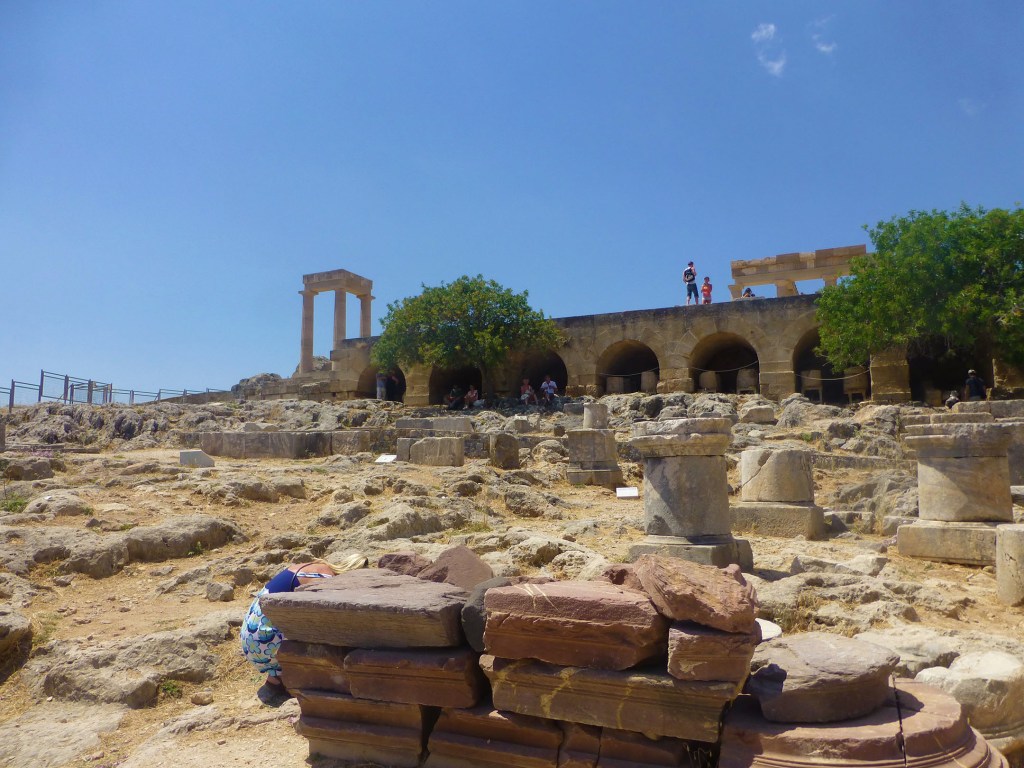
The entrance fee was 6 euro, and it worth it. Getting through the fortress walls it seemed like we got back into era of knights and ever further to ancient Greeks. According to legends the city of Lindos was founded by the grandson of god Helios, who was named Lindos, another myth tells that the first settler here was one of the immortal sons of Zeus. In any case, all stories agrees that this splendid city has divine origin. Homer, the famous ancient Greek poet, mentioned Lindos as one of the Greek cities who sent their ships in the Trojan War. This reveal its naval force in antiquity. It was during this period, when local people wrote the first documents of naval law known as “Rhodes maritime law”, which later became accepted in the whole Mediterranean, then it was used by the Romans and even in contemporary naval law.
Nestling between two sheltered bays with fortified castle high on the rocks, the city became important commercial center and naval power. Lindos flourished so much that it had its own colony in Sicily in 7 century. Lindos minted its own coins and had active trade with Egypt. Trade and military power contributed to art development. In Lindos there were excellent school for sculpture. Here it was created the famous statue of Athena made of wood, gold, marble and ivory. It was placed in front of Athena’s temple in 550 BC. Later Emperor Teodoris II took the statue and brought it to its capital – Constantinople (Istanbul nowadays), but there it was destroyed shortly after that. The story of the exquisite temple in Lindos was immortalized on marble plates by a monk in 99 BC, and today these plates are kept in a museum in Copenhagen.
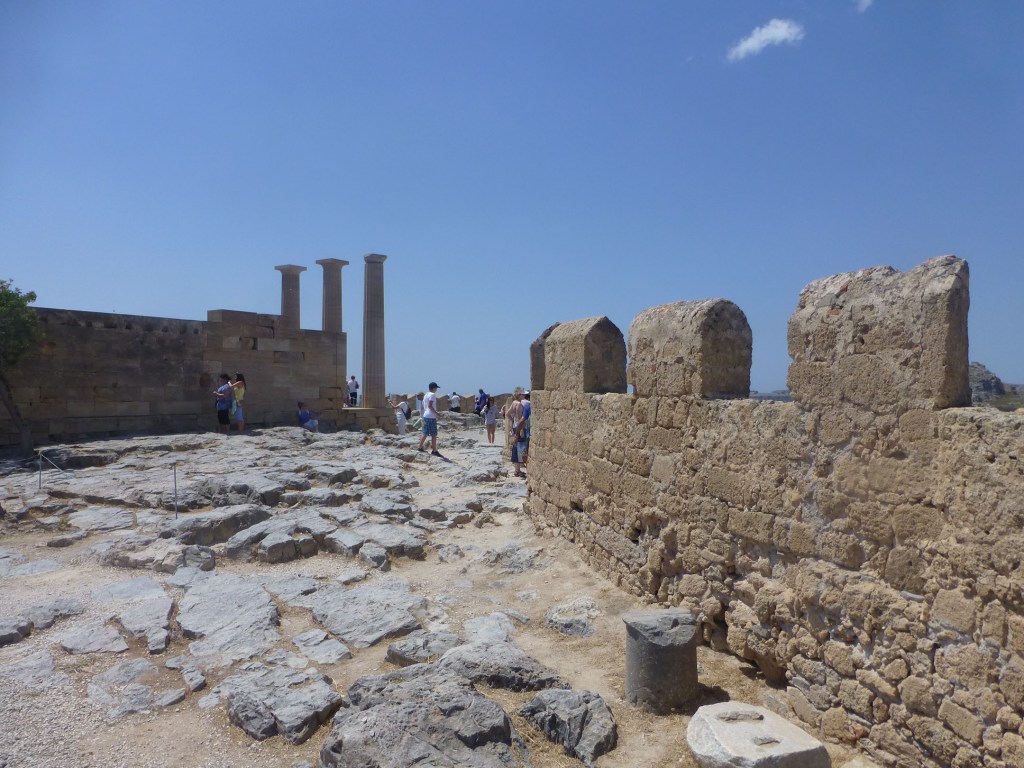
We “immortalized” our visit of Lindos by making multitude photos of numerous ancient Greek columns and temples, as well as early Byzantine basilicas, all of them surrounded by gorgeous medieval city walls. After the mysterious ruins we descended back to Lindos town with its narrowed cobbled streets, full with many souvenir shops.



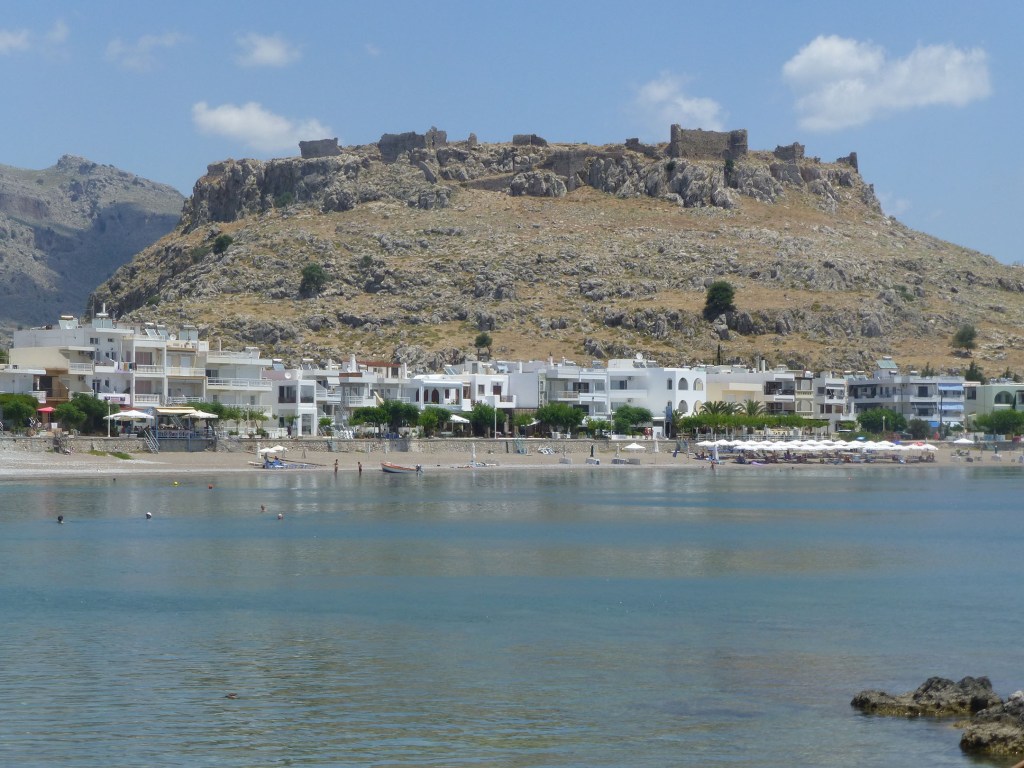
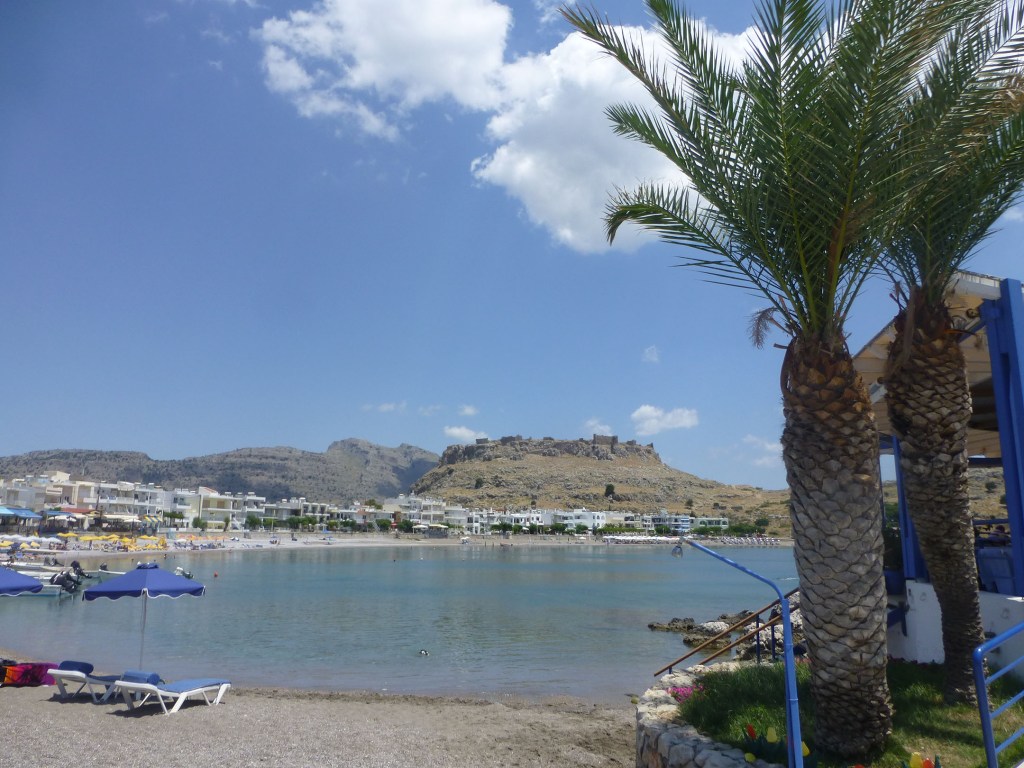
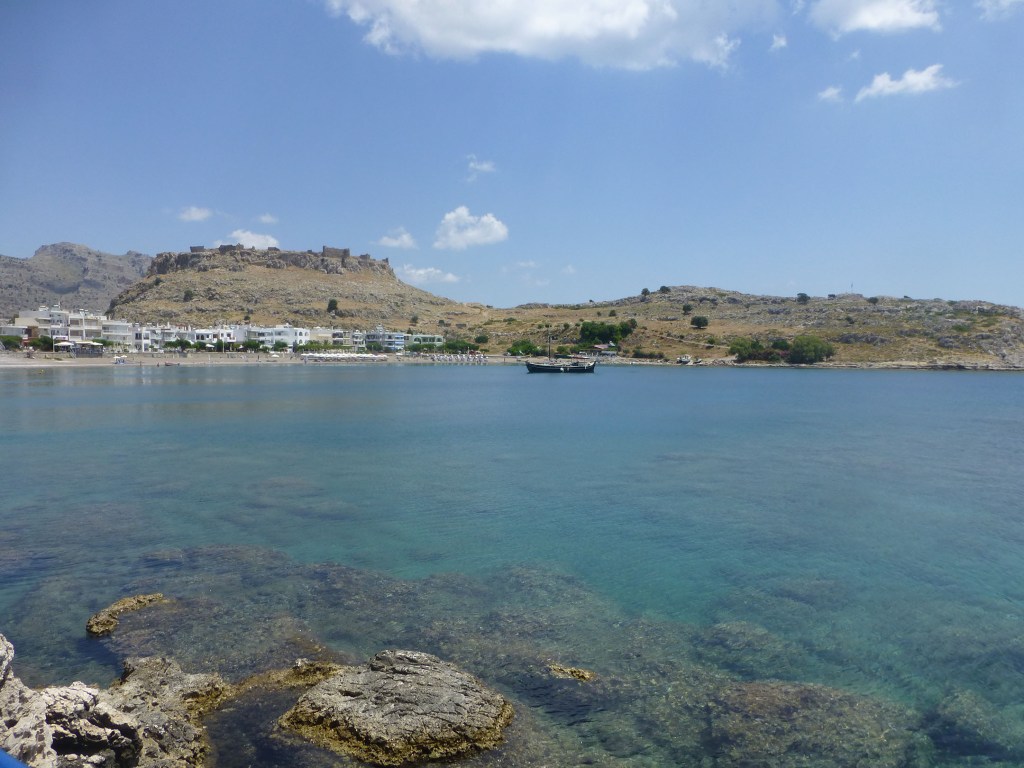
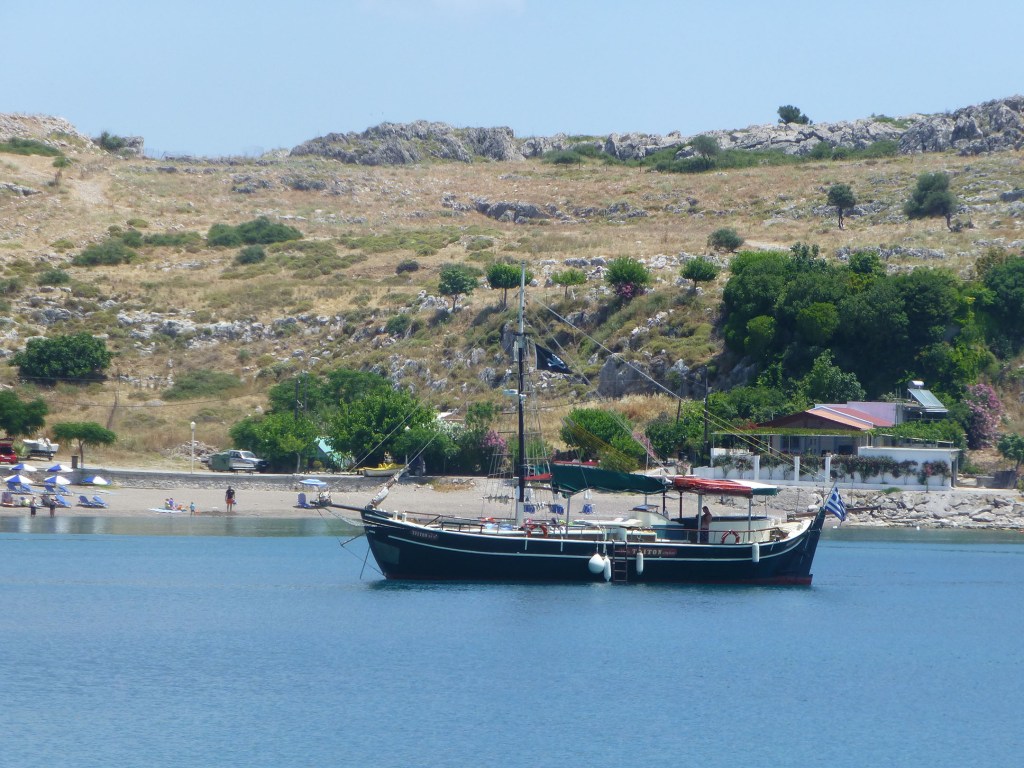
Lindos impressed us a lot – it had the scent of history with strong maritime flavor. While swallowing its beauty, it was already time for lunch. We went to a small fishing town called Haraki. It was situated around a calm bay, and on the other side there was a hill with ruins of a castle. When the Knights of St. John arrived on the island, they built 10 fortified castles – this one, which was almost entirely destroyed, the impressive fortresses in Rhodes and Lindos, and others. The purpose of these fortifications was to defend the island. Among the lovely landscape we had a delicious lunch with tasty seafood.
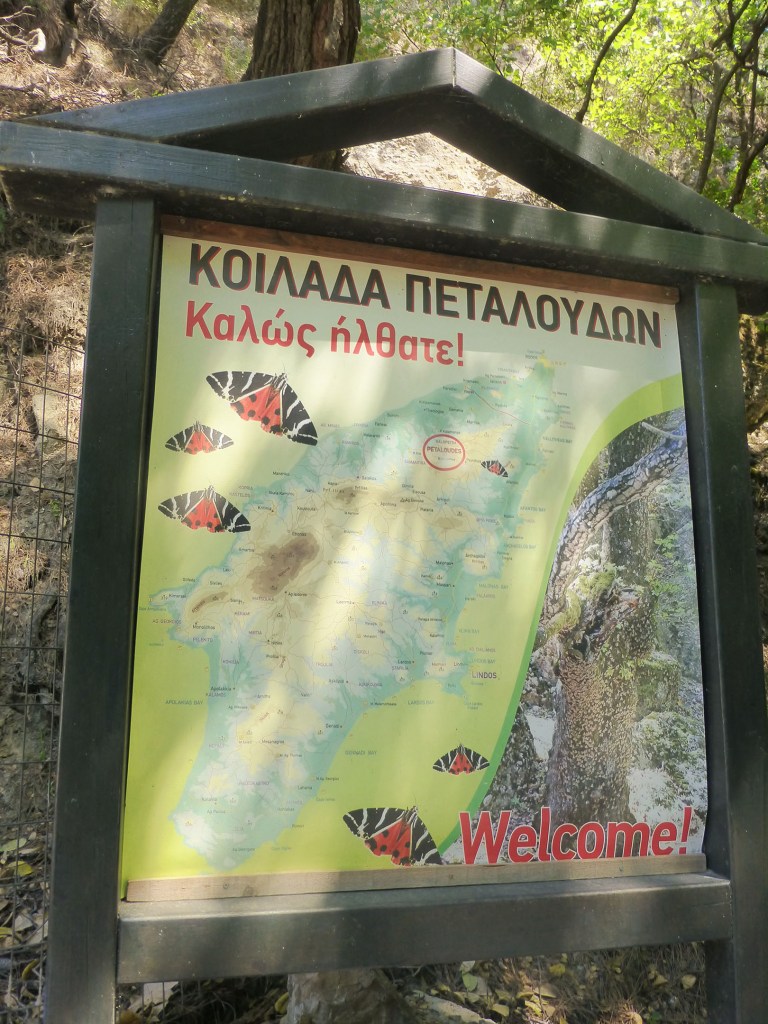
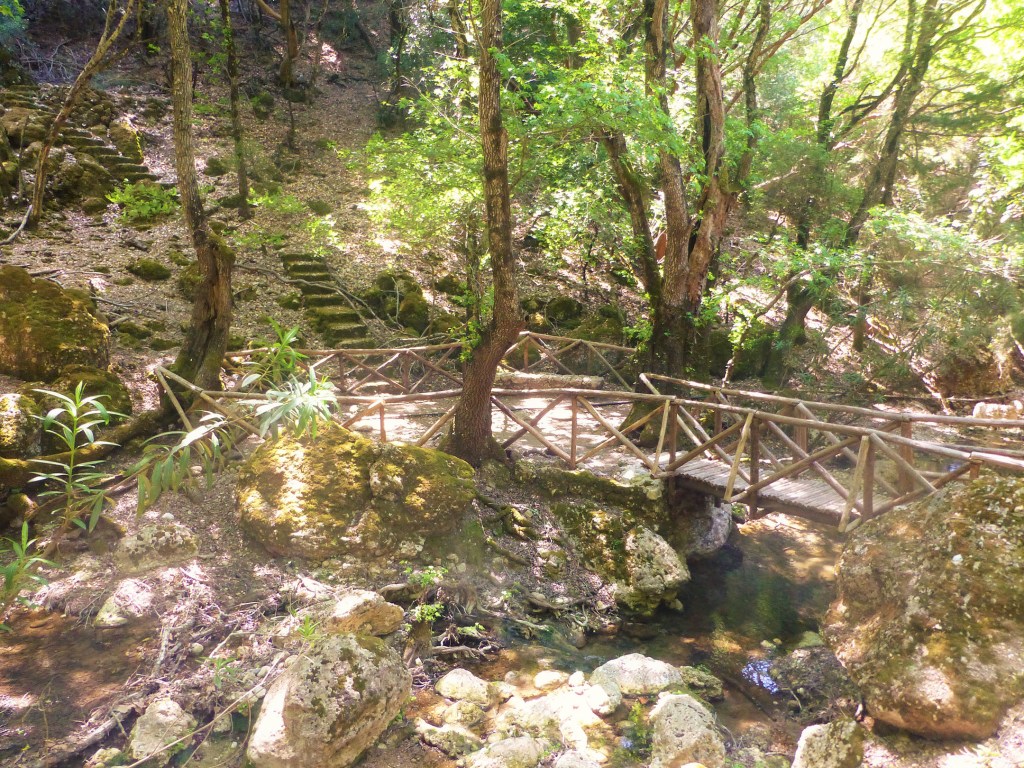
Our daily trip continued to another attraction of Rhodes – Butterfly Valley. It is a unique nature reserve with the only natural forest of Liquidambar orientalis (Oriental Sweetgum trees) in Europe. Each year from mid-June to late August (during tourist season, how convenient) here come and nest the majestic monarch butterflies, attracted from the tree scent. We had a peaceful walk through the shaded, green valley with its small river and beautiful waterfalls. In the beginning of June we saw butterflies only in the souvenir shop at the end of our tour.
We continued our excursion by coming back on the green but windy west coast of Rhodes, with many electric windmills that generate power. The electricity was very expensive on the island and locals prefer to use solar panels, which we saw on almost every house roof.



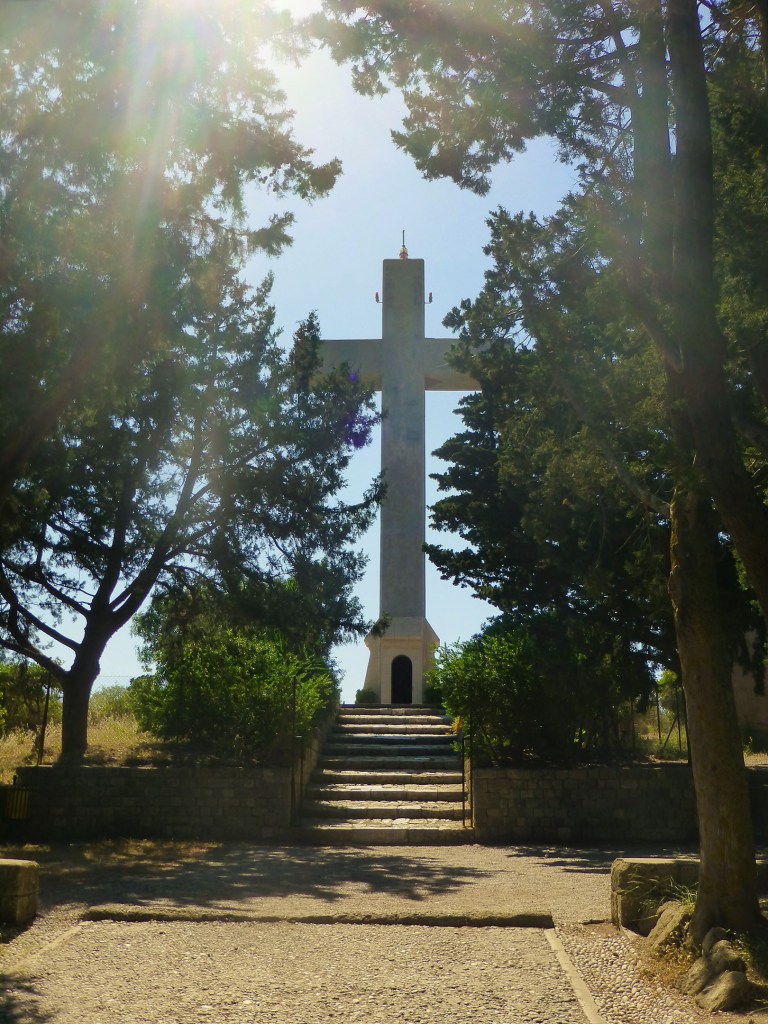


We headed to the ancient acropolis of Yialos, where the Italians have placed a huge cross. During World War II, they removed the cross, because it was reference point to their enemy and showed where the airport was, and they bombed this location. 20 years ago the cross was erected again, but this time it was not made from iron, but of cement.
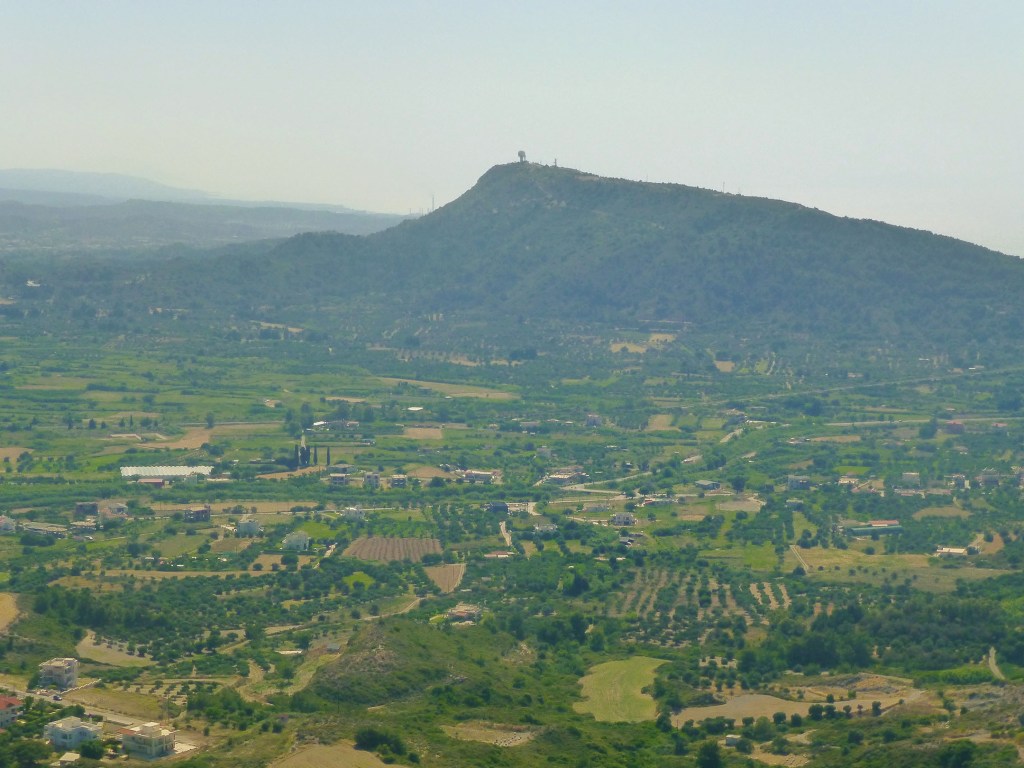
We went up the hill Monte Filerimos by car, making amazing panoramic photos of the coast and the second largest city on the island – Yialos, where our hotel was situated. Besides the name Yialos, the town was known also as Trianda (meaning Thirty in Greek), because once it was very rich village with 30 splendid big houses.
Getting on the top we continued on foot towards the huge 70-meter cross, which was “guarded” by many peacocks who walked freely and shouted loudly. We succeed to make photos of several male peacocks with stretched colorful wings who showed off to brown one-colored females. The path towards the cross was made by the Italians after the pattern of Golgotha – the place where Jesus was crucified, and on each place where the people who carried the cross have stopped, a stone monument with biblical motives were erected, and they were numerous.
As much as impressive the cross was, the panorama from its stone terrace was even more gorgeous. We could clearly see the green hill with pine trees, from which we have climbed, and in the foot of it the lovely Yialos town, hugged by the blue sea which color merges with the distant blue mountains (probably Symi island and Turkey), over them was the brighter azure sky.
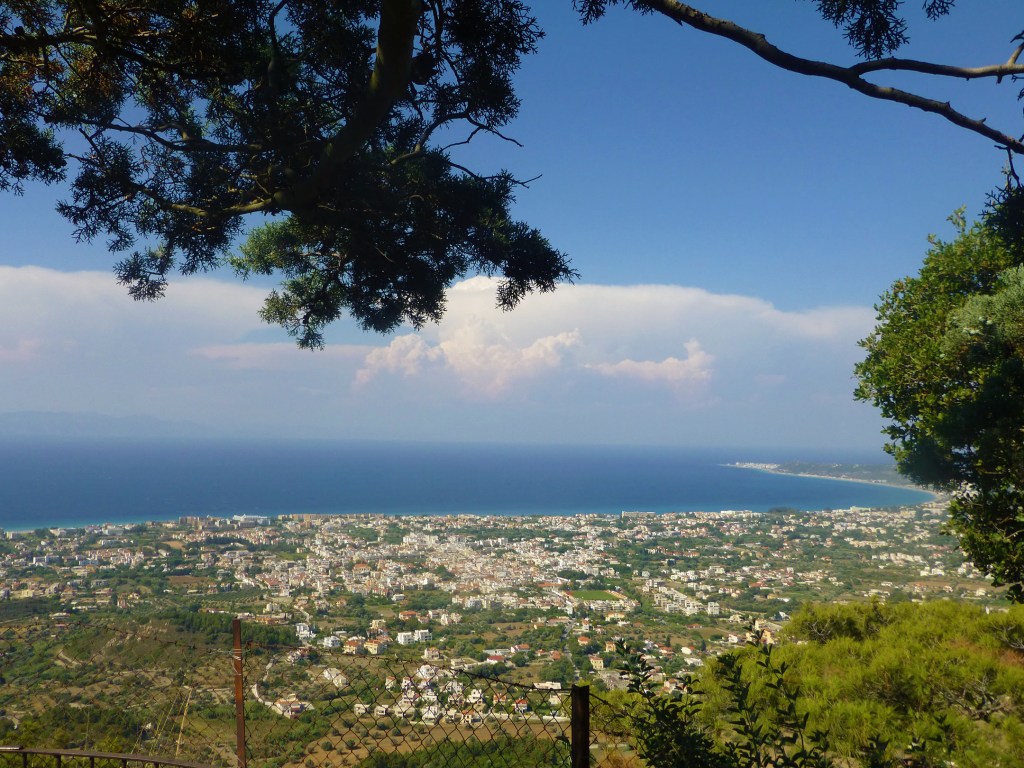
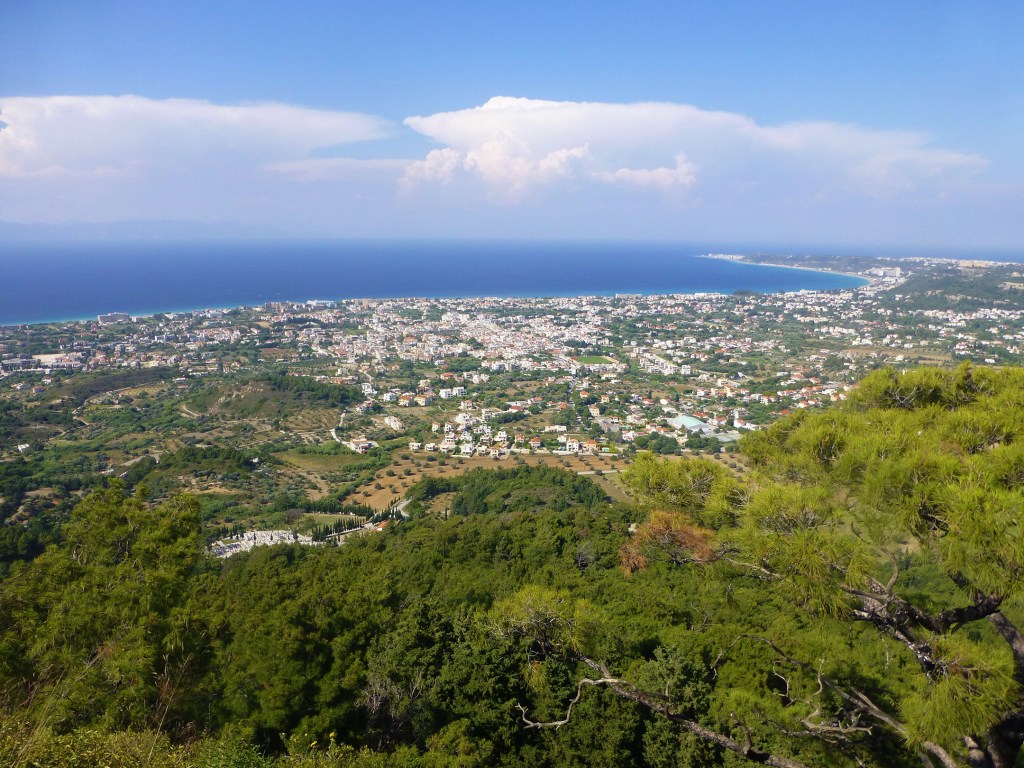

We kept walking getting to the ancient acropolis of Yialos, which had an entrance fee of 3 euro – totally worth it, as we could see real historic treasures kept throughout the centuries. There are the ruins of Athens’s temple, as well as a medieval church erected by the Knights of Saint John, which later expanded into monastery. During Ottoman rule, this hill was abandoned. After that the Italians renovated the small church, enlarged the monastery, and brought catholic monks to sanctify the complex. After the Second World War, when the Italians left the island, they took the priests with them. So the monastery remained closed even today, but was enough impressive outside.
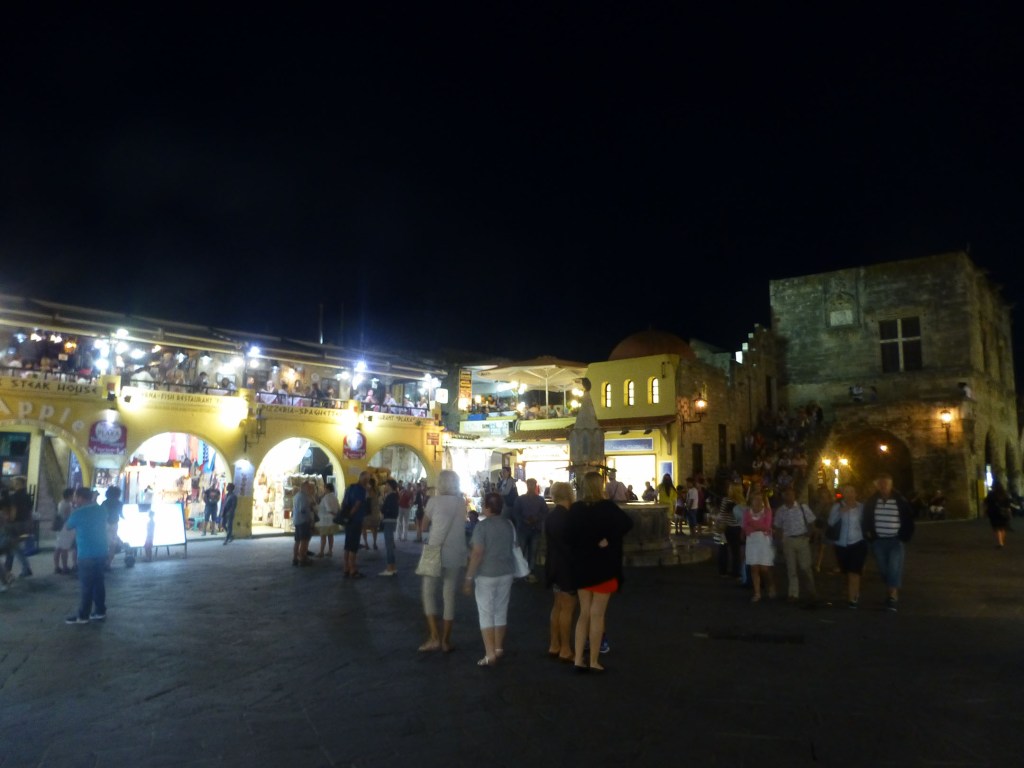
The stone church was open for visitors, but much more remarkable was the shady trail with strange trees on the right side of the church leading to a new panoramic platform. Here we could see not only whole Yialos, but also Rhodes city. This was a great end of our daily tour. In the evening we went back to Rhodes city, whose medieval walls were colorfully lighted and the narrow streets were filled with life – numerous open shops and restaurants.


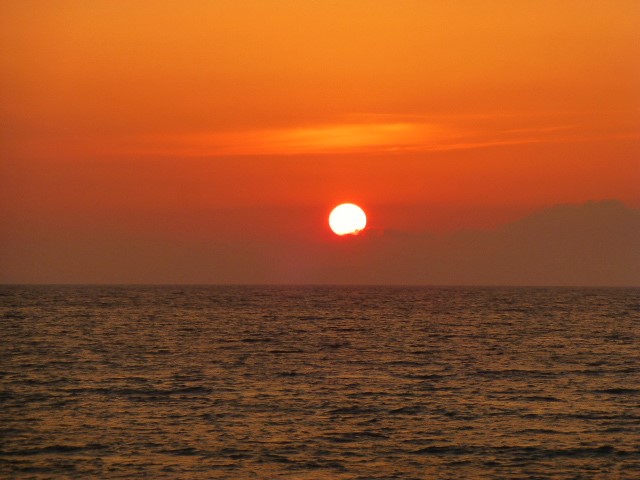

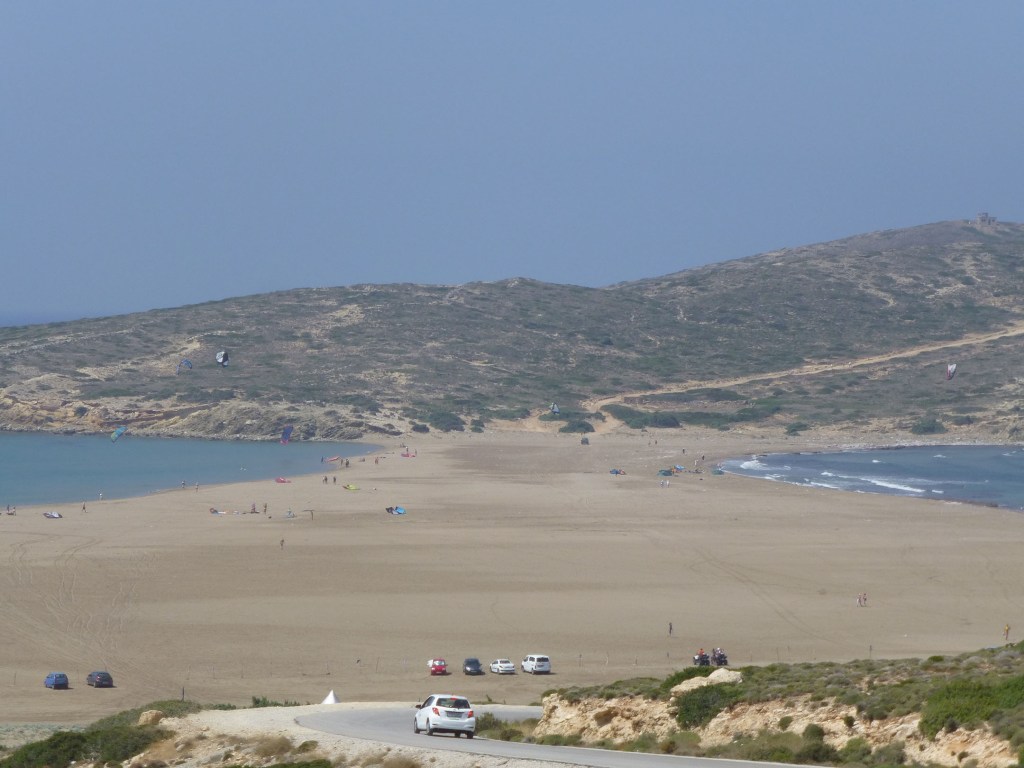
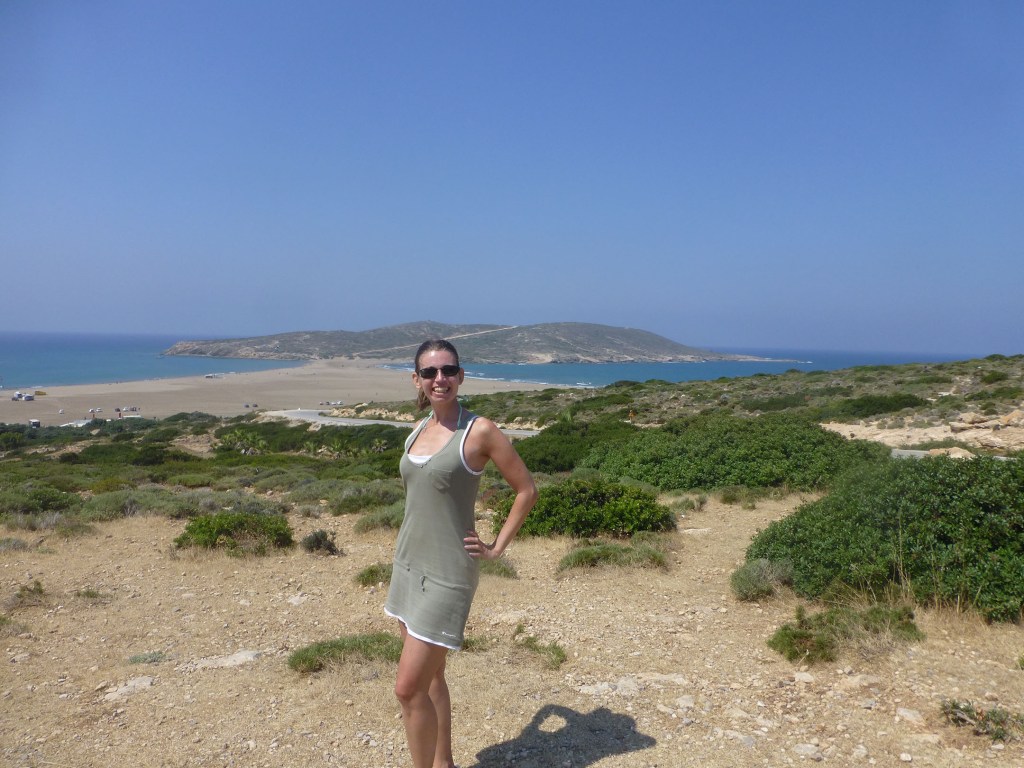
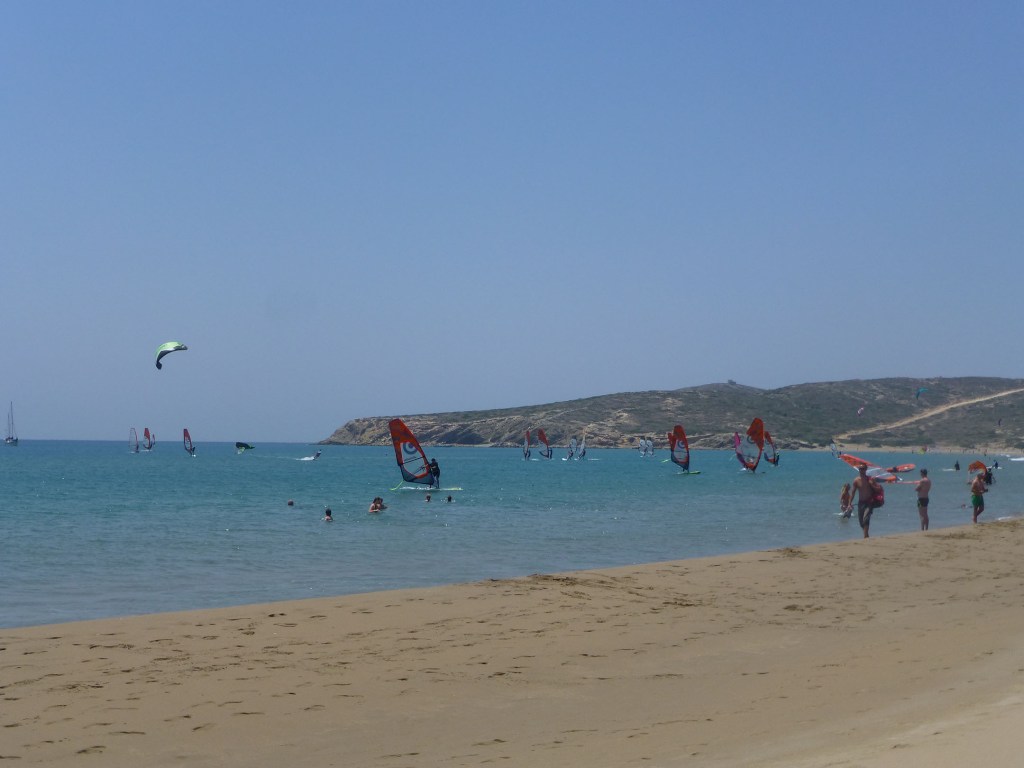

We needed a whole new day to travel round the beautiful beaches of Rhodes. We went firstly to the southernmost point of the island – Prasonisi. The name means “green island” and there was a hilly island connected to the mainland by a strip of sand. The amazing thing about this beach is that on the left side of the sandy strip people can bath in the Mediterranean, and on the right side – in the Aegean sea. We chose to sunbath on the calmer and warmer Mediterranean side which seawater was crystal clear. The beach was sandy and we did not use the water shoes which we have bought for the pebble Rhodes beaches. Besides swimming the place was wonderful for surfing, there were not big waves but constant wind, which helped us to improve our sun ten.
Our next stop for sunbathing was again a wonderful sandy bay called Tsambika – with turquoise waters and long golden sands. For the next time we left Anthony Quinn bay, St. Pauls bay and Afandou, all of them highly recommended for the sand and well organized tourist facilities.
Rhodes island is remarkable and fascinating. I felt that especially on the plane back – it was like getting from the heaven back to earth. Memories and photos help me to re-feel again all the lovely moments on the sunniest island on earth.
GENERAL INFORMATION ABOUT RHODES:
Location: Rhodes is the largest of the Dodecanese Islands and is located 18 km west of Turkey, between mainland Greece and the island of Cyprus.
Area: 1 401 sq.km
Population: 120,000 people
Official language: Greek
Climate: warm Mediterranean climate
Time zone: UTC+02:00
Currency: euro (EUR)
Additional information: http://www.rhodes.gr
TRIP TIPS FOR RHODES:
Best time to visit: April to October
Typical food and drinks: Meliasi (foil-baked feta cheese with honey and sesame), any uniquely delicious seafood.
Places to visit: the Old Town of Rhodes, the Castle and Acropolis of Lindos, Prasonisi (the southernmost part of the island), the Valley of the Butterflies and others.
 TripTips