ULM – ONE HAND FROM HEAVEN


What a wonderful town is Ulm
My admirations start to bloom
It captured my gaze and now with closed eyes
Its lovely images under my eyelids arise
I see the colorful houses of wood
I hear the tumbling of the river Danube
And here the tall cathedral is so nice
Reaching as far as the paradise.
Ulm is another picturesque town located on the banks of the Danube, with inspiring charm and calmness.
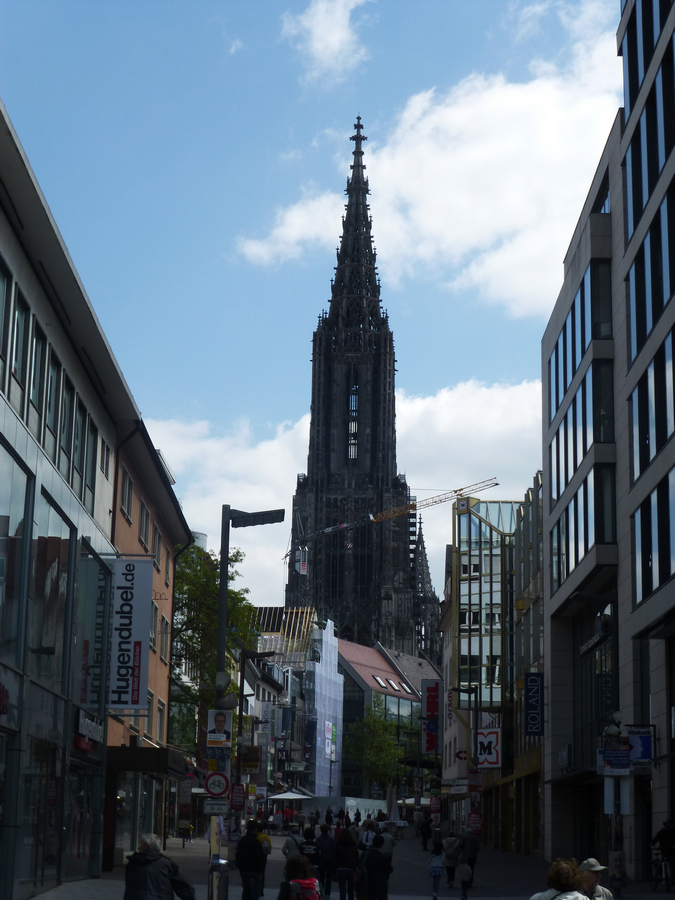
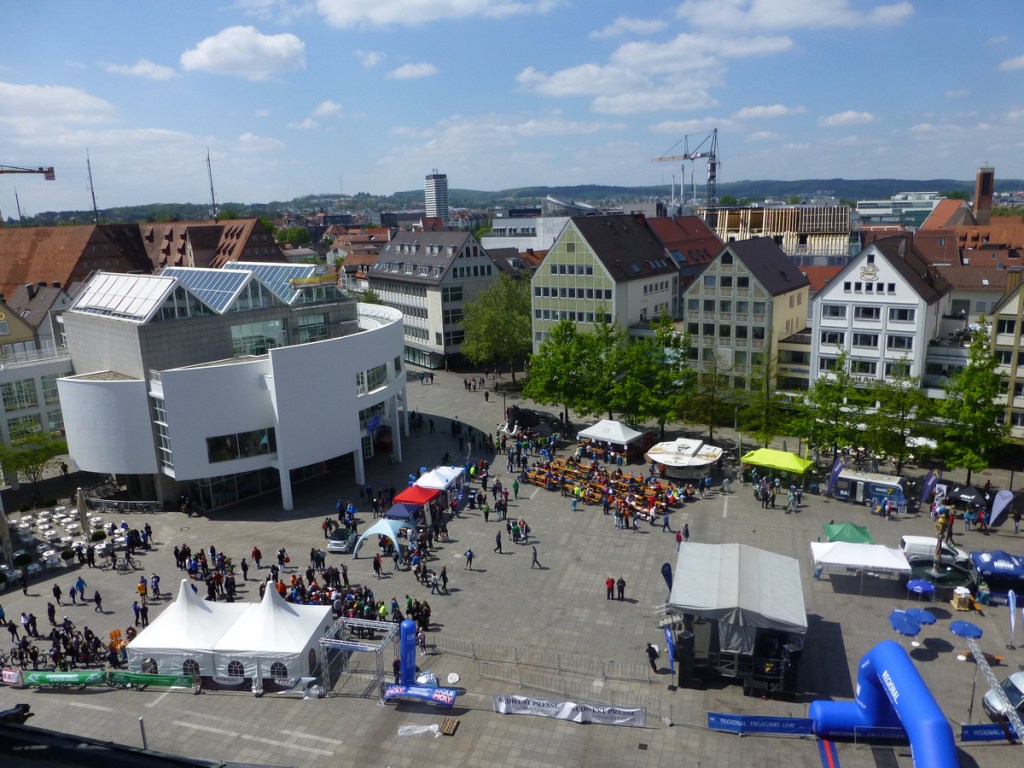
Our sunny walk around the city began around noon on May 4, heading from the station to the famous cathedral known for having the tallest church tower in the world. We walked along the pedestrian street Bahnhofstraße lined with shops. Before our arrival we have read that the town Ulm is mentioned as early as the 9th century as an important trading place. Its shops have apparently been preserved to this day, as apart from having rich traditions and history, they had also grown in number. Unfortunately, on this sunny Sunday they were all closed, so we headed to the busiest place on Sunday – the Cathedral Square. Münsterplatz was full with people preparing for an upcoming marathon. Instead of racing, we decided to calmly enjoy its beautiful architecture, which was a successful combination of history and modernism. And speaking of history, we couldn’t fail to mention the big inflatable mammoth that stood at the very entrance of the square and it looked like it was an advertisement, but we didn’t understand what it was for. Photographs with him, however, enhanced the impact of the grandeur of the city and the dominating beautiful cathedral.


The cathedral was huge (125 m long, 49 m wide and 42 m high). It was the tallest church in the world and the 4th tallest building built before the 20th century. Initially, it was built outside the fortress walls, but during the occupations, people could not use it and it became prey for the enemies. That is why, after another occupation by Emperor Charles IV, the city council decided to move the church between the fortress walls. On 30.06.1377, three hours after sunrise, the first stone was laid. One hundred years after its construction, the church received the status of a cathedral.


Particularly impressive (and memorable) were the 768 steps that led to the top of the cathedral tower, which we decided to conquer. It wasn’t the number of steps that tired us, but the crowd of people there that we were trying to avoid climbing the narrow winding stairs. However, the views from the top worth the efforts and they really took our breath away – from admiration (and of course from the climbing!).
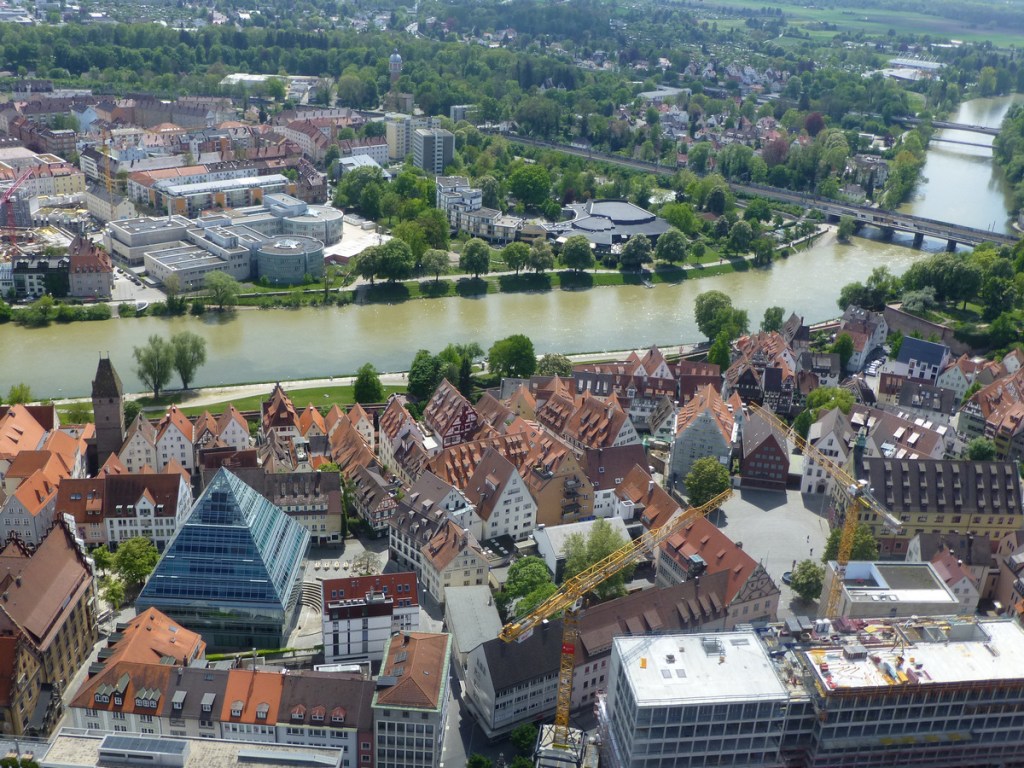
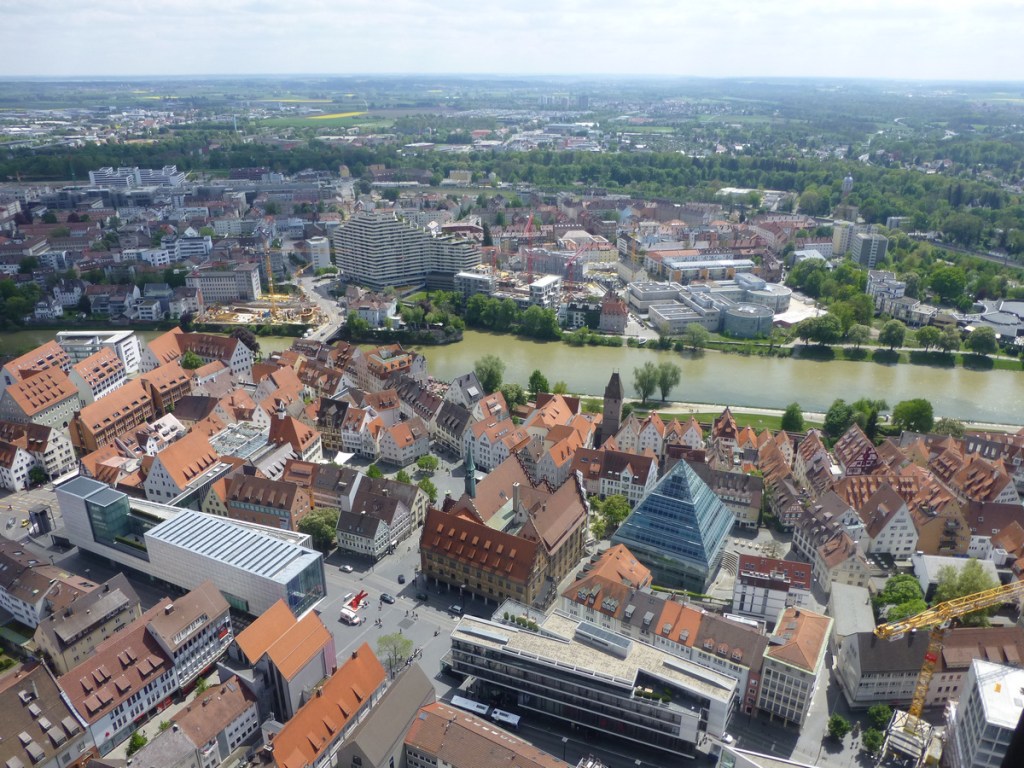
Descending from this panoramic paradise, we began our walking tour of the city, which was almost as difficult as climbing the 768 winding narrow steps, as again there were too many people and all the central streets were blocked due to the marathon that started at 14:00 hour. Crossing became terribly difficult, almost as difficult as crossing the narrow steps of the cathedral.
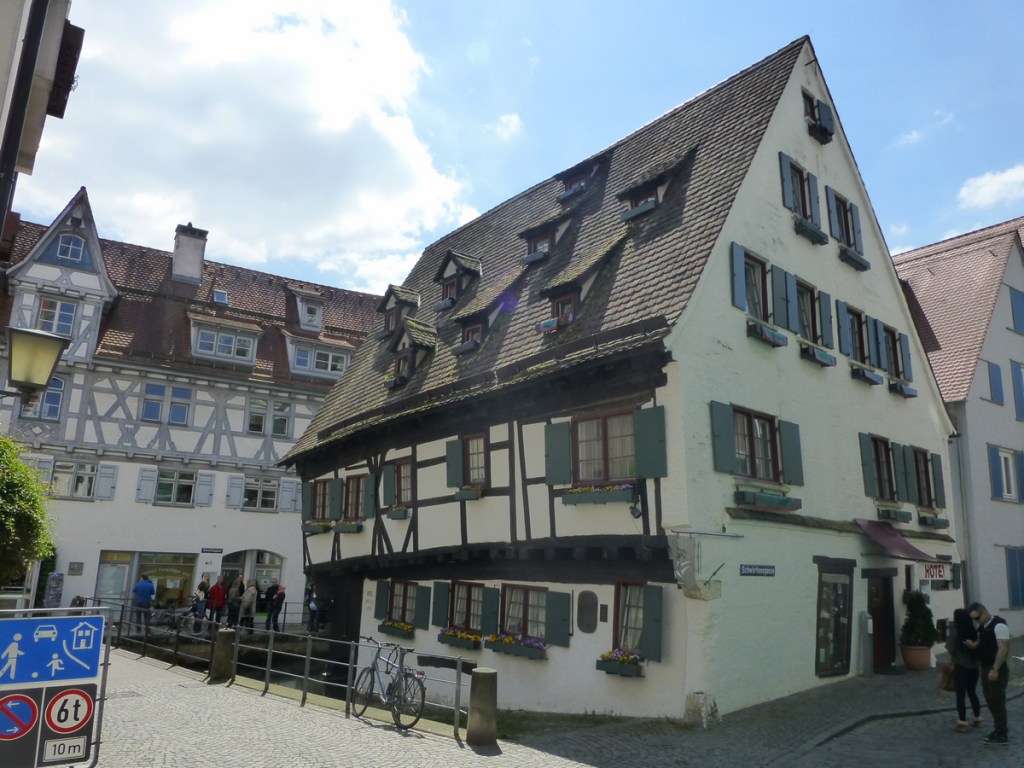
Still, the effort worth it, we headed to the colorful and beautiful fishermen’s quarter, where every house stood out from the others with its colorful and typically German architecture. Maybe the most beautiful remained the famous Schiefes haus (crooked house) built in 1443. In fact, the fishermen’s quarter was aptly nicknamed Little Venice, due to the two canals flowing into the Danube, with beautiful romantic houses strewn with flowers and narrow alleys winding between the buildings.

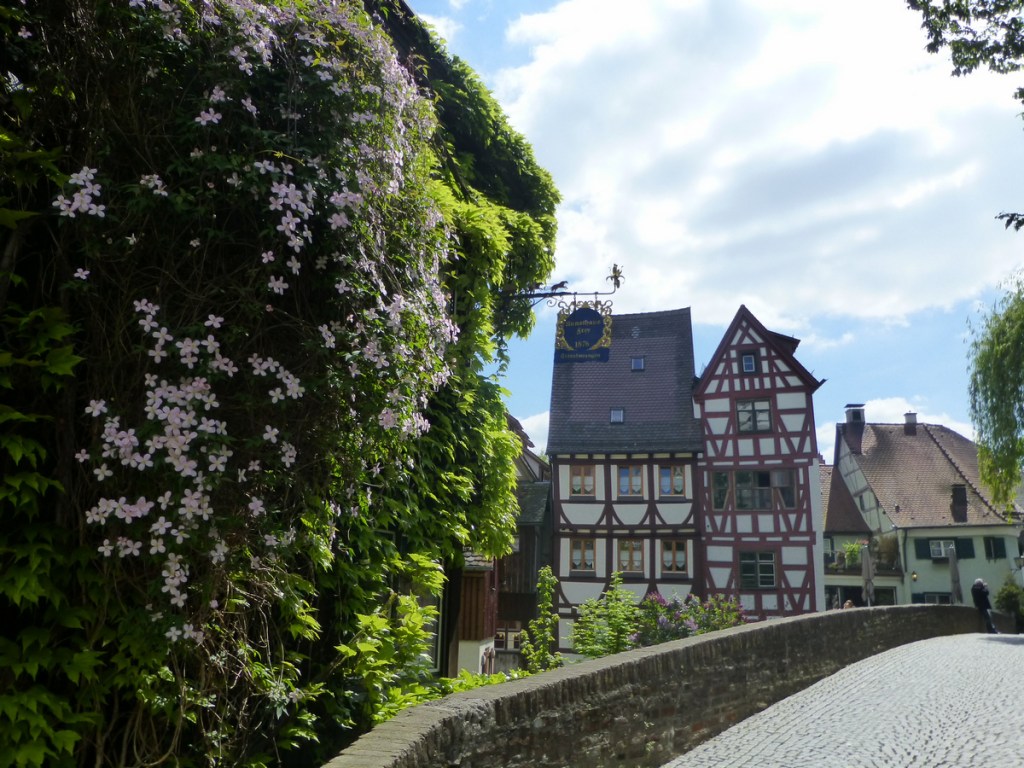



From the Fisherman’s Quarter we headed along the canals to their confluence with the Danube. This huge river was much narrower compared to its Bulgarian part. In Bulgaria, we were so proud of our second Danube bridge, and here in just one city there were over three such bridges. It was interesting to me that swans and ducks swam in the local Danube, and in our country, to see the beautiful birds you had to go to Srebarna, a few kilometers from the Danube.
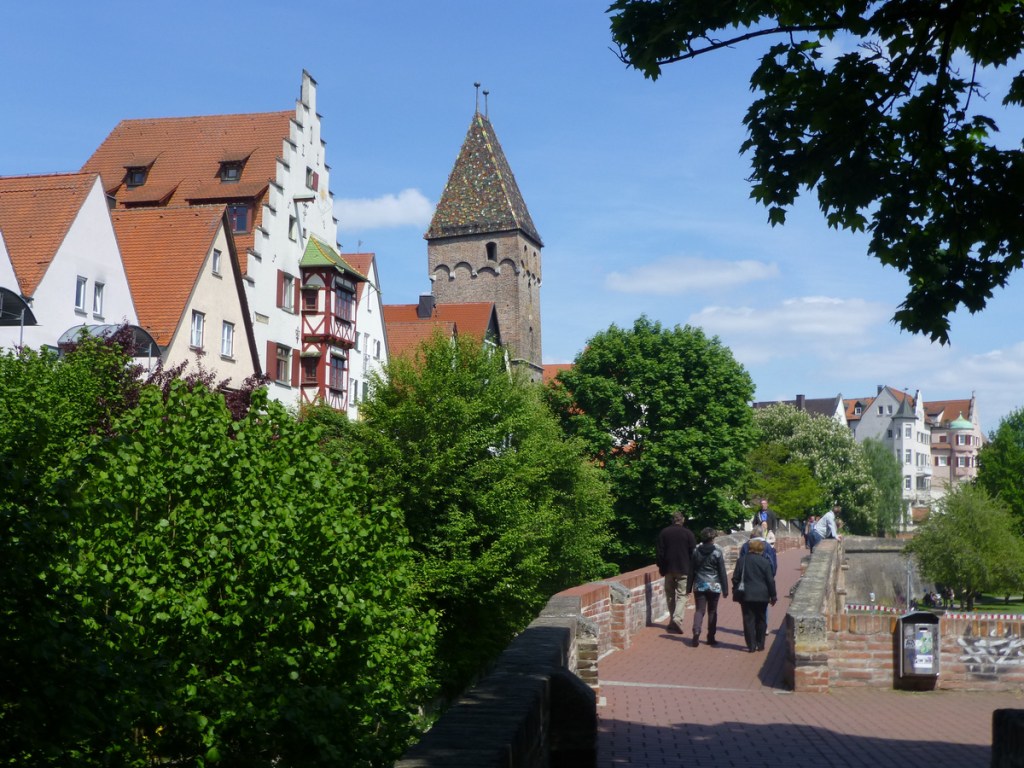
There was a beautiful promenade along the Danube bank of Ulm, with green areas and preserved fortress walls. We strall along and made our way to the butchers’ tower. It was built in 1345 and is better known as the Leaning Tower of Ulm. There was a legend about it that it was named after the butchers (Metzger) who used to put sawdust in the salami. When the citizens felt this, they imprisoned the criminals in the tower. As the well-guarded butchers cowered in a corner as the angry mayor entered, the tower tilted to one side. In reality, the tower is leaning because it was built on what was once a swamp.


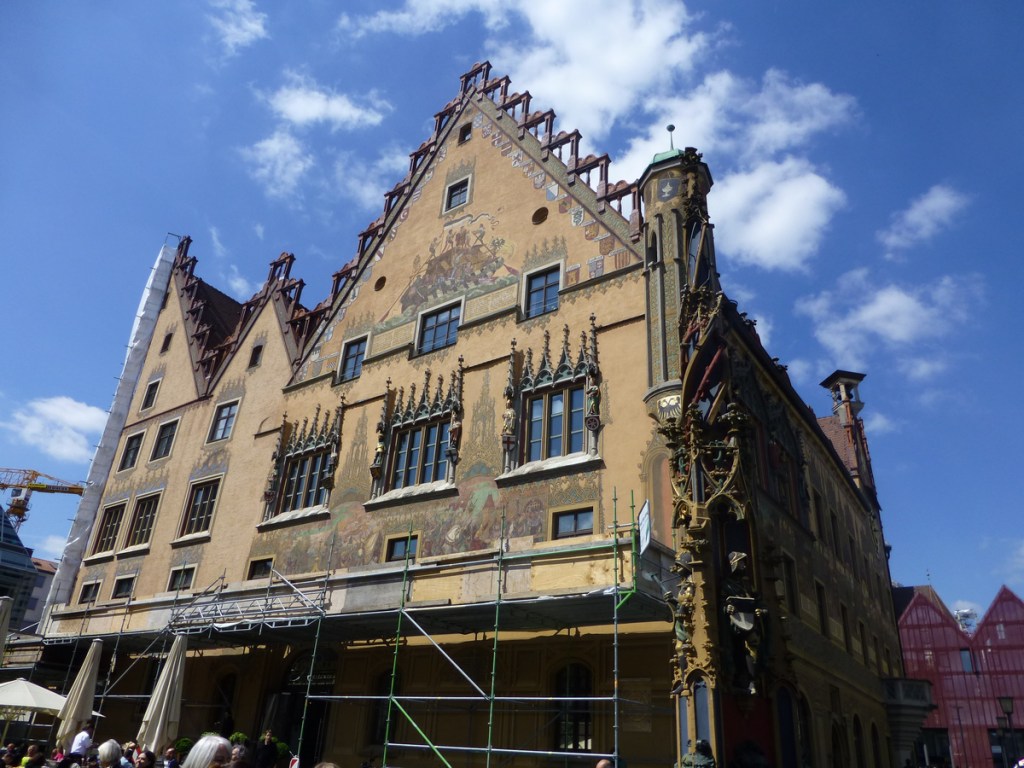
After the series of photos by the Danube, the fortress walls and the beautifully painted houses, we headed to the next famous landmark of Ulm – the beautiful town hall. The town hall was one of the most beautifully painted houses with bright paintings on the walls. From the tourist book I learned that in 1397 the town hall was connected to the shop attached to it, and numerous reconstructions were made, achieving the main goal of creating a larger meeting hall to accommodate the 72 the adviser (in the past there were only 32). In 1419, the connected buildings received the name town hall. In 1520, an astronomical clock was placed on its eastern facade. In 1944, the picturesque town hall was destroyed by bombs. In 1951 it was rebuilt according to the original plans, and in 1987-89 the interior was completely renovated. A replica of Albrecht Ludwig ‘s flying machine could be seen on the ground floor of the building Berblinger , the legendary “Tailor of Ulm “. Unfortunately, his attempts to fly more than 200 years ago were not successful.


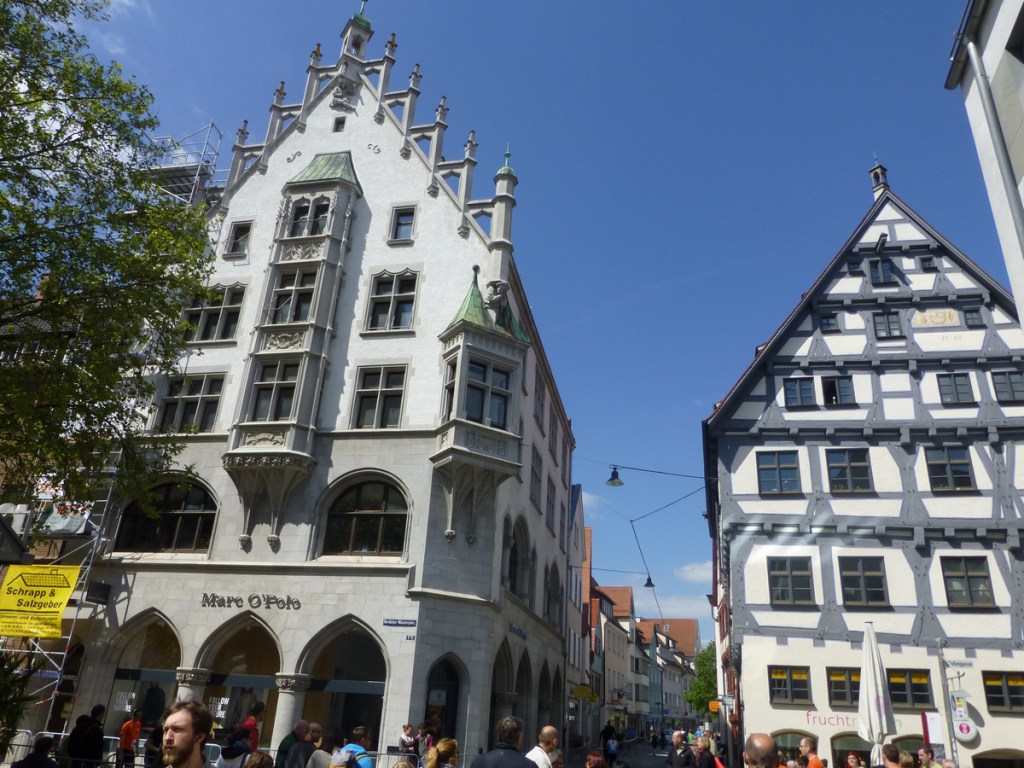

From the town hall we headed to the market square and although we didn’t want to, we had to leave these charming town and go back to the train station. On the way, we passed the Wangenkirche church, and spent the last minutes of our tour looking for the Einstein monument. Einstein really had a genius mind, even before he was born, choosing Ulm as his birthplace. We were also glad to include this colorful town in our Germany trip. Our walk was inspiring and filled with sunny memories.

GENERAL INFORMATION ABOUT ULM:
Location: Ulm is located on the Danube River in the German state of Baden-Württemberg, on the border with Bavaria.
Area: 118.69 sq.km
Population: 119,218 people
Official language: German
Altitude : 478 m
Climate: continental climate
Time Zone : UTC+1
Currency: Euro (EUR)
More information:
http://www.tourismus.ulm.de/web/en/index.php
Trip Tips for Ulm:
How to get to Ulm: Ulmcan be easily reached by train from several airports: from Munich International Airport , Stuttgart Airport , Friedrichshafen Airport and https://www.memmingen-airport.com/ Memmingen.
Best time to visit: All year round.
Typical food and drink: Germany is known for its beer and grilled sausages, and Ulm is no exception. There are particularly nice restaurants with traditional German food in the Fish Quarter, where, along with the sausages, you can try the fresh Danube fish.
Places to visit: Ulm Cathedral, Fisherman’s Quarter, Beautifully painted City Hall, etc.
 TripTips