STUTTGART – MODERN AND ARTISTIC

Stuttgart is the capital of the state of Baden-Württemberg and the sixth largest city in Germany. The name means stallions’ garden (Old German word stuotgarten ) and the city like a real stallion is galloping forward preserving the rich German traditions and mixing them in a unique way with the latest innovations.


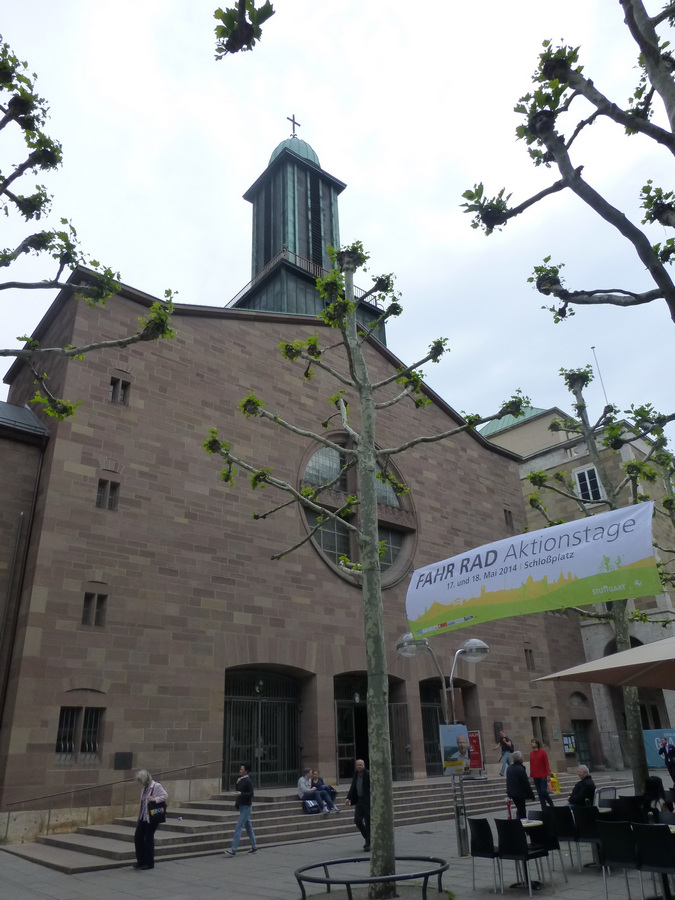
Stuttgart has a port on the Neckar River as well as a large international airport, however we came to the city by train, arriving at the huge and first-class train station. We began our tour of Stuttgart from the Königsstraße shopping street that starts from the train station, I bought an Apfelmuss und Nuss Pfannkuchen from the first kiosk which in English means pancake with apple mousse and walnuts. It was hot and very tasty. I ate it even before we crossed Bolzstraße, passing numerous malls and even a beautiful Catholic church.
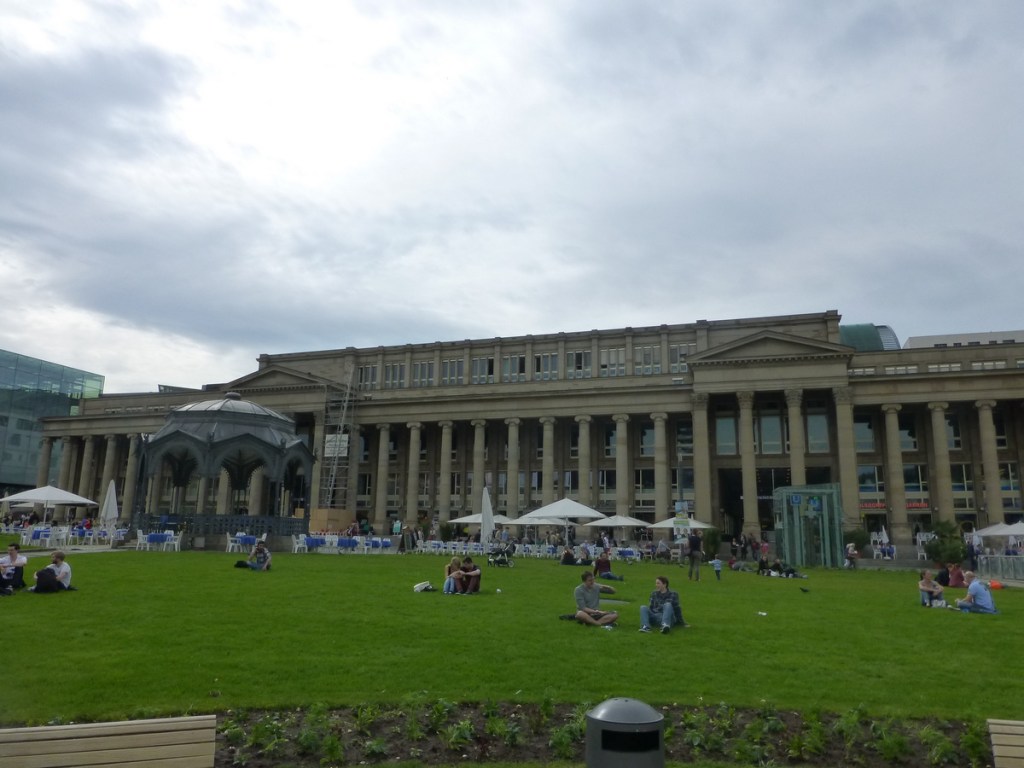
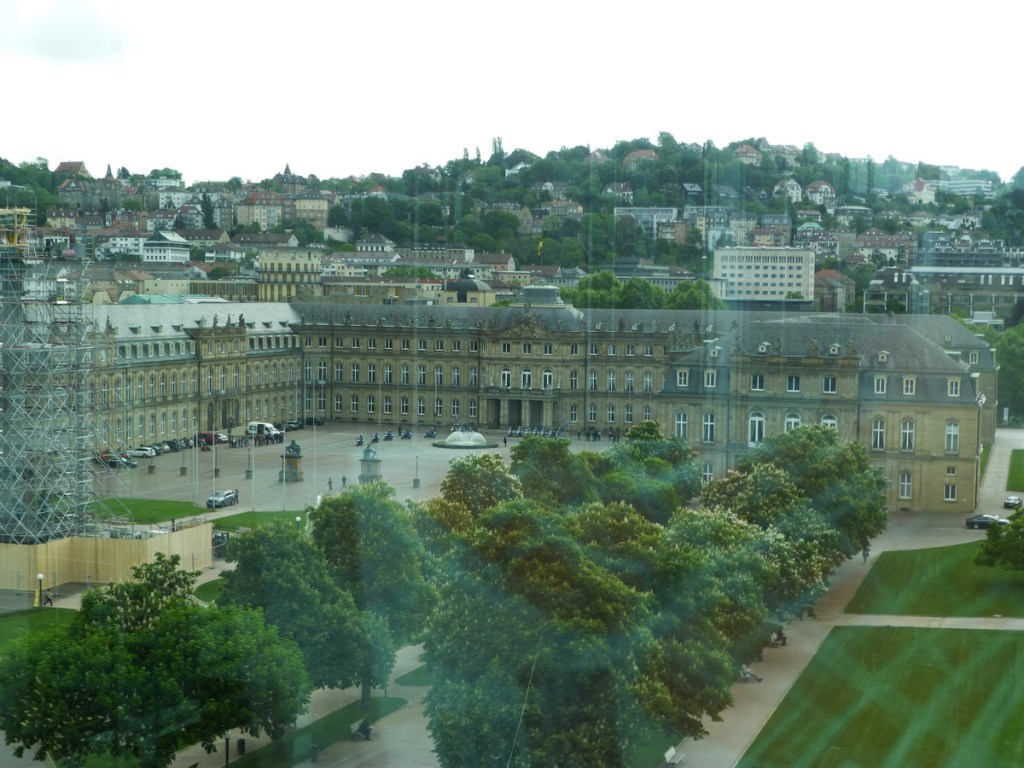
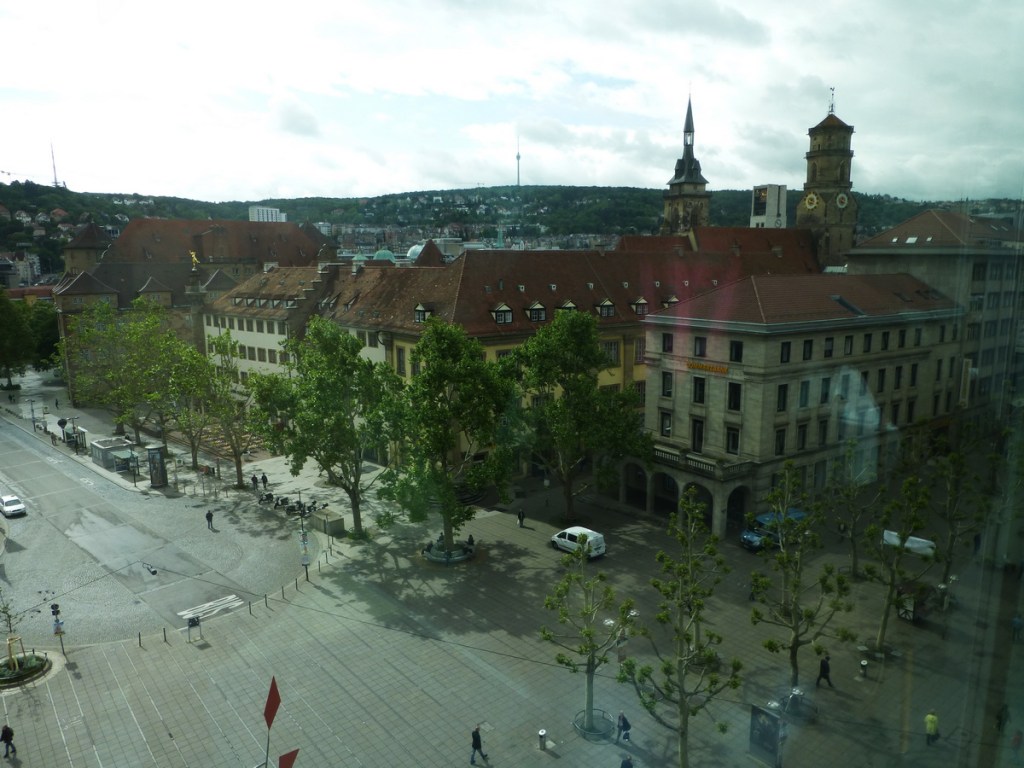
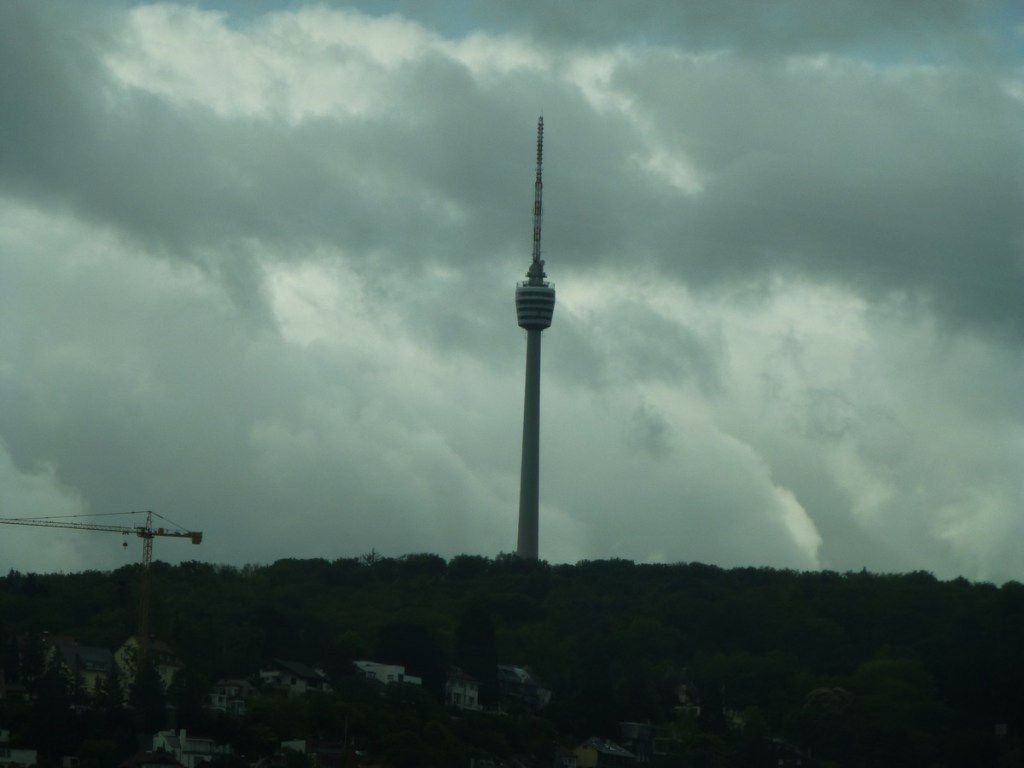
We continued straight, admiring the new palace on our left side and the art museum housed in a square glass building on our right. We entered it and went directly to the elevators, where from the top, fourth floor, we were able to see from above the park in front of the theater, the beautiful fountain, as well as the old and new castles. Even the TV tower could be seen from here, but it was currently closed to visitors due to renovation. Getting in and out of the elevator was completely free and a perfect start to a panoramic view of the center of Stuttgart.



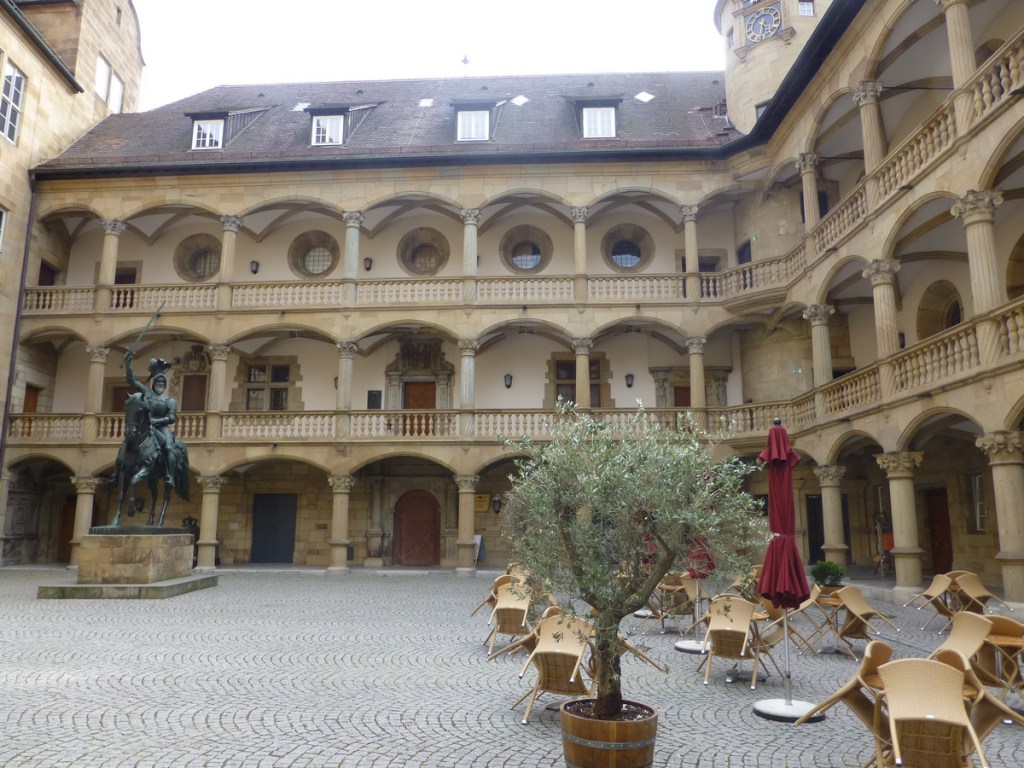
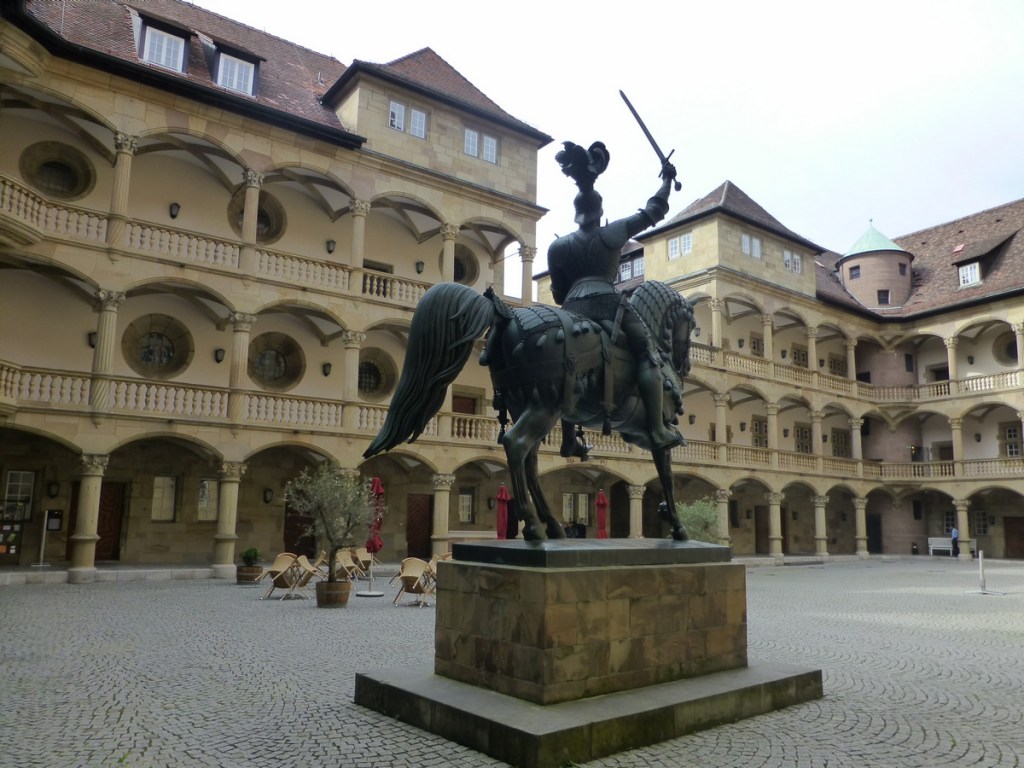
We continued our tour to the Old Palace which was closing after 15 minutes and we were allowed a quick tour of only the ground floor for free. I found very interesting the luxurious medieval tableware and forks, gold brooches and jewelry boxes, as well as models of the castle. Otherwise, the museum’s collection was very famous for the treasures that are kept here. The museum could trace the history of the region from the Celts, Romans and Germans to the Middle Ages, the Baroque era and modern times. We didn’t get to see all of this, but we were impressed by the architecture of the castle, built in the 10th century to guard the stallion garden (stud garden – from where the name of the city of Stuttgart came from). In the 14th century, the counts of Wuerttemberg moved here and expanded the military fortress, turning it into a Renaissance palace. Additional wings and floors were added, preserving the medieval exterior.

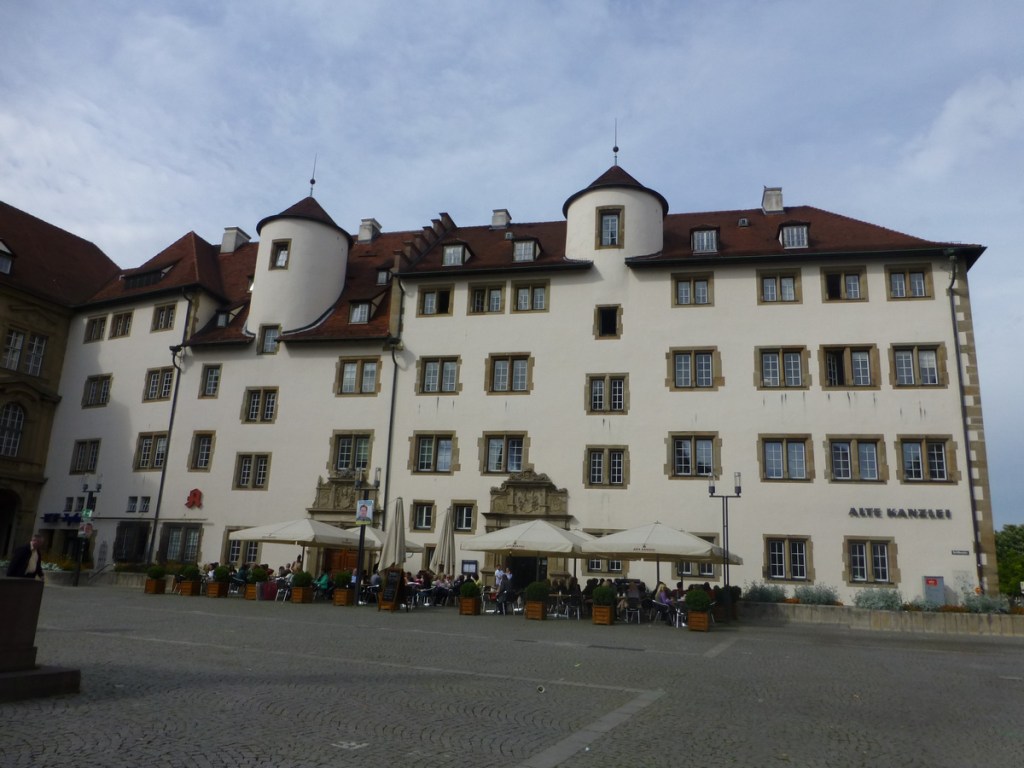
Next to the castle was Schillerplatz, whose statue stood in the center of the square, and behind it was the beautiful white building of the Alte Chancellor. From here we headed to the cathedral, whose tower was only open for visits on certain days of the year. It was called Domkirche St. Eberhard and was erected in 1806, being the first Catholic church in Stuttgart. We went inside to look at it as it had beautiful statues and a large organ.


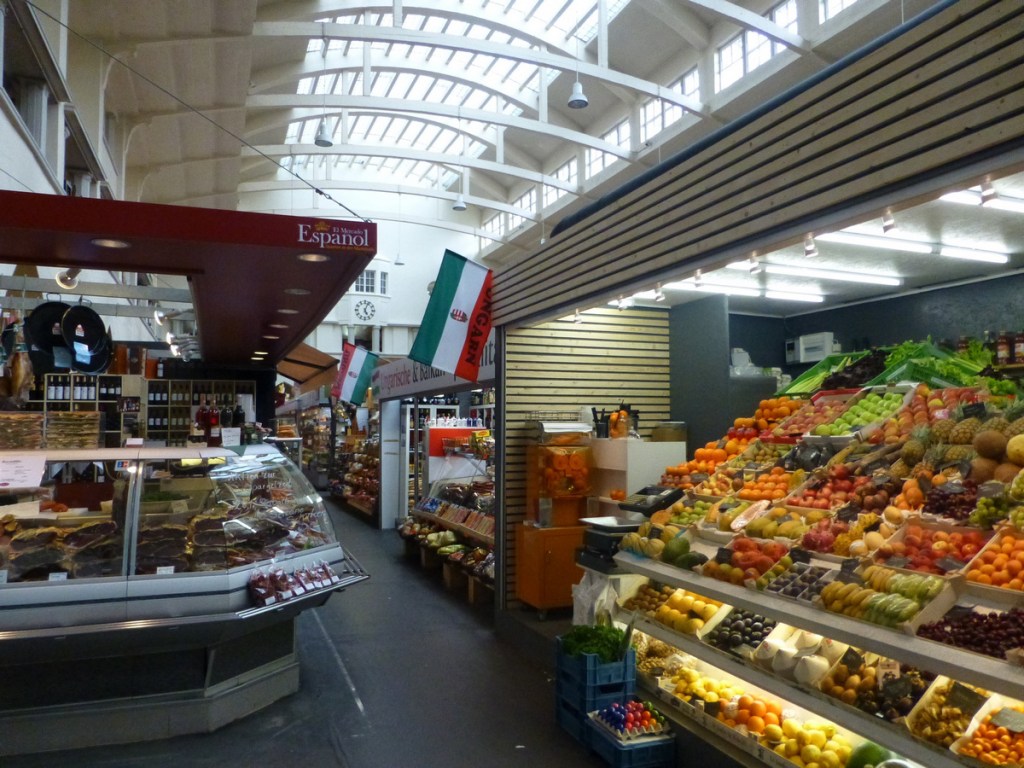
Opposite the cathedral was the Markthalle, with hundreds of food stalls representing a different country. In less than 10 minutes, we traveled around the world, immersed (and smelled a little) by the exotic aromas of spices and foods.

We continued our walk towards the market square and the town hall. The market square itself had taken shape and was surrounded by beautiful houses since 1714, but during the Second World War the buildings were completely destroyed, and although some of the houses were restored, a modern building was erected on the site of the town hall in 1953-1956.


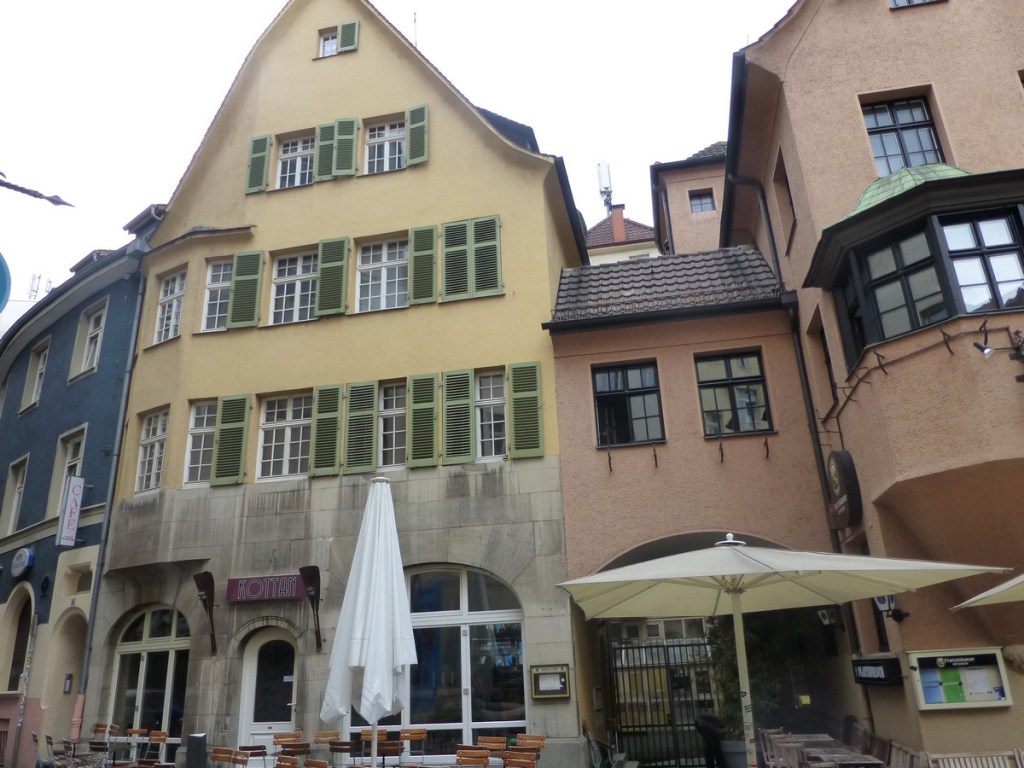
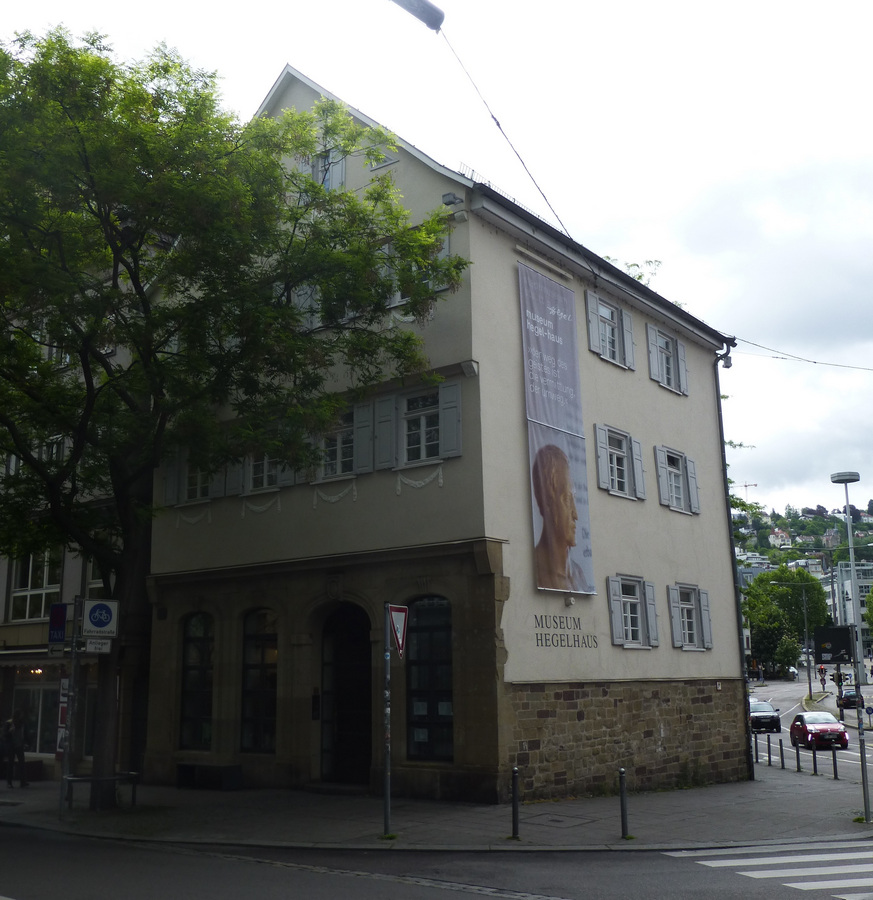


We went to the house of Hegel, who had written the first history of philosophy. The visit to his house-museum was free and I learned interesting things about Georg Wilhelm Friedrich Hegel. He, for example, was born on August 27, 1770, in Stuttgart, and then studied at Nuremberg and Bamberg, places we have already visited during our tour in Germany.
Very close to his house was the Hans-im-Glück-Brunnen, a fountain which represented a boy riding a golden pig and in fact the statues retold the story of Hans the Lucky from the Brothers Grimm. After Hans worked for 7 years he received a large lump of gold and went home, but on the way he got very tired of the heavy gold. He met a man with a horse and offered to exchange the gold for the horse, then fell off the horse and decided to exchange it for a cow, then he exchanged the cow for a pig, the pig for a goose, and the goose for whetstones, which he finally dropped into the river, but he was the happiest man, because with light heart and hands, he returned finally at home. We didn’t know if the fountain was lucky, but we decided to wet our hands in it, wishing that we too always see the bright side of life.
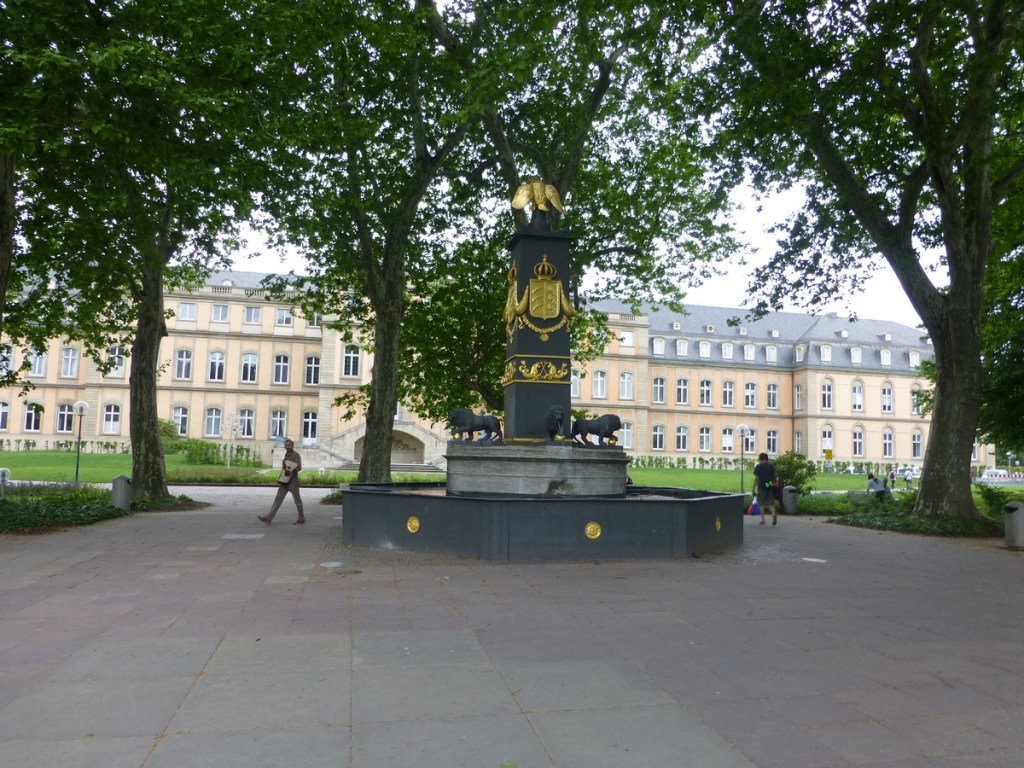
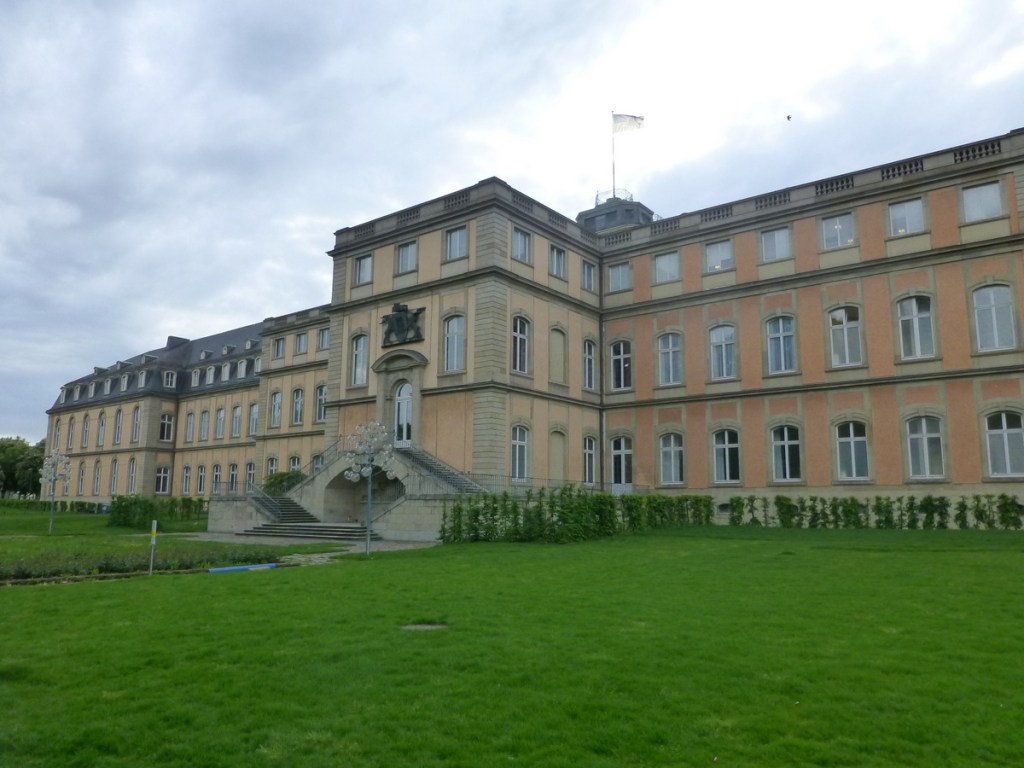
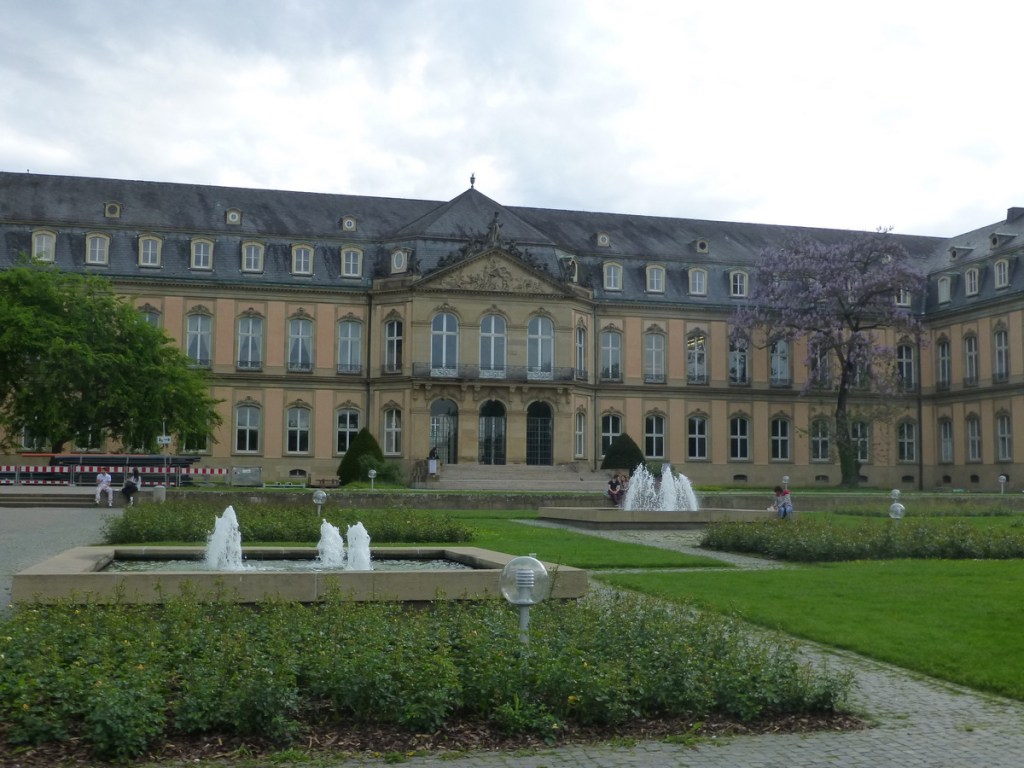
Our walk continued to another beautiful fountain, located at the back of the new palace, from which the horses of two mounted policewomen drank water. In fact, the new palace (das Neue Schloss) was built in the period 1746-1797 and served as the residence of the kings of Württemberg. The new palace was close to the old castle, but it was not turned into a museum, but housed the Ministry of Finance and Education. The entrance was especially beautiful, where, in addition to fountains, statues of a lion and a deer stood in front. These two animals were part of the coats of arms of Württemberg. The two fountains in front, with numerous figures, represented the eight main rivers in the Baden- Württemberg region.


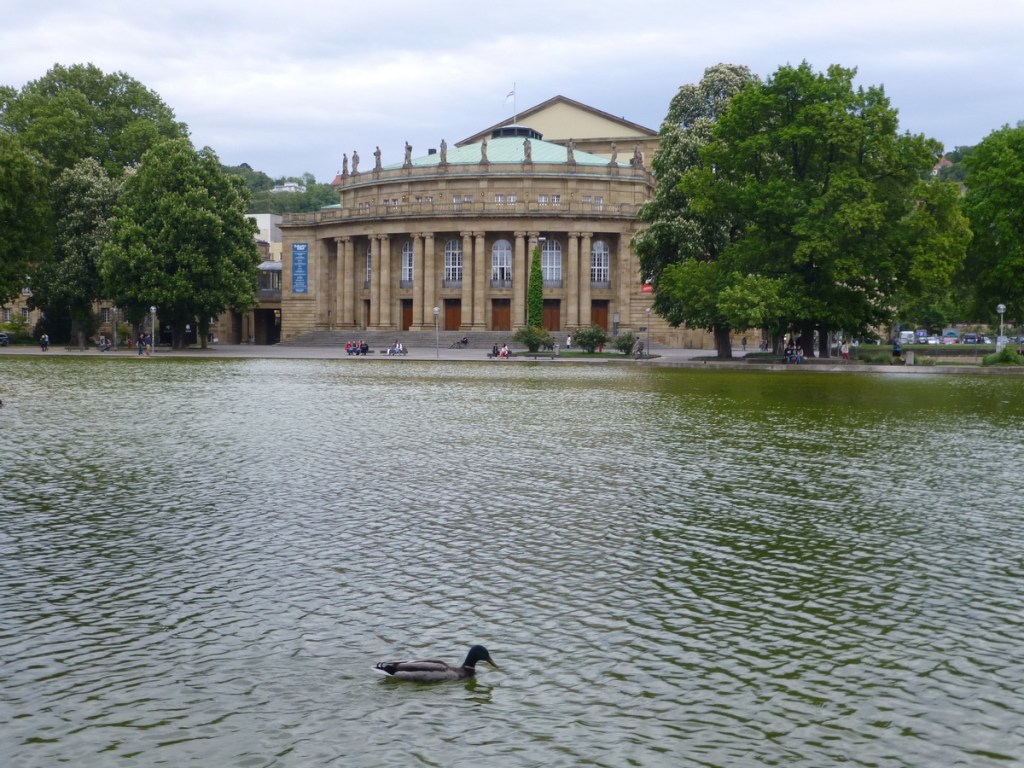
We walked along the pond located in front of the theater building. Ducks swam in it, and some of them were bullies, and they quarreled a lot. That is why the pictures of the ducks became more than those of the theater, although the theater itself was also impressive. A number of Greek or Roman statues had stepped upon the circular building. The National Theater (Staatstheater) was built in 1912, being the only opera house in Germany to survive the bombings of World War II. Today, many theater productions, operas, operettas and ballets could be seen here.

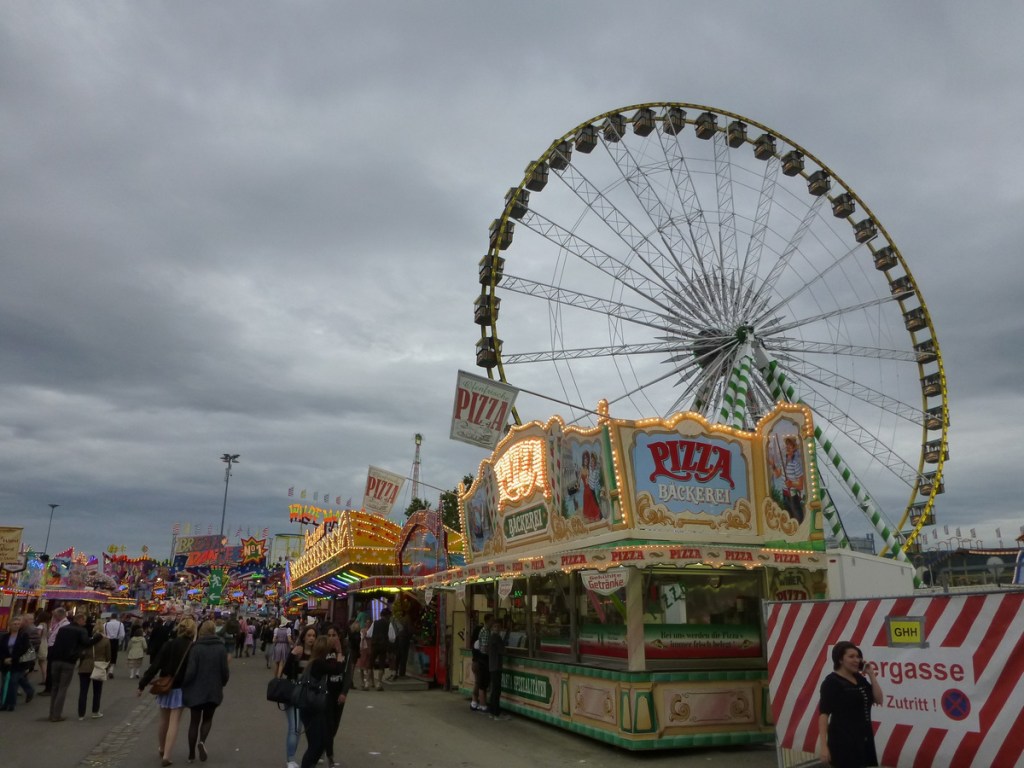
Despite the long walk in the center of Stuttgart, we continued our tour by taking S-Bahn 1 train getting to the fair town where the Stuttgart Spring Festival was held from April 10th to May 11th. It was open from 12:00 to 23:00 and was a colorful amusement park with lots of entertainment and dining options. Some of the local people were dressed in traditional costumes. There were hundreds of different attractions and only the people were more than them, in some places we even had to make our way through the crowds. It was very colorful, fun and I personally enjoyed it a lot.
Stuttgart is a truly unique blend of tradition and innovation, history and modernity, culture and entertainment. The city is like a real stallion and galloping forward the future.



General information about Stuttgart:
Location: Stuttgart is the capital city of the German federal state of Baden-Württemberg and is located in southwestern Germany, in the valley between the Black Forest and Swabian Jura mountains , near the Neckar River.
Often the location of the city is described as “zwischen Wald und Reben ” – between forests and vineyards.
Area: 207.36 sq km (it is the sixth largest city in Germany)
Population: 604,297 people (2013 data)
Official language: German
Altitude : 315 m
Climate: oceanic and continental climate, with average temperatures in January around -1.5C, and in July-August 20C.
Time zone: UTC+1
Currency : Euro (EUR)
Additional information : http://www.stuttgart.de/
Trip Tips for Stuttgart:
Best time to visit: May to September is the tourist season, when the weather is most pleasant. The city is especially colorful in spring and autumn. From December to March the temperatures are quite low, but in February you can make an exception and come for the carnival.
Typical food and drink: Germany is known for its grilled sausages and beer, and Stuttgart is no exception. Typical local dishes here are also Kartoffelsuppe (potato soup), Kartoffelsalat (potato salad), Schwarzwalder Schinken (Black Forest ham), Bratwurt, Lebewurst, asparagus dishes, Schwarzwalder Kirschtorte (Black Forest Cherry Cake).
Places to visit: Mercedes-Benz Museum ( https://www.mercedes-benz.com/en/mercedes-benz/classic/museum/), Old Castle / Altes Schloss ( https://www.landesmuseum-stuttgart.de/) , The New Castle / Neues Schloss , National Theater / Staatstheater https://www.staatstheater-stuttgart.de/ , The TV Tower / Fernsehturm http://www.fernsehturm-stuttgart.de/ etc.
 TripTips