THE COQUETTE TOWN OF KONSTANZ


Have you heard of the Roman Emperor Constantius I Chlorus, they called him by the nickname Chlorus “the pale one”, but in fact it left bright traces in history and evidence of this is the beautiful German city named after him with the gentle name Konstanz. Later, the lake on whose shore this city is located bears the same name Lake Konstanz, however, the Germans preferred to call it Bodensee – named after another coastal city of Bodmann. It is one of the largest lakes in Europe. It extends to three countries – Germany, Switzerland and Austria.
We started our tour of this “German sea” (in German the word for lake and sea is the same “see”, differing only in gender, when masculine “der See” is a lake, and when it is in feminine “die See” it is the sea) arriving at the city of Konstanz, which is on the very border between Germany and Switzerland.

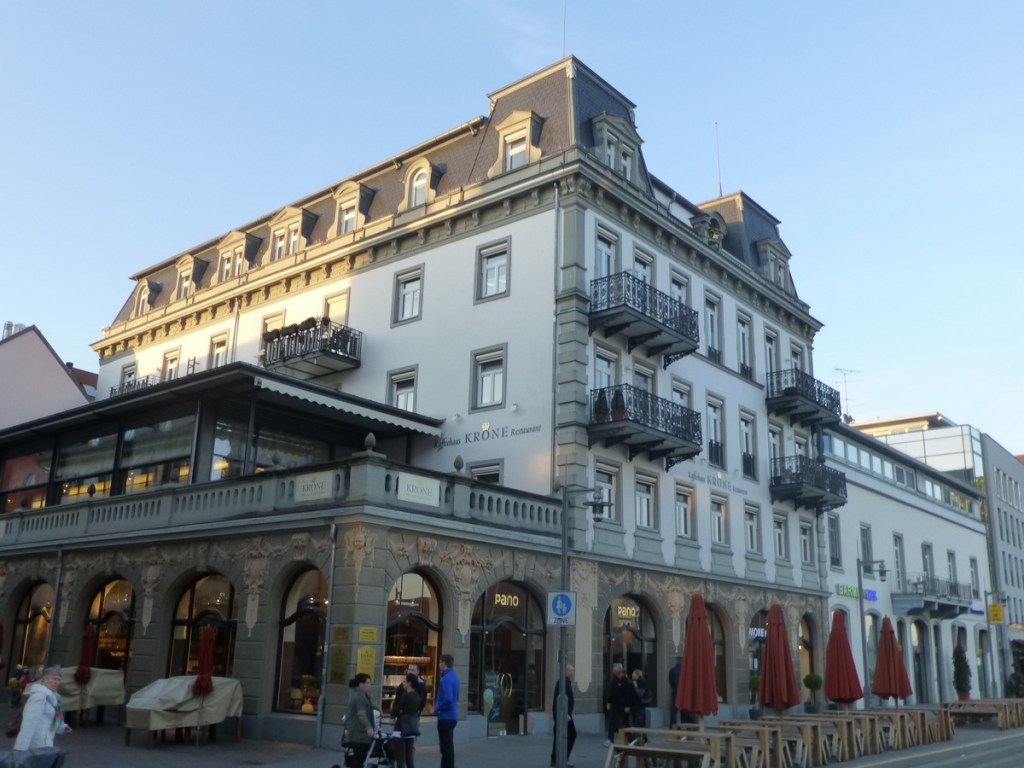
From the main station we took a taxi, which in less than 5 minutes and 7 euros drove us to the Graf Zeppelin Hotel***, which was one of the main attractions in the city. The building was erected in the 19th century and was home to Count Zeppelin, who invented the wonderful aircraft – zeppelin.
Ferdinand von Zeppelin was a German nobleman, general and airship designer, born in Konstanz on July 8, 1838. He volunteered for the American Civil War on the side of the North. There he visited the balloon camp along the Mississippi,. In 1891 he returned to Germany and began to design and test airships. On July 2, 1900, he performed the first airship himself. The flight of its first model airship LZ-1, which was too slow and due to bad weather the flight lasted only 20 minutes. In January 1906 he tried his second airship LZ-2, which he called Zeppelin, but the spacecraft proved unsuccessful, and during the flight his engines broke off and with difficulty he landed in the lake. On October 9, 1906, airship LZ-3 flew 97 km in two hours. Even more successful was the LZ-4 model, with which Count Zeppelin traveled for 8 hours flying over Switzerland.
In 1909, his company, Luftschiffbau Zeppelin, was the world’s first transport airline for the civilian carriage of passengers and freight. The following year, regular domestic flights began, and until 1914 there was not a single accident. During the First World War, Germany was the only country that possessed zeppelins of solid construction and were used for military purposes. In 1928, eleven years after the death of Count Zeppelin, Zeppelin was created for long-haul flights, with regular services across the Atlantic Ocean.
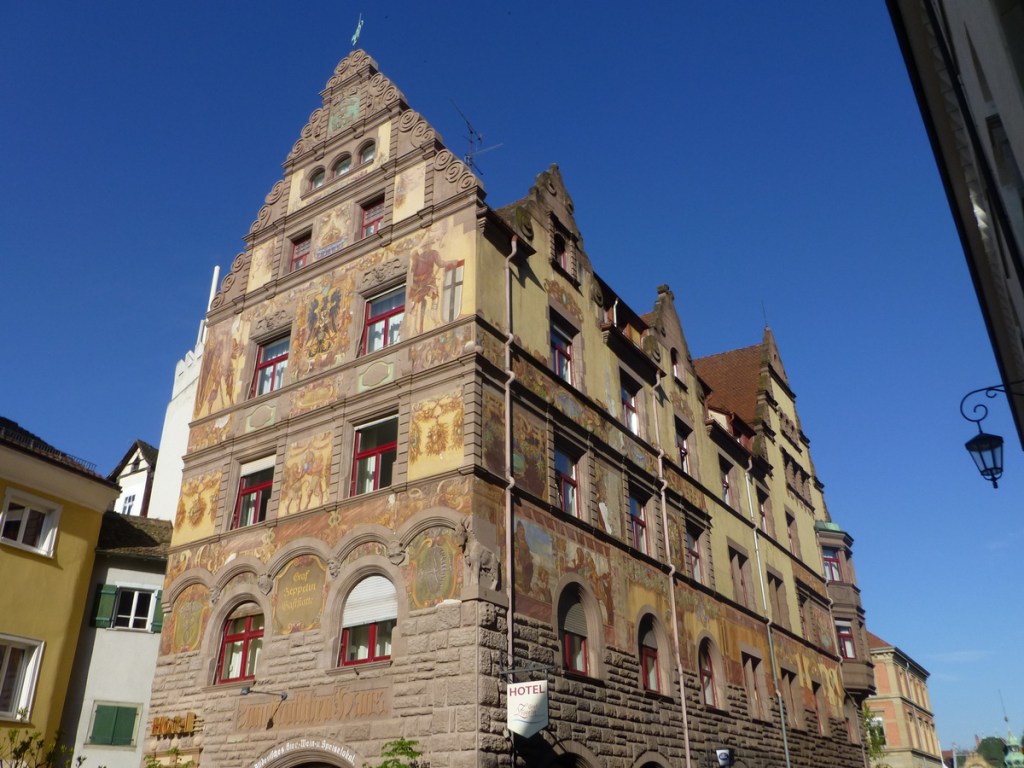
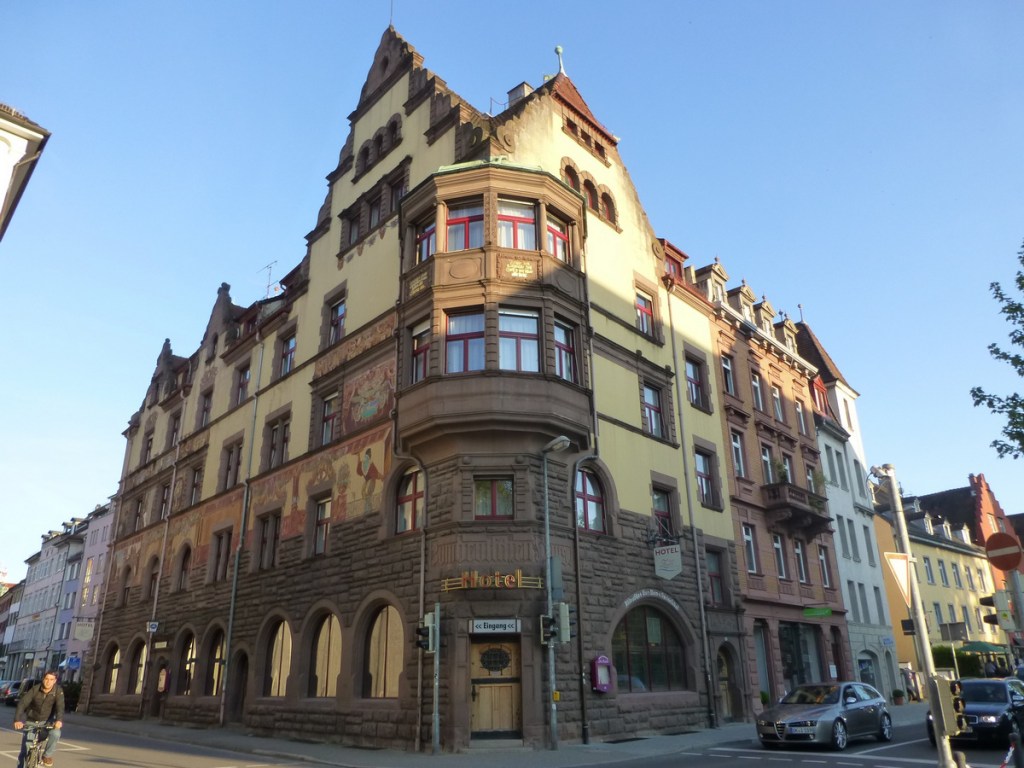


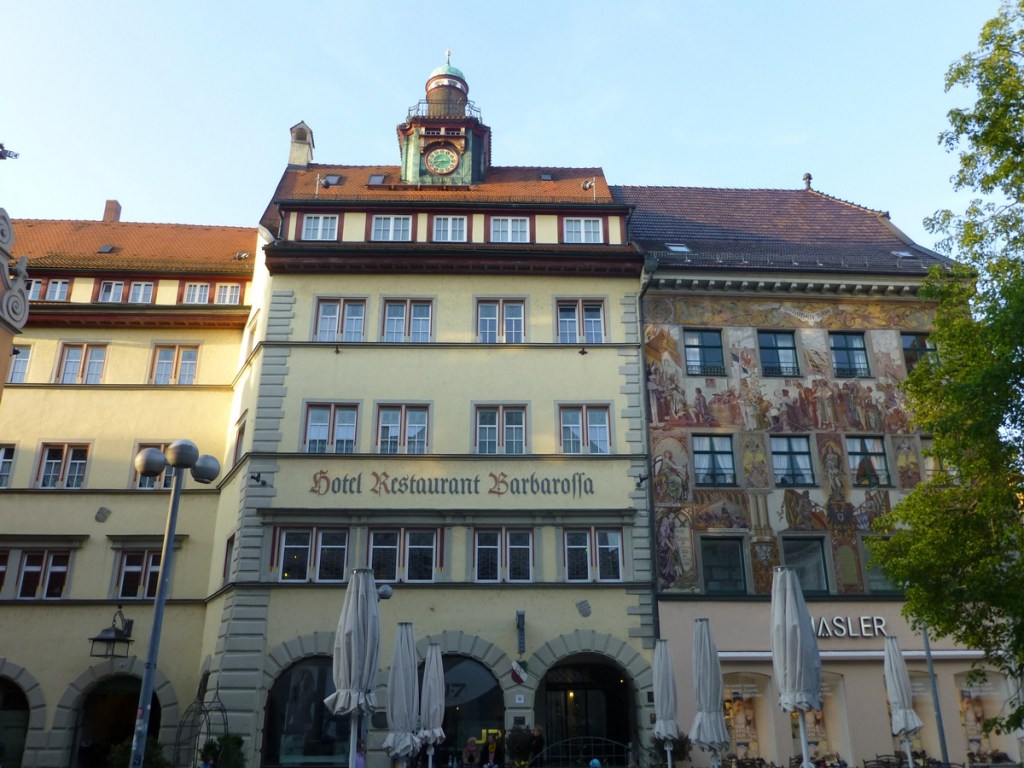


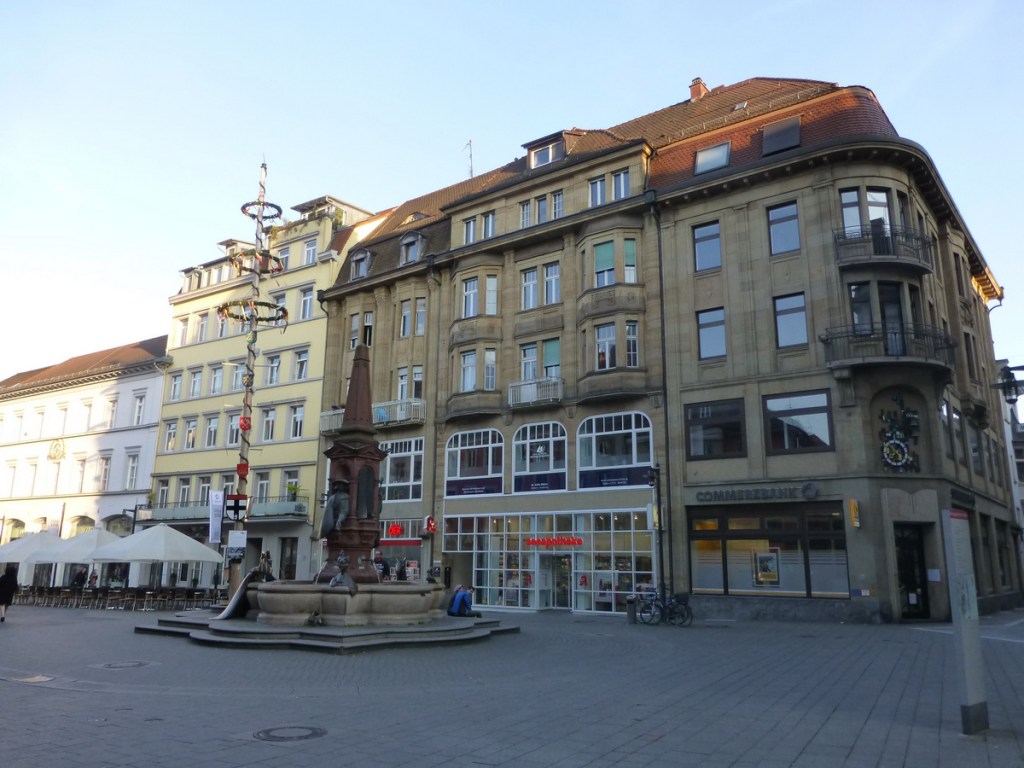
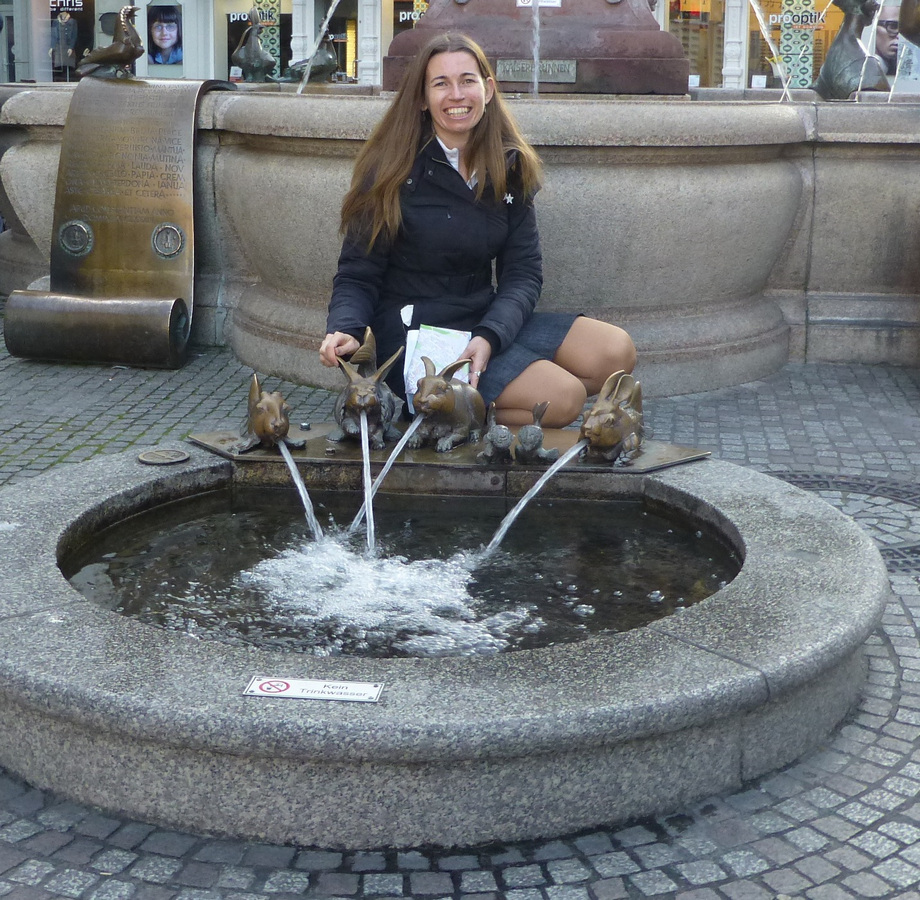
Count Zeppelin’s birthplace house is still preserved with its beautiful and majestic façade. Inside, it was completely renovated and turned into a modern and luxurious hotel where we had the privilege to stay. Right next to our hotel was the church of St. George. Lorenz. From there, we descended to the central pedestrian street that lead to the port, passing by the beautiful Kaiserbrunnen fountain (the imperial fountain), erected in 1897 by the Hans Baur sculpture. There were plenty of beautiful statues of pheasants, bunnies, even a life-size horse, that symbolized the medieval history of the Holy Roman Empire. On the central column there were portraits of Emperor Frederich Barbadosa, Otto the Great and Maximilian. A pair of pigeons represent the archbishop and emperor, connecting religious and political power. On bronze stone was also inscribed the document of the peace treaty in Konstanz of 1183.

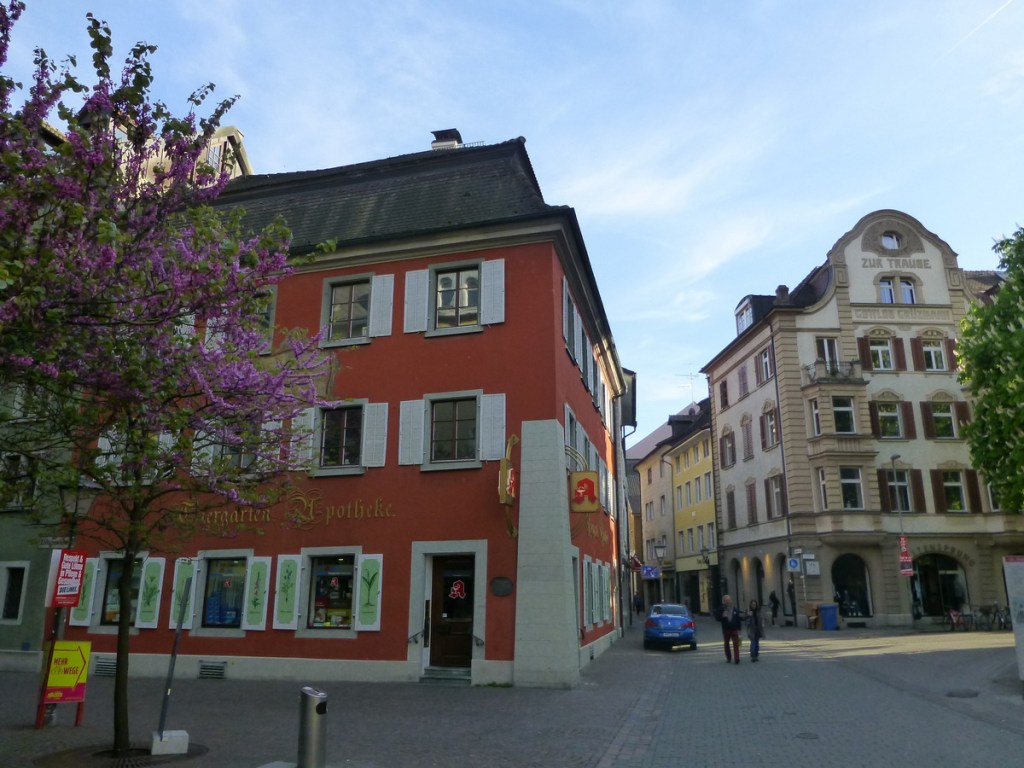
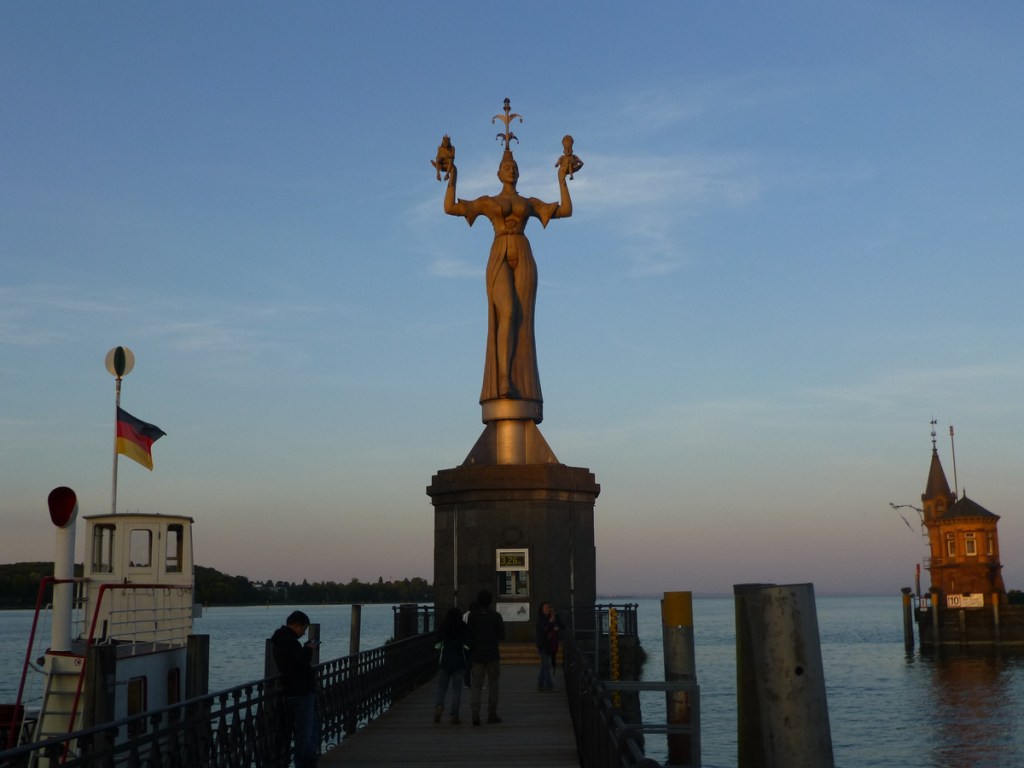
After the numerous photos of the fountain figures and the colorful houses on the square, we headed to the old consulate and from there to the port. We were particularly impressed by the Imperia statue, erected almost in the water at the entrance to the port. It was a statue of a woman holding two naked men in her hands, Pope Martin V and Emperor Sigismund. The men had only one papal tare and a crown. The statue was associated with Balzac’s story “La belle Imperia”. We were particularly impressed by the fact that it was rotating 360 C, so we could photograph it from all sides.

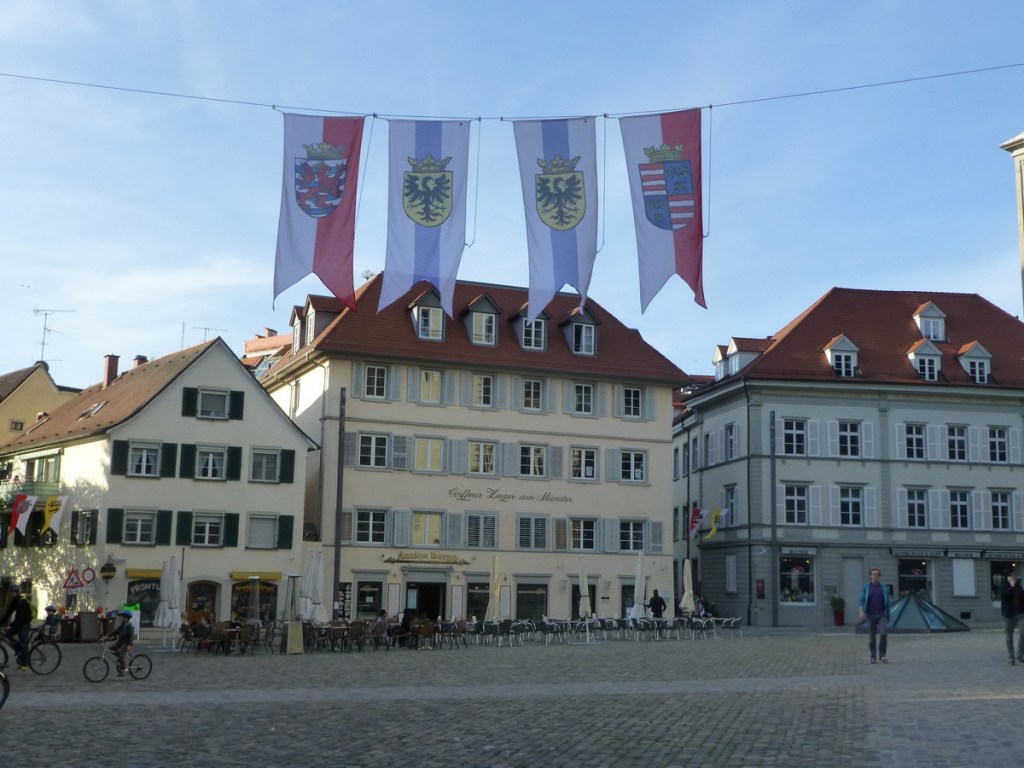


A short shopping followed, then we headed to the Munsterplatz Cathedral Square. The cathedral was closed, but its sharp facade was open for photos. It turned out that the cathedral was built for many years. Its first appearance was completed in 940, but in 1052 it collapsed. Over the next 300 years, new construction began, just erecting a tower, and then a fire destroyed it. In 1417, the cathedral was already functioning and Martin V was crowned pope here. Between 1418 and 1525, the cathedral acquired its Gothic appearance, but then, as a result of the Reformation, the archbishops left the cathedral and moved to the castle in Meersburg. Numerous paintings, sculptures and iron doors were added to the cathedral.
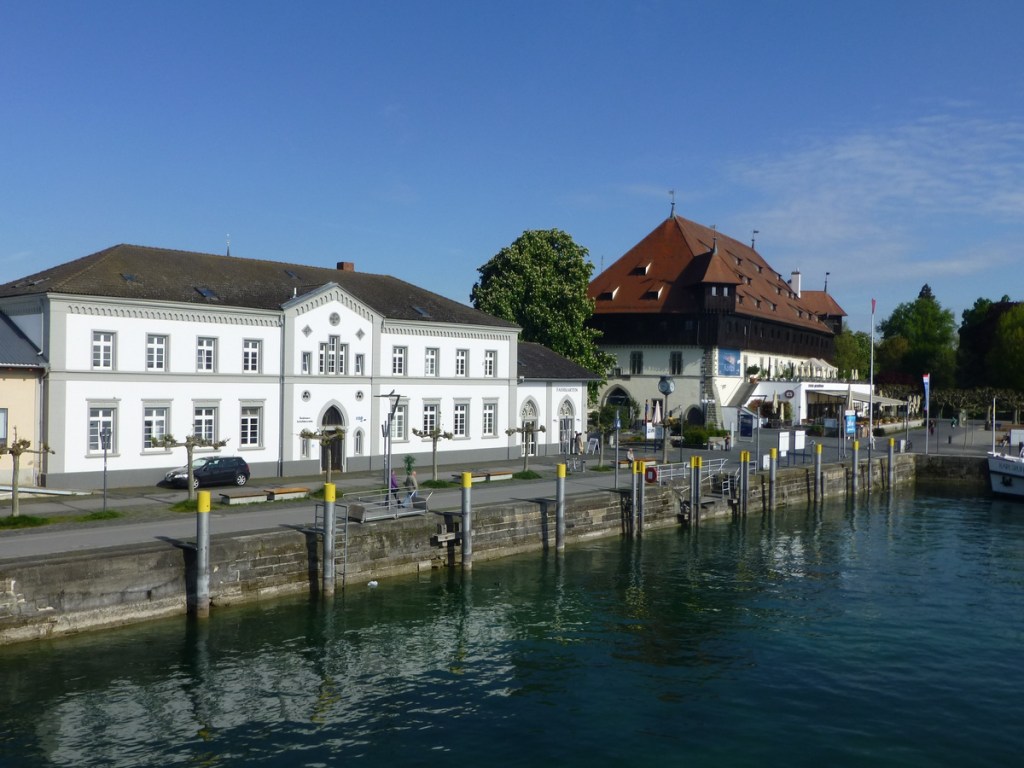
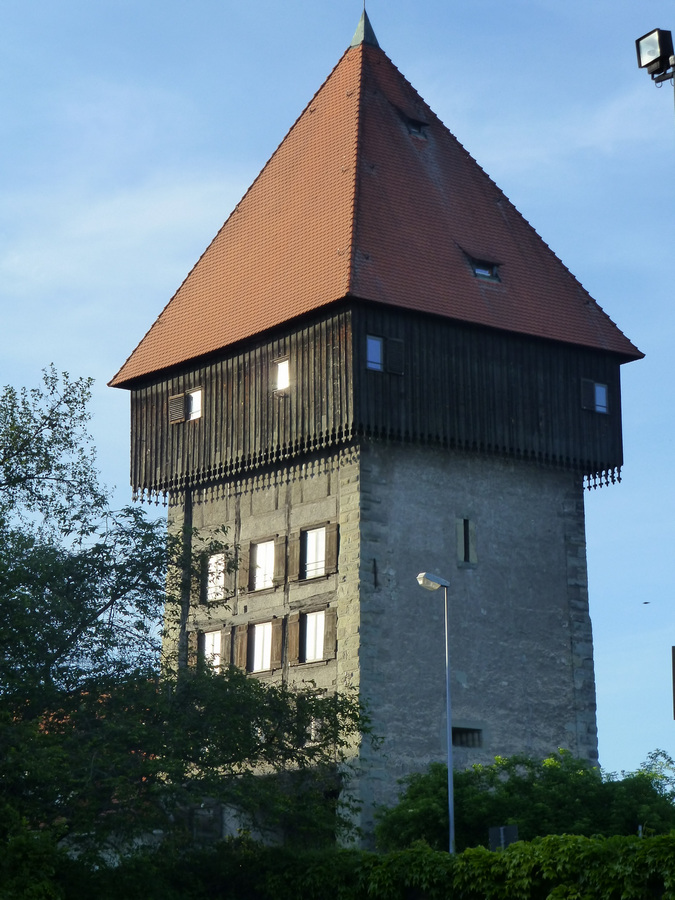
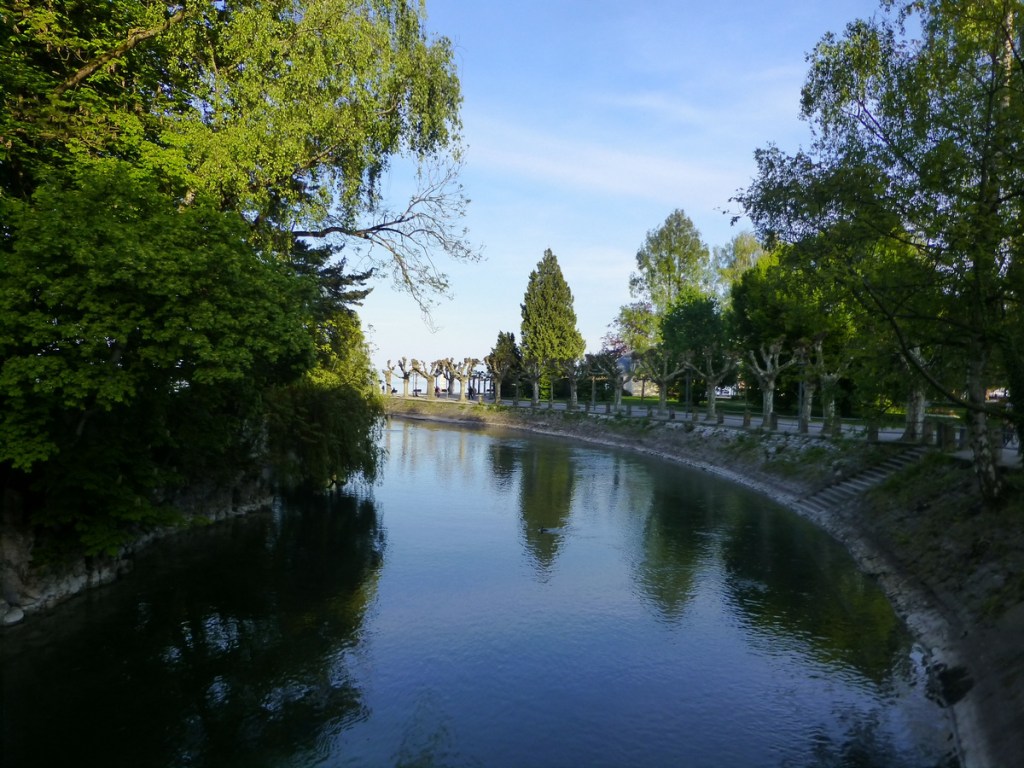
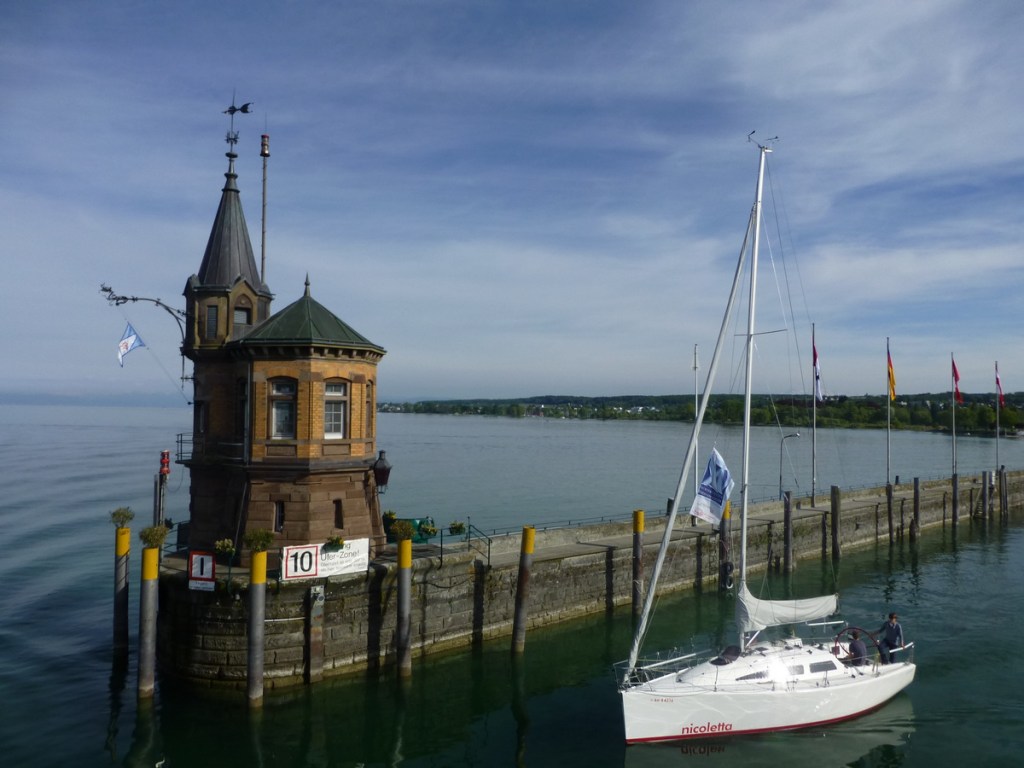
From there we walked to Rheintorturm (the tower above the Rhine), and then to the promenade along the Rhine River, reaching its confluence in Lake Konstanz. The beautiful buildings were reflected in the water and the walk was very pleasant. Along the promenade there were several huge cages with exotic birds. We photographed the boats and the picturesque houses on the other side of the canal and headed to the old consulate that was housed in a beautiful old building dating back to 1388. Today there was a large restaurant, a festive lounge and a convention center.

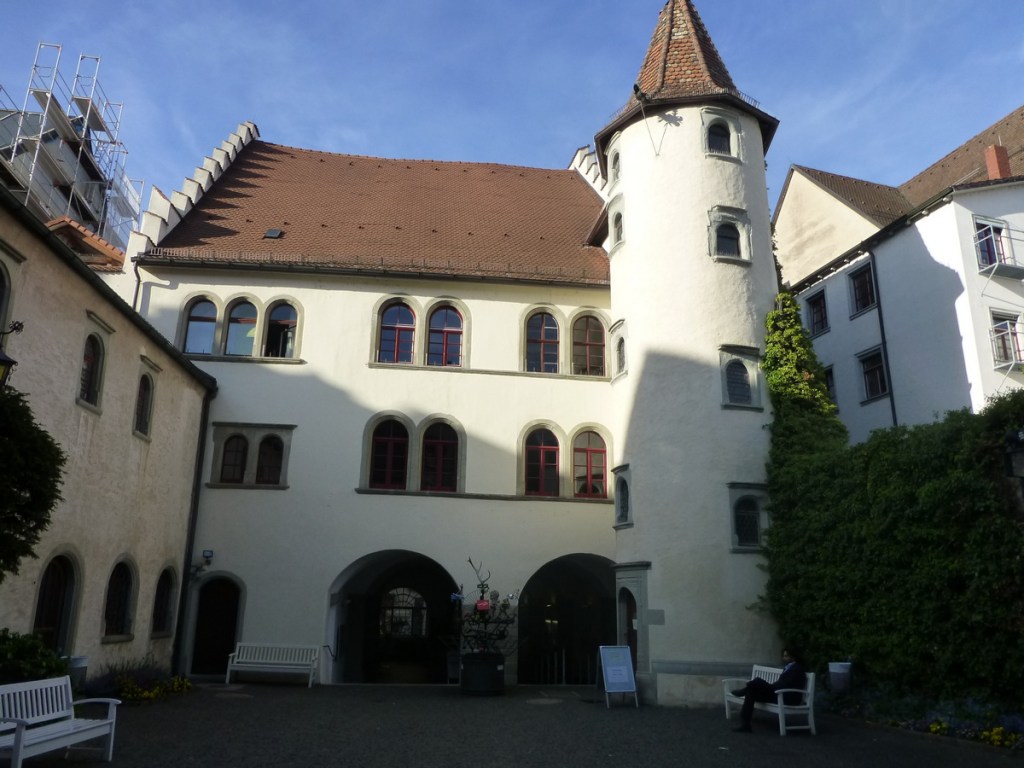
Immersed in the walk, we imperceptibly reached another landmark: the old town hall, whose exterior facade was decorated with numerous paintings depicting the history of the city. Entering its inner courtyard, we felt as we were in a small castle with two round towers. We walked out on the other side of City Hall right in front of a large mall that was working, and its windows invited a visit. Our walk in Konstanz was not only cultural, but also shopping. There were excellent shops and boutiques, with quite reasonable prices, which made us often come out of them with new full bags.



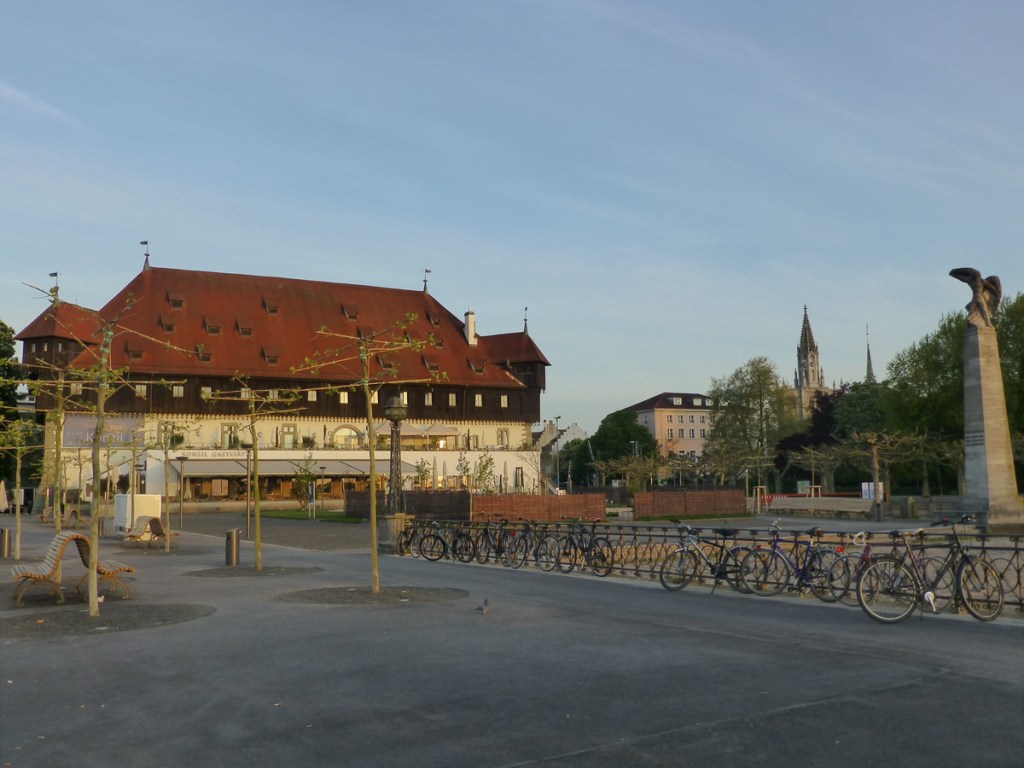

In the evening we ate in the restaurant St. Stephanskeller right next to St. Stephen’s Cathedral, and unfortunately there was not a wide variety of fish, although we were on the shore of the big lake. However, the ordered squid compensated this and helped us having a wonderful end of the day.
The beds in the hotel were very comfortable, and maybe the fatigue and the accumulated good impressions contributed to a good night’s sleep. We were waiting impatiently for the next day, when we had plan to take a one-day card for all boats, and visit the picturesque town of Mersburg and the indescribably beautiful island of flowers – Mainau. Konstanz was a wonderful place to walk and relax. The city was named after a Roman emperor and it turned to be a real royal relaxation.
GENERAL INFORMATION ABOUT KONSTANZ:
Location: The city of Konstanz is located in southwestern Germany at its border with Switzerland, on the shores of Lake Konstanz at the confluence of the Rhine.
Area: 55.65 sq.km
Population: 81,141 people (as of 2013)
Official language: German
Altitude: 444 m
Climate: continental and oceanic climate
Time zone: UTC+1
Currency: euro (EUR)
Additional information: http://www.konstanz.de/

Trip Tips for Konstanz:
Best time to visit: all year round.
Typical food and drinks: Germany is famous for its beer and roasted sausages, and Konstanz is no exception. Although the city is located on the shores of a huge lake, fish specialties are not so popular, unlike duck ones. The city offers excellently prepared goose and poultry meat with fried local potatoes.
Places to visit: Das Konstanzer Münster Cathedral, the port with the rotating Imperia Statue, the tower at the confluence of the Rhine into Lake Konstanztorm, the Schnetztor gate located at the southern end of the old town dating back to the 14th century. Sea Life Aquarium and Park (https://www.visitsealife.com/konstanz/), Archaeological Museum of the Baden-Wurttemberg area (http://www.konstanz.alm-bw.de/) etc. From the port you can take a boat to Mainau Flower Island, as well as to other picturesque coastal towns.
 TripTips