FRANKFURT IN A DAY
Frankfurt is the fifth largest city in Germany and is known as the financial and business center of the country. However, it offers much more than that. It has a rich collection of museums and historical buildings, and is a wonderful place to walk, even for a day.
Frankfurt is one of the oldest cities in Germany. According to archaeologists, the first settlement in this region was erected in the 1st century. Documentary, however, the “Fortress of the Franks” (Frankonovurd) in Old German and Franckfort in the Middle Ages was first mentioned in 794 in a letter from Charlemagne. The city along the deep river Main quickly flourished, gaining the status of an imperial city in 1372. It was here where the Kaisers of the Holy Empire and the German kings were elected. We were about to visit the Gothic cathedral of Kaiserdom, where the rulers of the Holy Roman Empire were crowned. The cathedral itself was built in 1415-1514, with its 80-meter tower is used to be the tallest building in Frankfurt until the appearance of the first skyscrapers. In the Middle Ages, the great economic upsurge continued, as early as 1240 trade fairs began to be held here. The first book fair, for example, took place in 1478, and until today the autumn book exchange in Frankfurt is the largest in the world. Frankfurt has a population of over 660,000 residents, with more than 300,000 people visiting the city every day. We also contributed to this number by landing at one of the largest airports in Europe – Frankfurt am Main Airport, where every minute a plane landed and took off.
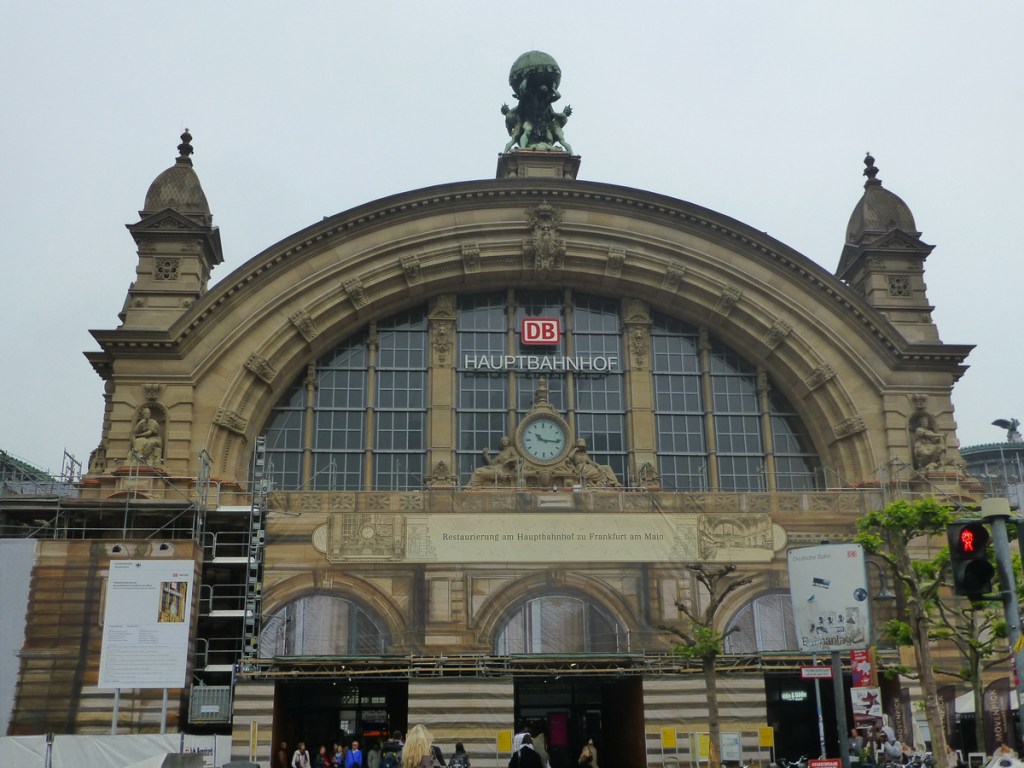
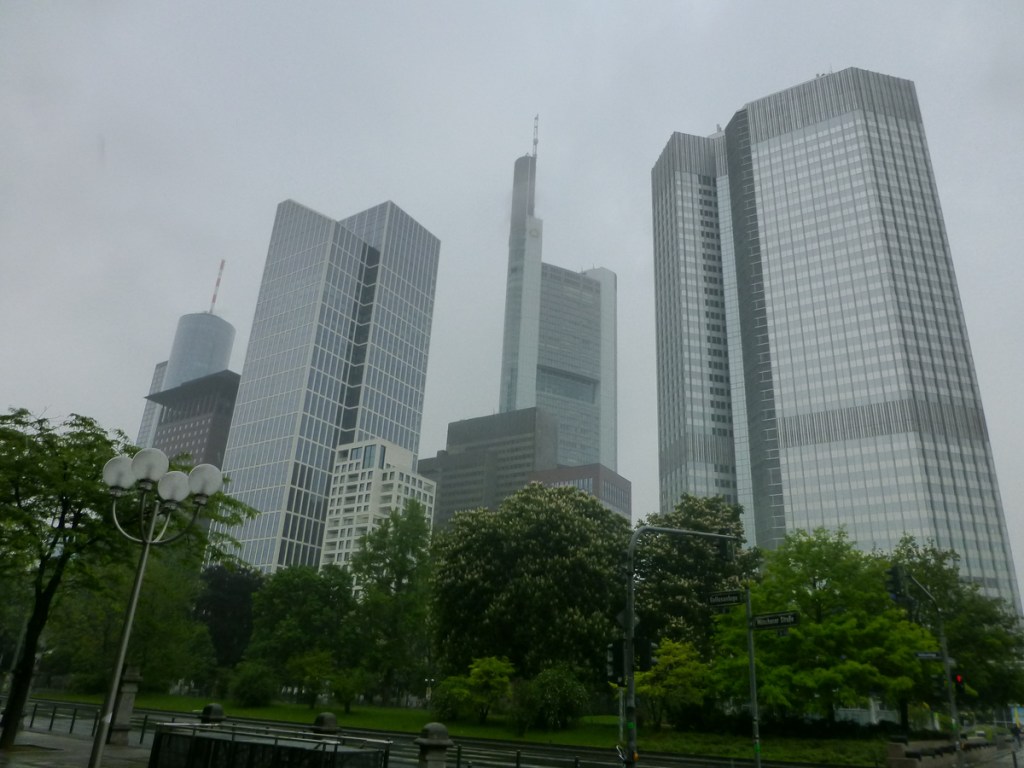
On our way out of the airport we took a day travel pass and at 09:20 we were already on the train and we were traveling to the center of Frankfurt. On our way, we were constantly looking out the window, prepared for the best view of the skyscrapers in Frankfurt that the train reveales and so we sat on the right side, but it was so cloudy and foggy that we miss it. At the Frankfurt train station we left our suitcases in a luggage storage, where the fee for a large cabinet was 5 euros and for a small one 3 euros. Frankfurt Central Station was the busiest station in Germany, serving over 350,000 passengers a day. The building was erected in the 19th century. However, we decided to explore the city on foot in spite of the rain.
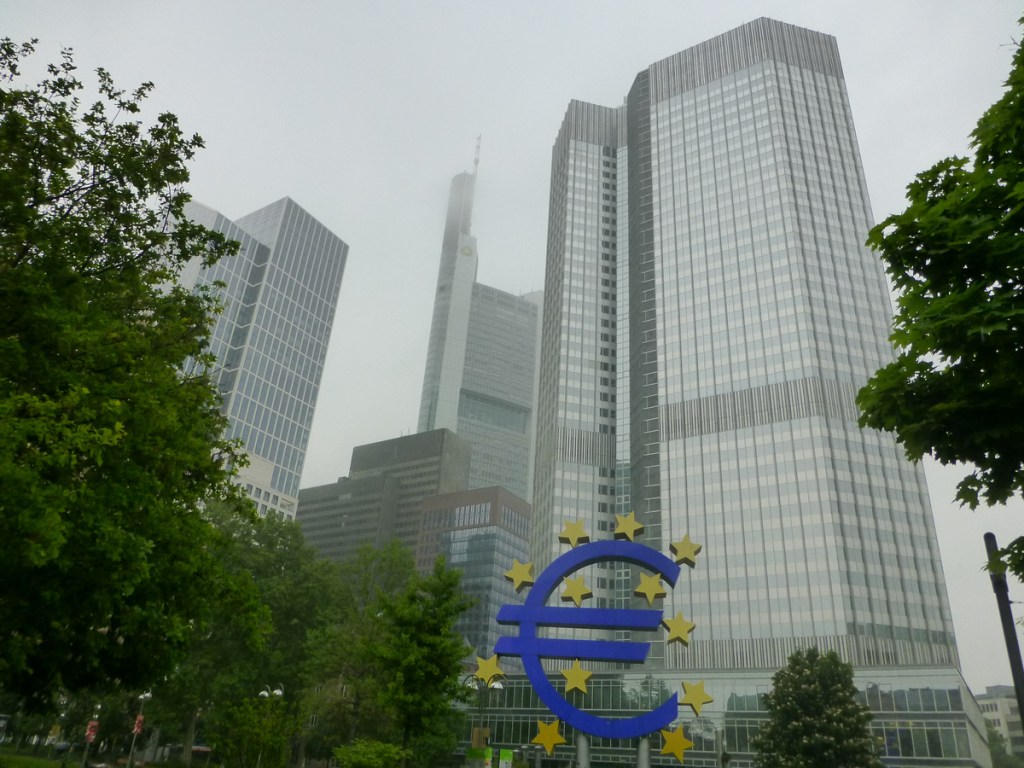
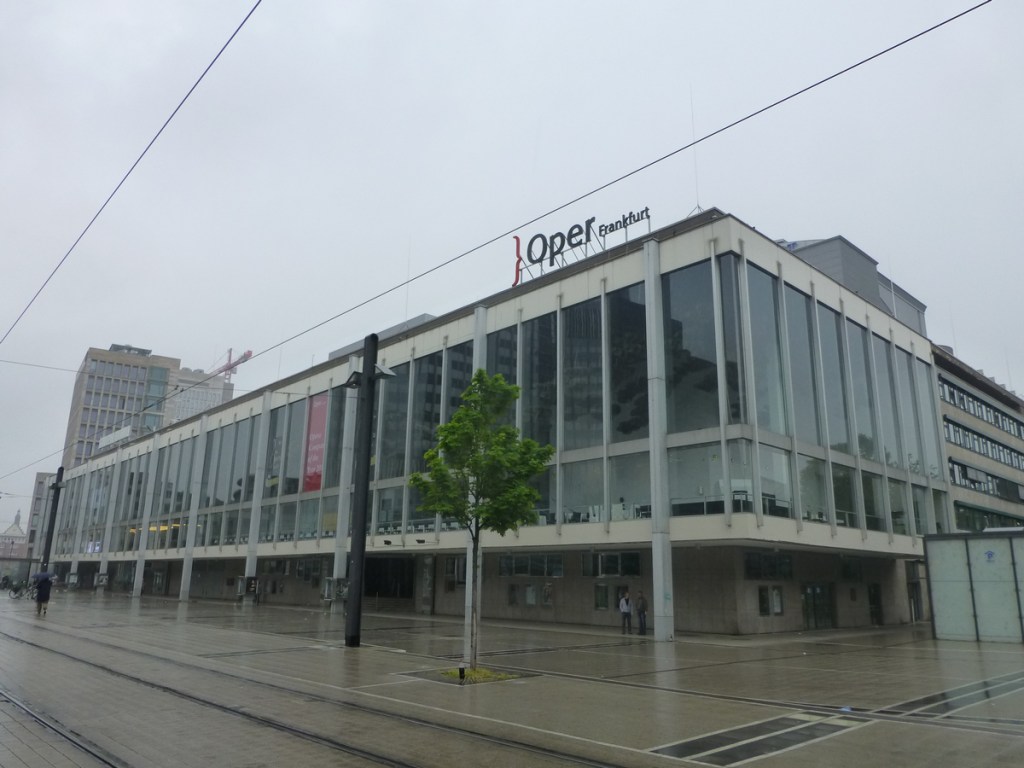
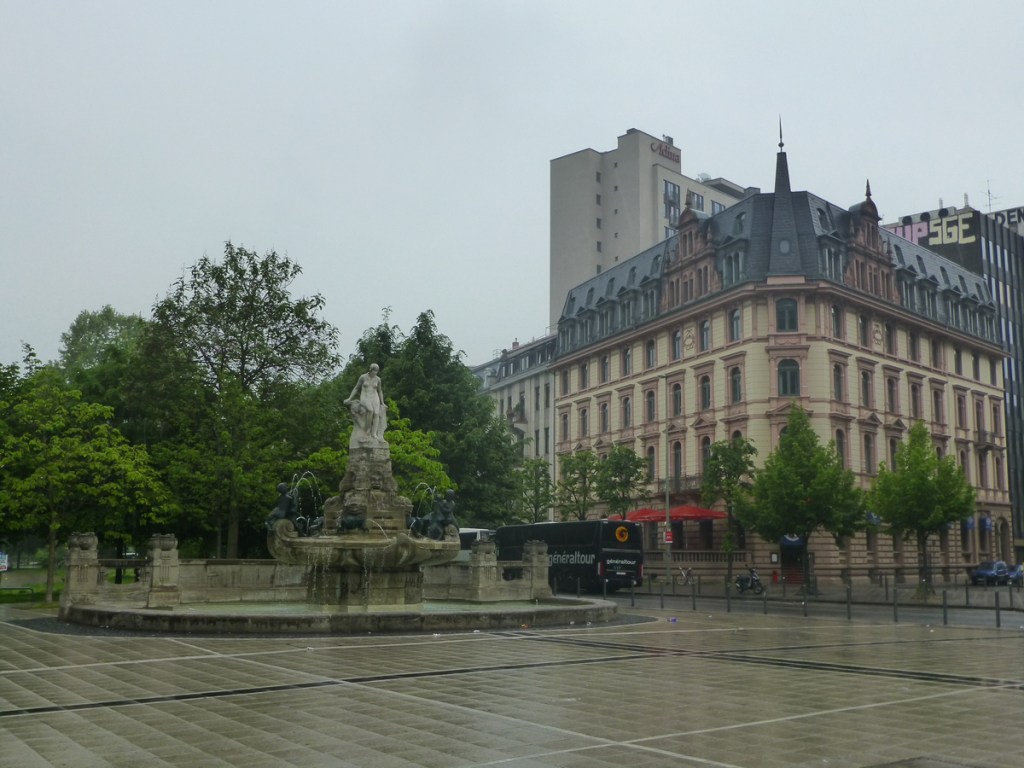
We walked along the Königstraße, then turned right in front of the new Opera House. Opern- und Schauspielhaus Frankfurt was one of the leading operas in Europe, having received an award for Best Opera House in 2003. From the outside, however, the building was not so impressive with its modern glass facade. We took some photos of the monument of the euro erected in the garden opposite the opera, right in front of a high-rise administrative building.
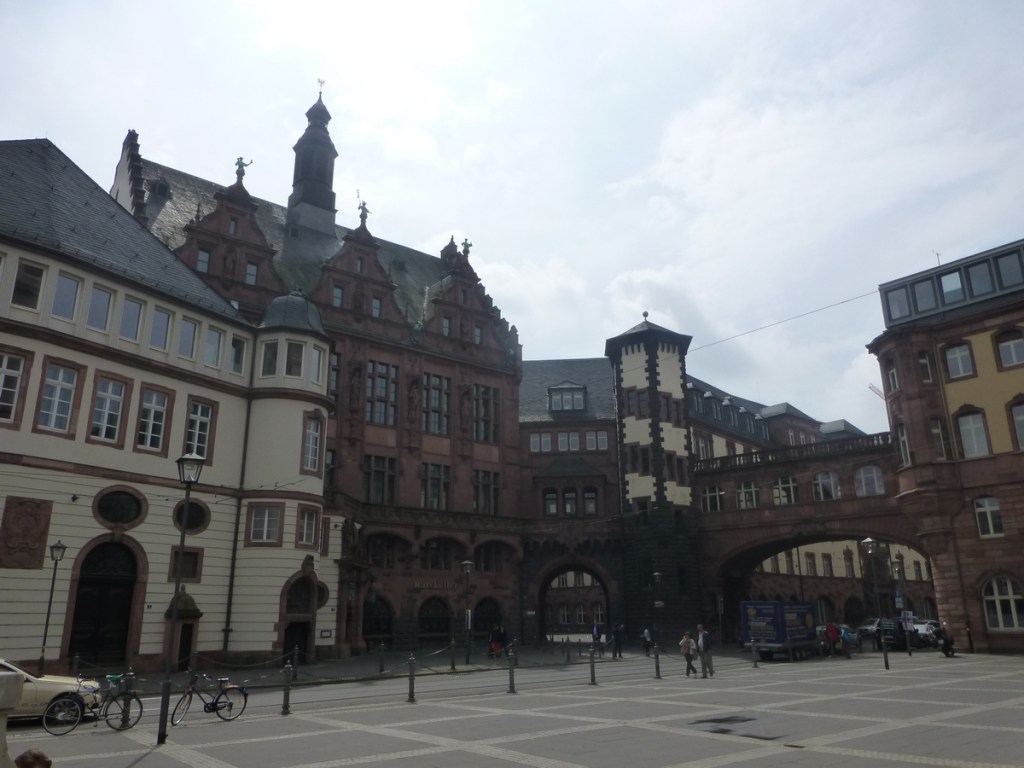
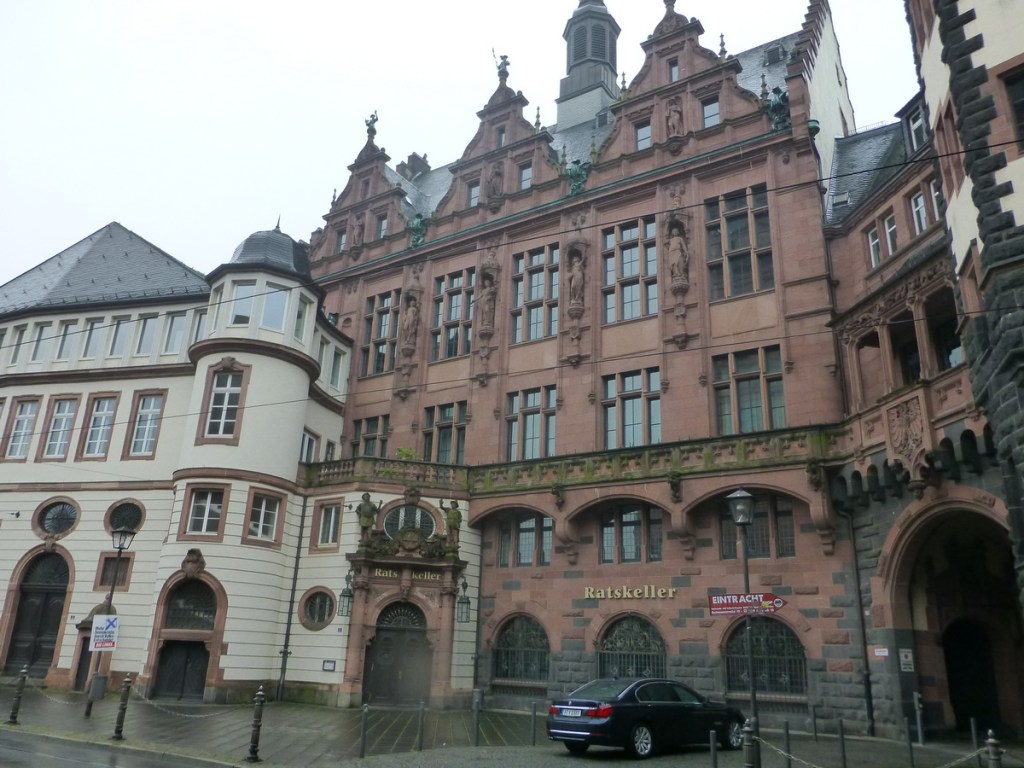
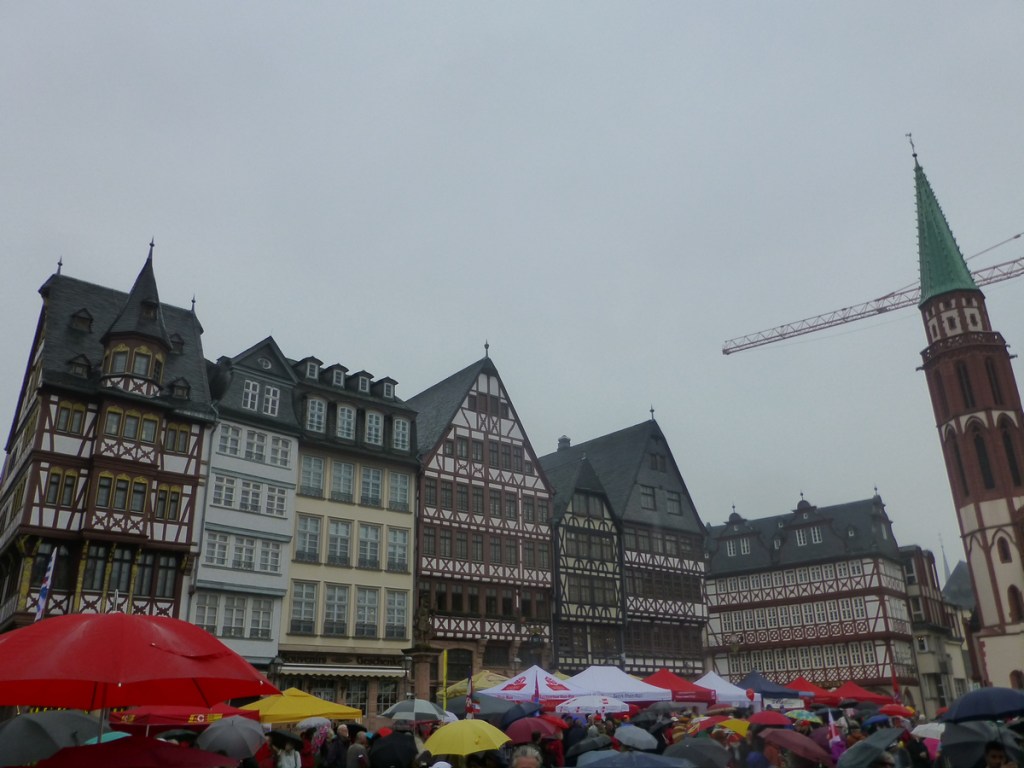
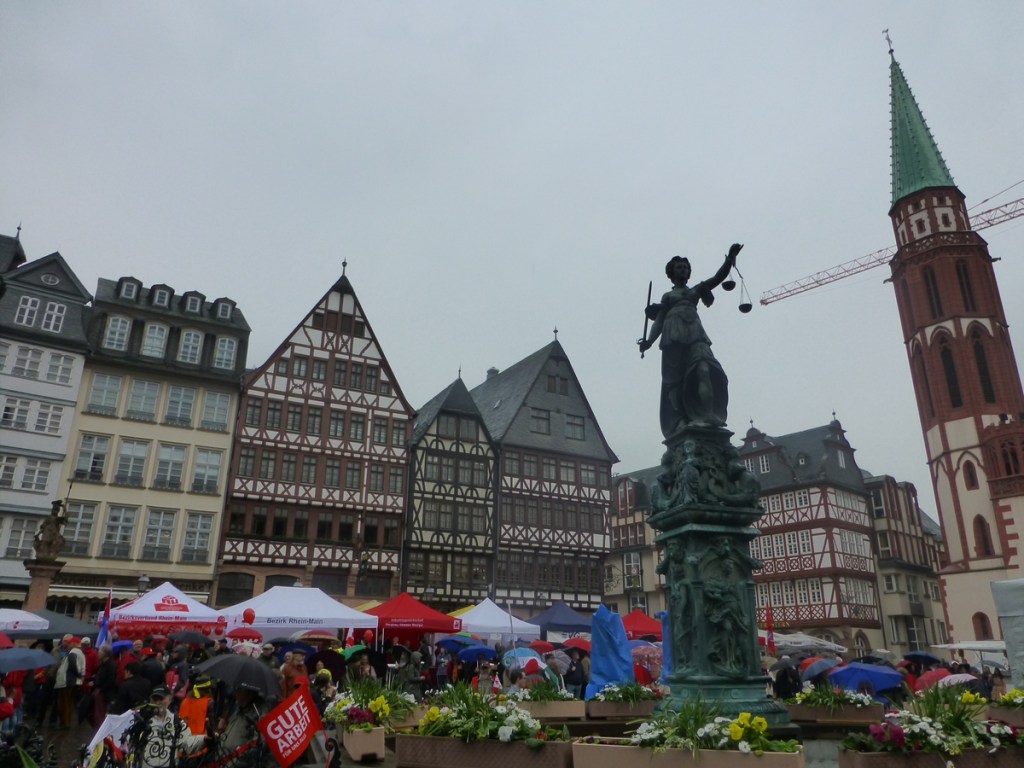
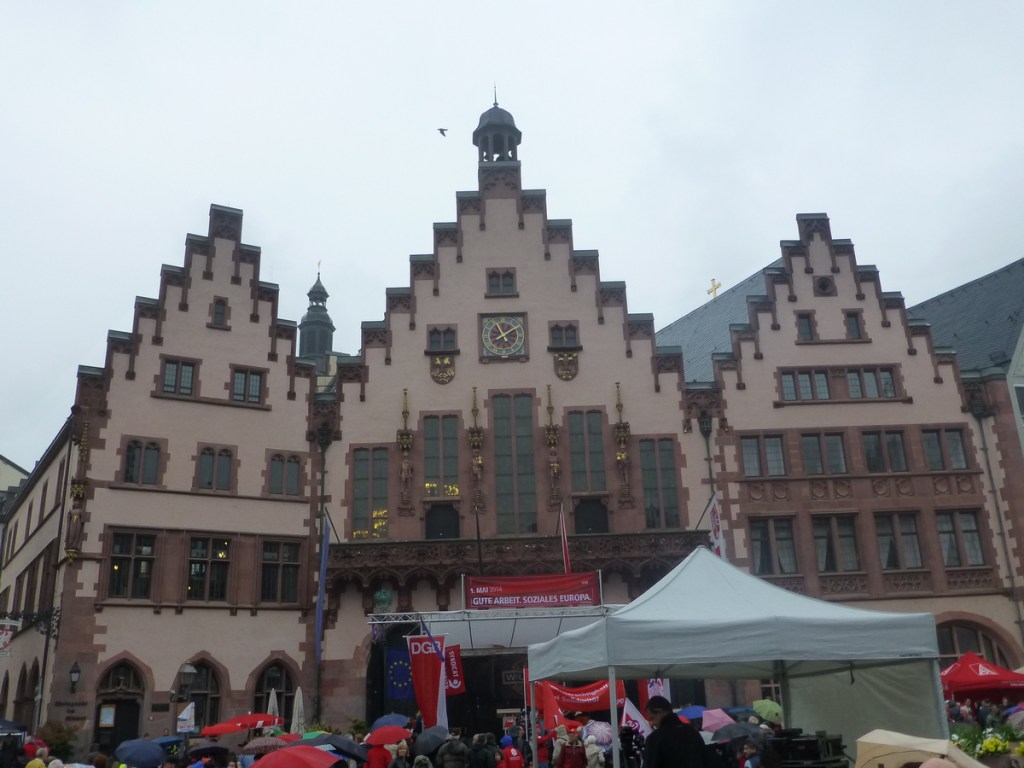
We headed to Römer Platz, passing through the beautiful City Hall building, with written capital letters RATSKELER. This meant the Cellar of the City Council and today was one of the most recommended restaurants located in the basement of the City Hall. We continued to the Römer Platz Square, where there was a thick aroma of roasted sausages and a loud noise. It was 1 May and there was a concert, which then became a platform for a statement on a social Europe. It was full of people and almost impossible to take pictures of the building. We took more photos of people and umbrellas than of colorful houses. These lovely houses were erected in the 14th-15th centuries. The square was formed as a commercial center since 12th century attracting merchants from Italy and France. All the major festivals in the city were held here, including the coronation of the emperor of the Second Holy Roman Empire.
Each wooden house has its own name. From left to right, they were: Zum Engel No. 28, Goldener Greif (Golden Graffiti) No. 26, Wilder Mann (The Wild Man) No. 24, Kleiner Dachsberg-Schlussel 20-22, Grosser Laubenberg 18, and Kleiner Laubenberg No. 16. In the center of the square is the Fountain of Justice (Gerechtigkeitsbrunnen) erected in 1543 and representing the goddess of Justice holding a scale, but instead of the usual blindfold, this time she lookes at the town hall of Römer platz. On the south side of the square the church of Alte Nikolaikirche (Old Church of St. Nicholas) is situated, built in 1290. In the 15th century it was intended for use only by the families of the municipal council.
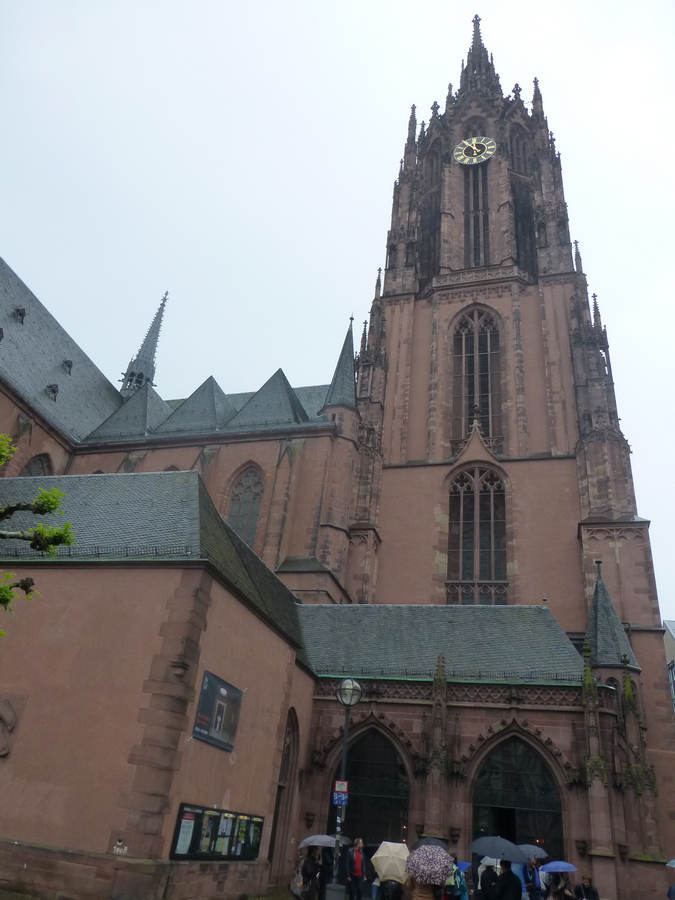
The noise and crowds of people made us quickly tour the square and leave it, heading to the majestic Kaiserdom Cathedral, where the German kings were crowned. The construction of the cathedral began in 1250 on the site of old churches dating back in 7th-9th centuries. We entered the cathedral, but there was a mass so we could not climb the spiral stairs of the high cathedral tower. We left the panoramic views for later, when we planned to visit the Main Tower.
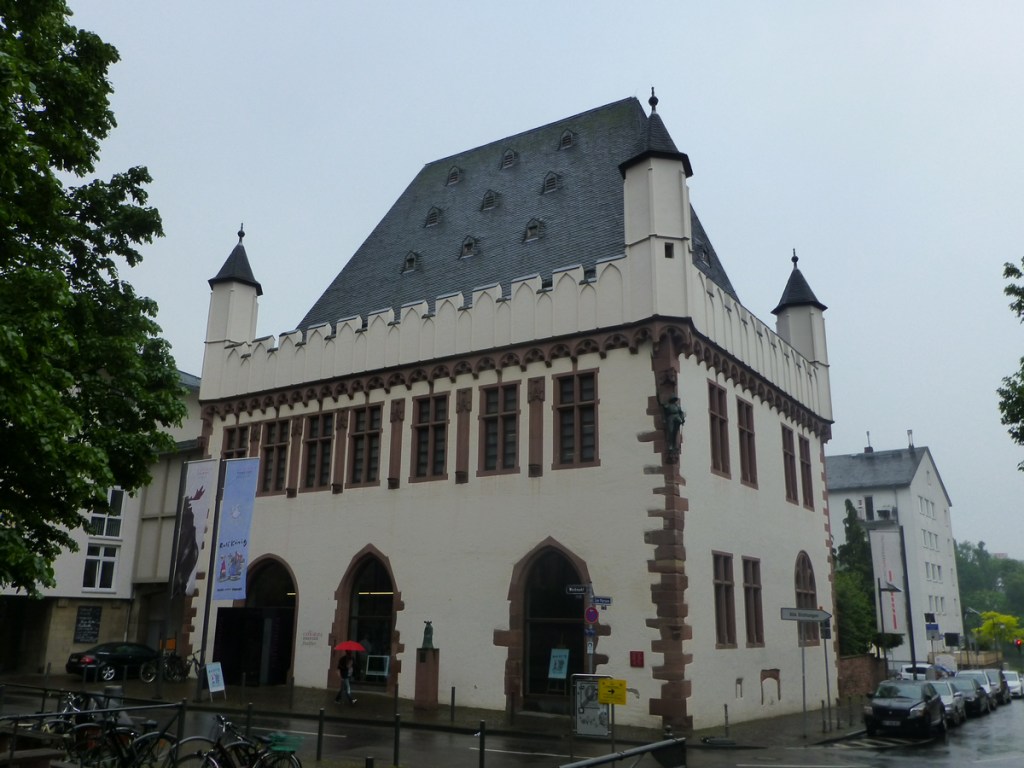
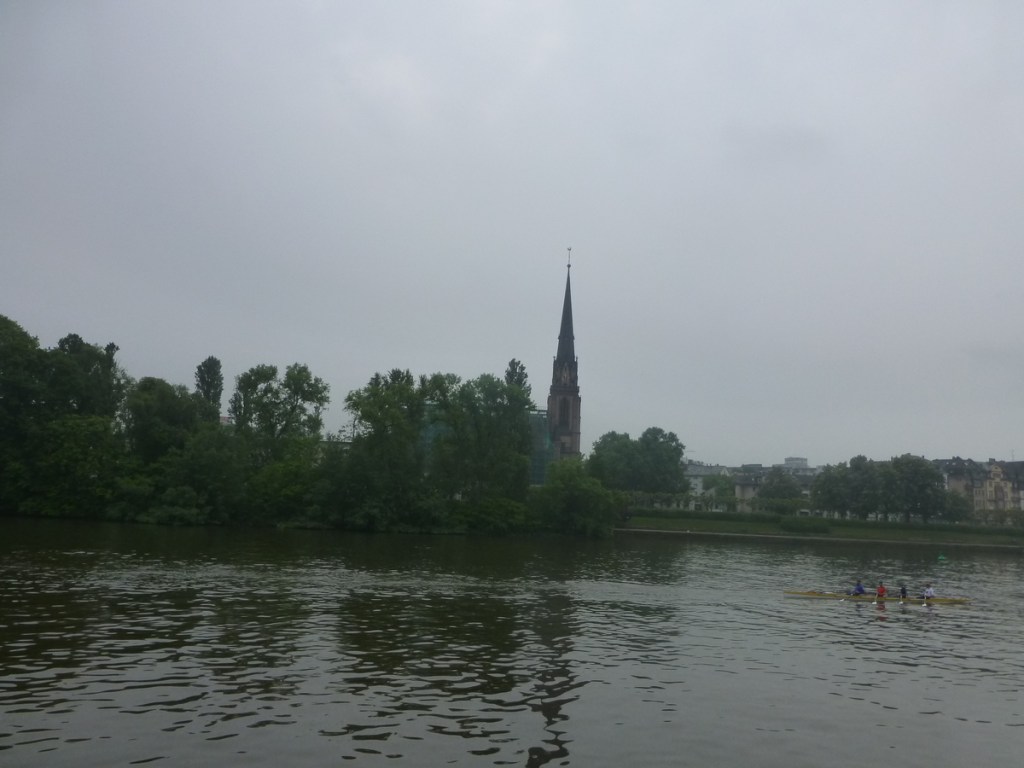
From the Cathedral we descended to the River Maine, passing by the beautiful Leinwandhaus building, erected at the same time as the cathedral. In the 12th century, the Jewish community lived here, with Christians and Jews living peacefully with each other until the 15th century, when Emperor Frederick III moved them to the other part of the city, accused them of bringing the plague to the city. Jews were not allowed to leave their houses on Sundays and coronations, although Jews made large donations to Christian universities and administrative buildings. Today this house was a museum revealing the history of the building and its inhabitants. The rain, however, had begun to stop, so we headed to the great River Main, which had become even deeper from the rain. Here we took our first photos without umbrellas, enjoying the passing boats and beautiful bridges.

We were hungry so instead of crossing the river we returned to the picturesque Römer platz square, from where we took a Frankfurian wursch with bread and mustard from the numerous stands. It didn’t rain and we managed to eat it peacefully enjoying the beautiful architecture.
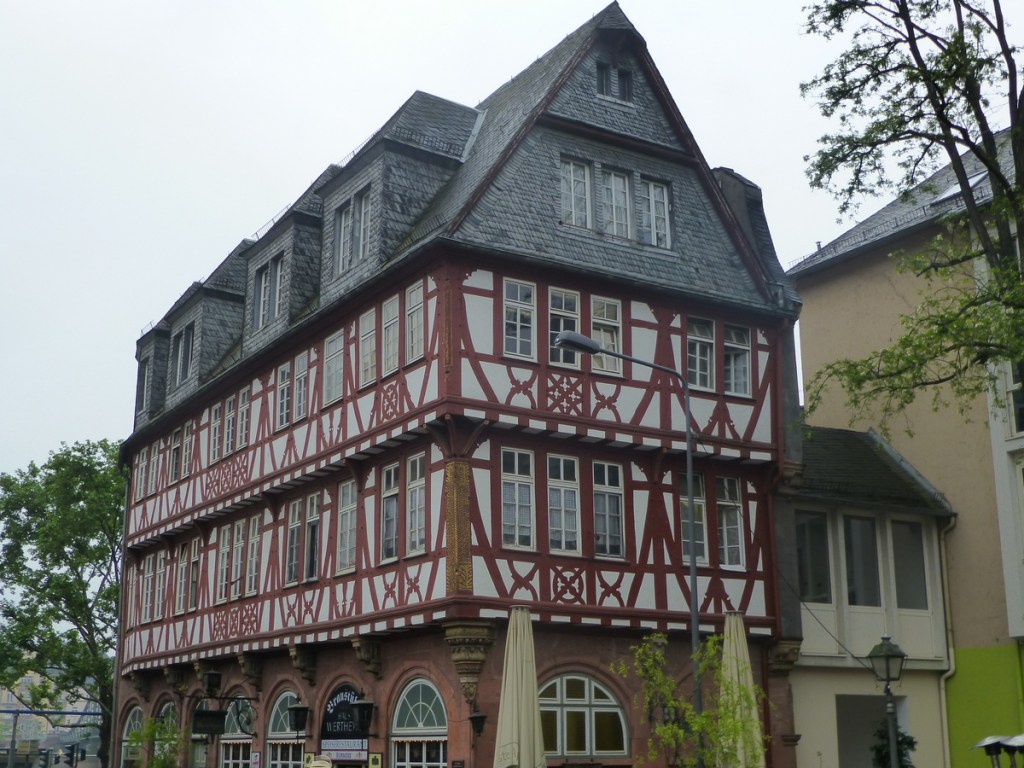
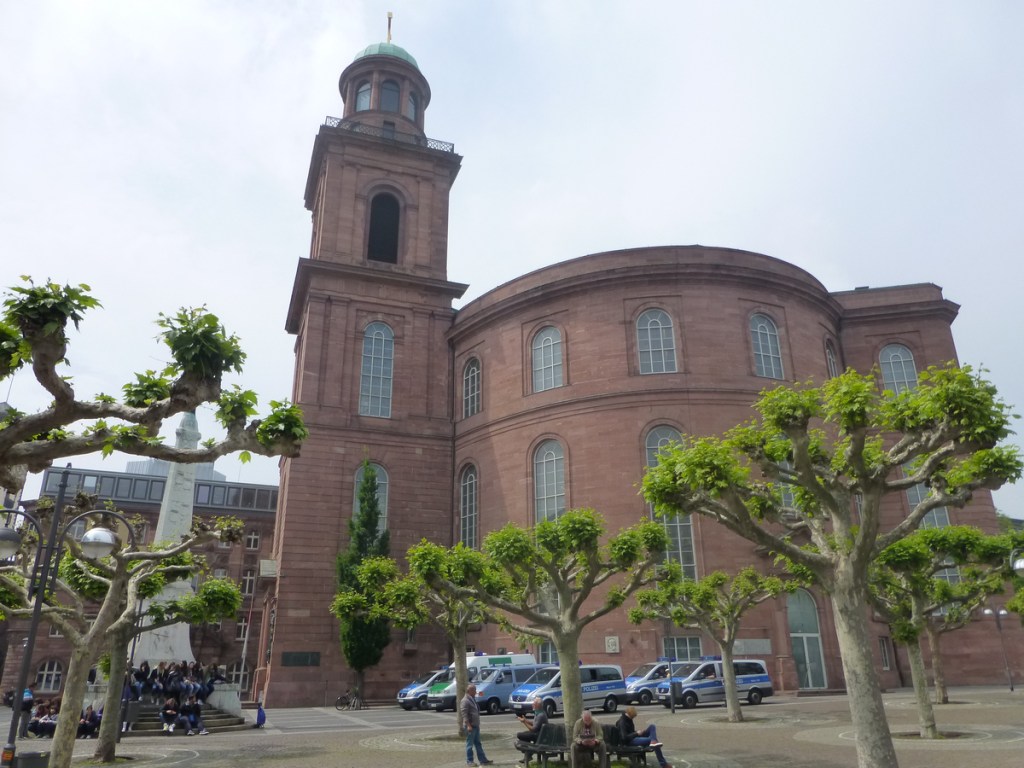
Along the way, we were able to photograph the beautiful wooden house Haus Wertheim, built in 1600 and the only house that managed to survive the bombing in 1944. Today on its ground floor there was a cozy restaurant, but we had preferred the more traditional German sausages that were baked on the street and their aroma was fascinating. The taste was also excellent, After lunch, we needed dessert. We sat in a pastry shop in the square in front of St. Paul Kirche and tried different flavour of ice cream.
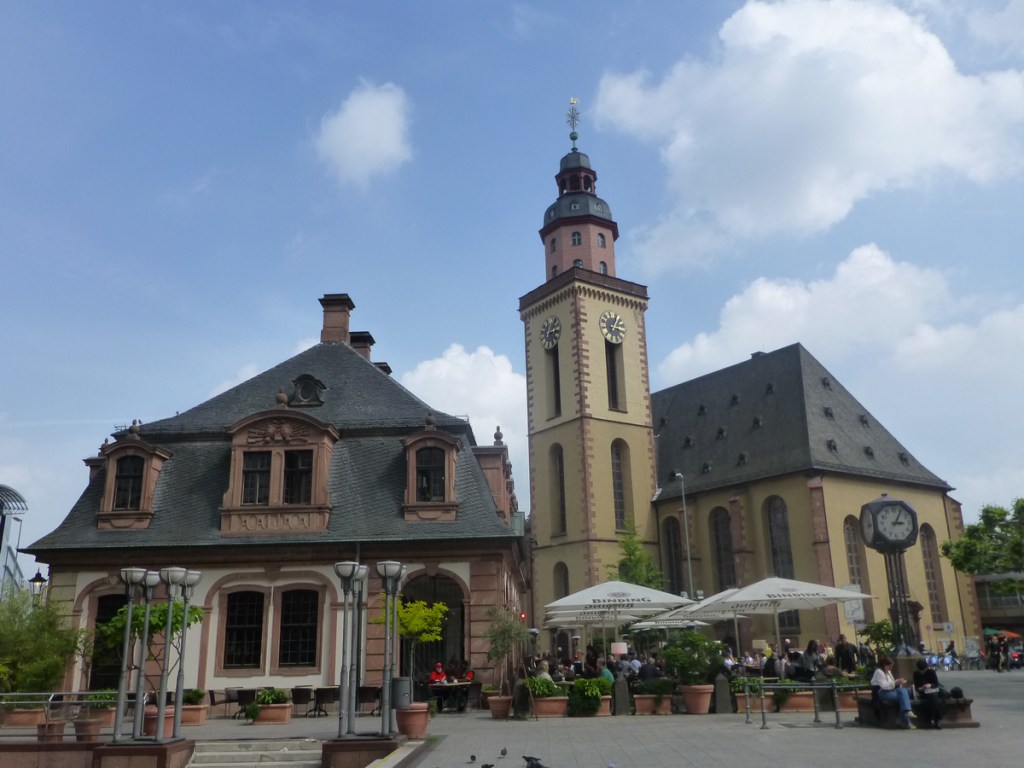
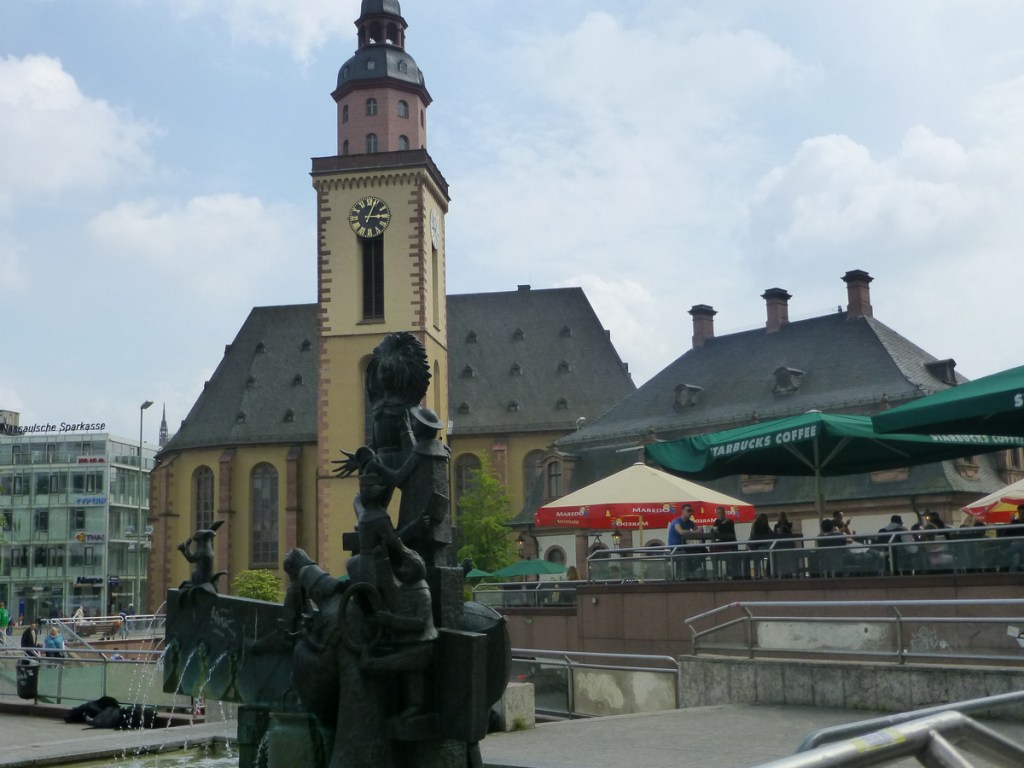
The view of the round church of St. Paul was also very pleasant. In this Gothic building on May 18, 1848, the first German national council / assembly was held. Entering the building we enjoyed the 360-city panel revealing this meeting.
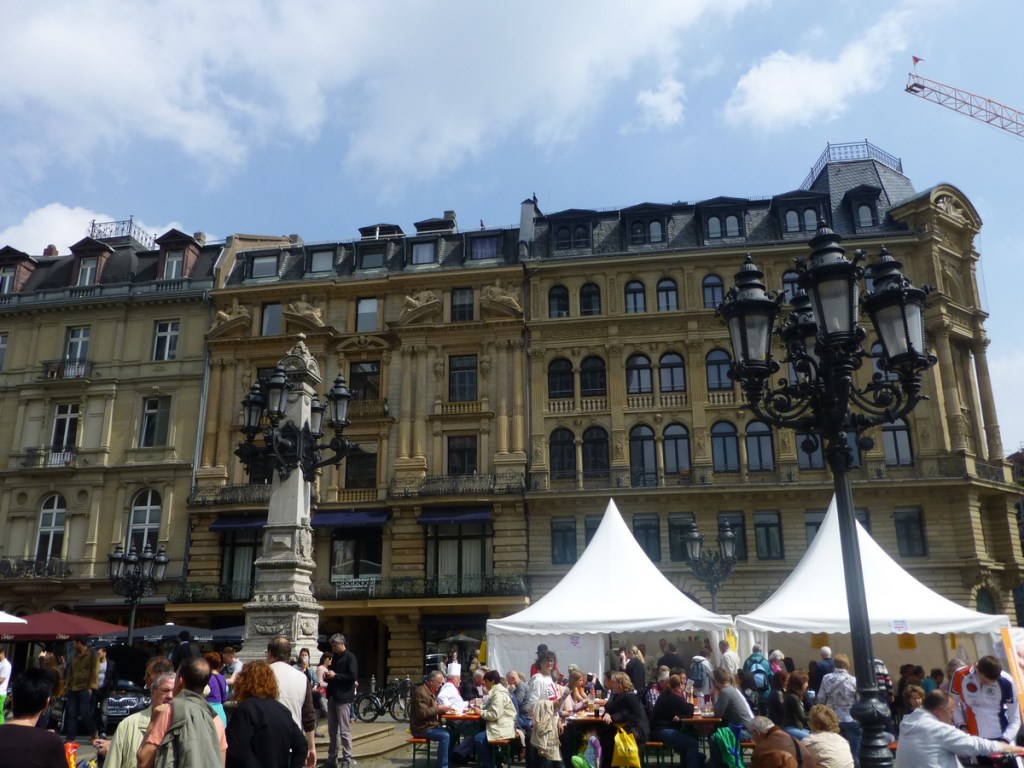
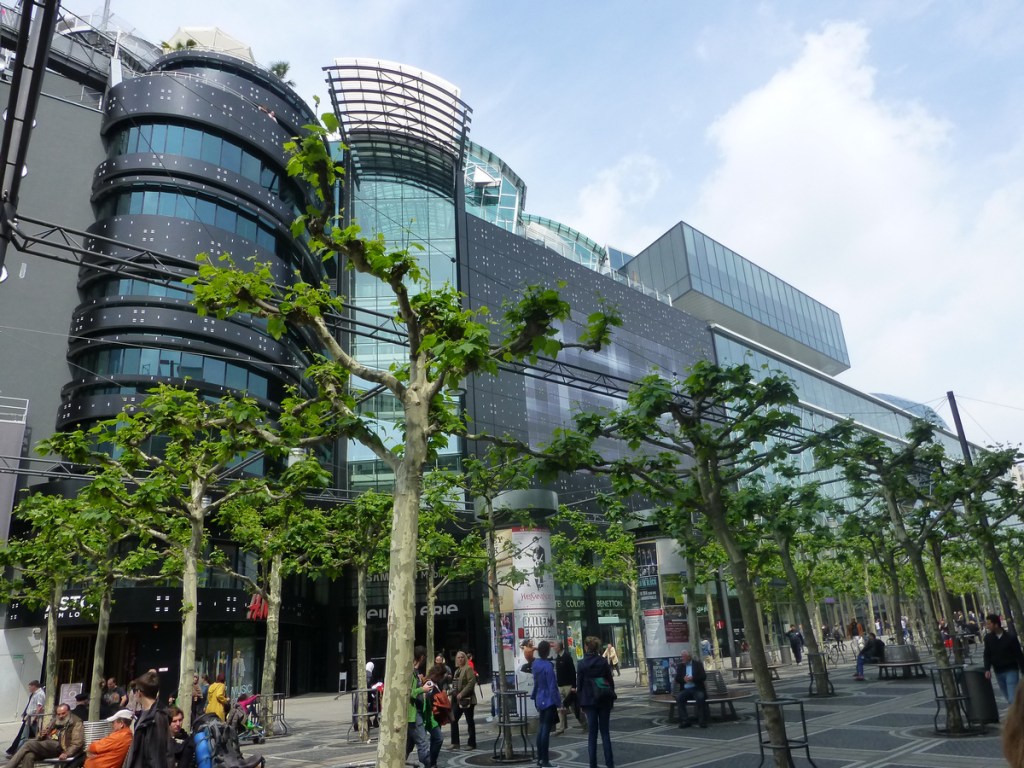
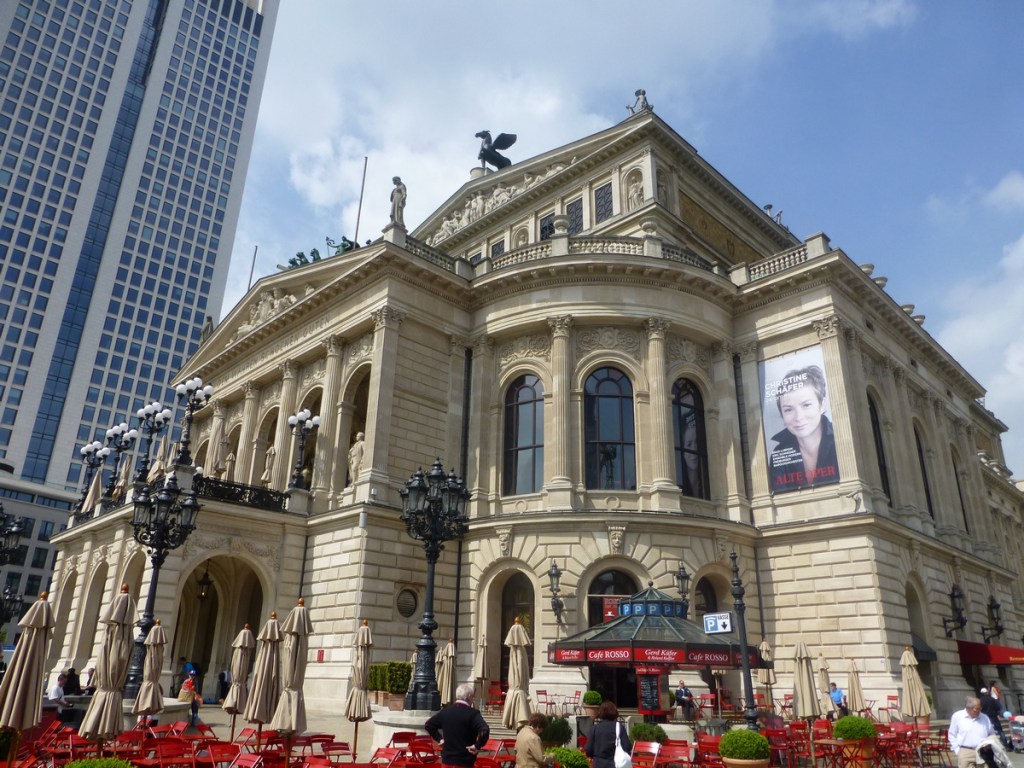
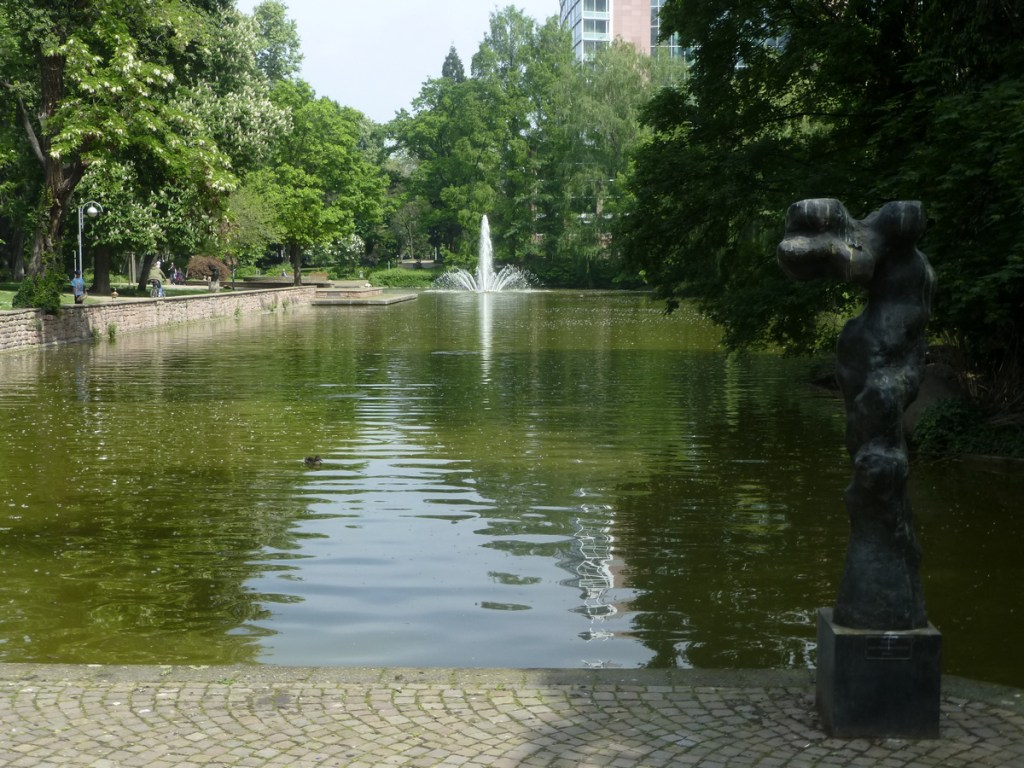
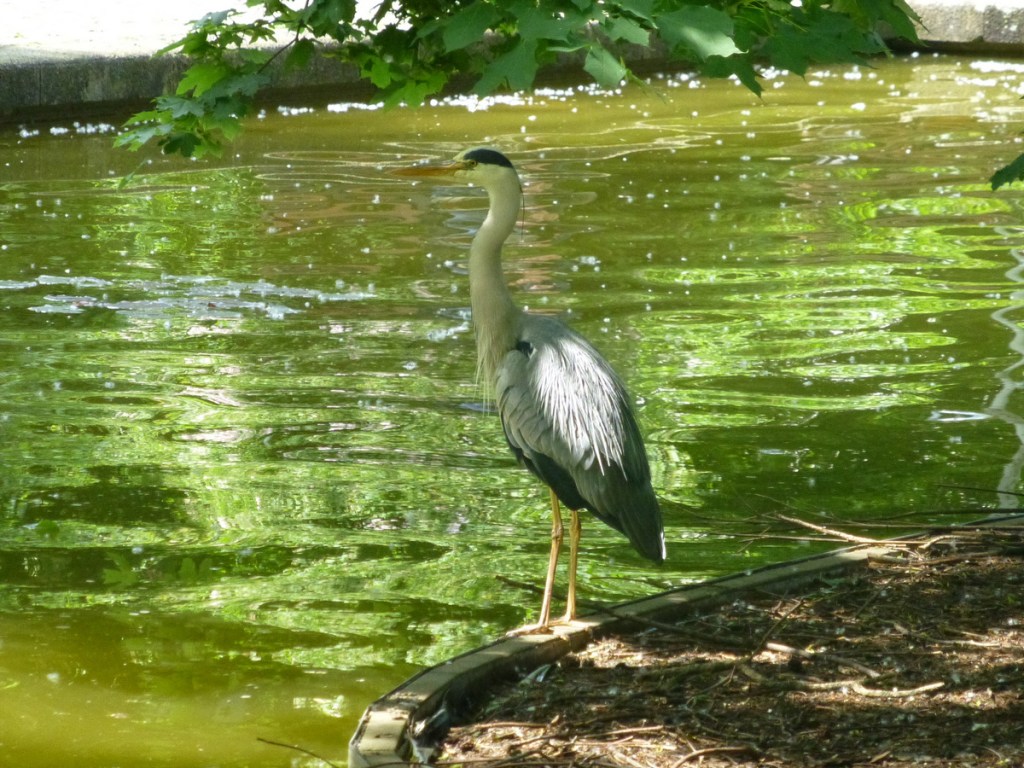
It was 1:25 pm, the tasty ice cream improved our mood and our walk continued. We headed to the famous Zeil shopping street, which had the highest sales turnover in all of Germany. On May 1, however, all shops and malls here were closed and we decided to head to the more historic part of the city. We wanted to see the Frankfurt Stock Exchange, which was known all over the world, turning the city into the financial capital of Germany. We didn’t find it easily, but we found a bunch of other sights, including a beautiful pond with geese and herons, located just behind the old opera house. This building was much more impressive in appearance than the new one. Built in 1880, during World War II it was completely destroyed, but later in 1981 it was restored. Now it continued to be the venue for numerous concerts and operettas. At the moment, a live concert was held in its square and was again full of crowds. Instead of German music, however, here they sang in Turkish and they even greeted everyone from the stage: Marhaba Frankfurt!
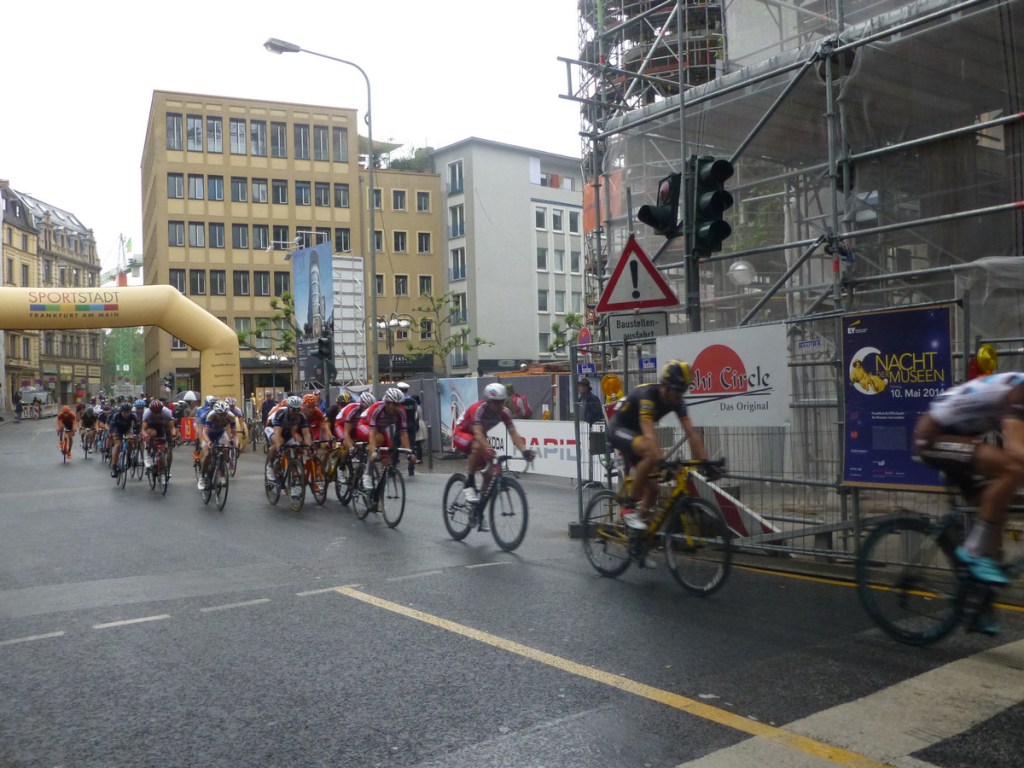
There were posters everywhere with the words “May 1 marathon in Frankfurt”. On that day, a bicycle race was organized and therefore most of the streets were closed for cars. In the square in front of the old opera, besides a stage, there were also various tents with entertainment, and even an open-air casino. Instead of the casino, however, we headed to the stock exchange, passing again by Hauptwache Square or in translation the Main Guard. This square evokes memories in me, as I had passed by here exactly 14 years ago. The Baroque house in the center of the square was still beautiful and preserved, dating back to 1730 it served as central headquarters when Frankfurt was an independent state as well as a prison. Today, the square was a major transportation hub, with 8 of the 9 lines of the S-Bahn train passing here, as well as 5 of the 7 U-Bahn (metro) lines. However, we prefer to walk and after a few more blocks we managed to get to the stock exchange.
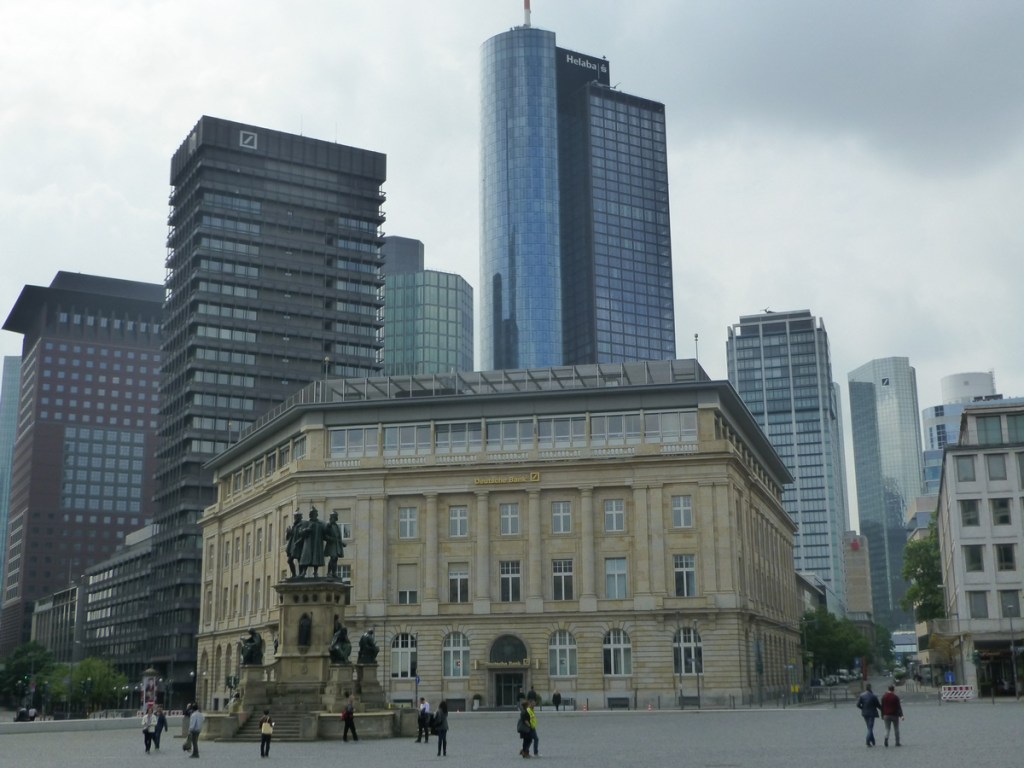
The building on the stock exchange was also very beautiful, adorned with numerous colonies and statues. However, we took more pictures in front of large bronze figures of a bull and a bear located in front of the stock exchange. The bull showed the rise in prices and the bear the fall of the course. The Frankfurt Stock Exchange dates back to 1585 and today is the second largest stock exchange in Europe, after the one in London.
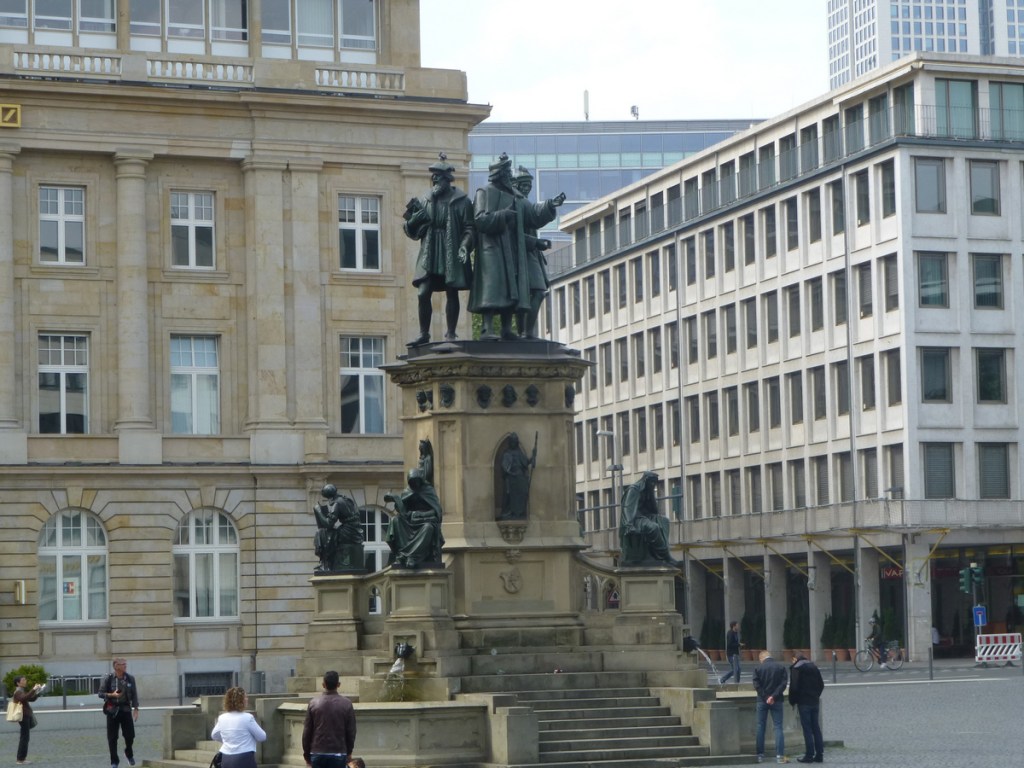
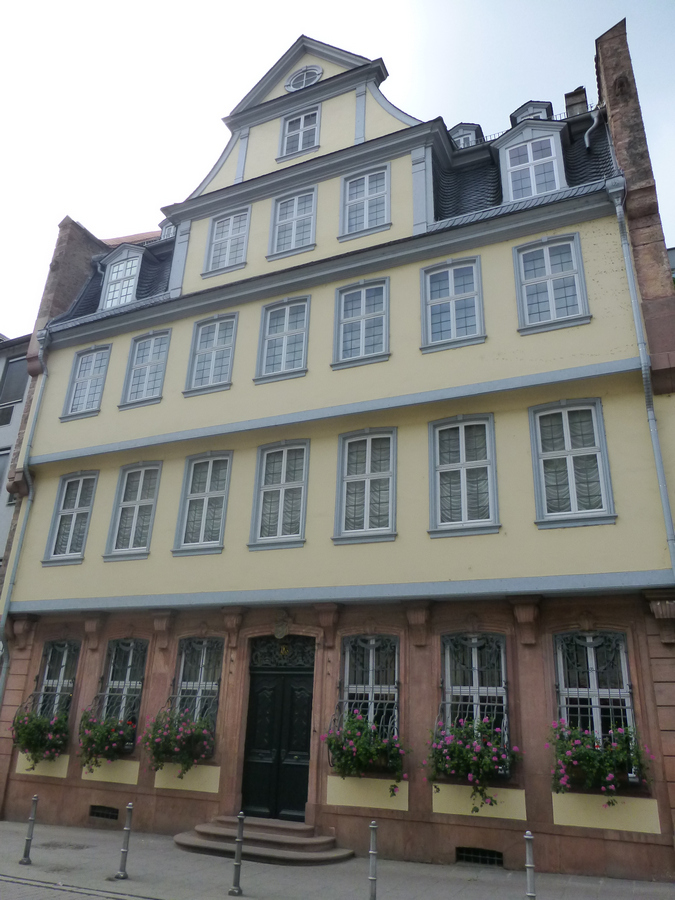
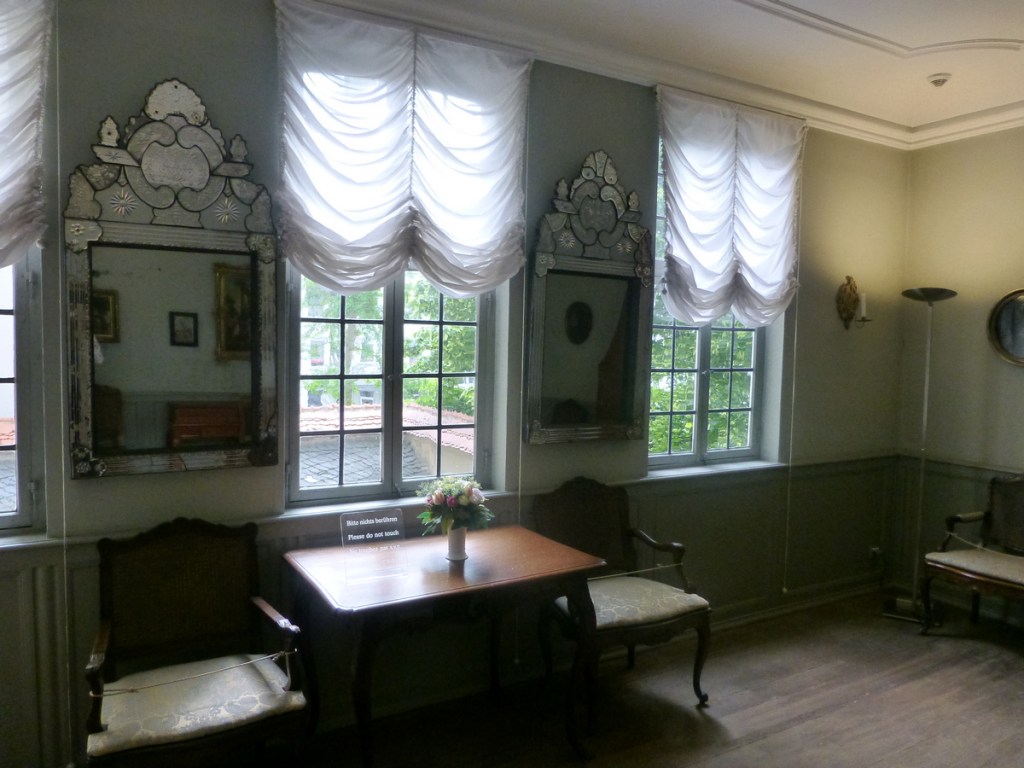
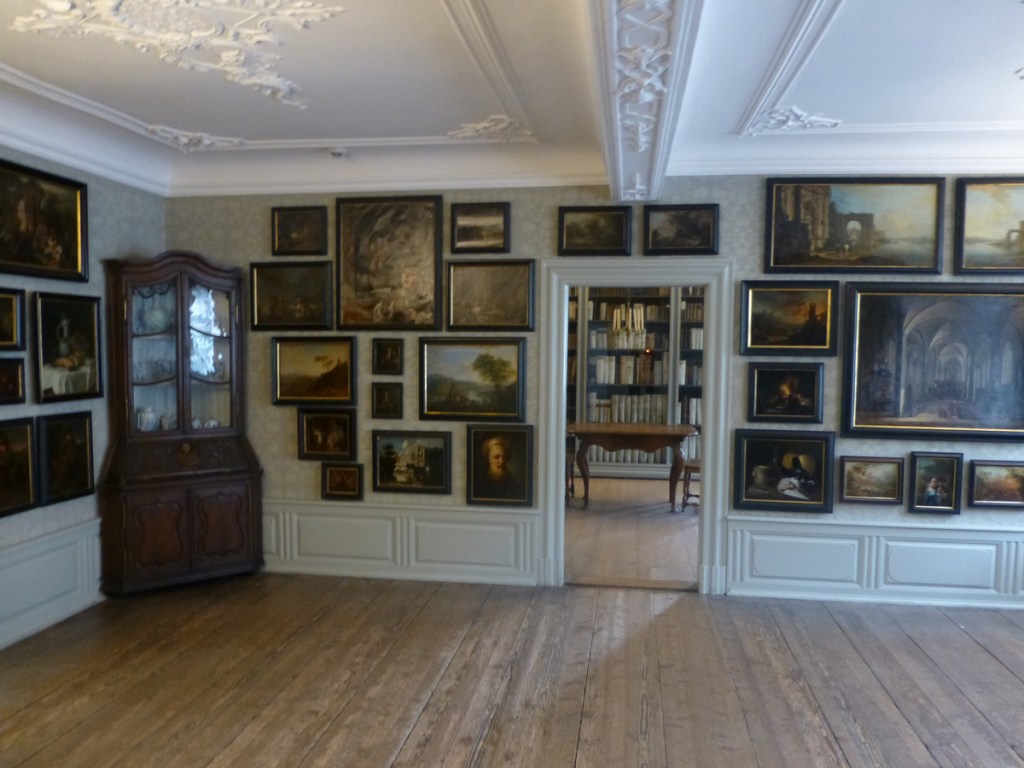
The next landmark, which we visited was the house-museum of the eminent German writer, poet and philosopher – Johann Wolfgang von Goethe. The house where Goethe had lived in his first years was richly decorated and showed a wealthy life. Various of his objects were presented here, and the library was particularly impressive. His house really had a lot of furniture, and it was easy to see where Goethe had gotten his inspiration.
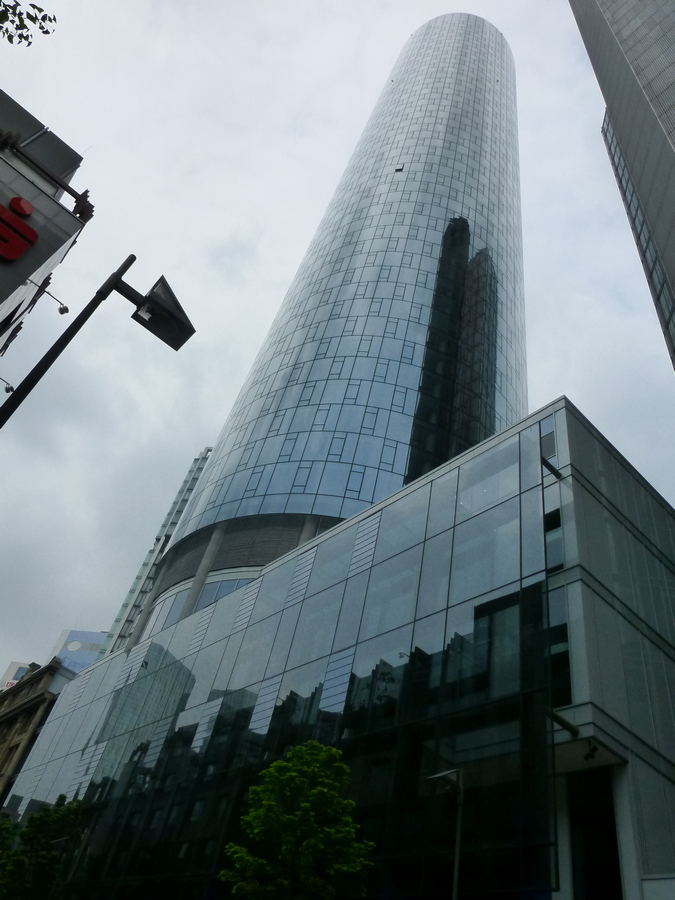
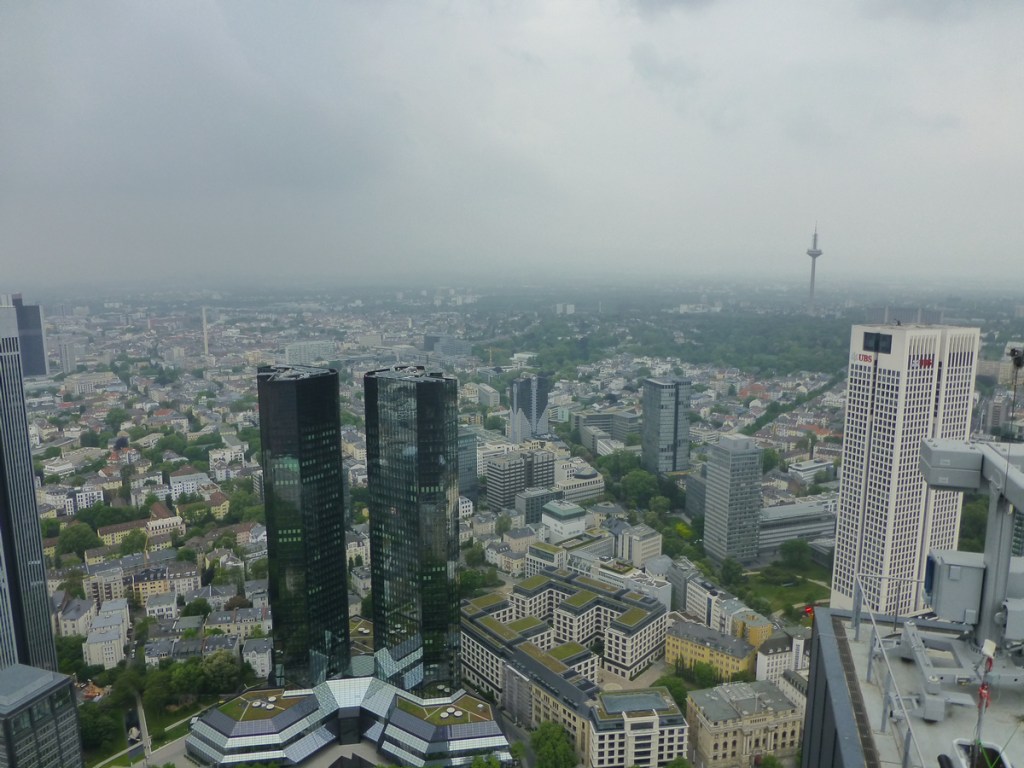
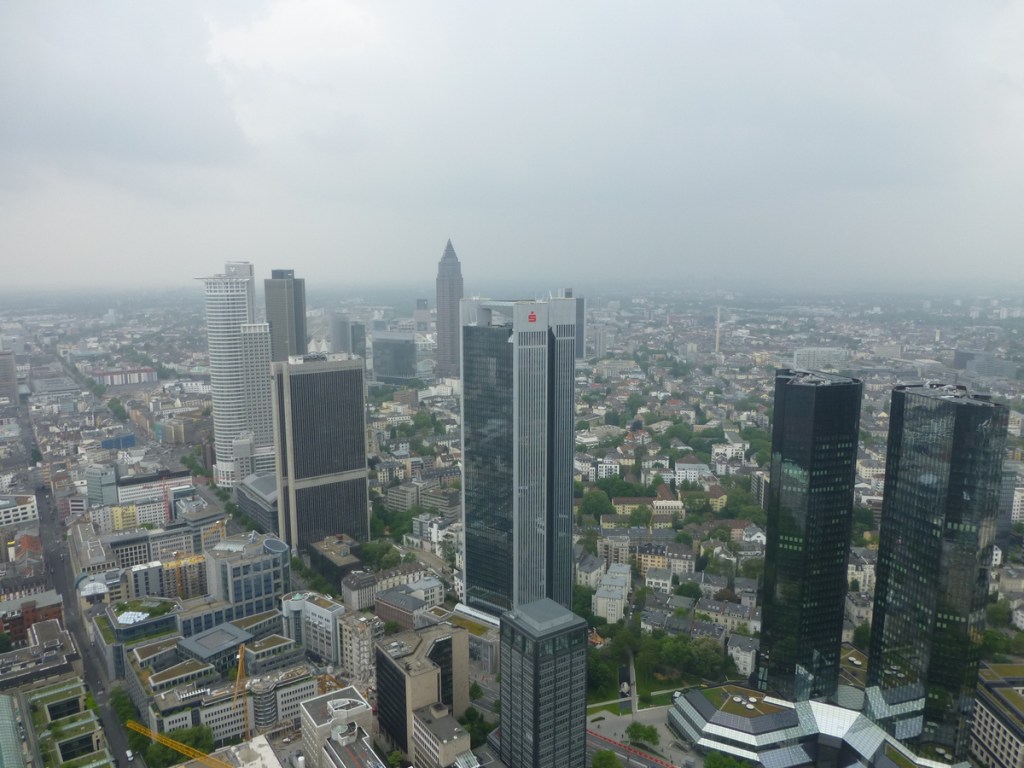
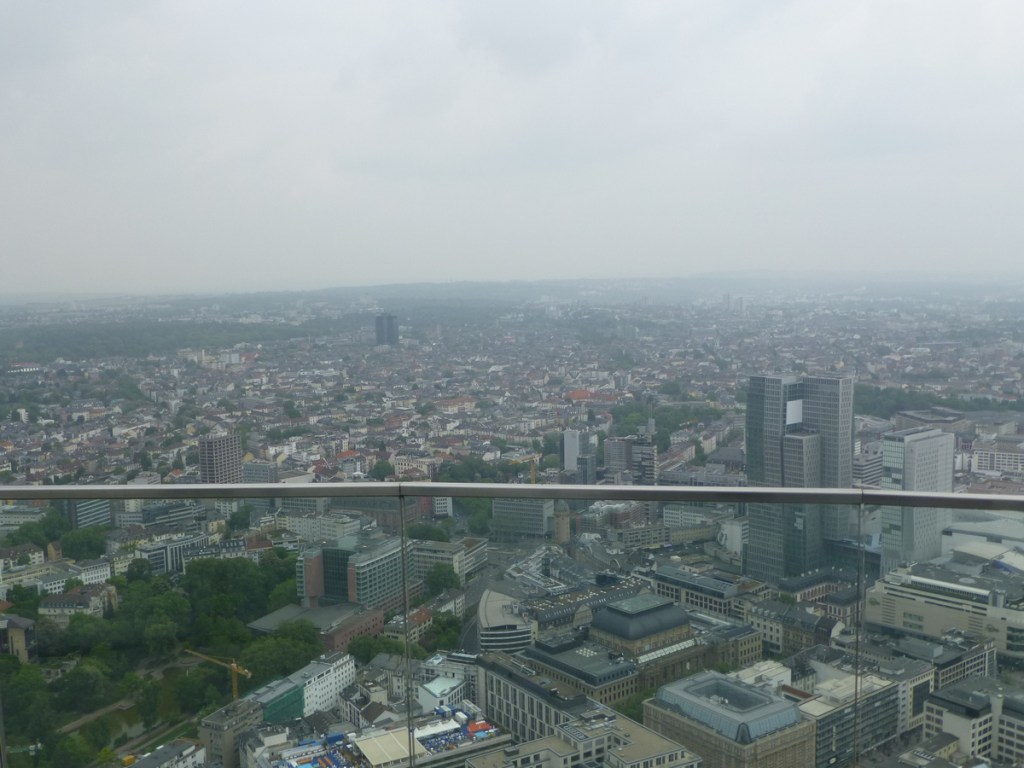
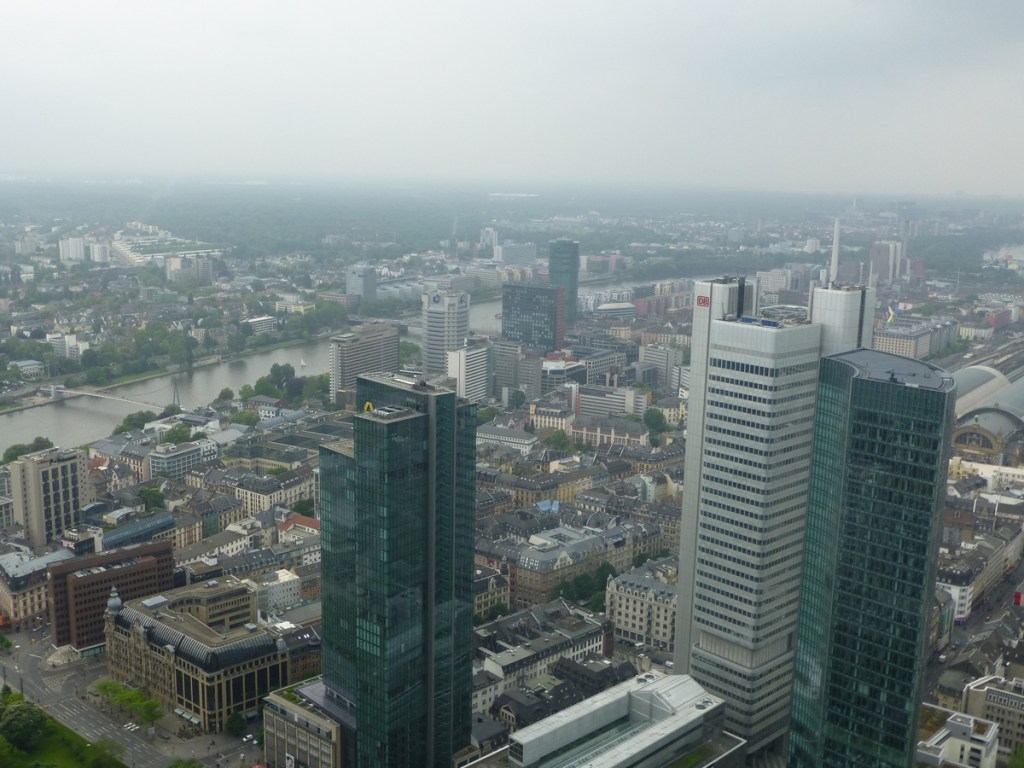
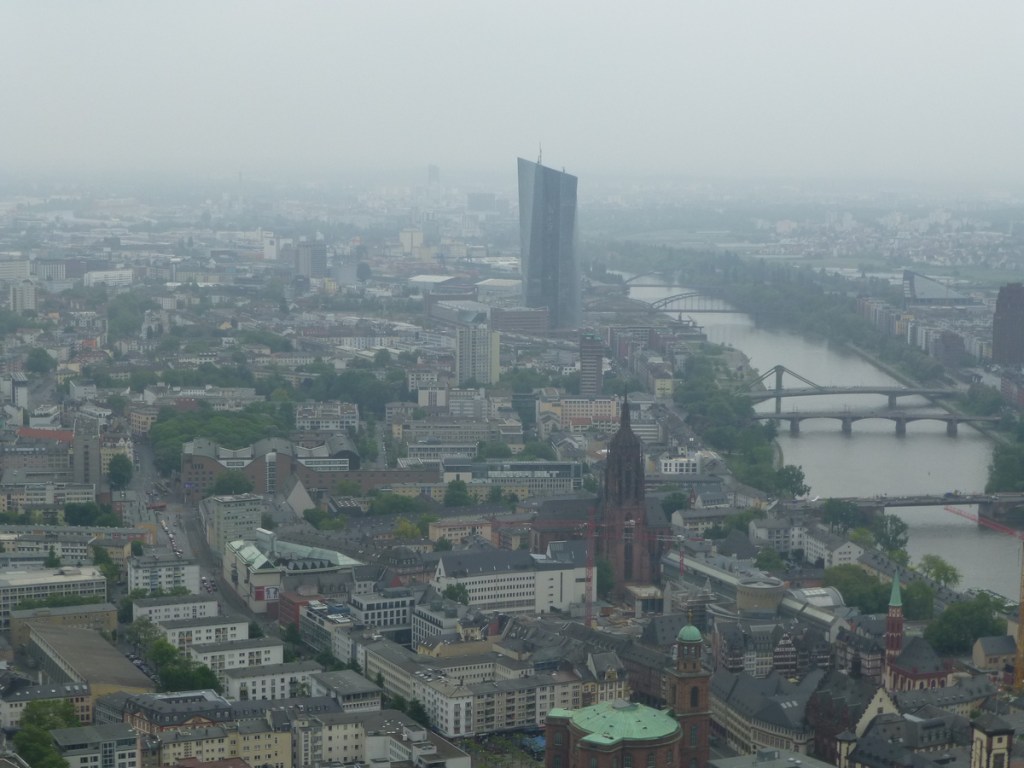
We decided to be inspired too so we headed to the Main Tower skyscraper with its beautiful panorama from the 54th floor. It was one of the tallest buildings in Frankfurt and the only one that was opened for tourists. At the top at 200 meters high, there was a 360-degree view of the city. The entrance fee was 6.50 euros, but it was totally worth it even on that cloudy day. From above, dozens of other skyscrapers were revealed in front of us. We could enjoy the winding River Maine, as well as bird’s-eye photography of the sights we had already seen from the ground.
We also saw the Europaturm TV tower, which stood 337 meters (slightly more than the Eiffel Tower and its 324 meters). The tallest building, however, with separate floors was the Commerzbank Tower, which rose 259 meters and had 56 floors. It was the 7th tallest building in Europe and the 197th tallest building in the world.
In the distance was also Messeturm – a pencil-like skyscraper that rose to 256.5 meters in height and had 63 floors. It was the tallest building in Europe from 1990 to 1997, after which it was replaced by Commerzbank. Today, the tallest building in Europe was the Mercury City Tower in Moscow, which stood at 338.8 meters with its 75 floors, and the second one is The Shard, a skyscraper in London that, although rising only 312.7 meters, had 87 floors. Neither in London nor in Moscow I had climbed a skyscraper and now I really enjoyed the view. We all took dozens of pictures. We just got off the panoramic site and it started raining on the street again. However, this did not bother the cyclists, who began to pass down the main street. I especially liked a small child sitting in the tricycle with a hood on his head, which did not protect him much from the rain, but he was really pleased that during the race he was sitting on a bike.

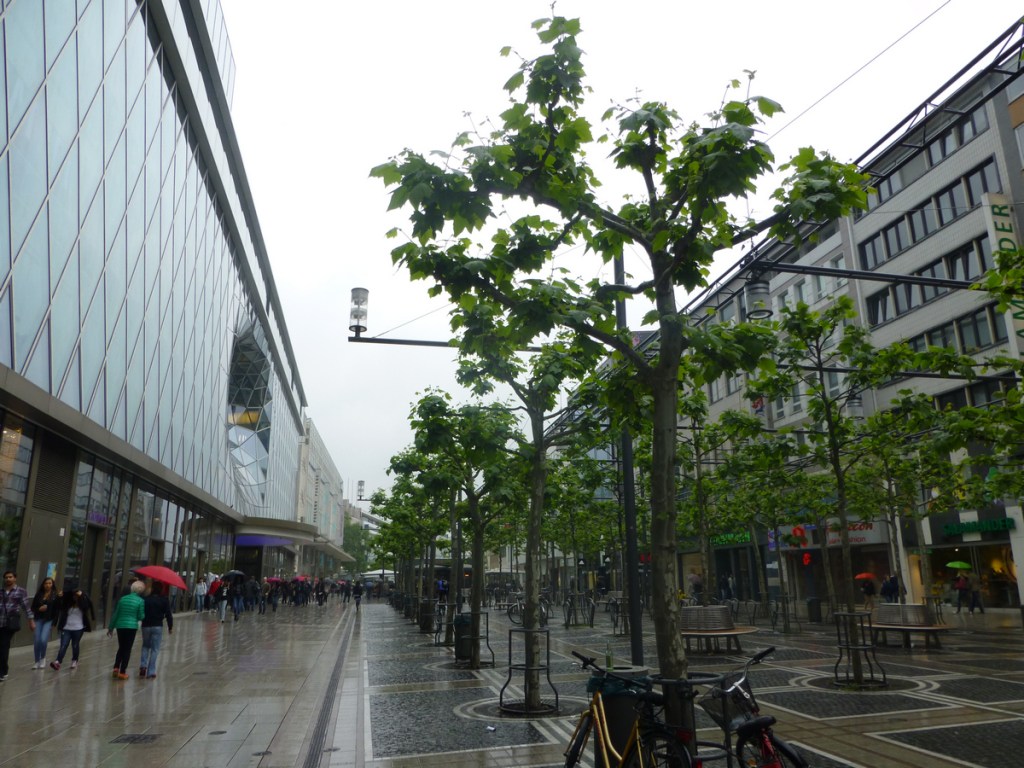
We walked again along the Ziel shopping street with the closed shops. However, the rain intensified and we were forced to take the subway. The ride was good for us because we were all already very tired.
We went back to the central station, from where we took the train to our next destination – Heidelberg. Although Frankfurt was very cloudy once again it fascinated us. It was difficult to imagine that after World War II the city was completely destroyed and bore the nickname “the most beautiful ruins in Germany”. In 1981, it was completely restored, and then grew to its present greatness and worldwide recognition, receiving the nickname “The German Manhattan”.
GENERAL INFORMATION ABOUT FRANKFURT:
Location: Frankfurt is located in southwestern Germany on the River Main in the Hesse region. It is the fifth largest city in Germany (after Berlin, Hamburg, Munich and Cologne).
Area: 701.350 sq.km
Population: 679 664 people
Official language: German
Altitude:112 m
Climate: continental climate
Zone: UTC+1
Currency: euro (EUR)
Further information: https://www.frankfurt.de/
Trip Tips for Frankfurt:
Best time to visit: all year round
Typical food and drinks: Germany is known for its roasted sausages, with Currywurst being the best in Frankfurt. Another popular local specialty is the so-called Green sauce (Gruene Sosse), which is a mixture of eggs, oil and herbs (dill, parsley, chives, etc.) with which Goethe once poured his portion with meat and potatoes. In addition to the compulsory German beer, we recommend you to try the local cider wine, for which the area has been known for years.
Places to visit: the Old Rømer Center, Main Taur, Goethe’s House, the Zenkenberg Museum of Natural History, the Botanical Garden, the Alte Opera House, the Stock Exchange, etc.
 TripTips