DÜSSELDORF – THE BIG SMALL TOWN

Dorf may mean village in German, but Düsseldorf is far from a small picturesque settlement. This huge industrial giant stretching along both banks of the Rhine River is the seventh most populated city in Germany. It is a major center for telecumination, consulting and advertising services, as well as banking. Average incomes in the city are among the highest not only in Germany but also in Europe. All this earned the city in 2012 the sixth place in the best places to live in the world.
I decided to check this place and explore its beautiful old town, romantic promenade, and try something in its delicious restaurants that were lined up on a long street — a street consisting only of bars and discotheques that had earned the nickname of “the longest bar in the world.”


Düsseldorf originated sometime between the 7th-8th centuries, when farmers and fishermen inhabited the confluence of the small Dussel River into the large Rhine. These people created the settlement of Düsseldorf (dorf in German means village). Centuries later, the small town won the blessing of a certain bishop, who gave the city many privileges, among them growing the village into a city. Over the centuries, the city has competed with Cologne, saying that even now the two cities throw jokes and do not like each other very much – especially in football games and other sports events.




From the airport station I took the train S-Bahn 11, and instead of getting a return ticket I got a card for the whole day, which was cheaper and besides trains I could use all public transport in the city. So from the station, instead of walking, I took the subway to Heinrich-Heine-Allee. From there began the pedestrian zone of Düsseldorf’s old town.
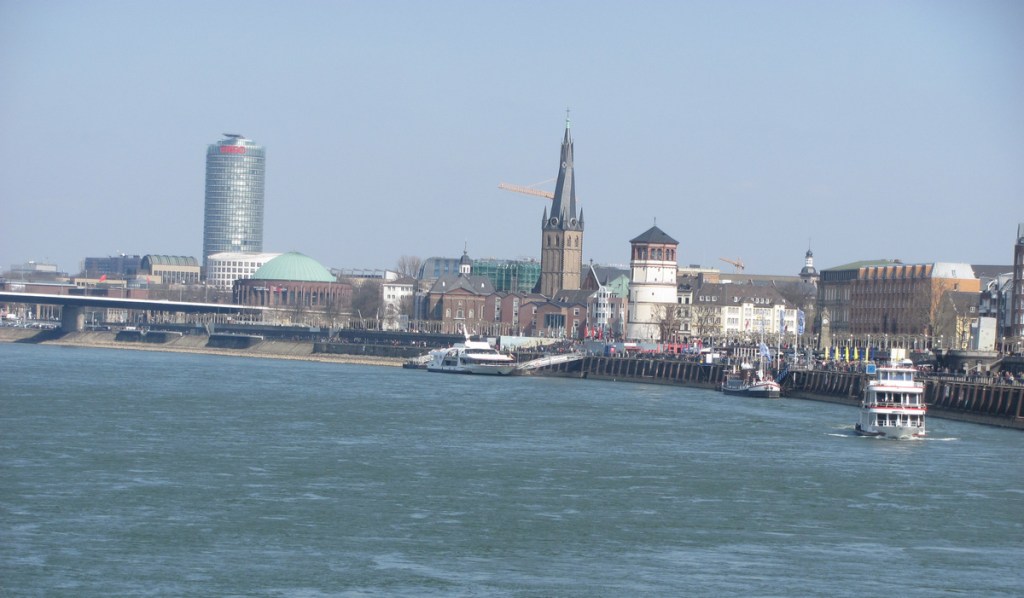
I headed to the beautiful promenade along river Rhine, with many closed shops on the street, but opened for window shopping. However, all the restaurants were working and seemed over crowded. I passed the famous street with restaurants, called “the largest bar in the world”.
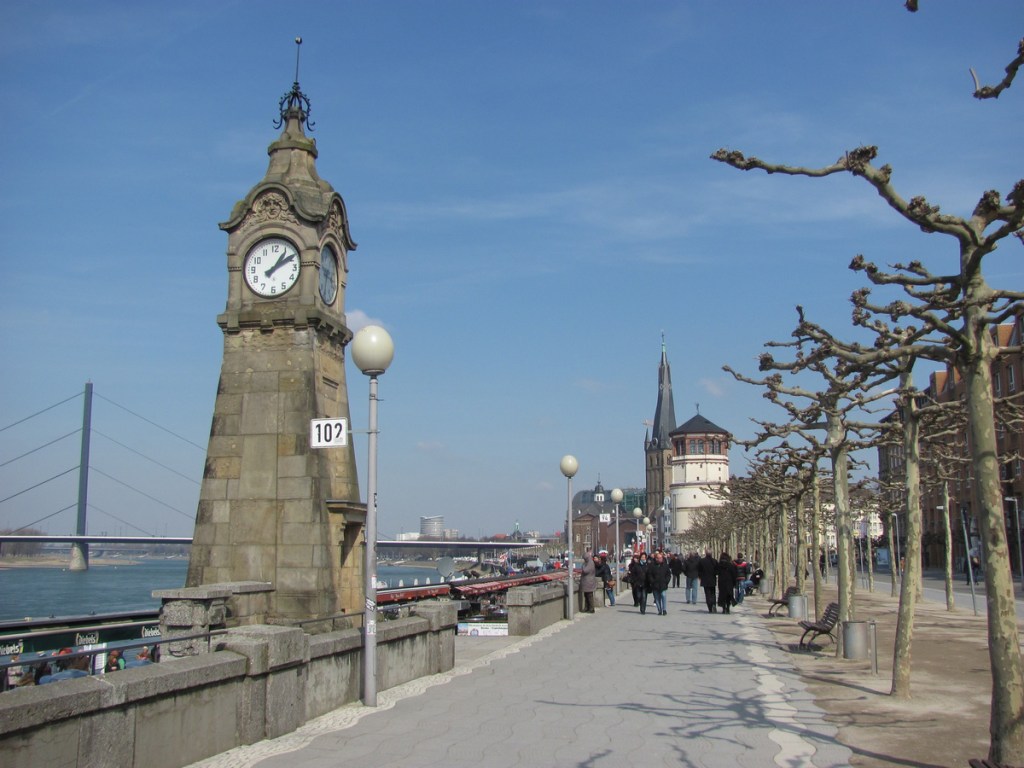
All the restaurants and the streets were full of people who drank, ate and laughed. There was an even bigger crowd on the promenade, which, despite the lots of people, impressed me. It was wide, there was room for restaurants and for a walk. It has two floors, and on the second floor there were many trees, not yet bloomed, but still adorned the landscape. I photographed the famous Pageluhr clock, which is located on the very bank of the Rhine and besides the time, it also shows the river level.
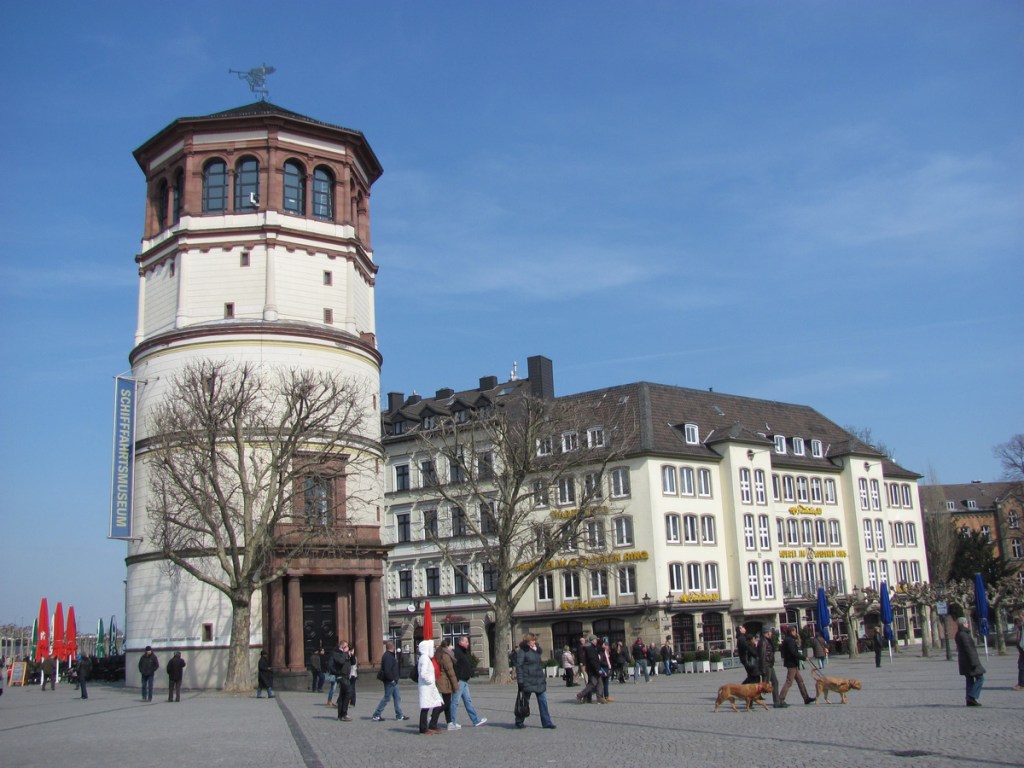


I headed to the naval museum, located in a white tower, next to the beautiful Basilica of St. Lambertus. This Gothic church has become a symbol of the city. It is especially famous for its curved tower. According to legend, 100 years ago, a white-dressed bride came to the church on the altar, claiming to be a virgin. As it was not true, the tower turned to the other side of shame. They say it will take back its position when a real virgin stands at the altar again, but so far this has not happened.
I headed to the other end of the driveway, where the 240-meter-high Rhine Tower stood. On the top of the tower there is a luxurious restaurant that is rotating around its own axis one every 72 minute, as well as a viewing platform of 168 meter. The entrance to the panoramic platform was 4 euros so I went there to take pictures from above in this clear and sunny day. It turned out, however, that it was closed. The panoramic site was only open on April 10, at the current time only the restaurant was opened but you should have a reservation in advance.
I didn’t have one, so I went back to the pedestrian zone of the old town, where different musicians sang on the streets in front of the restaurants, some of them playing accordions, other guitars or violins. The noise of the people, however, was even stronger and it seemed that people were really enjoying this day, without Easter decorations or special celebrations.
I also enjoyed my walk around the sunny city. Despite its name, Düsseldorf is not a small village and can not be toured in a day, but the old town and promenade fully compensated this and made my stay in the city magnificent.

GENERAL INFORMATION ABOUT DÜSSELDORF:
Location: Düsseldorf is the main city in the German region of North Rhine-Westphalia, having a large port on the Rhine River.
Area: 217 sq.km
Population: 604 527 people (2014 data)
Official language: German
Altitude: 42 m
Climate: continental and oceanic climate. Like the rest of the lower Rhineneland, Düsseldorf enjoys mild winters with little snowfall and warm summers. The average annual temperature is 11.6 C (exactly as it is in the Bulgarian capital Sofia).
Time zone: UTC+1
Currency: euro (EUR)
Further information: http://www.duesseldorf.de/de/
Trip Tips for Düsseldorf:
Best time to visit: all year round; usually in February there is a big carnival here. Typical food and drink: Germany is known for its baked sausages and beer, and Düsseldorf is no exception. Typical local dishes are Himmel un Ääd (Sky and Earth) combining the main ingredients apples (from the sky) and potatoes (from the ground), is a kind of sweet puree; Mussels in a broth of white wine, etc.
Places to visit: Old Town, Promenade Street, Rhine Tower, Benrath Palace, German Opera on the Rhine, etc.
 TripTips