EASTER IN COLOGNE

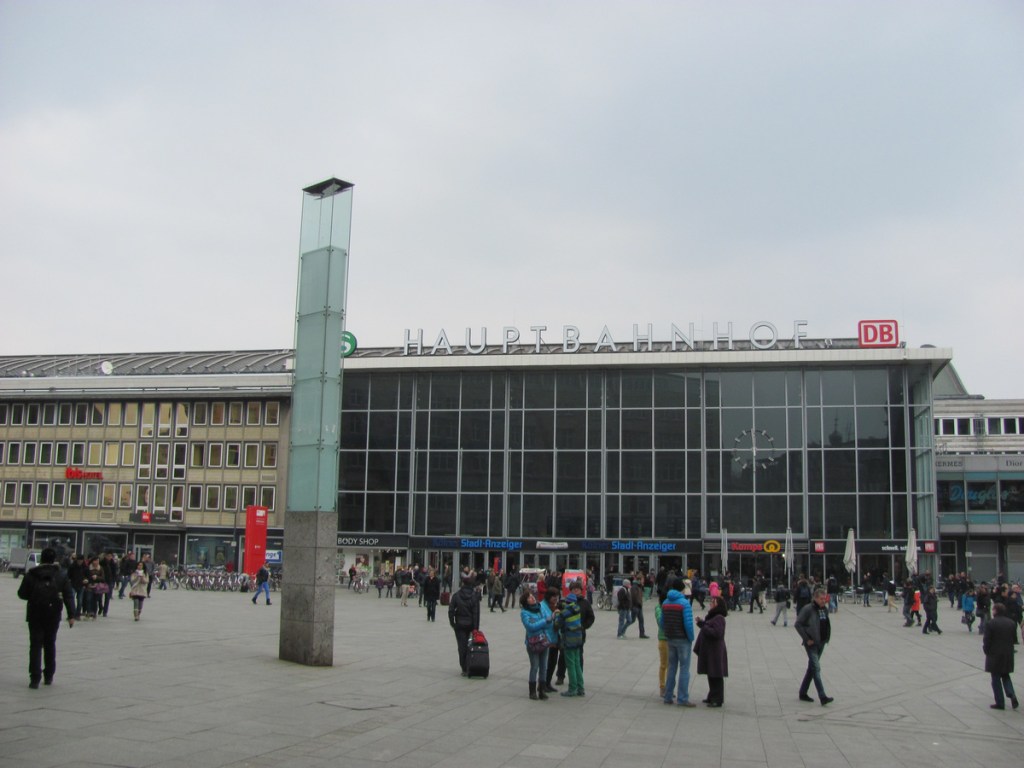
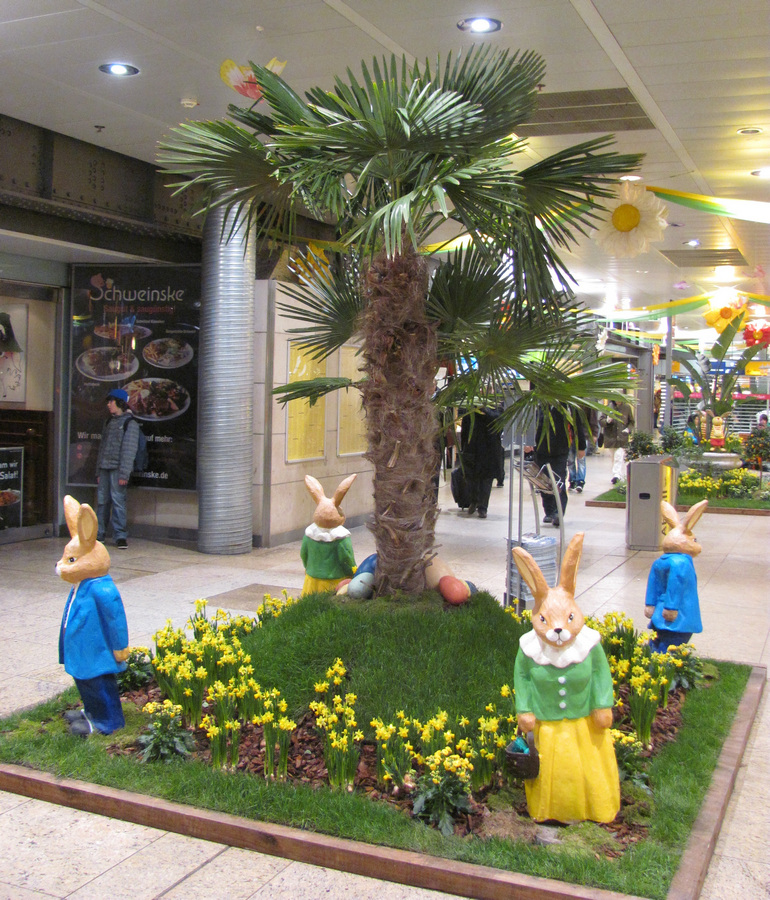
What is it like to celebrate Easter in the largest cathedral in Europe? I was very excited as I headed to the German city of Cologne, imagining the huge cathedral decorated with flowers. Upon arrival, however, I began to tremble not from excitement, but from cold. There were snowflakes outside, and I wondered if we were celebrating Christmas or Easter. However, the two holidays could not be mistaken in Germany. While during Christmas the German towns were glowing with glamorous Christmas markets and rich decorations, Easter was much more modest in this respect and only at the train station in Cologne I saw Eastern decorations with two bunnies. There was no sign of any other festive or spring decoration. Even the solemn Easter Mass began with no more than 10 people in the otherwise empty and cold cathedral, but it was probably the first Mass of the day, and I had gotten up too early in the morning. As the day dawned, the city took on a softer look and I really enjoyed my walk in the fourth largest city in Germany.

Cologne is located in northwestern Germany on the banks of the Rhine, and it may not be the largest city but it is certainly one of the oldest one in Germany, with a history of more than 2,000 years. Today the city offers many sights and entertainment for tourists. Thousands of exhibitions and events are held here every year, attracting millions of visitors. The city is also known as the city of churches. In addition to the huge cathedral, 12 large Roman churches are also preserved here. There are also 40 museums and 110 galleries.
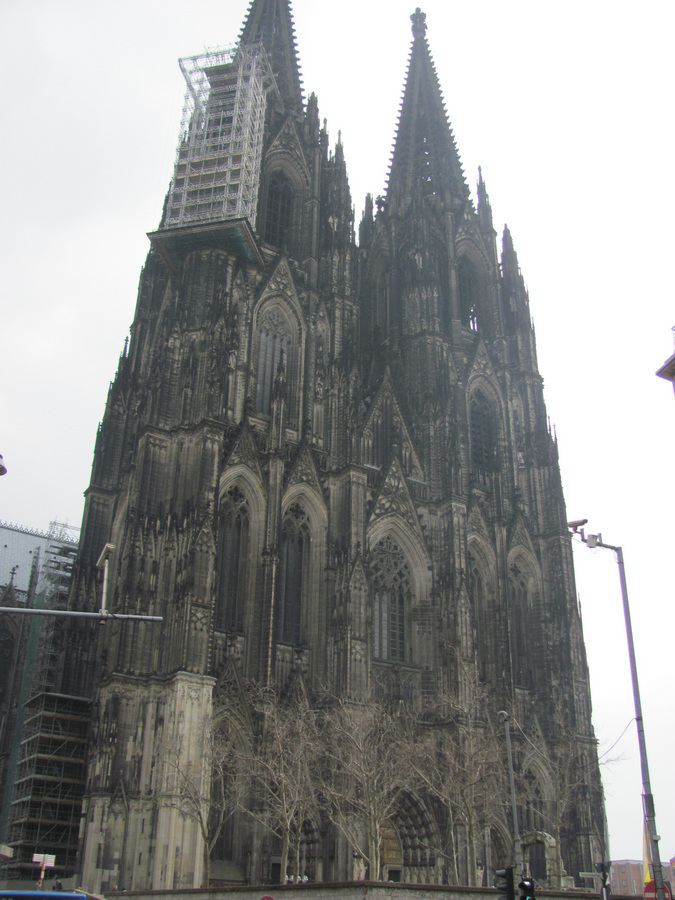
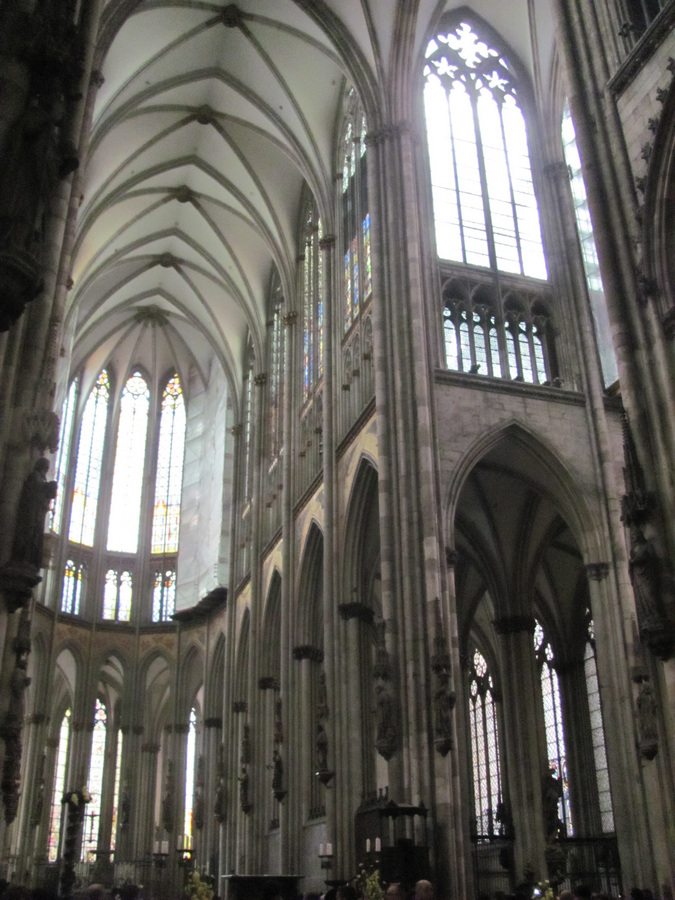
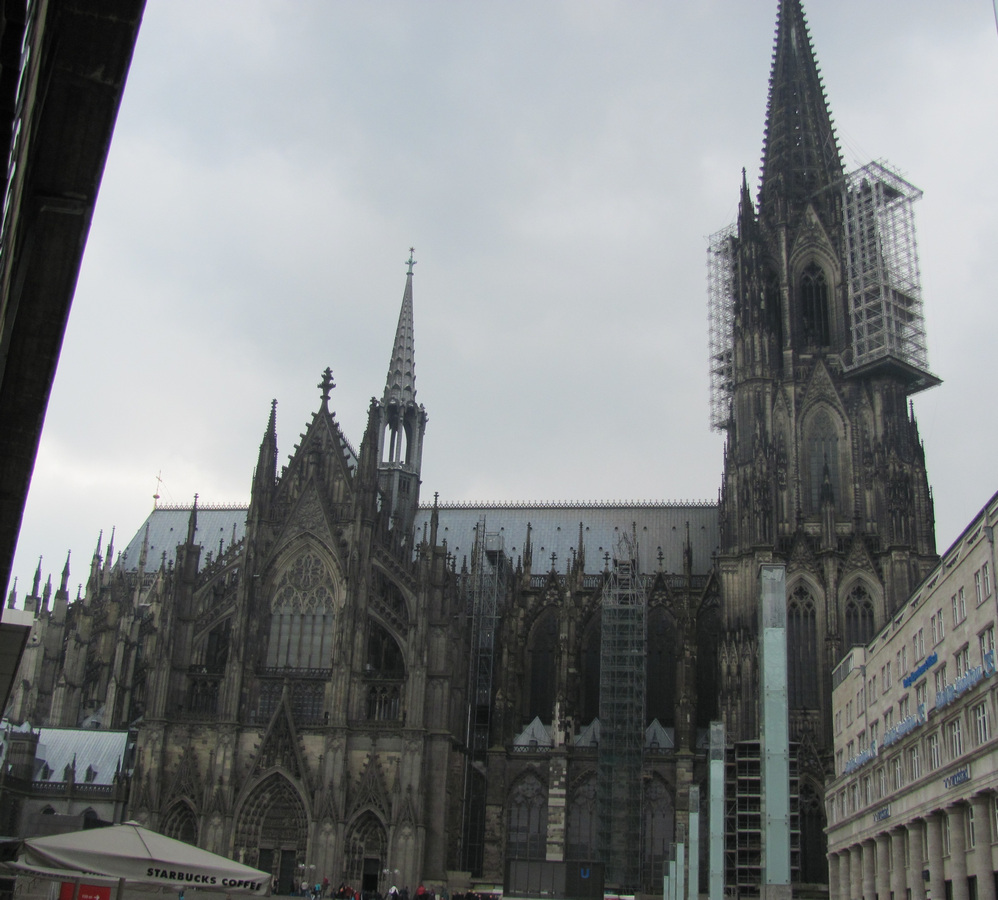
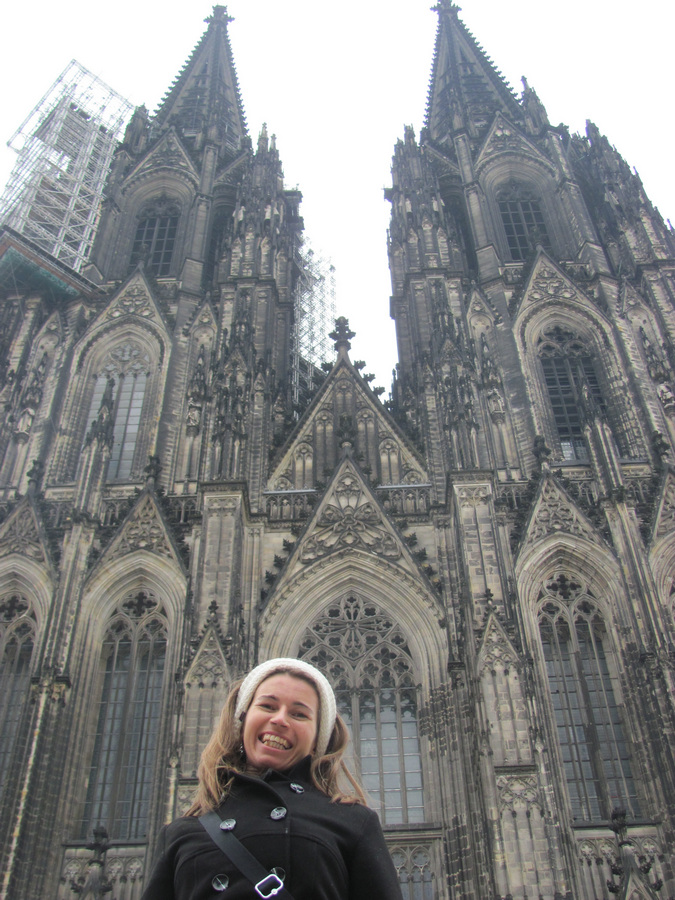
The main symbol of the city remains the Gothic cathedral, which is the second tallest in Europe, rising to 157 meters. It is a UNESCO World Heritage Site. Every year, over 6 million visitors climb the 533 steps to the top of the cathedral. At its construction in 1880, although briefly, the cathedral was the tallest building in the world.
You cannot miss it when getting off the train. The reference books said that if you don’t see the cathedral from your way out of the train station, you must be on the wrong station. Cologne’s central station is directly opposite the cathedral and coming out of the train station, it gasps passers-by with admiration. The cathedral towers rises above the clouds, which only reminded me that it is quite cloudy and gray, Even a little cold.
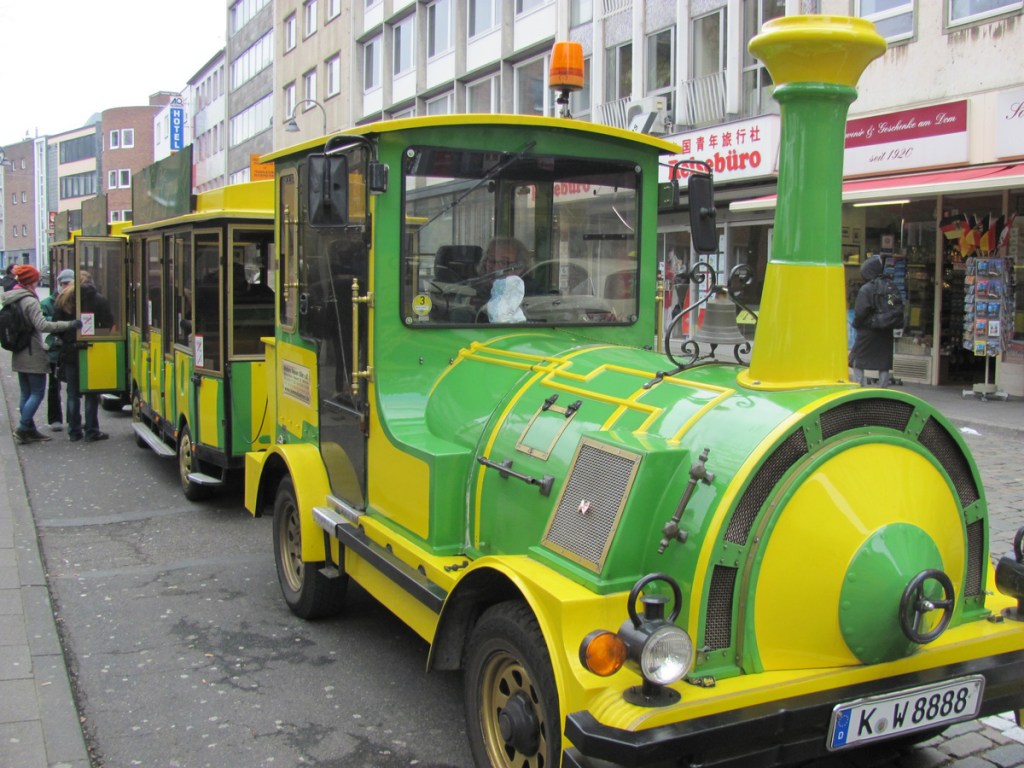
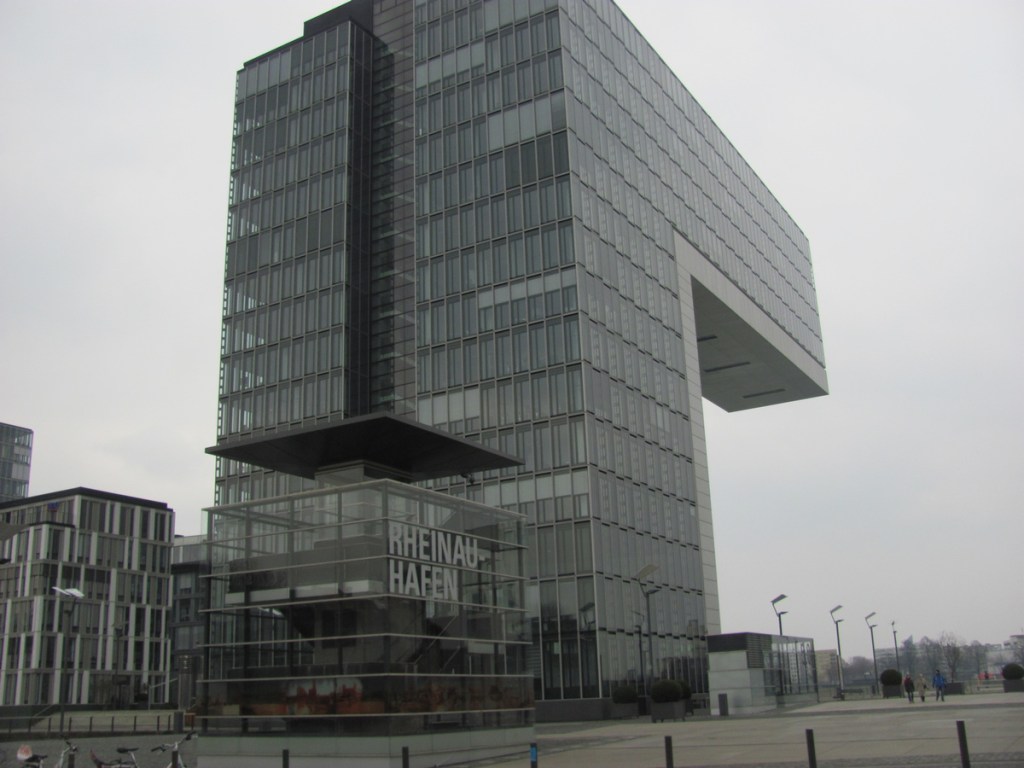
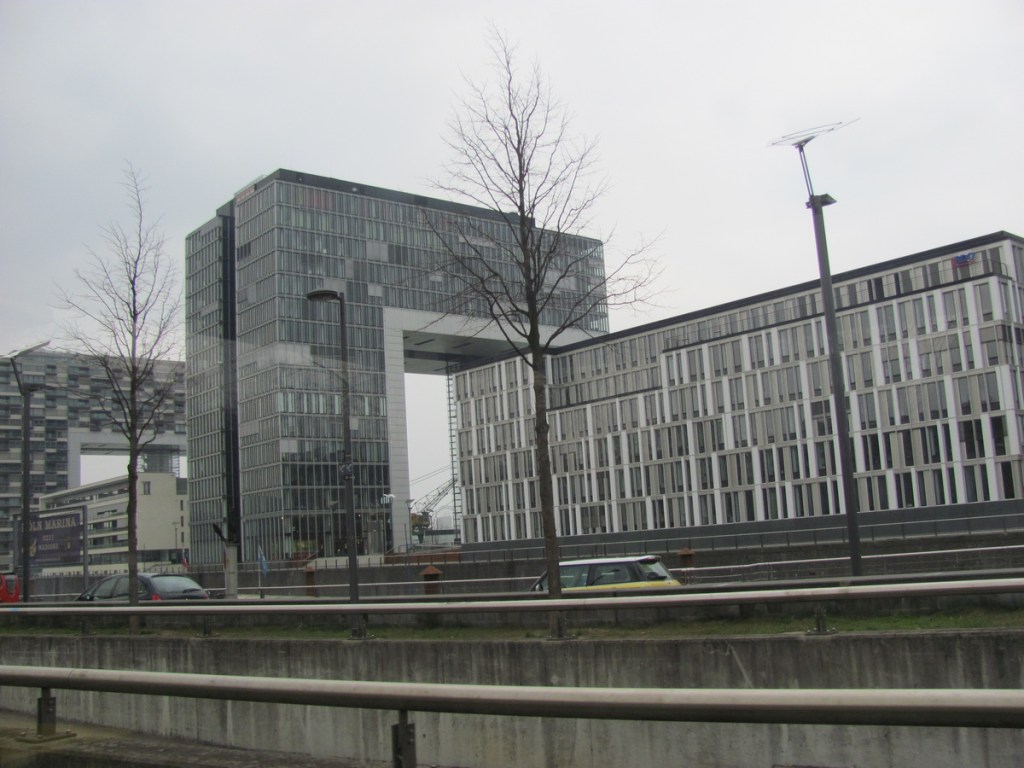
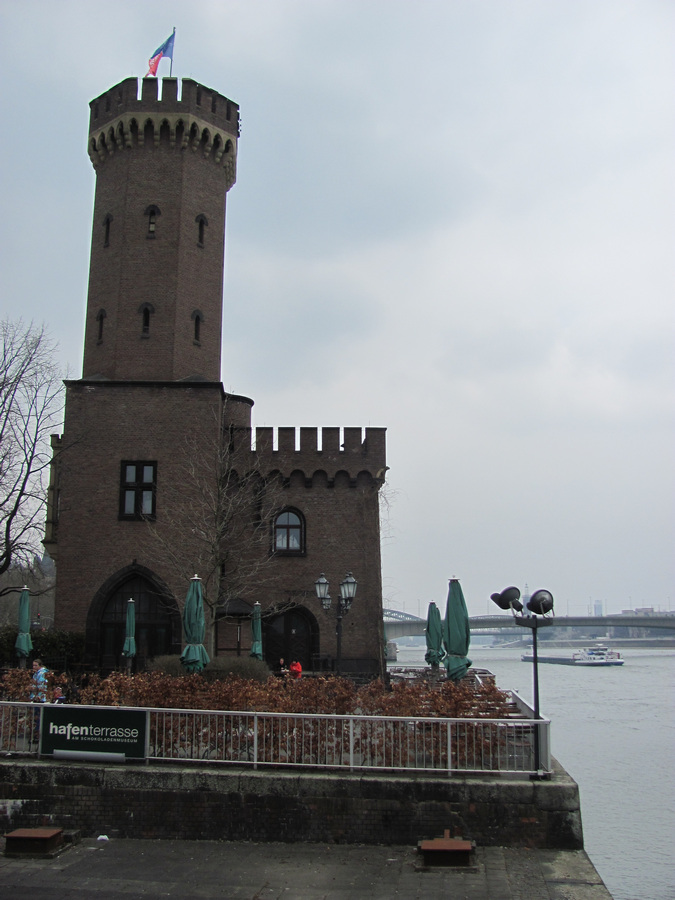
I tried to photograph the cathedral from all sides, but I didn’t succeed to capture it whole, even from a distance. Right in front of the cathedral there is a tourist train stop that led tourists to the zoo or the chocolate museum. I really wanted to see the zoo, which has more animals than any other zoo in Germany. It is also the largest elephant park in Europe. However, the cold and sullen weather dissuaded me and I headed to the chocolate museum. Along the way, I learned interesting things about the city, from the laud speakers in the train, hearing everything in German and English, practicing both languages. With the tourist train we passed several museums, passing by the port of Rheinauhafen, where interesting glazed and modern buildings are erected.
I got off the train at the Chocolate Museum stop and lined up for a ticket that cost 8 euros, using the discount from the tourist train. Each ticket is accompanied by a piece of chocolate, which was a great start. The museum spreads over several floors and here you can follow the whole process of making chocolate. There was a patio with a tropical garden where I was able to see and photograph a cocoa plant for the first time, as well as a coffee plant. The best thing about the museum was the wonderful aroma of chocolate that was permeated everywhere.
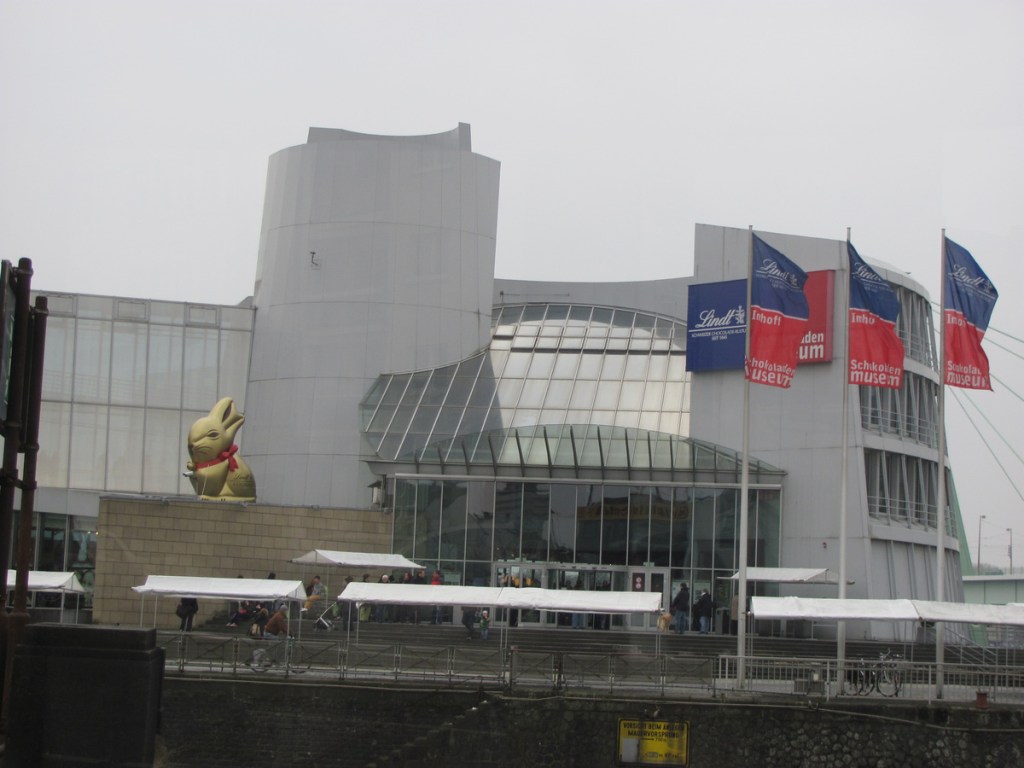
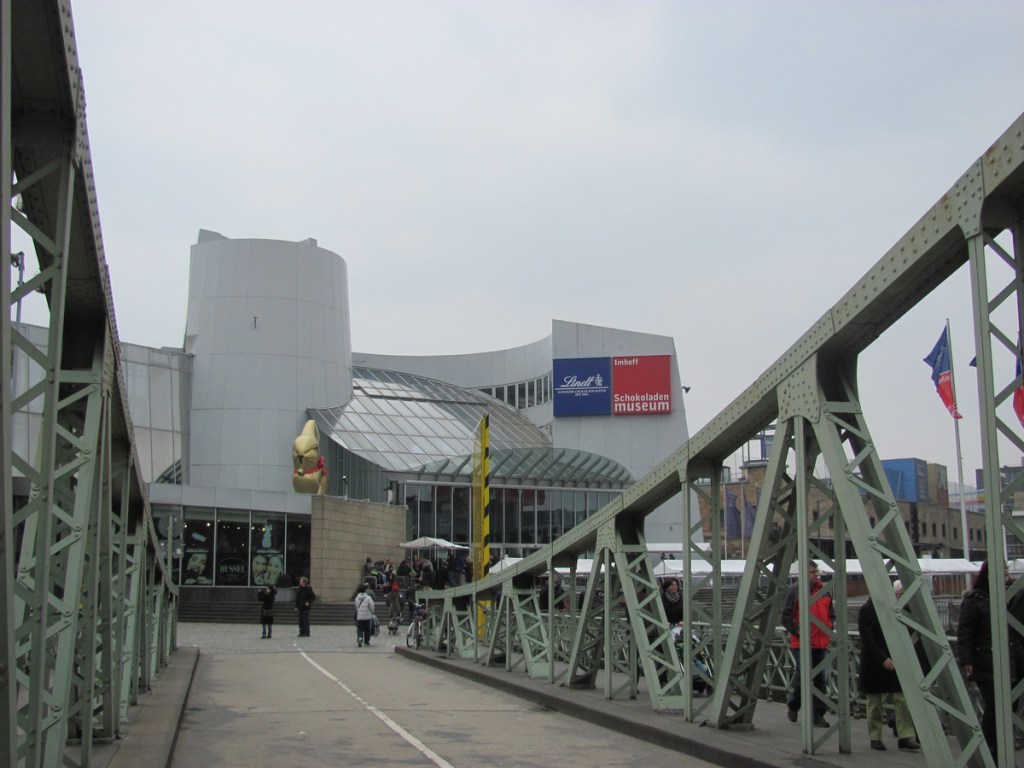

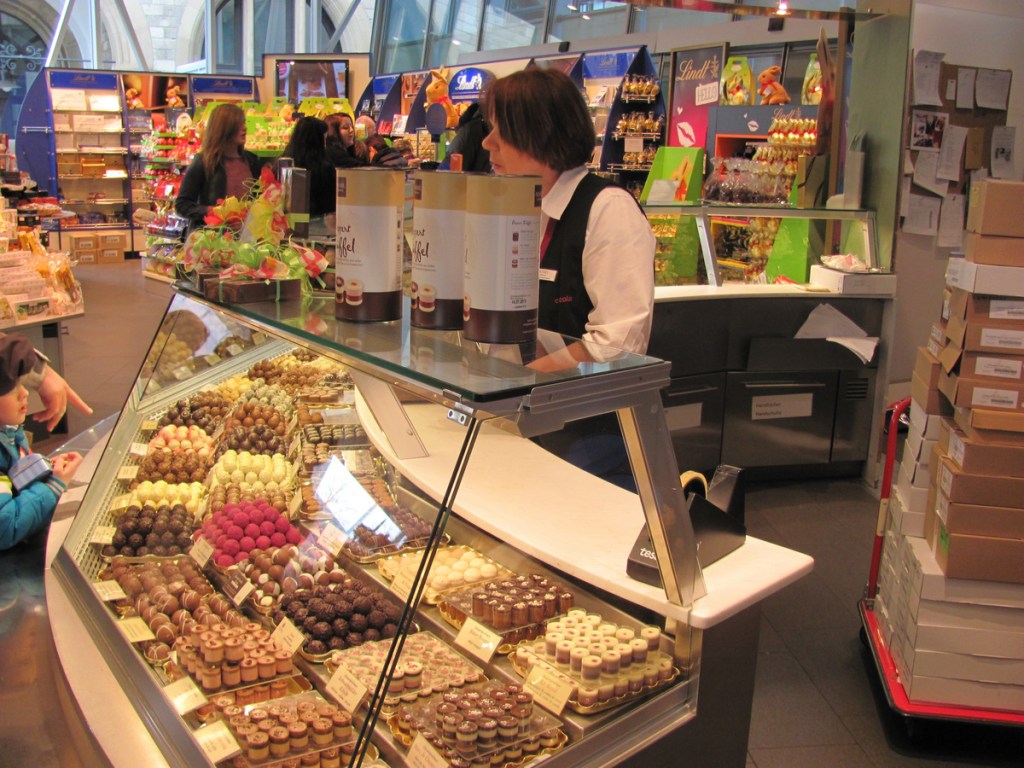
There were many different machines (some of which functioned) and they made chocolate, there was a small fountain of liquid chocolate, from which an employee dipped a waffle biscuit and handed it to visitors. From the museum there was a wonderful view of the city, and at the exit of the museum a large shop only for chocolate!
In the museum, I learned that the origin of cocoa has not yet been established, but most likely it comes from the Amazon forests of Central America. The people there have been using cocoa for centuries, for almost 4,000 years, and various vessels have been found in which they processed and stored it. A Mocau tribe that lived in the Paso de la Amada used cocoa as early as 1900 BC. They inhabited present-day Mexico and western Guatemala. Subsequently, cocoa was used by many of the Maya, Aztecs, etc. There were also interesting articles on how chocolate was used as a medicine, but instead of reading, I preferred to go and get chocolate from the store and try the healing power directly.

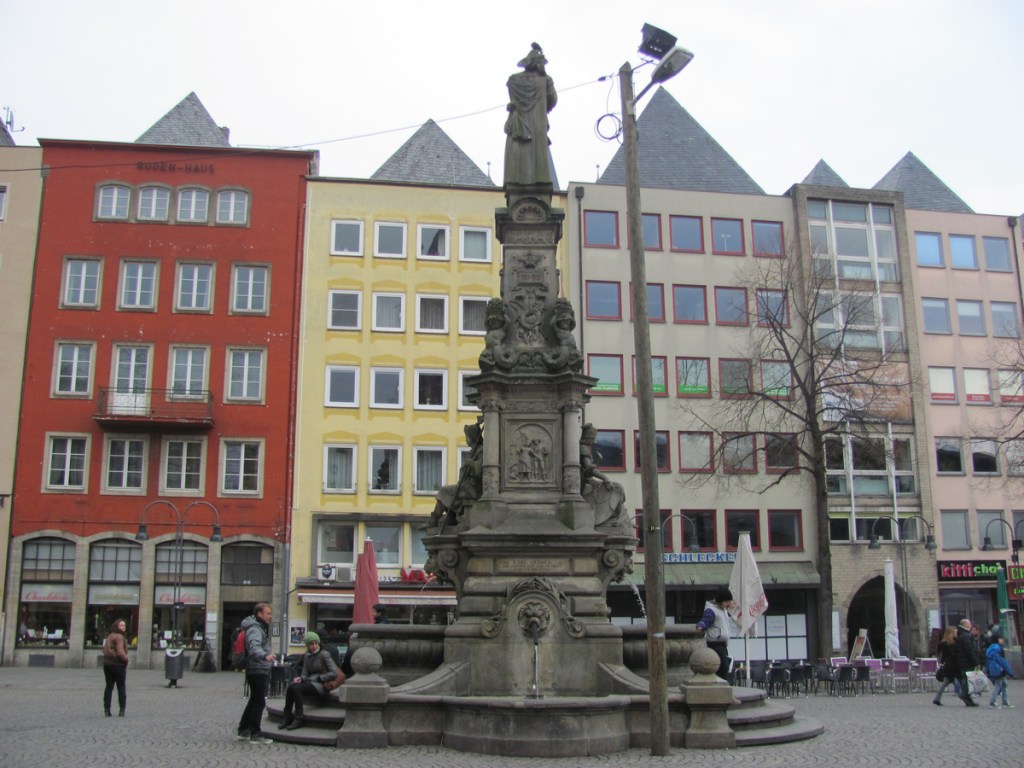
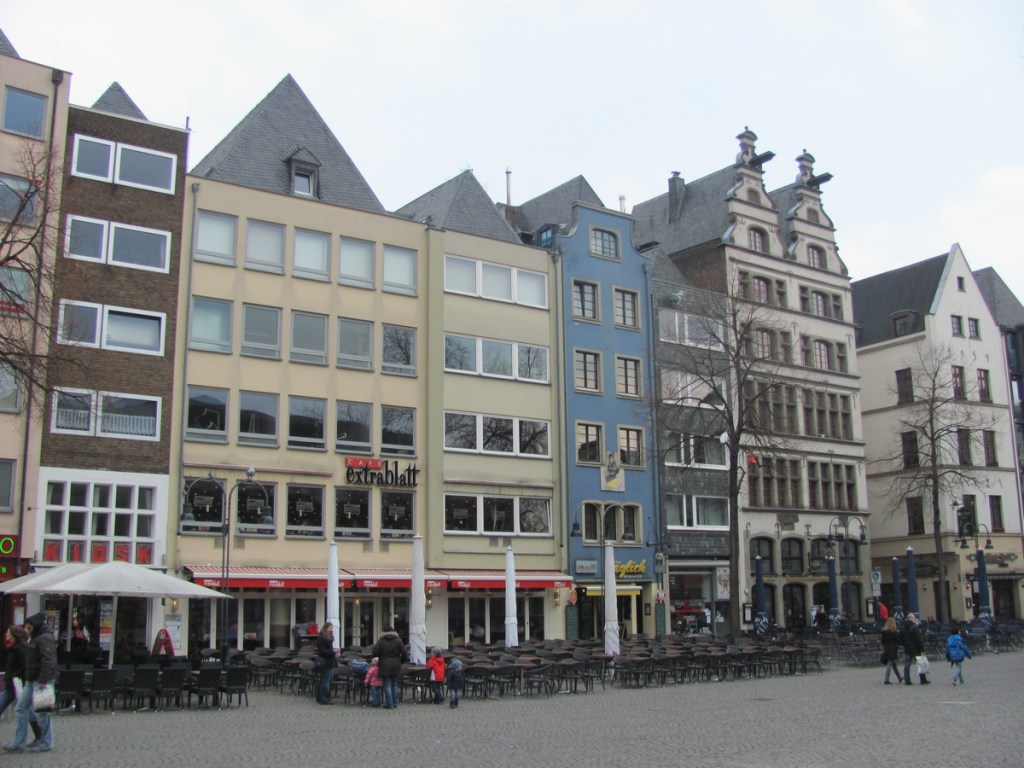
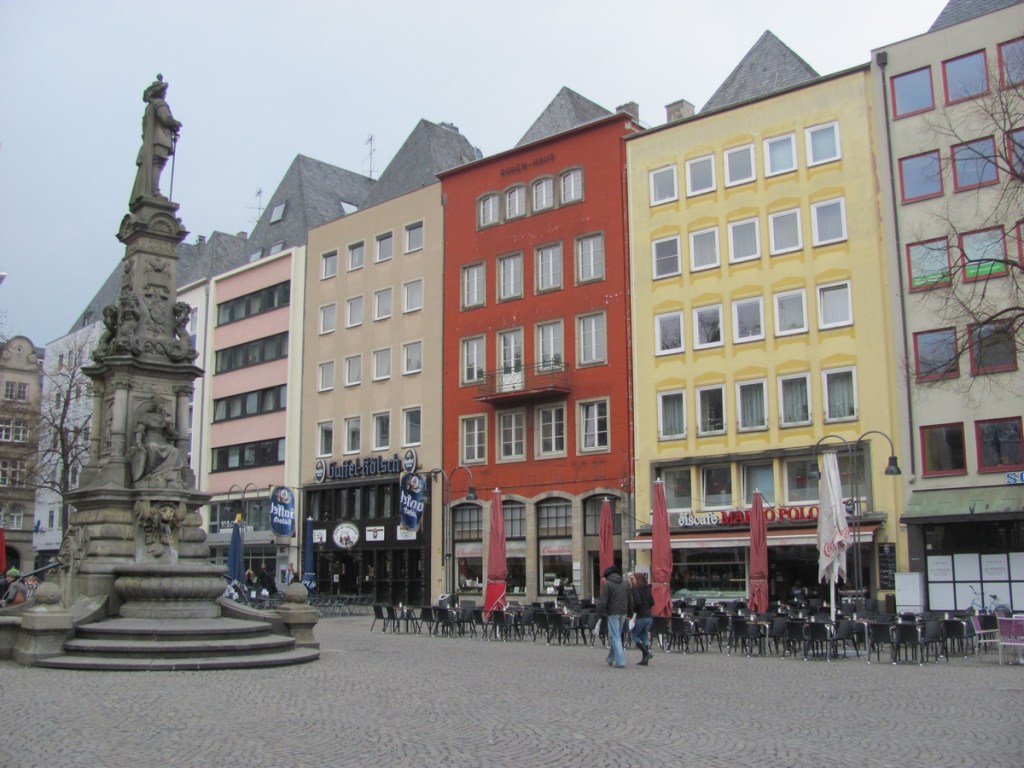
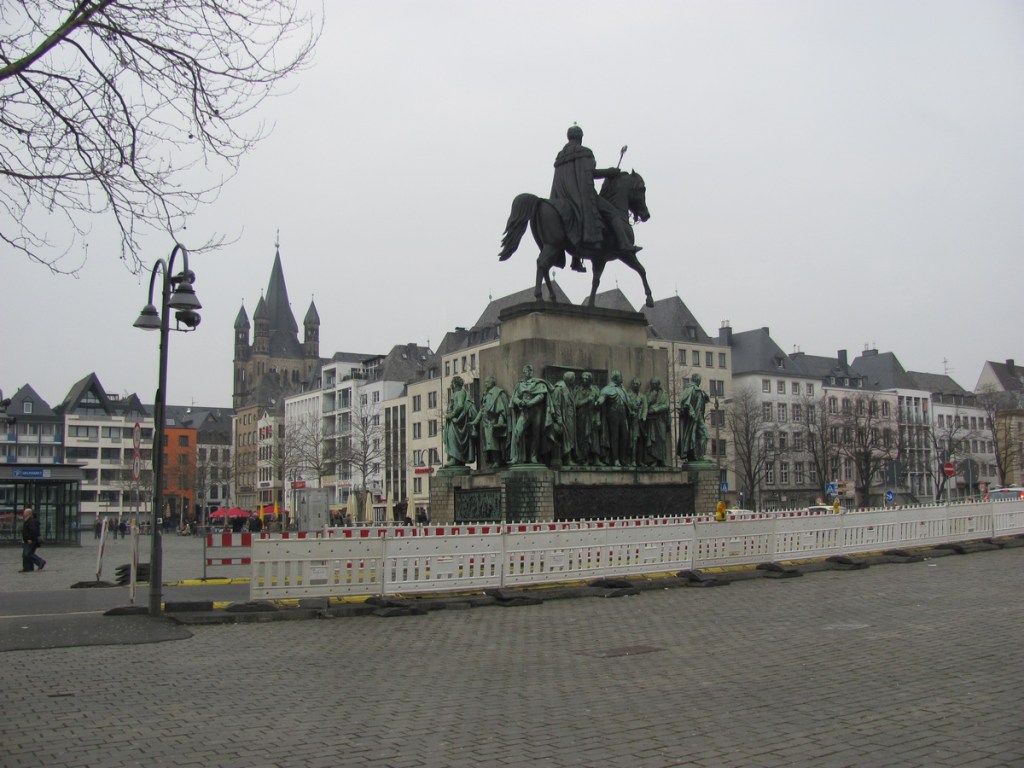
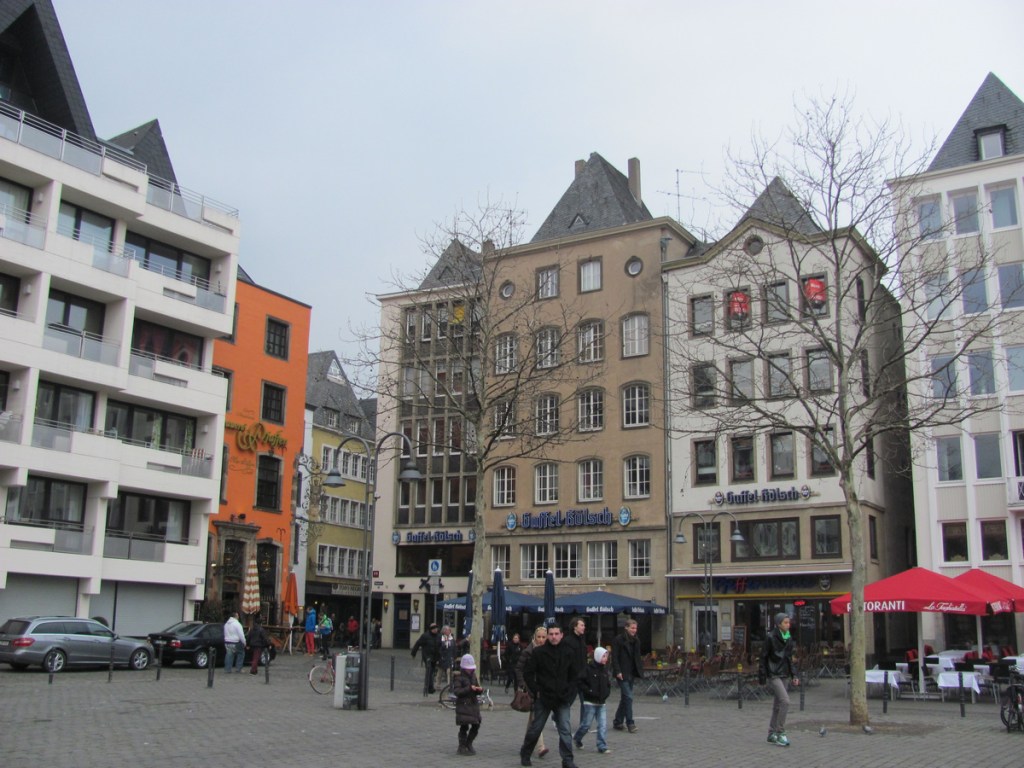
After the museum, our tourist train made a reverse tour of the city to the Cathedral, from where on foot I headed to the old part of Cologne and the beautiful market square with colorful houses and a fountain in the middle. Alter Markt (Old Market Square) was a shopping center in the Middle Ages and a place of execution, today it was turned into a picturesque place with colorful houses and flowers. The fountain in the center is named Jan-vo-Werth and symbolizes the legend of the unhappy love of soldier Jan and the girl Griet. According to the legend, Greet rejected Jan’s love because he was an ordinary farmer. However, when he went to war, he was so brave that he reached the post of general. When he returned to his hometown, he met his former love in this market square and told her, “Griet, if only you had agreed…”, and she replied, “Jan, if only anyone knew…” This legend is often presented at the Carnival in Cologne.
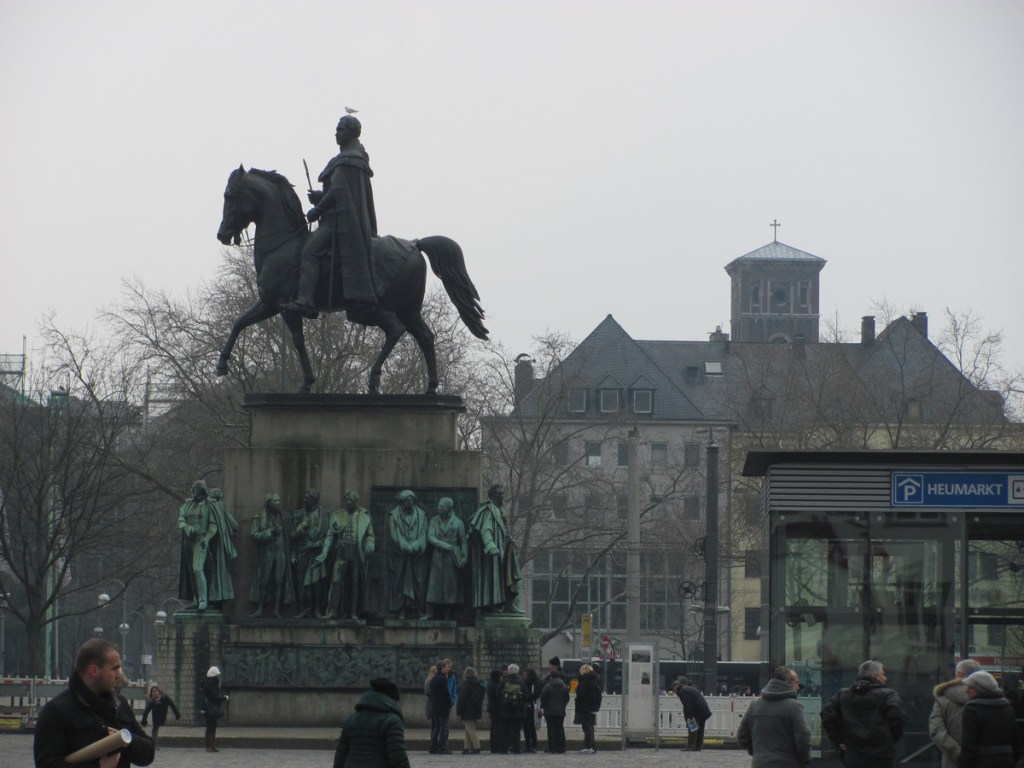
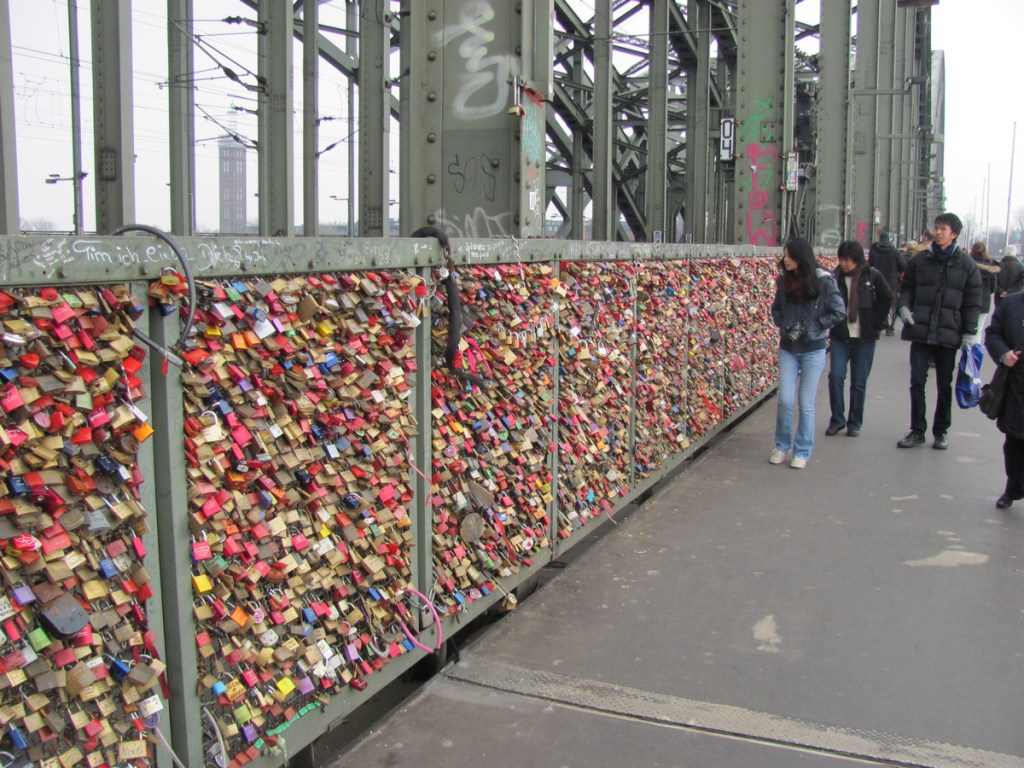
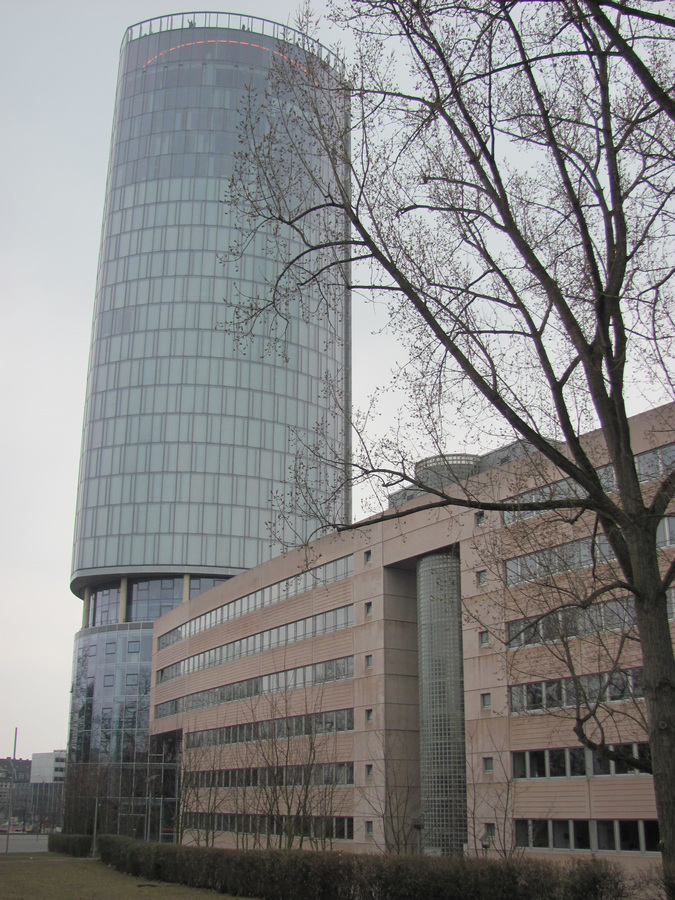
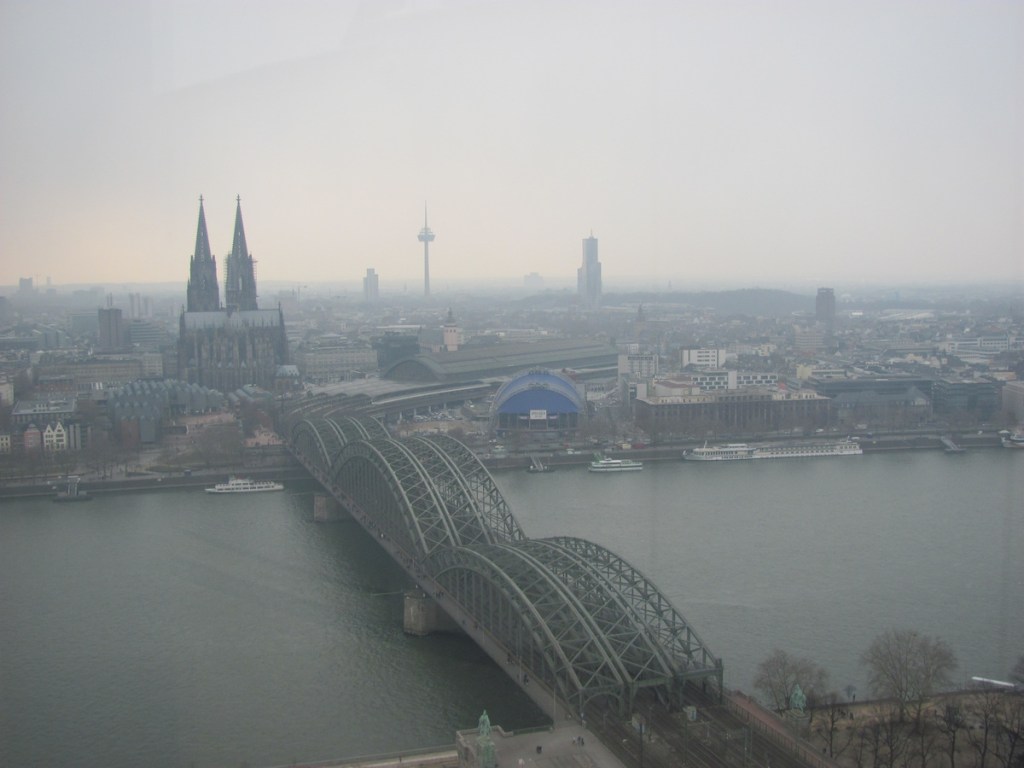
From here I headed along the Rhine coast, with more wonderful landscapes to the city. I crossed the Hohenzollern Bridge with the millions of padlocks that lovers lock here in the hope that their love will remain locked and mutual forever. I took a picture of myself in the background of the bridge and the cathedral. Then I headed to Koln Triangle, a skyscraper with a magnificent observation desk, located on the last 28-floor. Here you can see an incredible panorama of the cathedral, the bridge and the river.
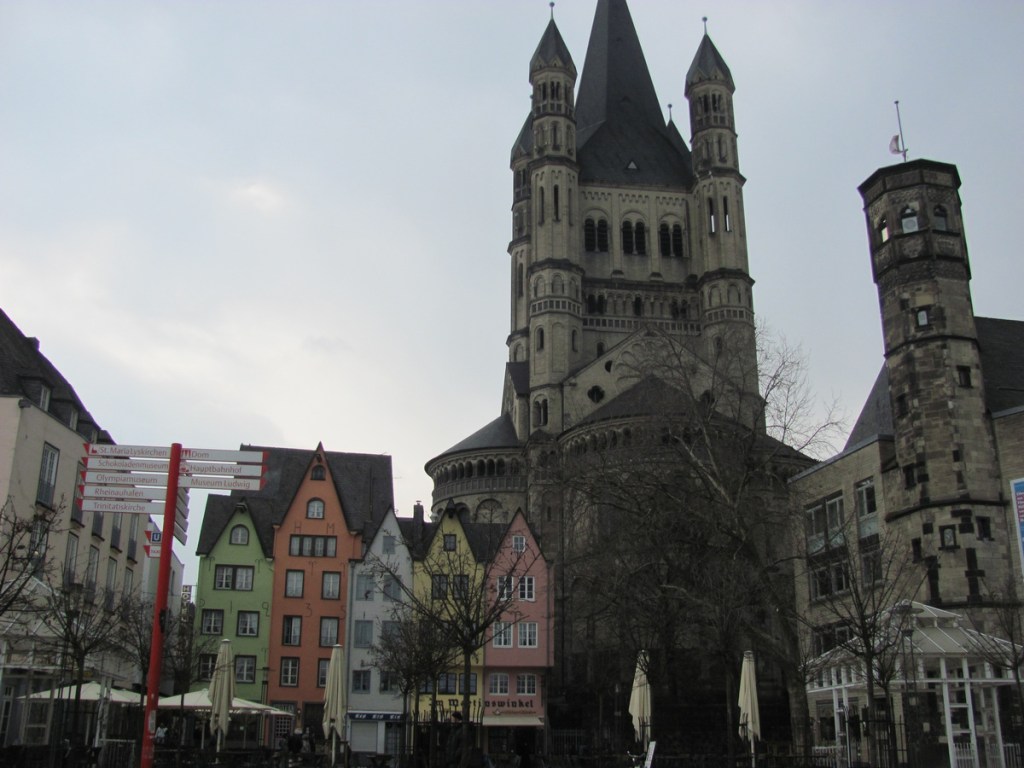
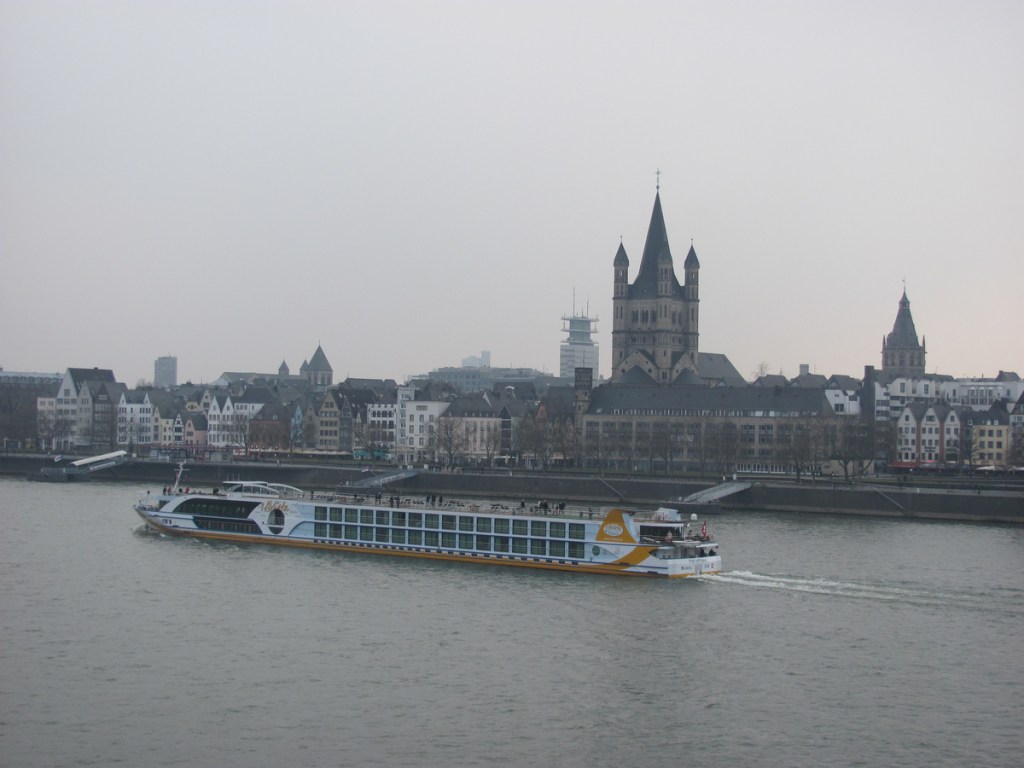

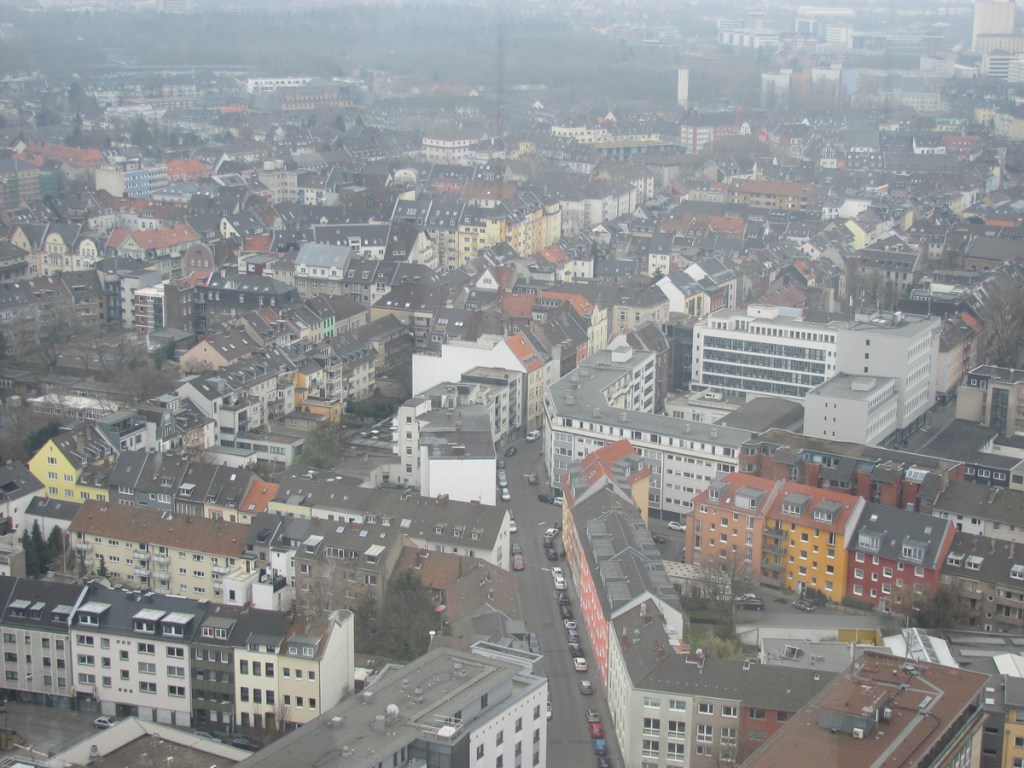
Cologne may not be the most Easter decorated city, but it is colorful in its own way with its colorful and beautiful buildings, standing out even on the most gray and cloudy day. I liked Cologne, but I couldn’t wait to leave the next day, boarding one of the many boats that passed by and offered walks along the romantic Rhine River.
GENERAL INFORMATION ABOUT COLOGNE:
Location: Cologne is located on both banks of the Rhine in western Germany, North Rhine-Westphalia region
Area: 405.15 sq.km
Population: 1 046 680 people (data from 2014)
Official language: German
Altitude: 77 m
Climate: temperate continental and oceanic climate. It is believed that Cologne is one of the warmest German cities with mild winters and hot summers.
Time zone: UTC+1
Currency: euro (EUR)
Further information: http://www.koeln.de/
TRIP TIPS FOR COLOGNE:
Best time to visit: all year round, usually in February a big carnival takes place, and in summer there are numerous beer gardens.
Typical food and drinks: Germany is known for its baked sausages and beer, and Cologne is no exception. A typical local dish is Himmel un Ääd (Sky and Earth) combining the main ingredients apples (from the sky) and potatoes (from the ground), representing something like sweet puree. You can also try the local schnitzel and Leberwurst.
Places to visit: Cologne Cathedral, Roman-German Museum, Chocolate Museum, Cologne Zoo, etc.
 TripTips