BAMBERG
“LITTLE VENICE” AND “GERMAN ROME”
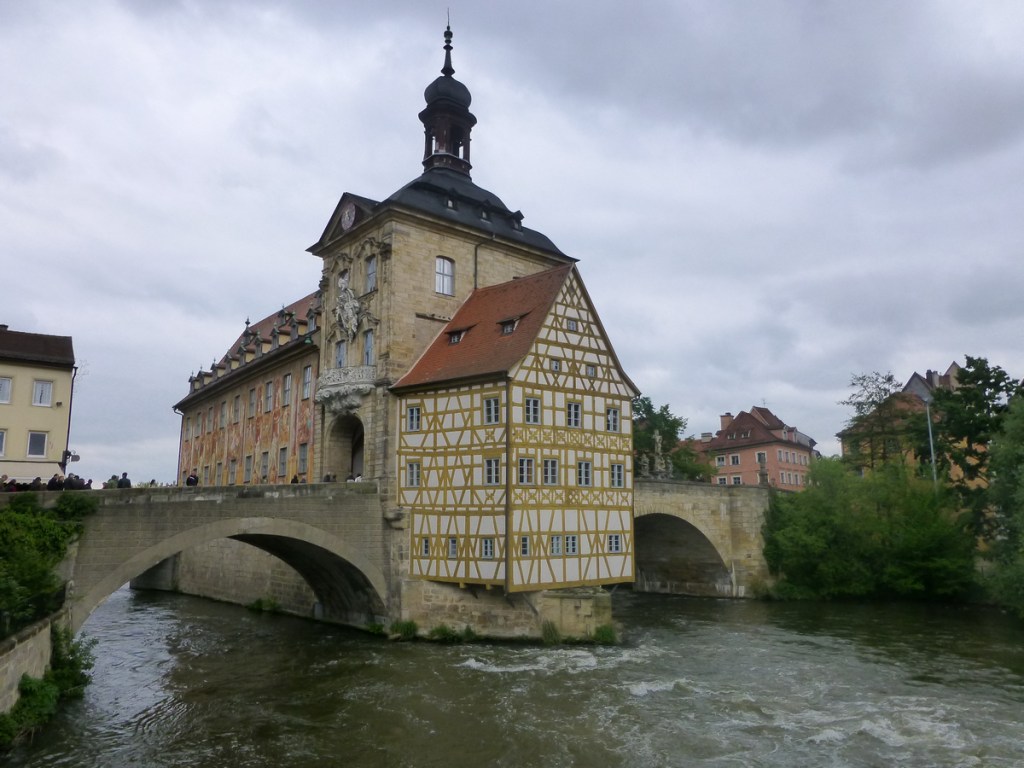

Bamberg – a small town with big titles. It is situated on 7 hills similar to Rome, each of which is crowned with a church or castle. Regnitz River curves around its picturesque painted houses and numerous bridges turning the city into “little Venice”. The old part of Bamberg is included in the UNESCO World Heritage List. All this makes the city a fascinating place to visit, leaving tourists with the impression that it is one of the most beautiful small towns in Germany.


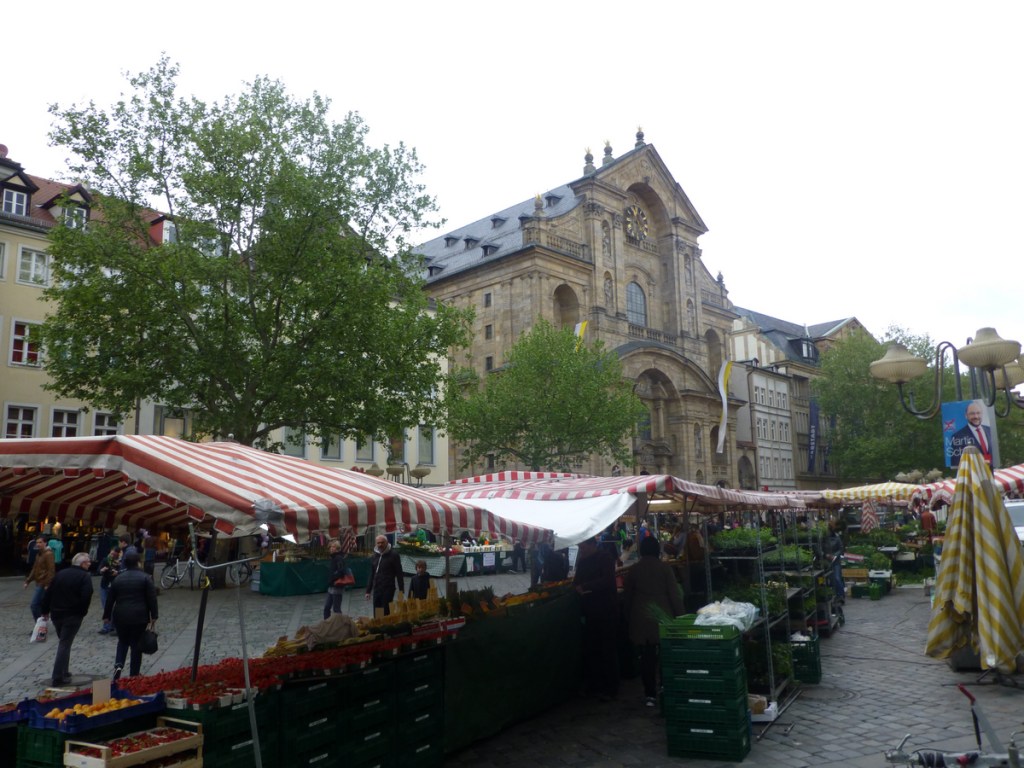
We arrived at the train station early in the morning and headed towards the street Luitpoldsraße. We crossed the canal of the Main and Danube on the metal bridge Luitpoldbrücke, then we continued along a very picturesque street with beautiful buildings. We turned right to a small square surrounded by nice buildings and a church, and in the middle there was a lively market with many stands with fruits and vegetables.




Imperceptibly we reached the beautiful Regnitz River, on whose banks were erected many colorful and traditional German houses. In the river itself, on an island, connected by two bridges, was located the beautifully painted town hall, which we toured from all sides. According to the booklet I got from the station in Bamberg, the town hall dates back to the 12th century, initially representing only one tower, which was gradually decorated with the lush clingy house and the baroque facade with beautiful figures and statues on the walls. According to the other manual, the town hall was erected on this artificial island due to a conflict between the archbishop and the mayor. The archbishop did not want to cede a single inch of land from his possessions, and the armed conflict led to the agreement not to build a new town hall on the territory of Bamberg, but to erect it on the island and connected by two bridges respectively. As they say whatever happens in life, happens for good, this enmity had left a beautiful monument that impressed us and our cameras.


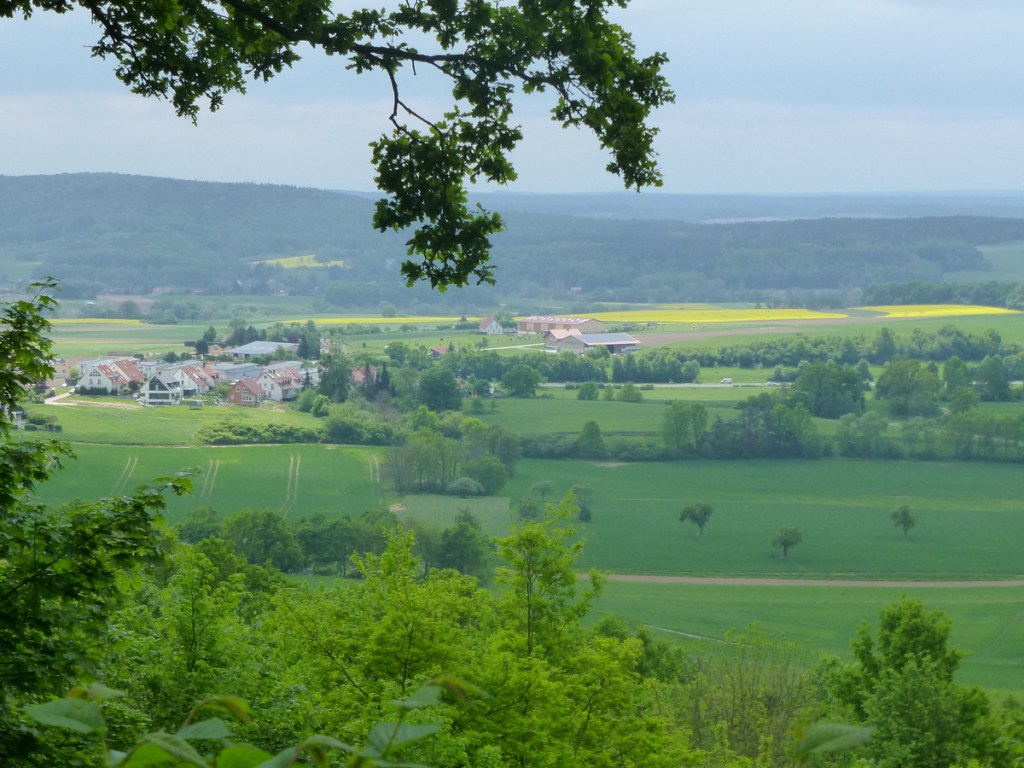
We went to Domplatz Cathedral Square, where the majestic two-towered cathedral was located, one of the towers however was under repair. We didn’t go inside because we were in a hurry for the tourist train that was taking a tour of the 6 hills. However, the same was overcrowded and we didn’t succeed to get on. The next one was not until an hour, so we decided to get to the hill with the castle by public transport. Bus 910 came quickly and the driver showed us where to get off and where to go. He didn’t tell us how far the fortress was. We walked along forest paths, with beautiful panorama of the city.
Real mountain wandering, among lush greeneries and fresh air, and it worths the effort. The castle impressed us, and not with its rooms and furniture that we did not see, but with its fabulous architecture and high tower, from which a magnificent panorama was revealed.
The castle was built in 1109 and was almost entirely preserved. In the 14th-15th centuries, the castle served as a residence for bishops. In 1553, however, it was destroyed by the Margrave (prince) Alfred Alcibiades von Brandenburg-Kulmbach, leaving only the medieval 33-meter tower and fortress walls. Later the castle was restored to its original form, and since 1901 in the new building of the castle there is a separate restaurant with panoramic views of the bishop’s city and the region.
After touring the tower, the fortress walls and the inner courtyards of the castle, we entered the restaurant, where many people were celebrating a special occasion. The waiter guided us back to the city, that is only 3 km away. Between the unmarked eco path and the asphalt road, we preferred this time the latter. The tour back took us about 30 minutes, getting agian to the cathedral square in Bamberg.
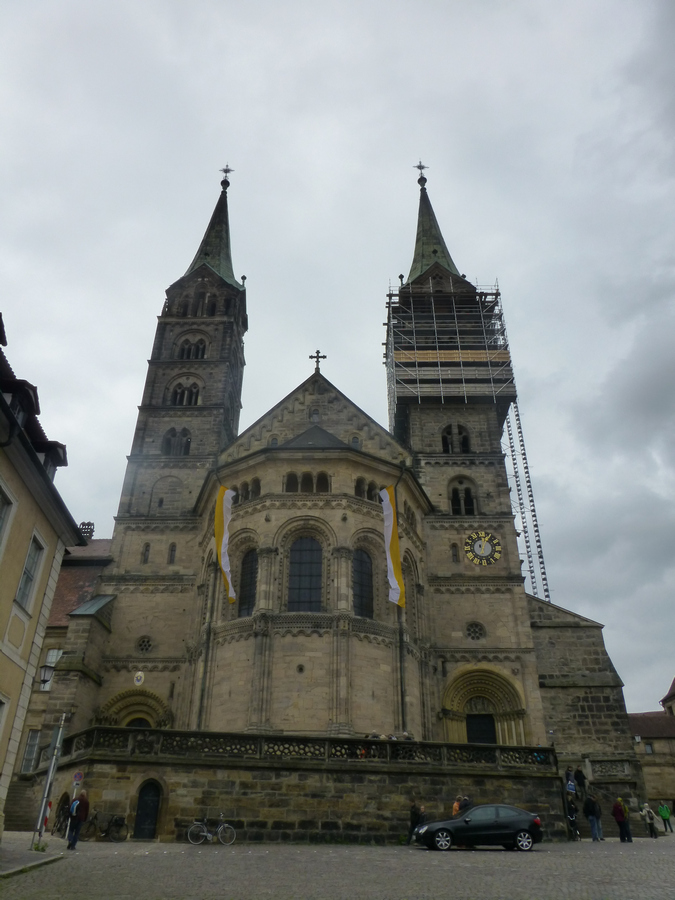

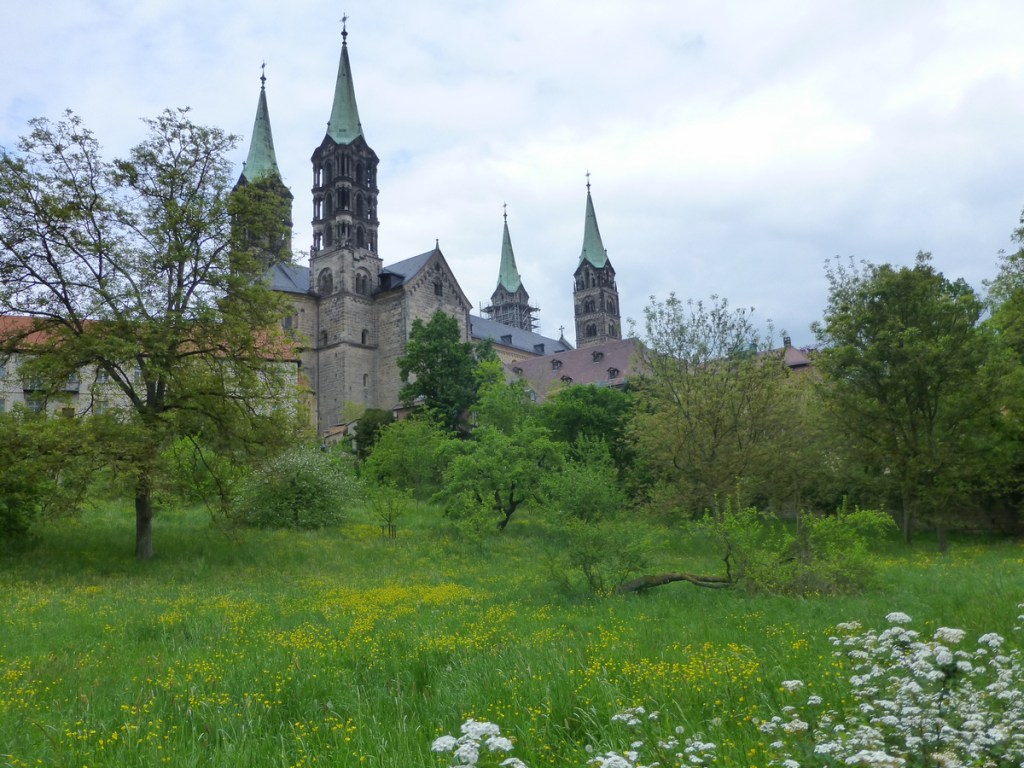


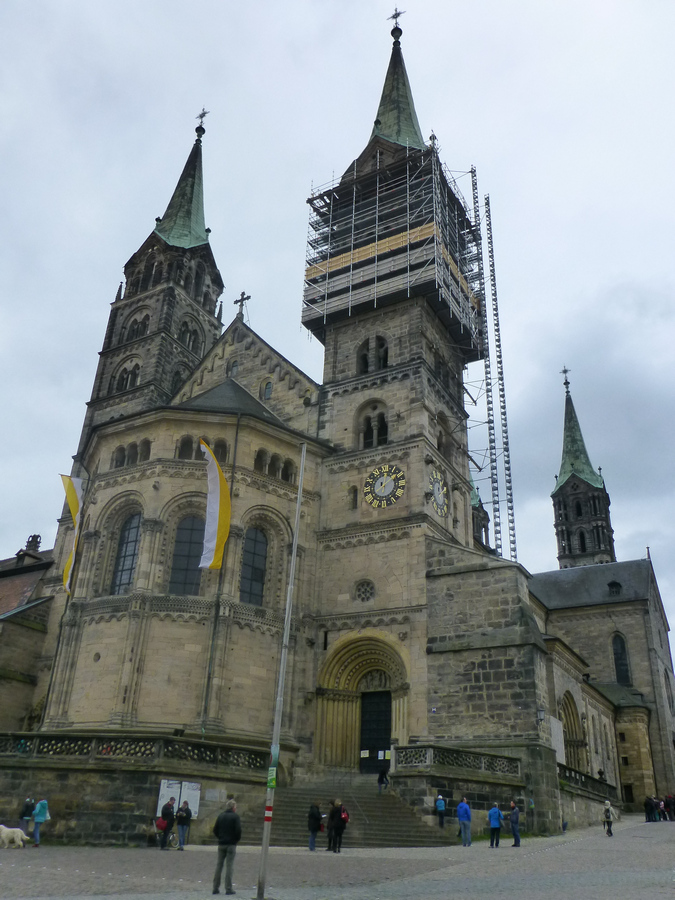


This time we entered the majestic cathedral built in 1002 by Emperor Henry II, and the same was erected and completed in just 10 years. Like the current cathedral, the previous one had two towers facing east, but they did not have the impressive height of the current ones. The official name of the cathedral was Bamberger Dom St. Peter und St. Georg, and here was the seat of the bishops of Bamberg. The cathedral was partially destroyed by fire in 1081, but was rebuilt entirely in 1111, and in the 13th century it received its current late-romantic façade.
The cathedral itself was 26 meters high, and the towers rose to a height of 81 meters. Inside it was exquisite and beautiful, with a beautiful marble grave of the city’s creator and his wife, the Empress Cunigunde. The monument was considered a masterpiece of the sculpture Tilman Riemenscheider, and carved in the period 1499-1513. Another treasure of the cathedral was the statue of the horseman, probably depicting the Hungarian King Stephen I and dating from the period 1225-1237.
Looking at these statues and the beautiful images in the cathedral, we seem to have been transported to the past, when Bamberg was created by Emperor Henry II, who turned the city into a center of the Holy Roman Empire and the capital of his country. The walk in the past continued outside the cathedral among the many preserved medieval and Baroque buildings. During the war, the city was little affected, making it the largest urban ensemble in Germany and an important cultural center. Like Heidelberg, Bamberg is considered a university city, but instead of looking at universities, we decided to take a walk in the quarter called Little Venice.


Little Venice was actually the former fishing quarter, whose medieval, wooden and painted houses had leaned over to the very edge of the Regnitz River.
The day passed imperceptibly in the town, where we felt like time has stopped. Bamberg seems to be small, but it is full with many sights and titles. Created by emperors for emperors, this town fascinates millions of visitors to this day.


GENERAL INFORMATION ABOUT BAMBERG:
Location: Bamberg is located on the Regnitz River, in the northern part of the state of Bavaria, Upper Franconia region, Germany.
Area: 54.58 sq.km
Population: 71 167 people
Official language: German
Altitude: 262 m
Climate: continental climate
Time zone: UTC+1
Currency: euro (EUR)
Additional information: http://en.bamberg.info/

Trip Tips for Bamberg:
Best time to visit: all year round.
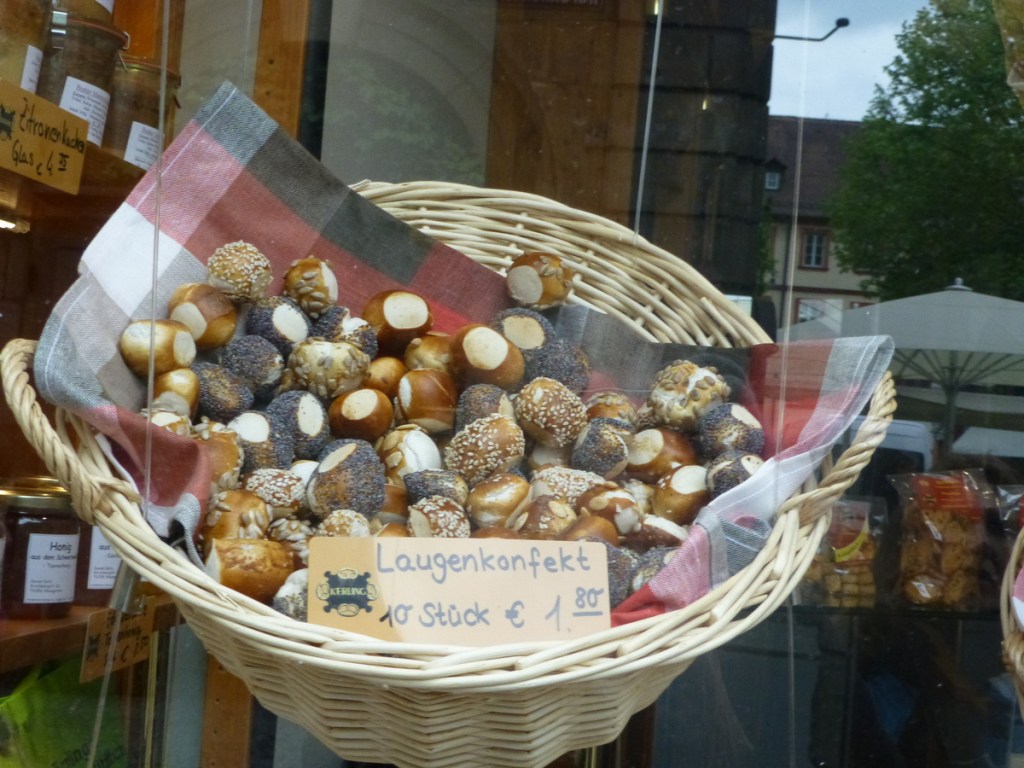
Typical food and drinks: Germany is known for its beer and roasted sausages, and Bamberg is no exception. Here you can try the local production of a special smoked beer (Rauchbier), which bears the name Schlenkerla. The beer goes especially well with the German sausages Bratwurst. Especially tasty are the small German bread rolls, so do not order lunch without bread. Places to visit: Altes Rathaus (Old Town Hall) located on a small island in the river; Gothic Cathedral; Bamberg’s Castle; Benedictine Monastery of St. Michael with its lovely gardens; Little Venice neighborhood, etc.
 TripTips