TROGIR – THE CROATIAN CITY-MUSEUM
(CROATIAN TRIP – PART 5)
author: Ana Boneva


Trogir is a museum city located on a small island between the territory of Croatia and the island of Ciovo, connected on both sides by bridges. The entire city is included in the UNESCO World Heritage List. To enter the city, we had to pass through a bridge and then enter the historic center through one of the stone gates. The whole city was surrounded by fortress walls built in the 15th century. It turned out that Trogir was the best preserved complex in all of Central Europe. The city prospered under the influence of the Greeks, Romans and Venetians. In it you could see the Camerlengo Castle (built by the Venetians in the 15th century), a tower, ancient dwellings and palaces. In the historical center there were about 10 churches and many buildings from the 13th century. The city gate dates back to the 17th century, and the Castle of Duka and the small and large Château de Chipico were from the 15th century. Interesting was the Cathedral of St. Lawrence of Trogir, which was built in the 13th century, as the western portal of the cathedral was the creation of the famous Croatian master – Radovan. The only thing missing was the people from Zagreb with the beautiful old-fashioned costumes, and one could easily confuse the year and the century in which we were walking. Unfortunately, we looked at all these places without a map and information. That’s why my photos managed to bring me back to this historic city later in the hotel and like the Japanese to wonder “wow, what things have I seen”.

The gate through which we entered the city was the “Earth Gate” or Kopnena Vrata, which was erected in the 15th century and was the main entrance to the city during the Venetian rule. In the 17th century, with the growth of the city’s prosperity, the gate was decorated with Renaissance elements. At the top of the arch stood the lion of St. Mark – the symbol of Venice, and above him the patron saint of Trogir – St. Ivan Trigorski. Passing under the gate, it was as if the saint blessed us, and we thanked him for having managed to preserve the city in its current form.
The narrow straight streets, which checked between the stone buildings, led us to the Cathedral of St. Lawrence. This cathedral was erected on the site of an ancient church, destroyed by the Saracens, the construction of which began in 1193, and the cathedral had two entrances (through which, unfortunately, we did not enter), one ordinary dating from 1123, and the other with magnificent reliefs, images and compositions. This entrance was constantly full with tourists who admired it and made it very difficult to photograph.



These engraved figures were made around 1240 by the Croatian sculptor Radovan. Two stone lions held the statues of Adam and Eve on either side of the gate. The rest of the compositions were scenes from the different months of the year and the corresponding customs – how the sheep were sown, how they planted the crops, etc., and in the semicircles were depicted various saints. Above the entrance there were also biblical scenes. From the outside, we were able to photograph the beautiful Venetian Gothic tower with a bell tower, built in the 15th century.
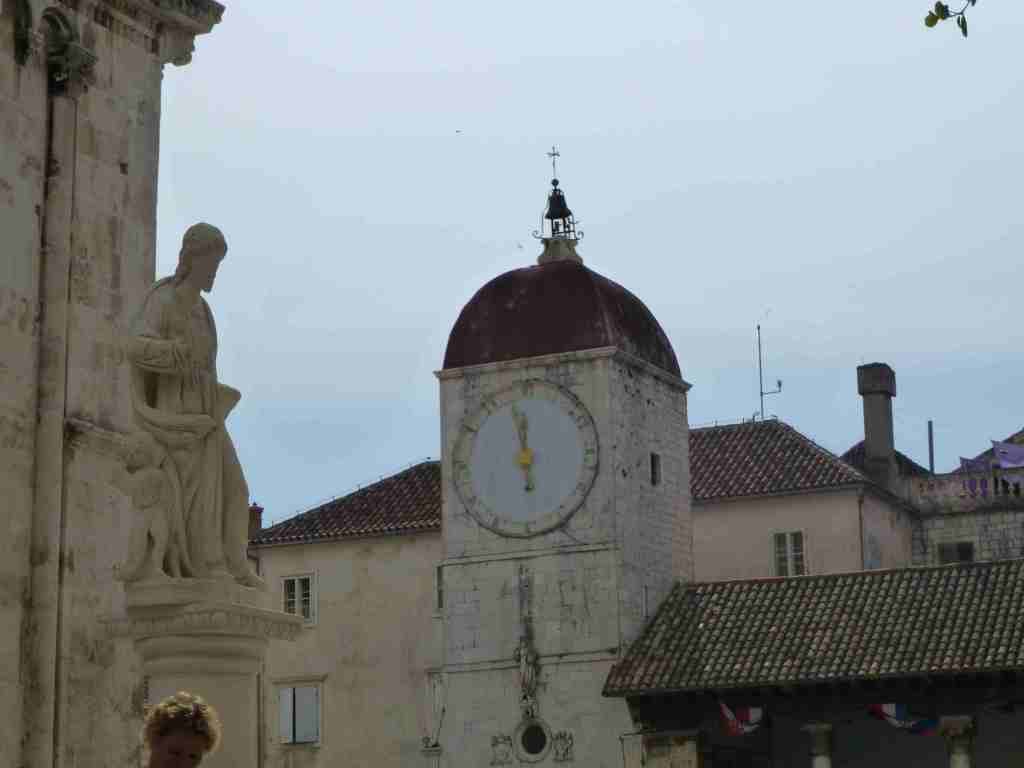
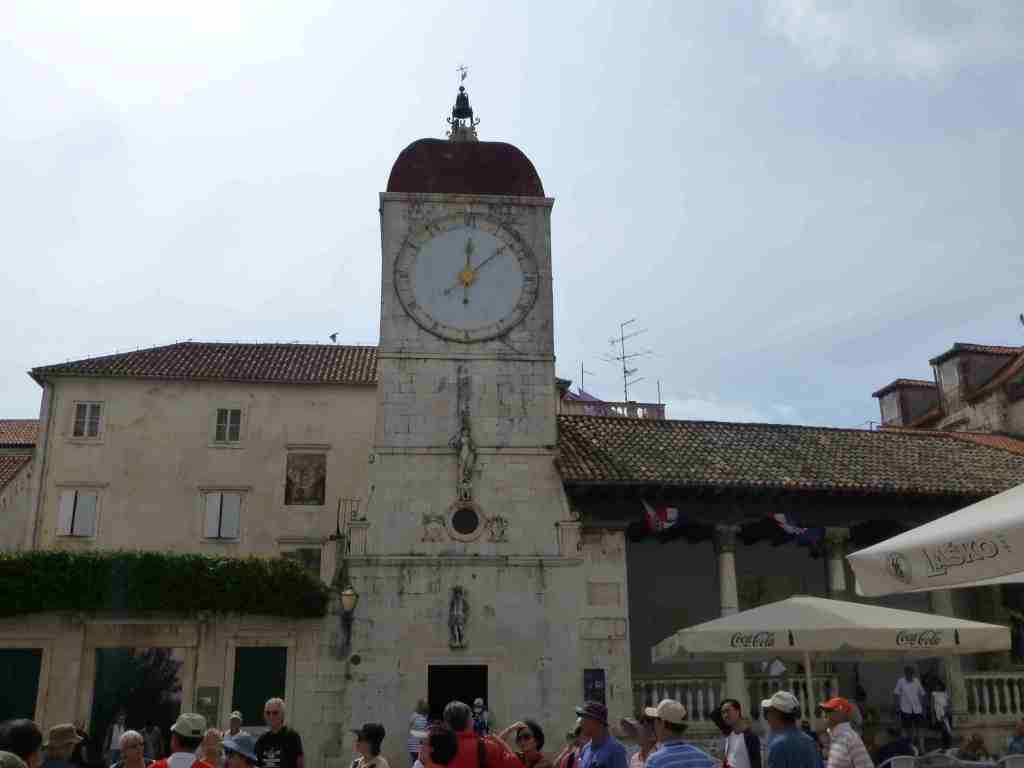
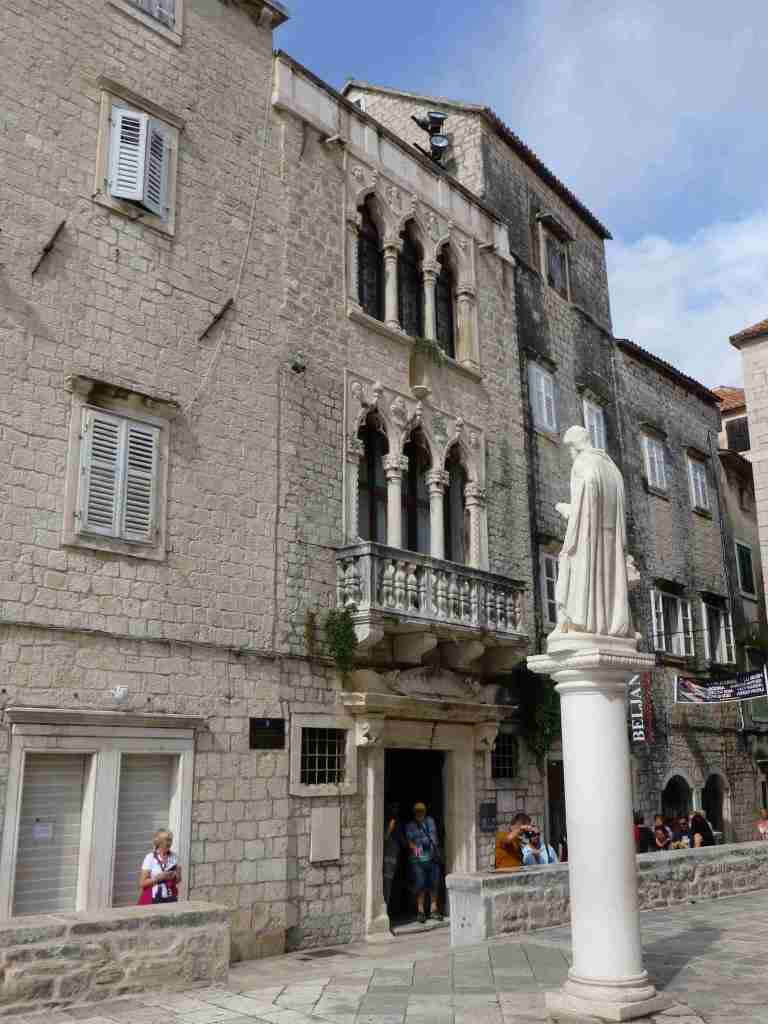
Opposite the cathedral stood the clock tower, which exactly continued to measure the hour. Under the clock stood a statue of St. Sebastian. It turned out that the six columns forming the arch next to the clock tower were just as interesting, dating back to the 14th century. On this day, musicians had gathered in this arch and the square was resounding with their songs. What we learned later was that most folk songs in Croatia are mostly performed by men who sing in different voices.
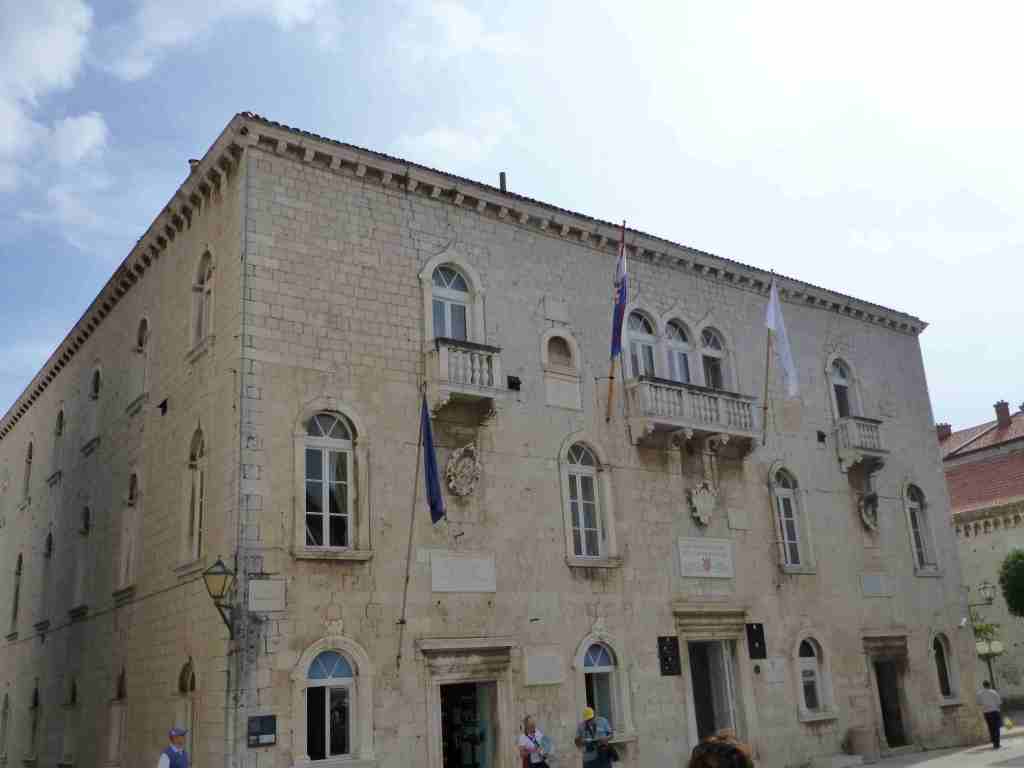
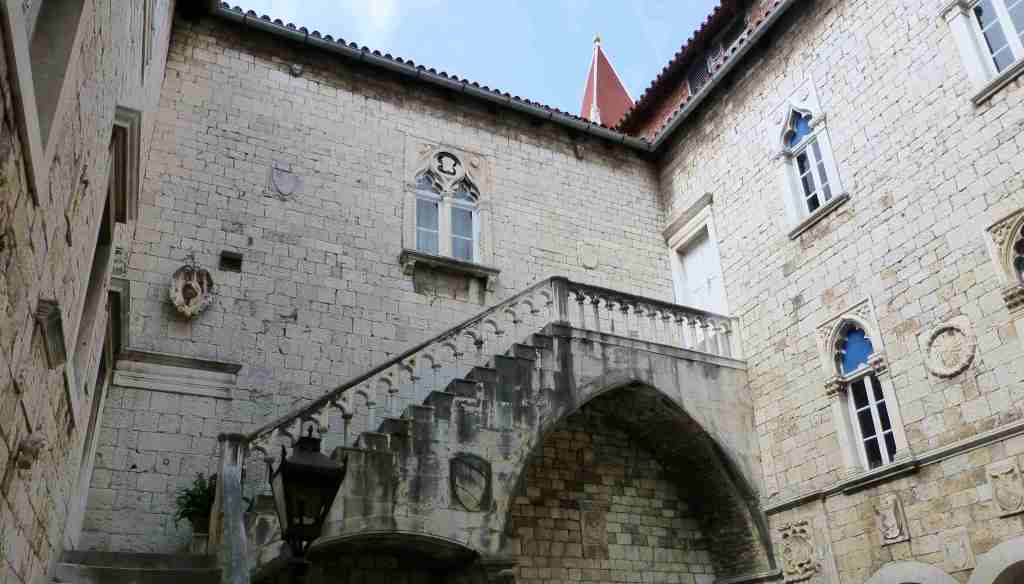
Opposite the cathedral and perpendicular to the clock tower rose the beautiful building of the town hall, which had large Venetian windows and stretched flags. This building dates back to the 15th century and had three floors, with different emblems on its façade.
Our walking tour continued to the promenade, along which the palm trees affectionately stretched their leaves. It led to the castle of Kamerlengo, whose stone walls and tower were very well preserved. At the time, it was also the residence of the local governor, and the castle was erected in 1430 by the Venetians. It had a perfect sea view. The high walls connected the three watchtowers to the bastion. Today, the large free space in the courtyard of the castle is used for various theatrical performances and concerts.

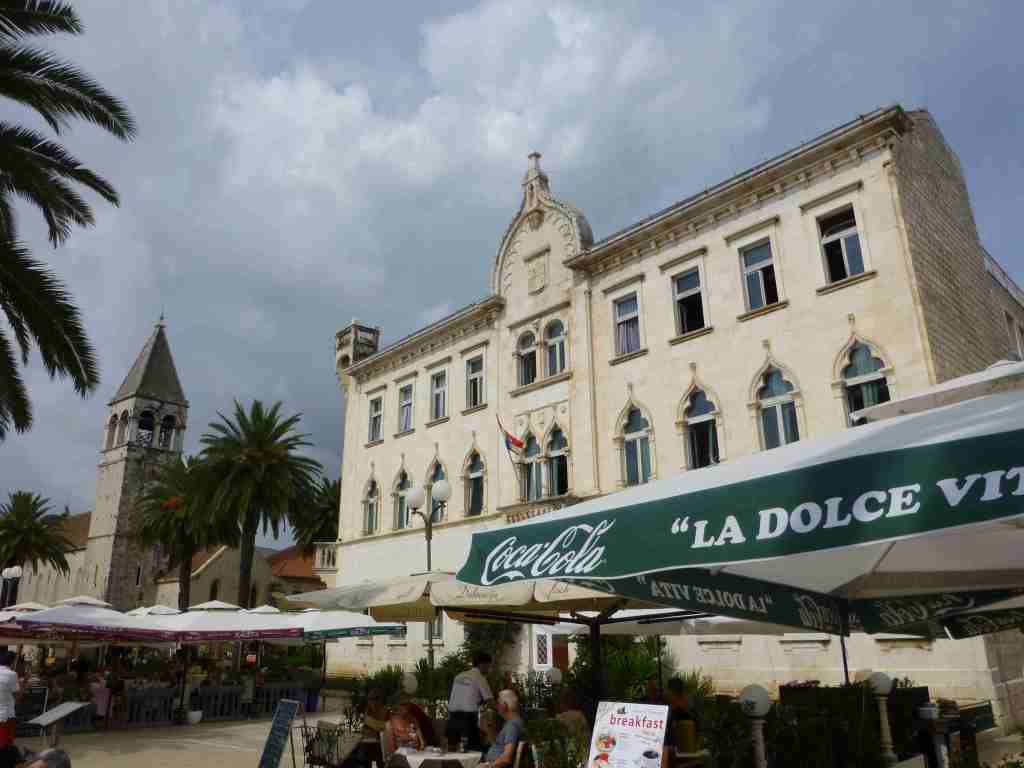
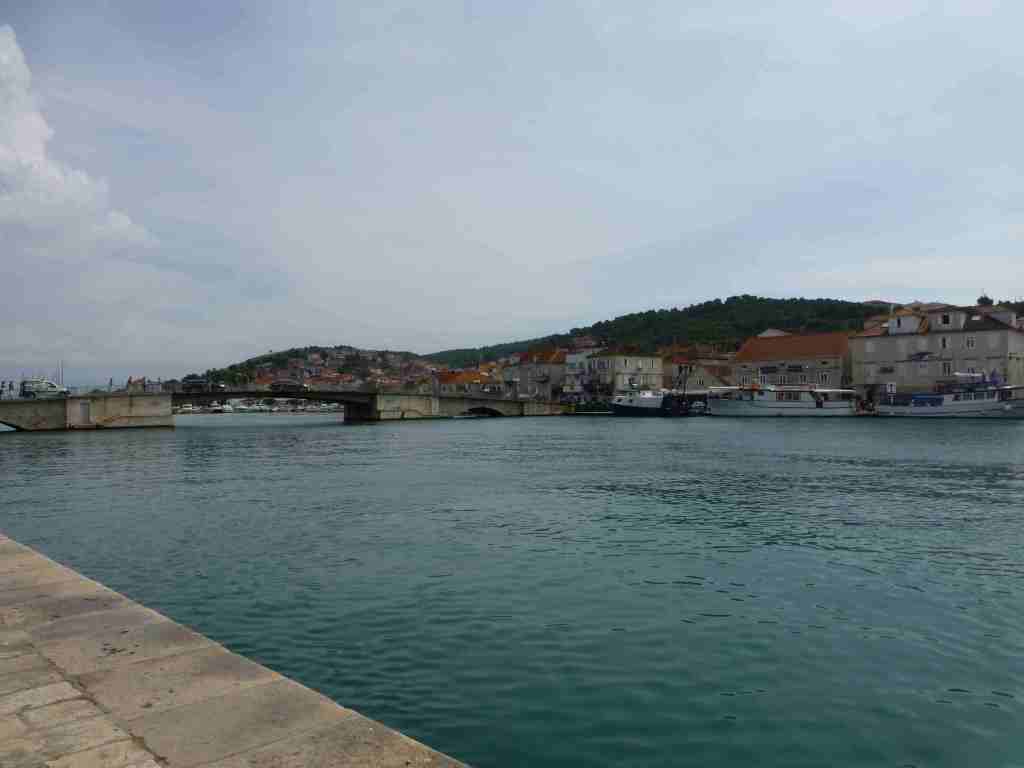
The city was calm and our walk enjoyable, especially since we complemented it with delicious Croatian ice cream. According to our program, we had one more city to explore during the day, so we headed to the next historical and coastal city of Split, located only 26 km away. On the way, we learned that the name of the city of Trogir was given by the first Greek settlers in these lands, who named it Tragyrion – the island of goats, and even today wild goats can still be found in the hills above Trogir, and that is why these mountains are called Kozya (goat). We didn’t manage to see a single goat, but we managed to explore the beautiful city-museum of Trogir, surrounded by beautiful stone walls and well preserved landmarks.

GENERAL INFORMATION ABOUT TROGIR:
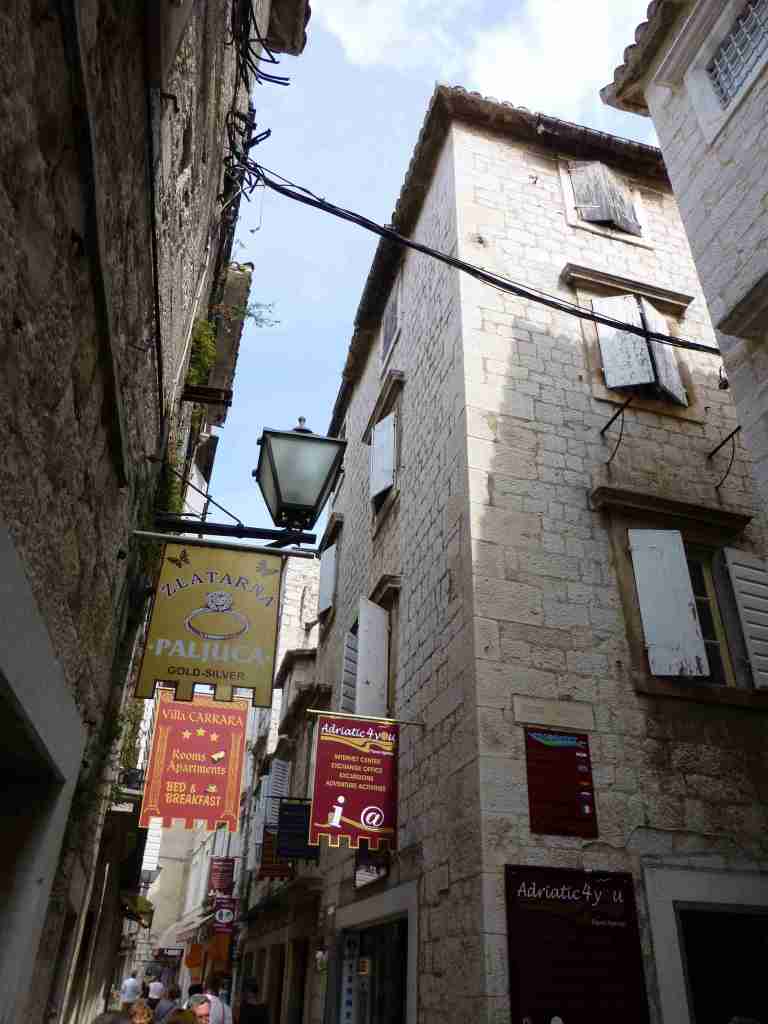
Location: The Croatian town of Trogir is located in the central part of the Adriatic coast, and its old town is located on a small island connected by bridges to the mainland of the country and the island of Ciovo.
Area: 39 sq.km
Population: 13 260 people (as of 2011)
Official language: Croatian
Altitude: 3 m
Climate: Mediterranean
Time zone: UTC+1
Currency: Croatian kuna (HRK)
Additional information: http://www.trogir.hr/
TRIP TIPS FOR TROGIR:
Best time to visit: In the summer the city is lively, with even crowded in July and August. Probably May, June and September are the best months to visit Trigor. In winter, many of the hotels and attractions are closed.
Typical foods and drinks: Like every coastal town, Trigor prides itself on its seafood, with fish and roasted octopuses especially tasty. It is also worth trying the local ham Dalmatian pršut, Paški cheese and of course the local ice cream.
Places to visit: The Old Town with many buildings from the 13th century, the Trogir Cathedral with the gate of Master Radovan, the city walls and gates, the Camerlengo Fortress, etc.
 TripTips