THE BEST OF DUBROVNIK IN ONE DAY
author: Ana Boneva
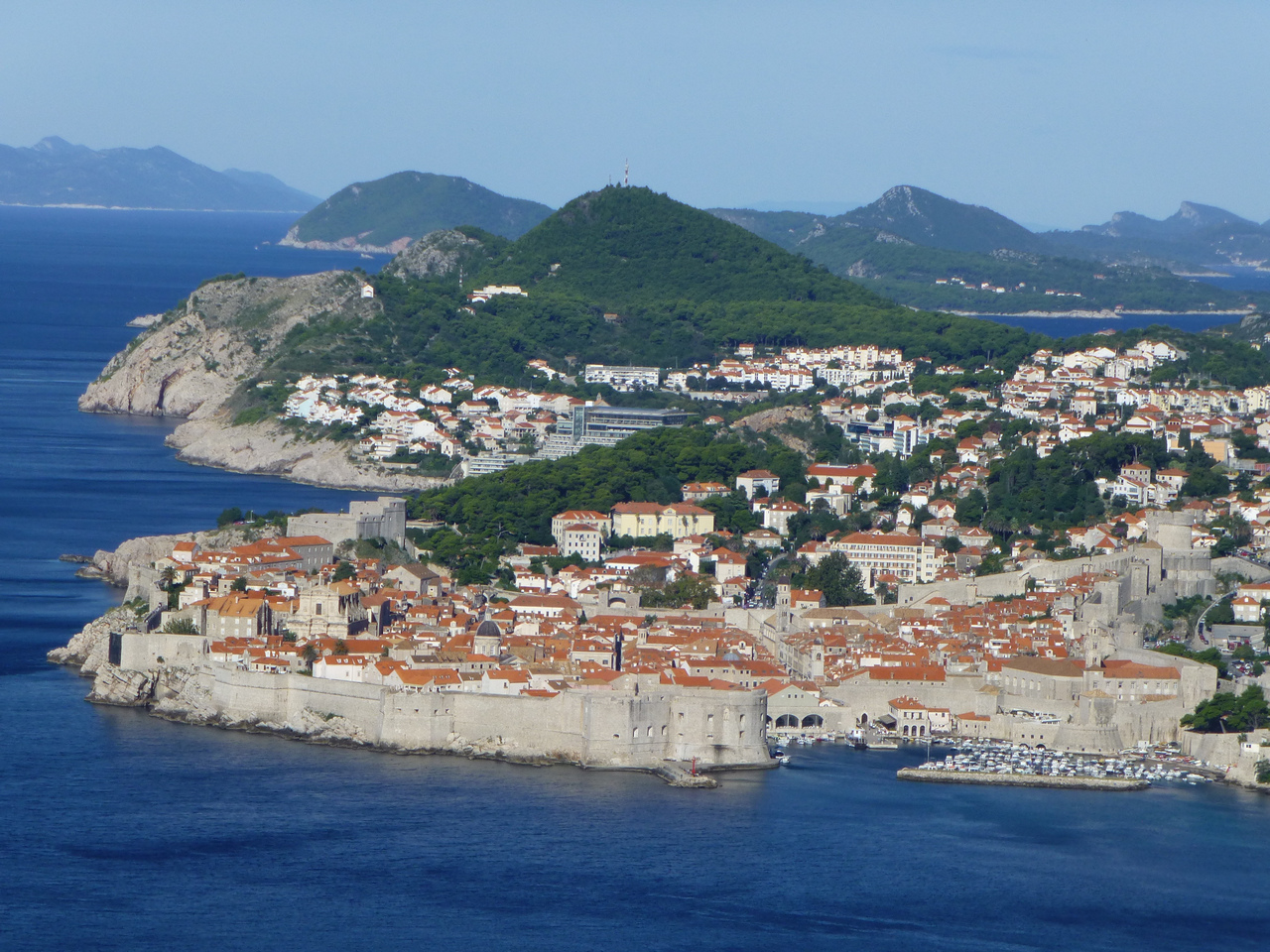
The pearl of the Adriatic, the treasure of Dalmatia, whatever you call Dubrovnik, any praise will not be sufficient. This is undoubtedly one of the most beautiful seaside towns and my repeated visits testify to this. Dubrovnik is beautiful in blooming May, charming in sunny August, but I have the most warm memories from the end of September, when we tried to see all the main and numerous sights of this not so big, but delightful city in one day.
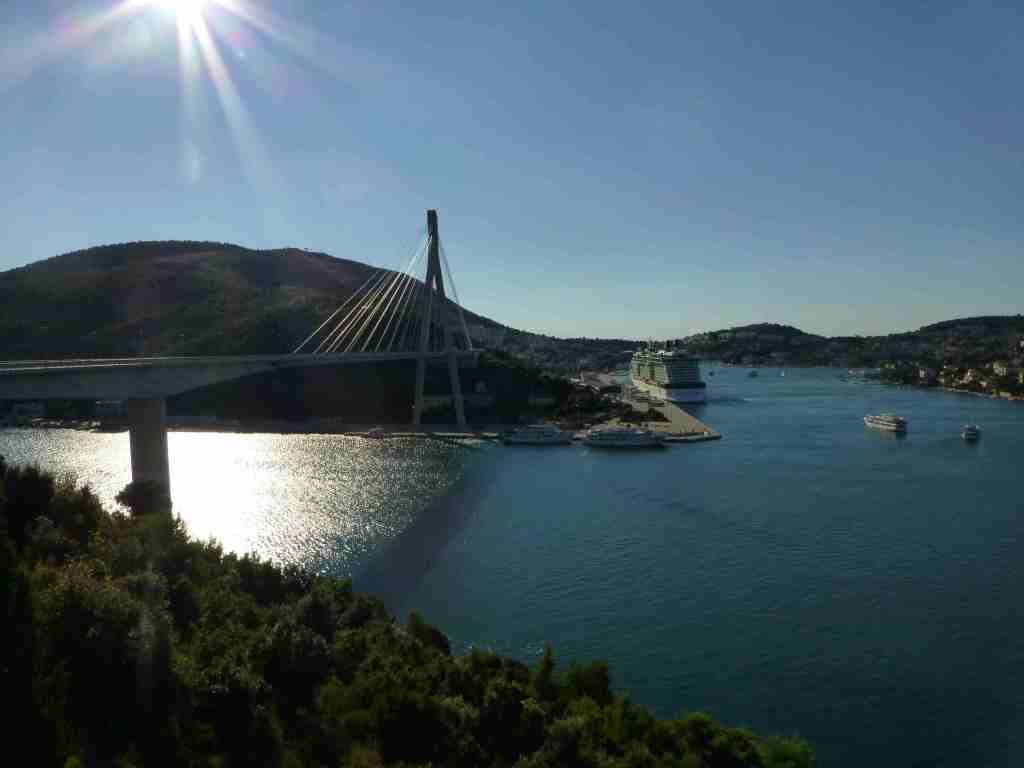
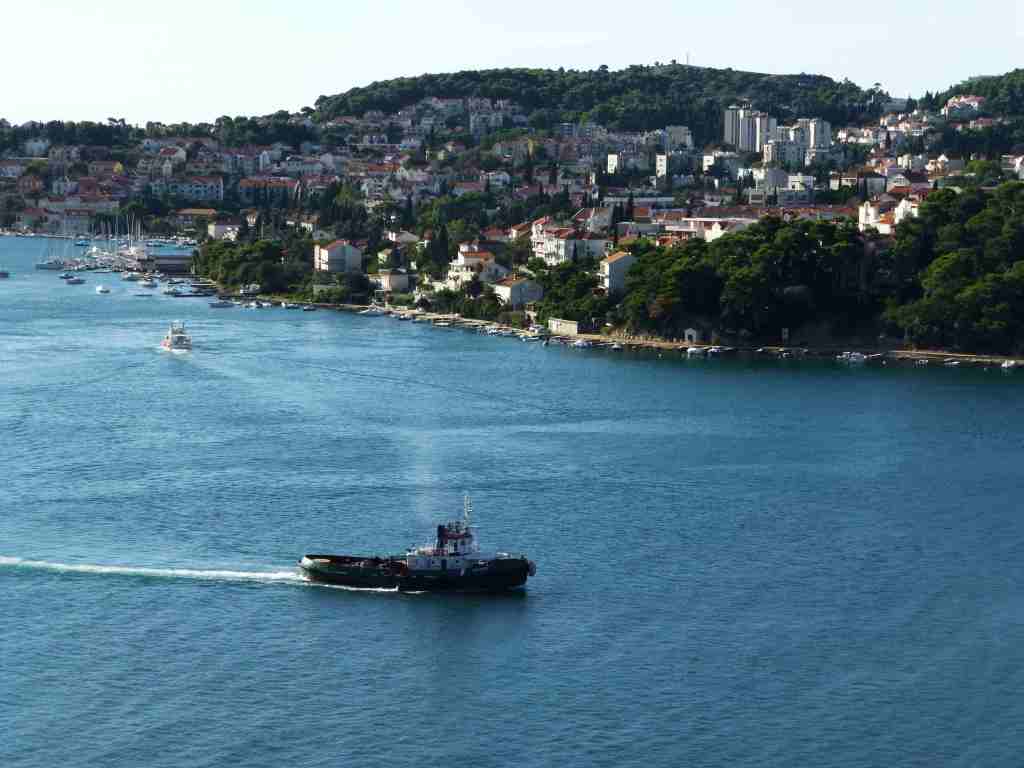

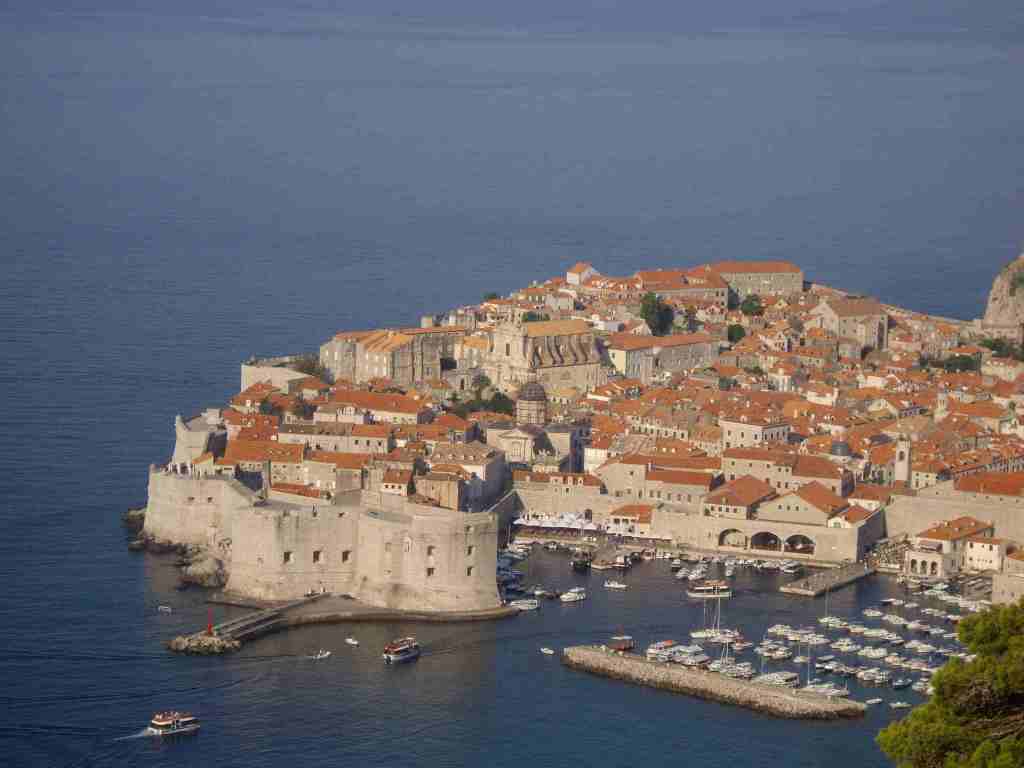
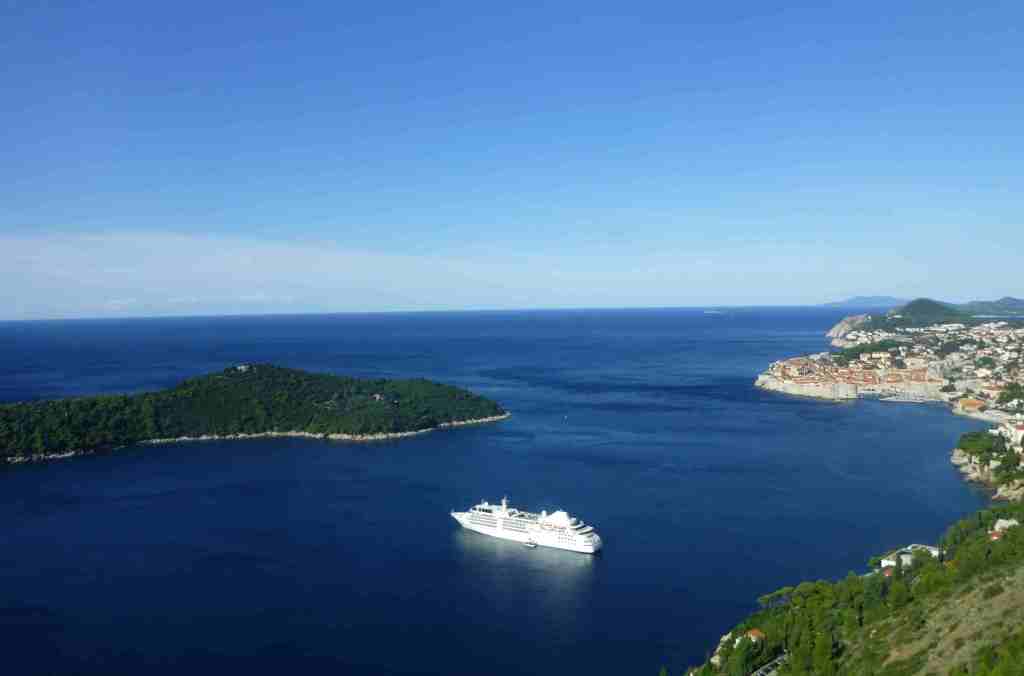
We got up early in the morning and headed to Dubrovnik from the Franjo Tudjman High Bridge on the west side of the city. It offered a wonderful panorama of the so-called new port, which was designed as such in 1917, where the big cruise ships stop. On the opposite shore you could see the Lapad Peninsula, which was the tourist part of Dubrovnik and where most of the hotels were located. The construction of this bridge had begun in 1989 but due to the war of independence of Croatia, the construction was suspended and only later in 2002 the construction was completed. The bridge was 518 meters long, and its pylons rose to a height of 141.5 meters. After our short photo break here, we moved to the other panoramic terrace, this time from the eastern part above Dubrovnik, from where we could see the old town better and we got amazing photos.
Looking at the city from above, we admired the strong fortress walls that encircled its old part and managed to preserve the treasures and rich history of Dubrovnik, once called Ragusa. Ragusa was established by emigrants from the Greek colony of Epidaurum, when their city was destroyed by the great earthquake in the 4th century and the subsequent frequent attacks of the Avars. Dubrovnik quickly became an important trade center, and its good location helped to calmly dock ships. In 1205, the city fell under Venetian rule, which lasted only 150 years, but left the current appearance of the city. Later, the Hungarian king Louis I of Anjou defeated the Venetians and annexed the Croatian territories, but in 1382 Ragusa redeemed its freedom and obtained an agreement with the king of Hungary declaring itself a free republic. The country flourished and again became an important commercial and cultural center. In 1667, there was a strong earthquake that destroyed almost the entire city, and very few of the beautiful Baroque buildings in the center of the city managed to preserve their lavish decorations. Even today, the architecture of the old part of Dubrovnik is divided mainly into two periods – before and after the great earthquake of 1667.
In 1808, Napoleon’s troops entered the city and in 5 years managed to introduce important economic and legal reforms that left traces on Croatian culture. It was then that the national movement was formed. At that time, the Austro-Hungarian Empire was trying to strengthen the Hungarian and German languages in Croatian schools, trying to suppress the movement for the unification of Istria and Dalmatia. In 1847, the parliament in Zagreb succeeded in proclaiming Croatian as the official language in Croatia. Croatia, which received the status of a “nation with territory within Austria-Hungary”. Later, Serbia reached an agreement with the Ottoman Empire and became a free state, to which Croatia could join. After the end of the First World War, the Croats, Slovenes and Serbs created one state. The last war in 1991 had also left traces in the city’s architecture – beautiful Dubrovnik was bombed, probably by soldiers who had never set foot or seen how unrealistically beautiful and priceless this city was. Today, from the highest tower of the fortress walls Mincheta, the new roofs of most buildings could be seen. This tower was erected in 1461 and was one of the most visited places in the defensive fortress of Dubrovnik. It stood out with the erected second tower, which stood at the base of the first. We passed from here at the entrance to the city.

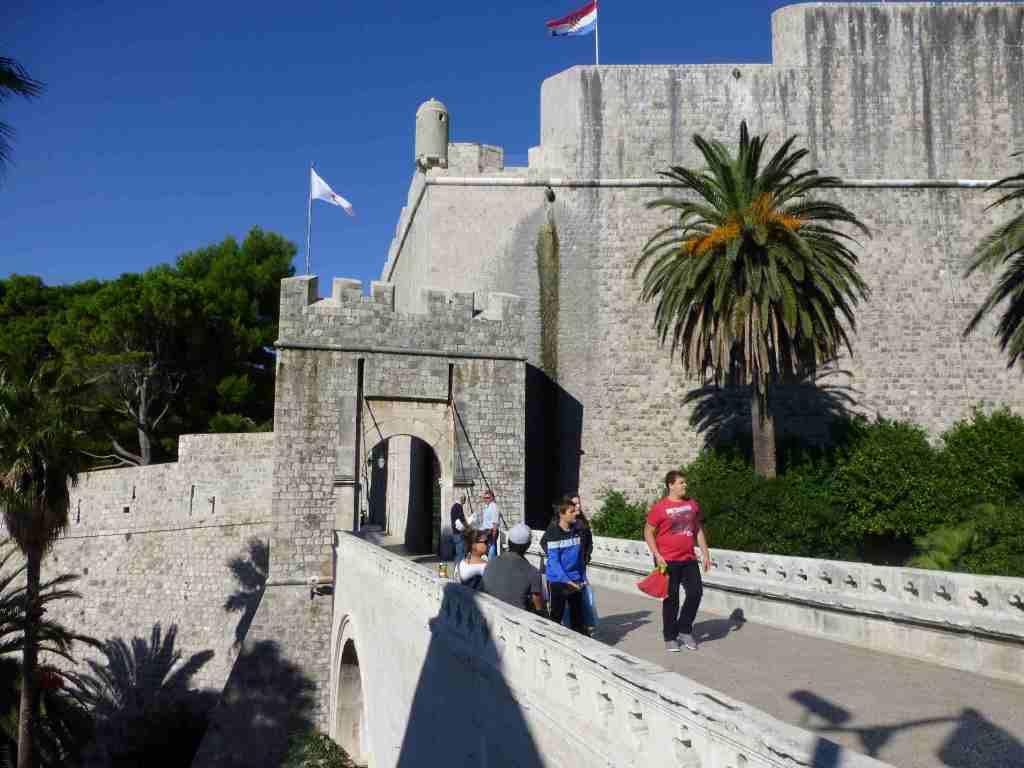
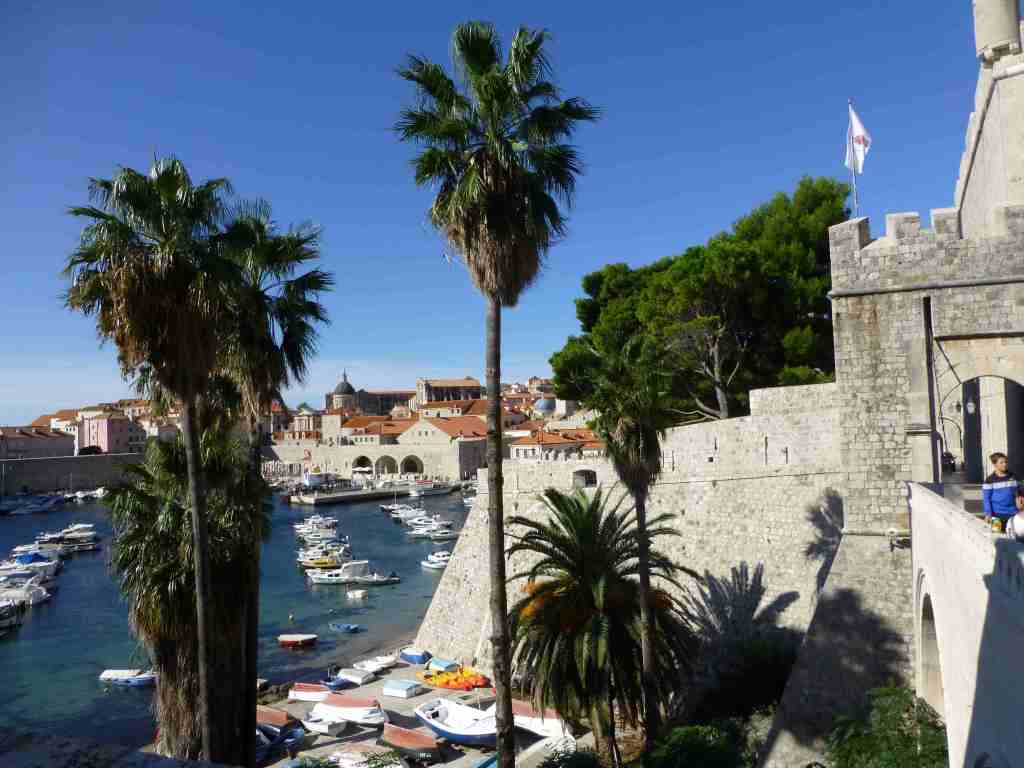
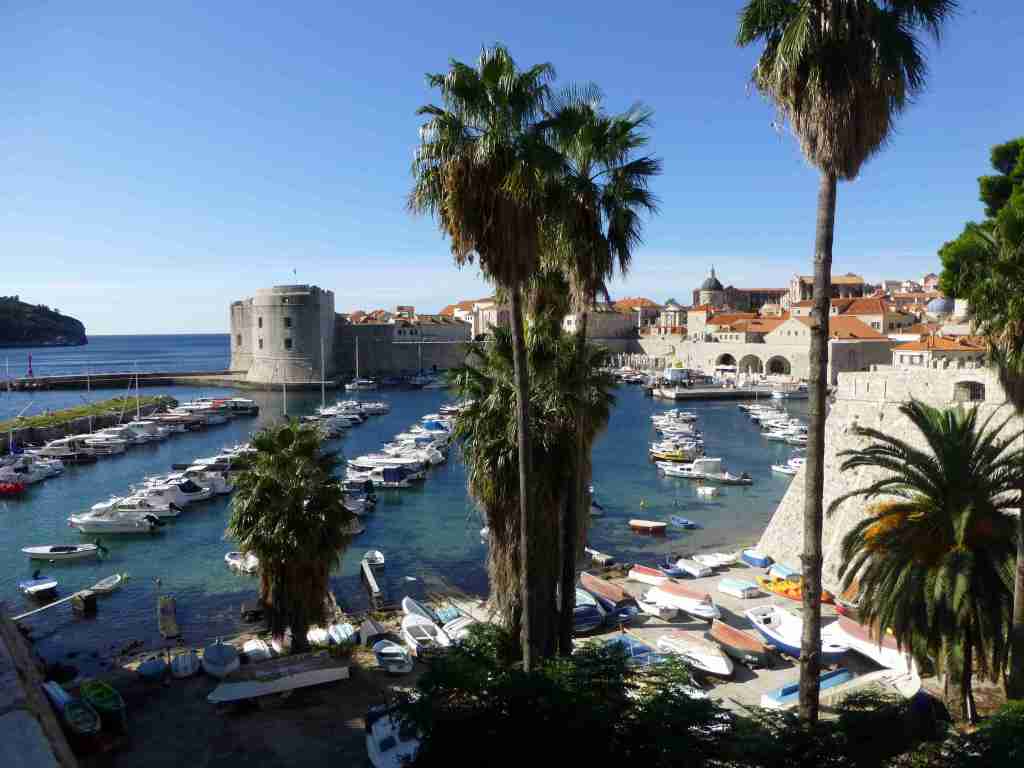
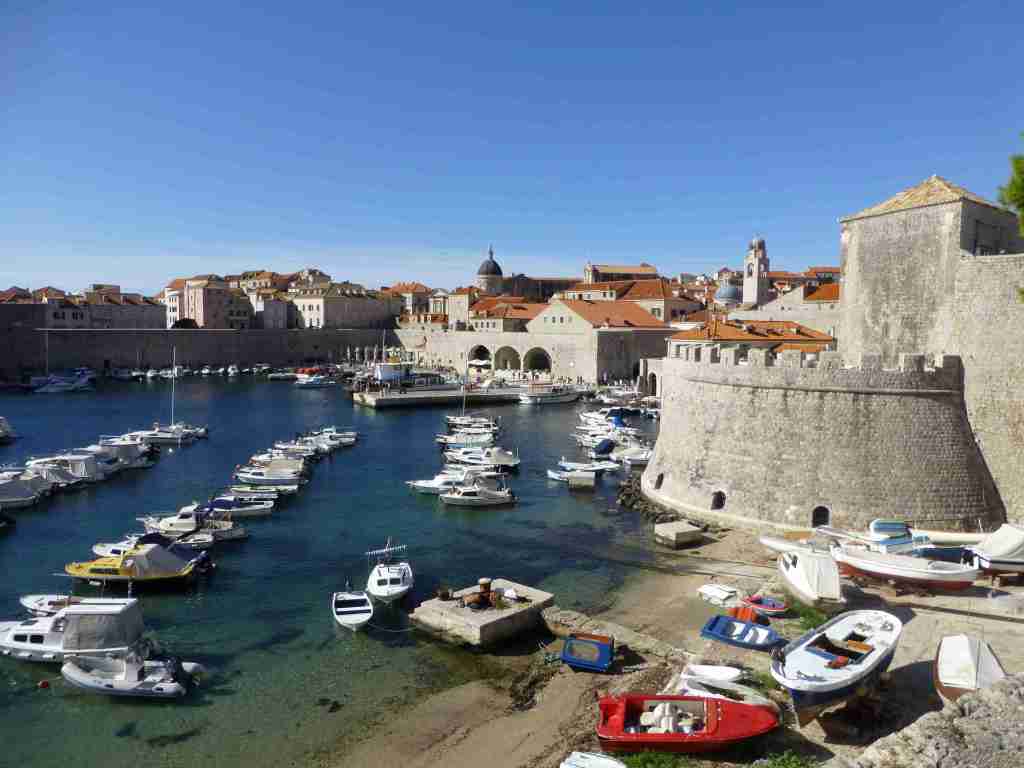
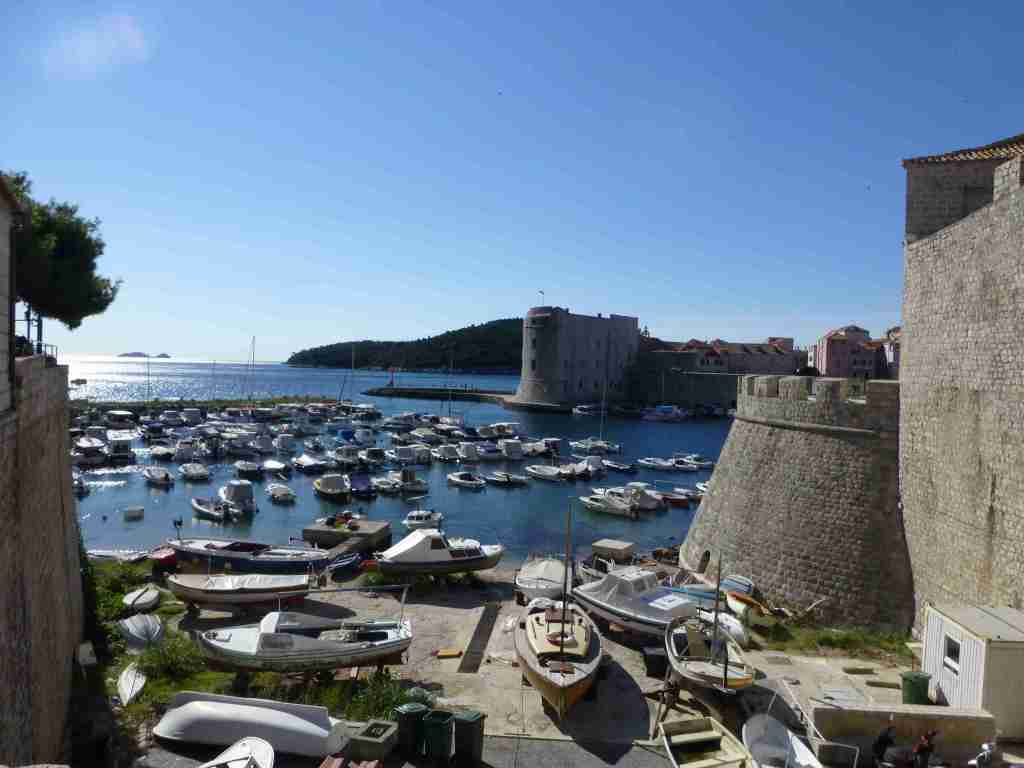
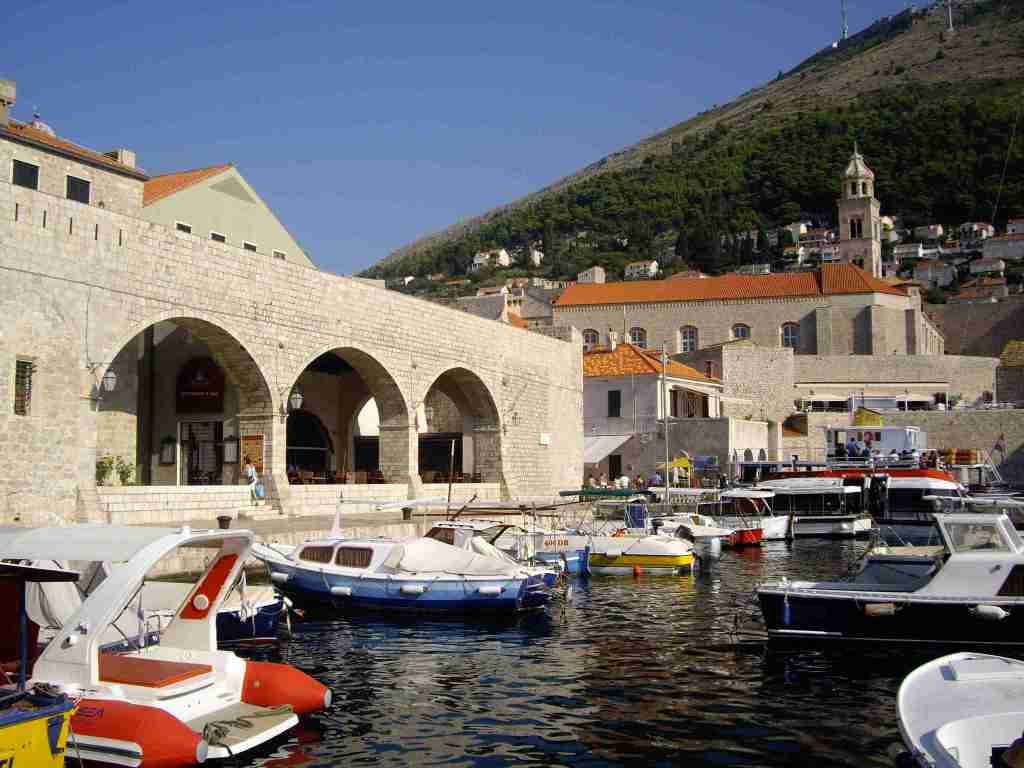
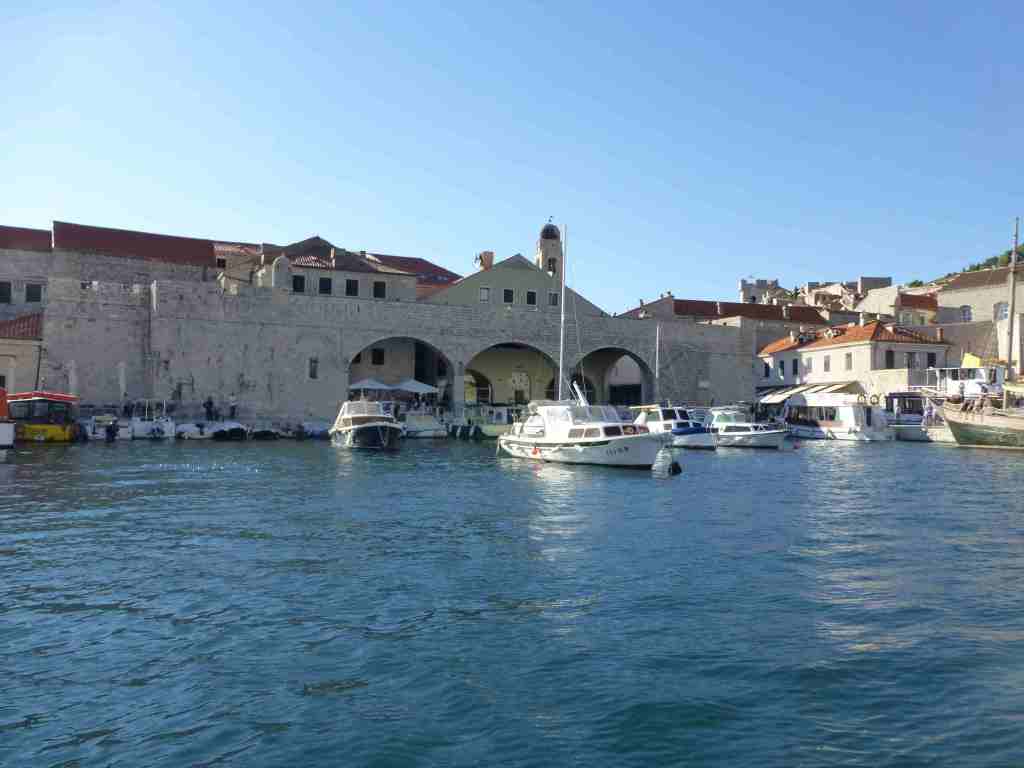
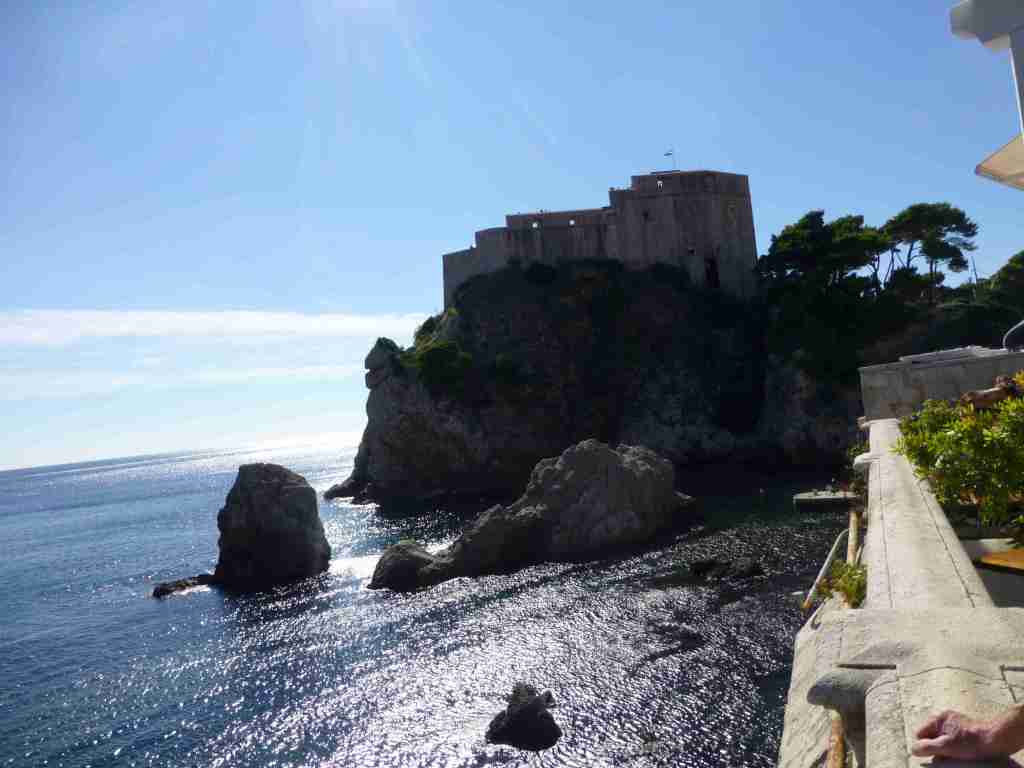
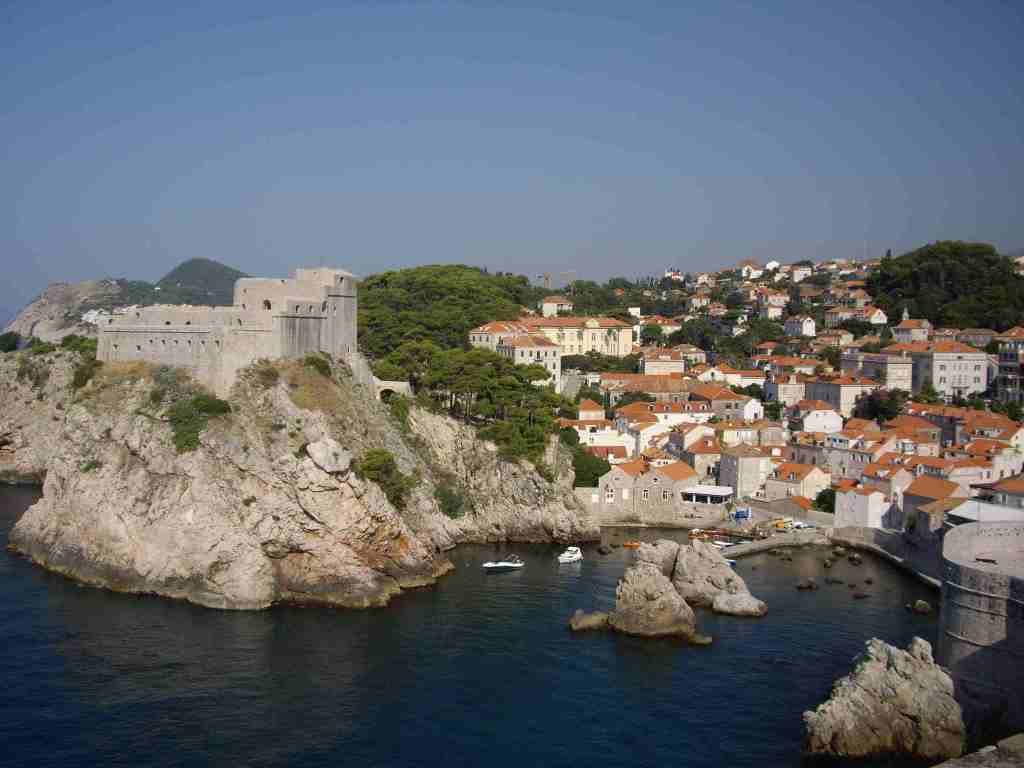
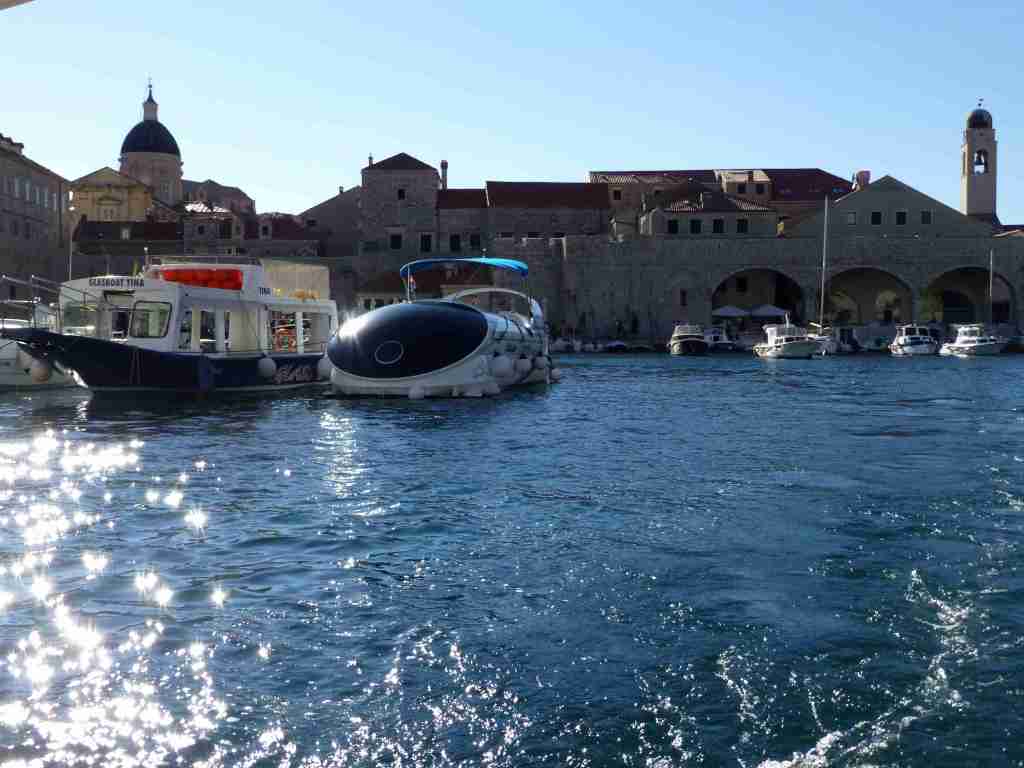
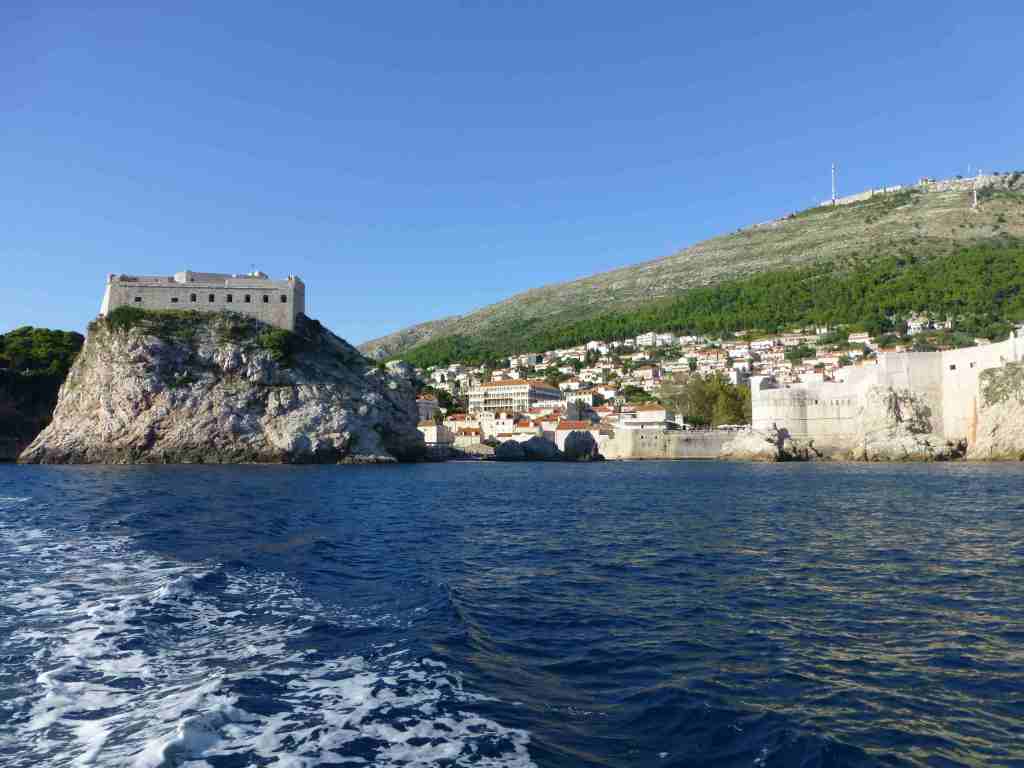
It was only 9 o’clock when we crossed the fortified old town of Dubrovnik, entering through the military gate of Vrača and passing by the old port. The tower on the opposite side was called St. Ivan, and on the other side was the tower of St. Luke. Especially beautiful was the building of the shipyard, which rose on the port and had three beautiful arches. At that time the sea reached the arches and so the ships were lowered into the sea.
From here you could see the island of Lokrum, on top of which there was a fort, which also guarded Dubrovnik, providing better visibility to the sea. At the port there was also the building of the hospital, called the infirmary or quarantine, and all those arriving in the city had to first pass through it and stay for 40 days (quarantine – forty), and then they could safely enter. Thus, the city was able to protect itself from the plague and other epidemics that were raging at that time, and which Venice could not avoid, for example.
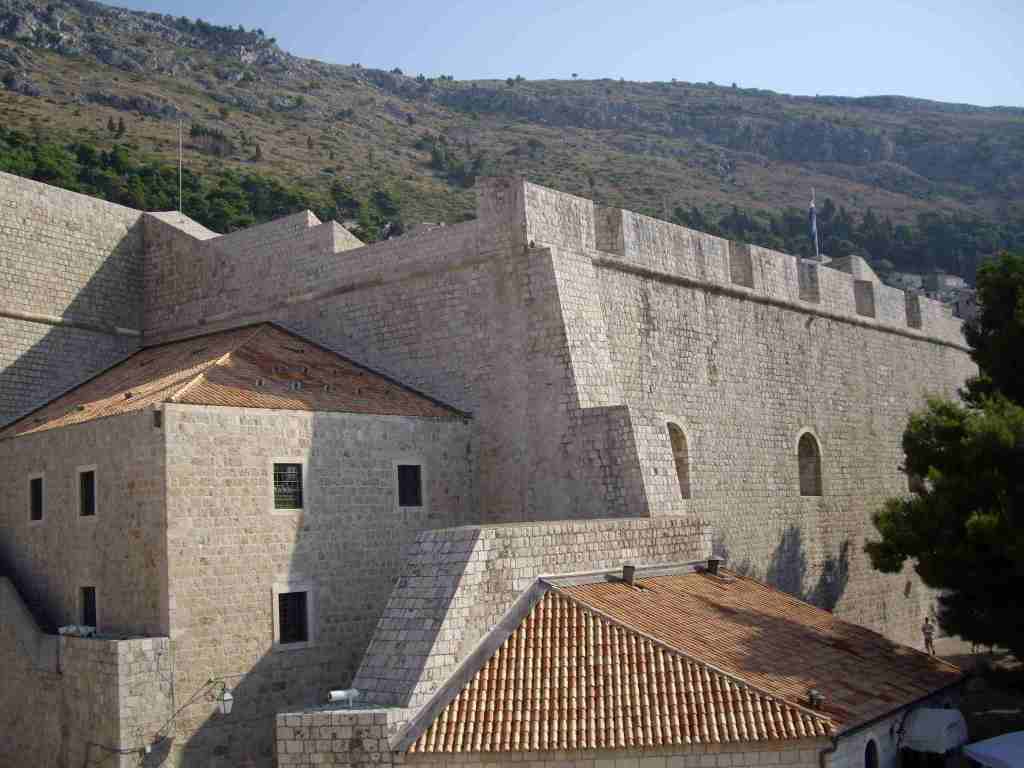


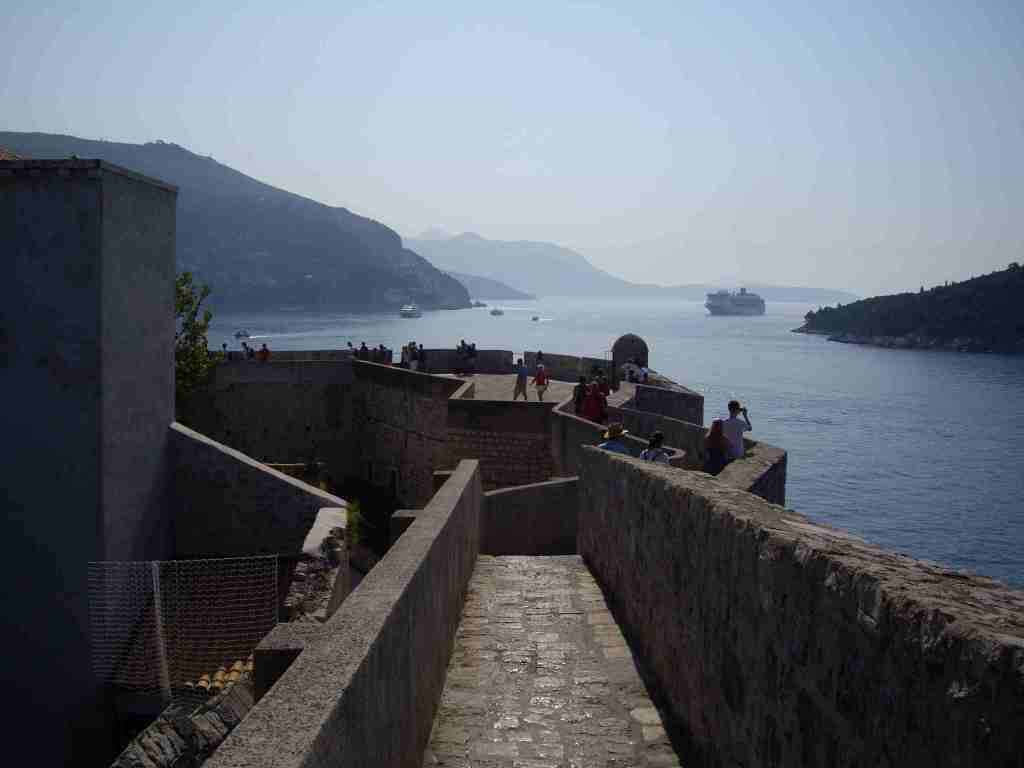
The entire old city was fortified with high fortress walls erected in the 10th century and further fortified in the 13th century, whose circumference exceeded 2 km, and their height was 25 meters. There was a pleasant alley along them with a wonderful panorama of the city and the sea, and we hurried to walk along it in the morning, before the sun became too hot. There are three entrances to climb the fortress walls: from the Pile Gate, the Ploce Gate and the Fort St. Ivan. The fortress walls remained one of my favorite places in Dubrovnik, wherever you look from them you fall in love with the city.


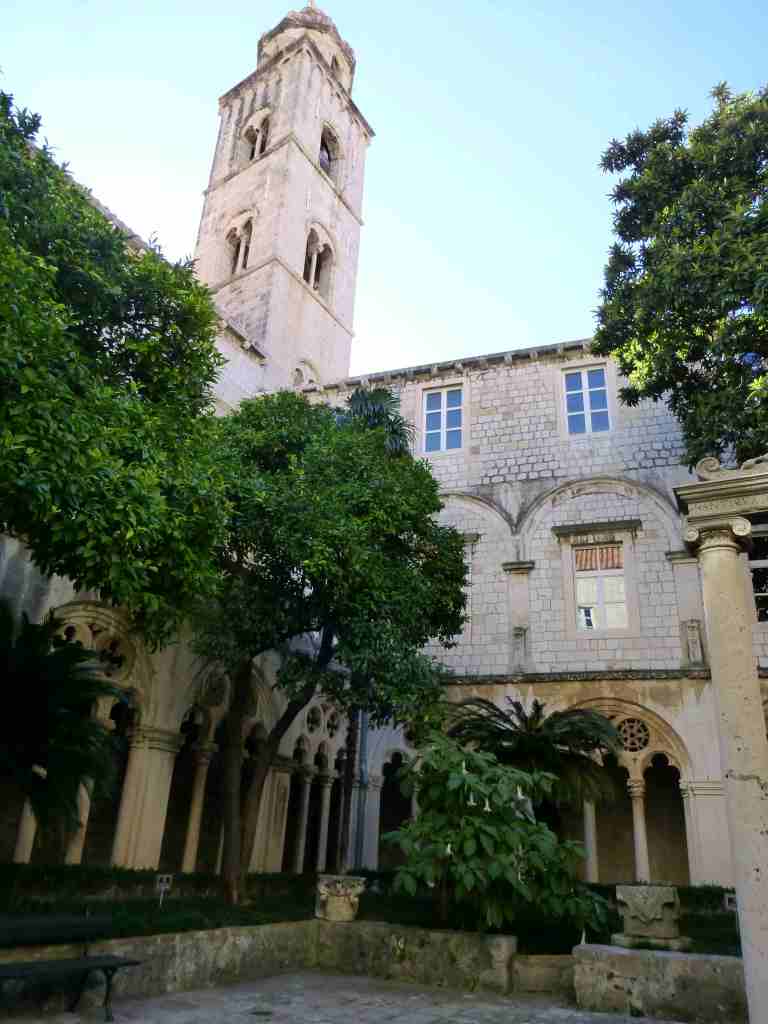
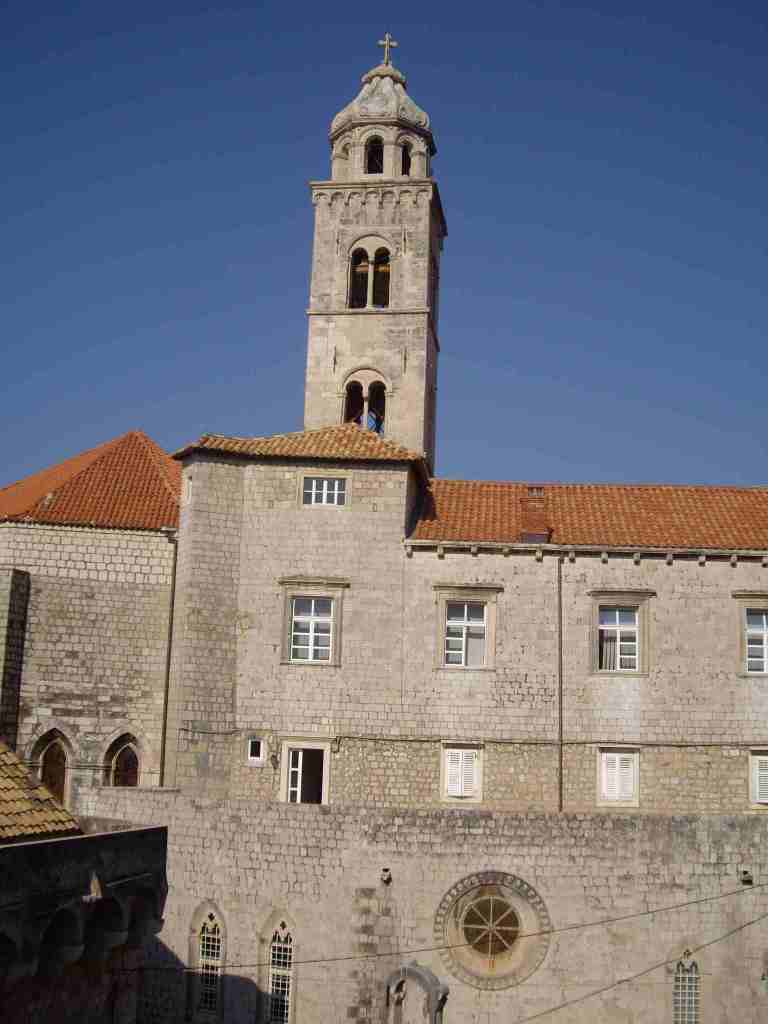
After we had a good meal, it was time to enter the cool church of St. Dominic, built in the Gothic style, after which we headed to the Dominican monastery located next to the church of St. Sebastian. The ascent to the monastery was by stone steps with many columns. At the time, the colonies reached all the way to the ground, but through the holes the men peeked out under the skirts of the ladies. Therefore, an additional wall was erected and the columns became much smaller.
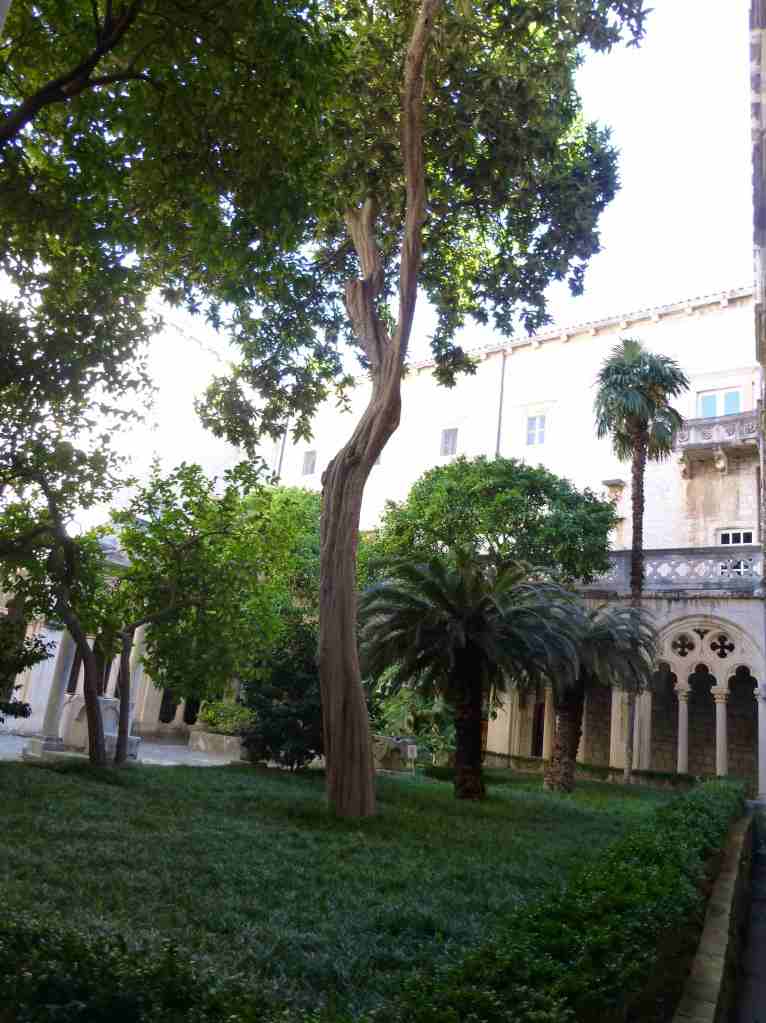
The entrance to the Dominican monastery cost 30 kuna (about 4 euros) and I think it was well worth it. In the courtyard there were many columns, arches and vegetation, and the monastery reminded me of similar monasteries I had seen in Sicily and Naples. In the garden there was also a huge cistern in which rainwater was collected and used as a well.
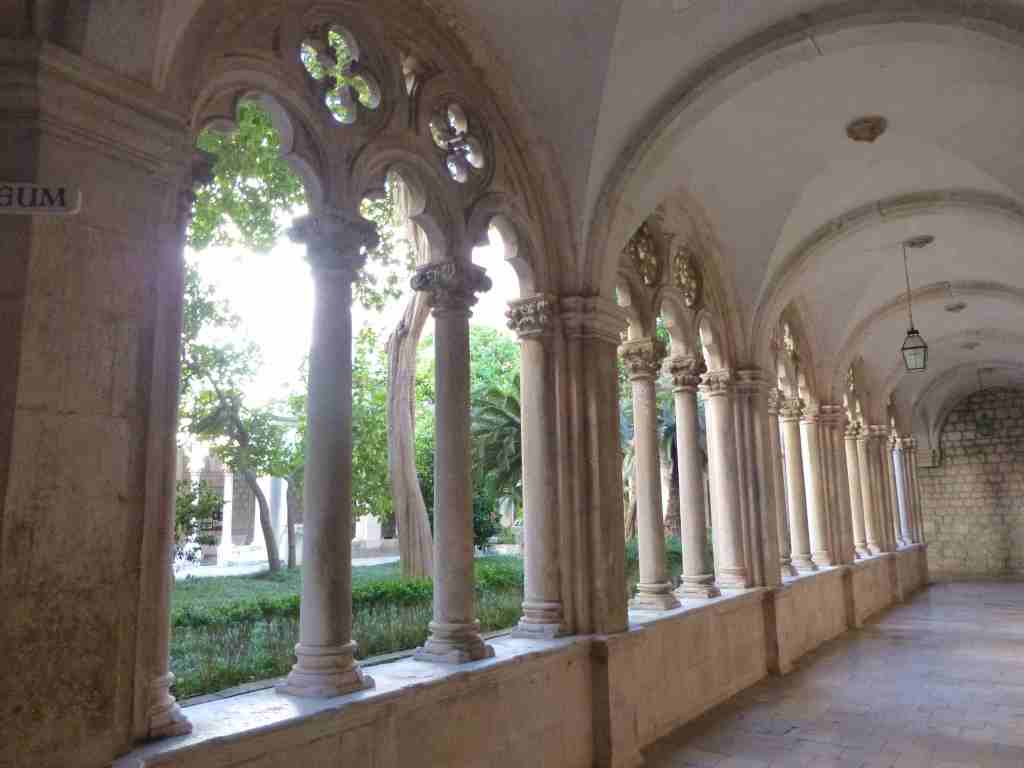
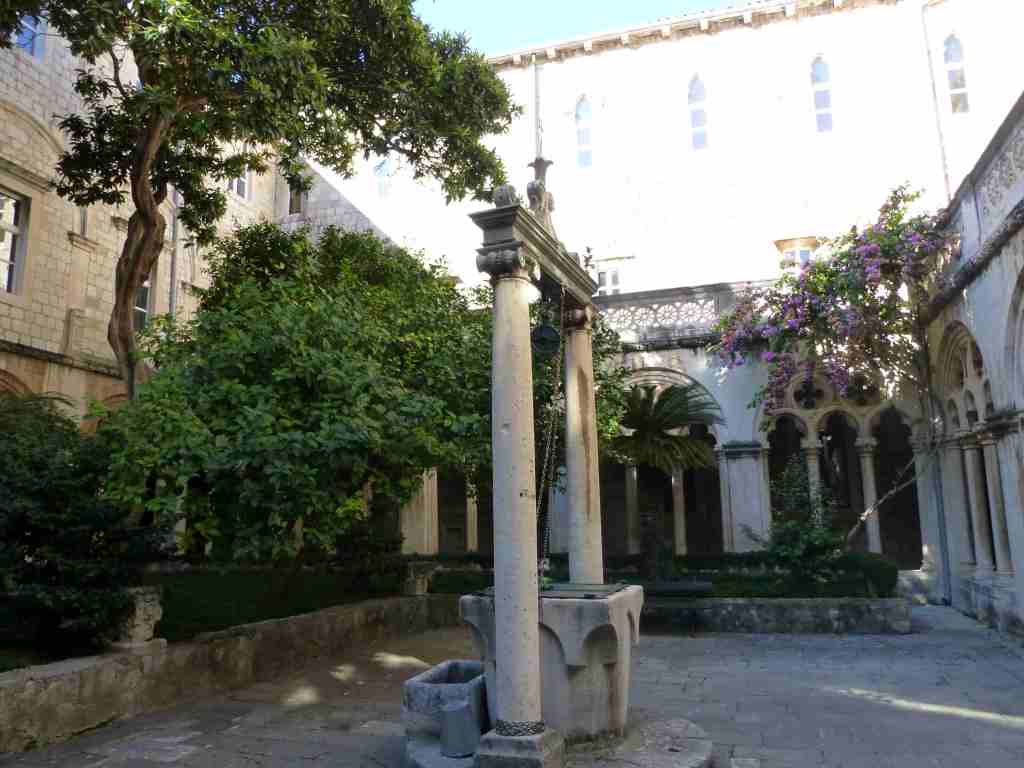
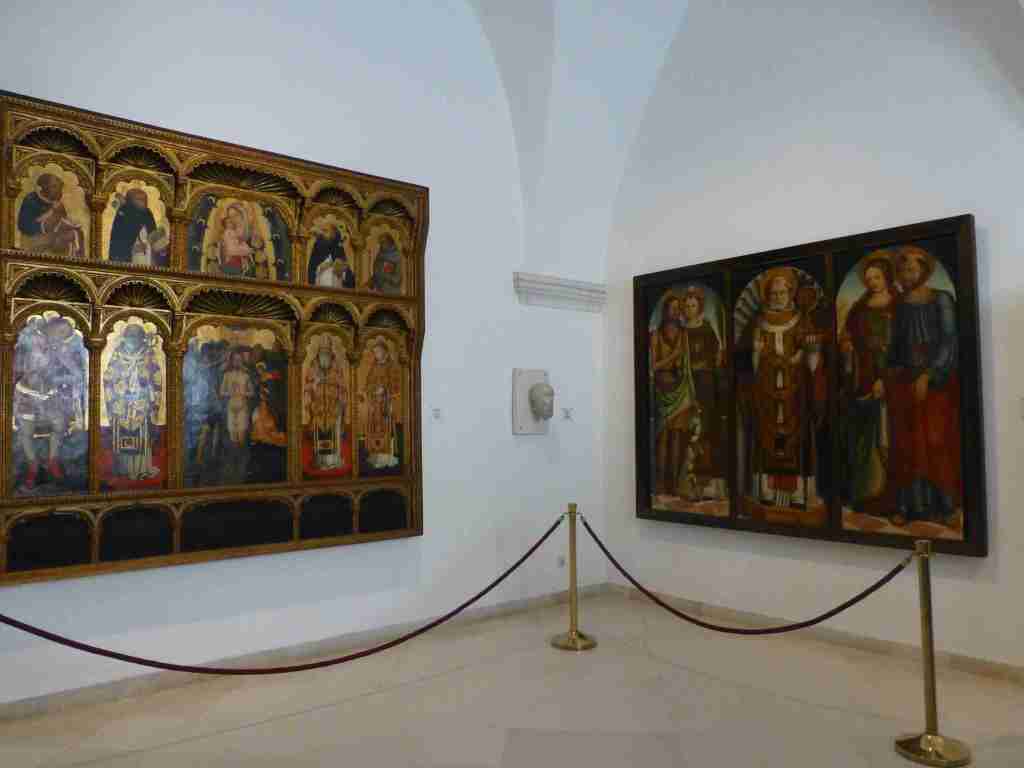
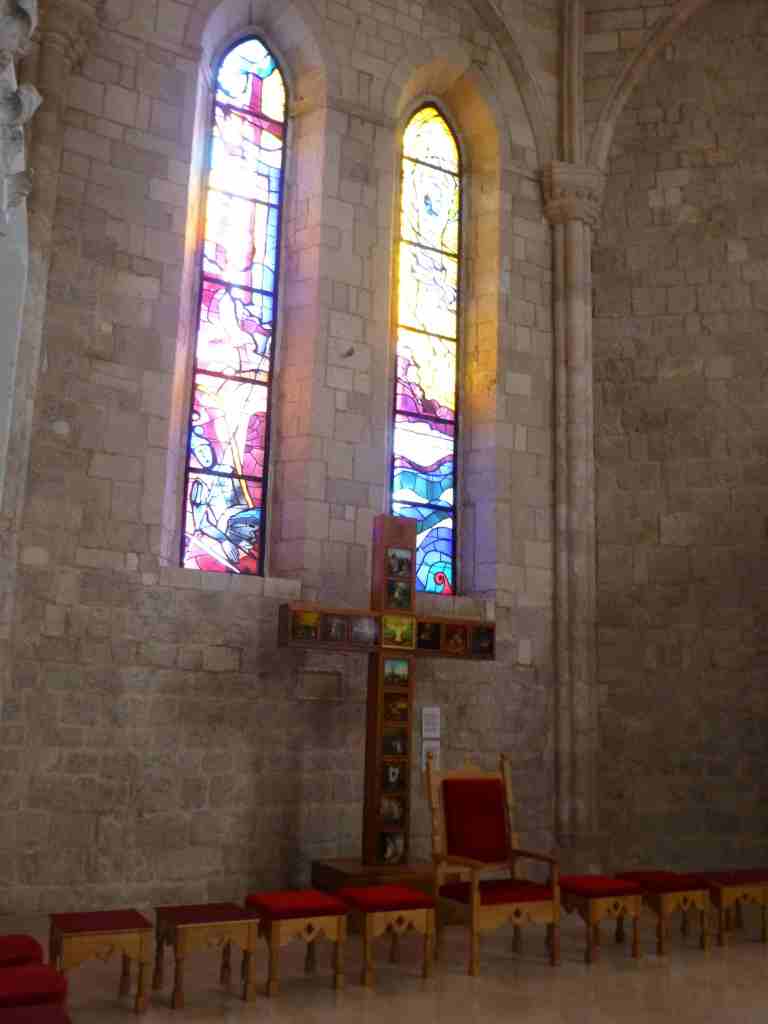
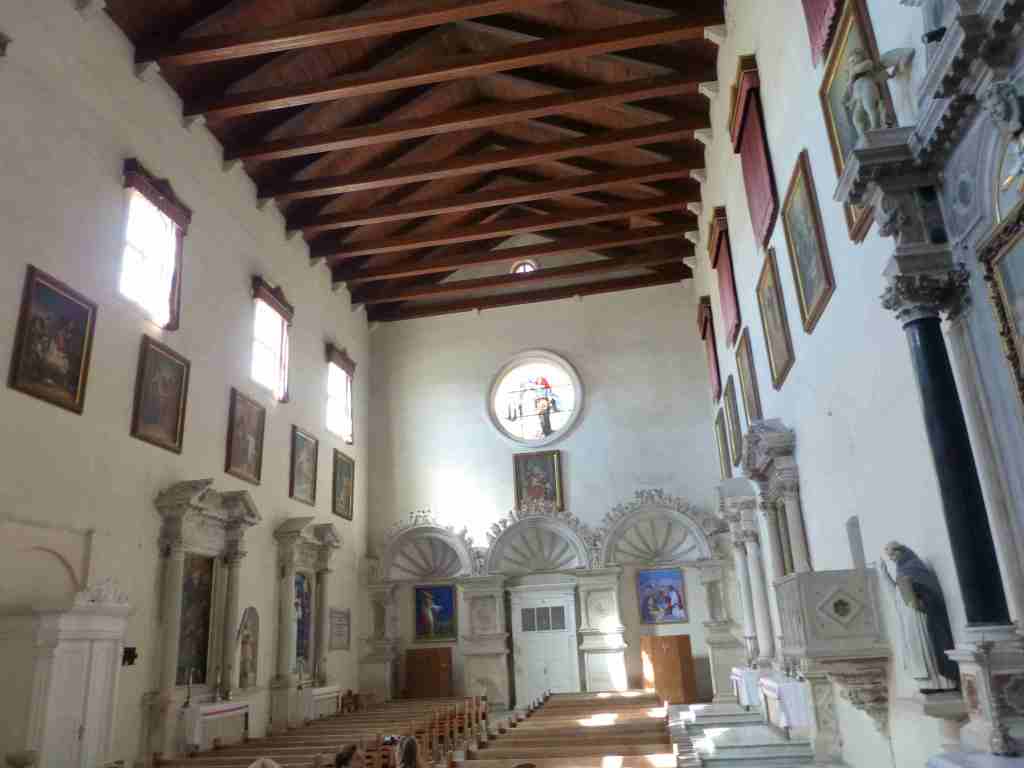
We visited the museum in the monastery, where ancient handwritten books and incunabula – the first printed books – were preserved. The museum also preserved paintings from the 15th-16th centuries, as well as an ancient altar of St. Vlas – the patron saint of the city, who had a sharp hat and a big beard. One of the paintings was missing the lower part, as the relics of a saint had previously stood there. Enclosed in a shop window, we could see the huge and picturesque Bible from the 17th century. On the second floor of the Dominican Museum there were various jewelry made of pearls, sapphires and pearls, which were received as gifts. There were pitchers with engraved birds, as well as a painting of St. Nicholas, who was considered the patron saint of the sea. He held three apples in his hands. On a large board was depicted the Holy Baptism, on the right side, on which stood St. Nicholas, and on the left – another saint. There was also a large painting of Mary Magdalene, which was restored three years ago and therefore now looked very bright and beautiful. Very interesting were the reliefs on the ground, which represented various emblems – probably of cities or aristocratic families. Behind a window we saw the library, and some of the books on display had colorful illustrations. Right next to the entrance to the museum there was a beautiful 17th-century painting painted before the great earthquake, with Dubrovnik in the center of the board, and saints on all sides. Next to the painting there was also a large handmade book from the 15th century, and notes of songs were also painted on it. Interestingly, in the 14th-15th centuries, there were only 4 musical lines. Finally, we visited the church of St. Dominic, who mixed different styles. Beautiful paintings and marble statues were hung on the white walls. At first, the main altar looked somehow empty and as if all the beautiful decorations were on the sides, but if you look up, you can see a magnificent cross – the crucified Jesus surrounded on 4 sides by four evangelists. It was brought by the Venetians in the 14th century. Below it were two huge round windows, on which the crucifixion of Christ was depicted with variegated glass, and on the second window his resurrection. On the right side there was a window on which were painted Cyril and Methodius, who, as we know, had given the script to the Slavs. In this monastery it was originally written in the Glagolitic alphabet, and then in the Cyrillic alphabet. This continued to be an active monastery, but Masses were held only on Sundays. At the moment, about 5 monks lived here. We learned that the Dominicans came to Dubrovnik in the 13th century, first erecting the church and then the monastery. Since they were built in different years, the styles of the two buildings were different. In the 14th century, the Dominicans opened their own school and the sons of wealthy people and nobles studied here. The school was also famous for its large library with over 1000 handwritten books, some of which we saw and impressed us.

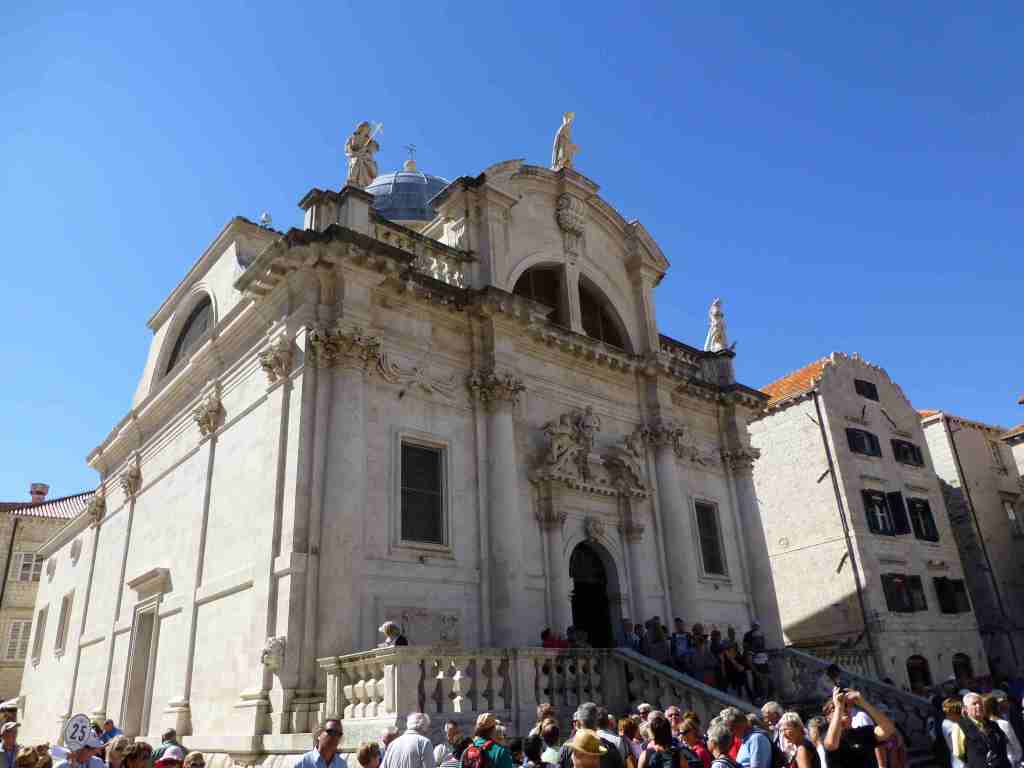


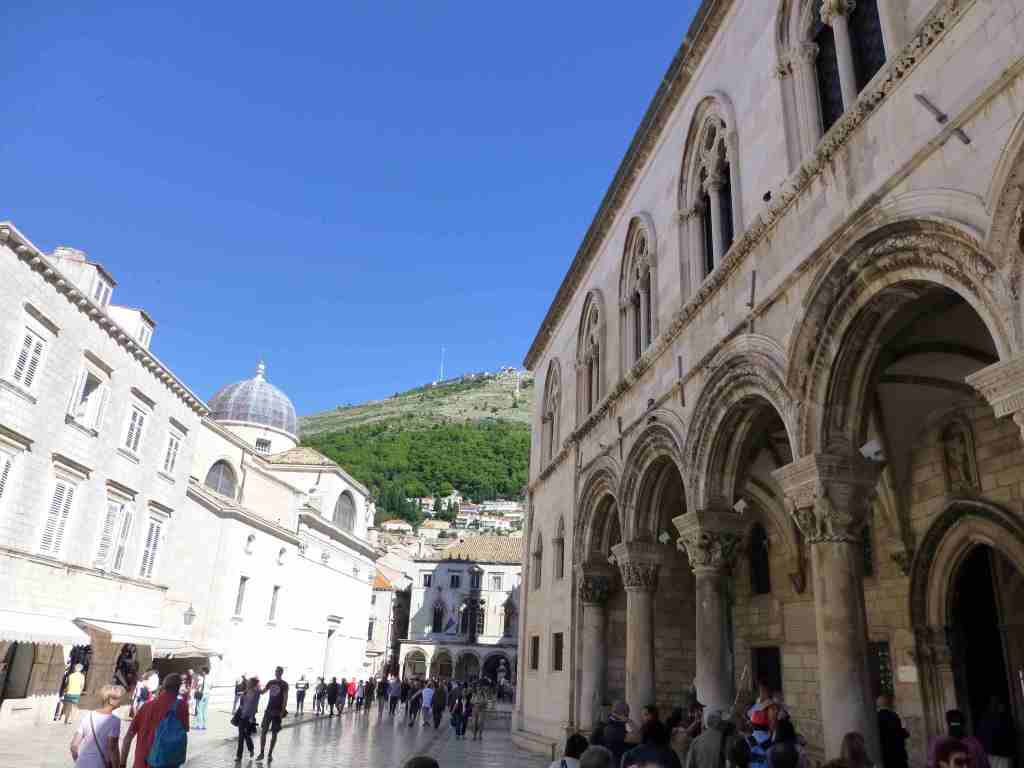
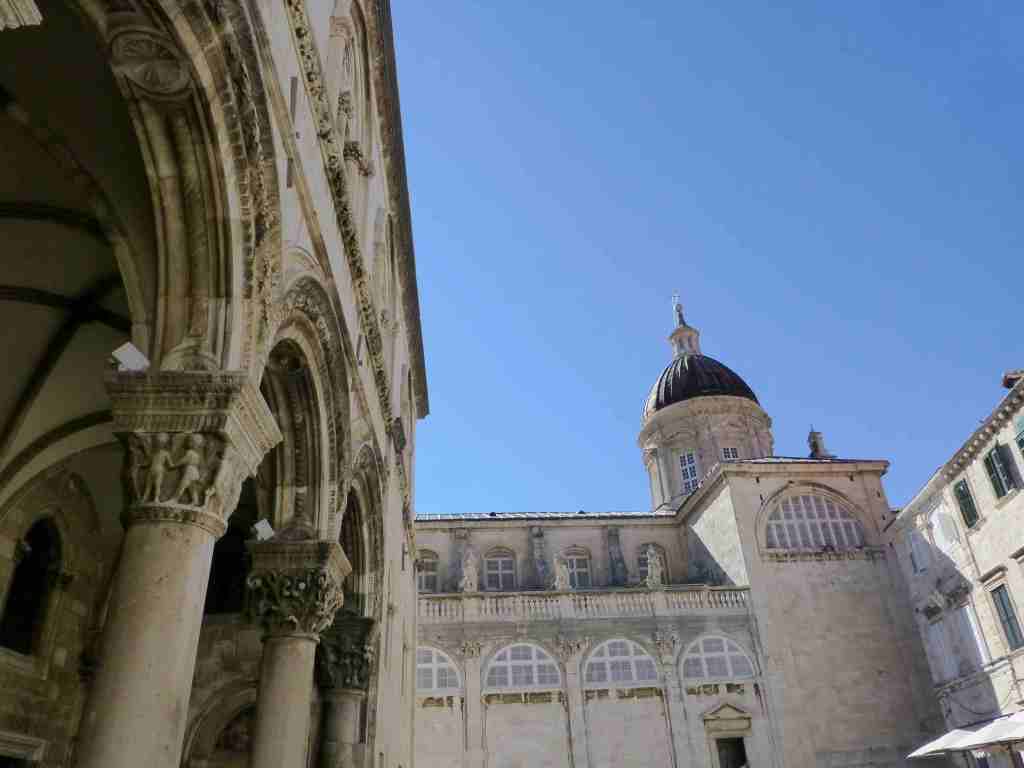
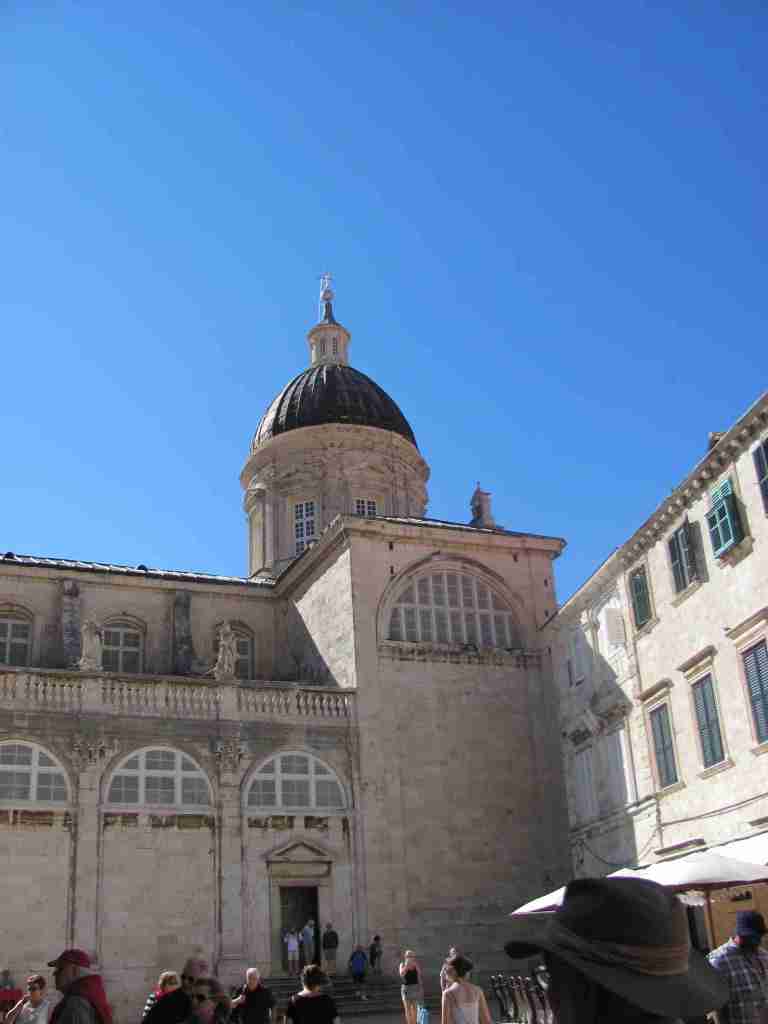
When we went outside, there was some music on the street, the sun was shining and the sky was crystal blue. We headed to the beautiful cathedral, which was built only after the earthquake by order of Richard the Lionheart. He had been shipwrecked nearby and as a thank you to the people who saved him, he built this magnificent church. However, the many tourist groups in it made us postpone entering it for a while and headed to the Palace of the Prince’s Court, built in the Renaissance style.
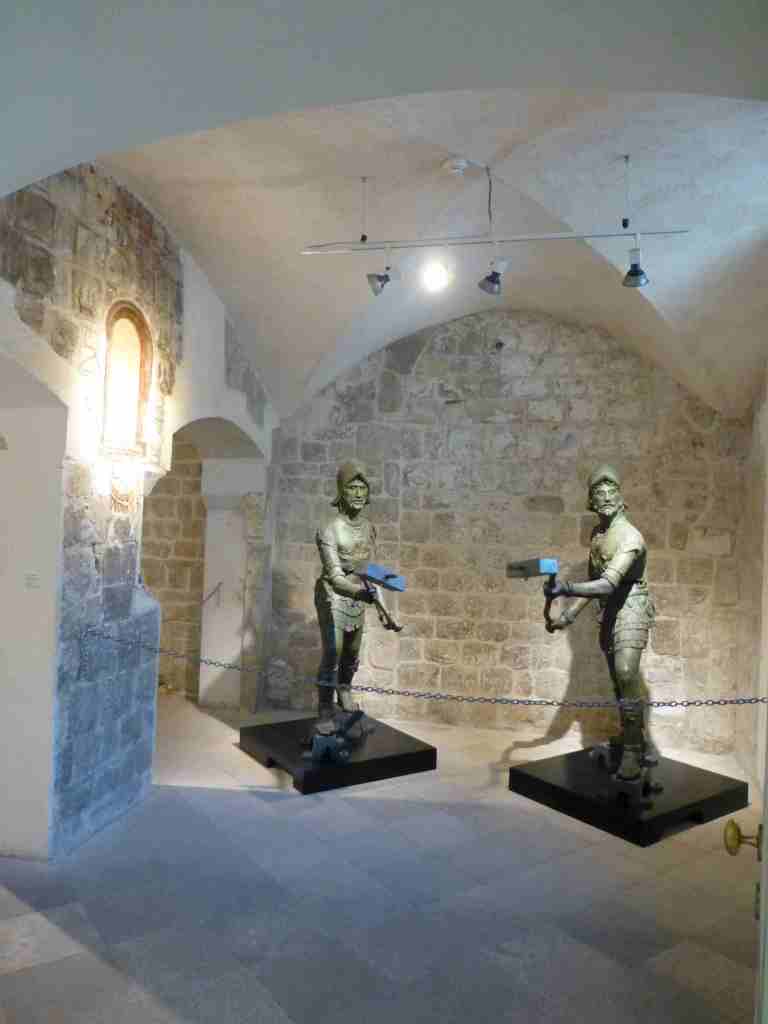
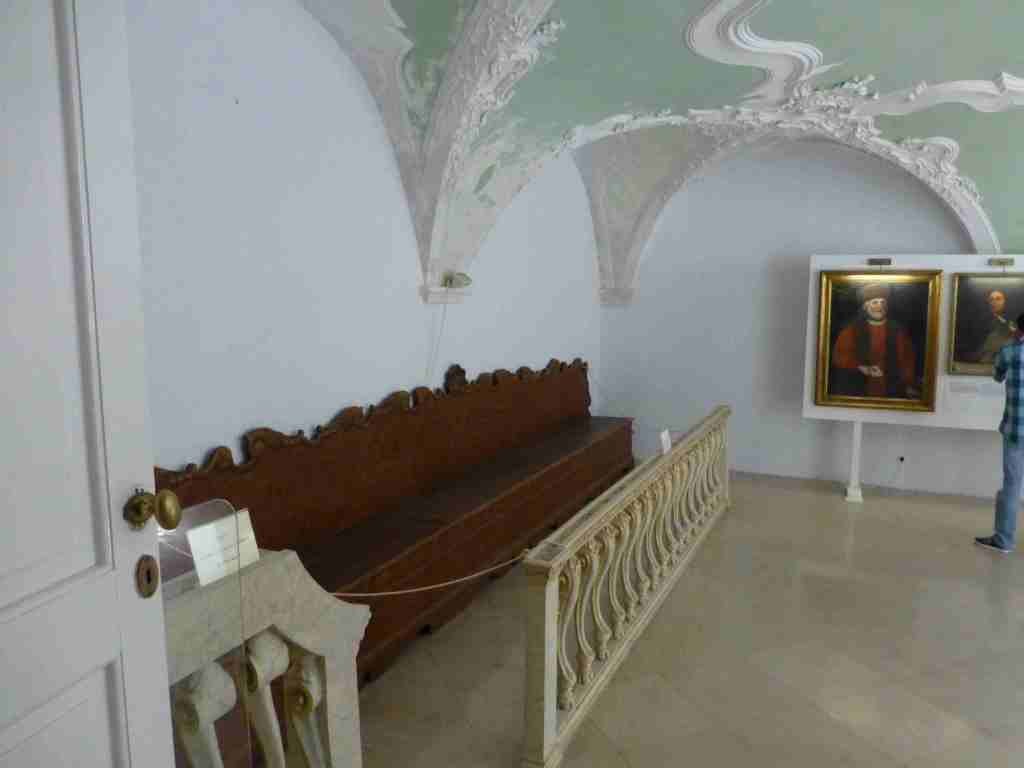
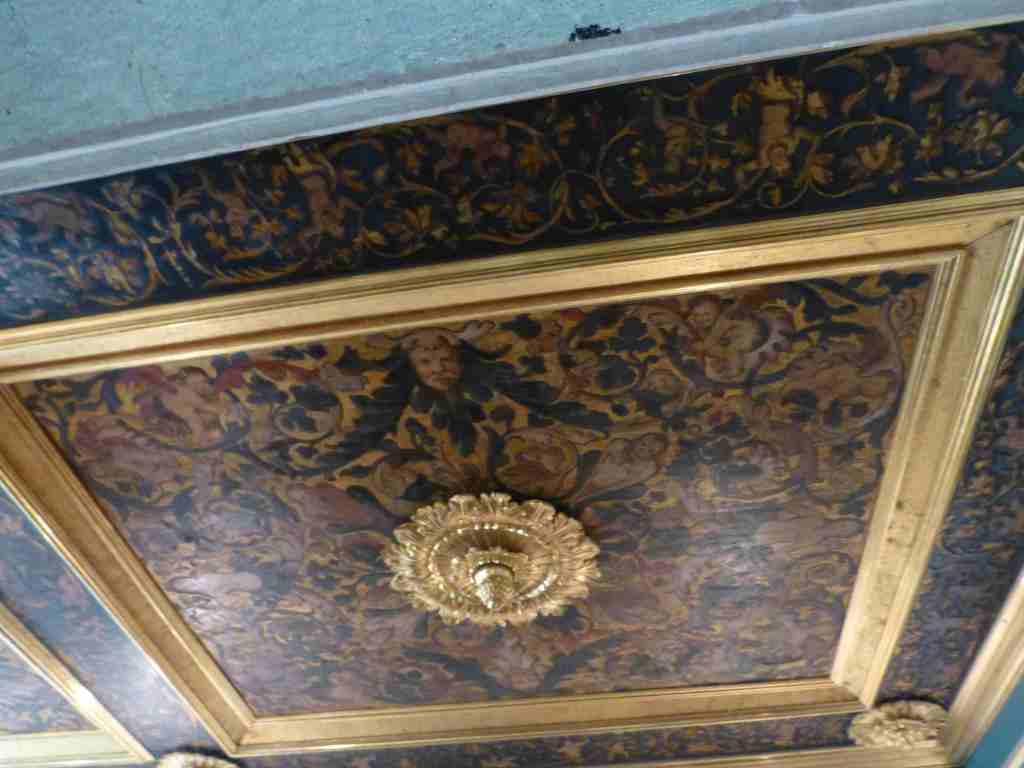
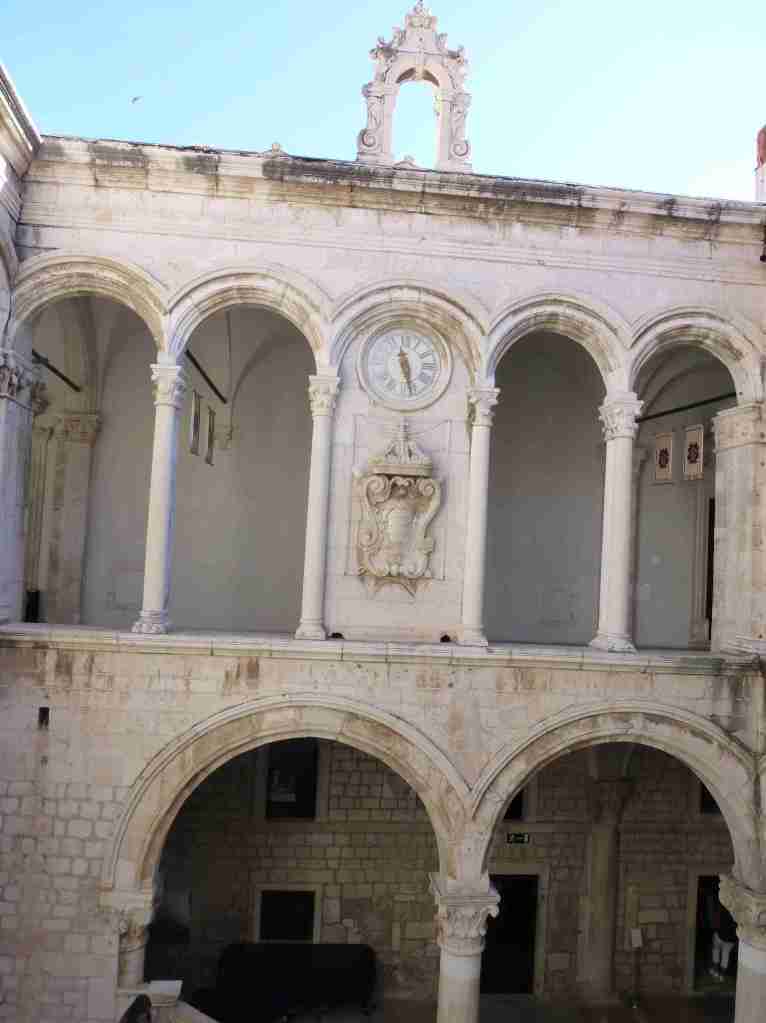
Here was the office of the Republic of Dubrovnik, and the entire lower floor was intended for the administration. There were carved golden reliefs on the ceilings, and we learned that representatives of all famous art schools worked here – Dubrovnik, Italian, Austrian, etc. In the second hall there were portraits of more famous people from the history of Dubrovnik. In the other hall there were figures of two Roman soldiers, who once rang the huge bell outside, now their spears stood on the bell. Right behind them was a statue of St. Vlas, who held Dubrovnik with his left hand. On the sides there were also large wooden engraved chests with padlocks, in which the treasure of Dubrovnik was once kept.
Then we went out into the courtyard, which was crowded with tourists, and we quickly climbed some steps and headed to the second floor of the palace, having previously quickly glanced at the basements that served as prisons. We also stopped in front of the monument to Michael, who was not from a noble family and had no children, and as a wealthy merchant he left all his wealth for the Republic of Dubrovnik, which erected a monument to him. At one time, all adult men from aristocratic families in Dubrovnik were members of the Grand Council. They gathered in the neighboring palace, electing one of them as a prince, who held the office and ruled only for one month, and only after two years could he hold the office again. At the entrance to the second floor was written in Latin “OBLITI PRIVATORV PVBLICACVRATE” – “forget everything personal and think only about the common good”. Guided by this maxim, the rulers wisely ruled the city, where trade, science and art flourished. Strict legislation kept peace and order in the city. For each theft, e.g. cut off the hand. They did not kill a person, because the dead were quickly forgotten, and the crippled people were conspicuous, and the rest learned their lessons.
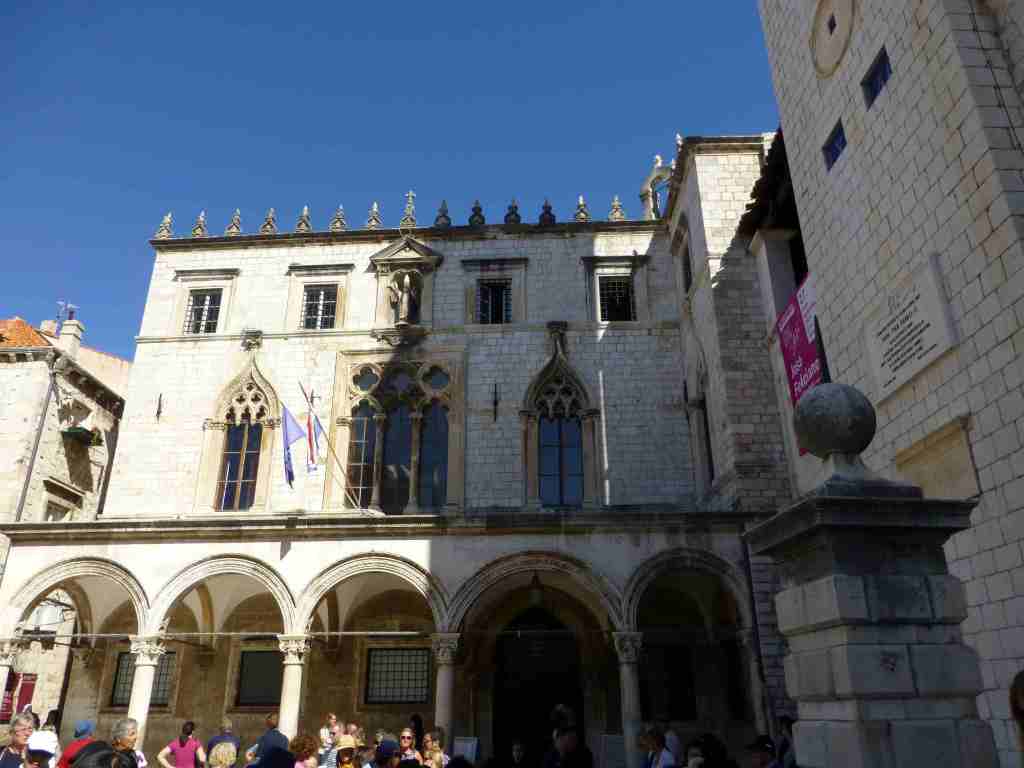
The chosen princes lived here on the second floor for a month. Photography in the premises was forbidden, so I tried to describe and memorize what I saw, so that I could later recall the beautiful things I saw. The prince’s apartments were luxurious, but it turned out that they did not look like that at the time. The life of the prince was more modest. During the design of the museum, furniture from other rich houses was brought here. The furniture dates back to the 17th-18th century. The furniture dates back to 17-18 century some of them were not even from the Republic of Dubrovnik. A large Austrian clock was especially beautiful. Also magnificent was the stretcher placed in the center of the room, or rather a carriage driven by people, not horses, dating back to the 17th-18th centuries in the Rococo-Baroque style. It was owned by an Italian aristocratic family, and on the back of the stretcher was depicted the coat of arms of the family, on the front there was beautifully painted, and on the sides – with large windows. Back in the day, people in Dubrovnik walked only on foot. That is why stretchers were worn only on people’s shoulders. No chariots or horses were allowed in the city.
In the center of the second room there was again a large and magnificent stretcher, on the sides there were large vases and many paintings. The furniture was in the style of Louis XVI. Especially interesting was the chandelier, in which lights and flowers intertwined in a very interesting way. It turned out that the glasses on the chandelier were made by Morano and brought from Venice. There was also a huge fireplace in the room, which apparently served for heating, even in this warm city.
The next room had red wallpaper, antique furniture, wooden and beautiful cabinets. This was actually the office and the prince’s study. Our attention was immediately attracted by 4 huge keys, and by huge ones I meant larger than my handbag – it was good that current keys were much smaller. The heavy and large keys were actually the original keys from the two gates of the city, and for each gate both keys must be placed in order to open it. The prince’s desk was especially beautiful. On his chair was thrown a red robe, which the prince wore and with which he distinguished himself from the others, and everyone knew that during that month he was the prince. There was also an interesting clock in this room, which turned out to be luminous and in the dark showed what time it was. There was also a chest with many slippers, each of which was painted with a different picture – personal documents were kept here.
The next room had a beautiful view outside, a new stretcher, large mirrors and paintings, and a nice swing. From here we entered the Prince’s bedroom, which was closed for the moment, but we could peek through the door and see his private chambers. The bedroom had red décor and beautiful wooden cabinets.
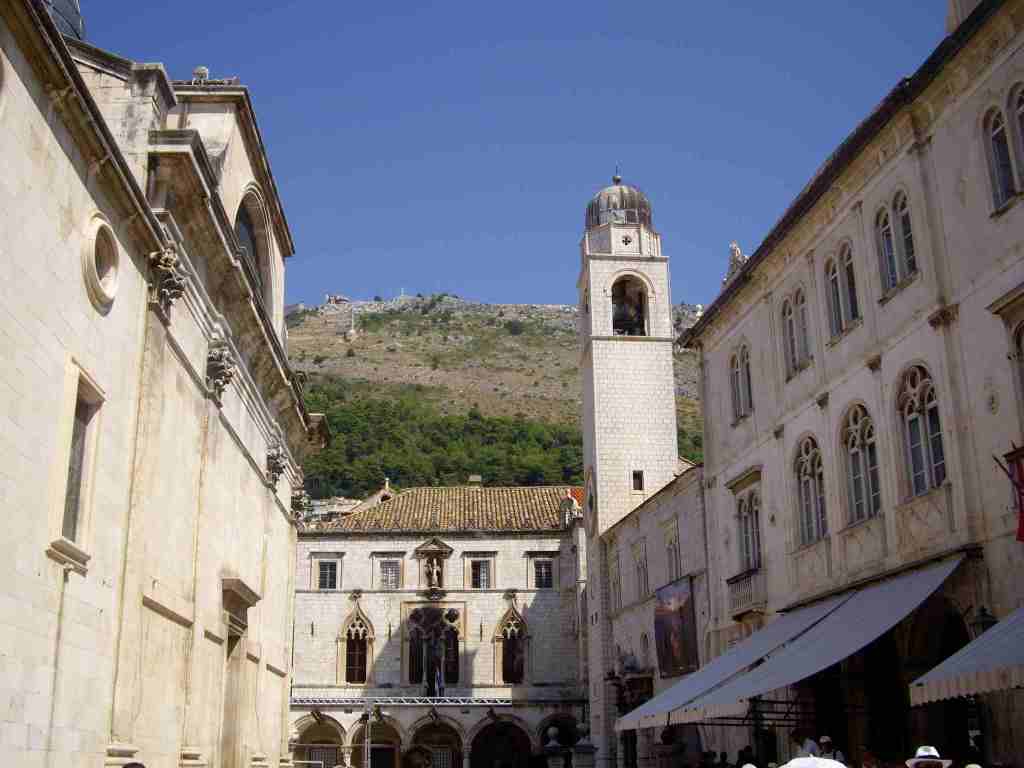
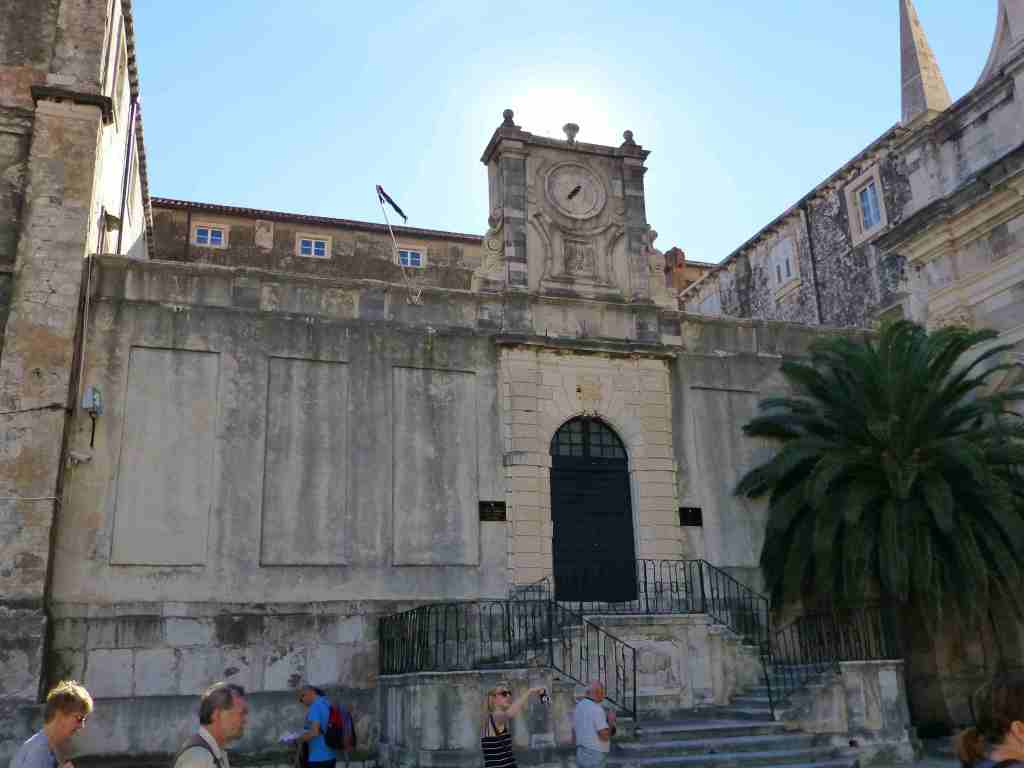
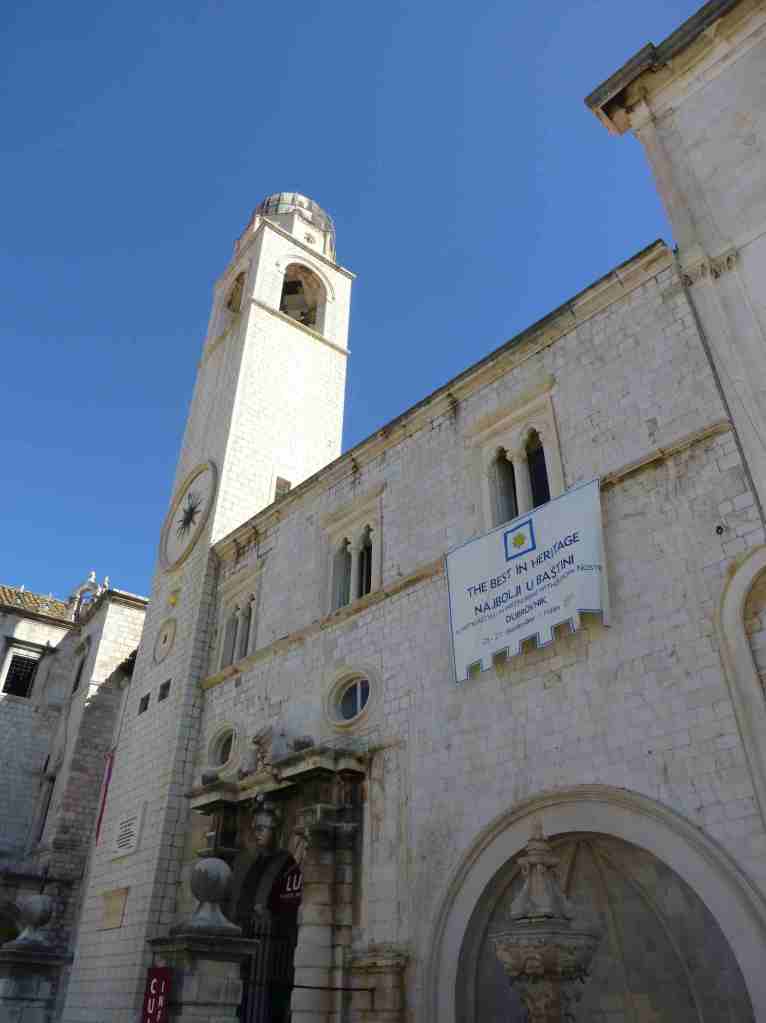
We left the Prince’s Palace and headed to the Dubrovnik Cathedral, and on the way we saw the clock tower (Gradski Zvonik), which in 1922 was renovated, preserving its appearance from the 15th century. The bell tower had 4 bells dating back to 1480, and they announced the city in case of danger.
We entered the Dubrovnik Cathedral, first heading to the treasury, and then looking at the church, on the walls of which there were beautiful decorations by Italian and Dalmatian artists from the 16th-18th centuries. The treasury was a closed room piled with sacred objects of gold, including a pitcher and a bowl of gold and silver with lavish decorations embodying the flora and fauna of the lands around Dubrovnik. About 200 relics were kept here, including the sacred hand of St. Vlas from the 13th century and pieces of the Holy Cross on which Jesus was crucified, an icon from the 12th century, etc.
The cathedral was also impressive in typical Baroque style. We sat across the altar of St. Bernard, painted with different types of stones, and on the other side there was an altar of a Czech saint.
We passed by the church of St. Vlas, which was surrounded by tourists in front, which was rebuilt at the beginning of the 18th century, retaining the design of the 17th century. Inside there were many Baroque works, and on the altar stood the patron saint of the city, made of gold and silver, holding the city in his hands.
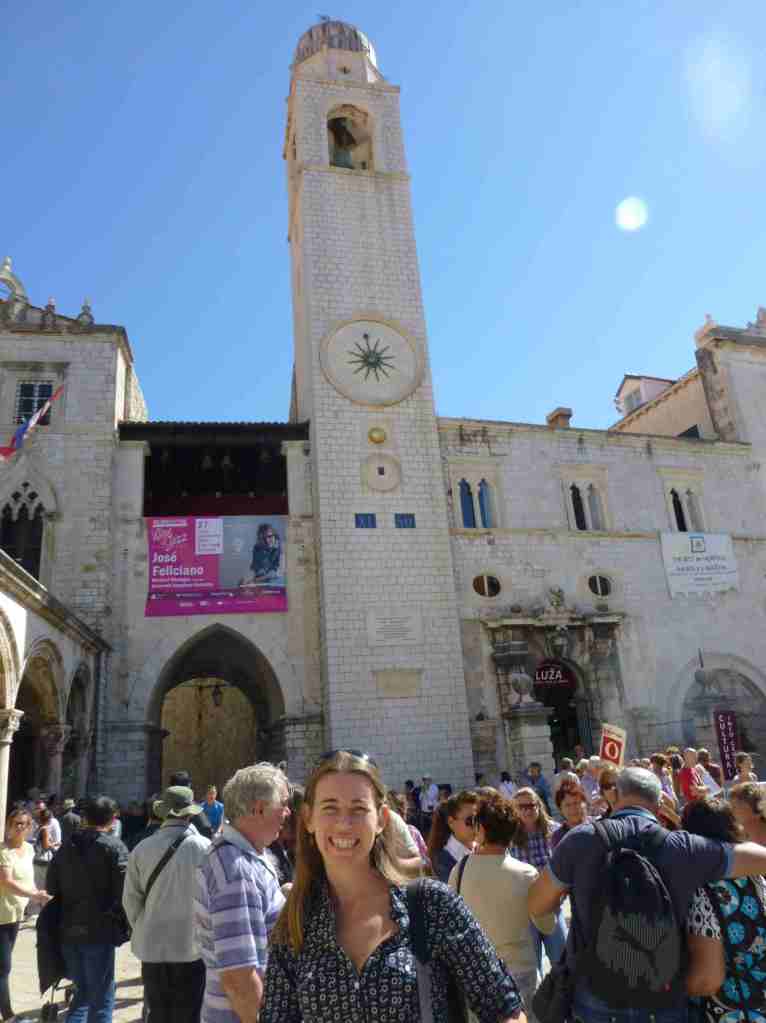
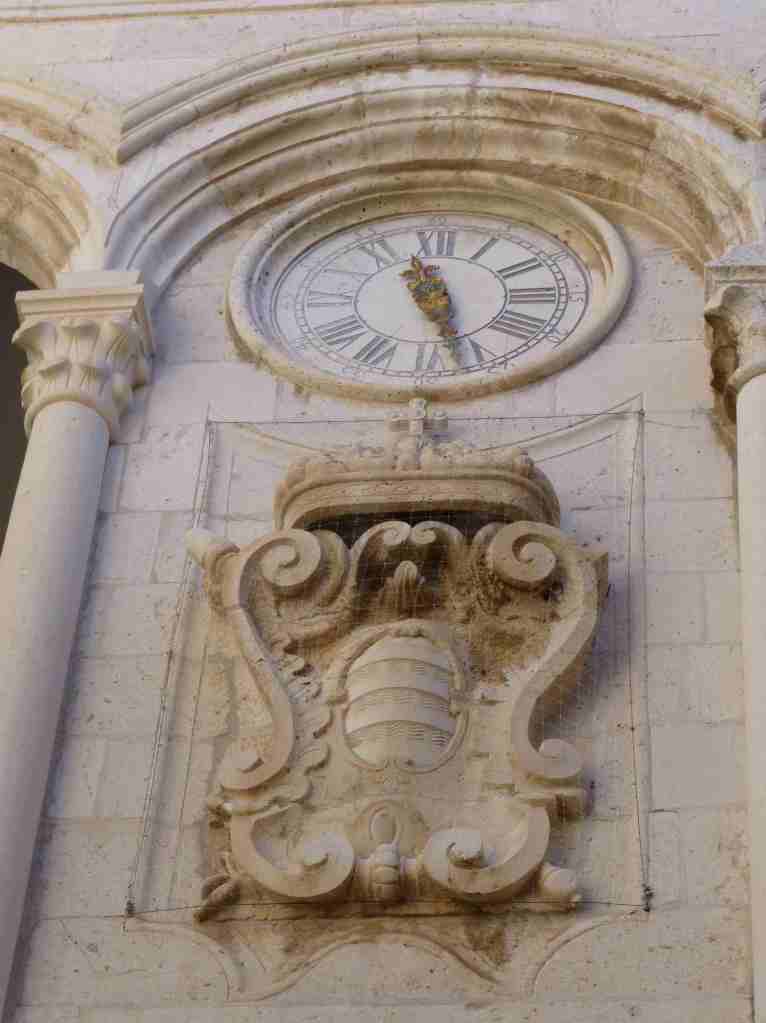
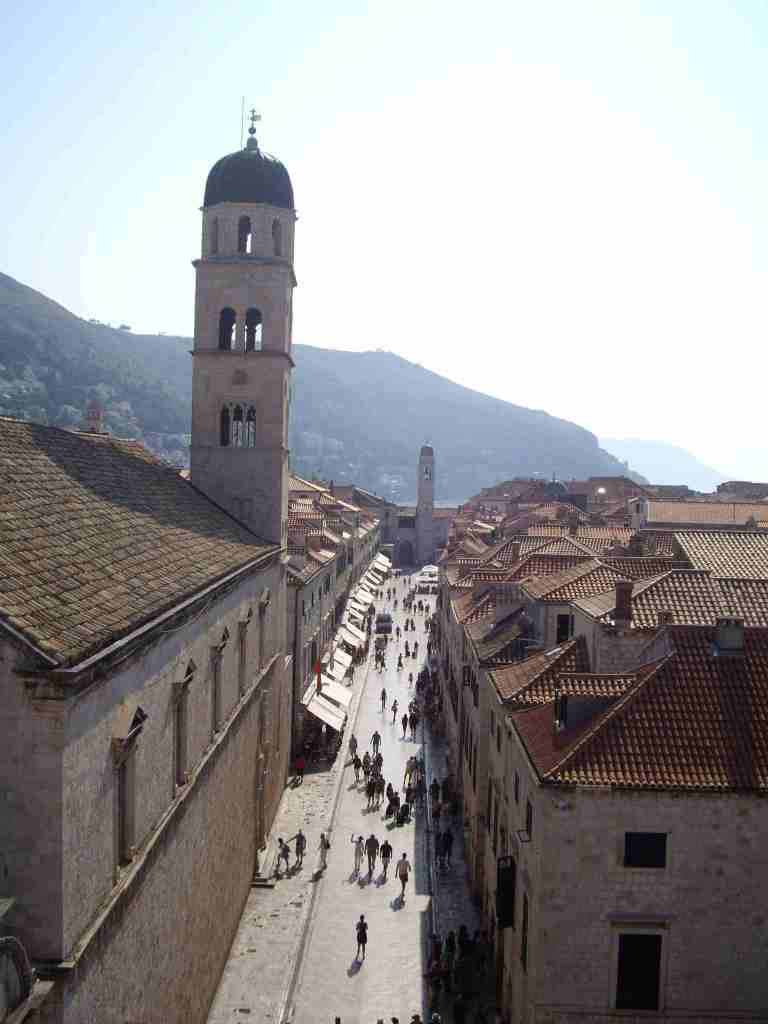
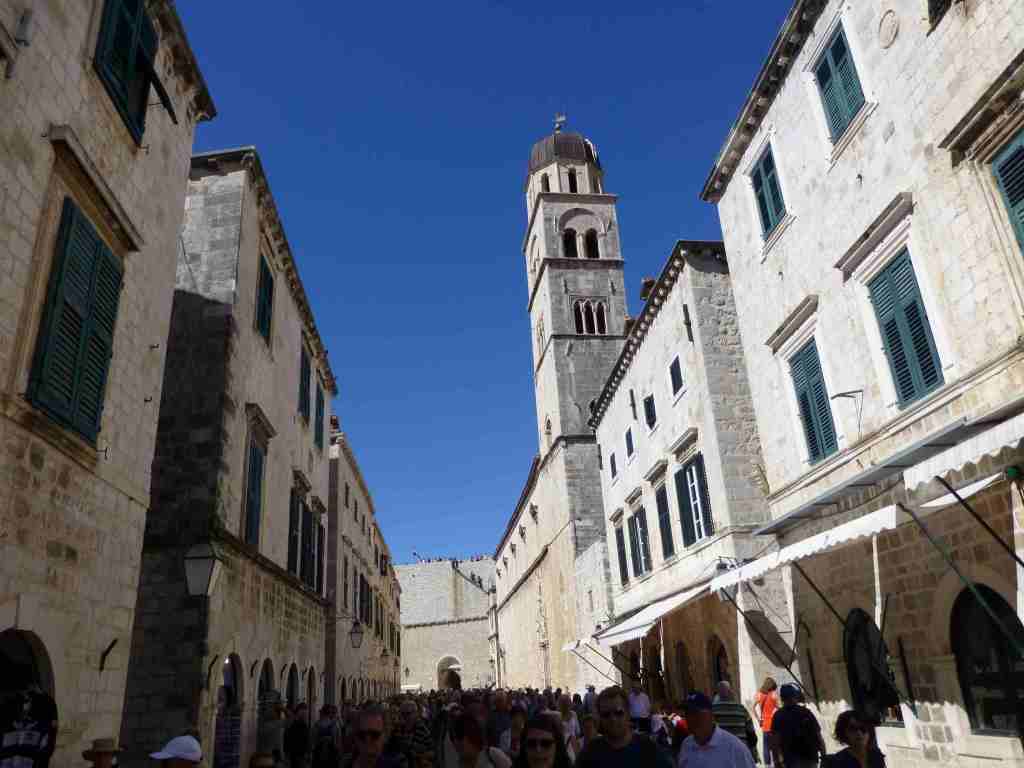
We headed along Dubrovnik’s central shopping street, Stradun, which connected the east and west entrances of the city and had been the main street since the 12th century, having been paved in 1468.
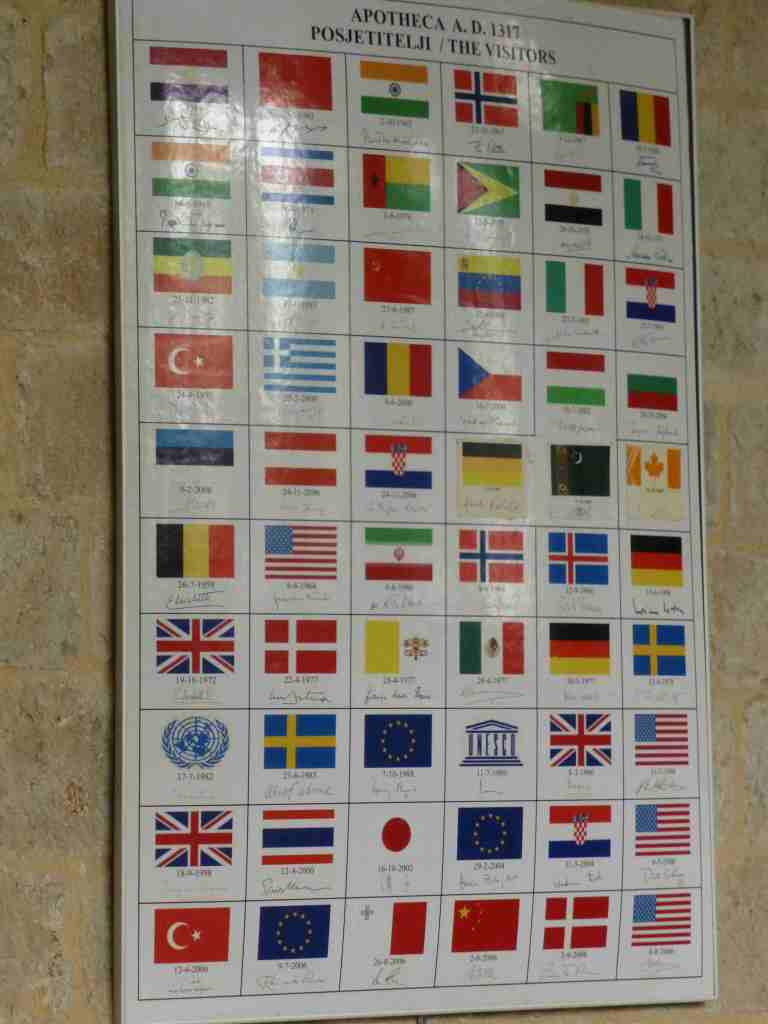
Then we headed to the Franciscan monastery, which also had a very beautiful garden with palm trees, resembling the one in the Dominican monastery. The construction of the monastery began in 1317 and was completed in the next century. After the great earthquake, it was completely rebuilt, with only the southern door, dating back to 1499 with beautiful Venetian decoration, surviving. From the inside, the museum with the pharmacy (Stara Ljekarna) was interesting, on the shelves of which you could see small bottles of colorful jars, and measuring devices. At the entrance of the museum there was also a board with many flags, above which was written APOTHECA A.D. 1317 VISITITELJI / THE VISITORS – under the Bulgarian flag the name and signature of Georgi Parvanov stood. Apparently, these were prominent visitors to this museum, and the flags were many from all over the world.
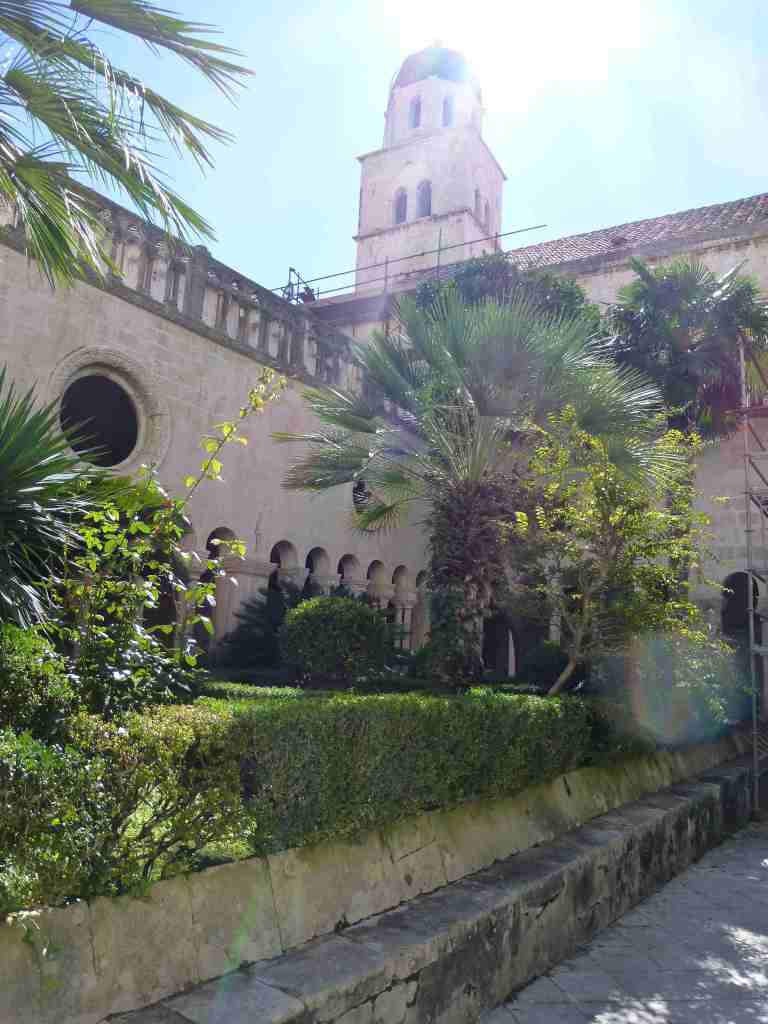
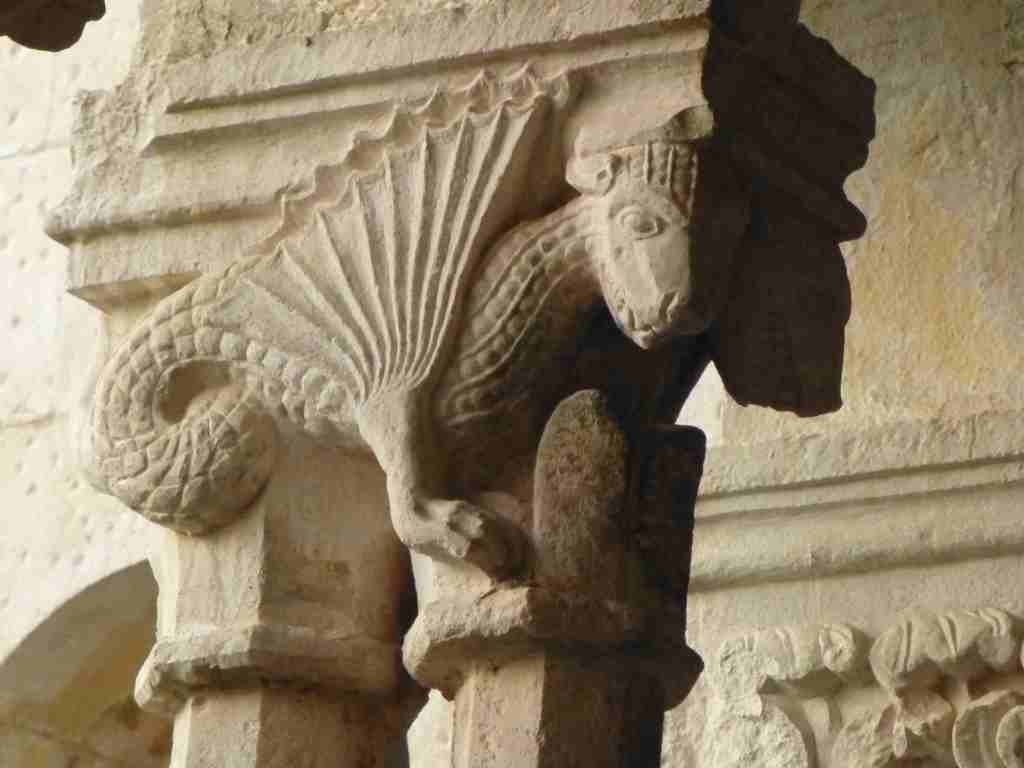

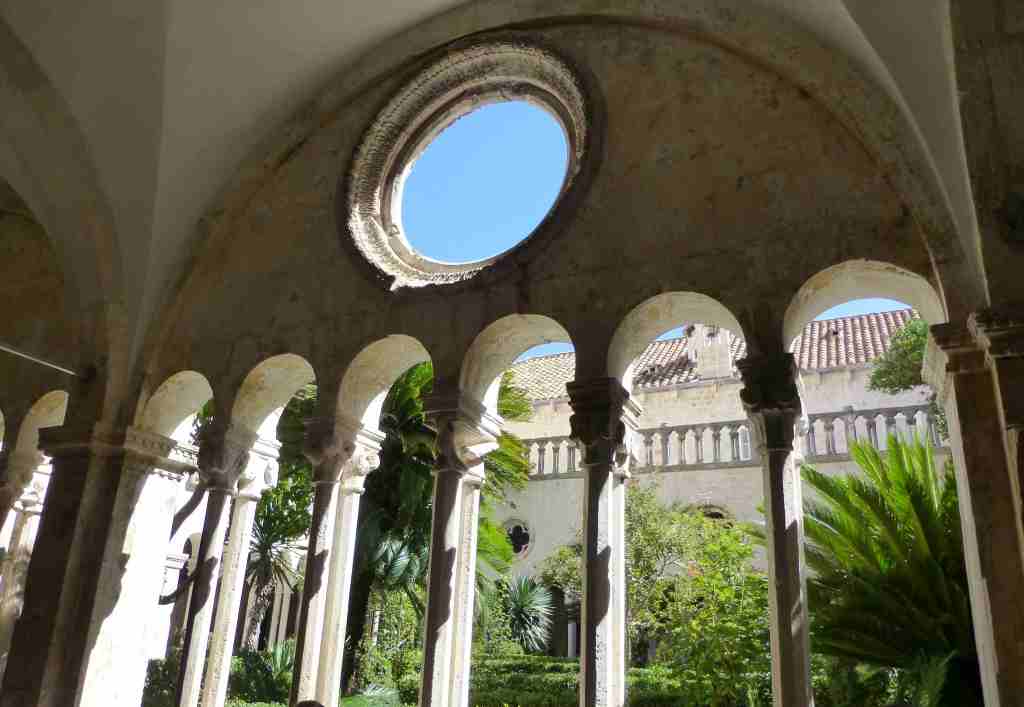


More diverse than the flags were only the columns standing in the courtyard, and on each of them there was a different animal, plants or person – I managed to take pictures of puppies, a dragon, a shepherd with sheep, a man and a woman, etc
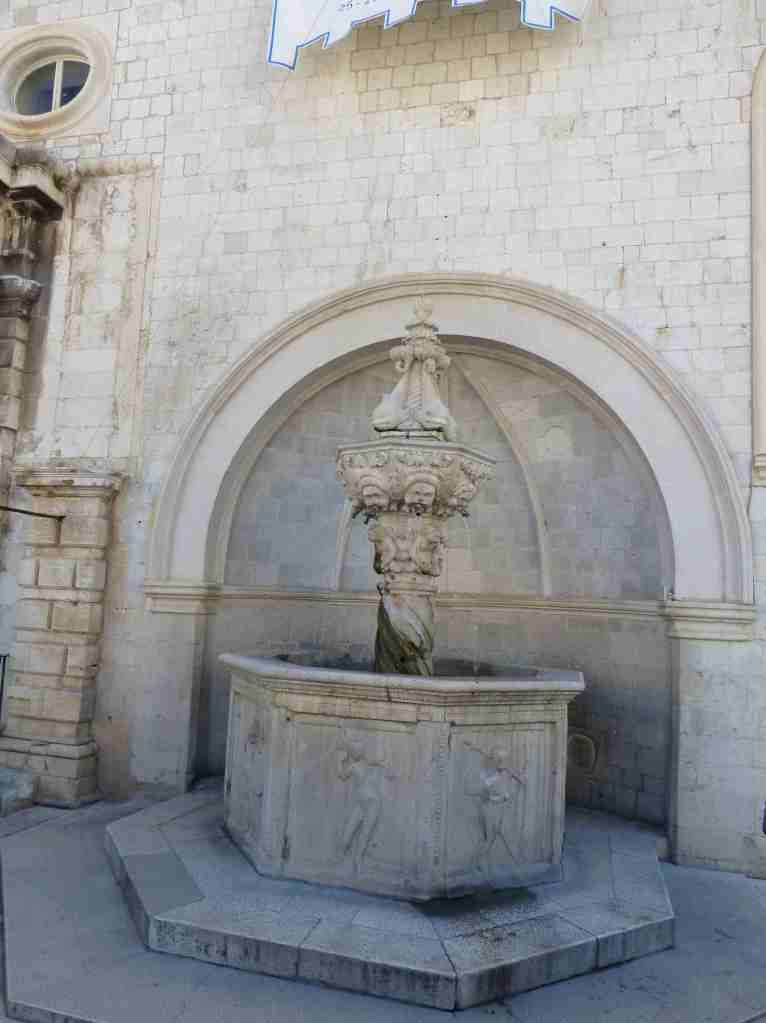
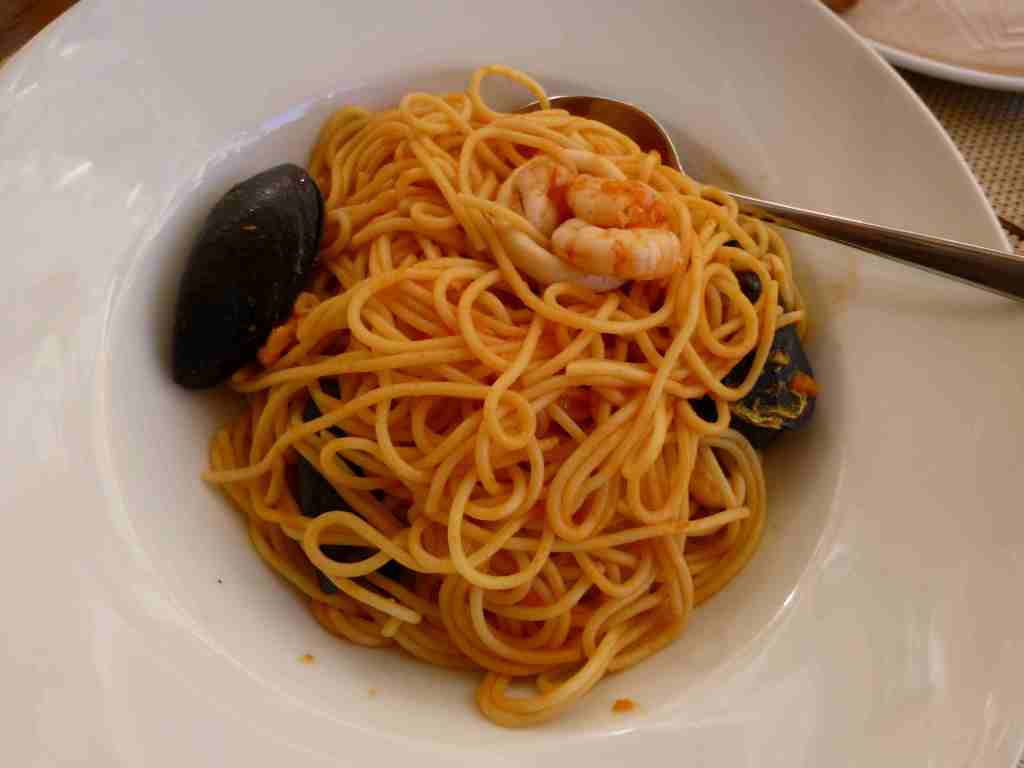
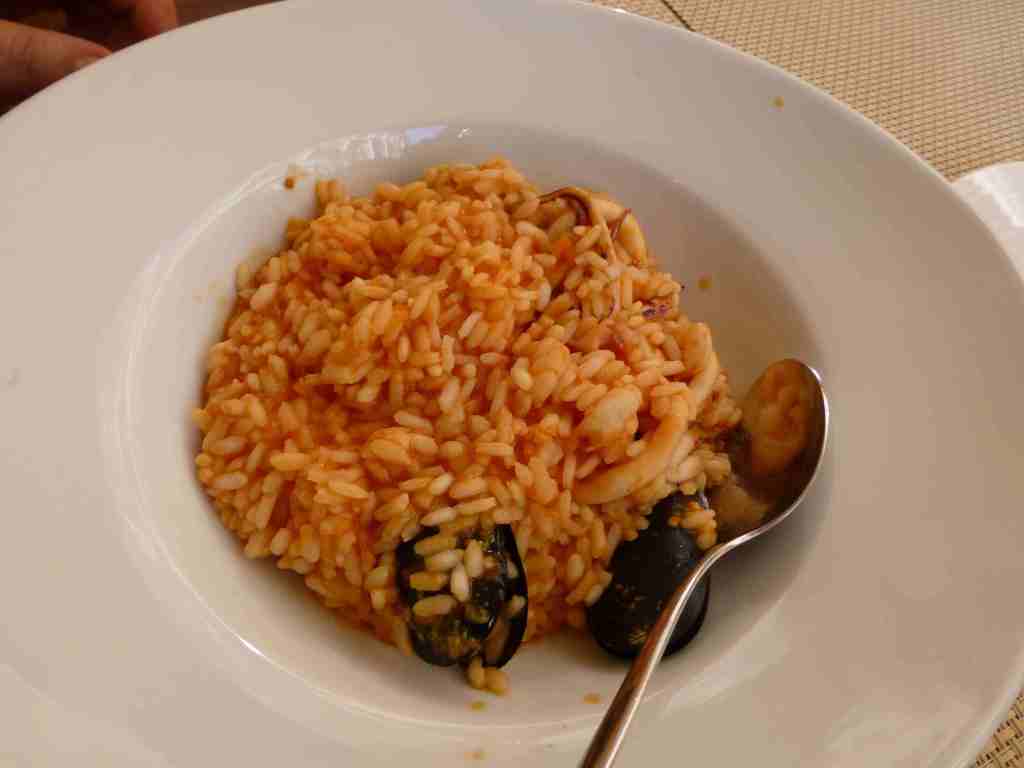
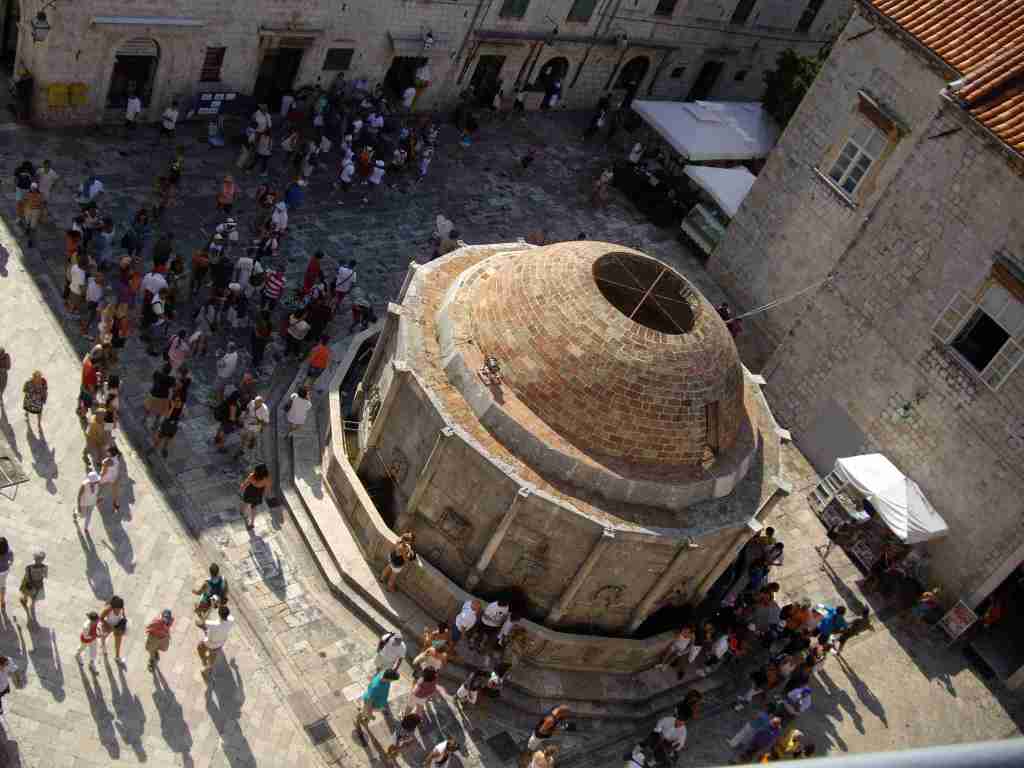
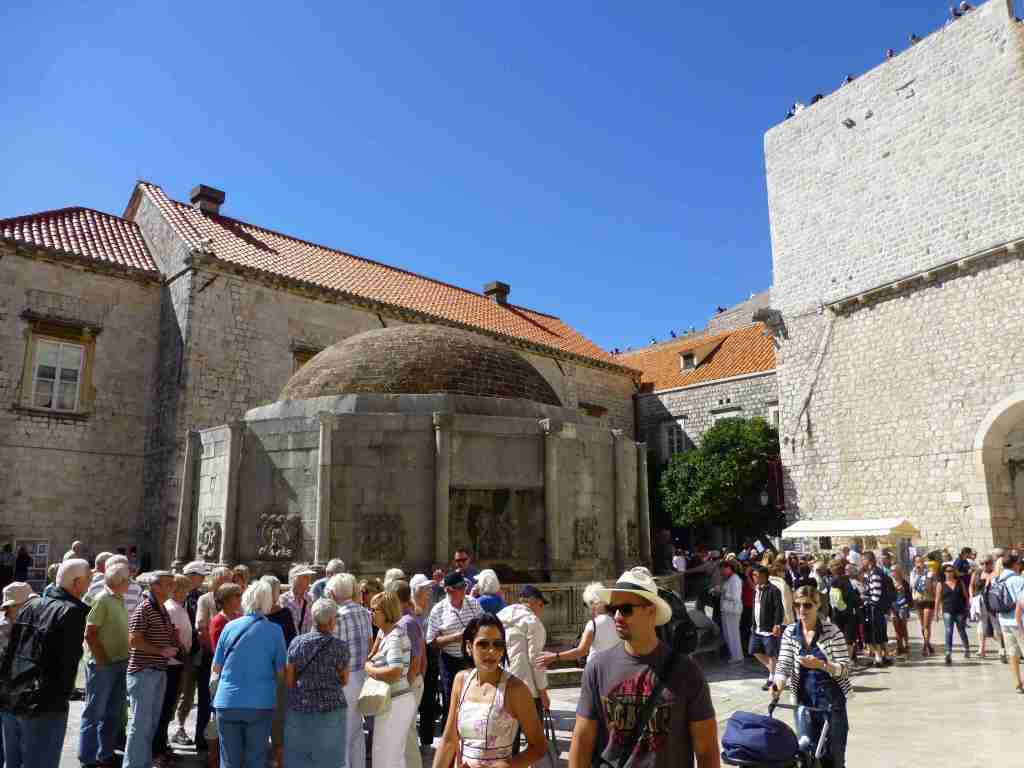
We continued our walking tour to the beautiful fountain of Onofrio, erected in 1438-44 by a Neapolitan architect and consisting of many fountains with beautiful decorations. In the past, the fountain had two levels, but during the strong earthquake of 1667 the second floor was destroyed. We walked along the narrow stone streets of the city, which meandered in all directions to the market. We looked at many souvenir shops and then we ate delicious spaghetti and seafood risotto in a picturesque street restaurant called Tezoro.

We went outside the city walls from the other outer gate called Pile – Gradska Vrata Pile, passing through a strong stone bridge erected in 1537 over a deep moat, in which beautiful gardens were currently formed. Above the main entrance stood the statue of St. Vlas. From here a magnificent view of the sea and the fortress walls built over the rocks and seemed to be part of them.
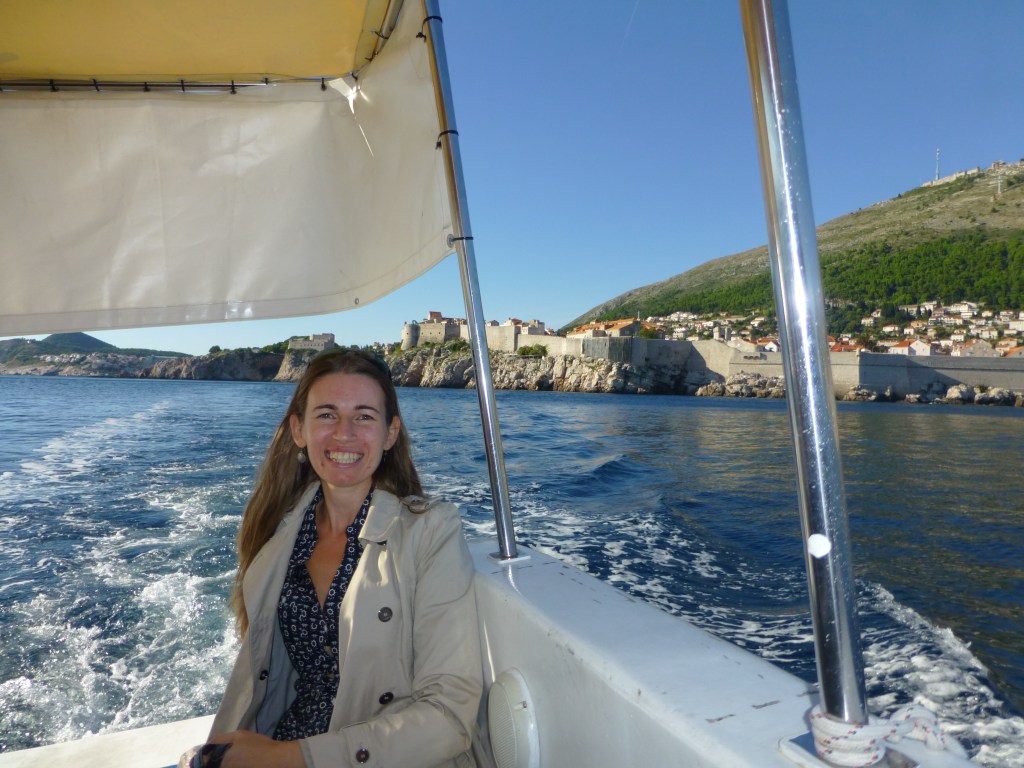
Dubrovnik was especially beautiful from the water side, so we decided to take advantage of one of the boat trips that departed from the old port. We boarded a boat with a transparent bottom and reached the island of Lokrum, which was only 700 meters from Dubrovnik and where a nature reserve was created in order to preserve the exotic plants found in these places. The Benedicts first settled on this island and built their monastery there in 1023. In 1859, the Archbishop of the Habsburgs, Maximilian, built his own castle and renovated the monastery, which was later turned into a museum of natural history. Today, the castle offers wonderful views of Dubrovnik. Unfortunately, however, we never saw these buildings from the water. All of them were hidden in a deep dense forest, which made the island one of the greenest places here, especially against the backdrop of stone Dubrovnik. There was not much biodiversity visible on the transparent bottom, but the few sea urchins managed to attract our interest.
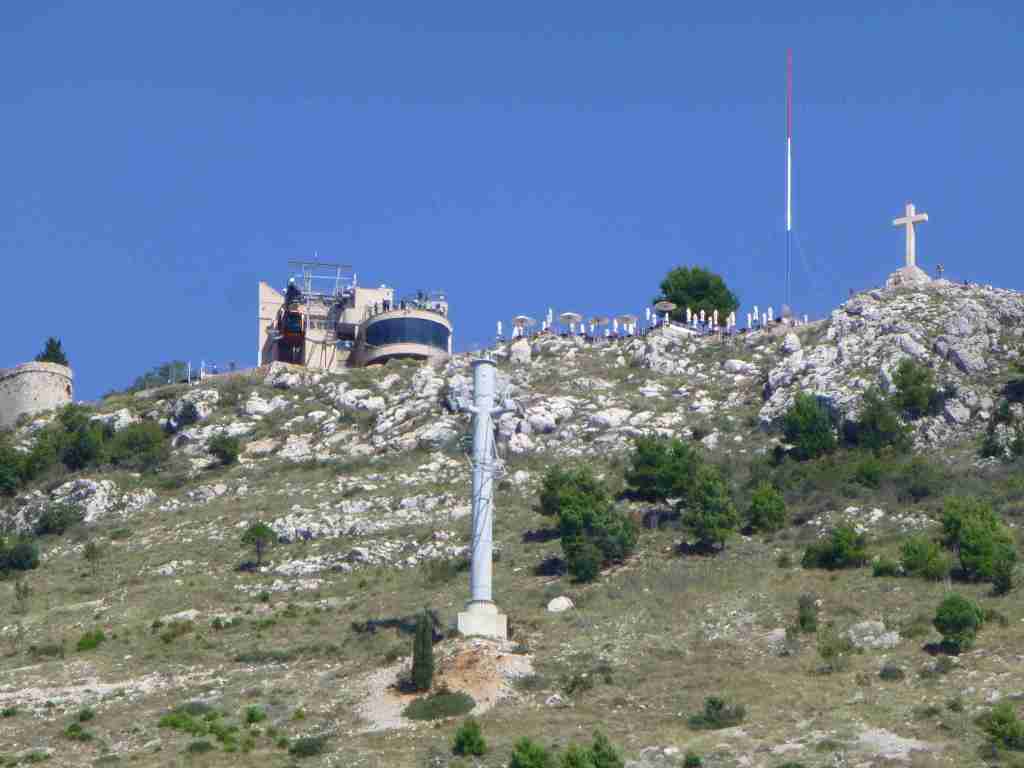
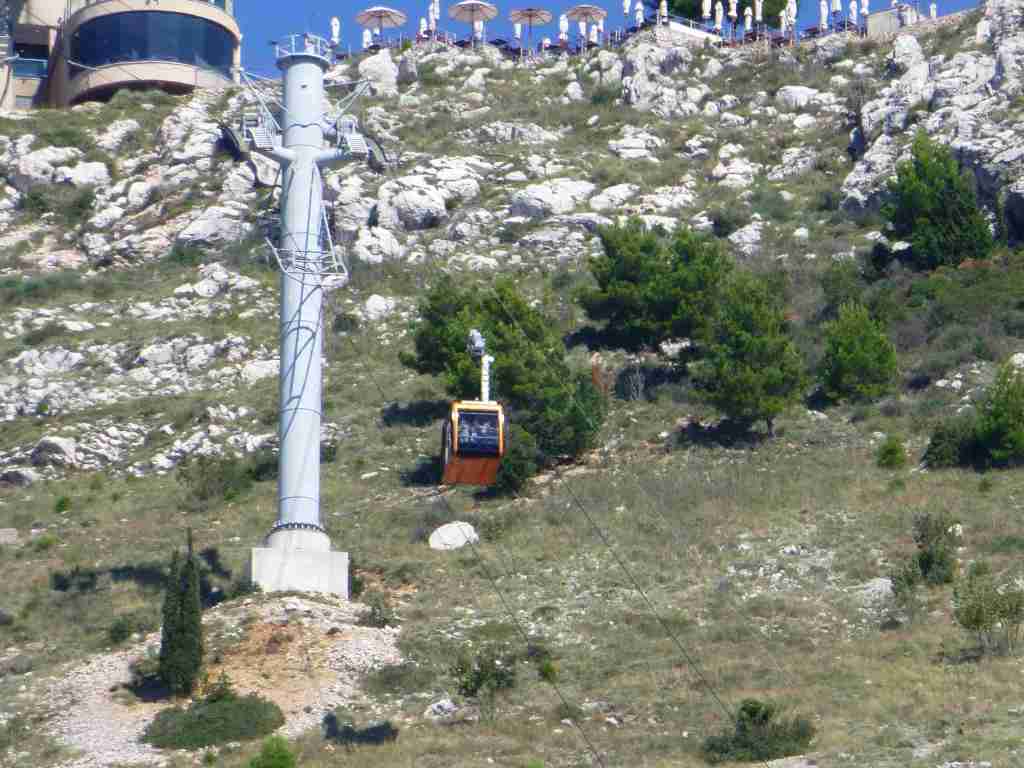
From the sea there was a good view of the Dubrovnik lift, which rose 405 meters above the terracotta roofs of Dubrovnik and offered a picturesque view of the port and the Adriatic coast. The distance between the lower and upper stations was only 778 m. The two gondolas of the lift each accommodated 30 passengers, and at the top there was a nice café, from where the landscape and the sunset looked magnificent. However, we left this experience for the next visit.
The pearl of the Adriatic, the treasure of Dalmatia, Dubrovnik once again managed to impress us, not only with its beautiful buildings and strong fortress walls, but because of the pleasant atmosphere, which seemed to be untouched by the years. Dubrovnik is a wonderful place not only for day trips, but for a long, relaxing, sea vacation.


GENERAL INFORMATION ABOUT DUBROVNIK:
Location: Dubrovnik is located in the southernmost part of Croatia, on the coast of the Adriatic Sea, at the very end of the Dubrovnik Isthmus.
Origin of the name: The old name of the city is Ragusa. The current name, Dubrovnik, was adopted in 1918, and was also known in the Middle Ages. It comes from the Slavic word “oak forest”.
Area: 21.35 sq.km
Population: 42 615 people (as of 2011)
Official language: Croatian
Altitude: 3 m
Climate: Mediterranean
Time zone: UTC+1
Currency: Croatian kuna (HRK)
Additional information: https://visitdubrovnik.hr
TRIP TIPS FOR DUBROVNIK:
Best time to visit: All year round. In the summer it is very pleasant here, with the peak season from June to August leading to crowds of tourists, probably the best timing is in September and October when the sea is still warm and beach can be combined with pleasant walks.
Typical foods and drinks: Like every coastal city, Dubrovnik prides itself on its seafood, with the local cuisine retaining Italian influences. I especially recommend spaghetti with seafood and seafood risotto being especially delicious.
Places to visit: Dubrovnik Fortress Walls, Dubrovnik Cathedral, Prince’s Palace, Stradun Shopping Street, Lokrum Island, Korcula Island.
 TripTips