TROYAN – LEGENDARY ALMOST LIKE TROY



Do the horses in the picturesque Bulgarian town Troyan, should be called Troyan and why everyone knows about the legendary wooden horse that many years ago fit an army and conquered the distant city of Troy, and only a few know anything about the beautiful Balkan town of Troyan. We decided to check this among the city legends and take a walk in the pretty town.
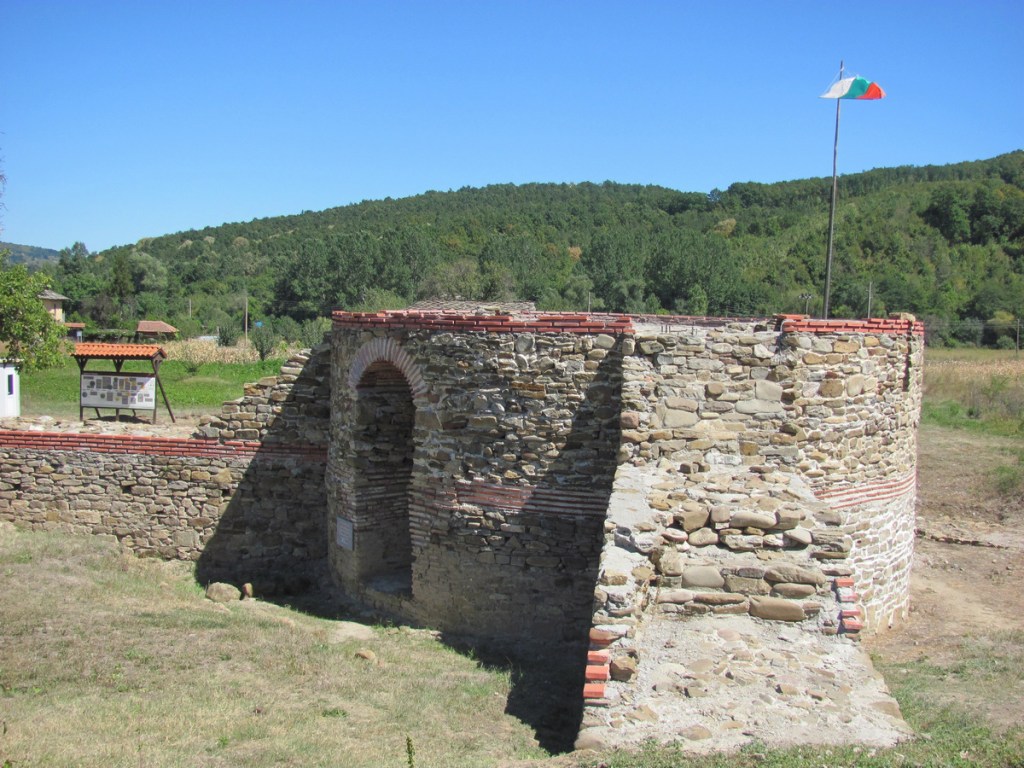
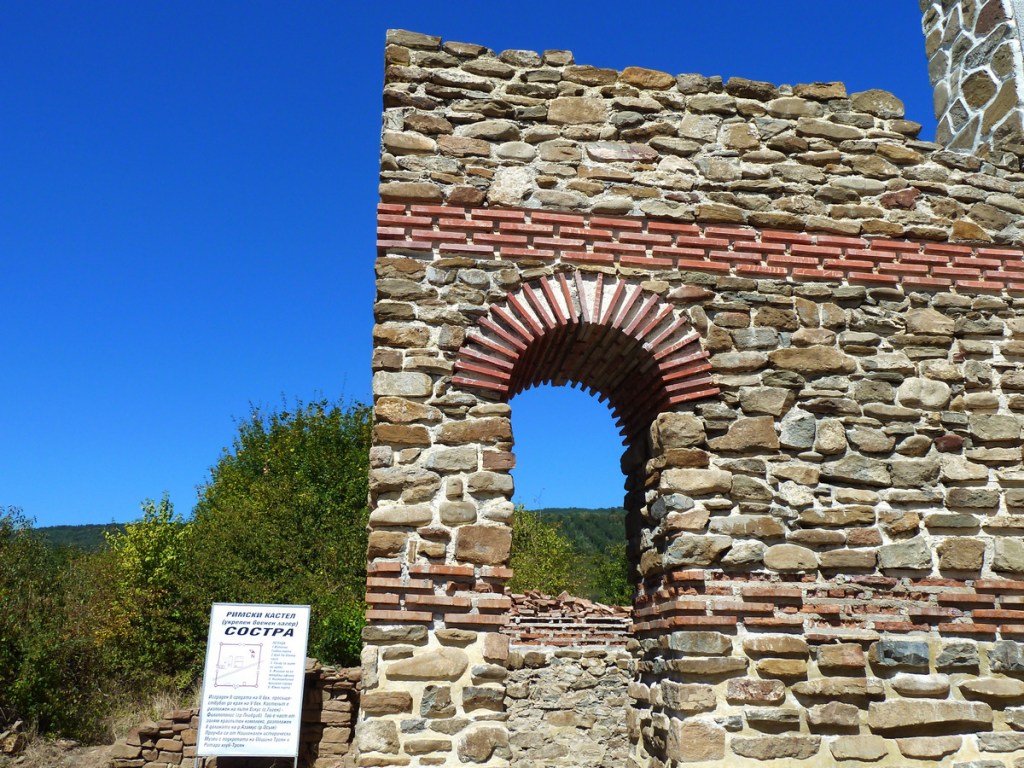
We started our tour from the beautiful Roman fortress Sostra, erected 12 km north of Troyan. The name has an ancient Greek origin and means “barrier”, but unfortunately the city was unable to block the attacks of the Goths, and later of the Huns, who destroyed it completely. Sostra, however, fulfilled its main purpose as a Roman station on one of the longest Roman roads between Oescus (today’s village of Gigen near Pleven) and Philippopolis (Plovdiv). This was not a simple stop along the way, but something like a 5-star motel with several pools of hot and cold water, with underfloor heating and a complex system of canals drawing water from the Osam River. This mountain SPA center also had separate residential buildings, guarded by high fortress walls, which in some places exceeded 10 m, with two watchtowers. Here was opened one of the oldest churches in the Balkan Mountains – the early Christian basilica “St. George.” It was an ideal place to relax since 147, and today it is a great place to stroll through the resurrected streets of a roadside settlement part of the Roman Empire.


The center of Troyan impressed us with the huge letters with the name of the town and in front of them the number 148. It turned out that on 12.10.2016 Troyan celebrated 148 years since its announcement as a town and everywhere there were celebrations and in the evening a solemn fireworks. We had missed the holiday, as well as the Plum Festival that preceded it in September, but the memory of these celebrations was still preserved in the city center, where there were painted plums on the cobblestones and interesting boards of photos from Troyan over the years. And the years of the city are not only 148, the area was inhabited as early as the Paleolithic, and later in the Bronze Age the Thracians settled here. The settlement of Troyan itself originated in the 15th century, and its name probably comes from the old Slavic settlement in the vicinity with the same name, once named after the Slavic god Troyan.




It turned out that we all knew the legend of Troy, but not about the history of Troyan, we could easily list the main Roman and Greek gods from mythology, but not name a few Slavic gods. Again, to correct this, we read more about the god Troyan, who was the god of justice and peace, as well as the overseer of the three worlds of the World Tree. This holy tree, most often identified with beech or oak, and in its roots there was a nest of the magical bird Fire, which was the messenger of the Slavic gods, flying between the worlds of men and gods. At the roots lived the huge mythical snake that connects the world of the living and the world of the dead. The very name Troyan comes from the number “three” and therefore this god could observe all three worlds (heaven, earth and underworld), following the gods, people and souls and knowing what everyone was doing. When someone made a mistake, Troyan punished him. The Slavs, who inhabited today’s lands of Poland, erected a special temple of the god Troyan, which was painted with three heads, each looking at the three worlds, as with a golden veil they had covered his eyes and mouth, so that he could not see their sins and express too severe punishment.
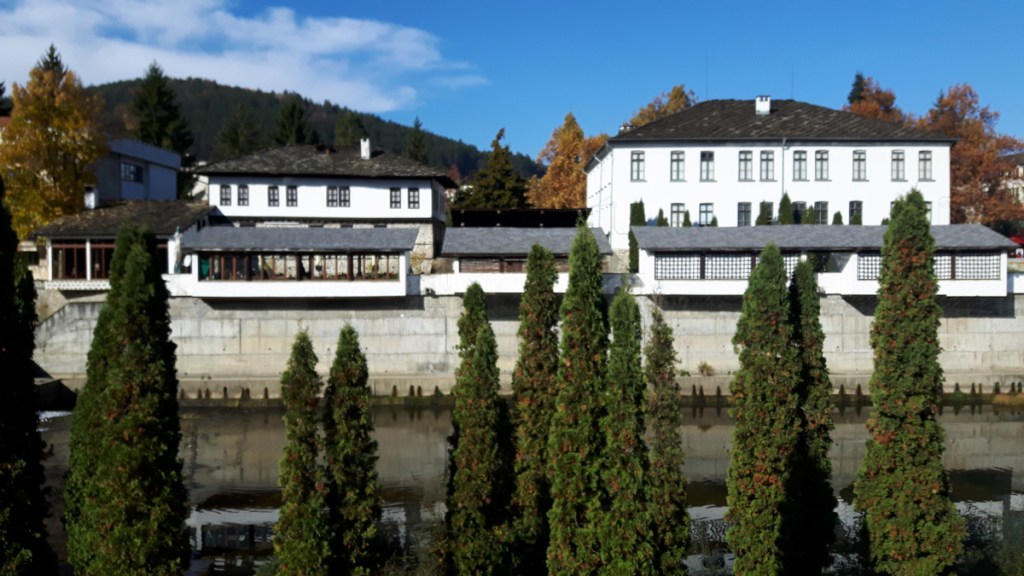
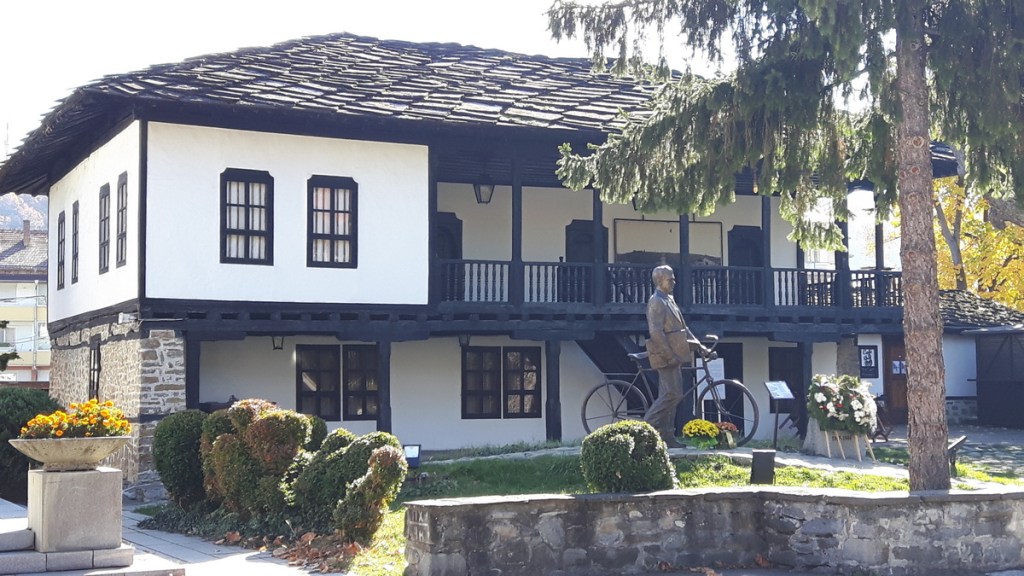
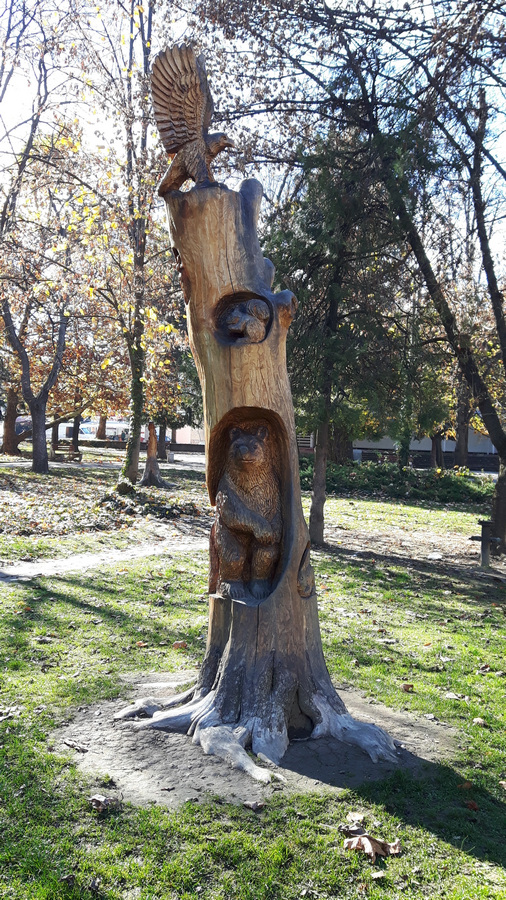
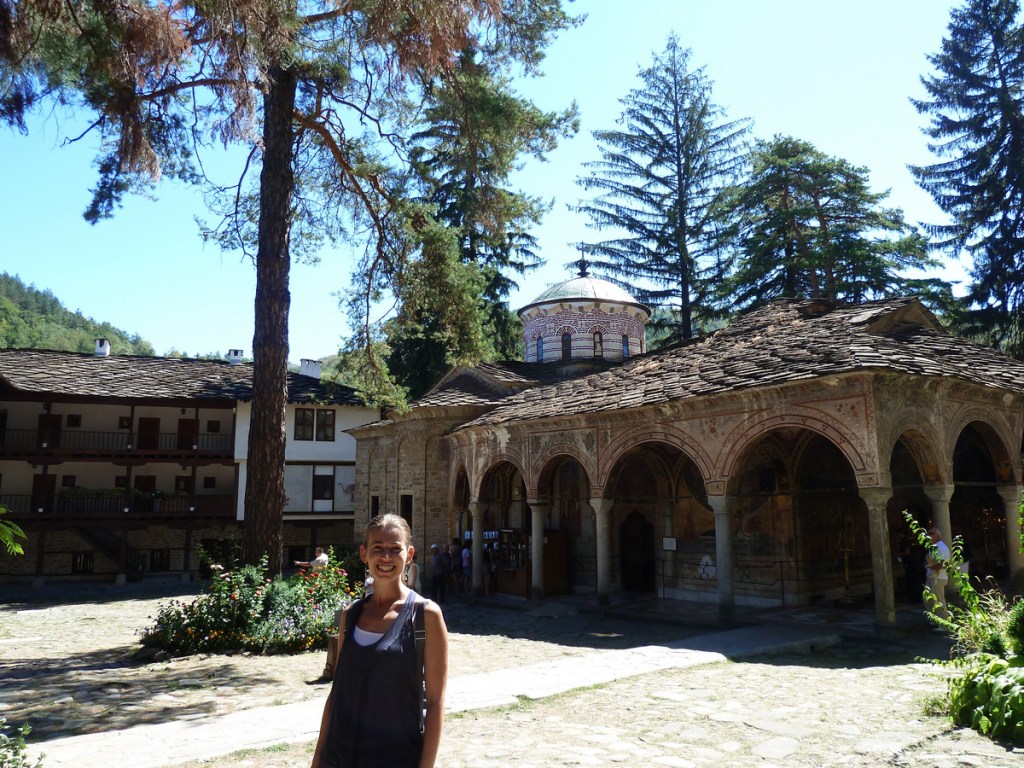
Even today the town of Troyan seemed to have a look on three sides – to the past, with the beautiful old photos hung on large boards on the streets, to the future – with electronic boards with information for tourists and to the present – a clean and tidy hospitable city. I was really fascinated by the preserved old houses, some of which were renovated, as well as the playground, filled with all kinds of fun for the children. There was also a beautifully carved tree with different animals on it. This clearly showed the craftsmanship of the local people. We have learned that where agriculture is not so good, crafts develop. Troyan was famous for its crafts, as one of the biggest local masterpieces was the famous Troyan Monastery. Founded at the end of the 16th century, the monastery is not only one of the largest Bulgarian monasteries, but also one of the most beautiful. It is remarkable for its architecture, carvings and frescoes, some of which are the work of Zahari Zograf. During our visit the monastery was renovated and seemed to shine even more and arouse admiration and adoration. The monastery is also famous for its miraculous icon St. Nicholas. Virgin Mary Troeruchitsa. This icon, along with the icon “St. Virgin Mary Odigitria” in the Rila Monastery originate from St. Cyril and Methodius. Forest and are believed to give healing to those who come with faith. In the Troyan Monastery there is also a separate museum of Levski, where the Bulgarian revolutionary was hiding.


Only 1 km from the Troyan Monastery is the village of Oreshak, where we managed to actually immerse ourselves in the local crafts and cultures. There are two sites in the village of Oreshak, which you should not miss. One is the tavern Kaiser http://www.kaizer-inn.net/ , where the cozy atmosphere is complemented by a wide variety of uniquely delicious dishes.
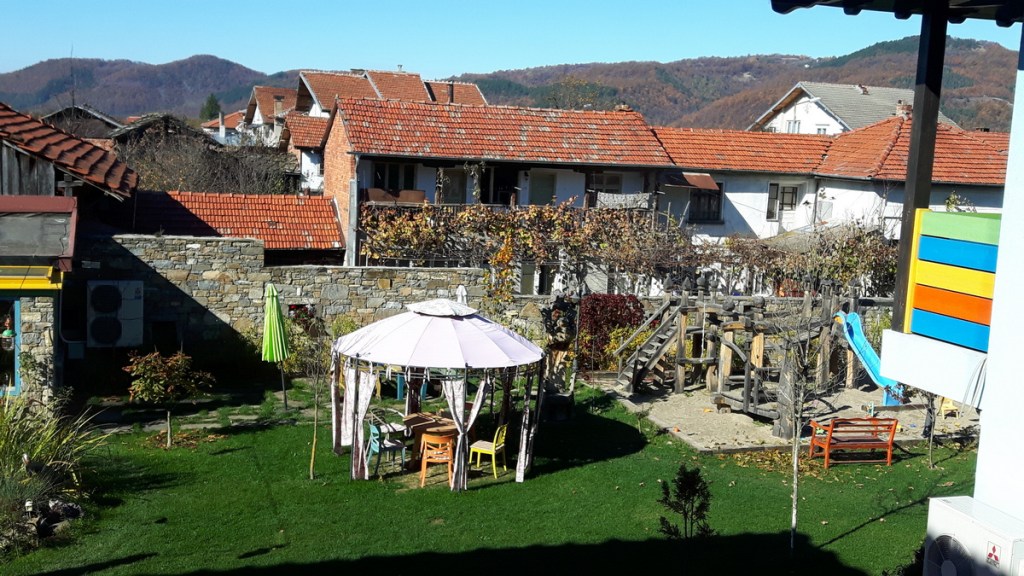
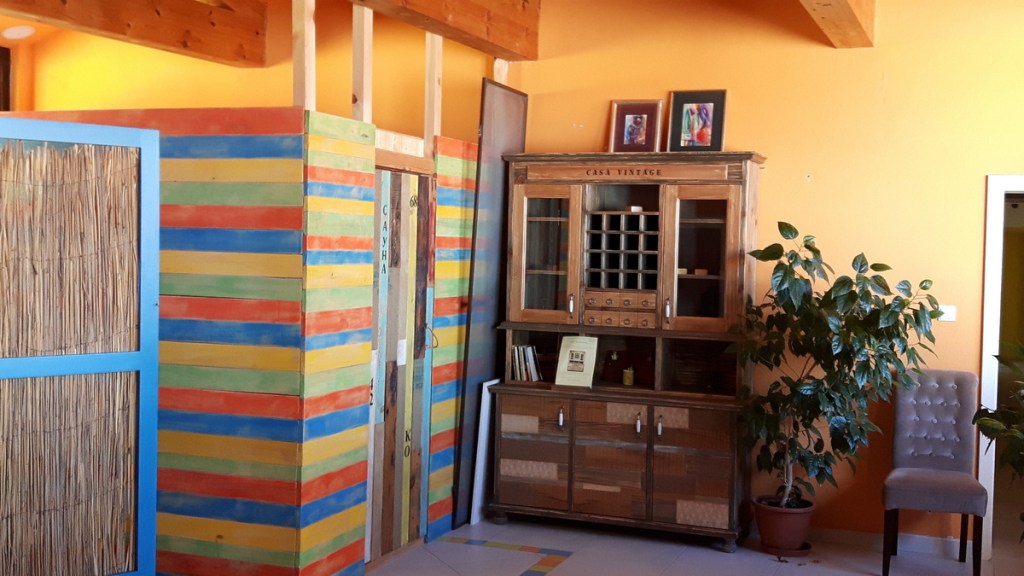
The other landmark of the village of Oreshak is the family hotel Casa Art http://www.arthotel.bg/ which is unique for Bulgaria and offers a real synchronization of art and relaxation. Each of the thematic rooms of the hotel is inspired by the basic forces of the universe – Sea, Earth, Sun, Moon, Air, Wind, Love, and the same are furnished with different interiors. Especially relaxing is the panoramic spa area, equipped with a panoramic sauna and a massage room with a variety of treatments. We highly recommend the ceramics courses that the Rossi leads, with a separate potter’s wheel at the hotel. Working with clay is a real pastime for young and old, and the finished works are an ideal souvenir of this craft region.



7 km from Oreshak in the village of Cherni Osam the Natural History Museum is located. It has a rich collection of local animal and plant species, especially interesting are the special effects that stuffed animals reveal when you get close to them.
Your trip will not be complete if you do not have a walk along the Osam River, as it is near the picturesque town of Troyan, where the rivers Cherni Osam and Beli Osam merge into one river. This of course a reason to create a new legend and add it to the legendary almost like Troy, town of Troyan:
In Hemus Mountain, many years ago
Two sisters-creeks flowed
One of them had hair white and long
And Bely (White) Osam was called.
The other had dark waters instead,
And Cherni (Black) Osam was named.
The two rivers chased each other and play,
And they dream for a voyage far away.
But they didn’t have enough water, so they can’t
Leave their homelands.
Then one of the rivers had an idea.
And came to her sister-river
“Sister-creek, come closer
And let’s merge our waters.
Together we will be strong
And we’ll go wherever we want.”
The other sister immediately agreed.
And their waters they mixed.
Together they jumped over rocks and cliffs,
Then they went through green fields.
They watered every flower and tree,
Which during their way they could see.
They passed through wide field with grain
And there a big river they met.
“Hey, where are you going so fast?”
The two sister asked.
“I am Danube and I am going to the sea,
Why you two don’t come with me?”
The sisters happily agreed
They entered the Danube and reached the Black sea,
Together these rivers even today They merge their waters and are on their way.
GENERAL INFORMATION ABOUT TROYAN:
Location: Troyan is located in Lovech region, Bulgaria, along the Osam River, where the two rivers Beli Osam and Cherni Osam meet, at the foot of the Troyan-Kalofer part of Balkan mountain.
Area: 60.243 sq.km
Population: 22,022 people (2015 data)
Official language: Bulgarian
Altitude: 400 m
Climate: continental
Time zone: UTC+02:00
Currency: Lev (BGN)
Additional information:http://www.troyan.bg/
Trip Tips for Troyan:
Best time to visit: throughout the year, many festivals such as the Day of Troyan (October 14, Petkovden) are held annually, with celebrations starting a few days earlier. In September there is a plum festival. In September in the nearby village of Oreshak is held the Festival of Balkan Music and Cuisine.
Typical foods and drinks: a traditional local drink is the Troyan plum rakia (high alcohol fruit spirit), and annually in mid-September the Plum Festival is held. From the local dishes we recommend you to try the stuffed peppers, which here, in addition to rice, put vegetables and sometimes even snails, as well as sarmi with meat and sauerkraut. Mushrooms are also a local product, as well as the beans.
Places to visit: Troyan Monastery, Sostra fortress, the pedestrian center of Troyan with the restored houses in typical for the region Renaissance style and the numerous bridges in the town of Troyan. In the region of Troyan there are many nature reserves such as Kozya stena, North Djendem and others. The Natural History Museum in the village of Cherni Osam is also not to be missed.
 TripTips