Caves in Bulgaria
ORLOVA CHUKA – THE EAGEL CAVE TAKEN OVER BY THE BATS


Once upon a time, there were two eagles living in the Balkan Mountains. They collected food from the nearby lowland, but one day strong winds and fog appeared, and they could not reach their nest. The female eagle had to give birth at any moment, so the male eagle began to look for a place to hide quickly from the wind. The trees bent by the strong wind, so with his beak the eagle began to move the strong stones from the ground and so accidentally found the cave where he took his beloved. There were born their little eaglets, which initially lived there, and then, when they learned to fly, headed back to Balkan Mountain. Today this cave is named Orlova Chuka (Eagle’s Cave).
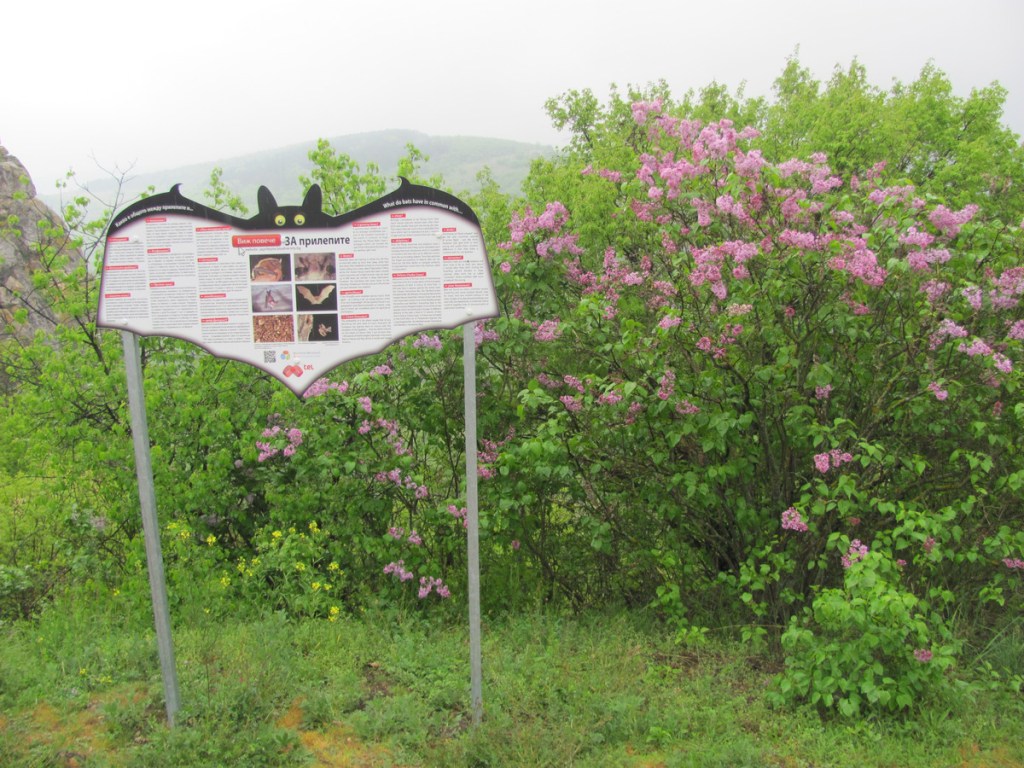
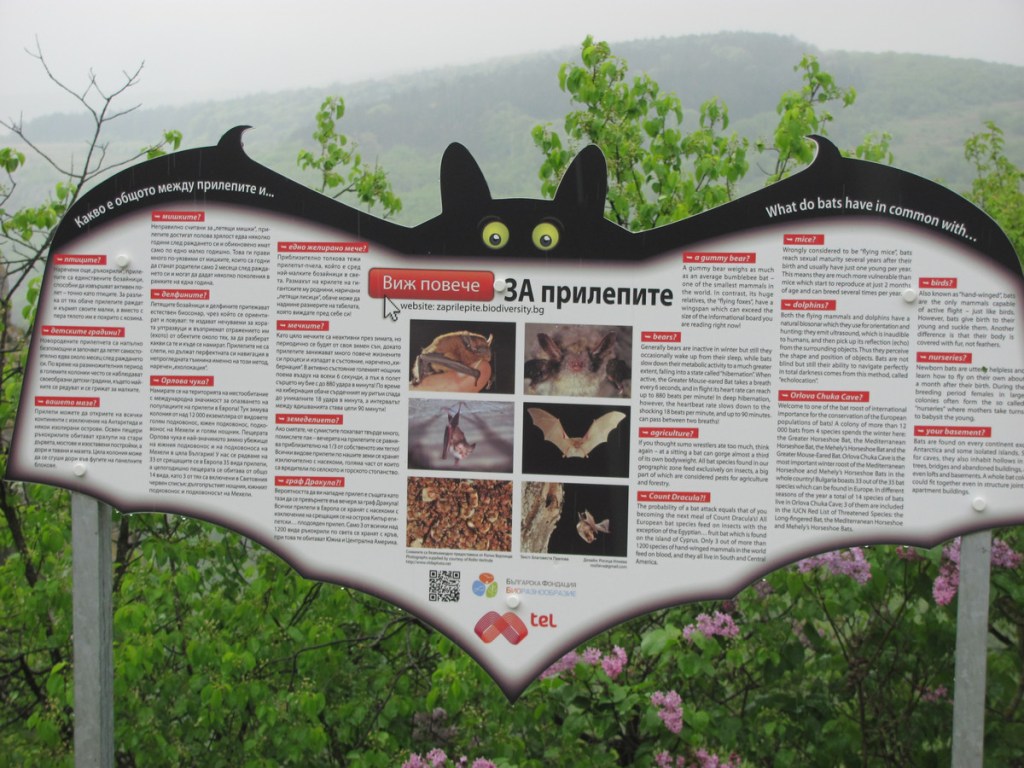
I came up with this story to spark the imagination and arouse the curiosity of my nephew as we travelled to Orlova Chuka cave. However, there were no traces of eagles in the cave, instead it was home to dozens of bat species. At the entrance of the cave there was a sign in the form of a bat, with lots of interesting information about these creatures. As for the name of the cave, it turned out to come from the rock wreath that stands above the entrance.
The entrance of the cave was located under hundreds of steps that were slippery in the rain and we carefully descended on them. However, we were not the only visitors. Despite the bad weather, our group numbered 18 people, and our guide was a witty elderly man who enthusiastically told us interesting things about the cave and its inhabitants. We learned, for example, that the bats that were living here ate only insects, and at the moment there were none. Insects came out only at temperatures above 12 degrees. The cave itself had a constant internal temperature of 14 degrees, but luckily for us there were no insects inside too.
wreath that stands above the entrance.
Bats are eating a well-balanced diet of 3-5 grams of insects a day. They are leaving out the cave at night and are returning to the cave before dawn, hiding from their enemies, the raptors. The daily raptors in these places flew at

a speed of over 135 km/h, and some hawks even at 170 km/h, while bats are flying with only 70-80 km/h (at such a speed I drove this morning because of the torrential rain).
The bats live for about 20 years, and our guide made a joke that he knew well all the bats in the cave and he even named one of them – Goshko, who several times appeared as a host and welcomed us in the cave, and flew over us. We also saw many other bats that were staying together and sleeping. In the cave we also saw traces of the previous inhabitants – the cave bears.
The cave was protected and guarded mainly because of their traces. Their bones were found here, and on the walls there were preserved cuts from their nails. Our tour guide Mr. Ivanov admitted that the cave was endless and it had not yet been explored, so there was a chance to come across such a bear. Our group laughed, but not the kids. Most of them walked all the time holding hands for their parents.
For the first time, I heard about cave bears that turned out to be twice the size of polar bears and weighed over 1 ton. They lived during the Ice Age. Inside the cave there were traces of their paws on the walls. According to our guide, such traces could be left by bears only one day a year – in spring as soon as they woke up after 5 months of sleep. The bears slept curled up in a ball, and their unused claws became 6-8 cm long and curved downwards. After hibernating, when they wake up, the bears stretched out their body and paws, marking the walls thousands of years ago. Then the bears travelled over 100 km in search of food, because at that time there were no guides to bring tourists inside the cave.

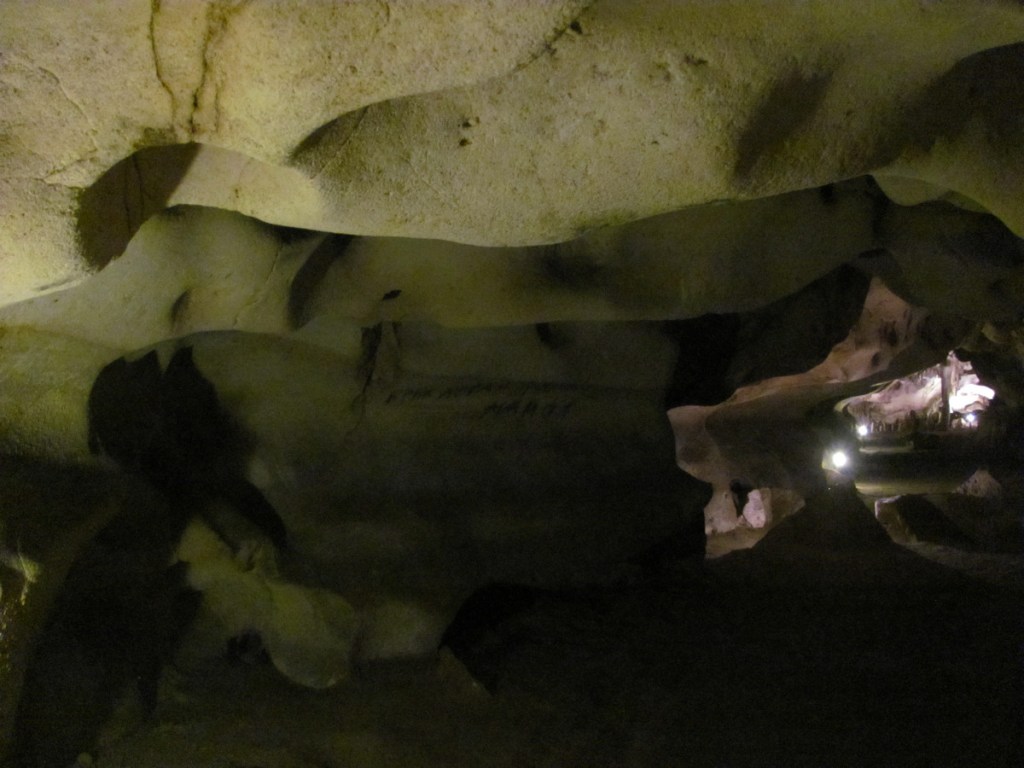


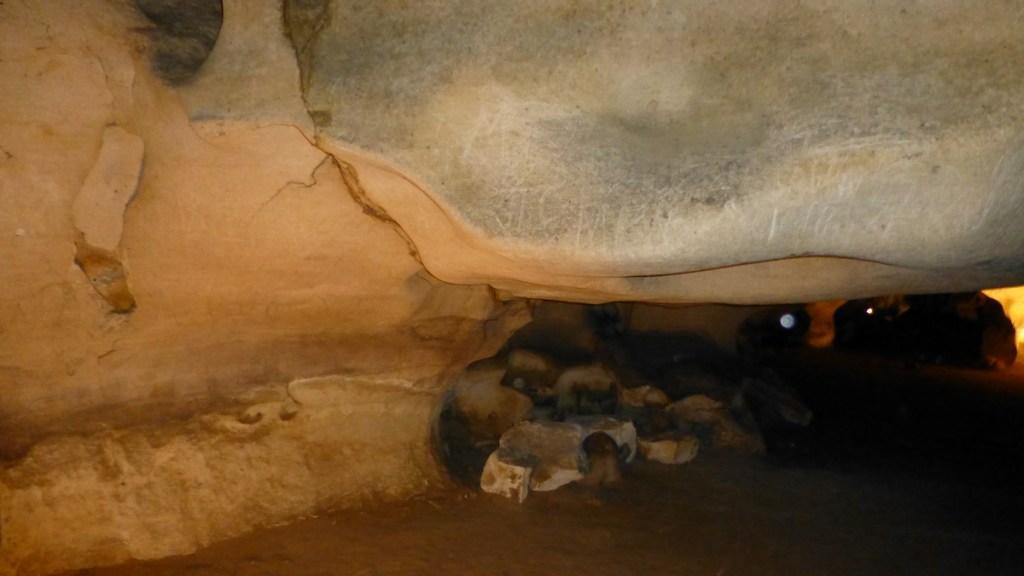
Then our guide explained in a funny way how cave bears disappeared because of our grandfather Cromagnon, who killed these bears, not so much for the meat but for the fur that stretched on the ground covered an area of 8 square meters, it was dense and dark, with a thickness of 32-42 cm, which was the “Top-mattresses of the Ice Age”, which at the end of the Ice Age contributed to the demographic boom and population growth.
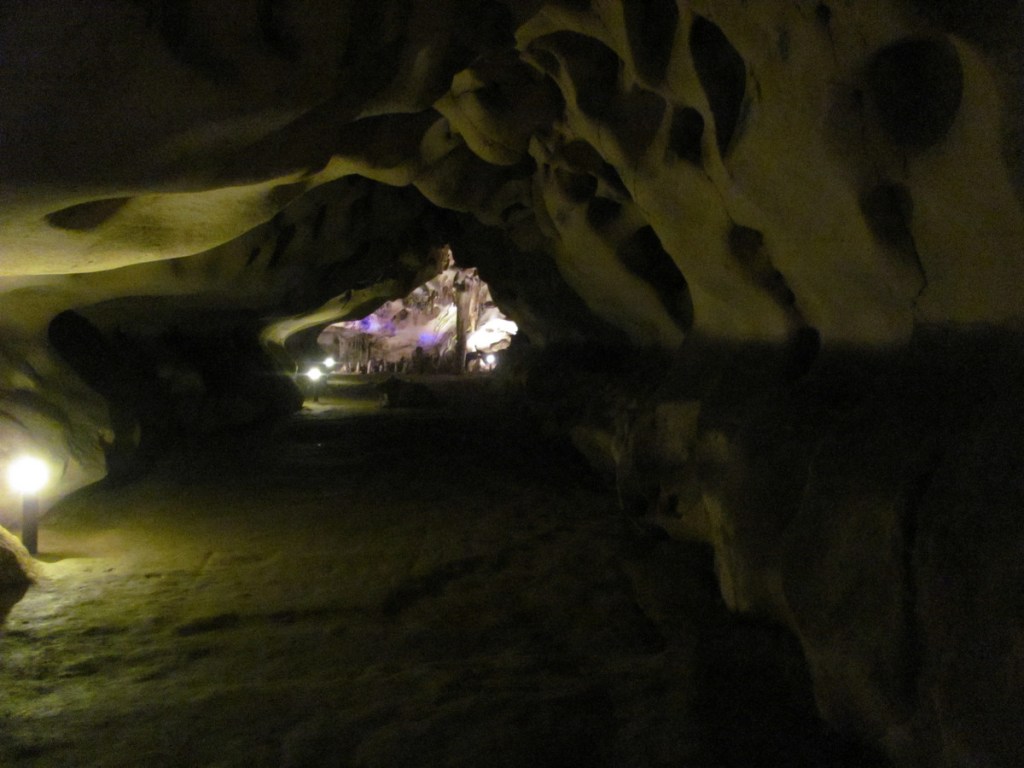
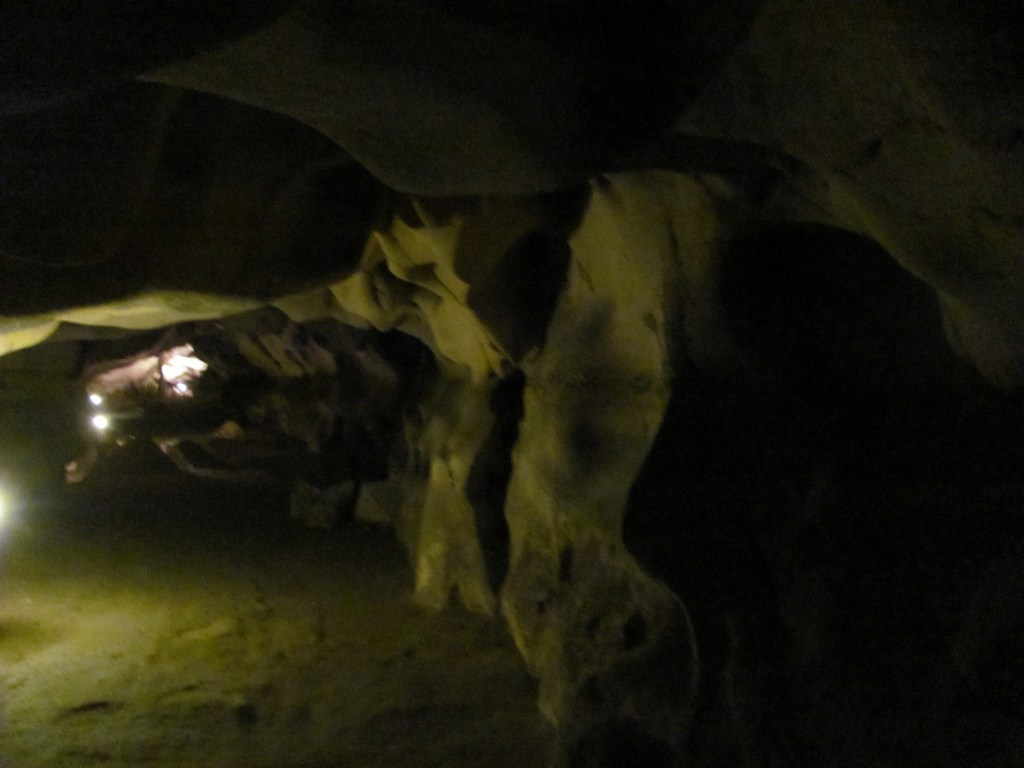
Our guided tour in the Orlova Chuka cave started at 13:15 and continued until 14:00. Entering the cave, we had to bow our heads several times, as the cave was mainly formed by the Cherni Lom River 2 million years ago. When the river was underground, it did not move vertically, but turbulently, in the form of whirlpools, and during this time the interesting forms and formations appeared everywhere in the cave. It was really one of the most flat and warmest caves I’ve ever entered. And here there were different stalactites, stalagmites, stalactones and draperies (formations on the rocks) that grew by 1 cm every 100-150 years. The guide also showed us the drops of water that were produced from rain or snow that fell more than 1 year ago. For a year, the water passed through the 40-meter cliff. So the rain that had fallen on us today would enter the cave in a year.
My nephew looked at the bizarre stone figures resembling a deer, a shark fin, a dinosaur’s head, and more. Although there was not much water left in the cave, there was a little pond with crystal clear water.
The tour guide told us that this was the pond of wishes and everyone could touch it with his hand and wish for something that would come true within a year. It’s nice to believe in dreams, and I touched the icy water with my hand, making a wish and leaving a coin to my side.
After the wishing pond, we entered the first larger hall, which was called the Concert Hall, because of its excellent acoustics. From there we passed into a straightforward path, with width 150 meters, which our guide called the Champs-Elysées.
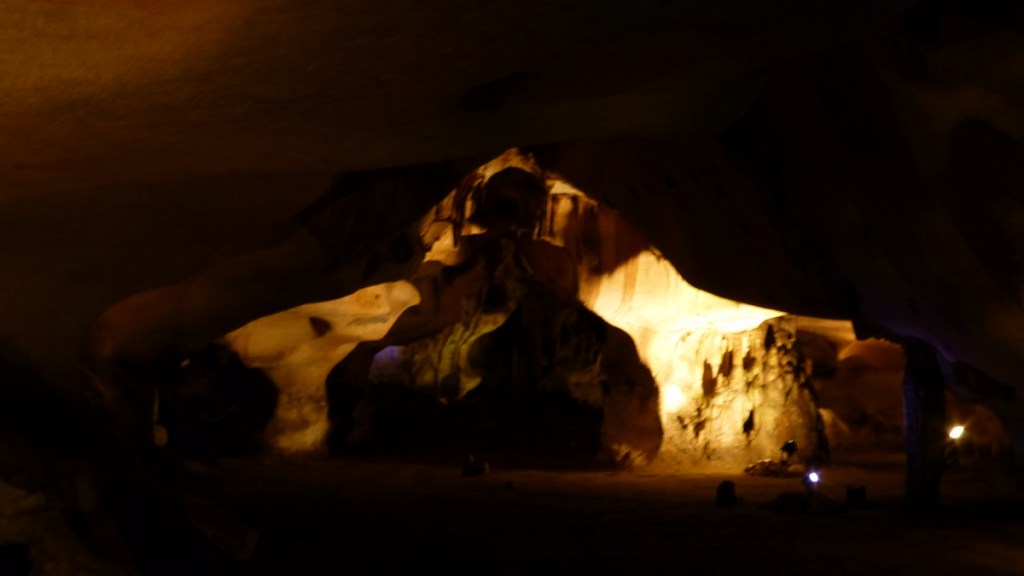

Perpendicular to it was another corridor, which was much longer, which, however, was only for professional cavers. As many times when people came in from here, a few days later they returned with new caves’ corridors discovered. This cave is over 15 km long. In Bulgaria there is a longer cave, called Duhlata, located in the southwestern part of Vitosha Mountain. However, it is not open to visitors, but only to cavemen. According to folklore, the Orlova Chuka cave is so long that it comes to the surface as far away as Romania, but the same has not yet been proven.
After walking through the cave Champs-Elysées, we walked through the Bear Trail, which tourists often called the Revenge of the Tour Guide, as it was very narrow and low, and we had to walk very bent to go out again near the Concert Hall and from there to the exit of the cave. Outside, the rain had stopped, but the puddles and mud seemed to have become bigger, slightly wet, and slippery, so we walked very carefully to the car and headed to the city of Ruse, which is less than 40 km away.
The Cave Orlova Chuka impressed us both with the hospitable bats and beautiful formations, and with the funny stories of our guide.

GENERAL INFORMATION ABOUT ORLOVA CHUKA CAVE:
Location: Orlova Chuka cave is located in the Danube Plain on the territory of Dve Mogili Municipality, Bulgaria on the right slope of the valley of the Cherni Lom River. The cave is 40 km from Ruse and 2.5 km from the village of Pepelina.
Length of the cave: 13 437 m
Temperature: 14 C
Best time to visit: from 1 April to 31 October
Working hours: Monday-Sunday 10:00 – 17:00
Currency: lev (BGN)
Further Information: http://www.dvemogili.bg/index.php?option=com_content&view=article&id=7&Itemid=15&lang=bg
 TripTips