VIENNA – THE HEART OF CHRISTMAS


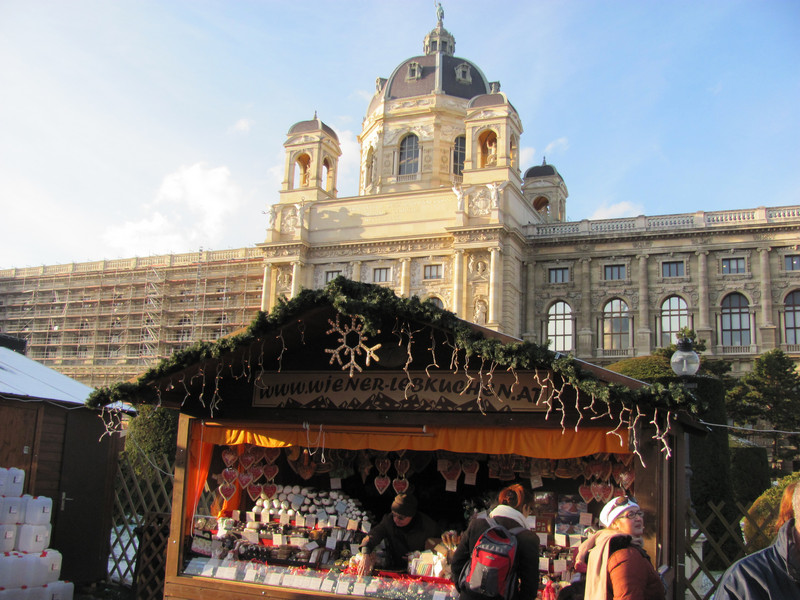
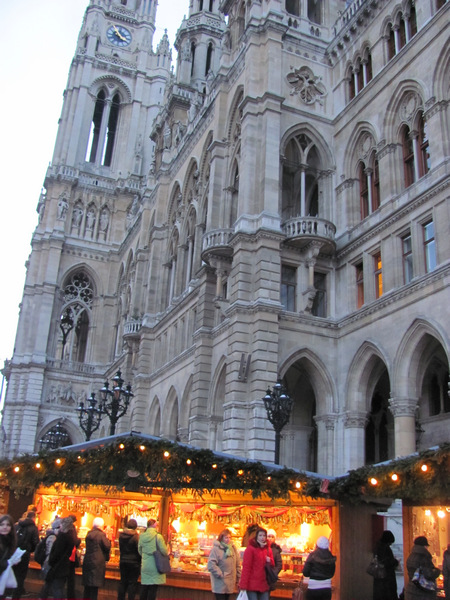


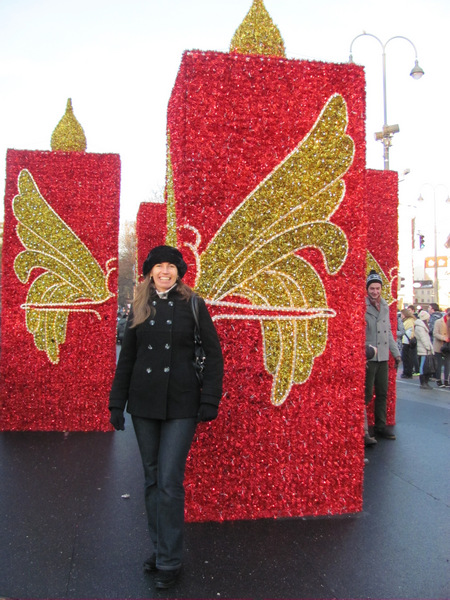


Magic is not only for children and Christmas enchantment proves it. As the holiday approaches, fairytale lights shine and cities are dotted with rich decorations. The brightest is undoubtedly Vienna. The Austrian capital has for centuries established itself as the heart of Christmas – the place where the holiday beats and the Christmas spirit lives. And it lives in a small wooden house, which from November 11 to the end of the year fill the central squares and all the main attractions in the city.
The first street Christmas markets in Vienna date back to the 13th century, and the tradition continues and every year they grow and become more lavish. The small wooden houses, as if out of the fairy tale of Hansel and Gretel, are laden with festive decoration, souvenirs, gifts, sweets and hot drinks. Around the houses shine thousands of lights and Christmas songs predisposing customers to a generous shopping.
Undoubtedly one of the largest and most beautiful Christmas markets is the one in front of the Town Hall, but the market on Maria-Terzia Square is not inferior to it. There may be fewer goods in the market in front of Schön Brun Palace, but there are certainly more people. Relatively small is the market in the amusement park Pratera, but the tuned there is the most elevated, probably from the many additional attractions and the warm wine, which is a major part in any market.
The atmosphere of the market is amazing – there is a smell of warm wine and cinnamon everywhere, the scent of roasted sausages is felt in the background, you can hear speach in different languages and all this in the background of many lights. Christmas is everywhere and can be felt with all the senses. It can also be seen in people’s smiles, who seem satisfied and happy despite the cold weather. It is noteworthy that in every market, people walk around with porcelain cups in their hands. There aren’t any plastic cups, which once again shows how important it is for Austrians to protect the environment and their refusal to use non-recycled materials. Porcelain cups can increase the price of the drink (5 euros for one tea!), but the cups are beautifully painted, and are a wonderful memory of the place and the holiday. And while you’re still on the market, you can ask the cup to be refilled several times.
Vienna is beautiful all year round, but these fabulous markets and glamorous decorations make it especially popular during Christmas time. From Sofia to Vienna there are regular flights every day. With Austrian Airlines the trip is 1 hour, and if you buy a ticket a few months earlier the price for a return ticket can be quite profitable. You can also check the prices of Ryanair, Bulgaria Air, which also offer direct flights to Vienna.
Getting from the airport to the city center is easy, as there is an express bullet train called CAT (City Airport Train), which for 15 euros will take you in 16 minutes to the Central Vienna Station or if you are not in a hurry you can take the ordinary train (S-Bahn) for 4 euros and after 26 minutes you will also find yourself at the central station Wien Mitte. At the airport, there are also buses and taxis, which can easily take you to the center or outskirts of Vienna, from where you can then move anywhere in the city thanks to the excellent metro network. This convenient public transport allows you to stay in a hotel at better prices in the more remote part of Vienna. However, if you have decided to stay in the ideal center, there is still an alternative for a lower budget, and it’s staying in boarding houses instead of hotels. Boarding houses are usually family hotels that do not occupy the entire buildings, but only a separate part of them. So you can stay in a lovely 19th-century building, with the hotel part housed only on the 4th floor. The service is excellent, the food is home-made, and the rooms are warm and cozy.
However, the large number of sights in the city are the reason for visitors to spend less and less time in hotels and more time outside. The ideal center can be easily seen on foot, and the walk must necessarily include the symbol of the city – St. Stephen’s Cathedral, bearing the affectionate name in German Steffi. The cathedral was built in the Gothic style in 1147. On the foundations of two earlier churches. Inside, the colorful windows reflect light in a magnificent way, giving warmth to the marble facade. In winter, a large Christmas tree rises in front of the cathedral, which in the evening is filled with thousands of lights.
From the Cathedral you can descend one of the big pedestrian streets such as Graben or Kärntner Straße. The second will take you directly to the Vienna Opera, which is worth visiting in the evening during a performance – the atmosphere is unique and the experience – unforgettable.


Next to the Opera House is the Hofburg Imperial Palace, which today is the official residence of the Austrian president. In the past, the palace was home to some of the most influential figures in Austrian history, including members of the Habsburg dynasty, and French Queen Marie-Antoinette was born here. Here lived the legendary Sisi – Princess of Bavaria, Empress of Austria, Queen of Hungary and Bohemia, wife of the Emperor of Austria-Hungary – Franz Joseph. Part of the castle today houses a museum, especially beautiful are the imperial rooms, furnished in complete luxury and splendor.
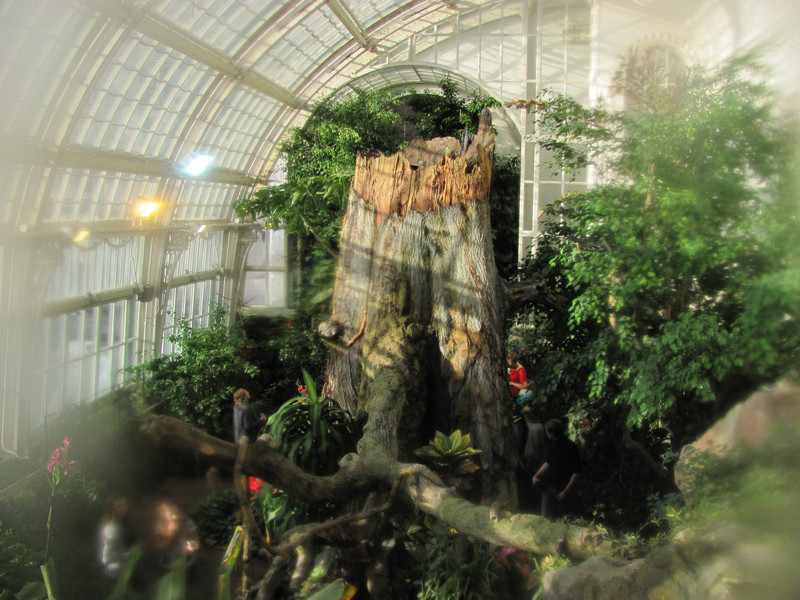
In the courtyard of the castle there is a separate greenhouse, but not for flowers, but for butterflies. Schmetterling haus houses hundreds of tropical butterflies that fly freely among visitors, over the colorful flowers, the artificially distinct waterfall, cave and trees. The room is very warm and humid, which is a real challenge when taking pictures.


In front of the Hofburg Palace there are beautiful gardens, and across the street is the beautiful Maria-Theresian Platz, where in winter there is a large and colorful Christmas market.
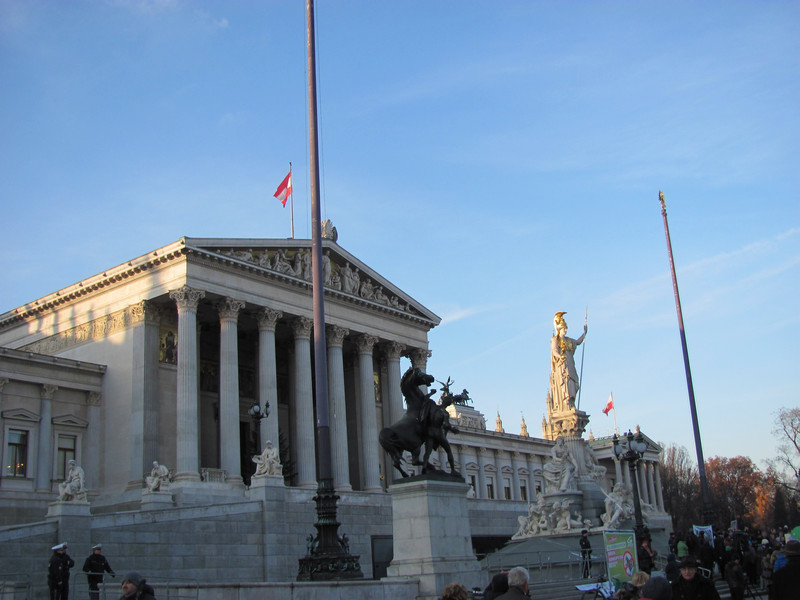
From here you can continue your walk to the parliament, which is less than 5 minutes away and in front of which is erected a magnificent fountain of Pallas Athena – the goddess of wisdom. Under Athens stand the figures of four deities, symbolizing the four main rivers – Danube, Inn, Elbe and Vltava.
Next to the Parliament are the beautiful gardens of the City Hall, which in winter are covered with wooden houses and house the largest Christmas market. Undoubtedly, the City Hall is one of the most beautiful buildings in Vienna – both day and night, when it is fabulously lit. It was erected in the period 1872-1883 in the Gothic style, and today the main municipal administration works here – over 2000 people. During the holidays, conferences are often held here, as well as concerts and balls. This year the ground floor was occupied under the motto “Santa’s Workshop”, in which all children from kindergarten and primary school could take part. Several separate working rooms were furnished – workshops surrounded by glass, in which children made various objects – baked sweets, made candles and Christmas decorations, jewelry and bags, thus helping the busy Santa Claus. The Christmas spirit really lived in Vienna and could be felt everywhere.
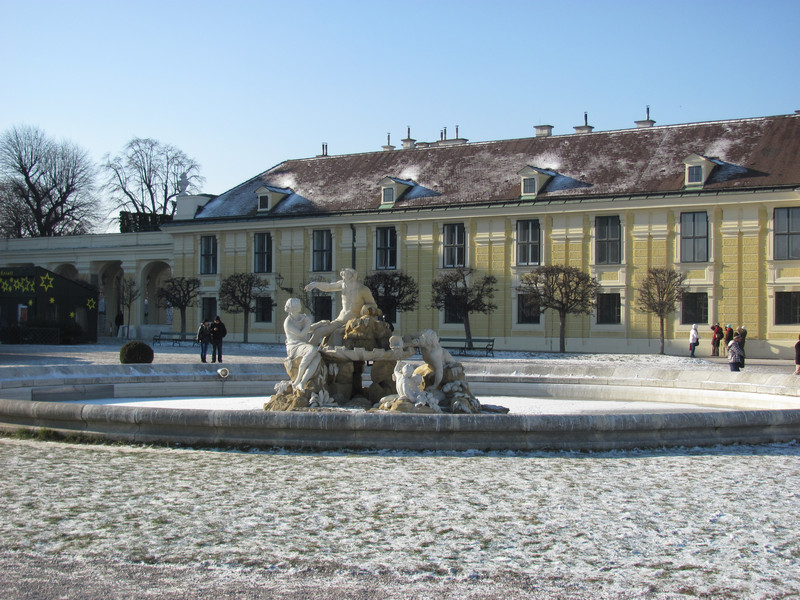
Just opposite the Town Hall is the beautiful National Theatre, also known for its performances. With this walk you can fill a whole day, but you still will not have covered all the main attractions of Vienna. You must take the metro (green line U4) to the Schönbrunn stop to explore the gardens and Schönbrunn Palace, which are a major landmark in Vienna. Ensure you have more time for the palace, as you won’t be the only one here – many buses stop daily and hourly in front of the palace, with thousands of tourists forming crowds in front of the picturesque Christmas market. The Baroque castle with the Christmas tree in front is a wonderful decor for photos and pleasant memories.
The Schönbrunn Gardens also houses the Vienna Zoo, where you can find many rare animals, including the large panda. Especially popular are the feeding hours, when animals also perform different tricks.





Another major attraction of Vienna is the Baroque Belvedere Castle, which can be reached by train (S-Bahn, Quartier Belvedere stop), by metro (line U1, Südtirolerplatz stop) or by tram D, 18 or O, as well as by bus 69A. The palace complex itself was built in 1721-1722 by order of Prince Eugene of Savoy. Besides beautiful gardens and an artificial pond, it is worth exploring the halls in the castle, which are buried in gilding and house sculptures from the Middle Ages. Here you can see the richest collection of canvases of the famous Austrian artist Gustav Klimt.
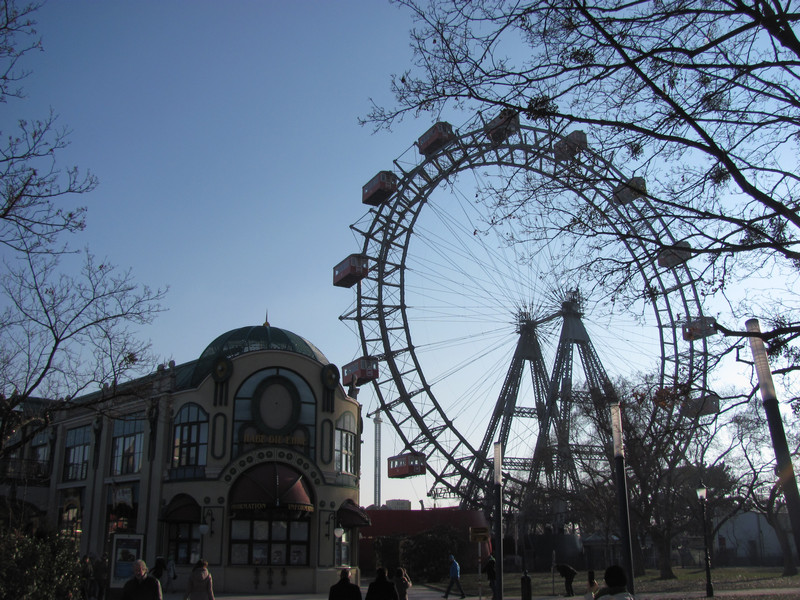
Your walk around Vienna will not be complete if you do not visit the famous amusement park Prater, which in winter houses another Christmas market, and all year round here you can try one of the hundreds of fun attractions, including the famous Ferris wheel, erected in 1896 on the occasion of the 50th anniversary of Emperor Franz Joseph. During World War II, it was almost completely destroyed. but together with St. Stephen’s Cathedral is among the first restored sights. The train and metro stop is Praterstern – Bahnhof Wien Nord.
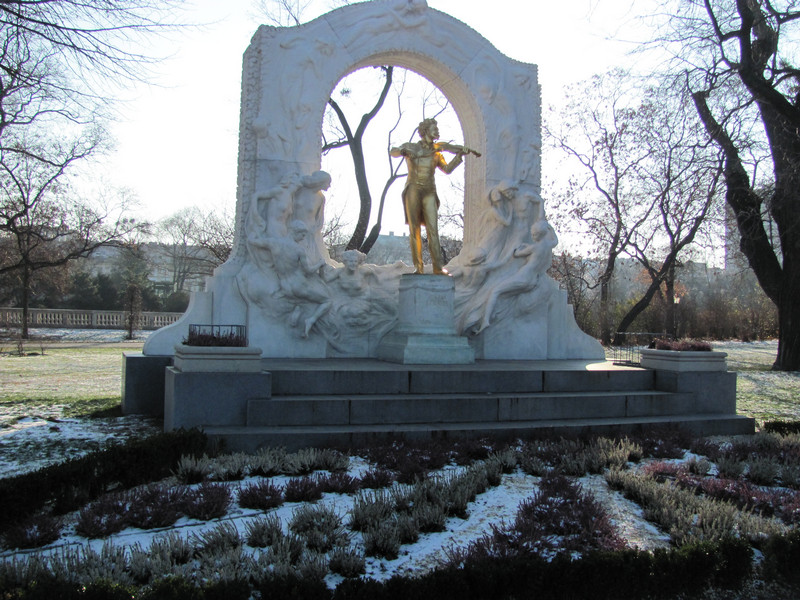
You can also walk through the beautiful city park Stadt-park, where the famous golden statue of the Viennese composer Johann Strauss is located. Whichever way you take in Vienna, you will come across beautiful restored buildings, each with rich ornaments and unique architecture. They are especially lavish during Christmas, when the buildings are decorated with ribbons, gifts and other festive decoration.
Austria is beautiful and hospitable all year round, with all holidays and festivals celebrated solemnly and with lavish decorations. The most beautiful and famous, however, remains the Viennese Christmas, in which everyone can feel the real magic of the holiday.


GENERAL INFORMATION ABOUT VIENNA:
Location: Vienna is the largest city and capital of Austria, located in the eastern part of the country on both banks of the Danube, 40 km from the border with Slovakia.
Area: 415 sq.km
Population: 1,973,403 people (data from 2022)
Official language: German
Altitude: 171 m
Climate: moderate continental climate
Time zone: UTC+1
Currency: euro (EUR)
Additional information: https://www.wien.info/en
TRIP TIPS ABOUT VIENNA:
Best time to visit: all year round
Typical food and drink: Viennese specialties are popular all over the world, such as Viennese coffee, Viennese schnitzel, Viennese cake Sacheri etc.
Places to visit: There are many attractions in Vienna, including Stephansdom (St. Stephen’s Cathedral – the symbol of the city), Schönbrunn Palace, Belvedere Palace, Hofburg Imperial Palace, Hunderwasserhaus House, the Prater amusement park, the City Hall, the Vienna Opera and many others.
 TripTips