GRAZ, THE GRACEFUL CITY OF AUSTRIA


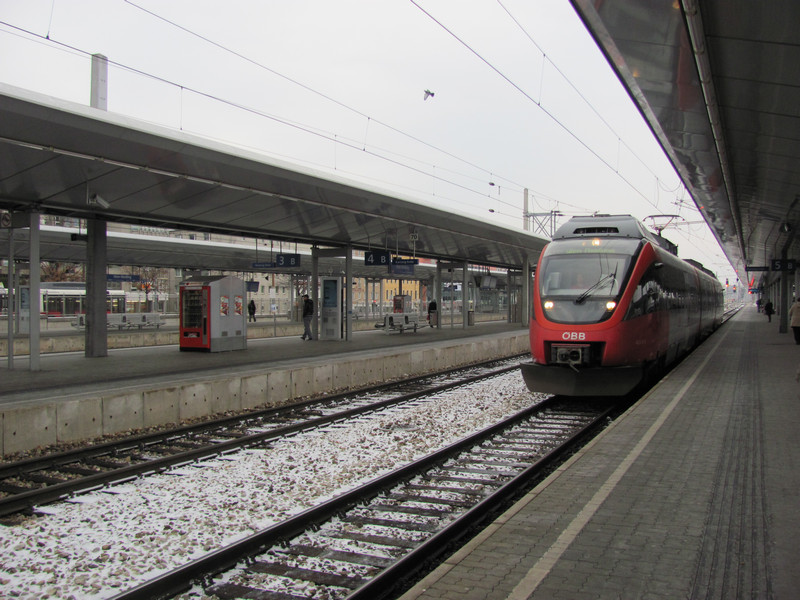
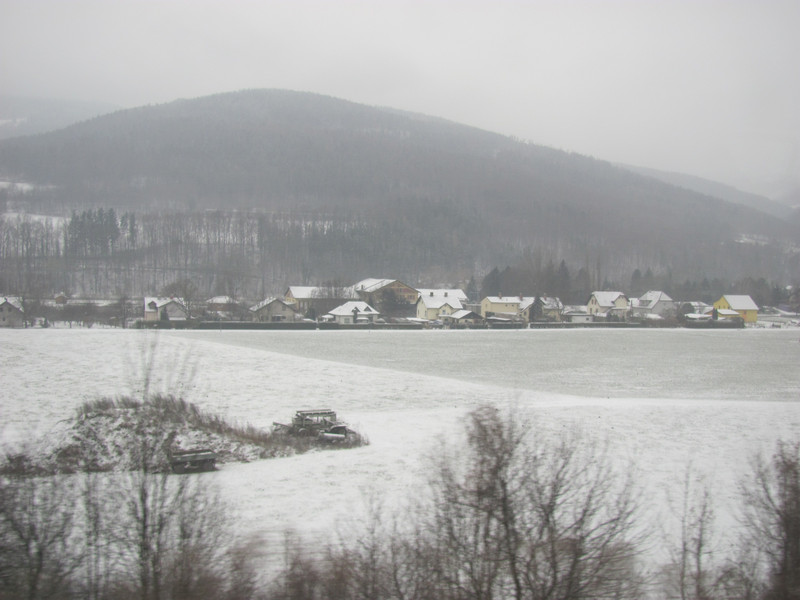
Graz is the second largest city in Austria. Less than 200 km south of Vienna, the city is known not only as a student city, but also the one with the best preserved old part in Austria. The picturesque city is filled with beautiful architecture and a relaxed atmosphere that fascinates all visitors. If you are visiting Vienna and have some free time, be sure to visit Graz. There are different ways to get to Graz – by plane, train, bus or rental car. The most picturesque, however, is the journey by train. The Vienna-Graz direct train runs through the so-called The Semmering Railway, which is on the UNESCO World Heritage List due to its unique construction and the 14 tunnels and 16 viaducts included on the road. It is recommended to sit from Vienna to Graz on the left side, and from Graz to Vienna on the right, so that you can enjoy the most the landscapes from the window. The road is about 2 and a half hours, but you will not be bored – the landscapes are amazing, and TV boards in all carriages keep you informed about where you are traveling and how much more way is left.
The trains are regular every hour, and you can take, for example, the one leaving at 09:02 from Wien Meidling and arriving at 11:33 in Graz Hbf. The return is respectively from 17:25 Graz and arriving back in Vienna at 19:59. The current train timetable in Austria can be found at https://www.oebb.at/en/


Graz is no less magical than Vienna, also known as the student city, it houses 6 universities. The city originated in Roman times as a small fortress whose fortress walls stood on the site of the modern center. The very name Graz comes from the Slovenian word gradets and means small castle.
From the train station you can get a free map of the city from the Tourist Information Center, then take tram 1, 6 or 7, and on the 3rd tram stop you will find yourself in the city centre. You can take the distance by walking in less than 20 minutes.
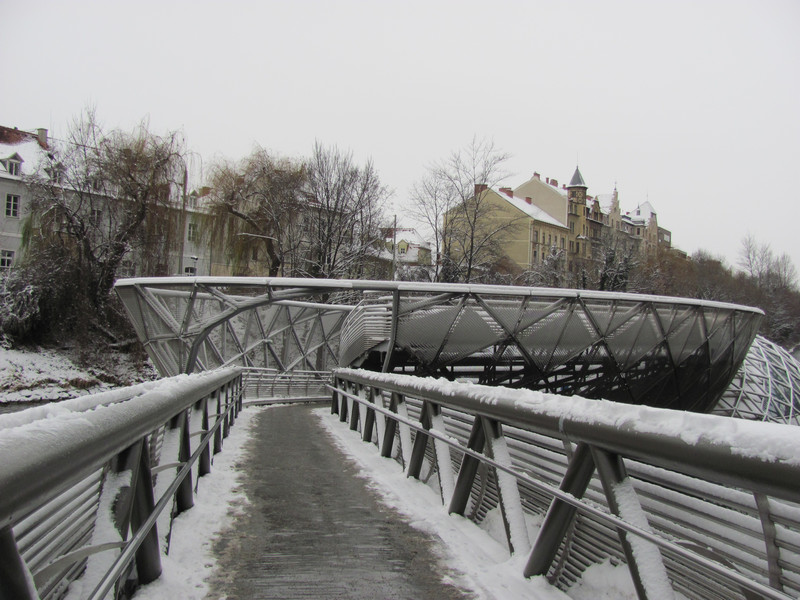
You can start your walking tour from the banks of the Mur River, where several main attractions are located. The first is undoubtedly the island of Murinsel, which was temporarily erected in 2003, when the city was the Cultural Capital of Europe. After that, however, it has been preserved to this day, attracting thousands of tourists annually. The island is a steel structure in a semi-open shell, connected by bridges for both banks of the river, housing an open stage for performances and a romantic pastry shop inside.



In the immediate vicinity of the river bank rises the magnificent Minorite Monastery, erected in the 17th century, and next to it is the modern art museum – Kunsthaus. It was also erected in 2003 and because of its bizarre architecture was named as the “friendly alien”.
Across the river is Sackstrasse Street (which in German means street with no exit). This is the first shopping street in the Middle Ages, and besides shops and museums, several festivals are held annually.
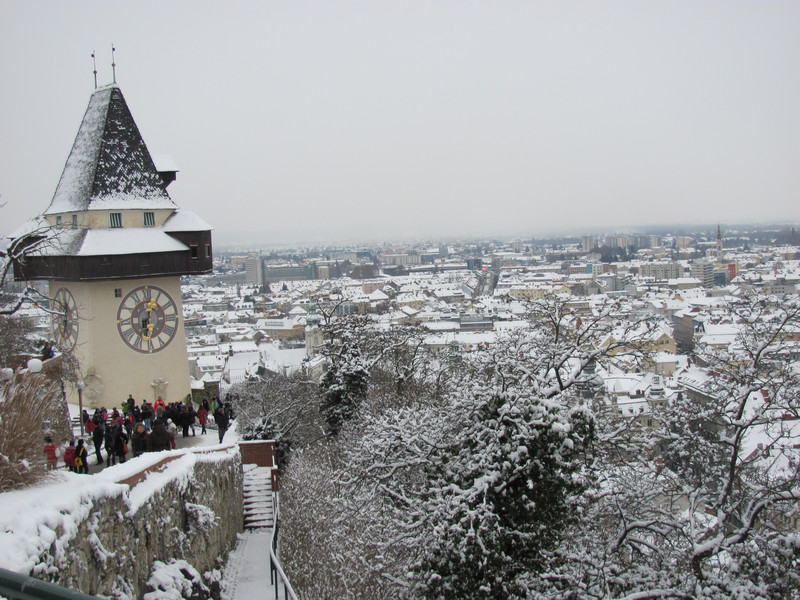
Above the city center, on a hill stands Schlossberg – a fortress wall with a lovely park and a bell tower dating back to the 16th century. It is firmly fortified and famous for never being conquered, including by Napoleon. Here is the huge Clock Tower, which shows the exact time since 1712, Contemplating the romantic panorama over Graz, however, one can easily forget about time. There are different ways to get up the hill – 1) through Schlossbergbahn – a small panoramic train that departs every 15 minutes and will take you up for a price of 3.80 euros, 2) a glass elevator – the price is 2 euros and starts right at the foot of the stairs; 3) walk along the 260 steps known as Kreigssteig (war steps) – except that the latter option is free provides many separate terraces with wonderful panoramic views of Graz.



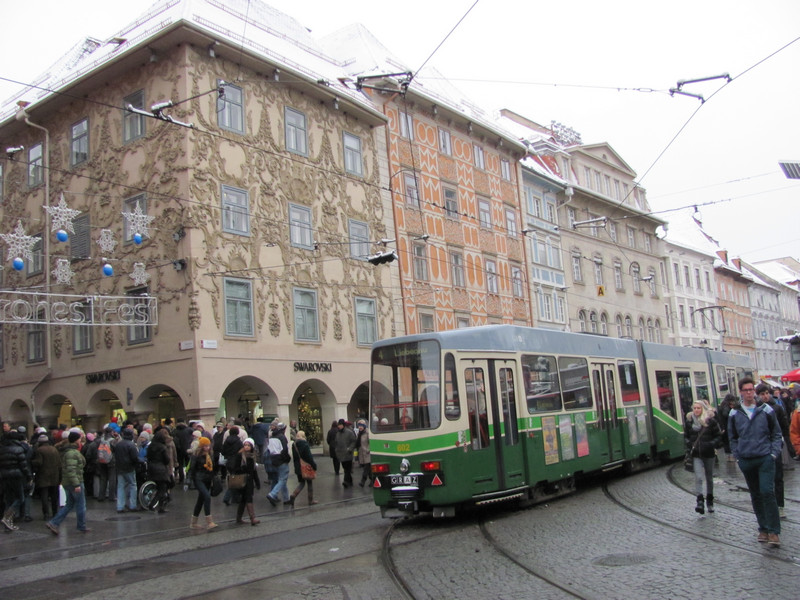
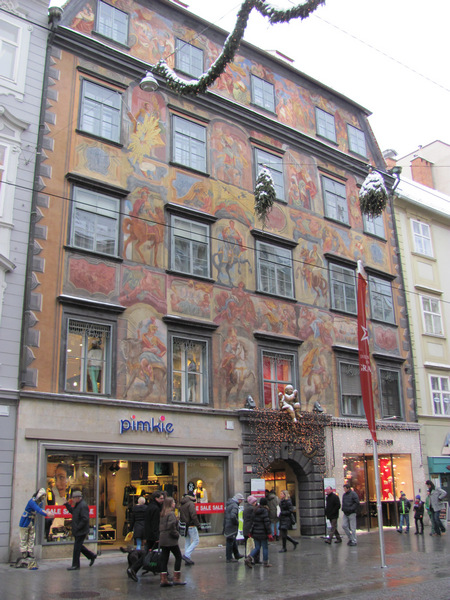
If you only have one day in Graz, you should hurry up and walk along the main shopping street Herrengasse, which houses numerous boutiques situated in Renaissance and Baroque buildings. The street is considered the very center of the city and one of the reasons why Graz is part of the UNESCO World Heritage Site.
Here is the beautiful town hall, in front of which around Christmas a festive market is formed, with a huge Christmas tree. In the immediate vicinity is the painted house Gemaltes Haus, which in 1742 was painted by the Baroque artist Johann Mayer with images from Greco-Roman mythology. It was here that the Habsburgs held their official meetings, and the maintainer of the house was exempt from all taxes.


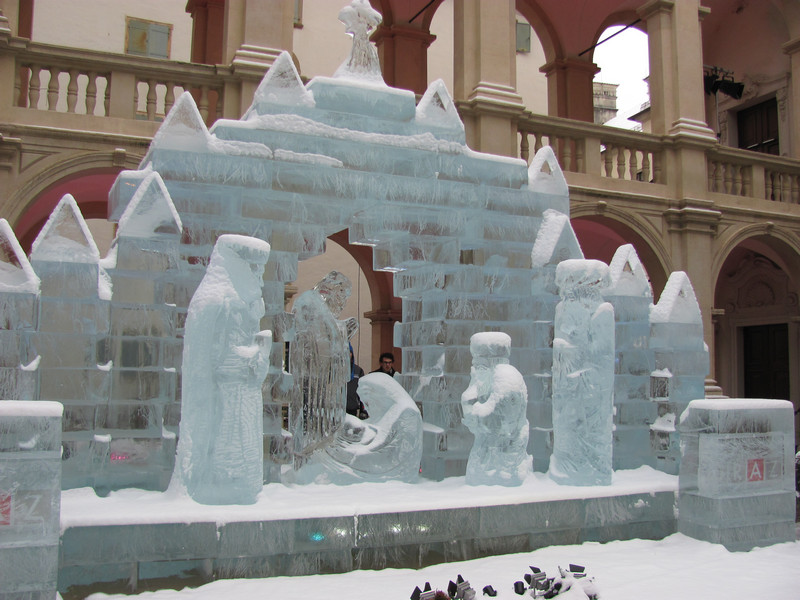
In the immediate vicinity there is another landmark of Graz – an Italian jewel named Landhaus. It is a Venetian Palace erected in 1557, especially impressive is not only the facade but also the Renaissance courtyard. At Christmas, an ice sculpture of the biblical story of Jesus’ birth rises here, with a choir and Christmas carols.
Graz has many more sights that will take you more than a day, but even a short walk here will charge you with many pleasant impressions and good mood.


GENERAL INFORMATION ABOUT GRAZ:
Location: Graz is located on the banks of the Mura River, in southeastern Austria, the center of the province of Styria.
Area: 127.58 sq.km
Population: 273 838 people
Official language: German
Altitude: 353 m
Climate: moderate continental climate
Time zone: UTC+1
Currency: euro (EUR)
Additional information: www.graz.at
TRIP TIPS ABOUT GRAZ:
Best time to visit: all year round
Typical food and drinks: Vienna schnitzel is also revered here, matching well with white wine. You can try meat goulash or fried chicken, and for dessert irresistibly delicious pancakes with apricots.
Places to visit: The historical part in the old town; the Glockenspiel Clock (which comes alive every day with songs and dancing figures at 11:00, 15:00 and 18:00), the Clock Tower, the Cathedral of Graz, the Castle of Eggenberg (Schloss Eggenberg) with Baroque architecture, the Modern Museum of Art, the Isle of Moore, and much more.
 TripTips