CHIANG MAI
THAILAND TRIP – PART 6

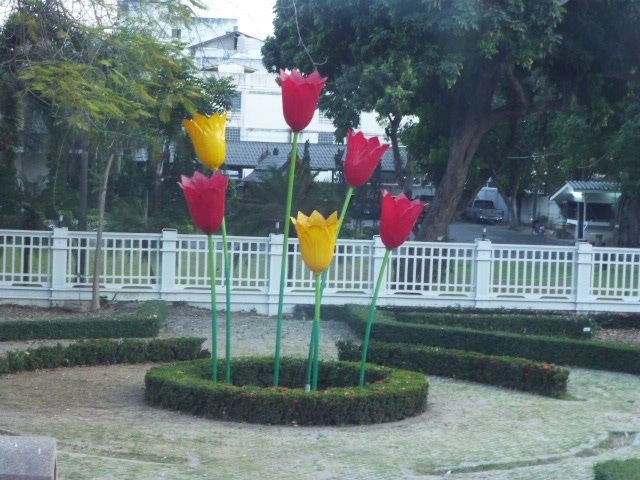

Chiang Mai is the second largest city in Thailand, located 700 km north of the bigger Bangkok. The name of the city means “new city”, but it also has an old part surrounded by a fortified moat. We learned that Chiang Mai earns a lot of money from tourism, with many foreigners and Thais coming to vacation here especially in April when the Thai New Year celebrations are very solemn here. April is the most sacred month for the Buddha and accordingly in Thailand. Then all the temples are full. Everyone returns home to see their parents, bringing them gifts and wishing them all the best in the new year.
We entered Chiang Mai through passing the railway station, then crossed the Ping River, leaving the Governor’s House on our left. We also reached the end of the shopping street, which was filled with many street vendors working until late at night, whom we later visited and made some bargains.
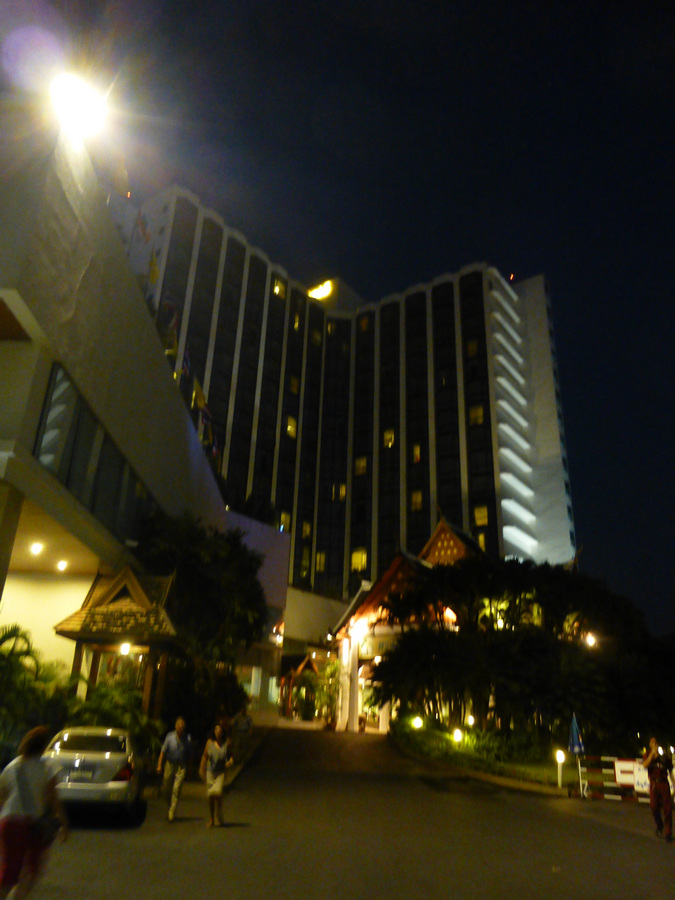
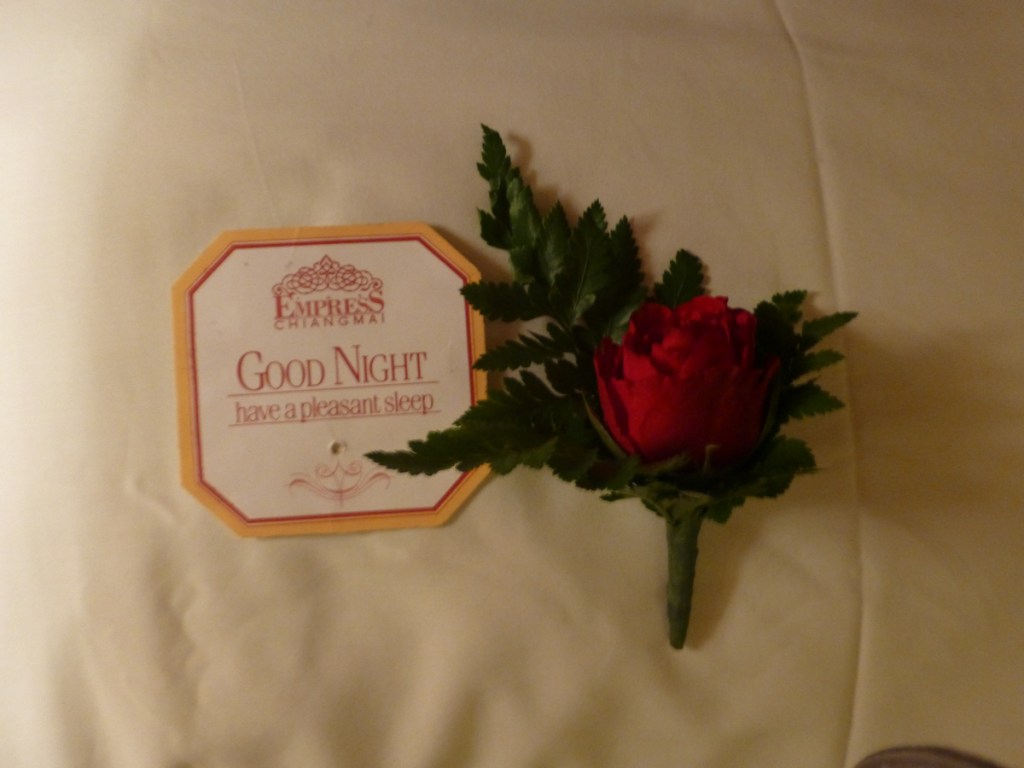
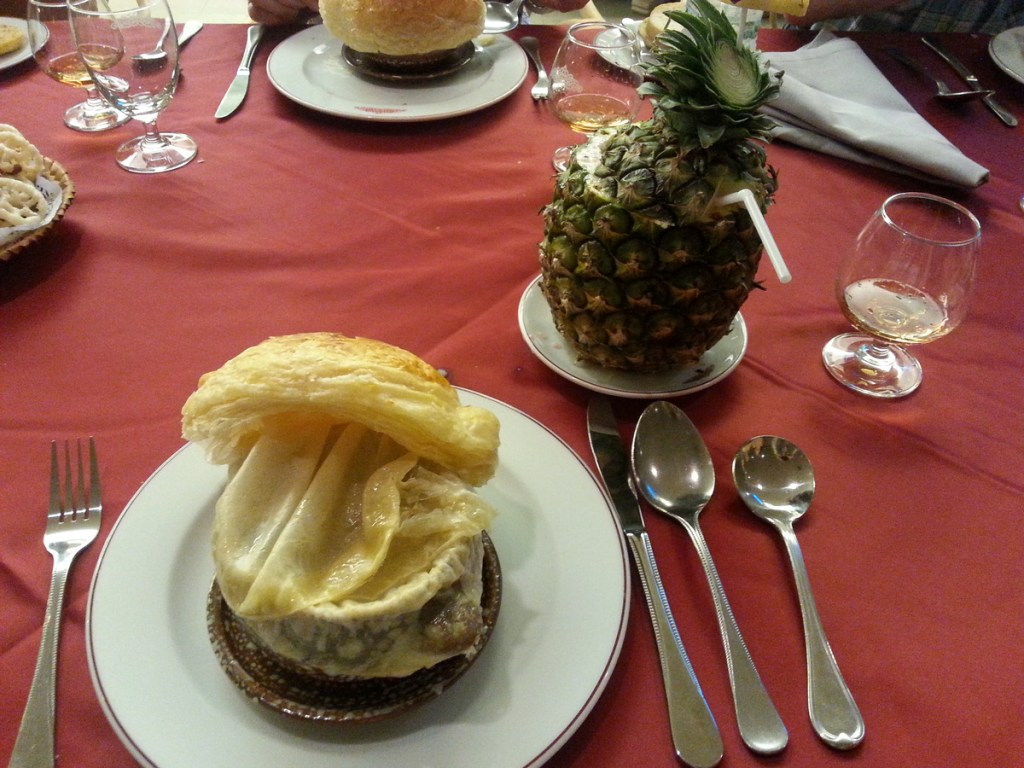
Our hotel The Empress**** was in the city center, 10 minutes walk from the night market, and the service here was excellent. We felt very welcomed and pampered the entire time. At our very first dinner, all the ladies from our group received a rose. The area around Chiang Mei is famous for its abundance of roses. After that, together with the dessert, we all received a souvenir gift – a wooden elephant key holder. That evening we also tried an interesting Mc Thai cocktail, which was alcohol served in a pineapple. We also learned a Thai custom: when many people are seated at a table, the host raises a glass and says “Tea”, in response to which all the guests say “Yo” in chorus. After that, the host can again say “Tea, tea”, the guests must respond with “Yo, yo “. So the number of times the host says “Tea”, the more ” yos” he should get. The restaurant manager came often to our table saying “Tea” to us and we all amusedly replied ” Yo “.
The next day we awoke with flickering excitement, not from hangovers, but from the program ahead. Have you ever had a dream as big as an elephant? And how do you feel he day it is about to come true? The long-awaited day when we would ride an elephant finally arrived. A pleasant excitement mixed with a drop of fear diverted my attention from the rich and tasty buffet tables during breakfast. Yet, I didn’t miss trying the sweet banana bread, which I really liked. I couldn’t wait to leave the hotel and meet to the biggest mammal on earth, which I have read that doesn’t see very well but has the best sense of smell. Elephants can hear a friend 8 km away, smell water 20 km away, and feel rain 220 km away.
On our way, the tour guide told us that there are about 3000 elephants living in Thailand, 1000 of them are in reserves, which they call “camping”, and one camping we were about to visit today, and the rest live in the jungle. In the past, elephants were hunted and killed by ivory poachers, but today it is considered illegal and lead to severe punishments. The elephants also have to thank the tourists who bring money and help with their care. Just one adult elephant, for example, needs about 300 kg of food and 160 liters of water per day. For this reason, all “elephant camping sites” are built near water. Elephants, like humans, are social animals, sometimes they hug with their trunks as a sign of greeting and good feelings. Just like us, they cry, play, laugh and have a very good memory – yet they have the largest brain on earth, which reaches 5 kg. Elephants sleep only 2-3 hours a day.


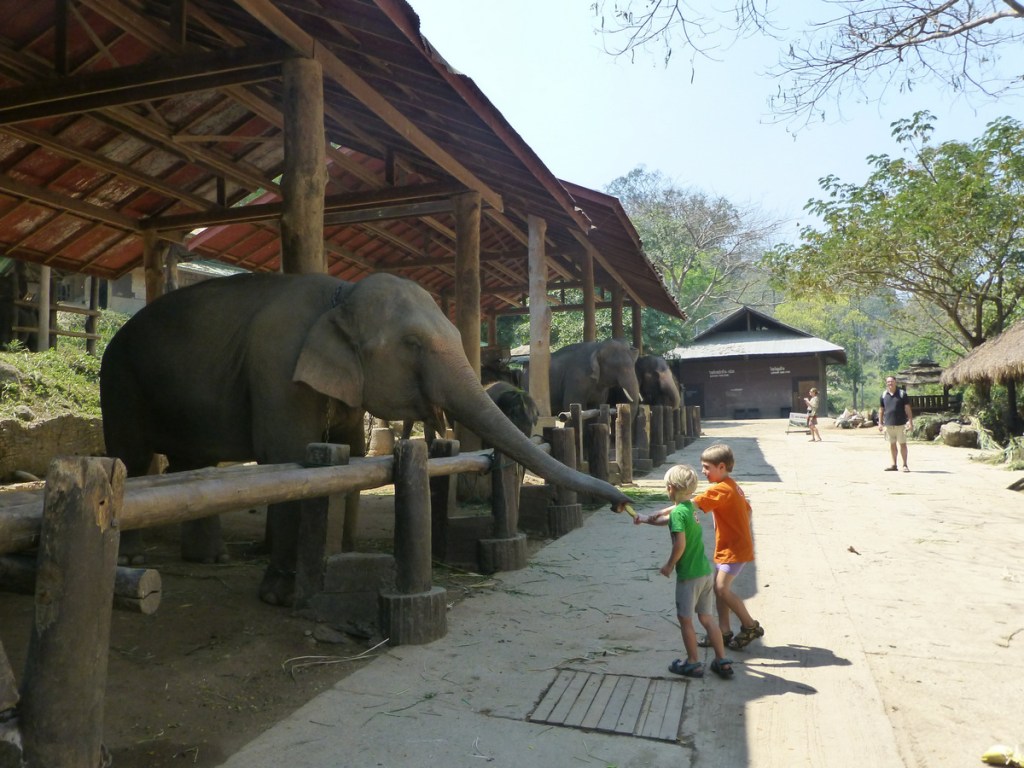
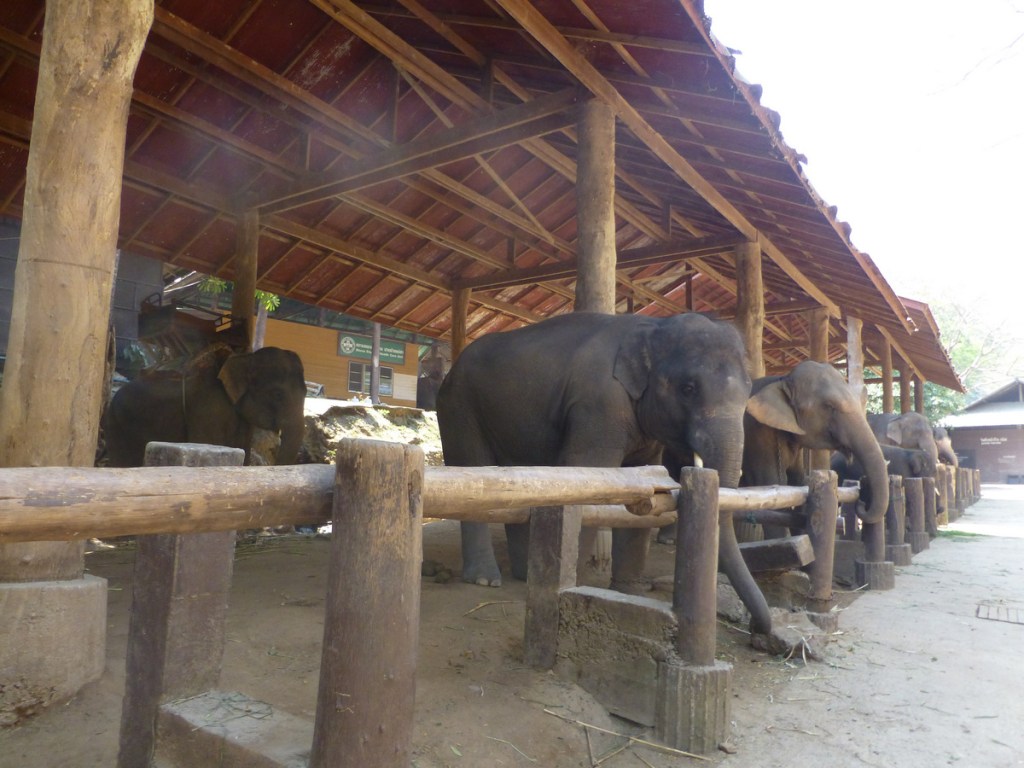
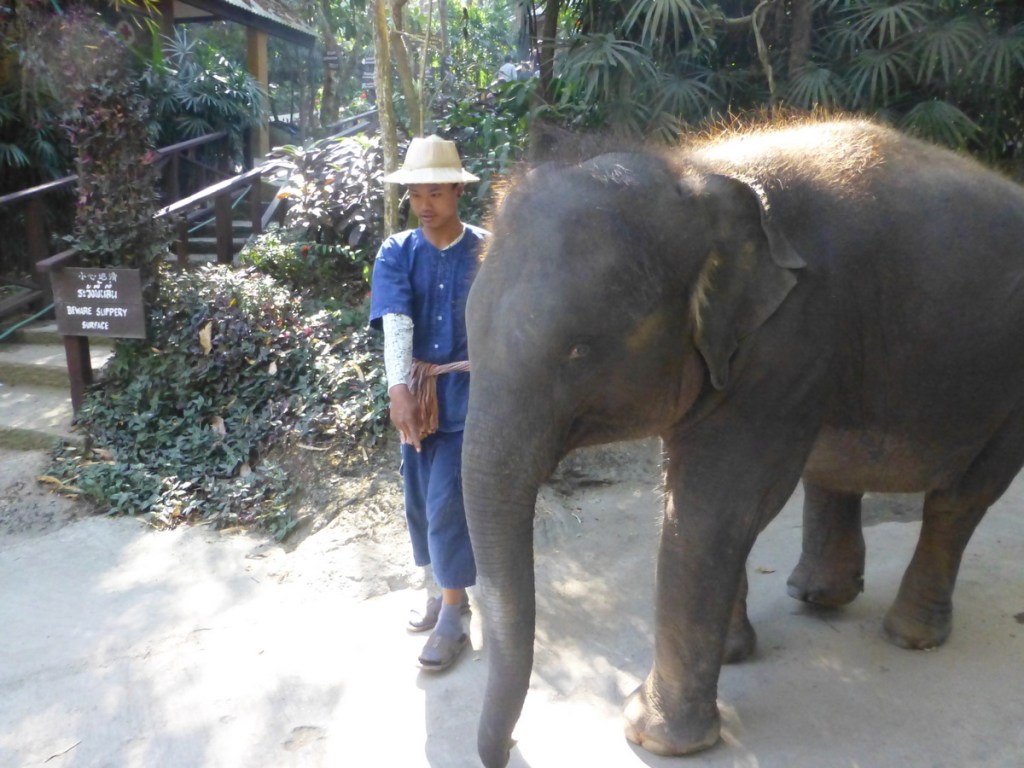
Elephants’ pregnancy lasts 22 months, and in 99% of cases only one baby elephant is born. Twins are extremely rare and considered a very lucky event. Elephants have 18 toes, 10 on the front and 8 on the back, and live about 70 years. The largest elephant measured on earth weighs 10,886 kg and is 3.96 meters tall.


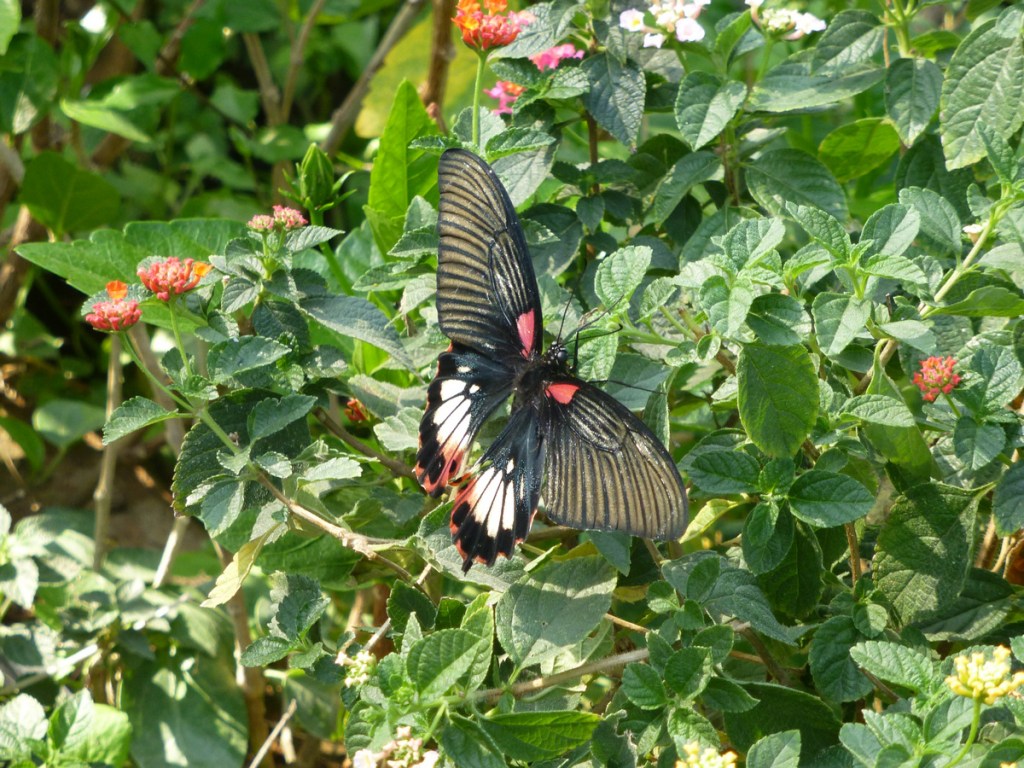
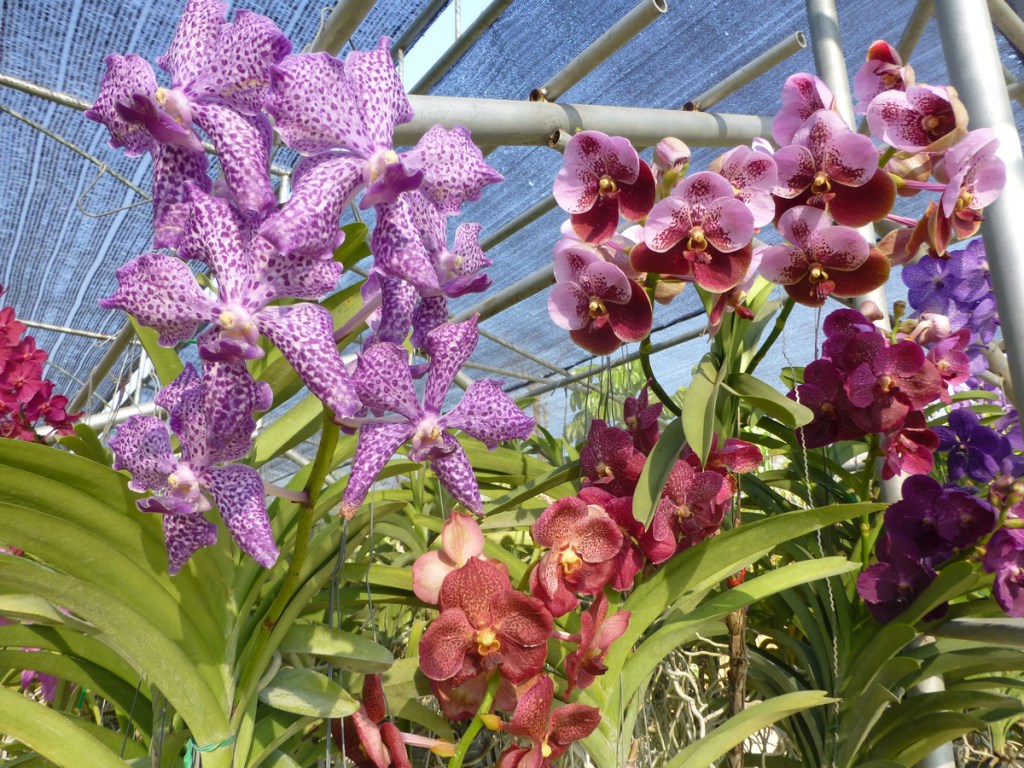
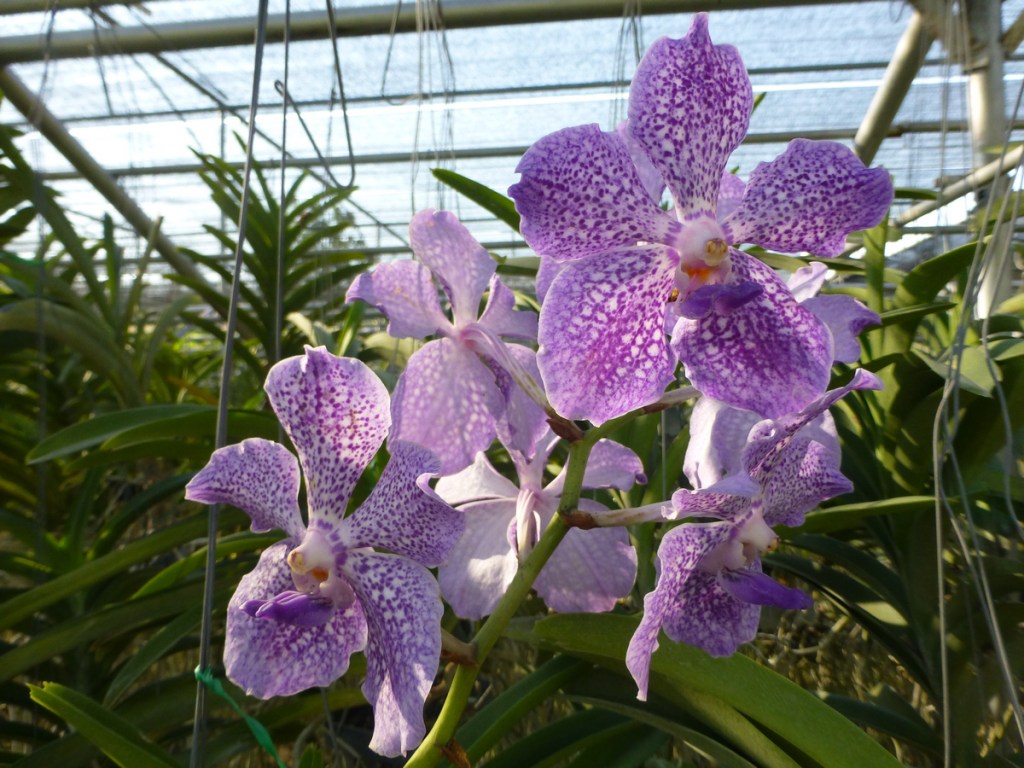
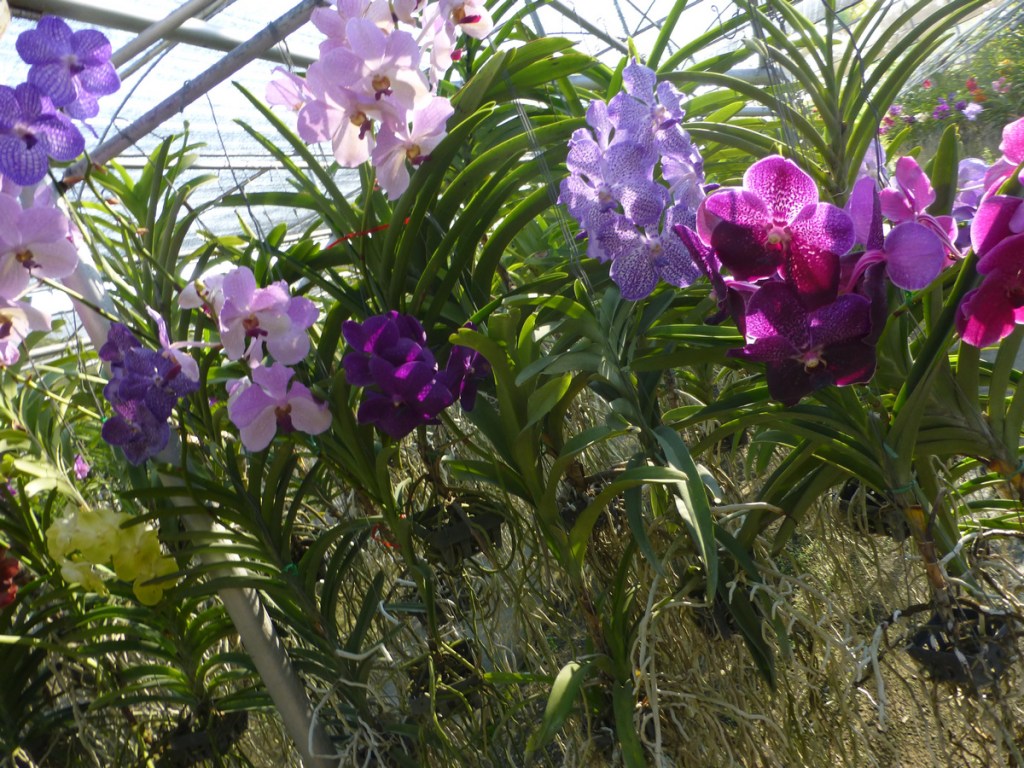
Before we got to the elephant camp, we stopped at an orchid farm. At the entrance we were greeted with a flower that they attached to our clothes, then they showed us how to plant and care for these beautiful flowers. The scent led us to the covered greenhouses full with orchids of all colors and shapes. Then we entered a covered tent where huge colorful butterflies were flying. The variety of colors of flowers and butterflies mingled in an enchanting way. I couldn’t believe that the origin of the word orchid came from the Greek word orchi, which means “testicle” and came from the shape of the bulbs. Thailand was the largest exporter of orchids, and they are very pride with these beautiful flowers.
At 09:10 we left the orchid garden heading to the elephant camp, and the tour guide told us that, like in Korea, in Thailand they sell greeting cards with all kinds of wishes written on them, one of the most popular being: “Happy birthday! May your life be as beautiful as an orchid!”
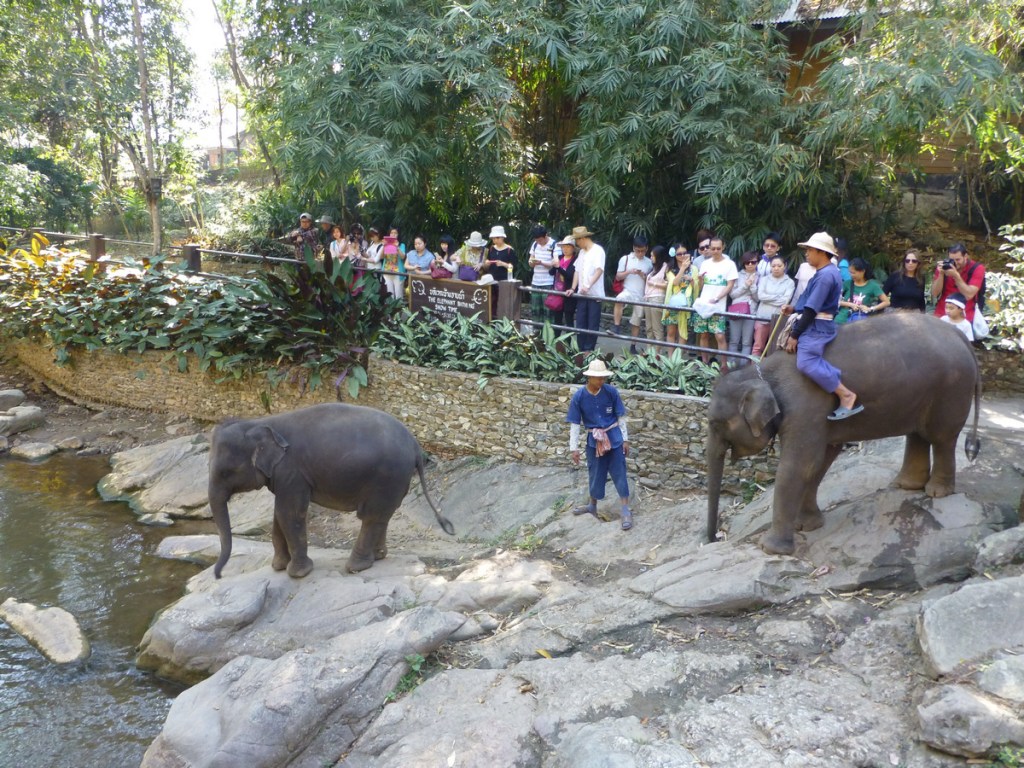
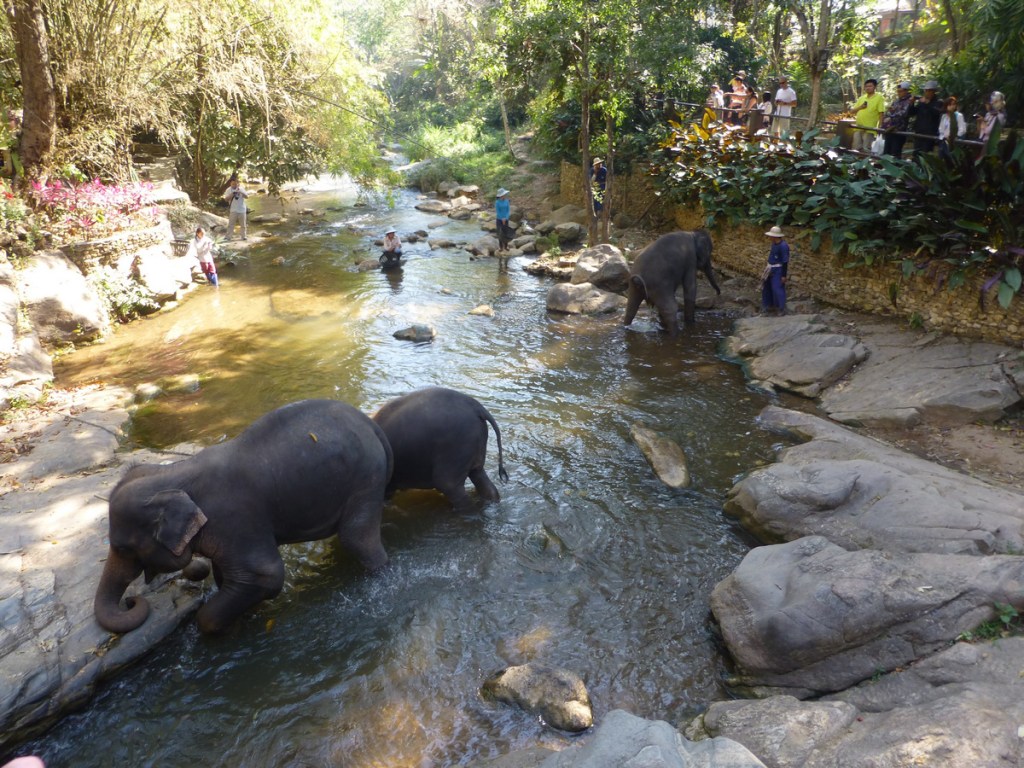
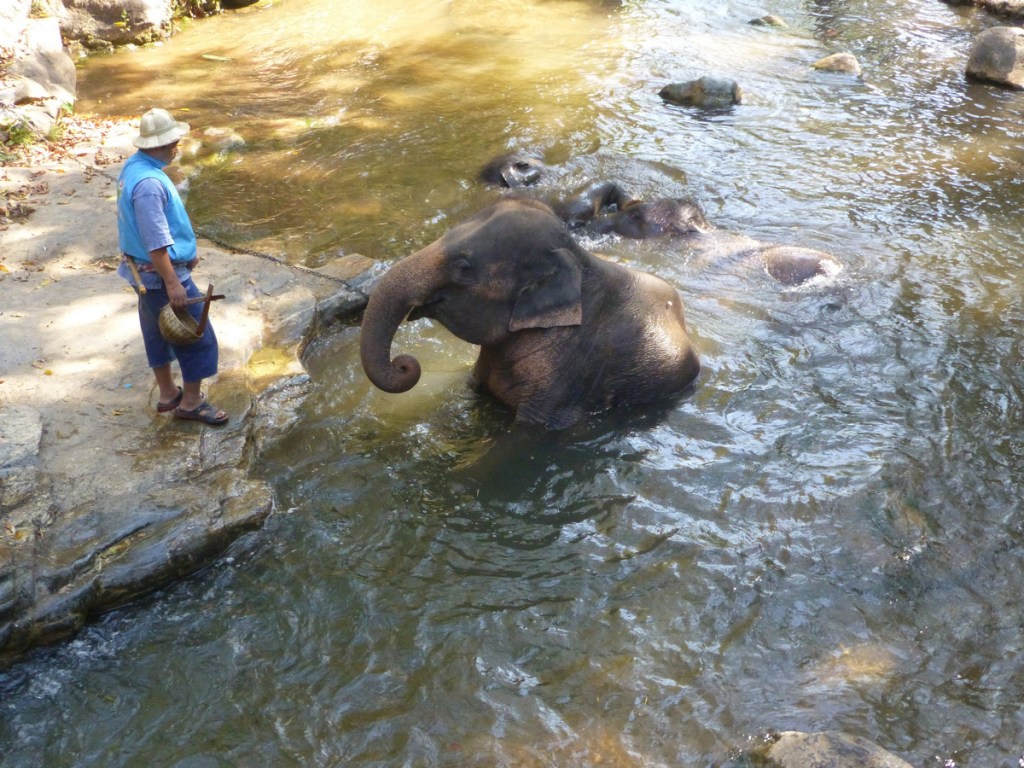
Before entering into the elephant camp, out tour guide recommended us to put some anti-burn cream, as well as anti-mosquito spray, learning that elephants can also get sunburned and therefore “smear” themselves with sand. We arrived at the campsite at 09:45, just a few minutes before the official bathing of several elephants. Three elephants passed us by, each guided by their ‘trainer’, and with slow steps stepped into the river, then plunged completely into the water. It was fun watching them getting wet as we learned that elephants can swim, using their trunks to breathe like a snorkel in deeper water. One of the baby elephants used his trunk for other purposes – to spray the crowd, who in chorus laughed and rejoiced at his misbehavior. After the bath the elephants went back where they came from and we headed to the big arena where the elephants were going to make a show for us.
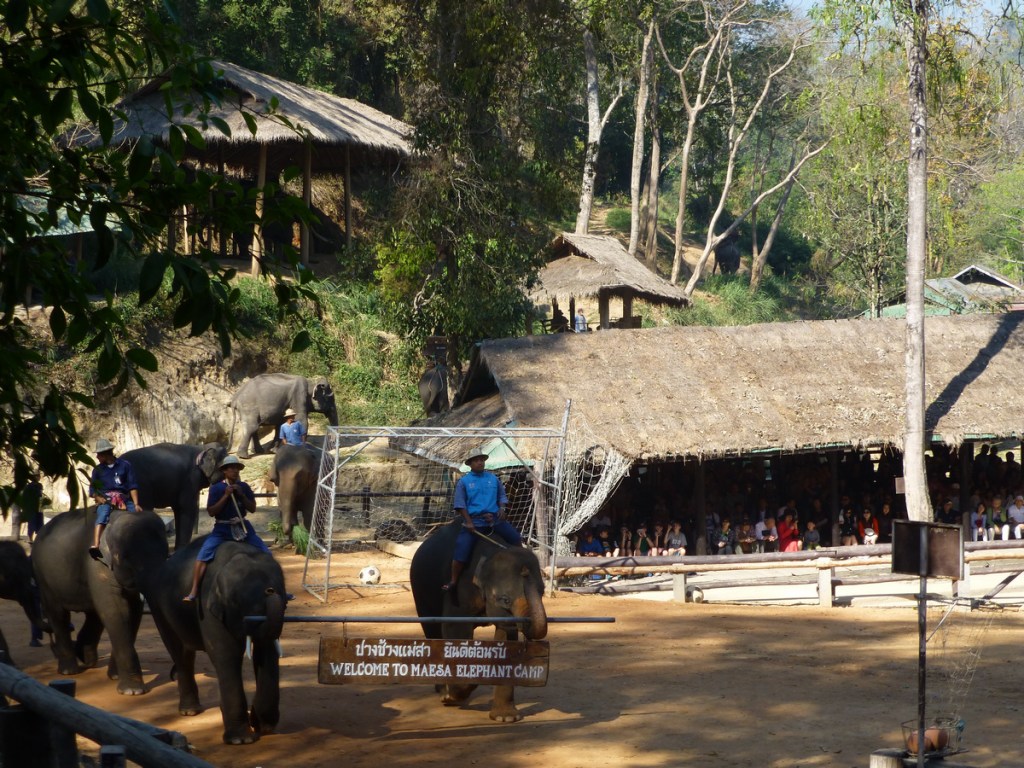
It didn’t take long before the headliners appeared, two elephants carried a huge sign with Thai and English label: Welcome that Maesa Elephant Camp.
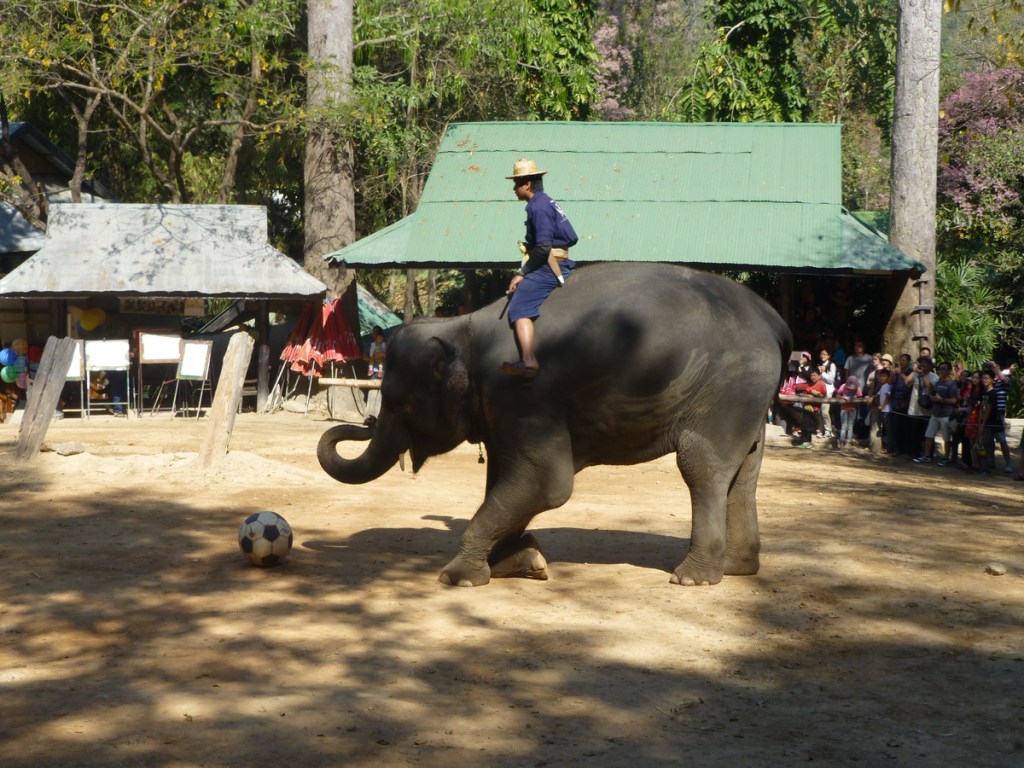
While entering the campsite I was in such a hurry that I didn’t even read the name of the camp. But now, I learned that I was at Maesa Elephant Camp, which was established in 1976 and is now home to 78 elephants. All the baby elephants in the arena greeted us and bowed with their trunks and feet, the audience clapping enthusiastically. A football match started in which one of the elephants was the goalkeeper and three other elephants took penalties for him. I had never watched a football game with such pleasure. The elephants kicked the ball with their feet, and one of them managed to score a goal. The goalkeeper also managed to save a few chances, all of which was incredibly fun and enjoyable.
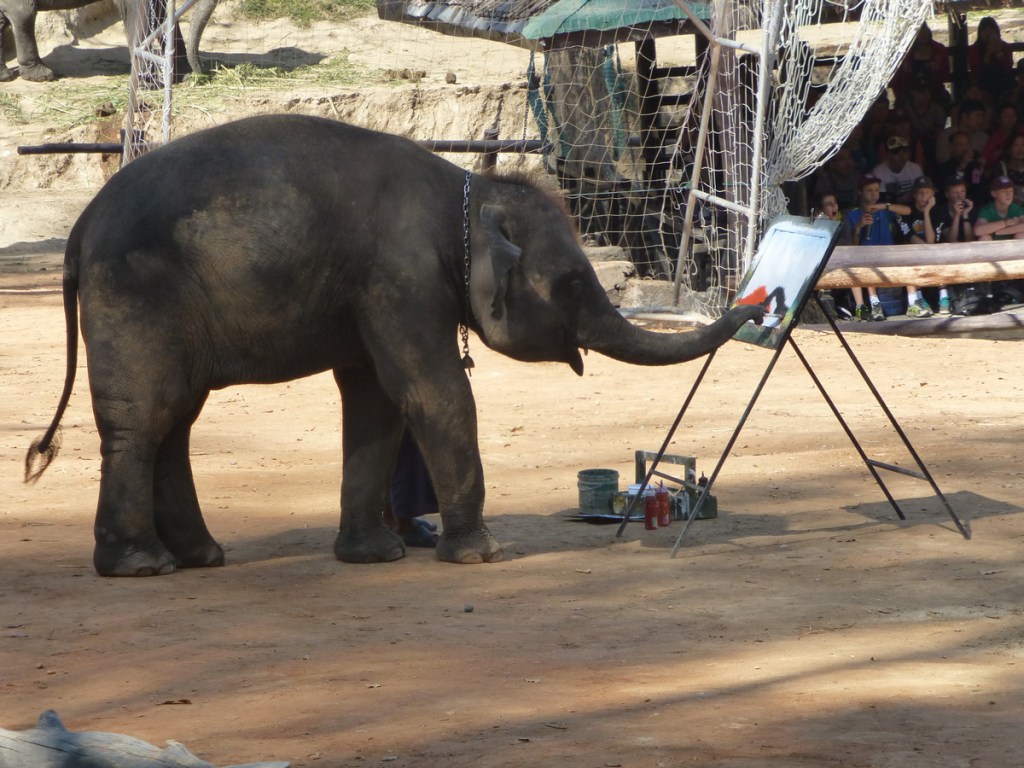
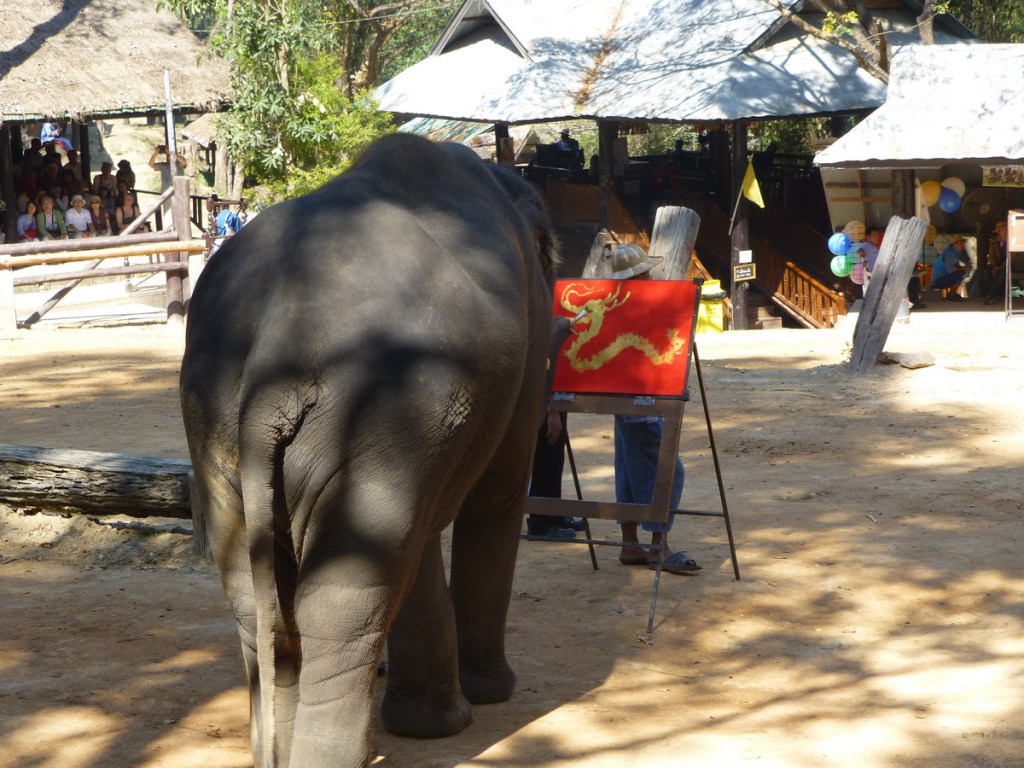
Then we witnessed something even more phenomenal. Four elephants came, each carrying a basket of paints. They set up easels and canvases in the arena, and the elephants began to paint. One of the elephants drew a mountain, another drew flowers, and the third one – a golden dragon which was very complicated. The paintings were very exquisite, and if they weren’t so expensive I would definitely buy one of them.
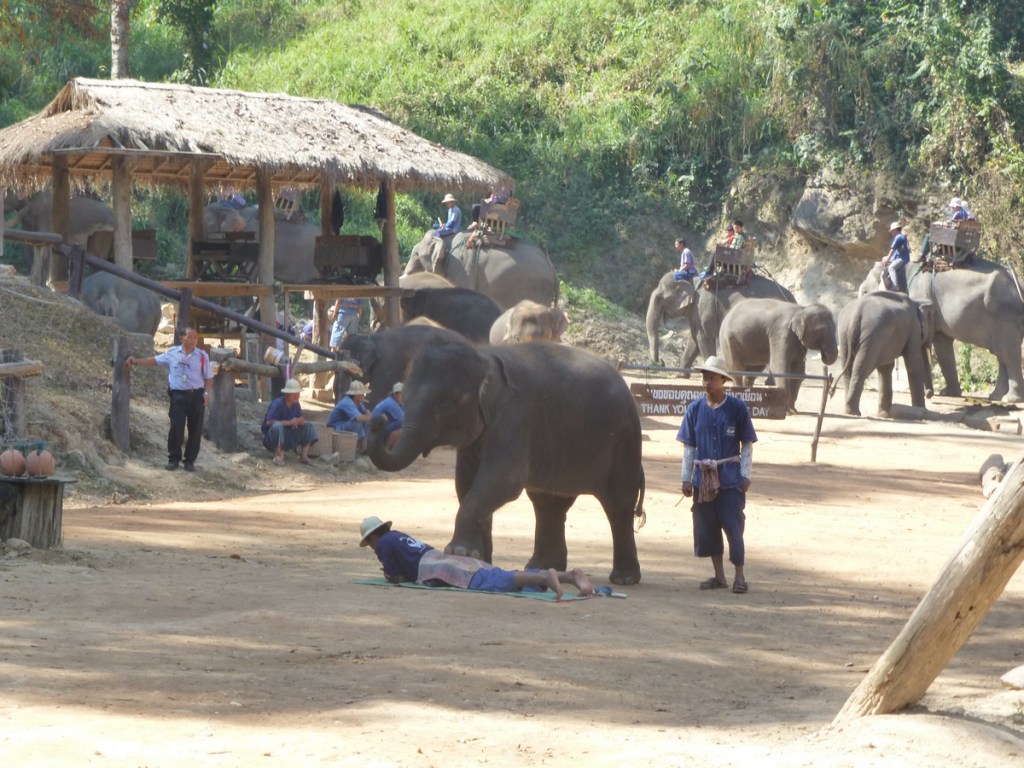
After the artist elephants, the massage elephants took the stage. Several people lay down on the ground on their stomachs, and an elephant touched them very lightly with its foot as if massaging them. From time to time the elephants would play pranks by picking up their trainers’ hats with their trunks and then handing them back.
In the next performance, two people from the audience were called to the stage, a girl and a boy, who competed against an elephant in throwing darts and popping balloons. The boy was very accurate and there were no misses, but the girl missed a few times, which gave the lead to the elephant, who was very accurate too – carefully catching the small dart and throwing it right where the balloons were, hitting one of them almost every time. An elephant’s trunk has more than 40,000 muscles, and today’s performers have shown that they can use them very skillfully.
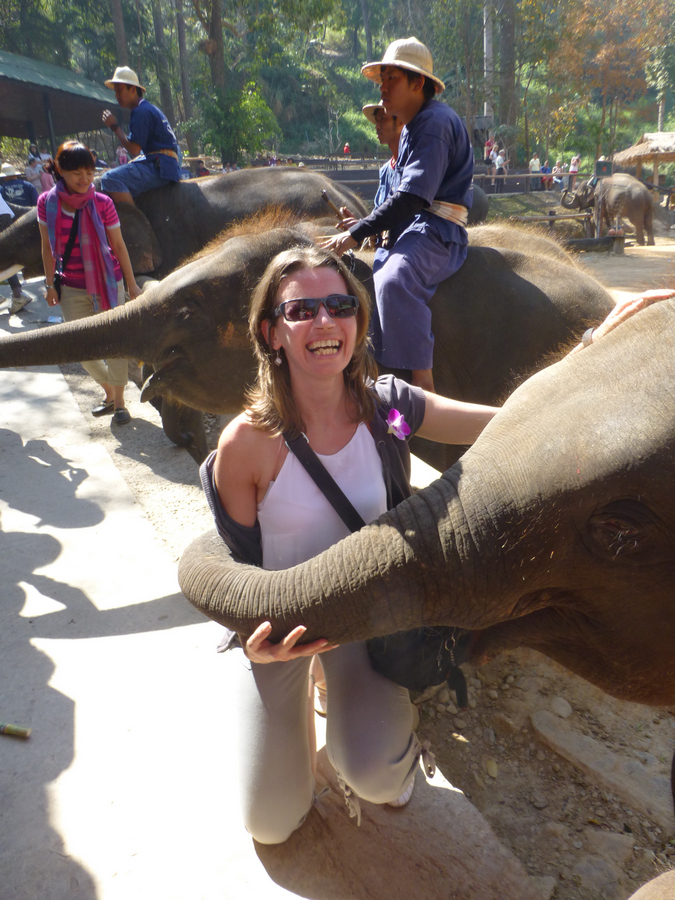
A game of basketball followed, and then several elephants showed their strength by pulling huge trees and arranging them in the shape of a house. Suddenly the show ended as all the artists came out into the arena, bowed to us, waved us with their trunks and showed us a wooden sign with letters again in Thai and English “Thank you & have a nice day”. We also thanked them by getting to pet some. It turned out that the baby elephants had very rare but long hairs, which could not be seen from afar, but were very pleasant to stroke. The whole show lasted only 45 minutes, but it left an impression for whole life.
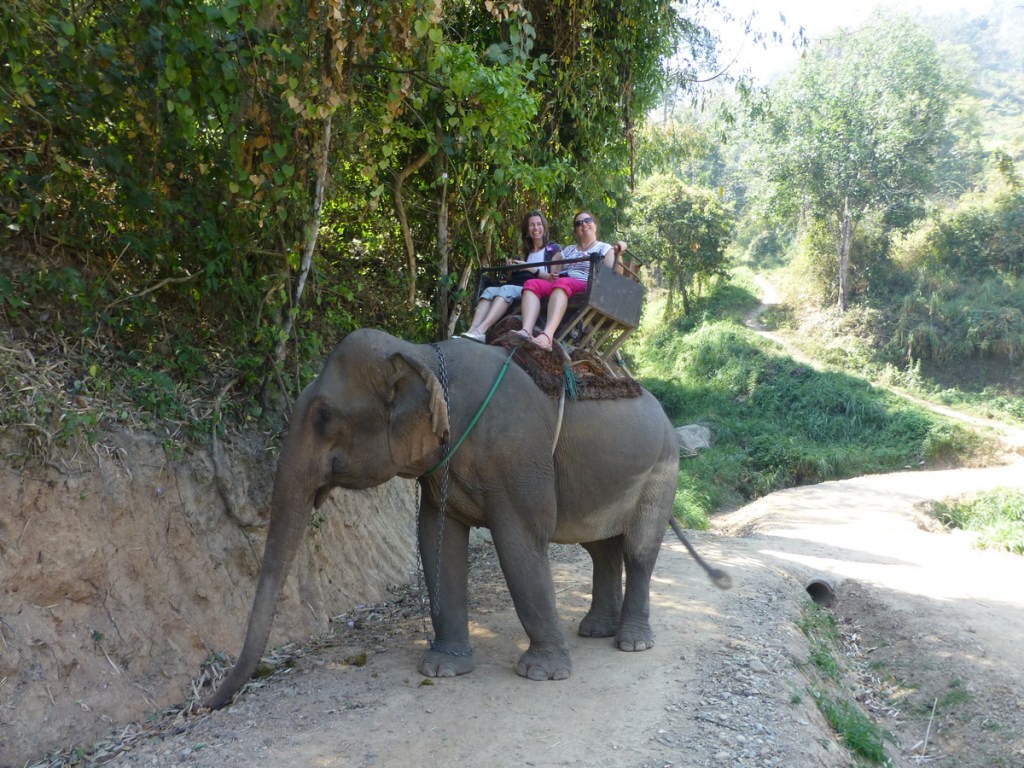
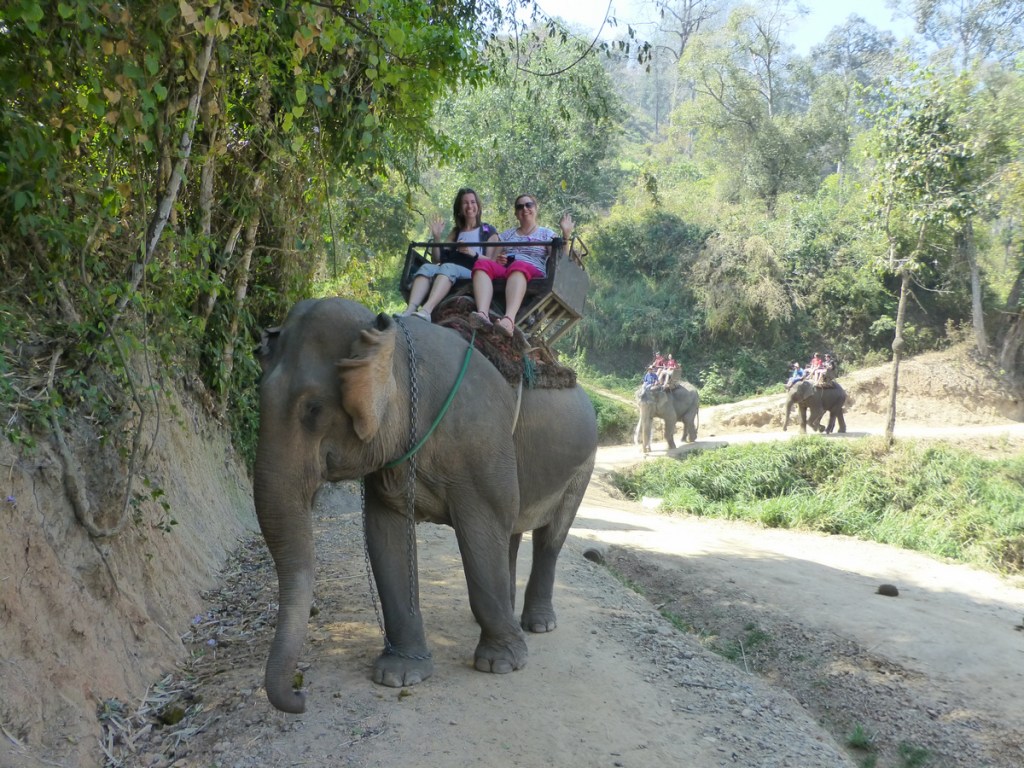
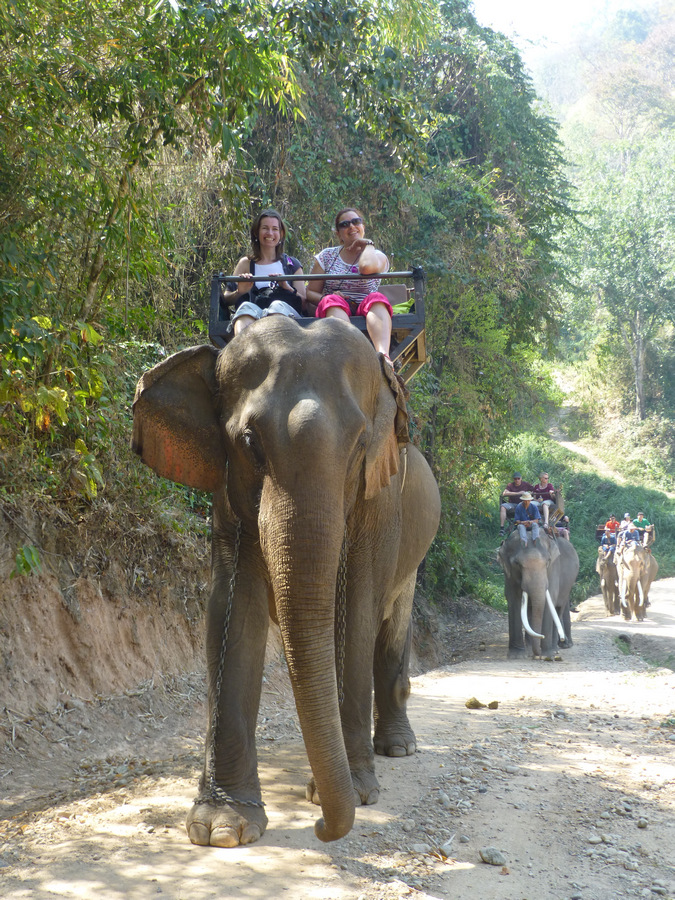
Then came the best part – riding an elephant. We went to the so-called “elephant station” which was a wooden platform at the level of the elephant’s back, and we were the first of the group to board. The elephant was always mounted from the front, so that the elephant could see us, not from its back. We came across a very nice female elephant and an excellent trainer. The wooden bench we got on was surprisingly comfortable (at least for us, I hope for the elephant too), with a buckle at the front to keep us from falling from the great height. With each step of the elephant, the bench swayed playfully, which made the experience even more pleasant and tangible. At first I didn’t dare to put my feet on the elephant’s back, but she didn’t seem to mind. The trainer, who obviously knew her well from the beginning, got off the elephant and walked to the animal, taking my camera and taking some great pictures of us. I am sincerely grateful to him for the photos, as each one of them brings me a smile and cherished memories. The 30-minute ride included a tour of the campsite, passing through forested areas, a river where the elephant happily frolicked and we also passing through the “elephant nursery” where the trainer showed us a baby elephant and said that our elephant was its mother. Usually the back of the wooden bench had the elephant’s name and age written on it, but our bench was obviously new because it didn’t have any letters on it. We never learned the name of the elephant that gave us a ride, nor the trainer, but the memories and thanks to them are huge.
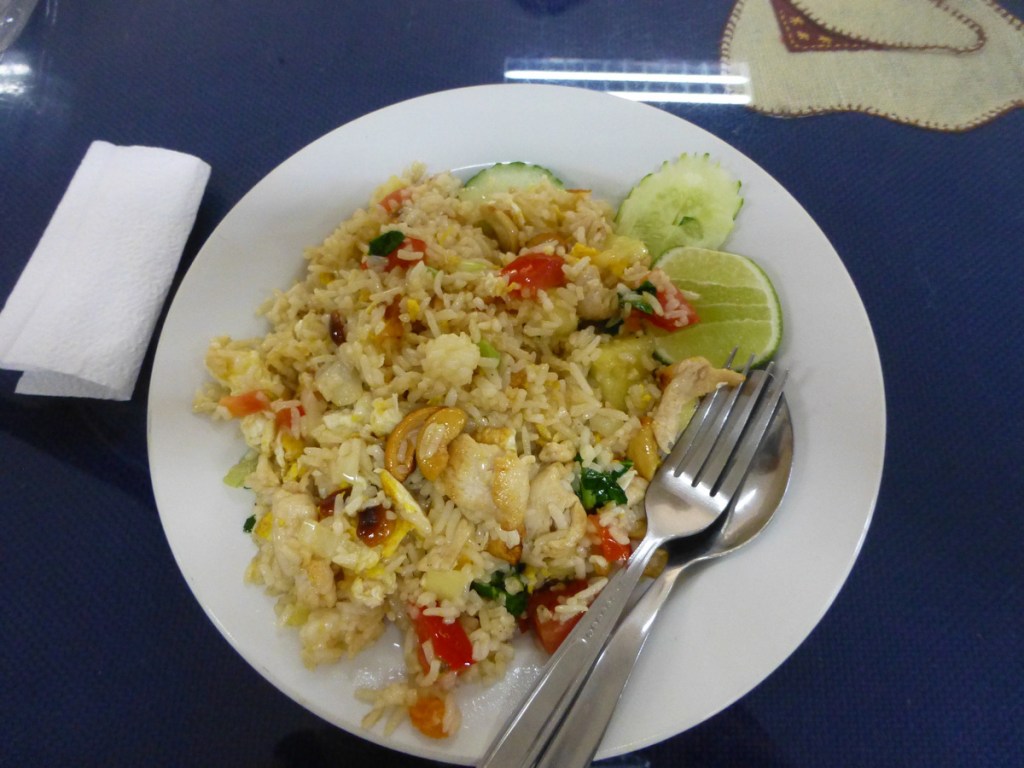
After the wonderful and unforgettable ride, we had some time for lunch, which we spent at the restaurant in the campsite, decorated with many beautiful paintings of elephants. I ordered a very tasty rice with vegetables, chicken and nuts. With great sadness and lots of happy memories, we left the elephant camp at 12:45 and headed to the last temple included in our program, located high in the mountains. On the way to the temple, our bus broke down, and while we waited for the driver and a few people from the group to fix it, the tour guide organized a “Mango Party”. He bought mangoes from a street stall nearby, peeled them, cut them and treated us not only with sweet fruits but also with sweet stories.




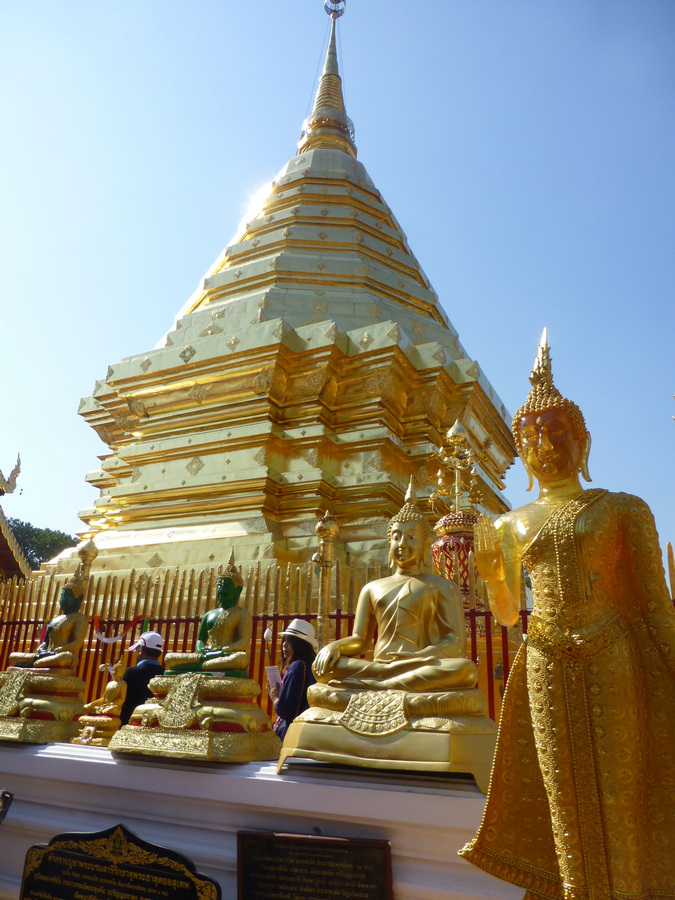
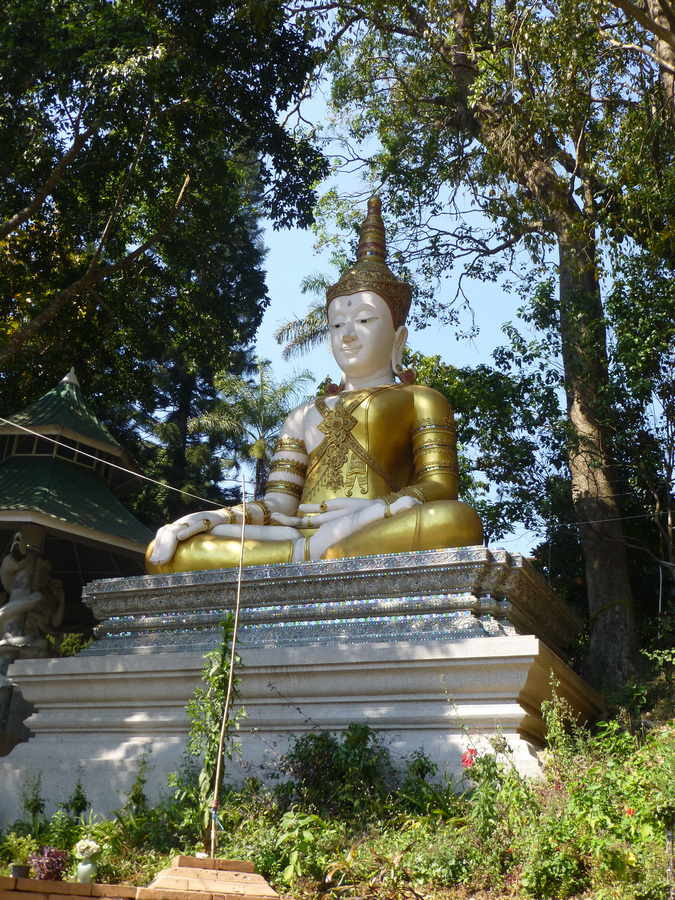

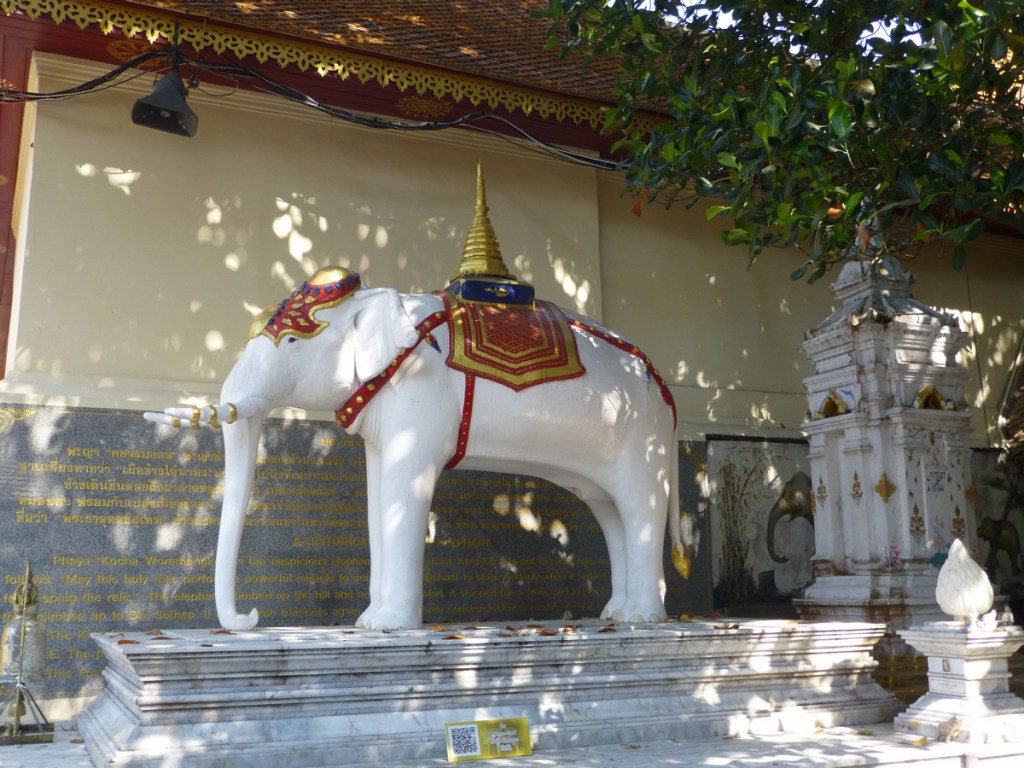
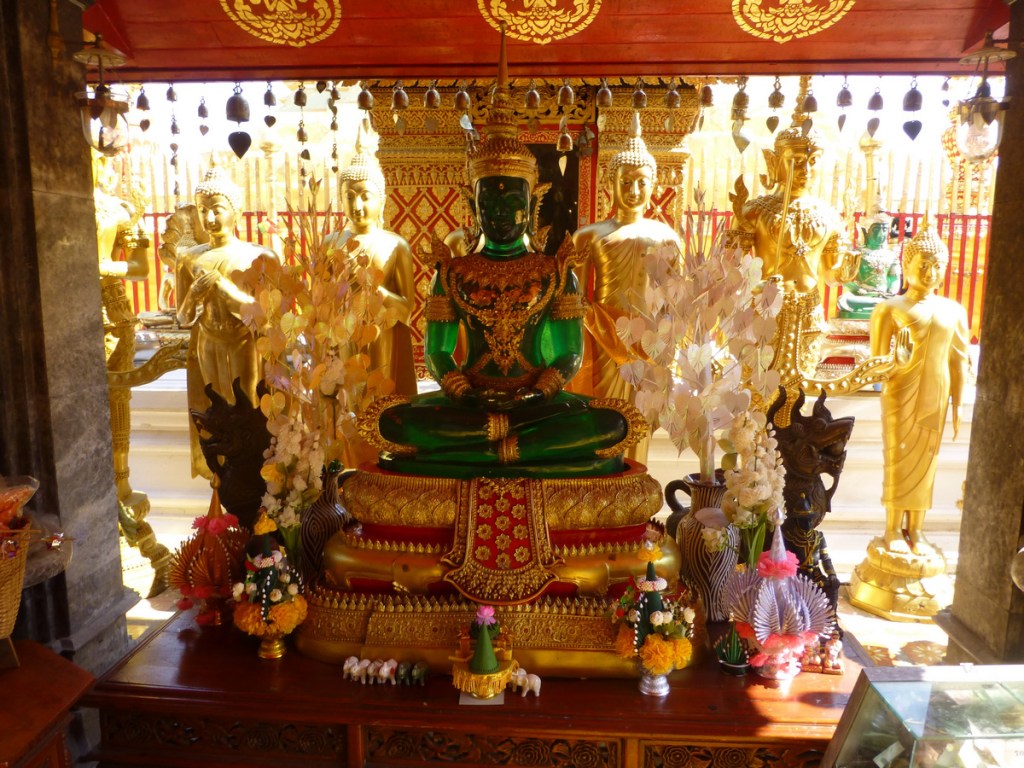
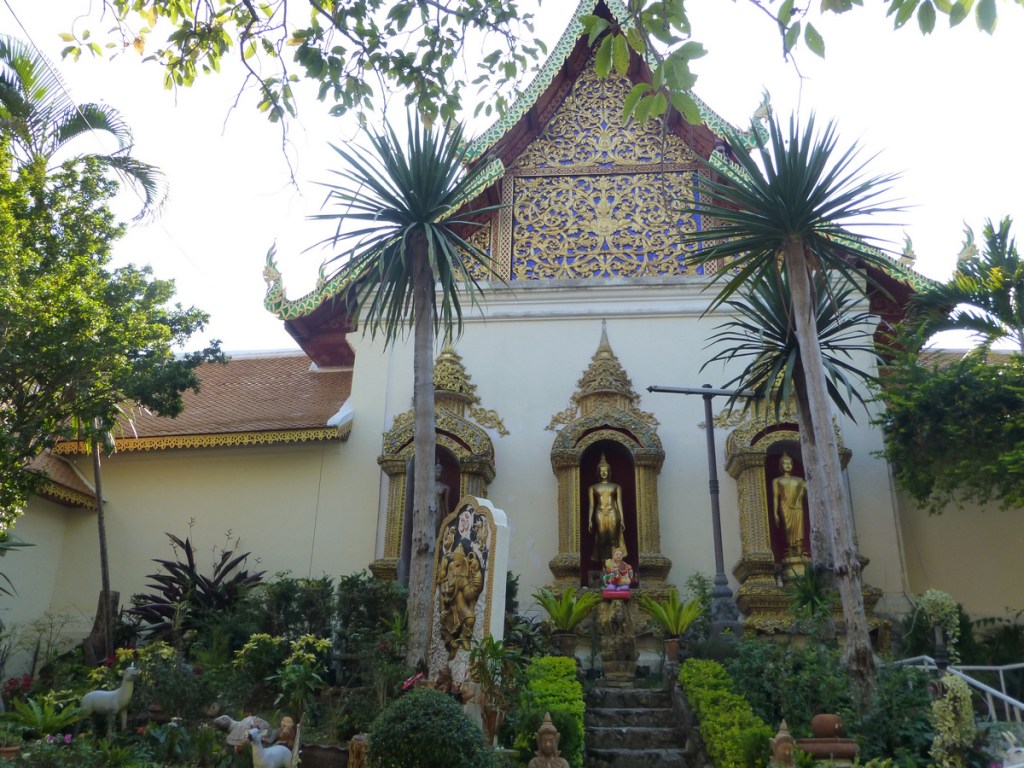
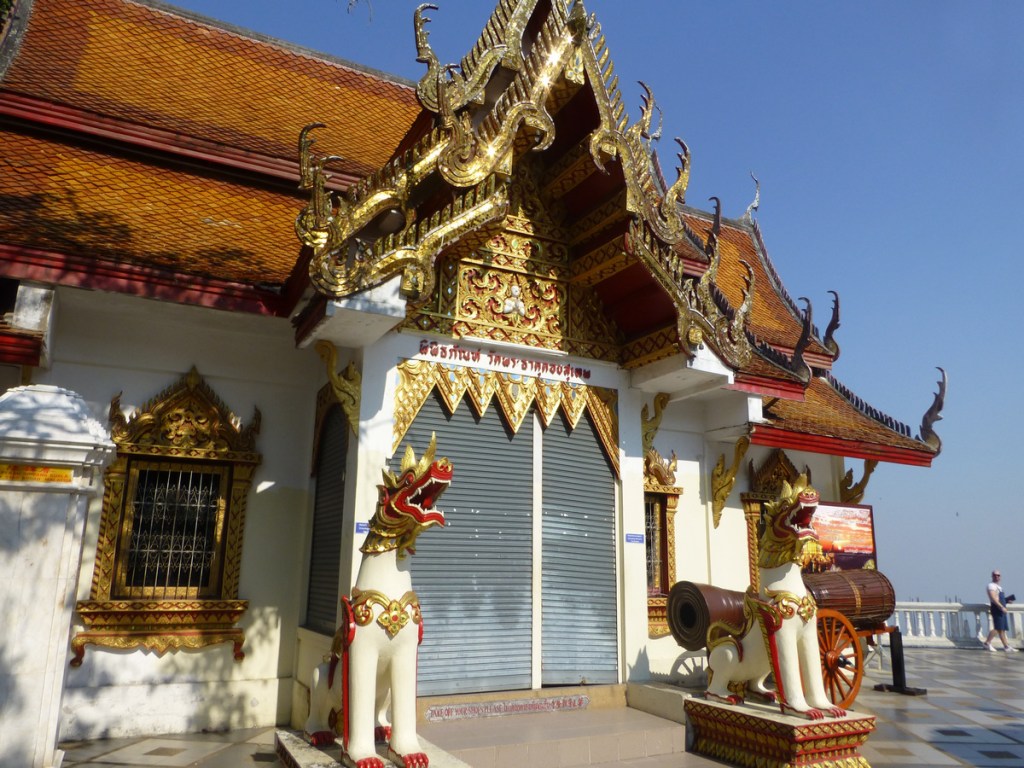
Our last temple in our tour program was known as the golden temple – a golden ending to a wonderful trip. The temple was erected at an altitude of 1065 meters above sea level and was filled with a lot of gold. The temple Wat Phra That Doi Suthep (translated: temple-relic-mountain and the name of the first monk) was very sacred as it housed a bone of the Buddha. Built in the late 14th century during the reign of King Kupa. According to legend, a monk from Sukhothai had a dream that helped him discover a bone believed to be from the Buddha’s shoulder that glowed in the dark and had magical powers. The monk carried the relic to the king, and on the way it broke into two pieces – the smaller part was kept in the existing temple outside the old city walls of Chang Mei – Wat Suan Dok, and for the other relic they decided to build a new temple. In order to choose a place for the new temple, they put the relic on the back of a white elephant and set it free wherever the elephant stopped – there they would build a temple. The elephant climbed the mountain and died just before sunset. A temple was built on the site to house the Buddha’s relic. It was interesting that the street on which the elephant passed today was part of the city of Chang Mei and was called Elephant Street, along which there were intersections with Crouching Elephant Street and Sitting Elephant Street.
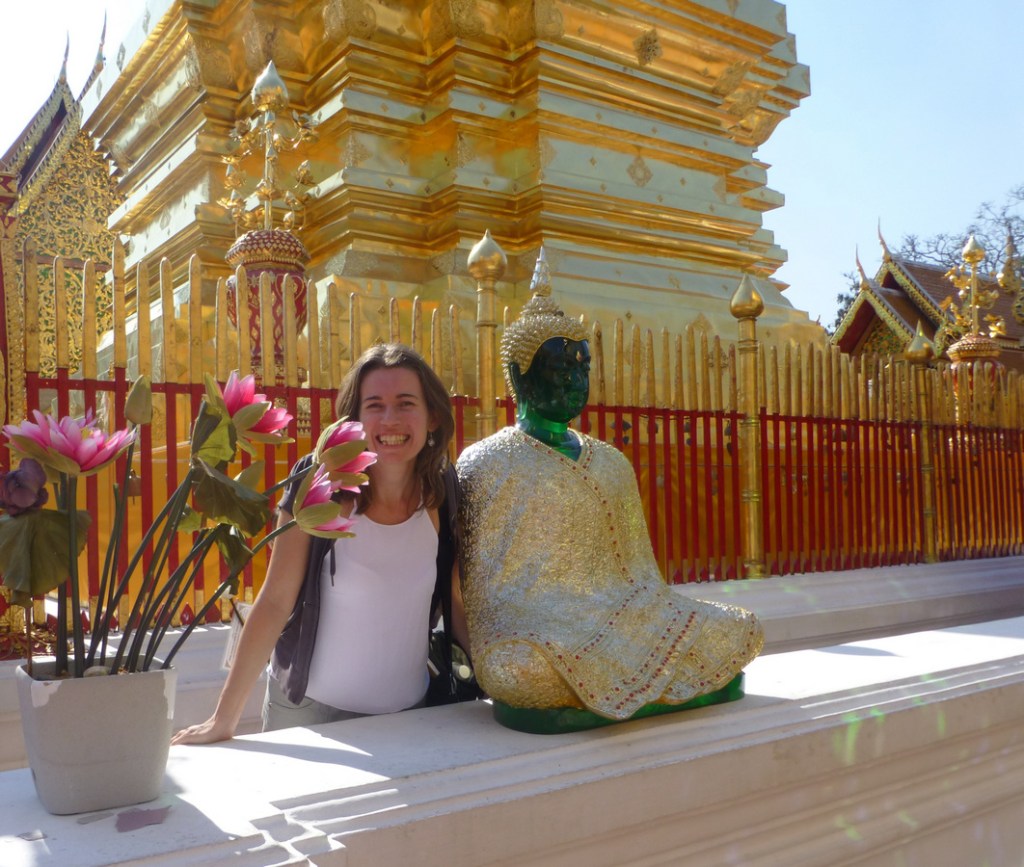
The temple can be reached by 309 steps or by funicular, which we preferred to take. We left our shoes in front of the temple right next to the statue of the legendary white elephant. To his right was a temple with a hanging clock, and from inside extended the beautiful golden chedi. We were delighted by the glittering golden chedi and after taking lots of photos we headed to the Buddha Halls and the many Buddha statues. There was also a replica of the Emerald Buddha statue here.
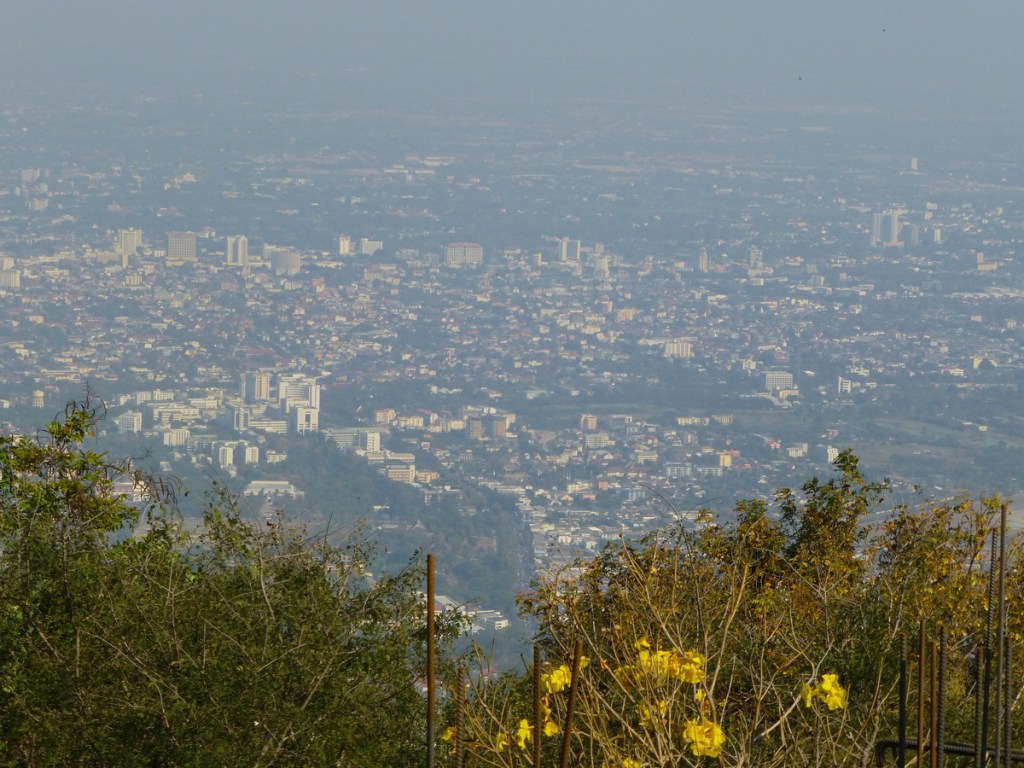
We really liked the temple, as well as the wonderful panorama over Chang Mei, which could be seen from several beautifully designed spacious terraces. We learned that in the 13th century, Chang Mei was the capital of the Lanna Kingdom, which translates meant “the land of millions rice fields”.
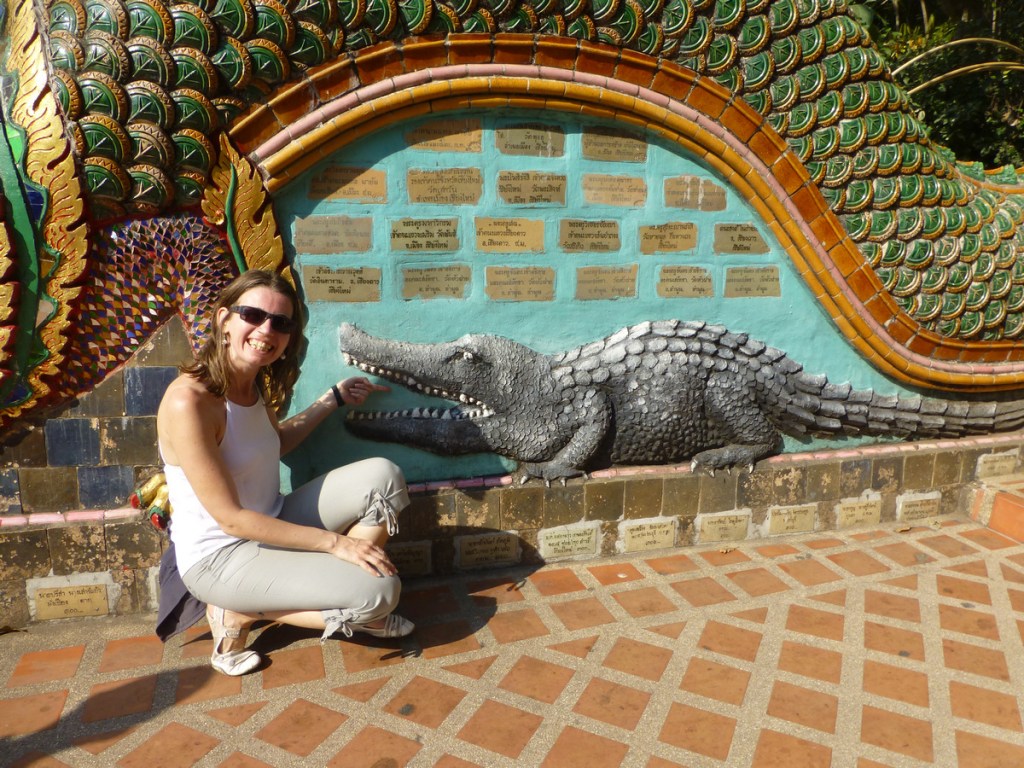
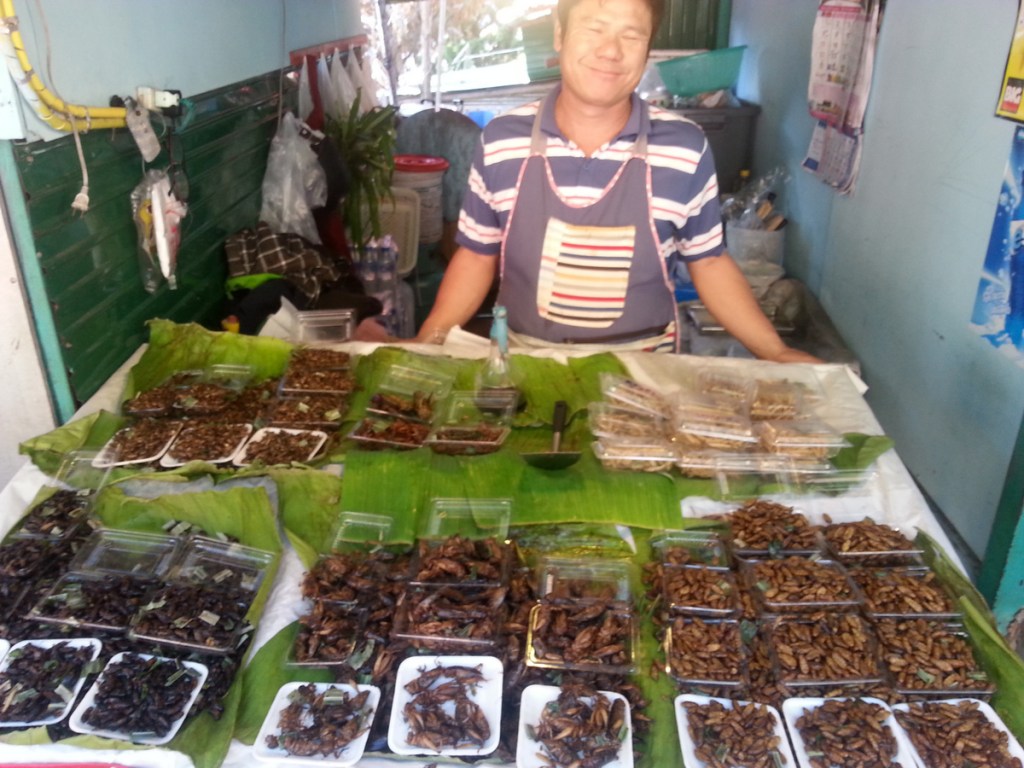
On the way down from the temple, we preferred the stairs, which were beautifully decorated with painted dragons, snakes and crocodiles. At the bottom was a small market where we could try different foods, including fried bugs. However, we preferred the banana waffle on a stick, which was very tasty. Our bus however was completely broken, which wasn’t such a bad news as we got back to Chiang Mai by pick-up taxis, which was quite exciting. The open spaces in the pick-up, and the driver’s fast driving around the mountain bends was quite an experience.

Instead of going straight back to the hotel, we preferred to walk around the second largest city in Thailand – Chiang Mai. We took many beautiful pictures in front of the Art Museum in Paradise, which we later learned was the first museum of illusion in Chiang Mai, where each of the artworks was in 3D and gave an impression of realism. It’s a pity that we didn’t get to see it from the inside, but we’re glad that at least we learned about the existence of such a kind of museum that we hadn’t seen in Europe before.
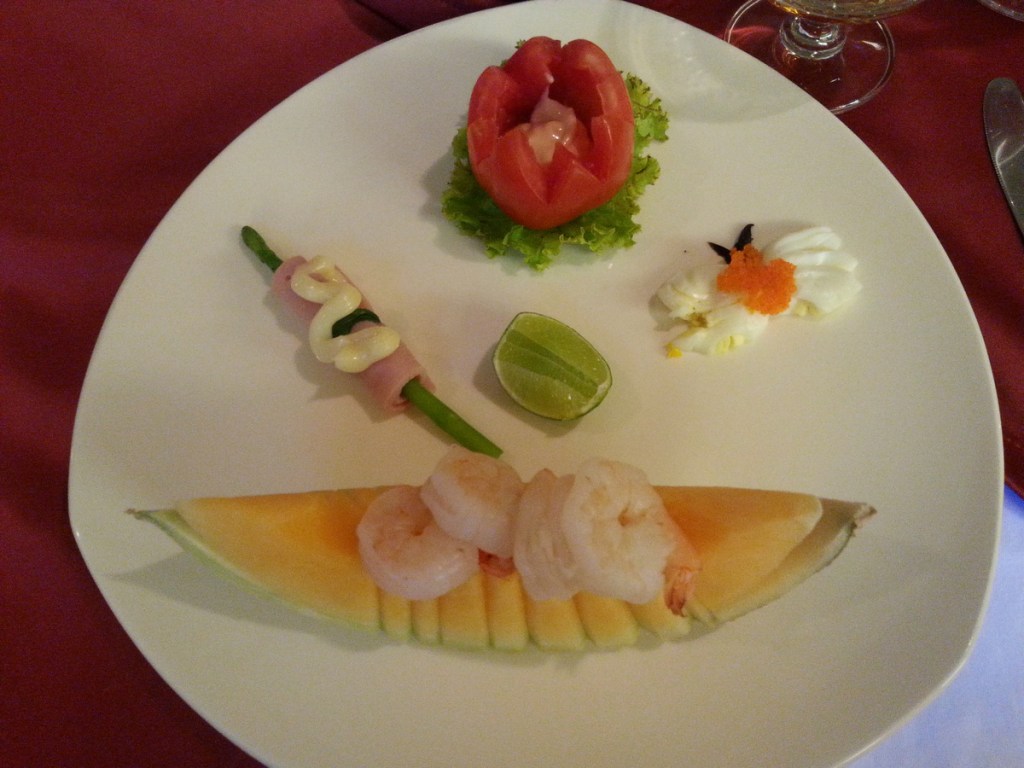
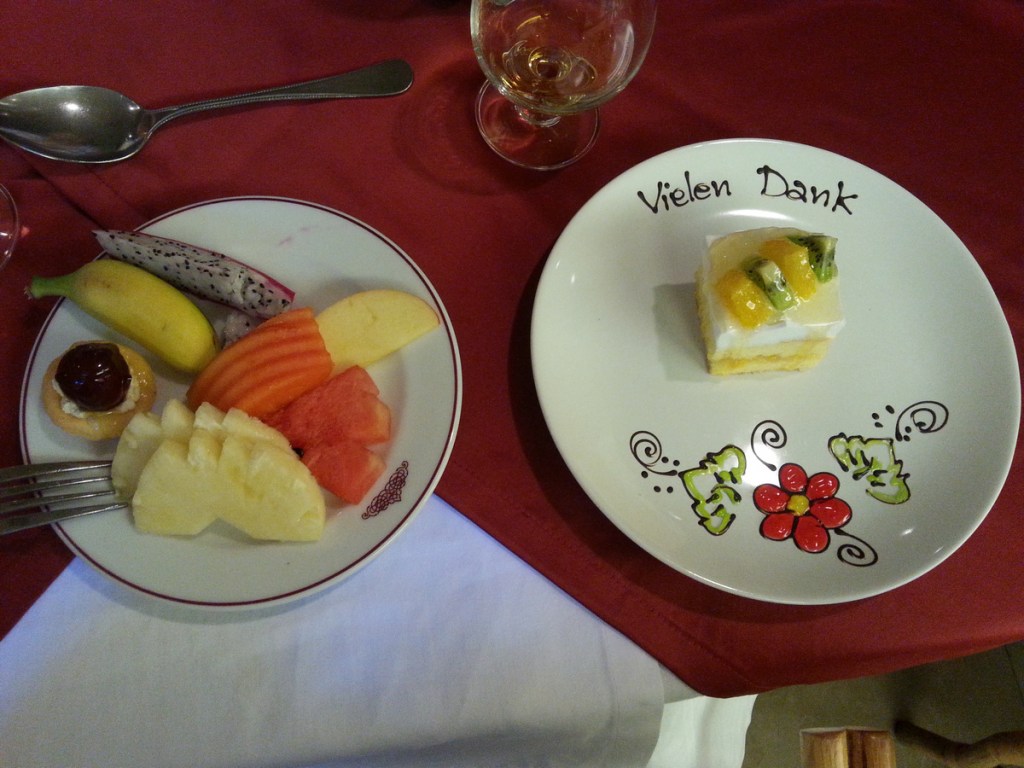
The dinner at the hotel was again refined. All the ladies from the group received a bouquet of roses. We were also delighted with the dinner. First we were served a piece of melon, in which delicious shrimps were placed between the fruit and it looked like a boat with a butterfly made of an egg with eyes flying over it, and next to it was a tomato carved like a flower. After that, we could go to the buffet tables, where a master chef grilled skewers, potatoes and vegetables on the spot. For dessert, I chose a variety of sweet fruits, including a delicious dragon fruit, as well as small sweets. However, the real dessert was served to us again by waiters – it was an orange and kiwi fruit cake, served on a plate with the words “Vielen Dank” in chocolate (thank you very much in German, as we were with a German group) and a cute flower was drawn on it.


General information about Chang Mai:
Location: Chiang Mai is located in northern Thailand, 700 km north from Bangkok in the highest mountains in the country, on the banks of the Ping River, a major tributary of the Chao Phraya River.
Area: 40,216 sq km (this is the second largest city in Thailand)
Population: 148,477 people (2008 data)
Official language: Thai
Altitude: 310 m
Climate: subequatorial
Time zone: UTC+7
Currency: Thai Baht (THB)
Additional information: http://www.tourismthailand.org/About-Thailand/Destination/Chiang-Mai
Trip Tips for Chiang Mai:
Best time to visit: All year round
Typical food and drink: Thai food is famous all over the world, but it tastes the best when prepared at its home country. In northern Thailand it’s worth trying Khao Soi (egg noodles with curry, chicken and coconut), Sai Oua (Northern Thai multi-spiced salami), Laap Khua Mu (spicy salad with pork ) and others.
Places to visit: Chang Mai is most often depicted with a golden chedi, which is visible during the day from the Wat Phrathat Doi Suthep , located 1073 meters above the city. It is worth visiting this symbol of the city, which is undoubtedly one of the most glamorous Thai temples and offers a wonderful panorama over Chiang Mai. There are more than 300 temples on the outskirts of the city, which are also interesting to visit. In the very center of the city, the Wat temple is worth visiting Phra Singh and Wat Chiang Man (the oldest temple in the city), and among the museums interesting are the Museum of Urban Art, the National Museum in Chiang Mai, the 3-D Museum – Art in Paradise, etc. There is a nice zoo with an aquarium in the city, and not far away is the Nature park Mae Sa Waterfall, with a beautiful waterfall, as well as the Imperial Winter Palace of Phu Ping, the botanical garden of Princess Sirikit, etc.
 TripTips