AYUTTHAYA
THAILAND ROUNDTRIP – PART 2

In the end of the 14th century, the black centuries of Bulgaria began, at the same time far to the east began the golden period of the Kingdom of Siam with the newly chosen glamorous capital Ayutthaya. We were going to see what was left of this golden ages, as our bus took as early in the morning and we headed from Bangkok to the north, to Thailand’s ancient great capital, Ayutthaya.
The bus left at 07:00 in the morning, and there were already traffic jams on the streets of Bangkok. The statement that moving around Bangkok is faster by boat than by car was true. On the way, the tour guide showed us the most expensive private school in Thailand, where the annual fee amounted to 7,000 euros. On the right side of the bus remained the third tallest building in Bangkok (Baiyoke Tower II, 304 m and 85 floors), which, however, after our visit to Hong Kong a couple of days ago did not impress us.
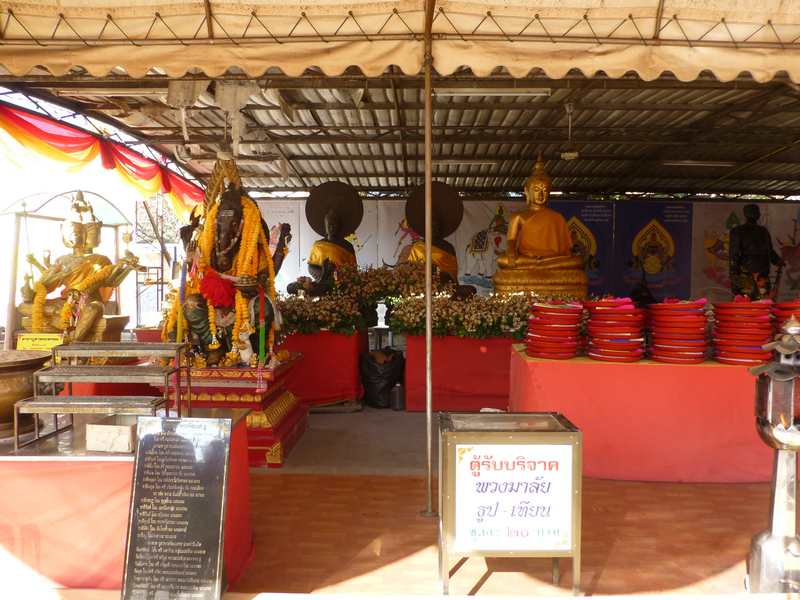
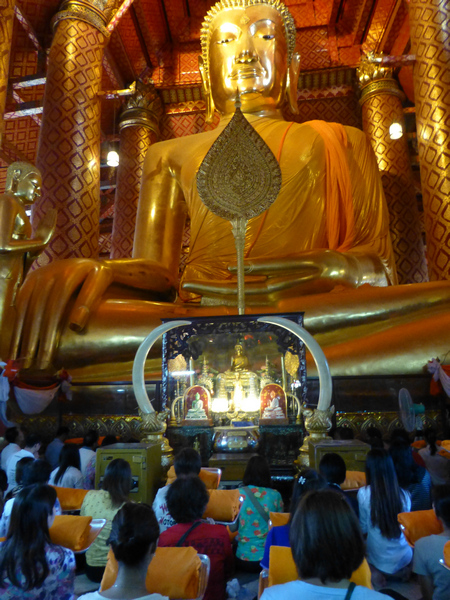
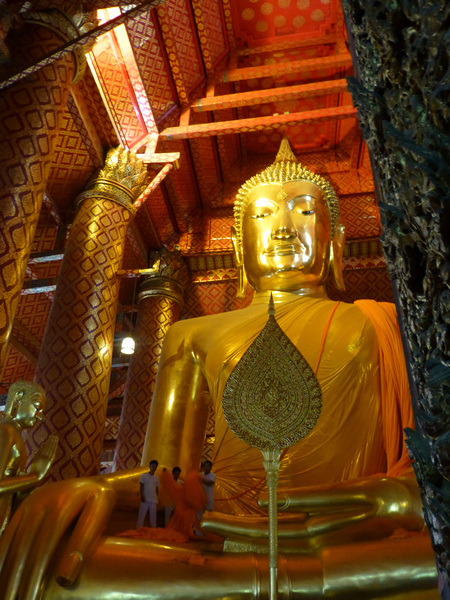
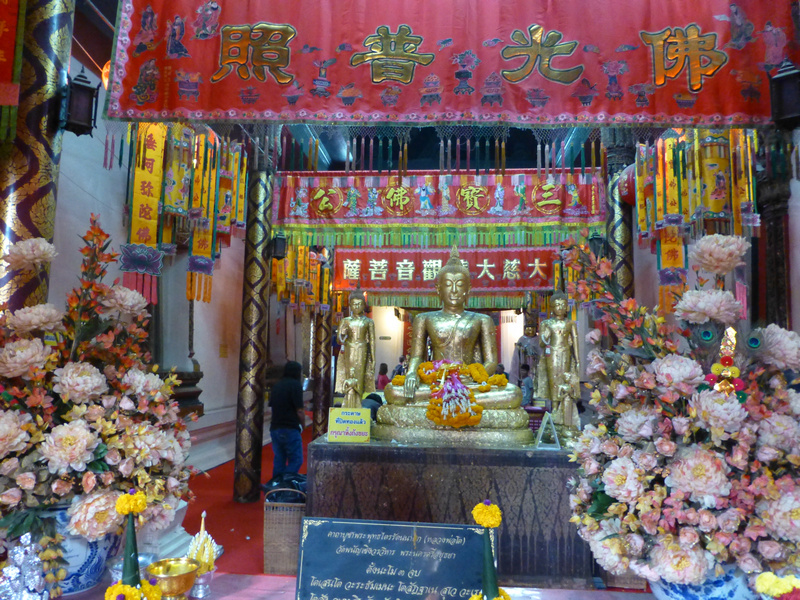
Before we got to the old Thai capital we stopped at the Wat Phanan Choeng Worawihan temple, which was located 2 km south of Ayutthaya. It was erected in 1324 or 26 years before Ayutthaya was proclaimed the capital. In the temple there were numerous images of Ganesha, the son of Shiva, who had the body of a man and the head of an elephant. The elephant’s head symbolizes the elephant’s intellect, as usual, Ganesha was depicted with a mouse that also symbolizes the mind – small enough to reveal any secret in the most remote places. We learned that Ganesha was the ruler of wisdom, intellect, learning, prudence and writing. The most impressive thing in the temple, was the huge Buddha statue (19 meters high and 14 meters wide from knee to knee), and while we were there, there was a kind of liturgy in which people prayed and gave orange blankets that Buddhist priests took and tied on the Buddha statue.
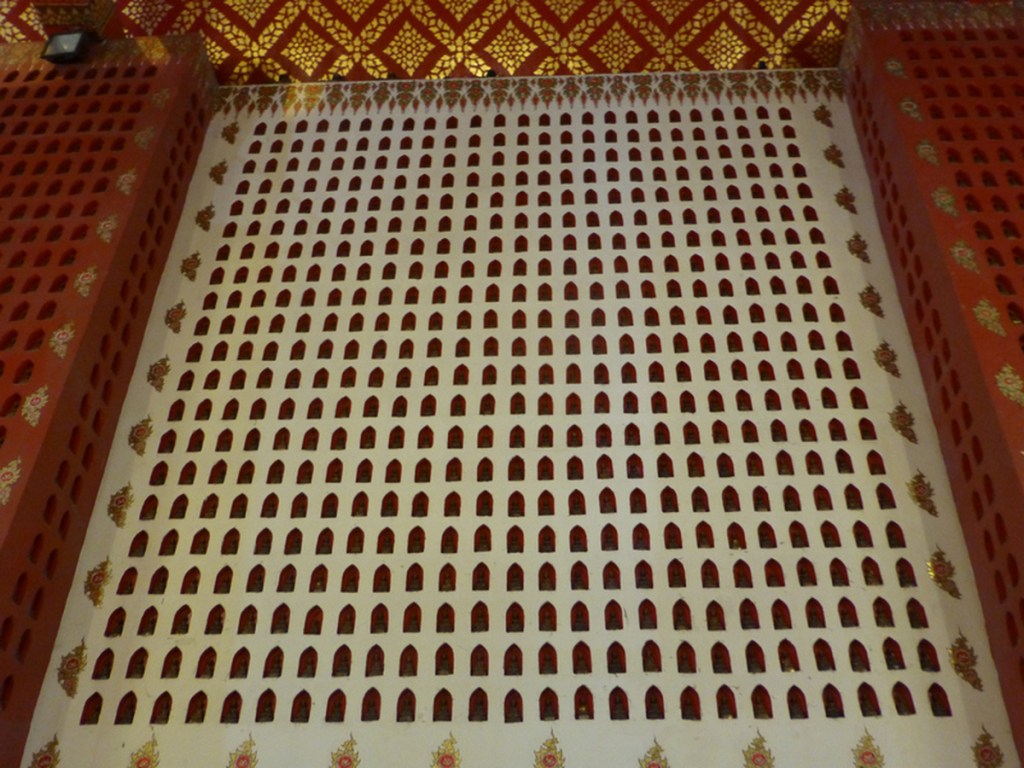
I was particularly impressed by a wall in which hundreds of small statues of Buddha were arranged in separate compartments. The place was sacred, and after a short break, at 09:37 we headed to the also sacred old capital of Thailand – Ayutthaya.
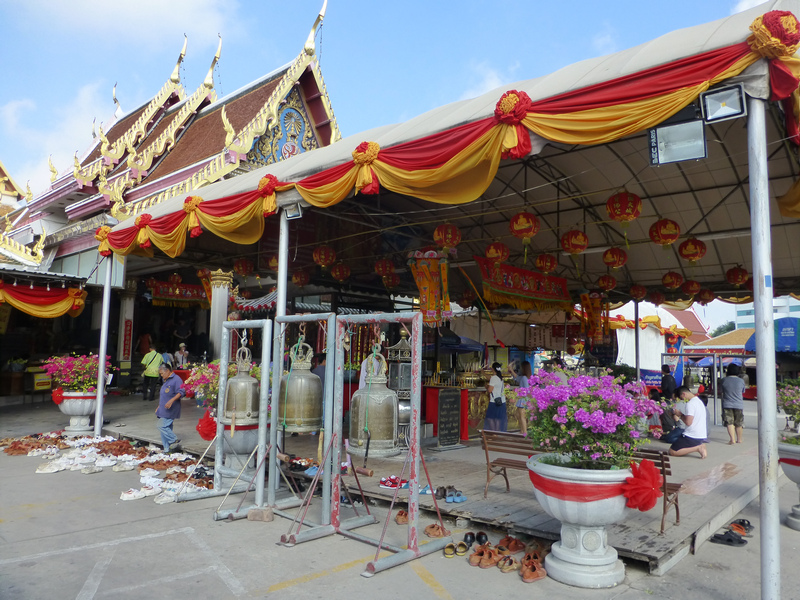
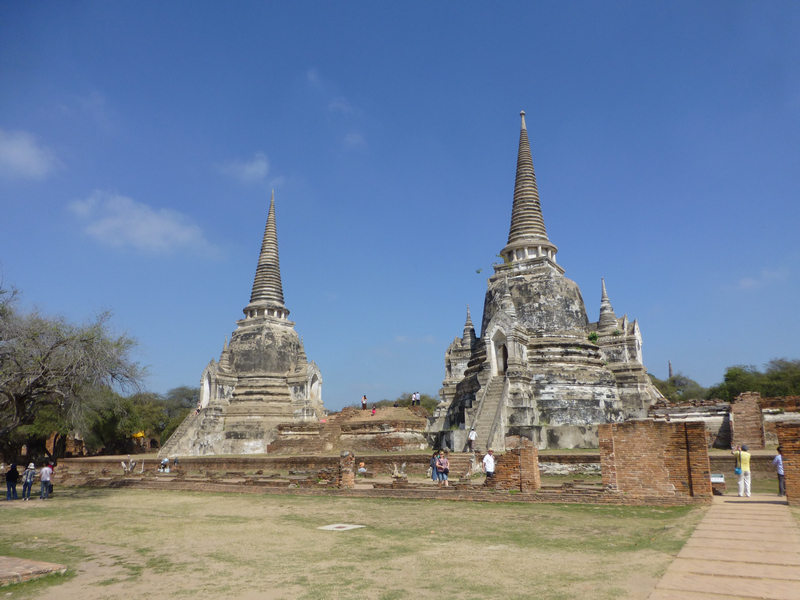
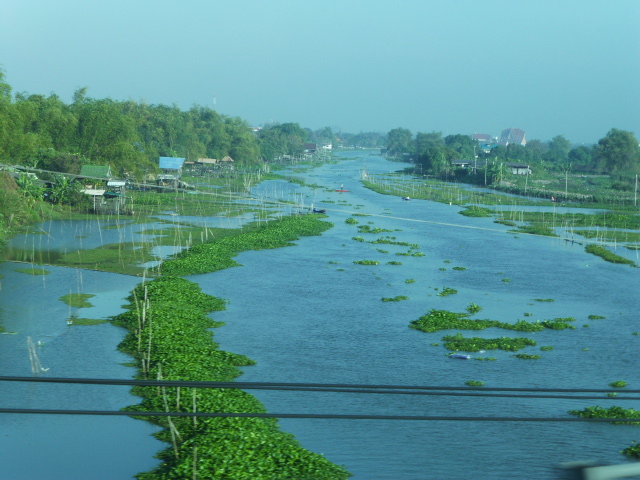
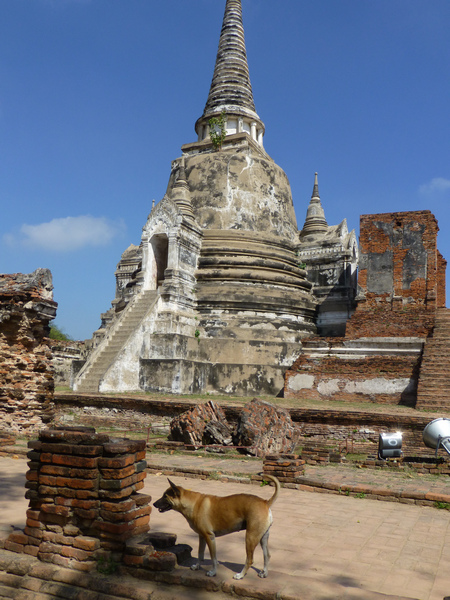
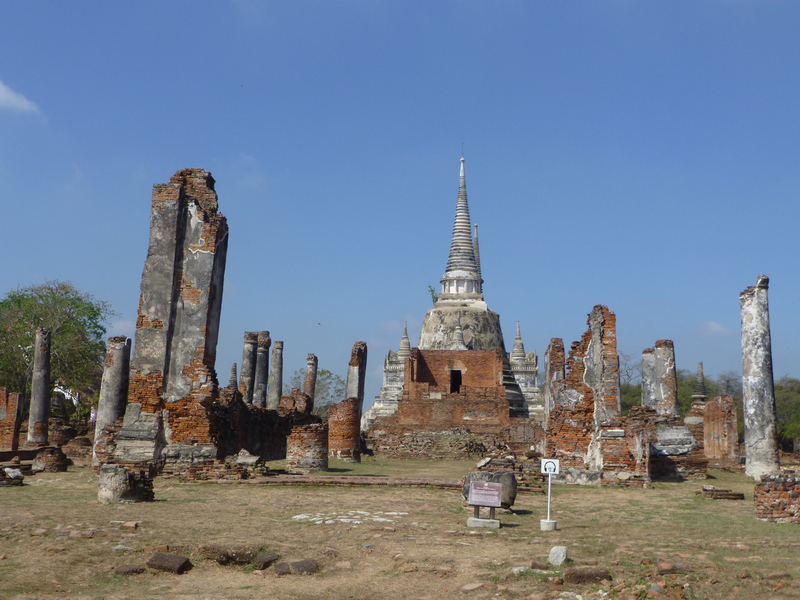
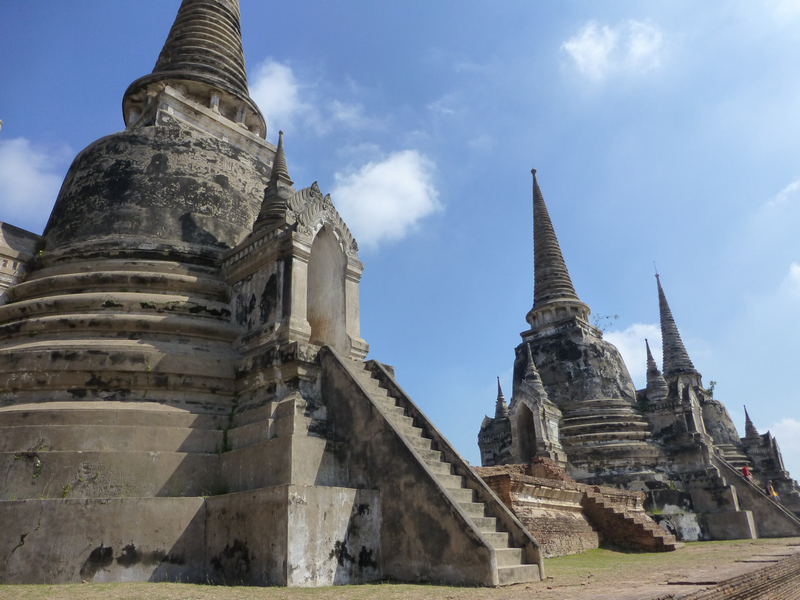
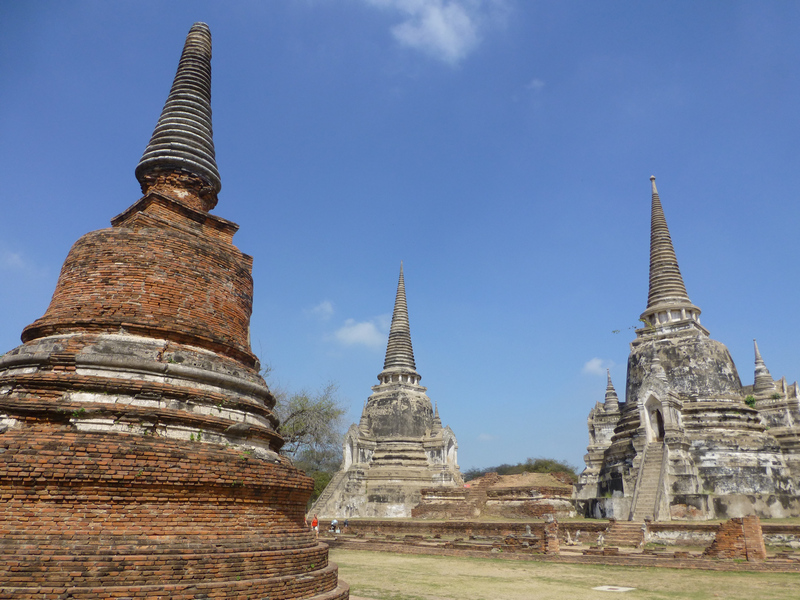
The once-glamorous capital was completely burned down by a violent Burmese invasion, with all its inhabitants killed or taken into slavery. The remaining desolate stone temples, however, had withstood the ruin of time and fascinated us. There was a large temple that was surrounded by bell-shaped chedas (the same were very popular in Sri Lanka). We could climb their steps and take wonderful photos. While photographing, we missed part of our guide’s talk and later we learned how important and unique was the architecture in Ayutthaya. The main place in the Hindu belief is Mount Nehru, the home of the gods, something like the Greek Olympus. For this reason, the temple in Ayutthaya rises high, surrounded by canals and moats, symbolizing the great seas, and the royal palace is located in the divine center. Ayutthaya is indeed surrounded on all sides by rivers, some of which were diverted specifically for the purpose, with the water serving as a barrier and reinforcing the almost impregnable fortress. Ayutthaya became the capital of Thailand in 1350 and enjoyed glamour and grandeur for 400 years. Far from here at the same time, my home country, Bulgaria was conquered and blackened by the coming five centuries-old Ottoman yoke. Here, however, everything shone as like strong sun, and we enjoyed our walk through Ayutthaya, whose name was given by an Indian city of the same name, which was believed to be the birthplace of Rama. A dog was walking around the temples as if he were their faithful guardian.
On the way out of the architectural complex we were greeted by souvenir merchants and although they did not have any souvenir magnets, they offered us some porcelain plates with an image of Ayutthaya and our own photo taken on entry. This souvenir cost 200 bahts (about 10 leva), but it was a wonderful memory of a wonderful place.



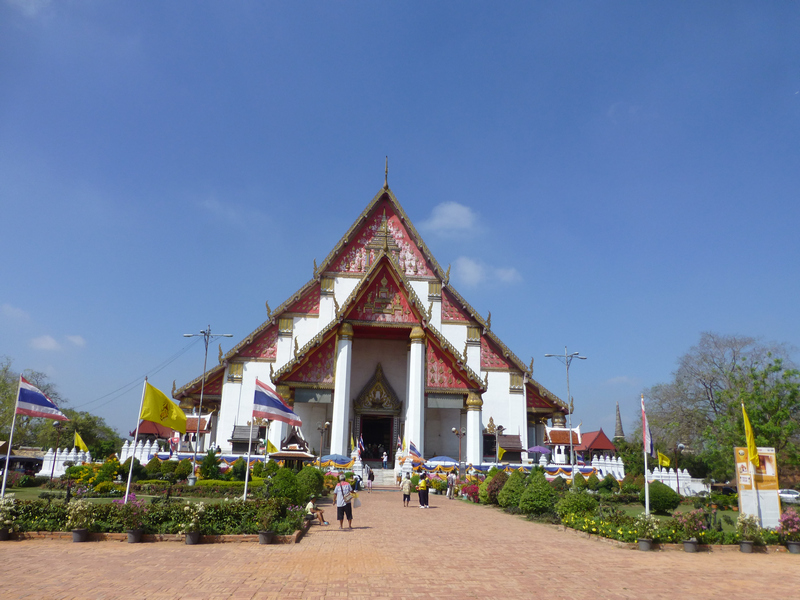
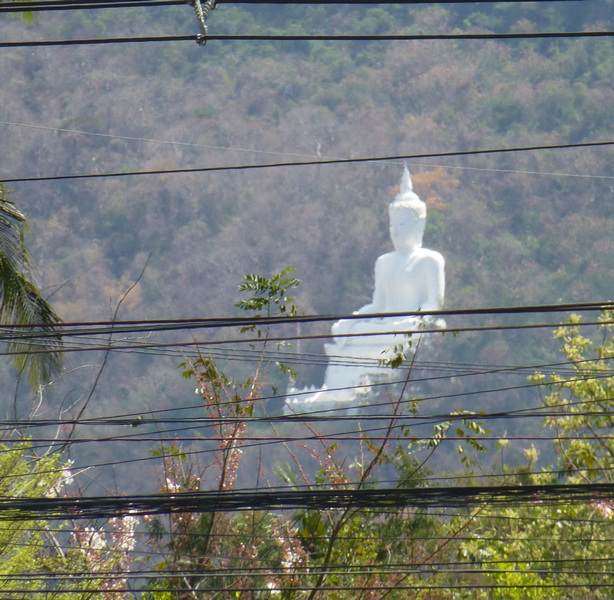
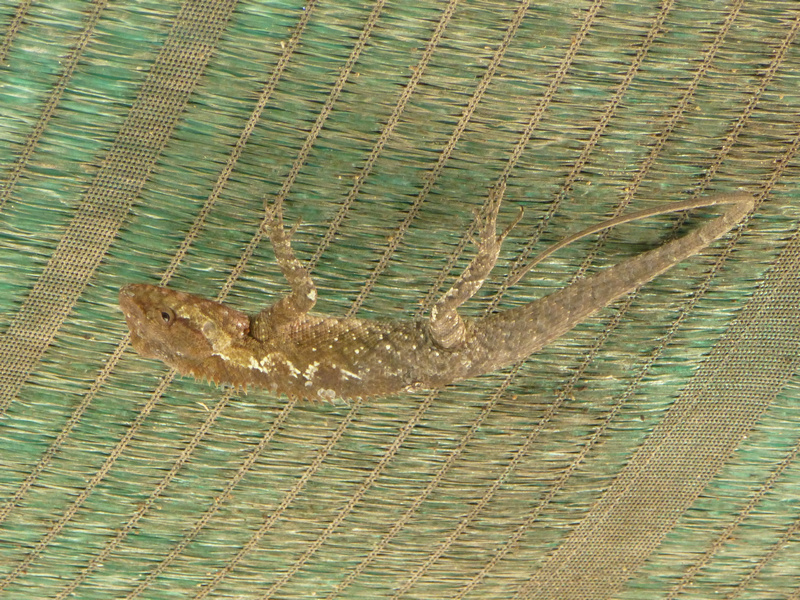



The bus took us to a picturesque restaurant with affordable prices, where we tried the slightly spicy noodle soup and a dish with tricolor rice. At 1:31 p.m., while waiting for the whole group to finish lunch and continue our bus journey, the guide showed us a huge white Buddha statue erected on the opposite mountain, which was reached by 2,000 steps. However, we took more photos of a brown lizard/iguana, which walked along the ceiling of the shed, where we were waiting.
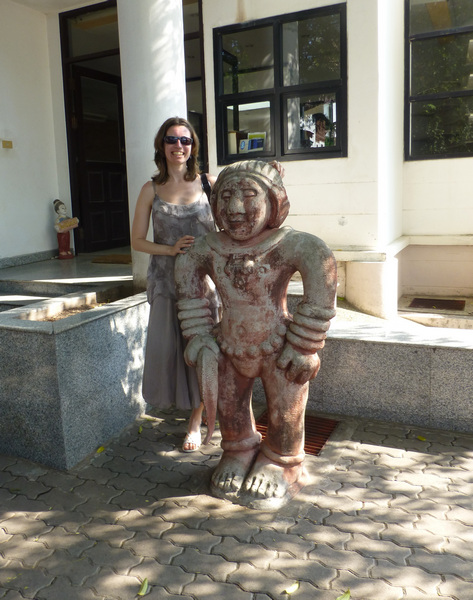
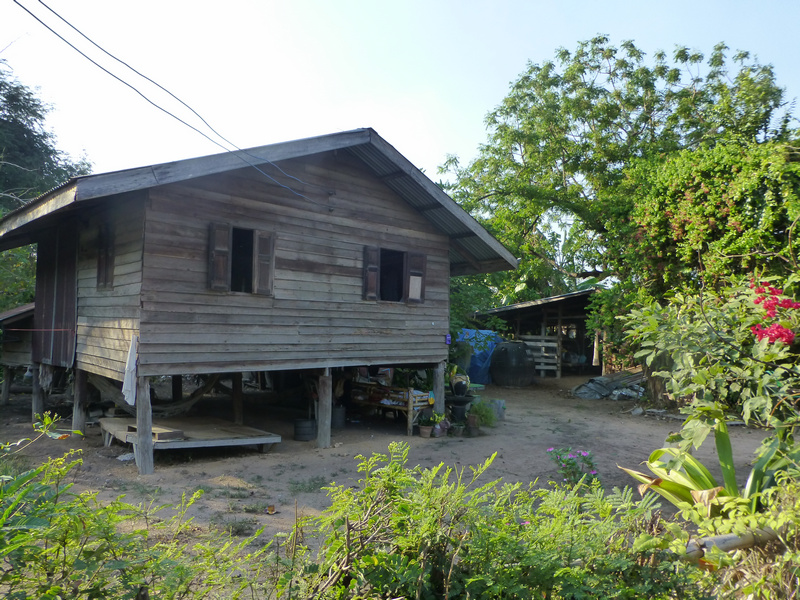
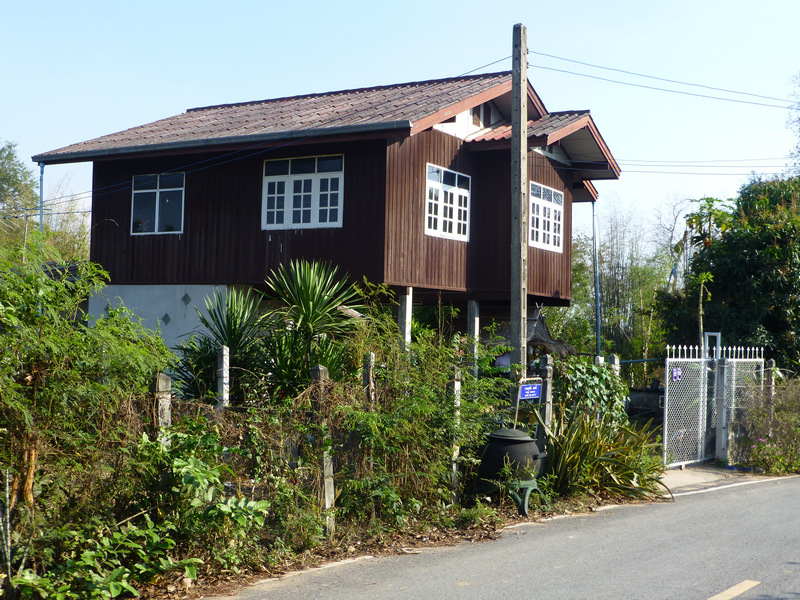
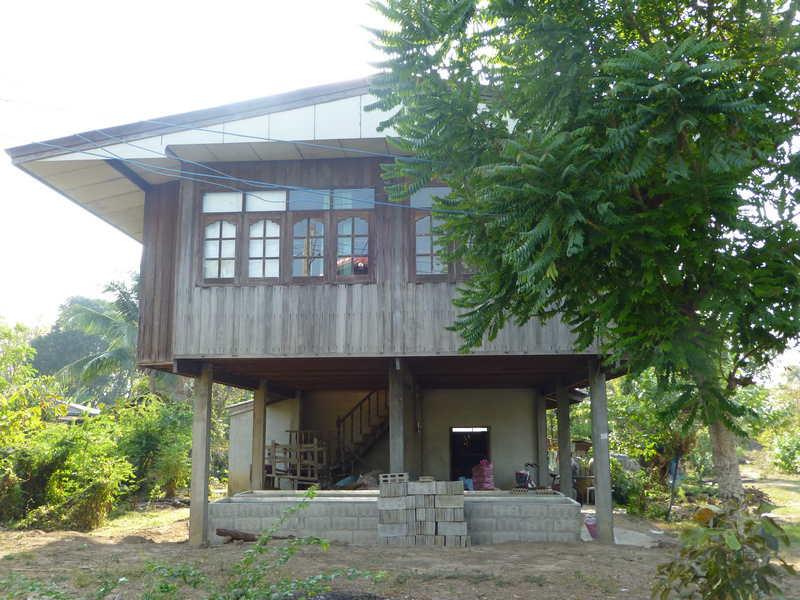
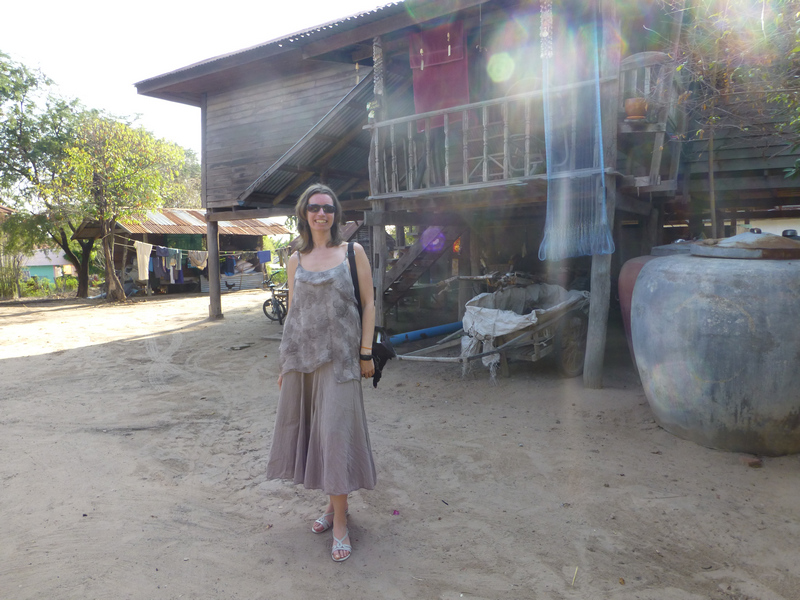
Along the way, we passed many beautiful temples until we reached a village where the guide showed us how the local people live. Our walk started from a small museum where the funeral customs of the locals over the years were shown. The excavations at Ban Prasat had revealed graves of men, women and children since the Bronze Age, all of which were laid with their heads pointed southeast, their legs and arms were folded to the body, and pottery was laid as gifts. At later funerals, the head was already facing directly to the east.
Some of the houses in the village were well renovated and maintained, but there were also quite neglected ones. While we were looking around the yards, the local people were looking at us. Some of them were lying on the hammocks in the shade and did not mind when we entered their yard and took pictures. There were many bushes and even the fences were hedgerows. The warm climate favored the development of many snakes in the area, which the local people drove away by planting lemon plantations. It turned out that snakes don’t like lemon scent as they have a very strong sense of smell, the citrus fruits repelled them.
Along the way, we learned more about snakes, as well as the fact that many people in Thailand died from snakebites. To deal with this problem, the country produced a lot of serum, which was extracted from poisonous snakes and in every clinic an antidote was kept. The tour guide compared that while in Germany there were only 3 species of snakes, in Thailand, there are over 70 species, more than 40 of them are poisonous. The reassuring thing was that the most venomous snake in the world “taipan” is not found here, it lives only in Australia, and the poison in one bite of it was enough to kill 100 people. The largest snake in the world is the anaconda, which is also not found here, but is as far away as the Amazon. The largest snake in Asia is the python, which is not even poisoned with its 5-meter length and 50 kg was quite dangerous for humans and animals. One of the most venomous snakes in Thailand is the Royal Cobra, which can also reach 5 meters in length and lives in the bamboo forests. A person had only 20 minutes after its bite to receive an antidote, otherwise he died, if it was a normal cobra this time increased to one hour. In Thai schools, children learn to recognize venomous snakes from non-venomous snakes – by the color, abdomen and that poisonous snakes had 2 teeth (bulges that were visible). Another interesting fact we learned about snakes is that 70% of them lay eggs, but there are 30% that are born straight snakes. Typically, snakes that live in warm climate lay eggs, as the warmth helps eggs to develop, while snakes in colder climate give birth to straight snakes.
Then the tour guide told us more about the Thai economy. Thailand exported lots of electrical appliances, on second place it exports rice, followed by refined gas, fourth sugar cane and fifth – Thai pineapples that are the most delicious in the world.
Thailand also exported many flowers, including the sacred lotus flower. Since the lotus was born in murky waters, and flourished white and pure, it symbolizes spirituality. One of the Buddha’s texts says that “the spirit of men is as invisible as the new lotus in murky waters, and just as it blossomed pure, so the soul was pure.”
The tour guide told us that the most immigrants in Thailand are from Myanmar (almost 1 million people), then are the one from Cambodia. He also told us more about the people living in eastern Thailand, which used to be one of the poorest regions in the country, yet the people there were very proud because they believed they were the first and “cleanest” Thais. The village we saw a little while ago looked more like Cambodian, as most of the people there came from Cambodia. A long time ago, part of this region belonged to Cambodia. People here believed in Hinduism and the three main deities – Rama, Vishna and Shiva, so in front of all the temples stood three towers for each of the deities. As for the Thais, they believed in the Buddha, and in each home they set aside a special place/room for the Buddha where they prayed. To feel even more the Cambodian influence, the tour guide took us to the Thai Angor Wat, built at the same time as Cambodian. The name Angor Wat meant Temple of the Capital.
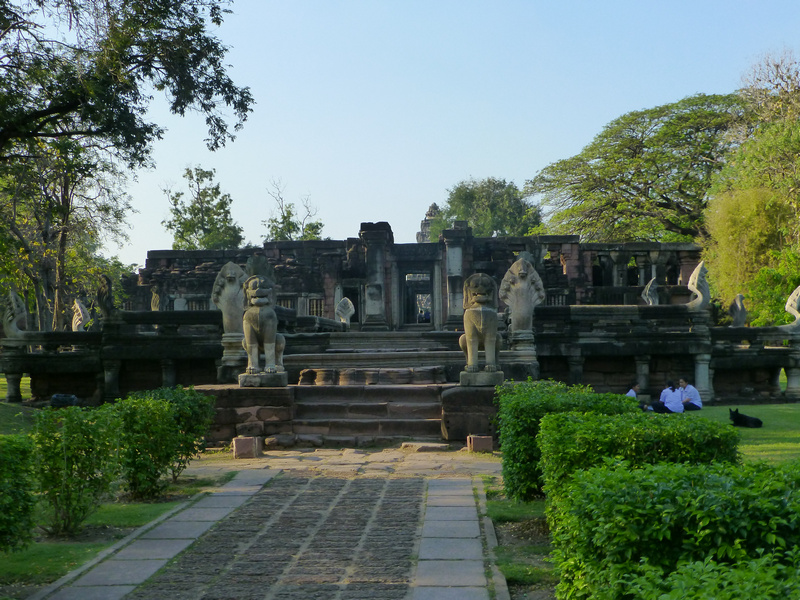
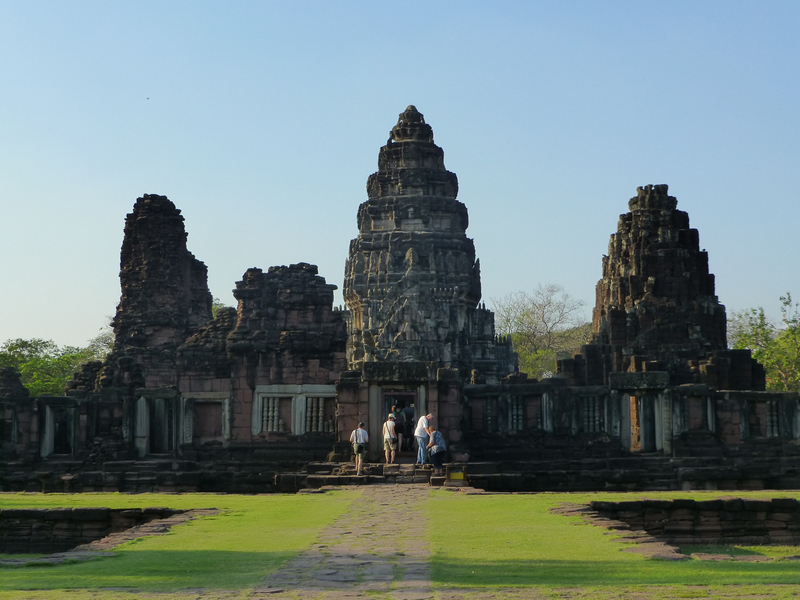
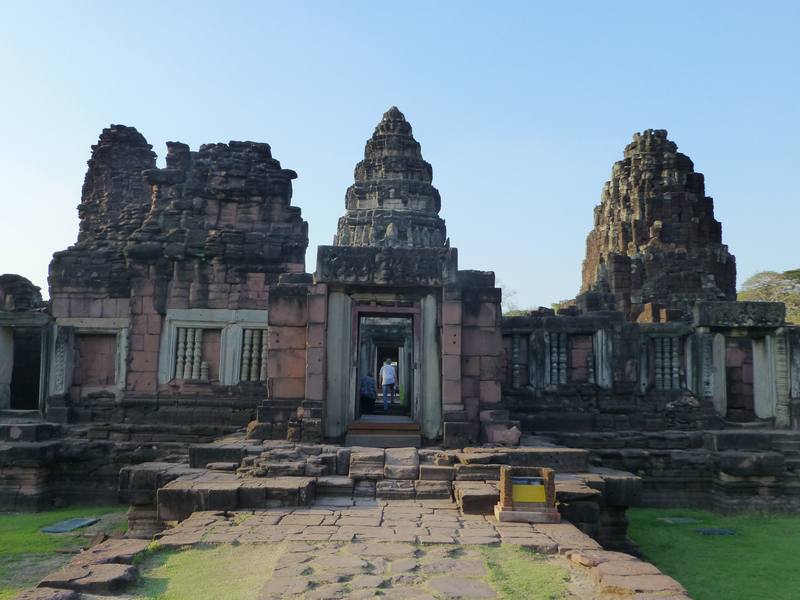
The Thai version Prasan hin phimai translates as Stone Town. On the plane from Hong Kong to Bangkok there was an interesting article in the magazine of Air Asia, which described all the temples erected as a sign of love, like the ever-famous Taj Mahal. The Prasat Hin Phi Mai temple was also part of them. Erected in the 11th century, its construction is shrouded in a romantic legend: “The young prince Padjitt traveled the world in search of a wife and met a pregnant widow with whom he fell in love, but had no right to marry her. So he made a promise to marry her unborn daughter. The widow gave birth to a beautiful baby girl named Orapina, who in turn also fell in love with the prince. However, she was very beautiful and another prince kidnapped her. Padjitt managed to save her, but was killed by another man who was also in love with Orapina. Heartbroken, Orapina erected a chapel that painted scenes dedicated to her love for Padjitt. One day, a stranger began to cry when he saw these paintings, and Orapina recognized the spirit of Padjitt, who had inhabited this man. The two lived happily ever after and the place where they lived received the name Pee Mah, which means “you are back”.
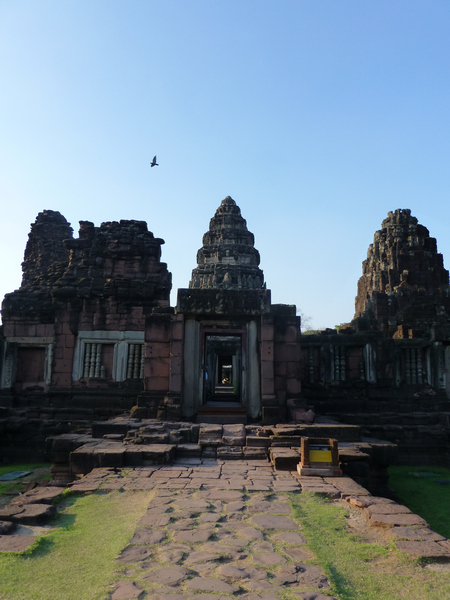
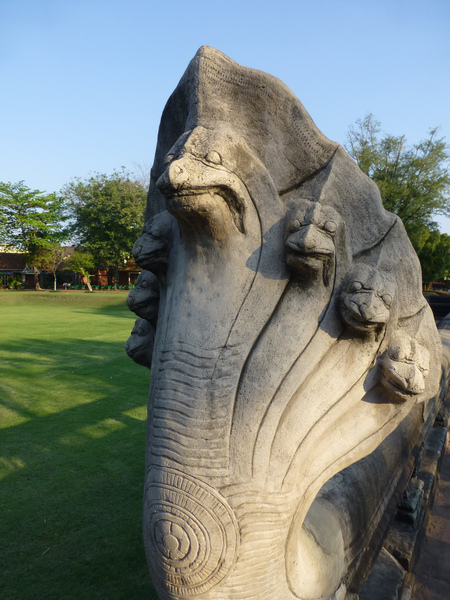
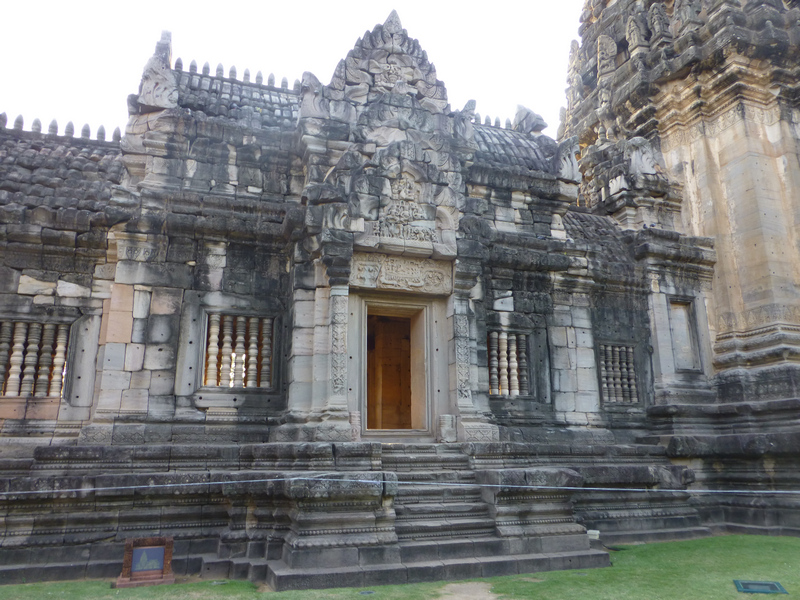
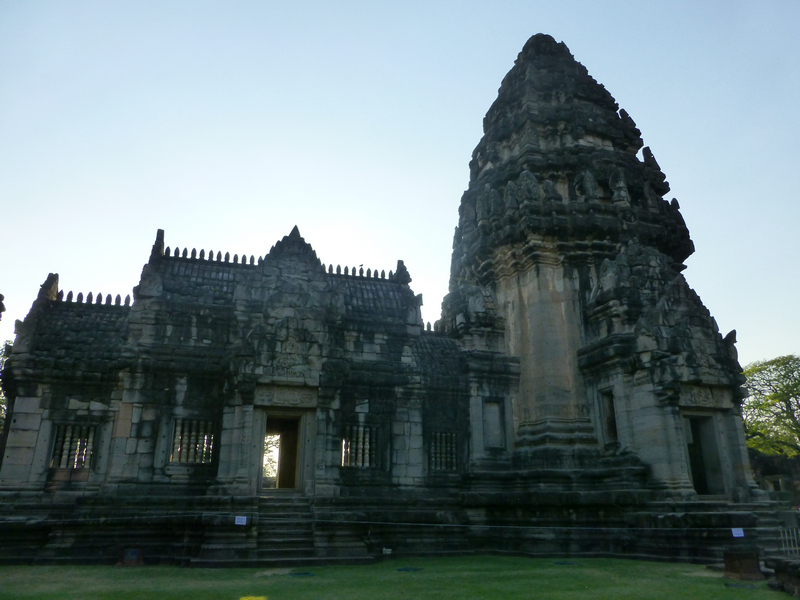
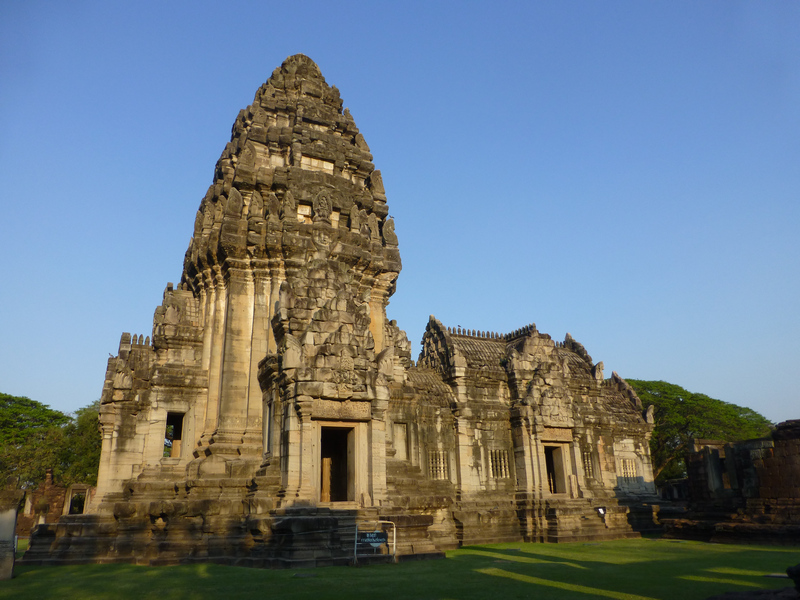
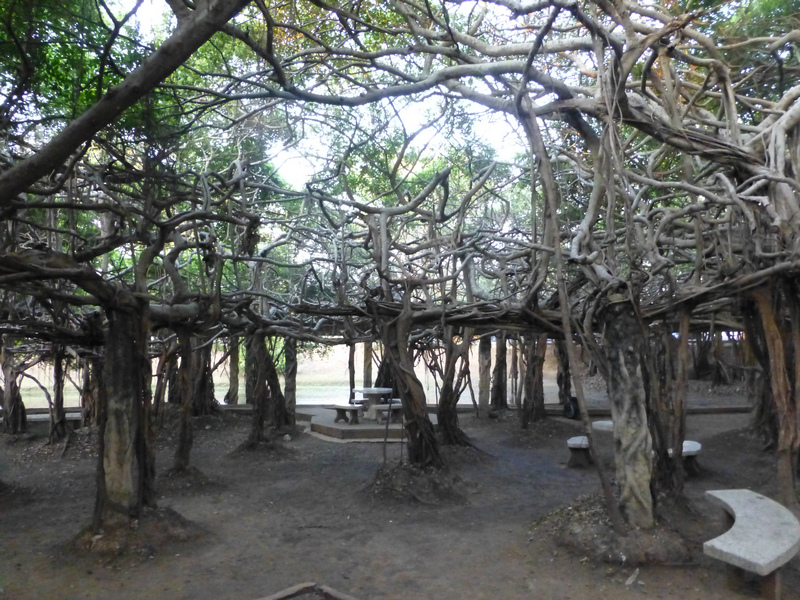
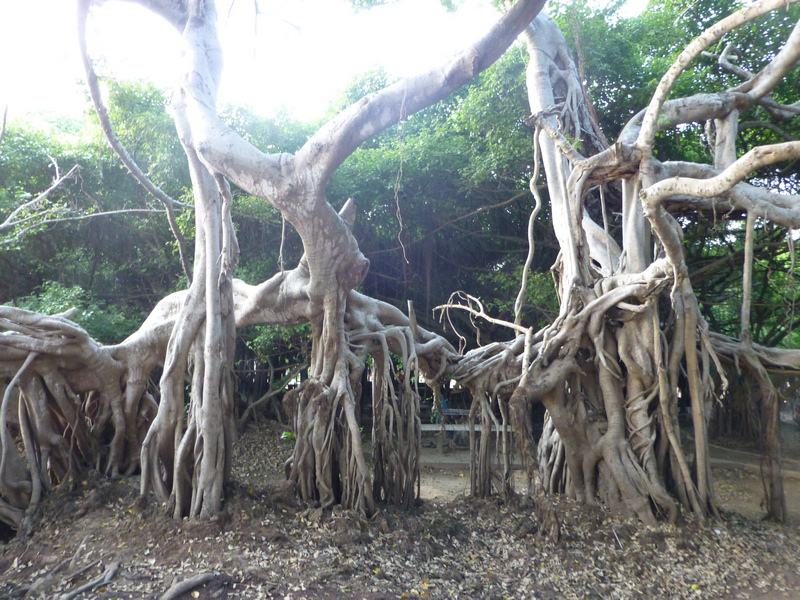
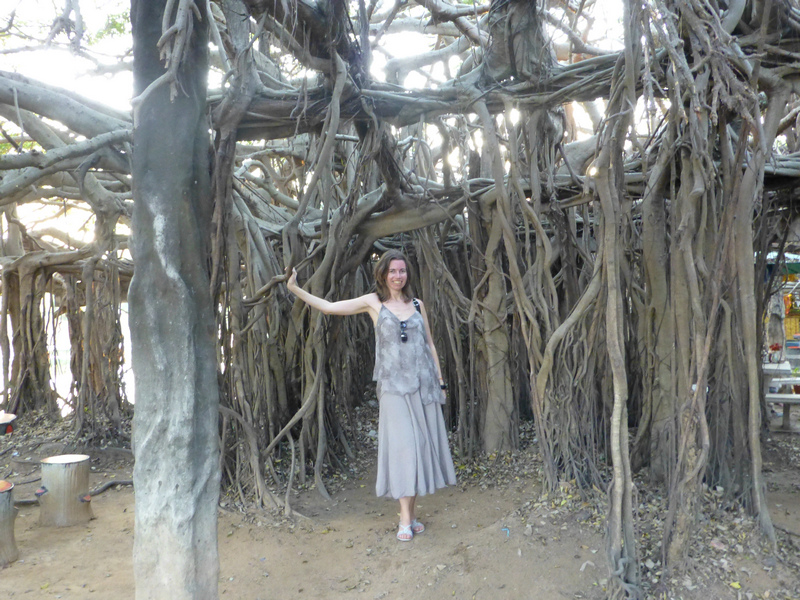
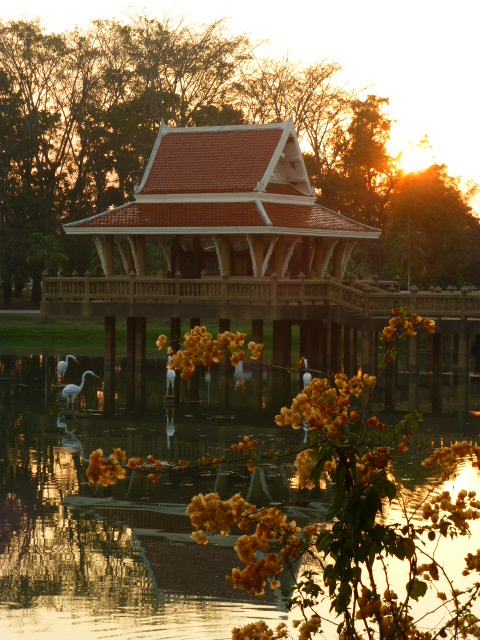
The temple was magnificent and very beautiful. However, the sun was rapidly descending to the ground and we hurried back on the bus and headed to the last landmark of the day – the longest tree in Thailand, whose branch network stretched for nearly 6 km. At first it seemed to me as lots of trees braided their branches into each other, but it turned out to be a long-stretching banyan tree. It was as if we were in an enchanted forest, and I expected any of the branches to start moving. But gradually the atmosphere became calmer, among the roots there was a separate temple with statues, on the other side there were many tables and chairs all taking advantage of the long shadow. The tree was impressive, almost as much as the sun that descended over a nearby river.
The sunset was amazing and we succeed to make wonderful photos. The day was full of impressions and photographs, and my eyes began to close. However, arriving in the town of Nakhon Ratchasima, where our hotel Korat Dusit Princess Korat was located, I quickly woke up to the crowded and varied buffet tables. Just opposite the hotel was a separate street market, which we also decided to visit, and we even made a temporary (drawn) tattoo, which we enjoyed afterwards throughout our stay in Thailand.


GENERAL INFORMATION ABOUT AYUTTHAYA:
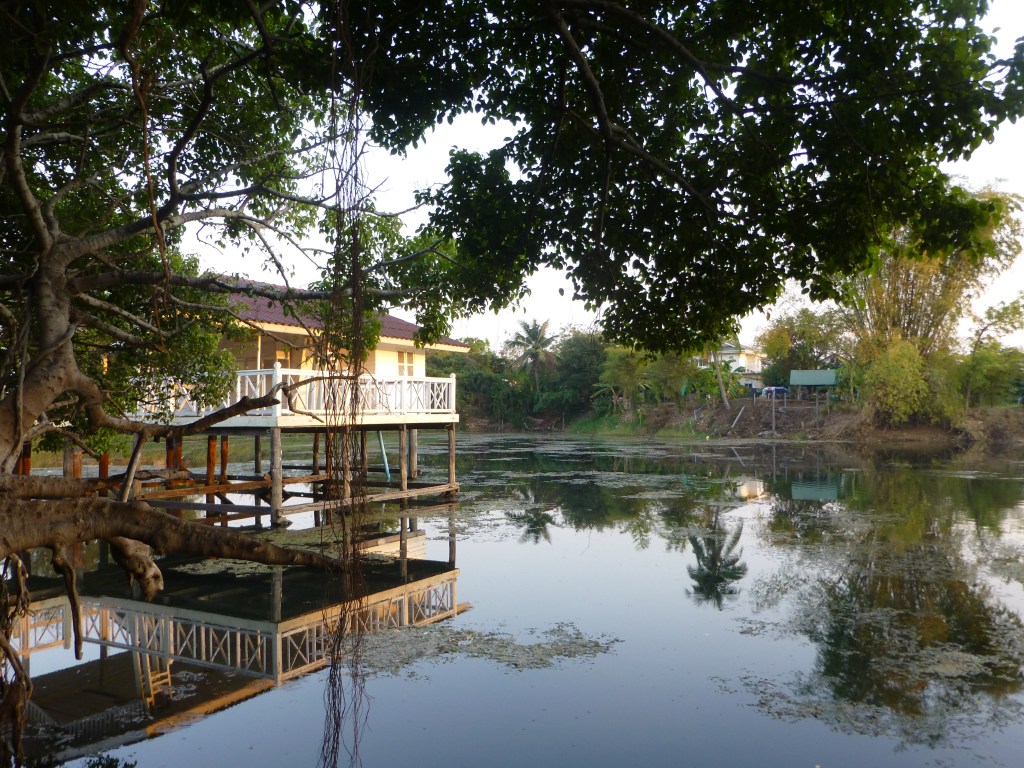
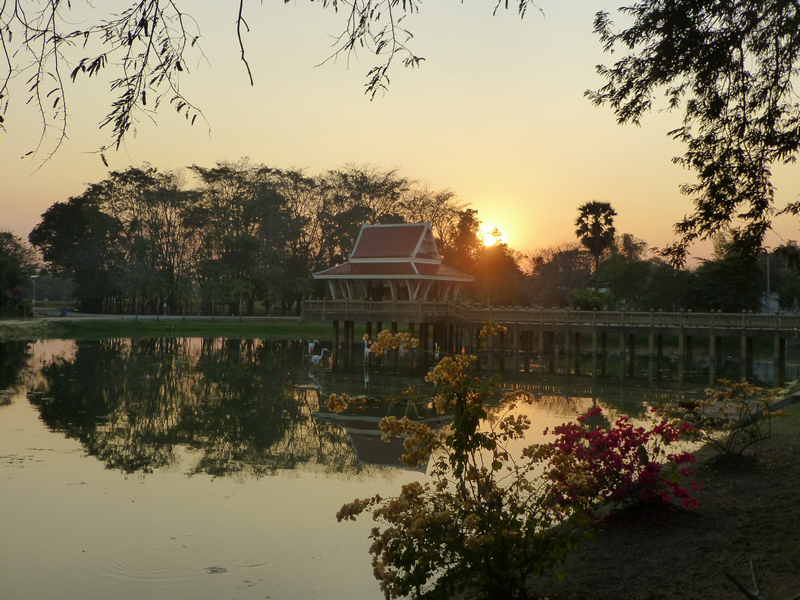
Location: The full name of the city of Ayutthaya is Phra Nakhon Si Ayutthaya (Majestic capital Ayutthaya, named in honor of the Indian city of the same name, which is considered the birthplace of Rama). It is located 80 km north of Bangkok in the valley of the Chao Phraya River. In fact, the city resembles an island surrounded by three rivers – the Chao Phraya, the Lopburi River and the Pa Sak River.
Area: 14.84 sq.km
Population: 54,888 people
Official language: Thai
Altitude: 7 m
Climate: subequatorial
Time zone: UTC+7
Currency: Thaibaht (THB)
Additional information: http://www.tourismthailand.org/About-Thailand/Destination/Ayutthaya
TRIP TIPS ABOUT AYUTTHAYA:
Best time to visit: all year round
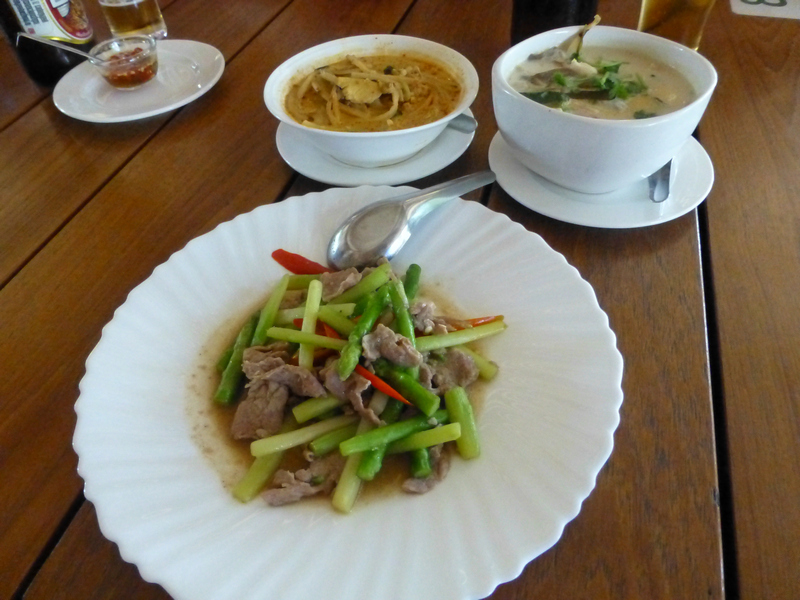
Typical food and drinks: Thai food is famous all over the world, as the most delicious is of course “at home”. While in Ayutthaya try tricolor rice and spicy noodle soup, and why not spicy meat with vegetables.
Places to visit: In Ayutthaya there are wonderful rhyuns revealing the grandeur of the former ancient capital, which is believed to have been the most prosperous city in the 17th century not only in Southeast Asia, but throughout the world. Besides the ruins in the historical park, which are part of the UNESCO World Heritage Site, take a look at the many temples, among which the largest is Wat Phra Si Sanphet. Other major temples nearby are Wat Phra Mahathat, Wat Thammikarat and Wat Ratchaburana. The Phet fortification shows the rugged defensive structure of the 15th century, which was originally made of wood and then of brick. Some of the walls are preserved and reveal wonderful views of the river.
 TripTips