PITSANULOK
THAI LAND ROUNDTRIP – PART 3
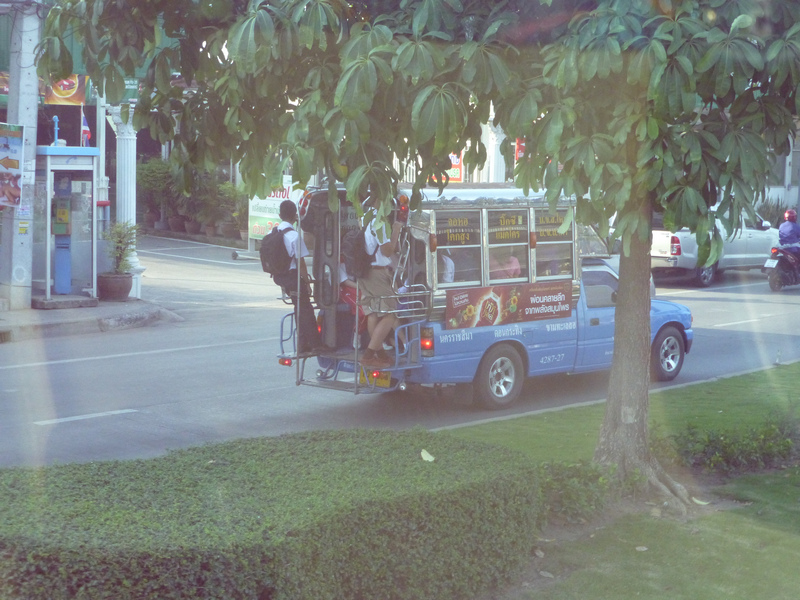
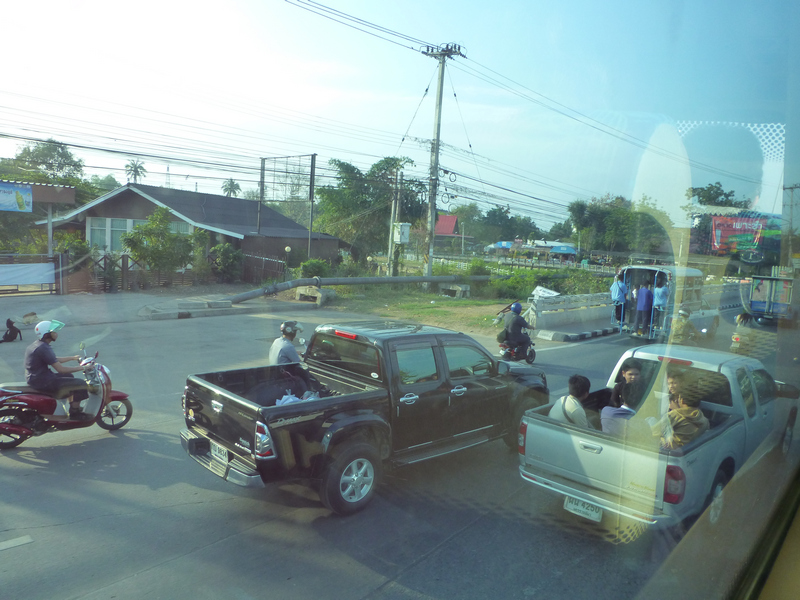
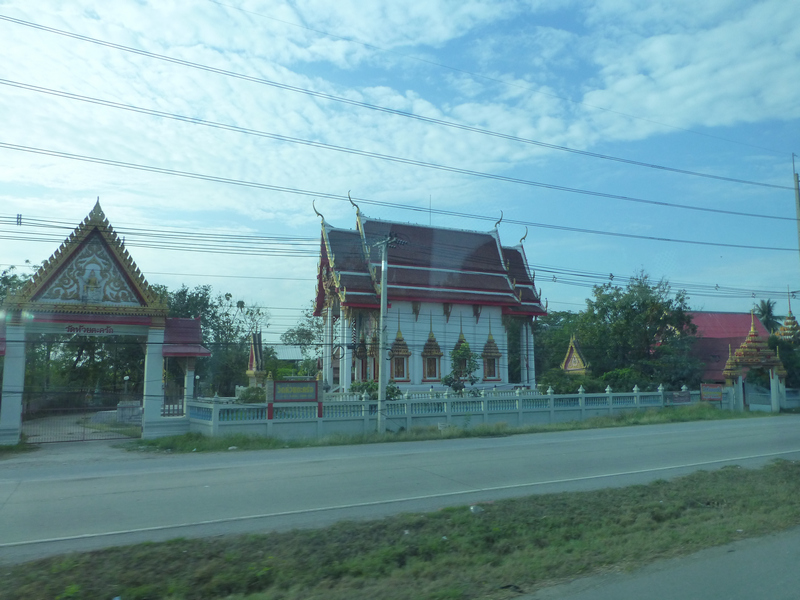
Located in northern Thailand, Pitsanulok is considered one of the oldest cities in the country. King Naresuyan, who liberated the country from growing Burmese domination was born here. The glorious past of the city along with its strategic location (on the border between central and northern Thailand) attracts thousands of people, including us. We left early in the morning from the town of Ratchasima. We traveled west, with the sun’s rays piercing curiously through the bus window, and our eyes were looking out and eagerly devouring the beautiful landscapes. In the urban part we were impressed by the small public buses, which were so crowded with people that some of them traveled outside the compartment, holding on tightly.
While traveling, the tour guide told us about the social life in Thailand, skillfully mixing the general data with his personal history, grabbing the interest of the whole group. Previously, Thai families used to have many children, but now they have no more than 2 children because of the expensive lifestyle. It was interesting that the names of the children were most often not chosen by the parents, but from the monks, showing respect for temples and religion. This is what happened to our guide when he was born his parents sought advice from Buddhist monks, who told them to come in 3 months. He grew up for three months without a name. After three months, his mother and father took him to the monastery and asked the monks to give him a name. They looked at the child, made calculations based on the lunar calendar, which day was born (Tuesday), which month (December), what year (1952), and suggested three names that would bring good luck to the child. His parents chose one of them and the guide believes, I would also confirm that he is lucky and has a wonderful charisim.
Usually, babies are breastfed here until the 3rd month, after which formula is given. Since there is no milk in Thailand, imported milk powder from Switzerland, a Nestle product, is most often used. Subsequently, children here eat a lot of fruits that are saturated with vitamins. Bananas grow everywhere, with Thai bananas being small in size but overflowing with vitamins.The Thais also eat a lot of rice, and on the way the tour guide showed us several rice plantations. Annually Thailand produces 2 020 000 tons of rice, much of which is exported. White rice, however, which we consumed yesterday is called royal rice and is much more expensive. Poorer people consume the so-called glued rice. The best rice comes from Eastern Thailand and is named Yasmin-rice. The second quality rice is aromatic rice. Along the rice in Thailand people breed many snakes, which they export to China. There, people drank snake blood, which strengthened the immune system. Even in Bangkok there were restaurants where alcoholic drinks with snake blood were offered. After them, they usually have a headache, but not from the blood, but from alcohol.
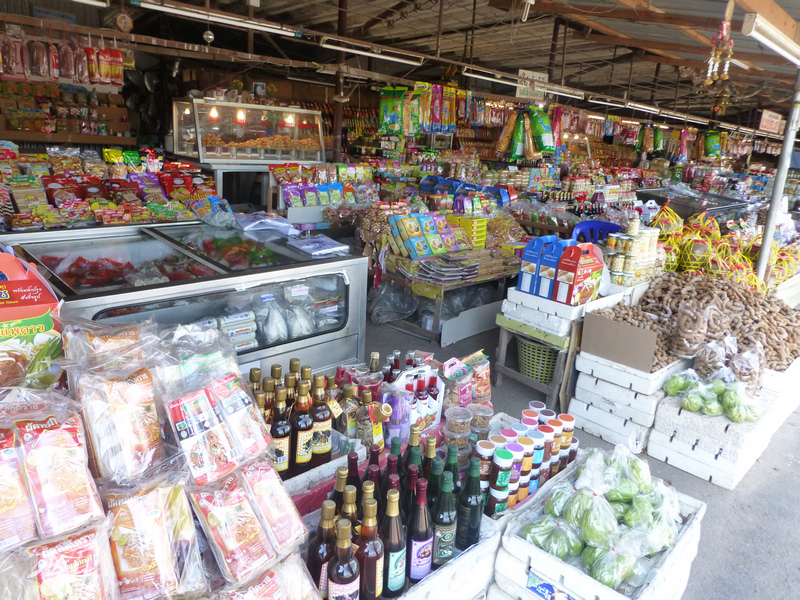
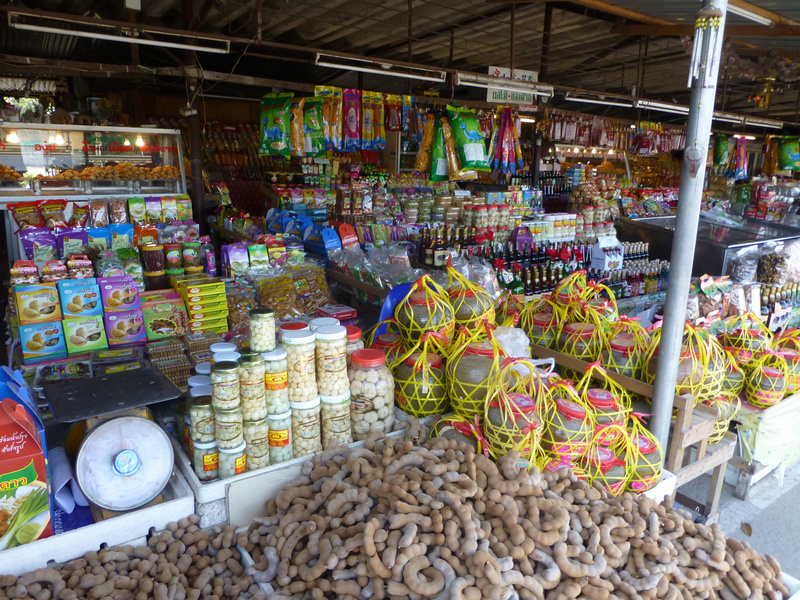
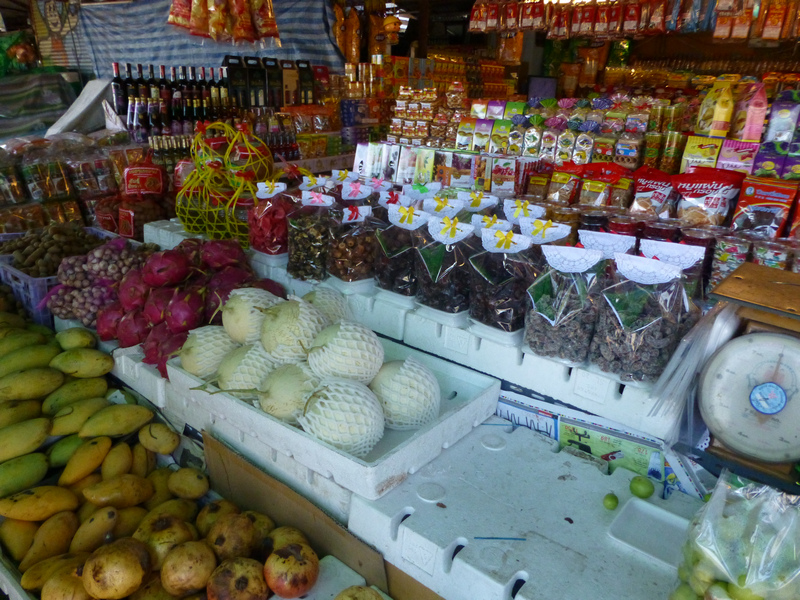
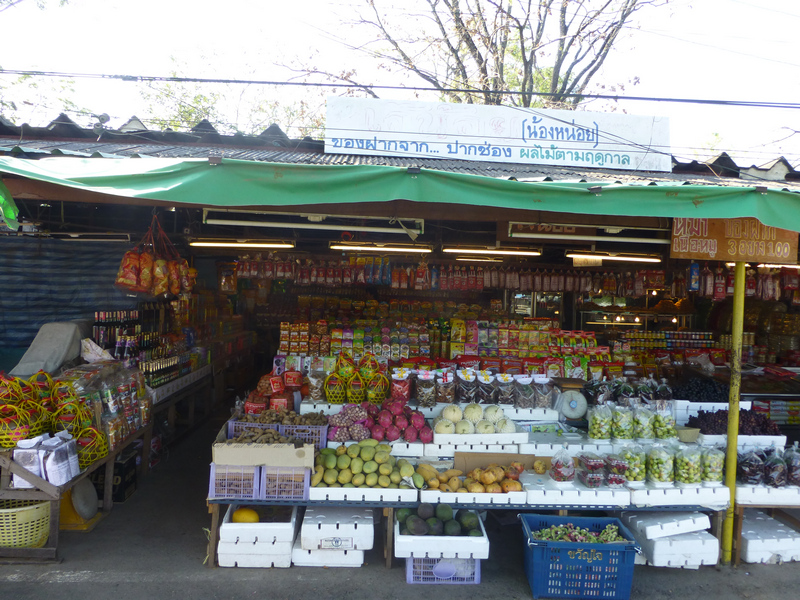
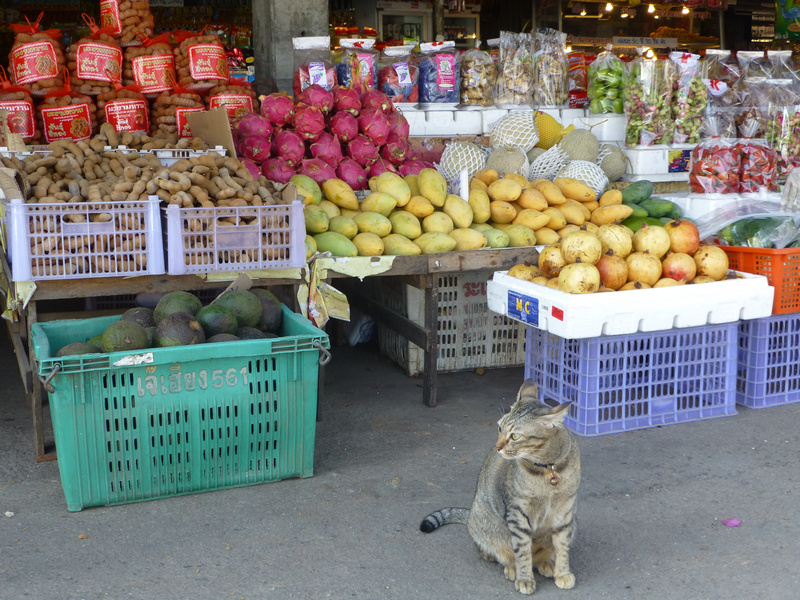
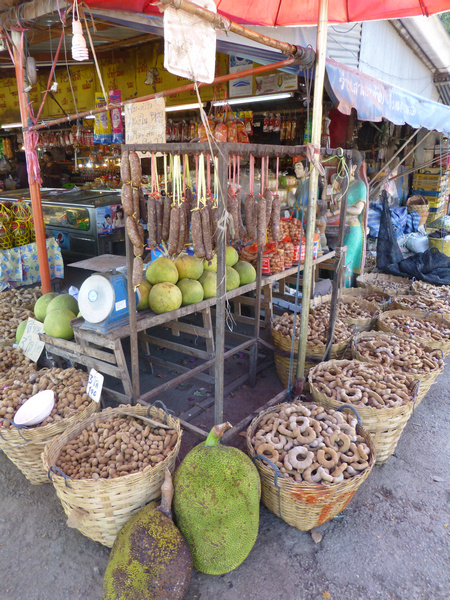
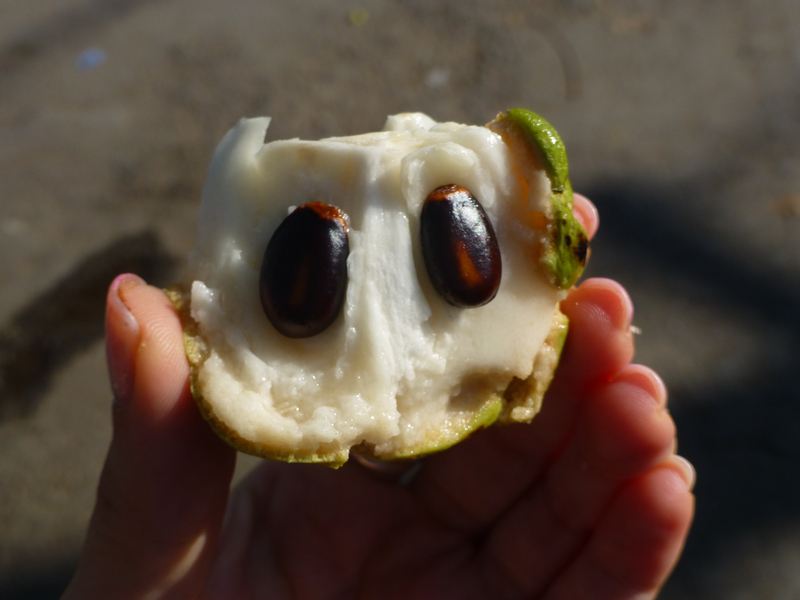
Another local delicacy is roasted rats, which we saw selling along the way. Our first stop, however, was at 08:40 at a roadside market where the guide showed us exotic fruits, some of which I had never seen before. In just a few weeks, the fruits would become even more diverse, as the Thai summer began at the end of March and then many more fruits grew, such as mangoose fruits and lychees. Our guide bought some of the exotic fruits and invited us to try them. A very sweet fruit was the so-called Cherimoya, which had a round or heart-shaped shape. The tree was 2-3 meters high, and its fruits are green. Once they are torn off, they are left for 2-3 days to stand and then peeled and consumed. This fruit is imported from Australia. Personally, I enjoyed it very much, with large black seeds inside, like those of watermelon and a white juicy interior. Its surface was rough, and the taste juicy and sweet.
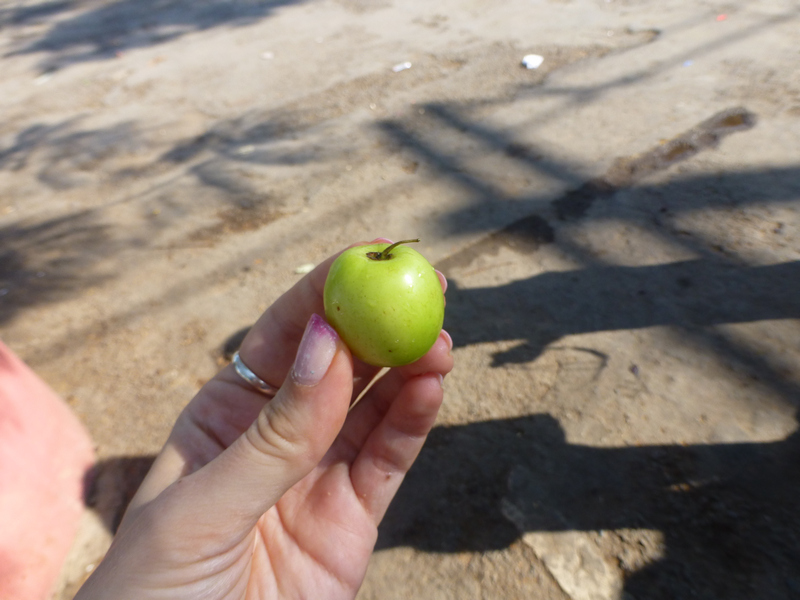
We also tried earth apples, which looked really like small apples and even wild plum, but their taste was completely different. In the middle they had big pits, like peaches. The tour guide explained to us how to recognize ripe mango from green one – if we put the fruit in a bowl of water – the green mango will float on top and the ripe and sweet mango will sink. However, the too mature mango was not so nice and the guide chose long time the best mango on the market, Then he bought a few fruits and showed us how to peel and cut, then gave us a treat. It was extremely sweet and delicious.
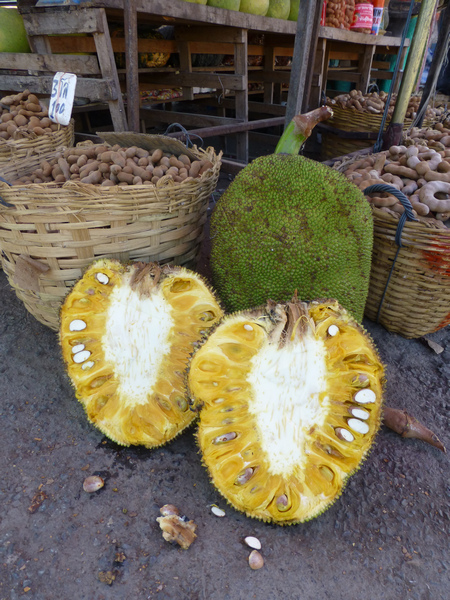
He also showed us Thai corn, which, in addition to yellow, could also be purple. He explained us how to recognize a good pomelo by color – it should not be very yellow, nor dark green, but somewhere in between, as Buddha said, the golden mean. The pineapple was known by being taken in the hand and tapped with the middle finger. When the sound is “thump-thump-thump” it meant that it was not juicy and sweet, but when the sound was “clank-clank-clank” it meant that it was nice and mature. Something similar to what we do with the watermelons in Bulgaria. On the market we tried temarinds, which looks like a peanut cocoon or roshko, inside there is a stone and as a taste it is not something special, soft and tasteless. The guide also showed us papayas, noodles, and rice wine, which was in thick bottles and had large bamboo straws with which the bottle was pierced and drunk from there. Finally, we photographed the fruit Greg Po or Jackfruit, which was a big mossy watermelon. Since the fruit on the market was not yet ripe, it could not be consumed raw – only cooked or grilled.
At 09:30 we continued our journey by bus, and on the left side the guide showed us a pig farm, praising the Thai pigs, which were quite large. From the conversation about the good roast we went on the topic of drinks, and the guide praised us several Thai beers, which were even exported to Japan. Wine here was drunk less because it was drunk slowly, and Asians loved to drink everything in shots. For this reason, whiskey was very valuable here and even said that it was drunk more than in Europe. The good whiskey differs by the label color. The most expensive whiskey was the one with a blue label, then a gold label, a green label, a black label, and finally a red label.
We must be careful with alcohol, as according to our guide the alcohol was made from the blood of 5 animals, and although it was not true, his words convinced us otherwise. When a person starts drinking, parrot blood enters his blood first and the person easily chats and becomes like a parrot. The next stage becomes like a monkey – people who do not drink stay quietly in one place, but when they start drinking, they begin to wander and gesture a lot. The third blood is snake’s one, because after drinking alcohol people can not move in a straight line and always stagger to the sides and move zigzag like a snake. The fourth blood that had to be very careful with was the tiger’s one. Often, drunken people fight more and become aggressive. And the last blood is pork’s one, because drunken people, when they go to bed, begin to snore loudly as if a squealing pig.
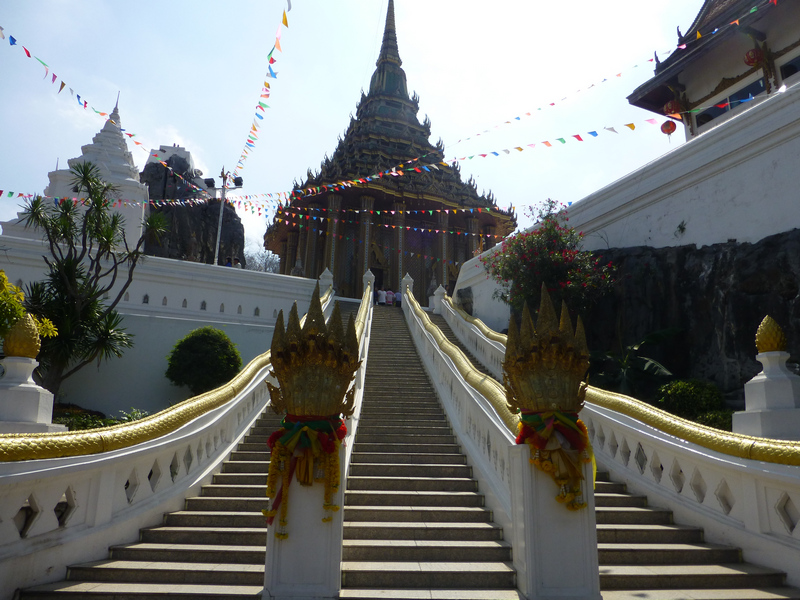
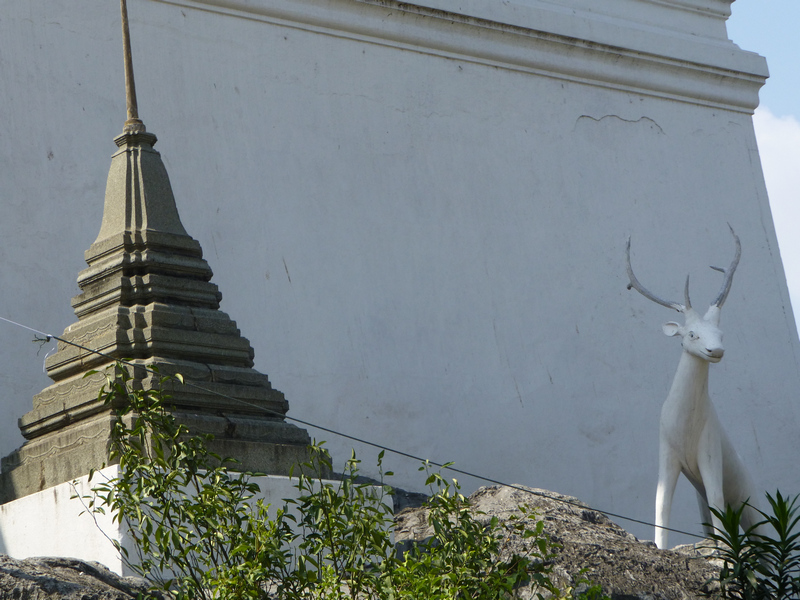
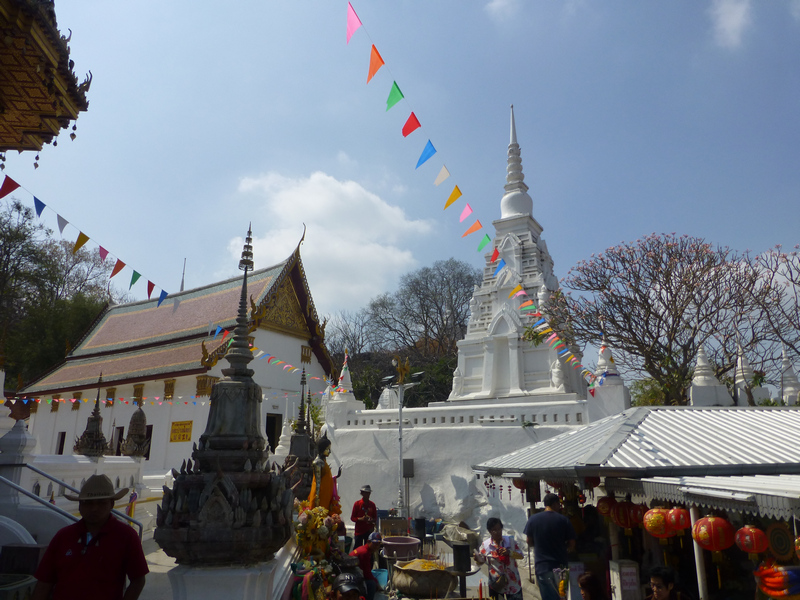
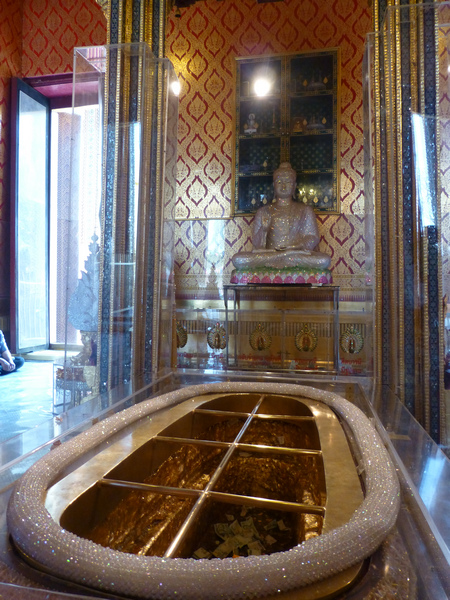
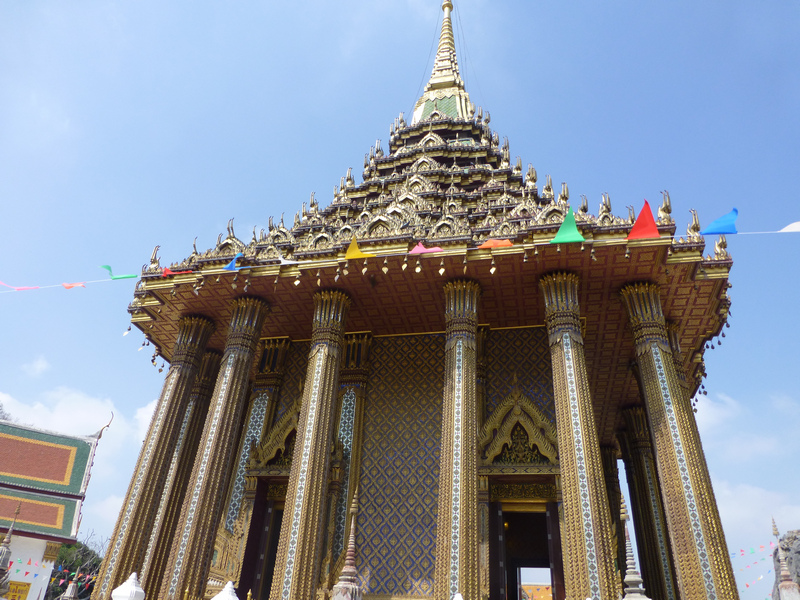
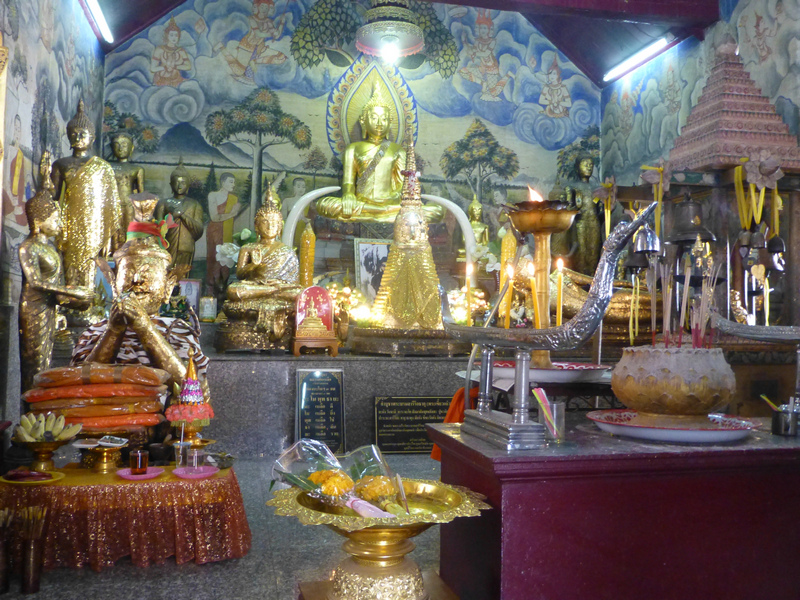
Imperceptibly in funny stories our one-hour journey passed and we reached the stone city of Saraburi where the famous Wat Phra Putabat Temple – the temple with the footprint of the Buddha was located. According to legend, a wounded hunter was wandering through the woods when a white deer guided him here. As soon as he cleaned his scars and wounds with the water trapped in the huge footprint, they disappeared in an instant and he was completely healed. In honor of this wonderful discovery, King Song Tam erected the temple complex sometime between 1620-1628. Today it continues to be one of the holiest places in the country. The 1.5-meter footprint can be reached by many steps guarded by mystical snakes. Pilgrims drop coins in the footprint to improve their karma.
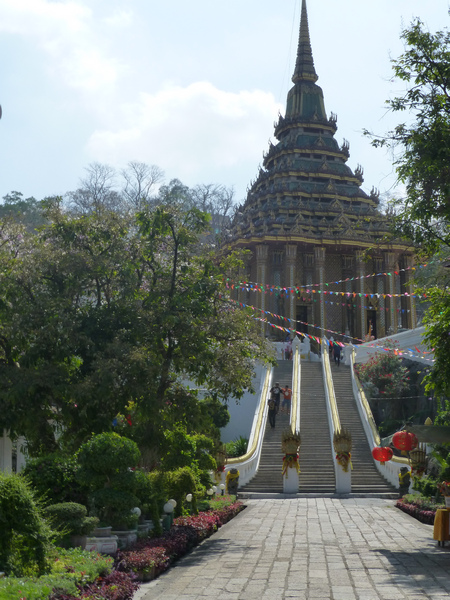

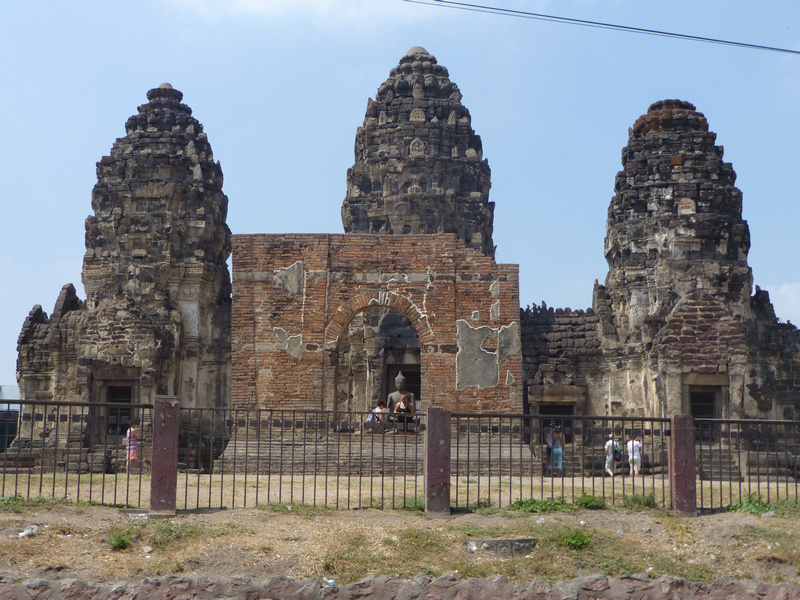
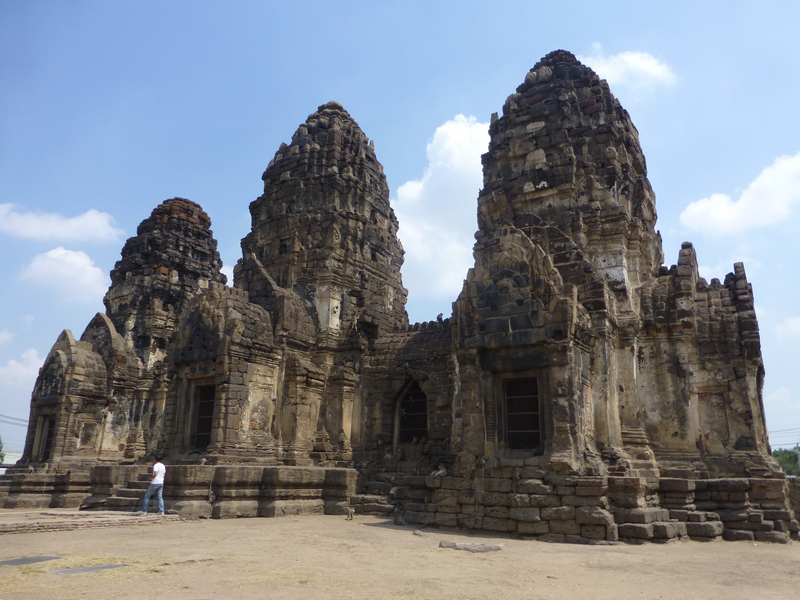
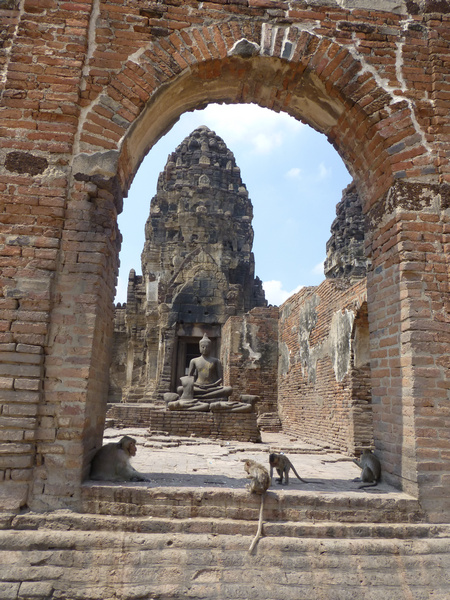
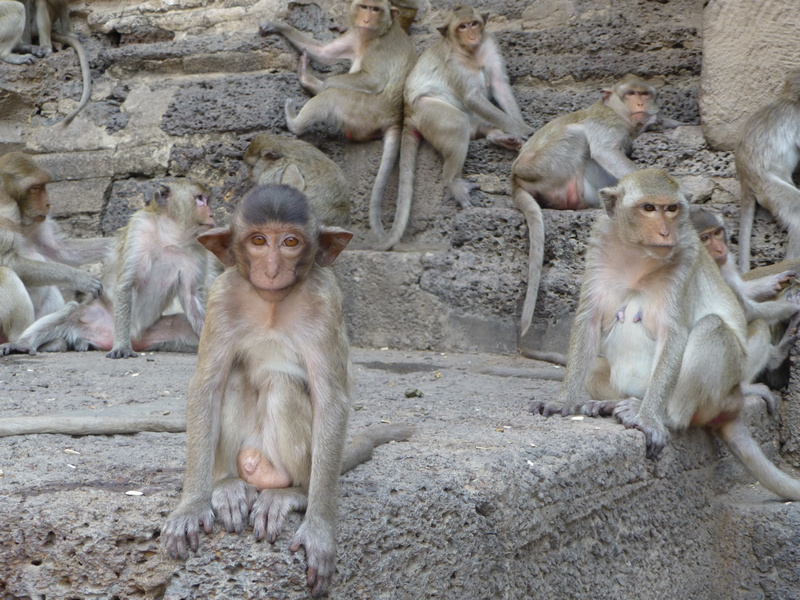

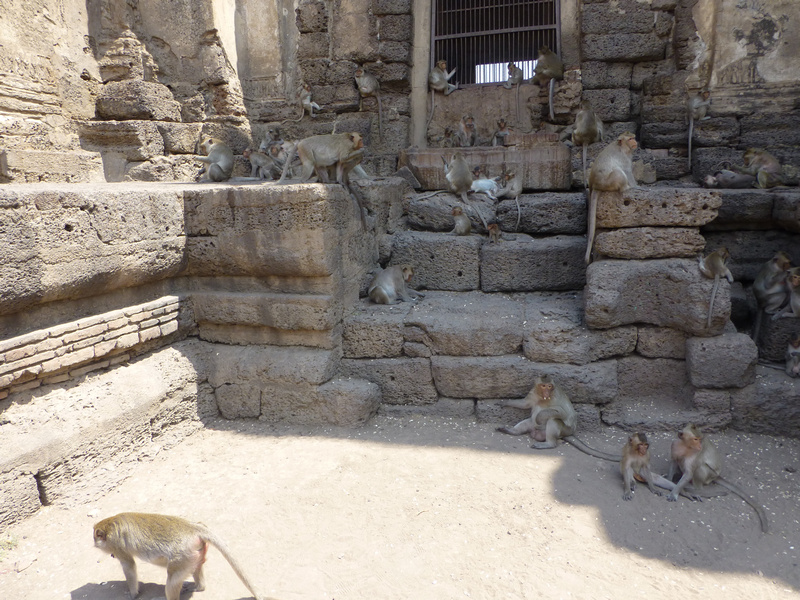
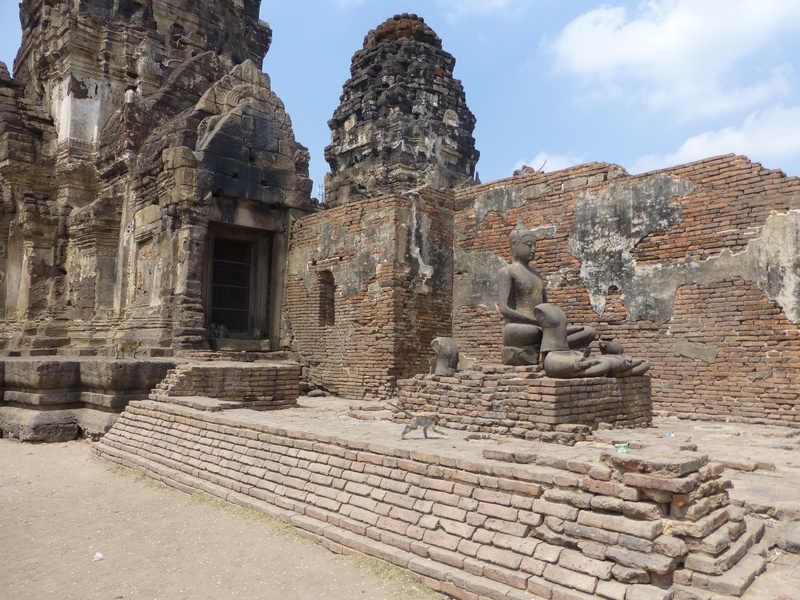
After 30 minutes of free time we got back on the bus and the guide asked us if we liked the temple. After our positive answer he said: “That’s good as we have three more temples left for today, and tomorrow a little more…” We had a 30-minute drive to the former Cambodian city of Lop Buri (Lop Buri), where a sacred temple was erected, like the one we visited the day before, the so-called Lop Buri was Thai Angora Wat, but this one was much smaller. While yesterday’s temple of Prasan hin phimai was deserted, this one was inhabited, not by humans, but by monkeys. The guide recommended us not to play with the monkeys, who can not only steal something, but also bite. These species of monkeys were not suitable for training and work. In southern Thailand, and especially on the island of Koh Samui, where there are many coconut trees, there are another species of monkeys that are much smarter and people have even set up schools where monkeys learn different tricks. Training usually takes three months, but just like humans, there are some more wise monkeys who take the material for 2 months and other harder learners who repeat a few months, and those who stay there forever. We learned that monkeys are especially afraid of crocodiles, even when they have never seen a crocodile alive in their lives. They are even frightened by large illustrations and figures. The other thing monkeys don’t like was the scent of curry, if someone’s hands smell like that, the monkeys will stay away from it – apparently the spice has a very strong and intrusive aroma.
At 1:53 p.m. we arrived in the city of Lop Buri, which we learned was a military city with many barracks. The soldiers received a good salary, and much of their equipment and machines came as help from America, who gave them their old machines. I didn’t see any soldiers, but there were a lot of monkey monuments. We crossed a river, which according to our guide if we descended on it in a few days we would arrive in Bangkok and the already familiar Ramada Hotel.
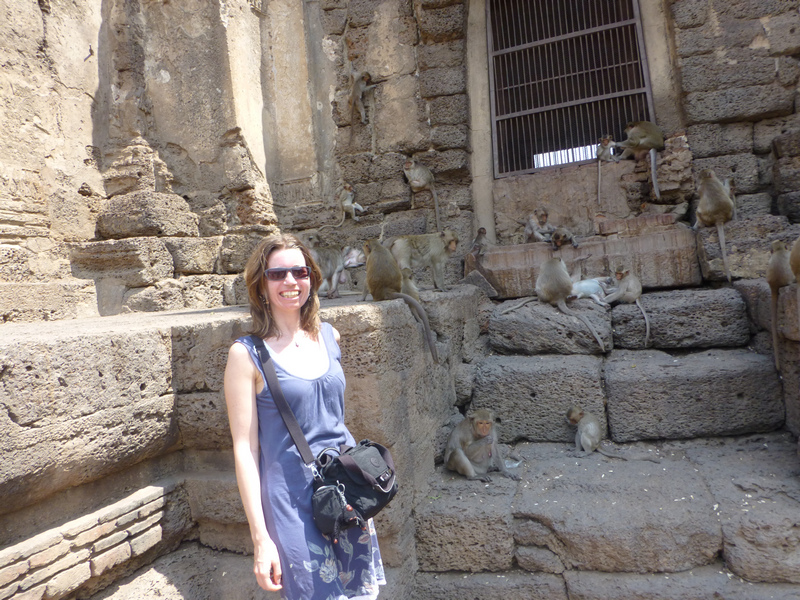
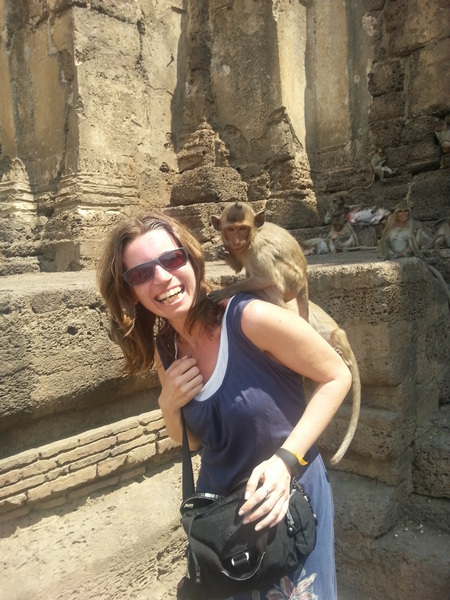
Our meeting with the monkeys at the Phra Prang San Yot temple was exciting. The little animals didn’t seem to pay attention to us at all, at least until they focused their attention on the jewelry we were wearing. As soon as I stood with my back to them for a photo, two monkeys climbed on my back. One of them quickly navigated and with the paws tried to take my chain and the blue pebble with it. We pulled it for a while, Luckily for me, he was securely buttoned up and the monkey gave up. However, not everyone in our group was able to preserve their belongings.
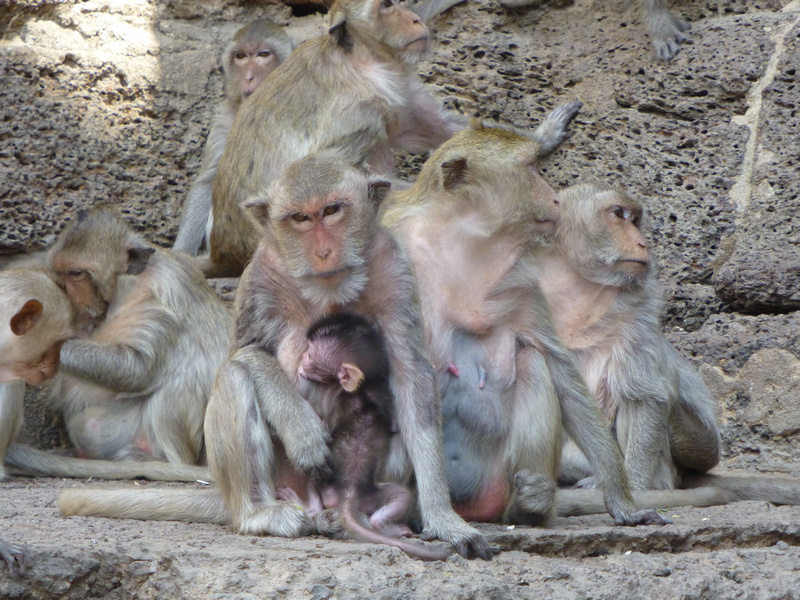
There were a lot of monkeys in the temple. Especially cute were the baby monkeys. The mothers tanned them, and they obediently huddled in them. Some of the monkeys drank water from a separate trough, while the smarter ones drank fruit juices with straws. I saw a monkey that very skillfully held the cardboard box of juice and sucked the straw – they must be send to the island of Koh Samui to learn! The sun was shining on us and the play with the monkeys really cheered me up and I laughed from the heart.
Later I learned that every year a big feast was organized here, but again not for the people, but for the monkeys. The whole land around the temple was covered with food, in gratitude to the monkeys, who attract thousands of tourists here all year round. The feast itself was an occasion for celebration throughout the city. Monkeys were not imprisoned in the temple, but the food provided here kept them and they enjoyed the ancient ruins, erected 800 years ago, but still guarding several stone statues of Buddha.
Our journey continued through some of the world’s largest rice plantations, seeing where Thailand exports over 20 million rice annually. The mango plantations outside took me to exotic countries, but the guide’s stories made me feel at home. He told us that roadside police in Thailand are highly corrupt, not stopping Ferrari, BMW or Mercedes cars, which are rare here because they know they are on someone with connections and can have problems. However, they do not pass by the other cars and earn decent (or rather indecent) income. And here they have a mafia and a lot of rich people.
We learned that Thailand’s national and most popular sport is Thai boxing. The Thai competitors are very good in it. In the other type of box, they are also good, but because they are physically smaller they do not have as many international champions. For the same reasons, they are not so good in football either. The Japanese and Koreans are better than them in football. Thais are only better than Iraq and Saudi Arabia.
At 12:53 we passed the Asian highway. The long highway passes through different Asian countries and leads to Europe. Later I learned that the main highway A1 starts from Tokyo and leads to the border between Turkey and Bulgaria, i.e. it still reaches Europe, but unfortunately there is no highway leading to the rest of the continent through my home Bulgaria.
The guide shared that Thailand looks like Germany 20 years ago. There were many malls and shopping centers. Especially large is IKEA in Bangkok. To prove this we made a one-hour break in the huge two-storey roadside supermarket Lotos, where 20% of the goods were English. On the way we saw kites, learning that they are very popular here especially in the last two months of winter. When the wind was coming into Thailand from China. The children made their own kites with bamboo chopsticks.
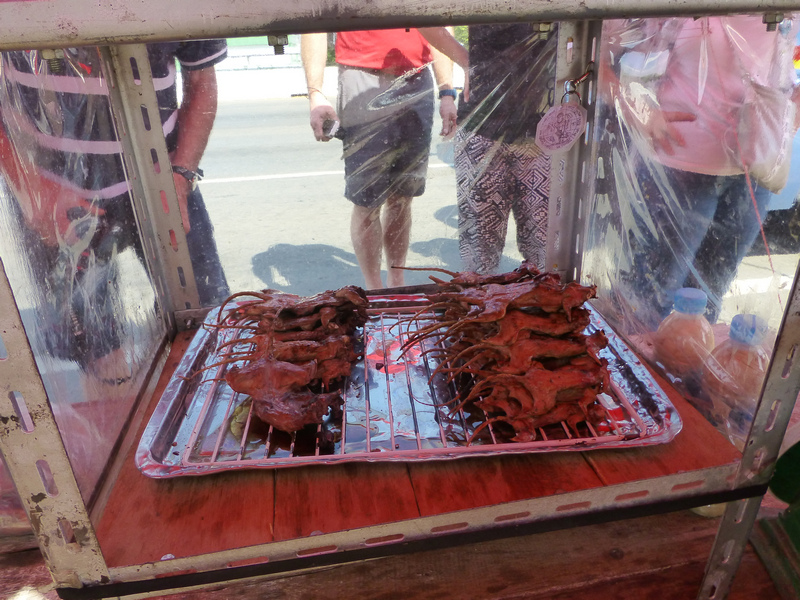
Our journey continued to Phitsanulok, where our next temple from the program was located. Before we got to town, the bus pulled us over at some roadside merchants selling roasts rats… It sounds terrible, but sizzling on the grill with a crispy crust, impaled on a skewer did not look as repulsive as their name.
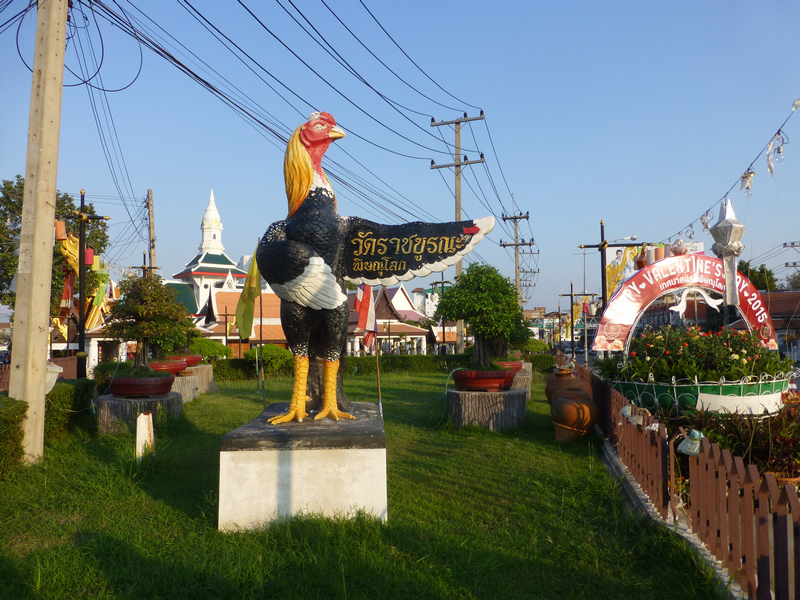

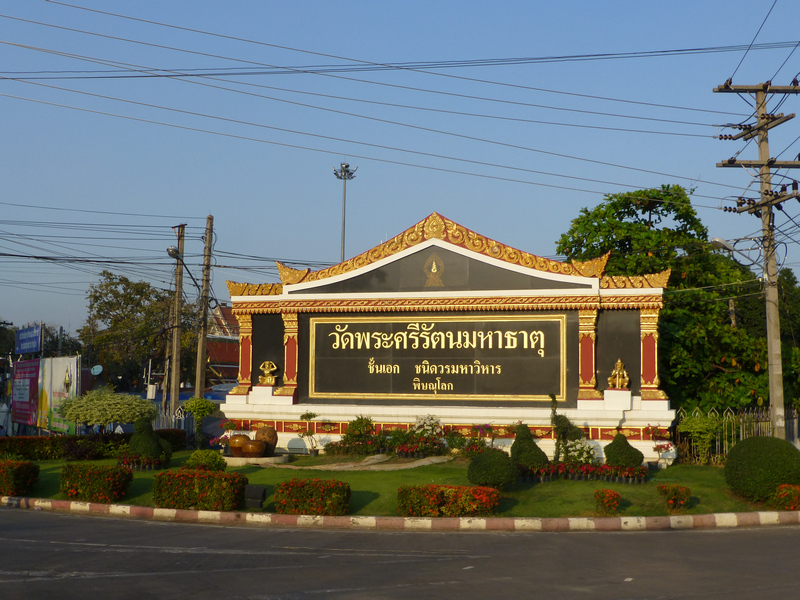
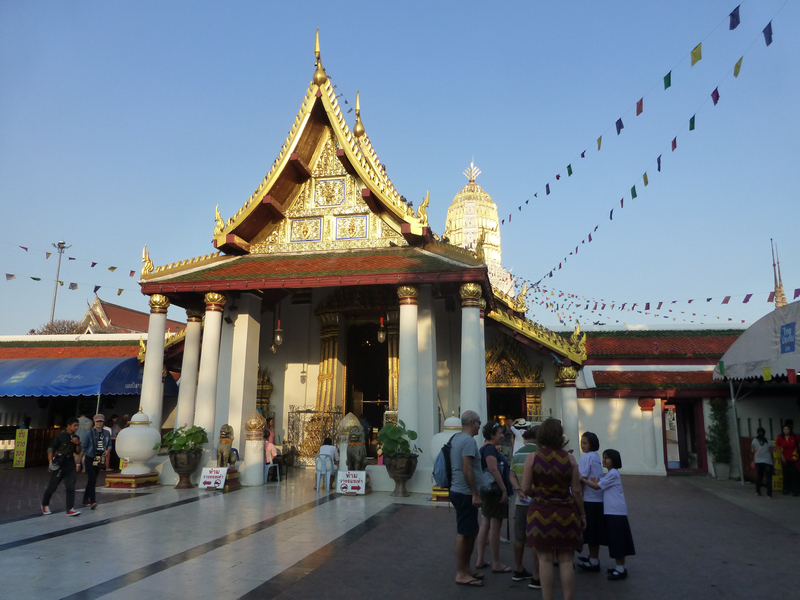
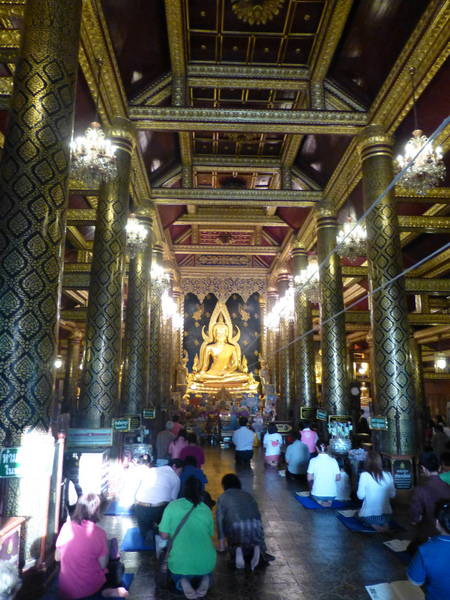
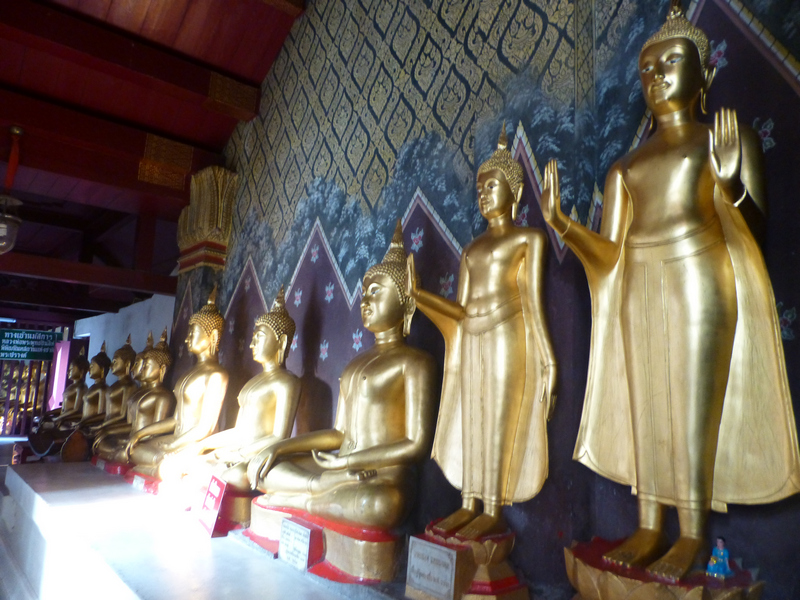
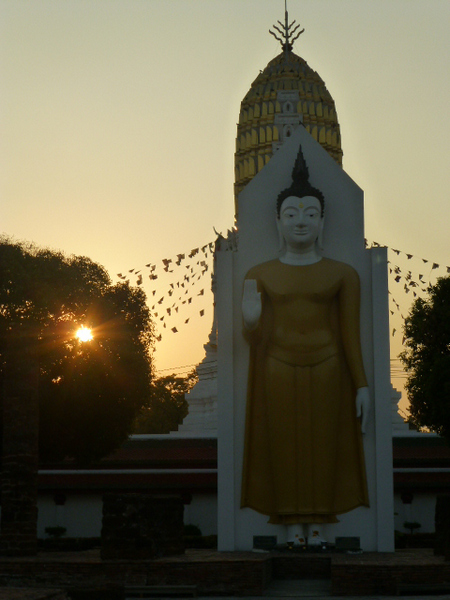
We arrived at Pitsanulok whose name could be translated as “Cherry Paradise”. It was a modern city with 1 million people, but it was also among the oldest Thai cities. At 17:15 we caught a big traffic jam, just having time to learn more about the sacred temple Phra Si Ratana (Wat Yai), which is situated here and which, according to the Thais, every single person should see at least once in his life and bow before the exquisite statue of Buddha. Many people think that this is the most beautiful Buddha statue. King Rama V came to this city and was so fascinated by the Buddha statue that he wanted to take it to his palace in Bangkok. However, the locals began to beg him not to do this, but to make a copy. The king agreed, and to this day the copy is kept in the royal temple in Bangkok.
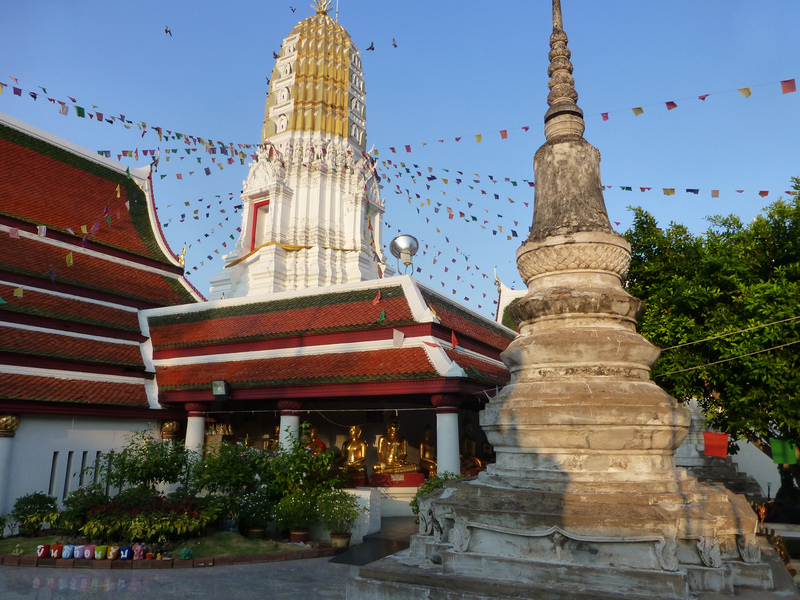
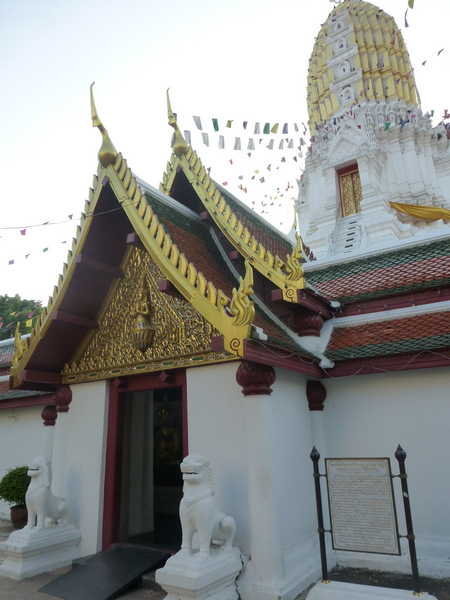
Wat Phra Si Rattana, also called in Thai The Great Temple is located on the banks of the Nan River. It was erected in 1357 and is one of the few buildings from the Ayutthaya period that survived the devastating fire in 1955. At the very entrance were arranged many gilded statues of Buddha, but indeed none were so exquisite like the statue inside the temple, in front of which about 20 people were kneeling.
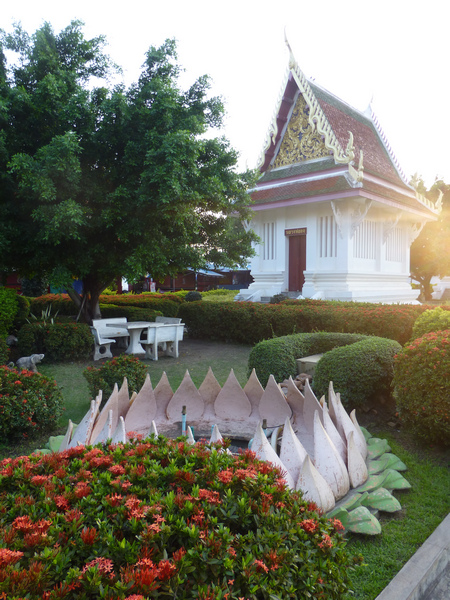
We walked around the courtyard surrounded by colorful flags. Especially beautiful was the large Buddha statue erected behind the temple, among gardens with lotuses and ancient ruins. The sunset slowly came and there were beautiful pictures.
We walked to our hotel Topland ****, which was next to the temple and the Nan River. The hotel was large, and on the first floor there was a shopping center with many shops that we did not pass by and bought gifts for our loved ones. Before we went up for dinner we headed outside, where opposite the hotel there were three small massage centers. We liked one of them, took off our shoes and left them outside then for 200 baths (approximately 10 leva) we received a one-hour Thai full body massage. The massage was quite different from the classic massage we were used to in Bulgaria. They gave us to put on a cotton T-shirt and cotton pants, then we lay down on a bed with a mattress and the masseuse started a foot massage, which slowly shifted to the calves, legs, then the hands, with some massage techniques being more stretching than “crushing it”. Then we sat while our back and neck were rubbed, all the while the masseuse was moving and even climbing onto the bed while stretching my arms and legs, which occasionally crackled, but the result was good I felt completely relaxed and blissful. After so many days spent in the bus seat, I felt like a new person. After the massage I was no longer so hungry, but the crowded buffet tables in the hotel with many new specialties tempted me and I filled my plate again.

GENERAL INFORMATION ABOUT PITSANULOK::
Location: Pitsanulok is located in northern Thailand on the banks of the Nan River.
Area: 10,815 sq.km
Population: 84,311 people
Official language: Thai
Altitude: 51 m
Climate: subequatorial
Time zone: UTC+7
Currency: Thai baht (THB)
Further information: http://www.tourismthailand.org/About-Thailand/Destination/Phitsanulok
TRIP TIPS FOR PITSANULOK:
Best time to visit: all year round
Typical food and drinks: Thai food is famous all over the world, and the most delicious is of course “at home”. In Pitsanulok, traditional foods are rice from local plantations and fish from the river and canals. Here you can try Gai Yang (chicken barbecue) and Kweitiou pat Thai (Thai fried noodles).
Places to visit: Within the city it is worth visiting Wat Phra Sri Rattana Mahathat – the most important temple in Pitsanulok with one of the most beautiful statues of the Buddha. Another important temple here is Wat Ratburana with its ancient and tall cheddy. According to legend, the same was erected in the 15th century to preserve the ashes of the brothers kings of Sukhhothai. To the north of the city center there are ruins of the palace of King Naresian, one of the greatest kings of Thailand, which liberated the Ayuttan Kingdom from Burma in the 16th century. Also interesting are the boathouses, some of which have been turned into restaurants and cafes.
 TripTips