13-day tour of China
Xi’an (part 3)
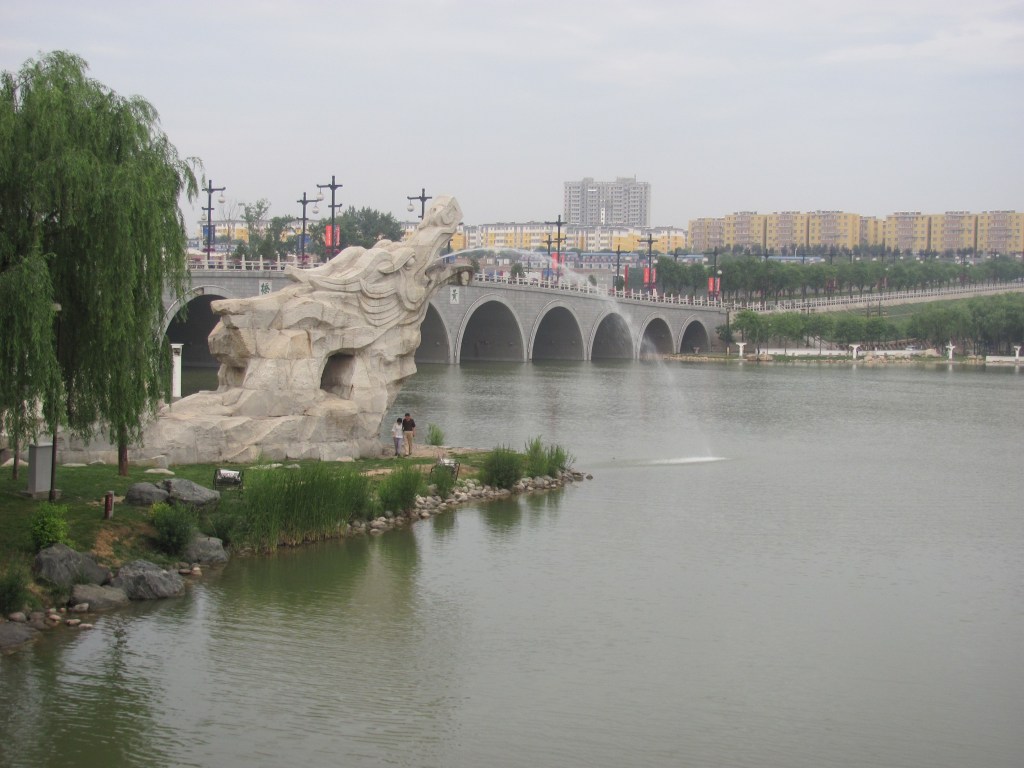


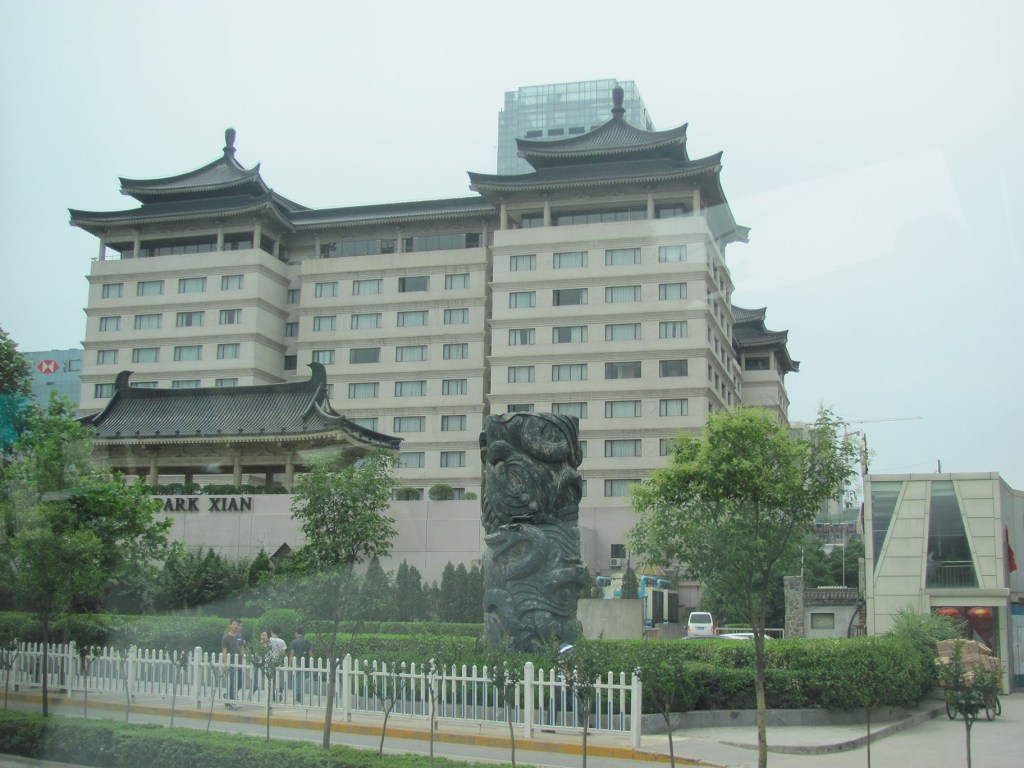
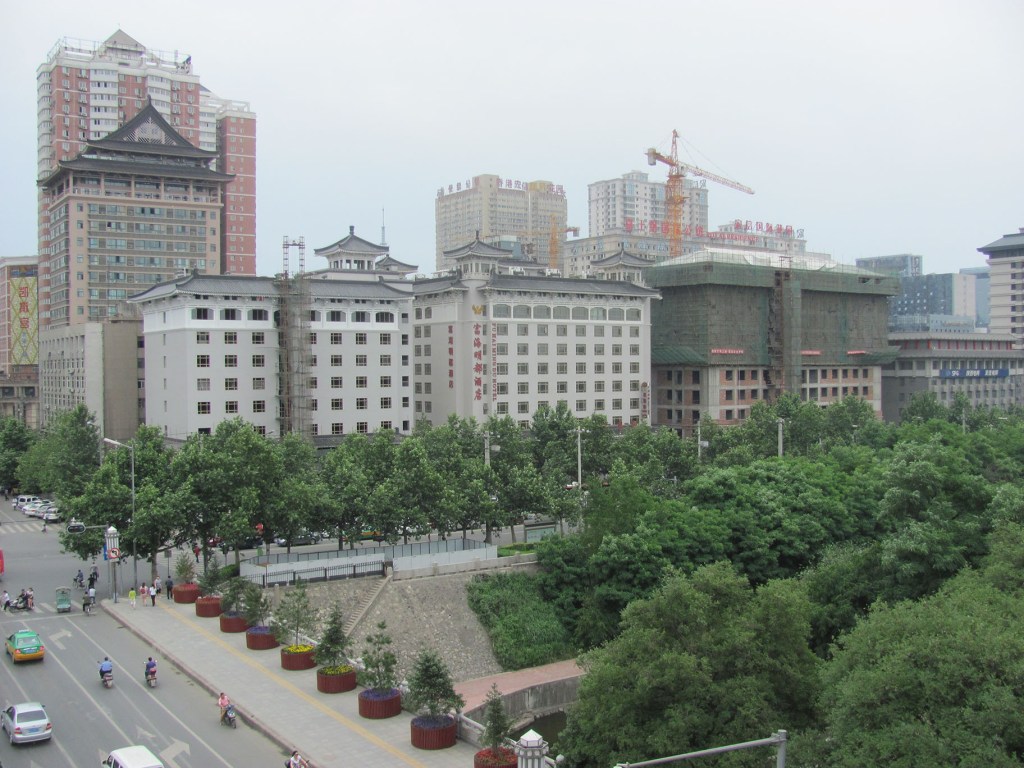

The fabulously beautiful ancient Chinese capital Xi’an is located 1114 km from Beijing. We left the Chinese capital with the direct night train, which left at 19:00 and arrived in Xi’an around 08:00. The train was relatively clean, although the bunk beds were not as comfortable as those in the hotel from the previous night, the journey went well. The train was nice and put us to sleep. It wasn’t overcrowded at all, as I had previously read about China. There were articles on the Internet that Chinese trains were so full that people slept straight in the corridors leaning against each other. I had read that the sidewalks were so full of people that one could only walk laterally, making his way with shoulders. That wasn’t true at all, at least at the end of May. China seemed to me very calm and even deserted with so many people in theory. When we asked the tour guide where the people were and why the streets were not so lively, he told us that they were at work. Everyone worked except us, the tourists. So we enjoyed the opportunity to go to bed in one city and wake up in another in the morning.
We were welcomed by our new tour guide – Nasya, who told us more about her hometown. The bus took us first to the hotel, where we had 1 hour – for a shower and breakfast, then refreshed we gathered again on the bus and started our tourist program in the ancient Chinese capital Xi’an. In translation, Xi’an means “Western safety” and it is one of the oldest Chinese cities with over 3,100 years of history. The previous name of the city was Yu ving or Eternal Peace. In fact, in the outskirts of the city the Neolithic settlement of Banpo was discovered, which we would visit the next day, and which dates back 6,500 years. Such a rich history is difficult to describe, so we only briefly learned that the city became an important cultural and political center of China as early as the 11th century BC. The city became capital in 202 BC, and it was here that China’s first emperor, Qin Shi Huang, erected his famous terracotta army, which we would see again the next day.

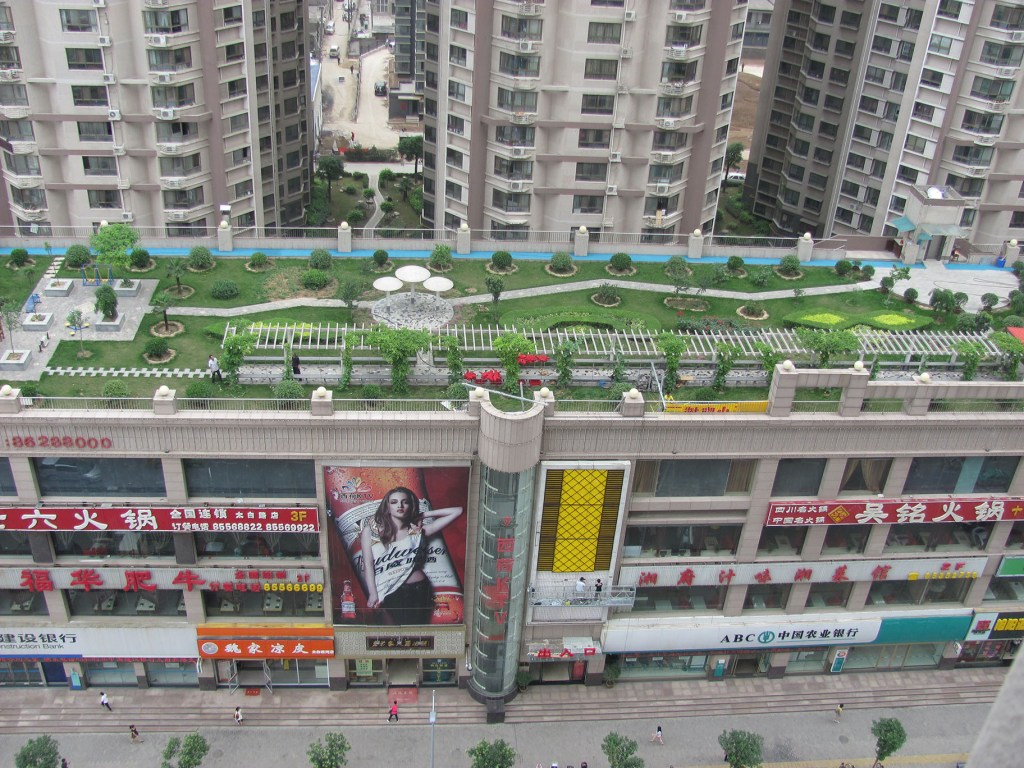

That day we were going to walk in the city center, where there are many preserved old buildings, as well as modern ones. The inhabitants of the city are over 8 million, but it seemed to me again the figure exaggerated, looking and photographing the almost empty sidewalks. It was hot, but also cloudy. The air was as if heavier here, but our mood was light and we couldn’t wait to walk around this picturesque and beautiful city.
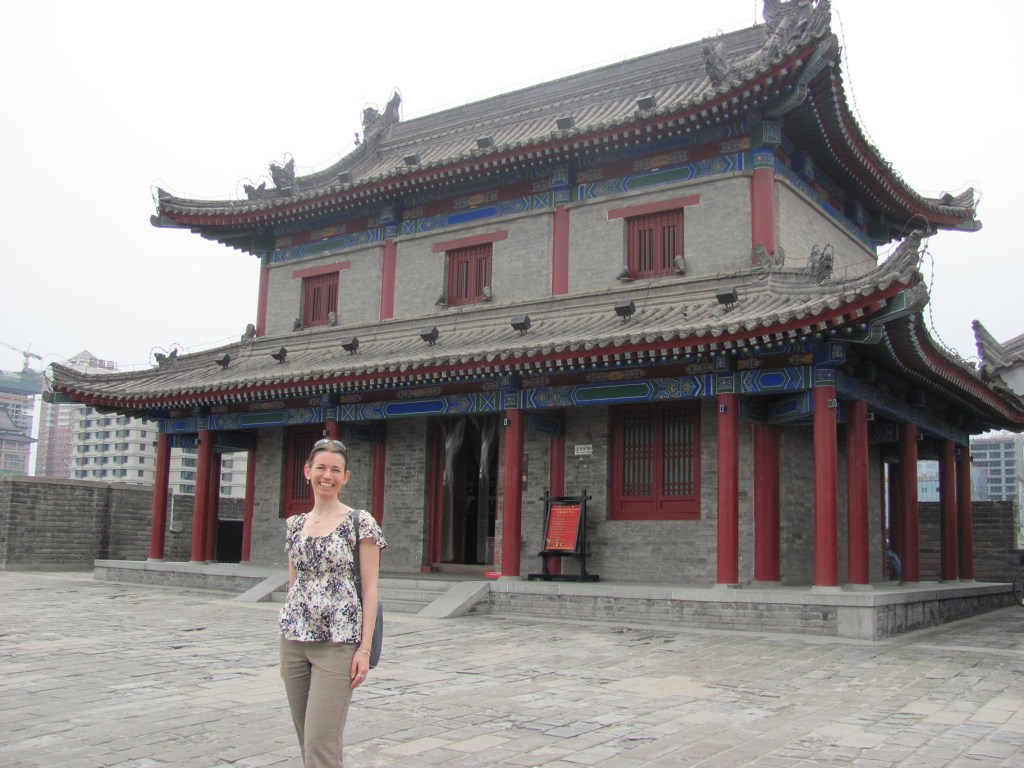
Our first stop was near the Ancient City Wall. This is one of the oldest and best preserved city walls in all of China. Their construction began in 194 BC and lasted 4 years. The length of the walls reached 25.7 km. Later, the walls were rebuilt by the Ming Dynasty in 1370, which encircled a much smaller city with a total length of 13.7 km, with a height of 12 meters, in places with a thickness of 15 meters. There are 4 main gates (otherwise there are 18 in total), each with its own name: Changle (meaning eternal joy) in the east, Dnding (harmony and peace) in the west, Yongning (eternal peace) in the south, and Anyuan (eternal harmony) in the north. The south door is considered the most beautifully decorated. It is close to the clock tower and the city center. However, we visited the North Gate, where there were almost no people, and we managed to safely walk along the wall fortress, enjoying the city under and around us. There were many lamps on the wall itself, from which there was also calm Chinese music, and it was really nice to walk here. Such a long wall can hardly be walked around the whole, but at least a small part of it we managed to “conquer” and it managed to “captivate” us.



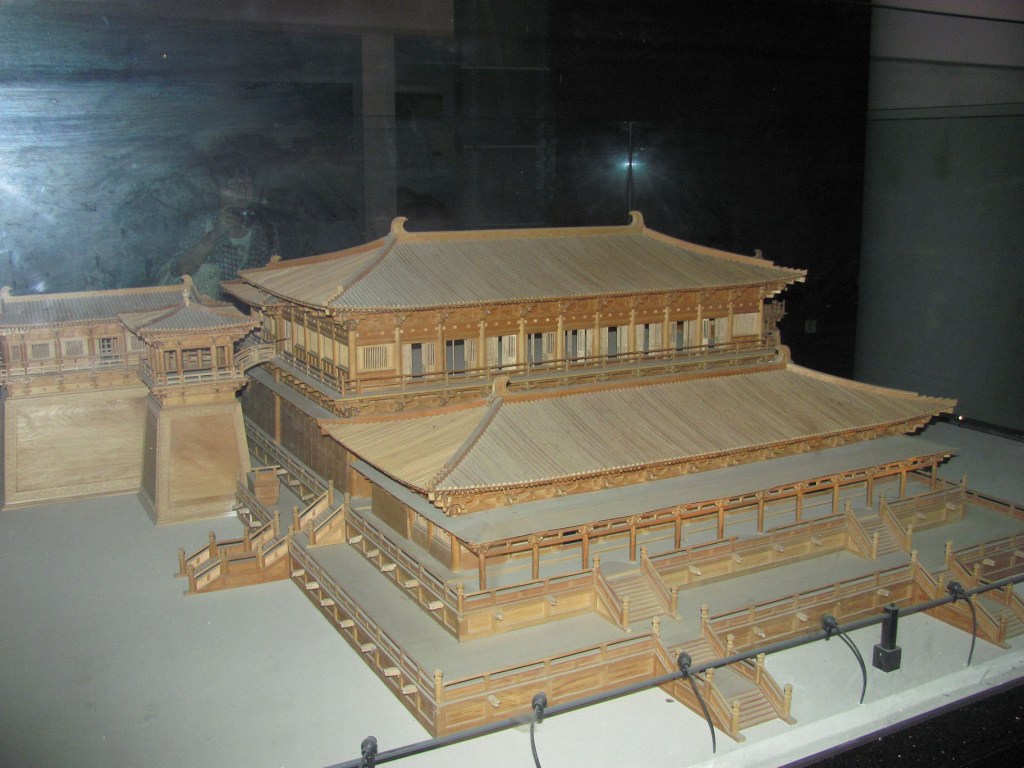
After the city wall, the bus took us to the Xi’an History Museum. The Chinese have the saying that “You can feel China’s 50-year changes in Shenzhen, 500-year-olds in Beijing, and 5,000 years in Xi’an.” The best place to trace this story is naturally the museum. This modern museum opened on May 18 (Museum Day) 2007.
The museum itself did not impress me much – probably because I could not see it all. The tour guide had left us less than an hour of free time and we had to walk around its halls ourselves. According to the brochures, over 130,000 cultural relics are stored here, and I saw less than 100 exhibits! What I saw was the dungeon, where a large beautiful model of what the city of Xi’an looked like before and now. On the first floor there were many seals, hieroglyphics and a few coins.
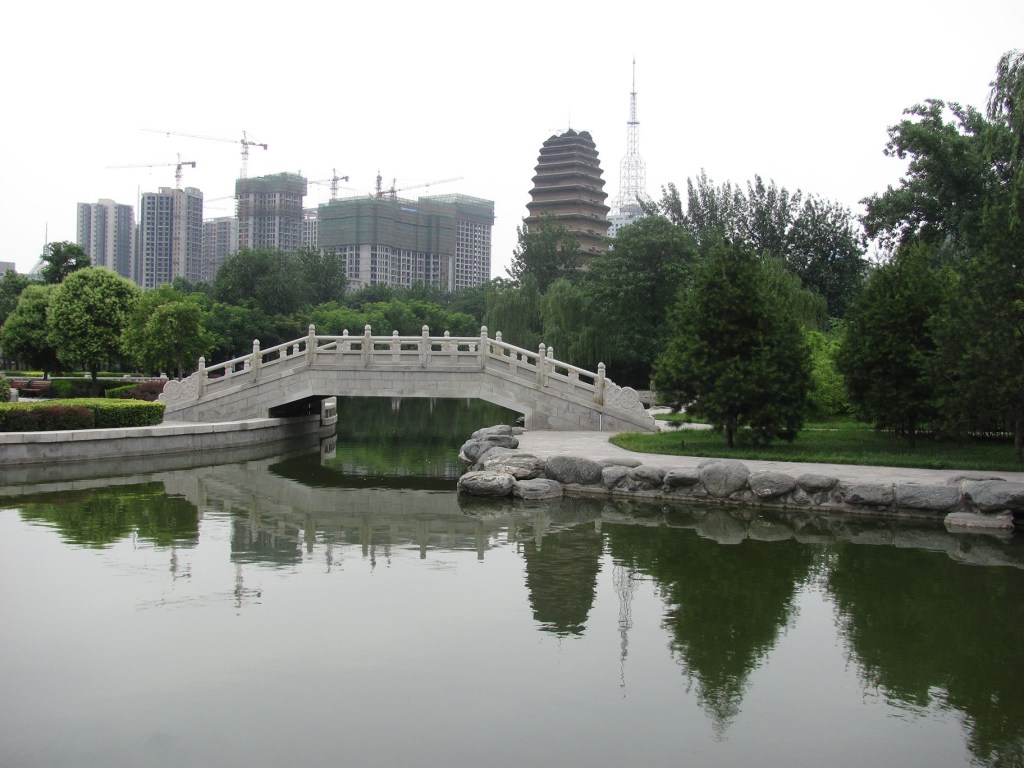
What really impressed me was the park around the museum, which was huge and included various buildings, including the Little Wild Goose Pagoda. An interesting name for an interesting building. I learned that the pagoda is a kind of temple where Buddhist culture is preserved. This pagoda here was built in 707 AD, consists of 13 floors and reaches 43 meters. At its base it is square, as a step it rises to the sky. It was built surprisingly strongly, especially in this part of China, which is considered an earthquake zone. After so many earthquakes, only the last two floors (formerly 15-storey) have been damaged. Even the cracks that have occurred over time have settled and now it’s like new. It’s amazing to stand and even enter into such old building. I didn’t have time to go inside and climb the multiple floors, and I didn’t really know it was allowed. I managed to at least walk around the park, which had many different statues of dragons and other figures, there was a big bell, figures of large turtles and a beautiful lake with bridges. Everything was harmonious and in my thought I congratulated the creators of this park, and subsequently a museum complex. It is not necessary to close the history in the museum, it was also available outside.




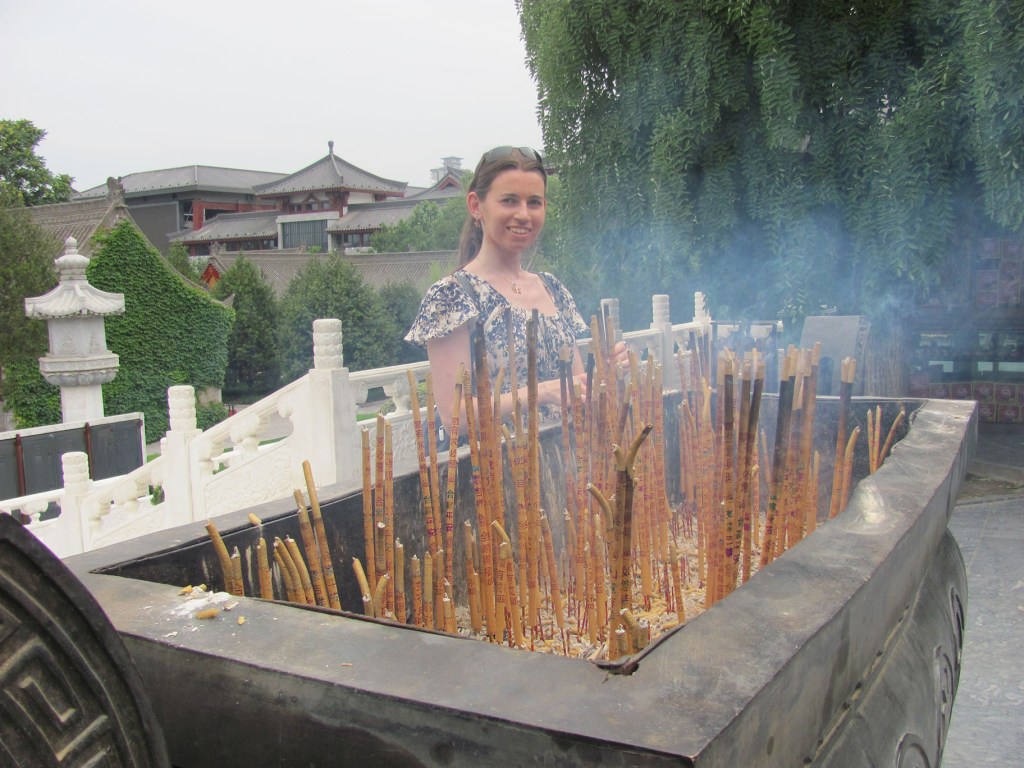
We visited also the Great Wild Goose Pagoda, in whose likeness, this one was built. The Great Pagoda of the Wild Goose / 大雁塔 was built during the Tang Dynasty (649-683) and has since become a symbol of Xi’an and a sacred place for Buddhists. The pagoda was built in a monastery complex with the aim of preserving the 657 volumes of Buddhist scriptures, brought to China from India by the monk Xuan Zhang, whose statue was erected in front of the temple complex. This monk took the Silk Road, crossing deserts until he reached India, the cradle of Buddhism. After 17 years of traveling and passing through 100 countries, he collected various Buddha figures, 657 documents and various Buddhist relics. On his return with the permission of Emperor Gaozong (628-683) began the construction of the pagoda, as a place where the monk to translate the writings into Chinese, translating a total of 1,335 chapters, and wrote a book “Pilgrim to the West” during the Tang Dynasty, which became important in schools. Initially, the pagoda consisted of only 5 floors, and in 704 it was restored and supplemented with another 5 floors by the Empeatic Wu Zetain. In 1556, a large earthquake damaged the pagoda and the last 3 floors were dropped. The seven-storey pyramidal pagoda has a height of 59.9 meters and is located on a square base with a length of 48.8 meters. The large pagoda was completely reconstructed by the Ming Dynasty (1368–1644) and again later in 1964. Currently, the height of the pagoda is 64 m and from above there is a magnificent view of Xi’an, whose center is less than 4 km away.
There were elephant statues that symbolized India and statues of dragons – representing China. It was beautiful and again very harmonious..
After this park, we were taken to another park – the Park of Love. At its very entrance, beautiful red figures of historical images related to love were made on the rocks, among which I recognized only Adam and Eve. The park was actually erected around a famous cave in which, according to legend, lived two lovers: the First Minister of the Tang Dynasty, who lived between 618-907 AD, and had three daughters. The smallest, Wang fell in love and married a poor lad named Xue, even though her parents were against this union. The young poor family had to live in a cave, a month after the wedding Xue was called to military service and for 18 years he was away from home. Wang’s parents insisted that she remarry, with many men asking for her hand, but she remained loyal to Xue, who after 18 years returned home as a general. They both lived happily ever after. In the park there is also a wonderful statue of them with a brief description in English their story.
In the park there was also a beautiful lake with black swans and huge red fish. There was a beautiful big heart in front of which we took a picture. In order to get deeper into the park, we had to pay an additional entrance, so we were satisfied with the beautiful anteroom, and I personally liked the idea of a theme park dedicated to love. In Sofia, Bulgaria we had a Bridge of lovers, but there was nothing romantic on it as it was felt here. There was also a bench with an inscription, the Lovers’ Bench (besides the hieroglyphics, here most of the inscriptions were also in English).


So far, Xi’an managed to impress me, and it was yet to become even more beautiful. The sun hid and the whole city shone. There were colorful lamps everywhere, and even the trees shone at night in different colors. I especially liked the square with the figure of the first Chinese emperor, which all shone, and the columns around it constantly changed their colors. The same reflected in the nearby artificial lake creating incredible effects. Continuing on foot down against the figure, we came across the second emperor of China, and so consistently, at a certain distance from each other, always in a straight line, one could trace the history of China. Everything was illuminated beautifully, and just when you thought it couldn’t have been better, and here China surprised us again. There were several pavilions on whose walls were depicted large hieroglyphics, the light of these pavilions was again reflected in a small lake and it was so beautiful that we did not even think to ask what it said. It left us speechless with beauty.
The night was just beginning, and with it the new attractions of Xi’an. The tour guide took us to many fountains that danced every night to the sound of beautiful melodies and numerous lights. The Chinese had come up with a wonderful show sound and light, and we were lucky enough to become part of it, enjoying the fountains that were now fading and rising upwards, guided by music. At the back of the fountains, stood the illuminated building of the Great Pagoda of the Wild Goose. It was wonderful. Near the city walls, people gathered and danced together. There was music and laughter. People gathered together in the morning to play gymnastics, and in the evening to relax and dance. For this they did not need restaurants and alcohol, it was enough to play light music in the park and all the Chinese had fun.
It was late when we got back to the hotel. My room was 1401 on the 14th floor. I had a beautiful view and a huge soft bed. Our hotel XIHEFENGRUN HOTEL XIAN was 4th stars and the rooms seemed huge to me. In all hotels we had 2 bottles of half a liter of water + an electric kettle with free tea and coffees. China really turned out to be hospitable and interesting. It also left me speechless, I sat down to describe what I saw during the day. A Chinese proverb says that “the palest ink is better than the best memory,” but like a camera, my eyes couldn’t absorb all the beauty. My eyes were filled with so many impressions that my mind, like the camera card, filled up and refused to work. I didn’t have any words, and the few I had left were smeared like hieroglyphics. I slept peacefully undisturbed even by dreams.


GENERAL INFORMATION ABOUT XI’AN:
Location: Xi-an is one of the oldest cities in China, and one of the four ancient capitals. It is currently the largest city and administrative center of Shaanxi Province in Central China. The city is located in a lowland surrounded by eight rivers.
Area: 9983 sq.km
Population: 7 160 000 people (data from 2003)
Official language: Chinese
Altitude: 405 m
Climate: humid subtropical climate, with hot and humid summers and cold, dry winters.
Time zone: UTC+8
Currency: Chinese Yuan (CNY)
Additional information: https://www.travelchinaguide.com/cityguides/xian.htm
TRIP TIPS FOR XI’AN:
Best time to visit: probably the best time to visit this ancient city is in spring and autumn, when it’s neither too hot nor too cold.
Typical foods and drinks worth trying: Chinese cuisine is popular all over the world, but the most delicious is of course in its homeland. While in Xi’an try cold rice noodles served usually with beef or chicken. For dessert, I recommend Zong Zi with honey, which is cold rice with honey, served most often as small rolls.
Places to visit that you should not miss: The pagoda of the big and the little wild goose, the old fortress walls, the historical museum and of course the famous Terracotta Army located in the immediate vicinity of the city.

 TripTips