For English translation click here.
13-day tour of China
THE TERRACOTTA ARMY (PART 4)

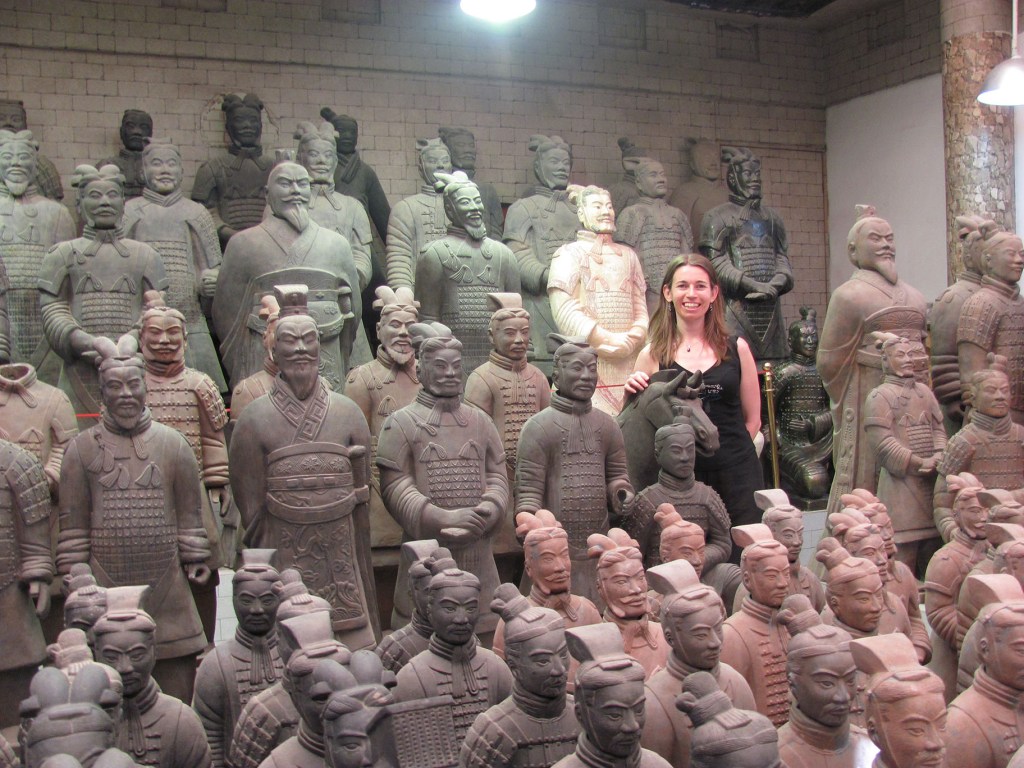
The new day has come as it has come for centuries – the sun arose brightening the deep heaven. I wondered if 2,233 years ago, somewhere in the Chinese city of Xi’an, Qin Shi Huang had woken up, and decided to unify China and succeeded – becoming the first Chinese emperor. There are many legends about him, several of which emphasize his fear of death. In 206 B.C. he issued a decree according to which, after death, his body had to be dressed in jade and allowed to float in the mercury lake, which was located in a pyramid and was protected by an immortal army.
In 1974, archaeologists discovered more than 8,000 life-size warriors buried near Qin Shi’s pyramid tomb, confirming that legends are more than just a myth.
According to another story, this emperor was so afraid of death that he sent 8,000 of his people around the world to search for the “elixir of life”, none of them had the right to return if he did not find it. Meanwhile, the emperor drank specially prepared mercury pills for him, which were intended to prolong his life. Ironically, they caused his death at the age of 50.
Listening to the various legends about the emperor and his famous army (which today has the status of the 8th Wonder of the World), after breakfast at the nice hotel in Xi’an, the bus took us imperceptibly to the next landmark – a pearl from the history of China. And the history of China began long before the first emperor appeared. All reference books confirm, that the history of China began somewhere around 50,000 BC, when in these places, like Europe, people lived in caves and used appliances made of stone and bones.
Around 4000-3000 BC, people’s lives completely changed, by growing rice and animals (sheep and chickens). Like Egypt, here people also began to create the first cities around the banks of rivers, with the main river in China being the Yellow River in northern China. People built small houses with reed roofs, and around 3000-2000 BC pottery arose. The Chinese quickly developed it into mastery. At the same time, silk also arises, as well as the wheel.
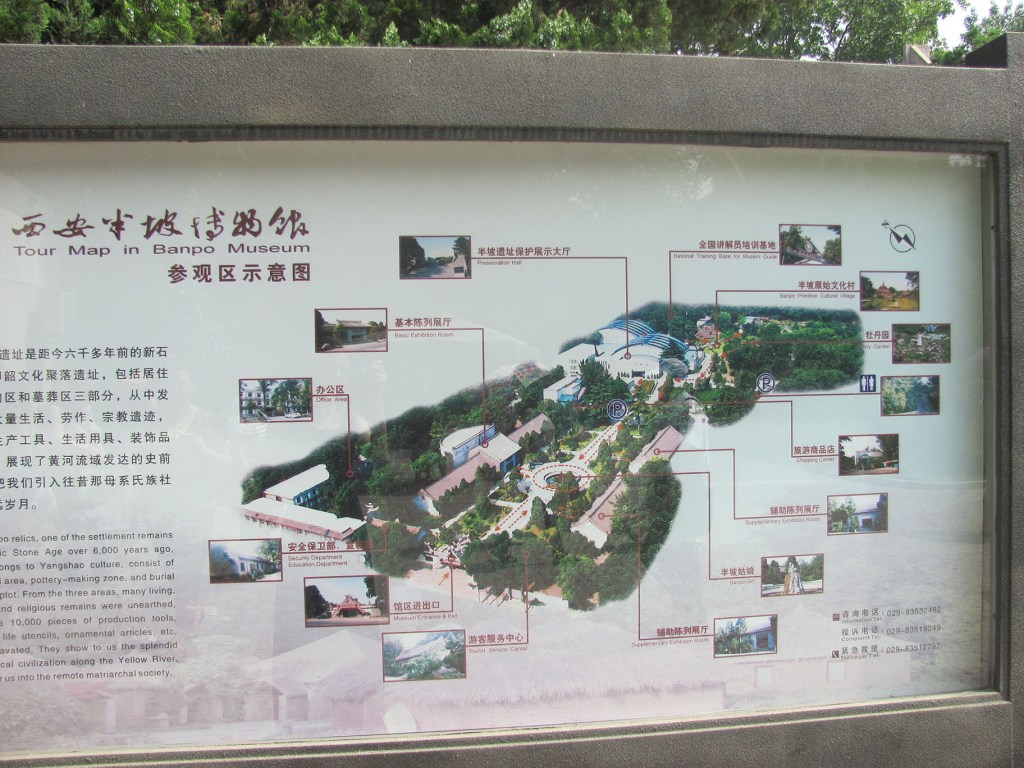
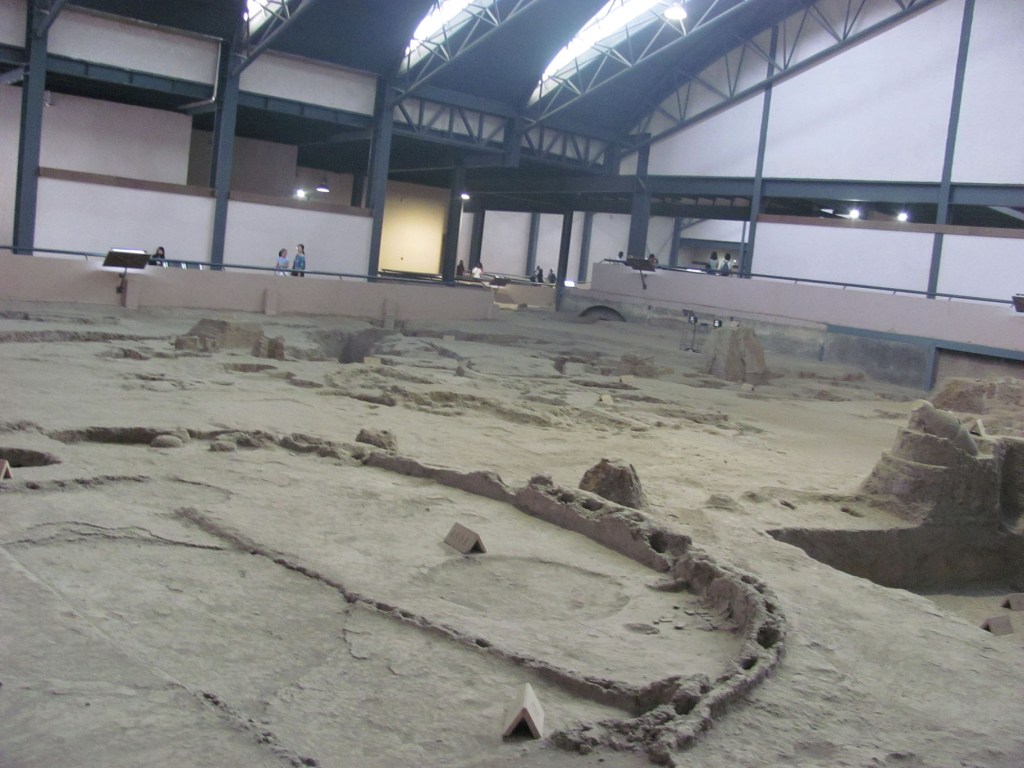
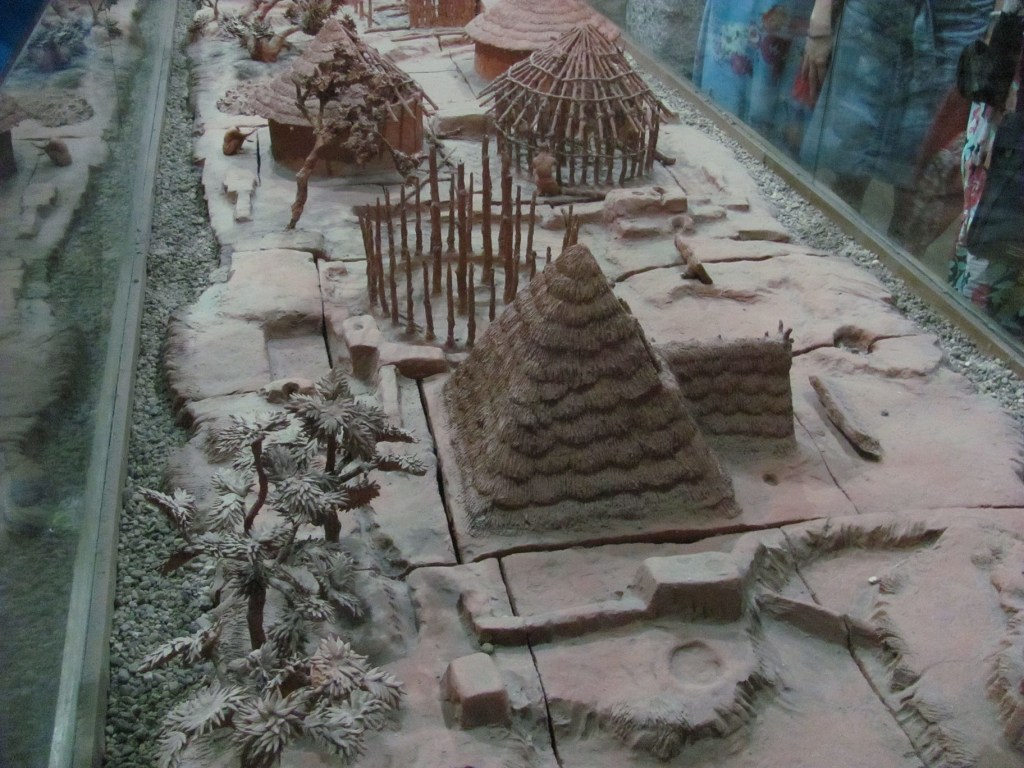
During that distant past, in the time of the ancient Neolithic, the settlement of Banpo appeared, that we visited on the way to the Terracotta Army. This settlement was opened in 1953 and is located east of Xi’an, near the Valley of the Yellow River. The remaining ruins and graves date back to 5600 BC, and the same were surrounded by a 5-6 meter moat, which most likely had a defensive function. The houses were round, built of mud and wood with thatched roofs.
From the tour guide we learned that the first people could not build houses – they dug a ditch and put a roof of straw on it. Then this moat grew and paths to the surface, low walls and doors appeared. In the Neolithic village of Banpo there were several museums, and in one of them we saw models of different houses from the earliest construction to the familiar and currently simple country houses. The guide showed us around and turn our attention to the graves and bones that were found here – they were all positioned to point west. People at that time believed that they were like the sun and had to go west. In order to reincarnate and live again at their feet, water was left in clay pots. Only a few graves were without grains, and today it is believed that these were bad people that no one wanted to take care of.
Another interesting thing we learned about this settlement is that it was built during the matriarchy. There were separate rooms for women and men, and during that time women ruled, and had several men to secure next generation in those difficult years.
In general, I liked the Neolithic settlement, especially the museum with the pottery, which were very beautifully painted and fine, and according to the texts they were made long before the wheel arose, there was even a scheme that showed how with hands and fingers similar products are formed – undoubtedly complicated, but the result is wonderful!
There was also a hall similar to Bulgarian Pleven Panorama, where at 180 degrees we saw models in human height, showing the lifestyle and livelihood of that distant time. Naturally, we took a solid number of photos and moved on to the next years of China’s history, which led us to the Terracotta Army. Along the way, we soaked up new facts about the unification of China and the proclaimed first Chinese emperor. Before him there were other rulers, but with a lower title – kings.
Around 2000 BC, the Chinese learned how to create bronze, and they turned this skill into mastery, and today the Chinese are still proud of their beautiful and unique vessels of that time. The first written documents also dated this period, they originally consisted of pictures, as well as engraved bones have been preserved to predict the future, turtle shell with numbers showing who owes what and how much to pay.





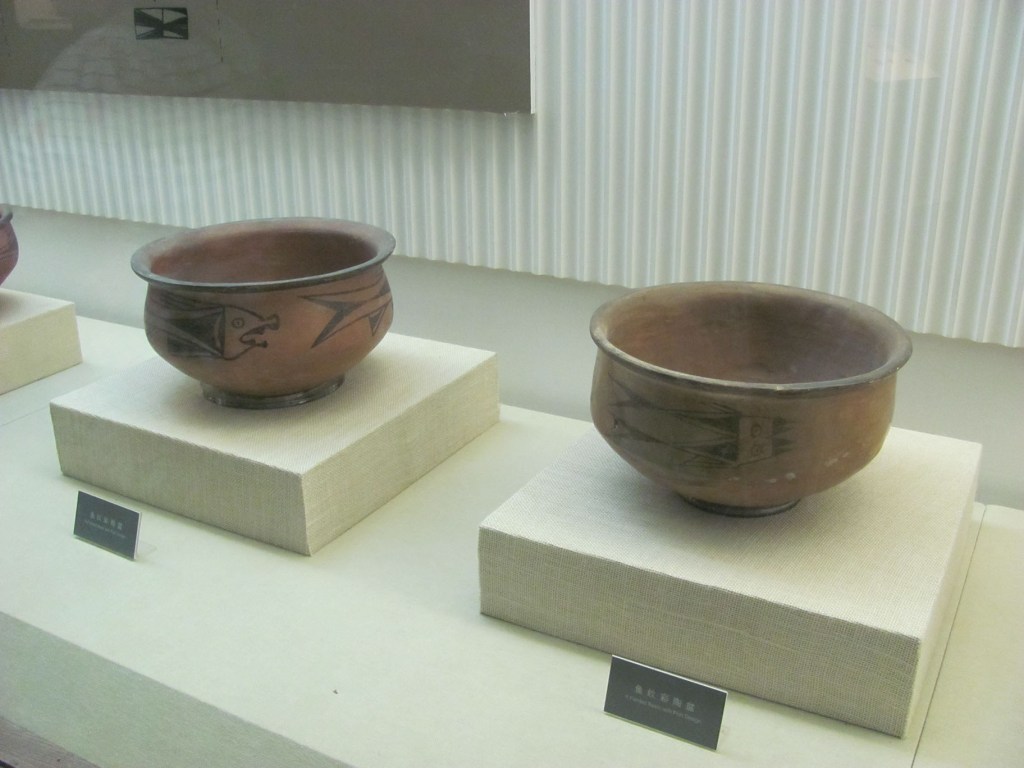
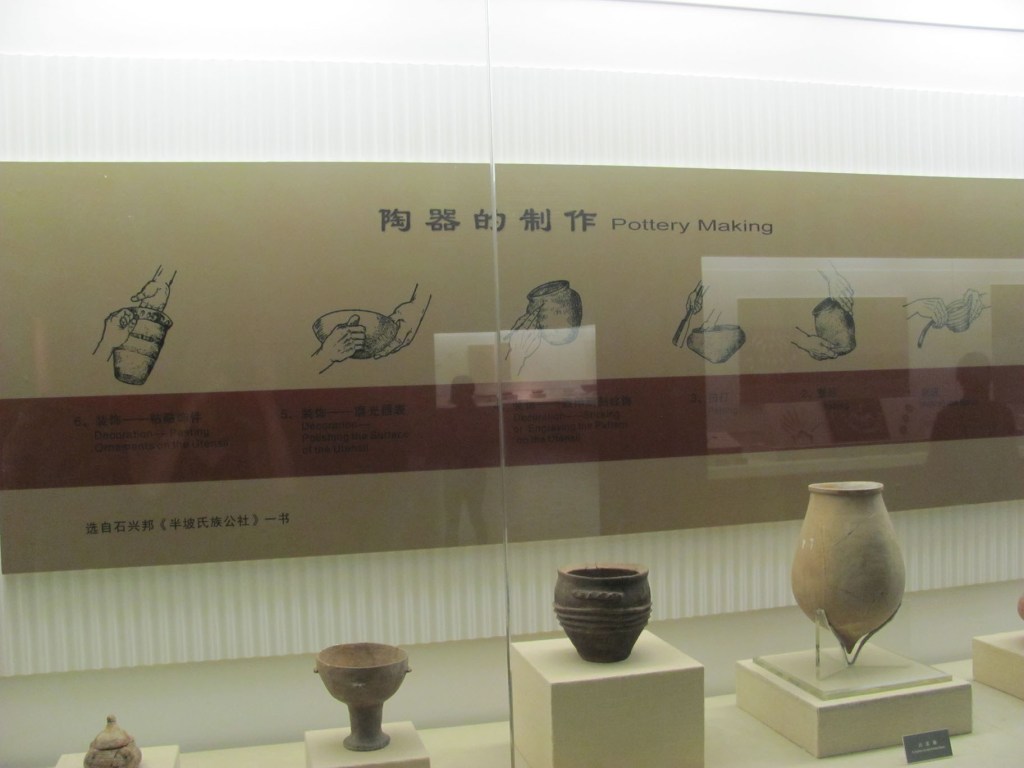
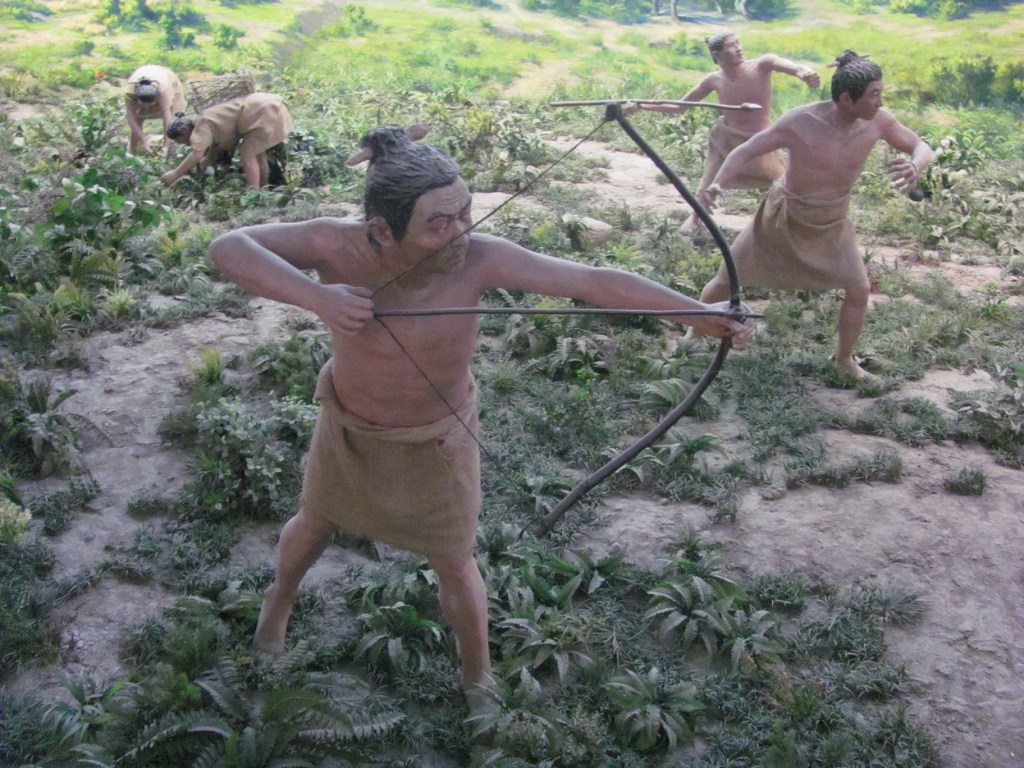

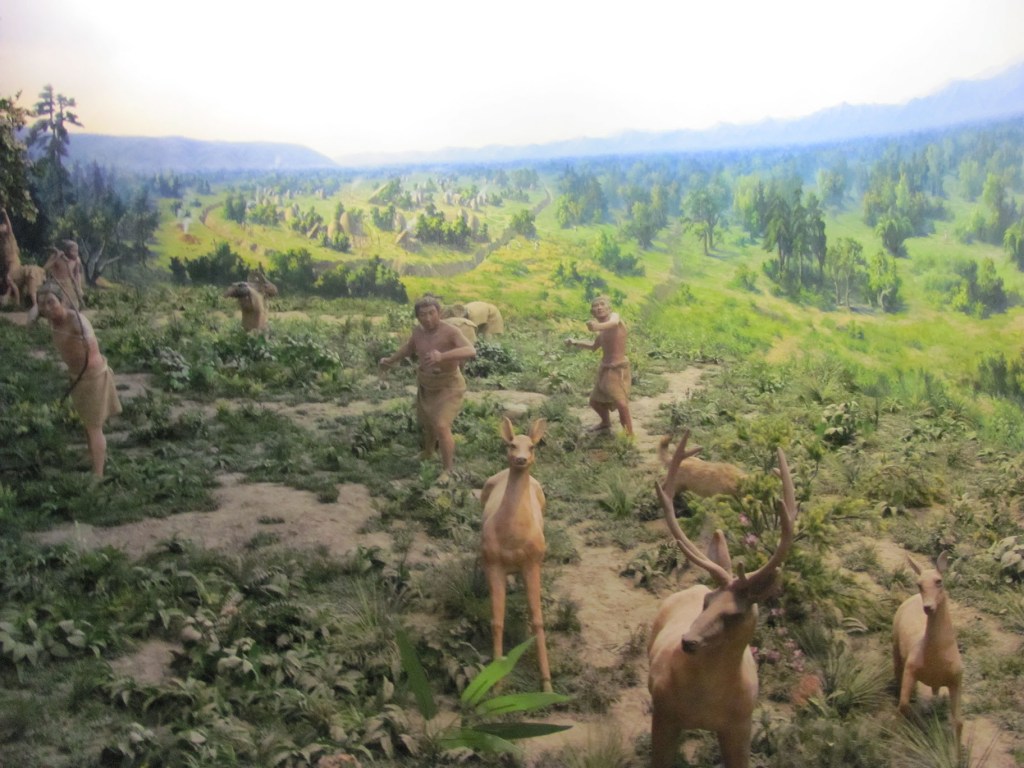
Around 1800 BC, the Shang Dynasty came, which for the first time united much of China and led a single king. Anyang was chosen as the capital, in northern China. People were divided into rich and poor, and there were slaves. During the reign of the Shang Dynasty, chariots were introduced. The dynasty ruled around 700 AD, but around 1100 BC they were conquered by the Zhou Dynasty. According to the scriptures, the new dynasty was able to win “as heaven was on their side.” King Wu, of the Zhou Dynasty, led a large army with chariots on the southern bank of the Yellow River and in 1046 BC. he crossed the river and a battle began, during which much of Shang’s army passed to Zhou’s side because their king was not so loved and popular. This period (1122-221 BC) was a true golden age for China – growing cities, trade and early forms of Chinese imperial culture. The capital moved to Luoyang (a city that we were also about to see during our excursion).
From the 8th to the 3rd century BC, the Zhou state broke up into many independent states. Power was only formally in the hands of the king, who was dependent on the aristocrats. The so-called “Warring States Period” (6th-3rd centuries BC) came, a time when the united principalities fought for supremacy. It was during this period that early Chinese philosophy emerged, the main representatives of which were the ancient Chinese sages and philosophers Confucius and Lao Tzu, who gradually, the idea of the restoration of centralized power.
In 221 BC, Qin Shih Huang Ti of the Qin dynasty or Ch’in came to power, which gave the country its name China. Initially, he was king of a smaller area, but his military victories made him emperor of all China. Xianyang became the new capital of China. A common language and writing, a common currency and units of measurement were introduced in the country.
The country also grew territorially, reaching Mongolia to the north and Vietnam to the south. Qin Shi Huang Di turned the vast territory of warring kingdoms into the core of today’s unified state. The greatest danger was hidden by the people of Mongolia and Siberia, who often attacked China. That is why the king ordered the construction of a large wall – preserved today as the Great Wall of China – then only 2400 km long.
Qin Shih became the first Chinese emperor. He was great, but also cruel. After the construction of his tomb and a great terracotta army, he killed all 7,000 masters who worked on their construction to keep the secret of the place of the tomb. After his death, his son came to power, who was also very cruel and thought only of himself, not for the people. He couldn’t govern, the people hated him, and so the Han Dynasty came to power.
According to our tour guide, it was the emperor of the Han Dynasty who first began to search for the tomb of the first Chinese emperor and after many years managed to find it, robbing all the jewels and swords of the terracotta army.
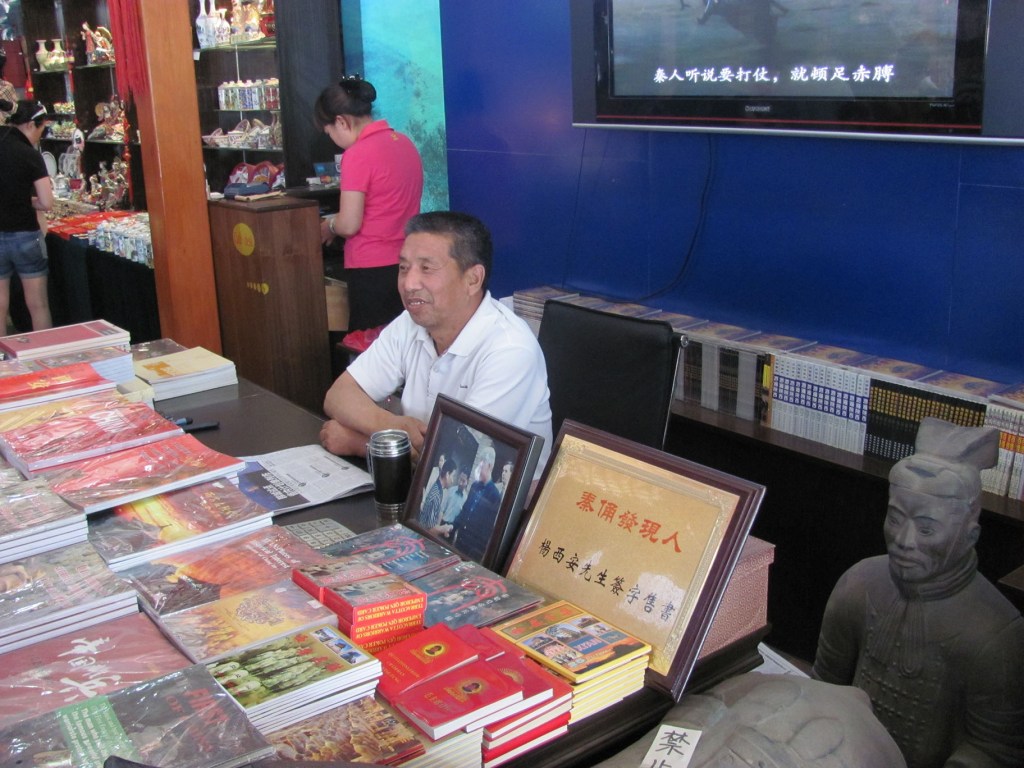
In 1974, peasants dug a well near the present-day Chinese city of Xi’an pulled a warrior’s clay head from the dirt and became part of one of the greatest archaeological discoveries of all time. In fact, the very man who discovered the terracotta army is today appointed to the position of “State Signer” and works in the store, at the entrance of the terracotta army museum, and has to sign all the books that tourists buy, he seemed very kind and smiling, he exuded happiness and pride.
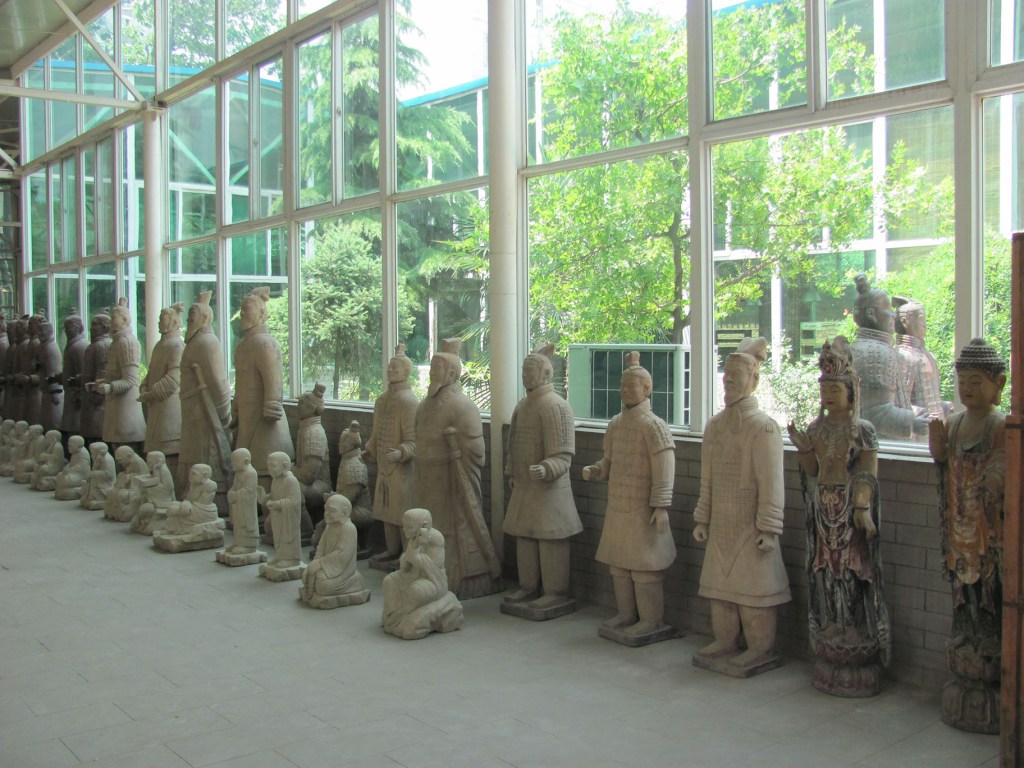
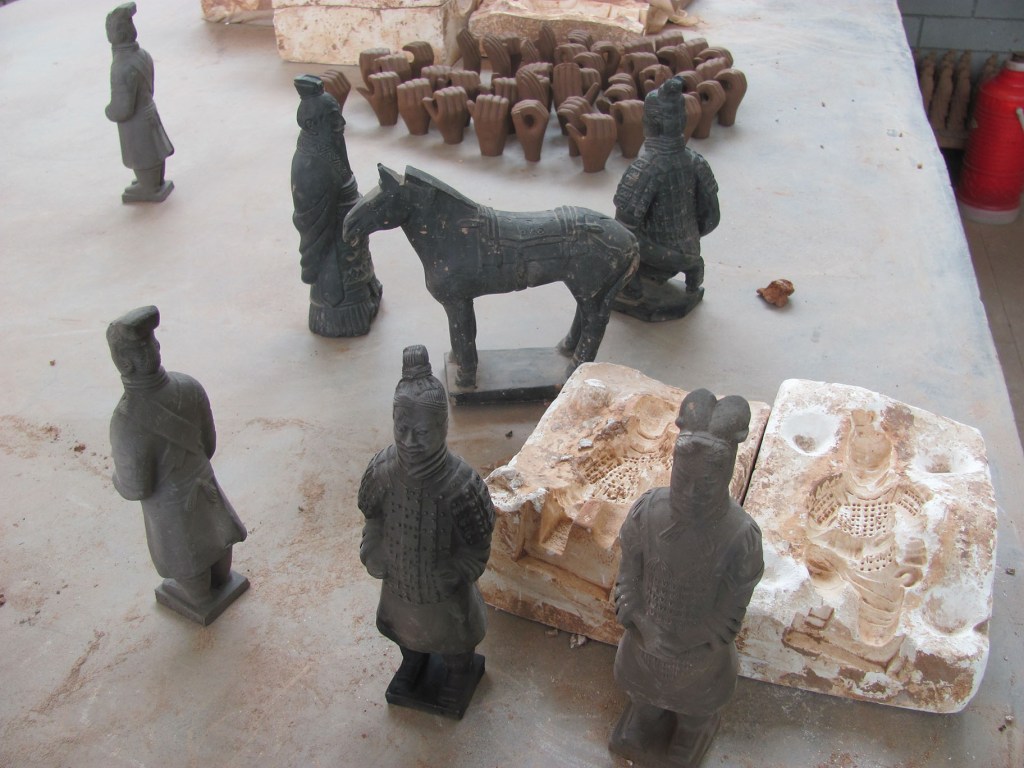
Before we went to the museum with the terracotta army, the tour guide took us to a factory for terracotta products. There they showed us the way of making the terracotta soldiers. The tour guides recommended us to buy souvenirs from here, as they are of guaranteed quality – so we did, we bought terracotta soldiers for 7 euros, and then in the museum the same cost $ 1! I believe that the quality of our purchase is really better, but yet we still took some souvenirs from the 8th Wonder of the World.
After the store we went to lunch and overfed with different types of Chinese food, we were ready to stretch our legs in the museum. The museum could also be reached on foot, but our group decided to take advantage of the electric buses, which took us right in front of the entrance of the museum, where there was a large square and around it several buildings. In each of the buildings were exhibited different exhibits. The first of these, of course, was the most magnificent, with over 1,000 warriers in it, I did not count them, but I believe that their number was close to that, as they were indeed many and surprisingly large! Knowing that each new generation was higher than the previous one, I imagined the ancients considerably lower, and these warriors were higher than I was. The height of the warriors varies from 185 cm to 209.77 cm. They were built around 240 BC and are now included in the UNESCO World Heritage List.


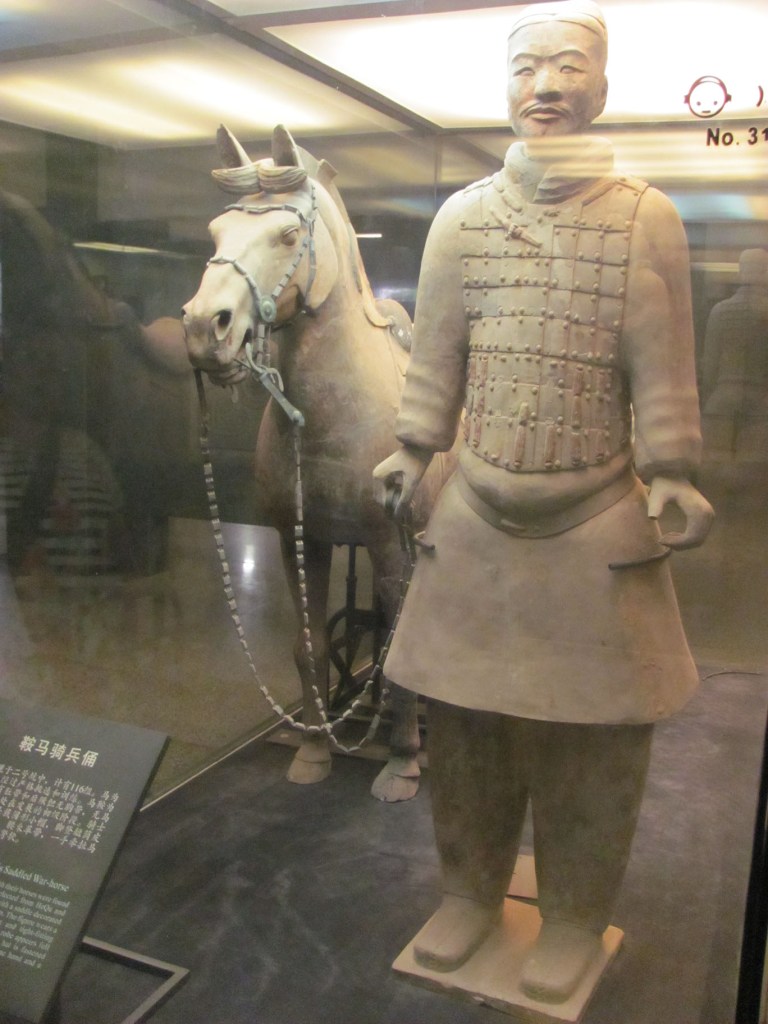
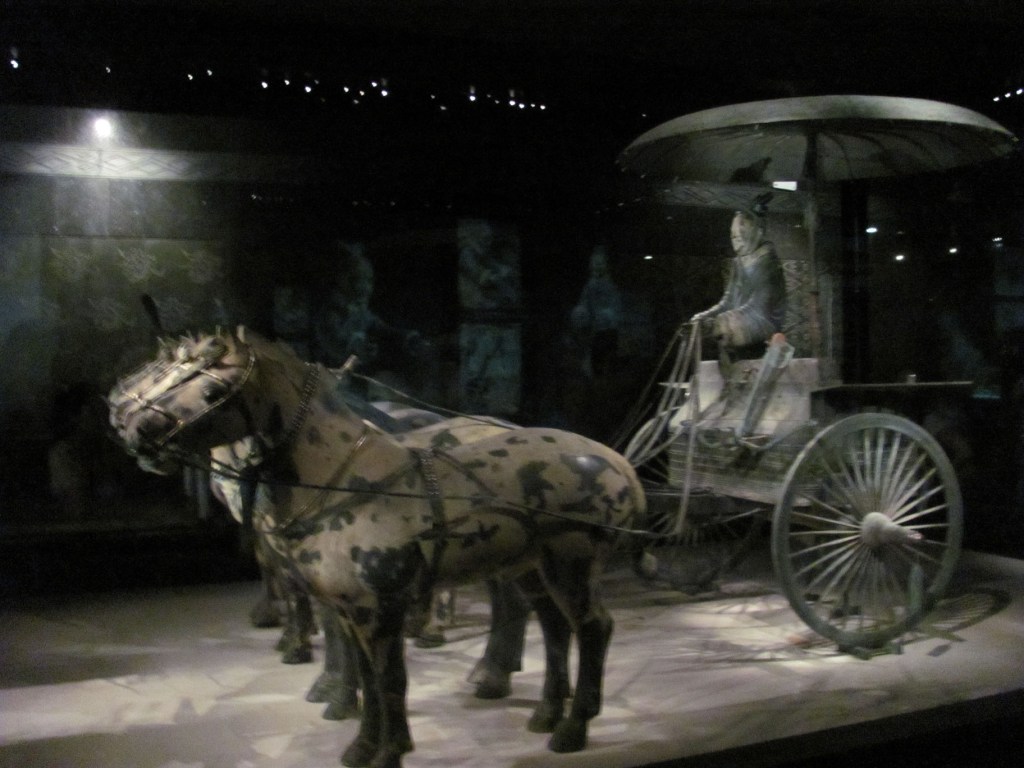


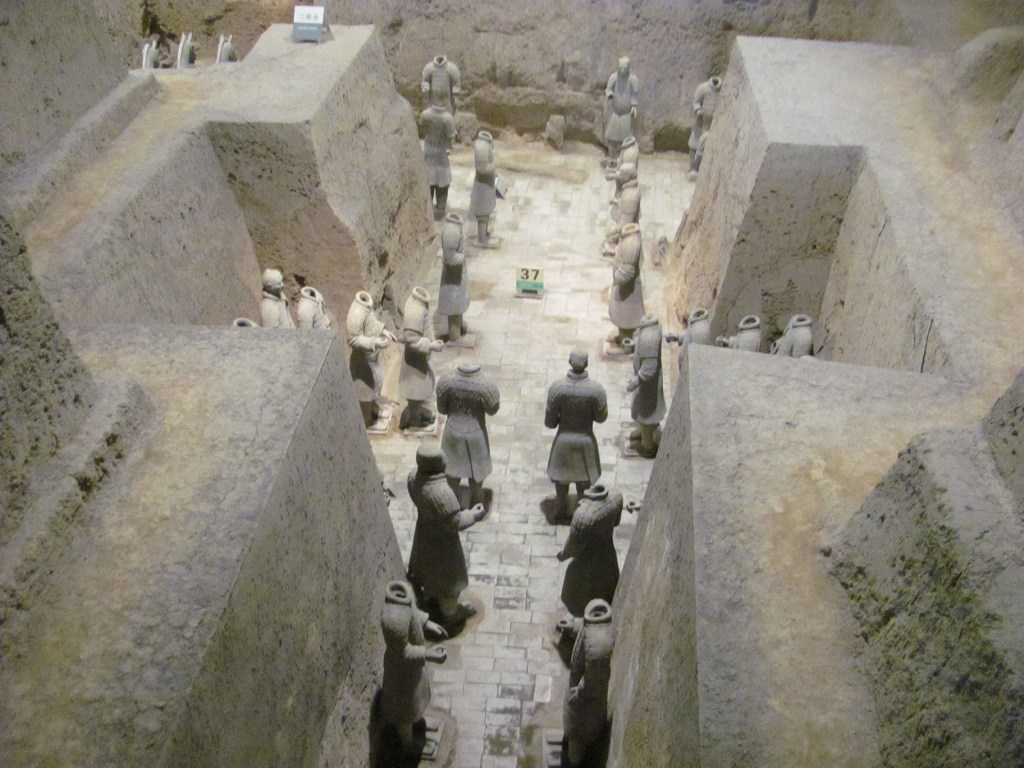

The tour guides gave as an hour and a half free time to walk through the various buildings, having previously told us in detail about this “ghost army” that defended the tomb of the First Emperor. The entire army consisted of about 8,000 figures of war, with 130 chariots, 530 horses, and another 150 cavalry—all life-size, buried somewhere around 210 BC. We were again called to the desire of the first emperor and his paranoia to rule in the afterlife as well as on earth.
In addition to terracotta soldiers, there are also servants, artists and concubines, especially beautiful and famous is the uncovered bronze chariot, which is one of the heaviest in China. I especially liked the bright colors of the warriors, which were apparently brightly painted before, but today pale prints have remained of the colors. In one of the exhibition halls we saw a team of archaeologists, who were currently restoring new terracotta warriors and with a thin brush, quite finely cleaned the dust from the figures. The faces of warriors are truly unique, no two are alike – as living people are, they are made in detail to the smallest part – they have their nails, even lines of fate on the palms. Only their swords are missing, apparently stolen thousands of years ago.
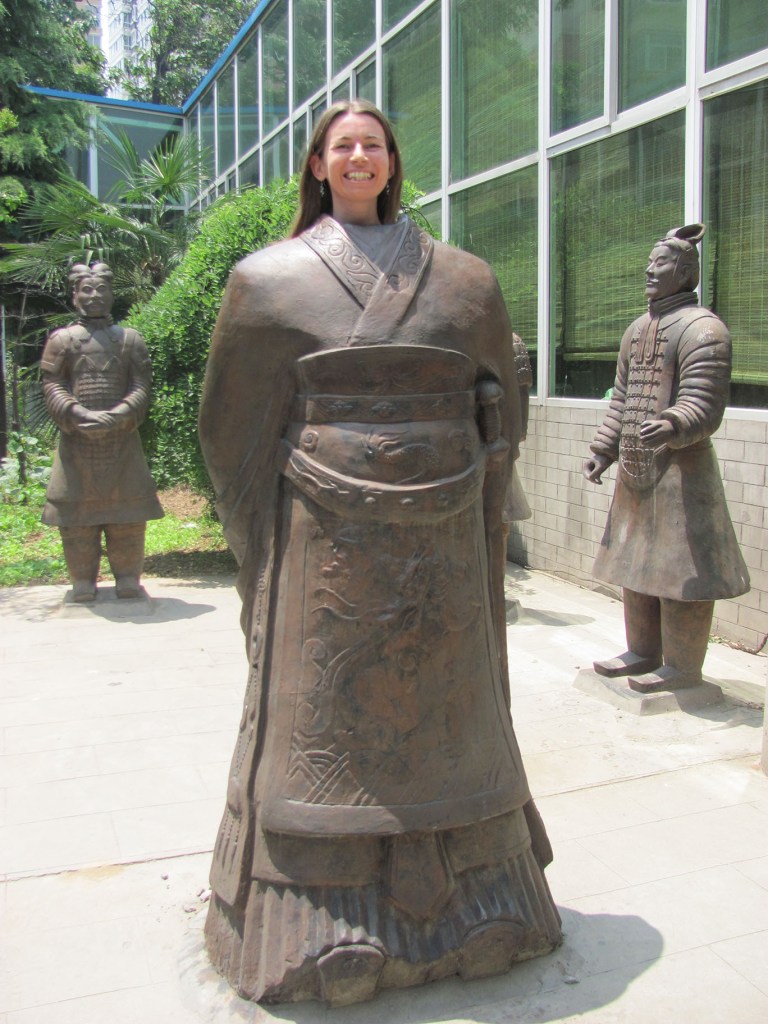
The historian Sima Quan wrote about the terracotta army in the 2nd century BC – a hundred years after the death of the emperor – according to him over 700,000 people in 36 years created the terracotta army. Modern historians consider this number an exaggeration, and according to them, 16,000 people would do it in just two years. However, this should in no way diminish the architectural uniqueness of the project, which I would vote for with both hands as the 8th Wonder of the World. I took a lot of pictures here, and I enjoyed posing next to these big and handsome men carrying ancient legends in their eyes.
On our way out of the museum complex, we had to go through a whole street with souvenir shops, where sellers bargained with passers-by, offering all sorts of Chinese items – from terracotta warriors, to knitted Chinese hats, from typical Chinese fans, to plush sweet pandas. I was able to refrain from shopping, but not from taking pictures. So for the entire trip to China, I succeed to take over 3,500 photos – far fewer than the warriors of the terracotta army.


From the museum we went straight to the restaurant for dinner. This Chinese province was famous for its pelmeni and at dinner we tried many pelmeni with different stuffing. Pelmeni are actually cooked pasta, and here those with chicken had the shape of ducklings, those with fish – just like fish, there were piglets and other figures. The table in the restaurant was constantly filling, and we poured into our plates and tried the different types. Here for the first time I ate lotus roots, which had a slightly sweetish and crunchy taste.
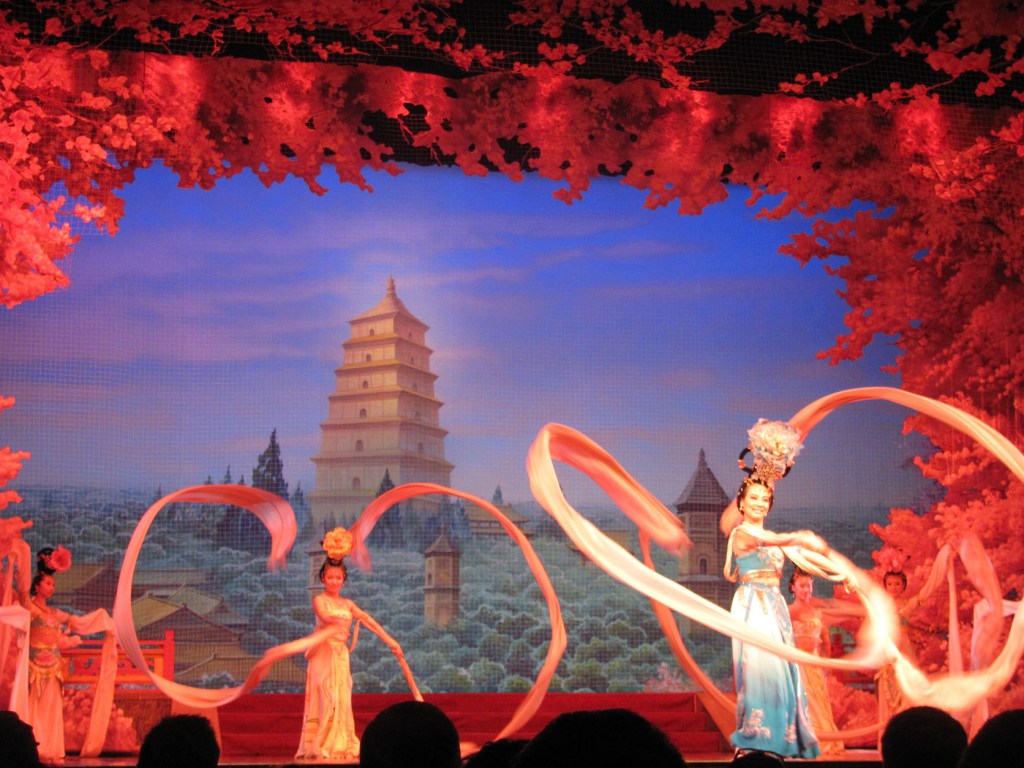
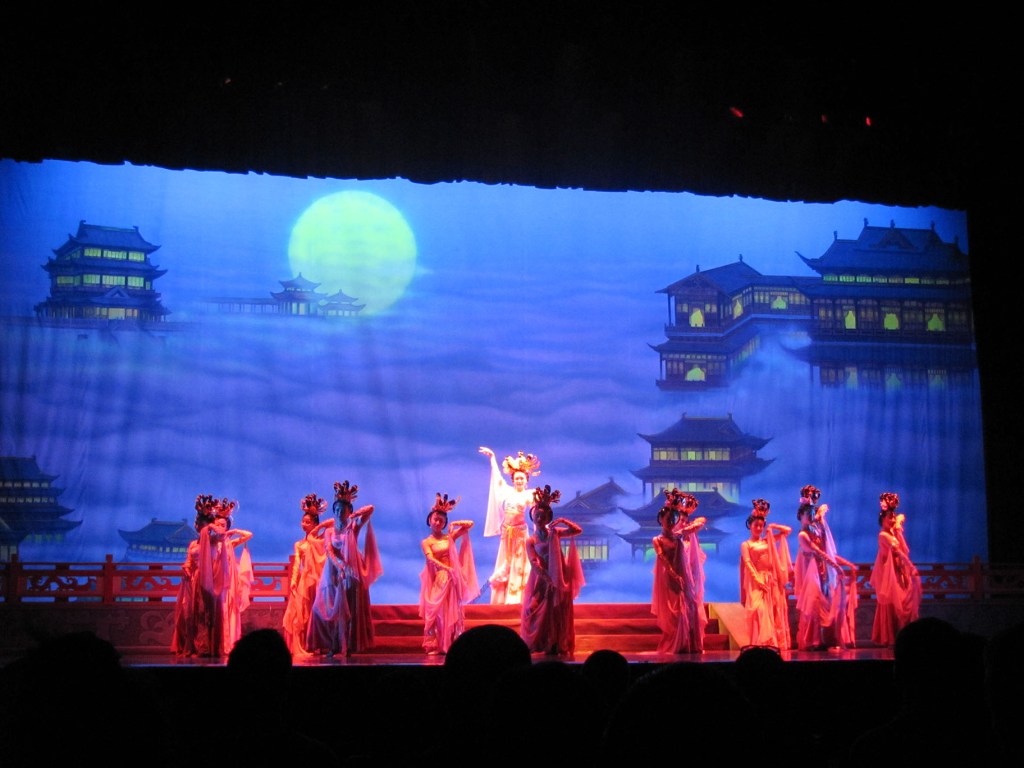
The wonderful day ended in a wonderful way. In the restaurant after dinner there was a dance show, with typical for the region folk dances. The whole performance was in the form of a spectacle for the emperor, who from time to time appeared on the stage, and for his pleasure, and for our mostly, beautiful dancers, master musicians presented wonderful performances with magnificent costumes and scenery. Especially beautiful were the dancers with long sleeves, who beautifully twisted their arms and sleeves created incredible effects. There was also a very nice musician who, in addition to playing with a whistle, accompanied himself with his mouth, making all sorts of sounds like songbirds.
The whole performance was like a faerie of fairy tales – each with different sets and wonderful costumes and performers. All of them were full of colors and in the evening at the hotel, closing my eyes, as if I had managed to store their images under the eyelids, and fell asleep quickly carried away from the fabulous China.

INTERESTING FACTS ABOUT THE TERRACOTTA ARMY:
1. The terracotta army was discovered quite by chance and is considered one of the greatest discoveries of the 20th century;
2. In September 1987, the Terracotta Army was declared the 8th Wonder of the World by former French President Jacques Chirac.
3. The Terracotta Army was established in 2200 years and is considered the army guardian of the Qing imerator in the afterlife. Today it testifies to the mastery skills of the former Chinese.
4. It is estimated that about 700,000 craftsmen worked on the creation of the army and took them 40 years.
5. No two statues are exactly alike—all differing in faces and expressions, as well as status—there are generals, soldiers, archers, etc., as well as civilians.
6. The average height of the soldiers is 1.85 m, the lowest warrior is 1.75 m and the highest reaches about 2 m.
7. All soldiers look east, from where the sun rises, which symbolizes light and hope, and observes the long-lived traditions of feng shui.
8. The terracotta army had weapons, but most of them were looted and missing. It is interesting that the few remaining weapons did not rust, despite many past years.
9. New statues continue to be discovered and restored today.
10. However, the very mausoleum of the Qing Imperator, which is considered an entire underground palace with many treasures, has not yet been excavated, most likely for 3 reasons: 1) The State Administration for Cultural Heritage has an established policy not to excavate imperial graves; 2) The Qing Emperor’s Mausoleum consists of huge labyrinths and pits; the terracotta army itself is only one section of these pits; 3) The protection and excavation of the Mausoleum is a delicate project and requires very precise equipment and knowledge to help restore without destroying the contents.
 TripTips