13-day tour of China
SHAOLIN (part 6)

In the morning I had lotus roots for breakfast, they were sweet, but at the end they left a slightly bitter taste. For the first time, I ate cup cake with chopsticks. There were forks and knives in the hotel restaurant, but in the past days I was so used to eating with chopsticks that I decided not to spoil my habits.
According to some manuals, after the Chinese population quickly began to grow, people began to prepare their food in smaller pieces so one can feed more people. It was these bites that led to the need to introduce chopsticks instead of forks and knives. According to our tour guide, chopstick feeding developed coordination and the brain, so the Chinese were smarter because they ate with chopsticks. Personally, I liked eating Chinese food with chopsticks very much – the food felt much more authentic. For the first time, since I was in China, I ate cup cake that was with a typical European taste, but the chopsticks made it more Chinese and sweet.
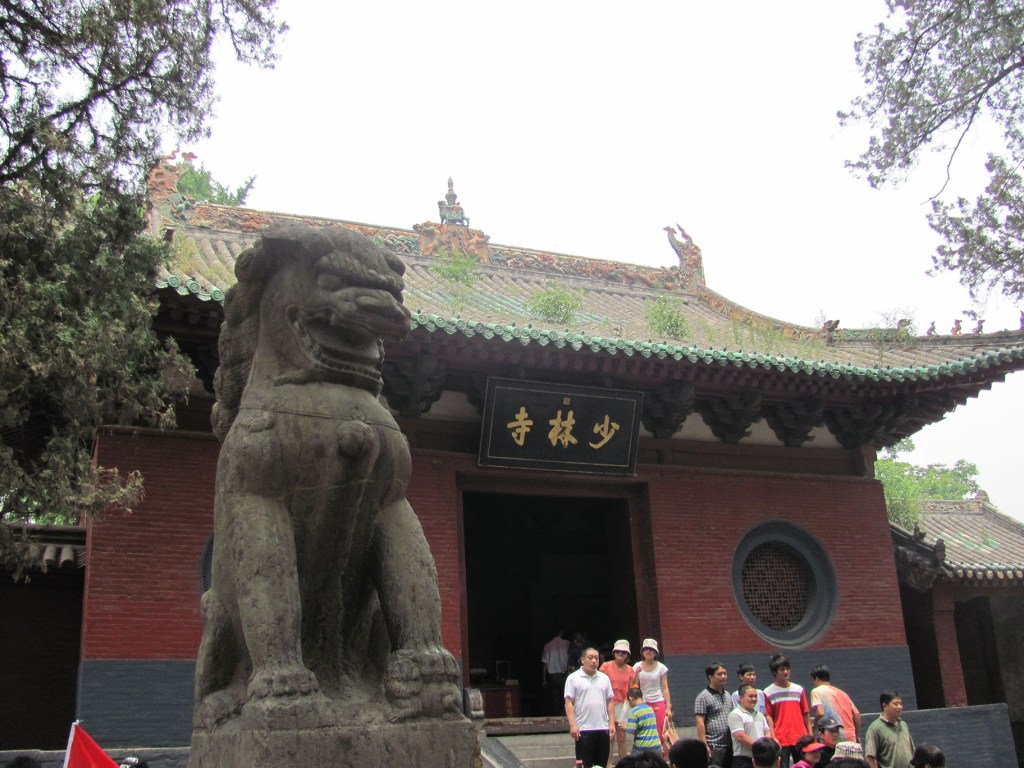
80 km southeast of Loyang was the famous Shaolin Monastery. It is one of the most famous Buddhist temples in China. Its name means “shao” small and “lin” monastery. The monk who founded the monastery felt that only from meditation, his body and legs were grasped and thus created kung fu, which then became a martial art for self-defense.
The monastery itself was built in 495 and was destroyed and rebuilt several times. According to historians, the golden age of the monastery was during the Tang Dynasty (618-907 AD), then 13 monks managed to save the future Emperor Li Shamin from the numerous army trying to make a coup. When Li took the throne, he expressed his gratitude, by giving away a lot of land and wealth to the monastery and turning it into a kung fu center. Based on this story, the famous film Shaolin Monastery was filmed, which makes the monastery world famous. In my opinion, however, modern times can also be called a golden age – from the 30 monks living there, none of them work in the fields and do not grow crops as before. They are fully supported by the tourists who on this Sunday sunny day had occupied the monastery as a thousandth army.

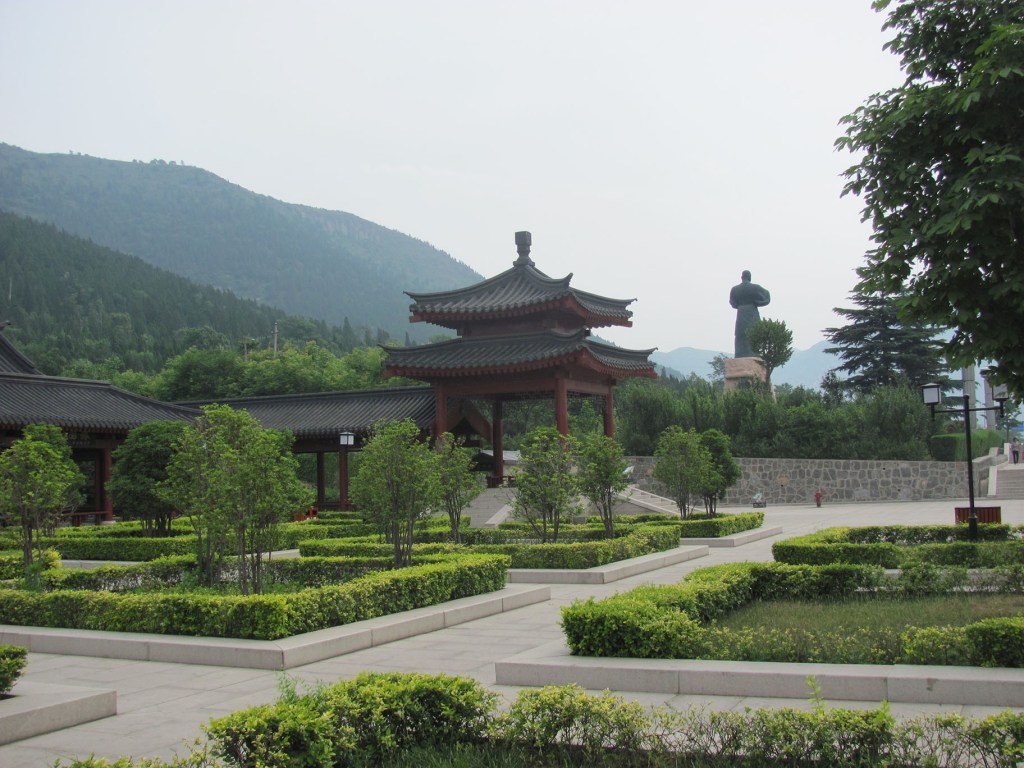
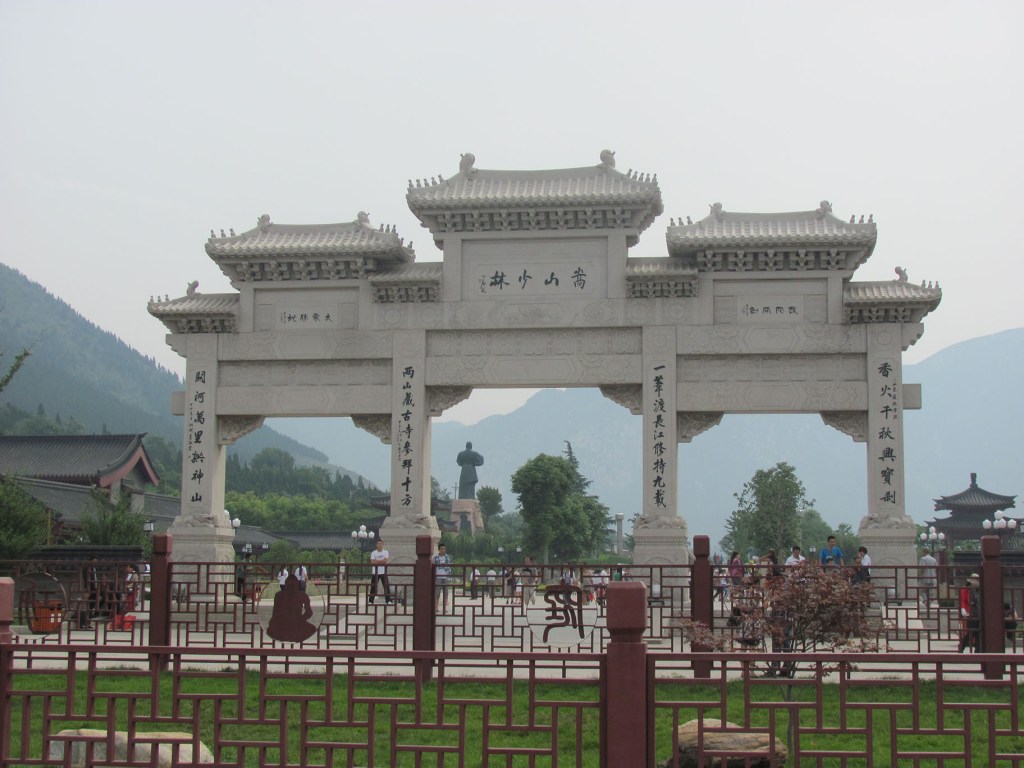
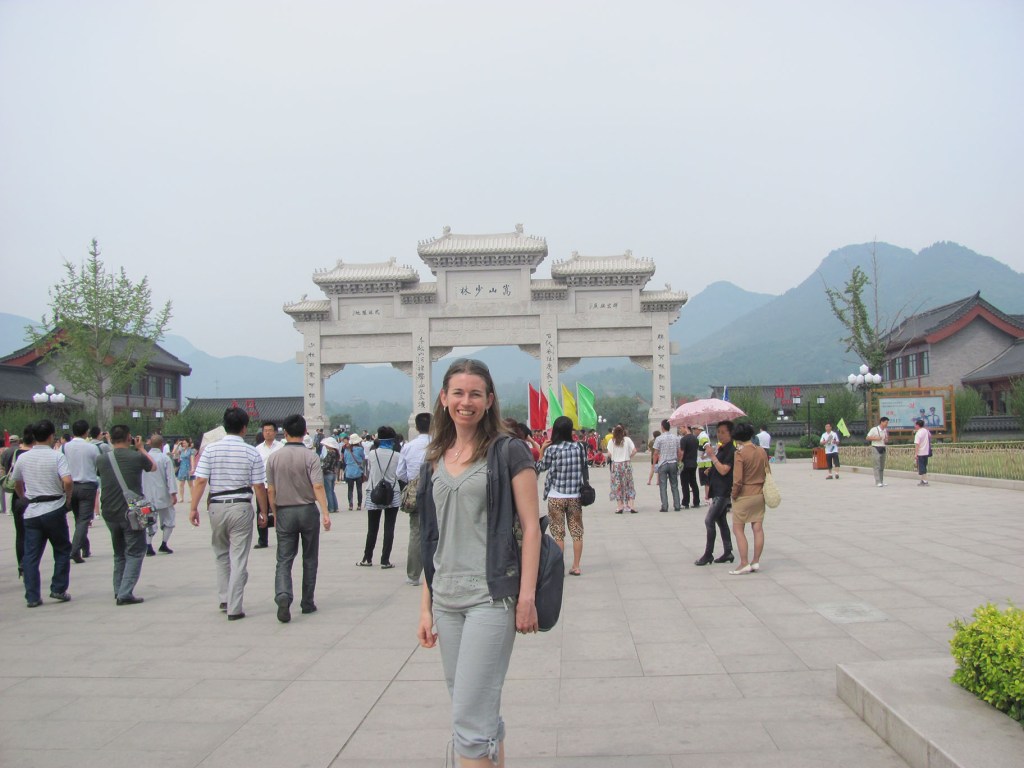

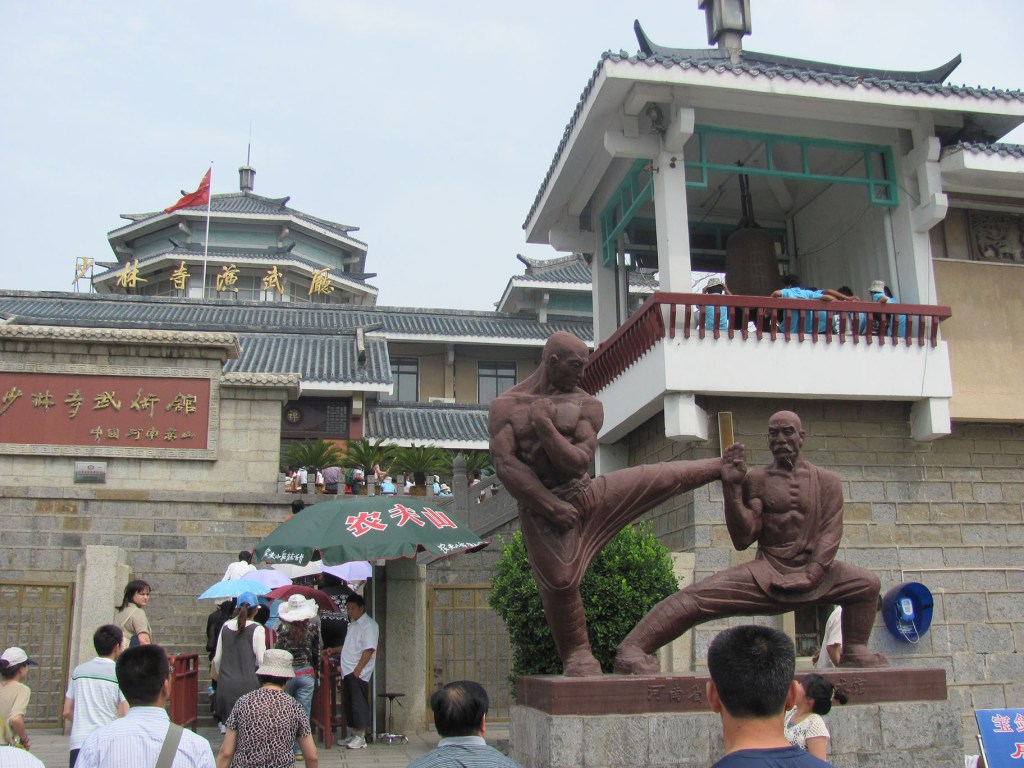
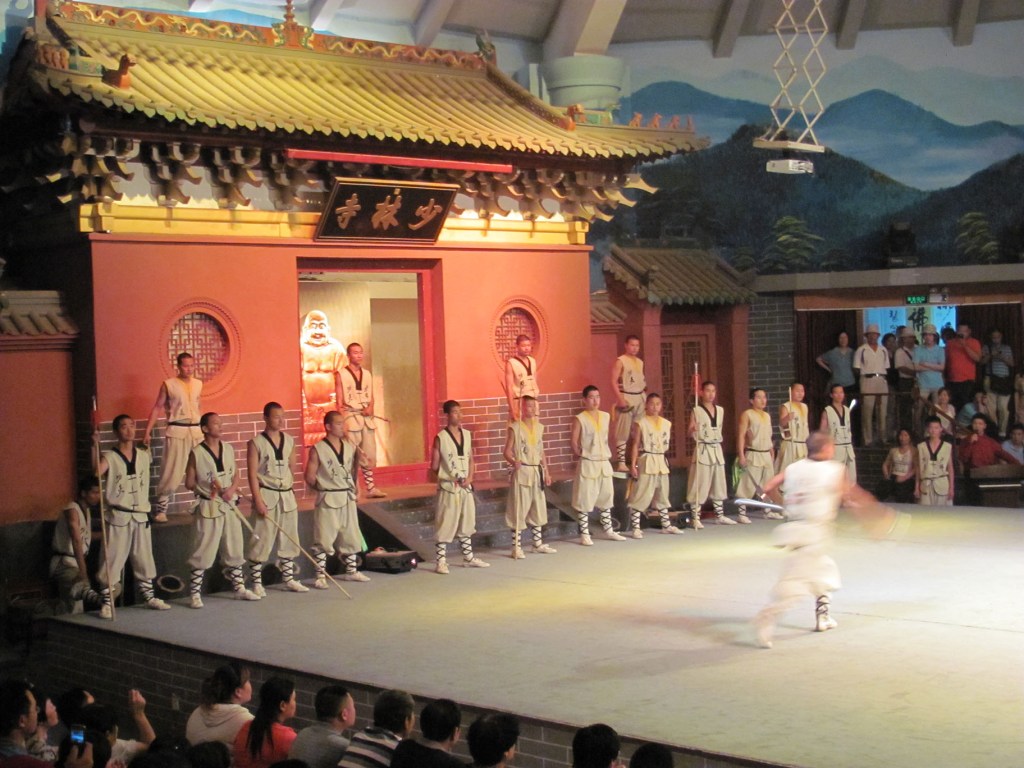

In the morning, the tour guide told us to hurry so that we could get to Shaolin earlier and take nice places during the kung fu show, which was at 10:00 am – in a small hall. There were lots of people there, we got in a big queue, but the waiting was worth it as we took nice places and enjoyed the 1-hour performance. It was interesting and funny – they invited even people from the audience to the stage, who had to repeat the movements of the monks, and they were not easy at all.


After the performance, we walked around the old monastery, where we learned the sad story, why the monks greeted each other with a prayerful posture, but with only right hand raised. Sometime in the 6th century, Shen Guang came to the monastery, he wanted to become a disciple of the monk Da Mo, who, however, did not pay attention to him, and although Shen spent 13 years waiting to become his disciple, Da Mo never paid attention to him. Finally, one winter’s evening, Shen asked Da Mo “when will you finally become my teacher,” and Da Mo replied, “when it starts to rain red snow.” Then, without thinking, Shen drew his sword and cut off his left hand, waving it high—the same one quickly frozen, and the wind shrugged off the red droplets of blood that formed red snow. Seeing all this, Da Mo agreed to become his teacher and began teaching him here in Shaolin.
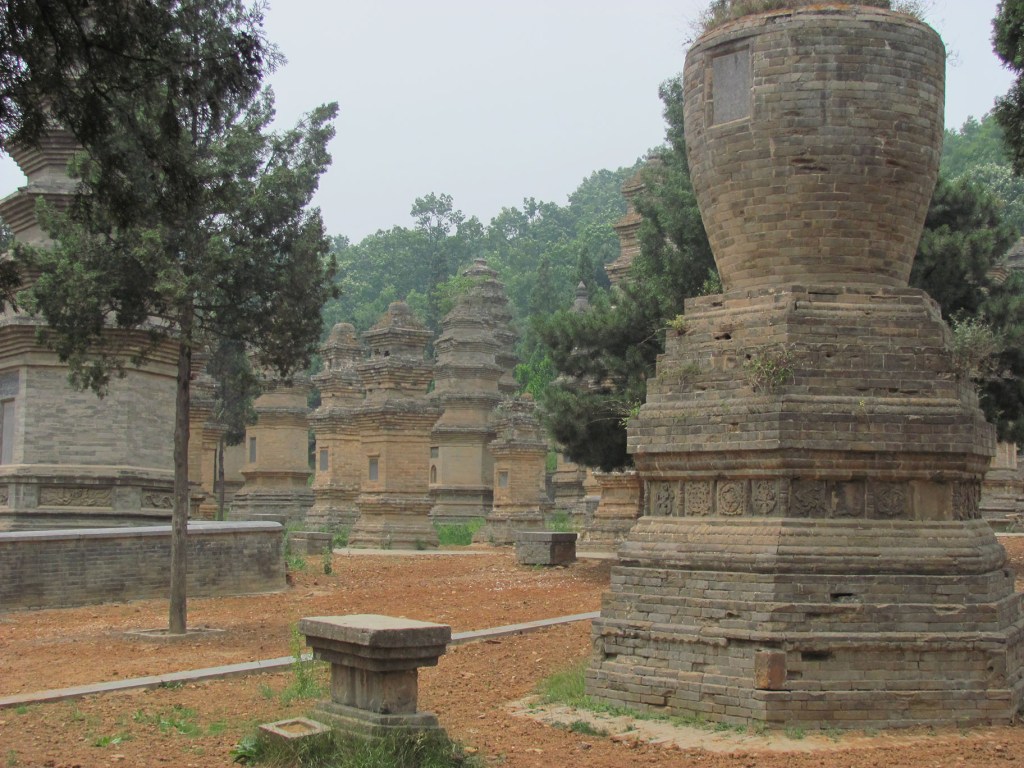
I find the story too sad. The temple was built in the same way as the past, but it was completely rebuilt in 1928, when it was burned. Buddhists here did not allow tourists to photograph them, which I found not very friendly, but at least we enjoyed the performance, and later in the yard we saw several children who also skillfully presented their kung fu skills. Today Shaolin is one of the most prestigious schools in China and getting here becomes very difficult and obvious with a lot of money. We lit 3 chopsticks for good luck and continued to the Pagoda Forest, where some of the most prominent monks in the monastery are buried. It is the largest pagoda forest in all of China, exceeding the number of 240 graves, including those from the Tang, Jin, Yuan, Ming and Qing Dynasty (611-1911). Most pagodas are made of stones and bricks, ranging from one to seven floors.







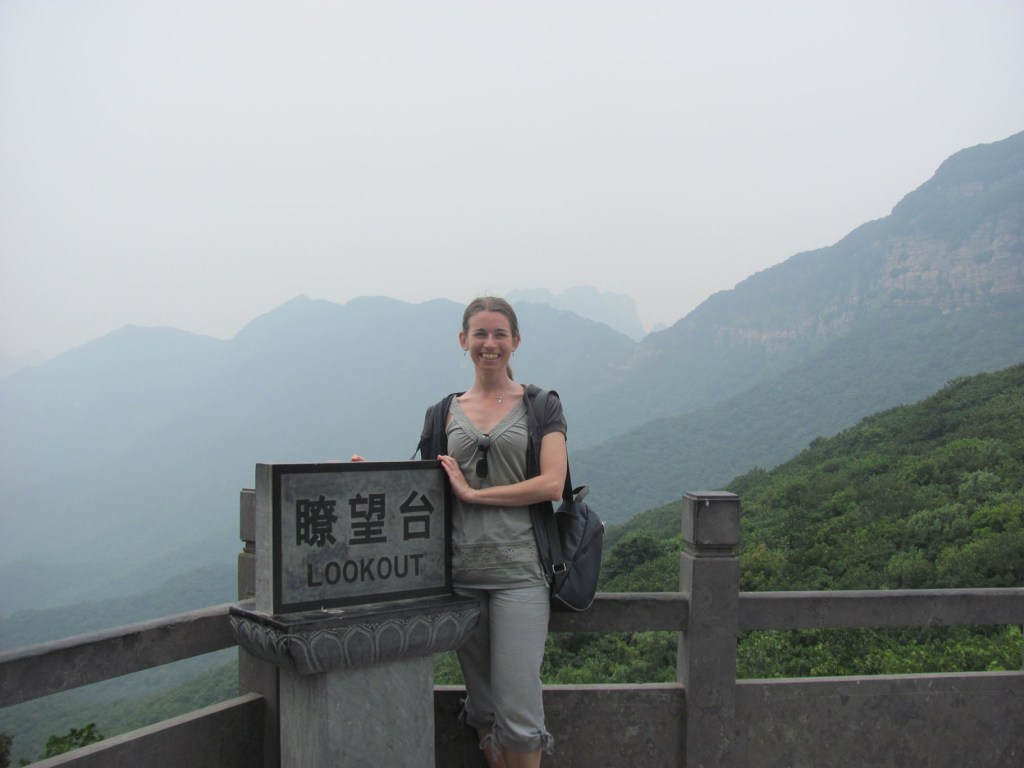
From the forest of pagodas we walked to a lift station that took us high in the Sunshan Mountains. I had never ridden such a high lift before. The ropes seemed to stretch into the sky and the earth remained very far away from us. It awakened a slight fear, but also a wonderful feeling, to see all the greenery from a bird’s eye view. Up at the top of the mountain we had only 20 minutes of free time, just enough to refresh ourselves from the heat below and take some pictures from above. The mountain ranges intertwined each other like waves of the sea, which my eyes eagerly swallowed, and the camera barely captured.
Then lunch followed, after which we went to a large supermarket, from where we could buy food and water before boarding the night train that would take us to Suzhou. The distance from Loyan to Suzhou was 946 km, which we took in 16 hours, leaving at 19:00 and arriving the next day at 11:00, because this time the train was not direct, but stopped in many places. The same again had beds, in which, after the slight rattling of the train, and after watching a movie on my computer, I managed to drift off and get some sleep.



Interesting Facts about Shaolin Monastery:
- It’s believed that the monastery was founded in 495 by a wandering Indian monk.
- There is a popular saying in Chinese folklore that “all martial arts under heaven originated from Shaolin”. It was the Shaolin monks that developed Kung Fu as a means of self-defense and a path to spiritual enlightenment.
3. There is a legend that a werewolf lived at the Shaolin temple. During the latter half of the 19th century, Tai Djin was born with hypertrichosis (excessive hair growth anywhere on the body) and his family believed he was a demon upon his birth and left him in a nearby forest. Shaolin monks found him and took pity on him. They raised the boy and there he mastered many styles of Kung Fu. He was considered as one of he greatest martial artist in China.
4. Shaolin is still famous with it martial arts training to both monks and outsiders.
5. Shaolin Monastery has been the inspiration behind numerous martial arts movies. From the legendary „Shaolin Temple“ series to modern blockbusters like „Shaolin“.
 TripTips