13-day tour of China
SHANGHAI (part 9)


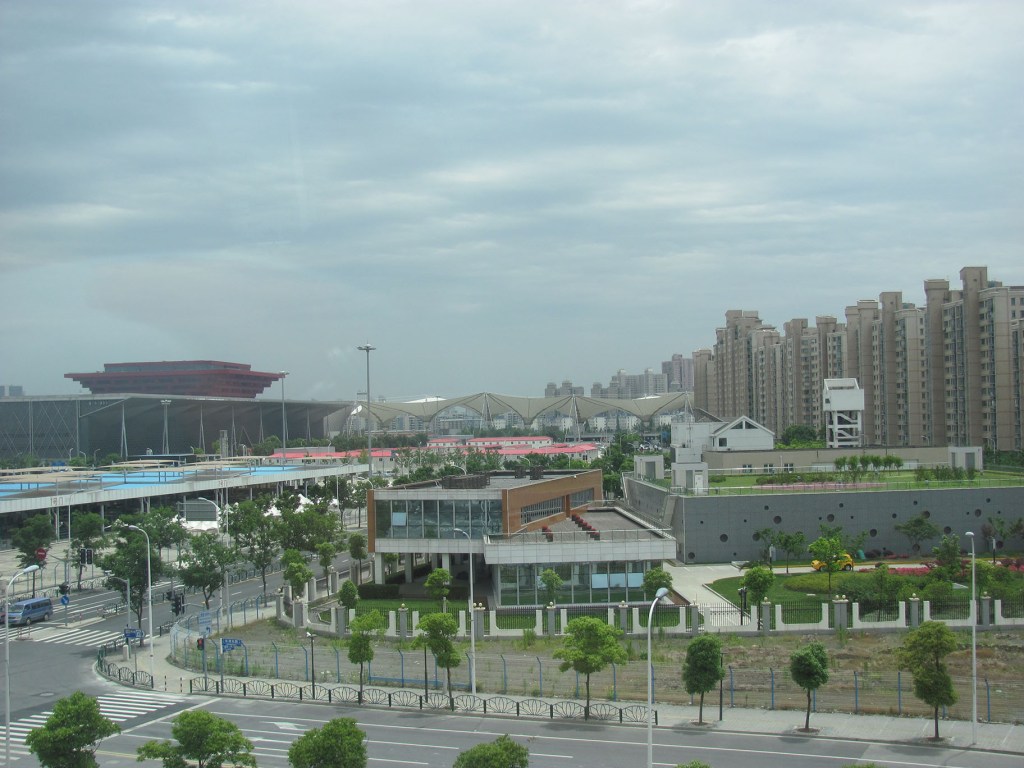
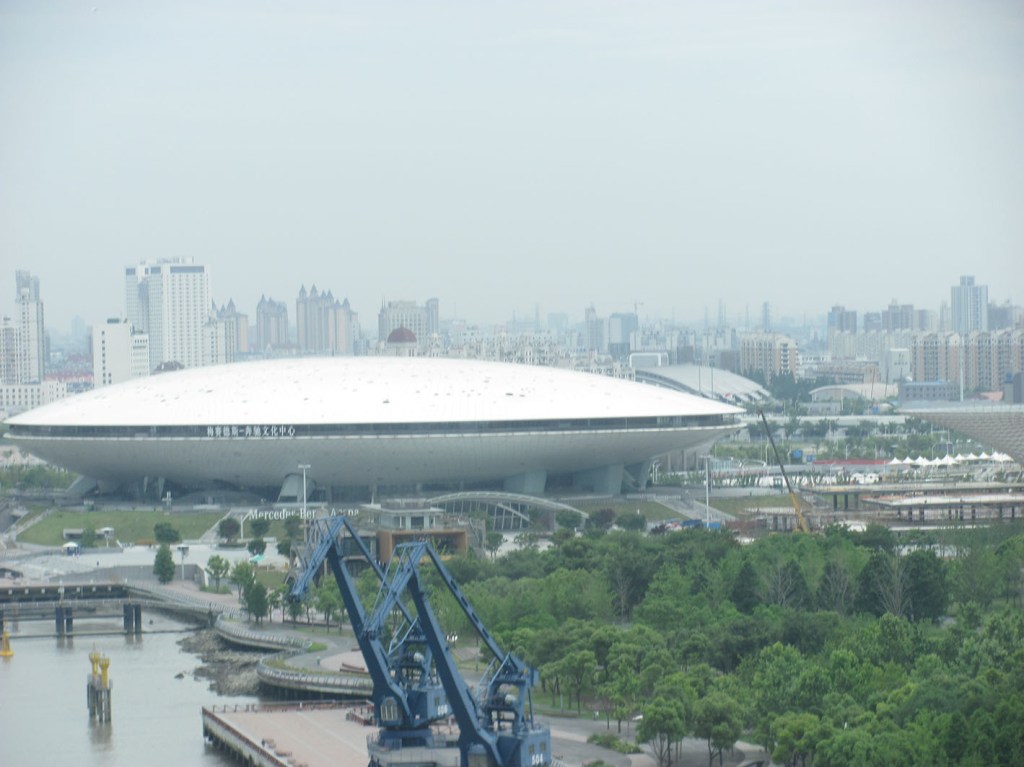
We arrived in Shanghai by bus from Hangzhou, which was only 177 km away. Shanghai is the most populous city in China and the world, with a population of about 26 million people!
It is located on the delta of the Yangtze River, flowing into the East China Sea. In fact, the Yangtze River is the longest river in China with a length of 5,623 km, followed by the Southern River – 4,672 km.
It is difficult to imagine that this large metropolis, only a century ago, was a small fishing village. After the Opium War that Britain won, the city was granted a concession and quickly became a thriving center of overseas trade. In 2005, the city was named the largest cargo port in the world. It posses also the largest metro in the world consisting of 11 lines and built in just 25 years.
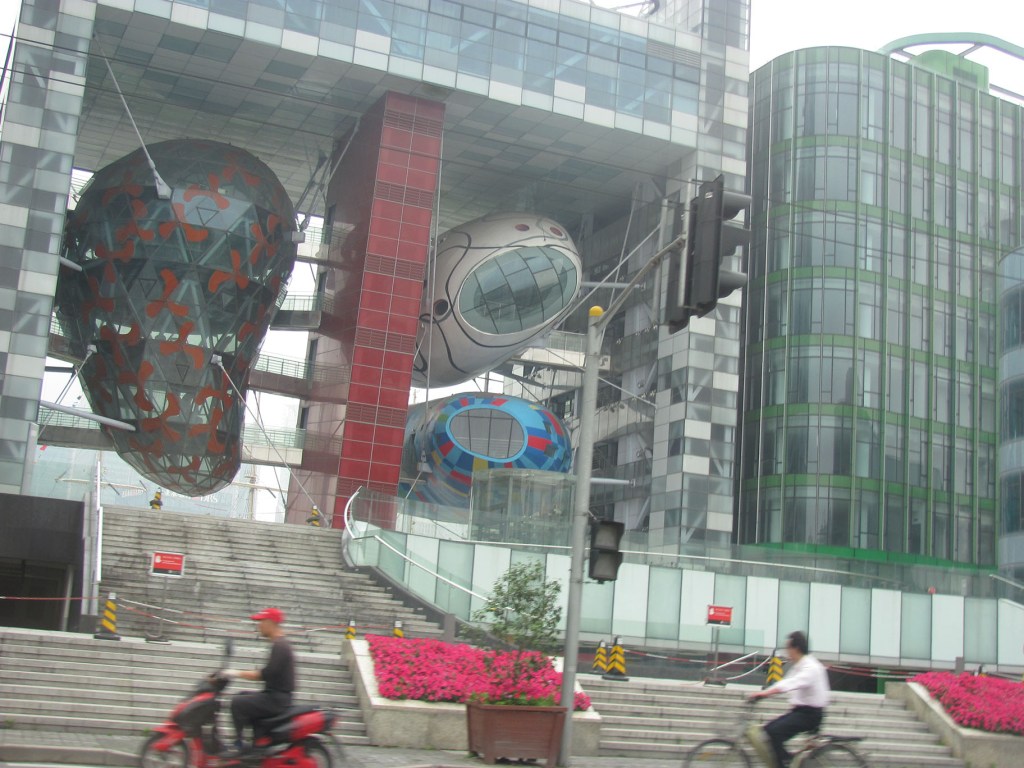
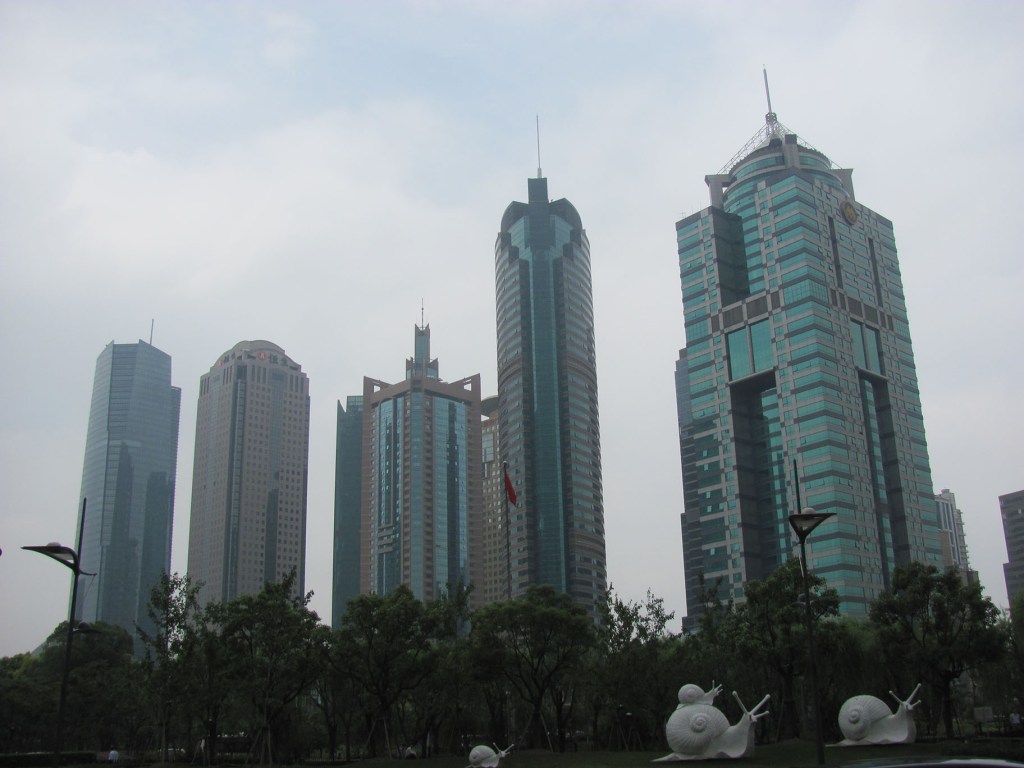
As soon as we entered the city we were struck by the high skyscrapers and if until now we admired the rich Chinese history, that day we were entering a city of the future, which even during the day glamorously shone. We passed through huge boulevards with 7 lanes in the direction, and we never came across a big traffic jam like we had in Sofia, then crossed bridges and tunnels. Finally, we reached the hotel, where we had 15 minutes to leave our luggage and prepare for the city tour.

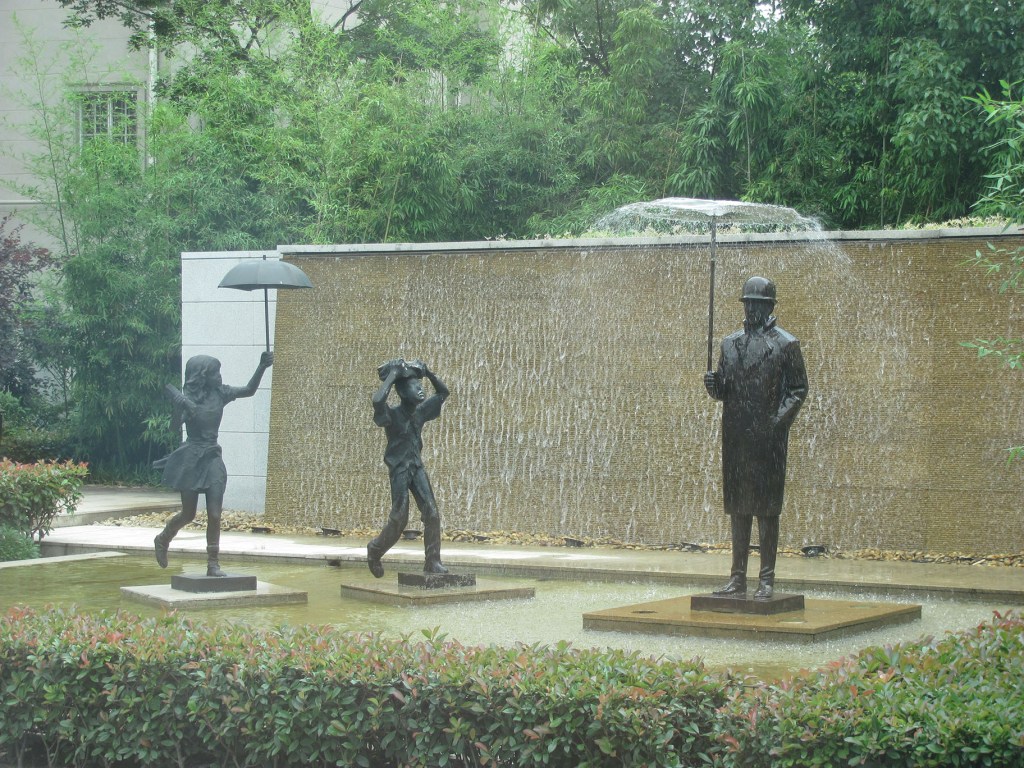
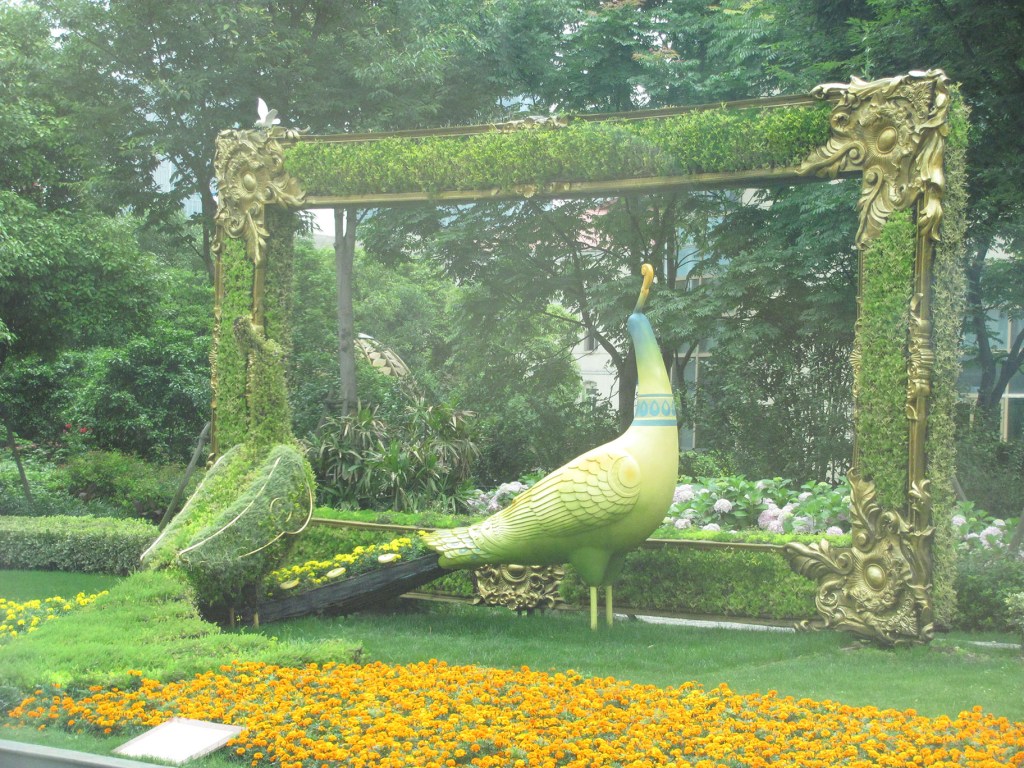
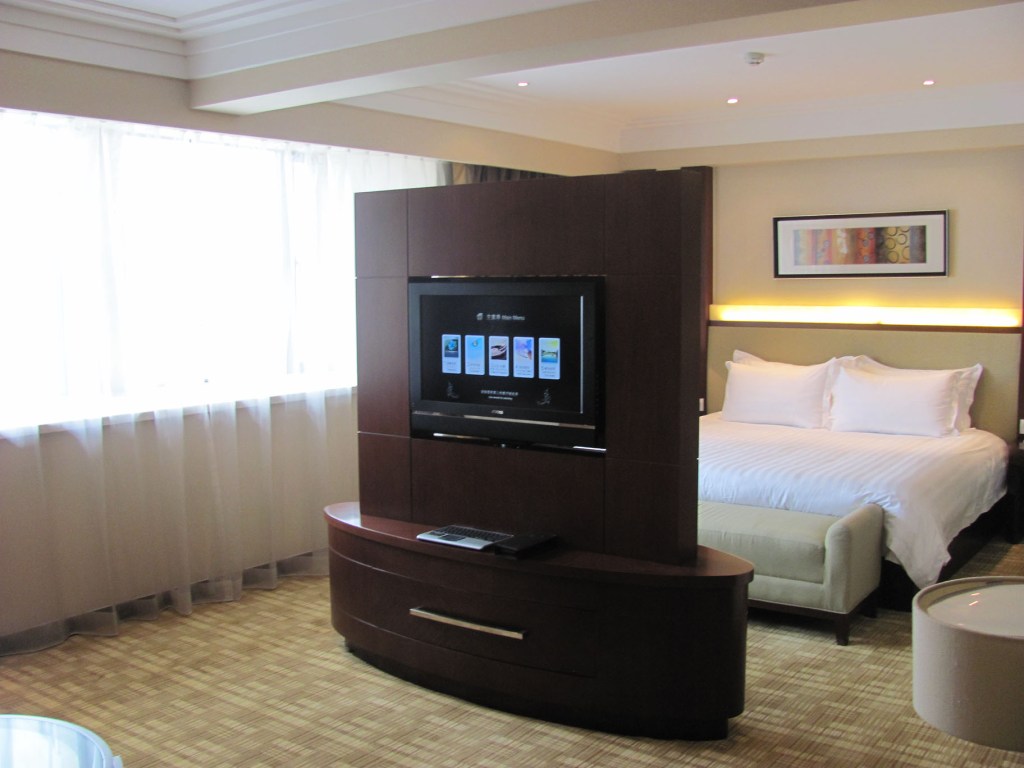
The Ocean Hotel ***** impressed me – room 2006 on the 20th floor was the nicest room I have ever been to. When I entered the room, I found myself in a small entrance hall where there were wardrobes. From here I entered the living room and bedroom, which were in the same room, but were separated by a cabinet in the middle of it there was a TV and which could be rotated so that TV could be watched in both the living room and the bedroom. Between the bedroom and the bathroom was a transparent wall, and the bathroom itself was huge. There was a bathtub and a separate cabin, the cabin itself being huge. The bed was also big and so soft, and I couldn’t believe this 5-star luxury that I hadn’t dreamed of. Again, I swallowed my tongue in China, not because I don’t speak their language, but because once again they managed to leave me speechless, impressed by just everything.

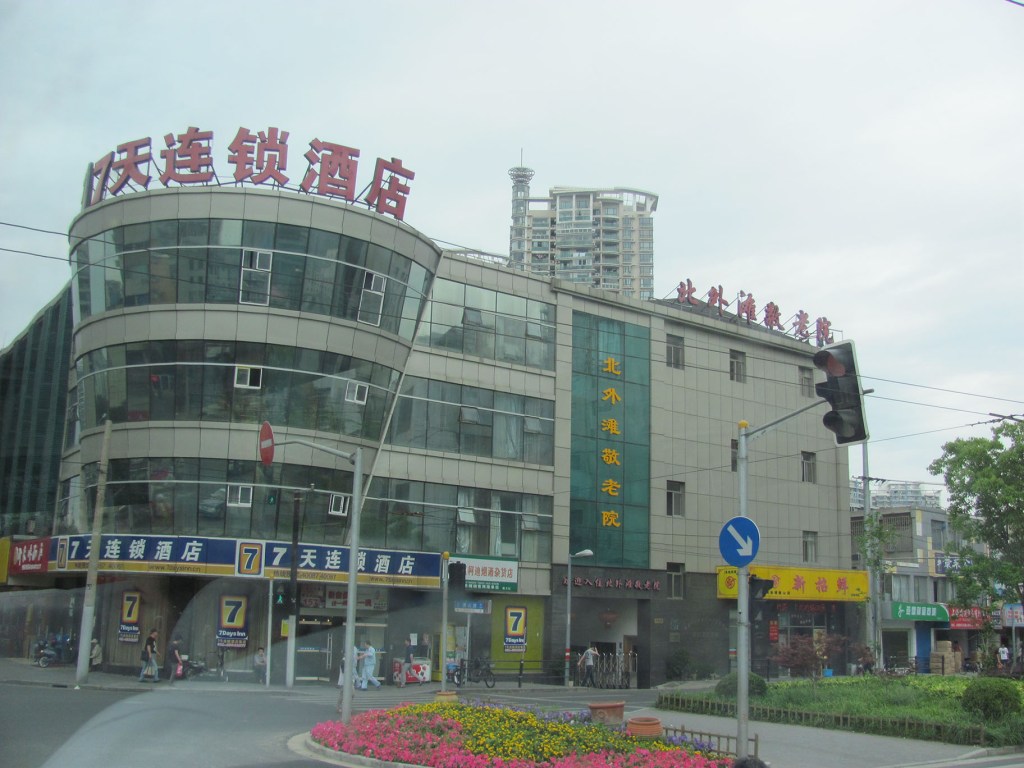
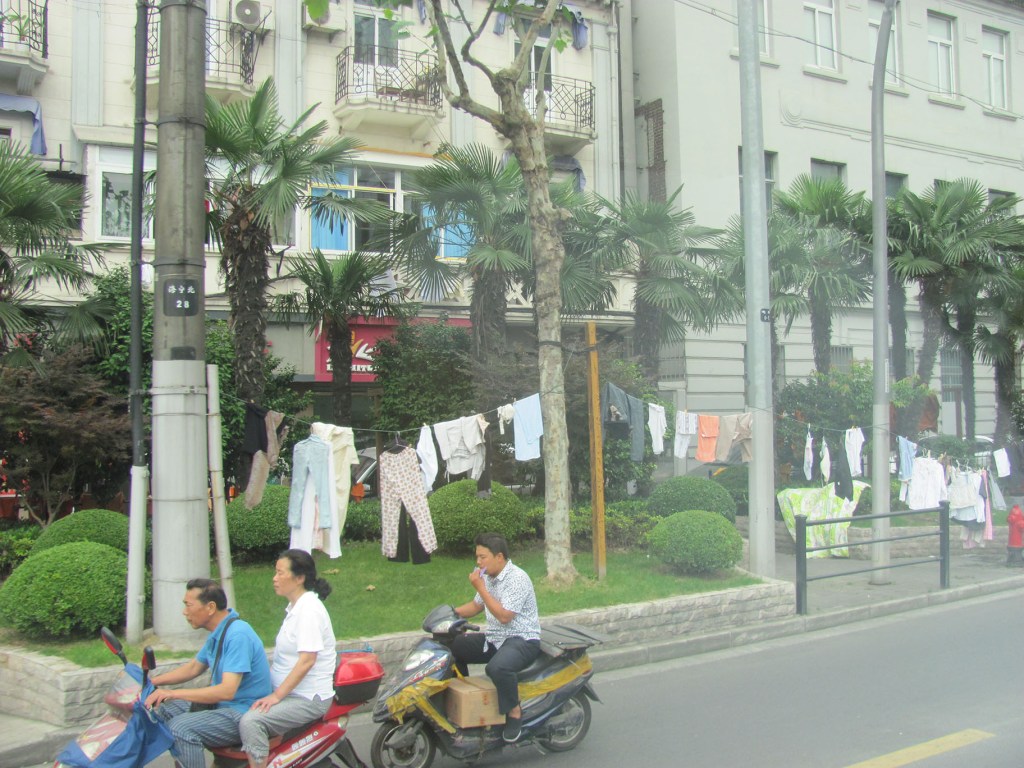
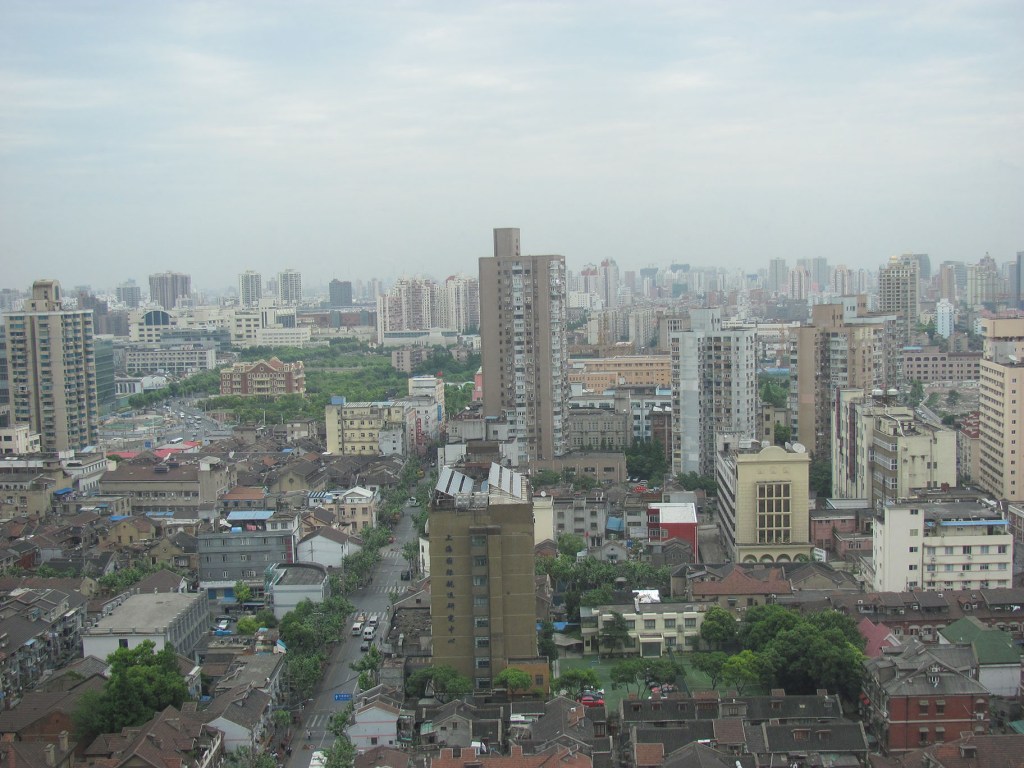



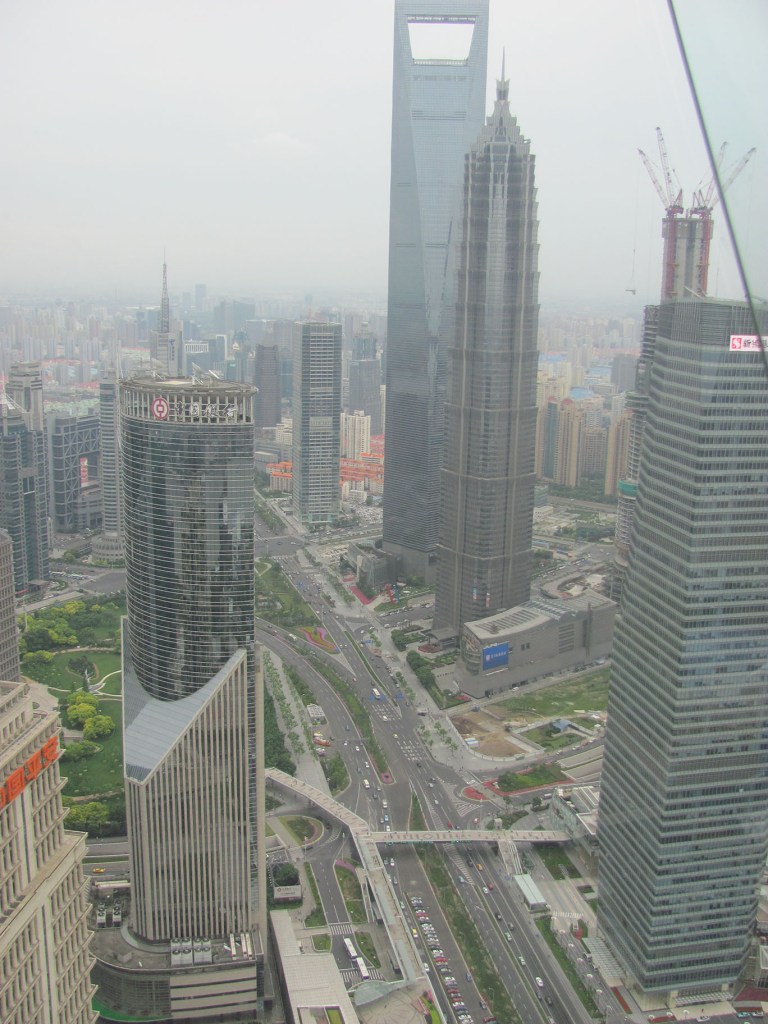
Shanghai is a city of contrasts, with the bus we passed through slums where laundry hung and dried on the street, followed by expensive decorated flower alleys leading to 5-star hotels and business buildings. Almost everywhere we saw the “Opener” – the tallest building in Shanghai. This is actually the World Financial Center, which was built in 2007 and reaches a height of 492 meters. According to our tour guide, there should be a circle in its center, but during construction, plans changed, and instead of a circle there is an empty square that likens the building to a giant opener and the building is quite impressive.
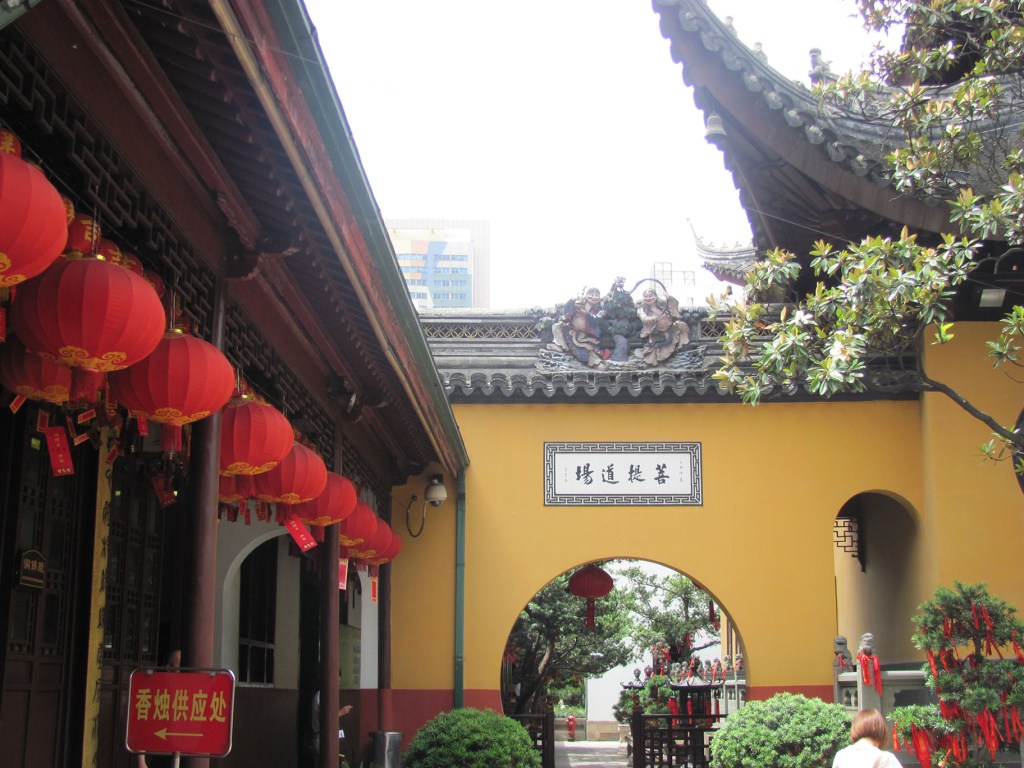
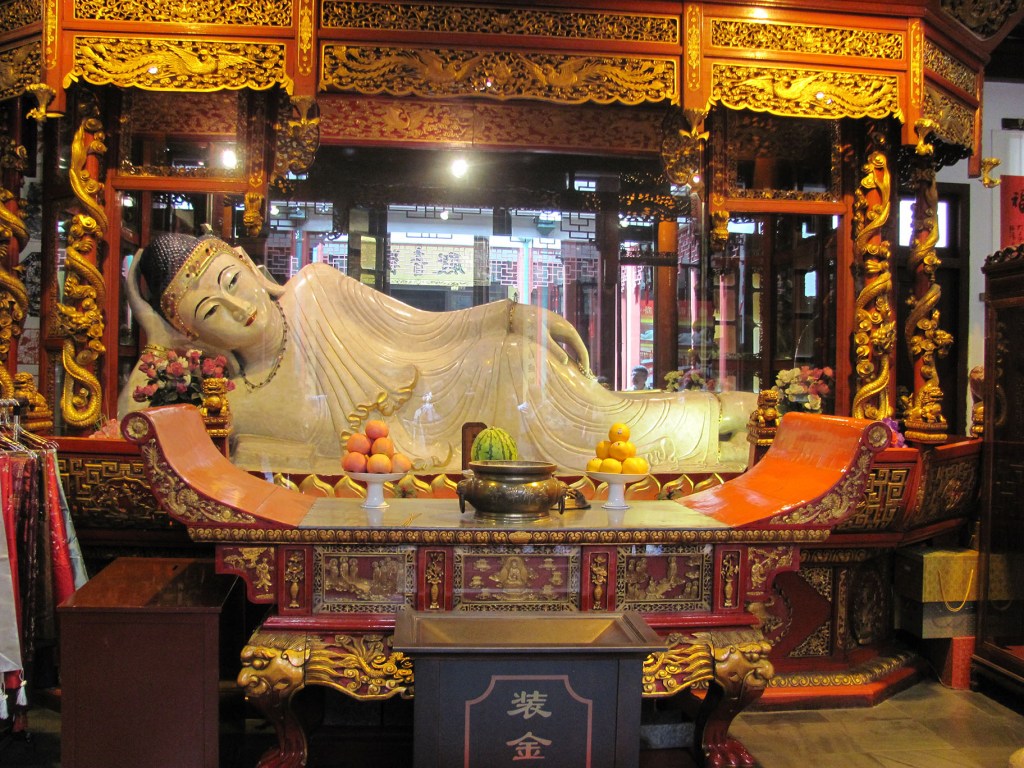
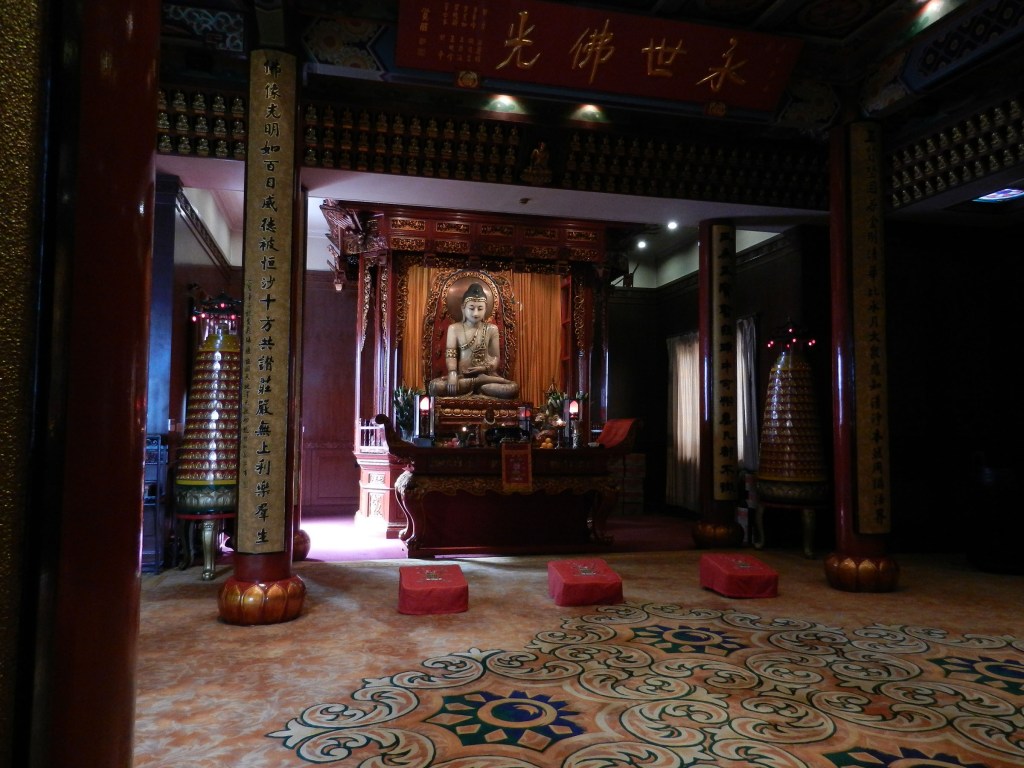
Our first stop, however, turned out not to be a skyscraper, but an ancient temple in which the famous figure of the Jade Buddha was located. The Temple of Jade Buddha was built in 1882, when two huge statues of Buddha, made of jade from Burma, were imported to Shanghai. The temple itself was adorned with many red lanterns on which visitors could write their name or wish and then hang it in the temple. Instead of buying lanterns, we made a very quick but charming walk through the temple, which in addition to lanterns, was filled with numerous statues made of semi-precious stones, among which the largest are: the statue of the sitting Buddha 1.95 meters and weighing three tons and one smaller, of the reclining Buddha. The temple is active and is one of the major tourist attractions in Shanghai. Today, its garden is paved with stones and many lotus flowers that lead to the great precious hall where believers can pray to the Buddha for the past, present and future. There are three golden Buddhas in this hall, but of course the temple’s greatest wealth is the 1.9-meter-tall Nephretite Buddha, which is upstairs where photography is not allowed.

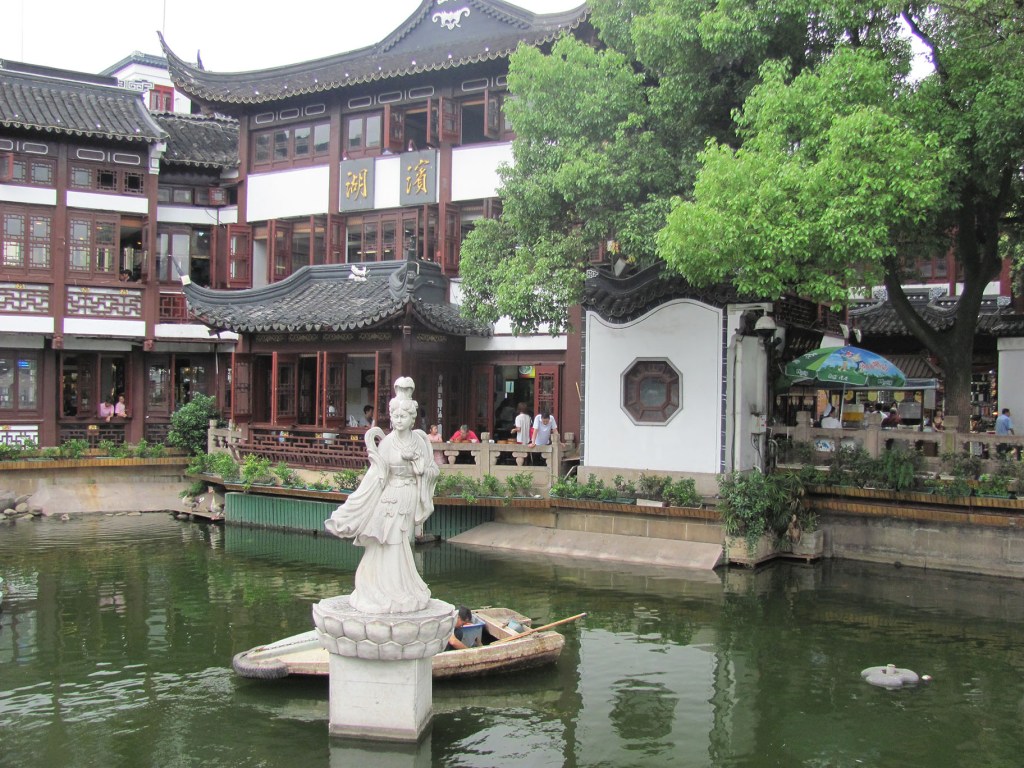
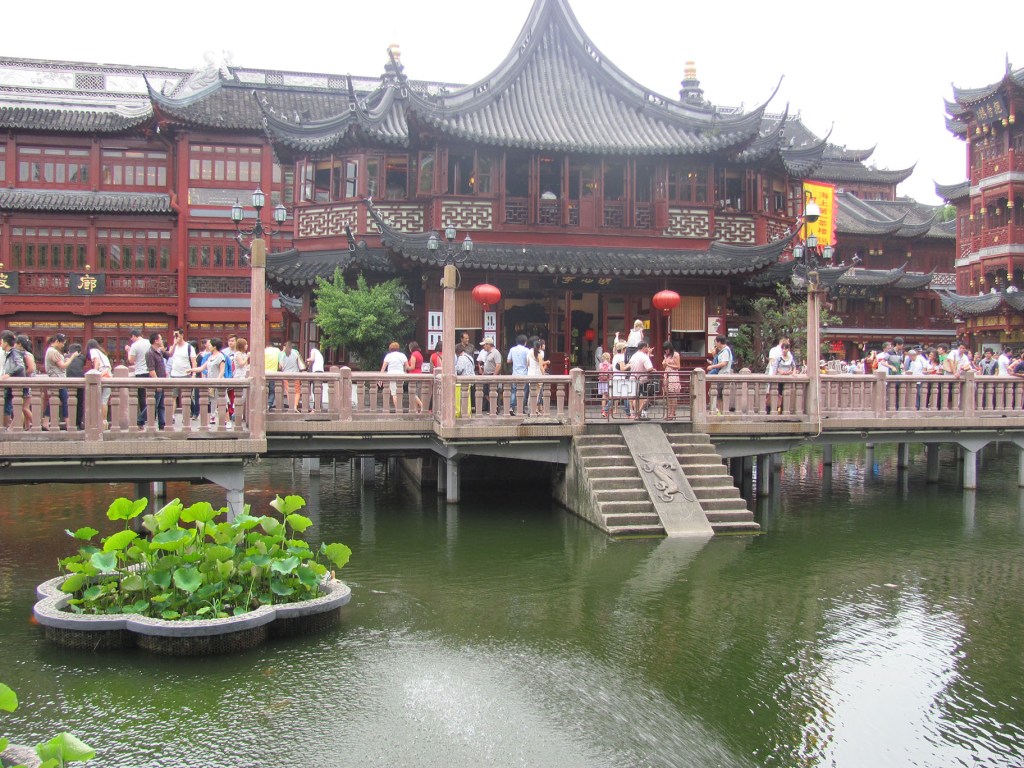
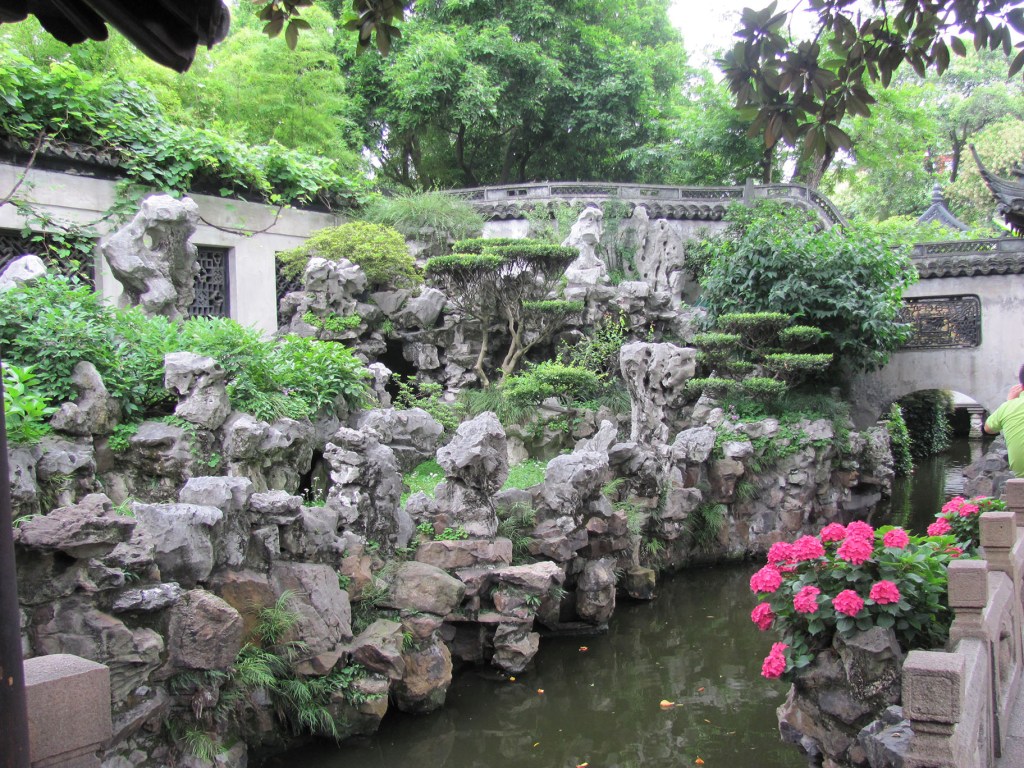
Filming was allowed at our next stop along the way – the Yu Garden of Joy, located in the so-called Chinatown of Shanghai. After being concessioned, Shanghai’s neighborhoods were accordingly divided into French Quarter, English Quarter, etc., with Chinese remaining the most charming, filled with old but renovated and beautiful Chinese buildings, including the lovely Yu Joy Gardens. The gardens were created in 1559 by a wealthy clerk, who spent more than 20 years creating them, dedicating them to his aging father. Until 1956, the gardens were privately owned, but the Chinese government decided to restore them and since 1967 they have been open to visitors. Currently, the gardens occupy 2 hectares of land and are divided into 6 main parts of different styles. From this place emanates tranquility and peace, as there are separate different pavilions, towers and ponds with lotuses. It was quite lively here, but also very beautiful.
Before we looked at the gardens, we also had a rich lunch in a Shanghai restaurant with typical Chinese cuisine. We didn’t have dinner ahead of us, so we ate well to keep us full throughout the day. And the day seemed to be just beginning, because we were about to explore modern Shanghai and enter some of its skyscrapers.






Along the way, we learned that the city’s name derives from the Chinese words “on” “the sea”, with the name first mentioned in the 11th century during the Song dynasty. The old name of the city was Shen, who was a local hero as early as the 3rd century BC. and was called Sheng (the city of Shen). Shanghai is also often called the “City of the Rising Sun.” I also learned the Chinese expression:
Shang hai hen mei [shanghai hey mei] Shanghai is very beautiful.
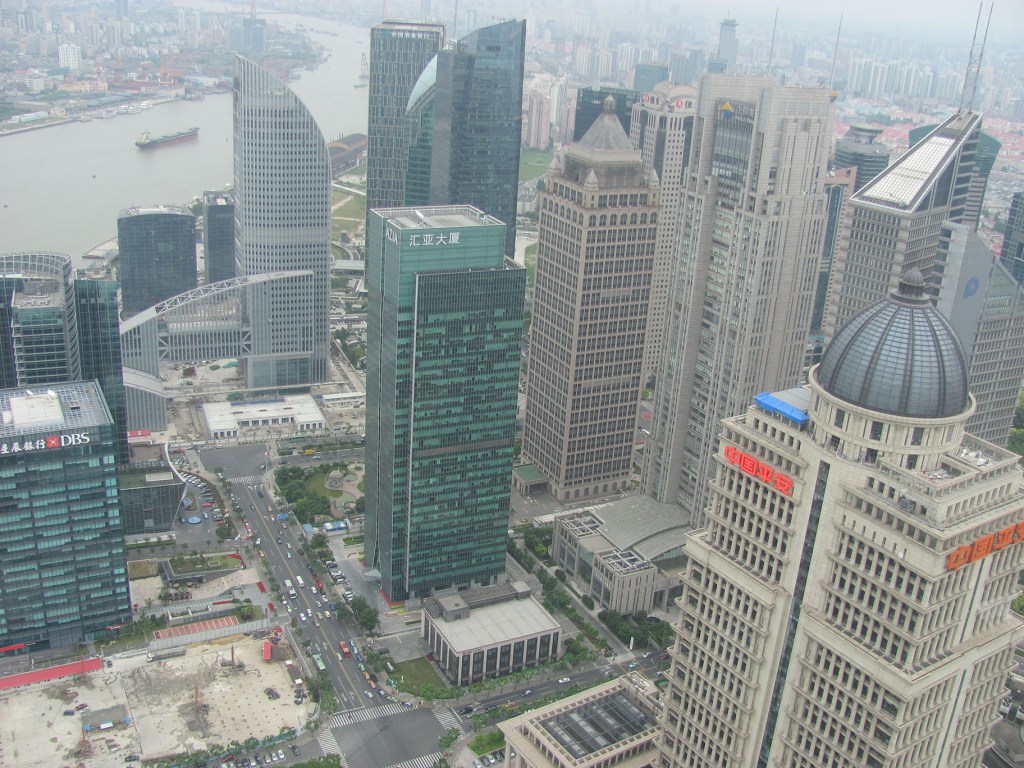
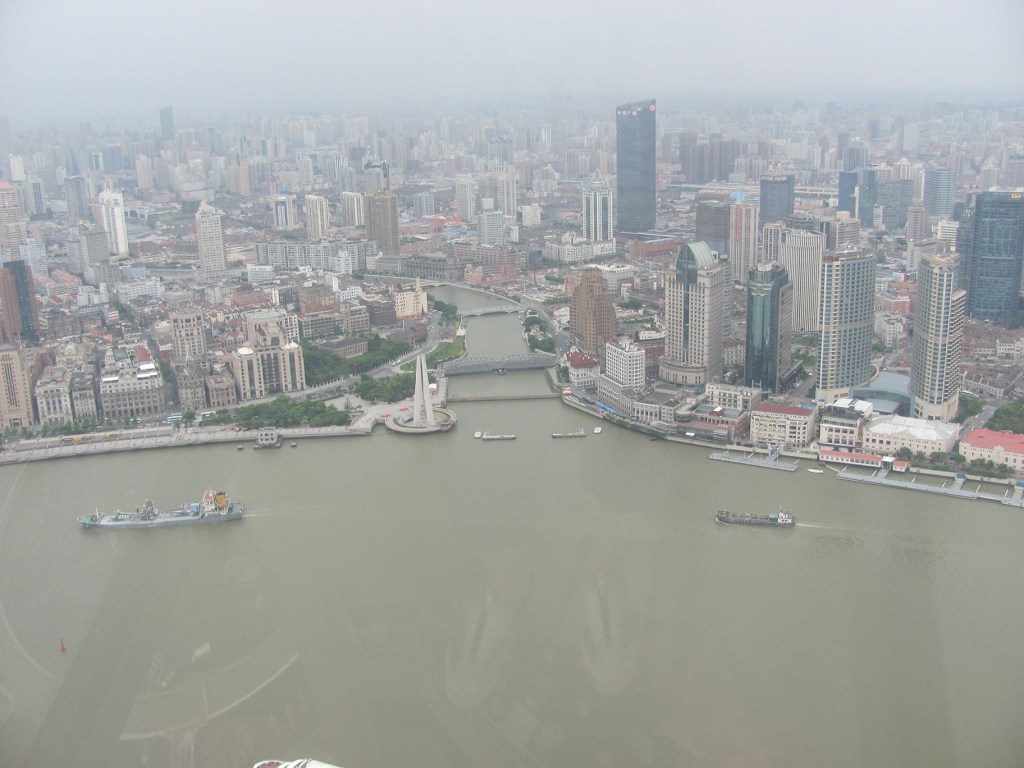
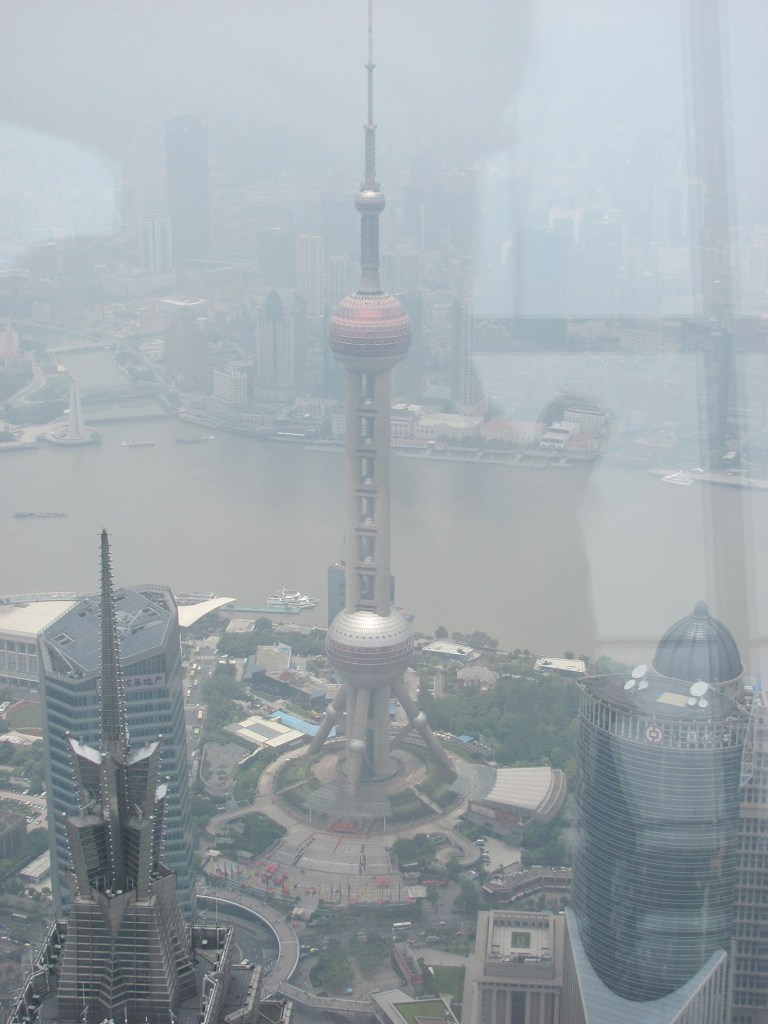
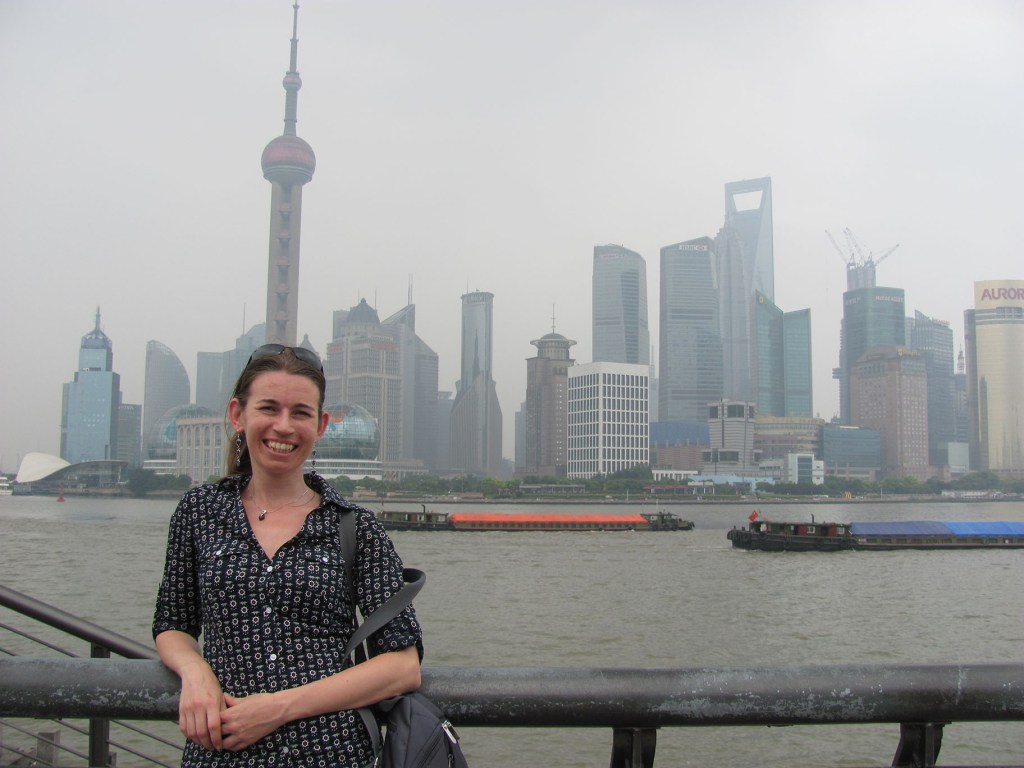
The city is really wonderful and it can best be seen from above. The bus left us on the famous TV tower, also called the Pearl of the East, which rises 468 meters high above the Huangpu River. It was completed in 1994, and until 2007 it was the tallest building in China, but then it was replaced by the World Financial Center of Shanghai.
It is the third tallest television and radio tower in the world. Nearby are two large bridges Yangpu Bridge and Nanpu Bridge, and together the three elements create the picture of “two dragons playing with the pearl”. Otherwise, the tower itself consists of 3 large spheres at the top, called the Space Module, and 5 smaller spheres and 3 decorated spheres at the lower levels.
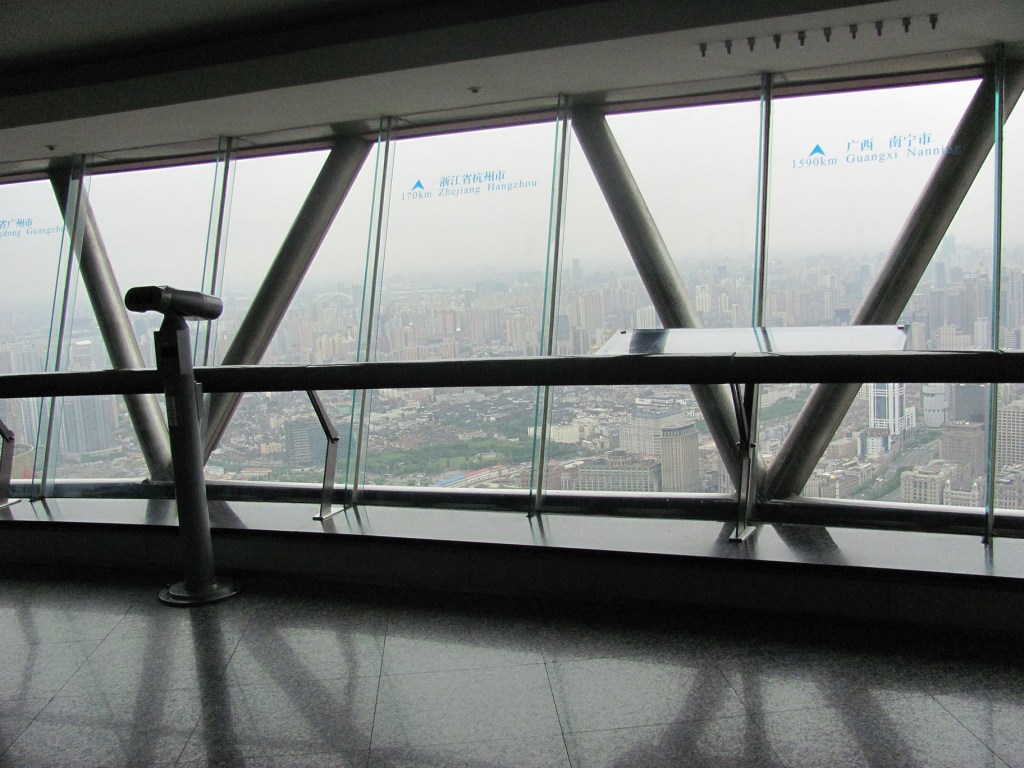
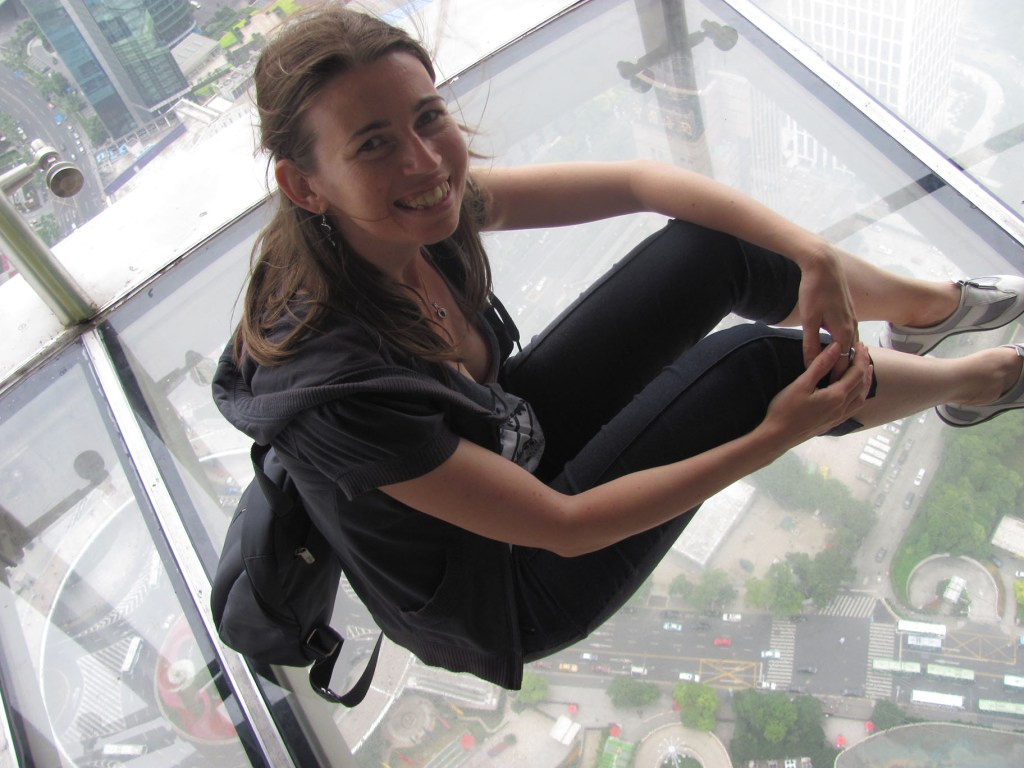
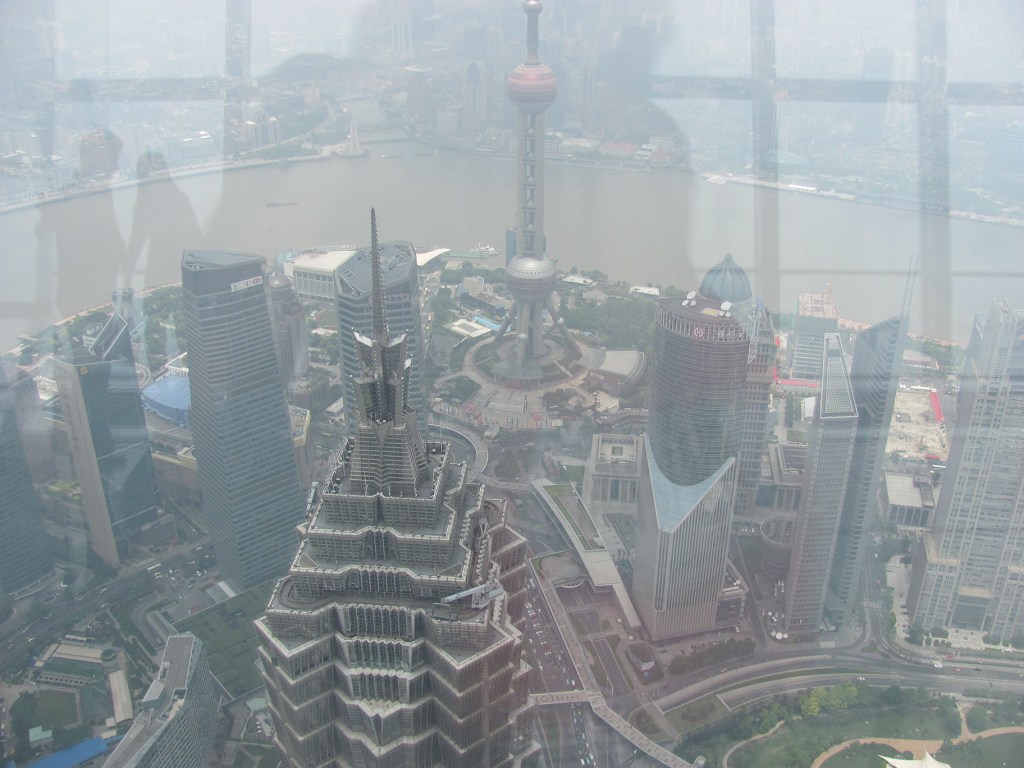
The tower is famous for its TV antenna, but only the top 118 meters are used for transmission. The rest of the tower is separated as panoramic sites, restaurant and hotel. The views from here are really worth it. We climbed to the brim with a very fast elevator and walked around an observation deck with lots of glass from floor to ceiling. Then we found ourselves on an even nicer panoramic site, where even the floor was made of glass and we could look directly down. A lot of people were scared, but for me it was very beautiful and I took a lot of pictures. Shanghai is really huge in size and height.

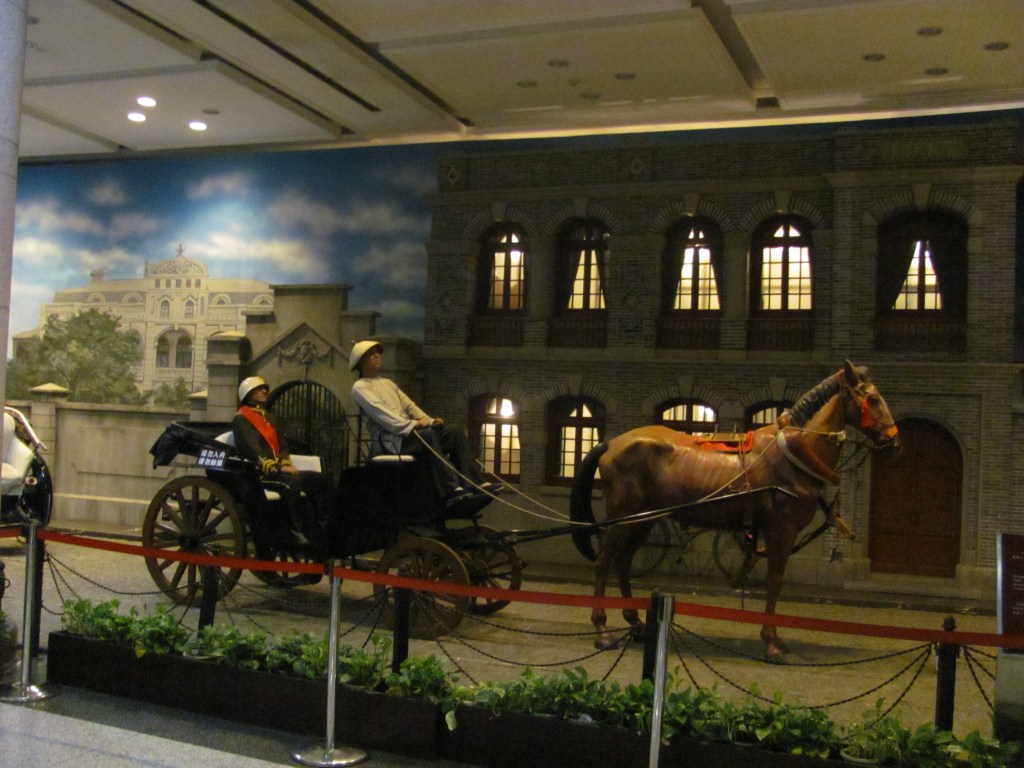
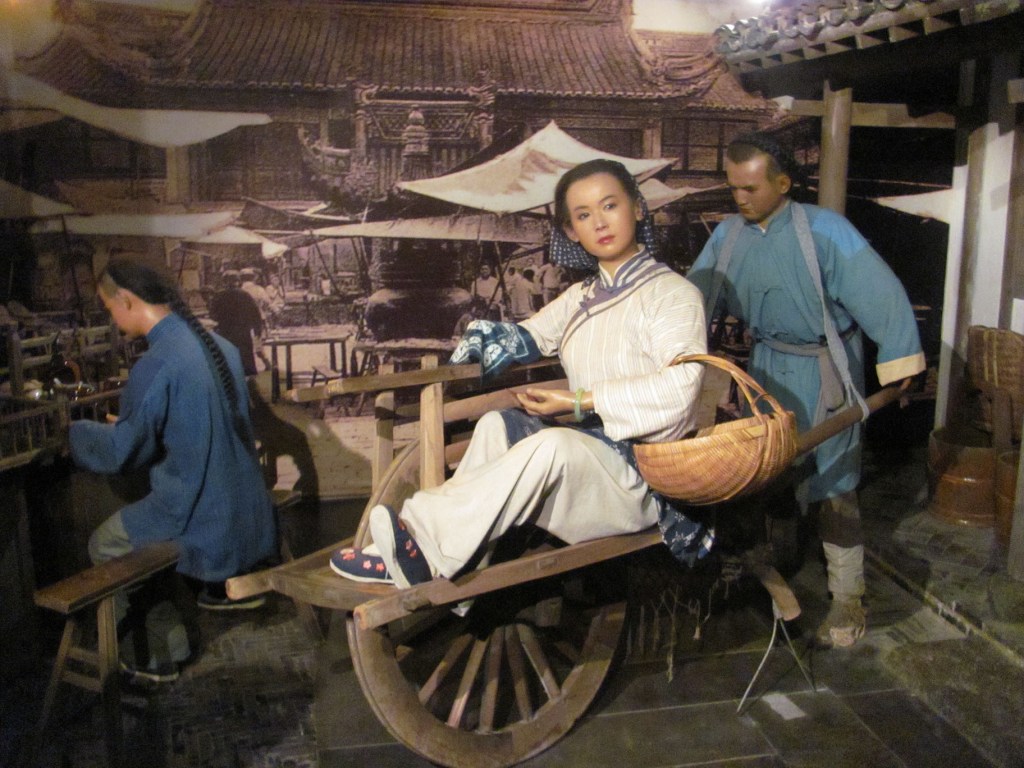
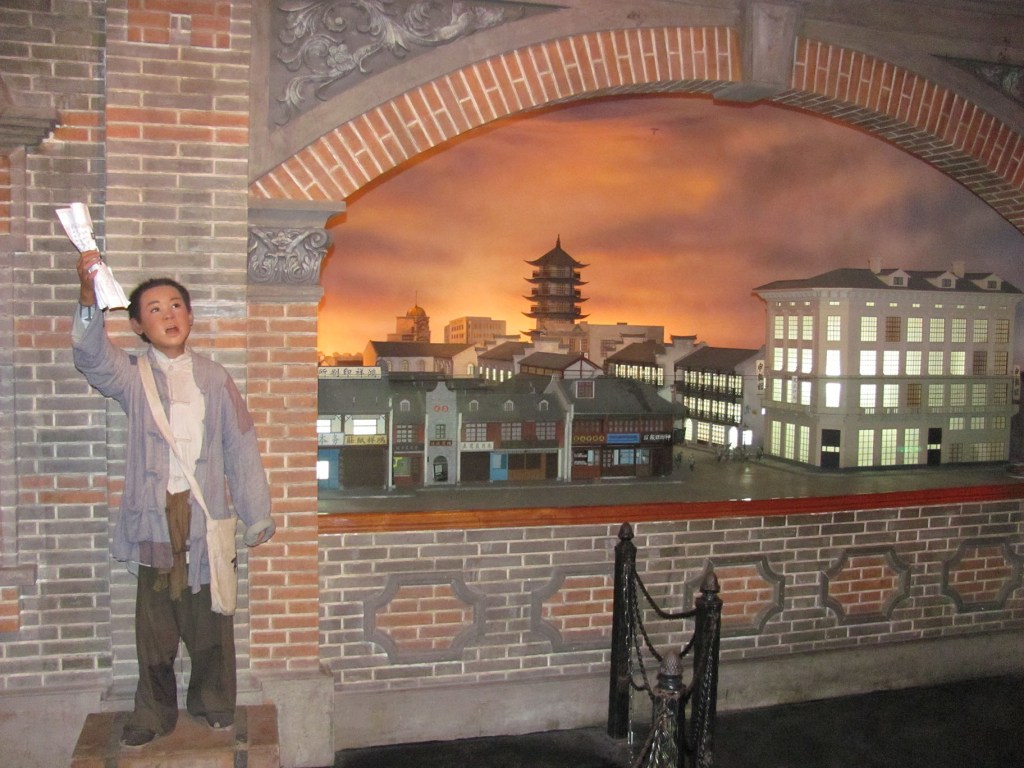
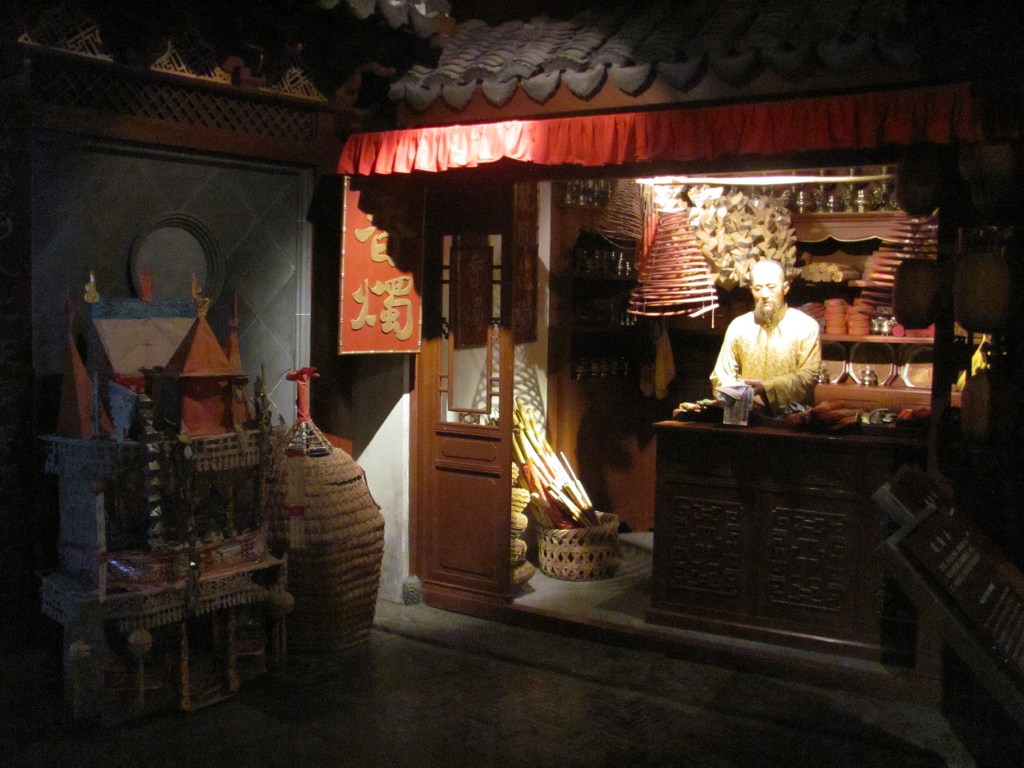
Just when I thought the TV tower couldn’t surprise me more than that, and here we were taken to the history museum downstairs, which is the best and most interesting museum I’ve ever visited. The models in it are in real size of people and we could trace the entire history of Shanghai from the small fishing village, to the Opium War and the expansion of the city afterwards. There were wonderful costumes and scenery showing life ahead of time – at home, at school, on the streets, in restaurants and government offices. There were also models of houses from the past and the present. I tried to shoot the whole exhibition, but it seemed impossible. Everything was done wonderfully in the smallest detail.

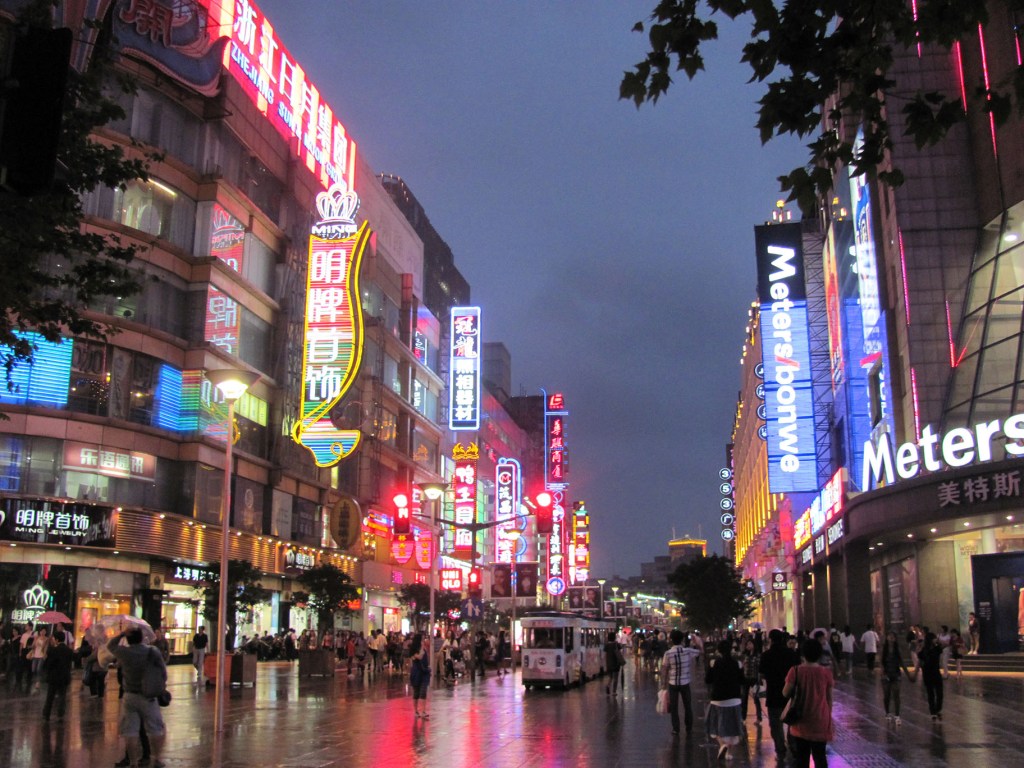

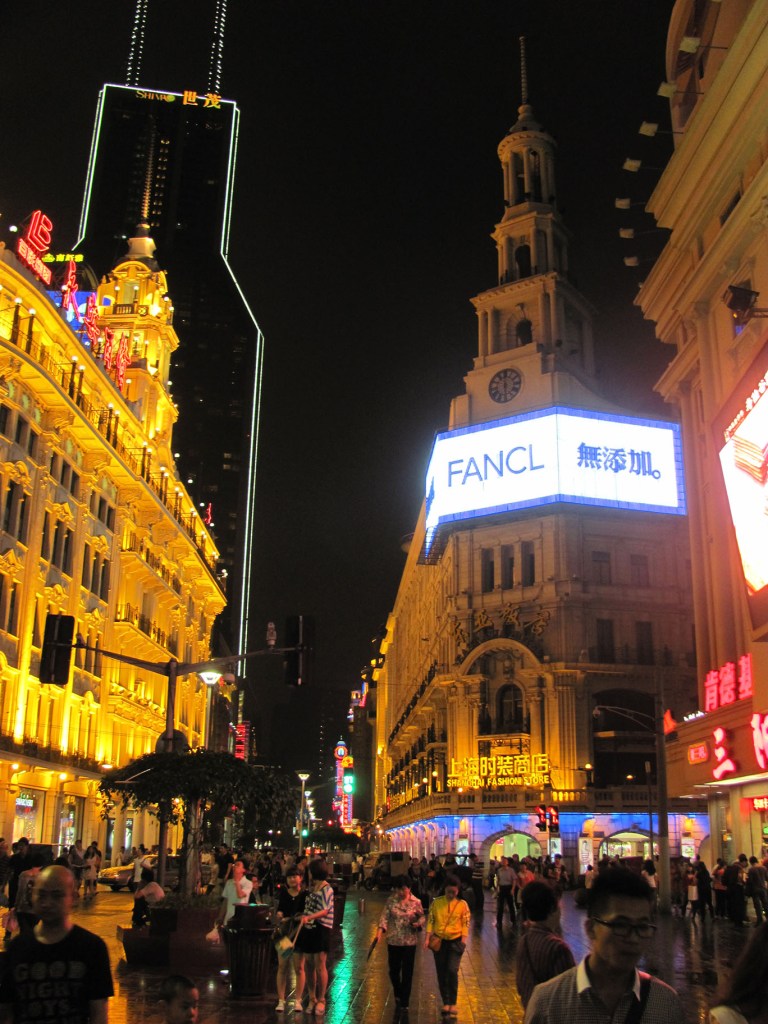



As we got back on the bus, it started to rain. In Shanghai it was really very humid and the rains here are numerous all year round, it is probably not easy to avoid this natural phenomenon. It had begun to get dark and the drops were filling the windows, through which it was already difficult to take pictures. If I were a drop of water, I would also descend here, as the night was just beginning, and with it the lights shone all over the city, turning every drop of water into a small rainbow.
We had an extra night tour around Shanghai, starting from a pedestrian shopping street, all lit with inscriptions and lights. Such streets I imagined in New York and other modern cities as we had seen in the movies. However, I was lucky to walk around Shanghai, which was really the “icing on the cake” from the whole trip to China.
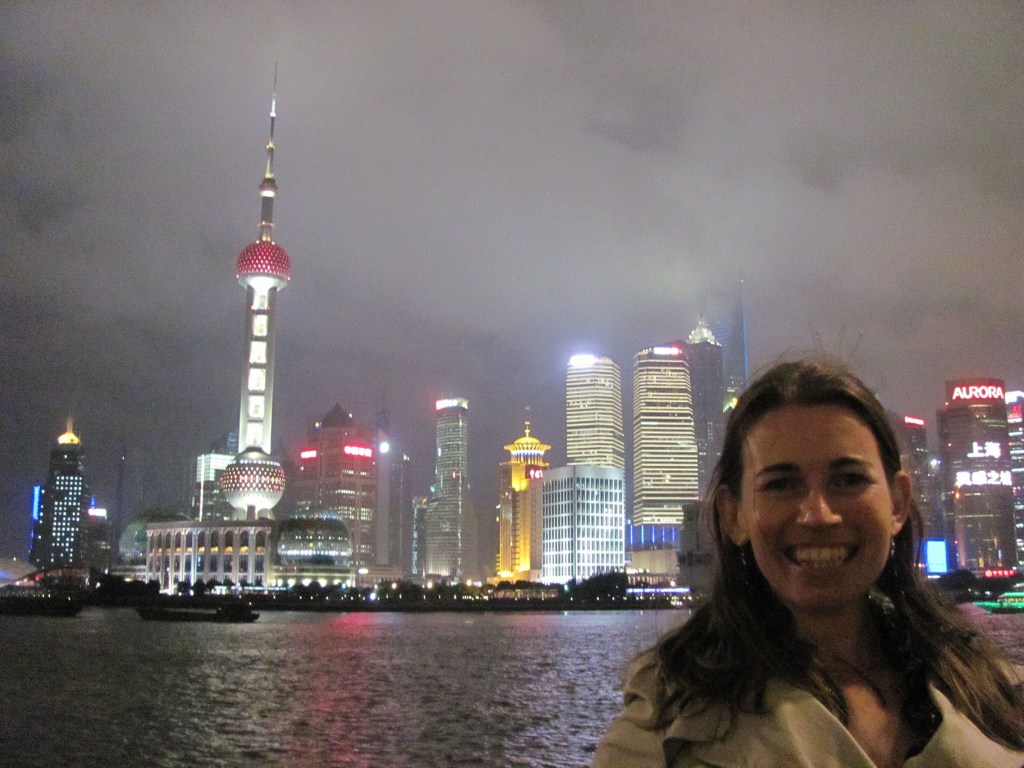
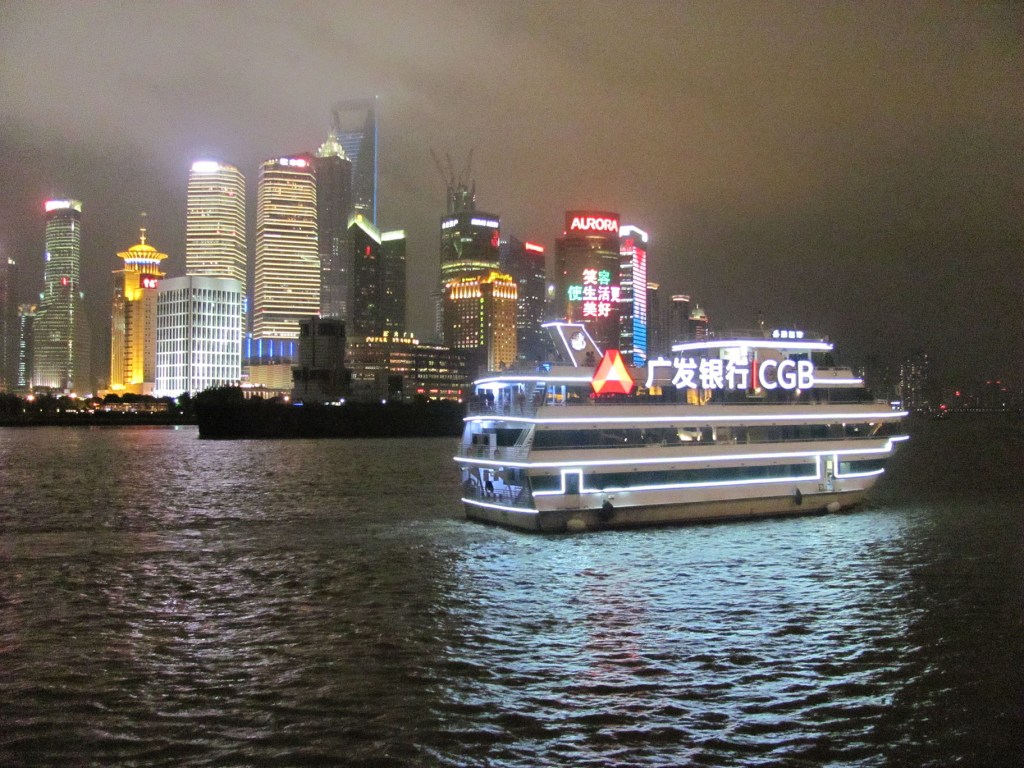
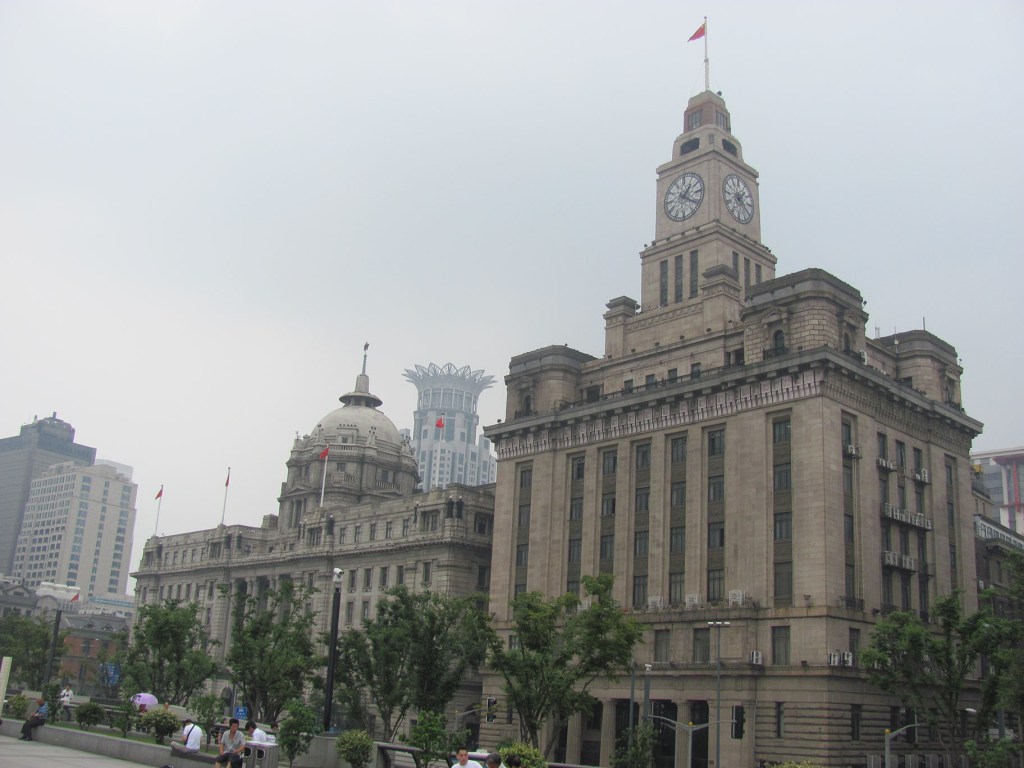
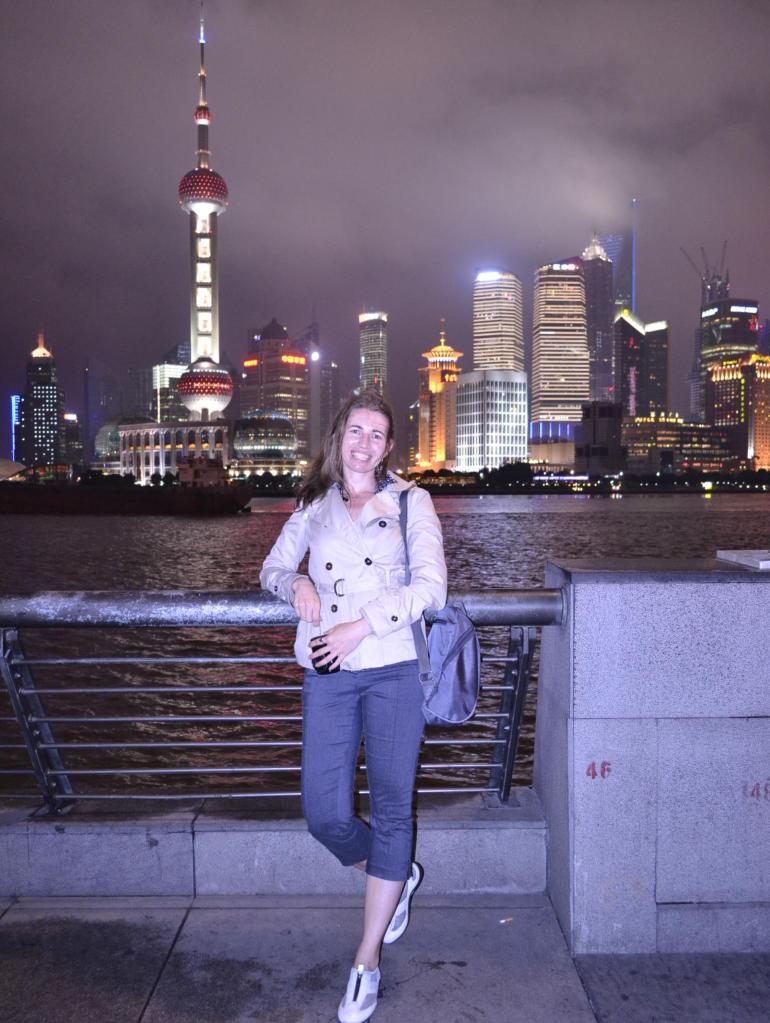
The guide was constantly bothering us to hurry, but we were fascinated and like butterflies attracted by the light, we wanted to see and photograph everything. Our next bus stop was in front of The Bund, along which almost all skyscrapers are erected. The street is famous for its 19th and 20th century architecture. In the late 1800s and early 1900s, Shanghai emerged as an important trading center and many global companies established offices here, supporting the development of the Chinese economy. The different styles here are intertwined, with an influence from Britain, the United States, Russia, Japan, France, Germany, Belgium and the Netherlands, all complementing the centuries-old history of Shanghai. It also houses the impressive headquarters of the Bank of Hong Kong and that of Shanghai, the former customs house, and the old Shanghai Club that used to be home to the world’s longest bar. On the opposite bank of the river we saw the financial district of Pudong.
The colors of the buildings were constantly changing and we were trying to capture all their shades. It was incredibly beautiful to look at all these shining skyscrapers, whose reflections in the water of the Huangpu River only complemented their brilliance. For 30 yuan I also received a professional photo of me and the skyscrapers on the background – it became uniquely nice and I was really happy to be there and seal the memory in a frame. The mood of our whole group shone from the wonderful coastal atmosphere, and from the fact that our night excursion continues.
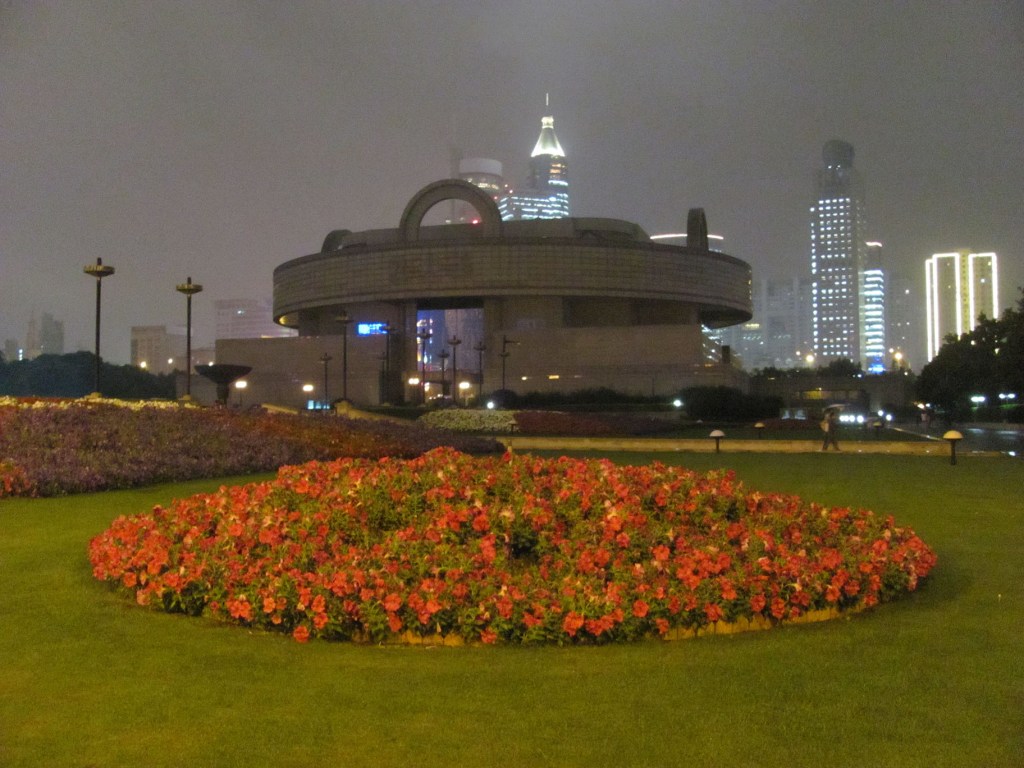
The next stop was near the Shanghai History Museum, whose building resembles an ancient Chinese jar, as there were such among the exhibits. At this time of day, however, the museum was closed, but also beautifully lit together with the fountain in front of its main entrance.
We learned that the museum was opened in December 1952, and in 1995 it was moved to People’s Square. The round shed and square foundations symbolize traditional Chinese beliefs that “the earth is square and the sky is round.” The museum has an extensive collection of over 120,000 exhibits of Chinese art, including bronze, pottery, furniture, ancient coins, paintings and sculptures. The museum has 11 galleries and 3 special temporary exhibition halls, and the most admirable of all – the admission is free!
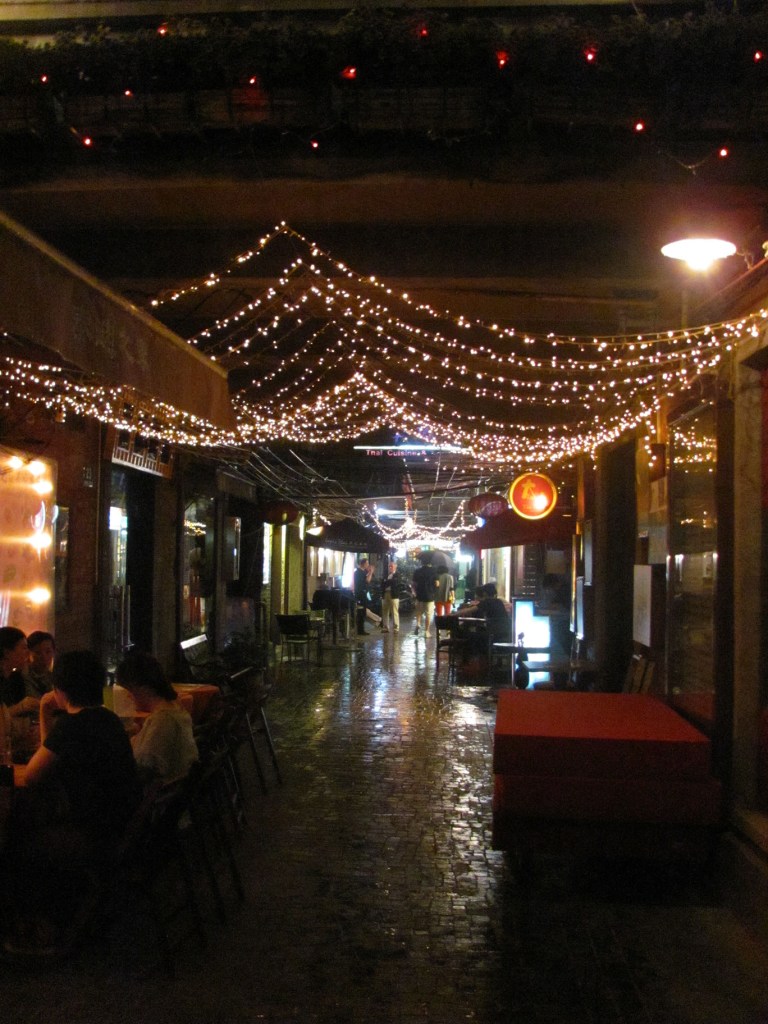
Then followed a short walk through the French Quarter, whose narrow streets were filled with nightlife clubs and bars. In many places over the streets they had stretched sheds, which saved us from the reappearing rain. There was plenty of lanterns, and romance. I went happily to the lovely hotel room and fell asleep with a smile in the big soft bed.



In the morning we enjoyed our last day in China, having a whole free day in Shanghai. Together with my two new friends from the group, we went to a large shopping mall for electrical equipment, where I bought an MP3-player to listen to music while traveling. I had a nice device, but during the trip in the bus to Shanghai I flooded it with water and it stopped working. Just in time to buy a new device from China. The new device had a large memory, despite its small convenient size. I really liked the Chinese gift and hoped this MP3 to accompany me to many new beautiful destinations.
From the hotel to the mall we got by taxi. We also took a taxi for our next stop, the Financial Center. To the drivers we showed the hieroglyphic names of the buildings and they were quickly oriented. Taxi prices were not high. Each of our rides went from $2 to $5, which the three of us shared.
The World Financial Center or as we called it The Opener has 101 floors located at 492 meters high. Currently, the building houses a mall, restaurants, a hotel and offices. We bought tickets for the panoramic terrace on the 100th floor, which also had a glass floor, from where a magnificent view of Shanghai was revealed. From here we took many photos and I had the pleasure to send an SMS greeting to my best friend, on the occasion of her birthday, with wishes she to achieve and conquer many peaks, as I had on that day.
After we left the Financial Center, we went back down the promenade and photographed the beautiful skyscrapers. On the promenade we also took pictures with a huge bull resembling the one in front of the New York Stock Exchange and placed here in the spring of 2010. It was early in the afternoon, and we were already tired. We decided to go back to the hotel and try some of the extras such as the covered pool and sauna. I also packed my luggage, which seemed terribly heavy to me, then before going to bed I sat by the window which had a large ledge on the inside. So without opening the window, I could sit and enjoy the magnificent view from the 20th floor.
At 09:00 in the morning, immediately after the rich breakfast in the hotel, a bus drove us to the airport, where our flight was at 11:40, with a landing in Moscow at 17:25 (our flight was actually 9 hours 45 minutes, but due to the time difference, we had some extra hours). With the time difference this day I had 30 hours instead of the usual 24 hours. Many people dream of having extra hours, and think what would we do if we had at least an extra hour just for us? Of course, I would spend it traveling, as I have done. Instead of sleeping, I watched a few movies. Again, there was plenty of good food, so I can only praise Aeroflot.
The flight from Moscow to Sofia had much fewer extras, but with much more excitement that we were returning home. We took off from Moscow on schedule at 19:55 and arrived in Sofia at 21:55. I had a very nice welcome, and although the trip was wonderful, I was really happy to be back home. China is vast, and although we have seen so many things, I know that I have not visited half of its treasures. The people were cordial, and although they are very different from us, I felt at ease, probably conquered by the harmony that emanated from the parks, gardens and all the architecture. Even if China remains just a pale memory, I know that this memory will always bring me a smile and I will be happy to bring this smile to other wonderful destinations around the world.



GENERAL INFORMATION ABOUT SHANGHAI:
Location: Shanghai is the largest city in China, located in the eastern part of the country, at the confluence of the Yangtze River into the East China Sea.
Area: 6341 sq.km
Population: 24 870 895 people (data from 2020)
Official language: Chinese
Altitude: 4 m
Climate: humid subtropical climate, with four distinct seasons.
Time zone: UTC+8
Currency: Chinese Yuan (CNY)
Additional information: shanghai.gov.cn
TRIP TIPS FOR SHANGHAI:
Best time to visit: probably the best time to visit is spring and autumn, when the trees are most colorful and beautiful.
How to get to the city: Shanghai is one of China’s main transportation hubs and getting to it is relatively easy. There are two airports in the city – Pudong – mainly for international flights and Hongqiao – mainly for domestic flights. Be careful where your plane departs from, as the transfer between the two flights takes more than an hour. In addition to bus and train, the city can also be reached by water, with regular ferry connections between Shanghai and Japan.
Typical foods and drinks worth trying: Chinese cuisine is popular all over the world, but the most delicious is of course in its homeland. While in Shanghai, visit one of the numerous tea houses, try Xiaolongbao or dumpling soup, as well as numerous seafood.
Places to visit that you should not miss: Yu Yuan Gardens, Oriental Pearl Tower, Shanghai Tower, Coastal Vaitan, Shanghai Museum, Shanghai Disneyland, Jade Buddha Temple and many more.
 TripTips