13-day tour of China
LUOYANG (part 5)



I woke up happy in the fabulous Xi’an, preparing for a new trip, to another old Chinese capital. The good thing here is that wherever you travel, the whole country has the same time zone, regardless of the large territory.
At 10:05 we left Xi’an for Luoyang, where we arrived at 12:07 by express train. The average speed we were running was 198 km / h, but this was far from the fastest Chinese train. In fact, China boasts the longest high-speed train network, consisting of 9,676 km, of which 3,515 km keep a speed of 300 km / h.
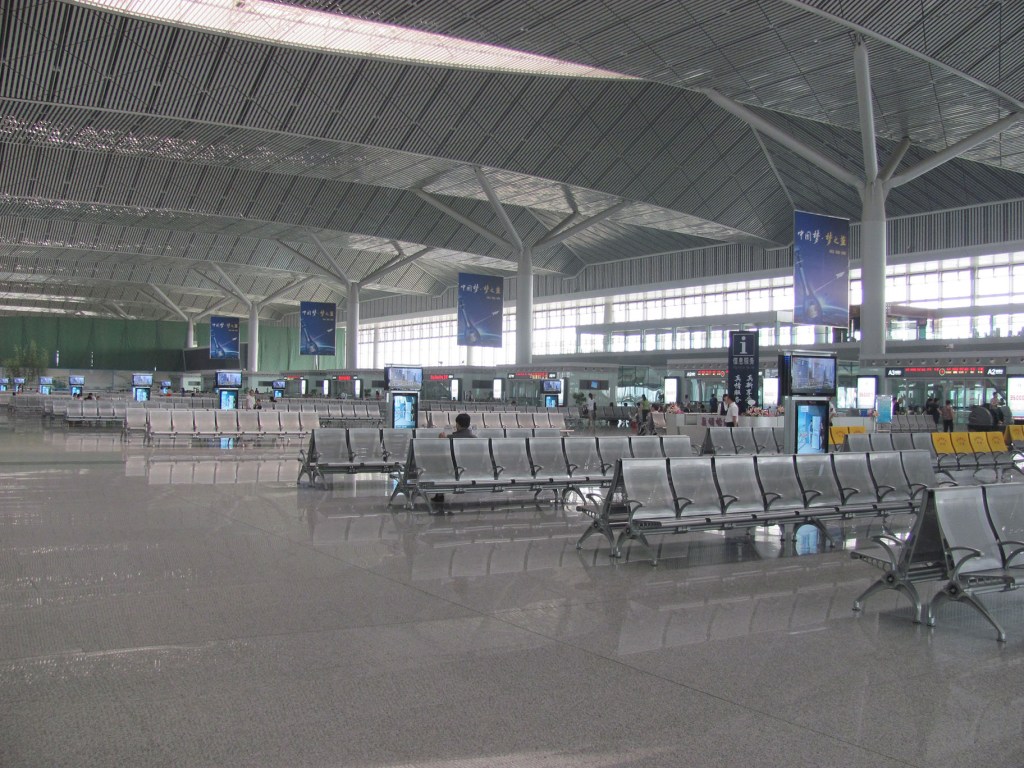
The station of the high-speed trains in Xi’an seemed very empty, but also quite modern – it looked like a small airport, and the trains really ran like small planes. Very quickly we reached the distance of 374 km, which separated Xi’an from Luoyang. Looking out of the train window, I thought that no wonder the color of the Chinese skin was more yellow than ours – it was in their country that the Yellow River (also called the Mother River) passed, their fields were also yellow, and a golden sun shone over them.
At the station in Luoyang we were welcomed by a new bus, with a new guide. Its Chinese name was Xiao, which translated meant smile.
In fact, the Chinese language turned out to be quite complex, and not because of the hieroglyphs, which actually originated from the pictures themselves – originally, for example, the character for the sun “reap” was first a circle, today it is a square. “Wes” is a moon—translated half a sun, and half a moon—becomes “holy”—it was the character of Emperor Ming.
The name Chin of the last empire means “purity”. “Feng” means wind, and “shui” means water – so their art of decoration feng shui is related to nature and means everything to be arranged so that the wind calmly moves around the premises where for well-being it is good to have water. Another interesting word in Chinese is risk, which is spelled as opportunity and danger. The hieroglyph for a river is 3 drops, 3 trees mean forest, and learning these things from the tour guide, the hieroglyphics seemed to me more meaningful than the letters that reflected sounds, not pictures. “Man” in Chinese consists of the characters for “land + strength”, and the word “well” is written as “half wife + half child” – the meaning is the more children, the better. Although in China there is still a law on the right to have only one child in a family. There were exceptions to this rule – Christians e.g. They may have more than one child, but they are not entitled to pensions, so the adults were heavily dependent on the children to look after them. The Chinese could also have a second child, but they had to pay $9,000 for the child to get a passport, if they don’t have the opportunity, the second child doesn’t register, and then it’s very difficult to study and find any kind of job, and he/she doesn’t have the right to travel.
In school, the Chinese mastered about 4-5 thousand characters, and in the university about 10 thousand. The most difficult thing in the Chinese language, however, turned out to be the pronunciation – they have 4 tones, which gave different meanings to the words and these 4 tons usually turn out to be the most difficult for foreigners. Hieroglyphics can be studied, but to convey the exact intonation (otherwise the words acquired a completely different meaning) was already mastery, and I admit that I couldn’t feel the difference between the 4 tones that sounded the same.
Our new guide spoke Russian very well and we learned from her that the city of Luoyang is a significantly small Chinese city – only 2 million inhabitants! Considered the cradle of Chinese civilization, Luoyang is one of the four ancient Chinese capitals (Beijing, Nanjing, Luoyang and Xi’an). In fact, modern historians are already talking about 7 ancient Chinese capitals, with Kaifeng added to the list (it was added in 1920), Hangzhou (added in 1930) and Anyang (added after archaeological excavations in 1988).
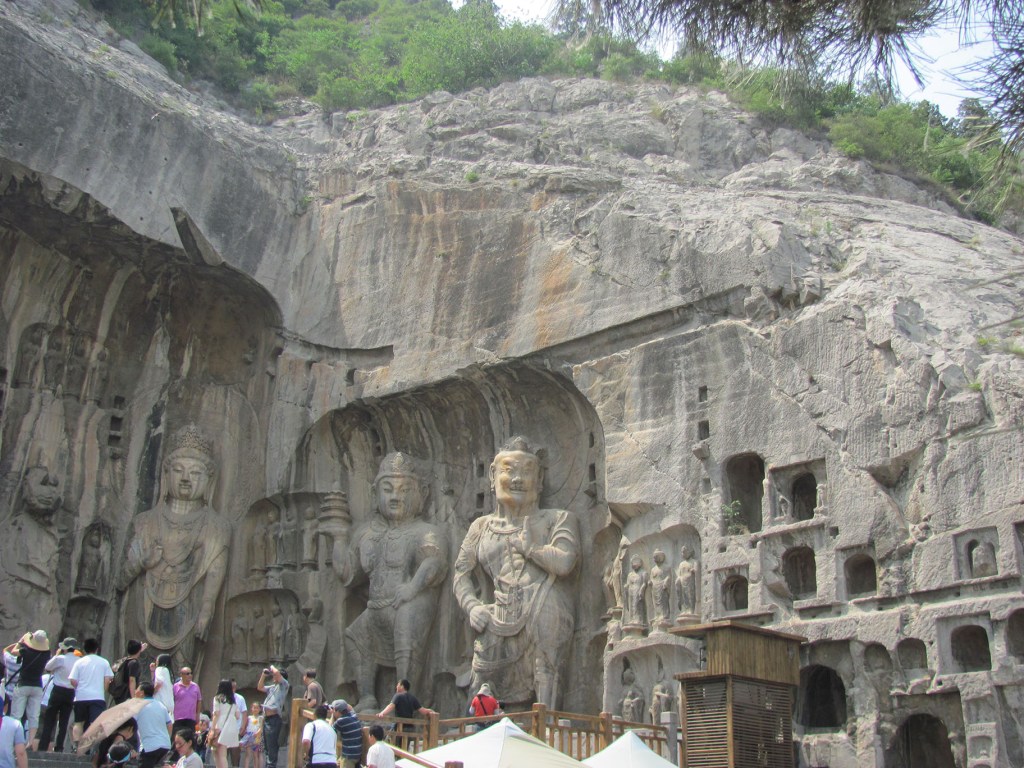
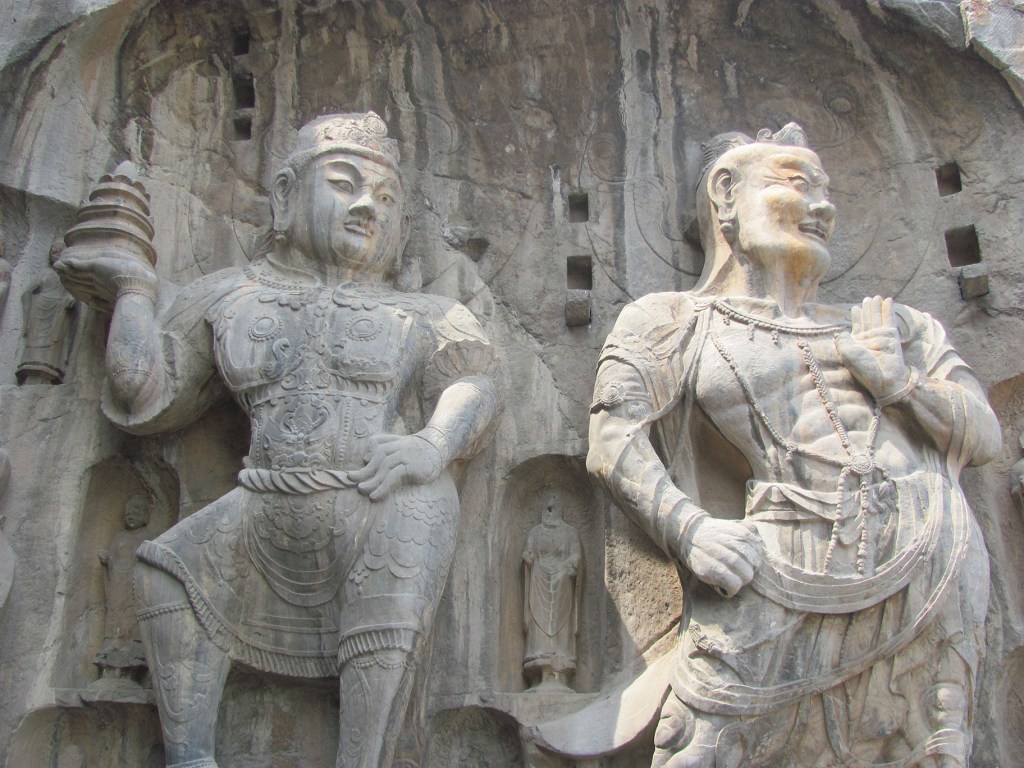
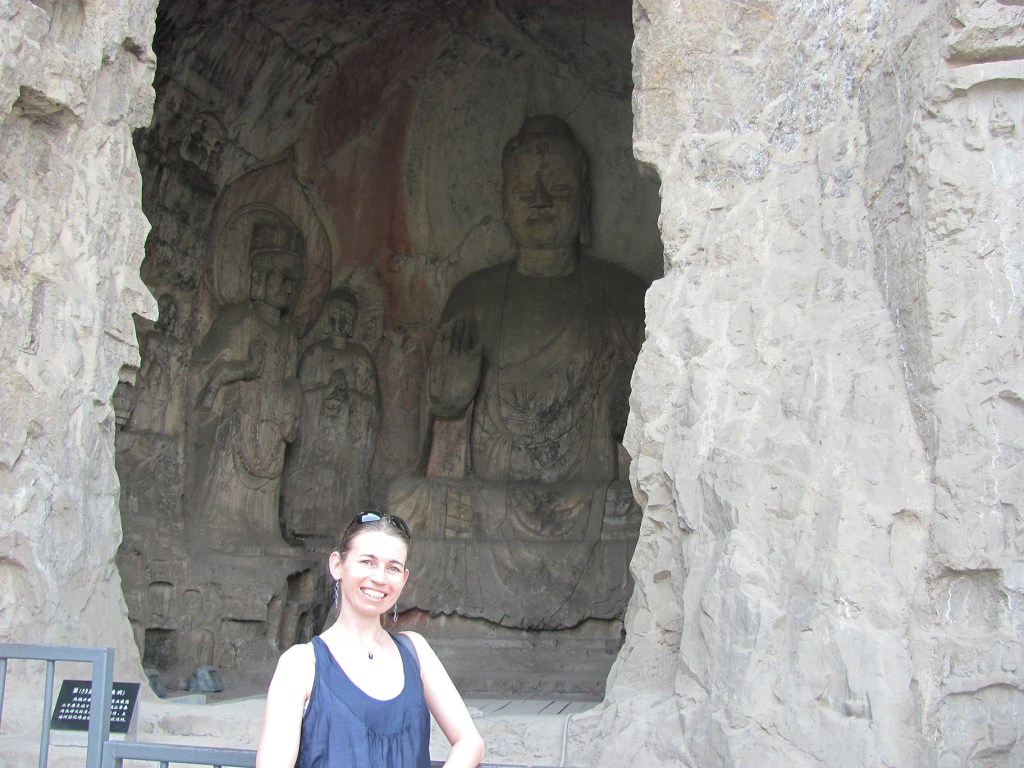
The name of the city Luoyang comes from its northern location and the words “lu” – river and “yang” north. Before exploring the city, however, the bus took us to the restaurant for lunch, and then to the main landmark in the city – the Luoyang Rocks or the Dragon Caves. This is definitely one of the sights in China that impressed me greatly. In the rocks there were carved over 16,000 Buddhas reliefs. Actually, the tour guide told us that no one has counted all the images of the Buddha, but the legend that there are 16,000 may turn out to be true, as their number is remarkable.



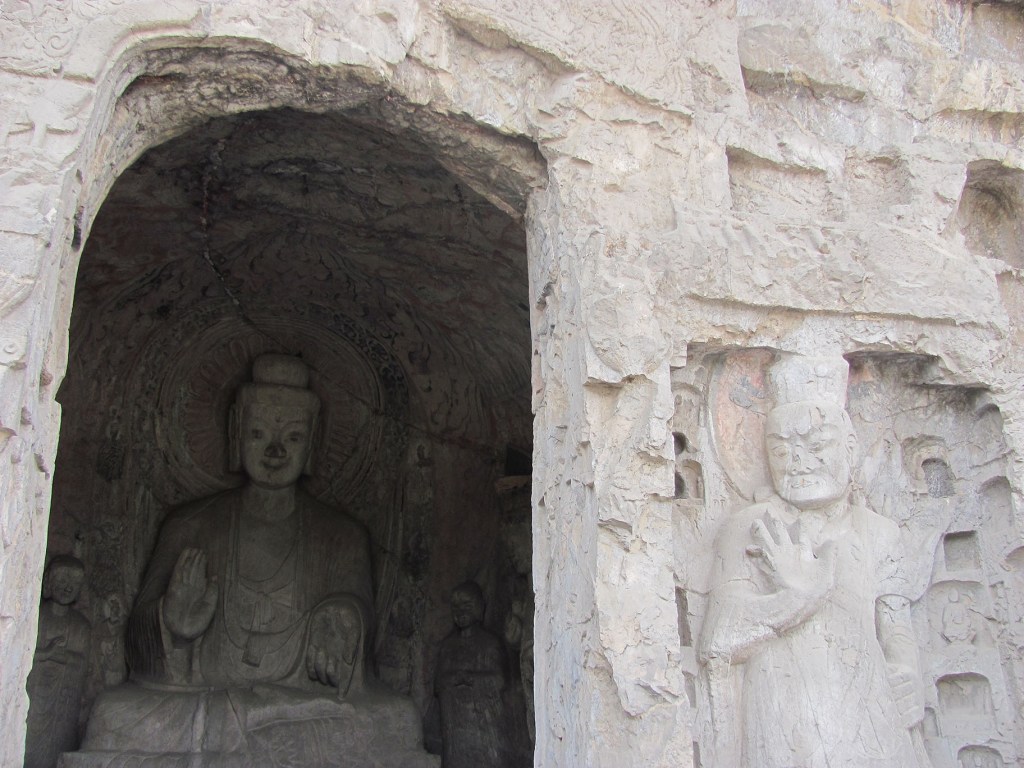
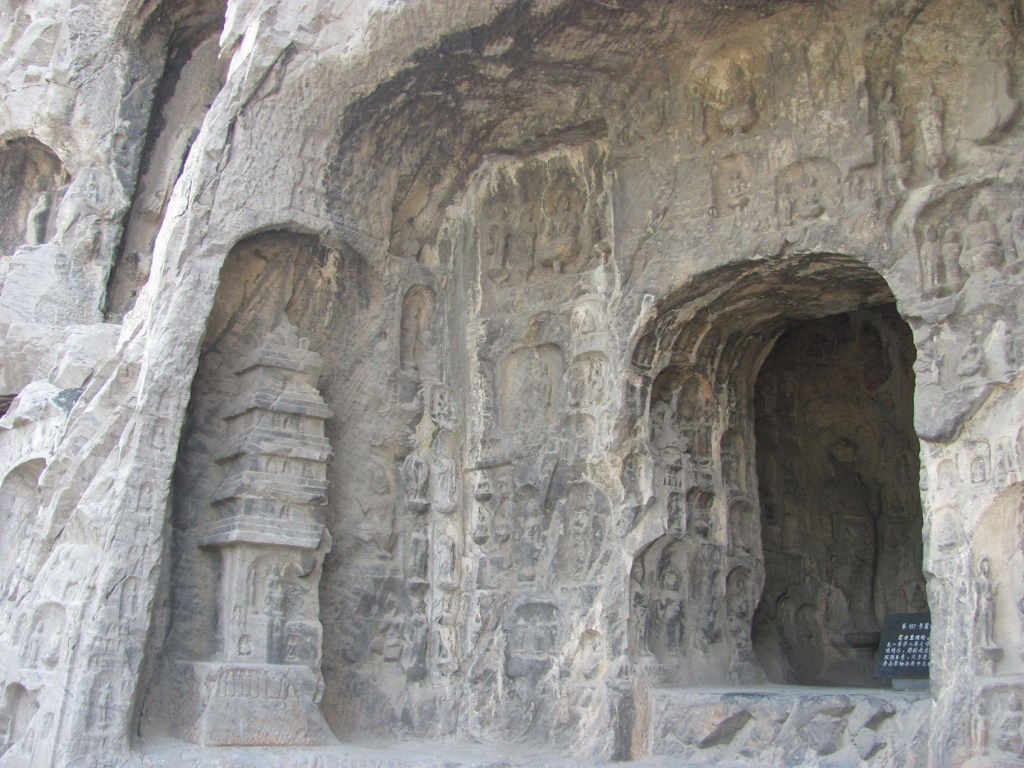
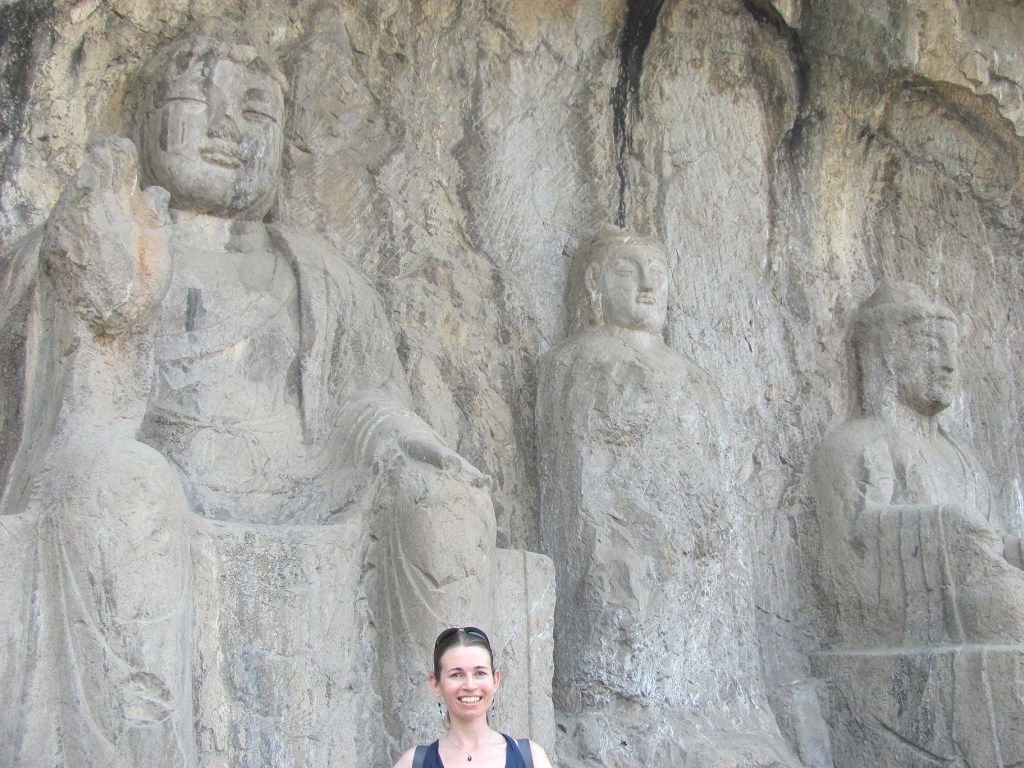

All images are in different shapes and sizes – the smallest are about 25 mm, and the largest figure reaches 17 meters in height. The carving and creation of these Buddhist figures began during the Wei dynasty in 493 AD. Some of them were destroyed by wind and moisture, but what we saw was enough to make us speechless and leave only the sound of the cameras to be heard.
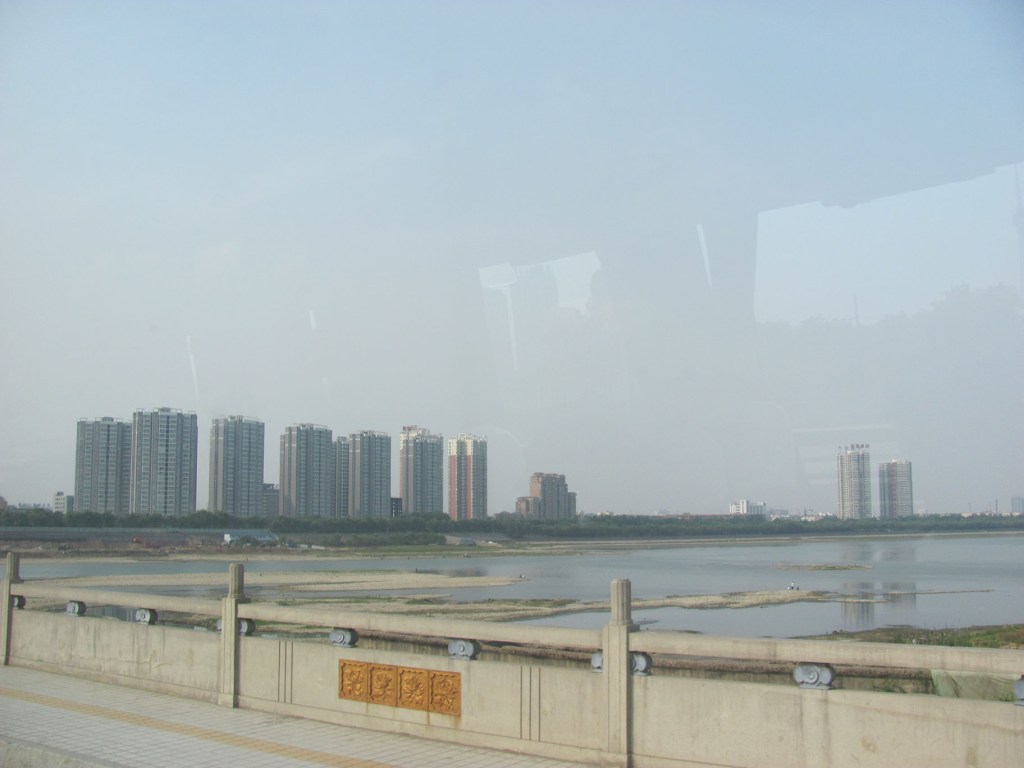
From the parking lot to the rock complex we walked along the river Lo – a tributary of the Yellow River. The sun seemed more golden, staring at its reflection in the yellow waters. The first thing I noticed were rocks with cracks – many on densely located small niches. I wondered why they were so famous – in Bulgaria we also had rocks with engraved holes, even turned into monasteries. But as I approached these rocks, I discovered their uniqueness. In the niches there were embossed figures of Buddha – I photographed the first, but it turned out that the second one had a similar figure, but in another Buddha pose, in fact, all the niches were filled with unique relief drawings. Some of them had more colors, and they were made long before the Bulgarian state emerged. I would compare them most with Bulgarian Madara Horseman, but here the figures were much better preserved and spectacular. I drifted into filming, and still didn’t get to photograph all the figures. Our group was constantly in a hurry forward, as the guide told us things, but besides being dumbfounded by beauty, I preferred not to hear, but to perceive in my own way, these 16,000 Buddhas.
Especially remarkable was the largest figure of the Buddha here – standing in a lotus pose, whose length reaches 17 meters, of which only the head is 4 meters and the ears 1.9 meters!
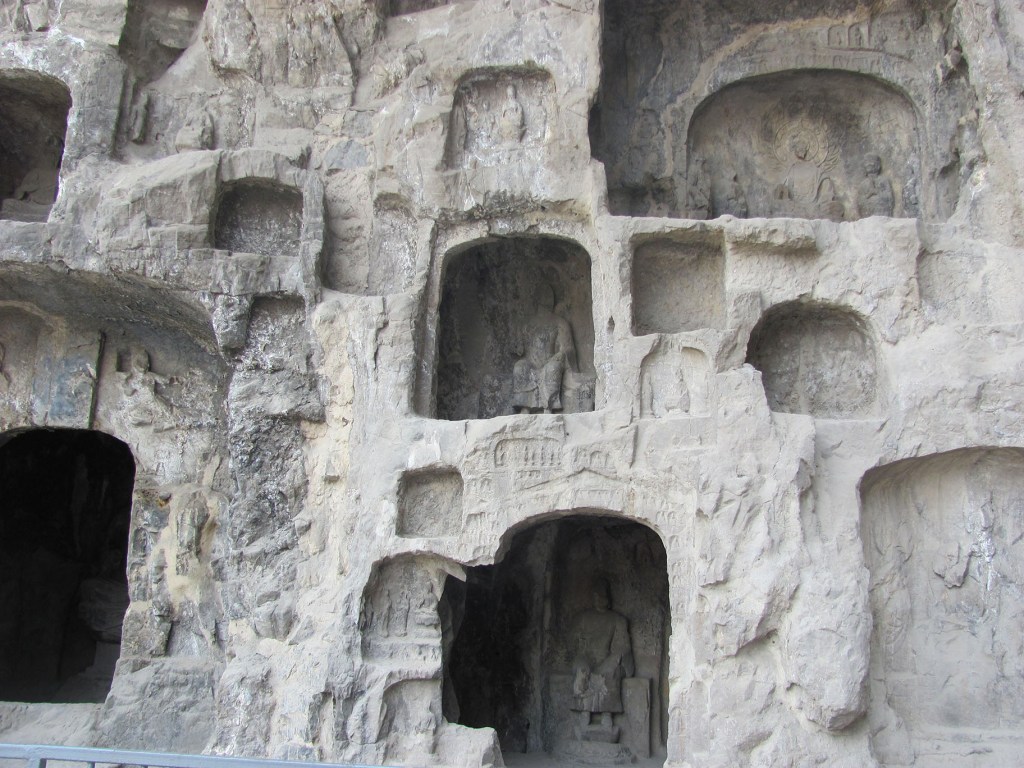
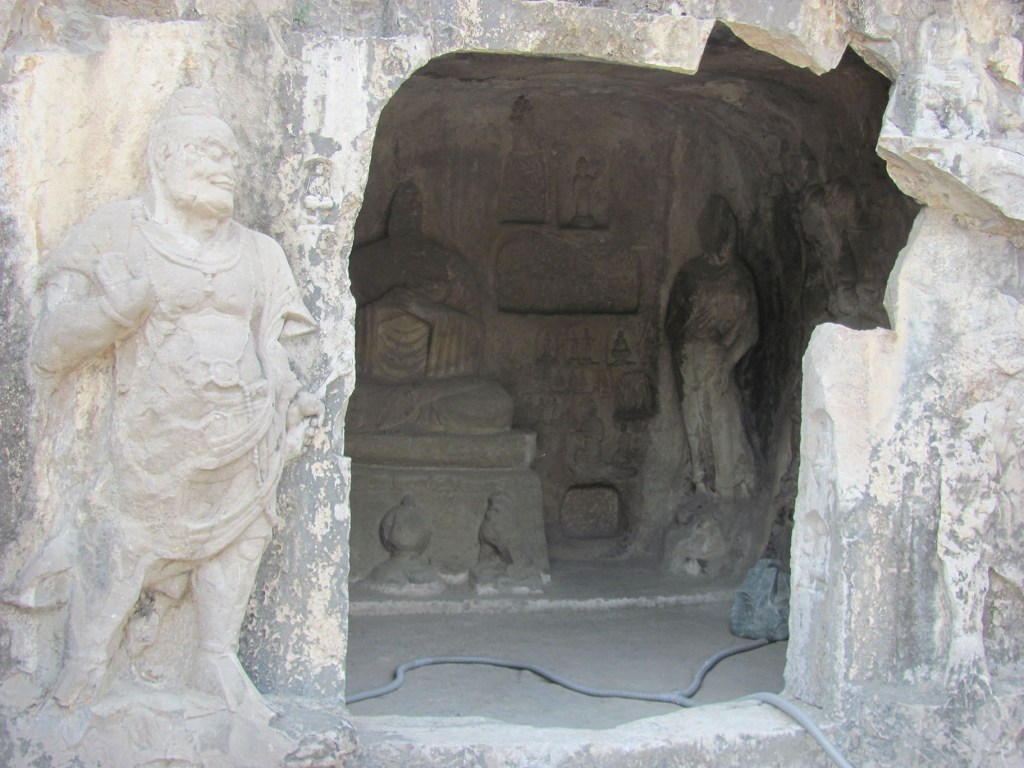
We learned that in one of the caves there are engraved 140 recipes that show the medicine achievements in ancient China, and some of these recipes are still used today.
On the other side of the river stood a beautiful monastery, but the carved rocks seemed much holier to me. We went back to the parking lot, this time riding on a boat through the warm and literally yellow-brownish waters.


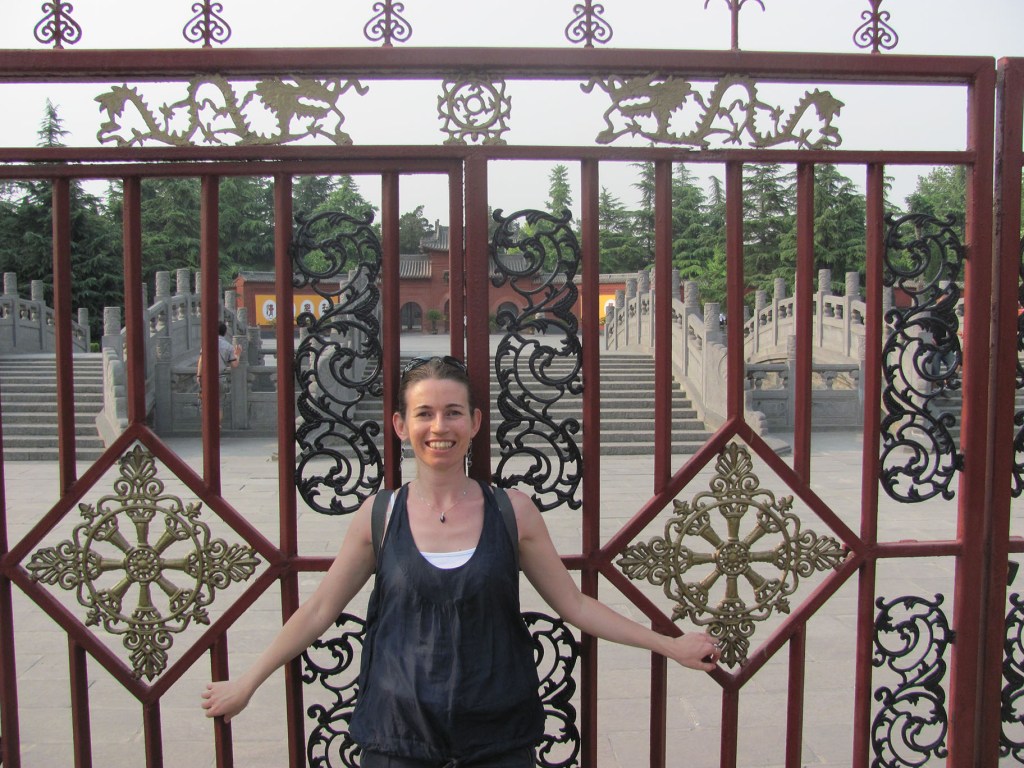
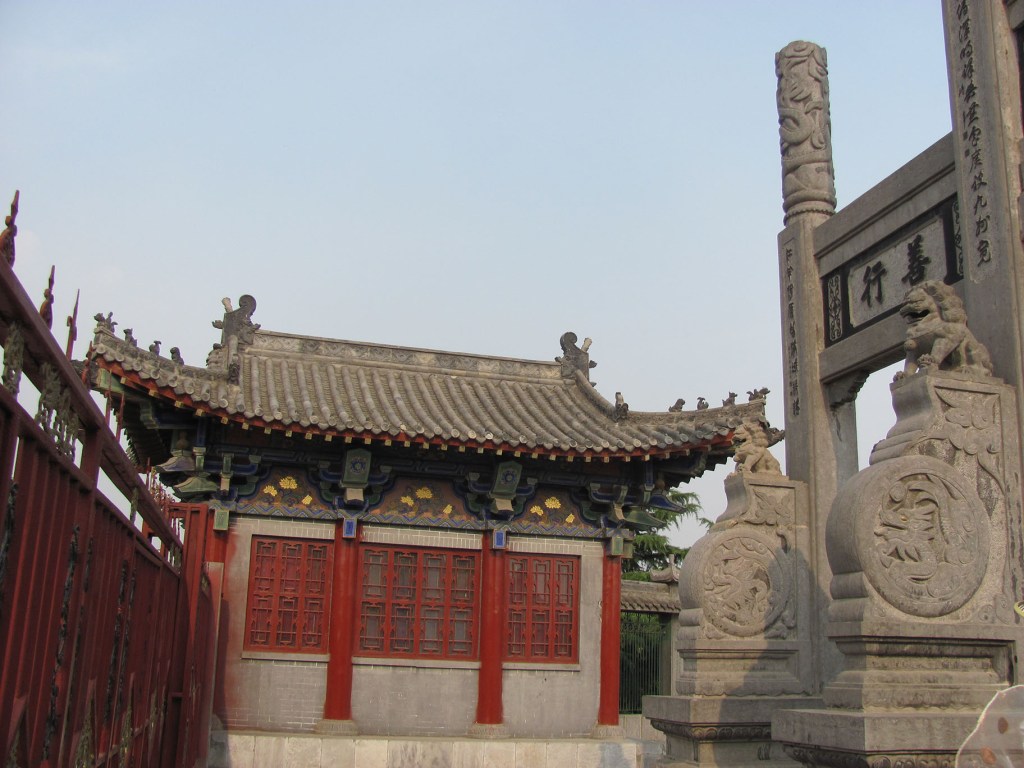
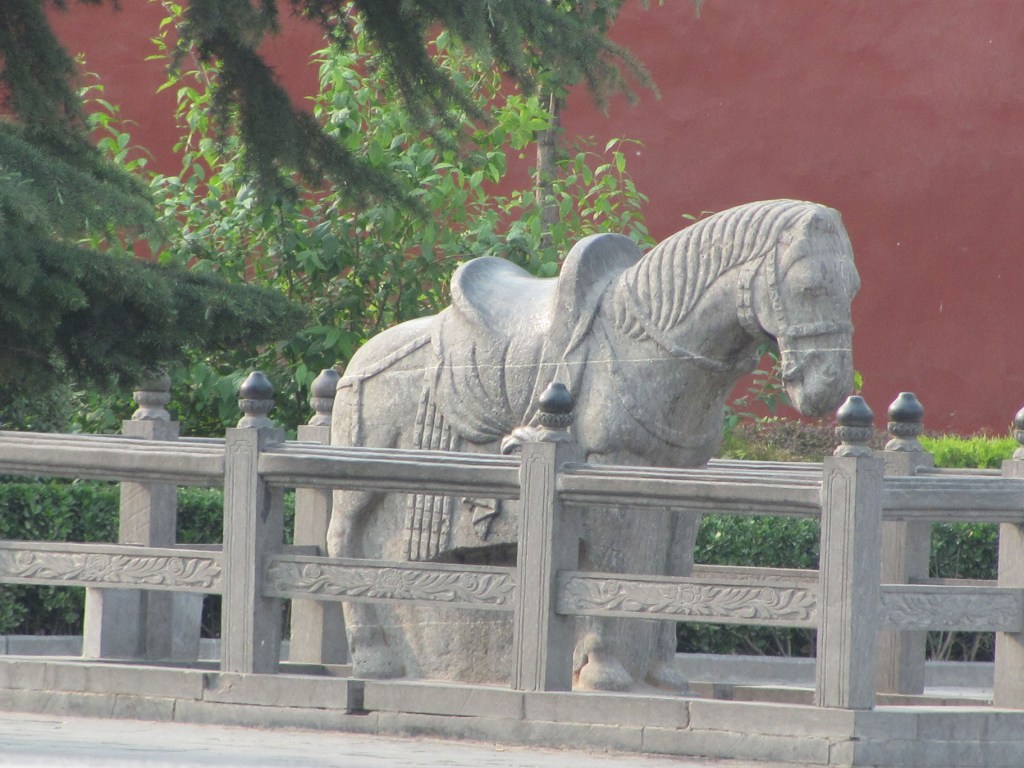

After the rocks, we passed through a tea house, where we again learnt interesting facts about the tea ceremony, trying new types of tea typical for this region. There was also a short stop near the temple of the White Horse Baymasi. We looked at it only from the outside, but learned that this is the first Buddhist temple in China.
An emperor of the Han Dynasty found a statue of the Buddha and asked what it was, he was told that it was a religion that taught people good and not to fear death. The emperor liked the idea and sent his people to study this religion in the Western world. After three years, two prominent Indian monks, She Moteng and Zhu Falan, returned with a delegation, bringing with them a white horse filled with Buddhist texts and figures. This is the first time Buddhism has appeared in China. To thank the two monks and their white horse, the emperor ordered the construction of a monastery called the Temple of the White Horse. While the monastery was being built, the monks translated the documents they brought and prepared the book “Sutra in Forty-Two Chapters”, which attracted many monks and the temple became the center of Buddhist activity in China, and the temple is still considered “the cradle of Buddhism in China”.
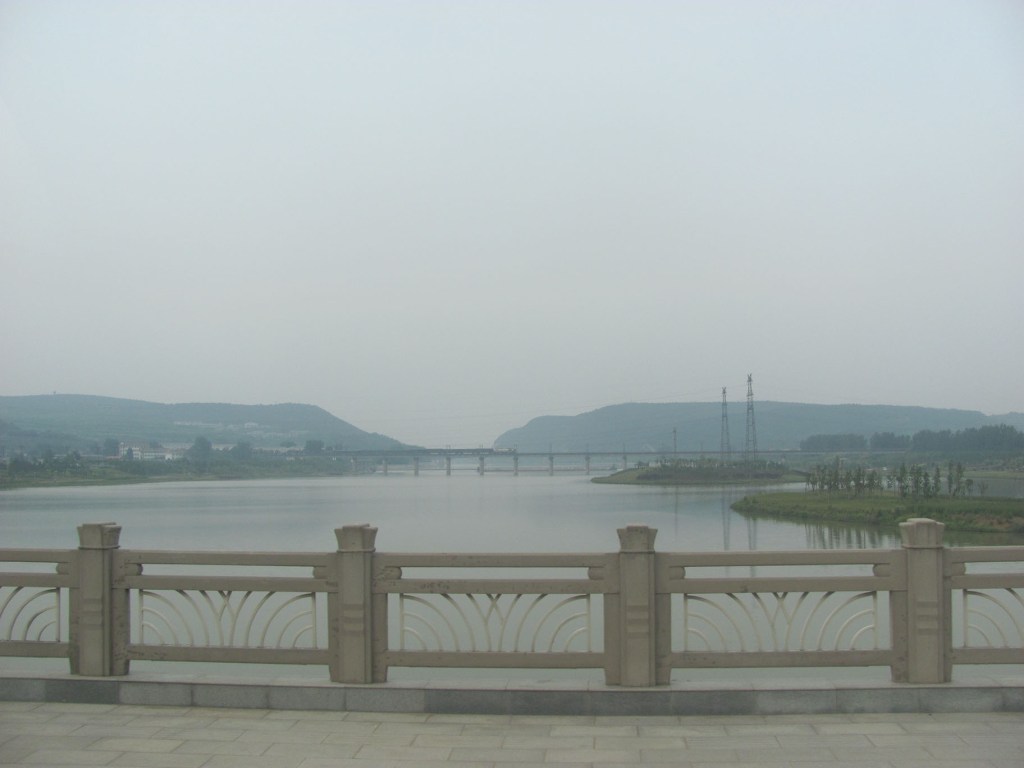
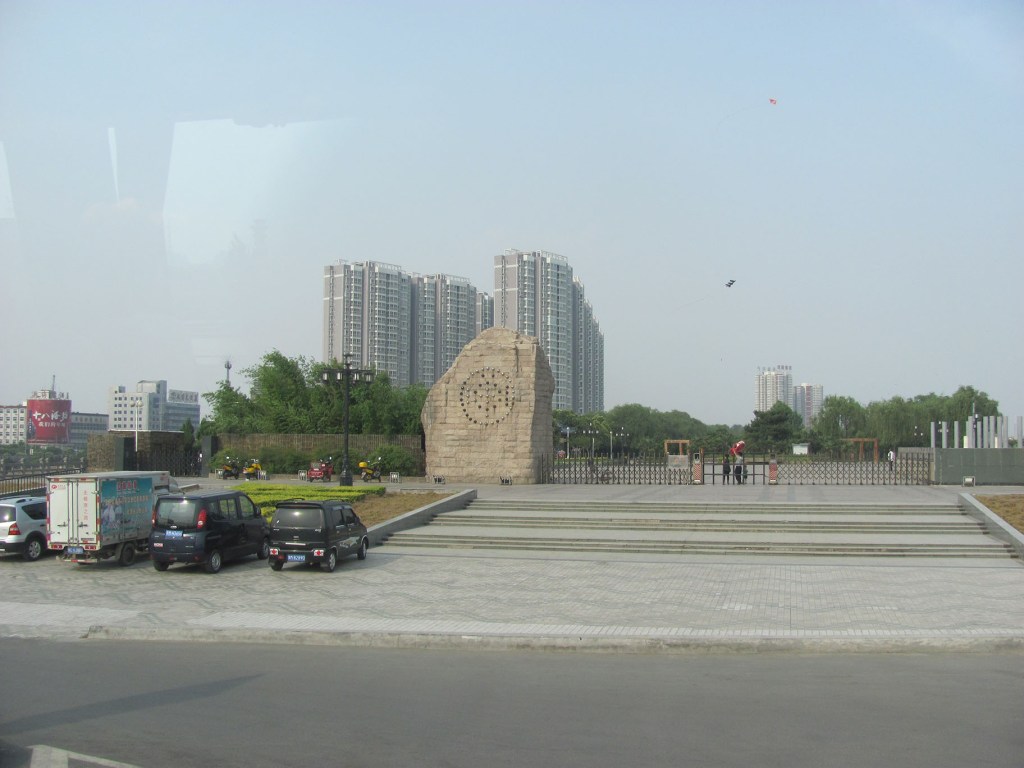
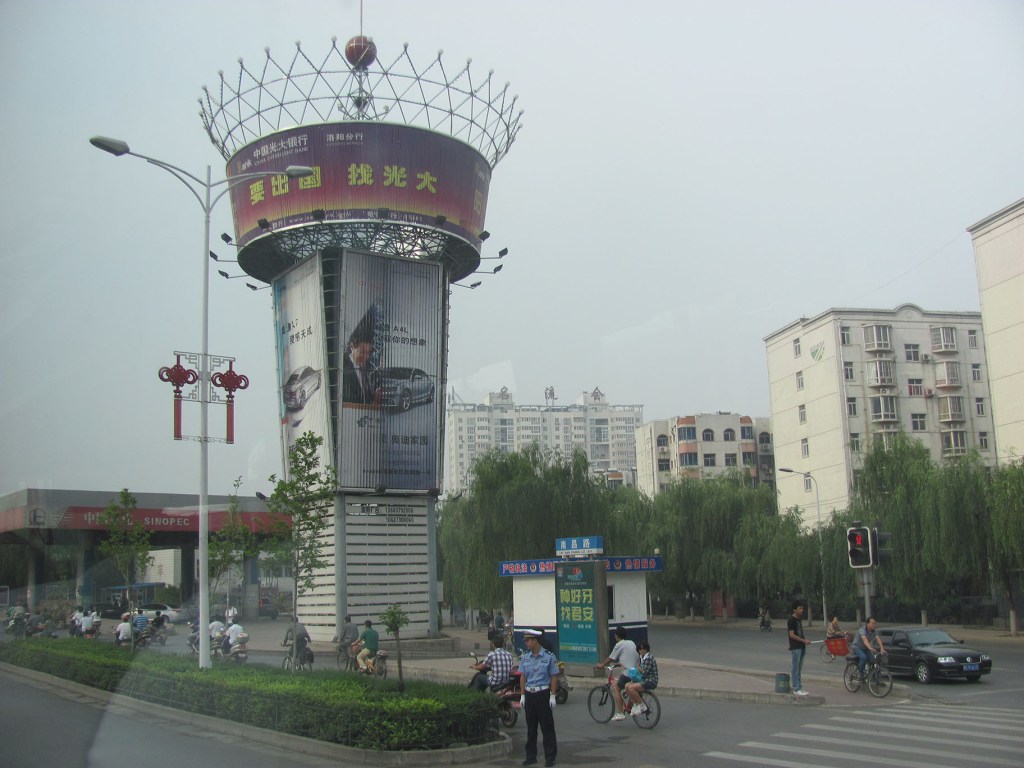
The distance between the tea house and the Buddhist temple took us around 30-40 minutes, as they were located at furthest parts of Luoyang. So we had the opportunity to explore this city while traveling by the bus. We learned that there are many factories here, the largest being the tractor factory, other factories are for ceramics, glass, etc. Here the average monthly salary is 1000 yoana or 250 BGN, which is much lower than the other big cities. The symbol of the city is the Peony flower and in spring here was held a wonderful ceremony with figures of flowers.
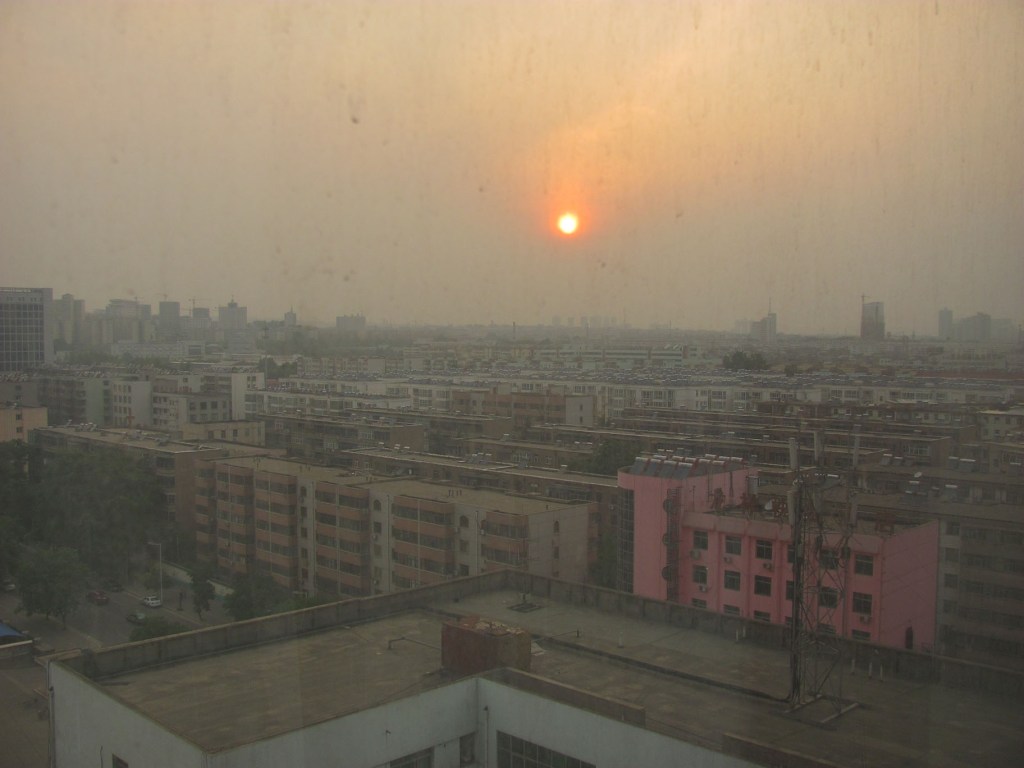
I went to bed again in the hotel room with overflowing eyes, with many Buddhist figures. From my room on the 10th floor (1009 in the Loyan Grand Hotel) I saw the construction of a large highway. I had a western exposure and enjoyed the sunset. I even enjoyed more my dreams afterwards, which completely restored me after all these impressions and pleasant experiences.


GENERAL INFORMATION ABOUT LUOYANG:
Location: Luoyang is located at the confluence of the Luo River and the Yellow River in the western part of Henan Province
Area: 15,229 sq.km
Population: 7,056,699 people (2018 data)
Official language: Chinese
Altitude: 144 m
Climate: humid subtropical climate, with hot and humid summers and cold, dry winters.
Time zone: UTC+8
Currency: Chinese Yuan (CNY)
Additional information: www.chinadiscovery.com/luoyang-tours/thing-to-do-in-luoyang.html
TRIP TOPS FOR LUOYANG:
Best time to visit: probably the best time to visit this old imperial capital is between April and October, when the weather is warm and pleasant.
How to get to the city: Luoyang Airport (LYA) is 10 km north of the city, with regular flights from Beijing, Shanghai, etc. There are also two major stations in the city (the north, from where there are trains to Beijing and Shanghai) and the south, where there are high-speed trains again to Beijing and Xi’an.
Typical foods and drinks worth trying: Chinese cuisine is popular all over the world, but the most delicious is of course in its homeland. While in Luoyang you can try their delicious meat noodles with milk and beans Mung, as well as Lyuyang Yan Cai (a dish of radishes, chicken, pork and seaweed).
Places to visit that you should not miss: The rock formations in Longman National Park, the White Horse Temple, the Luoyang Museum with its rich collection of ancient bronze and porcelain vessels, etc. Not far from Luoyang is the famous Shaolin Monastery.
 TripTips