CELEBRATING CHINESE NEW YEAR IN HONG KONG
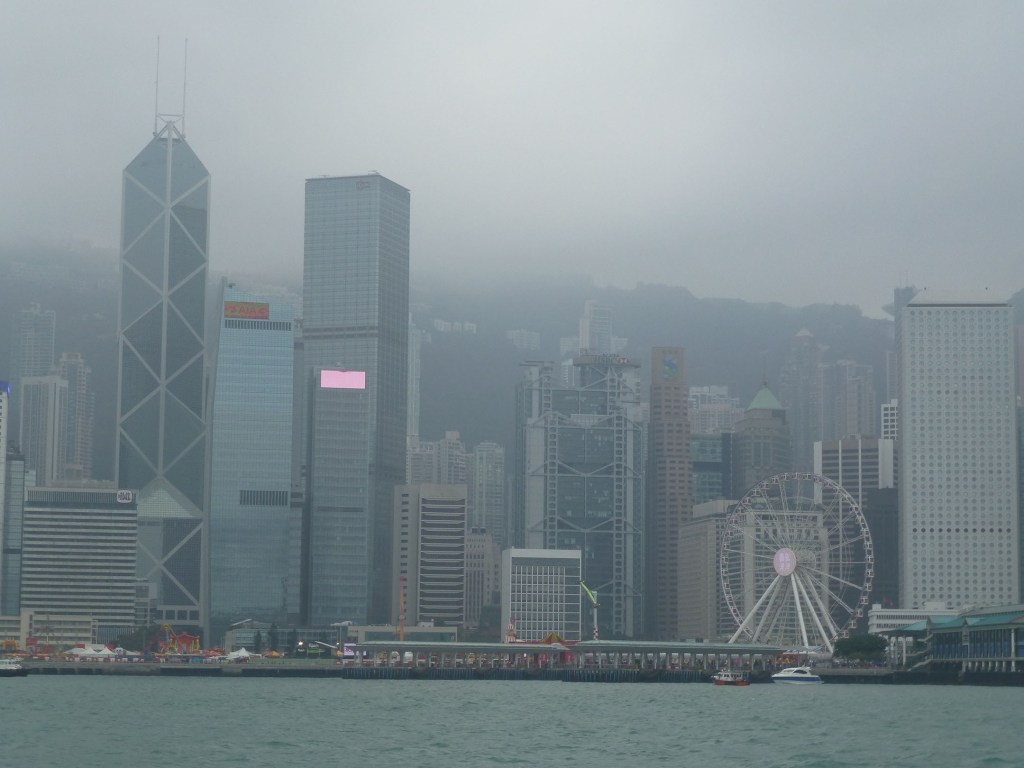

Hong Kong in Chinese means “fragrant port” (coming from the two Chinese characters heung and gong), but it is much more than a port city. The Asian tiger, as it is also called, is a unique mix between East and West, between tradition and modernism. Hong Kong boasts the largest number of skyscrapers in the world, with over 8,000 buildings with over 14 floors. or twice as many skyscrapers as New York!
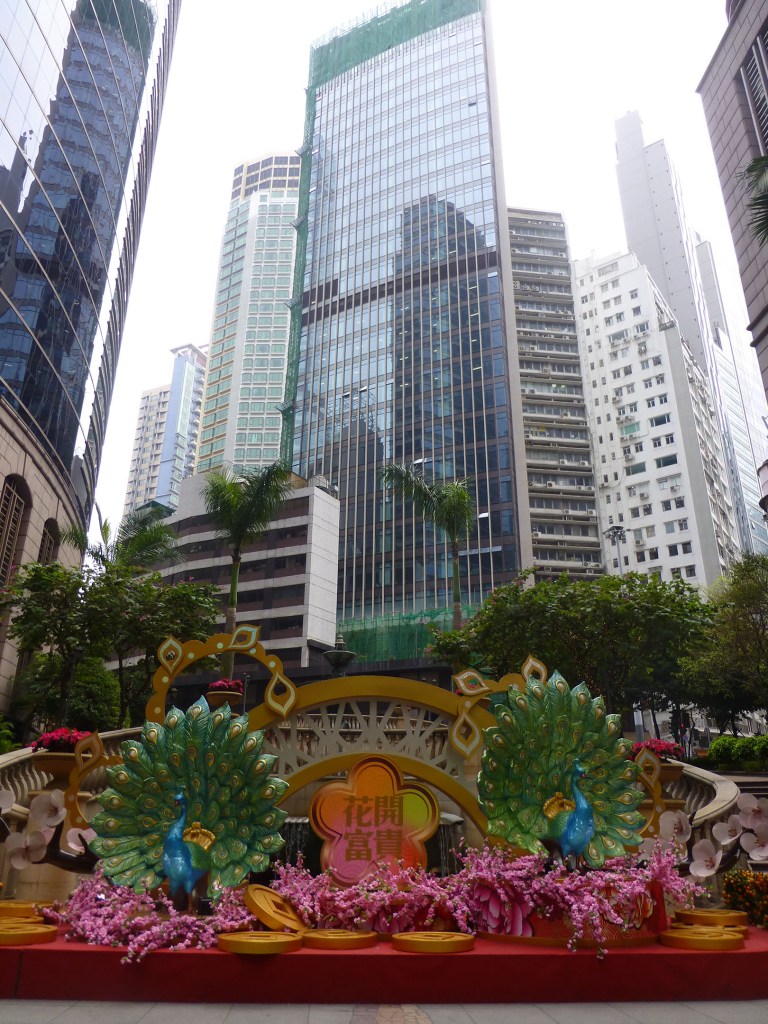
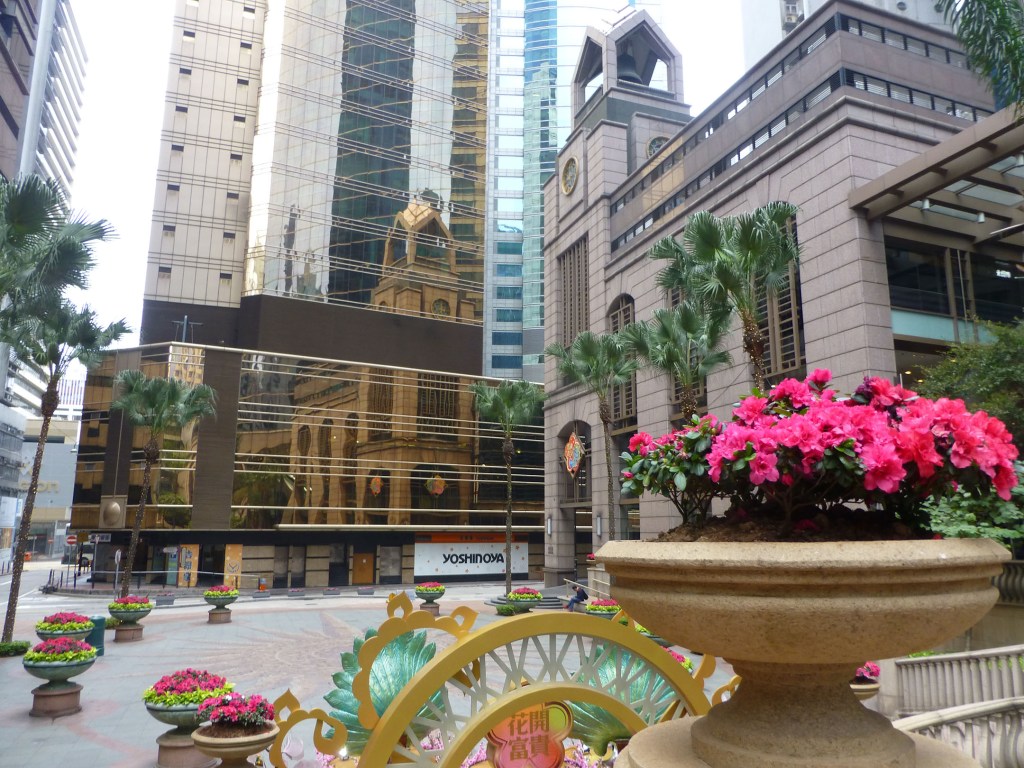
While walking around the city you feel pressed on all sides by high-rise buildings and yet instead of claustrophobia, people here feel harmony. The whole city was created in compliance with feng shui. Feng Shui means “wind water” and is an ancient method of creating harmony through the spiritual forces of nature. To achieve harmony, a balance must be created between the eight natural elements: sky, earth, mountain, wind, fire, thunder, rain and ocean, also the spirits of yin (male) and yang (feminine) who control our world must be taken into account. Thus, e.g. windows facing the water are excellent feng shui and some of the most expensive hotels in Hong Kong are those overlooking the harbor with their huge windows. If you can’t look at the water, it’s important to bring the water into your home, so many offices, shops, and restaurants have their own aquariums. Throughout the city there are small parks between the buildings, some of which with a separate waterfall, with beautiful statues of peacocks and huge coins bringing good luck.
It is difficult to tour Hong Kong in less than three days. We missed many attractions from our program to be able to fit into the planned day and a half in Hong Kong, but even for the short visit the city completely managed to win our hearts, identifying places for our next visits.
We chose to travel to Hong Kong with Turkish Airlines, taking the flight a little over 11 hours. It was quiet at the airport and we could not feel that this is one of the 10 busiest airports in the world, which in 2011 served over 54 million passengers, 3.9 million tons of cargo and over 100 airlines with 170 destinations from around the world. From the airport we took the train Air Express, reaching quickly to the city center, where our hotel was located. Our two-way tickets costed 180 HKD (42 BGN), and contrary to all the recommendations on the Internet, we exchanged money at the airport. The course turned out to be almost the same as on a change desk in the city, so we didn’t regret it.
Hotel Ovolo, where we had a reservation, welcomed us very hospitably. We caught Happy Hour, which meant free drinks and snacks in the lobby on the second floor. Our room 1003 on the 10th floor, was relatively narrow, but equipped with all the facilities and extras needed, and it turned out that even our minibar was free of charge. The Wi-Fi internet also had a strong signal and we sent messages home.




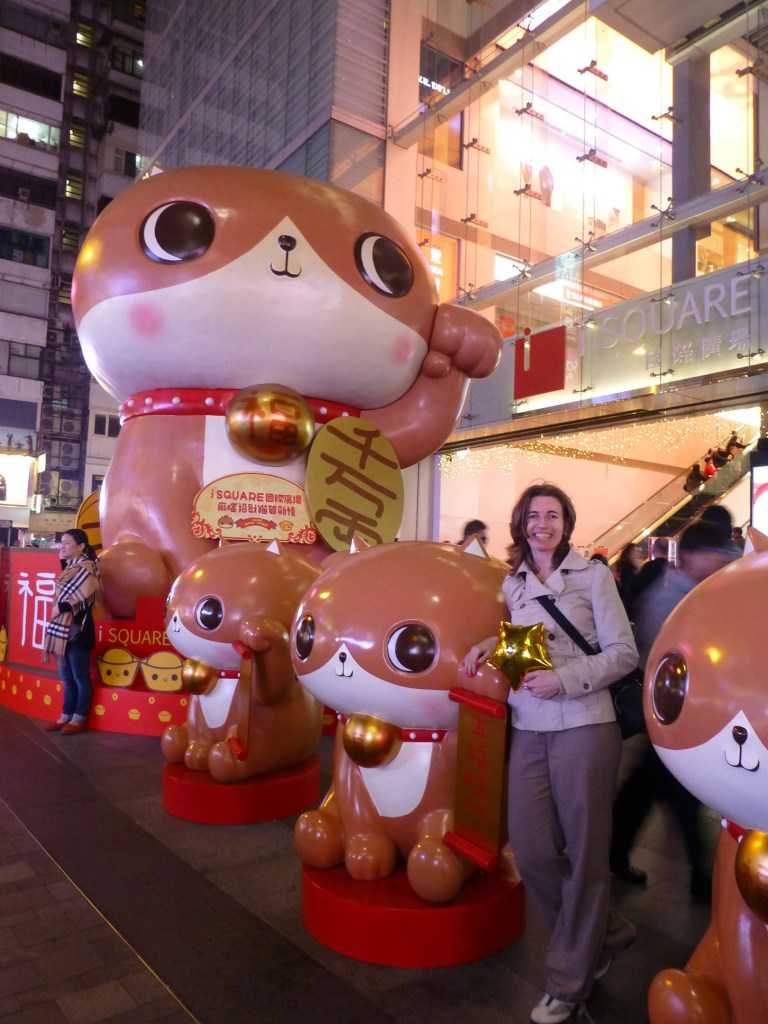

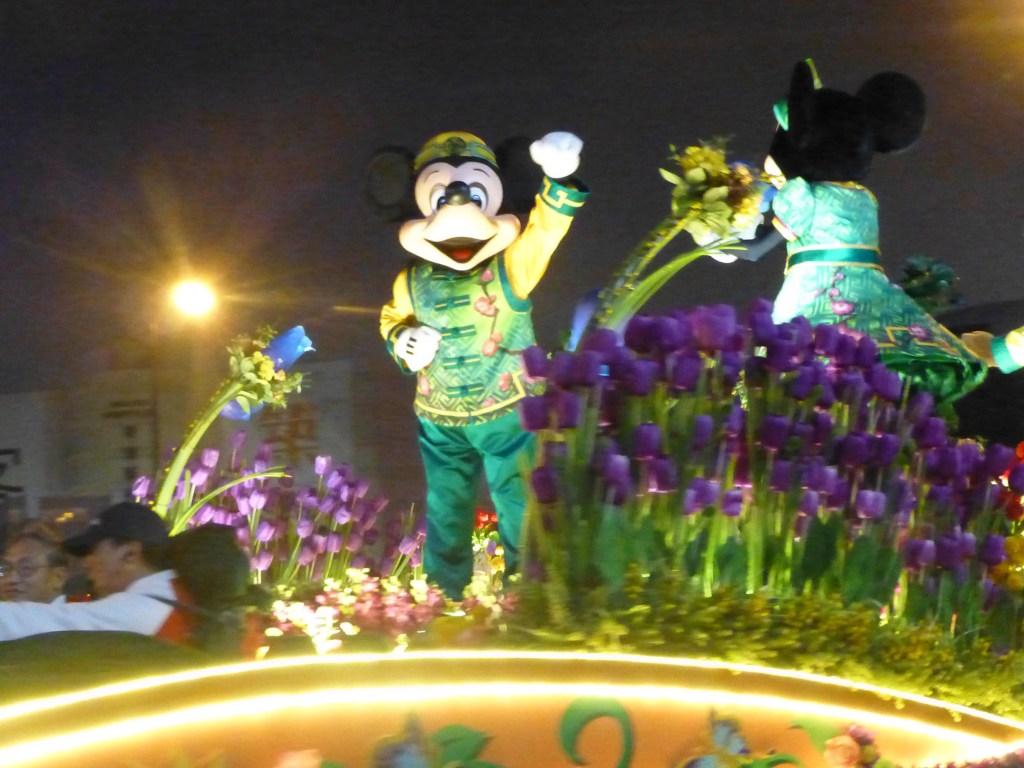
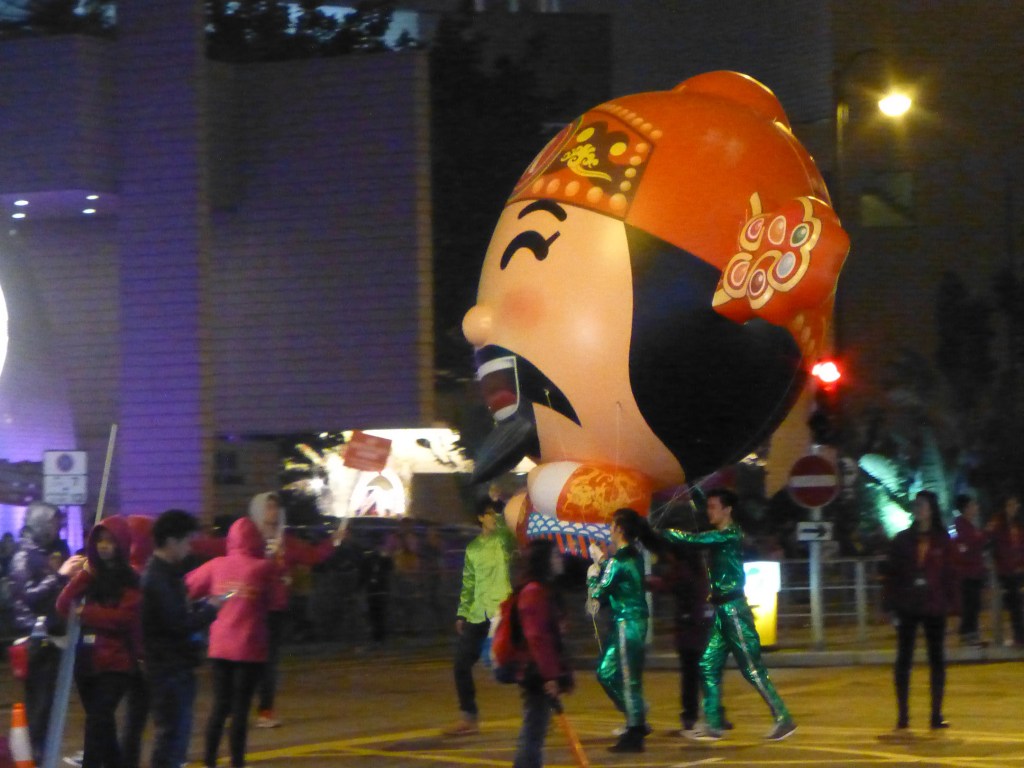

We arrived in Hong Kong on New Year’s Eve, which here is not on December 31, but on a different date each year, but always in the period from January 21 to February 20. Even their countdown is different, starting from their first ruler and calculated on the basis of the Chinese lunar calendar. So even though it was 2015, we managed to celebrate the beginning of 4713 in China. Every year here is dedicated to one of the 12 sacred animals: rat, bull, tiger, rabbit, dragon, snake, horse, sheep, monkey, rooster, dog and pig. The year 4713 began on February 19, 2015 and was dedicated to the Sheep. Under this sign are people born in 1919, 1931, 1943, 1955, 1967, 1979, 1991, 2003 and 2015.
The New Year’s Eve parade started at 20:00, shortly before that we went down to the reception and asked for a taxi. It turned out that the central streets and especially the tunnel to Kowloon was closed and the only way to get from the island to the opposite side was the subway. The ticket for 3 stops cost us 9.50 HKD per person (2 BGN). Leaving the subway, it was still unclear which direction to go – the music was not that loud, as in the carnival of Xanthi, Greece, nor did people walk in the same direction as the carnival of St. Patrick in Dublin. Here all visitors went to different sides of the town.
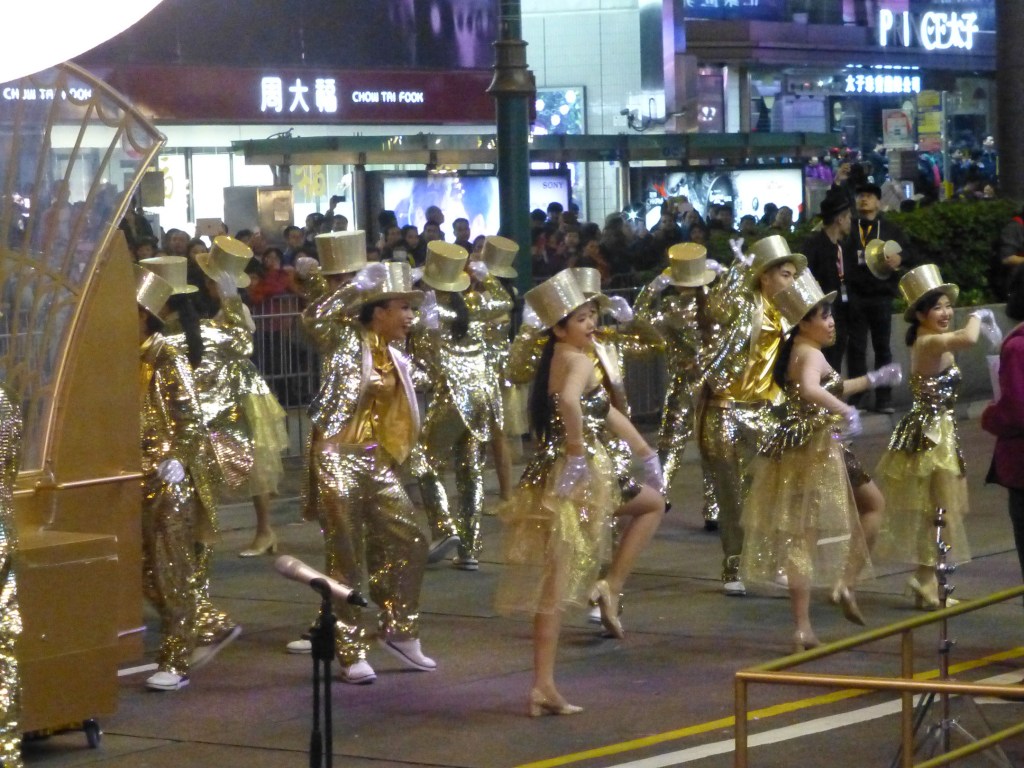
After we found the parade route we were pressed from all sides, with at least five rows of people in front of us and closing the visibility to the festive procession. The pushing continued down the street looking for places to make photos, but at 20:30 it was a mission impossible. We stopped at different places, some of them so far away, that we did not even hear the music and the parade did not impress us – at least until the end when we managed to stand in the third row in the crowd and felt the real delight and festive mood. We even managed to get two balloons and our smiles stretched like the eyes of the Chinese around us. In fact, the audience was mostly foreigners. The Chinese preferred to celebrate the holiday at home with their families. On New Year’s Eve, they were given 5 days off and most of Hong Kong’s 7 million Chinese had moved out. Tourists, however, fully compensated this and the crowds on the sidewalks showed that this number was exceeded. Some of the tourists wore removable tripods on which they put their phones and stretched them over the crowd taking nice photos. I, too, tried to do such standing on my fingers and stretching out my hand as high as possible. The procession included live music, dancing, acrobats and even martial arts. There were groups from different places, even representatives of Disneyland and Ocean park.
After the carnival we walked a little around the night Hong Kong, then with the subway we went back to the hotel. We had no problem with the subway. The ticket machines clearly showed at which stop we were located, and when we pressed on the map which stop we wanted to go, a price was written, which after payment (with coins or paper money) put a ticket. Room 1003 on the 10th floor was waiting for us with free mineral water, comfortable bathroom and window occupying a whole wall. The view was to a tall building opposite the street, but we did not need other panorama. Under our eyelids, the colorful carnival still continued. We closed tired eyes and gathered strength for the upcoming tourist day.
The next day, after the rich breakfast at the hotel, we headed to the famous train that led to Victoria Peak. It was relatively early in the morning, but there was already a long queue in front of it and we were glad that we had bought tickets on the Internet and did not have to wait at least for tickets. For boarding, however, we had to wait for the third train until it was our turn. During this time from the inside we looked at several pictures, which represented the history of this railway originated in 1888, being the first of its kind in Asia, and remaining as the steepest and oldest railway in the world. Despite the high slope and single grip of the cabins, this tram leads the safety charts. In 1960, a powerful tornado destroyed part of the railway, but then it was rebuilt. It carries 11,000 people a day, or approximately 4 million a year. The train really ran on a very steep slope – all the buildings seemed unnaturally distorted by it. After only 10 minutes we found ourselves at the top, as the road to the panoramic terrace passed through many shops that tempted us with souvenirs.
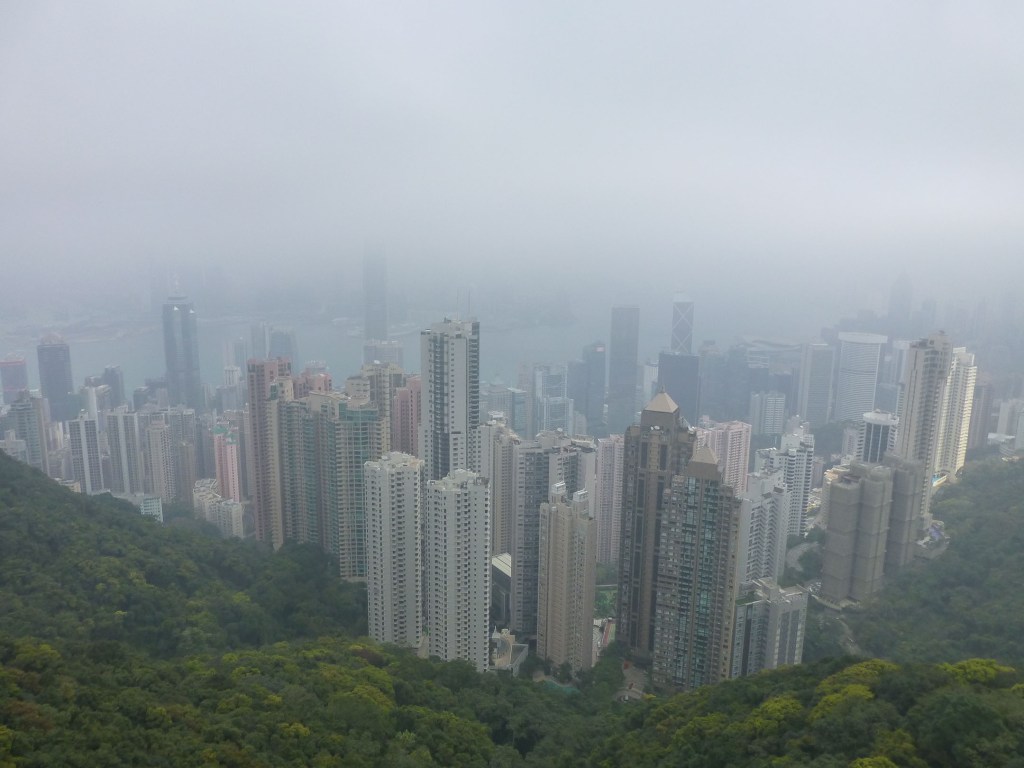
We could not resist the beautiful panorama outside, which we showered with many photos. Despite the smog all the skyscrapers were clearly visible and the view was wonderful. The sea surrounded the city from several sides and it was very beautiful. Hong Kong is the size of Luxembourg, home to over 7 million people, making it one of the most populated places in the world. High in the mountains, however, the crowds did not make such an impression, we felt them only when we went to the quеue again for getting back on the train.




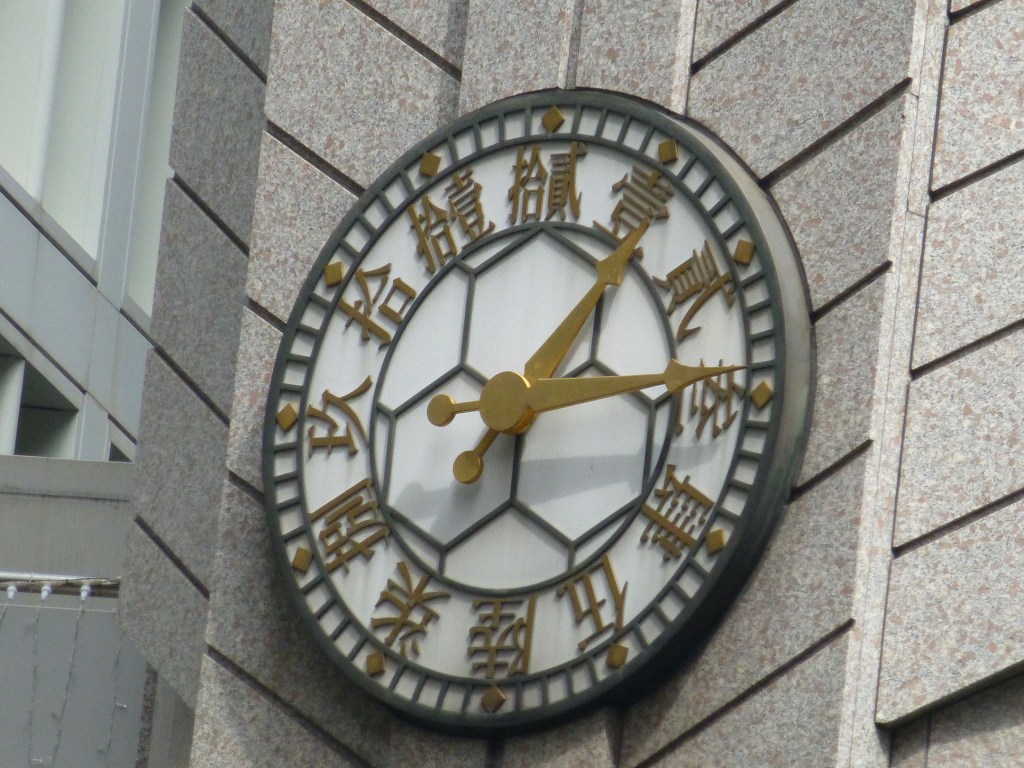


As soon as we got off the top we got on the double-decker tourist bus – the red line and with it we toured most of the sights of the city without getting off the bus. We passed through the Man Mo Temple, which is dedicated to the god of literature Man Tai and the military god Mo Tai, and these gods are especially revered by pupils and students, who wish to succeed in learning. The temple itself was nestled among many skyscrapers, and if the bus hadn’t passed right through its street, it would be hard to see it from afar.
On the way to the port we photographed many skyscrapers whose windows were reflected in each other. At the port we were asked to change to another red line bus and our tour continued as we passed through the beautiful building of the exhibition center, erected in 1997. The bus temptingly passed several shopping streets, and on the headphones we were told, that here are some of the most popular malls, but pressed for time we devoted ourselves to sightseeing, not shopping.
Gradually, along the narrow streets, pressed on all sides with tall buildings, we found ourselves again at the stop to the summit of Victoria. There we switched to a bus from the green line and with it we made a circle of sights farther from central Hong Kong. We passed through the famous horse riding center Happy Valley, where horse races are regularly held. From there through a tunnel we went out to the amusement park Ocean Park, in front of whose entrance dolphins were very successful in flowers. In the distance there was a mountain peak to which lift cabins led. We wondered if there was a huge Buddha statue that we wanted to see so badly, but in one day it was impossible to see the whole of Hong Kong. In addition to the lift, 260 steps had to be climbed next to this statue, with the bronze statue of the Great Buddha sitting in the Lotus pose 26 meters high, and a symbol of purity. Although Hong Kong was overcrowded, cleanliness was everywhere.
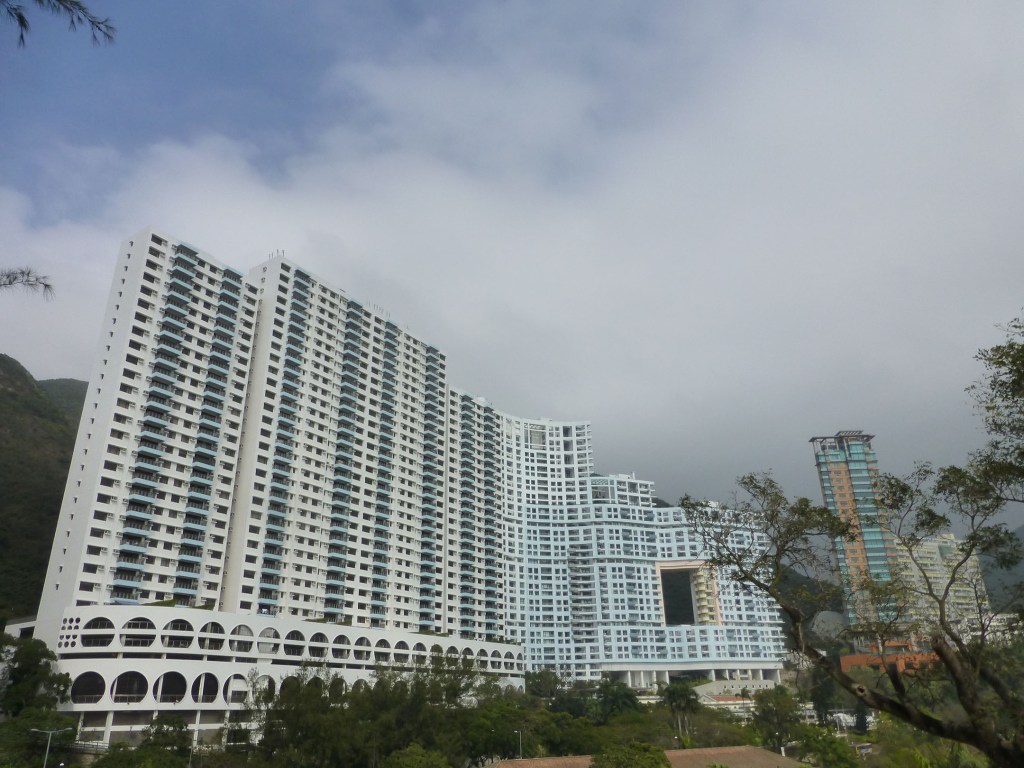
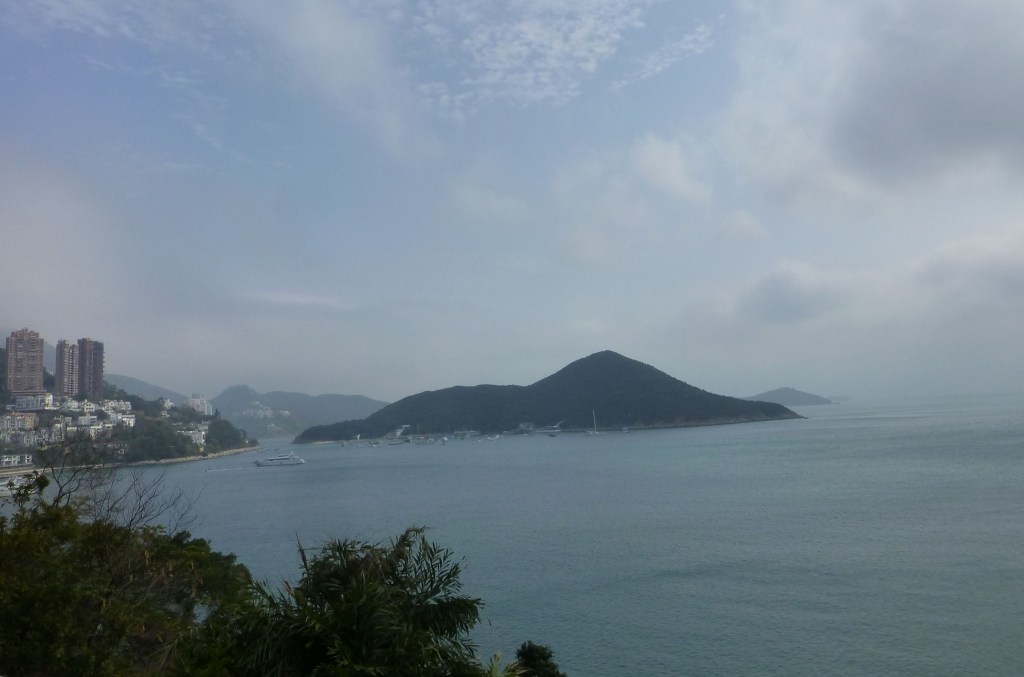
The green bus took us to a bay with beaches, boats and again tall buildings. In one of the buildings there was a large hole deliberately left that helped the dragon and the winds from the mountain reach the sea and the water without hindrance – again feng shui theory. Along the way, we photographed the many islands (after all, Hong Kong consisted of over 200 islands), as well as the many blooming flowers, which for February was a wonderful sight.




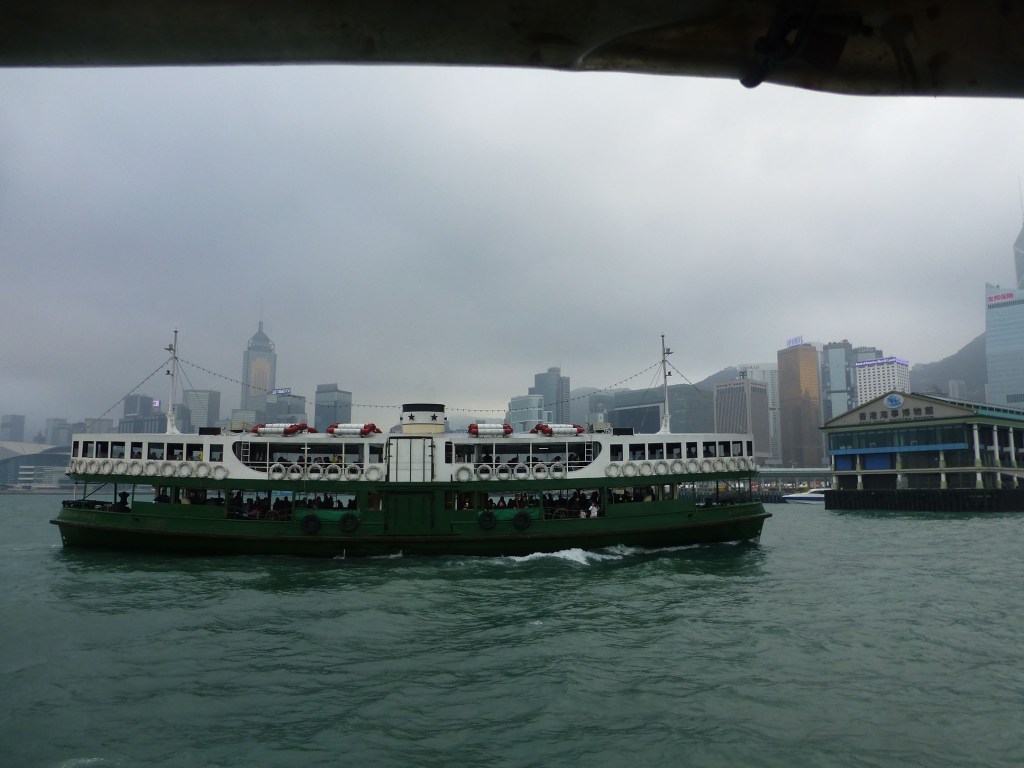
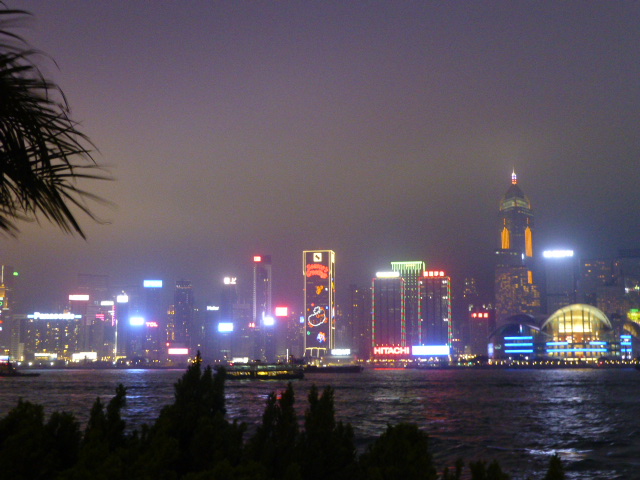
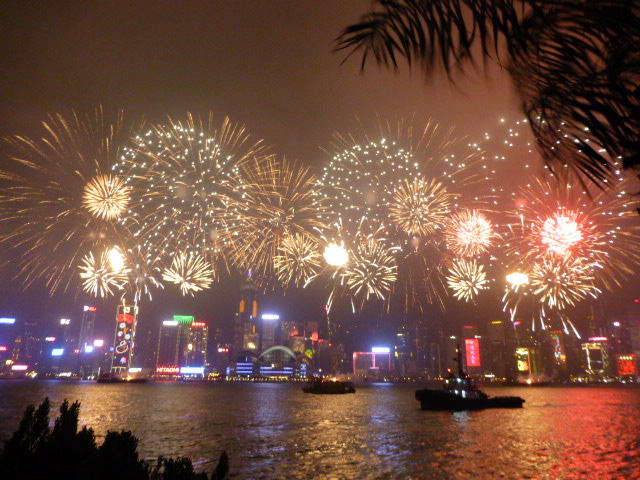
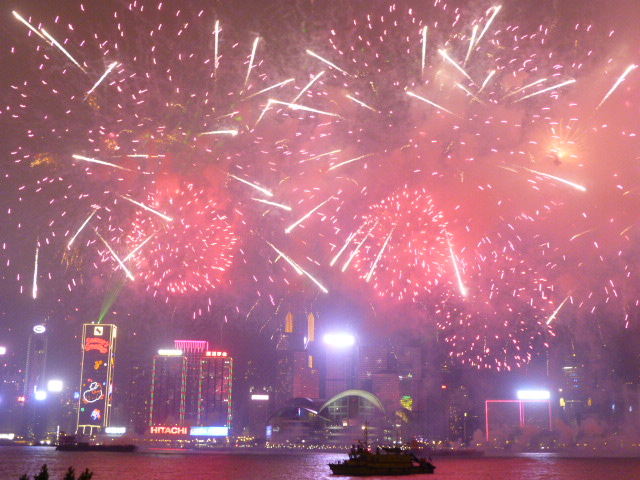
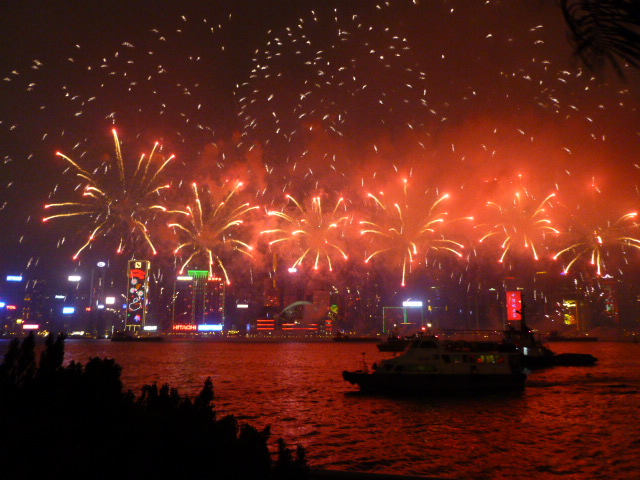
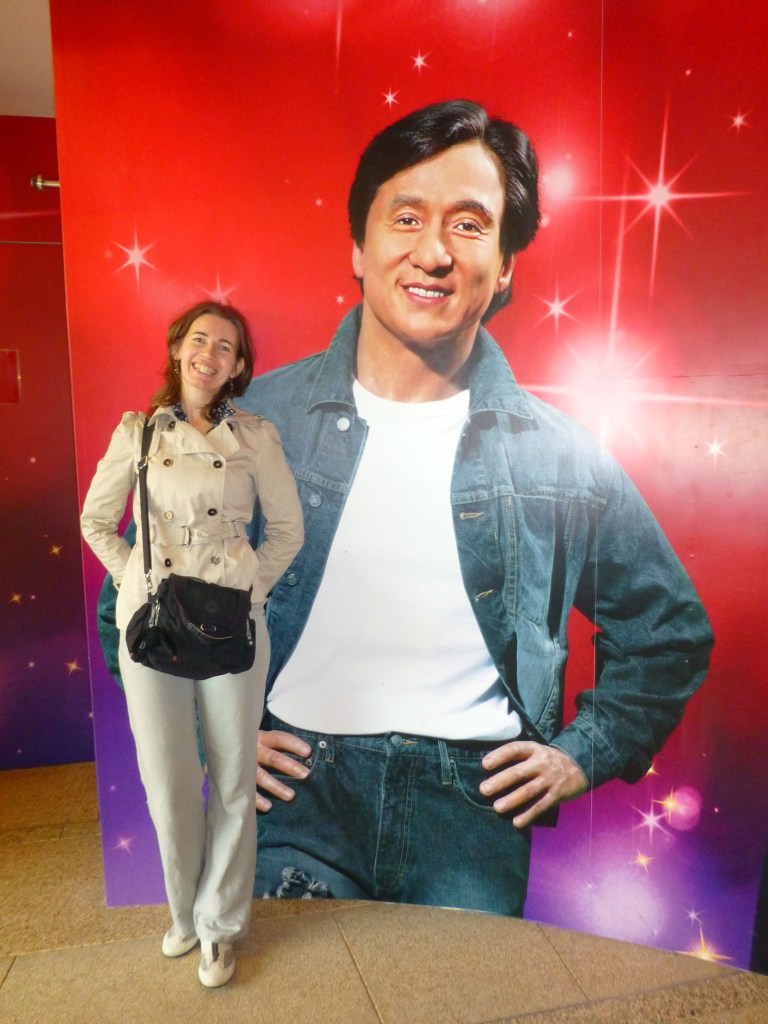
Getting back to the port of Victoria (named after Queen Victoria of England), we got off and boarded the famous Star Ferry boats, whose ticket price was included in the price of double-decker buses. This ferry line has connected Hong Kong Island and mainland Kowloon since 1888, offering spectacular views of the skyscrapers and the hill behind Hong Kong. On the other side we headed to the alley of fame, which was filled with stars and handprints of celebrities. We couldn’t just pass by Jackie Chen’s star, with his cemented prints, after all, Hong Kong was his birthplace. We never made it to the end of the alley, because the same one was quickly filled with people who reserved seats for the upcoming evening fireworks show, which was a must for the New Year holidays, banishing all bad spirits. We also reserved nice seats, in the front row of the promenade and the one-hour waiting was worth it, as the seats allowed us to take amazing photos and enjoy the 25-minute fireworks show to the fullest. It was quite obvious that the Chinese had invented fireworks and continued to be leaders in them. Lights of all colors and shapes shot into the sky and shone over the shining skyscrapers. It was an amazing show, I especially liked the shapes of hearts shining in the sky and shining above us. The New Year was coming, and with it the wishes for health, success and love. The fireworks poured on us as a blessing.





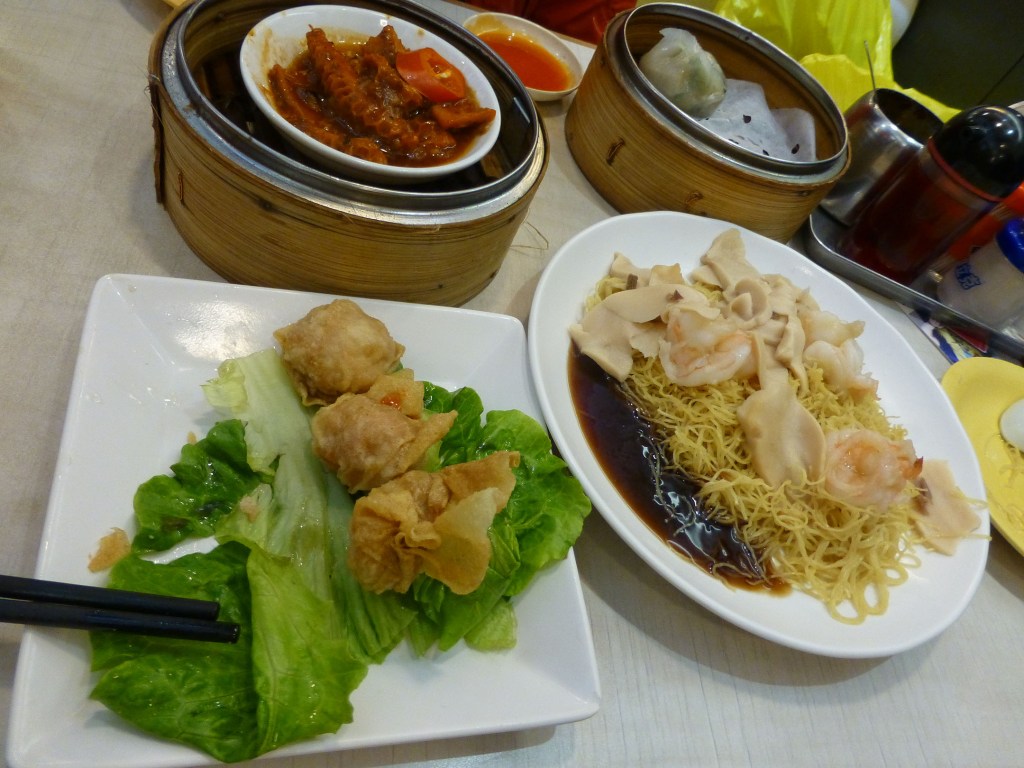



We made a rich New Year’s dinner in a street restaurant, but we didn’t succeed to taste their famous noodles (rice noodles). I have read that this is one of their specialties and especially recommended eating noodles on a birthday, as it brought a long life and prosperity. The New Year’s Day was no less festive, but we were satisfied with fried Chinese bites with shrimp and other spicy things.
The evening had an even better ending by taking advantage of a Chinese foot massage. According to posters, after such a massage, a person seems to step in the air and to some extent I would agree. After an hour of foot massage, from the smallest to the largest toe, we felt completely rested, from our two-day rush. We learned that foot massage improves circulation in the body, reduces depression, headaches and even blood pressure.
It was the perfect end to a beautiful day in Hong Kong. The city seemed to me different from the rest of China, and not only because the traffic here was left side, unlike in the rest of China – right side (due to 156 years of British rule ended in 1997). The city resembled Shanghai slightly, but noticeably more tighten in area. Almost everyone spoke English (the local laws had accepted it as the second official language, after Chinese). According to the Internet, it was also the country with the highest average IQ of 107. The locals, if I saw any, seemed kind to me and without hesitation I would recommend Hong Kong as a place worth visiting, but at least for 3 days.
The beginning of 4713 was incredible, and Hong Kong was really like a city from the future, and going back to the Bulgarian year 2015 it seemed like I was really going back to the past. The future was glamorous, hopefully the other countries will reach it.

GENERAL INFORMATION ABOUT HONG KONG:
Location: Hong Kong is a special administrative region of China, located in the southeastern part of the country, on the coast of the South China Sea.
Area: 1 108 sq.km
Population: 6 708 389 people
Official language: Chinese and English
Altitude: The highest peak in Hong Kong is Ta Mo Shan (957 m) and the lowest point Lo Chau Mun (66 m). Victoria Peak, from which an incredible view of the harbor and skyscrapers is revealed, is 552 m above sea level.
Climate: moderate maritime
Time zone: UTC+8
Currency: Hong Kong dollar (HKD)
Additional information: http://www.discoverhongkong.com/eng/index.jsp
TRIP TIPS FOR HONG KONG:
Best time to visit: October-December climate is the most favorable. From June to August it is hot and raining. In September, typhoons may appear. The city is especially beautiful and festive during the Chinese New Year, which usually falls in late January-early February.
Typical foods and drinks worth trying: Hong Kong noodles, snake soup, shrimp dumplings; tea with milk
Places to visit that you should not miss: Victoria Peak, the huge statue of Buddha Tien Tan, Star Ferry boat ride, Disneyland and Ocean Park.
 TripTips