Holiday in Bali
THE DIVINE ISLAND OF BALI
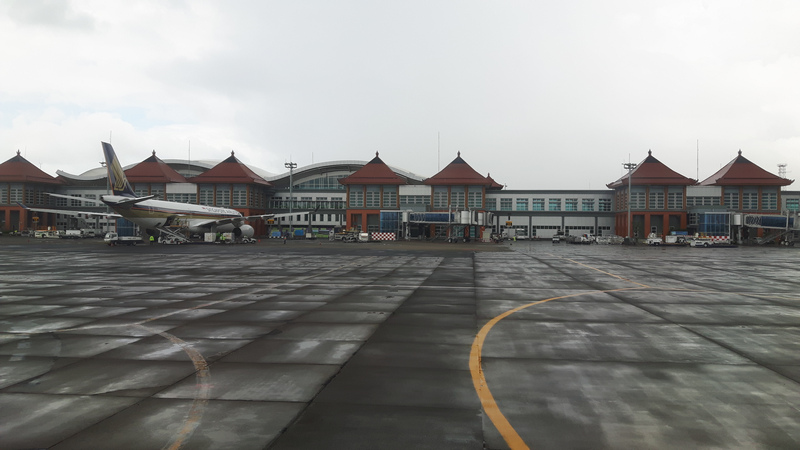
Close your eyes and imagine a week in Bali. The first thing that comes to mind is probably a crystal clear sea with colorful fish and coral, white sands with green palm trees and lots of sun light. Now open your eyes and return to reality – Bali does not look like this at all, at least not in early February, at the height of the rainy period. Most of the sands are black, volcanic, and the sea with them is muddy. Palm trees are rare unlike bamboo, which however, can not shelter a tourist from the pouring rain, falling from morning to night, and sometimes at night. In the midst of all this foggy and rainy surroundings, Bali still has some charm and we joined the millions of tourists coming here for a fruitful holiday.
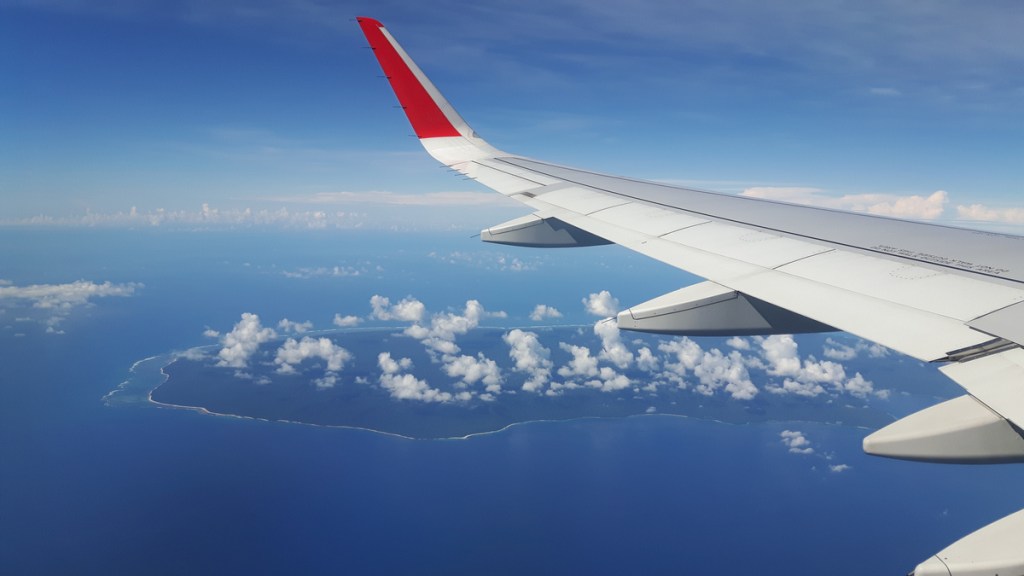
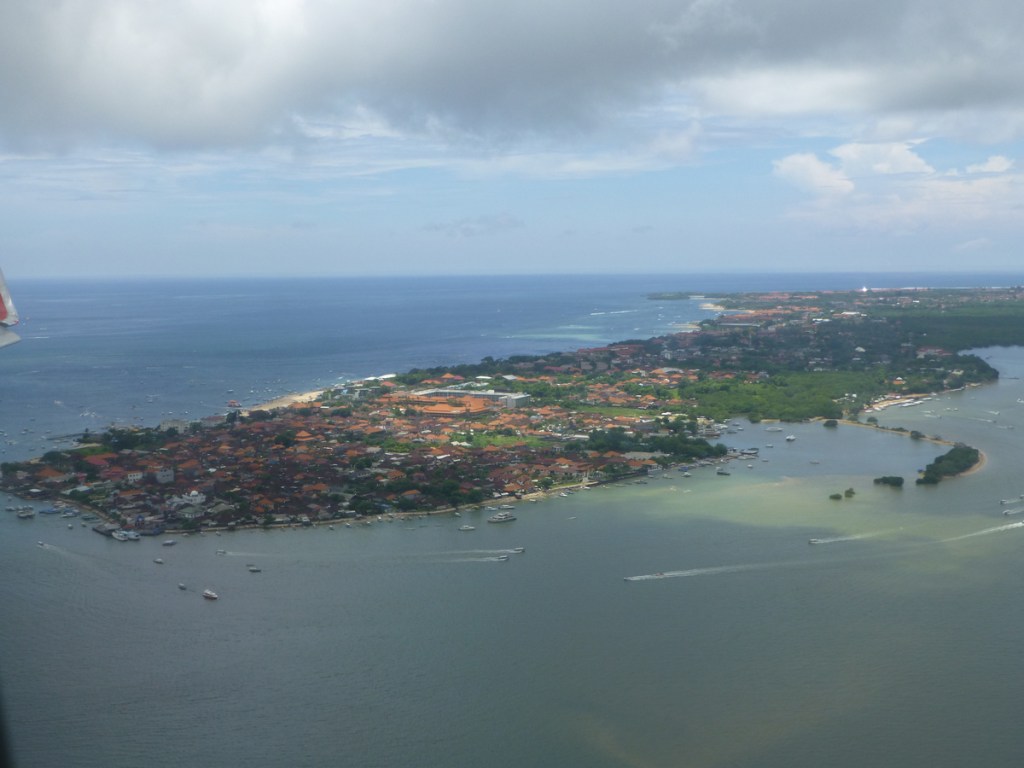
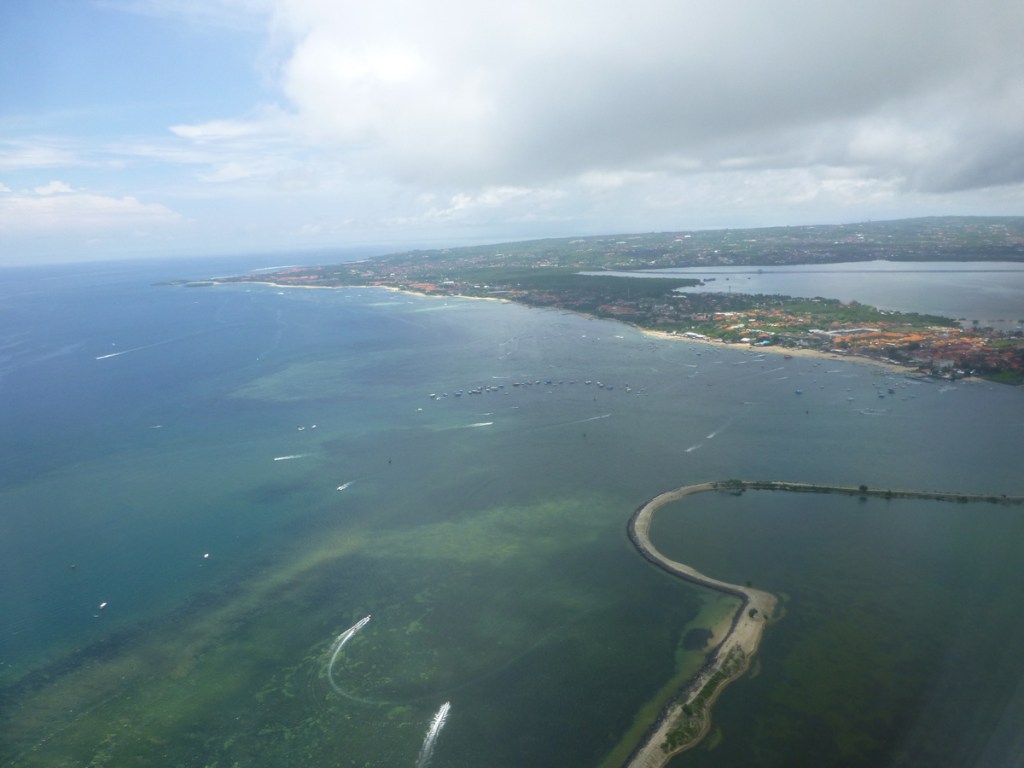
Bali is called the divine island and the island of a thousand temples, which is true. Here in every home, even hotels there is a separate private temple, where people offer their prayers to the gods and their ancestors. They, in turn, respond by blessing them with holy water in the form of rain. We had the privilege of being greeted with this “blessing” water upon landing at Depansar International Airport. This “blessing” deprived us on the beach in the afternoon, That’s why we emphasized Balinese cuisine by enrolling in an evening cooking class.
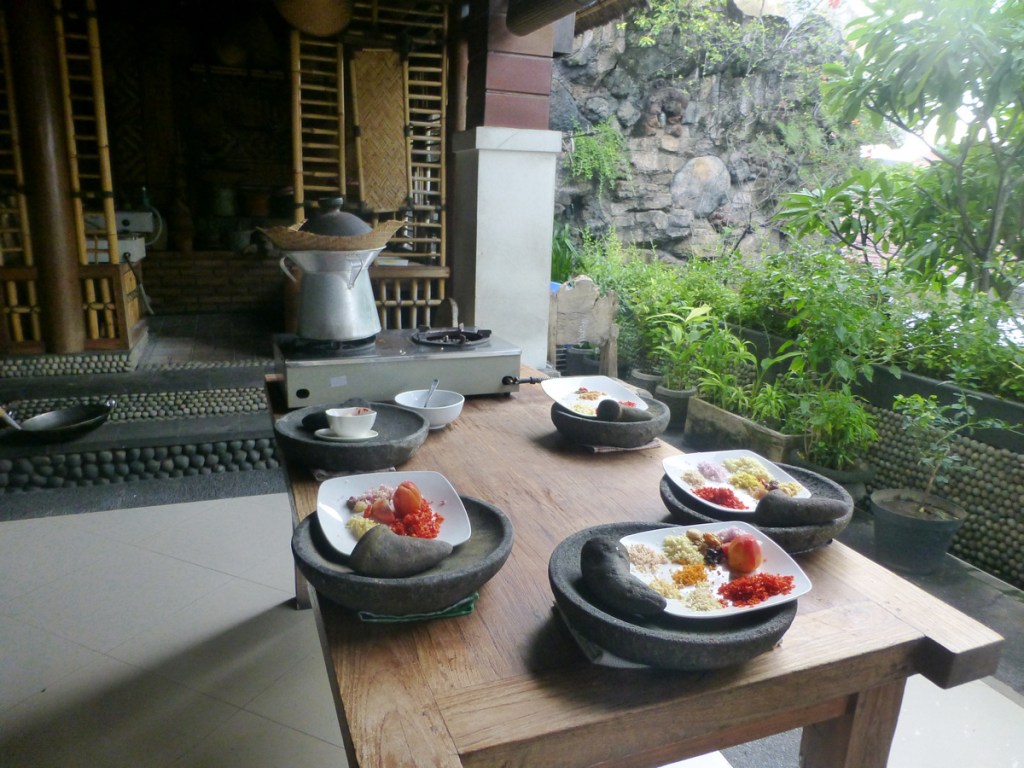
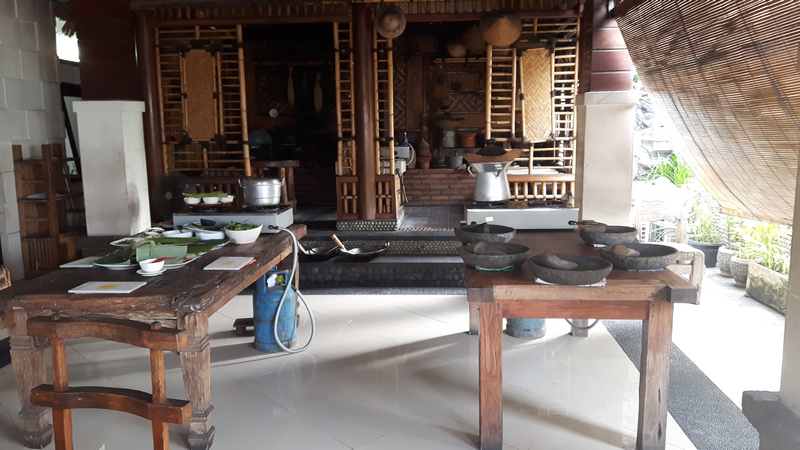
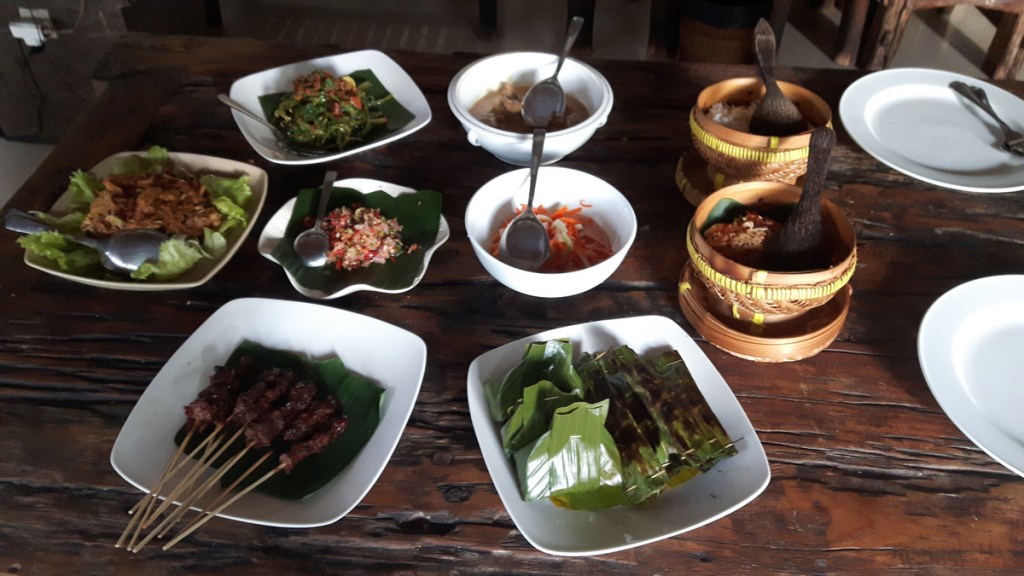
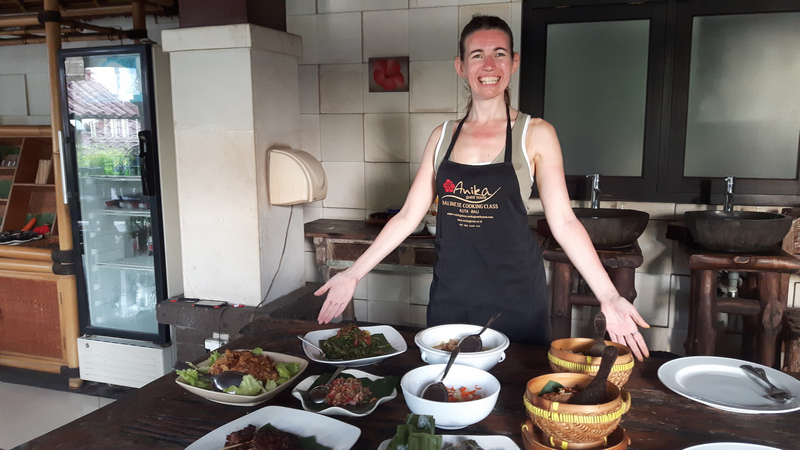
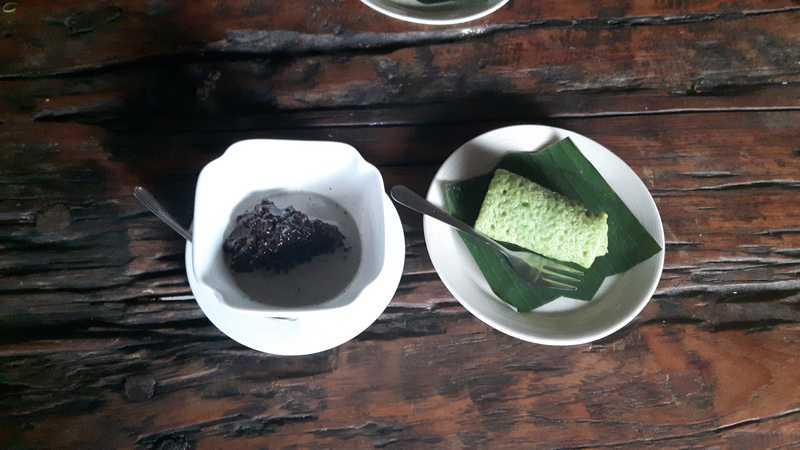
Balinese cuisine includes a variety of spices, fresh vegetables, meat and fish, and is generally quite spicy. During our 5-hour cooking course we learned to prepare Pepes Ikan (baked fish in banana leaves); Satay Manis (Balinese sate with sweet beef); Kare Ayam (chicken curry); Kangkung Pelecing (spinach with tomato hot sauce Sambal); Bumbu Kacang (Balinian ground-steak sauce); Gado-Gado (vegetables with peanut sauce); Balinese Nasi Goreng (fried rice with chicken); Sambal Matah (spicy chili sauce); Acar (spicy carrot and cucumber salad); Dadar Uti (green pancakes with coconut) and Bubur Injin (black rice pudding). The team of Anika Guest House presented us with the intricacies of preparing each of these dishes, chopping all the products by hand very finely, and for the sauces we crushed the spices with volcanic stones. The most difficult, however, was tasting and eating the ready meals, as in each of them there was at least one hot red pepper, and somewhere more, and I have to admit that I do not like spicy foods. I learned that the local cuisine is quite hot, because it kills microbes that are otherwise bred in warm places. So everything was delicious but too spicy for me, so during my stay in Bali I emphasized the desserts and fruits, which were very sweet.
In the evening we returned to the hotel and in the moonlight we took our first bath in the Balinese Sea. The water was very warm and pleasant. The next day began our 4-day tour of the island visiting some of the most beautiful places in Bali with a local guide.

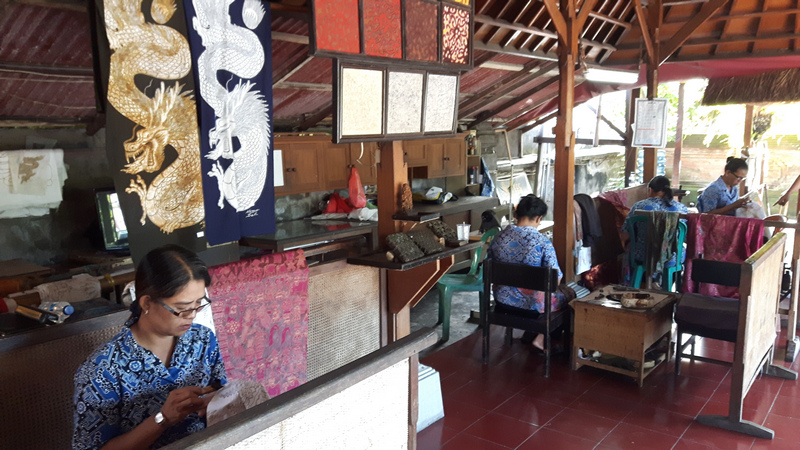
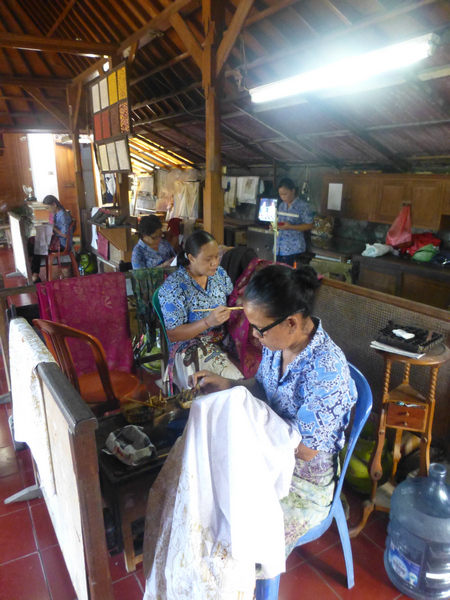
Our tourist program started from an atelier where people sew, painted and dyed clothes and scarves. The guide recommended us to buy a sarong (Balinese scarf) that would allow us to enter each of the temples freely. Whether we were wearing long or short skirts, or even long pants, all men and women had to tie their scarves at the waist before entering the temple, in this way they concealed their intimate organs, with the knot in front. The Sarongs were really very colorful and beautiful, and these scarves could easily be turned into skirts and beach dresses.
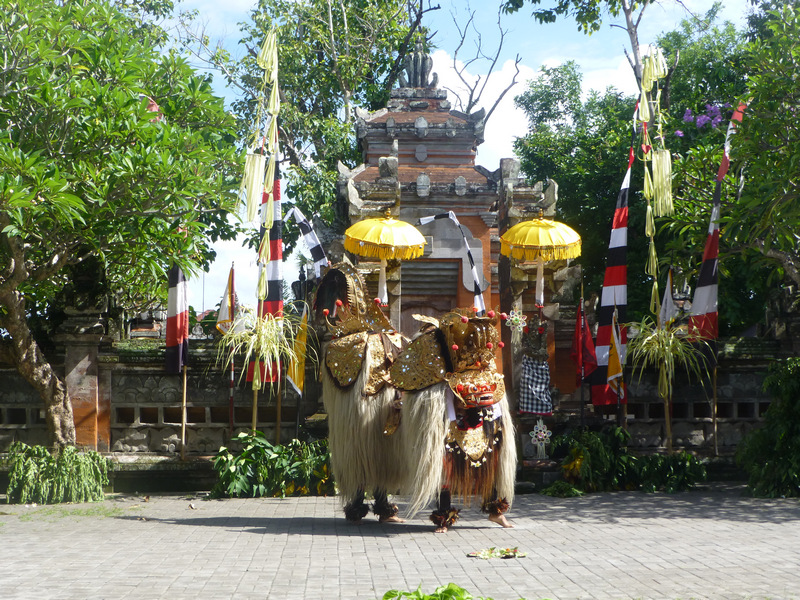
After the short shopping break, we continued with a cultural program and watched the Barong dance, which had religious significance. Among the scenery of an old temple, a theater troupe gave us a performance, the main character being Barong, a mythical creature resembling a lion – the king of good spirits and enemy of Rangda, the mother demon. Recreating the fight between Barong and Rangda with different dances and colorful costumes, they showed the eternal struggle between good and evil. There were also beautiful Balinese dancers who moved their hands more than their legs, but seemed to charm the audience with their palms.
Going deeper into the Balinese culture, we entered a typical Balinese country house. In fact, the property consisted of several straw buildings (pavilions), one of which was designated for sleeping, another for kitchen, a third for drying rice, and there was a separate part for a temple. Everything was simple and that created harmony.

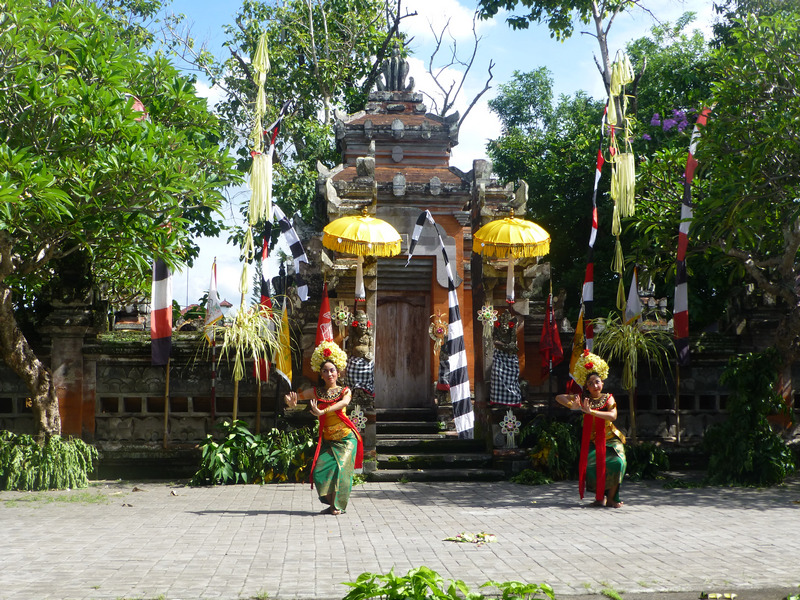

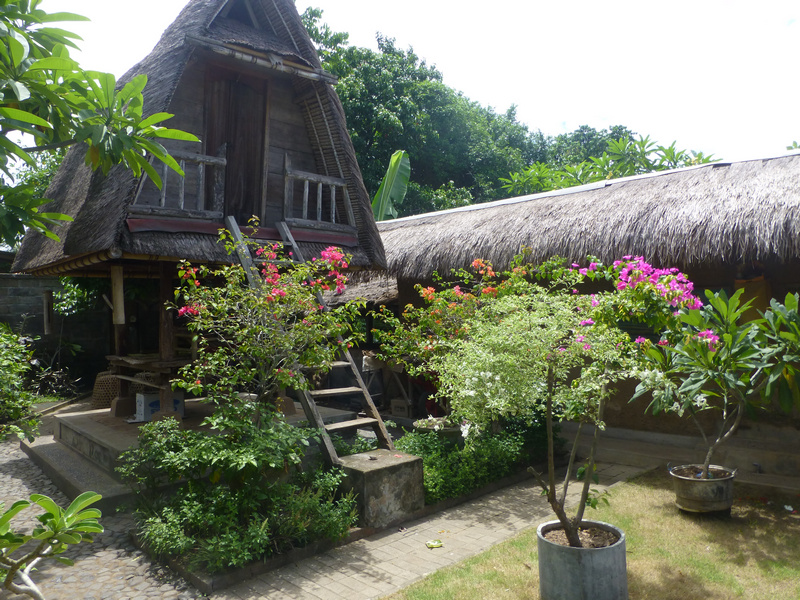
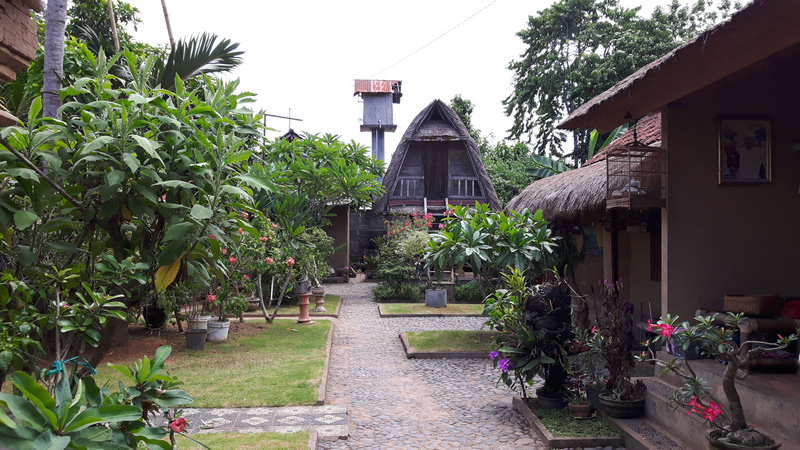
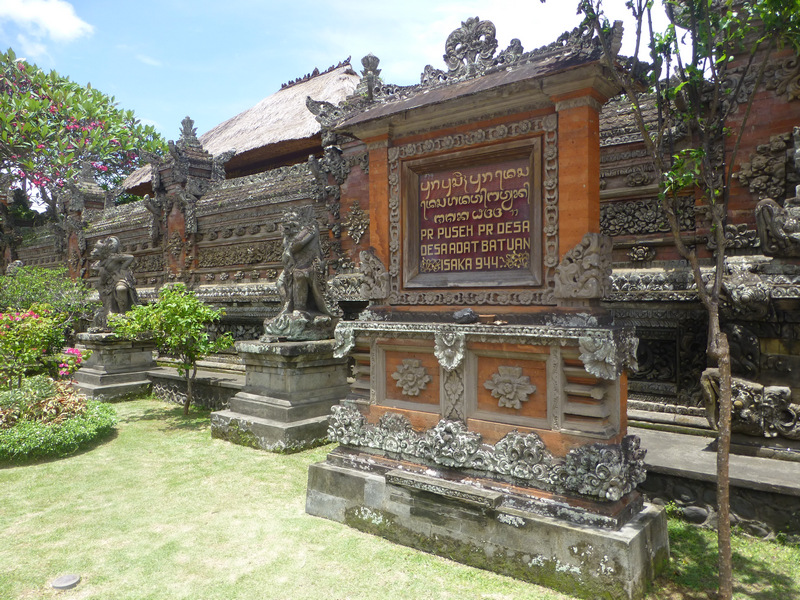
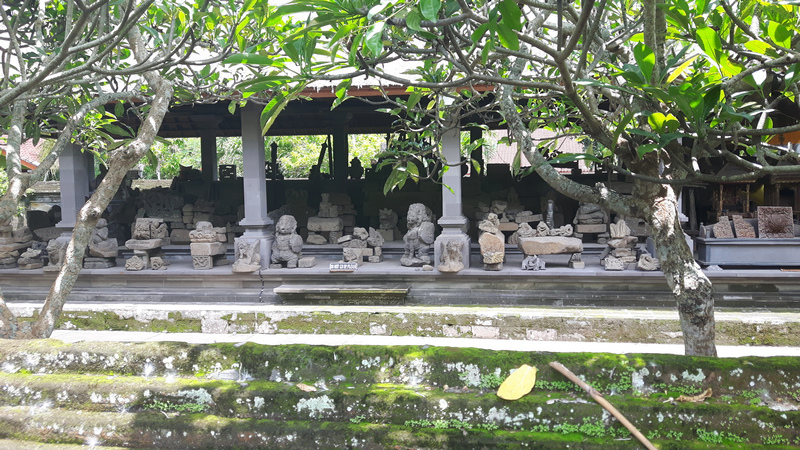

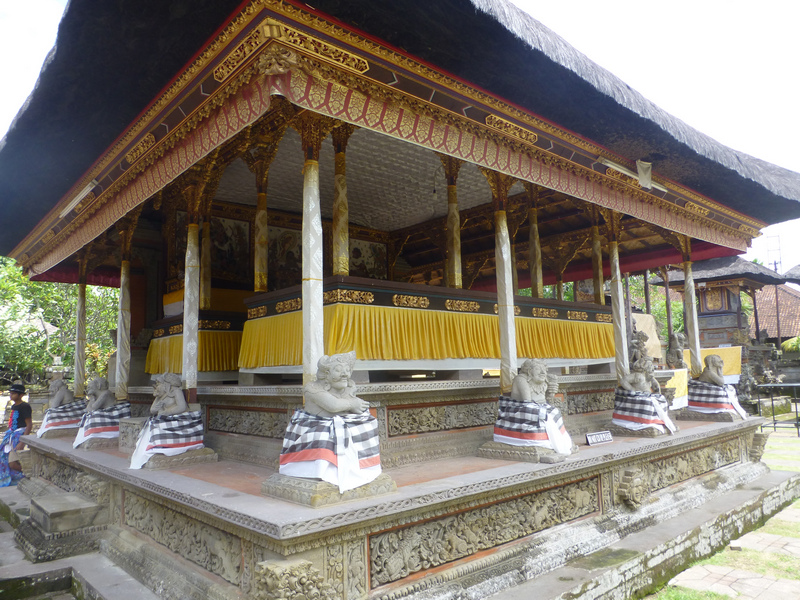
We continued to the village of Butuan, which dates back 1000 years ago. There were more nobles among the population than peasants, so the people there developed their artistic abilities, and still today the locals are famous for their dancing, painting and architecture. The picturesque school in Butuan is famous for its graphics and color palette. Especially beautiful is the local temple Puseh Batuan, which we visited. Throughout its area there were beautiful statues and lavish carvings on the Balinese gray stone, which has volcanic origin. We learned that every Balinese temple consists of 3 main parts: the first one was the entrance part, in this case a building outside the temple doors, and sometimes just a garden. From here, visitors could get their mandatory sarong for an additional fee in case they have not previously purchased one like us. This part was guarded by statues of mythical creatures. Next was the middle part of the temple, where several pavilions were erected, and where people gathered to pray, here is the temple kitchen. The latter was the most sacred part, here are the tallest buildings in the temple, often resembling a multi-storey tower with thatched roofs, slightly resembling the Chinese pagoda.
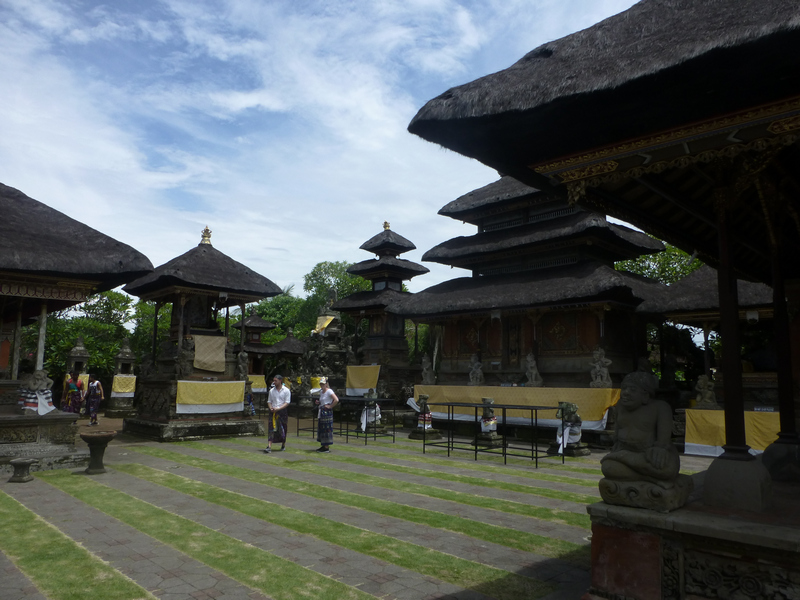
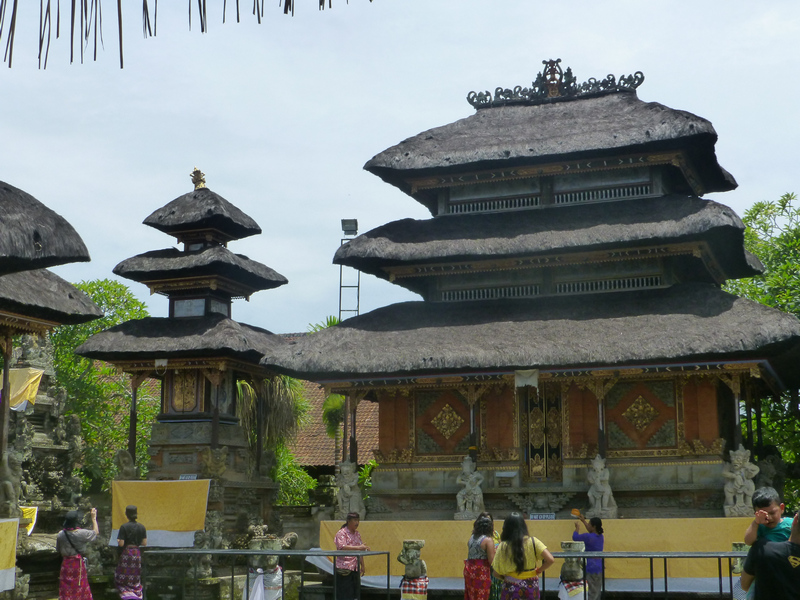

After touring all parts of the temple, we headed to the next atelier, which was for the preparation of wooden statues. Skilful masters was making beautiful works of animals, people, mythical creatures from wood, and it seemed that all these copies became more beautiful than the originals.
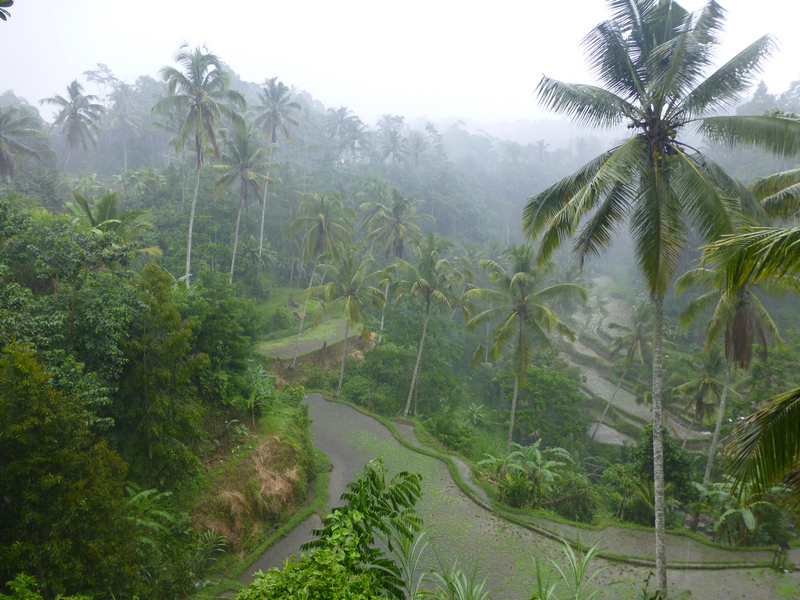
Our island-tour program continued with even more saturated with spices Balinese cuisine, after which we had time to stretch our legs through nature in searching of the beautiful Guning Kawi temple. The heavy rain and the clouds that almost fell to the ground made it difficult to find it, but our efforts were worth it. After passing a few rice terraces, and crossing the Pakerisan River Bridge, we reached the 7-meter rocks, in which 10 stone pagodas were carved. It is believed that these reliefs were erected and dedicated to King Anak Wungsu and his favorite queens. On the east side there are five temples dedicated to the king and his queen Mahendradatta and their 3 sons. On the west side are the temples of the secondary queens and concubines. An inscription was found on the northeast side saying that “the king has erected a temple here.” This unique work created by people and nature really had a majestic impact. The incessantly falling water from above, however, quickly invited us to the next temple, where there was a cave in which to hide from the rain.

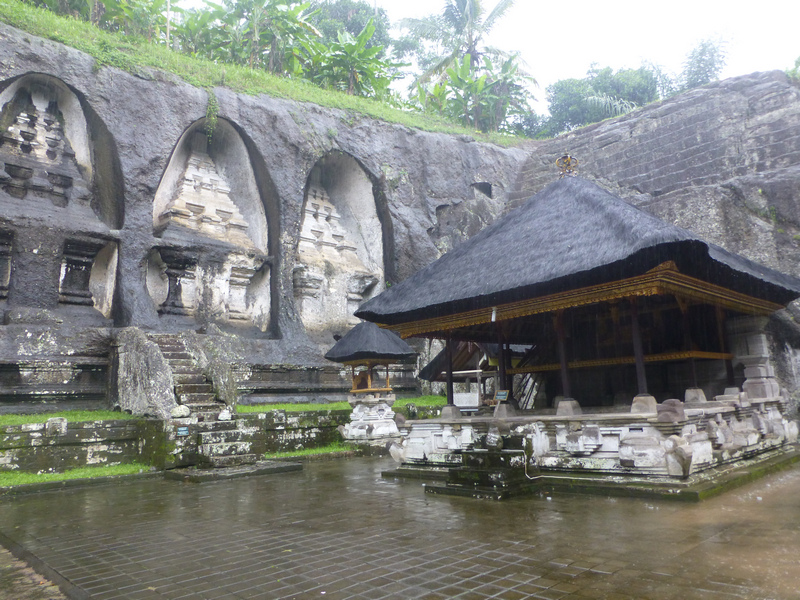

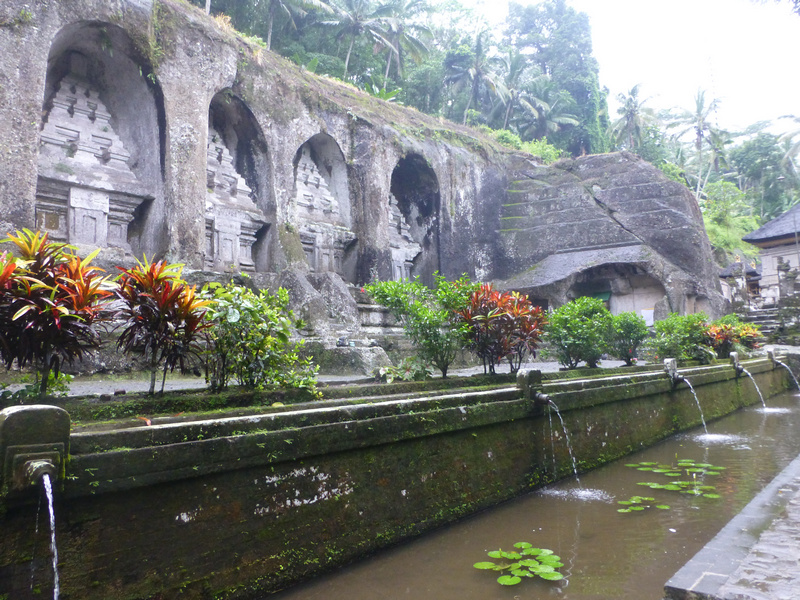

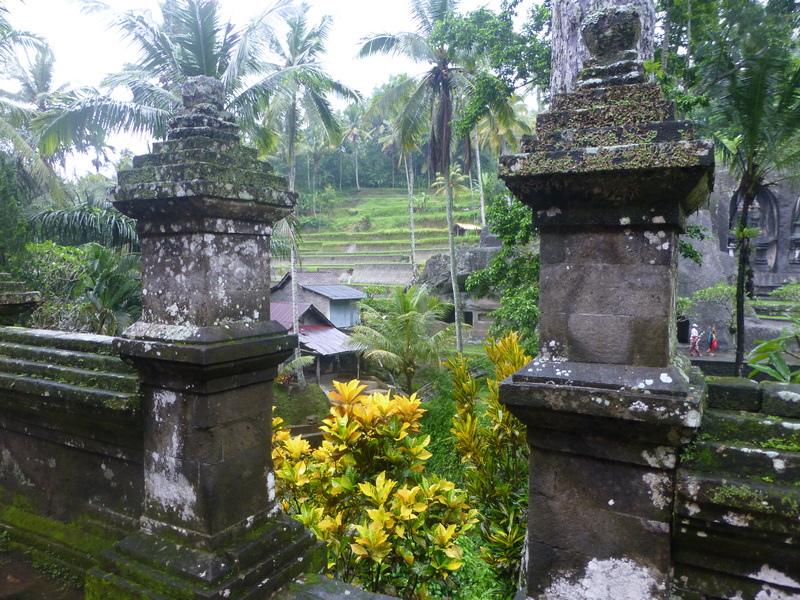

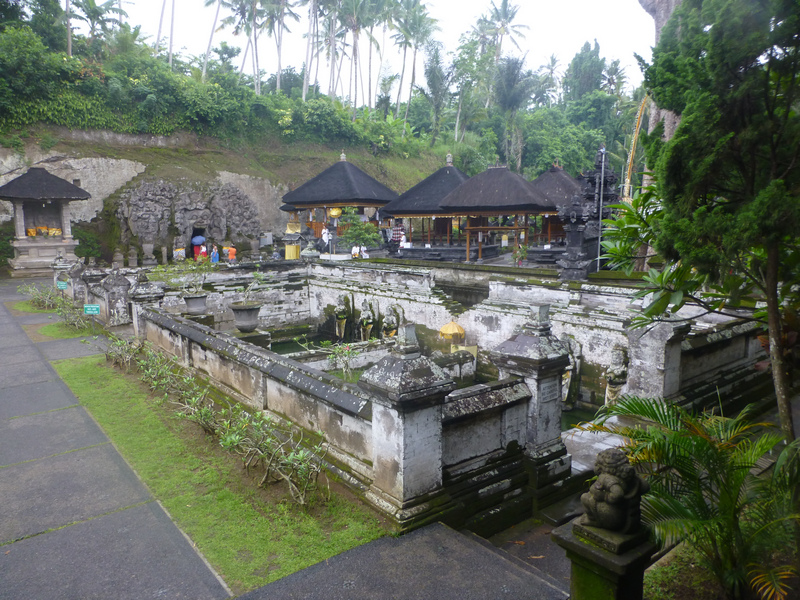

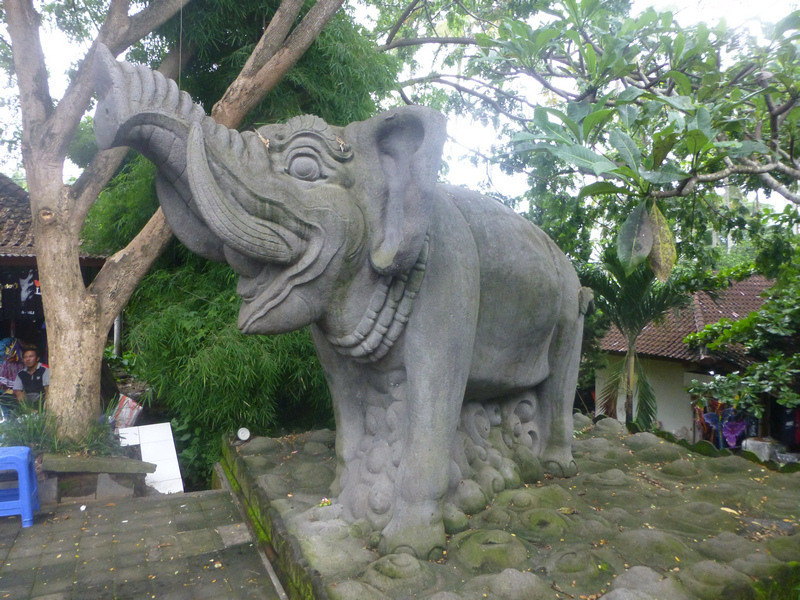
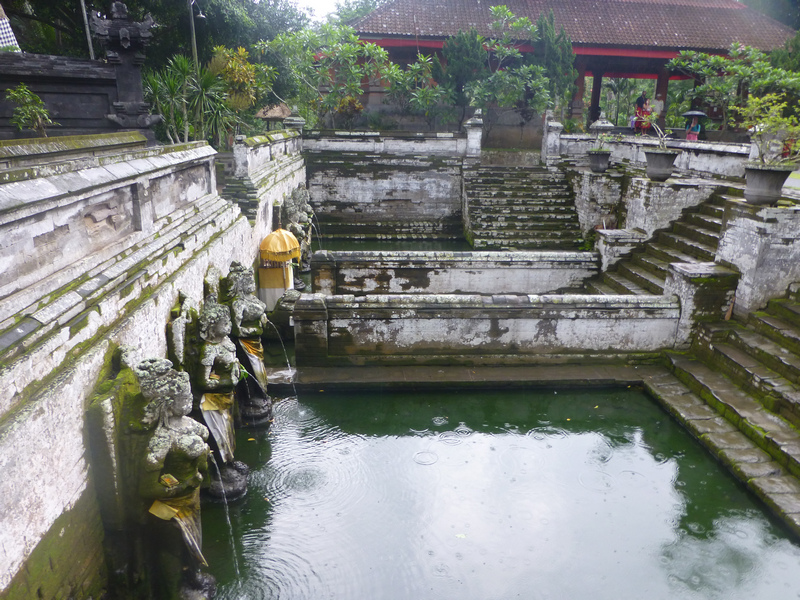
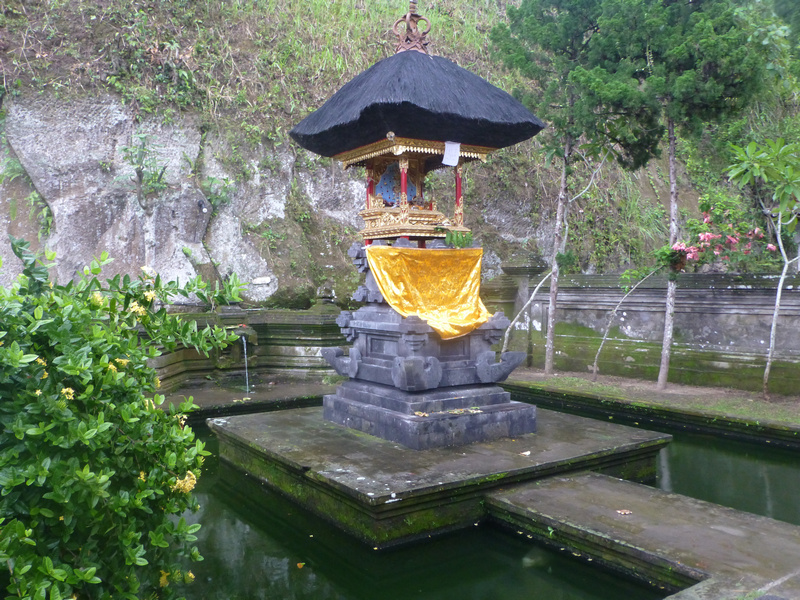
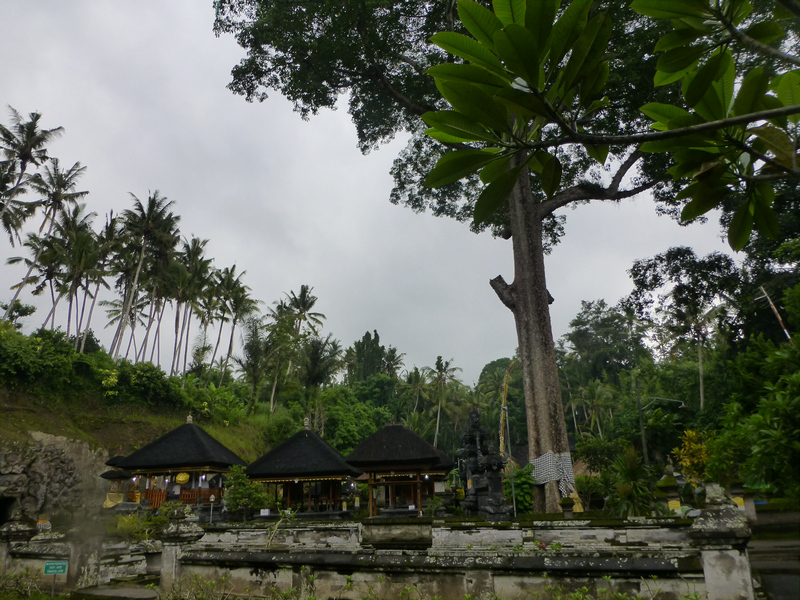

Goa Gajah or translated elephant’s cave welcomed us with a huge bizarre head of a mythical creature with a wide open mouth, into which we boldly entered. The dark niches inside were in T-form and there were statues of Buddha and Shiva. This temple complex dates back to the 11th century, but was only discovered in 1923. Much of it is located 15 meters underground and even now after they are excavated we still had to go down the multiple steps. Just in front of the entrance of the cave there were huge springs, the water of which is considered sacred. We walked through the many green gardens admiring the various chapels and bizarre trees.
We got back in the bus and passed the village of Bedulu, which was the center of the kingdom of Pejeng in the 10th-13th centuries. The name Bedulu came from the sorcerer-king Bedaulu of the 14th century, according to legends he could move his head during meditation (bulu – head). One day, however, his practice was interrupted and instead of his head, he placed on his shoulders the head of a pig (beda signifier different). Then the king forbade his citizens to look at the him, so they won’t reveal his secret, ruling from a tower erected above eye level. General Gahah Mada, however, played him by handing him a large cup of drink, in which his image was reflected, and everyone saw his true appearance, and the general managed to defeat him.
We managed to overcome the fatigue as soon as we checked into our hotel in Ubud, the city of artists, where we went outside for a new walk. We headed to the famous monkey park, but we walked out of the way to stop by a spa studio trying out the famous Balinese massage. It was amazing relaxation after a long day of walking and riding a bus. The Balinese massage includes massaging with palms and thumbs, targeting all the problem points. We have just started to like Bali until the next day when it started to rain heavily again.
It was February 10, 2016, on this day in Bali began the ten-day festival of Galungan, which is celebrated throughout the island, it is believed that during these 10 days all the gods descend to earth. Numerous dances and parades are organized throughout all temples, and this is the largest festival in Bali. Apparently, the gods really came down from heaven with their cloud carriages, and a heavy rain fell from their toasts throughout the day.
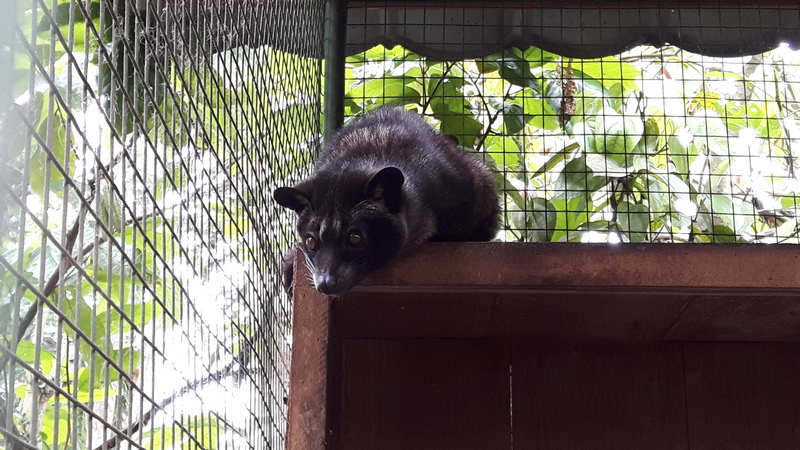
On the festive day we headed to the most holy and important temple in Bali – Pura Besakih, also known as the Mother Temple. Before that, however, we made a short stop at beautiful rice terraces with deep green color, blessed with plenty of rainwater. Then we had time to try the famous Luwak Coffee, stopping at a restaurant with a shop and a garden with spices, as well as with a few cells with the sweet civet animal. Kopi Luwak, translated from Indonesian, is a civet coffee, and literally means this. The small, fox-like civets was fed with grains of selected coffee, which passes through their digestive system, ferments, the beans are not digested, but go out naturally, after which they are washed and dried, so the coffee becomes low in acidity and enriched with enzymes. This is one of the most expensive coffees in the world, and here in his home place they make it in special coffee machines.
Later we learned how they got to the creation of this coffee. In the 17th century, the Dutch imported coffee to colonial Indonesia and established coffee farms. The locals took care of the farm, but were not allowed to consume the coffee collected, unlike wild civets who often came and ate the harvest. The locals were not allowed to consume coffee from the farms, but began to collect the output beans from the civets. Later they realized that coffee from civet tastes much better than coffee from plantation.
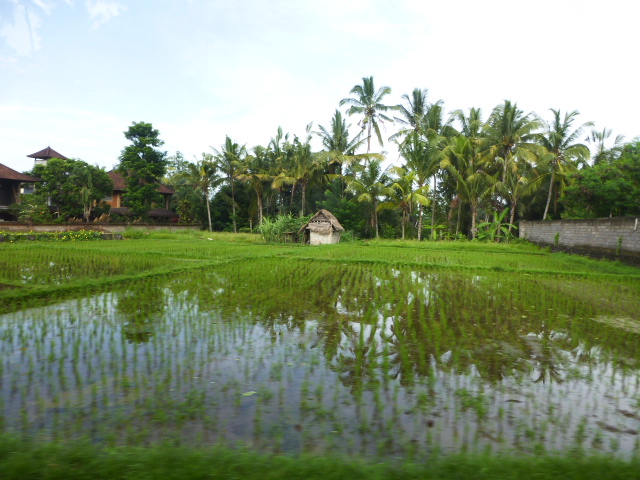
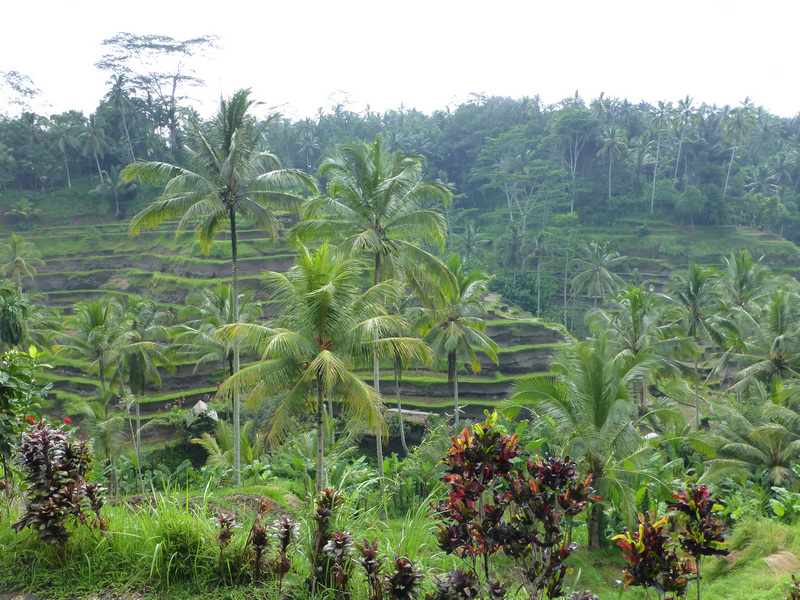



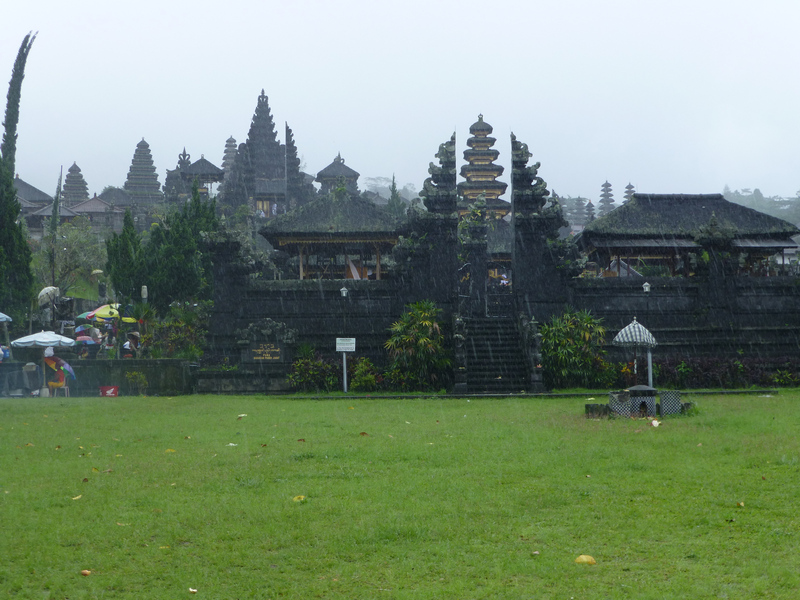
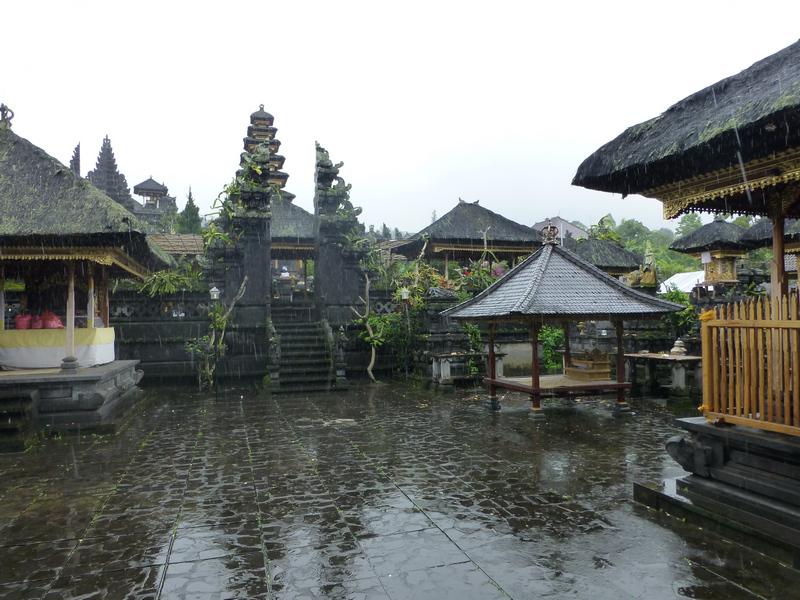
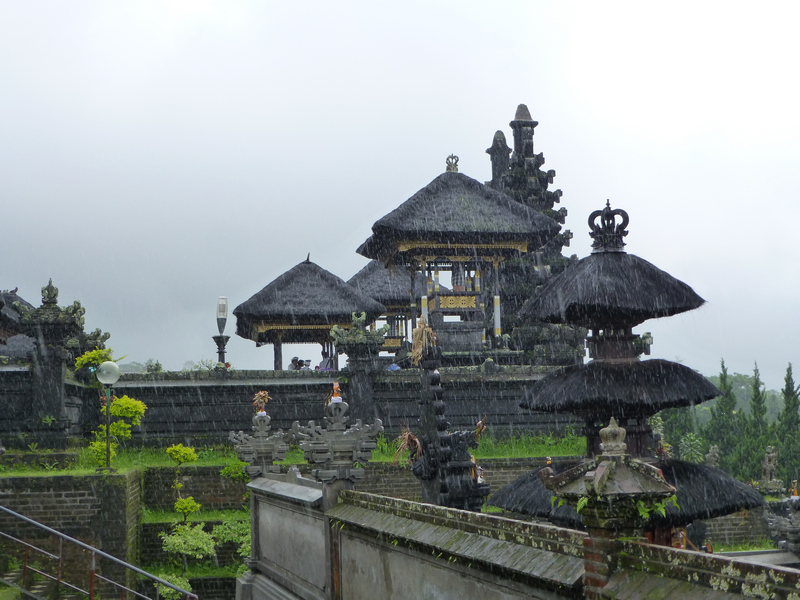
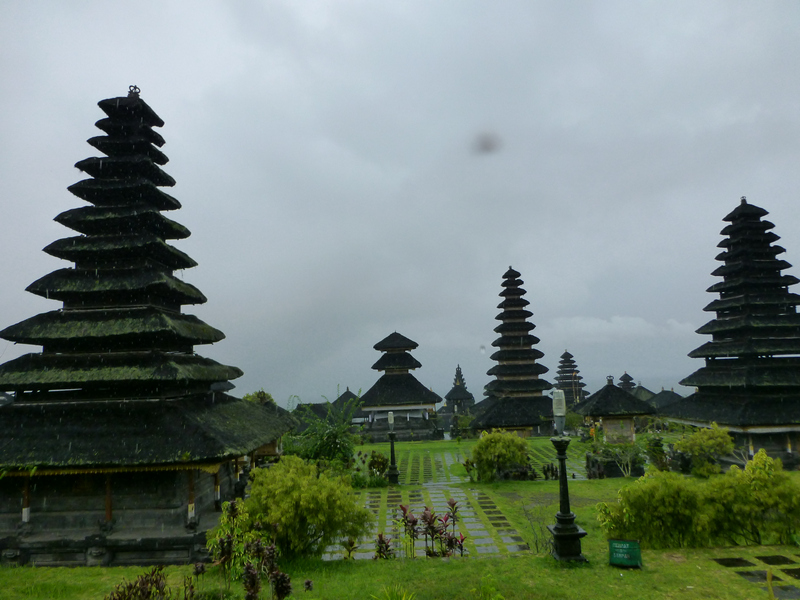
The beautiful and important temple of Pura Besakih was erected at the foot of Mount Agung, the main volcano in Bali, which today was hidden among the clouds. This is the largest temple in Bali, consisting of 23 separate but still interconnected temples, located on six levels, similar to the rice plantations we had visited before.

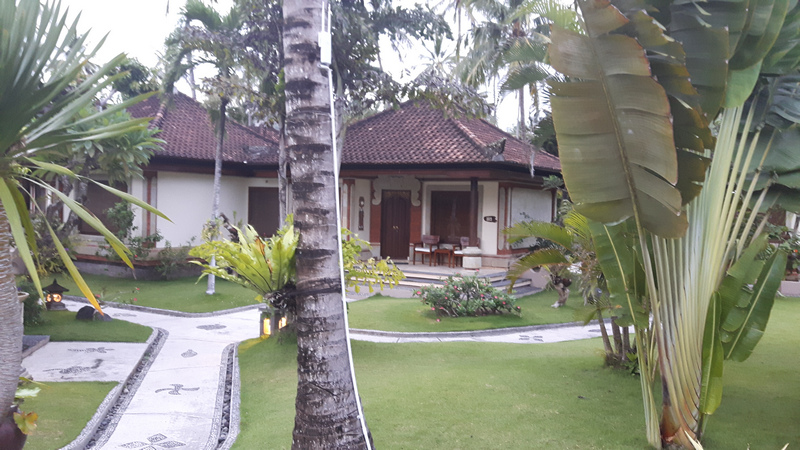
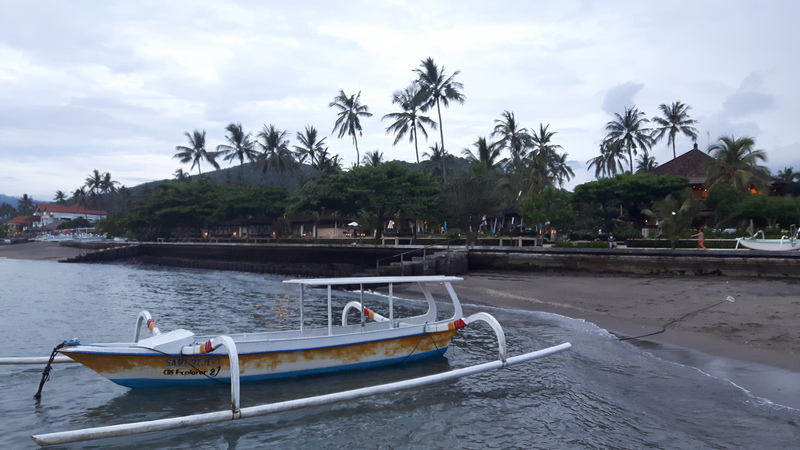
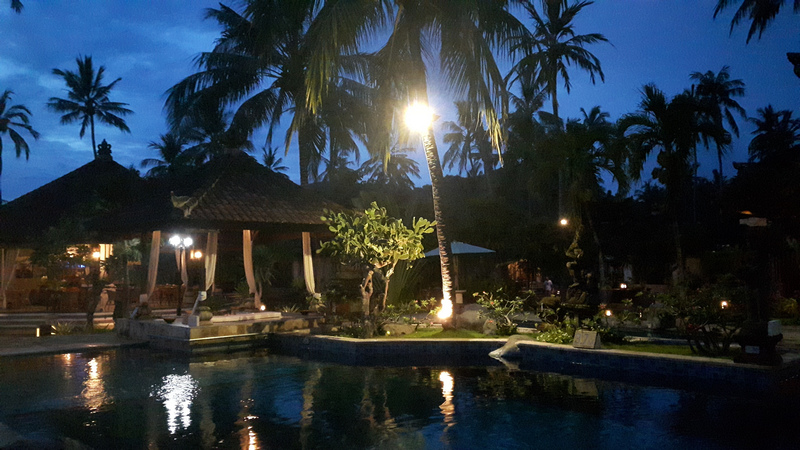
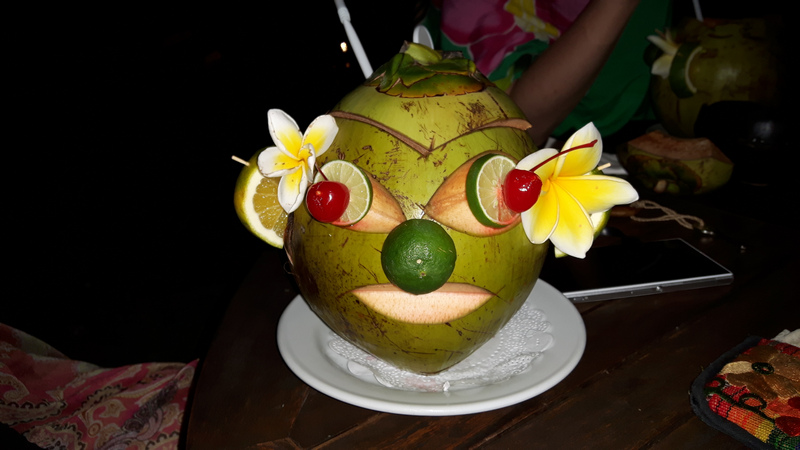
After the rain-soaked temple, we descended back to the sea, settling in the peaceful resort of Candidasa, which had a narrow beach, but with light sand and a clear sea. In the late afternoon we had time for a beach, we were already wet from the rain, and we easily replaced the rainwater with the sea water, and in the evening it was time for sea cocktails. Our hotel has lots of villas, with thatched roofs and bathrooms, which consisted of an open and closed part. As the rain stopped and the clouds cleared, we also saw stars in the sky for the first time. A faint ray of light from the divine rain island.

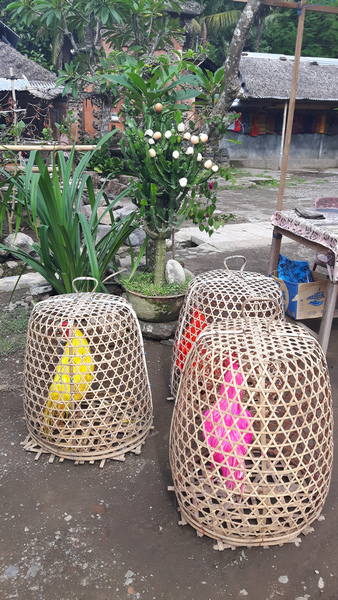
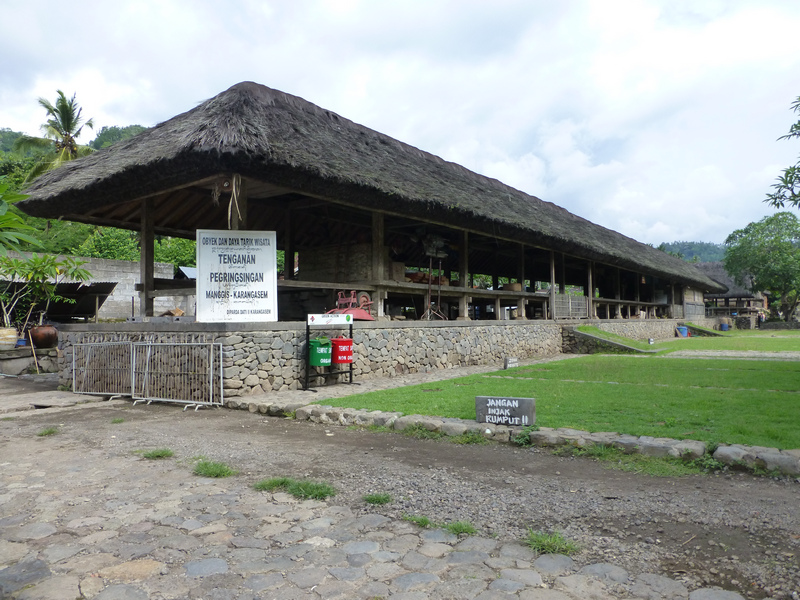
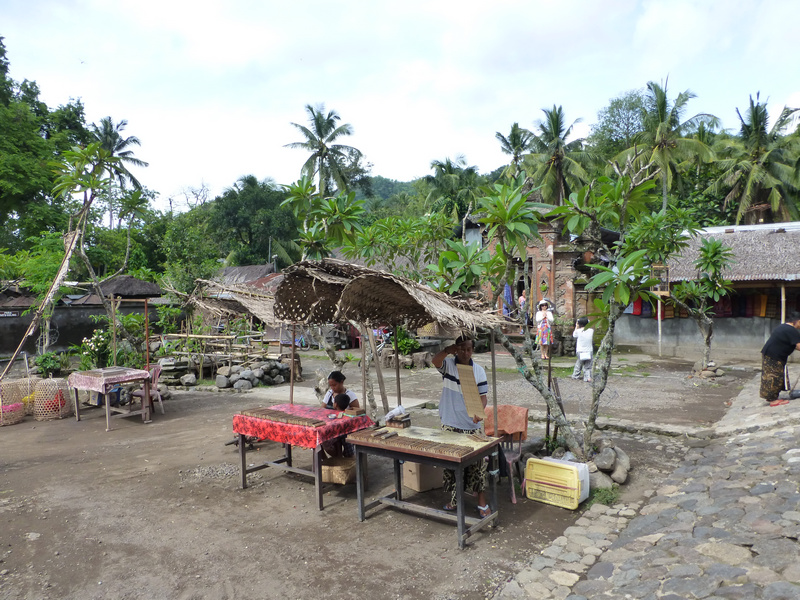
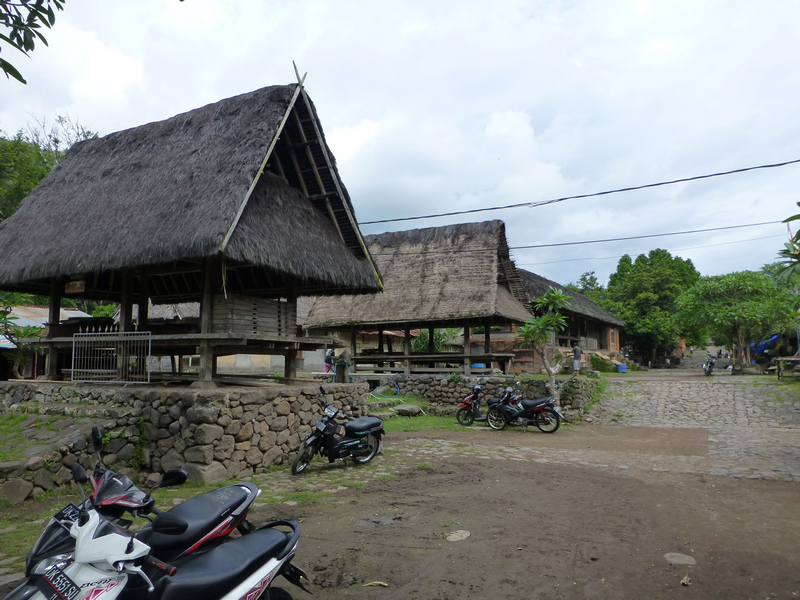

Very early in the morning, before the rain to start, we made a short beach break in the warm Balinese Sea. Our tour began with a visit to the Aga tribe – considered the cleanest roots inhabitants of the island, living in isolation from the rest of the Balinese. We visited the village of Tenganan, with picturesque straw buildings, surrounded on all sides by walls, where the inhabitants tried to preserve their culture and tradition. We learned, that these inhabitants had no right to marry people outside the tribe if anyone married a foreigner no longer had the right to live with them. In the village of Tenganan lived about 1,000 people from 325 families. They had their own calendar, and their main holiday was in June or July, and they did not celebrate the holiday of the past day, which was celebrated throughout the island. In the beginning, the village was quite commercialized with many merchants offering souvenirs to tourists, but inside the houses were arranged next to each other, and in the center of the village there were open pavilions where married men gathered and made important decisions for people. I was particularly impressed by the painted cocks enclosed in cages, apparently prepared for cockfighting, this sport, although forbidden, was held in many places around the island.
Subsequently, we learned the legend of the settlement of Tenganan. According to it, in the 14th century, King Bedaulu, the ruler of Bali, lost his beloved horse and offered a great reward to the one who returned it. The horse was found dead near the village of Tenganan and the local people asked to be given the land as a reward. The king sent his subordinates to draw boundaries in this place, granting the peasants all the lands to which the smell of the dead horse could reach. One of the villagers, however, hid meat from the dead horse in his clothes, and while escorting the king’s subordinates he managed to multiply the lands that the king granted them.
We headed back to the coast, where we observed a traditional way of extracting salt from the sea water. Usually salt is extracted during the dry period, but even now during the rainy season, tourists could see techniques for drying and extracting salt. The unusual clear weather allowed us to see from the shore the opposite island – Nusa penida.
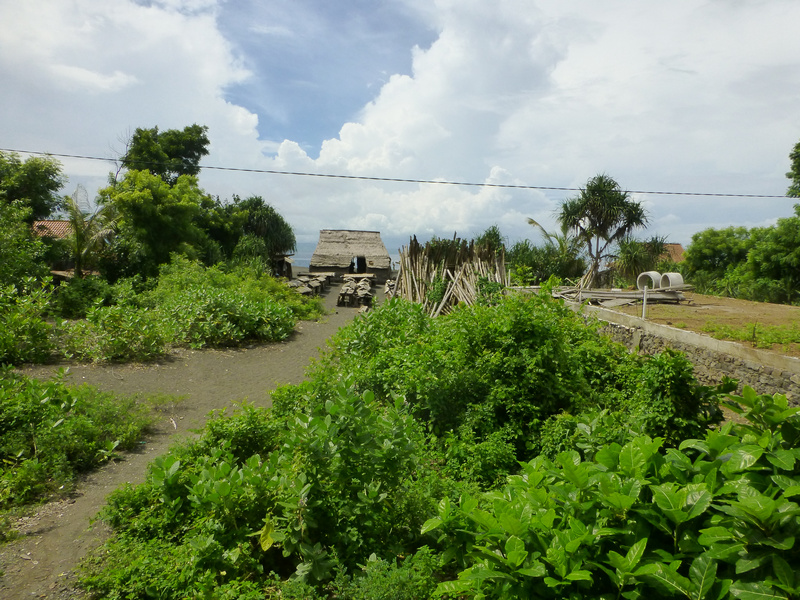
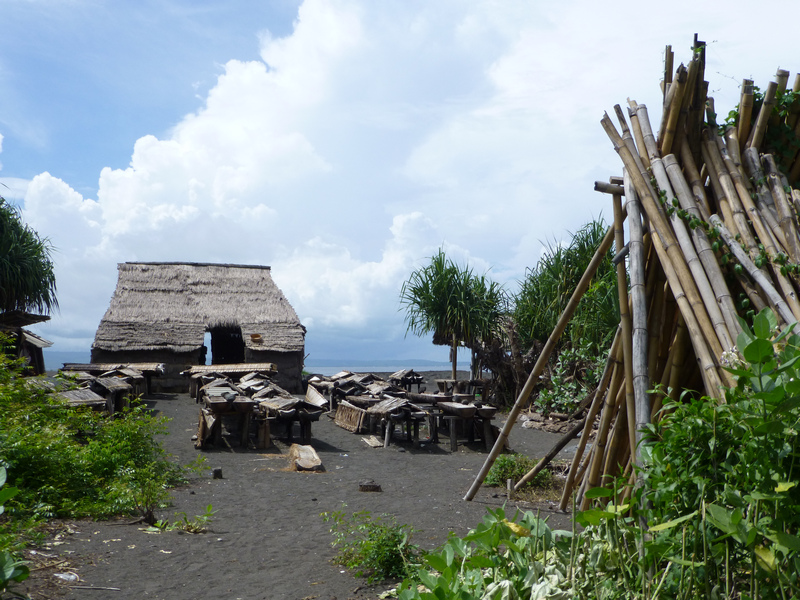
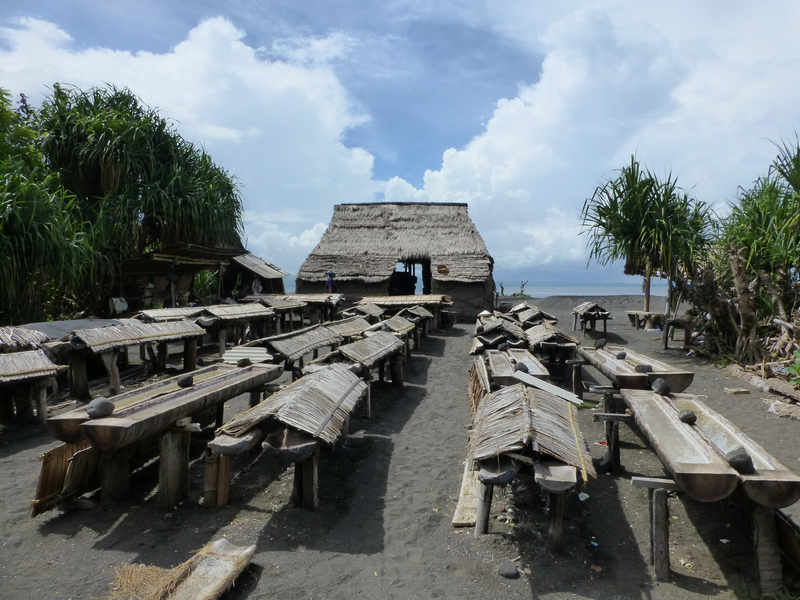


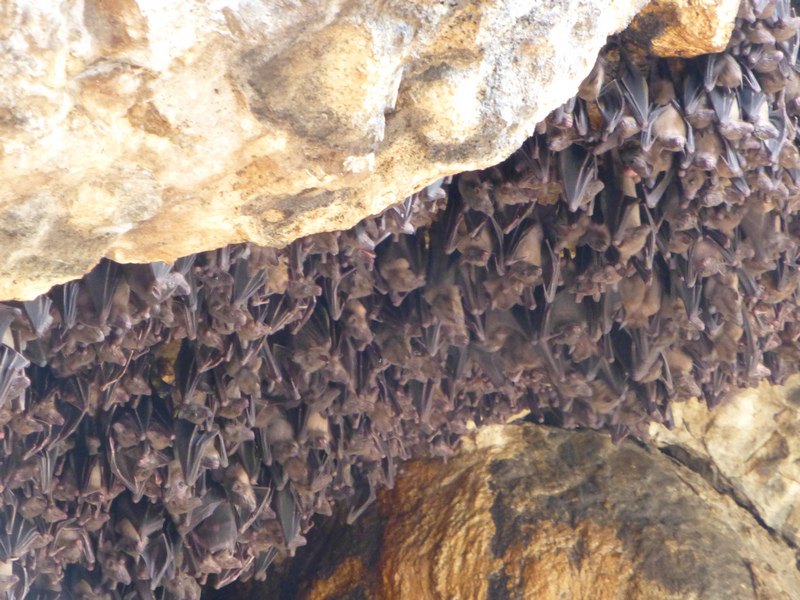
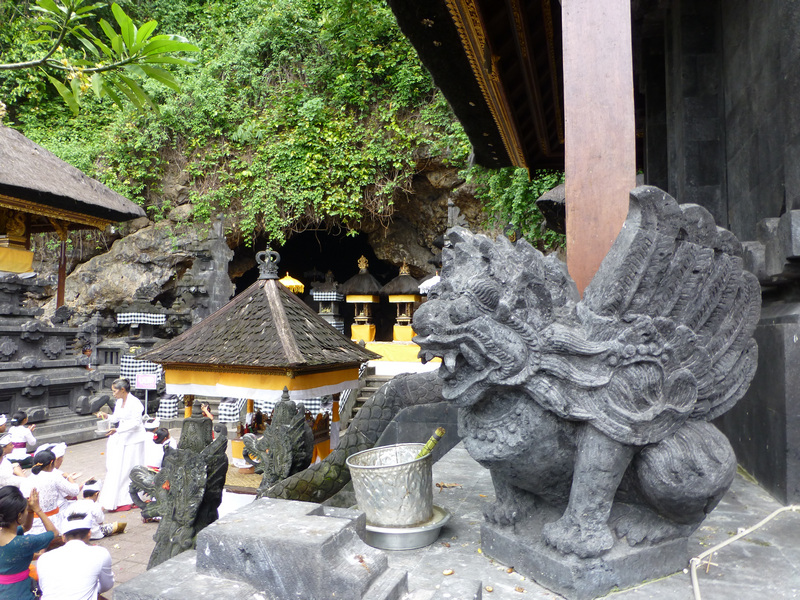
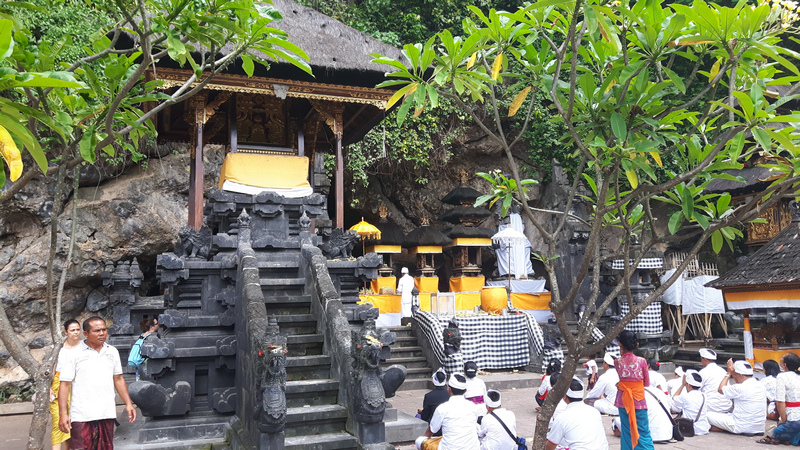
Well salted we headed to Goa Lawah – Bat Cave. This temple was more than 1000 years old and was associated with important rituals for the afterlife. The locals believed that the souls of their ancestors inhabited here. The main “landmark” was the cave home to ten thousand sacred bats. According to legend, this cave continues 30 km into the mountain and reaches as far as Besakih, and inside live the huge dragon-snake Basuki. It is considered a happy omen if visitors see the python guarding the cave and we managed to see it in a gap, to the right of the bats perched on the ceiling.
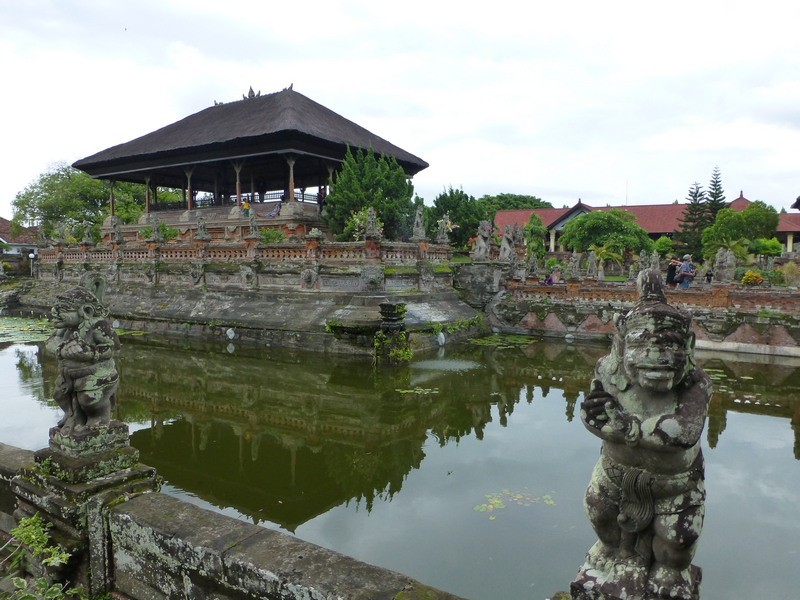
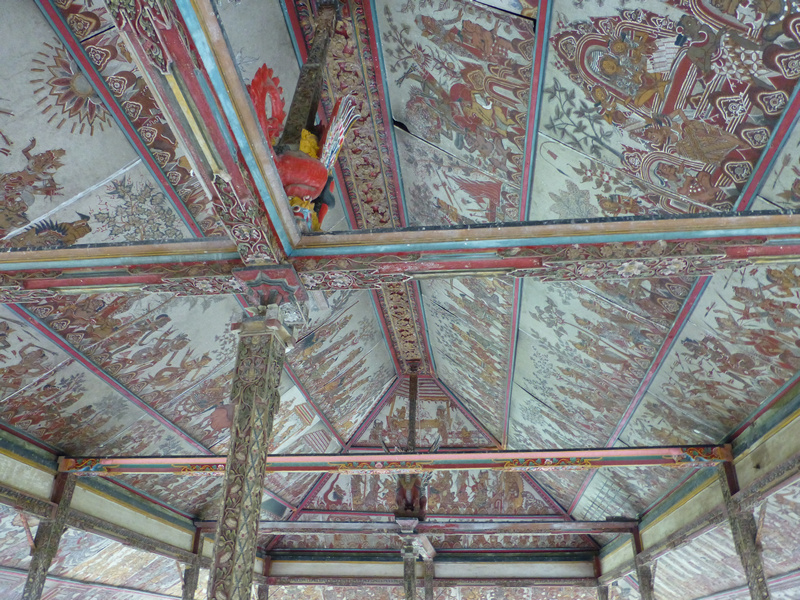
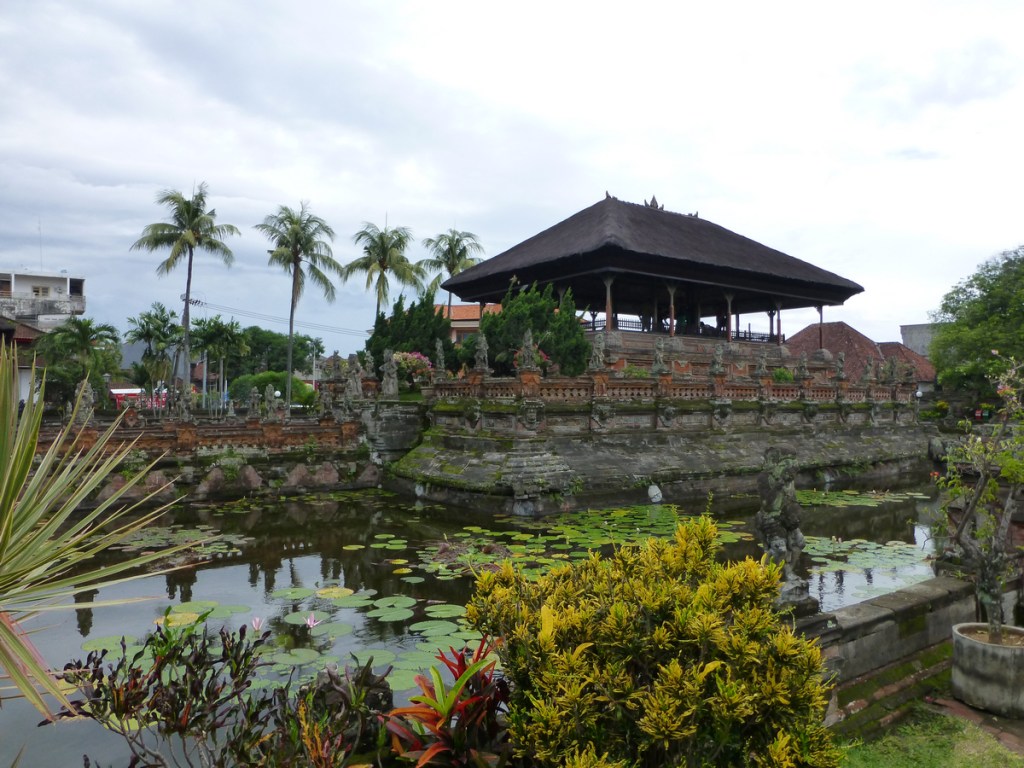
Followed a short way to Klungkung, the capital of Bali’s last strong kingdom, where we visited the beautiful judgment seat of the 18th century with its splendid gardens. The court was a richly decorated pavilion with statues located beautifully amidst a lake with water lines. As beautiful on the outside, so impressive was the building on the inside. The ceiling was covered with beautiful pictures recreating life situations. The concept of staring at the ceiling took on a completely different meaning here.
Next to the courthouse, alleys of flowers led to the small Daerah Samarapura Museum, where there is a collection of sculptures and paintings. Particularly interesting was the painting depicting the puputan (ritual suicide) of 200 members of the royal court in 1908. This act is depicted on the monument erected at the doors of the courthouse. What a pity that such a beauty of flowers and sculptures was marred with such a sad history.



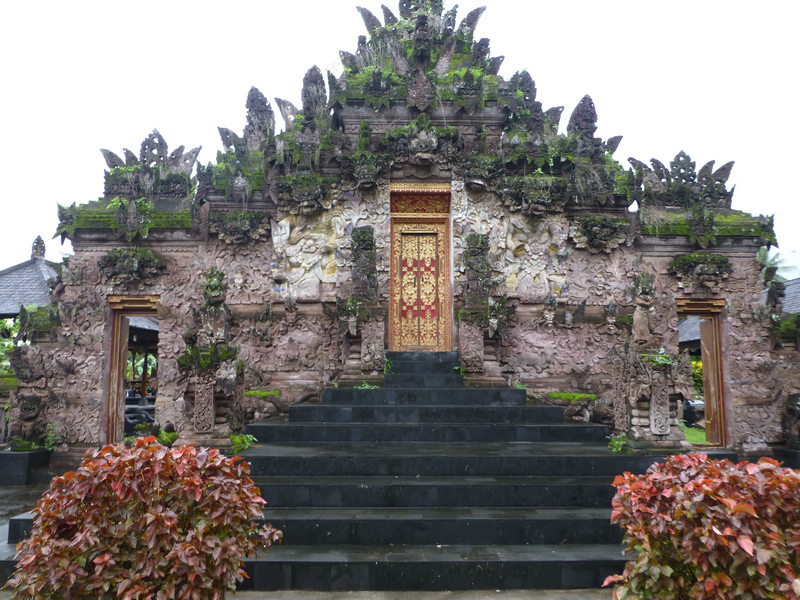

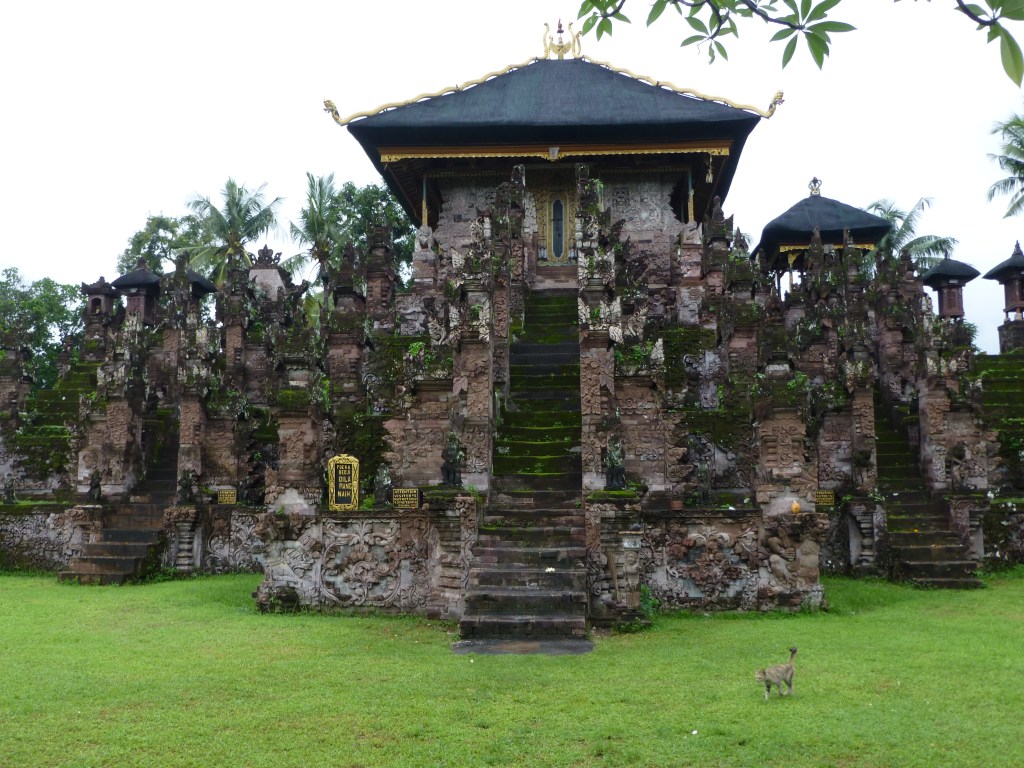

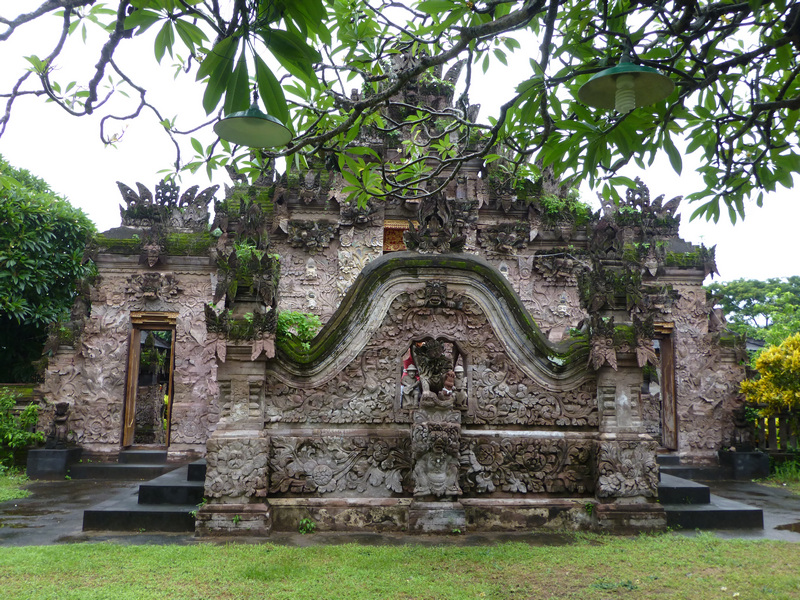
The last temple of the day was Pura Beji, dedicated to the goddess Dewi Sri, who cared for agriculture, and created rice as a staple food. This temple was important from an architectural point of view, as it had uniquely carved reliefs of flowers, typical of the era of King Majapahit, and at the time they were colored in colorful colors. The main entrance of the temple was guarded by two stone dragons.
Our guide did not miss to note that when the Dutch colonists discovered the temple, they decided to restore it and even added their own motifs and statues to it, spoiling its natural charm. Personally, I liked the finely carved stones and beautiful statues. Very sweet was the statue of a pig, showing the sacrifice that was made and the place where it was squealed. In the evening, we also had a hearty dinner at the Puri Bagus Lovina Hotel, where rooms were once again housed in private villas with indoor and outdoor showers, set amidst picturesque gardens on the beach.

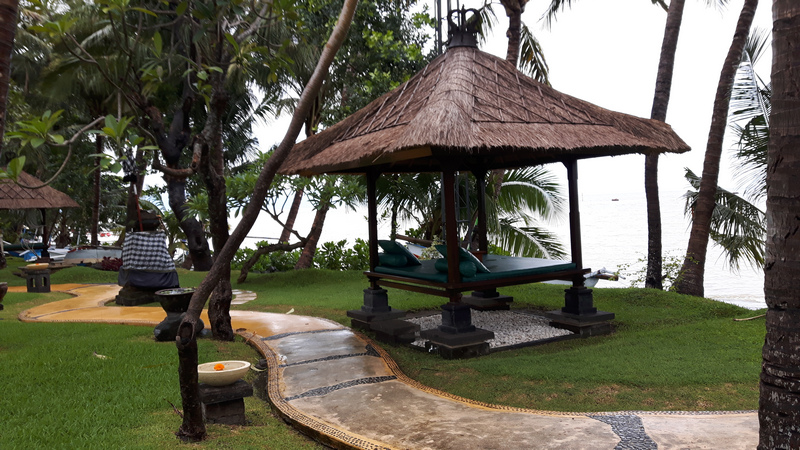
We got up at 05:00 in the morning while our acquaintances in Bulgaria had not yet gone to bed. We set ourselves up to welcome the sunrise in the sea in the company of dolphins. The clouds may have hidden the sun from us, but the waves turned out to be better and revealed to us the morning chase of the dolphins. We never found out whether the dolphins chase each other or playfully run away from the boats with tourists, but their jumps over the waves were impressive, and even though it was raining heavily at the end, the whole wetting was worth it.


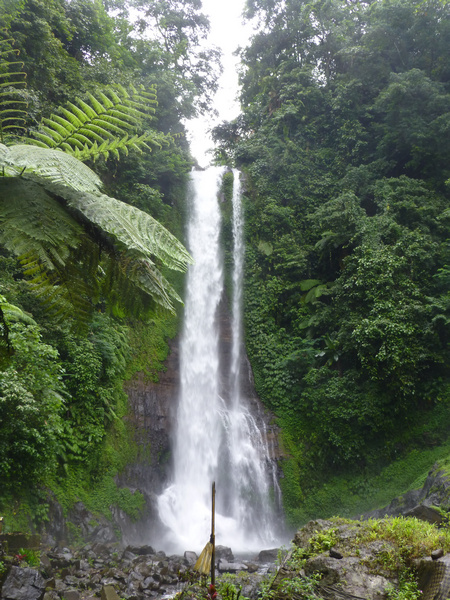


This day we had more water than the other days in Bali, and our excursion began with a visit to the highest waterfall in Bali Git Git. The waterfall descends from 45 m high and is surrounded by lush greenery. On the way to it we passed through bridges and many steps, admiring the beautiful nature.
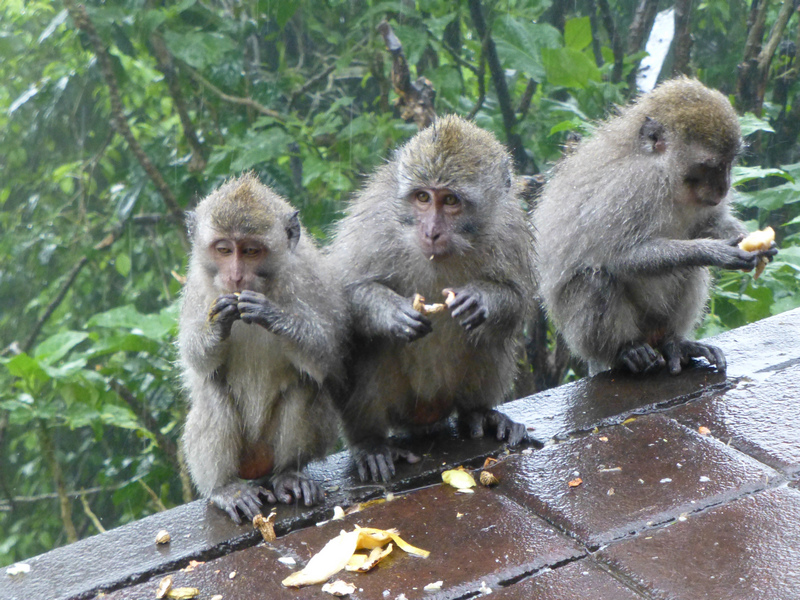
Then we headed to the beautiful temple Pura Ulun Danu Beratan, located in the heart of the island of Bali, on the shores of Lake Beratan. Before reaching it, we stopped for a while on the road admiring the many monkeys who, like hitchhikers, waved to tourists and urged them to get out of the cars and feed them. Monkeys do not like water, but despite the rain, they quickly began to eat, seeing that our van stopped. Our driver was prepared and handed us small bananas and peanuts to hand out. Apparently, in this part of the island these inhabitants were common and we gladly treated the charming greeters.
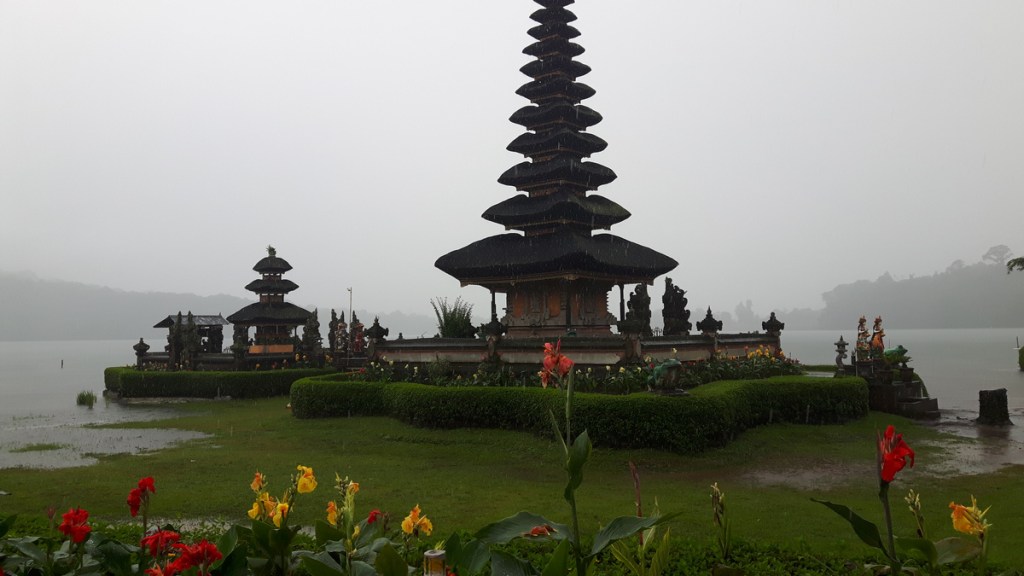
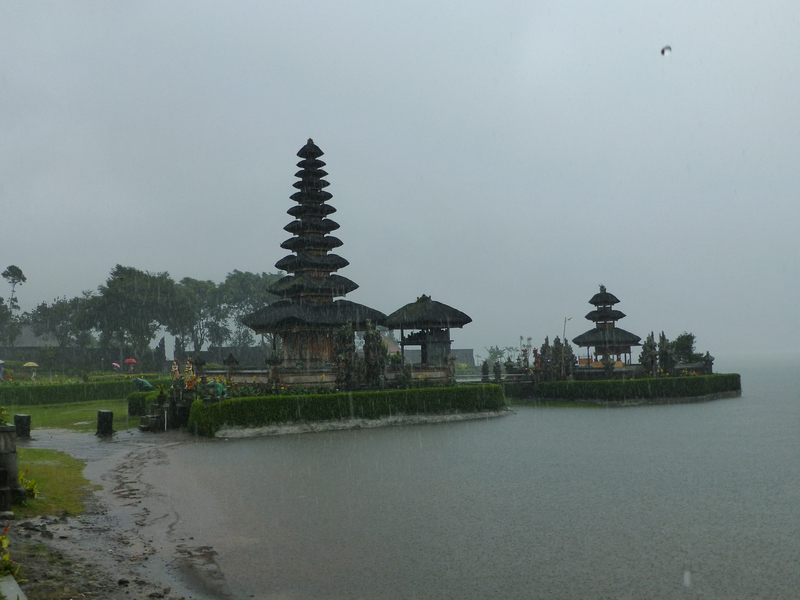
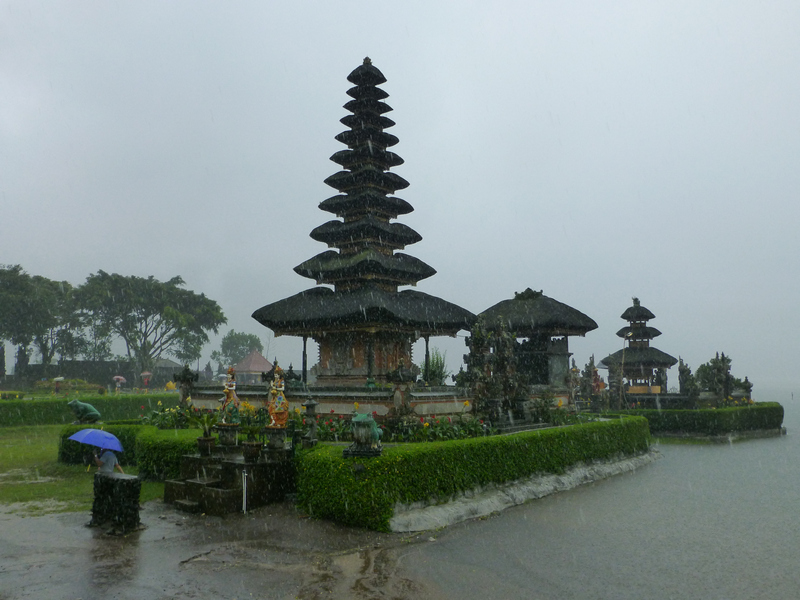
The Pura Bratan temple was exquisite even in the pouring rain. The stepped tall building with 11 thatched roofs playfully looked into the lake leaving all visitors fascinated. Erected in 1663, this temple served at important ceremonies and bestowal offerings to the goddess of water, rivers and lakes Dewi Danu. Lake Bratan itself was also known as the Lake of the Sacred Mountain, due to the high fertility in the region. We were at 1200 meters above sea level and the beauty around seemed to bring us even closer to the gods and heaven. With such beautiful temples, Bali could undoubtedly be called the divine island.
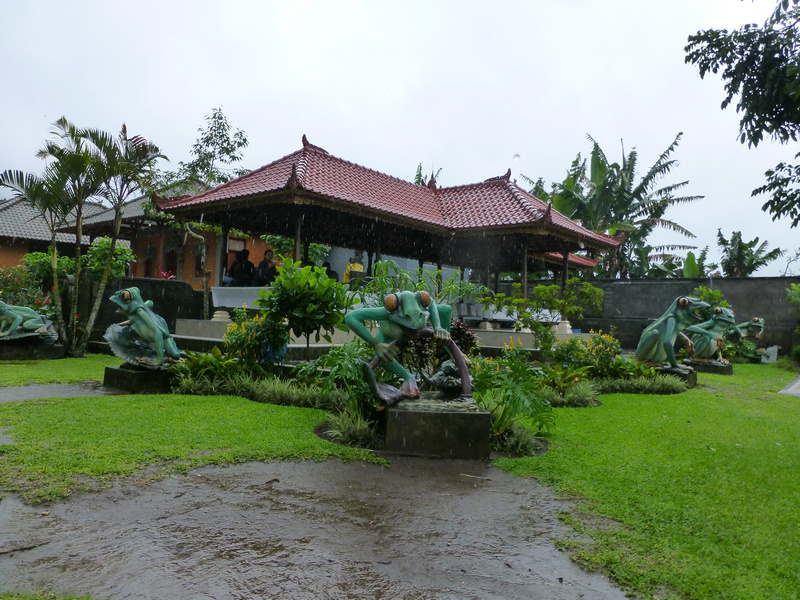
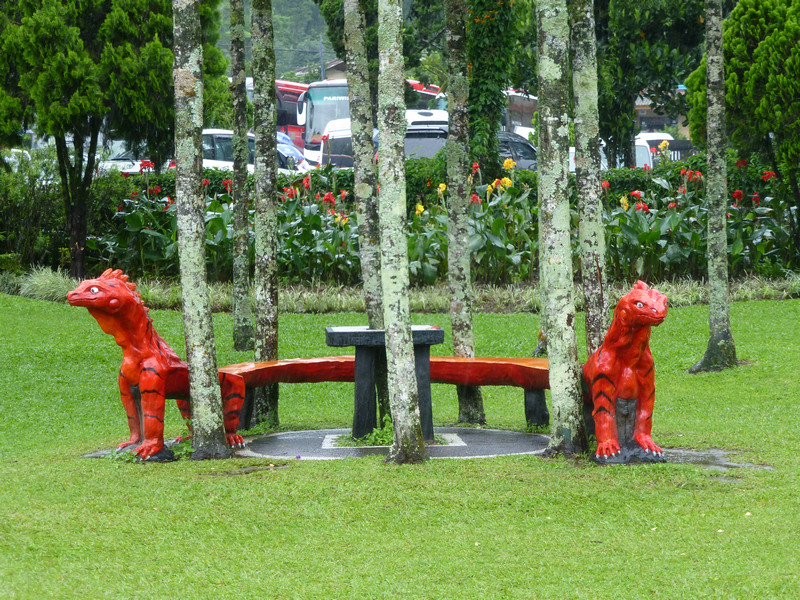
Coming out of Pura Bratan we felt somehow blessed. I especially liked the gardens of the temple, where there are many figures of animals surrounded by flowers, recreating in a unique way the harmony in nature.

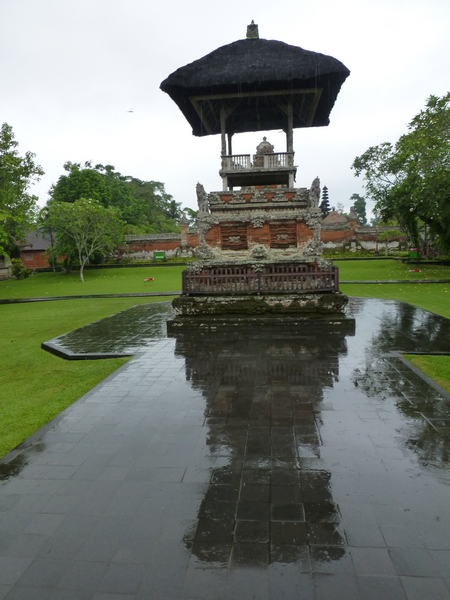
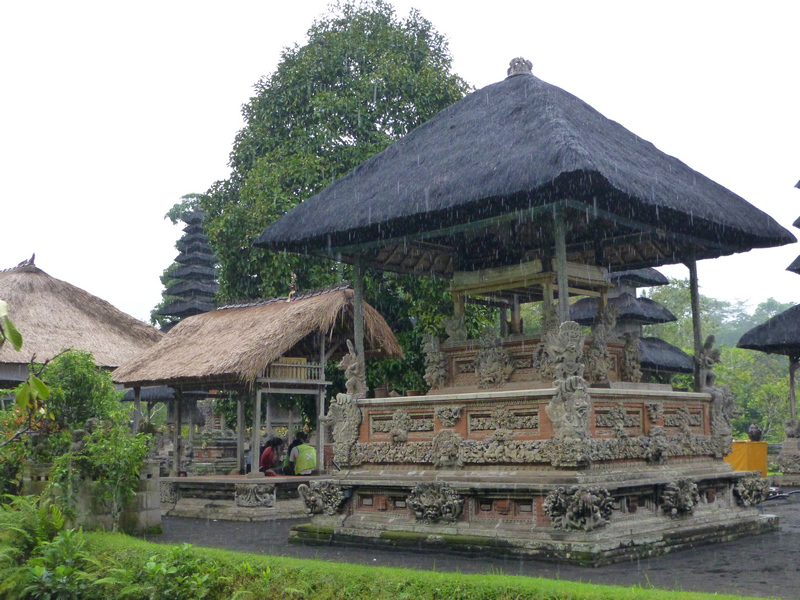
The next temple in the program was Pura Taman Ayun, which translated meant “beautiful gardens” and was located among a wonderful park of trees and ponds. The rain tried to erase its beauty, but from under the umbrellas we managed to catch a glimpse and photograph some of the high towers with thatched umbrellas, as well as beautifully painted pavilions and gardens, which were on the list of the 50 best gardens in the world.
The temple was surrounded almost everywhere by water, which symbolizes the Hindu world located in the cosmic sea. The tall towers called meru, symbolize the mountains in which the gods live. There were many smaller wooden pavilions with a stone base, called bale, in which there was a throne in the form of a lotus, on which it is believed that the gods Shiva, Brahma and Vishnu sit. The sea of space seemed to have descended upon us in the form of rain, and its meteor showers gave a gray tinge to the pictures of otherwise green gardens.



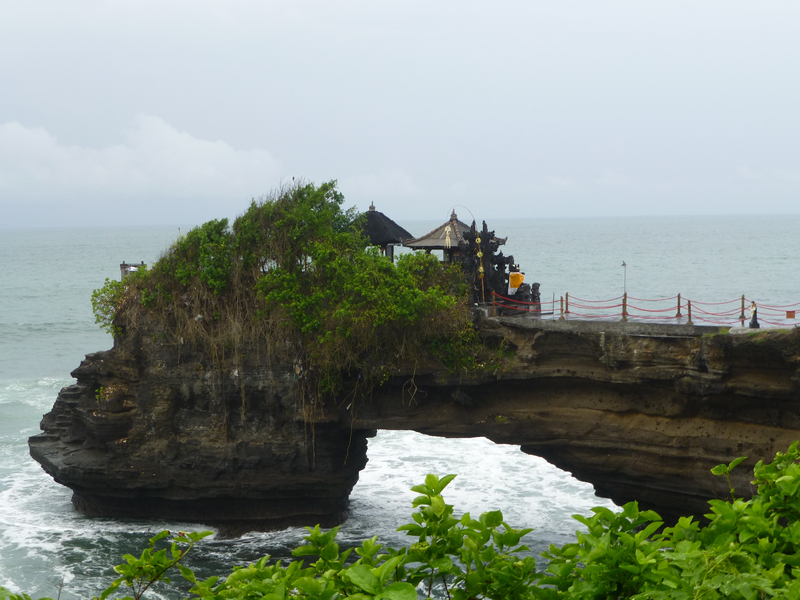

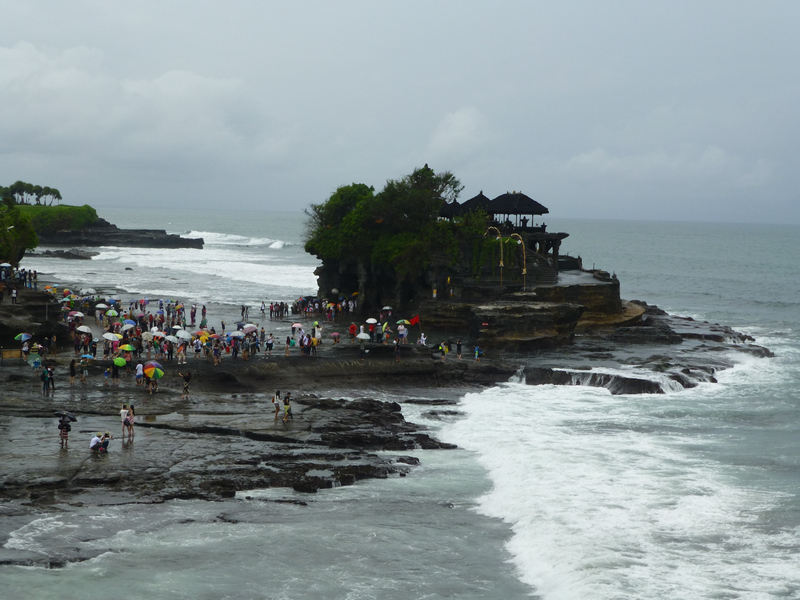

The last temple of our 4-day island-tour was Pura Tanah Lot, located on a small island 100 meters from the coastline. We hit low tide and therefore we could reach it by land if it was not closed to outside visitors. We took pictures from the outside, unfortunately we could not catch the sunset, which painted a beautiful silhouette on the horizon, and many visitors came especially for it. The name of the temple is derived from the words for land (tanah) and sea (lot), i.e. this is where the sea and land meet. This part of the temple that overlooks the sea is dedicated to the Balinese sea goddess Betara Tengah Segara, while the part facing the coast is dedicated to the god Gunung Batukau.
We went back to the resort of Sanur, staying in the 4-star hotel Mercure Resort Sanur, which was located on the beach and had many villas among picturesque gardens with several pools and beach. It was time for relaxation and rest. However, after we had spent a few days holding umbrellas, the last thing we wanted was to lie under an umbrella. So we decided to tour the nearby islands and check if it rains only on Bali
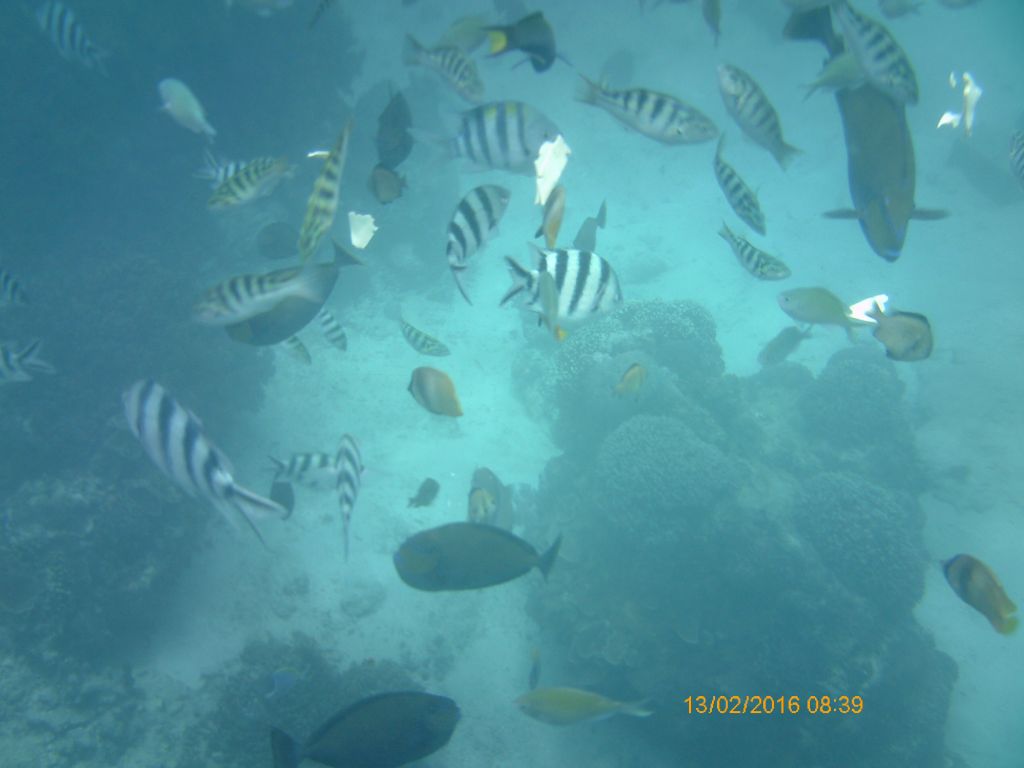
We joined a rafting tour with a high-speed boat and visited 3 islands in one day, namely Nuna Penida, Nusa Ceningan and Nusa Lembongan. On two of the islands we had the opportunity to snorkel and observe the fabulous corals and colorful fish. We learned that Bali is part of the Coral Triangle – an area rich in aquatic inhabitants. Only here you can see over 500 species of coral or this is 7 times more coral, than the one in the Caribbean.
We spent the afternoon in Lembongan Bay in a private beach club, where along with all the beach amenities – swimming pools, sun beds, wooden houses, free banana ride, there was… sun. The sky was endless blue, and the sun embraced us generously with its rays. We were on an island adjacent to Bali, but we felt even more divine. Apparently the sun had liked this private beach and therefore did not visit us in Bali, but I can’t blame it, I also liked a lot a bungalow literally on the beach there.


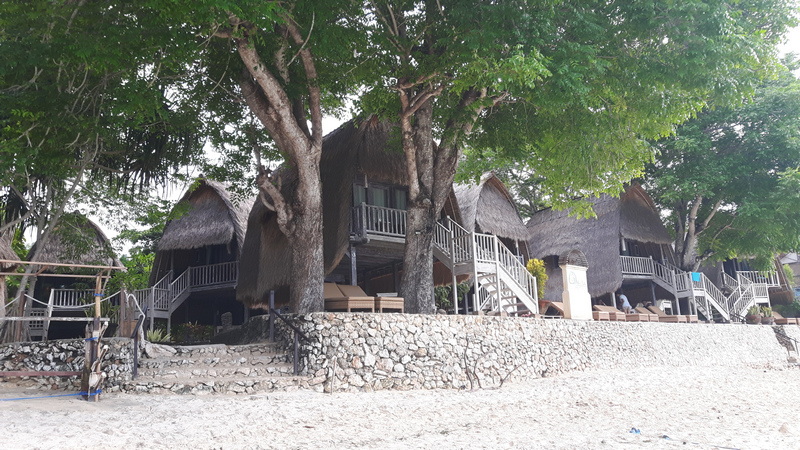


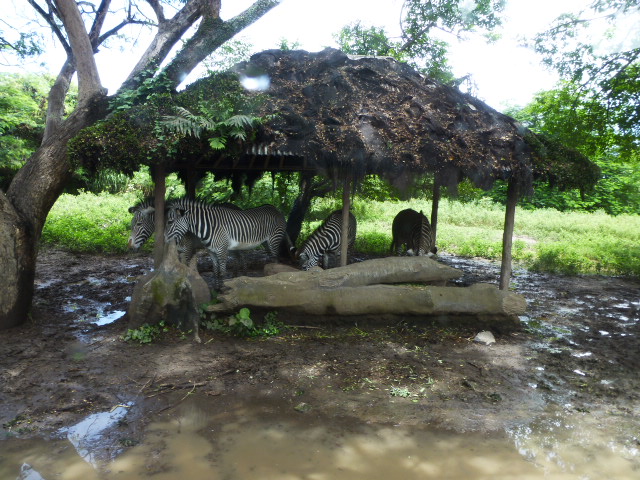
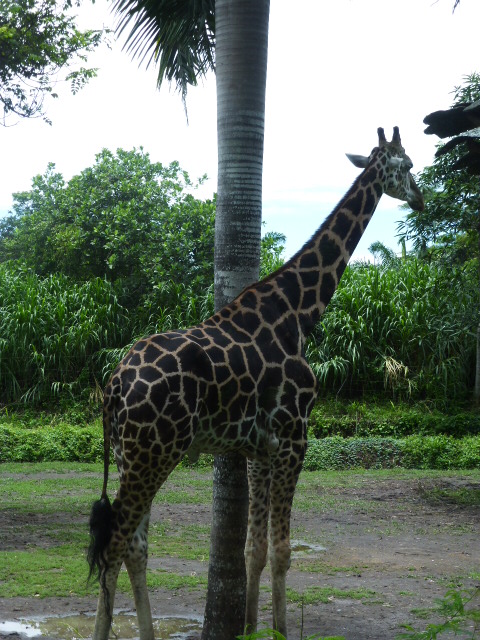


In the following days we diversified the beach holiday with a visit to the amusement park Bali Safari & Marina Park, which besides water attractions and slides there were safaris and theater performances. Over the Internet, we purchased a Leopard package, which included a shuttle service to/from the hotel, an indefinite number of safaris, a welcome drink, a free photo with a lion, orangutan or iguana, an elephant ride (10 min.), a freshwater aquarium entrance, a lunch at the Uma restaurant, an animal show, an elephant show, golden places for the Agung Show theater, a water park entrance, An indefinite number of entrance to the amusement park and a souvenir to remember, which turned out to be a safari hat. With so many attractions, the weather in the park has evaporated. We started by riding an elephant, then we got into a bus in the form of a jeep, which literally entered the cages of all animals and we could take a closer look at giraffes, zebras, rhinos and countless other animals. Then we managed to catch a performance with animals, the main artists being several orangutans and birds unknown to me. In a matter of minutes we missed the feeding of the crocodiles, but well fed they posed for us in many photos.
Undoubtedly, the theatrical performance Agung Show was impressive with glamorous costumes, scenery, numerous effects and live animals partnering with the artists. The story itself recreated the love of King Sri Jayapangus and Chinese princess Kand Ching Wei. As soon as he saw her, the king fell in love with her and made her his wife. Everyone on the island was happy, but for many years they never managed to get such a desired child. At the end the king decided to go with the ship. In search of inner peace, but a sea storm took him to the island of Bali, where the goddess of lakes Dewi Danu seduced him and bore him a son. The Chinese princess did not accept the absence of her husband and went in search of him. As soon as she arrived on the island in furious disappointment, she directed the troops against her beloved. However, the goddess stopped them by turning the king and his queen into stone statues that are still together today. The people accepted his successor as their king, and so they all lived happily ever after. The effects and scenery were much more impactful than the story itself. It was a real pity that before the show they collected all our phones and cameras, and we couldn’t take any pictures.
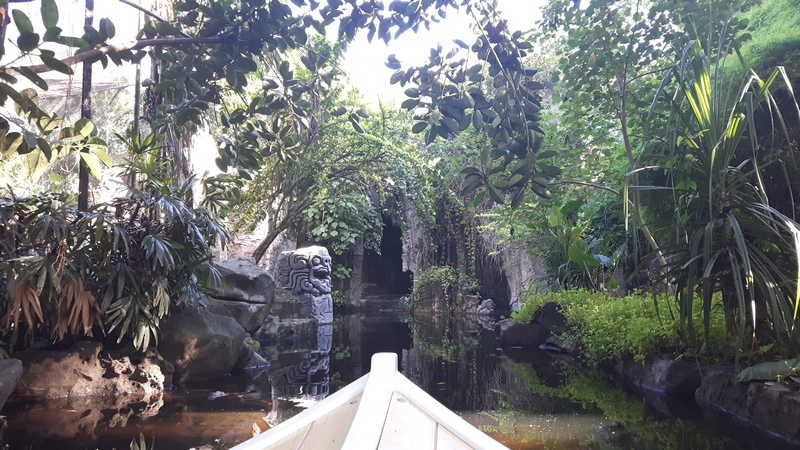
But then we took a picture with the water attractions, even boarding a boat with which we passed through the monkey cage and several caves and waterfalls recreating South America.
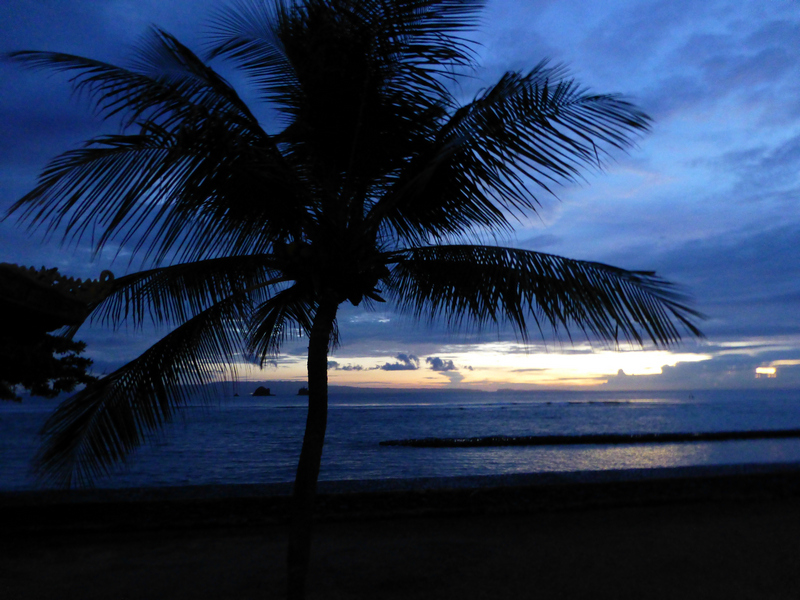
In the evening we welcomed the sunset on the beach, saying goodbye not only to the sun but also to the divine island of Bali. We learned that the name Indonesia has a Greek origin and comes from Indos – Indians and Nesos – island. It was the largest island country consisting of over 14,000 islands. Bali was far from the biggest among them, but it was definitely the most famous. Apparently, with so many temples, the gods had blessed it, both with a rich harvest and with a multitude of tourists. We also felt blessed and with the warm memories we went back to the cold Bulgaria, imagining the cold snow for fine Balinese sand. And today, when it rains, I always think of Bali, it’s nice to have good memories in the bad weather.

GENERAL INFORMATION ABOUT BALI:
Location: The tropical island of Bali is part of the Indonesian archipelago and is located 8 degrees south of the equator.
Area: 5 632.86 sq.km
Population: 3 150 000 people
Official language: Indonesian (official) and Balinese
Altitude: The highest point of the island is Mount Agung, which is an active volcano and rises to 3142 m.
Climate: tropical
Time zone: UTC+8
Currency: Indonesian rupi (IDR)
Additional information: http://www.balitourismboard.org/

TRIP TIPS FOR BALI:
Best time to visit: May to September, as July and August are the peak season and the island is full of tourists and hotel prices are quite high. It is probably better to visit the island in April, May, June or September, before the peak season, when prices are more bearable and the weather is wonderful. From October to April is the rainy period.
Typical foods and drinks: Balinese cuisine is quite spicy, using numerous spices that are mixed with vegetables, meat and fish. Both Indonesian and Indian and Chinese cuisine have a strong influence. Typical dishes are: Bebek betutu (smoked duck, keep in mind that the ducks here are quite malnourished and one dish is unlikely to suffice), Nasi goreng (fried rice bathed in soy sauce and spices, usually served with meat or fish), Satay (meat skewers, richly flavored with spicy spices).
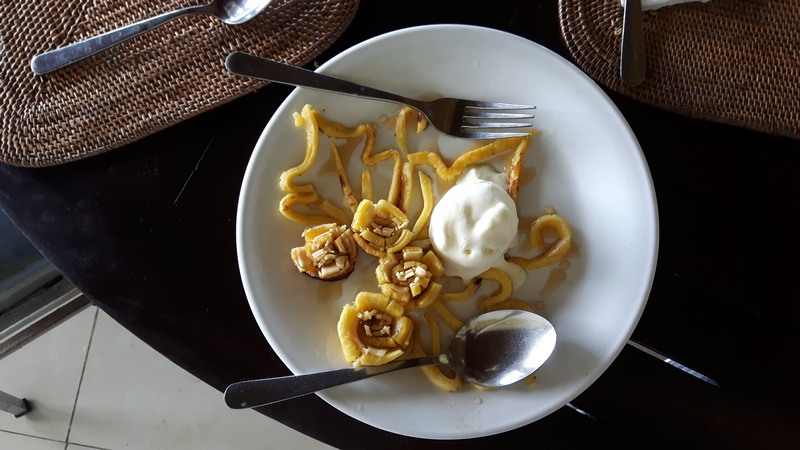
Be sure to try the green pancakes with palm sugar and rice pudding or baked Pisang Raja (baked bananas, sprinkled with cinnamon, cheese and palm sugar, garnished with a ball of ice cream).
Places to visit: On the island of the thousands of temples, as Bali is called, it is worth visiting at least a few of them: especially beautiful are the temples Pura Ulun Danu Bratan, Pura Taman Ayun and Pura Tanah Lot. The city of Ubud is an ideal place for shopping with numerous fashion shops and boutiques. At the end of the city begins the Monkey Forest. Especially picturesque are the rice terraces near Ubud. It is also worth visiting Bali Safari and Marine Park.
 TripTips