MEXICO
PART 1 – YUCATAN PENINSULA
Mexico is a palette of traditions, music and culture that has endured the years and different conquerors, making the country a true jewel for all tourists – from those who love the beach to others who prefer history and adventure. Mexico has it all, served with warm hospitality and a hearty smile.
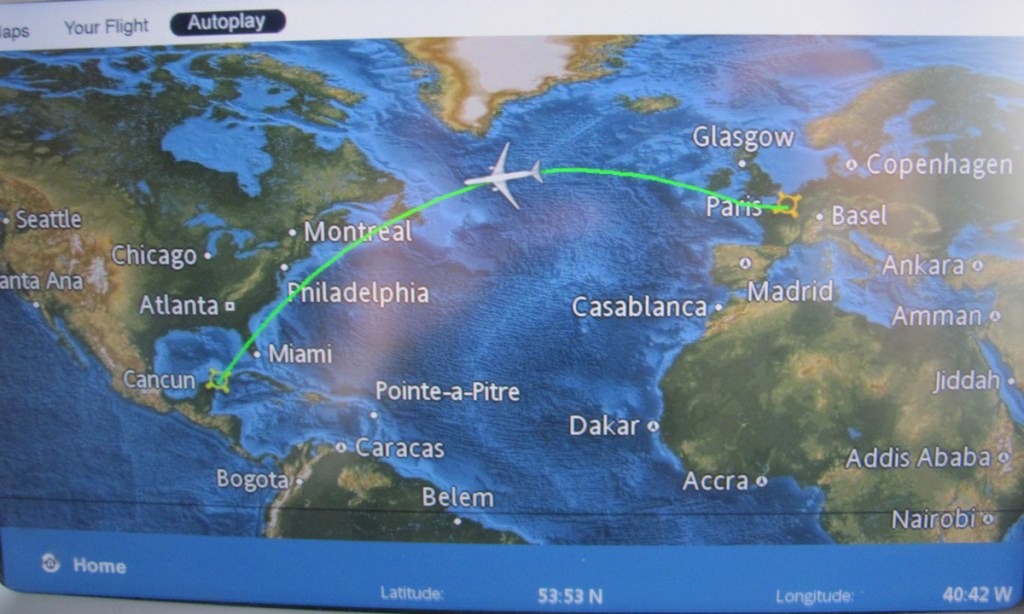
In several articles, I will try to recreate this cozy piece of land, which for 14 days left me with warm and priceless memories. I’ll start with the east coast, where we landed in Mexico for the first time, taking the direct flight Paris-Cancun.
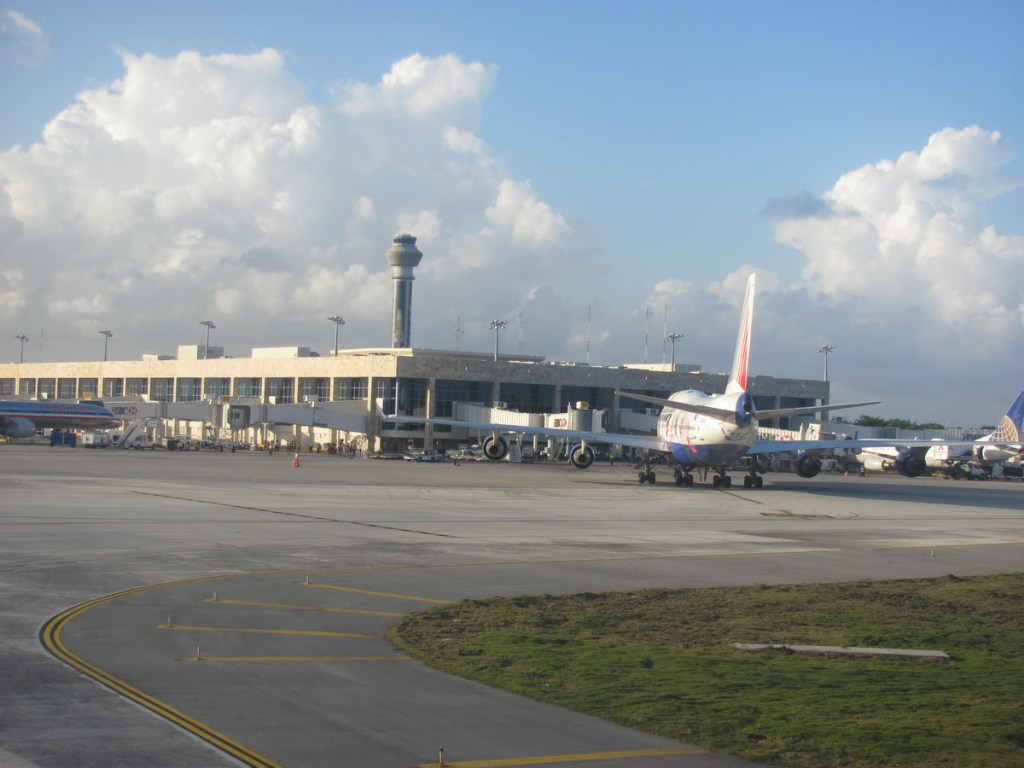
Instead of sandcastles, Cancun welcomed us with cloud figures. Many clouds had clung together, forming interesting landscapes, as if they had all gathered to welcome us. The first impression of Mexico was that it was very green. The turquoise green waters of the coast and the dense forest caught my camera’s interest. The second impression came upon getting off the plane at the airport – it was the humidity. It was February, and the air here seemed to be very hot.
We headed to the hotel in a minibus in which our driver Roberto jokingly told us that we were going to a resort called no Playa del Carmen but Playa del Crime (resort of crime). His impressions were that there were lots of thefts here. Luckily for us, we didn’t witness any theft during our entire stay in Mexico, so I can’t confirm his words. I found the people there to be very kind and warm-hearted, something that seemed to be lacking in my home country.
After we had some time to refresh and even sleep, early the next day we headed to one of the local attractions in the region, named the Rio Secreto Reserve. Entering this national park was done only by local vans, and as we entered the jungle we curiously looked at the posted road signs, which were written and painted: beware of snakes, beware of foxes, ducks, jaguars…


While traveling to Rio Secreto, we passed many billboards with local attractions, including underwater caves, which here were called cenotes. The Yucatan Peninsula was very flat and had limestone soil that allowed the formation of underground caves and rivers. Currently, most of these caves were open to the public, and visitors can swim and dive. There were no such cenotes in the rest of Mexico. There are such only in a flat part at no more than 25 meters above sea level. According to geologists, 4 million years ago, more than half of the Yucatan region was under water. It took about 1 million years for the earth to fight the sea and rise to the surface. The Caribbean region was the last to emerge from the sea.
The soil in the Yucatan was very calcareous with organic ingredients from the sea such as coral, etc. Thus, when it rained, the water easily passed through the soil, and thanks to erosion, these holes grew into caves. Big enough for underwater rivers to pass through. The word cenote came from the Mayan language and at the time it sounded like tsenote, but the Spaniards who conquered these lands could not pronounce “ts” well and the word cenote remained. There were currently over 8,000 cenotes in Mexico. Some of these cenotes have drinking water and others have polluted water.

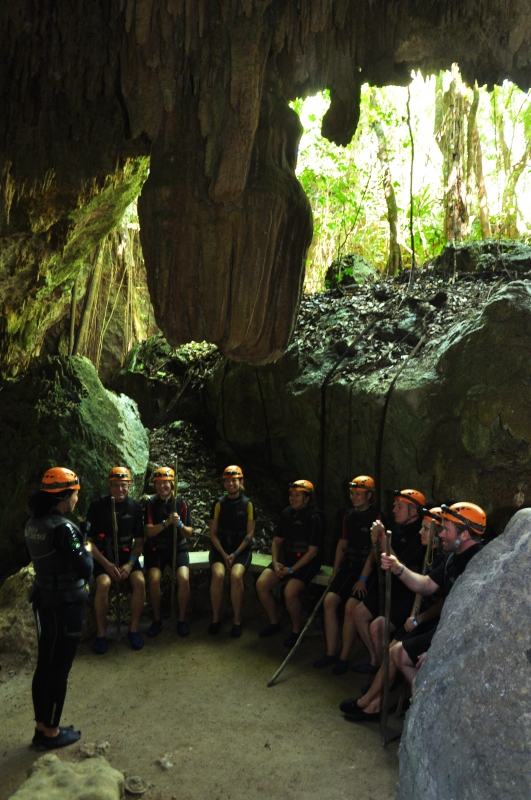


After the bus stopped we were welcomed by our tour guide Sandy (short for Sandra), who was actually born in Switzerland, but she liked Mexico so much that she has now moved here. She was very smiling, radiant and kind, the tour went very well. First we were given a wristband with chips (but not to look for us if we got lost, but to lock our lockers), where we had to leave everything, including cameras, jewelry, clothes and shoes. Wearing just our swimsuits, we headed to the designated reception area, where, like a bowling alley, a variety of swimming shoes were lined up. Then we had to go through some showers, the water of which was not hot, but the same temperature as in the cave. I was unsure but pulled the rope as the cool water poured over me. The same was intended to wash off from our bodies any creams, cosmetics and chemicals that could contaminate the cave and its water. We were then lined up so the boy responsible for clothing could take a good look at us and hand each of us a wetsuit – without asking the size. We put on a life jacket, a helmet with lights, and with a button to turn them on and off. So equipped, our group of 8 (an American couple, a Canadian couple and a German couple) and Sandy were joined by the photographer Manuel. He accompanied us all the way and filmed our tour.
Before entering the cave, we stopped along the way and attended an ancient ritual. This cave was sacred to the Mayans. In this area, this was their only source of drinking water. Therefore, every time we entered the cave, we had to ask the permission of the gods. Sandy introduced us to a man who was a shaman and in the Mayan language he performed a purification ritual with something like a lamp and a lot of smoke.


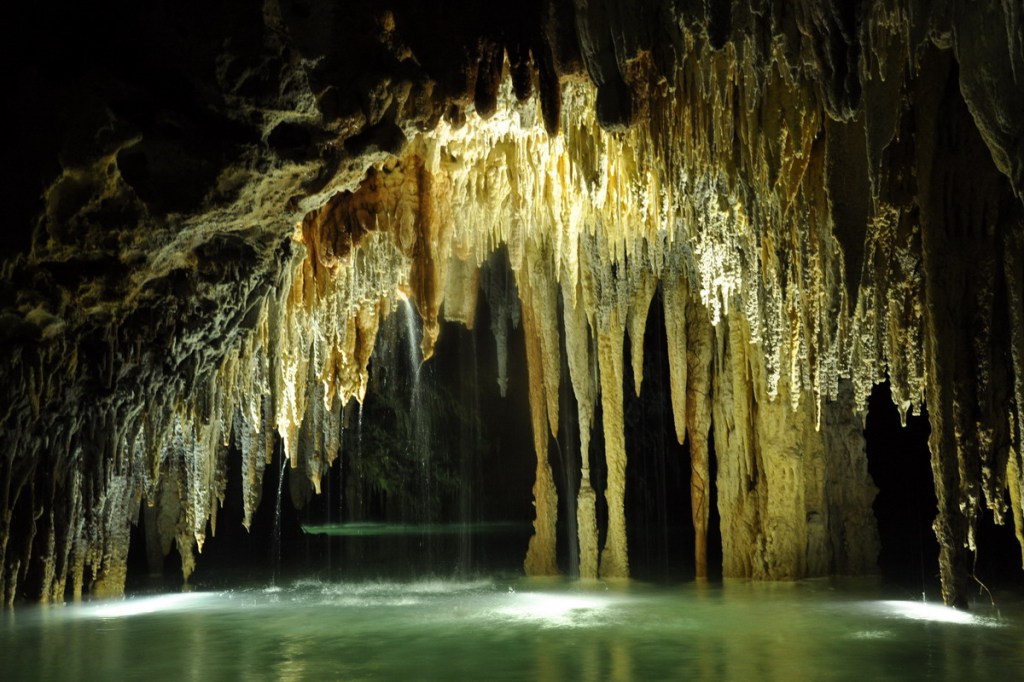
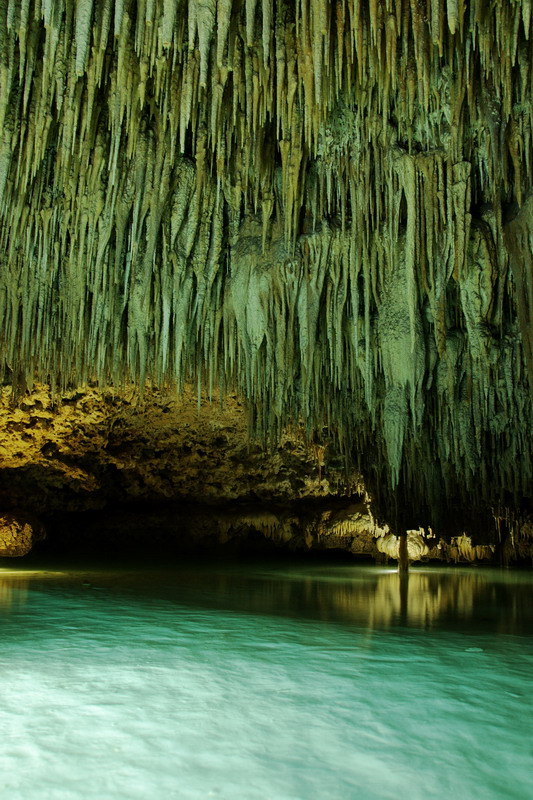
We then entered the cave, which at first looked exactly like ours, but after a while we began wading in water, the depth of which was from the knee to the waist. Sandy introduced us to the stalactites that came down from the ceiling and were hollow inside and the stalagmites that were solid and filled. There were also many stalactons. Touching all these formations was forbidden, because once touched by a human hand they stopped growing, and the cave was young only 2 and a half million years. It was recently discovered when the owner of these lands was chasing a snake, and when it hid among the stones, he moved them and saw a hole in the ground, from which the magnificent cave was revealed. This happened in 2006, and since 2009 the cave has been open for visits. Interestingly, the cave floor was not slippery. The reason for this was the lack of moss, which could not form due to the lack of light. Unlike our caves, which are electrified and form formations from this light, here was complete darkness, disturbed only by the lights on our helmets. Sandy also carried a waterproof lantern with which she illuminated and showed us the road and the various formations.

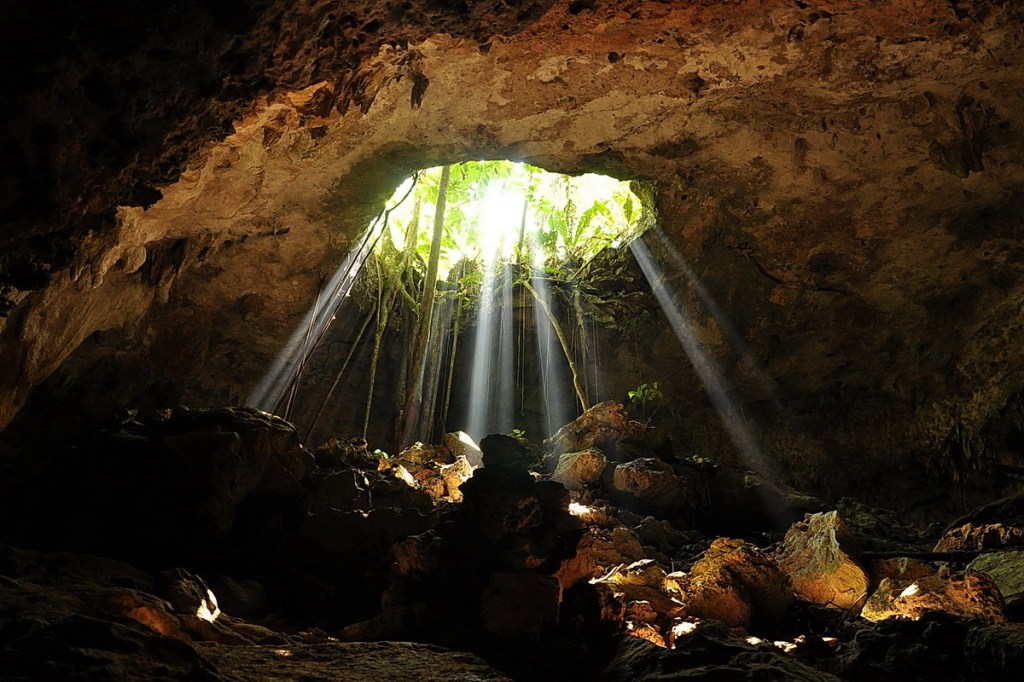


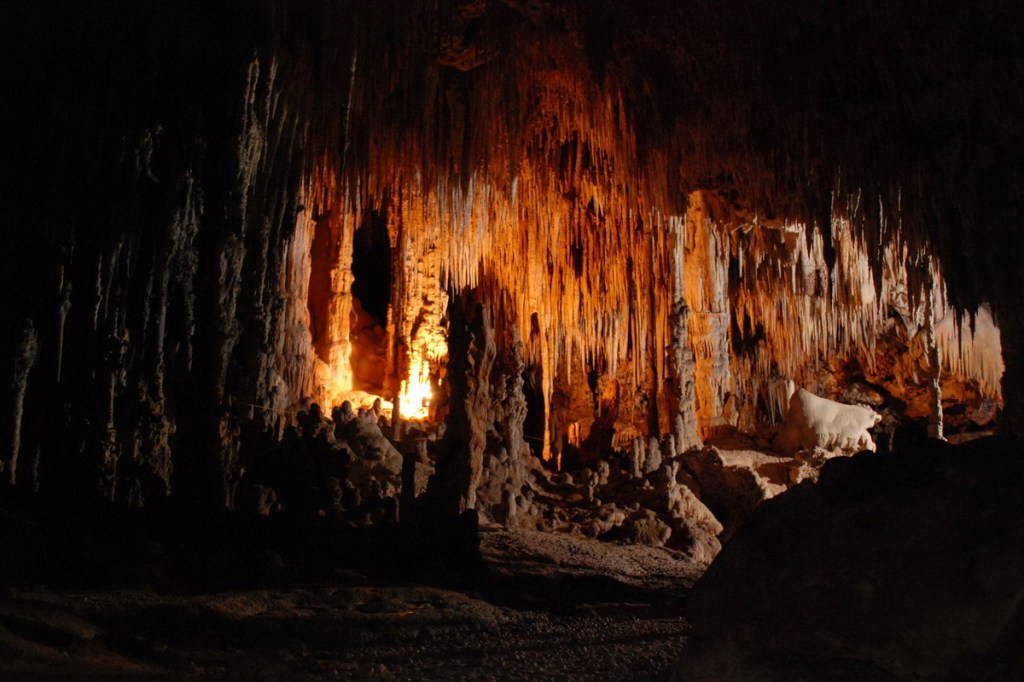
In the cave we saw bats, fish and even a cricket. It turned out that the bats mainly ate fruit that they brought into the cave. From them they left husks or seeds, which the crickets ate. In several places we also saw tree roots descending from the ceiling in search of water. The soil itself in these places was quite limestone, which allowed the formation of caves. Far inside the cave, the floor turned out to be hollow and below it was another cave, but with sea water. Sea water was heavier than drinking water and therefore occupied the bottom layer. In one of the halls of the cave, where we had seen 2 bats, Sandy asked us all to turn off our lights and stand for a minute in silence. When the lights went out there was complete darkness, even after a minute my eyes did not get used to it and could not distinguish the water from the rocks. After we got quiet and dark, the bats started circling above us, we could hear the flapping of their wings but we could see absolutely nothing. It was an interesting experience, and I was praying that no bats would land on me.
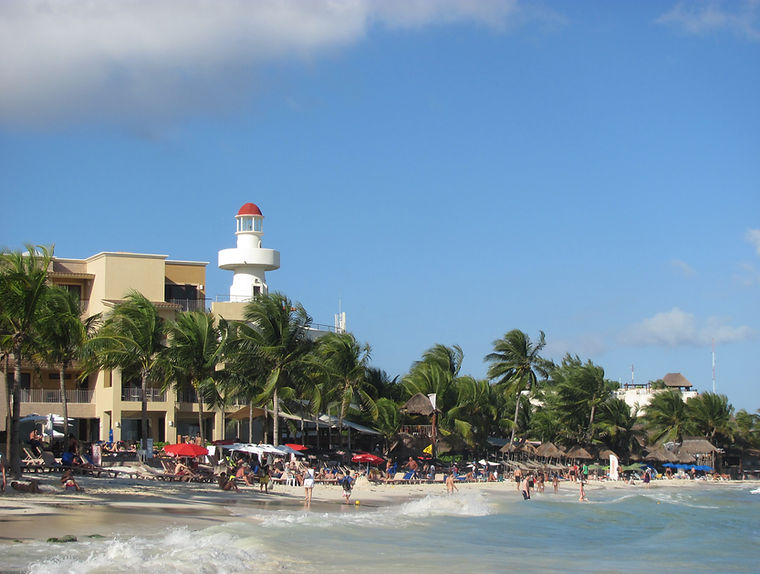
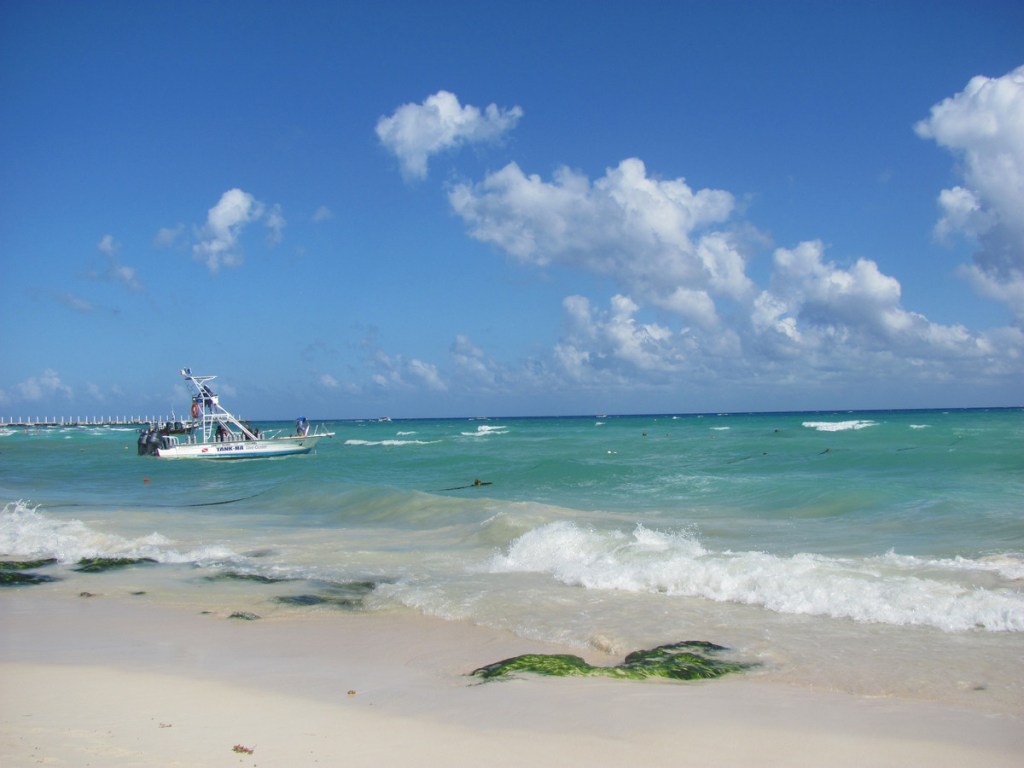
Next came the most interesting part: several deeper spots, which we passed by lying on our backs in the water. Our life jacket kept us afloat, and with our hands we floated on the water, surrounded by bizarre stalactites. Here the water was about 2-3 meters deep. Otherwise, the greatest depth in the cave was 8 meters. It turned out that there were a total of 3 routes in the cave, so we didn’t run into any other tourists at all. The exit of the cave was very interesting, surrounded by a lot of plants, through which there was a ladder that took us to the surface. From there, our walk continued along a forest path, and the trees in this forest were, of course, palm trees. We had a catered lunch where I particularly enjoyed the local nachos (fried corn chips). After eating, we waited for the bus sitting not on benches, but on some hammocks tied to palm trees. The cave tour lasted an hour and a half, and with travel, lunch and gear, the excursion took 5 hours. We spent these hours in the most enjoyable and unforgettable way. From the hotel, we grabbed our beach towels and headed to the beach that was less than 50 meters from the hotel. We relaxed on the fine pale beige, almost white sand and got refreshed in the slightly cool Caribbean waves. The beach strip was much narrower than the ones we had in Bulgaria, but behind it there were many palm trees.
There were people on the beach, but we quickly found free place and stretched out towels. The sand was not only fine, but it didn’t stick to the body, which was very good, and once we got wet, it fell off very quickly. The waves gently danced and hummed to us while the seagulls circled and occasionally cast a shadow over us. It was February 20th, a really hot and sunny day in the Caribbean.
In the evening we walked along 10th Avenue – a pedestrian street with many shops, the atmosphere reminiscent of a typical seaside resort in the peak of the season. Like the temperature outside, the prices were also high and so far I didn’t get the impression that Mexico was a cheap destination. We ate at the Casa restaurant Adela , where we ordered 1) Plato Mexican maya (containing 2 crispy chicken taquitas, chican tamale, empana, panucho and poblamo pepper stuffed with cheese). Served with charro beans and cactus salad and 2) Coconut Shrimps – crunchy shripms breaded with coconut, topped with a sauce made from mango. Served with rice and sautéed vegetables. The price of the two dishes accompanied by fresh mango was 570 Mexican dollars (or 43 US dollars), and this was a simple, not expensive restaurant.




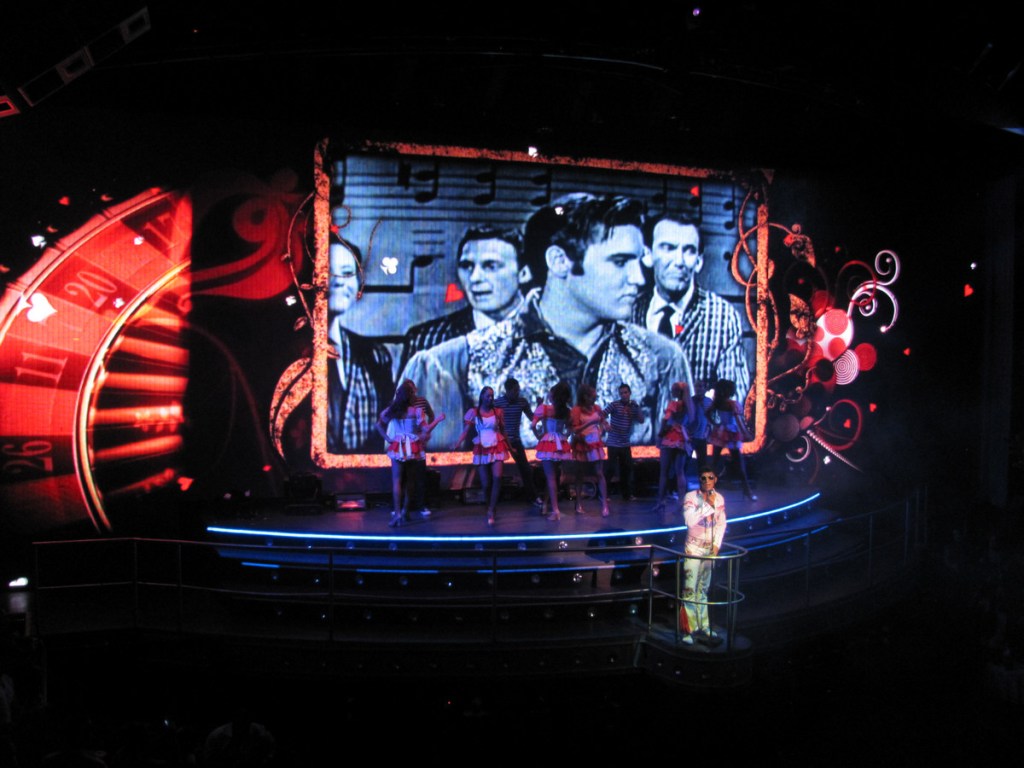


In the evening we had a reservation at the Coco Bongo club, described as the best nightclub with live music and a mix between cabaret and Cirque de Soleil. The program was indeed very well staged with a mix of dance, acrobatics and many stage effects. The whole place was amazing, and all people danced and sang while we watched the show. We returned home the next morning, again having little time to sleep before the new exciting Mexican day.
The resort of Playa del Carmen was named after a woman who built a hotel here and people often began to come, calling the place – the beach of Carmen or Playa del Carmen. Later, they never came up with another name for the already grown resort, so it remain Playa del Carmen, named after an ordinary woman.
However, the resort was unordinary, and more precise – extraordinary. Unlike Cancun, where more Americans stay, Playa del Carmen was preferred for vacation by Europeans. As such, I personally liked it more than neighboring Cancun, as it had excellent beaches for relaxation, dining and entertainment, and many shops. There are also numerous one-day trips that depart from here, but we had chosen a 10-day tour with visiting the famous pyramids Chichen Itza, the ruins of Tulum, the crowded capital of Mexico City and many more sights along the way. Mexico is a wonderful place, both for vacation and for excursions and adventures.

GENERAL INFORMATION ABOUT MEXICO:
Location: Mexico (United Mexican States) is located in North America, bordered to the north by the United States, to the southeast by Guatemala and Belize, to the west by the Pacific Ocean, and to the east by the Gulf of Mexico and the Caribbean Sea.
Capital: Mexico City
Area: 1,972,550 sq.km
Population : 121,736,809 people
Official language : Spanish
Climate: tropical climate
Time zone: UTC-8 to -5
Currency: Mexican peso (MXN)
Additional information: https://www.visit-mexico.mx/

TRIP TIPS FOR YUCATAN PENINSULA:
Best time to visit: All year round, from December to April probably being the best months for the beach and sightseeing.
Typical food and drink: In addition to the famous Mexican tacos and burritos, the Yucatan Peninsula offers many specialties with seafood, avocados, oranges and chicken.
Places to Visit: The Yucatan Peninsula offers much more than beautiful resorts like Cancun and Playa del Carmen. Here you can visit the famous Chichen Itza Pyramid, Tolum, Uxmal, Ek Belam, and many diving amusement parks like Xcaret Eco Theme Park and Xel-Ha, as well as underwater caves such as Rio Secreto, Cenotes Dos Ojos, Sac Actun and many others.
Additional information: http://www.travelyucatan.com/
 TripTips