MEXICO
PART 10 – TAXCO – THE SILVER CITY OF MEXICO
author: Ana Boneva
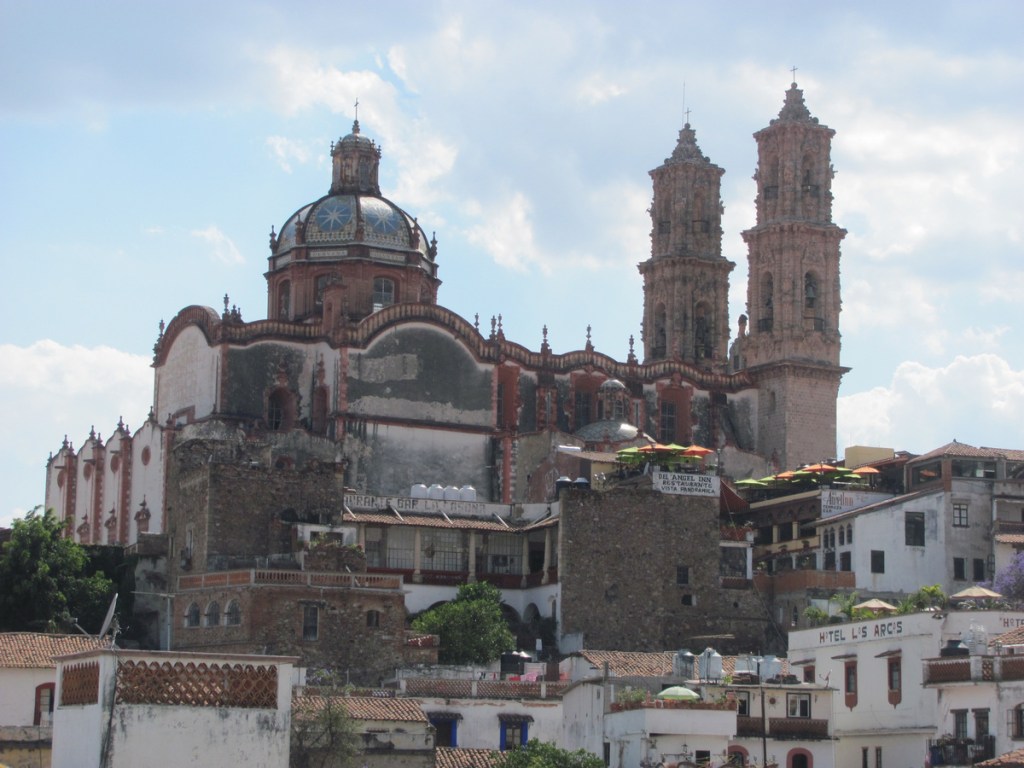
Tabasco is an American hot sauce, and Taxco is a beautiful mountain town in Mexico, famous for its silver mines and beautiful silverware. It is located 170 km south of Mexico City, and the journey took us more than 3 hours. We spent the first hour for getting out of Mexico city, hitting a slight morning traffic jam, which was really light, considering that there are more than 4 million cars in the city. The cars that were moving were modern models, something completely different from Mexico City 10 years ago, when only old American cars were running. Now the state granted many loans for the purchase of new cars and people took advantage of them. With the granting of loans, the insurance of these cars became mandatory, which also helped to maintain the cars well.
We passed by the green park of Chapultepec, which turned out to be one of the largest parks in the northern hemisphere, covering an area of 686 hectares or 1695 acres. This park was also called the lungs of Mexico City, but they could hardly cope with the gases of so many cars. In colonial times, it was here that the castle of Chapultepec was erected, which then became the official seat of the President of Mexico until 1940. We did not manage to see this green oasis, but we learned that today it was conditionally divided into three parts. The oldest part, was also the most visited, including the main attractions such as the zoo, the Museum of Anthropology, the Rufino Tamayo Museum, etc. The very name Chapultepec means “hill of locusts”.
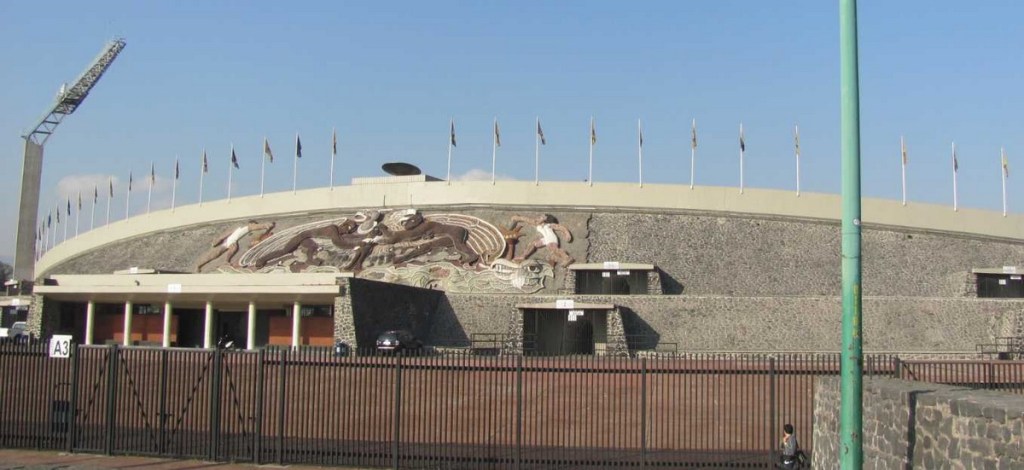
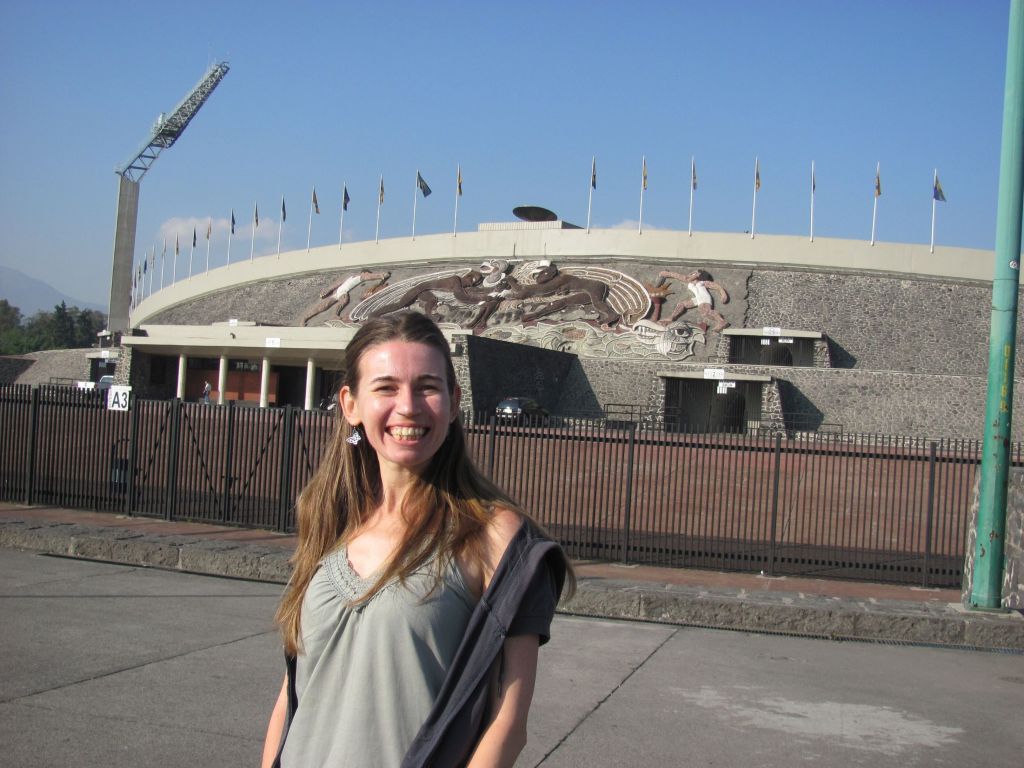
We took a short photo break at the Olympic Stadium, which was erected in 1952. and at the time it was the largest stadium in Mexico. There were beautiful images on the façade of the stadium and at least from the outside it looked in good condition.
We then continued our way to Tabasco, traveling along the highway to Acapulco, but we made a turn before reaching this famous resort on the Pacific coast.
On the sides of the highway, the grass was yellow, as if it was the end of summer, when in fact the warm Mexican winter was coming to an end. The climate of Mexico was diverse, like the landscapes we were passing through. The country had rocky deserts, tropical jungles, mountain elevations, and gorgeous Pacific and Caribbean beaches. Mexico was located in North America and was bordered to the north by the United States, to the southeast by Guatemala and Belize, to the west by the Pacific Ocean, and to the east by the Gulf of Mexico and the Caribbean Sea.
At 10:45 a.m., we could already see the southern slopes of the Sierra Madre mountains. The Sierra Madre was the main mountain range in Mexico, hence its name – “mother of the mountains”. It consisted of 3 main parts: the Sierra Madre Oriental, starting at the Rio Grande and continuing parallel to the Gulf of Mexico, with the highest point Citlaltepetl (5700 meters), the Sierra Madre Occidental descending parallel to the Pacific coast and the Sierra Madre South, which descended to the Pacific coast and formed the natural harbor at Acapulco. There were many legends and myths associated with this sacred mountain, even filmed in movies.
We moved through the Morales area, passing large sugar plantations that turned out to be part of private ranches.
At noon we arrived in the town of Taxco, located opposite the mountain ridges at 1800 meters above sea level and one of the last ruined colonial cities. The Spaniards came to these places in 1522, attracted by the Aztec legends about the mineral-rich land and the subsequent silver boom. The city’s wealth doubled, with the discovery of new ore deposits by Jose la Borda in the 18th century, and with the arrival of William Spratling in 1932, who established the city as a center of silver mines.
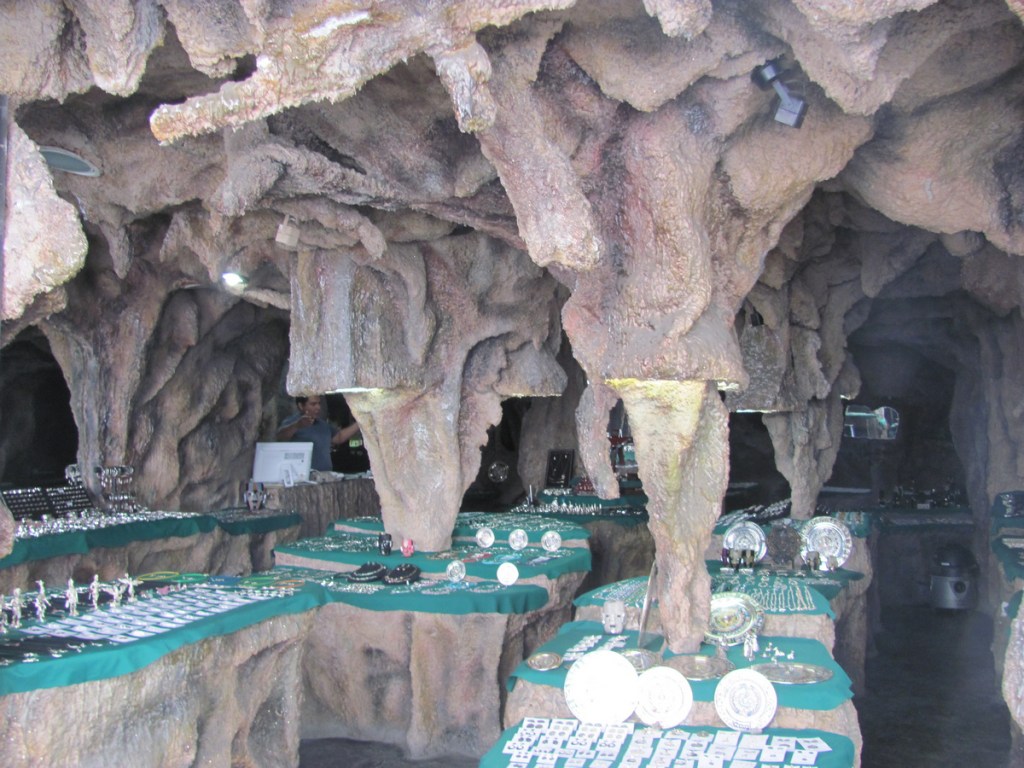
The bus stopped us in front of a silverware shop, where upon entering, the owners treated us to a Margarita and predisposed us to buy silver jewelry. Before that, they showed us the stones from which the silver was extracted and guaranteed us 100 percent quality of their silverware. There were really gorgeous jewelry and the sellers were very kind and convincing, letting us try everything. Imperceptibly in talks and good mood, everyone in our group left the store with several purchases.
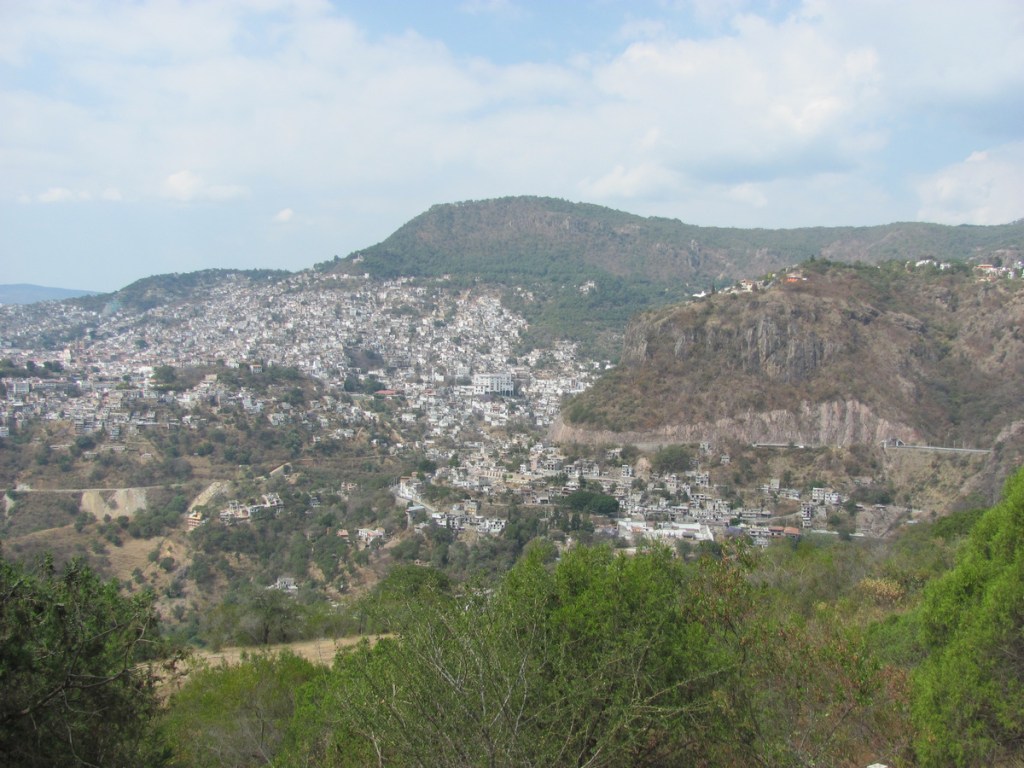



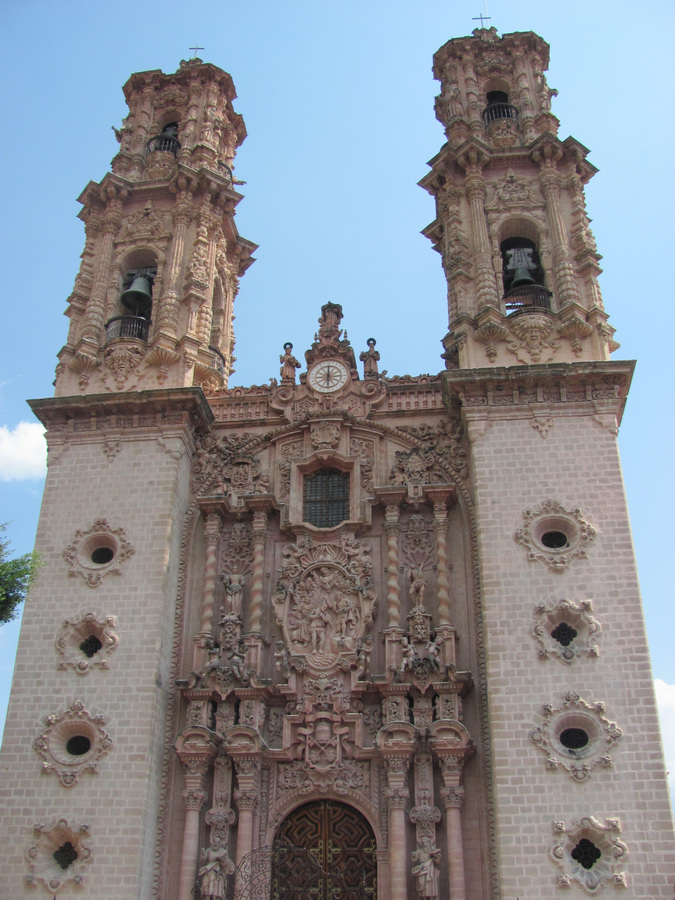

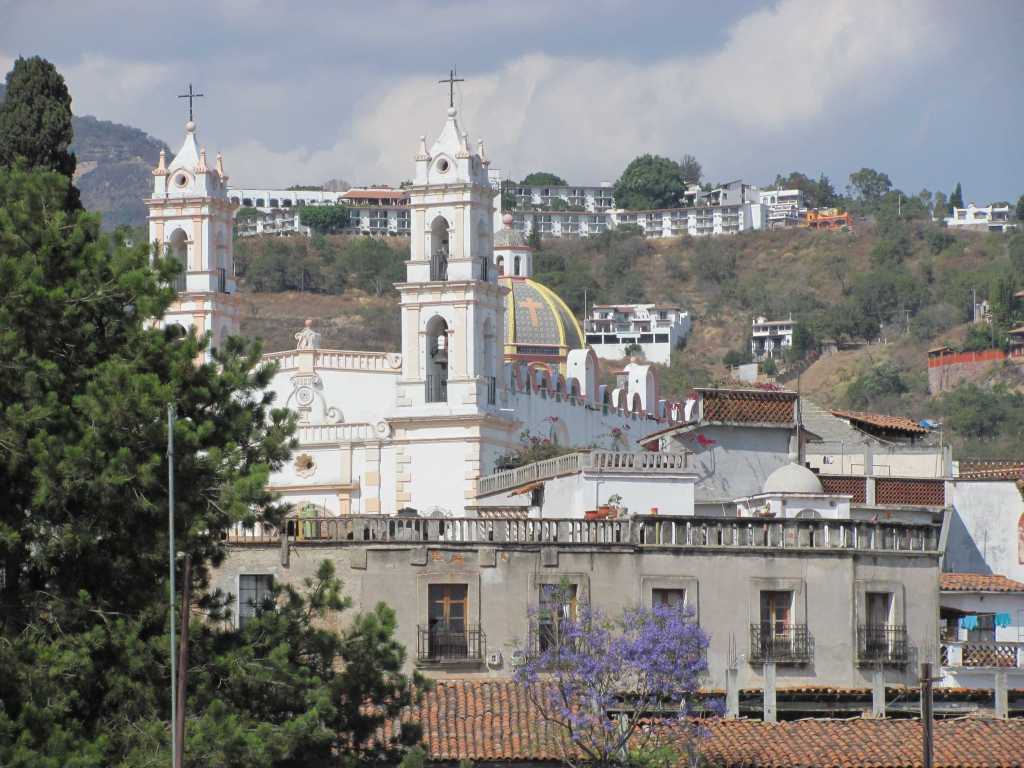
Then we walked to the city center (Zocalo), where there was a majestic cathedral that seemed to rise above the city, standing on a hill. The whole city was hilly and the streets were quite steep in places. The city reminded me of the Bulgarian town of Veliko Tarnovo. Here, however, all the streets were very narrow and paved. In some places, the paving stones even formed human and other figures. However, we stared more at the colonial buildings, which were really very beautiful, preserved and painted. Most of them were decorated with flowers and gave a special picturesque atmosphere for a walk.
Fascinated by this, we imperceptibly reached the majestic Baroque cathedral, which was just as impressive from the inside as from the outside. The Cathedral of Santa Prisca (El Templo de Santa Prisca) was built in the period 1751-1758. and aimed to demonstrate the riches of José la Borda, a rich man from the silver mines. It had nine altars made of wood and covered with gold leaves. One of the saints, St. Anton, was holding a baby in his arms, and the guide explained to us that at the time it was believed that anyone who touched the statue of the baby would have a child. Now the statues were fenced off and tourists could not reach out and touch them, but they could, of course, like me, leave a small donation, praying that such happiness would befall them.
The details in the church were a mixture of Rococo and Baroque styles, and initially the church was intended only for the local population who had recently been baptized. The altar, for example, showed the hierarchy in the church, and the rest of the paintings reinforced biblical stories. The reliefs also showed the typical Baroque belief of fear of the teacher, and this fear was inscribed on some of the faces depicted in the temple.
After seeing the cathedral, we went down the narrow market street, where we saw sellers of green tomatoes (they were used to make sauces), as well as guava fruits and other interesting fruits and vegetables. The guide again drew our attention to the fact that the local people (the Indians) did not like to take pictures of them, taking the same as wudo magic and stealing their souls. Here traditions were still observed, with women having almost no rights, only obligations to stay at home and take care of the home and children. There were no local people on the street, or a man and a woman walking next to each other. The woman always walked a few steps behind. I also walked behind the back of the group to take more pictures.


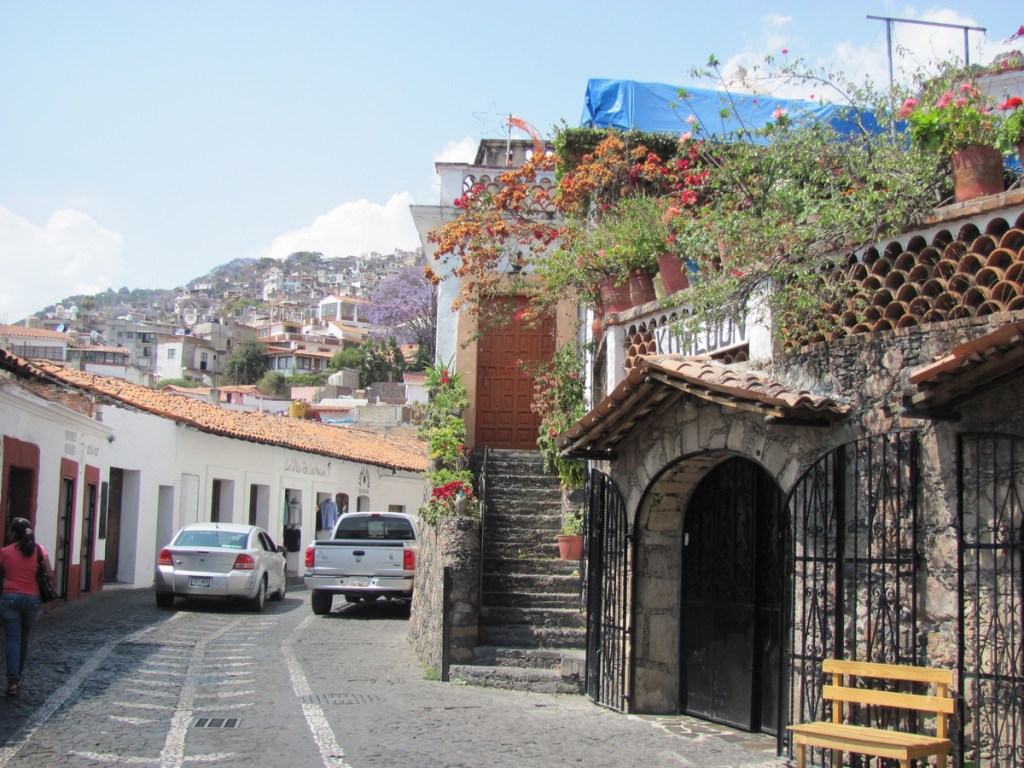
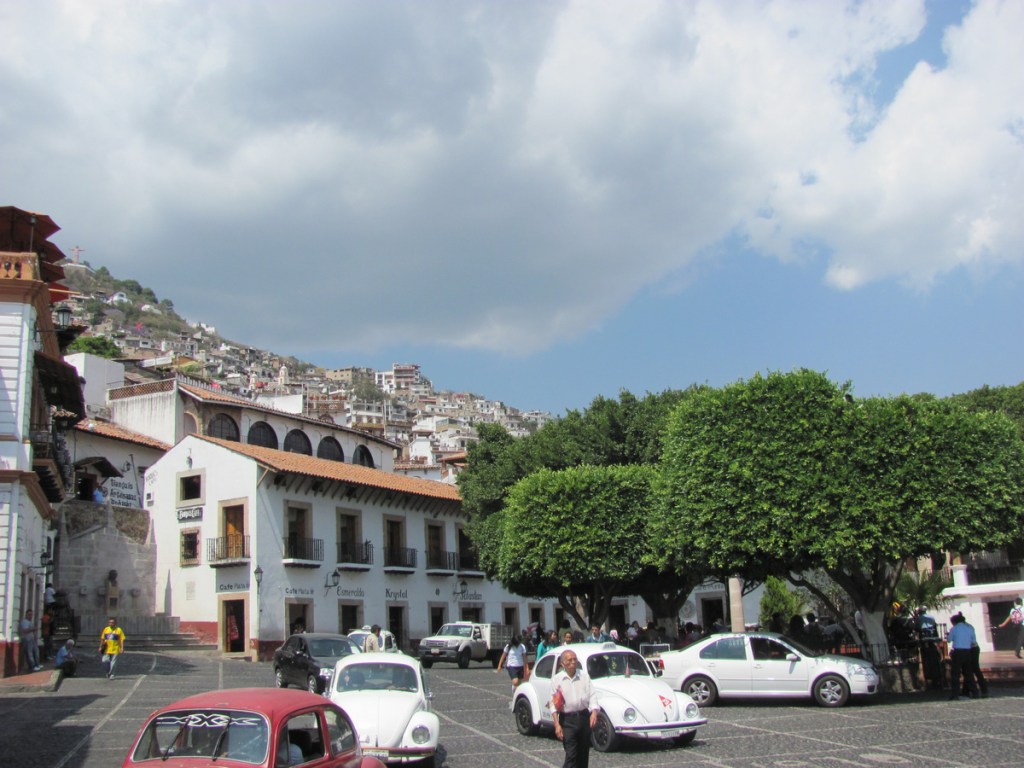

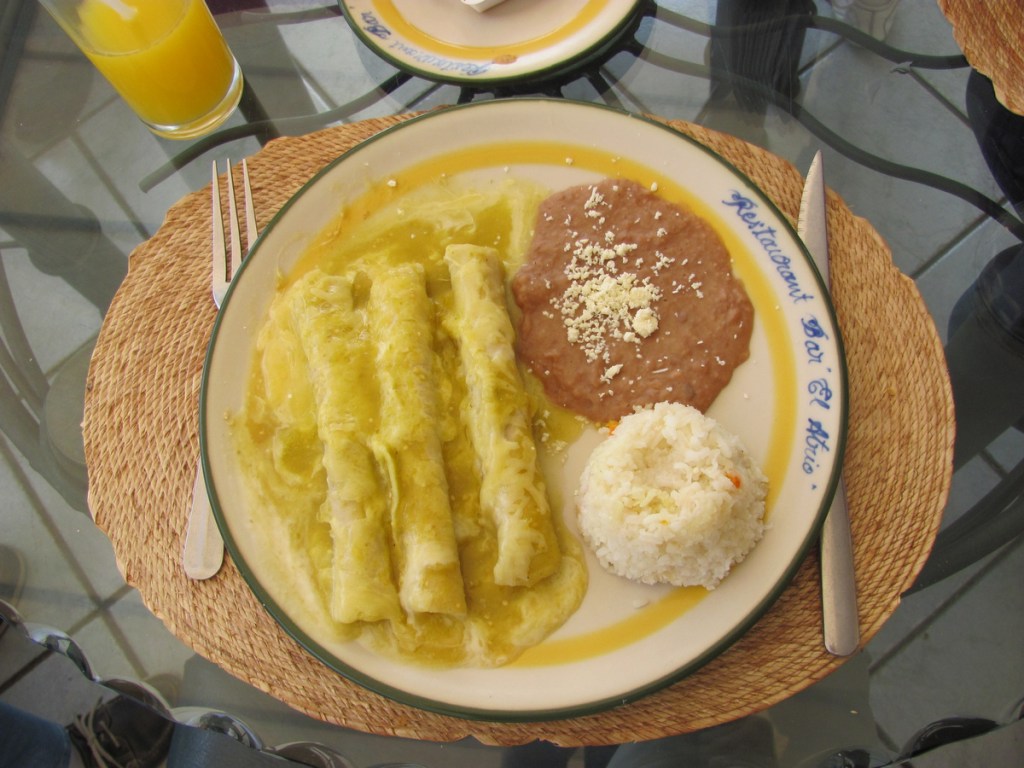

We continued our walk along the cobblestone streets of Taxco and its beautiful colonial houses, and shortly before 14:00 we sat on the terrace of a restaurant, where we ate vegetable soup, enchiladas (which is a corn pancake with chicken, topped with cheese) and garnished with mashed beans and rice, and for dessert – chocolate cake. From the restaurant to the bus we made a pleasant walk observing the German proverb that after each meal you had to take 1000 steps. At 15:45 we got back on the bus, which took us along the sunny highway back to Mexico City and the hotel.
In Mexico, every day seemed better than the previous one and I couldn’t wait to fall asleep and welcome the new day.
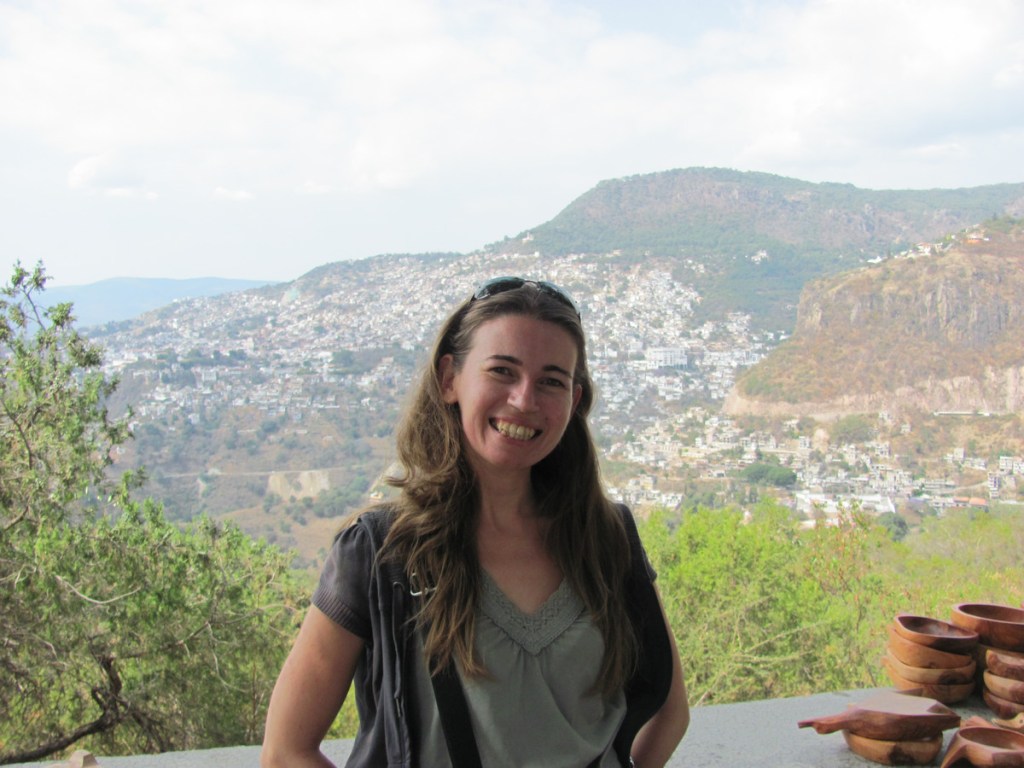

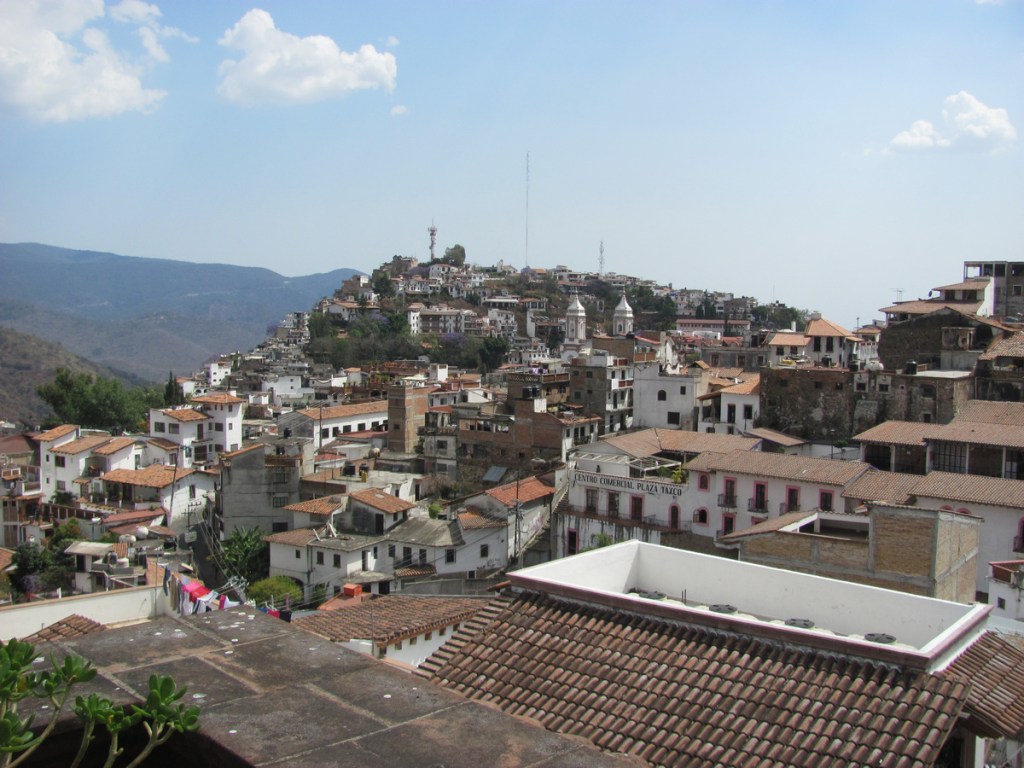

GENERAL INFORMATION ABOUT TAXCO:
Location: Taxco is located in the Mexican state of Guerro, 170 km south of the capital Mexico.
Area: 347 sq. m.km
Population: 39,587 (2005 data)
Altitude: 1778 m
Official language: Spanish
Climate: mild mountainous climate
Time zone: UTC-6
Currency: Mexican peso (MXN)
Additional information: http://www.visitmexico.com/en/taxco
TRIP TIPS FOR TAXCO:
Best time to visit: all year round, with the dry period being from October to May and rains mainly in June to September. The city is especially festive during the festivals of Santa Prisca and San Sebastián on January 18 and 20, as well as during Easter.
Typical foods and drinks: in addition to the traditional Mexican tacos and boritos, while in Tasco try the enchiladas (a corn pancake stuffed with chicken or vegetables, drizzled with cheese). Corn is one of the main ingredients in local cuisine.
Places to visit: The steep streets of Taxco are especially picturesque with beautiful colonial houses, with the Cathedral of Santa Prisca and San Sebastian being undoubtedly the most exquisite. Here you can see several mansions, called haciendas, of the former silver magnates. A statue of Jesus is erected on one of the hills of the city (similar to the one in Rio de Janeiro), from where a wonderful view of the entire city is revealed.
 TripTips