MEXICO
PART 8 – THE MOUNTAIN TOWN OF SAN JUAN
author: Ana Boneva
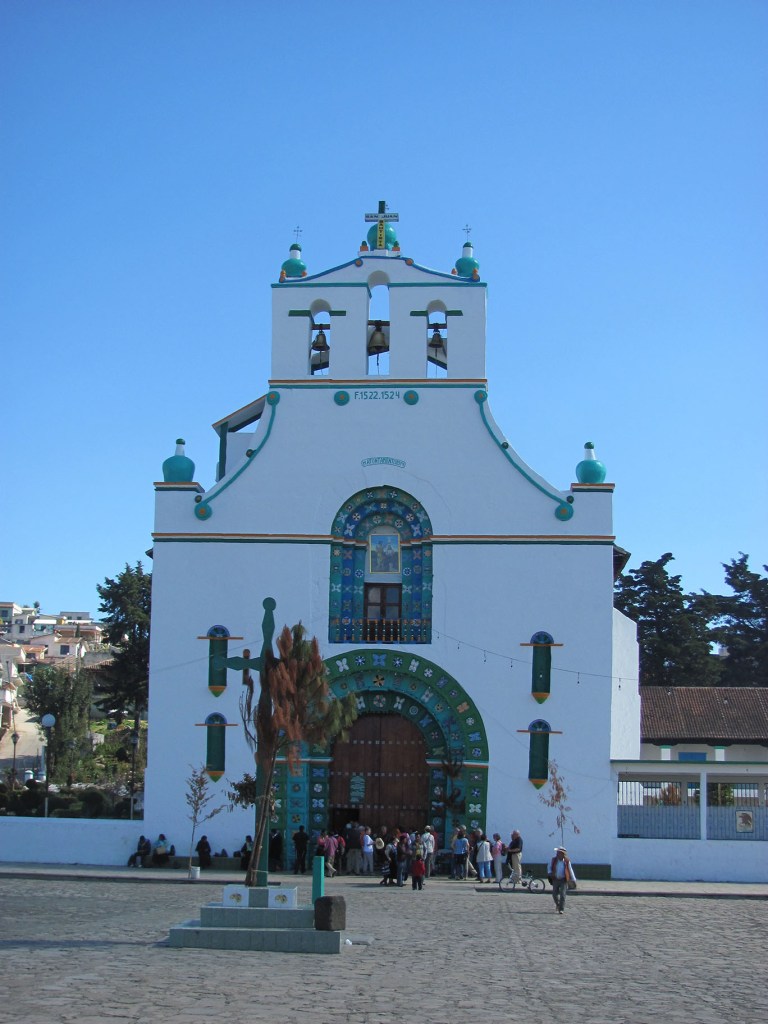


San Juan Chamula is an unique place where Mayan and Catholic beliefs mix into the current day, and people see that besides all the differences we are the same.
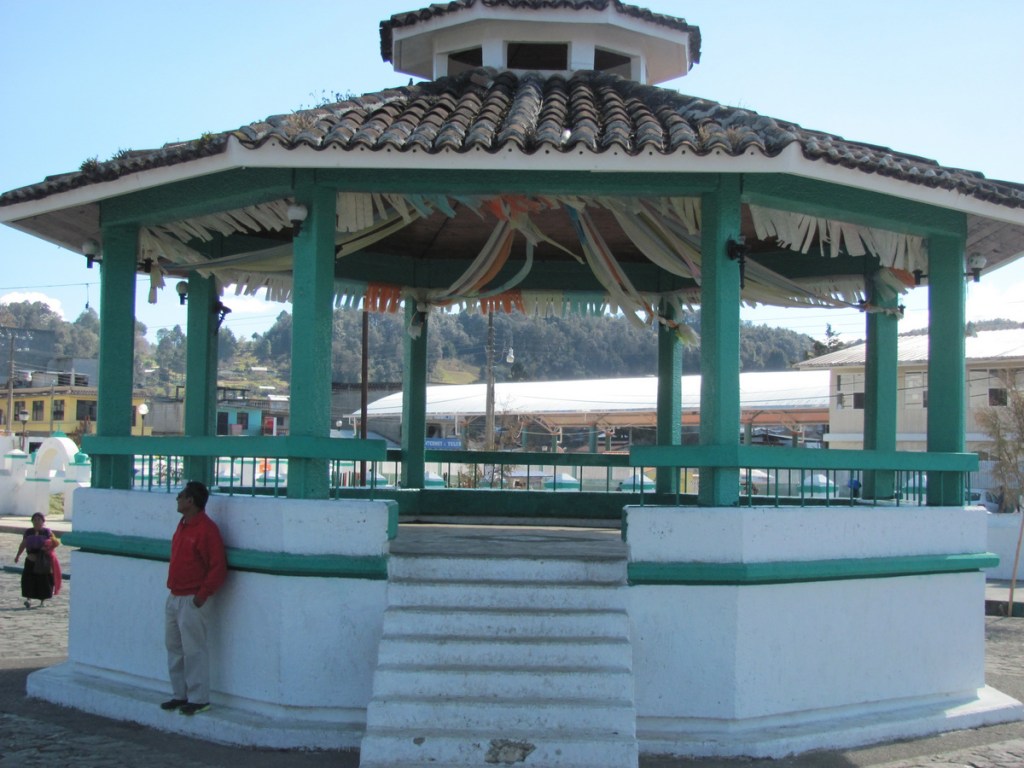
The first landmark we stopped at in San Juan, if I may name it a landmark, was the cemetery, where we learned more about the funeral customs of the Mayans and how they preferred to be buried in their homes. Only the rich and noble were allowed to be placed in a sarcophagus, the rest were simply buried in the yard or somewhere under the house. The current cemetery had been separated for the last 30 years, and the local people were just getting used to it. Then we headed to the central square, where the people from the area were celebrating something – music was playing, they were drinking schnapps and the most terrible picture was to see two skinned cows dismembered in the square, with 8 people respectively pulling them by the legs, while the others cut them into pieces. This was the time before the big carnivals, which would put an end to eating meat and start the Easter fasts. This is what the name carnival meant, coming from the Latin words “carne vale” or “farewell to meat”.
We did not stay long in the square, but headed along a shopping street, and by shopping I mean an ordinary street with street vendors, stretching stalls mostly with knitted clothes and bags. This street led us to the cathedral square. The Spaniards built this cathedral to convert the local population to the Catholic religion, but instead the locals took control of the cathedral and used it for their own needs and beliefs. A particularly beautiful holiday was celebrated in June, when on June 24 Catholics celebrated the day of St. Johannes, and on June 21, the Mayans celebrated the solar equinox. Thus, during these days (from June 21 to 24), lavish celebrations were celebrated, occupying the entire cathedral square. The ceremonies were not held inside the church, but in front of it, as the Mayans celebrated not in the pyramid, but in front of it. The Mayans in this region worshipped Saint Johannes, believing that he showed them where there was water and wells, as well as when to plant crops. The Catholics presented this saint to them, associating him with the sun. The Virgin Mary was likened to the moon – this is how they presented the new religion closer to the beliefs of the locals.
Long before the Spaniards came, the Mayans painted and erected crosses, which, however, had nothing to do with the Catholic religion, but symbolized the tree of life. That is why their crosses were always green. However, the Spanish used this symbol and associated it with the new religion.
The same was done with the carnival processions, which were celebrated even before the Easter fast. It was at this time that the short month of the Mayans “guayep”, which consisted of 5 days, and which the Mayans considered “very lame” and bringing misfortune, so during these days, no one worked. Catholics took advantage of this and created carnival processions, wearing animal masks and skins during this period, to drive away evil spirits.
And today there were no such lavish carnivals as in Brazil or processions with beautiful outfits as in Europe, but the holiday here was very special and it was a pity that we would miss it for a few days. At the moment it was Tuesday, and the carnival would begin this Friday, culminating next Tuesday, when all the streets would be filled with dancing and music. Carnival, along with Christmas and Easter, were the most important celebrations in all of Mexico. During the Carnival, lavish processions were organized, the end point of which was a cathedral or a large church.




The Church was indeed a unique mix of Mayan and Catholic beliefs. The special thing about it was that it was green in color, it did not have a clock tower, but it had a rich decoration of flowers, which were important symbols for the Mayans. Another difference was the large atrium / entrance hall. Inside, it was gloomy and full of people sitting on the ground. The entire floor was covered with torn grass and pine branches, with which the worshippers tried to give the greenery of nature, lighting candles on the ground between them. It was a real miracle that there were no fires. It was there on earth with lit candles kneeling on the grass that people prayed to different gods – to the sun god, to the rain god, etc. Prayers were offered only in the Mayan language, not in Spanish or any other language. It was not known how long people would pray, so they brought food and drink, including schnapps and eggs (a symbol of fertility), and calmly strengthened themselves in the church. There were many families and children who, in turn, drank Coca-Cola. The atmosphere inside was unique, but it was completely forbidden to take pictures inside. The altar and beautiful statues were placed behind glass cases, as if it were a museum rather than a functioning temple, and served more for beauty than prayer. Beautiful curtains descended from the ceiling like ribbons, which gave additional coziness and intimate atmosphere, which was unimaginably created by the hundreds of lit candles on the ground.
On our way out of the church, we took a small brochure about this unique city, church and traditions from the street vendors. From the booklet I found out that the colors of the candles in the church also played an important role. Green candles were lit for good luck and well-being; the yellow ones for healing and recovery, and the rest of the colors for banishing envy. There were no liturgies in this church, because the locals believed that each prayer was an individual conversation with God and they could not all pray together with the same words.
We had some free time, during which we had to return to the bus in the parking lot, and in the meantime we went through the street shops again, buying from local products. Before we entered the city, the guide had told us about the customs of the people and the especially difficult role of women here. Until a few years ago, women were not allowed to wear shoes, and now we could see some older women still walking barefoot. Women were responsible for the cleanliness of the home, washing clothes, cooking and preparing the family meal, looking after the children and finding time for sewing or knitting, after which these products were sold outside to tourists. There were no male merchants, nor would we see a man and a woman walking together, since again, according to custom, women had to walk behind at least a meter away. I remembered the celebration in the central square, where the slaughtered cows were and groups of men had surrounded them, others were standing behind and drinking tequila, and at the side and at the back were the women who had the privilege of at least watching and attending the celebration. I was sad for these women, so I didn’t even bargain for long while choosing a woolen blouse from a stand on the street. As for the role of men, it was limited either to raising crops or caring for cattle, then they had to treat themselves to friends for a cup and eat well at home.

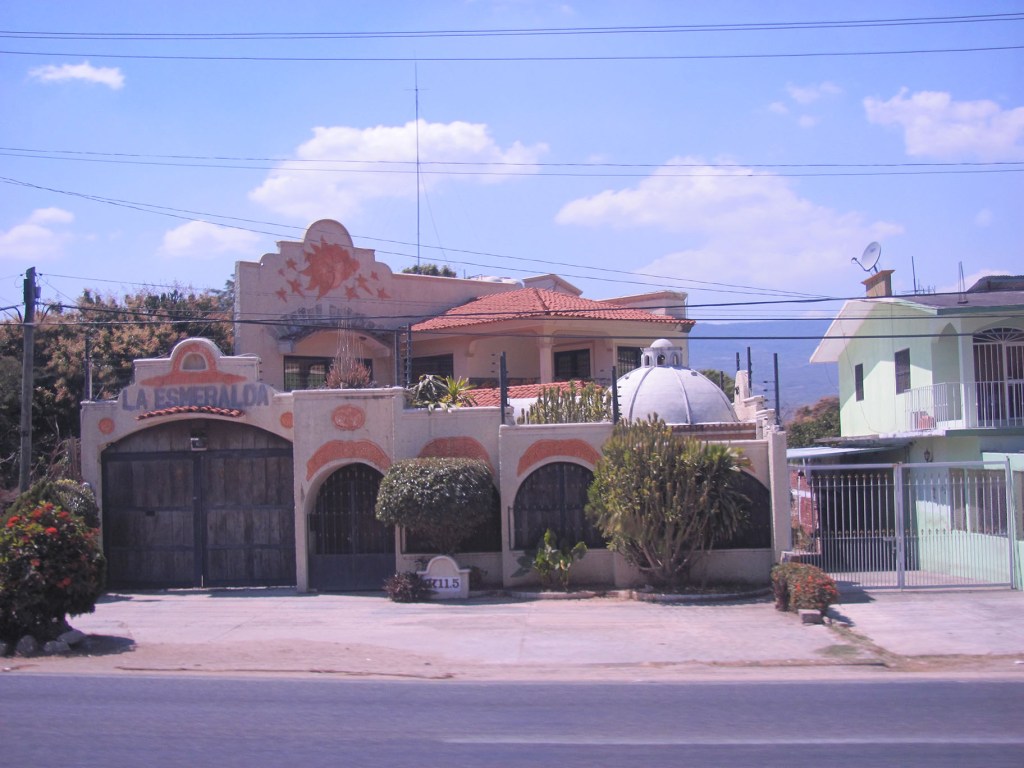
We got back on the bus and our journey continued, as the vegetation and landscapes were already different. On the way out of San Juan, there were many vegetable gardens, and we learned that the people here grew a lot of cabbage, carrots, pumpkins, corn, beans and potatoes – things much closer to our plantations, unlike what we had seen in previous days such as coffee plantations or mango trees.
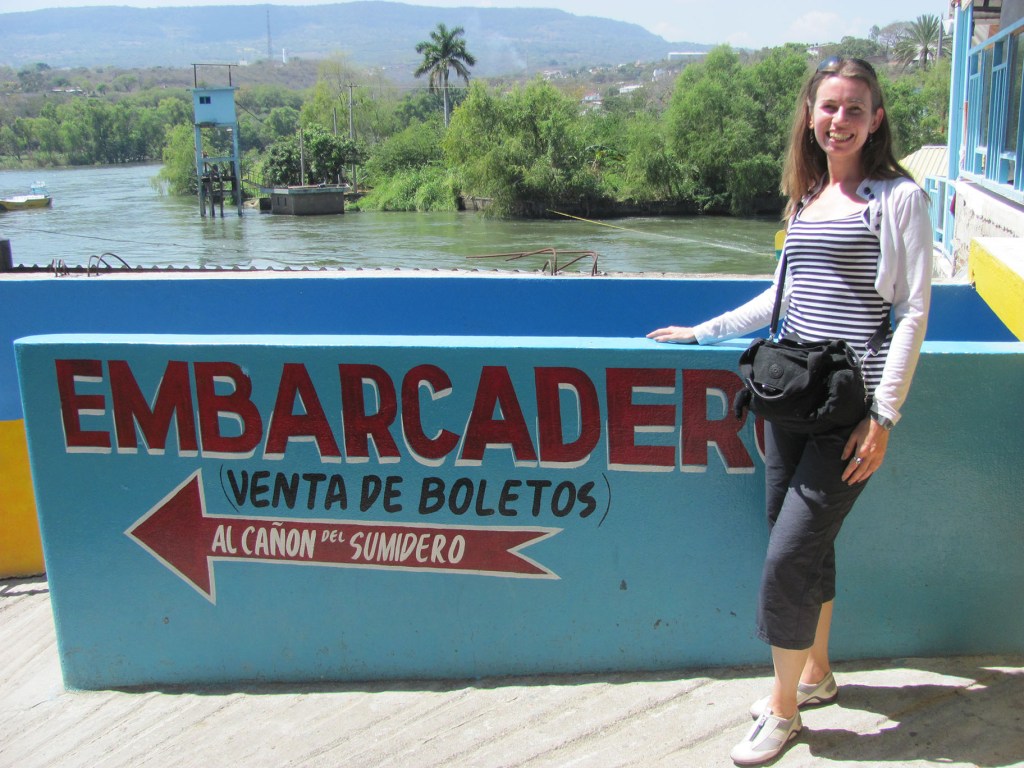
We traveled along the highway to the Somidero Canyon, with our road slowly descending from 2200 meters above sea level to 430 meters. So we would move to another climate zone, going back to the hot weather we knew from the day before in Palenque. In the area we were traveling to, however, there was a dry climate with rare rains, similar to the already familiar places such as Uxmal and Chichen Itza.
We passed by the small town of Chiapa de Corzo, which turned out to be one of the first towns that the Spaniards created there. It was famous for its colonial houses and church, which, however, we passed by, heading to the northern part of the city to the banks of the Grijalva River, also called the Tabasco River. This river was 480 km long, running from Guatemala to the Gulf of Mexico, at the Gulf of Campeche, which we had also already visited.

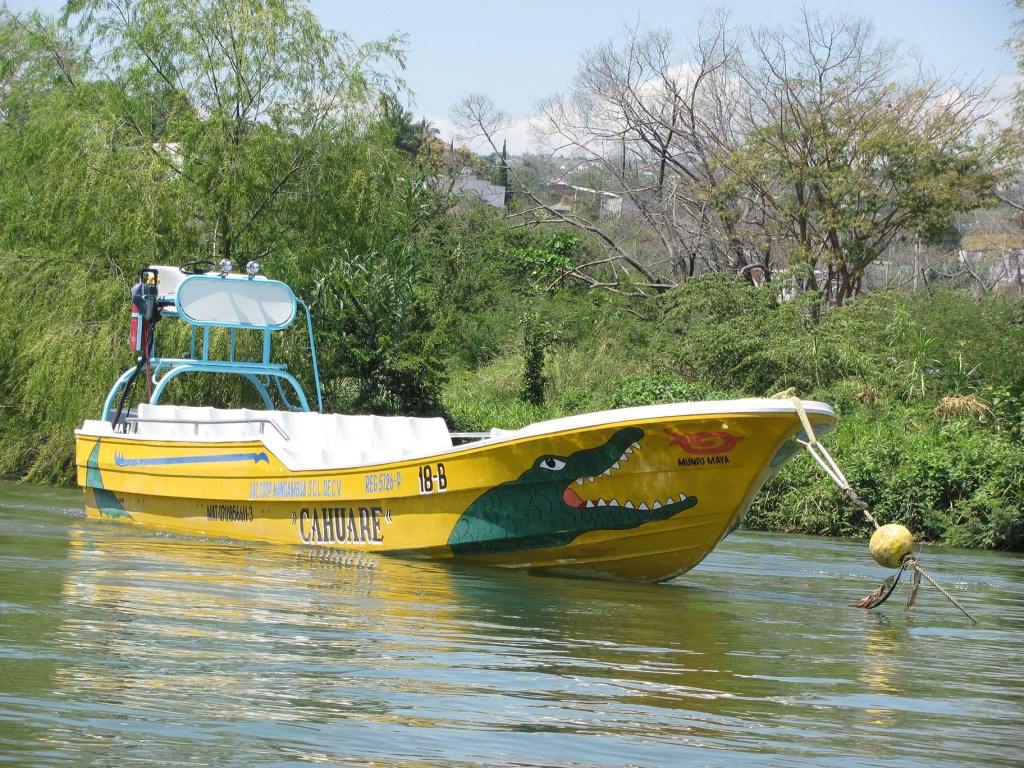
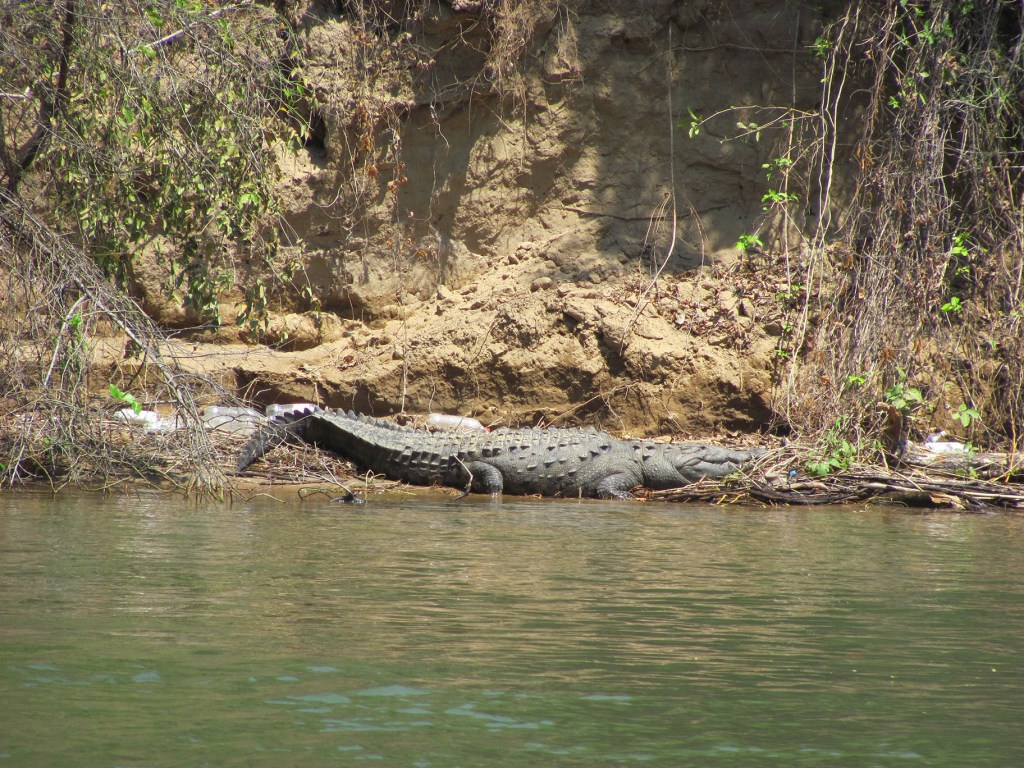
The bus parked under a thick shade, and we went down a stepped alley to the pier, where a motor boat with exactly 10 seats was waiting for us. The boat started slowly at first, but then increased speed and the water of the Tabasco River began to spray us. We traveled through a beautiful canyon, with the high cliffs rising steeply above us. The highest height of the rocks reached 900 meters, but the rest of the heights were not to be ignored. At the very beginning, the boat slowed down, directing our eyes and cameras to the shore, where a large crocodile was sunbathing. Later we met a smaller one who was swimming parallel to our boat. It was hot, but it didn’t even cross my mind to swim here, I didn’t even dare to dip my hand in the refreshing water, depriving myself of the cool splashes of water. A little further down the river, our boat stopped at a place with many black birds. I didn’t remember their name, but I took pictures of almost every one of them. In the middle of the canyon, the boy who guided the boat showed us the symbol of the city and the Sumireiro area, the photo of which was taken exactly from where we were standing. The river was very wide, the rocks were very steep and were a mixture of stone and greenery – a testament to the architectural skills of nature.
Sumidero Canyon was formed almost at the same time as the Grand Canyon in the United States, by a river that, unlike the canyon in Arizona, continues to flow through it today. The steep cliffs rose vertically upwards and formed in some places 90-degree turns along the narrow 14-km gorge.
According to legends, in the mid-16th century, hundreds of Indians chose to throw themselves into the canyon while defending themselves, refusing to bow to the newly arrived Spaniards.
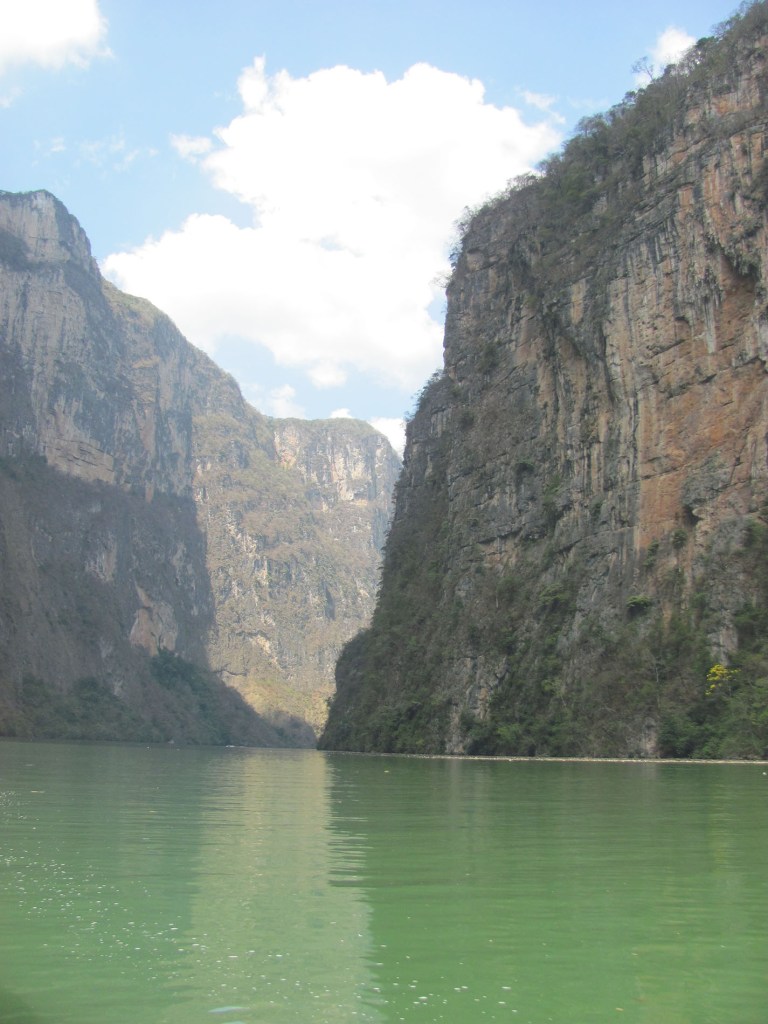


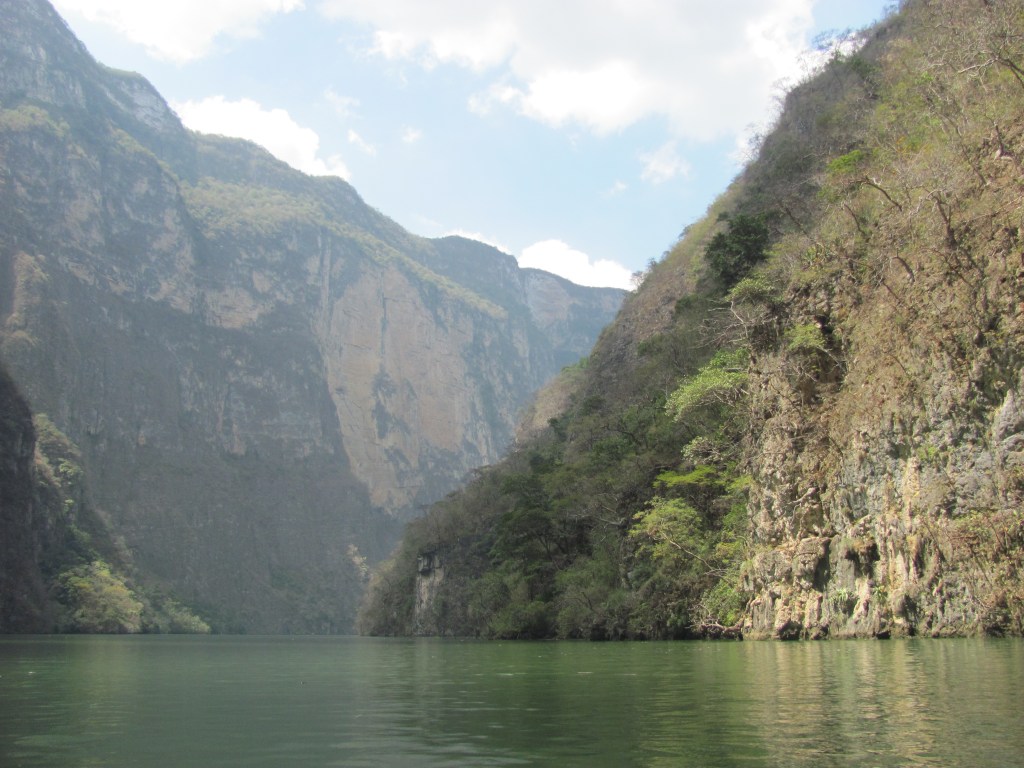


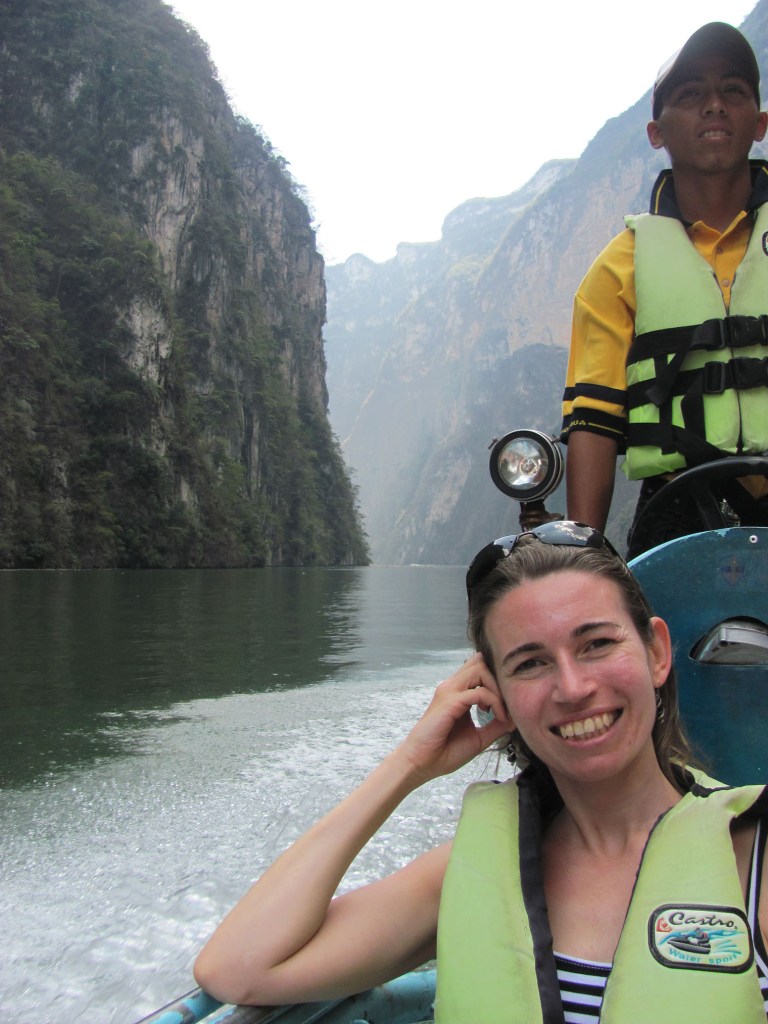


In one of the rocks, the water had sculpted a small cave, which people had filled with an icon of the Virgin of Guadalupe. It was beautiful. The Mayans have worshipped these rocks and the sacred mountain for centuries, and after the Christianization they continued this tradition. At one point in the rocks, the vegetation had taken on a bizarre shape, depicting the head of an unknown Mayan chief. High above the rocks there was also a restaurant overlooking the canyon. However, we did not manage to visit it after our walk in the river, which lasted an hour and a half. From the pier, however, we managed to buy ice cream, trying the uniquely strange ice cream with pineapple and chili.
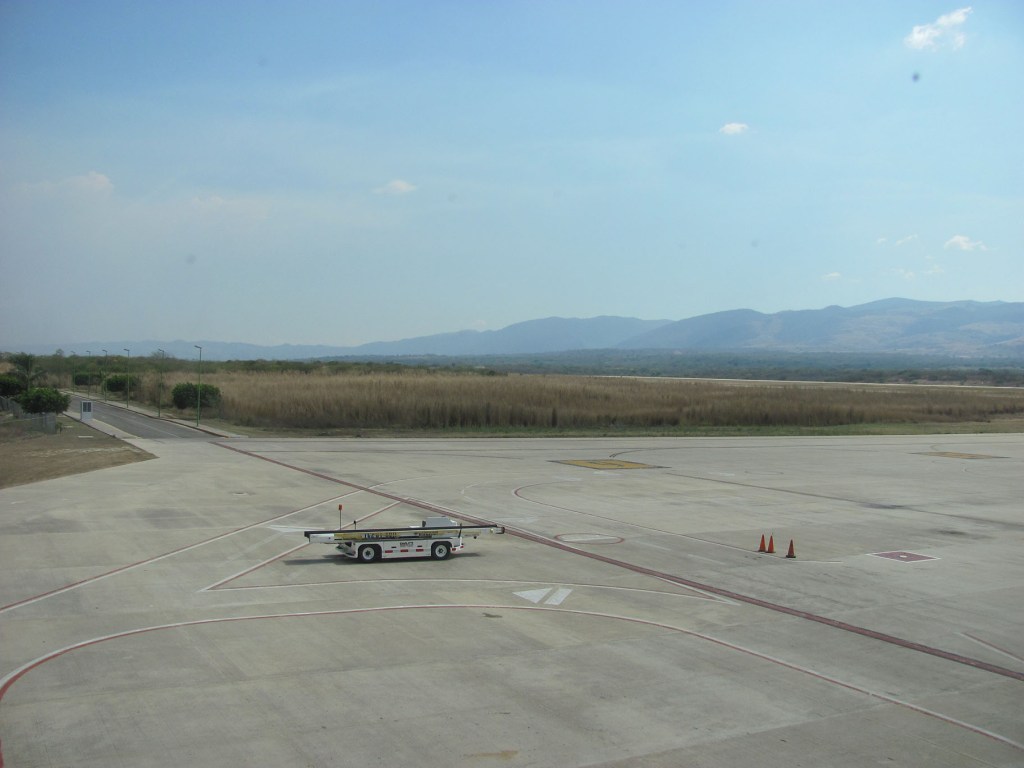
We boarded back into the bus, which took us to the airport in Tuxtla in less than 30 minutes. It was the smallest airport I had ever set foot on. There was only one sleeve, and our plane turned out to be even smaller. We walked from the airport to the plane, walking less than 10 steps. The stairs to the plane were even smaller, as the plane itself had 19 rows of 3 seats in a row. Seats A were by the window, and on the other side of the aisle were the double seats B and C. I was sitting in the penultimate row of 18C, not seeing anything through the dark window outside, it was evening and it was difficult to see anything in the twilight, and even more difficult to take pictures. At the airport, filming was banned everywhere, similar to smoking. Nowhere did I see an information board with the numbers of the landing and departing flights, only prohibitive signs for taking pictures and smoking were hung. In the bar at the airport, we ordered a side drink – Taslate, which has a rich corn flavor. I had eaten boiled, roasted corn, even popcorn, but I had never drunk corn before, and I was very pleased that I tried it.
Our flight to Mexico City lasted an hour and twenty minutes.

GENERAL INFORMATION ABOUT SAN JUAN CHAMULA:
Location: San Juan Chamula is located in the Mexican state of Chiapas in close proximity to San Cristóbal de las Casas.
Population: 76,941 (2010 est.)
Altitude: 2200 m
Official language: Spanish
Climate:mild mountain climate
Zone:UTC-6
Currency:Mexican Peso (MXN)
Additional information: San Juan Chamula (Chiapas): How to Visit + Tips | México (voyagemexique.info)
TRIP TIPS FOR SAN JUAN CHAMULA:
Best time to visit: all year round, with the warmest month being March and the coldest months being January and February with temperatures of 11 C.
Typical foods and drinks: while in the Chapas area, try tasajo (slices of marinated beef with chili sauce), chicken with mole (a sauce made from hot peppers, spices and chocolate) and pork with pipian (pumpkin seed sauce). For drinking, you can try the corn drink Taslate.
Places to visit: the church of San Juan Baptista, the market, the ruins of the old church of San Sebastian and the cemeteries attached to it, etc.
 TripTips