PALENQUE – THE LOST CITY IN THE JUNGLE
MEXICO – PART 6


The day is known from the morning, and what better morning than the one in the sunny Mexican Gulf. We greet the sunrise on the beach, swimming in the warm Caribbean waves and collecting seashells. At breakfast, we focused on fresh fruits, fried bananas and pancakes with maple syrup, which here in Campeche were prepared uniquely delicious.
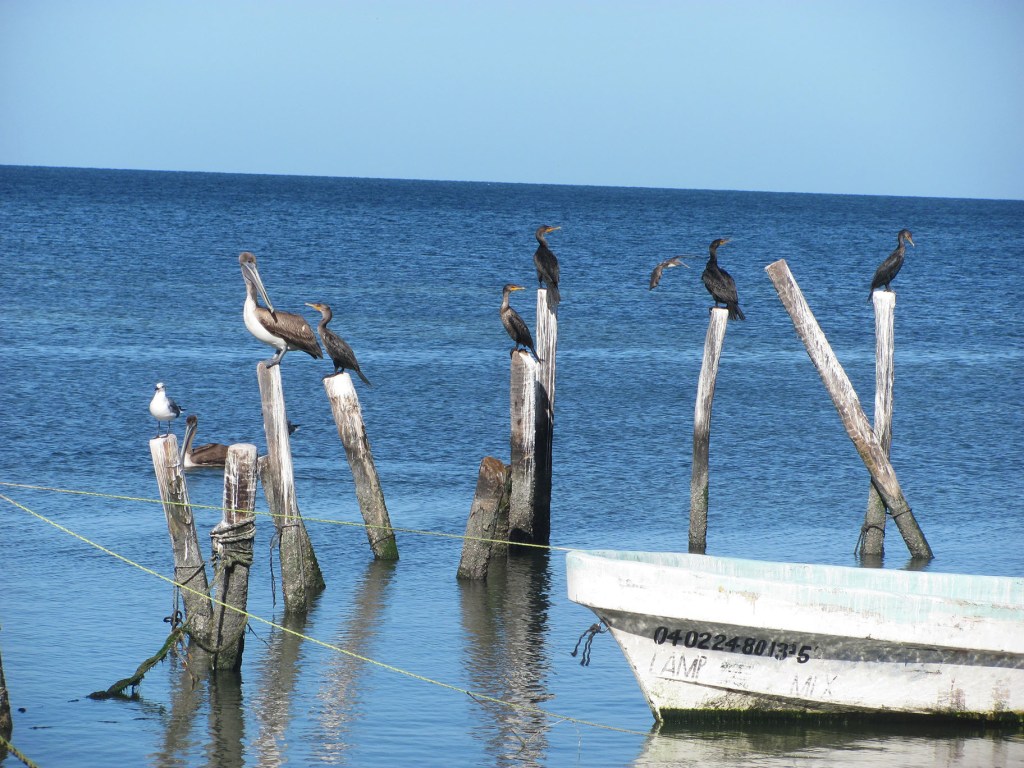
At 08:00 our bus left the hotel, and moving along the sea we saw many pelicans and other unknown birds swimming in the water. We learned that the white pelicans were tourists coming from Canada in November and coming back at the end of March, and the black pelicans were locals. We had a great time seeing all the birds, most of which, however, had just woken up and were currently smoothing their shaggy feathers. It was pleasant to travel along the sea, which, however, soon disappeared and we headed inland, traveling to the city of Palenque – the lost city in the jungle.


We passed by ranches and plantations with different sizes, with many grazing cows and goats. The Mexican cows looked much skinnier than ours, but the morning milk I drank at the hotels tasted pretty much the same. We learned that a cowboy in Spanish was vaquero, which came from the Spanish word vaca – cow. However, life on the ranch was not very popular with the young people, who gradually moved out and went to the big city. One of the reasons for the emigration was the need for studying.
The educational system in Mexico encompasses several main stages. In the beginning, there are kindergartens for children up to 6 years old, after which primary school (primaria) begins, covering the first six grades. Primary school (secundaria) followed, the next three classes (from 7th to 9th grade). After that, 15-year-old students could start working or continue studying, as about 50% of them did, in the next third stage of preparatoria from 10th to 12th grade, which was something like our high schools. After it, they could apply to university.


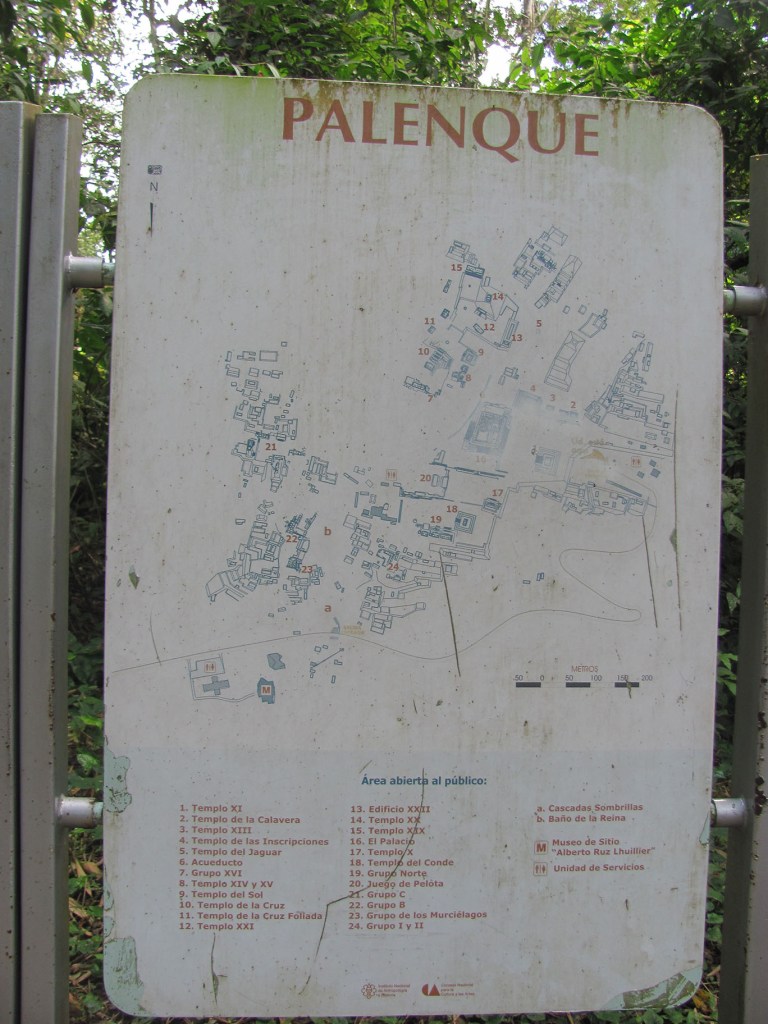

While we were traveling by bus, we watched a movie about Palenque – the huge Mayan metropolis that flourished in the 7th century AD. The ruins dated from 226 BC to 799 AD, when the city was abandoned and literally swallowed up by the jungle. For more than 1000 years, the city was completely forgotten, after which in the 18th century it was discovered by archaeologists. It was believed that the original name of the city was Lakamha’, which in the Mayan language meant Big Water, and derived from the nearby waterfall, which we were able to see after the ruins. The city also bore the name B’aakal, which means “bones”, and could also be associated with the 68-year-old king Pakal (615-683). It was his crypt that was one of the most spectacular constructions in Palenque. Most of the artifacts and jewelry found in his grave were preserved and housed in the Museo Nacional de Antropologia, which we were going to visit in a few days in Mexico City. As for the name Palenque, it meant “wooden fence” and was given by the nearby city of Palenque, 200 years before the ancient ruins were discovered.
The video showed us more about the excellent knowledge of the Mayans in geometry and astronomy. Then the guide told us how the handful of Spaniards managed to conquer these huge empires. The colonization of Mexico was associated with the name of Hernando Cortez and his crew of 508 soldiers who sailed from Cuba in search of new treasures. When they arrived, one of his subordinates, General Alvarado, attacked a Mayan temple, but Cortez did not approve this, realizing that their expedition could end very quickly. He met Aguilar, a shipwrecked man who had spent nine years as a slave to the Mayans and had learned their language and culture well. The first military attack was against the Tabasco tribe, where the Spanish quickly demonstrated their military superiority. The tribe obeyed Cortés and supplied them with goods, and even more valuable women, including the translator Doña Malintzin, who knew both the Mayan and Aztec languages.
Cortés took advantage of the beliefs of the Aztecs and the expected appearance of their god Quetzalcoatl by appearing on their sacred day in 1519, and the Aztecs received them in their sacred city of Tenochtitlan, which the Spaniards easily captured, not only with the rifles they carried, nor with the horses and evil dogs, but especially with diseases against which the Aztecs were not immune. nor cured. The Aztecs were also conquered with the help of betrayals by the other tribes, who were looking for a way to get rid of them, not realizing that they themselves were then enslaved. Cortez managed to turn the tribes against each other and, following the Divide and Conquer formula, took over the country. In 1535, the Viceroyalty of New Spain was founded, which became the most important Spanish colony in the New World.
At 11:20 a.m. we passed over the huge Chum River, and on the way we managed to photograph the local cattle (cows and goats), and at 11:55 we crossed the even larger Usumasita River, with strange and exotic trees on the sides of the road, with bushes dominating. On the way, I already felt that I was far from home – the landscape became different. We passed the huge trucks that I had only seen in American movies. There were pickup trucks in which people were traveling in the back in the open. There were also roadside merchants selling corn and fresh juices, and roadside houses looked poorer and poorer.
At 12:40 we entered the city of Palenque, where there were many hotels. The city of Palenque itself was not old and had no colonial buildings. We passed the hotel where we were going to stay and headed in the direction of Mount Chiapas. The road was full of turns, so we drove slowly, stopping at the very entrance to the ancient city of Palenque, surrounded by greenery. It was the jungle that had managed to preserve the many temples and buildings.

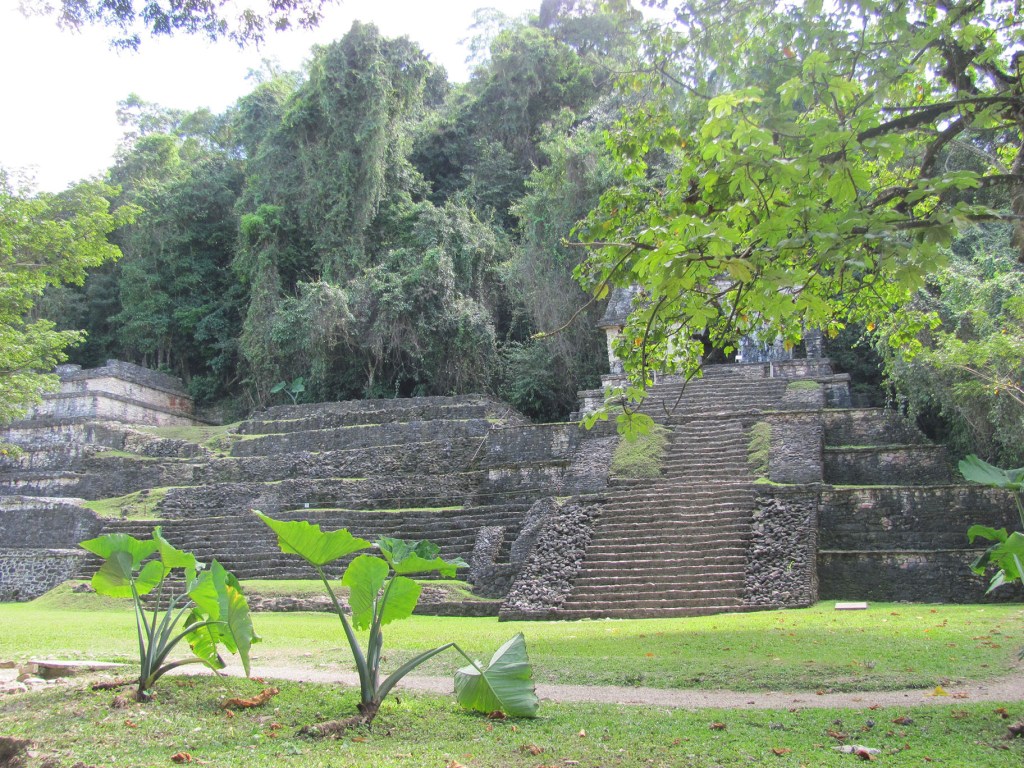


The first pyramid we saw was the so-called The pyramid of the skull. At the back of the pyramid there was a carved embossed rabbit skull, which we did not manage to see, but we managed to climb the pyramid, enjoying a wonderful view of the ancient city of Palenque. We also took pictures in front of its arch, which was not very well preserved, but turned out to be very photogenic.
As soon as we descended from this pyramid, we immediately climbed to its neighboring one, called the Temple of the Red Queen. The pyramid was erected on the base of two old buildings, and here the inside of the pyramid was opened for visiting, where archaeologists had discovered a sarcophagus of a woman laid with many honors, similar to the tomb of King Pakal II in the temple of hieroglyphs. There was no evidence of the woman’s names, it was only known that she was 40 and a few years old, and she was covered with luxurious fabrics and jewelry (including a tiara, earrings, bracelets on her hands and feet, and a total of 1000 pieces of jade, malachite and sea shells). A malachite mask was placed on her face. Archaeologists assumed that it was either the wife or the mother of Pakal II, whoever she was, there was no doubt that she was an important person in the Mayan society of Palenque. Next to her sarcophagus there were also the remains of two persons accompanying her, who apparently sacrificed themselves to accompany her to the other world. The remains were of a woman and a child.
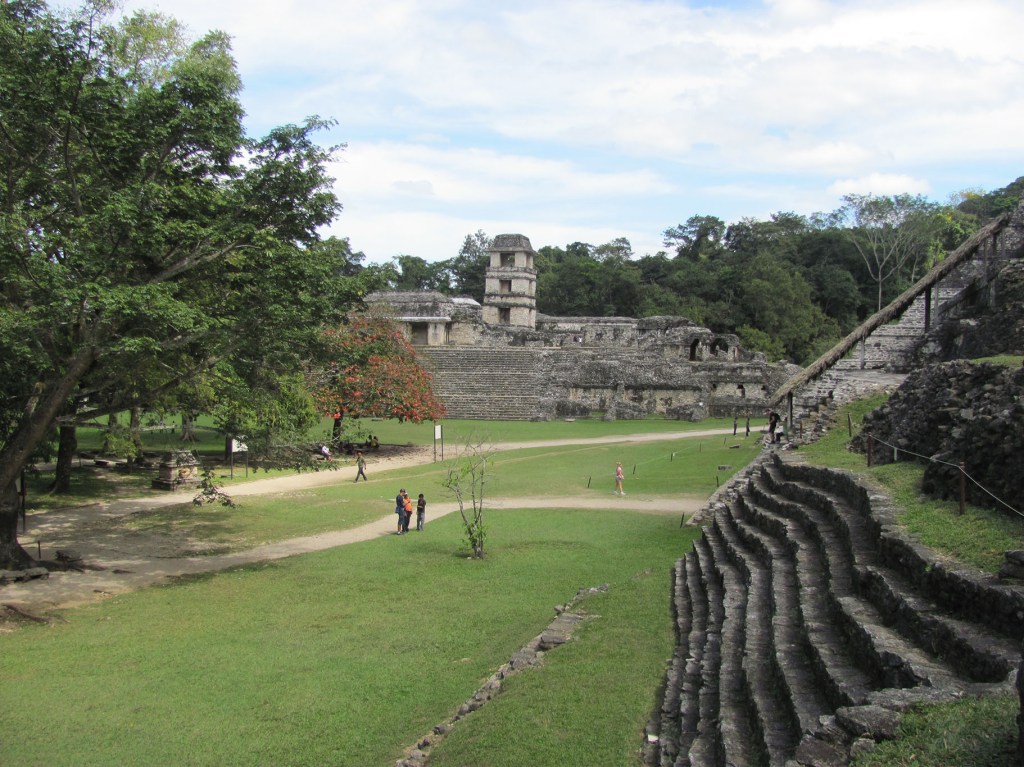
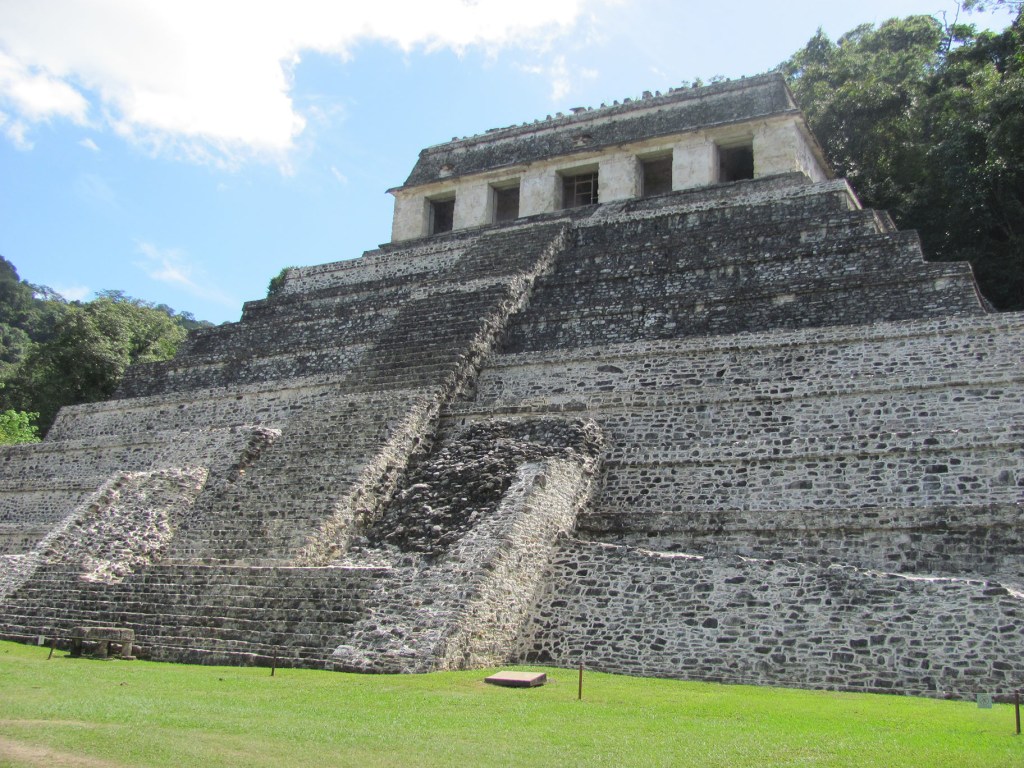

Leaving this pyramid, the group and I headed to the next one, and without waiting for the guide to tell us more about it, we climbed its steps curiously and were delighted with the wonderful panorama. This pyramid was called the Great Palace and from it protruded a high tower, probably an observation tower. Subsequently, we learned that from this tower the kings and shamans of the Mayans watched the sunset of the sun, which during the spring and autumn equinoxes descended just above the temple of hieroglyphs. There were many corridors and rooms that we did not manage to see, but we learned that there were galleries, steam baths, toilets and of course – the four-storey tower. The Mayans were indeed skilled builders, like the Romans, but unlike them, they did not have metal tools, but only those made of stone, bone and wood. They erected beautiful temples, huge cities and excellent roads with which they connected their hundreds of cities.


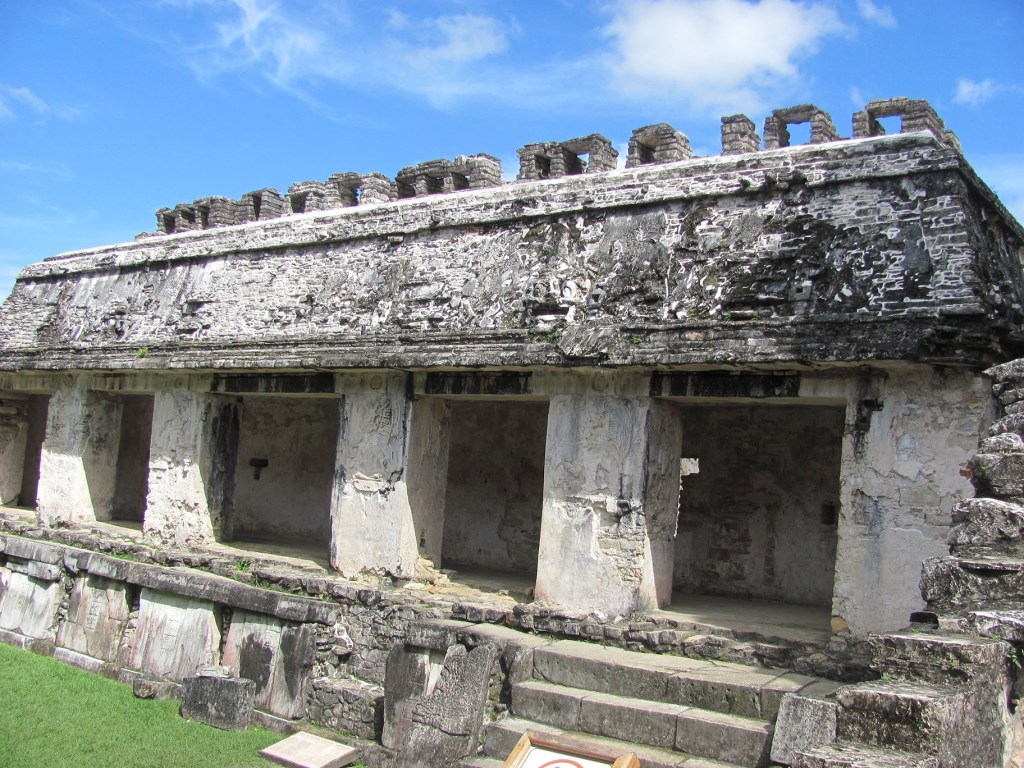

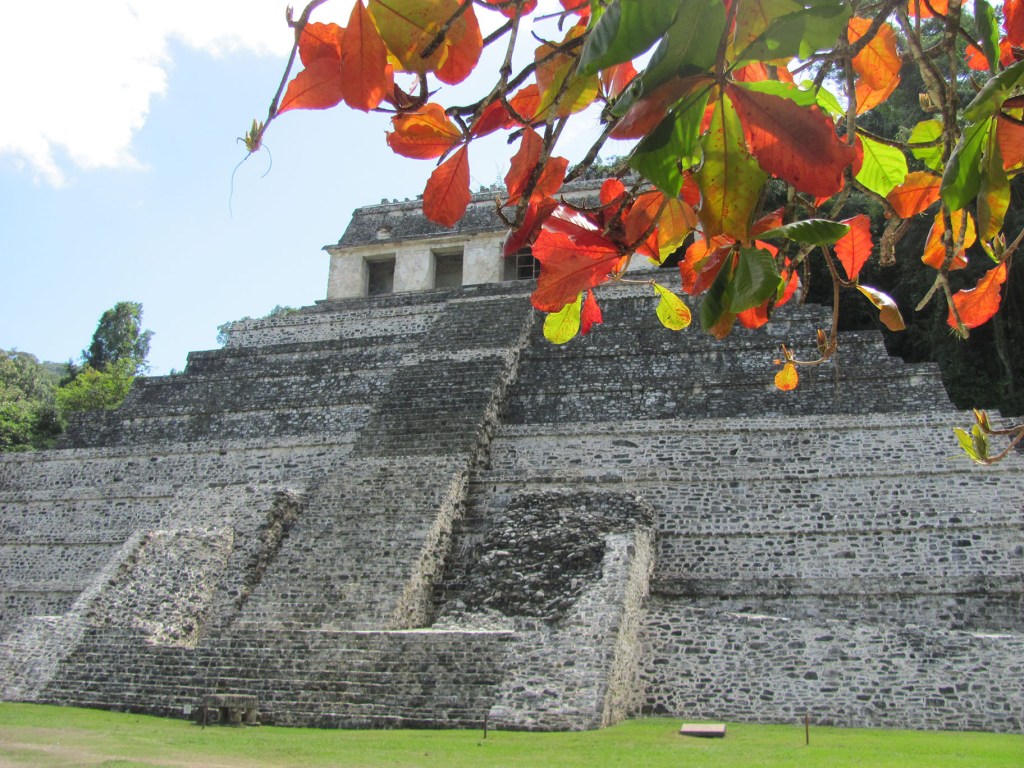

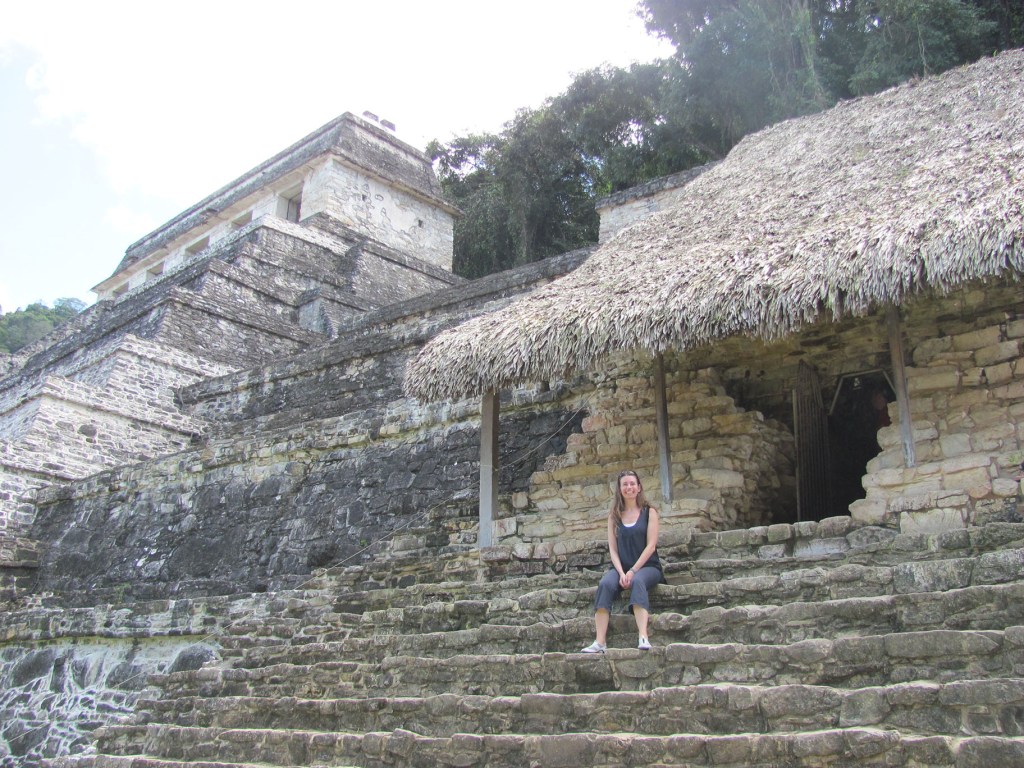

In general, Mayan cities were quite similar – each of them had a central market, a large square where people gathered, huge pyramids, temples with playgrounds and a palace of the ruler. The Mayans erected palaces for their rulers, and each city was ruled by a single family, and the government was passed on to its generation.
According to archaeologists, however, the so-called. pyramid-palace in Palenque, was used as an administrative building and a court. In court, the evidence was examined and when someone was found guilty, he was immediately convicted. The Mayans had a very strict and fairly fair legal system, which they respected. If someone stole something and was caught, he became the servant of his victim. If the crime was light, the defendant was cut short. In some cases, all the possessions of the guilty person were sold at auction.
The Mayans wrote everything down on the walls of their temples and columns, but archaeologists still couldn’t read it all. At the moment, only 80% of the texts have been decoded, and later we learned that one Russian helped to decipher them. In any case, the Mayans had the most advanced form of writing in the Americas. They used hieroglyphs consisting of more than 700 symbols that meant a sound, a word or a syllable. The Mayans have left books dedicated to their gods, leaders, their daily lives and special celebrations. Unfortunately, however, about 90% of them were destroyed by the Spanish colonizers.
We headed to the next pyramid, and on the way there were merchants selling souvenirs, among which I chose a parrot feather beautifully painted with the pyramid in Palenque, the beautiful waterfall that we were about to see and of course a colorful parrot, probably a prototype of the bird from which the feather was torn off. This souvenir was placed in a beautiful frame and seemed to me a wonderful souvenir of this wonderful place.


Our next stop was in front of the Temple of the Sun, where a shield with the image of the sun was found. We did not see it, but on the other hand, we saw an even more beautiful view of the entire ancient city of Palenque from the top of the sun pyramid.
The most famous pyramid in Palenque was the Temple of Hieroglyphs, on the walls of which there were relief texts, and in which the sarcophagus of King Pakal was found.
However, I was more impressed by the aqueducts that the Mayans had built hundreds of years ago. The ancient name of the city was “the place of the great waters”, which originated from the 56 springs and the large waterfall in the immediate vicinity. In order to be able to control the water and prevent sinking and erosion of the earth, in addition to aqueducts, the Mayans also created channels covered with stones through which the water moved. A large part of the aqueducts were underground, which helped Mayans to preserve more space on the ground. Unlike other cities we had visited before, where there was often a drought, the water in Palenque was abundant, and continues to be full of water today.


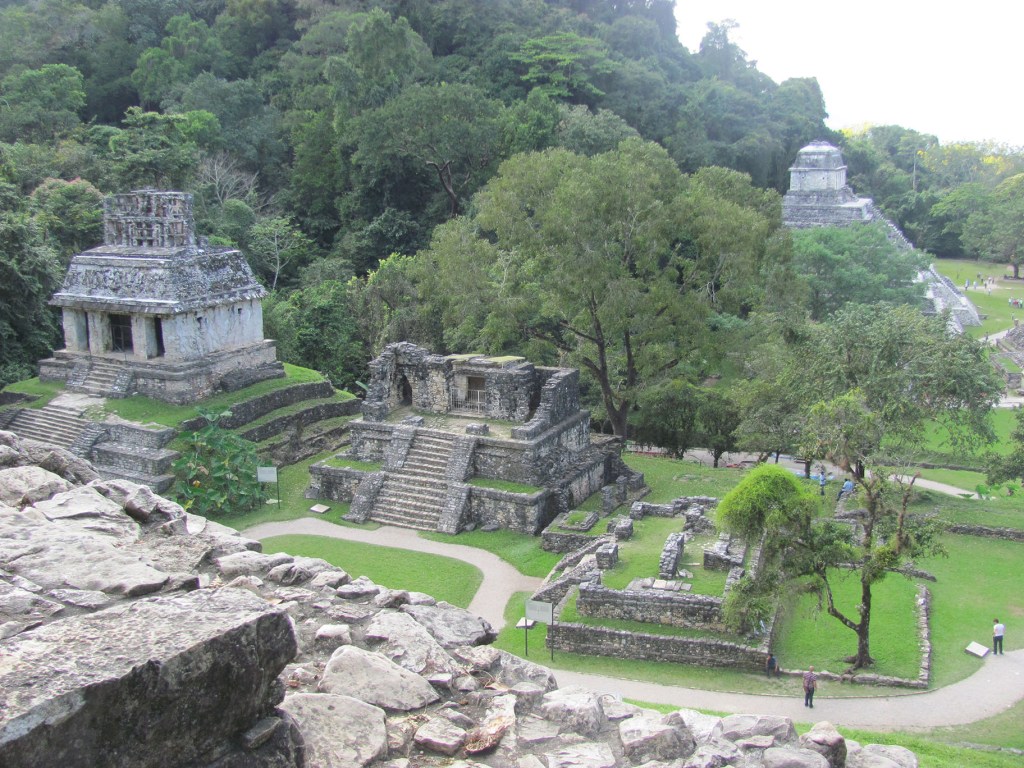


Around the town there was a dense jungle with a trail for tourists. The guide told us to look out for the famous howler monkeys that lived there, but unfortunately we didn’t see any, although we could hear their sounds in the distance. I regretted that I didn’t come prepared and didn’t carry bananas with me, if I had, I probably would have taken more exotic photos. The forest path led us first to the waterfall, which was a real natural treasure, then we descended to the so-called complex of bats consisting of stone buildings, most likely residential buildings, under which graves were found. The Mayans did not have cemeteries, but preferred to be buried under their homes, so they did not separate from their loved ones.
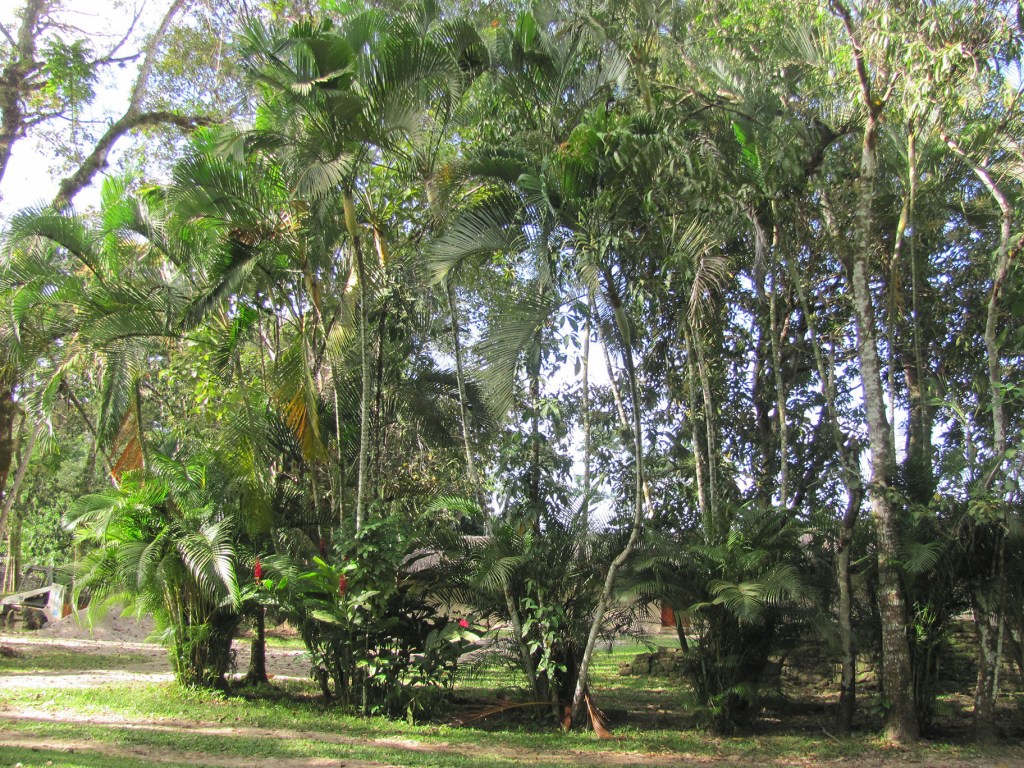
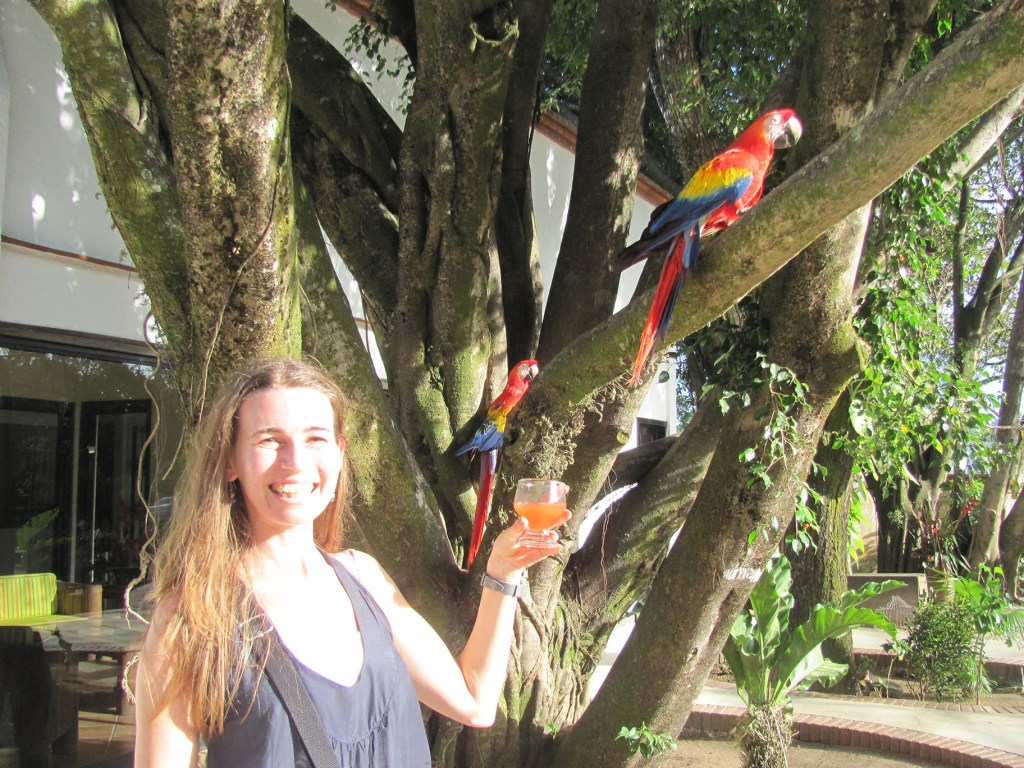
However, we separated from the jungle, crossing a wobbly bridge over the river and reaching the bus parking lot, where we got back on the bus, which quickly took us to the hotel, located in the modern city of Palenque. At the hotel, we were welcomed not only by the service staff, but also by a variety of birds that calmly walked through the palm garden. There were gorgeous and colorful macaw parrots, as well as toucans with even more colorful beaks. Everyone was croaking in a different language, probably in Mayan, which we did not yet speak, but from the way they posed with us, we understood that they loved tourists.


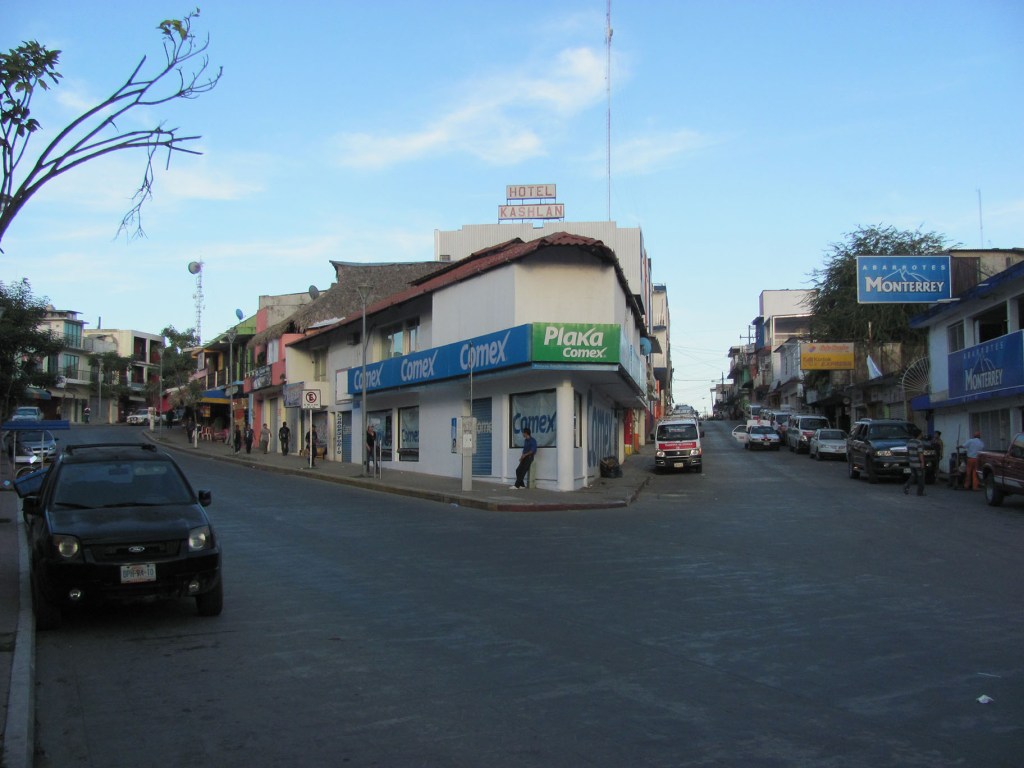
It was late afternoon, but we had time to walk around the center of the city of Palenque, which was not an old colonial city and therefore did not have beautiful colonial buildings. After all the beauties seen so far in Mexico, the city of Palenque had a hard time impressing us with its few shopping streets.
We had dinner in the hotel restaurant, where we saw and felt mosquitoes for the first time – they were much smaller than the Bulgarian ones, but they did the same job. Fortunately, the detergent we were wearing worked well and we had a quiet dinner outdoors, without waving our hands.
After so many wonderful landscapes and experiences during the day, we had no time left for dreams, we slept soundly until 06 am, when the alarm clocks on our phones woke us up.
Breakfast at the Maya Tucan Hotel was not on large buffet tables, but we had to choose between different meals, such as omelets, pancakes, etc. After breakfast, we said goodbye to the beautiful feathered hosts – the croaking parrots and the even louder toucans. One of the hotel employees even offered to take a picture of me with a toucan, putting it on my shoulder. It was a great start to the day and my smile didn’t leave my face all day long.




GENERAL INFORMATION ABOUT PALENQUE:
Location: The ancient city of Palenque is located near the Usumachita River in the Mexican state of Chiapas.
Altitude: 150 m
Official language: Spanish
Climate: tropical climate
Time zone: UTC-6
Currency: Mexican peso (MXN)
Additional information: http://www.visitmexico.com/en/palenque
TRIP TIPS FOR PALENQUE:
Best time to visit: throughout the year, with the ruins open to the public every day from 08:00 to 17:00, with the last visitors allowed at 16:30.
Typical food and drinks: 3 km from the ancient ruins there is a delicious restaurant where you can eat before your walk around Palenque. The rich heritage of Palenque is also preserved in the local cuisine. Traditional dishes are Tamale Style Chiapas, Duck with Chilmol sauce and tomatoes, spicy smoked fish, etc. Among the desserts, we recommend the honey cakes, which are
offered after dinner and have a healing effect.
 TripTips