MERIDA
MEXICO – PART 4


There are several cities in the world with the name Mérida – in Spain, in Venezuela, in the Philippines, but Merida in Mexico surpasses them all in size, and probably in beauty. Distinguished as the capital of the Yucatan region, Mérida was built on the foundations of an ancient Mayan city, and according to some historians it is the oldest occupied city in the Americas. Today it is occupied by only millions of tourists, who come here attracted not only by its beauty, but also by the nearby well-preserved ancient Mayan city of Chichen Itza. Merida is also known as the “white city” because of the many white buildings, and maybe because of the cleanliness that is really high-level here.
We arrived in Mérida at dusk and immediately checked into the Hotel El Castellano****, which fascinated us with its huge and beautifully decorated rooms. The city of Mérida had preserved a significant part of its colonial architecture and our room was set in this style – with the wooden beds and cabinets, with many drawers. From the window we could see the beautiful
cathedral, that invited us to go out and see it, and it was even more majestic. We especially liked a bookstore in Merida where there was a discount on tourist books and we bought several guidebooks, hoping to have time to read them and learn more about the history of Mexico. Back in bed, however, we quickly fell asleep, carried away by the wonderful experiences of the day.


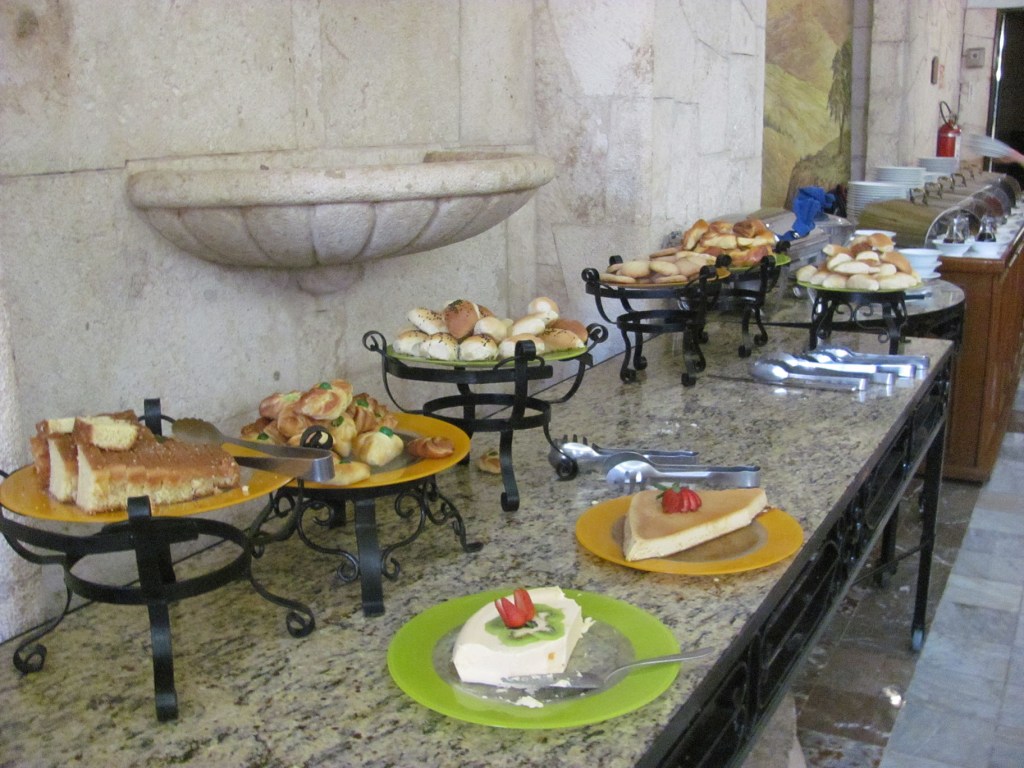
The breakfast at the hotel was stunningly rich – with lots of fruits, bakery and confectionery products, dishes and a chef preparing omelets and other specialties of the moment. What does a person do when the variety is greater than his capabilities – does he eat less or does he choose and eat only one dish? We did not make any of them. We piled our plates with many fruits, and I added also some croissants and pancakes, After that, however, I ate absolutely everything. I especially enjoyed the pancakes with maple syrup. The fruits were also very sweet and fresh, with an emphasis on watermelon, melons, mangoes, avocados, bananas and all the others.
After we got up at 06:00 and had breakfast at 07:00, at 08:00 we were already on the bus that took us to the central square, 200 meters from the hotel. We got off right in front of the house of the conquistador Francisco de Montejo, who had founded the city in 1542. He named it Mérida because it reminded him of the ruins of the Roman city of the same name in Spain. Today Mérida was the largest city on the Yucatan Peninsula and the capital of the state of Yucatán. With more than 900,000 people the city is ranked12th among the most populous cities in Mexico.
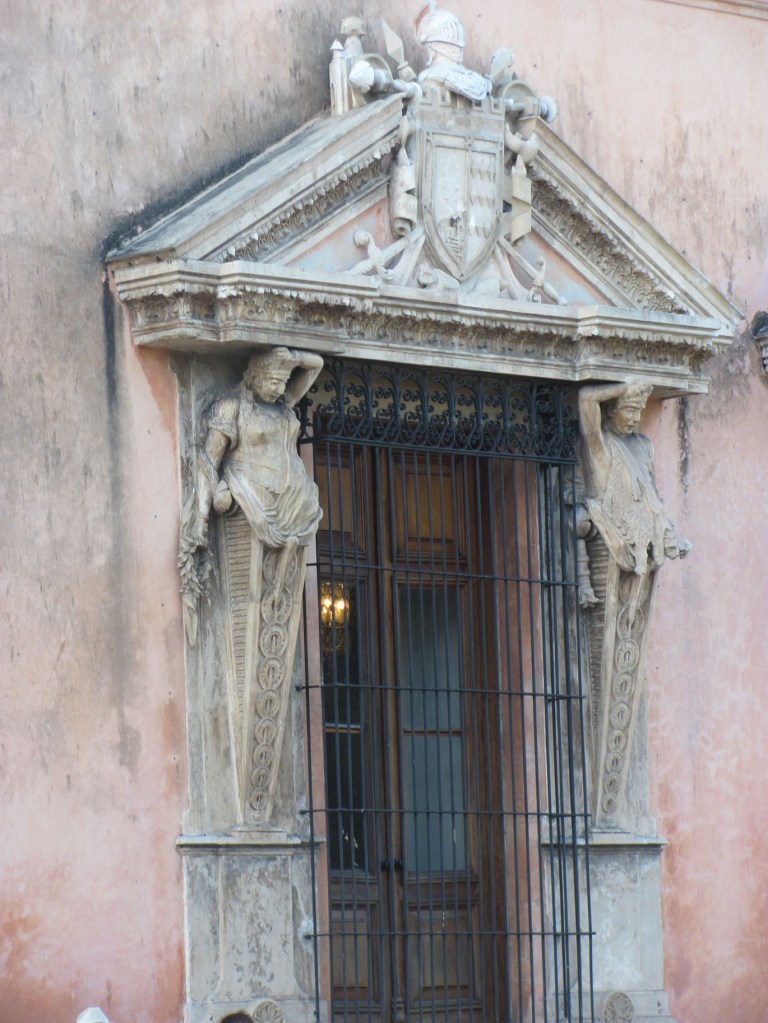
Montejo’s house was cluttered with stone figures and baroque ornaments, but I personally did not like the female figures that decoratively supported the windows and arches. With them, it was as if Montejo wanted to stand out as the master of all people. As much as I liked the Spanish language and the Spaniards, in Mexico I felt very sorry for the disappeared developed civilizations through their fault. When the Spaniards came to this continent, they had the mission to “literate” and civilize the “local savages”, who turned out to have a more ancient and developed culture than theirs. However, while the Mexicans developed culturally and scientifically with astronomy, mathematics and architecture, the Spaniards developed their weapons and rifles, bringing with them various of diseases that fell the great civilizations.

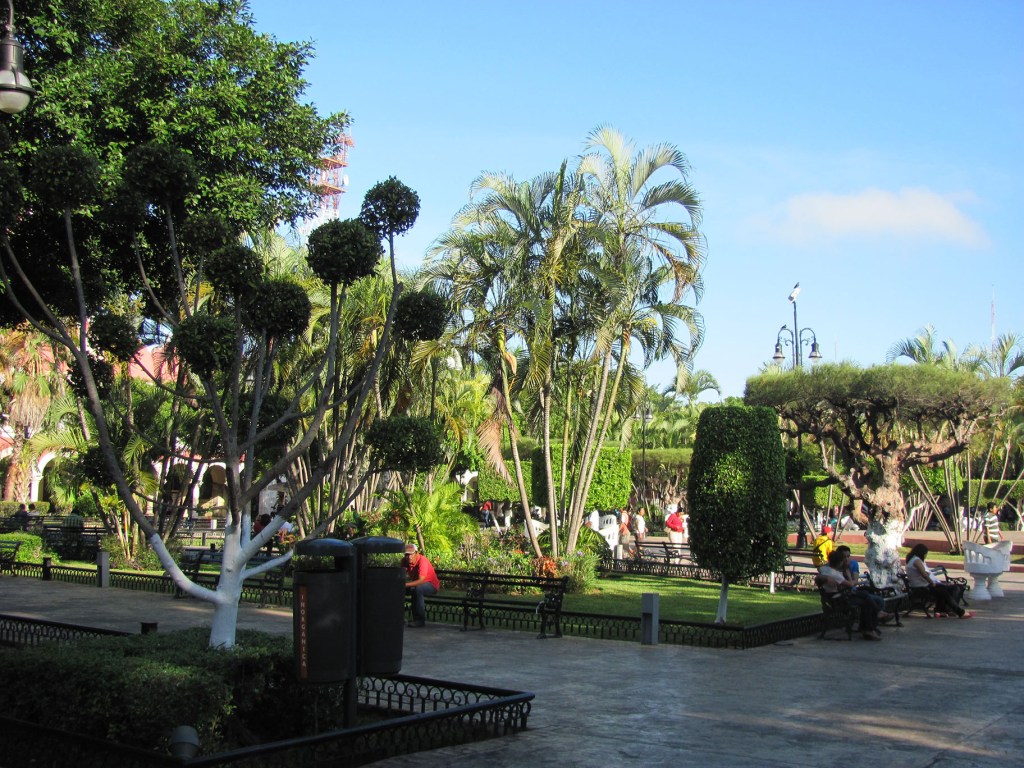
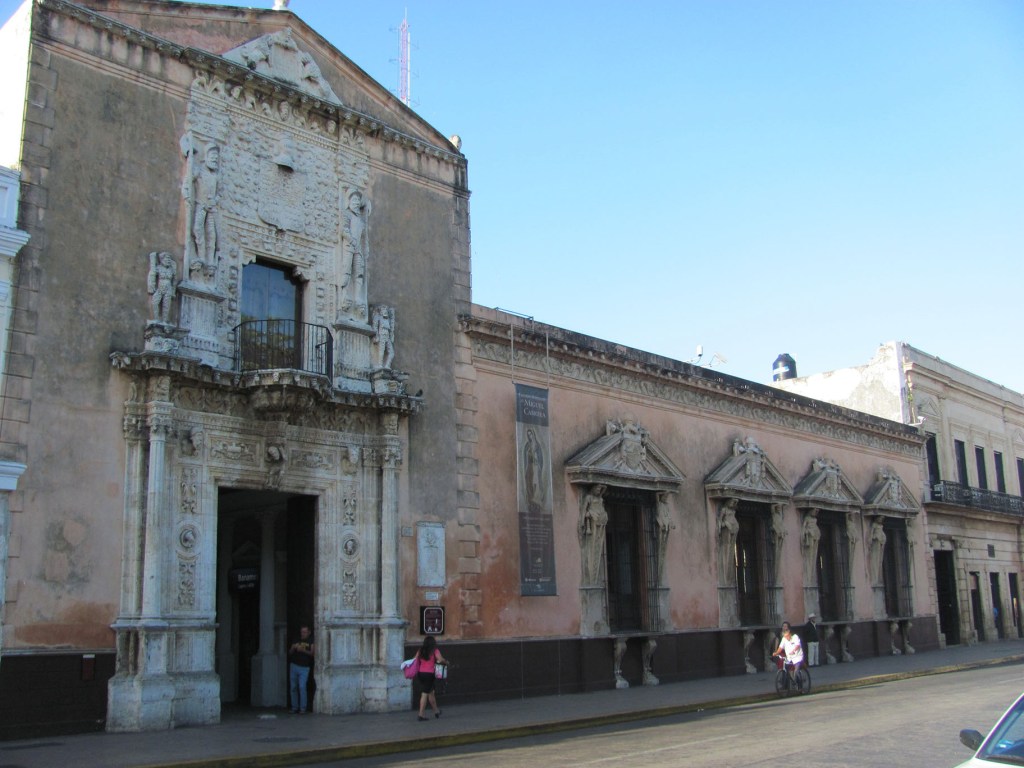


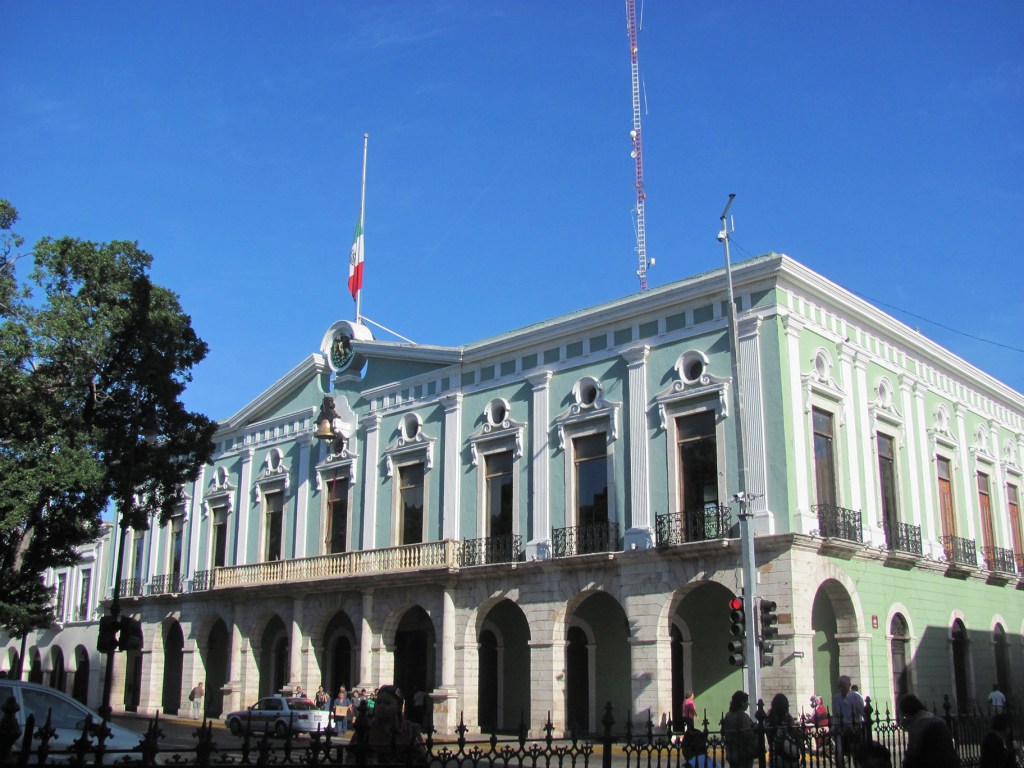
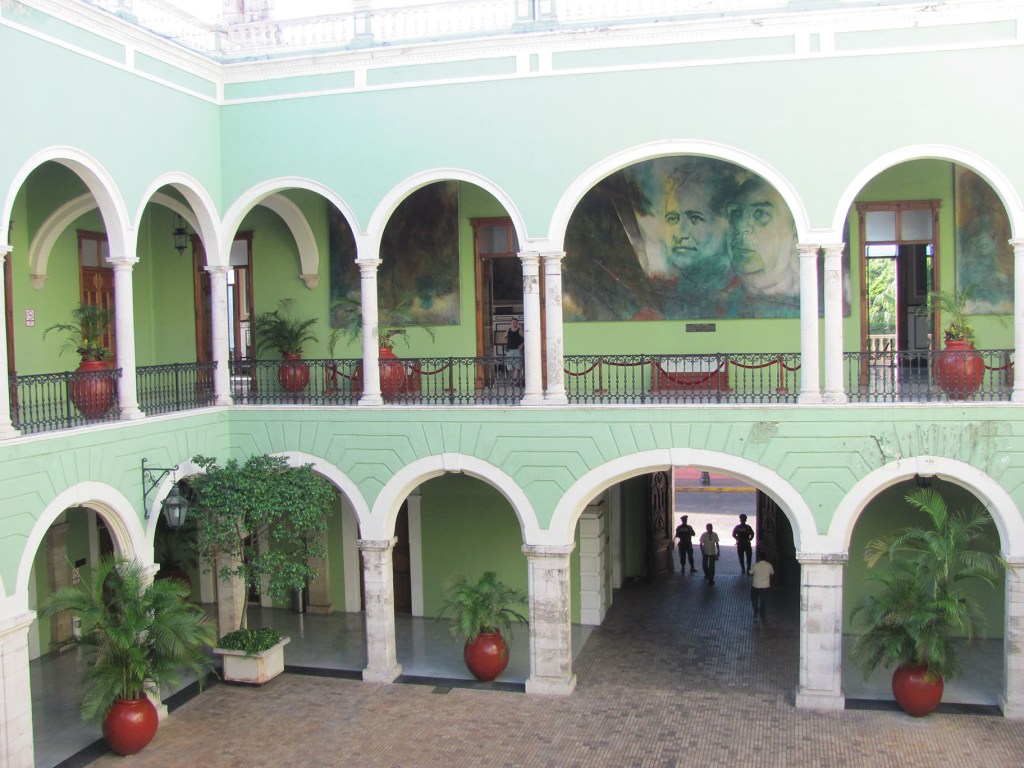
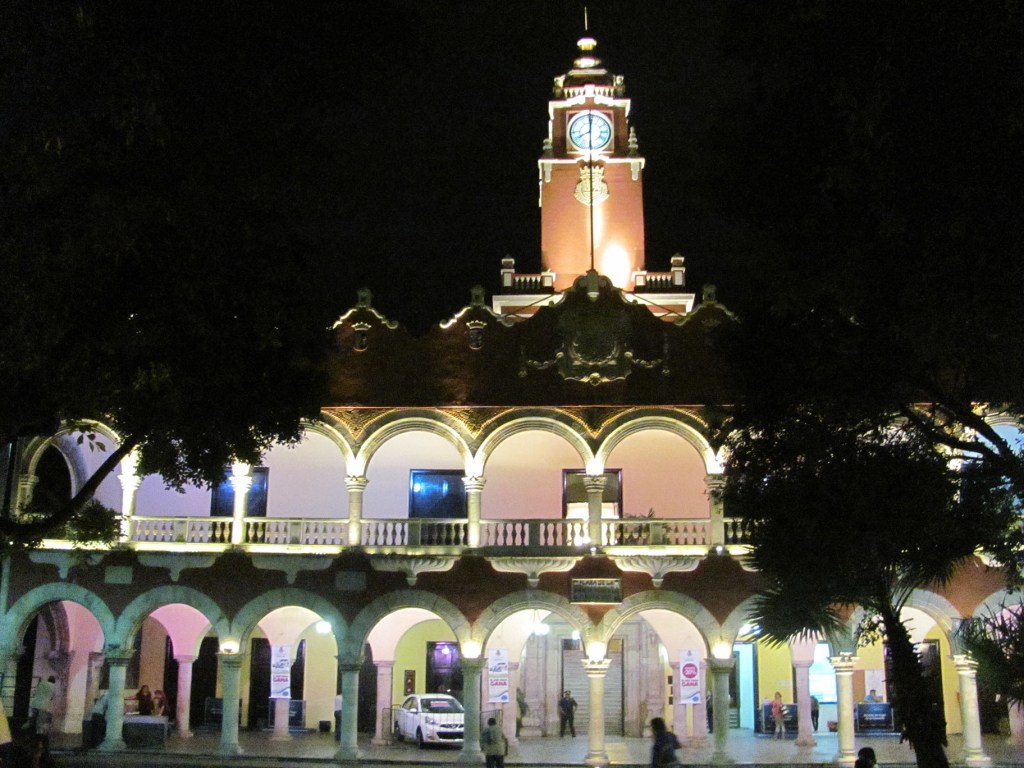
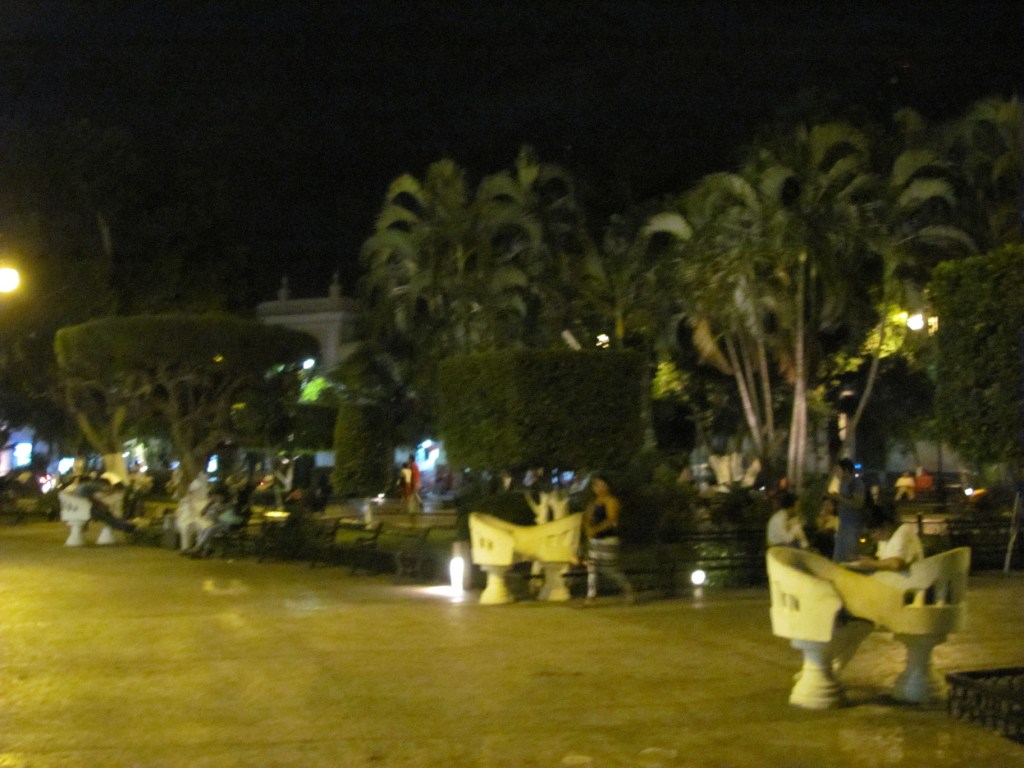
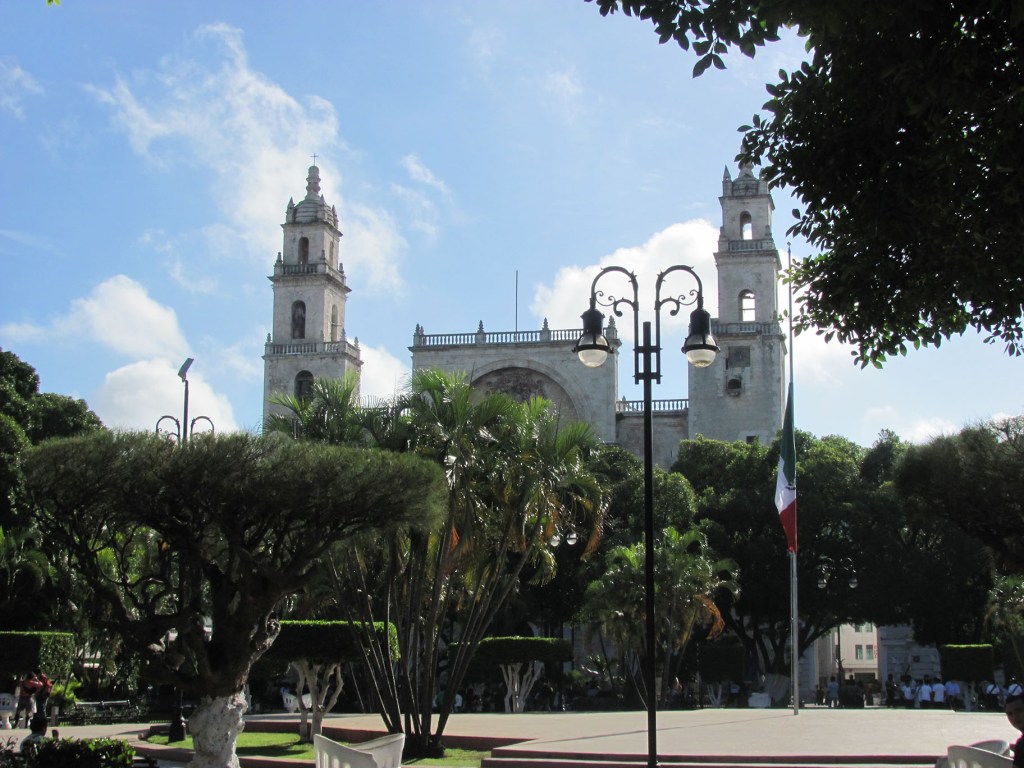
If Montejo’s house didn’t impress me, I can’t say the same about the town hall, whose pink multi-columned building was a masterpiece. The Town Hall was located directly opposite the cathedral, with the two buildings separated by the central square, which looked more like a park with numerous palm trees and beautifully decorated benches. On the site of the town hall, the Mayan pyramid with the name Bakluum-Chaam used to rise, which was part of the ancient city of Ichkanzihóo (translated as the city of the five hills). Today, only the ancient legend of the Mayans remained in this colonial city, and their history could also be seen through the huge paintings that dotted the neighboring building of the Palacio Gobierno (the governor’s palace).
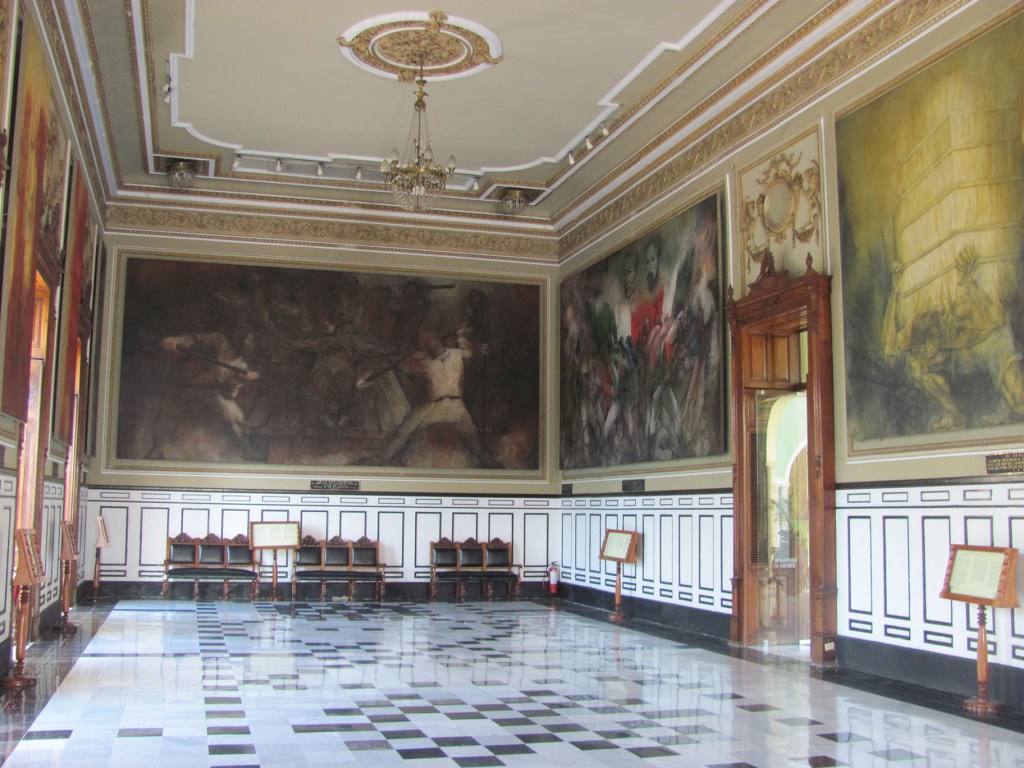
The building was white and light greenish, and there was a beautiful patio, from where we climbed the central stairs that took us to the picture gallery on the second floor. At the staircase there was a large painting of the God of corn, whom the Mayans revered very much, because without this cereal, there would be no food and no people. They even believed that people ancestors come from the corn. The first pictures showed the arrival of the Spaniards, the next one showed how the Spaniards set up a war between the Indians, and how they then enslaved everyone. Divide and conquer – this motto was not written in letters, but with huge canvases and beautiful images.


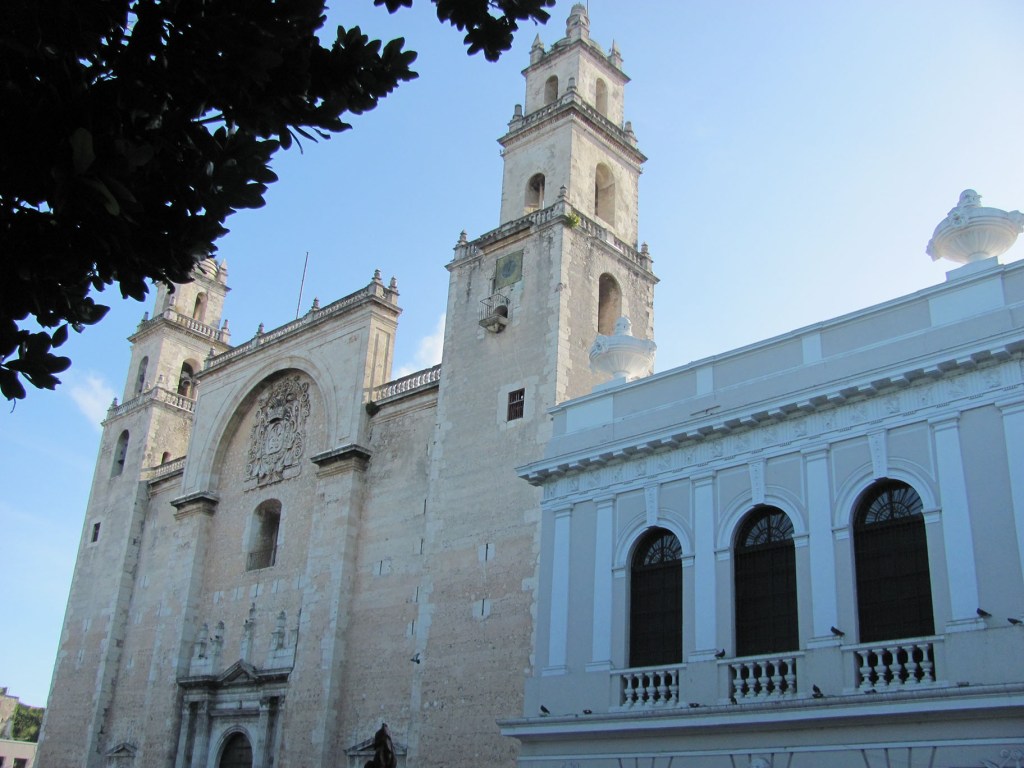
We went out again to the central square and from there we slipped into the cathedral, known more as the Cathedral of Mérida than by its name San Ildefonso. It was considered one of the oldest churches in America. Its construction began in 1561 and lasted until 1598, being a mix of architectural styles. The towers had a Moorish influence, and the altar was distinguished by a Baroque style. The cathedral was erected on the site of an ancient Mayan temple, and some of its stones were used in the construction.
A service was held in the temple and we did not stay there long. However, I was impressed by the strong stream of sunlight that came from the windows and ceilings. Catholic cathedrals in Europe usually don’t have that much light, but it’s likely that the climate here also had an impact. Thick beams of light descended from the central dome – as if the Catholic god and the Mayan Sun God were one and the same thing and inhabited this temple.



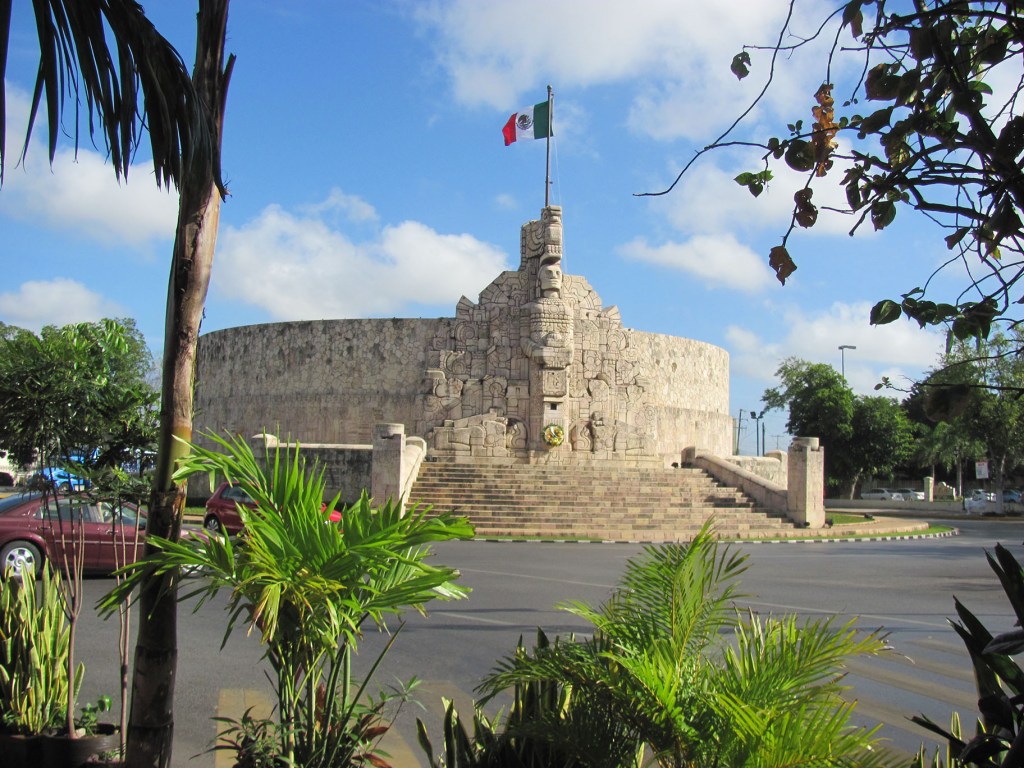

We went outside and got back on the bus, which took us to the next landmark of Merida – the Monumento of the Indian or Monumento a la Patria, located on the wide boulevard of Paseo de Montejo. In the late 19th and early 20th centuries, the city of Mérida flourished from the production of some native plant called henequen, which had great uses. For a short period in the early 20th century, it was believed that more millionaires lived in Mérida than in any other city in the world. As a result of these golden times, wonderful mansions were erected in the city, most of which could still be seen on the central street Paseo de Montejo. This street with its beautiful buildings has often been compared to the French Chances-Elysees. It was on it that all carnivals and processions in the city were held, which then ended in the central square.
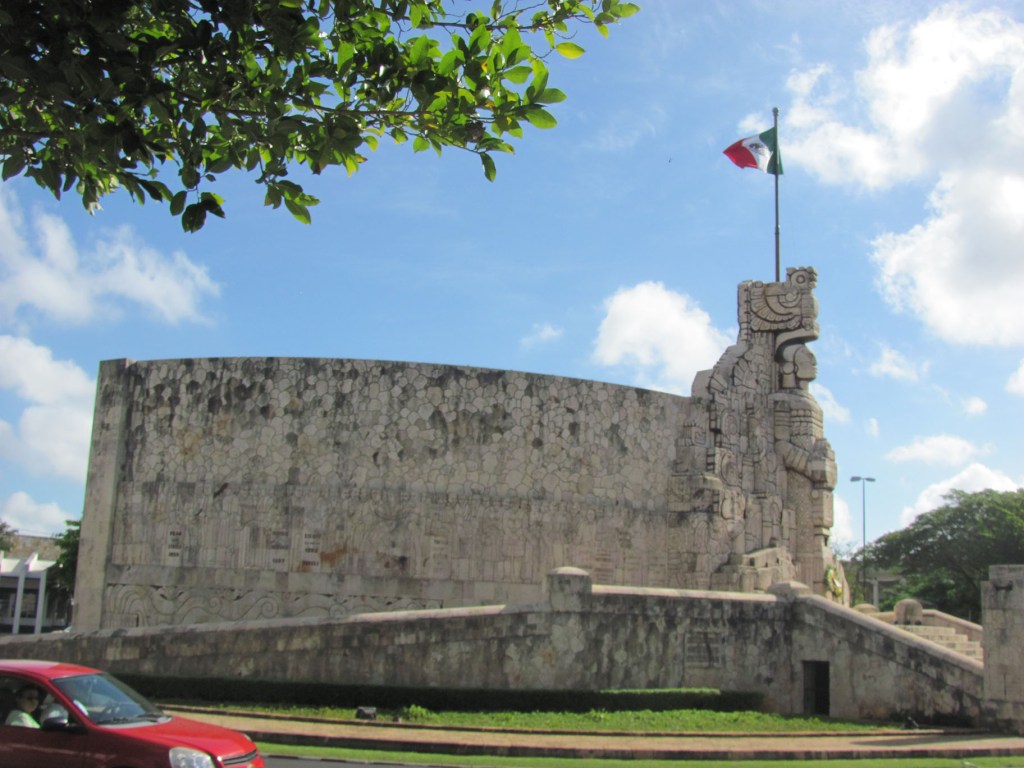
We tried to take pictures of the beautiful buildings and hotels while our bus carelessly passed them. Before we could close our lenses or take a gasp, the bus stopped us in front of the monument to the Indian, which was right in the middle of the boulevard and formed a roundabout. The Mexican flag flew proudly above him, and a wreath was laid at the feet of the Indian. This monument was erected in 1956 and epitomized Mexican history. There were numerous symbols and reliefs on it, illustrating colonization, Mexican independence, reformation and revolution, as well as all classes/nationalities in Mexico.
We learned that during the colonial era, when Mérida became a Spanish city, there were 5 estates in Mexico: the first estate that ruled the country were pure Spaniards, born in Spain, but who came here to rule. The second class were children born in Mexico with two Spanish parents. The third class were the Creoles, children of mixed marriages between Spaniards and Mexicans. The fourth estate was the Indians and the fifth estate was the African Americans, who were used as slaves. Once they declared their independence from Spain, the Creoles seized all power by erecting large plantations and haciendas, sending their children to study in Europe.


Without stopping any longer, we passed the circus and the bullfighting arena of Merida, and subsequently a large hospital, opposite which was the Institute of Medicine. We learned that in Mexico the state paid a large alimony and the examinations were free, only for some more expensive surgeries, a partial deductible could be required.
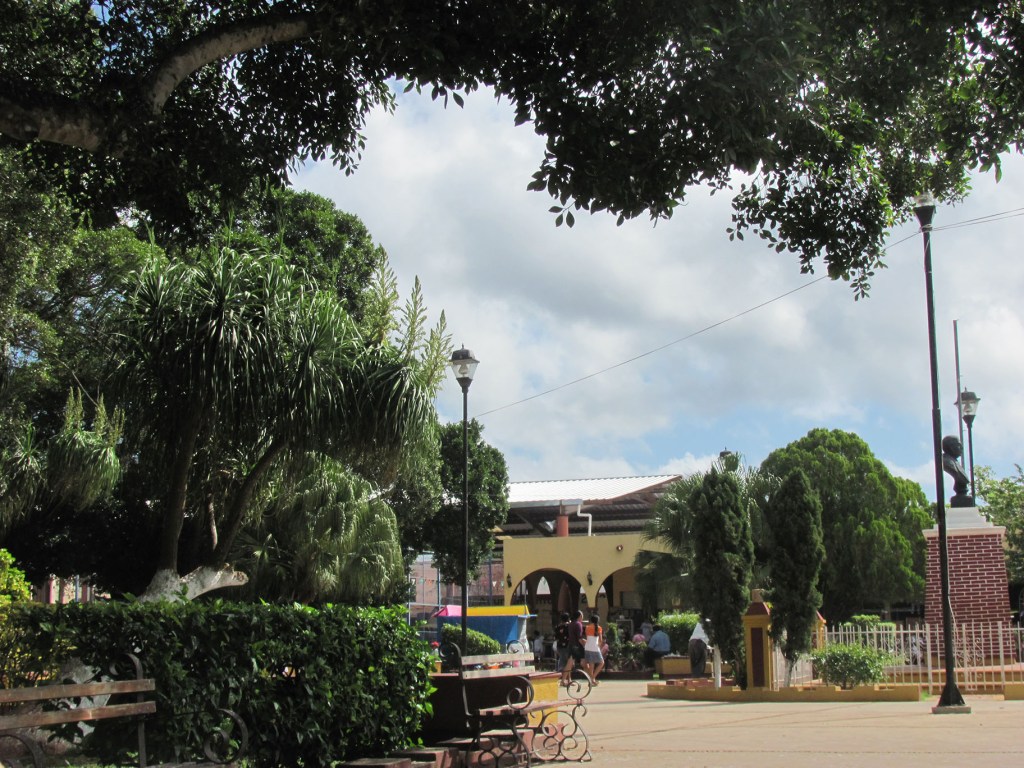
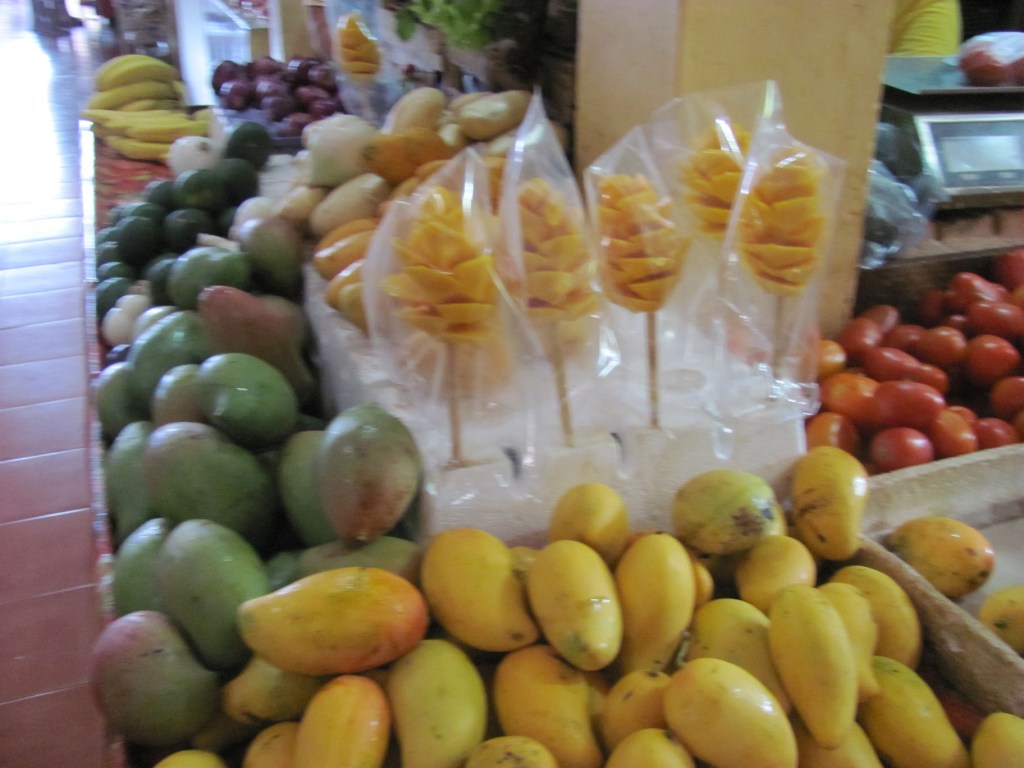
On the left side we saw the zoo, from where two giraffes were protruding. We headed south to the small provincial town of Muna, with numerous avocado plantations along the way. We saw even more exotic fruits in the local market in Muna, which was our next stop. The market was closed, but not air-conditioned. Fruits were arranged on some of the stands, vegetables on others, chicken meat on others, etc. Especially interesting was a saleswoman in front of whom there was a scale and chicken meat on the counter. There was no refrigerator or anything else to cool the meat, only the seller with a flytrap, protecting it from the flies and hitting one of them here and there. At the next stand, the guide showed us an unknown fruit, called sapote, from which we bought and did not regret it. It looked like a potato, but with a slight moss like a kiwi. There was no stone inside, it resembled an orange, but it tasted like sweetened roasted pumpkin. I personally liked it very much and got some fruit for the evening.
The market was dominated by women, both on the seller and customer side. We also passed by a middle-aged woman who had set up a large market, carrying two full bags in each hand, and had put a basin of bananas on her head. Instead of bags, we were overflowing with photos, heading to the next treasure of the Yucatan Peninsula – the magnificent ancient Mayan city – Uxmal.




GENERAL INFORMATION ABOUT MERIDA:
Location: Mérida is the main city in the southern Yucatan region of Mexico and is located about 35 km from the Gulf Coast.
Area: 865.6 sq.km
Population: 970,377 people
Altitude: 10 m
Official language: Spanish
Climate: tropical climate
Time zone: UTC-6
Currency: Mexican peso (MXN)
Additional information: http://www.turismomerida.org/en
TRIP TIPS FOR MERIDA:
Best time to visit: all year round, probably December to April are the best months for beach and sightseeing. The city is remote from the coast, which makes the summers quite hot. However, the sun is here all year round, as well as the number of festivals worth joining. In January is the city’s holiday, marking the discovery of the city in 1542 by Francesco de Montejo. it is followed by the carnival, which is one of the most lavish in Mexico, the Easter holidays are also very solemn here, in the fall the city celebrates the Mexican Independence Day, and after it the festival of birds.
Typical foods and drinks worth trying: In addition to the famous Mexican tacos and boritos, the Yucatan Peninsula offers numerous specialties with beans, avocados, oranges, chicken and pork. While in Mérida you can try Panucho, which is a fried tortilla with beans, chicken, tomatoes, avocado and red onion.
Attractions worth visiting: Plaza Grande is the central square and the heart of the historic city. Here you can find the beautiful Cathedral, the pink Town Hall, the Governor’s Palace and the Montejo House-Museum. Then you can walk along the Mexican Chance-Elysées – El Paseo Montejo. On this beautiful boulevard is the Yucatan Regional Archaeological Museum, which is housed in the Palacio Canton building. At the end of the boulevard is the Monumento a la Patria – the monument of the Indian – one of the symbols of the city.
 TripTips