MEXICO
PART 2 – YUCATAN PENINSULA

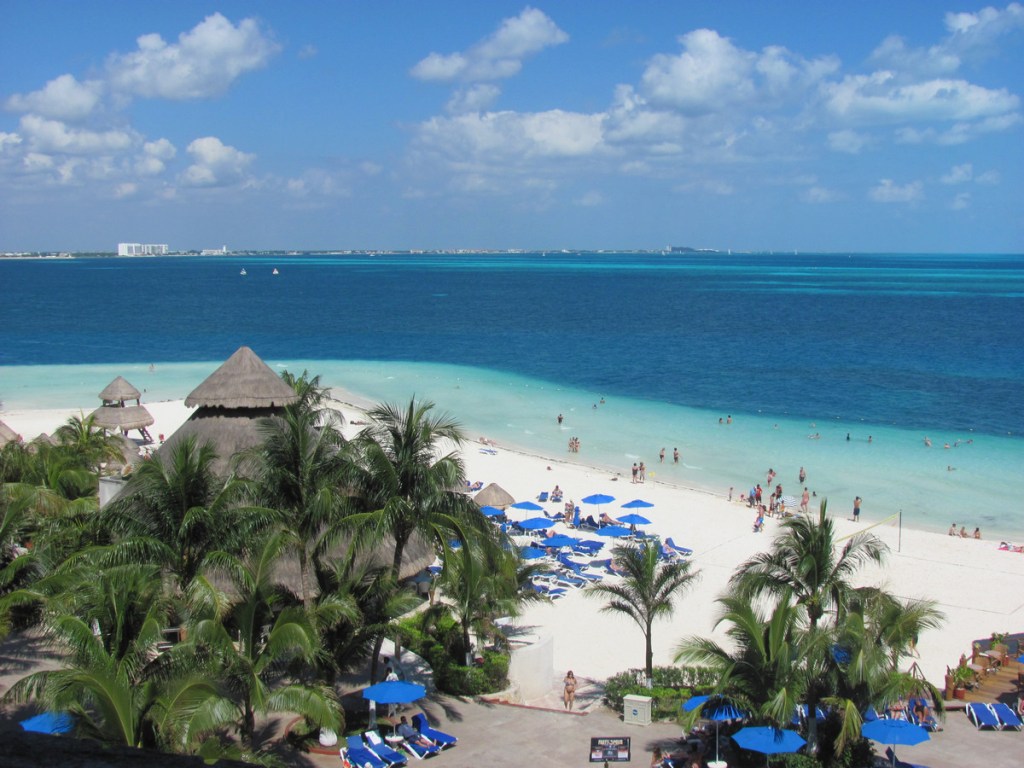



Mexico is a wonderful travel destination, and Cancun is undoubtedly its pearl. Here is the second largest airport in the country, with international flights from all over the world. Europeans may prefer to relax in the resort of Playa del Carmen, located 55 km from the airport, while the Americans chose their holiday in Cancun, 19 km away.
Once there was a jungle here, but in the 1960s it became a popular tourist resort. Its name comes from the Mayan words kaan kun and means “nest of snakes”. Luckily for us, we didn’t meet any of them. Otherwise, the resort looked much more populated, with huge hotel resorts. Cancun was the most visited resort in Mexico, with an average annual temperature of 27 degrees, with over 240 days of sunshine a year, and our holiday was included in this number.
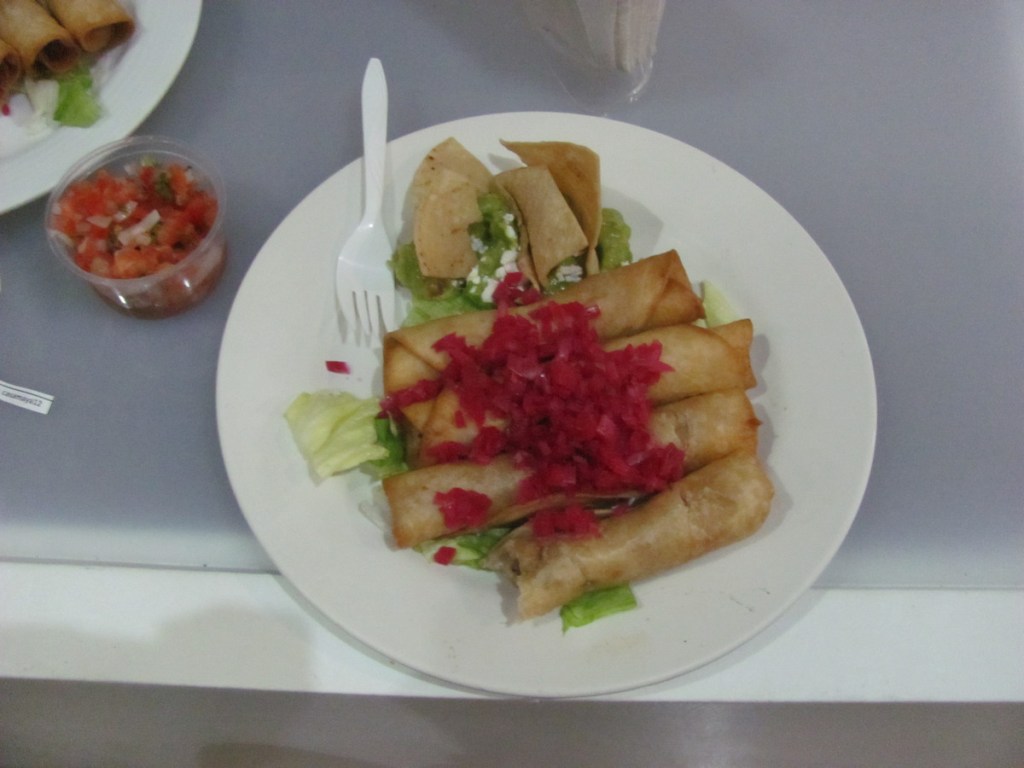
Hotel Casa The Maya, where we stayed, was located on the coast of the Caribbean Sea and had a beautiful sandy beach that our room overlooked. At the reception, the staff was not very polite, but the view from room 1517 on the fifth floor completely compensate the rude welcoming. We ate in the hotel restaurant, and instead of the buffet tables, we preferred to order a dish from the menu – shrimp tacos and guacamole (avocado puree) served with plastic utensils. It was very tasty, although the crispy shell was difficult to cut.
The Caribbean waves outside invited us to join them as we headed to the beach where the sand was even finer than Playa del Carmen and whiter. The interesting thing was that this sand was created from coral shells and it did not get hot during the whole warm day. The sea was also warm, since early dawn. We chose sunbeds under a straw umbrella, enriching the rest with a cocktail served in a coconut.
After the fruitful rest, another interesting day followed, in which we had breakfast early in the morning in the restaurant with a view of the sea and the pools. At 07:25 a bus came to pick us up, and our tour guide Christopher attached a pink and purple wristband to each of us, which we didn’t have to take off all day. It had our Tulum & Xel-ha excursion written on it , as well as our names. On the bus, Christopher told us the reason why our wristbands had our names written on them – because the place we were going to visit, Xel-ha, was a park with free food and drink, with this free bar open, often people at the end of the program would show up at the buses and were talking incoherently, but once we had our names written down, the tour guides could easily find our way around and help us find our return bus. All this Christopher told us in a very entertaining way and our day trip started well. There were many other passengers on the ride, all with different bracelets for different excursions.
At 07:45 we stopped at a bus station with many tourist buses. Here we had to get off, as there were many arrows on the ground.



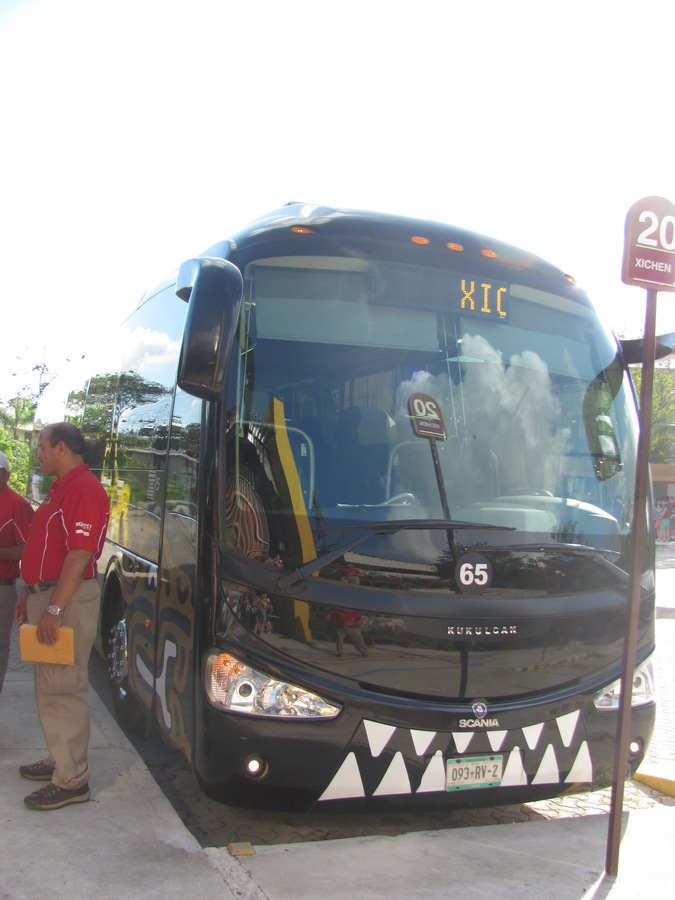

We had to follow the pink arrows (respectively the color of our wristbands) which took us to a new bus that was going to Tulum and Xel’ha with a new English speaking tour guide. So far, the organization of the travel agency Cancun Discount has impressed us. Walking the pink path with arrows was fun and original, and the buses were pure black with snakes painted in different colors. Our snake was black in color, and right where the license plate of the bus was, white teeth were painted. We had two tour guides, Daniel and Andreas, and our driver’s name was Hermann, they introduced themselves as the three musketeers who would accompany us during the day.
Our bus was traveling to Tulum – the great port of the Mayans. This ancient city was hidden behind stone walls and perched on a hill overlooking the Caribbean Sea. We traveled parallel to the Caribbean coast learning that it was home to the second largest coral reef in the world (the first one of course was in Australia). On the other side of the road was a jungle, and Andreas told us that there were more hidden cities to be discovered. There were still people living in the jungles who kept the old traditions and spoke only the Mayan language. Adreas and Daniel were currently taking Mai lessons, but they shared that it was quite complicated and had nothing to do with Spanish, but was closer to Mandarin Chinese and Thai. There were 24 different dialects, which further complicated its acquisition.
One of the billboards on the road had a sign “no lo veo, no lo creo” (I don’t believe it until I see it). Well, I could see it and still couldn’t believe it. We were in Mexico, driving along the highway surrounded by palm trees and tropical trees, and on the TV in the bus they played a film about the Mayans and their customs. The Mayans had many books and written documents, but with the arrival of the Spanish colonizers, they began to burn everything. According to Andreas, only 3 books were left in the original, and reading them was very difficult. In the film, they mentioned a Russian soldier, Kolorosov, who managed to read the Mayan language, and it took him several years.
It was really sad how the priests and Spaniards who destroyed the written documents and artifacts of the Mayans believed that they were performing a holy mission and civilizing some savages, not realizing that they were destroying a much more advanced civilization. Among the colonizers there was a priest who described how to read the Mayan language, and the same would help the other priests to get to know the local population better, but unfortunately this document was also not very detailed and the language could not yet be deciphered of the ancient Maya in full. However, I learned that while the Egyptians wrote on papyrus and the Chinese on rice paper, the Mayans made paper from a tree called amate.
Our bus was full of Americans who unintentionally resembled the colonizers to me – it seemed that they despised local people thinking that they were something more than them, and the Mexicans, disregard their ancient culture, bowed their heads to these people without history and traditions. In fact, the native Indians had this custom of not looking people in the eye and instead bowing their heads, a habit that has persisted over the years.
At 9 o’clock we passed the junction for Rio Secreto, as according to the clock in the bus the outside temperature was 22 degrees. After the film, Andreas told us more about Tulum and the Mayans who created it. The Maya were excellent engineers, astronomers and even navigators. For example, the Maya traveled freely from Cancun to Panama and back, following the coral reef. Tulum developed as a large city thanks to its port and trade.
Our bus stopped in front of the parking lot of Tulum, where upon disembarking we were given a bottle of cold water, which intend to replace the pleasant air conditioning outside of the bus, and we received an entrance ticket to the site. At the end of the parking lot there were shops, on the other side of which was a tourist train that took us to the entrance gates of the ancient city of Tulum. Here we had a one-hour guided tour of the site and just under an hour of free time, which turned out to be not enough time to tour and photograph all the ruins and beaches here.
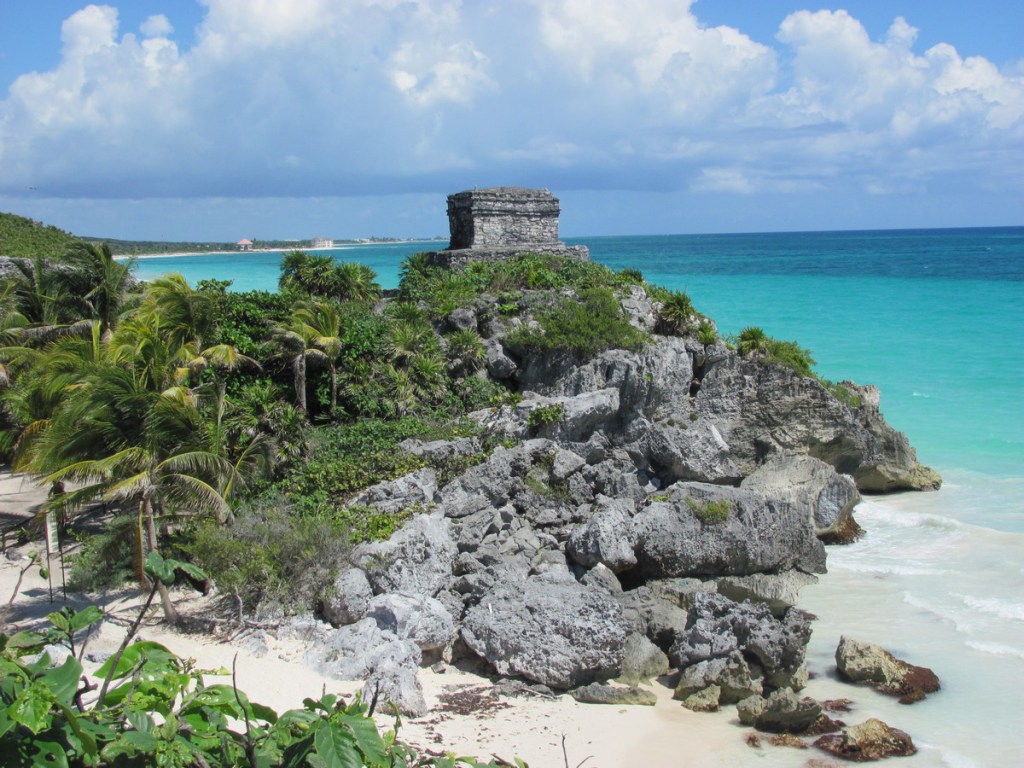
The name Tulum means “city walls or fortified city” and was given because of the stone walls that surrounded the city on three sides in the form of a rectangle, and on the fourth side it was protected by steep cliffs and the sea. The presence of city walls was not found in other Maya cities in this region, but in contrast Tulum was also smaller in terms of area and size of buildings. When the Spanish saw Tulum in 1518 the Spanish conquistador Juan de Grijalva described it as having the size of Seville and a tower as high as he had ever seen.
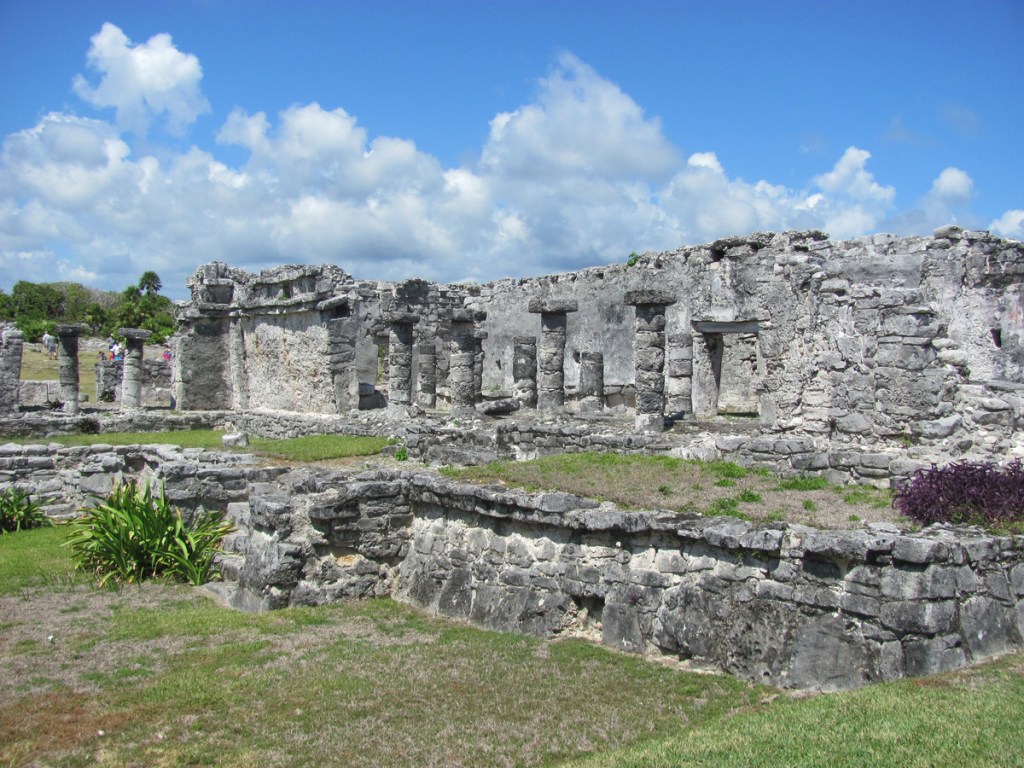
Our tour guide, Daniel, showed us the building standing on the highest part of the city, which they called the Castle, in which there were still preserved paintings. Just 500 years ago, the building was much more impressive with its brightly colored facade and numerous sculptures. On the ground floor on either side there were two small temples with inner altars, which were believed to fill the air with scents and colors. Rituals were performed on the upper part of the temple.




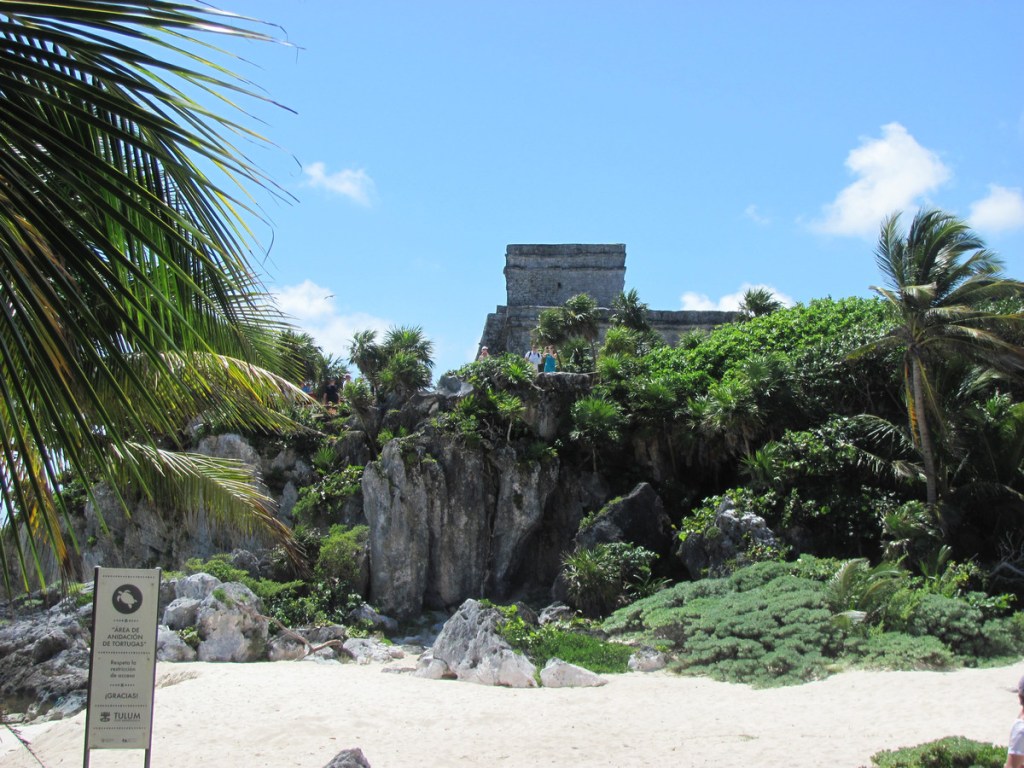
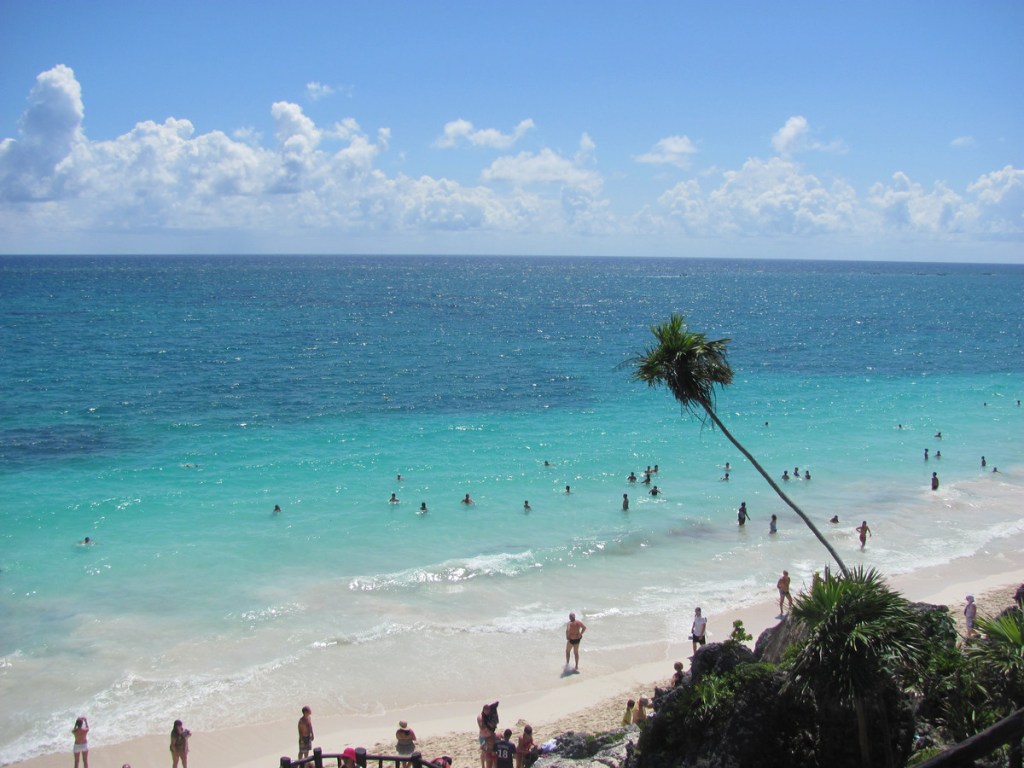
Right next to the castle was the temple of the wind god, which was a small rectangular building. However, the role of this temple was of great importance. By it, the Maya knew what kind of wind was coming from the sea and whether there was a danger of hurricanes. On the other side towards the sea there was a circle and when the wind passed through it it made a specific sound by which the Mayans knew it. There were no earthquakes on the Yucatan Peninsula and only hurricanes posed a danger to people’s lives and it was important to predict them.
During the summer equinox, with the rising of the sun, its rays passed right through the window of the temple of the wind and reflected directly in the opposite building on the other side of the city, next to the stone walls. The effect was hardly accidental, considering that one of the old names of the city was Zama, which meant sunrise, and the year-round view of the sunrise from here was incredible.
We learned that there were no cenotes (underground caves) near Tulum, despite the fact that there were over 8,000 cenotes on the Yucatan Peninsula. The nearest cenote was 8 miles (13 km) from here. Therefore, several stone cisterns were erected in Tulum to store rainwater. When the water was closed like this for several days, it started to turn green and to avoid this, the Mayans put corn in the water, so the water kept its freshness.
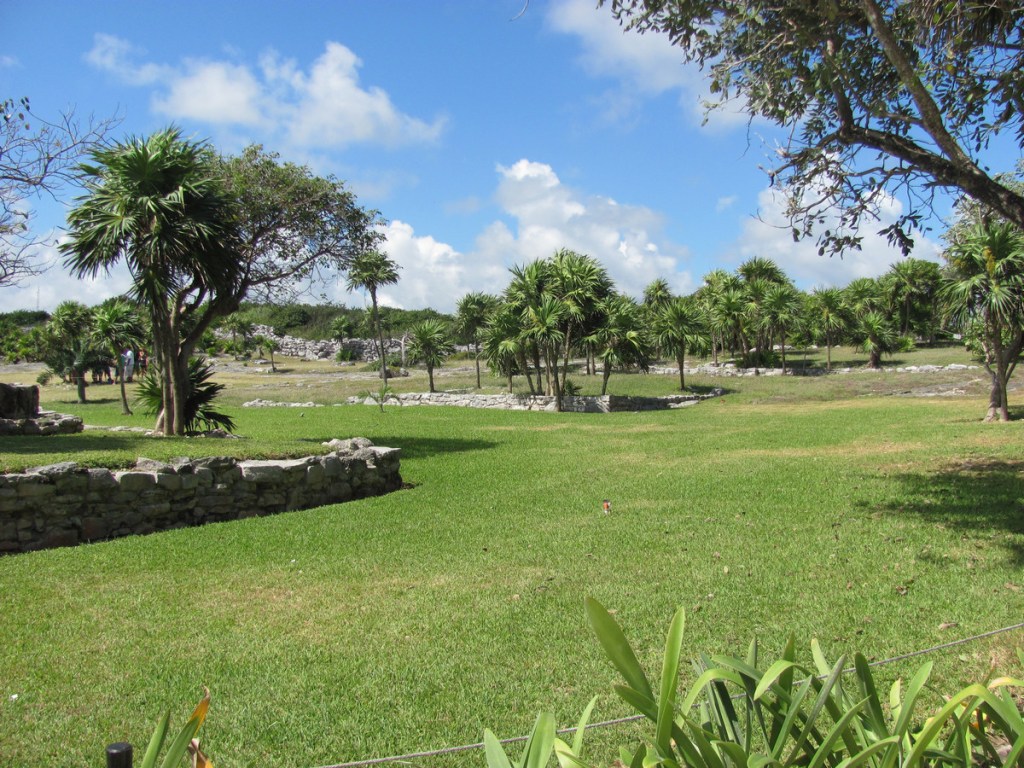
During our free time for a walk, we again had a tour guide, this time in the form of iguanas that came out from everywhere, and while photographing them up close we noticed interesting details on the facades. The ancient port city was an excellent location for beach and photo opportunities. Just below the steep cliffs there was fine white sand and tons of tourists taking ten in the sun and bathing in the Caribbean waters. We also took a break while taking more nice pictures of the fortress with the beautiful palm trees.
We quickly toured a few more buildings, including one with a thatched roof, but hardly preserved from the Mayan era. Our free time there flew by as quickly as a Caribbean breeze and we headed back to the bus, seeing on the way from the tourist train the traditional Mexican custom of people spinning upside down on a sort of carousel with folk costumes. Unfortunately we didn’t manage to get a good photo of it in a hurry to catch the bus.
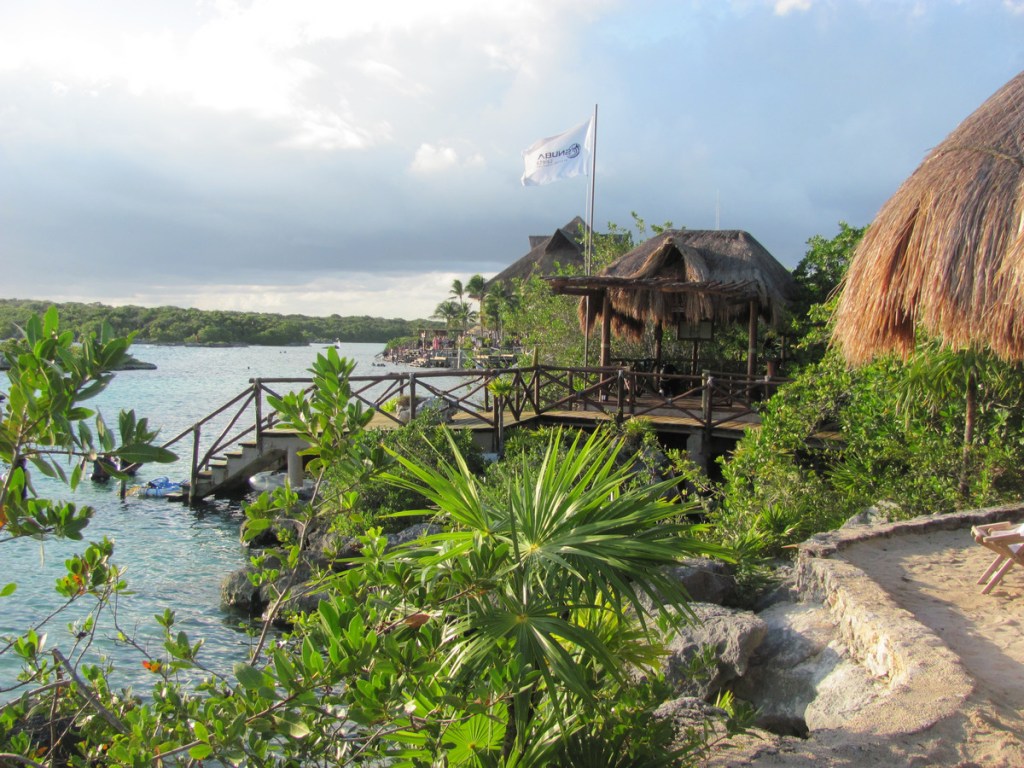
Our next stop was the Xel’ha water park, which was located 13 km north of Tulum and 122 km south of Cancun. It was built in a place where the river Quintana Roo was flowing into the sea. The park’s name meant “mixing of water,” referring to the confluence of saltwater and freshwater. The water park was created back in 1980 as a natural aquarium of hundreds of species of aquatic inhabitants.
Here we had 5 hours of free time, but again we did not manage to visit all the attractions of the park. We started our tour by choosing a locker to put all our staff in except for the underwater cameras and taking a beach towel. There were many attractions for both children and adults. Most Americans sat in the five restaurants, where food and drink were completely free. There were huge buffet tables with a wide variety of salads, dishes and desserts. Instead of overeating, we decided to get our diving equipment (goggles, snorkel and fins) and headed to one of the many bays, with colorful fish. I was snorkeling for the first time and it was very exciting. With the underwater camera I was able to capture these sea creatures as we swam right where the river flowed into the sea and their diversity was greatest. It started to rain lightly outside, wondering how water was not getting into my snorkel, but actually the weather gradually cleared and the blue of the sky tried to shade the sea water again.
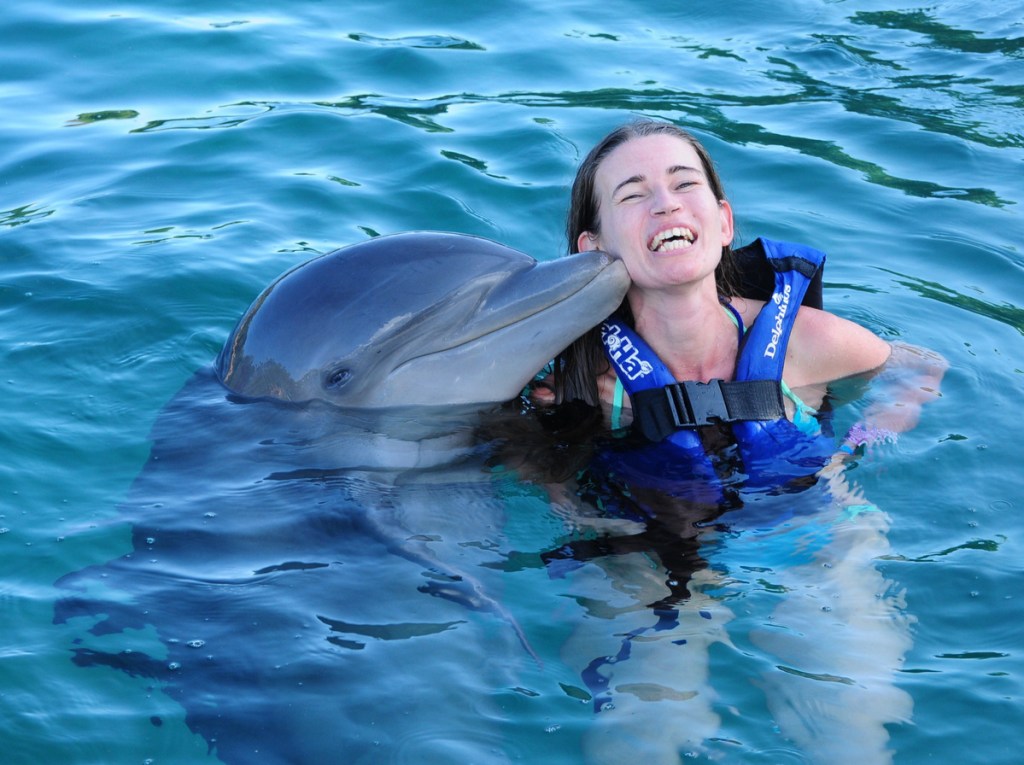
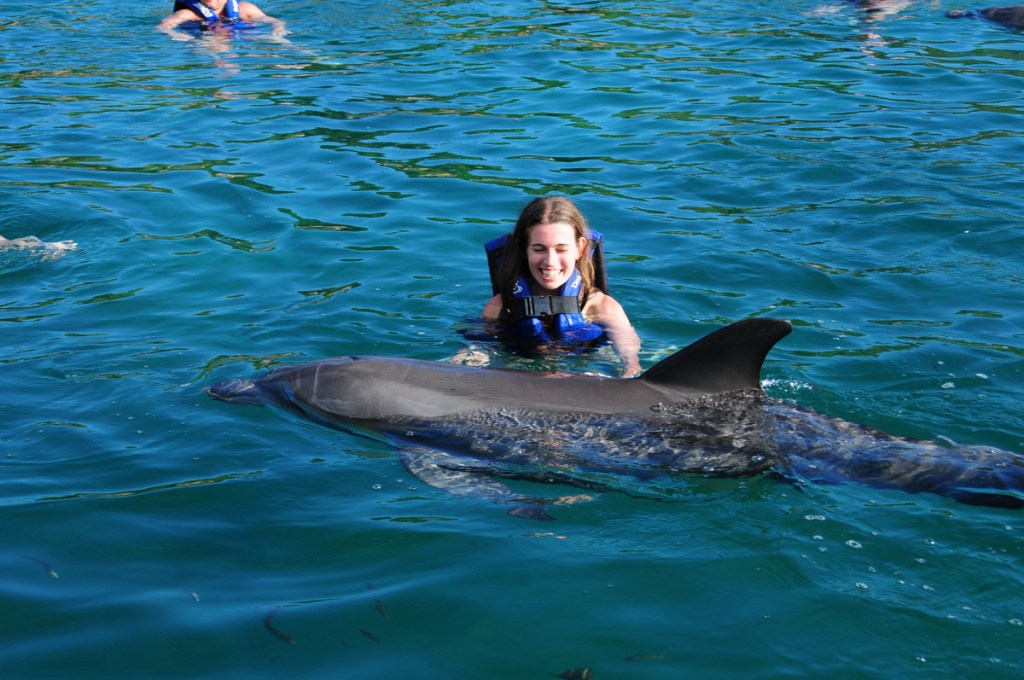
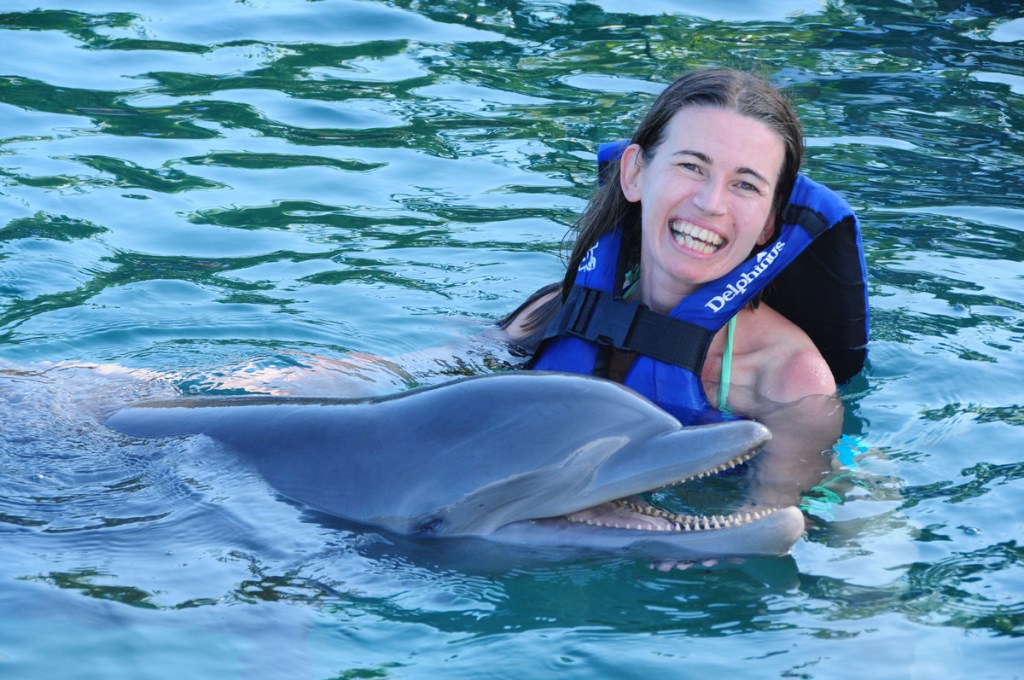
At 15:30 we went to the dolphinarium, where first we watched a movie about the dolphins and we received some instructions on how to interact with them. They forbade us to touch their mouth, eyes and breathing hole, then allowed us to enter their pool. We swam with 4 dolphins who gracefully passed us and we could stroke their smooth gray skin. Then we were also allowed to play with them, stretching out both hands the dolphin would come to the surface and I could catch it by both fins as if we were dancing, then it gently touched my cheek with its snout, receiving the sweetest kiss. The whole time in the pool I was laughing out loud like a kid, it was so much fun and I was really happy.
Dolphins were very friendly creatures who also loved games. They were larger in size than us, and usually the length of the dolphins varied between 1.2 to 9.5 meters, and the kilograms from 40 kg up to 300-500 kg (as much as the killer whale ). Our baby dolphins were over 2 meters long and gray in color. Afterwards, I watched a film on how dolphins are trained, and it turned out that they are indeed some of the most intelligent creatures on Earth. As the dolphins swam around us, I spoke to them in different languages, inviting them to come closer. However, their most understandable language turned out to be sign language, as we raised our hands and rotated our fingers, they also began to rotate. As we clapped both hands in the water, they also started clapping their tails, splash us hard. From time to time they also made noises and light whistles, but we did not know what their commands were, but only heartily applauded them.
After this unforgettable swim, we set out to explore the park, crossing a terribly wobbly bridge so we could photograph the Mayan Bay on the other side and the so-called capricious bay. Unfortunately, we didn’t have time to ride the huge transparent inflatables that floated down the water, nor to get on the cable car descending like Tarzan on vines across the bay. There was also a whole garden with palm trees and hammocks, and we took pictures on the wooden deckchairs in the sun. We passed through the massage area and the bike lane, but again rushing to the locker, where we quickly changed. We looked for a restaurant for a last bite, but after 17:00 everything was closed. Apart from the bar, where we got a colorful fruit cocktail and headed to the exit of the park.


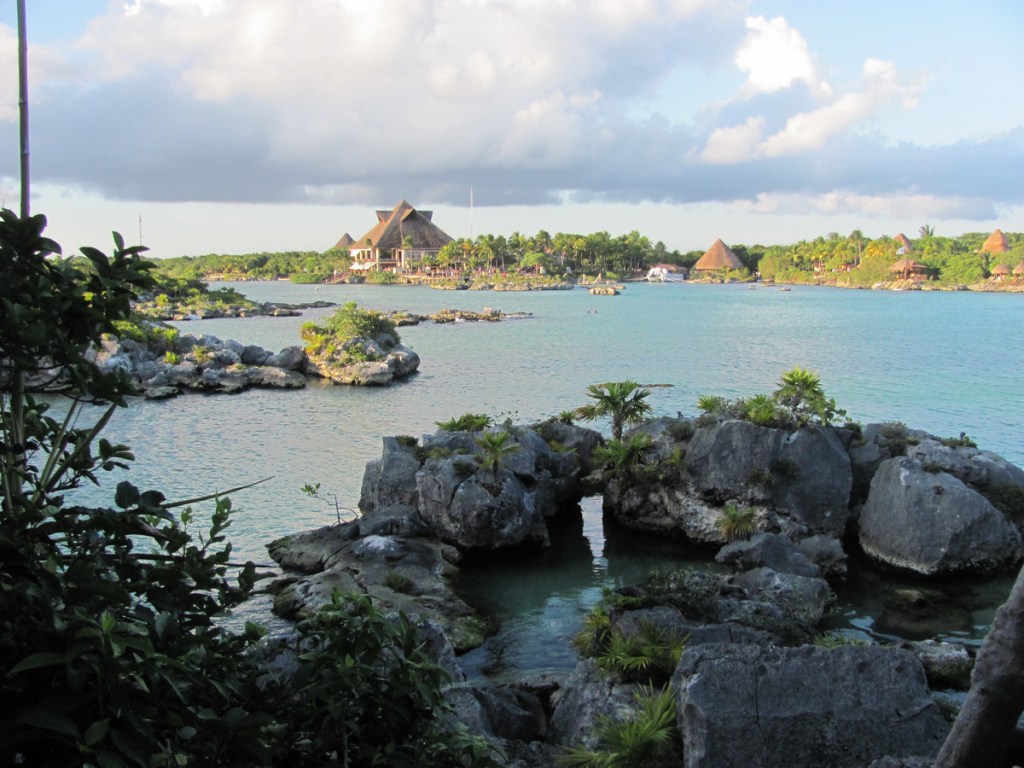

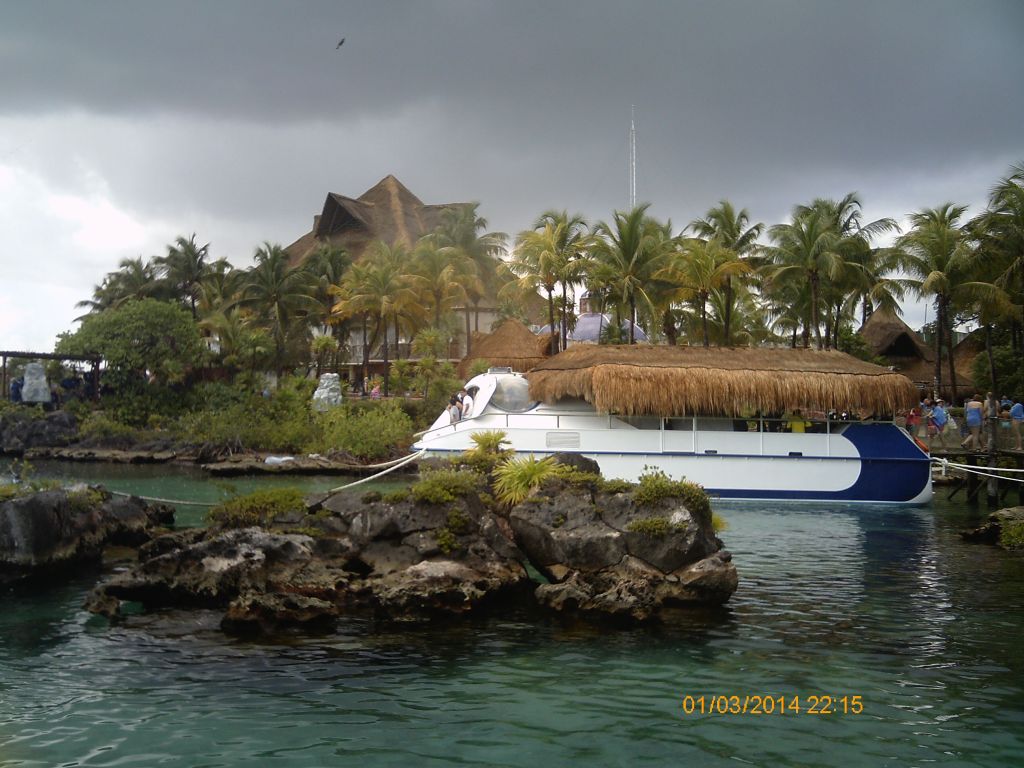



At 17:30 we boarded a new bus that took us directly to the hotel. The next day we left the Yucatan Peninsula and headed inland where majestic pyramids rose from Mexico’s glorious past…

GENERAL INFORMATION ABOUT CANCUN:
Location: Cancun is a coastal city on the Yucatan Peninsula in Mexico.
Area: 50,212 sq.m. , being connected to an island Cancun , which has an L- shape with a length of 21 km and a width of 400 m.
Population : 526,710 people
Official language : Spanish
Climate: tropical climate
Time zone: UTC-8 to -5
Currency: Mexican peso (MXN)
Additional information: https://www.mexicancaribbean.travel/cancun/

СЪВЕТИ ПРИ ПОСЕЩЕНИЕ НА ЮКАТАНСКИ ПОЛУОСТРОВ:
Best time to visit: All year round, from December to April probably being the best months for the beach and sightseeing.
Typical food and drink: In addition to the famous Mexican tacos and burritos, the Yucatan Peninsula offers many specialties with seafood, avocados, oranges and chicken.
Places to Visit: The Yucatan Peninsula offers much more than beautiful resorts like Cancun and Playa del Carmen. Here you can visit the famous Chichen Itza Pyramid, Tolum, Uxmal, Ek Belam, and many diving amusement parks like Xcaret Eco Theme Park and Xel-Ha, as well as underwater caves such as Rio Secreto, Cenotes Dos Ojos, Sac Actun and many others.
Additional information: http://www.travelyucatan.com/
 TripTips